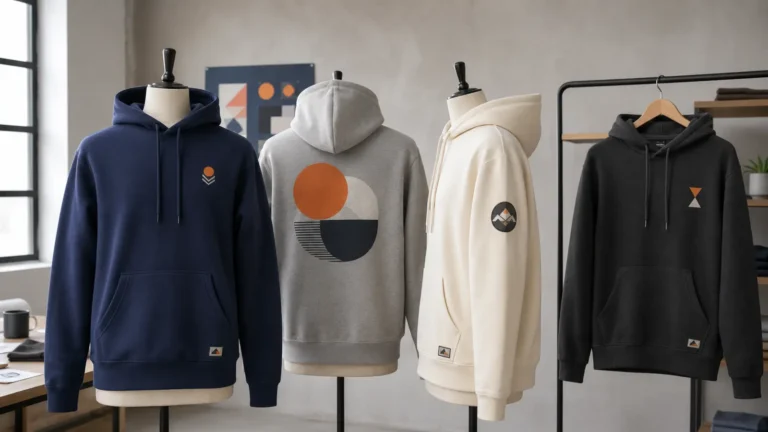
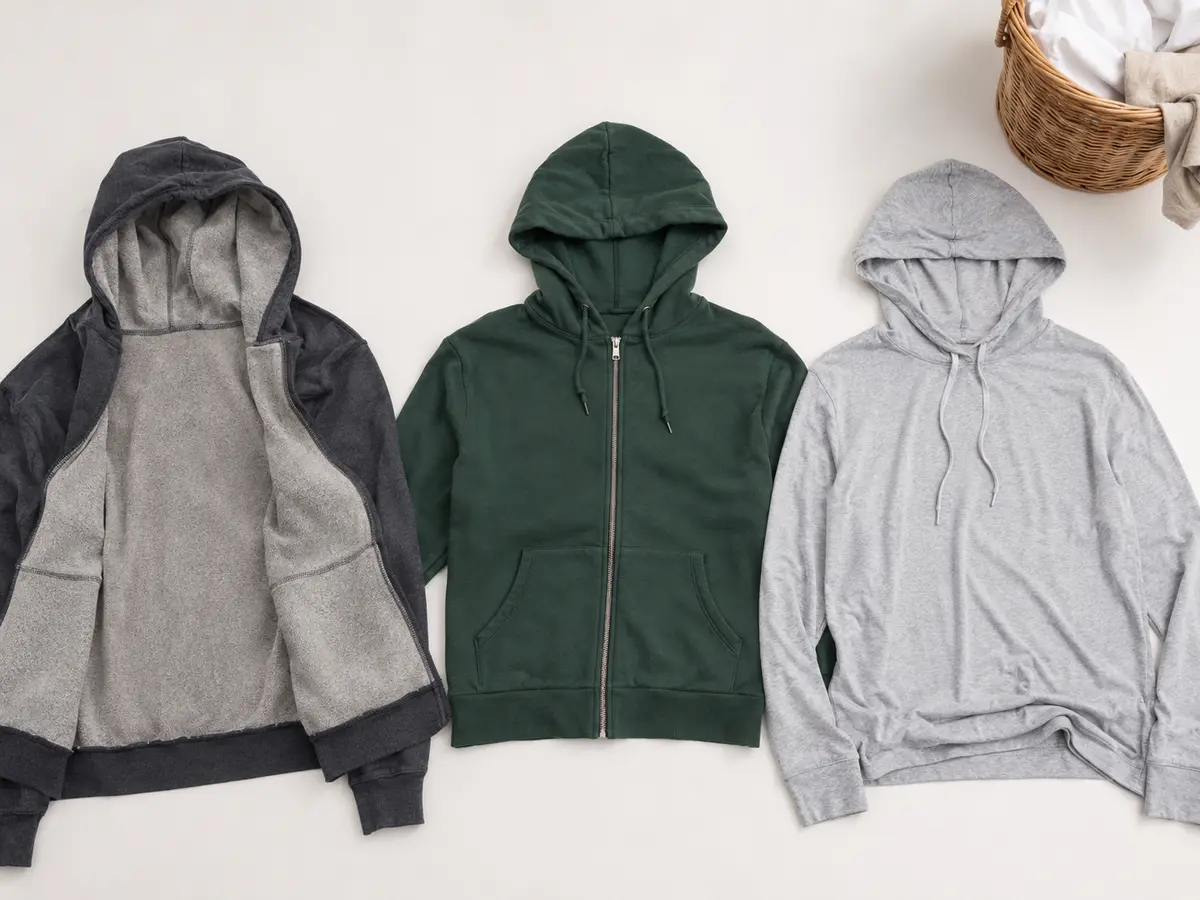
How to Wash Hoodies Without Shrinking and Keep Them Soft
A hoodie can become smaller, stiffer, or rougher after only a few washes. Risk rises when it combines cotton-rich fabric, rib cuffs, brushed fleece, hardware, and decoration.
For an individual wearer, incorrect care can ruin a favorite hoodie. For a school, sports club, distributor, promotional buyer, or apparel brand, the consequences are larger: inconsistent fit, cracked graphics, color complaints, and replacement costs across an entire order.
This guide explains how to wash hoodies without shrinking while keeping the fabric soft and the decoration presentable. It also shows B2B buyers how to translate wash performance into fabric specifications, sample approvals, care labels, and quality-control requirements.
Quick Answer: What Is the Safest Way to Wash a Hoodie?
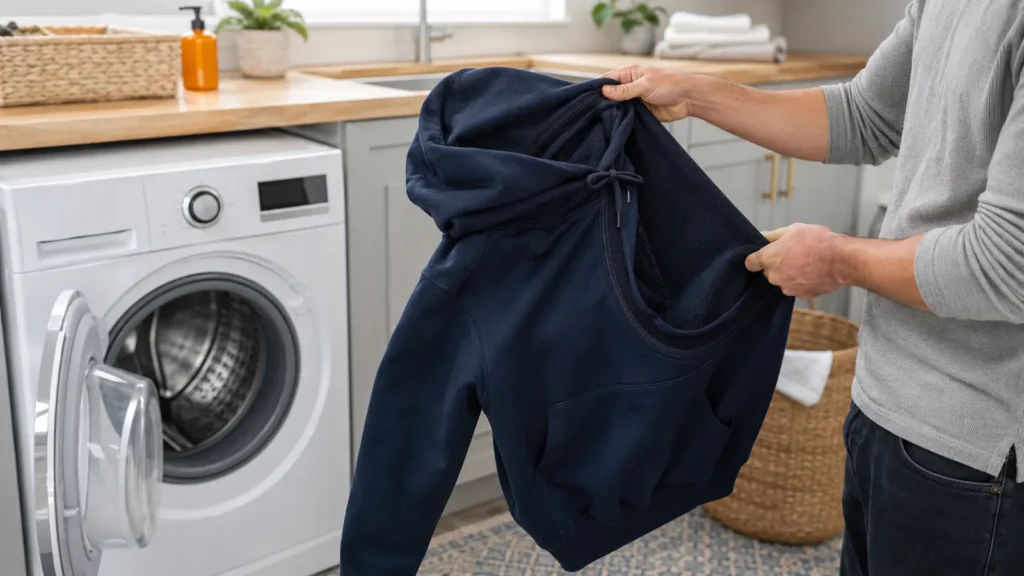
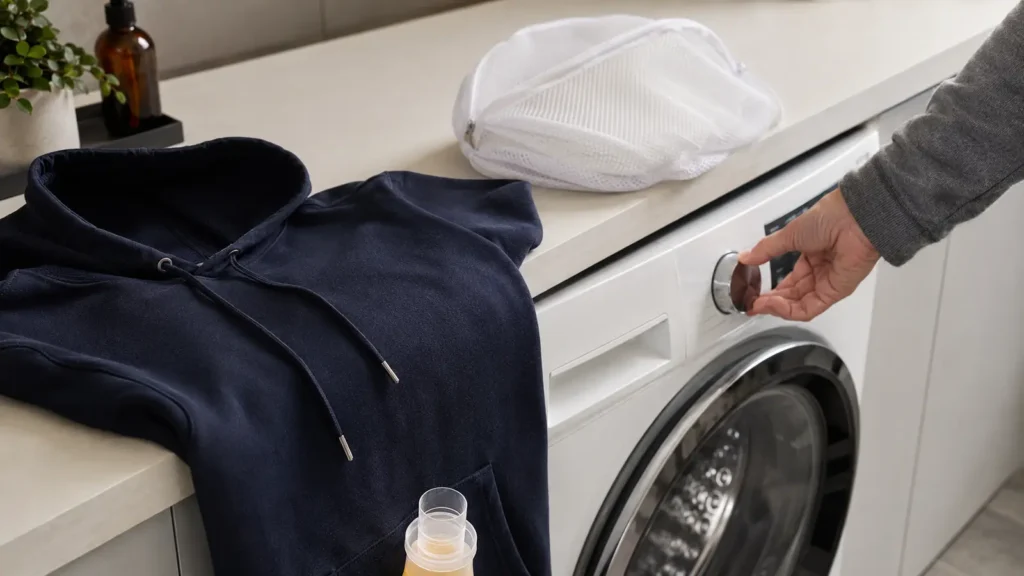
Check the sewn-in care label first. If it permits machine washing, close zippers, secure drawcords, turn the hoodie inside out, and wash it with similar colors and similar-weight garments in cold water on a gentle or short cycle. Use the correct dose of a mild detergent. Air-dry on a wide hanger or drying rack when the garment can support its wet weight; otherwise dry flat. If the label permits tumble drying, select low heat and remove the hoodie while it is still slightly damp.
Cold water, lower mechanical stress, and limited dryer heat are a reliable general starting point because they reduce three common sources of damage: heat-related dimensional change, surface abrasion, and prolonged over-drying. They are not permission to ignore the label. A wool blend, garment-dyed hoodie, sherpa-lined style, bonded performance fabric, or special decoration may require different care.
Why Do Hoodies Shrink, Fade, Pill, or Lose Softness?
Hoodies are not a single material. A typical garment combines a knitted face, brushed or loopback interior, rib cuffs, thread, drawcords, hardware, labels, and a logo application. Wash performance depends on how these parts work together.
Heat and moisture can change dimensions
Cotton-rich knitted fabric may relax or contract when exposed to water, agitation, and heat, particularly if the fabric or finished garment was not adequately stabilized before production. High dryer heat and unnecessary over-drying add risk. A hoodie may lose body length, sleeve length, or chest width even when the change is not visually uniform.
Abrasion changes the surface
Garments rub against the washer drum and other items. This friction can disturb a brushed fleece surface, create pills, fade raised areas, and wear printed decoration. Washing a hoodie with jeans, towels, hook-and-loop fasteners, or exposed metal hardware increases the mechanical stress.
Residue can make fabric feel stiff
Too much detergent does not automatically produce a cleaner hoodie. Poor rinsing or an overloaded machine can leave residue that makes fabric feel harsh.
Drying affects both softness and size
Air-drying minimizes thermal exposure, but fabric can feel temporarily firmer without tumbling. Low-heat tumbling may fluff some constructions, yet it also creates heat and abrasion. Follow the label, use the lowest-stress permitted method, and stop promptly.
Hoodie Care Decisions at a Glance
| Decision | Lower-risk default | Why it helps | When to change it |
|---|---|---|---|
| Water temperature | Cold | Helps limit color loss and heat-related shrinkage | Use another temperature only when the label, soil level, or hygiene requirement calls for it |
| Cycle | Gentle or short | Reduces abrasion, twisting, and pilling | A normal cycle may be appropriate for undecorated, durable workwear if the label permits it |
| Load | Similar colors and fabric weights | Reduces dye transfer and friction from rough items | Wash separately when the garment is new, heavily soiled, or likely to bleed |
| Detergent | Mild product at the measured dose | Supports rinsing and avoids unnecessary residue | Choose a specialized product only when the fiber or care label requires it |
| Garment preparation | Inside out; zippers closed; drawcords secured | Protects the outer face and decoration | A stain may need localized pretreatment before turning the garment |
| Drying | Air-dry or tumble dry low if permitted | Limits prolonged high-heat exposure | Dry flat when wet weight could stretch the shoulders |
| Ironing | Avoid direct heat on decoration | Reduces risk to ink, film, adhesive, and synthetic fibers | Follow the label and use a protective cloth when pressing is permitted |
How to Wash a Hoodie Without Shrinking: Step by Step
1. Read the entire care label
Start with fiber content and care instructions. Look for the permitted washing method, temperature, bleach warning, drying method, and ironing restrictions. “Machine wash” alone does not mean every cycle and temperature is safe. Likewise, a cotton-rich outer fabric does not tell you how an attached patch, coating, lining, or print will react.
In the United States, the Federal Trade Commission says covered manufacturers and importers must provide complete regular-care instructions or warnings and have a reasonable basis for them. The guidance also makes clear that care instructions must consider the finished garment, including non-detachable components—not just a fabric swatch.
2. Identify the fabric and decoration
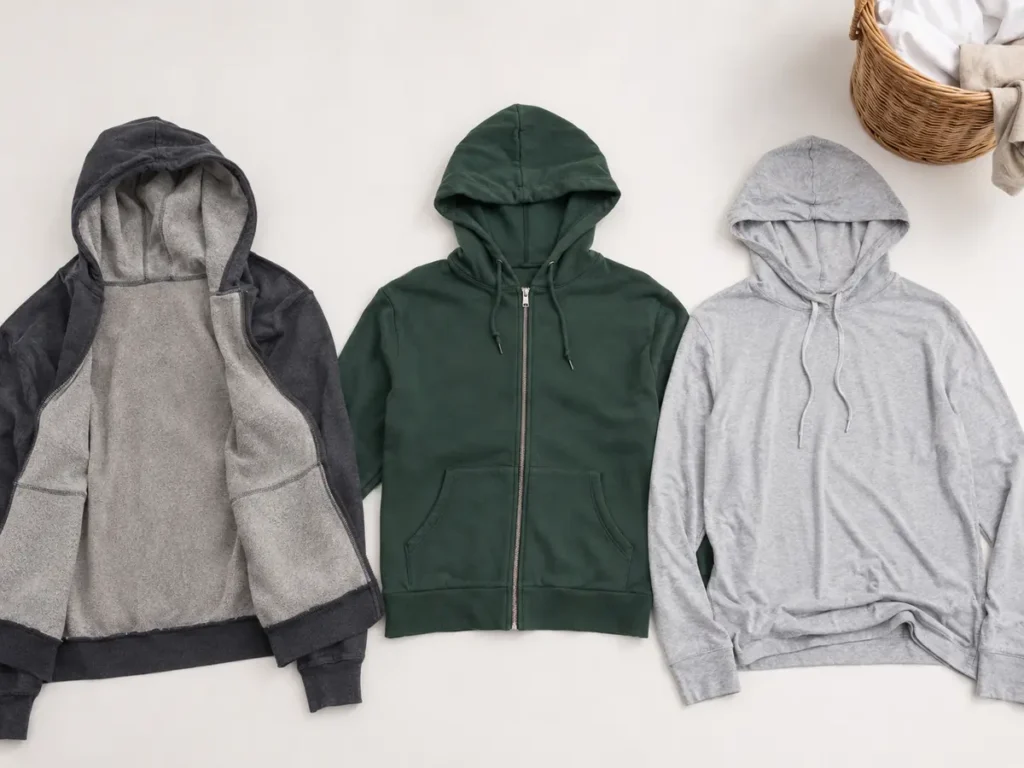
Before choosing a cycle, confirm whether the hoodie is:
- cotton-rich brushed fleece;
- a cotton-polyester blend;
- polyester performance knit;
- French terry or loopback fabric;
- garment-dyed or pigment-washed;
- wool-containing;
- sherpa or pile lined; or
- finished with embroidery, screen print, heat transfer, a woven patch, or another application.
If the label is unreadable, use conservative settings and test an inconspicuous area for color transfer. For a valuable or unusual garment, ask the seller for the intended method.
3. Treat stains before the main wash
Spot-treat cuffs, necklines, pocket edges, and localized stains. Apply a compatible stain treatment sparingly and avoid aggressive scrubbing. Test the product on an inside seam if colorfastness is uncertain. Do not apply bleach merely because the hoodie is light colored; follow the bleach instruction on the label.
If a stain remains after washing, inspect it before using a dryer. Dryer heat can make some stains more difficult to remove. Repeat an appropriate pretreatment rather than increasing the temperature automatically.
4. Empty pockets and secure the hardware
Remove paper, keys, pens, coins, and other objects. Close the front zipper so the teeth and slider are less likely to catch other fabrics. Fasten hook-and-loop tabs, if present. Tie loose drawcord ends together lightly or place the garment in a suitably sized mesh bag so cords cannot wrap around other laundry.
Do not knot drawcords tightly. Remove accessories when the supplier’s instructions require it.
5. Turn the hoodie inside out
Turning the hoodie inside out places the less visible surface against much of the washer’s abrasion. This can help protect the face fabric, dark color, and printed decoration. It is particularly useful for screen prints, heat transfers, pigment-dyed effects, and hoodies that develop surface pills.
6. Sort the load intelligently
Sort by color, fabric weight, soil level, and hardware—not color alone. A navy fleece hoodie may be color-compatible with dark denim, but denim is heavier and more abrasive. Towels can transfer lint. Open zippers and hook-and-loop closures can snag knit surfaces.
For the first wash of a saturated, garment-dyed, or uncertain-color hoodie, wash it separately or with very similar dark items. For later washes, combine it with soft garments of a comparable weight. Leave enough space for the load to move and rinse; do not pack the drum tightly.
7. Select cold water and a gentle or short cycle
Cold water is the practical default for preventing unnecessary shrinkage and fading when the label permits it. A gentle cycle reduces mechanical action, and a short cycle limits exposure time. Whirlpool’s published fabric-care guidance similarly recommends cold water to help prevent shrinking and the lowest dryer heat allowed by the care label.
Cold is not a cure for every problem. Oily soil may need compatible pretreatment or a different label-approved temperature.
8. Measure the detergent
Follow detergent dosing instructions for the load, water, machine, and soil level. An oversized dose can be difficult to rinse. A mild liquid detergent often disperses readily in cool water, but garment and machine instructions still govern.
Avoid routinely adding chlorine bleach, strong oxidizers, or multiple laundry additives. If fabric softener is considered, first check the garment and decoration guidance. Some performance finishes and absorbent materials can be affected by coating-type additives.
9. Remove the hoodie promptly
When the cycle ends, take the hoodie out rather than leaving it compressed in the drum. Gently shake it, straighten the body and sleeves, align the side seams, and smooth the rib cuffs. Do not wring the garment. Wringing creates local stretching and hard creases.
10. Dry with the least stress the label permits
Air-dry away from direct heat and strong sunlight. For a heavy hoodie, dry it flat or support it across several rack bars so wet weight does not pull from the shoulders.
If tumble drying is permitted, use low heat and a shorter or moisture-sensing cycle. Remove the hoodie promptly, ideally when it is just dry or slightly damp, and let residual moisture finish evaporating on a rack. Do not repeatedly restart the dryer “to be safe.” Over-drying adds avoidable heat and abrasion.
How Washing Changes Different Hoodie Fabrics
The fiber percentage is important, but it is only part of the specification. Yarn type, knit structure, fabric weight, brushing, dyeing, compacting, and garment finishing all affect wash behavior.
| Hoodie material or finish | Typical care concern | Practical care approach | B2B approval question |
|---|---|---|---|
| Cotton-rich brushed fleece | Dimensional change, surface roughness, color loss | Cold wash, lower agitation, limited low heat | Was the fabric or garment stabilized, and what wash-test method was used? |
| Cotton-polyester fleece | Pilling, heat effects on synthetic fibers, differential shrinkage | Wash with similar soft fabrics; avoid high heat | Are body fabric and rib shrinkage compatible? |
| French terry / loopback | Loop snagging, shape change, shoulder stretch while wet | Gentle wash; support during drying | What are the finished GSM, loop structure, and shrinkage tolerances? |
| Polyester performance knit | Odor retention, pilling, damage from excessive heat or coatings | Follow label; use compatible detergent; avoid high heat | Do additives or softeners affect the intended performance finish? |
| Garment-dyed or pigment-washed | Intentional color variation, continued fading, crocking | Wash separately at first; inside out; avoid direct sun | Is shade variation expected and communicated to the buyer? |
| Wool-containing blend | Felting, severe dimensional change, distortion | Use only the label-approved wool or specialist process | Is the finished garment washable, and is evidence available? |
| Sherpa or high-pile lining | Matting, lint, slow drying | Gentle action; careful drying; do not brush aggressively | Has the lining been tested with the shell, trim, and decoration? |
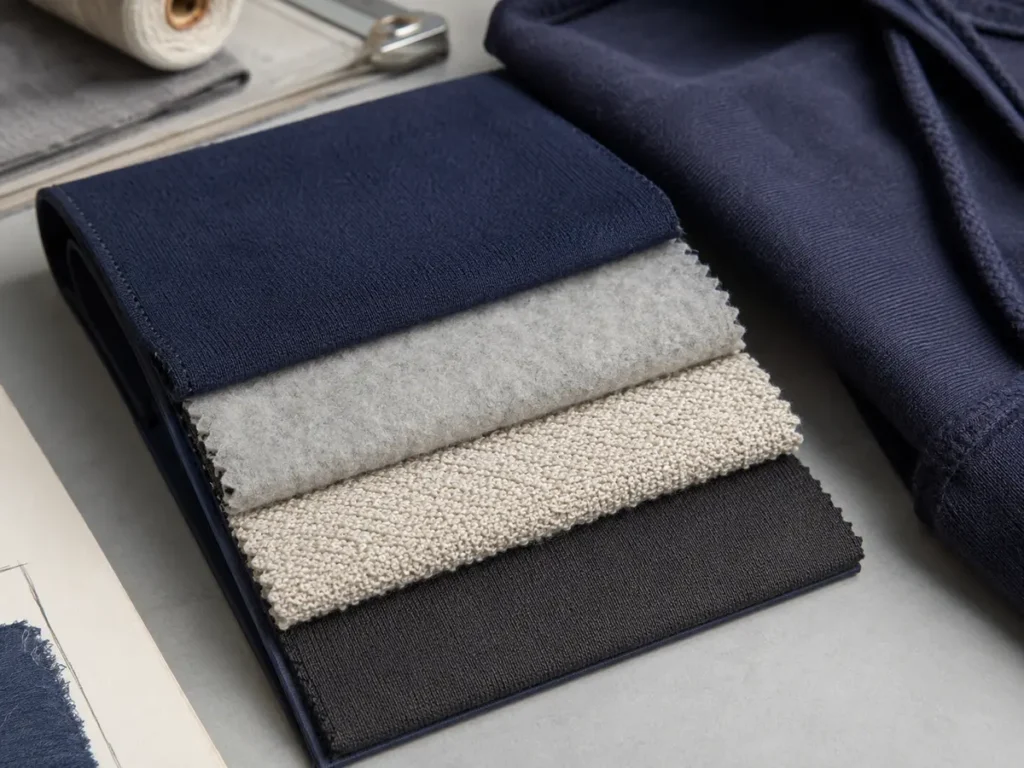
Cotton versus cotton-polyester: which shrinks less?
A polyester blend may improve dimensional stability or drying time, but it is not shrink-proof. Cotton, body fabric, rib, thread, and decoration can change at different rates.
A procurement specification should therefore avoid a vague promise such as “no shrinkage.” Define the fiber blend, finished fabric weight, approved wash method, measurement points, number of test cycles, and acceptable tolerance. The approved pre-production sample should represent the intended bulk material and decoration.
Brushed fleece versus French terry: which stays softer?
Brushed fleece feels plush because the interior surface has been mechanically raised. Repeated abrasion, residue, high heat, and over-drying can change that pile. French terry has visible loops rather than a fully brushed interior; it may feel less plush initially but can provide a lighter, more breathable hand.
Neither is universally softer after repeated washing. Buyers should approve the actual fabric and washed sample rather than choosing from a fiber name alone.
How to Protect Printed, Embroidered, and Patched Hoodies
Decoration can determine the care method even when the base fabric is robust.
Screen printing
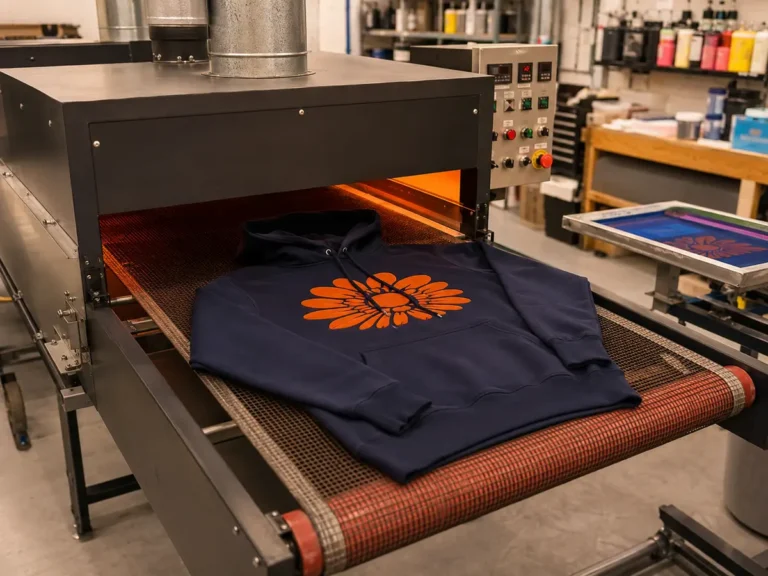
Turn the garment inside out, reduce friction, and avoid direct ironing on the print. High dryer heat can stress some inks or contribute to cracking when the print, curing, stretch, and fabric are not well matched. A correctly produced print still needs a care method supported by the finished-garment test.
Heat-transfer graphics
Heat-transfer films and digitally printed transfers use heat and pressure during application, but that does not mean they should be exposed to unlimited heat later. Wash inside out, avoid chlorine bleach unless explicitly allowed, and do not place a hot iron directly on the decoration. Confirm temperature and dryer restrictions with the supplier.
Embroidery
Embroidery is generally durable, yet dense stitching can create puckering if the thread, stabilizer, fabric stretch, and shrinkage are not balanced. Close exposed zippers, wash with similar soft garments, and avoid snagging. Inspect the reverse-side backing after the sample wash for lifting or discomfort.
Woven, rubber/PVC, and leather-style patches
The patch face may be washable while its edge, adhesive layer, or attachment thread has a different limitation. Ask whether the patch is sewn, heat-applied, or both. Leather-style materials require particular care claims and should not be assumed to behave like woven polyester.
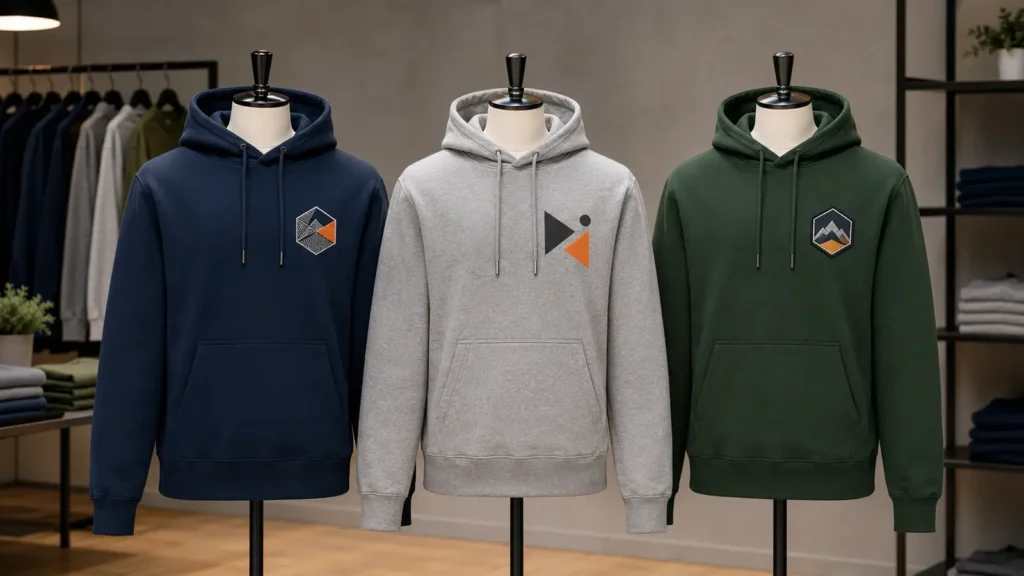
Planning a bulk custom hoodie order? Send JIUMU your target quantity, hoodie style, fabric preference, colors, size range, logo file, decoration method, packaging, destination country, and required delivery date. Request a quotation and sample plan through the custom hoodies page or contact JIUMU.
How to Keep Hoodies Soft Without Creating New Problems
Use the correct detergent amount
Softness starts with clean, well-rinsed fabric. Excess detergent can remain in the knit and create a stiff or coated feel. Measure instead of pouring by eye, avoid overloading, and use an extra rinse only when it is appropriate for the machine, detergent, and garment.
Reduce rough contact
Wash hoodies with other sweatshirts, knit tops, or similar soft items. Separate them from towels, jeans, rough workwear, and exposed hook-and-loop closures. Turn the garment inside out and choose a lower-agitation cycle when the label permits it.
Avoid unnecessary high heat
Heat does not create all hoodie damage, but repeated high-temperature drying is a common avoidable stress. Use low heat only when permitted and stop promptly. Air-dry heavy pieces with adequate support.
Be cautious with household “hacks”
Household-product “hacks” may be incompatible with fibers, dyes, washer components, finishes, or decoration. Never mix bleach with acids or ammonia. For bulk programs, validate care through controlled testing rather than improvised recipes.
Restore the surface gently
After air-drying, lightly shake and flex the hoodie. A clean garment brush designed for the fabric may help some surfaces, but aggressive brushing can damage fleece or decoration. Remove isolated pills with a suitable fabric shaver only after testing an inconspicuous area, keeping the tool away from seams and prints.
Common Hoodie Washing Problems and What to Do
| Problem | Likely contributors | Next action |
|---|---|---|
| Hoodie became shorter | Dryer heat, fabric relaxation, insufficient stabilization | Stop applying heat; reshape gently while damp; document measurements for the supplier |
| Fabric feels stiff | Detergent residue, overloaded drum, hard-water interaction, over-drying | Rewash or rinse according to the label with correct dosing; avoid adding more product |
| Fleece looks matted | Abrasion, high heat, washing with rough items | Air-dry, shake gently, and test a soft garment brush on a hidden area |
| Print is cracking or lifting | Excess heat, abrasion, incompatible application, inadequate cure | Stop direct heat; photograph the defect and compare it with the approved sample |
| Embroidery is puckering | Differential shrinkage, dense stitch area, stabilizer issue | Steam only if permitted; record dimensions and escalate a repeatable bulk defect |
| Color is fading | Hot water, strong chemistry, friction, direct sun, unstable dye | Switch to label-approved cold/low-stress care and separate similar dark colors |
| Hoodie has pills | Fiber mix, loose surface fibers, abrasion with rough laundry | Wash inside out with similar fabrics; use a fabric shaver carefully if allowed |
| Shoulder shape stretched | Heavy wet garment hung from a narrow hanger | Rewet if appropriate, reshape, and dry flat or well supported |
What B2B Buyers Should Specify Before Ordering Custom Hoodies
Good aftercare begins before production. A care label cannot compensate for an unsuitable fabric, unstable rib, poorly cured print, or decoration that was never tested with the finished garment.
Define the use case
A school spirit hoodie, employee uniform, team warm-up, retail streetwear style, and one-day promotional garment have different wash-frequency and appearance requirements. Tell the supplier how the hoodie will be used, how often it may be washed, and whether users are likely to machine dry it.
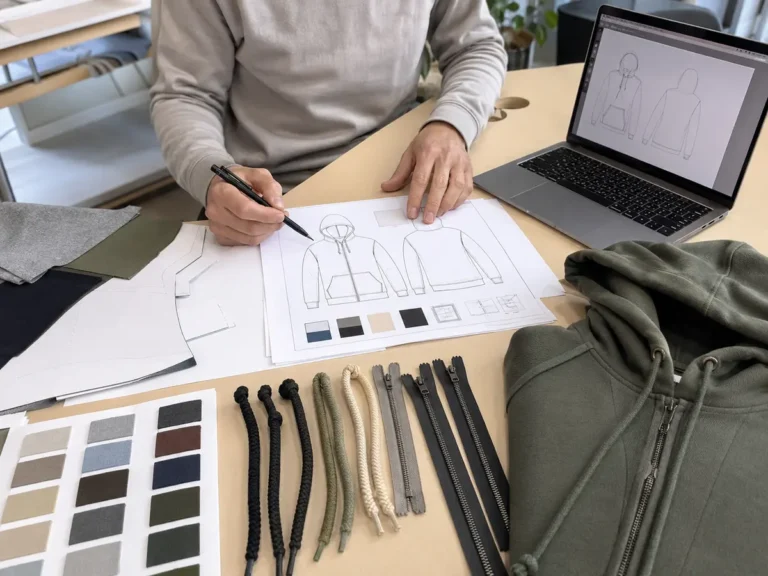
Build a measurable specification
Include:
- pullover, full-zip, quarter-zip, oversized, lightweight, or heavyweight style;
- fiber composition and permitted tolerance;
- finished fabric weight in GSM, if relevant;
- brushed fleece, French terry, jersey, performance knit, or special lining;
- body color, rib color, drawcord, zipper, and hardware;
- size chart and garment measurement tolerances;
- logo dimensions, placement, colors, and application method;
- private labels, care labels, hangtags, and packaging;
- approved wash method and performance expectations;
- inspection level or agreed quality criteria; and
- destination market and language requirements.
Evaluate construction, not just handfeel
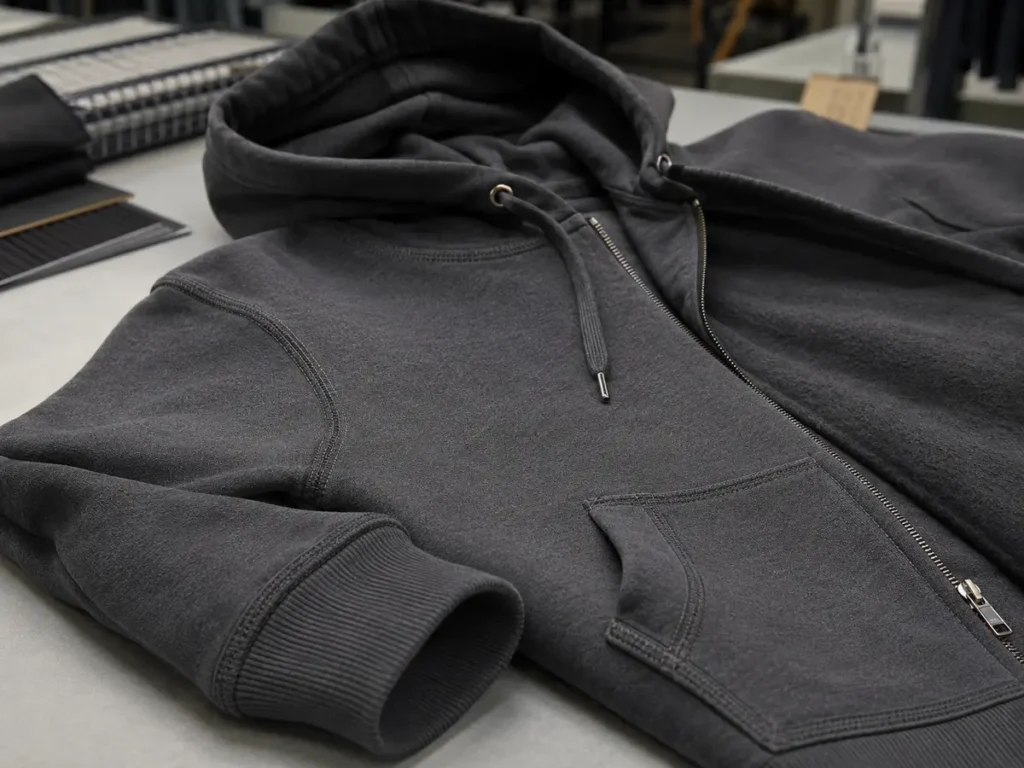
Examine seam density, pocket reinforcement, cuff recovery, hood attachment, zipper smoothness, drawcord security, and the relationship between body fabric and rib. Confirm that the decoration does not distort the fabric.
Sample Approval and Wash-Test Checklist
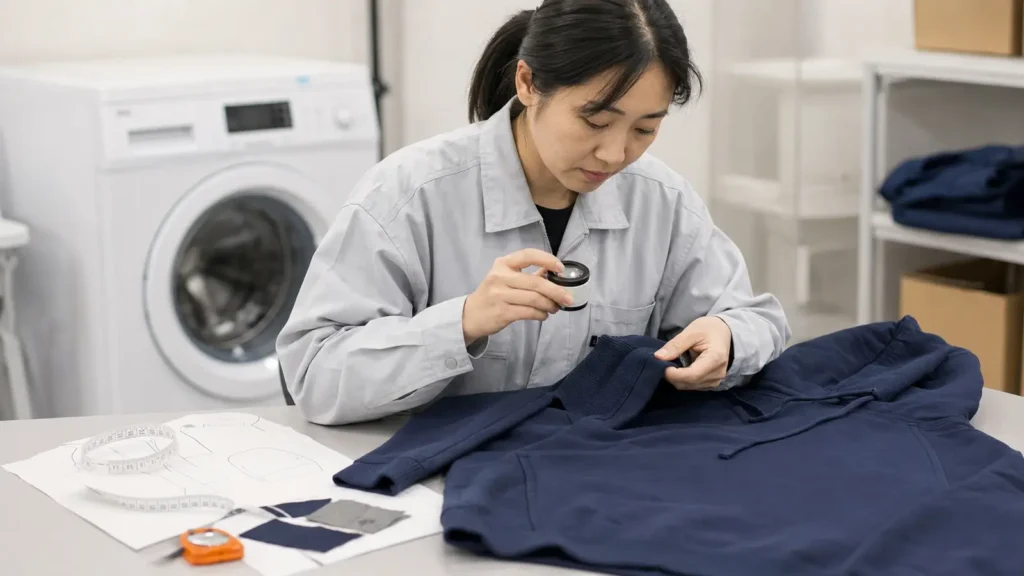
The purpose of a wash test is to confirm that the finished product remains within the agreed requirements after a defined care process.
- Record the test sample. Note the sample version, color, size, fabric lot when known, decoration method, and date.
- Condition and measure it consistently. Measure chest width, body length, sleeve length, hem, cuff, and other critical points using the agreed method.
- Photograph the original appearance. Capture color, print surface, embroidery, patch edges, seams, and interior fleece.
- Use the proposed care method. Record machine type, cycle, water temperature, detergent, load, and drying method.
- Repeat the agreed number of cycles. One wash may reveal major failure; several cycles provide a more useful view of repeat-care behavior.
- Condition and remeasure. Do not compare a wet garment with a dry original.
- Inspect the complete garment. Check dimensional change, twisting, shade, pilling, fleece matting, seam puckering, zipper function, label legibility, and decoration adhesion or cracking.
- Approve with written limits. Record acceptable tolerances and retain the approved sample or clear signed records for bulk comparison.
For U.S. retail programs, care instructions require a reasonable basis. The FTC notes that component tests may support instructions only when there is reliable evidence that the entire garment will not be damaged. If one component bleeds, shrinks, or separates from another, a fabric-only result is not enough.
Questions to Ask a Custom Hoodie Supplier
Before approving a quotation or purchase order, ask:
- What are the exact fiber composition, finished fabric weight, knit structure, and interior finish?
- Is the quoted fabric identical to the sample fabric, or is the sample for construction only?
- What dimensional-change method and tolerances are used for the finished hoodie?
- Are the body fabric, rib, sewing thread, lining, and decoration tested together?
- How is screen-print curing or heat-transfer application controlled?
- What happens if the logo placement, shade, measurements, or wash result falls outside the approved standard?
- Can you provide a pre-production sample with the actual fabric, color, labels, and decoration?
- How are bulk units checked for measurements, sewing defects, stains, and decoration consistency?
- Can private care labels be produced for the destination market and required language?
- How are repeat-order color, fabric, and trim references retained?
Information to Send for a Fast, Accurate Quotation
An effective request for quotation should include:
- organization or brand name;
- destination country and postal code;
- total quantity and quantity by color;
- pullover or zip-up construction;
- reference image or tech pack;
- preferred fiber blend, GSM, and interior finish;
- Pantone references or physical color standard;
- size range and size breakdown;
- vector logo file and decoration dimensions;
- embroidery, screen print, heat transfer, or patch preference;
- private label and packaging requirements;
- target sample date and bulk delivery date; and
- intended care method or wash-performance requirement.
If a detail is undecided, say so. A supplier can present options more accurately when priorities such as handfeel, stability, durability, appearance, and target price are clear.
Common Mistakes When Buying or Caring for Hoodies
Assuming every cotton hoodie uses the same wash settings
Fiber content alone does not define the finished garment. Knit structure, dyeing, brushing, rib, decoration, and stabilization matter.
Using high heat to save time
A fast high-heat dry may create the very shrinkage or surface damage the user is trying to avoid. Select the lowest permitted stress and stop promptly.
Washing soft fleece with rough items
Color sorting is not enough. Fabric weight and hardware determine abrasion.
Approving an unwashed sample
A visually perfect sample can change after laundering. Approval should include the appearance and measurements after the agreed test.
Writing a care label from habit
Copying the same instruction onto every hoodie is risky. The claim should be supported for the finished combination of fabric, trim, color, and decoration.
Promising “zero shrinkage”
Textile products can change within a tolerance. Professional buyers should request a defined method and acceptable limit rather than an absolute promise.
Why Work With JIUMU on Custom Hoodies?
JIUMU supports B2B custom teamwear, logo apparel, and private-label merchandise programs for buyers in North America and Europe. Custom hoodie options can include OEM/ODM development, fabric sourcing, Pantone color matching, embroidery, screen printing, heat transfer, woven and rubber/PVC patches, leather-style patches, private labels, hangtags, and custom packaging.
The typical MOQ is 50 pieces, subject to product construction and customization. Buyers can request digital mockups and physical samples before bulk production. Quality-control and export support help teams, schools, distributors, promotional companies, and apparel brands translate an idea into a controlled specification.
The practical advantage is aligning material, fit, decoration, label, packaging, and sampling decisions with the intended market and care expectations.
Frequently Asked Questions
Final Recommendation
The simplest way to wash hoodies without shrinking is to control the variables that create avoidable stress: heat, abrasion, chemical strength, overloading, and drying time. Read the care label, prepare the garment, wash it inside out in cold water on a gentle or short cycle when permitted, dose detergent accurately, and dry with the lowest-stress approved method.
For B2B programs, go one step earlier. Select a fabric and construction that match the use case, test the actual decorated sample, define tolerances, and support the care label with evidence. That process protects the wearer’s experience and gives schools, teams, brands, and distributors a clearer standard for bulk approval.

Sources and Further Reading
- Federal Trade Commission — Clothes Captioning: Complying with the Care Labeling Rule
- American Cleaning Institute — Laundry Basics
- Whirlpool — How to Prevent Clothes from Shrinking
- Whirlpool — Laundry Care Symbols Explained
- JIUMU — Custom Hoodies for Teams, Brands & Events
About JIUMU
JIUMU supports B2B custom teamwear, logo apparel, custom hoodies, uniforms, bags, and branded merchandise programs. Services include OEM/ODM development, decoration, fabric and color coordination, private labels, packaging, sampling, quality control, and export support.