Custom Baseball Uniforms: Direct Factory vs. Local Decorators (2026 B2B Cost & Sourcing Guide)
When outfitting 50 to 500+ baseball players across multiple teams, leagues, or brand collections, procurement managers face a critical crossroad: Should you source directly from an overseas OEM manufacturer, or work with a domestic local decorator?
Both procurement routes have distinct advantages depending on your order volume, customization complexity, timeline, and budget constraints. This comprehensive guide provides an objective cost breakdown, timeline comparison, and workflow analysis to help athletic directors, uniform dealers, and sportswear brands make the right purchasing decision for their 2026 season.
Quick Decision Matrix: Direct Factory vs. Local Decorator
Use the matrix below as a fast screening tool. It compares the seven factors that most often decide a baseball uniform sourcing program: order size, unit cost, personalization depth, coordinated packages, lead time, private label packaging, and quality control ownership.
| Metric | Direct OEM Factory (e.g., JIUMU Gear) | Domestic / Local Decorator |
|---|---|---|
| Ideal Order Size | 50 to 500+ sets across multiple teams, leagues, or seasons | 1 to 40 sets, single team or walk-in orders |
| Cost per Set | $35 – $58 (jersey + pants, decorated) | $75 – $140 (blank + decoration + markup) |
| Personalization | Full roster names/numbers, multi-color twill, sublimation, tackle twill, embroidered patches | Typically heat-press vinyl or single-color embroidery; multi-layer twill is limited |
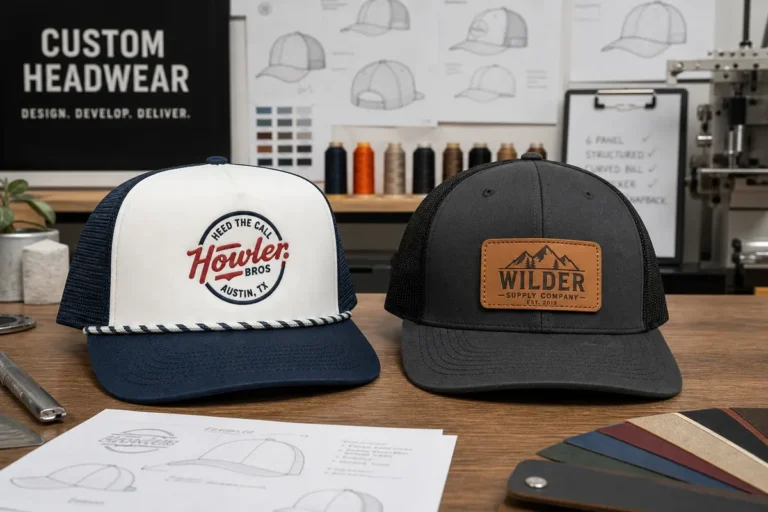
| Coordinated Packages | Uniforms + caps + bags + socks in one Pantone lock, one PO, one shipment | Separate vendors for apparel, headwear, and bags; color drift is common |
| Lead Time | ~35 – 42 days production (plus 7 – 12 days freight) | ~14 – 21 days from approved art |
| Private Label Packaging | Custom hangtags, polybags, size stickers, and carton labeling included at low MOQ | Rarely offered; usually blank polybags or none |
| Quality Control | In-house QC team, AQL inspection, pre-shipment sample approval | Varies by shop; limited ability to control upstream fabric and stitch quality |
| Customization Ceiling | Pattern, fit, fabric weight, panel construction all modifiable | Constrained by the blanks and equipment on hand |
1. What Is the Actual Cost Breakdown of a Custom Baseball Uniform?
To judge any quote fairly, you need to know what is inside it. A properly built custom baseball uniform carries five cost centers, and their proportions hold steady whether you buy from a factory in China or from a decorator in your own city.
| Cost Center | Share of Unit Cost | What It Covers |
|---|---|---|
| Fabric & trims | ~30% | Performance knit, twill, buttons, zippers, drawcords, elastic, thread |
| Decoration | ~28% | Embroidery, tackle twill, sublimation, screen print, patches, heat transfer |
| Cut-and-sew labor | ~22% | Pattern making, cutting, sewing, assembly, finishing |
| Roster personalization | ~10% | Individual player names, numbers, sleeve flags, league patches |
| Labels & packaging | ~10% | Woven labels, hangtags, polybags, size stickers, carton marking |
Here is the structural reason local decorators charge two to three times more. A domestic decorator does not manufacture the garment — they buy blanks from a distributor, then add decoration. That path stacks a distributor margin, a decorator margin, and often a rush-service fee on top of the same underlying factory cost. When a $35–$58 factory-built set passes through two resale layers, the end price lands at $75–$140 for a product with a lower customization ceiling.
Direct factory sourcing collapses those layers. You pay for fabric, decoration, labor, personalization, and packaging — and nothing else. That is the single largest controllable saving in a 2026 uniform budget.
2. Comparing Manufacturing Workflows & Capabilities
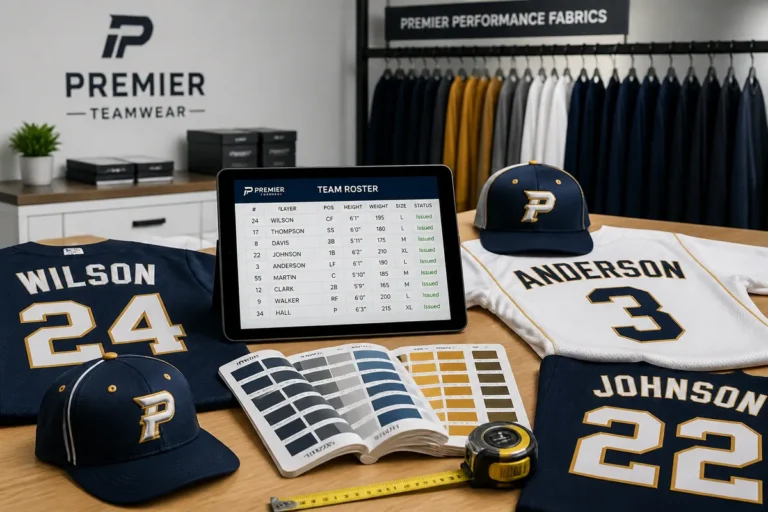
Direct OEM factory route. Your artwork enters a pattern room, not a print queue. The factory can adjust sleeve length, placket width, panel breaks, fabric weight, and fit grading before a single garment is cut. Because uniforms, caps, and bags are produced inside the same facility, one Pantone approval governs every product in the package. Roster data — names, numbers, sizes — is loaded once and mapped across all styles, which eliminates the size-to-name mismatch errors that plague multi-vendor programs.
Domestic decorator route. Decoration happens on finished blanks, so the decorator controls only ink, thread, and press settings. Pattern changes are impossible, cross-product Pantone synchronization depends on which supplier each blank came from, and roster management is usually handled manually per order. The trade-off is genuine: the decorator is fast, local, and easy to talk to face to face.
The practical rule: choose the decorator route when speed and small quantity matter most, and the direct factory route when cost, coordination, and brand consistency matter most.
3. Lead Time Breakdown: Planning for Opening Day
Lead time is the one factor that can override every cost advantage. Plan backwards from your first scrimmage, not from your purchase order date.
| Stage | Direct OEM Factory | Local Decorator |
|---|---|---|
| Artwork & Pantone approval | 3 – 5 days | 1 – 2 days |
| Sample / pre-production | 7 – 10 days | 2 – 4 days (if blank in stock) |
| Bulk production | 25 – 27 days | 7 – 12 days |
| Freight / delivery | 7 – 12 days (air) · 25 – 35 days (sea) | 1 – 3 days local courier |
| Total to door | ~35 – 42 days + freight | ~14 – 21 days |
Visual timeline for a spring 2026 season: confirm PO in early January → Pantone and sample sign-off by mid-January → bulk sewing through February → air freight arrival in early March → two weeks of buffer before opening day. That buffer is what protects you from a customs delay or a port congestion week.
If your timeline is under 30 days, say so at the quoting stage. A factory with existing patterns and a live roster file can compress the approval stages considerably, but no supplier can compress fabric production.
4. How JIUMU Solves the Multi-Product Color & Sizing Dilemma
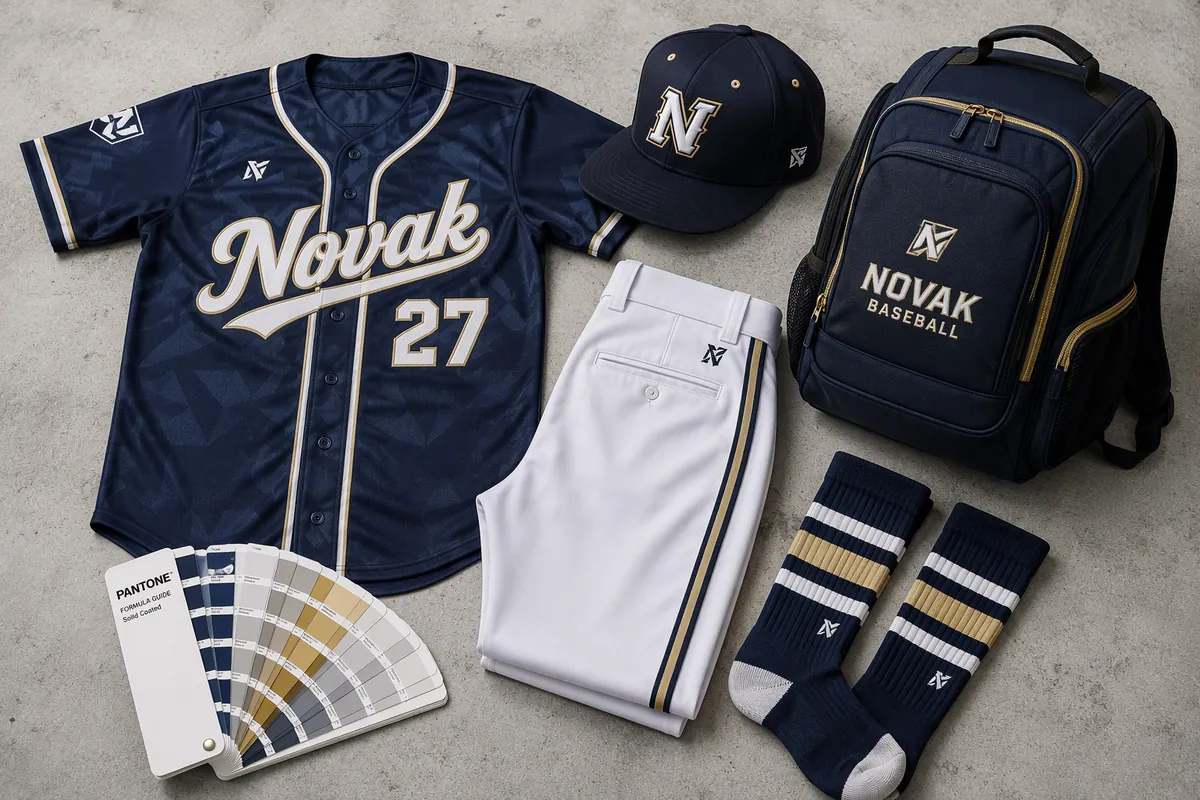
- Unified Pantone approval. One approved color standard governs jerseys, pants, caps, and bags. Your navy is the same navy on every product, from every production run, across every season.
- Standardized master roster. Submit your player list once — name, number, size per team. JIUMU maps it across all garments and headwear, so jersey #27 and cap #27 are produced together and packed together.
- Low B2B minimums. MOQ 50 per style for uniforms and caps, and MOQ 20 for bags. Small enough for a single club program, scalable to a full league rollout or a brand’s seasonal collection.
- Consolidated shipping. Uniforms, caps, and bags ship as one consolidated order with carton-level packing lists, so your receiving team checks in one shipment instead of four.
Frequently Asked Questions (FAQ)
What is the minimum order quantity for custom baseball uniforms?
JIUMU’s MOQ is 50 pieces per style for uniforms and caps, and 20 pieces for bags. Custom sizes and roster personalization are included at no extra minimum, which means a 50-piece order can already mix multiple sizes and individually named, numbered garments.
Can each player have their own name and number?
Yes. Individual player names and numbers are a standard part of the program, not a surcharge. Provide a roster spreadsheet with name, number, and size per player, and the factory produces and packs each set accordingly. Names are typically applied as embroidered or tackle twill lettering, and numbers can be produced as twill, sublimated, or embroidered depending on your jersey style.
How do you guarantee Pantone color matching across products?
Colors are locked with a single approved Pantone reference that applies to fabric dyeing, thread, twill, and print across all product categories. You approve one standard, and jerseys, pants, caps, and bags are produced against that same standard. Where exact Pantone matching is impossible on a specific fabric or substrate, the factory flags it during sampling so you approve the closest achievable match before bulk production begins.
What are the sampling lead times?
Pre-production samples typically take 7 to 10 days after artwork and Pantone approval, followed by 25 to 27 days for bulk production and 7 to 12 days of air freight. Plan on roughly 35 to 42 days total to your door for a standard order, and start the process at least two months before your first game date.
Related Guides & Resources
Deepen your baseball program sourcing with these related product pages and guides:
- Baseball team uniform packages — jerseys, pants, caps, socks, and bags in one coordinated order.
- Custom baseball jerseys — sublimated and tackle-twill jerseys built to your exact team spec.
- Custom hats — matching headwear produced against the same approved Pantone standard.
- Custom hat decoration methods — compare 3D puff embroidery, patches, and screen printing.
- Multi-product team roster management workflow — prevent sizing and color errors across large orders.
- Contact us for a factory-direct quote.
Ready to Quote Your 2026 Team or Brand Package?
Send your artwork, roster, and target quantity, and JIUMU Gear will return a line-item quote covering uniforms, caps, and bags — with one Pantone standard, one PO, and one shipment. Custom baseball uniforms at factory pricing, MOQ 50, no distributor markup.