
China Custom Apparel Shipping and Incoterms Guide
Short answer: China custom apparel shipping should be planned by confirming carton volume and weight, required delivery date, transport mode, Incoterm, customs documents, insurance and destination charges. Compare quotes on the same responsibility boundary—not freight price alone.
Shipping Starts Before Production Ends
Apparel buyers should reserve time for final inspection, rework, export booking, customs clearance and destination delivery. A production completion date is not the same as an arrival date. Peak seasons, port congestion and customs questions can change schedules.
Air, Ocean, Rail or Courier?
| Mode | Useful for | Watch |
|---|---|---|
| Courier | Samples and small urgent parcels | Dimensional weight and destination fees |
| Air freight | Urgent commercial orders | Chargeable weight and airport handling |
| Ocean freight | Larger, less urgent shipments | Longer transit and port charges |
| Rail or combined transport | Selected routes and schedules | Availability, transfers and border handling |
Incoterms Buyers Commonly Encounter
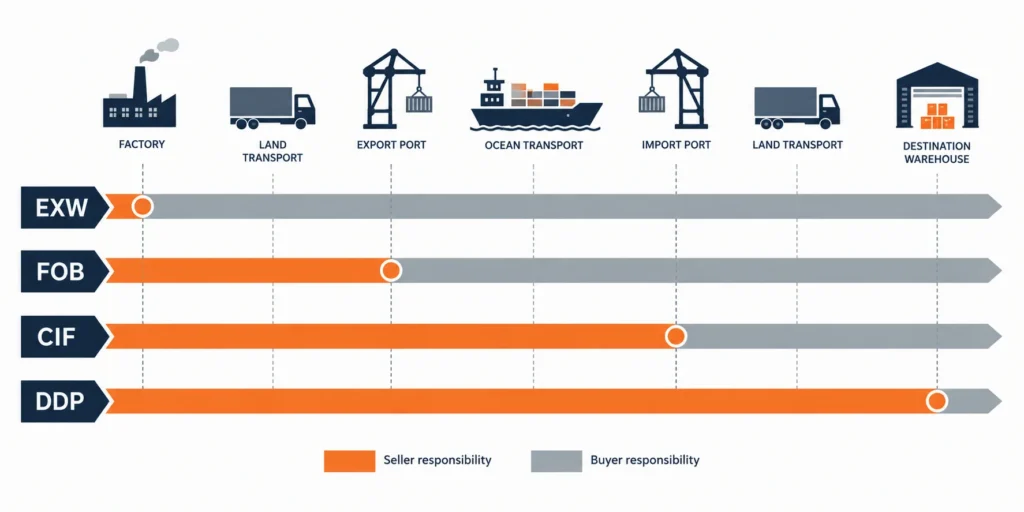
Incoterms define delivery responsibilities, costs and risk-transfer points. They do not automatically define payment terms, ownership transfer, product compliance or every customs obligation. Confirm the named place and edition in the contract.
| Term | Practical buyer question |
|---|---|
| EXW | Who collects, clears export and manages origin charges? |
| FOB | Which named port and who books ocean transport? |
| CIF | What freight and insurance scope is included to the named port? |
| DDP | Can the seller legally and reliably handle import clearance and taxes? |
Information Needed for a Freight Quote
- Carton count, dimensions, gross and net weight
- Pickup address and destination postal code or port
- Commodity description and material composition
- Required arrival date
- Incoterm and named place
- Commercial value and insurance requirement
- Importer-of-record arrangement
Documents and Packing
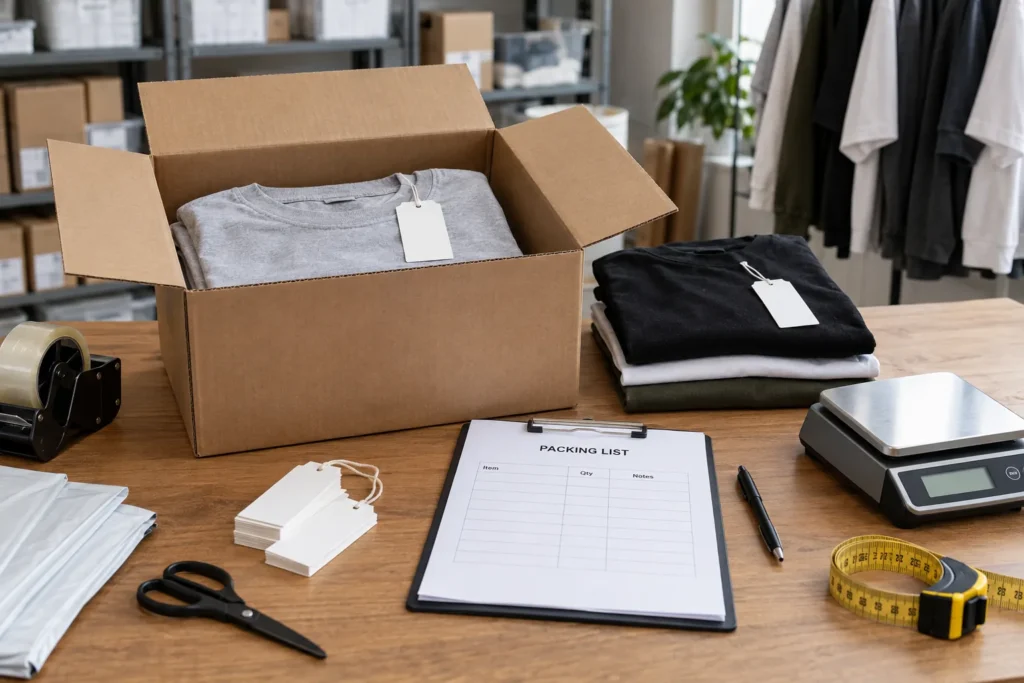
Typical documents may include commercial invoice, packing list, transport document and origin or compliance records when applicable. Requirements vary by destination and product. Verify current rules with the importer, customs broker or qualified adviser.
Common Shipping Mistakes
- Comparing EXW with DDP as if both include the same services
- Using estimated cartons after packaging changes
- Ignoring dimensional weight for air shipments
- Booking before final inspection is complete
- Leaving importer and duty responsibility unclear
- Assuming transit time includes customs and final delivery
Compare Shipping Quotes on the Same Basis
A low freight figure is not automatically the lowest landed cost. Ask each provider to quote the same shipment details, Incoterm, named place, pickup scope and destination service. Separate the main freight from origin handling, documentation, customs brokerage, duties, taxes, storage, inspection and final delivery. Confirm whether the quote is based on actual weight, dimensional weight or container utilization.
| Quote item | Buyer check |
|---|---|
| Route and mode | Origin, destination, direct or transshipment service |
| Timing | Booking cutoff, estimated departure, transit and delivery scope |
| Included charges | Origin, main carriage and destination items |
| Excluded charges | Duties, taxes, examination, storage and exceptional fees |
| Validity | Expiry date, currency and surcharge conditions |
Create a Shipping Timeline With Buffers
Work backward from the required arrival date. Include bulk completion, final inspection, correction allowance, carton measurement, booking confirmation, export handling, transit, customs clearance and last-mile delivery. Do not promise customers an arrival date based only on a carrier transit estimate.
For launch dates, tournaments or retail promotions, identify the latest acceptable dispatch date and a contingency option. A split shipment may be considered when a small urgent quantity is worth sending by air while the balance moves by ocean, but compare the extra handling and documentation cost before approval.
Shipping Information for an Accurate Apparel Quote
- Product type, material composition and customs description
- Final quantity and size assortment
- Estimated or confirmed carton dimensions and weights
- Pickup location and complete destination
- Required arrival date and acceptable transport modes
- Requested Incoterm with named port or place
- Importer, broker and tax-registration arrangements
- Insurance value and any special packing requirement
What Incoterms Do—and Do Not—Define
Incoterms allocate specified delivery tasks, costs and risks between seller and buyer. They do not by themselves define product quality, payment terms, transfer of ownership, remedies for delay or every customs obligation. The sales contract should name the selected rule, the precise place or port and the edition, for example “FCA [named place], Incoterms 2020.” Consult the official ICC Incoterms rules overview and obtain professional customs or legal advice when required.
Build a Landed-Cost Comparison
| Cost group | Possible items | Evidence to request |
|---|---|---|
| Origin | Pickup, export handling, documentation and terminal charges | Itemized forwarder quotation |
| Main transport | Air, ocean, rail or courier freight and surcharges | Chargeable weight or volume basis |
| Destination | Terminal, brokerage, delivery and storage | Named destination and exclusions |
| Government charges | Duties, taxes and inspection fees | Classification and importer guidance |
| Risk protection | Insurance and contingency allowance | Coverage, insured value and exclusions |
Do not compare only the headline freight amount. Confirm currency, validity period, included free time, peak-season surcharge assumptions and who pays if weight or volume differs from the estimate.
Handover Document Checklist
- Commercial invoice and packing list using consistent quantities and values.
- Transport document appropriate to the shipping mode.
- Carton count, dimensions, gross and net weight.
- Product description and classification information for broker review.
- Origin, testing or compliance documents required for the destination.
- Buyer and consignee contact details plus delivery instructions.
Plan for Delay and Exception Handling
Agree who monitors booking, cutoff, departure, transshipment, arrival and customs release. Define what happens when production misses the booked vessel or flight, documents contain an error, customs requests additional evidence or the consignee cannot receive cargo. A realistic delivery plan includes decision time and contingency, not only transit time.
Buyer Release Gate Before Shipping
Before cargo leaves, confirm final quantity, inspection status, approved deviations, packing, carton marks, document drafts, shipping instruction and consignee readiness. Record approval in one dated release message. Shipping approval should not be inferred from a casual discussion about an estimated departure date.
Frequently Asked Questions
Which Incoterm is best?
There is no universal best term. The right choice depends on the buyer’s logistics capability, destination, shipment mode, tax arrangements and desired control.
Can a manufacturer guarantee customs clearance?
Clearance depends on accurate documents, product compliance and destination authorities. Define responsibilities, but avoid treating customs outcomes as unconditional guarantees.
Request a Shipping-Ready Apparel Quote
Send JIUMU the product, quantity, destination, deadline and preferred Incoterm. Review our cost breakdown, then request a project-based quotation.