EXW vs FOB vs DDP for Custom Apparel Orders
The lowest custom apparel quotation is not always the lowest delivered cost. A supplier may quote EXW, FOB or DDP for the same jerseys, caps or team uniforms, yet each price covers a different part of the international journey. If the named place, transport mode and responsibilities are not clear, an apparently inexpensive order can accumulate pickup fees, origin terminal charges, brokerage, duty, tax, storage and final-mile delivery costs.
This guide compares EXW, FOB and DDP under Incoterms® 2020 from a purchasing perspective. It is designed for schools, sports clubs, distributors, uniform dealers, promotional buyers and private-label brands sourcing custom apparel from another country. It is practical guidance, not customs or legal advice; classification, importer eligibility, taxes and product rules must be checked for the actual destination and shipment.
Quick answer:EXW gives the buyer the most logistics responsibility: the buyer arranges pickup at the seller’s named place, export and import clearance, freight, duties and delivery. FOB requires the seller to clear the goods for export and load them on board the buyer’s nominated vessel at the named port; the buyer controls and pays for the main ocean freight, import clearance, duties and final delivery. DDP gives the seller the broadest obligation: the seller arranges transport and handles export and import formalities, including applicable import duties and taxes, to the named destination, while the buyer normally unloads. For a first import, DDP can be operationally easier only if the seller can legally and reliably complete destination-country import formalities. EXW is usually the hardest starting point. For container shipments or air freight, FCA or DAP may be more appropriate alternatives.
What Incoterms® do—and do not—control
Incoterms® rules are published by the International Chamber of Commerce. They allocate specific delivery tasks, costs and risks between seller and buyer. The ICC describes them as standards that clarify the tasks, costs and risks involved in delivery. They work only when incorporated into the sales contract with a precise named place or port and a stated version, such as “FOB Yantian Port, China, Incoterms® 2020.”
Incoterms® do not by themselves determine product quality, price adjustment, payment timing, transfer of legal title, remedies for breach, governing law, dispute resolution, intellectual property, force majeure or every customs-compliance obligation. Those issues belong in the purchase agreement, specification, approved sample and other commercial documents.
Never accept a three-letter term without a named place
“FOB China” is incomplete. “DDP USA” is incomplete. The precise port, terminal, warehouse or street address affects delivery, risk and cost. Add “Incoterms® 2020” so both parties reference the same edition.
EXW vs FOB vs DDP responsibility comparison
| Task or cost | EXW | FOB | DDP |
|---|---|---|---|
| Make goods available and pack for agreed transport | Seller | Seller | Seller |
| Load at seller’s premises | Buyer, unless separately agreed | Seller bears obligations needed to deliver on board | Seller as part of arranged carriage |
| Pickup / inland transport in export country | Buyer | Seller to named port of shipment | Seller |
| Export clearance | Buyer, with seller assistance where required under the rule | Seller | Seller |
| Main international freight | Buyer | Buyer contracts and pays ocean carrier | Seller |
| Cargo insurance required by the term | Neither party is required by EXW | Neither party is required by FOB | Neither party is required by DDP |
| Import clearance | Buyer | Buyer | Seller |
| Import duty and applicable import taxes | Buyer | Buyer | Seller under DDP allocation |
| Destination terminal / handling | Buyer | Buyer after FOB delivery, subject to carrier contract | Seller until delivery at named destination, subject to agreed scope |
| Final delivery to named destination | Buyer | Buyer | Seller |
| Unloading at final destination | Buyer | Buyer | Buyer unless included in seller’s carriage contract or separately agreed |
| Typical buyer logistics control | Highest | High after vessel loading | Lowest |
The table summarizes the contractual allocation, not every local charge. Carrier tariffs, port practices, security fees, customs exams, demurrage, detention, storage, inspections and delays can still create cost questions. Put charge definitions and documentary responsibilities into the quotation and contract.
EXW for custom apparel: maximum control, maximum buyer coordination
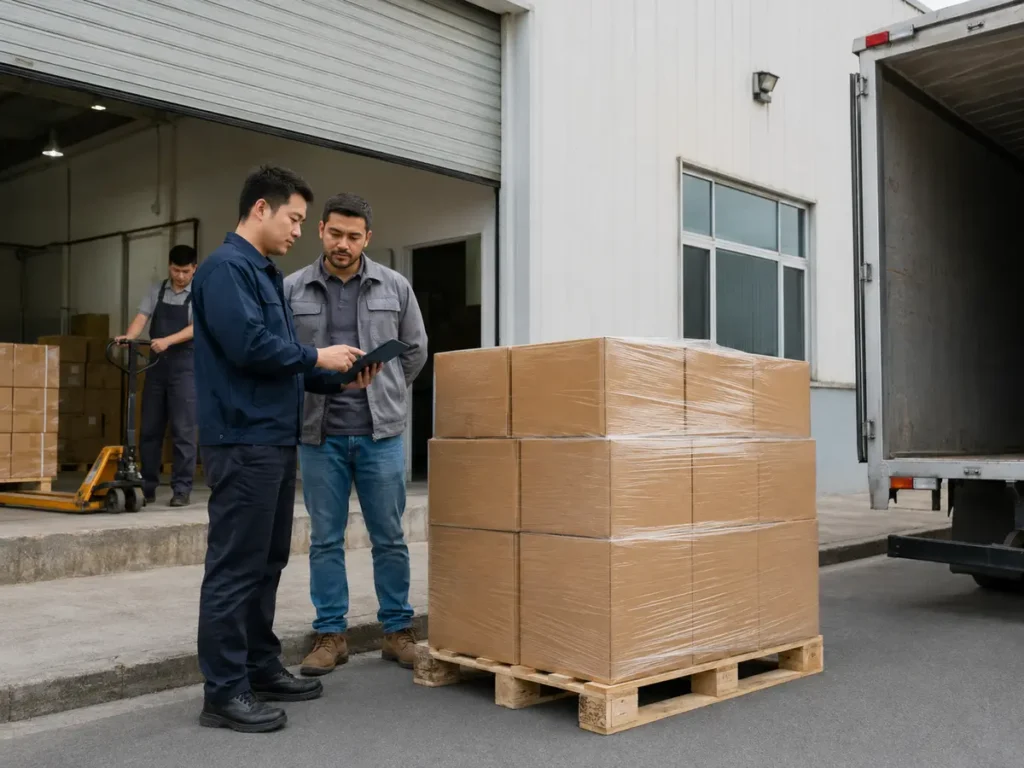
EXW means Ex Works. The seller delivers by placing the goods at the buyer’s disposal at the named place—often the supplier’s premises—without an obligation to load the collecting vehicle or clear the goods for export. The buyer arranges the journey from that point, including pickup, origin transport, export formalities, international freight, import clearance, duties and destination delivery. The ICC’s comparison of EXW and DDP confirms that EXW does not require the seller to contract transport or clear export customs.
When EXW can work well
- The buyer has an experienced freight forwarder with reliable origin-country coverage.
- The buyer consolidates apparel from several suppliers into one shipment.
- The buyer wants control over carrier selection, routing, insurance and cost negotiation.
- The buyer understands export and import documentary requirements and can coordinate pickup windows.
Why EXW can be difficult for a first-time importer
A foreign buyer may not be able to act as the formal exporter in the seller’s country. The buyer’s forwarder may need the seller’s documents or local cooperation, and responsibility for loading can conflict with the operational reality that only the supplier’s staff may be allowed to use equipment at the premises. A missed pickup, incorrect export filing or disagreement about origin charges can delay the order before it leaves the country.
For these reasons, FCA—Free Carrier—often deserves consideration. Under FCA at the seller’s premises, the seller clears the goods for export and delivers them to the buyer’s nominated carrier, with loading responsibility allocated according to the named place. This can preserve buyer control of main freight without forcing the foreign buyer to manage export clearance under EXW.
EXW quotation questions
Ask for the exact pickup address, carton count, gross weight, carton dimensions, pallet status, loading availability, pickup hours, export-document assistance, readiness date and any warehouse or waiting fees. Give the forwarder the data before comparing the EXW price with another term.
FOB for custom apparel: seller to vessel, buyer from vessel onward
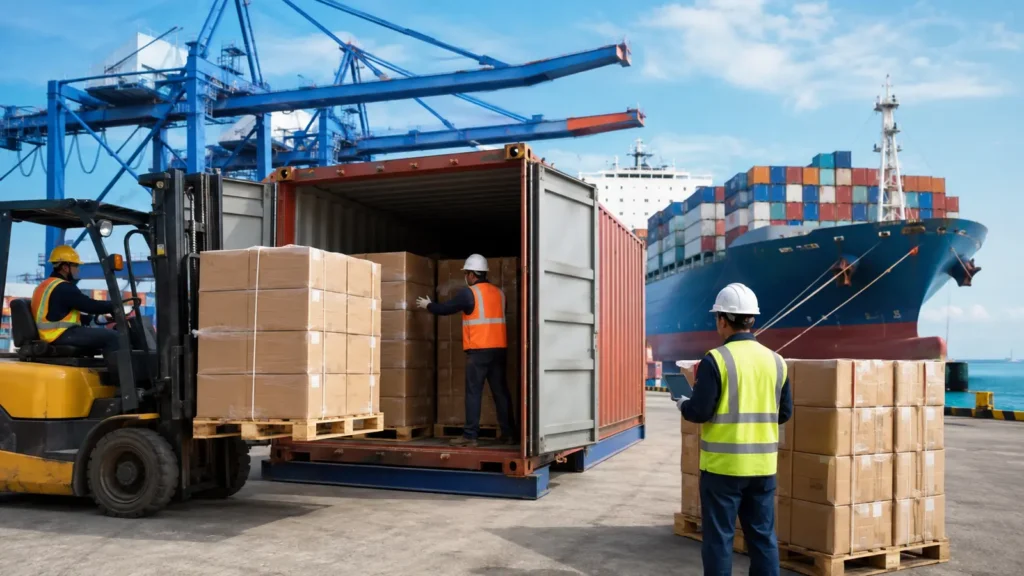
FOB means Free On Board. The seller delivers when the goods are loaded on board the vessel nominated by the buyer at the named port of shipment. The seller handles export clearance and the costs and risks needed to reach onboard delivery. The buyer contracts the ocean carrier, pays main freight and manages insurance if desired, destination handling, import clearance, duties and final delivery. Risk transfers when the goods are on board, even though the buyer receives them later.
The ICC states that FOB applies only to sea or inland waterway transport. It is not an air-freight term. A quote such as “FOB Guangzhou Airport” is therefore structurally wrong; FCA is the normal rule to examine when the buyer controls air freight.
Why buyers choose FOB
- The seller can manage origin transport, port coordination and export declaration.
- The buyer has a forwarder or annual carrier arrangement and wants control of ocean freight.
- The buyer wants destination charges and broker selection visible rather than bundled into one door price.
- The shipment is genuinely within FOB’s sea or inland-waterway scope.
The container-shipment caution
Custom apparel commonly travels in containers, and containers are usually handed to a terminal before they are physically loaded on board. That creates a gap between the seller losing practical custody and the FOB delivery point. ICC guidance explains that FOB should not normally be used for container shipments and points to FCA as the more appropriate rule in many cases. Commercial practice still uses FOB widely, but the contract should reflect the actual handover.
If FOB is retained, specify the named port, booking procedure, shipping instructions deadline, verified gross mass responsibility where applicable, documentation, origin terminal charges, cutoff date, and consequences if the buyer’s vessel is delayed or the booking changes. “FOB port” should not be treated as a promise that every origin charge is automatically included.
Need a shipping-basis quotation for custom teamwear?
Send JIUMU the product type, quantity, destination, target delivery date, preferred transport mode and whether you already have a freight forwarder. We can prepare the product and packing information needed to compare practical shipping options. Explore custom team jerseys or request a quotation.
DDP for custom apparel: seller manages delivery and import burden
DDP means Delivered Duty Paid. It places the broadest delivery obligation on the seller among the Incoterms® rules. The seller arranges transport to the named destination and handles export, transit and import formalities, including applicable import duties and taxes. Delivery occurs when the goods are placed at the buyer’s disposal at the named destination, ready for unloading; the buyer normally unloads.
DDP can feel like a door-to-door purchase, but “door” must be an exact location and access must be practical. A freight vehicle may need an appointment, liftgate, loading dock, pallet breakdown or residential surcharge. The contract should state whether the delivery point is curbside, dock, warehouse floor or another defined location.

DDP is not automatically risk-free for the buyer
The seller must be able to complete import formalities in the destination country. This may require a local entity, fiscal representation, a customs broker willing to act within local rules, registrations or other arrangements. A logistics provider’s willingness to quote “DDP” is not proof that the structure is legally or operationally correct.
For the United States, CBP reminds importers that the importer of record remains responsible for the correctness of entry documentation even when a broker is used. For EU customs declarations, an EORI number may be required for the relevant operator. Import VAT, GST or similar taxes may have recovery and invoicing rules that differ from customs duty. If the seller pays tax through a route that does not give the buyer valid recovery documentation, a VAT-registered buyer may lose an expected credit.
If the seller cannot legally complete import clearance, DAP—Delivered at Place—may be cleaner: the seller arranges transport to the named destination, while the buyer handles import clearance and import duties/taxes. This preserves door transport while keeping importer status with the buyer.
Verify DDP before accepting it
Ask who will be the importer of record or declarant, which broker will be used, how HS classification and customs value will be approved, which duties and taxes are included, whether import tax documentation supports any intended recovery, how customs exams or storage are treated, and what happens if tariff rates or regulations change before entry.
Delivery point, cost point and risk point are not the same thing
Buyers often focus only on who pays freight. Incoterms® also define delivery and risk transfer, and these can occur long before the shipment arrives at the destination.
| Term | Delivery / risk transfer point | Main consequence for buyer |
|---|---|---|
| EXW | When goods are placed at the buyer’s disposal at the named place, not loaded. | Buyer bears transit risk from the origin handover and should coordinate suitable insurance. |
| FOB | When goods are on board the nominated vessel at the named port of shipment. | Buyer bears risk during the ocean voyage even if seller prepared export documents. |
| DDP | At the named destination, goods available to buyer on the arriving means of transport, ready for unloading. | Seller bears transit risk to destination, but the buyer needs an unloading plan and must verify the import structure. |
None of EXW, FOB or DDP requires one party to purchase cargo insurance for the other. The party bearing risk should decide whether to insure and should understand exclusions, deductibles, valuation, claim documents and geographic scope. Do not assume that “freight included” means “insurance included.”
Sea freight, air freight and courier shipments
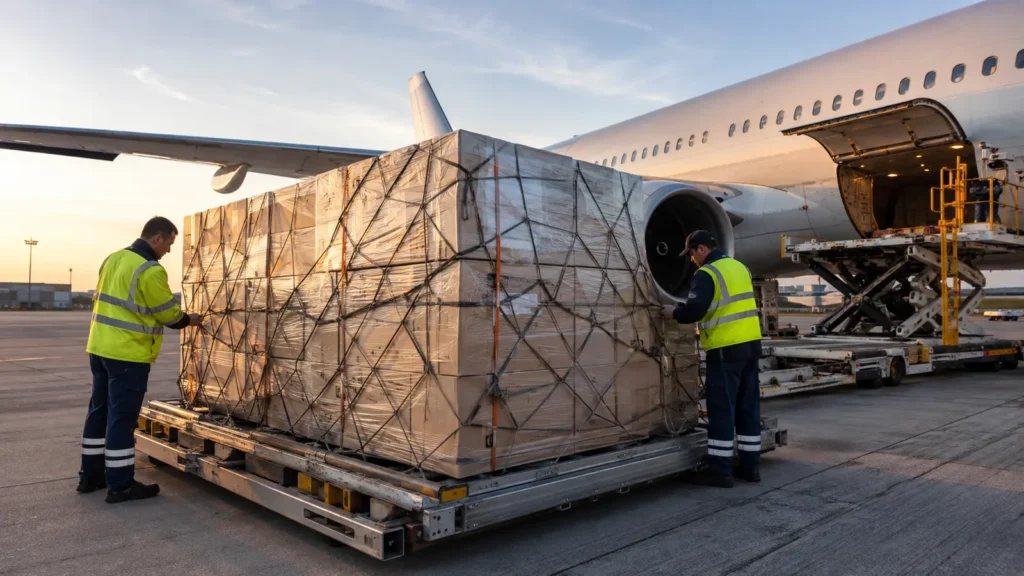
Transport mode affects both term selection and cost structure. Ocean freight may suit larger, less urgent apparel orders, but buyers must account for port cutoffs, container or consolidation handling, destination charges and inland delivery. Air freight is faster but chargeable weight can be driven by carton volume rather than scale weight. Express courier may simplify small samples or urgent cartons, yet customs brokerage, duty and tax treatment must still be understood.
| Shipment situation | Term to examine | Why |
|---|---|---|
| Buyer controls pickup and has strong origin operations | EXW, but compare FCA | EXW maximizes control; FCA can resolve export-clearance and loading issues. |
| Buyer controls ocean freight for conventional onboard delivery | FOB | Seller completes export and onboard delivery; buyer controls voyage onward. |
| Container handed to terminal before vessel loading | FCA terminal or agreed place | Delivery point can match the actual carrier handover better than FOB. |
| Buyer controls air freight | FCA airport/forwarder facility or seller premises | FCA supports any mode; FOB does not. |
| Buyer wants door transport but will be importer | DAP | Seller arranges transport; buyer controls import clearance and taxes. |
| Buyer wants seller-managed import and delivery | DDP after legal verification | Seller carries maximum delivery/customs obligation. |
Shipping and customs documents for apparel orders
Responsibility for clearance changes by term, but both parties still need accurate information. A typical shipment may require a commercial invoice, packing list, transport document, export declaration, import entry data, origin documentation where applicable, and product-specific records. The exact set depends on the route, value, goods and authorities.

Apparel classification can depend on garment type, knitted or woven construction, fiber composition, gender or age category and other features. Labels, origin marking, textile information, product safety and chemical restrictions can vary by market. The buyer should not select a term as a substitute for product compliance. Even under DDP, the brand owner or distributor may retain regulatory obligations that Incoterms® do not transfer.
How to compare landed cost instead of quotation price
Put each quotation into the same landed-cost model. A useful calculation includes:
- custom apparel product price and approved packaging;
- pickup, loading and origin inland transport;
- export declaration and origin terminal or handling fees;
- international freight and any peak, fuel or security surcharges;
- cargo insurance selected by the party bearing risk;
- destination terminal, deconsolidation and document fees;
- customs brokerage and bond or guarantee cost where applicable;
- customs duty, tariffs, import VAT/GST and other government charges;
- examination, storage, demurrage or detention exposure;
- final delivery, appointment, liftgate, pallet and unloading costs;
- bank, foreign exchange and payment fees; and
- a contingency for rate validity, classification review and delays.

Do not compare EXW goods value directly with a DDP door price. Ask each provider to identify what is included, excluded, estimated, subject to actual customs assessment or valid only for a limited time. For DDP, clarify whether changes in tariffs, tax rates, customs value or classification can be passed through after order confirmation.
Which term is best for a first-time apparel importer?
There is no universal winner, but there is a practical decision sequence.
Start with importer capability. Determine whether your company can act as importer, has required registrations, and has a broker or forwarder familiar with apparel.
Identify the actual transport mode. Do not request FOB for air freight. For containers, compare FCA with FOB.
Decide how much control you need. Buyers with negotiated freight and experienced partners may prefer FCA/FOB. Buyers without logistics infrastructure may prefer a verified DDP or DAP solution.
Verify DDP legality and documentation. Confirm importer identity, broker, duties/taxes, tax recovery documents and final-delivery scope before calling it “all included.”
Compare landed costs on the same basis. Include every origin, freight, customs, tax and destination line, plus risk and staff time.
Put the full term in the contract. State the rule, exact named place/port, Incoterms® 2020 and any agreed additions that do not contradict the rule.
Practical first-import recommendation
If the buyer has no forwarder, broker or import experience, EXW usually creates too many origin and customs tasks. A properly structured DDP quote can be simplest, but only after destination-country import capability is verified. If the buyer can serve as importer but wants the seller to arrange door transport, DAP may be more transparent. For buyers with a capable forwarder, FCA often offers a balanced first step; FOB may suit eligible ocean shipments where the buyer controls freight.
What to send for a comparable custom apparel freight quote
- Product type, fabric composition and construction method
- Order quantity, size breakdown and packaging method
- Expected carton count, dimensions, gross/net weight and pallet details
- Pickup address and readiness date
- Destination port, airport or complete delivery address
- Commercial transport mode and target arrival date
- Existing freight forwarder or customs broker details
- Requested Incoterms® rule, named place and 2020 version
- Whether quote includes export documents, insurance, duties, taxes, brokerage and final delivery
- Importer-of-record plan and buyer registrations
- Special delivery needs: dock, appointment, liftgate, residential or inside delivery
- Quote validity and treatment of rate or tariff changes
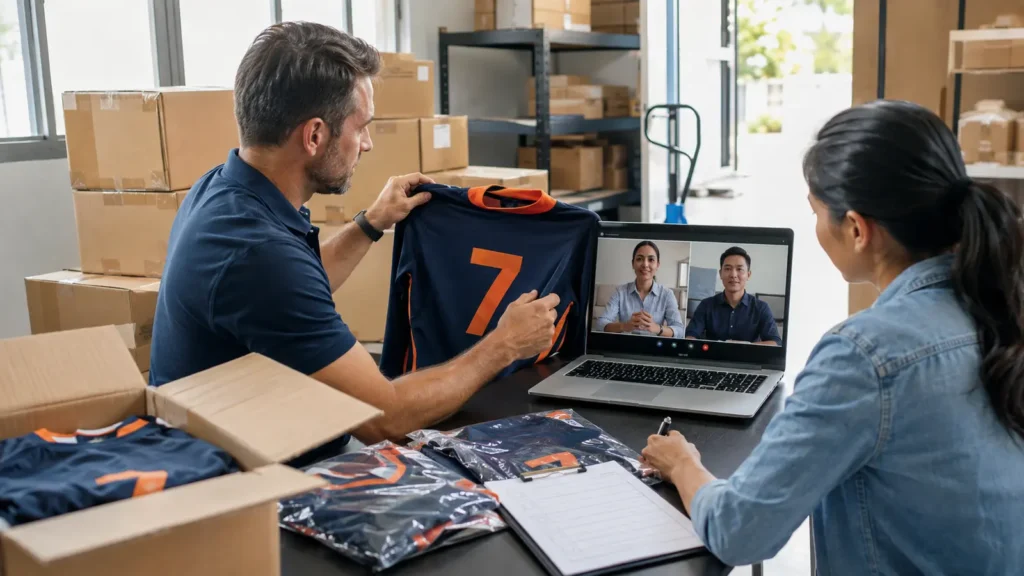
For product development, also send the reference image or tech pack, logo artwork, colors, decoration method, labels, packaging and target delivery date. Shipping cannot be quoted accurately until the packed volume and weight are reasonably known.
Common mistakes when choosing EXW, FOB or DDP
Choosing the lowest product quote. Convert every option to the same landed-cost basis.
Using FOB for air freight. FOB is restricted to sea and inland waterway transport; examine FCA for buyer-controlled air carriage.
Assuming FOB includes freight to destination. Under FOB, the buyer contracts and pays the vessel carriage.
Assuming DDP includes unloading. DDP delivery is normally ready for unloading; the buyer unloads unless the contract or carriage arrangement says otherwise.
Assuming DDP removes all importer compliance. Confirm importer identity, broker authority, record accuracy, product rules and tax documentation.
Assuming EXW means the supplier will load. The EXW rule does not obligate seller loading. Agree operational loading separately or consider FCA at the seller’s premises.
Leaving out the named place and version. Write the precise port/address and “Incoterms® 2020.”
Confusing risk with freight payment. Identify the delivery/risk point and arrange insurance deliberately.
How JIUMU supports custom apparel export orders
JIUMU supplies B2B custom teamwear, logo apparel, hats, uniforms, bags and branded merchandise for schools, sports clubs, distributors, uniform dealers, promotional buyers and private-label brands. Capabilities include OEM/ODM development, digital mockups, physical samples, sublimation, embroidery, screen printing, heat transfer, private labels, Pantone color matching, packaging customization and export support, subject to the selected product and specification.
JIUMU’s typical MOQ is 50 pieces, subject to product structure and customization. For a useful quotation, provide your product concept, quantity, decoration, labels, packaging, destination, target delivery date and preferred freight responsibility. Shipping terms and costs should be confirmed for the actual order; JIUMU does not replace the buyer’s customs broker, tax adviser or legal counsel.
Frequently Asked Questions
Final recommendation
Choose the term that matches the actual carrier handover, customs capability and level of control—not the shortest quote. EXW places almost the entire logistics chain on the buyer. FOB gives the seller origin/export responsibility but transfers ocean risk on board and leaves freight/import/delivery to the buyer. DDP gives the seller the broadest transport and customs burden through the named destination, but it must be legally workable and commercially transparent.
For every order, write the exact named place or port plus “Incoterms® 2020,” compare total landed cost, confirm the importer and broker, document insurance and unloading, and align the term with air, ocean or container operations. A clear responsibility matrix before production is cheaper than resolving a customs or destination-charge dispute after the apparel ships.
Request a custom apparel and packing quotation
Send your product type, quantity, logo or tech pack, decoration, labels, packaging, destination, preferred transport mode and delivery deadline to zhengdong@jiumugear.com, or contact JIUMU by WhatsApp/phone at +86 18507502899. Send your project details or View team uniform packages.