Should You Sign an NDA With a Clothing Manufacturer?
An NDA can be useful when a clothing brand must disclose unreleased designs, technical files, product construction, supplier information or launch plans to a manufacturer. It is most useful when it is signed by the correct legal entities before sensitive information is disclosed, defines the permitted manufacturing purpose, limits access and addresses anyone outside the main factory who may receive the information.
However, an NDA is not a magic shield. It cannot prevent every leak, it does not automatically give the buyer ownership of patterns or factory-developed files, and it does not replace trademark, copyright, patent or design-right protection. It works best as one layer in a larger system that includes controlled disclosure, secure file access, sample tracking, supplier due diligence and clear IP terms in the manufacturing agreement.
This guide is a commercial procurement checklist, not legal advice or a ready-to-sign contract. Laws, remedies and enforceability differ by country. Ask qualified counsel in the relevant jurisdictions to draft or review the final agreement.
Quick Answer: When Is an NDA Worth Using?
Use a confidentiality agreement when the value or timing of the information would make unauthorized use or disclosure commercially harmful. A basic blank garment inquiry may not justify a complex agreement. A prelaunch collection with proprietary construction, a licensed logo, a new pattern and confidential retail dates usually presents a stronger case.
| Project situation | NDA priority | Practical first step |
|---|---|---|
| Standard blank garments with public specifications | Low to moderate | Share only what is needed for quotation |
| Private-label collection using original artwork | Moderate to high | Sign before sending editable artwork and full tech packs |
| New functional construction or unreleased product concept | High | Obtain legal/IP advice before detailed disclosure |
| Licensed team, school or entertainment property | High | Confirm both confidentiality and permitted brand use |
| Factory receives only public reference images | Lower | Still document what may and may not be used |
| Manufacturer contributes proprietary methods or development | Often mutual | Define each party’s confidential information and background IP |
The right question is not simply “Will the factory sign?” It is “What must be disclosed, to whom, for what purpose, and what operational controls will support the contract?”
What Can an Apparel NDA Protect?
An NDA can contractually restrict the recipient’s use and disclosure of defined confidential information. In apparel manufacturing, protected information may be technical, visual, commercial or operational.
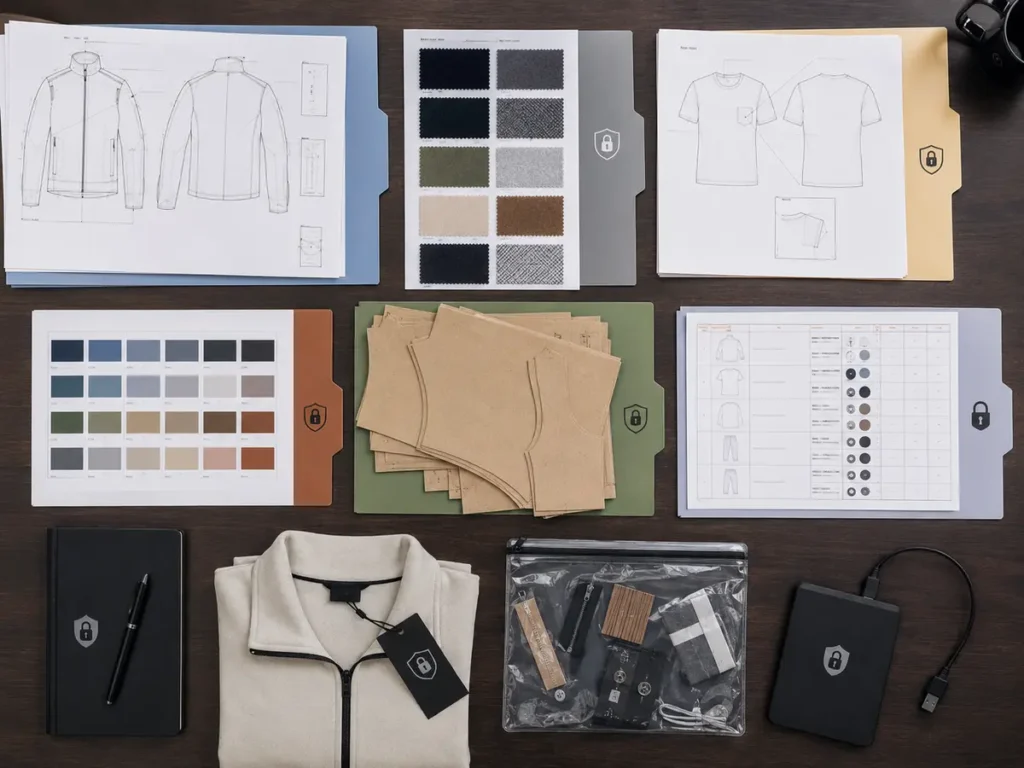
Technical and product information
- Tech packs, measurement specifications and graded size charts
- Original sketches, CAD files, print repeats and placement maps
- Paper or digital patterns, marker files and construction sequences
- Bills of materials, material codes, trims and custom hardware details
- Proprietary finishes, test methods or process settings
- Prototype observations, failure reports and revision history
- Embroidery digitizing files, print separations and mold drawings
Brand and commercial information
- Unreleased logos, graphics, colorways and product names
- Seasonal launch dates, campaign plans and embargo information
- Target costs, quotations, forecasts, quantities and sales channels
- Customer, distributor, school, league or retailer information
- Supplier lists, sourcing routes and negotiated commercial terms
Physical and electronic assets
- Samples, fit prototypes, golden samples and rejected samples
- Fabric swatches, lab dips, strike-offs and trim cards
- Cloud folders, email attachments, videos, photographs and meeting notes
- Files generated from buyer information, when the contract says they are covered
A broad label such as “all information” may create uncertainty. A usable agreement normally combines a clear definition with project categories, permitted use and sensible exclusions. The accompanying manufacturing agreement or purchase order should identify the current tech-pack version and approved sample so that production teams know which records govern.
Typical exclusions
Confidentiality obligations commonly exclude information that the recipient can demonstrate was already public without its breach, lawfully known before disclosure, lawfully received from an unrestricted third party, or independently developed without using the protected information. A disclosure legally required by a court or authority may also need a procedure for notice and limited compliance, subject to applicable law.
These exclusions matter. They keep the NDA focused on genuine confidential material rather than trying to claim ordinary industry knowledge, public product features or the manufacturer’s independently developed know-how.
NDA, Non-Use and IP Ownership Are Different Questions
An NDA usually deals with secrecy and permitted use. It may say that a manufacturer can use a tech pack only to evaluate, sample or produce the buyer’s order. That limitation is important, but it is not the same as assigning ownership of every drawing, pattern, mold, digitizing file or production method.
| Legal or commercial tool | Main purpose | What buyers should confirm separately |
|---|---|---|
| NDA/confidentiality clause | Restrict disclosure and unauthorized use | Scope, recipients, permitted purpose, term and remedies |
| Trademark registration/license | Protect and authorize brand identifiers | Territory, classes, approved applications and quality control |
| Copyright terms | Address original artwork and creative works | Ownership, license, commissioned work and editable source files |
| Patent/design protection | Protect qualifying inventions or designs | Filing strategy, novelty and relevant territories |
| IP assignment | Transfer defined rights | Exact deliverables, timing, payment and signatures |
| IP license | Permit defined use without transferring ownership | Purpose, duration, territory, exclusivity and sublicensing |
| Manufacturing agreement | Govern production relationship | Specifications, quality, delivery, payment, substitutions and IP |
WIPO advises supplier relationships to distinguish what each party brings into the project—often called background IP—from what is created during the relationship. That distinction is particularly important when a buyer supplies artwork but a factory develops patterns, grading, sewing aids or manufacturing solutions.
For broader commercial terms, use a written Manufacturing Agreement alongside the NDA. For brand and product-right planning, review the IP Protection page and obtain jurisdiction-specific advice.
One-Way vs Mutual NDA
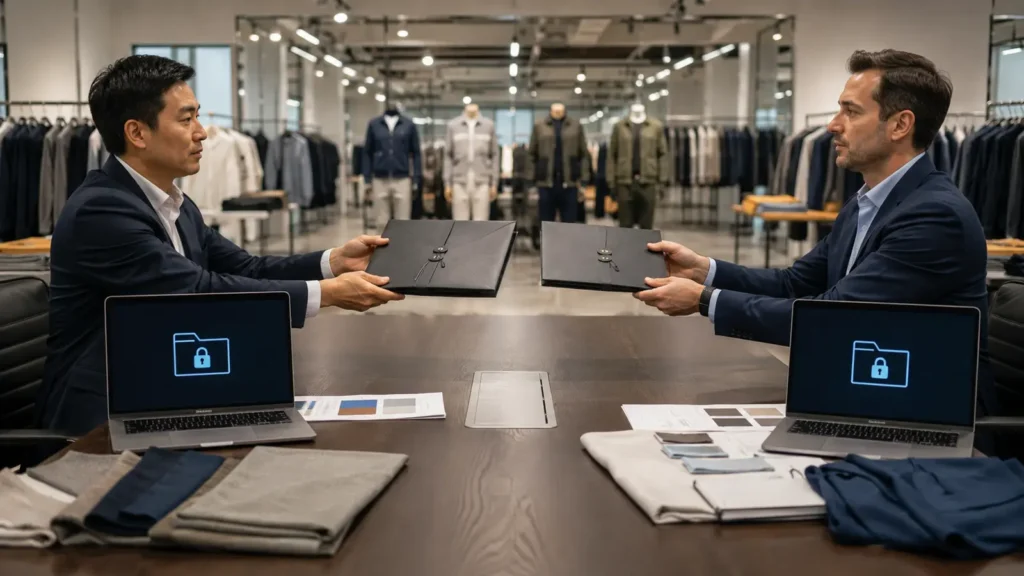
A one-way NDA protects information disclosed mainly by one party. It may fit a project in which the brand provides an original collection and the manufacturer contributes no confidential information beyond ordinary quotation and production services.
A mutual NDA applies duties to both parties. It may be more appropriate when the factory discloses proprietary construction, special machinery capabilities, supplier relationships, pricing models or a development method while the buyer supplies confidential designs and launch data.
| Decision point | One-way NDA | Mutual NDA |
|---|---|---|
| Who expects to disclose sensitive information? | Primarily one party | Both parties |
| Drafting complexity | Usually simpler | Requires balanced definitions and duties |
| Factory-developed know-how | May require separate protection | Can be covered as factory information |
| Negotiation concern | Recipient may resist overbroad obligations | Each side must avoid capturing public or background knowledge |
| Best fit | Clear discloser–recipient relationship | Collaborative development or reciprocal disclosure |
“Mutual” does not automatically mean fair. The definitions, permitted uses, exclusions, duration and remedies still need review. A balanced agreement should not quietly transfer ownership, impose obligations unrelated to confidentiality or prevent a manufacturer from using general skills that were not derived from the buyer’s protected information.
When Should the NDA Be Signed?
Sign it before the first disclosure that would cause real harm if exposed. This is often before sending editable artwork, a complete tech pack, novel construction details, nonpublic pricing, a customer roster or a prelaunch sample.
A practical staged process is:
- Share a nonconfidential capability brief and request basic factory information.
- Verify the supplier’s legal identity, business contact and relevant capabilities.
- Agree on the NDA or confidentiality terms.
- Confirm the authorized project contacts and secure transfer channel.
- Release only the information needed for quotation or sampling.
- Add continuing confidentiality, IP, subcontracting and return terms to the manufacturing agreement.
An NDA signed after full disclosure may not solve the risk created by the earlier transmission. If prior information has already been shared, legal counsel can advise whether the agreement should expressly address earlier disclosures and how local law treats them.
Confirm the correct parties and signers
Use the manufacturer’s complete registered entity name, registered address and, where appropriate, registration details. A salesperson’s email signature or marketplace store name may not identify the contracting entity. Confirm that the signer has authority to bind that entity. If an affiliated company, sourcing office or separate plant receives files, determine whether it must also sign or be expressly covered.
The Company Facts page can help a prospective buyer understand the supplier it is evaluating, but buyers should still verify the legal entity shown in their own quotation and contract.
Define Permitted Purpose, Access and Duration
“Keep this confidential” is operationally incomplete. The agreement should state what the manufacturer may do with the information. For example, the permitted purpose may be limited to evaluating feasibility, preparing a quotation, developing samples and producing approved orders for the buyer.
It should also address whether the recipient may copy, translate, photograph, reverse engineer, adapt or share the material. The correct restrictions depend on the project and law; they should not be copied blindly from a generic template.
Authorized recipient matrix
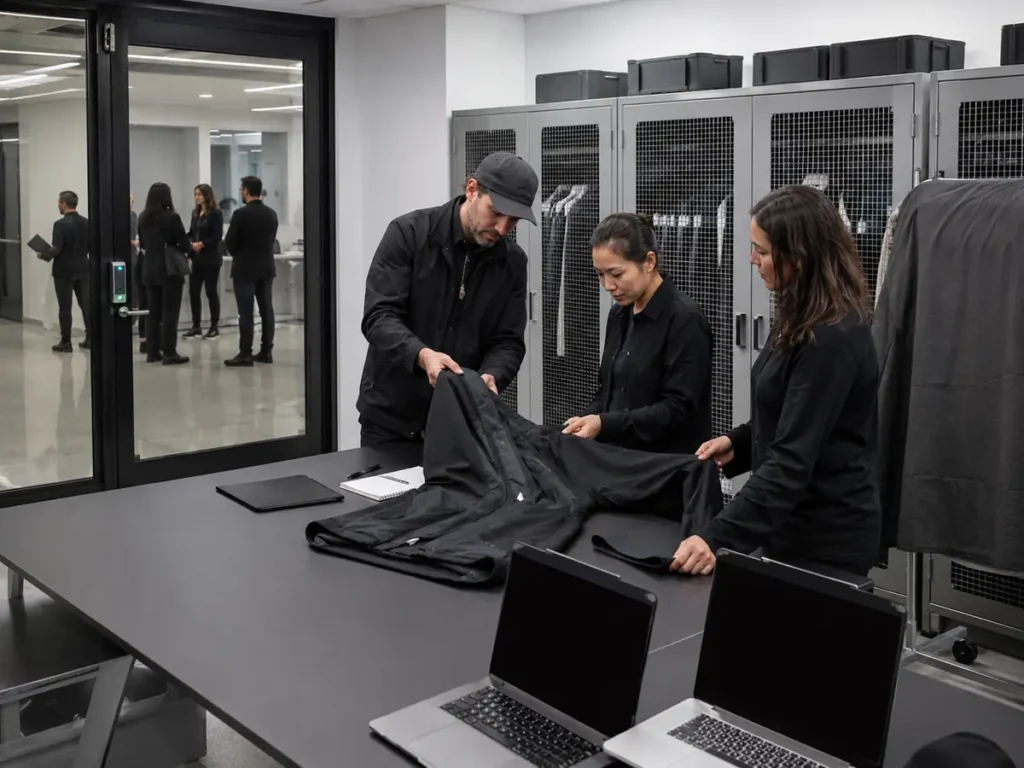
| Role | Information normally needed | Access level | Buyer confirmation |
|---|---|---|---|
| Account/project manager | Commercial brief, timeline, approved versions | Project-wide | Named contact and backup |
| Pattern technician | Measurements, construction, pattern references | Technical subset | No customer pricing required |
| Sample room | Current sample specification | Production subset | Superseded files withdrawn |
| Printing/embroidery team | Artwork, colors, position and size | Decoration subset | Only relevant panels/files |
| Material purchasing | BOM and approved material codes | Sourcing subset | Customer identity minimized where possible |
| QC team | Approved sample, tolerances and inspection criteria | Quality subset | Access to signed standards |
| Logistics team | Quantity, packaging, marks and destination | Shipping subset | No design source files required |
This need-to-know structure reduces unnecessary exposure and makes responsibility easier to trace. Access can be role-based rather than person-by-person, but the supplier should be able to identify who actually received sensitive files.
How long should confidentiality last?
There is no universal duration. A short-lived launch calendar may lose sensitivity after release, while an undisclosed process or customer list may remain valuable much longer. Some obligations may need different periods, and trade-secret information may require protection while it remains legally and commercially secret. The chosen term must be reasonable and enforceable under the governing law. Have counsel tailor it rather than selecting an arbitrary number of years.
Should Subcontractors and Material Suppliers Be Covered?
Yes, if they will receive protected information. Clothing production often involves external printing, embroidery, dyeing, washing, testing, molding, packaging or specialist material suppliers. An NDA with the primary supplier does not physically stop those partners from seeing the work.
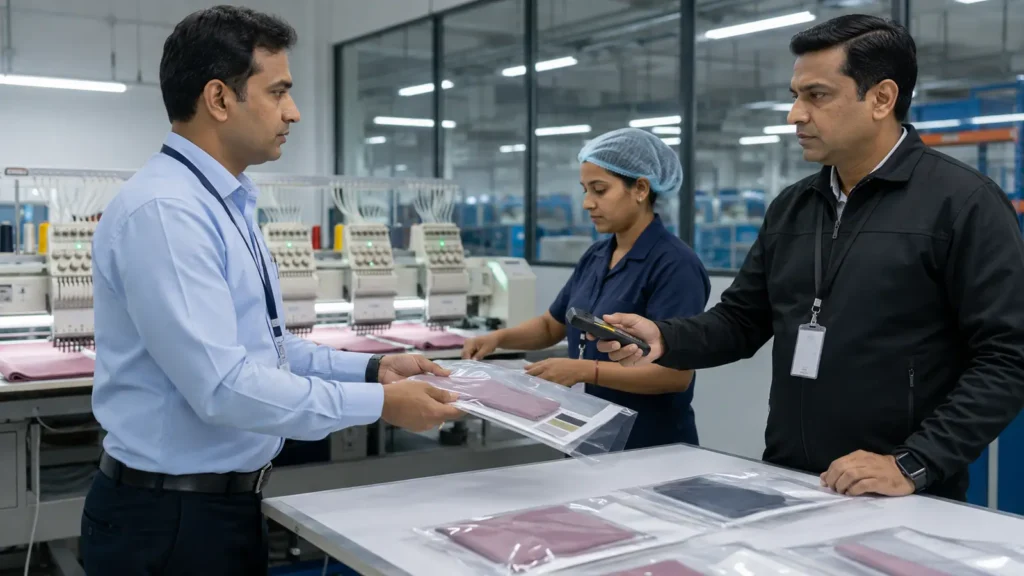
A practical flow-down mechanism should address:
- whether subcontracting is allowed and whether buyer consent is required;
- which categories of partner may receive information;
- disclosure only on a genuine need-to-know basis;
- confidentiality and use restrictions at least consistent with the main agreement;
- responsibility of the primary supplier for its personnel and approved subcontractors;
- prohibited photography, portfolio use, social posting and sample display;
- secure transfer, storage, return or destruction;
- prompt notice and cooperation if unauthorized access occurs.
Subcontractor flow-down checklist
| Check | Evidence to request | Status |
|---|---|---|
| External process identified | Process map or supplier declaration | Open / confirmed |
| Partner receives only necessary data | Redacted or limited production packet | Open / confirmed |
| Equivalent confidentiality duty exists | Contractual confirmation appropriate to local law | Open / confirmed |
| Photography and publicity controlled | Written workplace rule | Open / confirmed |
| Physical samples tracked | Sample issue-and-return register | Open / confirmed |
| Incident contact assigned | Named escalation contact | Open / confirmed |
The buyer should avoid demanding the factory disclose unrelated supplier trade secrets. The objective is visibility and accountability for the buyer’s project, not unrestricted access to the factory’s entire supply chain.
Control Samples, Patterns and Electronic Files
Confidentiality is operational. A signed PDF does little if prototypes remain in an open showroom, everyone receives editable artwork, or obsolete patterns are mixed with production files.
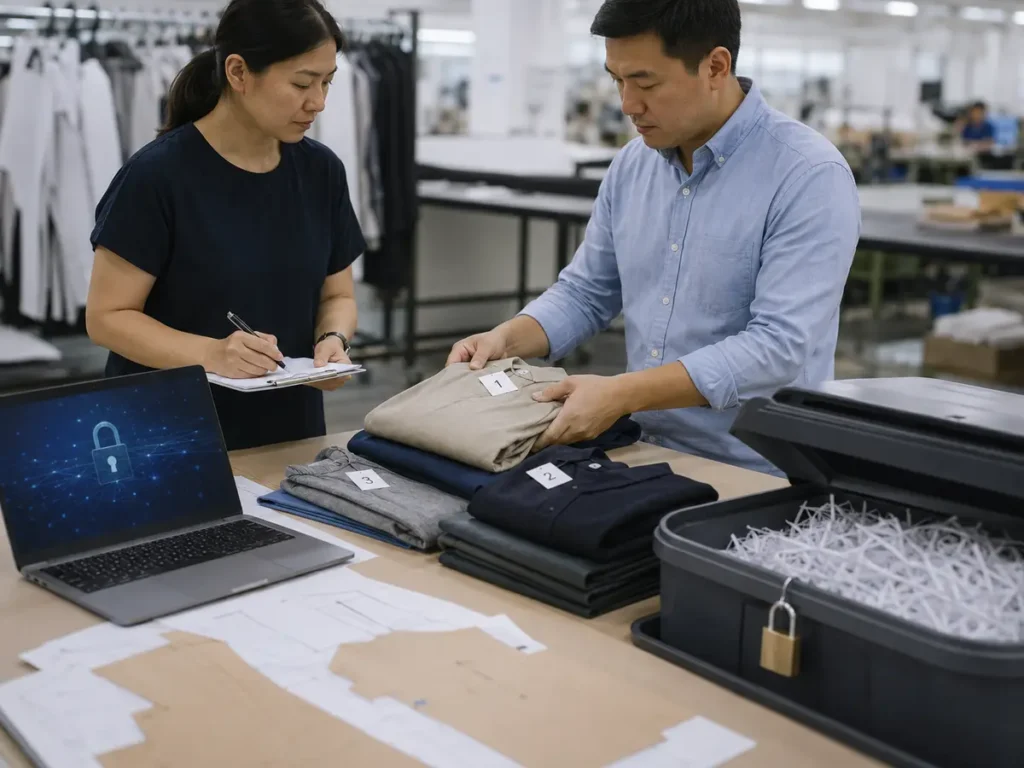
Physical sample controls
- Assign a sample ID, product code and revision to every prototype.
- Mark prelaunch samples as confidential where appropriate.
- Record who received, photographed, shipped, returned or destroyed each sample.
- Keep approved samples separate from rejects and superseded versions.
- Prohibit showroom display, trade-fair use or portfolio photography without written consent.
- State what happens to excess branded labels, prints, transfers, molds and rejected goods.
Digital file controls
- Use a controlled folder rather than multiple informal chat attachments.
- Restrict download or editing rights where practical.
- Apply clear filenames, revision dates and confidentiality markings.
- Remove access for personnel who leave the project.
- Avoid sharing customer data with technical teams that do not need it.
- Keep an issue log showing what was sent, to whom, when and for what purpose.
- Define backup, retention and deletion expectations that are technically realistic.
Return or destruction record
| Asset | Asset ID/version | Holder/location | Required action | Completion evidence |
|---|---|---|---|---|
| Prototype | Style + sample revision | Sample room | Return / retain / destroy | Courier record or certificate |
| Paper pattern | Pattern version | Pattern department | Return / archive / destroy | Inventory update |
| Artwork | File checksum/version | Secure server | Revoke / archive / delete | Access log |
| Custom labels | Material lot | Trim storage | Return / destroy | Quantity reconciliation |
| Mold or tool | Tool ID | Factory/partner | Store / transfer / destroy | Photo and signed record |
Deletion is not always absolute because backups, legal retention or quality records may remain. The contract should distinguish active copies from permitted archival copies, state why any archive may be retained and continue confidentiality protection for it.
Who Owns Patterns and Files?
Do not assume that paying for a sample automatically transfers every related asset. Ownership depends on applicable law and the written agreement. A buyer may own its original logo and artwork while the manufacturer retains its pre-existing blocks, grading rules, sewing methods, templates or production know-how. A newly created custom pattern, mold or digitizing file may require an express ownership, license, access or transfer provision.
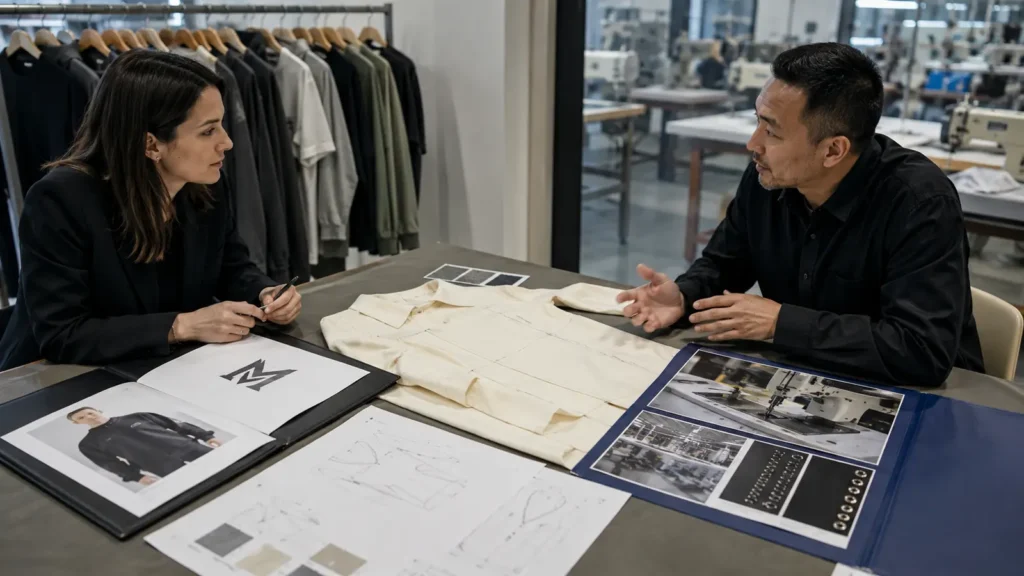
| Asset | Possible starting position | What to decide in writing |
|---|---|---|
| Buyer’s existing logo/artwork | Buyer-controlled or licensed | Permitted production use and return |
| Factory’s pre-existing block/process | Factory background know-how | Limited use needed for the project |
| Custom pattern developed for project | Depends on contract and law | Ownership, access, reuse and transfer format |
| Embroidery digitizing file | May be created by factory or specialist | Fee, ownership, reuse and delivery |
| Custom mold/tooling | Buyer-funded does not answer every right | Title, storage, maintenance, exclusivity and release |
| Sample photographs | Created during development | Internal record use vs marketing/publicity |
| Improvements created jointly | Potentially unclear | Ownership, license and future use |
An NDA can say that disclosure grants no license beyond the permitted purpose. It still may not allocate newly created results. Use an IP assignment or license clause, as appropriate, and connect it to payment, deliverables and termination. If continuity matters, specify which native or export file formats must be supplied and when.
Cross-Border NDAs: Make Enforcement Practical
International apparel sourcing may involve a brand, sales office, factory and subcontractors in different countries. Enforceability is not determined by writing “international NDA” at the top of a template.
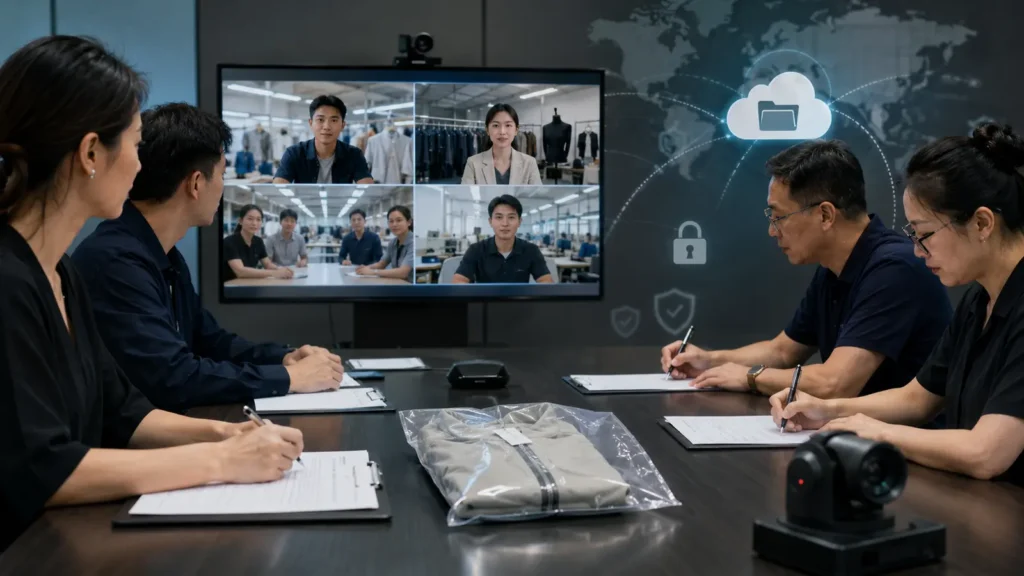
Ask qualified counsel to review:
- the exact legal entities and authorized signers;
- governing law and dispute forum;
- court jurisdiction, arbitration or another agreed mechanism;
- agreement language and which version controls;
- service of notices and evidence requirements;
- available remedies and whether requested relief is realistic;
- local rules affecting contract terms, trade secrets and electronic signatures;
- whether the agreement should be integrated with the manufacturing contract.
Cross-border enforcement can be slow, costly and fact-dependent. Therefore, design the relationship to prevent unnecessary exposure. Verify the supplier before disclosure, stage the information, limit recipients and preserve evidence. A contract is stronger when the parties can show exactly what was confidential, how it was transmitted, what use was permitted and what security measures were used.
Electronic signatures may be practical, but the platform alone does not fix entity or authority problems. Retain the final executed version, signer identities, date, audit information and referenced schedules. Do not rely only on a screenshot of a signature page.
NDA Security Checklist Before Sharing a Tech Pack
WIPO describes reasonable secrecy measures as context-dependent and includes access controls, IT security and confidentiality agreements. The USPTO similarly lists limited access, confidentiality markings, physical controls and digital permission levels as examples of reasonable efforts. For buyers, this means the NDA should sit inside an auditable working process.
| Control | Buyer action | Manufacturer confirmation |
|---|---|---|
| Information classification | Identify public, internal and confidential assets | Accept project labels |
| Minimum disclosure | Send a redacted brief before full pack | Request only required data |
| Legal identity | Verify entity, address and signer | Provide current company details |
| Signed agreement | Execute before sensitive disclosure | Return complete signed copy |
| Authorized recipients | Name commercial and technical contacts | Limit internal access |
| Secure transfer | Use controlled links and versioning | Confirm download/storage method |
| File marking | Mark sensitive pages and filenames | Preserve markings on copies |
| Version control | Maintain one current source of truth | Withdraw obsolete versions |
| Sample tracking | Log shipment, custody and return | Record location and disposition |
| Subcontracting | Approve or document external processes | Flow down equivalent duties |
| Incident response | Keep evidence and escalation contacts | Notify promptly and cooperate |
| Exit process | Revoke access and reconcile assets | Return, archive or destroy as agreed |
What should be disclosed before and after signing?
Before signing, provide enough nonconfidential information for the supplier to assess category fit: product type, approximate quantity, broad material family, target market, general timeline and test expectations. Use generic or redacted images where possible.
After signing and verifying the counterparty, release the information required for the next stage—not necessarily the entire archive. A quotation may need dimensions and material assumptions but not the customer list. A print partner may need one artwork separation but not the season plan. Progressive disclosure reduces the amount exposed if the relationship does not proceed.
What If a Manufacturer Refuses to Sign?
A refusal is not automatically proof of bad intent. A supplier may reject a document because it is governed by unfamiliar law, contains unlimited liability, captures public knowledge, restricts unrelated business, transfers IP or uses a definition too broad to administer. It may also have a standard confidentiality agreement or prefer confidentiality terms within the development contract.
Respond by identifying the real disagreement:
- Ask which provisions are unacceptable and why.
- Separate confidentiality from non-compete, exclusivity, ownership and non-circumvention issues.
- Narrow the protected information and permitted purpose where appropriate.
- Consider a short initial NDA followed by fuller manufacturing terms.
- Obtain legal review for material risks rather than negotiating only through sales chat.
- If suitable protection cannot be agreed, do not disclose the sensitive information.
A supplier willing to sign an unrealistic NDA is not necessarily safer than one that negotiates carefully. Due diligence, operational behavior and manufacturing capability remain essential.
Practical Buyer Review Before Signature
Use this review to prepare a conversation with counsel and the manufacturer. It is not a substitute for legal drafting.
| Review item | Question | Decision/evidence |
|---|---|---|
| Project | What product and evaluation purpose does the NDA cover? | Project/style list |
| Parties | Which registered entities disclose and receive? | Registration check |
| Information | Which technical, commercial and physical assets are protected? | Confidential schedule |
| Exclusions | Are public, prior, third-party and independent information addressed? | Draft review |
| Use | May information be used only to quote, sample and manufacture? | Permitted-purpose clause |
| Access | Which employees, affiliates and advisers may receive it? | Recipient matrix |
| Subcontractors | Is consent needed and are equivalent duties required? | Process/partner list |
| Security | How will files, samples and photos be controlled? | Security procedure |
| Duration | Does the term fit launch data and longer-lived secrets? | Counsel review |
| Ownership | Are background IP and project results separately allocated? | IP schedule |
| Exit | What must be returned, retained or destroyed? | Asset register |
| Disputes | Are law, forum, language and notices workable? | Cross-border advice |
How JIUMU Can Support a Controlled Development Process
Before a custom apparel project begins, the buyer and supplier should align the NDA with the actual development workflow. That includes identifying what files are needed for quotation, naming project contacts, controlling versions and deciding which processes may involve approved specialist partners. Confidentiality should continue through sampling, production, QC, packaging and record retention—not end after the signature.
JIUMU can discuss project scope, manufacturing access, sample handling and the production records needed for a controlled custom program. Review our Company Facts and Manufacturing Agreement guide, then Contact Us with a nonconfidential project brief. Sensitive files should be submitted only after the appropriate agreement and authorized channel are confirmed.
Frequently Asked Questions
Final Recommendation
Sign an NDA with a clothing manufacturer when you will disclose commercially sensitive information, but treat the signature as the beginning of confidentiality management—not the end. Define the information, project purpose, recipients, subcontractor controls, duration and asset-disposition process. Allocate patterns, files and development results separately in the manufacturing agreement. Then support the contract with progressive disclosure, controlled folders, version history, sample logs and clear evidence.
The safest sourcing process combines a suitable agreement, verified counterparties and disciplined operations. No generic template can replace a jurisdiction-specific review when the collection, brand or launch has significant value.
Technical References
- WIPO: IP Agreements with Suppliers—What Ventures Need to Know
- WIPO Guide to Trade Secrets and Innovation: Basics of Trade Secret Protection
- WIPO: How to Protect Trade Secrets
- WIPO: Technology Transfer Agreements—Confidentiality Agreements
- USPTO: Trade Secret Intellectual Property Toolkit
- European IP Helpdesk: Non-Disclosure Agreement—A Business Tool
Legal notice: This article provides general commercial information and is not legal advice. Contract law, intellectual-property rights, trade-secret requirements, electronic-signature rules and remedies differ by jurisdiction. Consult qualified counsel for your specific transaction.
About JIUMU
JIUMU supports OEM and ODM custom teamwear, hats, bags and branded merchandise for professional buyers. Established in 2010 in Guangdong, China.