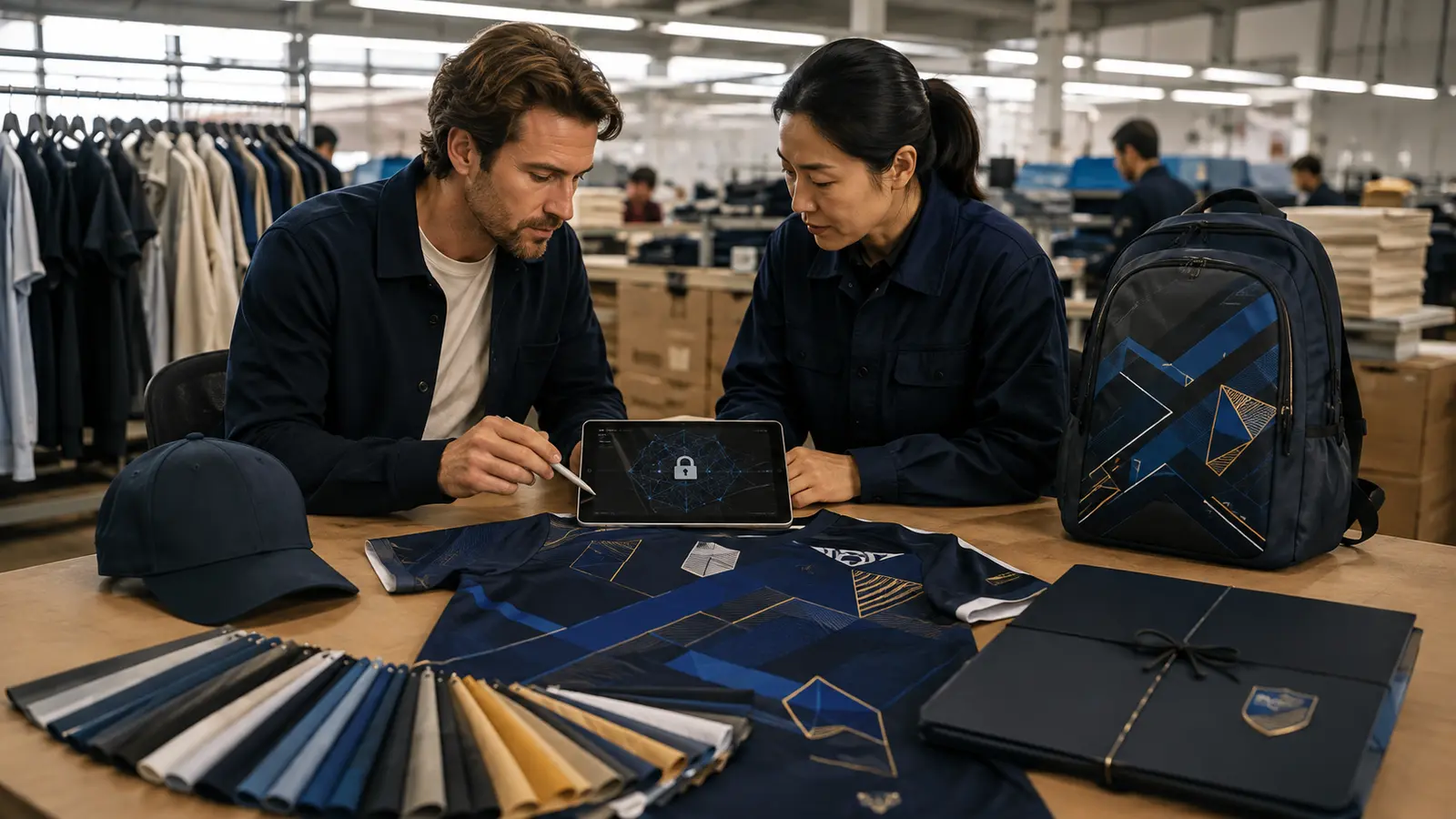
How to Protect Your Logo and Product Design When Manufacturing Overseas
Protecting a logo or product design in overseas manufacturing requires more than asking a factory not to copy it. A practical system combines registered rights in relevant countries, carefully written confidentiality and manufacturing agreements, limited file access, production-quantity controls, clear ownership of patterns and tooling, and evidence that can be used if a problem occurs.
The strongest sequence is to identify the valuable assets, obtain legal advice before public disclosure, register appropriate rights in priority markets and manufacturing locations, verify the supplier, sign suitable agreements, disclose only what each production role needs, reconcile every branded unit and retain an organized project record.
This article is a commercial sourcing guide, not legal advice. Trademark, copyright, patent, industrial-design, trade-secret, contract and evidence rules vary by jurisdiction. Registration deadlines and public-disclosure consequences can be strict. Consult qualified IP and commercial counsel in the relevant countries before relying on any protection strategy.
Quick Answer: Use Layers, Not One Document
Buyers often ask whether an NDA, trademark registration or manufacturing agreement is the “best” protection. They solve different problems. A trademark may provide rights in a brand identifier in a specified territory and category. Copyright may apply to qualifying artwork. Design rights or patents may protect qualifying appearance or technical inventions. Contracts restrict what the supplier may do. Operational controls reduce unnecessary access and create traceable records.
| Protection layer | Main purpose | Example for custom products | Key limitation |
|---|---|---|---|
| Trademark | Protect brand identifiers for covered goods/services and territory | Word mark or logo on caps and jerseys | Rights are territorial and class-specific |
| Copyright | Protect qualifying original creative expression | Original jersey graphic or backpack print | Does not protect every idea, function or common shape |
| Industrial design/design patent | Protect qualifying visual appearance | Distinctive backpack silhouette or trim configuration | Registration, novelty and timing rules vary |
| Utility patent | Protect a qualifying technical invention | New functional closure or load-support mechanism | Expensive, technical and jurisdiction-specific |
| Trade secret | Protect valuable information kept secret through reasonable measures | Unreleased construction method or supplier data | Protection can be lost if secrecy is not maintained |
| NDA/NNN | Restrict defined disclosure and use | Factory may use the tech pack only for approved evaluation/production | Does not create all IP rights or guarantee compliance |
| Manufacturing agreement | Control production, ownership, subcontracting and remedies | No unauthorized production or portfolio display | Must identify entities and be enforceable in context |
| Operational controls | Limit exposure and preserve evidence | Versioned files, access logs and quantity reconciliation | Requires consistent implementation |
No layer guarantees that copying cannot occur. The objective is to make unauthorized use less likely, easier to detect and more actionable.
Start With an IP Asset Map
Before choosing protection, list exactly what is valuable. “My design” is too vague for a lawyer, factory or investigator to administer. A custom apparel and bag project may contain multiple assets owned or licensed by different parties.
Typical brand-owned or licensed assets
- Company name, product-line names, logos and slogans
- School, league, sponsor or entertainment marks used under license
- Original jersey graphics, cap artwork and repeating print patterns
- Original photography, packaging graphics and campaign materials
- Confidential launch calendar, roster data, pricing and customer information
- Buyer-created tech packs, measurements and construction drawings
Assets created or adapted during development
- Factory-developed patterns, grading and marker files
- Embroidery digitizing files and print separations
- Custom molds, cutting dies, jigs and sewing templates
- Revised constructions, technical solutions and improvements
- Sample photos, renderings and production videos
Record the creator, creation date, source files, contracts, license restrictions, publication status and intended countries. If the buyer uses a third-party sponsor or club logo, verify that its license permits manufacturing in the relevant territory and use by necessary suppliers. A buyer cannot give the factory broader rights than the buyer itself holds.
Register Rights Where the Risk and Business Are Located
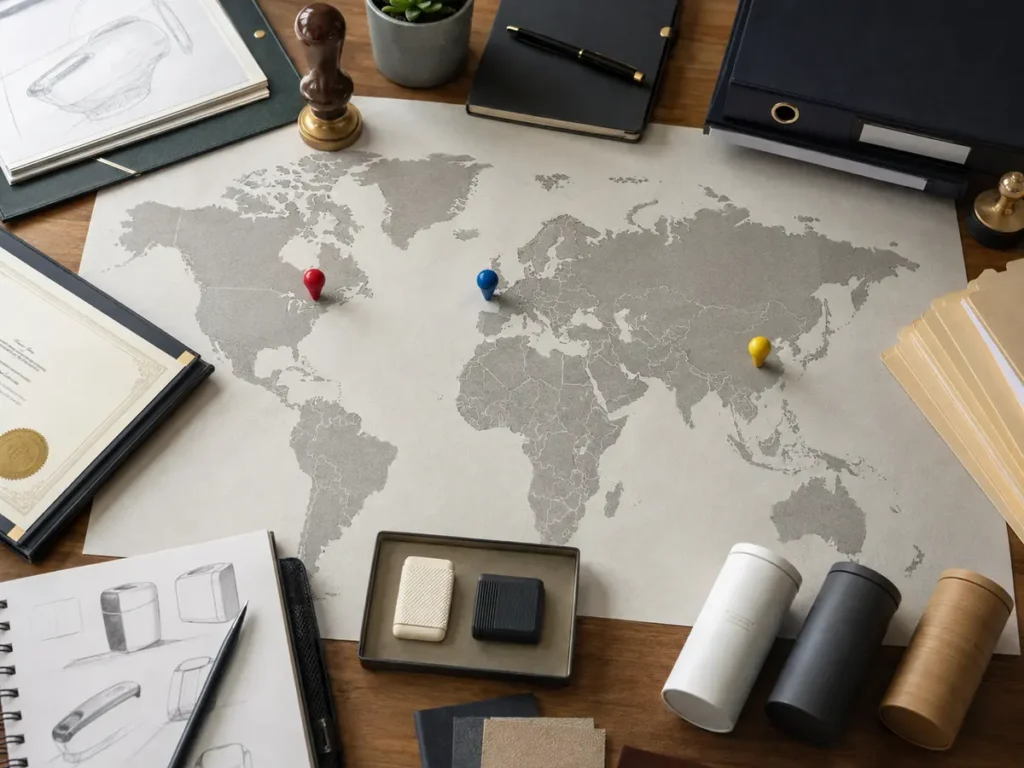
WIPO explains that patents, trademarks and industrial designs are territorial: protection generally depends on the country or region where rights are granted. There is no single global trademark, patent or industrial-design registration. International filing systems can streamline applications, but owners still designate and manage relevant jurisdictions.
Build the filing strategy around at least three questions:
- Where is the brand based and where does it currently own rights?
- Where will products be sold, advertised, distributed or licensed?
- Where will products, labels, molds or components be manufactured or stored?
| Territory | Why it matters | Questions for counsel |
|---|---|---|
| Home market | Corporate ownership and core commercial use | Is the mark filed in the right name and categories? |
| Primary sales markets | Main revenue, retailers and customer recognition | Which trademarks, designs or patents should be registered before launch? |
| Future expansion markets | Prevent later conflicts and preserve launch options | Which filings justify early priority? |
| Manufacturing country | Factory, subcontractors, tooling and branded materials are located there | What local registrations and contracts improve practical control? |
| Transit or warehousing locations | Goods may pass through customs or fulfillment networks | Are customs recordation or marketplace tools relevant? |
Registration decisions should be based on budget, product life, novelty, public-disclosure timing and commercial importance. Do not indiscriminately file everything everywhere. Prioritize the assets and markets where loss would cause real harm.
Should a foreign brand register its trademark in China?
If China is a manufacturing, sales or strategically important market, discuss Chinese trademark registration with qualified counsel early. CNIPA states that China uses a first-to-file principle for trademark registration, supplemented by first use in defined same-day circumstances. It also explains that foreign applicants without a business domicile in China generally appoint a legally established Chinese trademark agency for domestic filings; the Madrid System may provide another route for designated protection.
Registration in the United States, United Kingdom or European Union does not automatically create equivalent Chinese rights. Conversely, a Chinese registration does not replace filings in the countries where products are sold. Conduct clearance searches and develop a territory-specific plan before adopting or disclosing an important new mark.
Know What Trademark, Copyright, Design Rights and Patents Cover
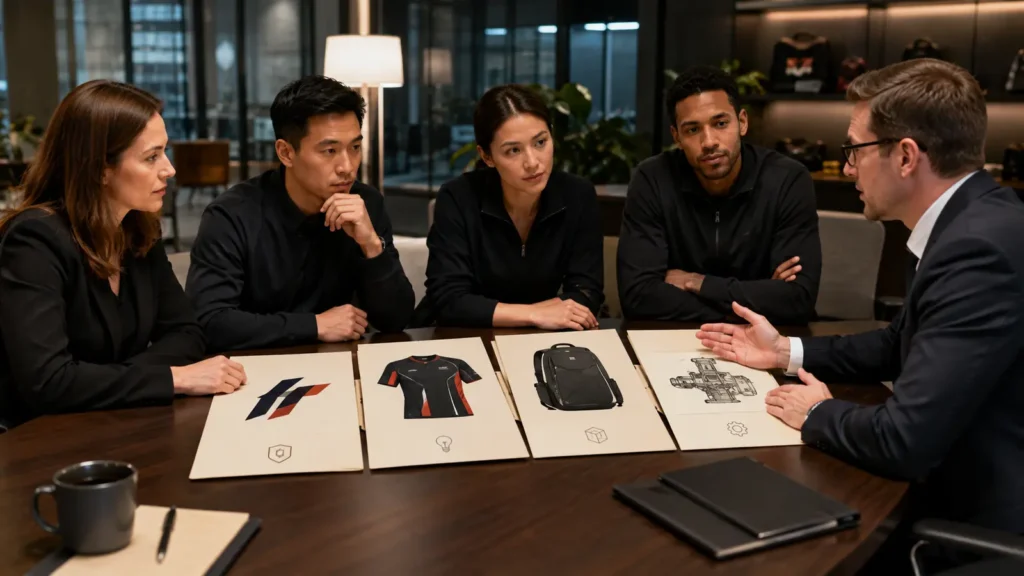
Different rights may overlap, but they are not interchangeable.
Trademark
Trademark law is primarily concerned with identifiers that distinguish the source of goods or services. A word mark, stylized logo or other qualifying sign may be protected for specified categories and territories. Registration strategy should reflect the actual goods—such as apparel, headwear or bags—and the way the mark will be used.
Copyright
Copyright may protect qualifying original artwork, illustrations, photographs and other creative expression. It generally does not give ownership over an abstract sports theme, functional concept, basic color combination or ordinary garment silhouette. Authorship, employment, commissioned-work rules, assignments and registration benefits vary by country. Keep dated source files and agreements with designers.
Industrial design or design patent
These systems can protect the visual appearance of qualifying products: shape, configuration, surface ornamentation or combinations defined by local law. A distinctive backpack body, cap construction appearance or ornamental jersey element may warrant review. Novelty and disclosure rules can be critical, so consult counsel before publishing mockups, exhibiting samples or accepting public orders.
Utility patent
A patent may be relevant to a genuinely new, non-obvious and useful technical invention, not merely a decorative change. Examples could include a novel closure, adjustment mechanism or load-distribution construction. Patentability, ownership and filing deadlines require specialist assessment.
Trade secret
Confidential technical or commercial information may qualify for trade-secret protection if it has value because it is secret, is known only to a limited group and is subject to reasonable protective steps. WIPO identifies access restrictions and confidentiality agreements as examples of such measures. Once the protected information becomes public, trade-secret protection may no longer be available for that information.
Use NDA, NNN and Manufacturing Terms for Different Risks
An NDA usually restricts disclosure and unauthorized use of defined confidential information. In some international sourcing discussions, buyers use “NNN” to describe non-disclosure, non-use and non-circumvention obligations. The label matters less than whether qualified counsel has drafted workable terms for the specific parties, project and governing law.
| Document or clause | Questions it should answer |
|---|---|
| NDA/confidentiality | What is confidential, what is excluded, who may access it, for what purpose and how long? |
| Non-use | May files be used only to quote, sample and manufacture the buyer’s approved orders? |
| Non-circumvention | Are customer contacts or commercial channels protected where lawful and appropriate? |
| Manufacturing agreement | Who may produce, how many units, under which specifications, and what happens to rejects and excess materials? |
| IP ownership/license | Who owns existing assets, project results, tooling and files, and what limited rights are granted? |
| Subcontracting | Is buyer consent required, and must equivalent obligations be passed down? |
| Publicity/portfolio | May the factory photograph, display, post or identify the project? |
| Termination | Which samples, files, molds and materials must be returned, archived or destroyed? |
Use the NDA Guide to prepare the confidentiality discussion. Then connect those duties to quantities, specifications, inspections and remedies in the Manufacturing Agreement. A standalone NDA should not be treated as the entire production contract.
Identify the real legal parties
The marketplace profile, English trading name, sales office and manufacturing entity may not be the same company. Verify which entity receives the design, invoices the order, owns the plant and appoints subcontractors. Use full registered names and authorized signers. If an affiliate or separate decoration facility receives files, determine whether it must sign or be expressly covered.
Review Company Facts as part of supplier evaluation, but also compare the legal entity shown in the quotation, bank instructions and agreement.
Control Files Before and During Production
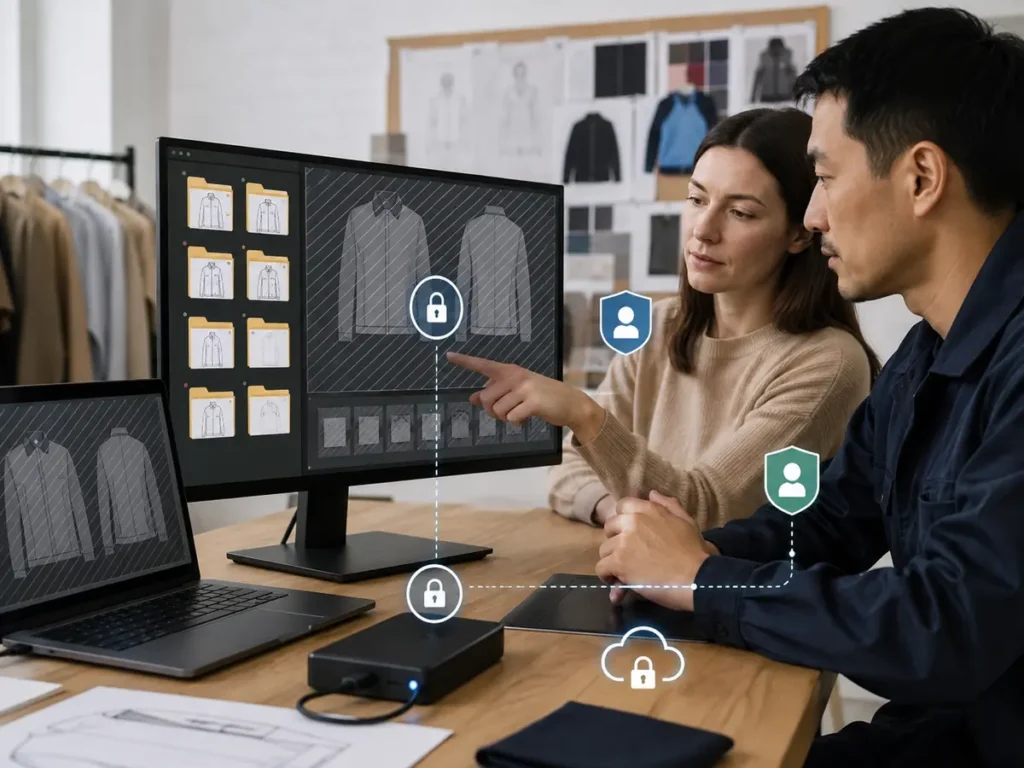
Do not send the complete development archive to every prospective supplier. Progressive disclosure gives each party enough information for the next step while reducing exposure.
Before the agreement
Share a nonconfidential capability brief: product category, approximate quantity, general material family, target market, quality expectations and broad schedule. Redact the final logo, client name, unreleased artwork and proprietary construction if they are not needed for initial feasibility.
After signing and verification
Release the current files required for quotation or sampling through a controlled channel. Each file should have a project code, version, issue date and intended recipient. Apply an appropriate confidential marking or watermark, but remember that a watermark is evidence and deterrence—not technical prevention.
Access-control matrix
| Recipient role | Minimum information needed | Information normally unnecessary |
|---|---|---|
| Sales/project manager | Brief, quantity, timeline and approved commercial files | Full customer database |
| Pattern technician | Measurements, construction and relevant reference sample | Launch campaign and wholesale pricing |
| Print/embroidery team | Final decoration file, color and placement | Full garment costing and other styles |
| Material buyer | BOM, material codes and test requirements | Editable logo master file |
| QC inspector | Approved sample, tolerances and defect criteria | Unreleased future collection |
| Logistics team | SKU, quantity, packaging and destination | Pattern and design source files |
Use one controlled source folder, withdraw obsolete versions and keep an issue log. Where practical, restrict downloads, use role-based permissions and remove access when a person leaves the project. Avoid relying on informal chat attachments as the permanent record.
Prevent Unauthorized Overproduction
Overproduction risk includes more than finished goods deliberately produced beyond the purchase order. It can arise from excess cutting, replacement allowances, rejected pieces, setup samples, additional branded labels, unauthorized seconds or untracked subcontractor output.
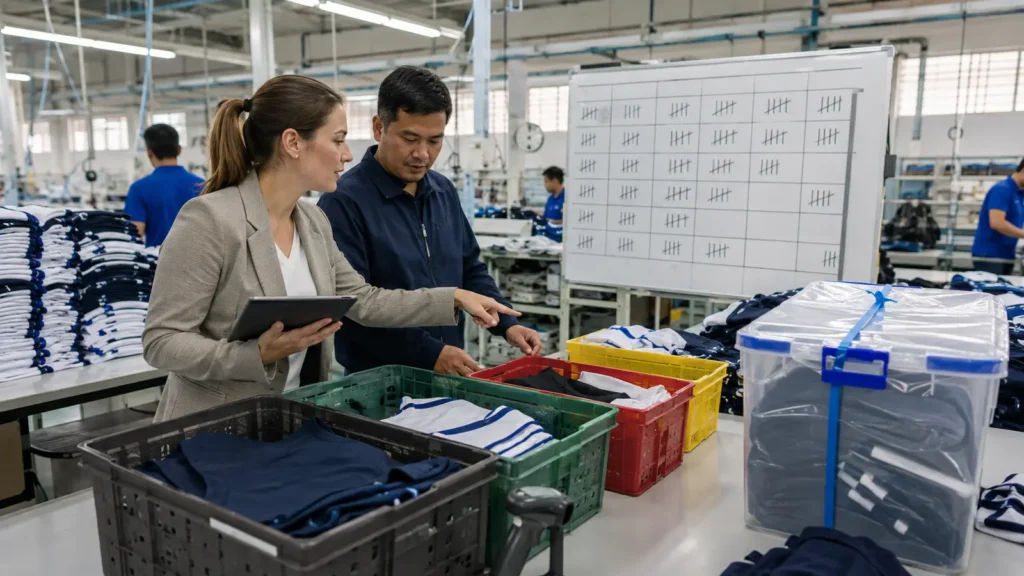
The agreement should distinguish a legitimate production allowance from sellable finished quantity. Apparel factories may need extra material or components to cover normal defects and replacements. The buyer should not demand an impossible zero-waste process; it should require transparency and controlled disposition.
Production reconciliation table
| Record | Planned/approved basis | Closeout evidence |
|---|---|---|
| Purchase-order quantity | Signed PO by style, color and size | Final packing list and invoice |
| Cut quantity | Approved order plus documented allowance | Cutting report |
| Decoration quantity | Issued panels/garments by process | Print or embroidery issue-return log |
| Good finished units | Approved shipment and agreed replacements | Final inspection count |
| Rejected or damaged units | Defect classification and disposition approval | Reject register and photos |
| Samples and test units | Named purpose and recipient | Sample log |
| Surplus branded labels/transfers | Issued quantity less used quantity | Return/destruction record |
| Excess fabric or unbranded parts | Contract-defined ownership/disposition | Inventory or release record |
Useful controls may include no production without an authorized PO, no sale or transfer of branded overruns or seconds, reconciliation of branded components, buyer approval for disposal methods, and inspection rights appropriate to the order. If destruction is required, define what counts as acceptable evidence and whether recycling, de-branding or physical destruction is appropriate.
Do not rely on an unsupported promise that “no extra unit will ever exist.” Ask how the factory manages replacement allowances, defects, QC samples and leftover materials in normal operations.
Bind Subcontractors and Specialist Processors
Printing, embroidery, washing, dyeing, testing, molding and packaging may occur outside the primary facility. The main supplier should not disclose a full design package when a specialist needs only one component or operation.
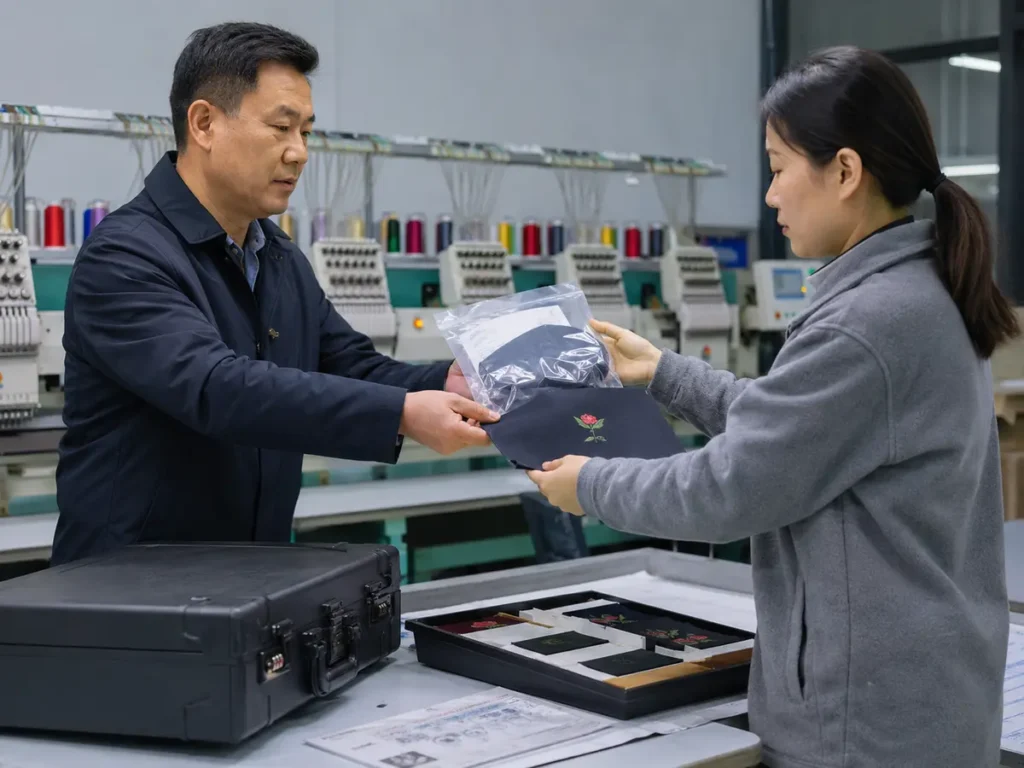
A subcontractor-control plan should address:
- whether subcontracting requires prior disclosure or written approval;
- which processes and locations may be external;
- minimum data supplied to each partner;
- equivalent confidentiality, non-use and publicity restrictions;
- prohibition or control of further subcontracting;
- responsibility of the primary supplier for approved partners;
- sample, reject and branded-material reconciliation;
- incident reporting and cooperation;
- audit or verification rights that are commercially realistic.
The buyer does not necessarily need unrestricted access to every supplier identity or factory trade secret. The aim is to ensure that protected information follows a controlled, accountable path.
Decide Who Owns Molds, Patterns and Digitizing Files
Paying a development fee does not always answer who owns, possesses or may reuse an asset. These questions depend on the contract and applicable law. Separate ownership from physical custody, access and permitted use.
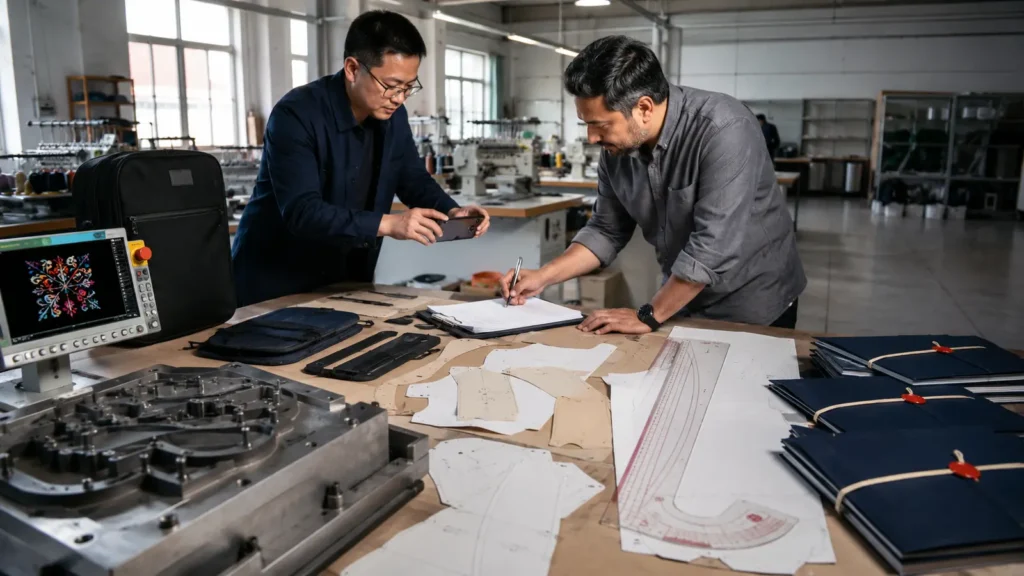
| Asset | Questions to settle before payment or production |
|---|---|
| Buyer logo and artwork | Is the factory licensed only for approved orders? Must source files be returned or deleted? |
| Factory’s pre-existing block | Does the factory retain ownership? What project use is permitted to the buyer? |
| Custom paper/digital pattern | Who owns it, who stores it, may it be reused, and must editable/export files be delivered? |
| Grading and marker file | Is it part of the custom deliverable or the factory’s production know-how? |
| Embroidery digitizing file | Who commissioned it, who paid, who owns it, and may it be transferred to another factory? |
| Printing screens/separations | Who owns the files and physical screens? How are they retired? |
| Mold, die or custom hardware tool | Who owns, labels, maintains, insures, stores and releases it? |
| Factory-developed improvement | Is it background know-how, buyer-owned project IP or licensed to one party? |
Who owns embroidery digitizing files?
There is no universal answer. The buyer may own the underlying logo while the factory or embroidery specialist creates the stitch file using its software, expertise and machine settings. Logo ownership alone does not necessarily transfer the digitizing file. Specify whether the digitizing charge includes ownership, a production license, future access or delivery in named formats.
Who owns molds and patterns?
Again, ownership depends on law and written terms. A buyer-funded custom mold may be intended for buyer ownership, but the agreement should still define title, identification, custody, maintenance, storage charges, exclusive use, damage, transfer and end-of-project disposition. The factory may retain pre-existing pattern blocks or general methods even when the buyer receives rights in a project-specific pattern.
WIPO recommends distinguishing background IP brought into a supplier relationship from foreground IP created during it. Make this distinction in writing before the asset becomes essential to repeat orders.
Can a Factory Show Your Product in Its Portfolio?
Do not assume the answer. Factories often photograph products for internal QC, sample records, training or capability presentations. Public portfolio use, trade-show display and social-media posting are separate activities.
The contract should state:
- whether internal production and QC photography is permitted;
- who may access those images and how long they are retained;
- whether the buyer’s name, logo or launch date may be identified;
- whether public use requires prior written approval for each image;
- whether approval expires or can be withdrawn;
- whether the rule applies to subcontractors and employees’ personal accounts;
- what happens to images when the relationship ends.
A blanket ban may be appropriate for unreleased licensed merchandise, while a buyer may later approve selected factory photography after launch. JIUMU’s Editorial Policy should be reviewed together with project-specific confidentiality and publicity terms; a general website policy does not replace the contract for a particular order.
Build an Evidence File Before Anything Goes Wrong
An enforcement response is easier when the brand can prove ownership, disclosure, contractual restrictions, authorized quantity and the suspected unauthorized act. Build the file during normal sourcing rather than reconstructing it after a dispute.
Evidence register
| Evidence category | Examples | Record discipline |
|---|---|---|
| Rights | Registration certificates, applications, renewals and licenses | Verify owner name, territory, class and status |
| Creation | Native design files, sketches, designer agreement and timestamps | Preserve original metadata and versions |
| Disclosure | File issue log, secure-link record, email and recipient list | Show exactly what was shared and when |
| Contract | Signed NDA, manufacturing agreement, PO and schedules | Preserve complete executed copies |
| Approval | Signed sample, lab dip, artwork and production approval | Link to style/version IDs |
| Quantity | Cutting, decoration, QC, packing and reject records | Reconcile approved and actual units |
| Asset custody | Mold, pattern, screen and label inventory | Record location and disposition |
| Suspected infringement | Listing capture, purchase, product photos and packaging | Preserve source, date and chain of custody |
Back up records securely and control who can edit them. Do not manipulate suspected-infringement screenshots or discard original files after creating a presentation copy.
What to Do If You Discover Copying or Unauthorized Sales
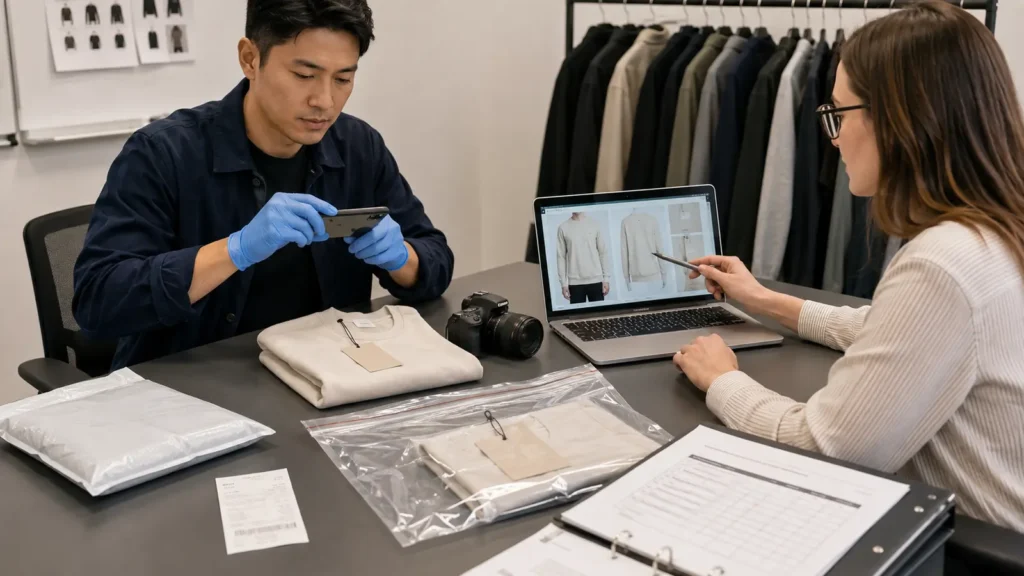
Act deliberately. Public accusations or immediate threats can destroy evidence, trigger removal of listings or create defamation and commercial risks.
- Preserve the evidence. Capture the listing, URL, seller information, date, price, images and relevant communications. Consider a controlled purchase where counsel advises it.
- Verify your rights. Confirm current ownership, territory, category, registration status, licenses and chain of title.
- Compare the products and records. Determine whether the suspected item could be an authorized unit, sample, reject, distributor stock or unrelated similar design.
- Secure internal access. Pause unnecessary file sharing and preserve logs without altering originals.
- Notify counsel. Select advisers familiar with the relevant jurisdiction and type of right.
- Choose a proportionate route. Options may include a factual supplier inquiry, contractual notice, platform complaint, customs measure, cease-and-desist communication, negotiated resolution or formal proceedings.
- Correct the control failure. Update permissions, contracts, material reconciliation and supplier procedures.
Platform forms are not a substitute for verifying ownership. Filing an inaccurate complaint can create liability or account consequences. Counsel should decide the appropriate action and wording.
Pre-Production IP Protection Checklist
| Check | Required decision or evidence | Status |
|---|---|---|
| Asset map completed | Logos, artwork, product appearance, technical features, files and data identified | Open / complete |
| Ownership verified | Designer assignments and third-party licenses checked | Open / complete |
| Territory plan reviewed | Home, sales and manufacturing markets prioritized | Open / complete |
| Filing timing confirmed | Counsel checks novelty and disclosure deadlines | Open / complete |
| Supplier entity verified | Registered entity, facility role and signer confirmed | Open / complete |
| NDA/NNN agreed | Confidential scope, use, recipients and term defined | Open / complete |
| Manufacturing agreement agreed | Quantity, subcontracting, portfolio use, ownership and remedies covered | Open / complete |
| File access set | Version, watermark, recipient and permission recorded | Open / complete |
| Production reconciliation set | Cutting, decoration, rejects, labels and shipment records defined | Open / complete |
| Tooling ownership set | Mold, pattern and digitizing rights/custody written | Open / complete |
| Evidence folder created | Rights, creation, disclosure, approvals and quantity records organized | Open / complete |
| Exit process set | Return, archive, deletion, de-branding or destruction defined | Open / complete |
How JIUMU Supports Controlled Custom Development
For a custom hat, jersey or backpack program, protection begins with a clear nonconfidential brief and verified project contacts. Sensitive logos and structures should be released only after the required agreement and channel are confirmed. The tech pack, artwork, sample and purchase order should use connected style and version identifiers. Production records should then reconcile approved quantities and branded materials through inspection and packing.
JIUMU can discuss the manufacturing workflow, file recipients, specialist processes, sample records and production closeout required for a controlled project. Review the NDA Guide, Manufacturing Agreement, Editorial Policy and Company Facts before submitting sensitive assets.
Frequently Asked Questions
Final Recommendation
Protecting custom product IP overseas is a system, not a promise from a salesperson. Register appropriate rights in priority sales and manufacturing territories, identify the real supplier entities, sign contracts before disclosure, limit files to need-to-know recipients, control subcontracting, reconcile every branded unit and define ownership of patterns, molds and digitizing files.
Most importantly, create the evidence trail while the project is running. If unauthorized copying or sales appear later, proof of ownership, disclosure, restrictions, approved quantity and the suspected activity will determine which remedies are realistic.
Technical References
- WIPO: Entering Foreign Markets
- WIPO: IP Agreements With Suppliers
- WIPO: Trade Secrets
- CNIPA: How Foreign Applicants Can Apply for Trademark Registration
- CNIPA: Guidelines on Same-Day Trademark Applications
- USPTO: Intellectual Property Protection in China
- EUIPO: Where to Register a Design
Legal notice: This article provides general commercial information and is not legal advice. IP ownership, registration, contract enforceability, evidence and remedies vary by jurisdiction and facts. Consult qualified counsel before disclosure, filing or enforcement.
About JIUMU
JIUMU supports OEM and ODM custom teamwear, hats, bags and branded merchandise for professional buyers. Established in 2010 in Guangdong, China.