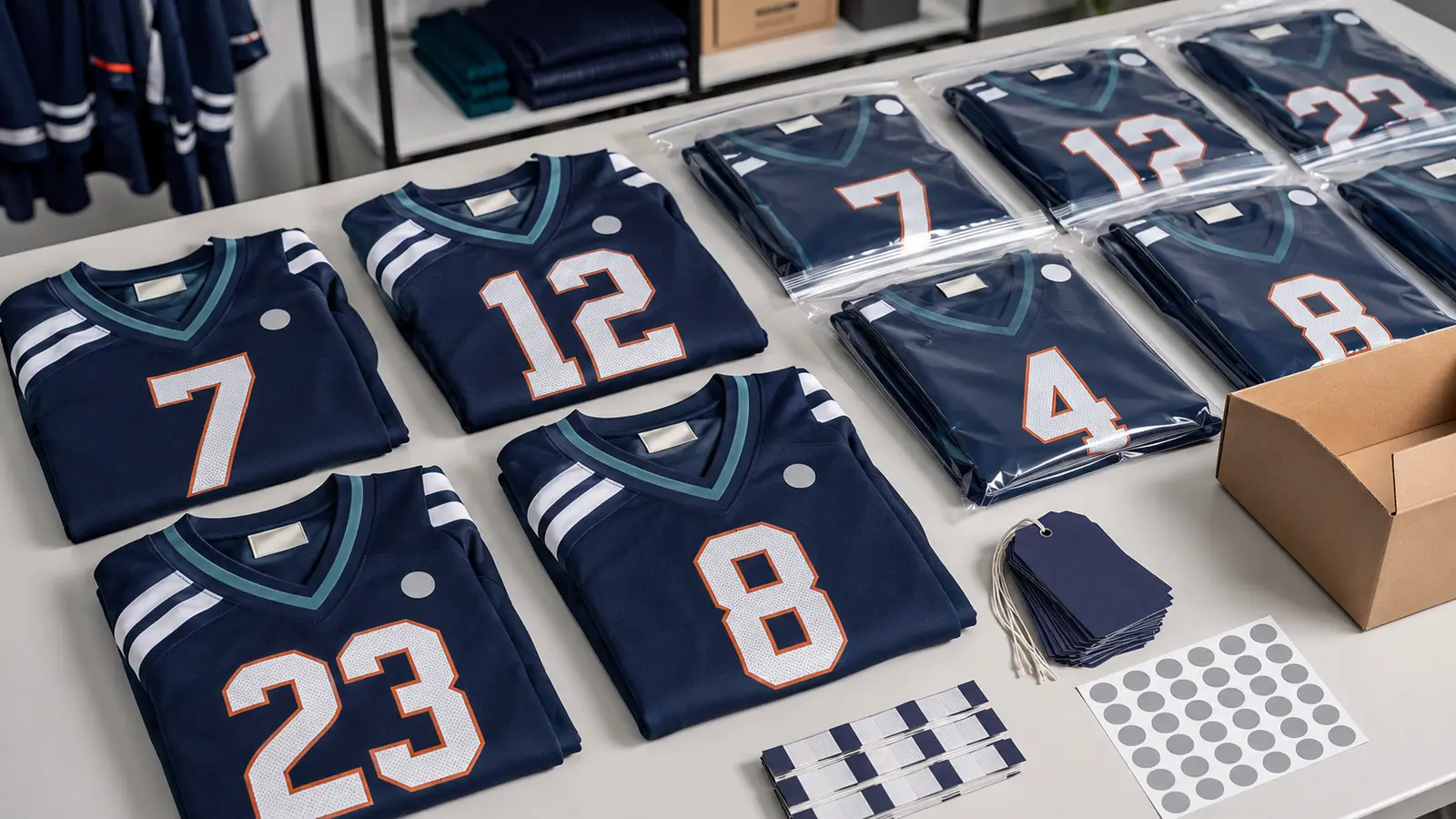
How Much Do Custom Team Jerseys Cost?
Ordering custom jerseys for one team is relatively simple. Buying for a school district, sports club, tournament, dealer, promotional campaign, or private-label brand is different: the important number is not the cheapest advertised unit price, but the total cost of receiving approved, usable jerseys on schedule.
A quote can change with the sport, garment pattern, fabric weight, order quantity, decoration method, number of personalized player files, packaging, freight, and import terms. Two jerseys that look similar in a mockup may therefore have very different production costs and very different risks.
This guide explains how much custom team jerseys cost, what is normally included, which specifications raise or lower the price, and how professional buyers can compare quotations on an equivalent basis.
Quick Answer: Custom team jerseys commonly fall into a broad planning range of approximately US$15 to US$80+ per jersey. Basic bulk sublimated styles are usually at the lower end; reversible, cut-and-sew, embroidered, tackle-twill, football, and hockey constructions tend to move upward. For an order of 50–100 pieces, a practical preliminary budget for many fully customized team jerseys is roughly US$18–US$45 per piece before freight, duties, and taxes. These are budgeting bands, not a JIUMU quotation. A reliable price requires the sport, quantity, fabric, construction, artwork, roster, size breakdown, packaging, destination, and delivery date.
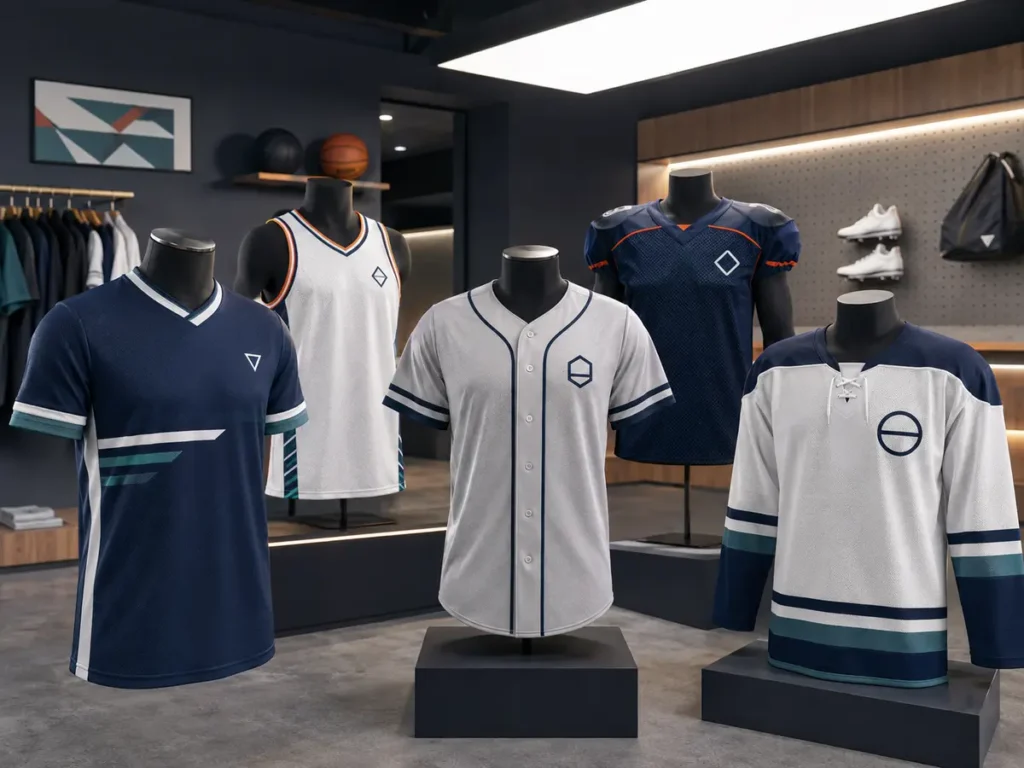
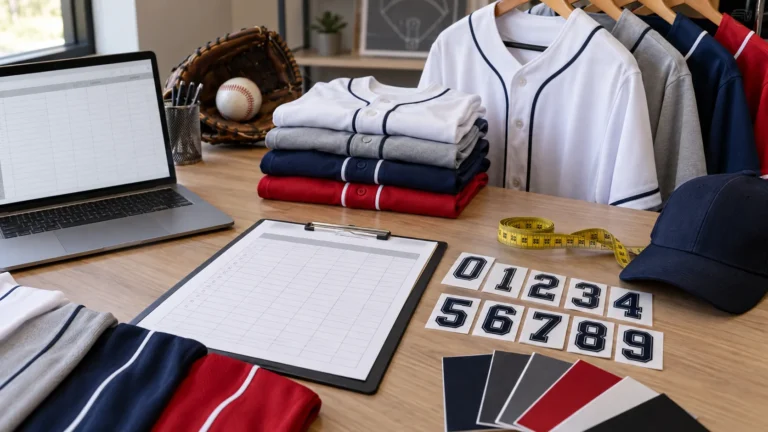
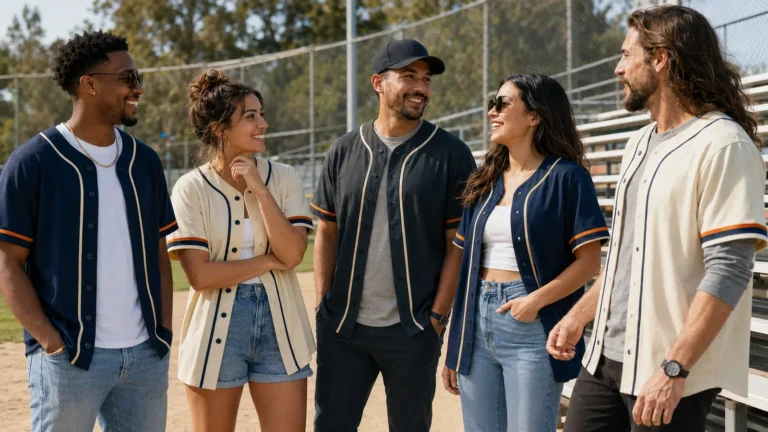
Sport, pattern complexity and garment construction are major cost drivers.
Custom Team Jersey Cost at a Glance
The table below is a sourcing framework for early budgeting. It is intentionally broad because a “custom jersey” may mean a lightweight practice top, a reversible basketball jersey, a full-button baseball jersey, or a reinforced football jersey.
| Jersey type | Preliminary B2B planning range per piece* | Main cost variables | Typical buyer |
|---|---|---|---|
| Basic practice or event jersey | $12–$25 | Stock fabric, simple cut, limited placements, bulk packing | Camps, promotions, training programs |
| Fully sublimated soccer, basketball, volleyball, or softball jersey | $18–$35 | Fabric grade, collar, sleeve, panel count, roster setup | Clubs, schools, leagues |
| Reversible basketball jersey | $24–$45 | Two-layer construction, weight, binding, personalization | Schools, AAU programs, clubs |
| Full-button or premium baseball jersey | $25–$50 | Buttons, piping, collar, heavier fabric, embroidery or twill | Baseball and softball teams |
| Cut-and-sew or embroidered fashion/team jersey | $28–$60+ | Panel engineering, trims, embroidery size, patches, labels | Brands, dealers, fan merchandise |
| Football or hockey game jersey | $35–$80+ | Reinforced pattern, sleeve construction, inserts, heavy decoration | Competitive programs, clubs |
*Planning ranges only, typically for a commercial order rather than a single retail piece. They do not represent a fixed JIUMU price and may exclude sampling, freight, duties, taxes, special packaging, and rush service.
Public supplier prices show why a single universal answer is misleading. As checked on July 30, 2026, Owayo listed 50-piece custom soccer jerseys at $43–$53 each depending on model; Evolution Team Apparel listed soccer jerseys at $27 each for 50–99 and $25 each for 100+; Triton listed custom baseball jerseys at $49.99 each for 9–29 with specified inclusions; and Wooter displayed custom basketball jerseys from $16.99. Each offer includes different products, service, quantity breaks, and delivery conditions, so the figures are market reference points—not direct equivalents.
Why Advertised Jersey Prices Differ So Much
The lowest price on a product page is often a starting configuration. It may assume a large quantity, one fabric, one construction, standard sizing, simple bulk packaging, or a specific decoration method. Another supplier may include design support, player names, numbers, sizing samples, domestic shipping, or a reorder store in a higher published price.
For B2B procurement, compare the full commercial scope:
- Is the price for a blank garment or a finished personalized jersey?
- Is it based on 10, 50, 100, 500, or more pieces?
- Are youth and extended adult sizes priced the same?
- Are individual names and numbers included?
- Does the price include artwork cleanup, mockups, labels, and packaging?
- Is the quotation EXW, FOB, CIF, DAP, or DDP?
- Are sampling and courier charges separate?
- Does the delivery promise start before or after artwork approval?
A cheap number without these answers is not yet a comparable quotation.
The 11 Main Factors That Determine Custom Jersey Prices
1. Sport and garment construction
A sleeveless basketball top generally uses fewer pattern pieces and less fabric than a long-sleeve hockey jersey. A baseball jersey can require a button placket, piping, a shaped hem, and a rib collar. Football styles may need reinforced stress areas or stretch inserts. Every additional panel, seam, trim, and construction step adds material handling and sewing time.
Ask suppliers to quote the exact silhouette rather than a generic “team jersey.” Reference photos are useful, but a technical description is better: sleeve length, collar type, closure, hem, side panels, binding, ventilation zones, and fit.
2. Fabric type, weight, and performance specification
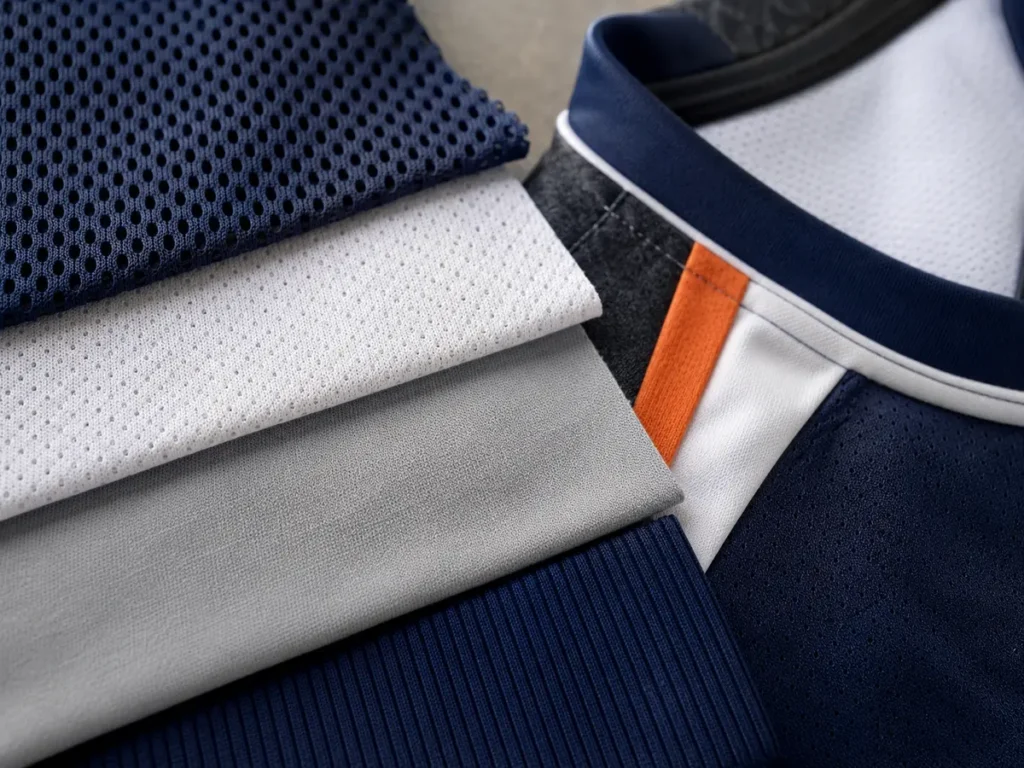
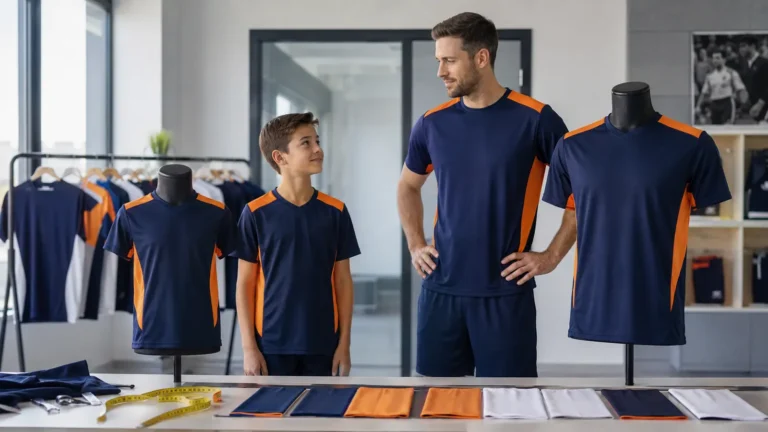
Fabric construction, weight, stretch and opacity affect both cost and performance.
Polyester is common in teamwear, but polyester fabrics are not interchangeable. Price changes with yarn, knit structure, weight in grams per square meter, stretch, surface texture, opacity, snag resistance, moisture-management treatment, and colorfastness requirements.
A lightweight mesh may suit practice jerseys but look too transparent for a white game uniform. A heavier interlock may provide better coverage and structure but cost more and feel warmer. Stretch fabrics can improve mobility but may require different cutting and sewing controls.
Professional buyers should request:
- Fiber composition
- Fabric construction, such as mesh, interlock, birdseye, or double knit
- Nominal fabric weight in GSM
- Stretch direction
- Color and opacity expectations
- Hand-feel or approved swatch
- Care-label requirements
Do not select fabric only by a marketing phrase such as “performance material.” Approve a physical swatch or sample when repeatability matters.
3. Decoration method
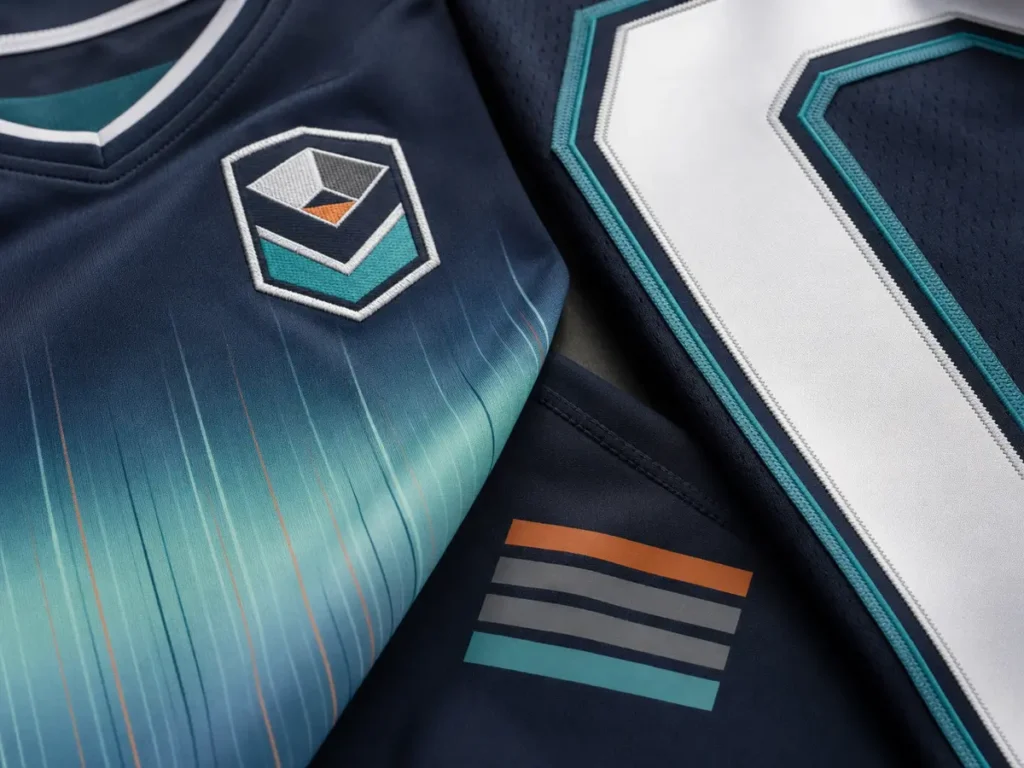
Decoration method changes the appearance, production steps and price structure.
Decoration can be part of the fabric, applied to the surface, or sewn onto the garment. Each approach creates a different cost structure.
| Method | Cost behavior | Best suited to | Procurement watchpoint |
|---|---|---|---|
| Dye sublimation | Efficient for complex all-over graphics because colors and design areas may not be priced one by one | Polyester game jerseys, gradients, sponsor-heavy layouts | Works primarily with suitable polyester fabrics; approve color on the actual fabric |
| Screen printing | Economical for repeated, limited-color graphics at volume | Practice jerseys, event tops, simple team marks | More colors and placements can require more setup |
| Heat transfer | Flexible for names, numbers, short runs, and varied roster data | Player personalization and small batches | Approve film feel, stretch, edge adhesion, and care instructions |
| Embroidery | Dimensional and durable-looking; price rises with stitch count and size | Crests, premium baseball jerseys, brand marks | Dense embroidery can stiffen lightweight fabric |
| Tackle twill / appliqué | Layered athletic appearance with sewing labor | Baseball, football, hockey, heritage styles | Multiple layers and outlines increase cutting and stitching |
| Woven, rubber/PVC, or leather-style patch | Consistent branded badge with a separate component cost | Clubs, private labels, fan merchandise | Confirm patch dimensions, backing, edge finish, and attachment |
Sublimation can make a graphic-heavy jersey more economical than individually charging for several printed placements. It does not automatically make every jersey cheap: premium fabric, complex pattern engineering, reversible construction, small quantities, and special trims still affect the price.
4. Order quantity and size breakdown
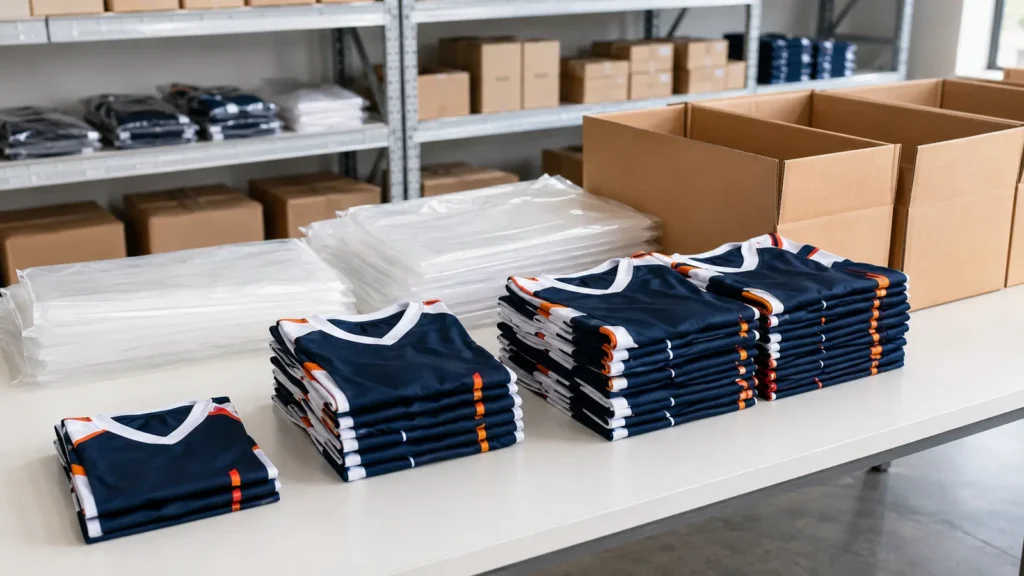
Larger coordinated orders can distribute setup and sampling costs more efficiently.
Quantity influences cost because artwork review, pattern preparation, color setup, sampling, line preparation, inspection, and export documentation contain fixed work. When more units share those setup costs, the unit price can fall.
The quantity break is not always linear. Moving from 10 to 50 pieces may produce a larger unit-price improvement than moving from 500 to 540. Very mixed orders can also reduce efficiency. Fifty jerseys in one design and one fabric are simpler than fifty jerseys divided among five colorways and many unique construction variants.
When requesting a quote, separate:
- Total quantity
- Quantity per design
- Quantity per colorway
- Youth versus adult quantities
- Standard versus extended sizes
- Goalkeeper or libero variants
- Reorder expectations
JIUMU’s typical MOQ is 50 pieces, subject to the product structure and customization. A buyer with several related designs should ask whether colors or teams can be combined under one production program.
5. Player names, numbers, and roster complexity
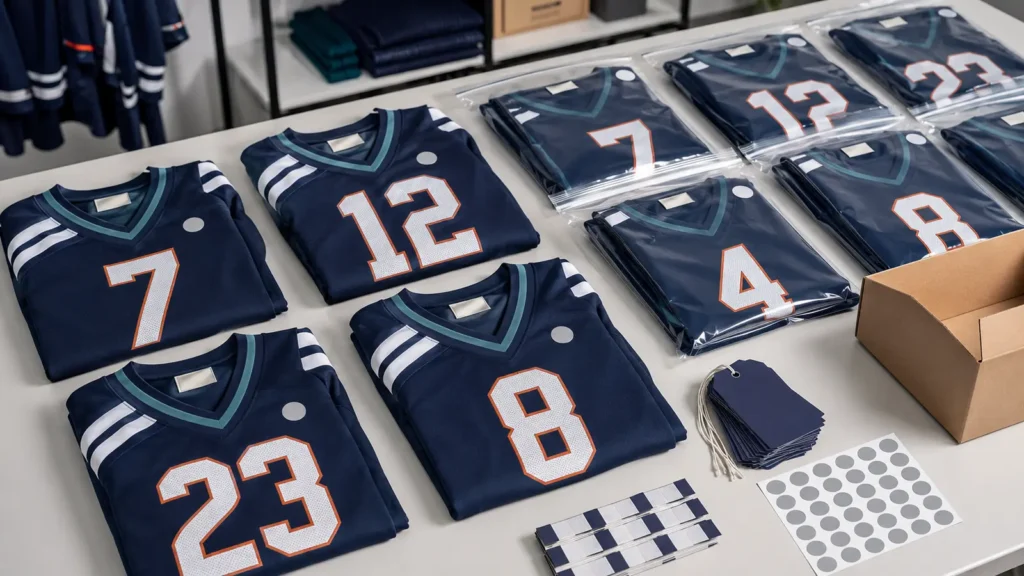
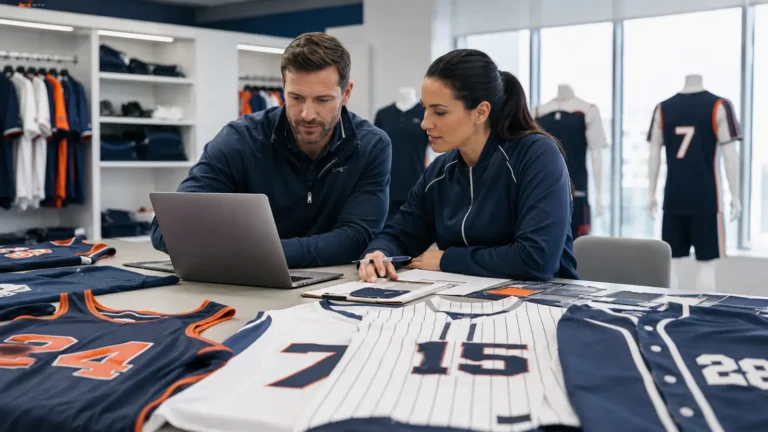
Roster handling, labels and packaging should be specified before quotation.
Variable data adds file preparation, matching, sorting, and inspection. A roster with one unique name and number per garment is more complex than 100 identical promotional jerseys.
The main risk is not only cost; it is accuracy. Buyers should send a locked spreadsheet with one row per garment and columns for team, style, size, player name, number, captain mark, and special notes. The supplier should return a roster proof or production summary for approval.
Late roster changes can create rework. Establish a cutoff date and make one person responsible for the final data. Accents, hyphens, apostrophes, capitalization, and leading zeros should be intentional.
6. Logo count, artwork quality, and color matching
A low-resolution screenshot often needs redrawing before production. Complicated crests, distressed effects, fine outlines, gradients, and multiple sponsor marks take longer to prepare and approve.
Vector files such as AI, EPS, SVG, or print-ready PDF are preferable when available. For sublimation, raster artwork may also work if it has sufficient resolution at production size. The buyer should identify official colors with Pantone references or approved physical standards where consistency matters.
Color matching has limitations across screens, fabric bases, inks, threads, patches, and trims. A Pantone target is a control reference, not a guarantee that every material will appear identical under every light. Approving a sample under relevant lighting reduces misunderstandings.
7. Labels, trims, and private-label requirements
Standard team orders may use a basic care/size label. Brand and distributor programs can require:
- Custom neck or woven labels
- Heat-transfer size labels
- Hangtags and barcodes
- Branded zipper bags
- Size stickers
- Retail folding
- Carton marks
- Country-of-origin and fiber-content labeling
- SKU-level assortment packing
Each component may have its own MOQ, tooling, sampling, or setup cost. A low jersey price can become a high delivered cost if private-label details are introduced after the initial quote.
8. Physical samples and pre-production approval
A digital mockup confirms visual direction but cannot prove fit, fabric hand, opacity, sewing, print color, or decoration attachment. A physical sample is especially valuable for a new supplier, new pattern, new fabric, new patch, or high-visibility launch.
Sample cost may be higher than the bulk unit price because one piece carries setup and courier expense. Some programs credit part of the sample charge against a later bulk order; others do not. Ask explicitly.
A useful sample approval records:
- Garment measurements against the size chart
- Fabric and color
- Print or embroidery appearance
- Placement dimensions
- Collar, cuff, piping, buttons, and trims
- Name and number format
- Label and packaging
- Any correction required before bulk production
Approving “looks good” in a chat message is weaker than signing a dated specification sheet with annotated photos and measurements.
9. Quality-control level
Inspection is part of product cost even when it is not shown as a separate line. A reliable program controls fabric shade, print registration, seam quality, measurement tolerance, roster accuracy, decoration placement, stains, loose threads, packing assortment, and carton count.
The buyer should agree on:
- Approved sample or reference standard
- Measurement points and tolerances
- Color-control method
- Decoration-placement tolerance
- Inspection scope
- Defect classification
- Packing list and carton requirements
- Procedure for shortages or nonconforming goods
For multi-team or multi-SKU orders, sorting accuracy can be as important as sewing quality. Request team-level or player-level packing if it reduces downstream labor, but include it in the quote.
10. Production schedule and rush service
Custom production begins after the artwork, sample, roster, size breakdown, and commercial terms are approved—not when the buyer first sends an inquiry. Design revisions and delayed deposits can consume the calendar before manufacturing starts.
Rush service may require overtime, priority scheduling, faster courier service, or a simplified specification. Public suppliers illustrate the variation: Custom Ink states that its standard custom-jersey delivery is about two weeks with rush options, while Wooter describes a three-to-four-week turnaround for custom basketball uniforms and a faster rush route. These are their published service models, not universal industry lead times.
Build backward from the in-hands date and include time for:
- Specification and quotation
- Artwork and mockup approval
- Sample production and courier transit, if required
- Bulk material preparation
- Cutting, decoration, sewing, and finishing
- Inspection and packing
- International or domestic transport
- Customs clearance and local delivery
- A contingency buffer
11. Freight, duties, taxes, and delivery terms
The garment price is not the landed cost. The U.S. International Trade Administration defines landed cost as the product price plus insurance, freight, tariffs and taxes, and other fees. The chosen Incoterms® rule also determines how specified costs, obligations, and risks are allocated between buyer and seller.
For an international quotation, record the named place as well as the three-letter term—for example, “FOB Shenzhen” or “DAP buyer warehouse, Rotterdam.” Do not compare an EXW factory price with a delivered quote as though they are the same.
Freight per jersey depends on total weight, carton volume, route, season, service level, and whether the shipment moves by express courier, air, rail, sea, or a combination. Duties and taxes depend on classification, origin, destination, and current rules. Confirm the applicable HS classification and import treatment with a qualified customs professional.
Worked Budget Examples
The following examples show a budgeting method, not a supplier offer.
Example A: 60 sublimated soccer jerseys
Assume a preliminary production budget of $24 per jersey:
| Cost item | Calculation | Planning amount |
|---|---|---|
| Bulk jerseys | 60 × $24 | $1,440 |
| One physical sample | Estimated | $90 |
| Sample courier | Estimated | $55 |
| Bulk freight and delivery | Estimated | $360 |
| Contingency for changes or extras | 5% of jerseys | $72 |
| Preliminary total before duty/tax | $2,017 | |
| Preliminary cost per received jersey | $2,017 ÷ 60 | $33.62 |
The $24 production price is not the true planning cost. Before duty and tax, the program is already approximately $33.62 per received jersey because the small order absorbs sampling and freight.
Example B: 250 private-label baseball jerseys
Assume a preliminary production budget of $31 per jersey, plus labels and retail packing:
| Cost item | Calculation | Planning amount |
|---|---|---|
| Bulk jerseys | 250 × $31 | $7,750 |
| Custom labels and hangtags | 250 × $1.10 | $275 |
| Sample and courier | Estimated | $180 |
| Freight and delivery | Estimated | $1,050 |
| Inspection allowance | Estimated | $300 |
| Preliminary total before duty/tax | $9,555 | |
| Preliminary cost per received jersey | $9,555 ÷ 250 | $38.22 |
The higher order quantity spreads fixed costs more efficiently, but private-label components and inspection remain material. A retailer should add warehousing, payment fees, marketing, returns, and margin before setting a selling price.
Get a Quote Based on Your Actual Specification
Planning a school, club, distributor, or private-label jersey order? Send JIUMU the sport, reference design, quantity, size breakdown, fabric preference, logo files, roster, packaging requirement, destination, and target delivery date. We can then prepare a specification-based quotation instead of a misleading generic price.
How to Compare Supplier Quotations Fairly
Create a bid sheet with one column per supplier and refuse to compare until each row is answered.
| Comparison field | Supplier A | Supplier B | Supplier C |
|---|---|---|---|
| Product and pattern | |||
| Fabric composition / construction / GSM | |||
| Decoration method and placements | |||
| Quantity per design and color | |||
| Names and numbers included | |||
| Youth / adult / extended sizes | |||
| Sample cost and credit policy | |||
| Labels, hangtags, and packaging | |||
| Quality standard and inspection | |||
| Production lead time after approval | |||
| Incoterm and named place | |||
| Freight included or excluded | |||
| Duty and tax responsibility | |||
| Payment terms | |||
| Reorder conditions |
The best-value quotation is the one that gives the buyer the required product, consistency, service, and delivery confidence at an acceptable landed cost. It is not automatically the lowest unit price.
How Buyers Can Reduce Jersey Cost Without Damaging the Program
Consolidate designs and order once
Combine teams, divisions, or seasonal demand where practical. A larger coordinated order can improve material purchasing, setup efficiency, packing, and freight utilization.
Use sublimation for complex polyester graphics
If the design needs gradients, many colors, large artwork, sponsors, names, and numbers, sublimation can simplify decoration pricing. Confirm that the fabric and visual result meet the program requirement.
Standardize the base garment
Use one approved pattern and fabric across multiple teams, changing only colors and graphics. This supports fit consistency, easier reorders, and fewer samples.
Lock the roster and artwork before production
Late changes create proofing work, production mistakes, and replacement shipments. Use a final approval deadline and one authorized contact.
Choose packaging for the actual distribution process
Bulk packing is economical when a distributor will sort locally. Individual player packs may be worth the extra cost when hundreds of garments must be issued quickly. Optimize total labor, not just factory price.
Plan replenishment
Ask how reorders are handled, whether the original fabric and color can be reserved or reproduced, and whether a low-quantity reorder carries a surcharge. For a continuing program, consistency may justify buying spare units in core sizes.
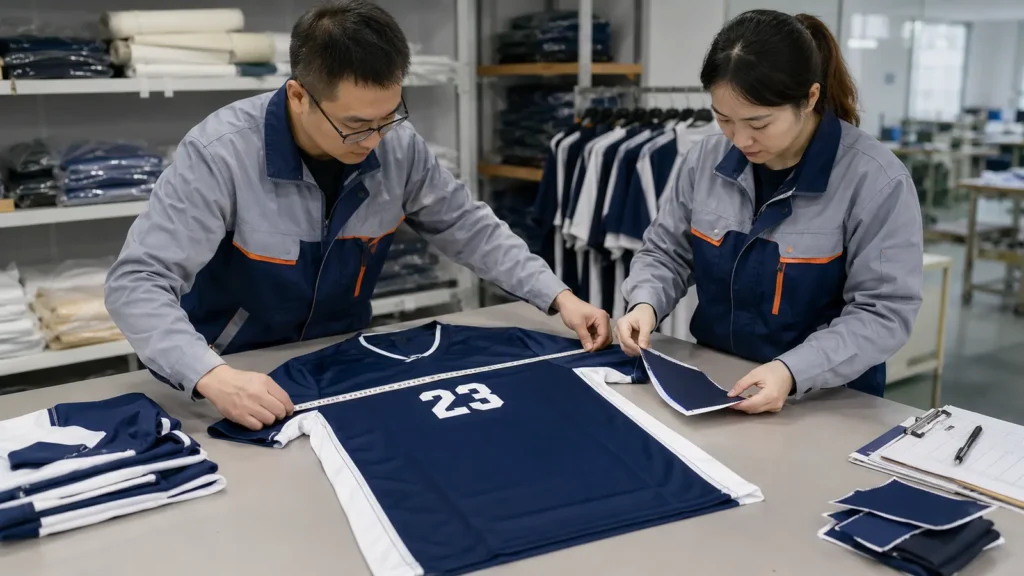
Sample approval and inspection reduce fit, color, roster and packing risk.
Quality-Control Checklist Before Approving Bulk Production
- Confirm the final tech pack, mockup, and roster use the same revision number.
- Compare sample measurements with the approved size chart.
- Review fabric weight, stretch, hand, opacity, and shade.
- Check color on the actual production fabric, not only a monitor.
- Inspect seams, hems, binding, plackets, buttons, and stress points.
- Verify logo size, placement, orientation, and decoration attachment.
- Confirm every player name, number, size, and team assignment.
- Test care instructions on a sample when the program has demanding wash conditions.
- Approve labels, hangtags, bags, stickers, and carton marks.
- Define the inspection and reporting method before shipment.
What to Send for an Accurate Custom Jersey Quote
A supplier can quote faster and more accurately when the inquiry contains:
- Buyer type and intended use
- Sport and jersey style
- Total quantity and quantity per design
- Size breakdown, including youth and extended sizes
- Reference image or tech pack
- Preferred fabric, construction, and weight
- Decoration method or desired visual effect
- Vector logos and color references
- Player roster and variable-data requirements
- Labels, hangtags, barcodes, and packaging
- Sample requirement
- Delivery city, postal code, and country
- Required in-hands date
- Preferred Incoterm, if known
- Reorder or annual-volume forecast
If details are not final, identify which points are open. A supplier can present options, but assumptions should be visible in the quotation.
Questions to Ask a Custom Jersey Supplier
- Is the quoted garment fully custom, semi-custom, or a decorated stock blank?
- What exact fabric and weight are included?
- Which artwork, names, numbers, and logo placements are included?
- Are there setup, digitizing, screen, mold, or artwork charges?
- Does the MOQ apply per design, per color, or across the total order?
- Are youth, adult, goalkeeper, and extended sizes available?
- What sample types are offered, and can sample cost be credited?
- When does the production clock begin?
- What is the inspection standard?
- How are roster errors and shortages handled?
- What labels and packaging are included?
- Which Incoterm and named place apply?
- What happens if a team needs 5 or 10 replacement jerseys later?
- How long are artwork, patterns, and color records retained?
Common Costing Mistakes
Comparing unlike products
A single-layer sublimated practice jersey is not equivalent to a double-layer reversible top or a tackle-twill baseball jersey.
Ignoring the quantity basis
A displayed “from” price may require a higher quantity or a specific configuration. Confirm the exact break used for the quote.
Treating the sample as unnecessary expense
Skipping a sample can save money initially but create much larger exposure if fit, color, or construction is wrong across the bulk order.
Forgetting landed cost
Freight, insurance, duties, taxes, customs service, destination delivery, and payment fees can materially change the effective unit cost.
Sending incomplete or changing roster data
Variable-data mistakes often cause the most visible failures. Lock the file, proof it, and control revisions.
Choosing only by the lowest unit price
The cheapest quote may omit fabric details, inspection, packing, design work, or delivery. Compare scope and risk, not one number.
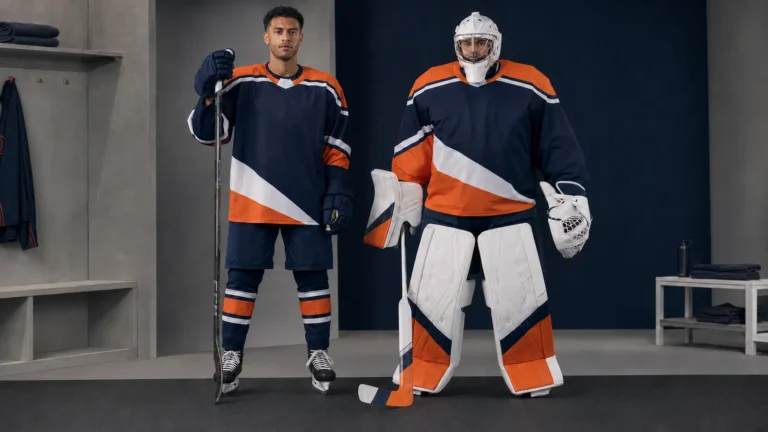
A controlled specification helps teams receive consistent jerseys ready for real use.
Why Source Custom Team Jerseys With JIUMU
JIUMU is a Guangdong-based B2B supplier established in 2010. We support schools, teams, sports clubs, distributors, uniform dealers, promotional buyers, retailers, and private-label brands serving North America and Europe.
Relevant capabilities include OEM and ODM development, sublimation, embroidery, screen printing, heat transfer, woven and rubber/PVC patches, fabric sourcing, Pantone color matching, custom labels, hangtags, packaging, digital mockups, physical samples, bulk production, quality control, and export support.
The typical MOQ is 50 pieces, subject to product structure and customization. JIUMU does not use one fixed price for every jersey because the quote should reflect the approved specification. Buyers can also explore custom team jerseys, custom team uniforms, and baseball team uniform packages.
Frequently Asked Questions
Final Recommendation
Use $15–$80+ per jersey only as a broad market-planning range. For many 50–100-piece fully customized programs, $18–$45 per jersey before logistics and import charges can be a useful starting budget, but the sport and specification can move the result well outside that band.
The purchasing process should convert an idea into a controlled specification, then compare suppliers on the same product, quantity, services, delivery term, and quality standard. Calculate the landed cost per usable jersey—not just the number at the top of a quote.
Sources and Pricing Note
Prices are snapshots observed on July 30, 2026 and may change. They are included to illustrate market variation, not to endorse or rank suppliers.
- Owayo custom soccer jersey pricing
- Triton custom baseball jersey pricing and inclusions
- Evolution Team Apparel soccer pricing
- Wooter custom basketball product pricing
- Custom Ink custom jersey personalization and turnaround information
- International Trade Administration: Determine Total Export Price
About JIUMU
JIUMU is a Guangdong-based B2B supplier established in 2010, supporting custom teamwear, logo apparel, uniforms, hats, bags, private labels, packaging, quality control and export programs for professional buyers.