How to Choose a Custom Hoodie Manufacturer
Choosing a custom hoodie manufacturer is not simply a matter of comparing prices. The manufacturer must translate your design into a repeatable product, source the right fabric, control fit across a size range, apply decoration accurately, package correctly, and deliver suitable documentation.
For a school, sports club, uniform dealer, promotional buyer, or private-label apparel brand, a weak supplier decision can create costs that do not appear on the first quotation. These include sample revisions, color mismatches, distorted logos, size complaints, repairs, airfreight, relabeling, and lost launch dates. A dependable supplier makes specifications visible before production and gives the buyer practical checkpoints before the balance is shipped.
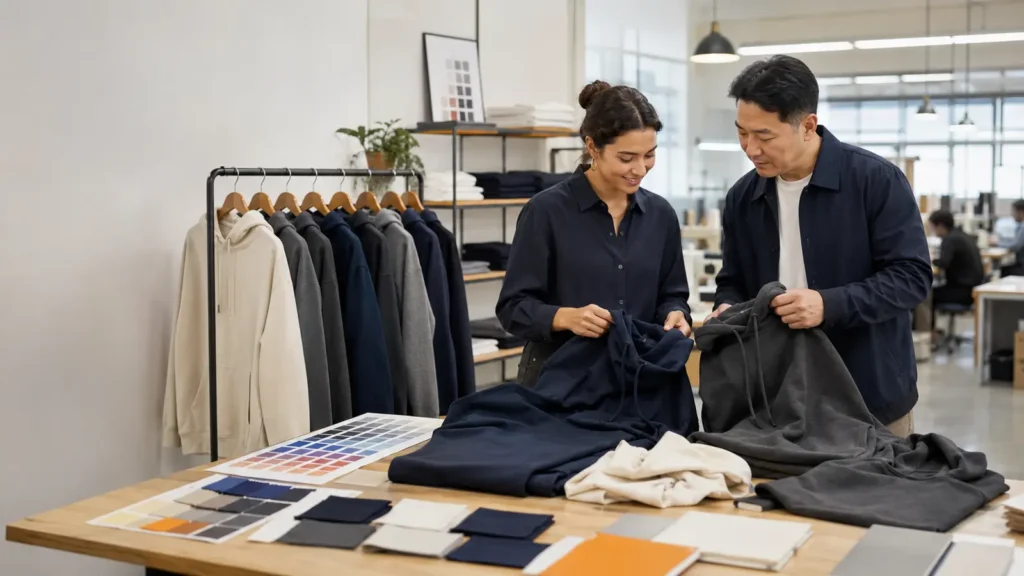
A good supplier evaluation begins with real samples, written specifications, and a shared definition of approval.
Quick Answer: To choose a custom hoodie manufacturer, evaluate seven areas: relevant product experience, fabric and construction control, decoration capability, sample accuracy, quality-control procedures, commercial transparency, and export support. Send the same written brief to each shortlisted supplier, request a physical sample, compare the sample against measurable approval criteria, and confirm how bulk production will be checked. Do not select a supplier on a low unit price until fabric composition, fabric weight, sizing, logo method, labels, packaging, testing, delivery terms, and defect handling are defined.
The best match is not necessarily the largest or cheapest factory. It is the supplier whose capabilities fit your hoodie type, order volume, quality level, destination market, and repeat-order plan.
Why the Manufacturer Decision Has Long-Term Consequences
A custom hoodie combines textile sourcing, pattern engineering, sewing, decoration, labeling, and packing. Each stage affects the next. A dense embroidery design can distort lightweight fabric. A fabric substitution can change shrinkage, color, hand feel, and print results. A slightly different pattern may turn an approved medium into an inconsistent graded size range. A late packaging decision can delay an otherwise completed order.
The decision matters even more when hoodies are part of a teamwear program. The color may need to coordinate with custom team jerseys, custom team jackets, hats, pants, or bags. Repeat-order consistency may be more valuable than a small first-order saving.
Professional buyers should treat manufacturer selection as risk management. The objective is to confirm that the supplier can:
- make the intended product rather than a convenient substitute;
- communicate tolerances and limitations before production;
- reproduce the approved sample at bulk scale;
- maintain traceability from purchase order to carton;
- support the labeling and documentation requested by the buyer; and
- respond constructively if inspection identifies a problem.
Start With a Complete Hoodie Brief
Supplier comparisons are unreliable when each company quotes a different interpretation. Prepare a common request for quotation, or RFQ, before contacting manufacturers. This does not need to be a full technical package at the first stage, but it should remove the largest unknowns.
Include:
- Buyer type and intended use, such as school spiritwear, team travel, construction crews, retail merchandise, or promotional campaigns.
- Product type: pullover, full zip, quarter zip, oversized, performance, workwear, youth, or another construction.
- Target quantity by color and expected size range.
- Fabric preference, composition, target weight in GSM, surface finish, and desired hand feel.
- Fit reference, measurement chart, or physical reference sample.
- Color references, ideally using a standardized color system plus a visual reference.
- Logo files and placement dimensions for every decoration position.
- Decoration method preferences and any limitations on texture, stretch, or color count.
- Labels, hangtags, barcodes, polybags, carton marks, and other packaging.
- Destination country, required delivery date, and requested trade term.
- Testing, documentation, or buyer-specific compliance requirements.
- Target price range, if it is realistic and useful for material engineering.
If details are unknown, identify them as decisions to develop with the supplier. Ask the manufacturer to recommend a specification and explain why it fits the use case.
Compare Manufacturers With a Weighted Scorecard
Use a scorecard to keep price from dominating the decision. Adjust the weights to suit the project. A fashion brand may prioritize fabric development and fit; a promotional buyer may give more weight to delivery and packaging; a school program may prioritize youth sizing and product-safety details.
| Evaluation area | Suggested weight | Evidence to request | Warning signs |
|---|---|---|---|
| Relevant hoodie experience | 15% | Comparable samples, construction options, order examples without confidential customer claims | Only unrelated apparel examples |
| Fabric and trim control | 15% | Swatches, composition, GSM, finish, shrinkage plan, zipper and rib specifications | “Cotton blend” with no percentages or weight |
| Pattern, sizing, and construction | 15% | Measurement chart, tolerances, grading method, seam details | Size names without finished measurements |
| Decoration capability | 10% | Technique samples, artwork review, placement tolerance | One method proposed for every design |
| Sampling and pre-production approval | 15% | Sample stages, revision terms, approval record | Bulk production before written approval |
| Quality control | 15% | Inspection checklist, measurement method, defect handling | “100% quality” with no inspection details |
| Commercial and delivery clarity | 10% | Itemized quotation, MOQ, lead-time assumptions, Incoterm, payment schedule | Hidden tooling, label, or packing charges |
| Communication and export support | 5% | Named contact, response quality, packing and document examples | Fast replies that avoid technical questions |
Score each area from one to five and add notes. A total score is useful, but the comments often reveal the real decision. A supplier that openly explains a limitation may be safer than one that agrees to every request.
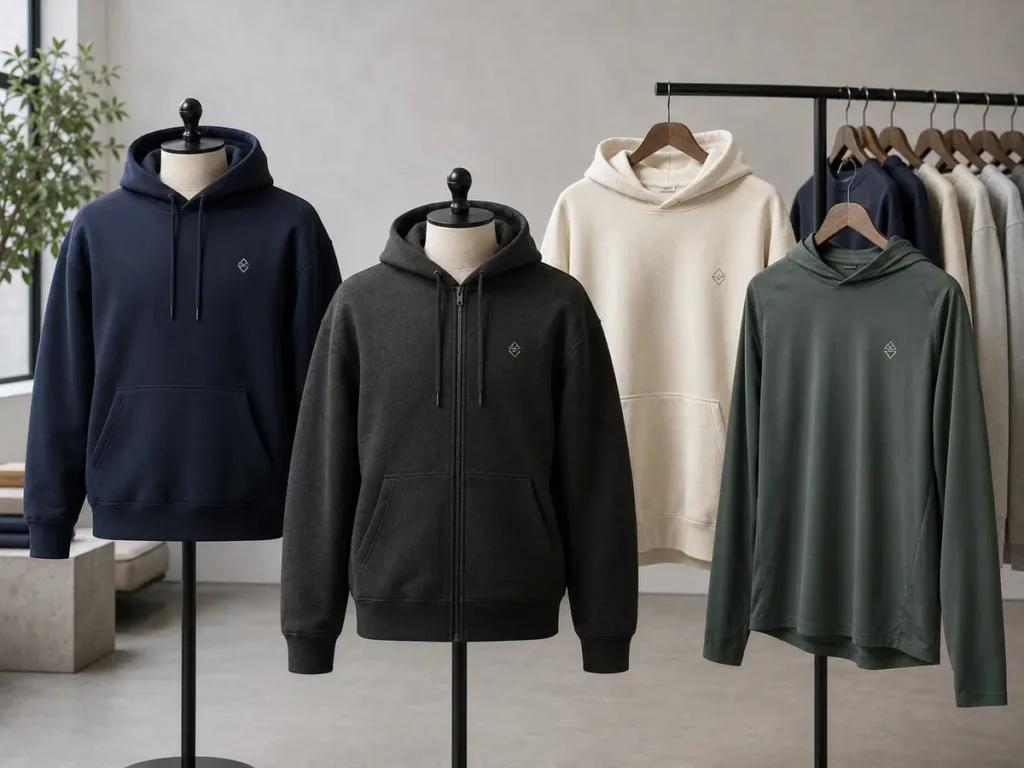
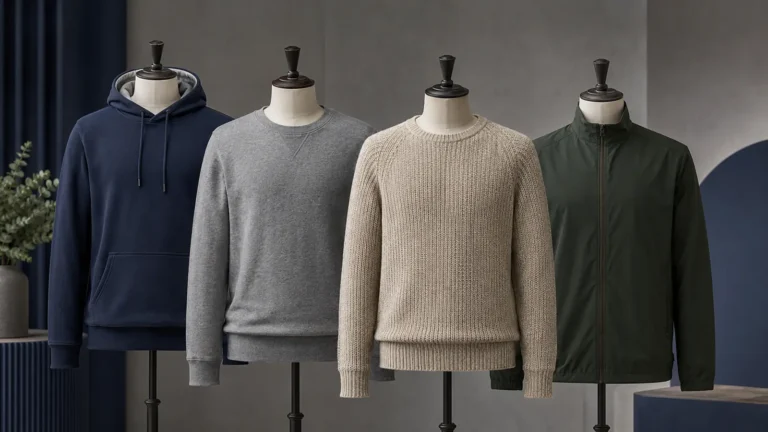
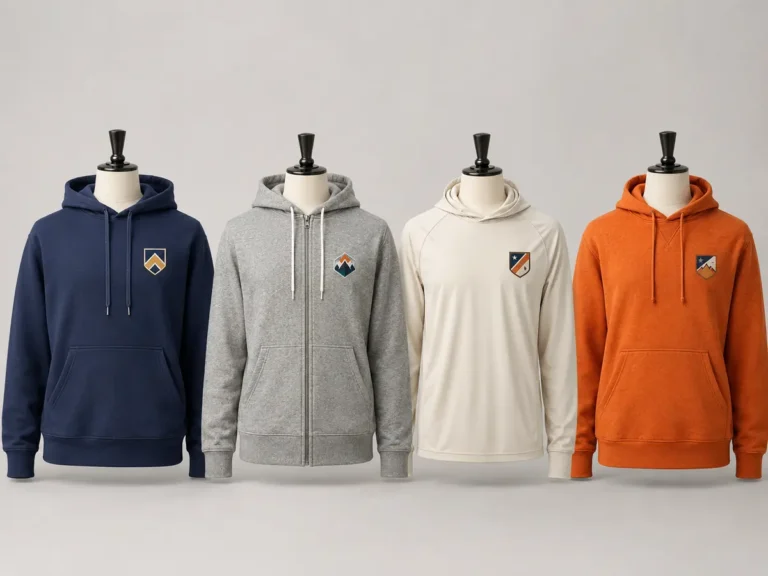
Confirm that the manufacturer’s experience matches the actual hoodie construction you plan to order.
Verify Relevant Product and Market Experience
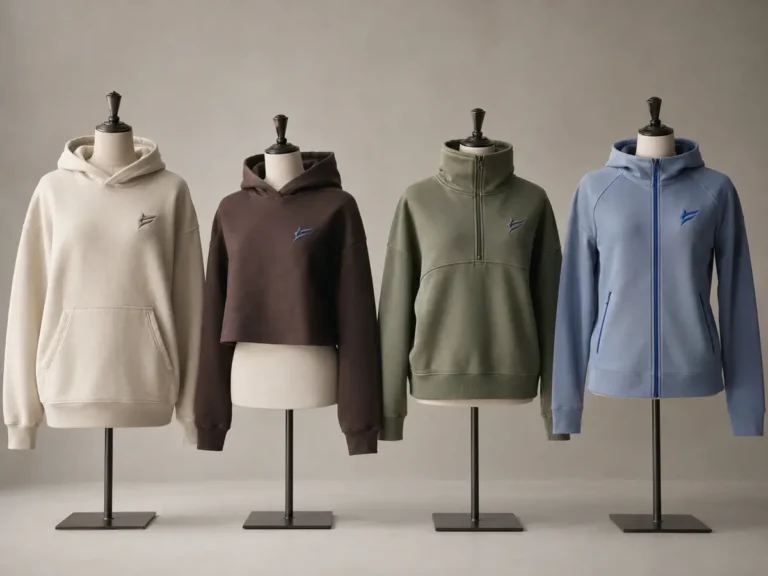
Ask what types of hoodies the supplier regularly develops. Pullover fleece, full-zip styles, lightweight performance knits, oversized streetwear, youth garments, and workwear hoodies require different patterns, fabrics, trims, and decoration decisions.
Relevant experience should be demonstrated through product knowledge, not only through photographs. A capable supplier should be able to discuss questions such as:
- How does a full zipper affect front artwork alignment?
- What rib composition and recovery are suitable for the cuff and hem?
- When should the hood be double layered?
- How will a heavyweight fabric affect seam bulk and embroidery?
- Can the supplier maintain the same color across body fabric, rib, drawcord, and zipper tape?
- How will the fit be graded across youth or extended adult sizes?
If your sales market is in North America, Europe, or the United Kingdom, ask whether the supplier routinely prepares the label content, packing lists, commercial invoices, carton marks, and documentation specified by importers in those markets. This is not a substitute for your own legal review. The brand owner or importer should confirm the requirements that apply to the product and destination.
Evaluate Fabric by Specification, Not by a Generic Name
“Cotton hoodie” and “heavyweight fleece” are incomplete descriptions. Two fabrics with the same headline composition can feel and perform differently because of yarn, knit construction, weight, brushing, finishing, dyeing, and shrinkage control.
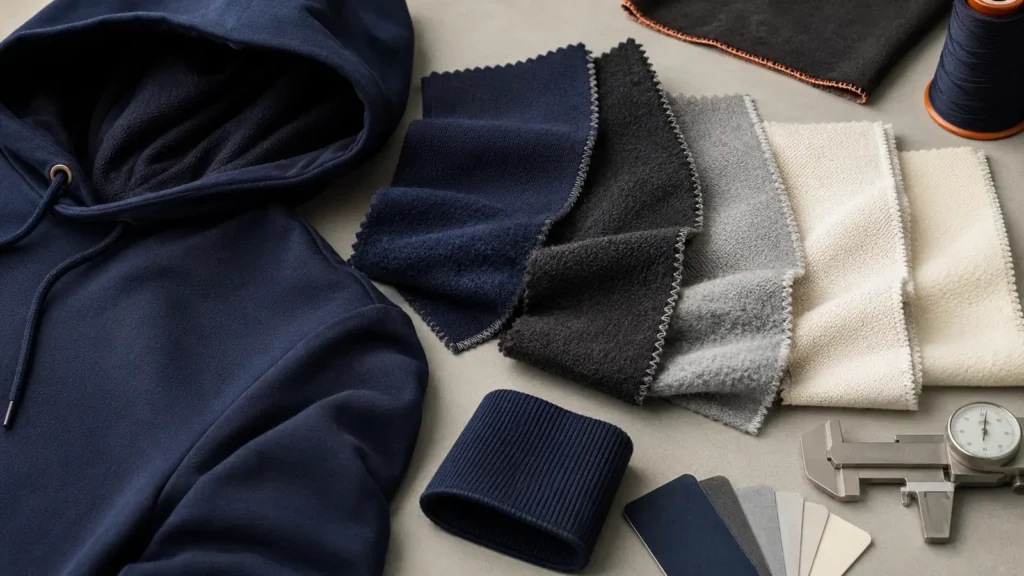
Approve fabric using a physical swatch and measurable specification, not a material name alone.
Composition
Cotton-rich fleece provides a familiar soft surface and can suit school, team, brand, and corporate programs. Polyester can add dimensional stability, moisture management options, colorfastness advantages, and compatibility with some performance uses. French terry has loops rather than a heavily brushed interior and may suit lighter transitional garments. The right choice depends on use, climate, price, decoration, and care expectations.
Request the exact fiber percentages for the shell, rib, lining, and other relevant textile components. For products sold in the United States, the Federal Trade Commission states that most covered textile products require labels identifying fiber content, country of origin, and the manufacturer or another responsible business. Its Care Labeling Rule also requires manufacturers and importers to attach care instructions to covered clothing. Review the FTC textile labeling guidance and care-label guidance with the responsible importer or compliance adviser.
For the European Union, textile products marketed in the EU generally require fiber-composition labeling under Regulation (EU) No 1007/2011. The EU textile label guidance explains that the label must show the fiber composition and be firmly attached for covered products. United Kingdom guidance similarly states that textile labels must show fiber content; consult the current UK textile labelling guidance for the destination.
Fabric Weight and Construction
State the target weight in grams per square meter, or GSM, and agree on a tolerance. GSM is not a complete quality measure, but it prevents a major misunderstanding. A buyer should also define whether the fabric is brushed fleece, loopback French terry, jersey, interlock, or another structure.
Ask the supplier to record:
- nominal composition and GSM;
- usable fabric width;
- face and back structure;
- anti-pilling or other requested finish;
- shrinkage test method and acceptance criterion;
- colorfastness or performance tests requested by the buyer;
- hand-feel reference; and
- approved lot or swatch identification.
If a certification such as OEKO-TEX STANDARD 100 is part of the purchasing requirement, request a valid, scope-appropriate certificate and verify the number with the issuing organization. OEKO-TEX describes STANDARD 100 as a label for textiles tested for harmful substances. It is a certification system, not a universal substitute for destination-market compliance. See the official STANDARD 100 overview.
Inspect Pattern, Fit, and Construction
A hoodie can look correct on a hanger and still fail in wear. Obtain a finished-garment measurement chart for every size. Important points may include chest width, body length, shoulder width, sleeve length, armhole, cuff opening, hem opening, hood height, hood width, pocket position, and zipper length.
Confirm:
- whether measurements are taken flat or around the garment;
- where each measurement starts and ends;
- the allowed tolerance for each point;
- whether tolerance changes by size;
- how patterns are graded; and
- how shrinkage is considered in the finished specification.
The size label “large” is not a measurable standard. If you already sell garments, provide a best-fitting reference and explain which measurements must remain unchanged. For a new program, approve a middle size first, then review size-set samples or key graded sizes before bulk production.
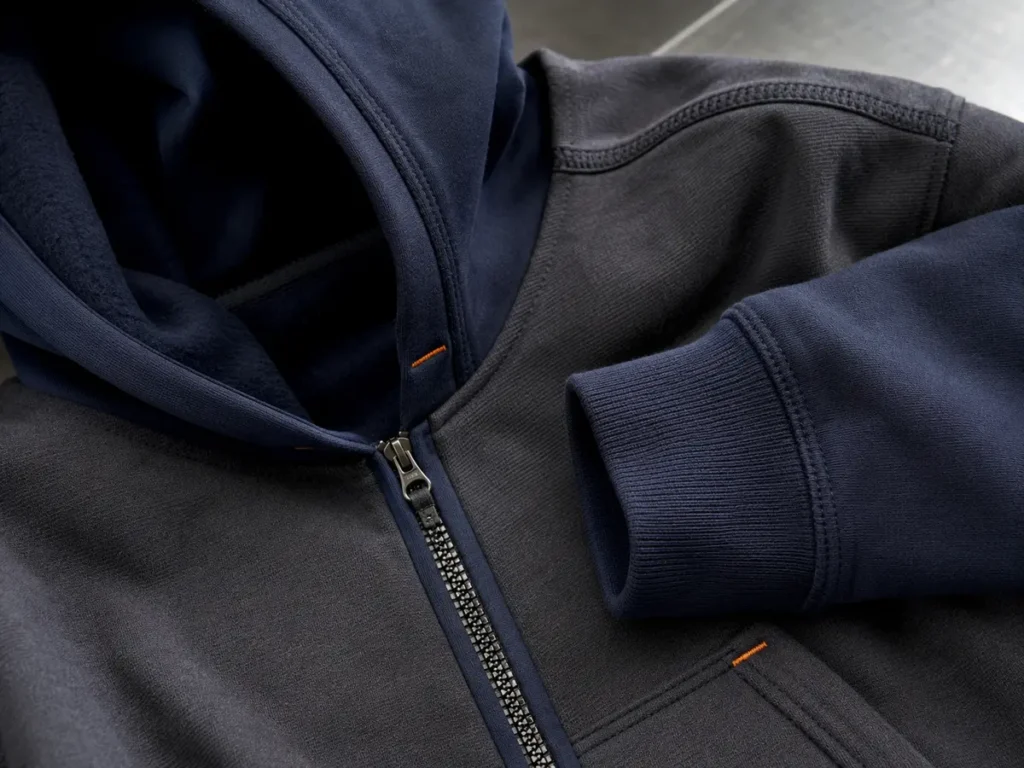
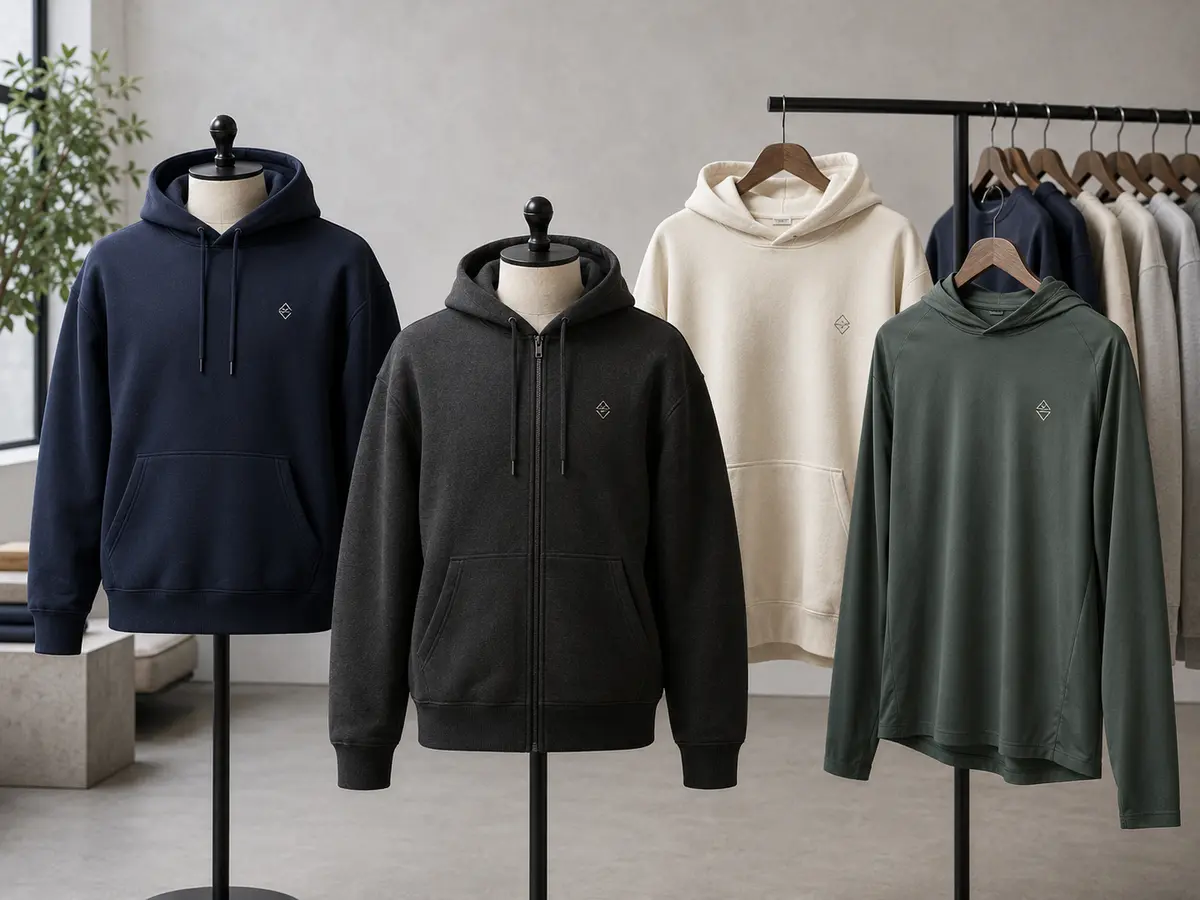
Construction quality becomes visible in seam alignment, reinforcement, rib recovery, pocket security, and clean finishing.
Examine seam type, stitch density, seam allowance, coverstitching, overlock security, shoulder reinforcement, hood construction, pocket attachment, zipper installation, bartacks, drawcord ends, eyelets, cuff recovery, and hem shape. Compare the construction with the intended use. A hoodie designed for repeated team travel or physical work may need different reinforcement from a lightweight event giveaway.
For youth programs, product-safety details require particular attention. The U.S. Consumer Product Safety Commission identifies hood and neck drawstrings on children’s upper outerwear in sizes 2T to 12, or equivalent, as a substantial product hazard and also specifies conditions for waist and bottom drawstrings in larger children’s sizes. Hoodies are included in the covered product guidance. Buyers of children’s styles should review the current CPSC drawstring guidance and obtain qualified advice for the actual design and market.
Match Decoration to the Fabric and Artwork
Decoration is part of the product engineering. The manufacturer should not recommend a method based only on what equipment is available.
| Method | Common strengths | Important checks | Often suitable for |
|---|---|---|---|
| Embroidery | Dimensional, durable appearance | Stitch count, backing, puckering, small-detail limits | Chest marks, teams, workwear, premium branding |
| Screen printing | Efficient for repeat graphics and many bulk programs | Ink system, opacity, curing, hand feel, color registration | Bold logos, events, school and promotional designs |
| Heat transfer | Fine detail and flexible production quantities | Adhesion, stretch, edge lifting, wash performance | Names, numbers, multi-color artwork |
| Sublimation | Dye becomes part of suitable polyester material | Fabric compatibility, migration, color control | Polyester panels or performance constructions |
| Woven patch | Fine woven detail with a separate badge look | Border, attachment, fraying, color matching | Clubs, private labels, detailed marks |
| Rubber/PVC patch | Dimensional, weather-resistant visual character | Thickness, flexibility, attachment security | Outdoor-inspired branding and accessories |
| Leather-style patch | Distinctive branded appearance | Material disclosure, wash method, edge and attachment | Lifestyle and private-label collections |
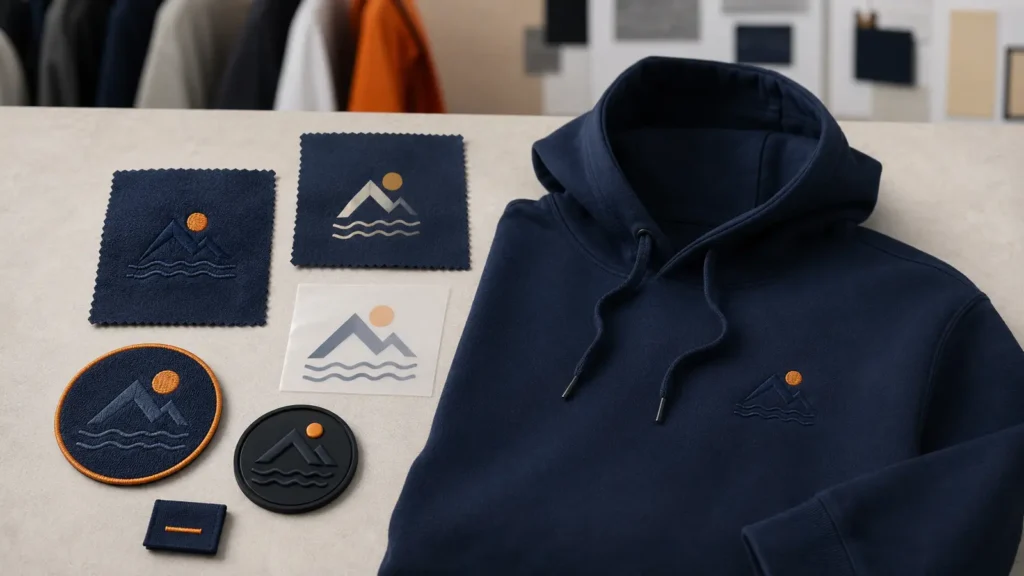
Ask for a technique sample on the intended fabric before approving the production method.
Provide vector artwork where possible. Define final dimensions, colors, location, distance from seams, and orientation. For embroidery, approve the digitized file or stitched sample rather than only a screen mockup. For print and transfer, confirm the finish, opacity, stretch, and wash expectations. If the design crosses a zipper or seam, request a physical sample because alignment can be difficult.
Private-label orders may also include neck labels, size tabs, care labels, woven labels, hangtags, stickers, barcodes, and custom packaging. Make one artwork register listing every file, revision, placement, color, and approval date.
Use a Controlled Sample Approval Process
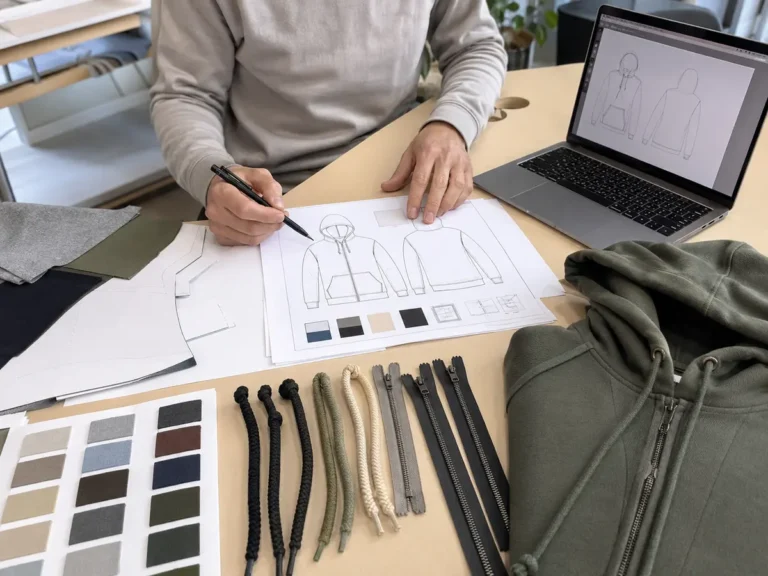
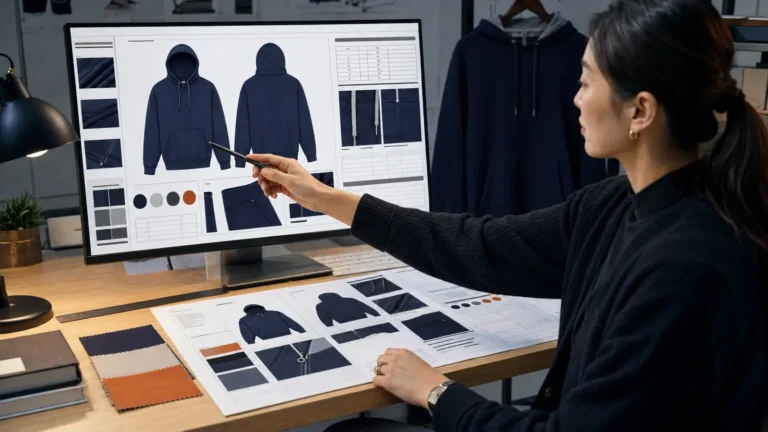
A digital mockup helps confirm concept and placement, but it does not confirm fabric, fit, sewing, color, or decoration performance. A physical sample is the practical bridge between a quotation and bulk production.
An effective process may include:
- Reference or development sample: confirms the general product concept.
- Fit sample: checks pattern, balance, measurements, and mobility.
- Decoration strike-off or technique sample: checks colors, scale, texture, and execution.
- Size set: checks grading across selected sizes.
- Pre-production sample: represents the approved materials, construction, artwork, labels, and packaging before bulk cutting or assembly.
- Shipping or production sample: retained for comparison with finished units.
Not every order requires every stage. A repeat order with unchanged specifications may need fewer steps; a complex private-label launch may need all of them.
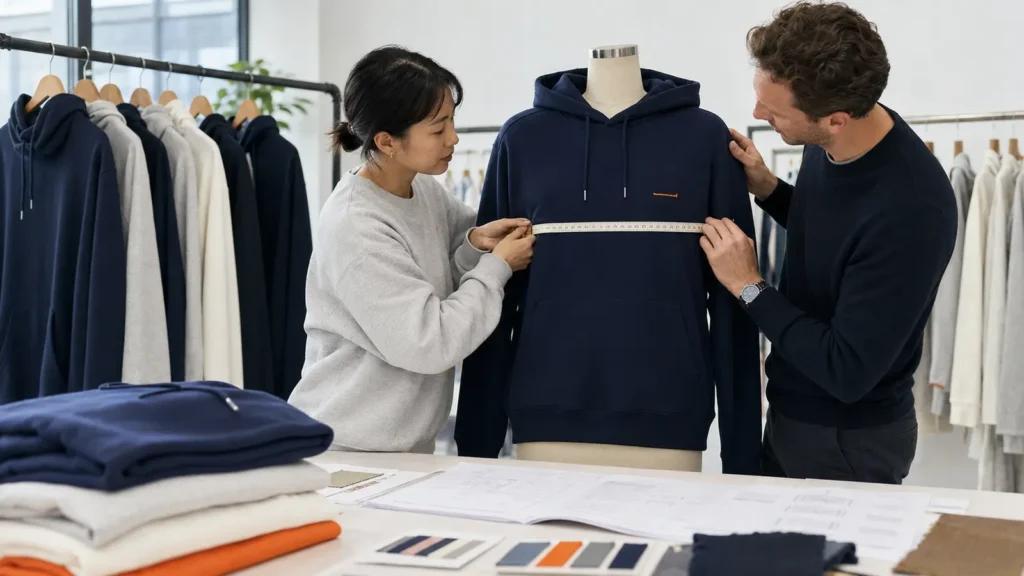
Record sample comments by measurement, material, color, construction, artwork, label, and packaging.
Create one consolidated comment sheet instead of sending scattered messages. Mark every point as approved, revise, or pending. Photograph the sample from consistent angles. Identify the sample version and date. Do not authorize bulk production while critical points remain “under discussion.”
When the sample is approved, freeze a production specification that includes the bill of materials, measurement chart, artwork, color references, workmanship standard, packing method, and tolerance table. State how any proposed substitution must be approved. A supplier should not change fabric, trims, artwork, or packaging silently because the original item becomes unavailable.
Examine the Quality-Control System Before Ordering
“We check quality” is not a quality plan. Ask who checks incoming materials, in-line work, finished garments, and packing. Request the checklist that will be used for your order.
The plan should address:
- fabric identity, color, defects, and quantity before cutting;
- shade grouping and lot control;
- cut-part accuracy and bundling;
- seam construction and workmanship during sewing;
- logo color, size, placement, adhesion, and distortion;
- garment measurements by size;
- appearance after any requested wash or performance check;
- label content and placement;
- barcode and packaging accuracy;
- carton quantity, assortment, marks, dimensions, and weight; and
- final defect classification and corrective action.
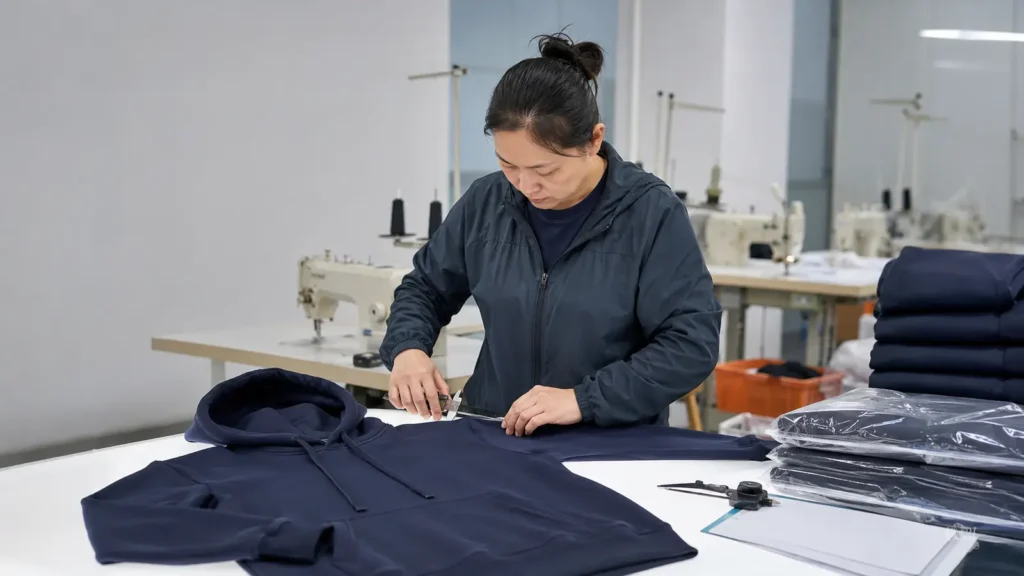
Agree on what will be inspected, how many units will be checked, and what happens when a result is outside tolerance.
Ask whether the supplier uses an agreed sampling standard or a buyer-specific inspection level. If you require third-party inspection, identify the inspection company, timing, sample size, acceptance criteria, and responsibility for reinspection before placing the order.
Define defects with examples. A critical defect creates a safety or regulatory risk. A major defect may make the garment unsaleable or unsuitable for intended use. A minor defect may not materially affect use but can still exceed an agreed appearance standard. The parties should agree on remedies for systematic defects, shortage, incorrect assortment, or failed packaging—not try to negotiate them after shipment.
Review Compliance and Documentation by Destination
A manufacturer can support compliance, but the buyer, brand owner, importer, distributor, or other economic operator may retain legal obligations depending on the market. Ask for evidence, verify its scope, and obtain professional advice where needed.
For EU sales, the General Product Safety Regulation has applied since December 13, 2024 and sets obligations for manufacturers, authorized representatives, importers, distributors, fulfillment providers, and online marketplaces. Review the European Commission’s GPSR overview and confirm the economic-operator, traceability, labeling, technical documentation, and online-offer requirements relevant to your product.
Prepare a destination checklist covering:
- fiber composition;
- country of origin;
- responsible business or economic-operator information;
- care instructions;
- size labeling;
- product and batch traceability;
- language requirements;
- packaging and environmental obligations;
- children’s product requirements where applicable;
- restricted substances or buyer-specific chemical policies; and
- records, test reports, and retention periods.
Do not accept a generic “compliance certificate” without identifying the issuing body, product, model, materials, test method, report date, and market. A fabric certificate may not cover printing ink, patches, drawcords, zippers, or the finished garment. A test report for one color or construction may not automatically cover another.
Understand the Real Cost Structure
Unit price changes with fabric, weight, order quantity, size mix, decoration, label program, packaging, testing, shipping term, payment cost, and production timing.
Ask for an itemized quotation showing:
- product and specification;
- price by quantity tier;
- currency and quotation validity;
- sample, pattern, artwork, mold, or digitizing fees;
- decoration inclusions and extra positions;
- label and packaging costs;
- testing or inspection costs;
- MOQ by style, color, and logo;
- sample and production lead-time assumptions;
- Incoterm and named place;
- payment schedule; and
- what is specifically excluded.
Compare landed cost rather than the factory unit price alone. Add freight, insurance, duties, taxes, customs services, inspection, local delivery, payment charges, and contingency. Consider the cost of risk. A slightly higher price can be rational if it includes a more stable fabric, better grading, controlled sampling, or more reliable packaging.
Be cautious when one quotation is dramatically lower. Ask whether the composition, GSM, rib, hood lining, decoration size, label set, packing, and trade term match the other offers. A low quotation can be a different product.
Confirm Capacity, Lead Time, and Repeat-Order Control
Ask the supplier to separate development time, material time, production time, inspection, and transit. “Thirty days” may begin after deposit, artwork approval, sample approval, or material arrival; the trigger must be written.
Discuss peak-season capacity and the effect of custom-dyed fabric or trims. Confirm the last date by which the pre-production sample must be approved to protect the requested delivery date. Build time for customs and local distribution into the plan.
For repeat orders, ask how the supplier stores:
- pattern and grading files;
- approved measurement charts;
- fabric and trim references;
- color standards;
- embroidery or print files;
- label and packaging artwork;
- sample photos and comments; and
- production and inspection records.
Materials can change over time. Before a repeat order, reconfirm availability and approve any new lot or substitution. “Same as last order” is not sufficient if the earlier specification was never documented.
Questions to Ask Every Shortlisted Manufacturer
- Which hoodie constructions do you make regularly?
- What is the MOQ by style, fabric color, and artwork?
- Can you state the exact fabric composition, construction, finish, and GSM?
- How do you control shrinkage, pilling, color, and shade variation?
- How do you develop patterns and grade the full size range?
- Which decoration methods are completed internally or by managed partners?
- What physical samples do you recommend before bulk production?
- How many sample revisions are included and what causes extra charges?
- What written document becomes the final production standard?
- How are substitutions proposed and approved?
- What in-line and final inspections are performed?
- Can you work with a third-party inspection company?
- How are defects, shortages, and rework handled?
- What labeling and export documentation can you prepare?
- What information do you need from the buyer to confirm lead time?
- How do you preserve specifications for repeat orders?
- Who will manage technical communication after the sales stage?
- Can you provide carton dimensions and weights for freight planning?
Specific answers with qualifications, documents, and examples are stronger than instant agreement.
Common Mistakes to Avoid
Choosing From Photos Alone
Photographs do not prove fabric composition, weight, fit, stitching, wash performance, or repeatability. Approve physical materials and samples.
Comparing Incomplete Quotations
If one supplier includes labels and retail packaging while another includes only a plain hoodie, their unit prices are not comparable. Normalize the specification.
Using “Premium” as a Specification
Translate quality language into measurable criteria: composition, GSM, seam type, measurements, decoration dimensions, tolerances, testing, and inspection.
Skipping Size-Set Review
A correct medium does not prove that youth, small, 2XL, or extended sizes have been graded appropriately.
Approving Artwork Only on Screen
Color, texture, stitch fill, opacity, adhesion, and placement must be reviewed on the intended fabric.
Changing Details After Production Starts
Late changes can create waste, delay, or inconsistent units. Freeze the approved specification and control revisions.
Treating Compliance as the Supplier’s Problem
The buyer should identify the destination-market requirements and verify that documents and labels match the actual product.
Failing to Define Defect Remedies
Agree on inspection, acceptance, rework, replacement, and shortage procedures before the order.
Why Buyers Consider JIUMU for Custom Hoodies
JIUMU is a Guangdong-based B2B supplier established in 2010, serving buyers in the United States, Canada, the United Kingdom, and Europe. Its product scope includes custom teamwear, logo apparel, hats, uniforms, bags, and branded merchandise.
For custom hoodies, JIUMU supports OEM and ODM development, fabric sourcing, Pantone color matching, digital mockups, physical samples, bulk production, quality control, and export coordination. Decoration options include embroidery, sublimation, screen printing, heat transfer, and woven, rubber/PVC, and leather-style patches. Private-label support can include neck labels, woven labels, hangtags, and customized packaging.
The typical MOQ is 50 pieces, subject to the product structure and customization. This can suit schools, teams, clubs, distributors, uniform dealers, promotional buyers, retailers, and private-label brands that need a defined product rather than an off-the-shelf blank.
Request a project review: Send JIUMU your reference image or tech pack, quantity, sizes, colors, fabric preference, logo files, packaging needs, destination, and target delivery date. The team can identify missing specifications and prepare a custom quotation. Visit the JIUMU contact page, email zhengdong@jiumugear.com, or use WhatsApp +86 18507502899.
Frequently Asked Questions
Final Recommendation
Choose a custom hoodie manufacturer by evidence, not promises. Start with one shared specification, score suppliers against the same criteria, test the partnership through a physical sample, and define the bulk quality plan before production. Confirm the total landed cost and destination-market requirements rather than focusing on the unit price alone.
The strongest supplier will make trade-offs visible. It will explain what can be customized, what requires a higher MOQ, what affects lead time, how the sample becomes the production standard, and how problems are identified before shipment. That transparency is the foundation of consistent bulk orders and reliable repeat programs.

A controlled sourcing process turns a hoodie design into consistent teamwear that can be reordered with confidence.
About the JIUMU Content Team
JIUMU creates practical B2B sourcing guides for custom teamwear, logo apparel, hats, uniforms, bags, and branded merchandise, with a focus on specification clarity, sampling, quality control, and export planning.