Best Hoodies for School Teams and Student Athletes
The best hoodies for school teams are not simply the thickest or least expensive garments in a catalog. They are hoodies that match the intended use, fit both youth and adult athletes, reproduce school colors accurately, withstand repeated washing, and arrive with names, numbers, logos, labels, and packaging approved before bulk production.
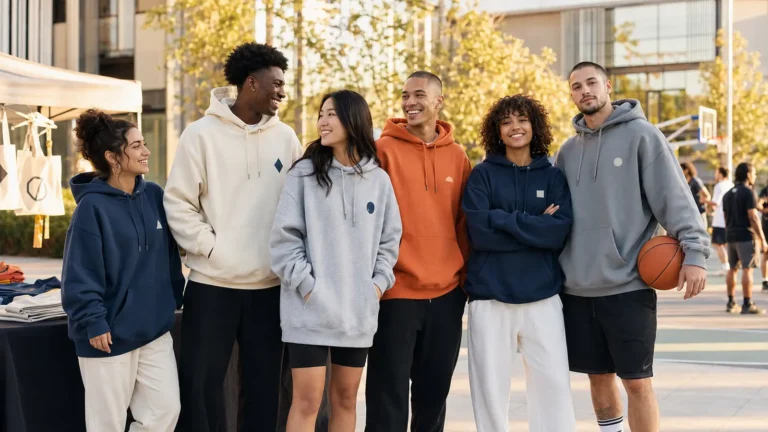
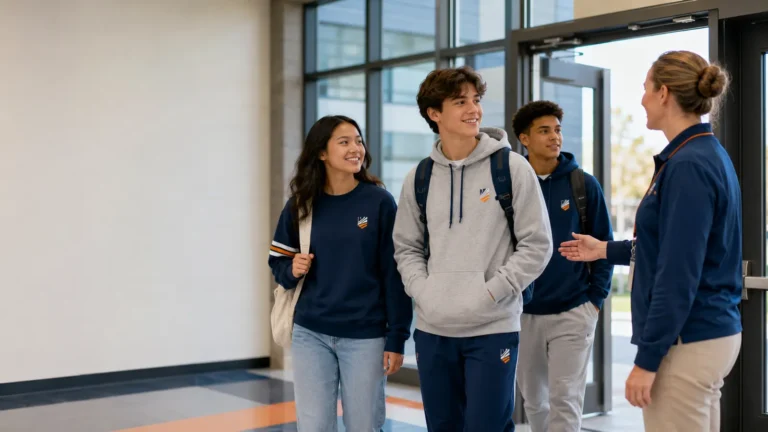
That definition matters because one school order may need to serve several groups at once. Players want comfortable layers for travel and warm-ups. Coaches want a consistent appearance. Athletic directors need reliable sizing and delivery. Booster clubs may need spirit wear that families will actually buy. Distributors and uniform dealers need repeatable specifications that can be reordered next season.
This guide explains how schools, clubs, dealers, and promotional buyers can select and source custom team hoodies without treating every use case as the same product.
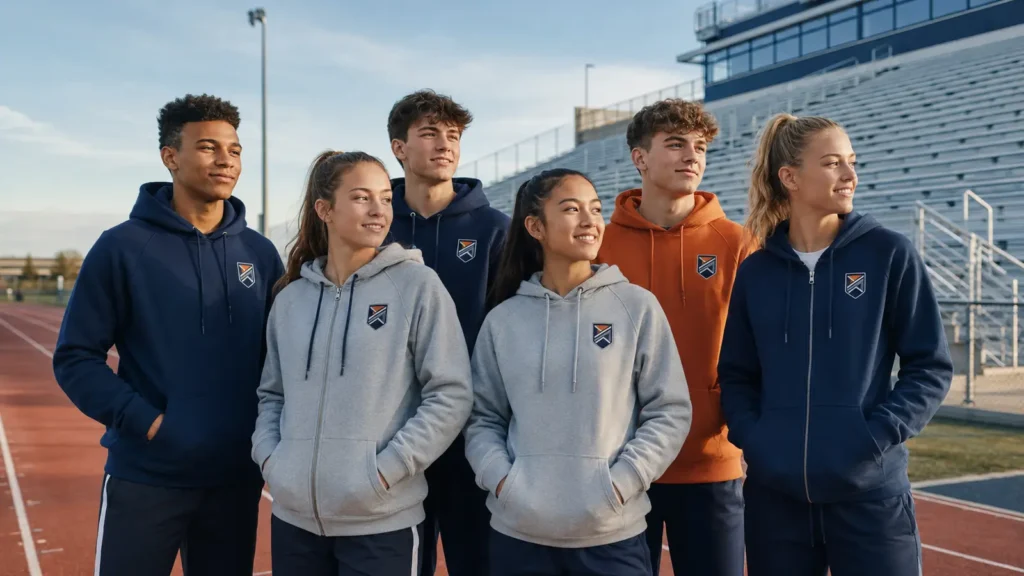
Quick Answer: What Are the Best Hoodies for School Teams?
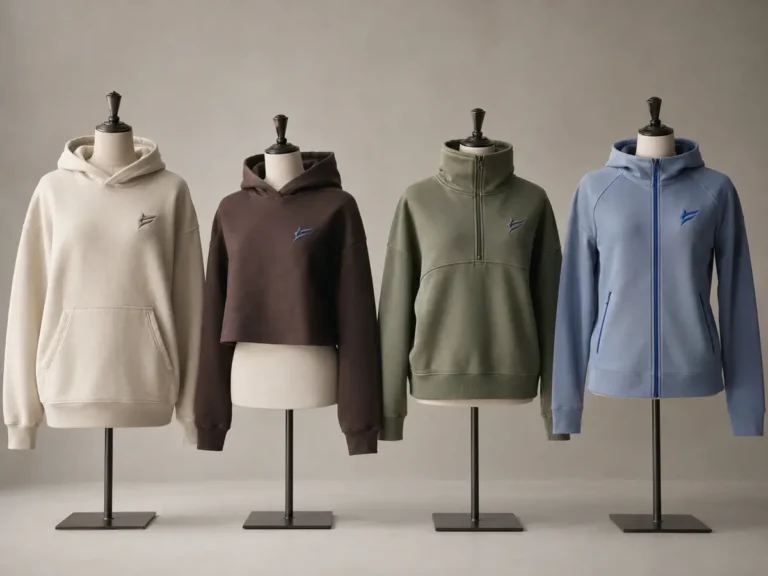
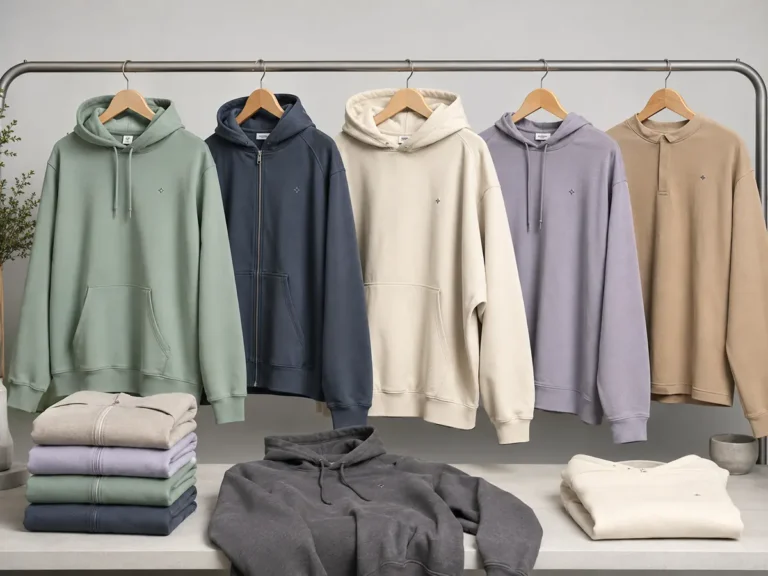
For most school athletic programs, the strongest all-purpose choice is a midweight cotton-polyester fleece hoodie with a stable outer face, soft brushed interior, reinforced pocket and seam construction, rib-knit cuffs and hem, and a fit range that bridges youth and adult sizes. Use a pullover for traditional spirit wear and warmth; choose a full-zip when athletes need fast on-and-off layering. Add a lightweight polyester-rich option when the garment will be used for active warm-ups or mild weather.
Before ordering, approve the fabric composition and weight, finished garment measurements, school colors, decoration method, logo placement, youth safety details, care label, packaging, and a physical sample. The “best” specification is the one that fits the program’s actual season, age group, budget, and replacement plan.
Why the Hoodie Specification Matters to a School Program
A school-team hoodie is apparel, uniform-adjacent equipment, and a visible piece of school identity. Its specification affects comfort, visual consistency, replacement availability, and perceived program quality. Heavy fleece may suit a cold sideline but feel uncomfortable indoors; an oversized spirit-wear fit may hinder layering; and a large print may feel stiff if it is not developed for the fabric. Begin with the use case, not a photograph or one unit price.
A Decision Table for School Team Hoodie Buyers
| Primary use | Recommended starting style | Fabric direction | Fit priority | Decoration priority |
|---|---|---|---|---|
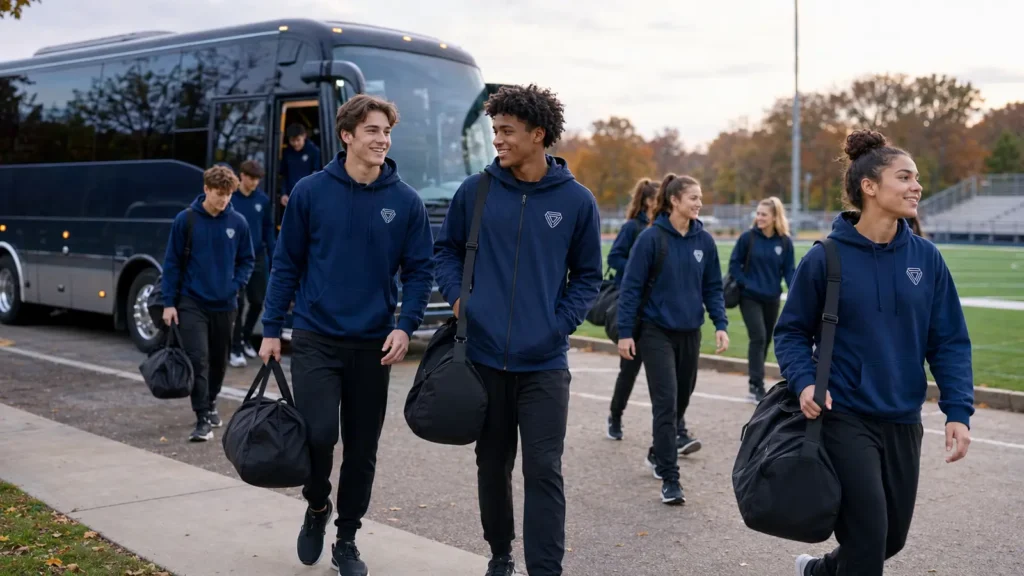
| Team travel | Full-zip or pullover | Midweight cotton-poly fleece | Comfortable over a T-shirt or jersey | Small chest logo, optional name or number |
| Cool-weather sideline | Pullover fleece | Midweight to heavyweight fleece | Room for base layers | Durable chest or sleeve branding |
| Active warm-up | Lightweight performance hoodie | Polyester-rich knit or light French terry | Athletic mobility | Lightweight transfer or restrained print |
| Daily school or PE use | Pullover or full-zip | Balanced midweight fabric | Inclusive youth/adult grading | Simple logo, easy care |
| Spirit wear and fundraising | Pullover fleece | Soft cotton-rich face | Retail-friendly unisex fit | Larger school graphic or embroidery |
| Coach and staff apparel | Full-zip | Midweight stable knit or fleece | Clean, professional silhouette | Small embroidery and optional role/name |
This table is a starting point. Climate, sport, school policy, age range, and local competition rules can change the correct choice.
Which Hoodie Style Is Best for Each School Team?
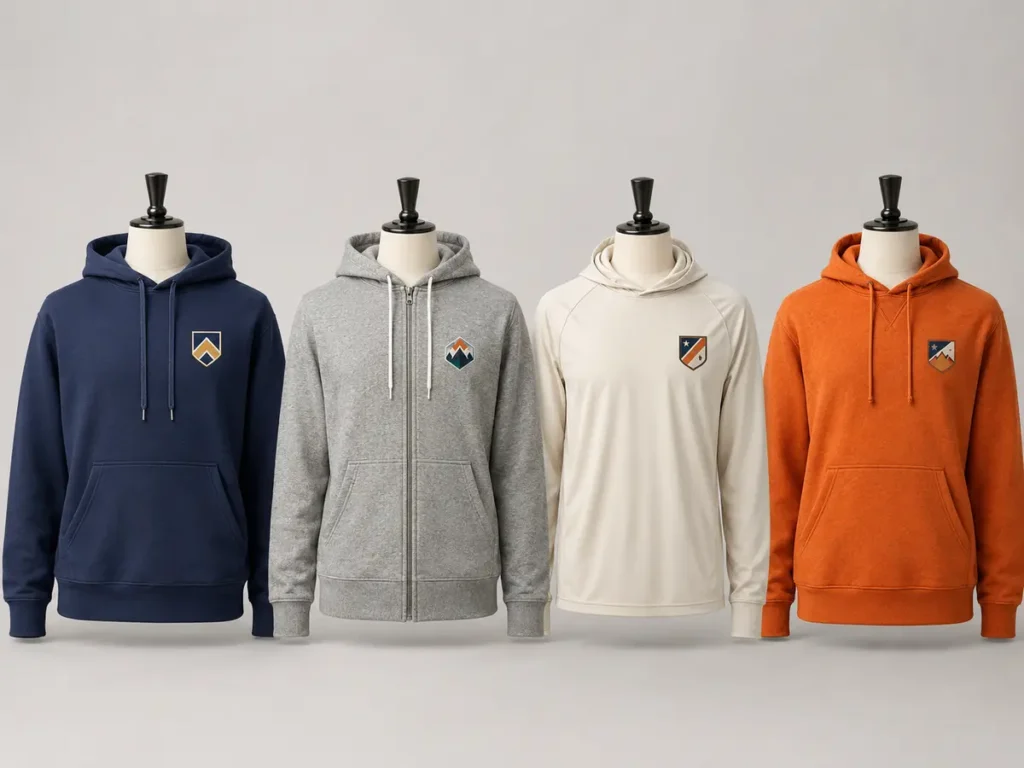
Pullover Hoodies
Pullover hoodies are the most familiar option for school spirit wear and team travel. They provide an uninterrupted front area for a mascot, school name, team mark, or sponsor-approved graphic. The kangaroo pocket and simple construction also make them practical for bulk programs.
Choose a pullover when warmth, a classic team look, and a large decoration area matter more than rapid layer changes. Confirm the hood shape, pocket opening, hem recovery, and whether the youth version must be drawcord-free.
Full-Zip Hoodies
Full-zip hoodies are useful for athletes who need to remove a layer quickly without pulling it over a cap, hairstyle, or uniform. They also work well for coaches, staff, and travel apparel.
The zipper adds quality-control points: gauge, slider operation, tape color, top-end finishing, pocket alignment, and any artwork crossing the opening. A pullover design may need split embroidery or careful print registration on a zip-up.
Lightweight Performance Hoodies
Lightweight hoodies use a thinner knit, often with more polyester, for transitional weather or controlled activity. Do not assume every polyester garment is breathable or suitable for heat; construction, ventilation, activity, and weather all matter. Schools should follow their athletic-health policies. The NFHS maintains current resources on its Sports Medicine Position Statements and Guidelines page.
Heavyweight Spirit-Wear Hoodies
Heavyweight fleece provides a substantial hand feel for cold climates, alumni programs, senior gifts, and retail-style spirit wear. It is not automatically the best team-issue garment: freight volume, drying time, and heat retention may work against the program’s needs.
How Should Buyers Choose Hoodie Fabric?
The fiber blend tells only part of the story. Fabric weight, knit structure, yarn quality, surface finish, brushing, shrinkage behavior, and colorfastness all influence the finished hoodie.
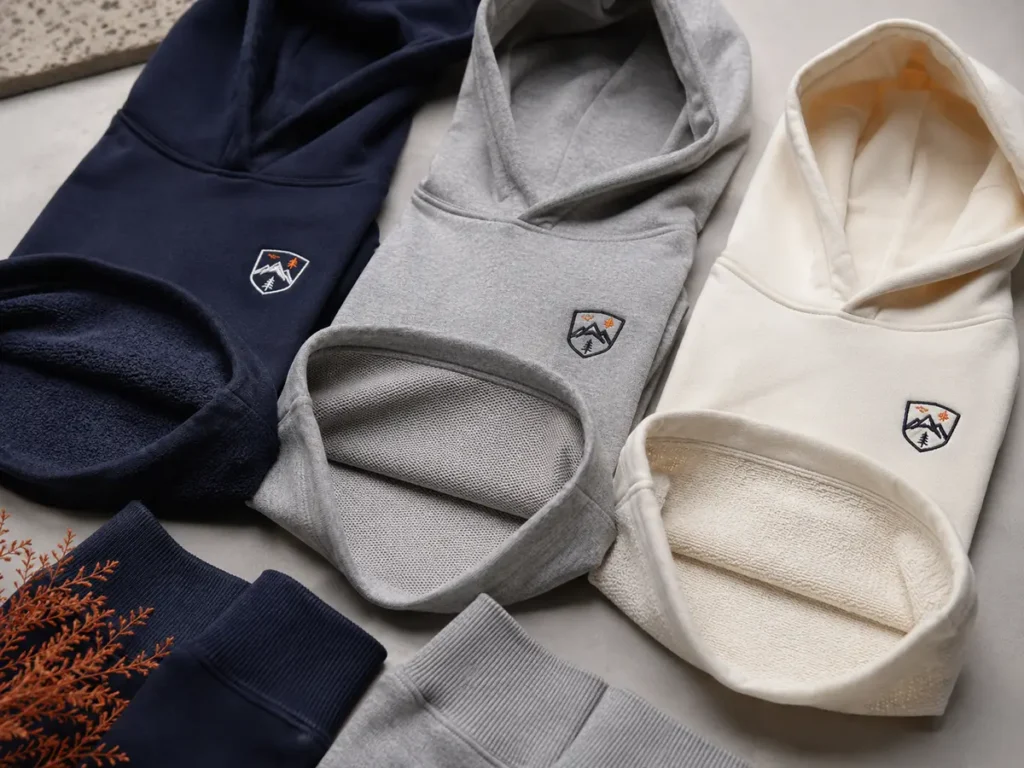
Cotton-Rich Fleece
A cotton-rich face provides a familiar hand and receptive print surface, while polyester can support shape retention and consistency. Ask for exact fiber percentages and confirm whether ribs, pocket bags, or other components differ from the main fabric.
Polyester-Rich Fleece or Knit
Polyester-rich fabrics can support durable color and an athletic appearance, but shine, static, heat retention, snagging, and decoration compatibility vary by knit and finish. Evaluate a sample instead of relying on the fiber name.
French Terry
French terry has a smooth face and looped inner surface for spring seasons, indoor programs, and travel. Check the loops for snagging and recovery where bags, hook-and-loop equipment, or rough benches are common.
Brushed Fleece
Brushed fleece raises inner fibers for softness and warmth. Check shedding, uneven compression, laundering changes, and visible lint transfer on dark colors.
Understanding Fabric Weight
Suppliers commonly state hoodie fabric weight in grams per square meter, or GSM. The following ranges are useful for quotation discussions, but they are not universal performance grades. Construction and finishing can make two fabrics of the same GSM feel different.
| Working range | Typical buyer interpretation | Potential use | Questions to confirm |
|---|---|---|---|
| About 200–260 GSM | Lightweight | Mild weather, active travel, indoor use | Is it brushed, loopback, or jersey? Is it opaque? |
| About 260–320 GSM | Midweight | General team issue, spirit wear, travel | How does it shrink and pill after washing? |
| About 320–400+ GSM | Heavyweight | Cold sidelines, premium merchandise | Does the extra bulk match climate, freight, and drying needs? |
Treat these as planning bands. Put the final fabric code, composition, target weight, color, and approved sample reference in the purchase specification.
What Fit and Size Range Works for Student Athletes?
School programs often need a wider size curve than consumer fashion brands. A single order may include younger students, taller teenagers, adult coaches, and staff. The solution is not merely adding “youth” and “adult” to a price list; it is verifying how the patterns connect.
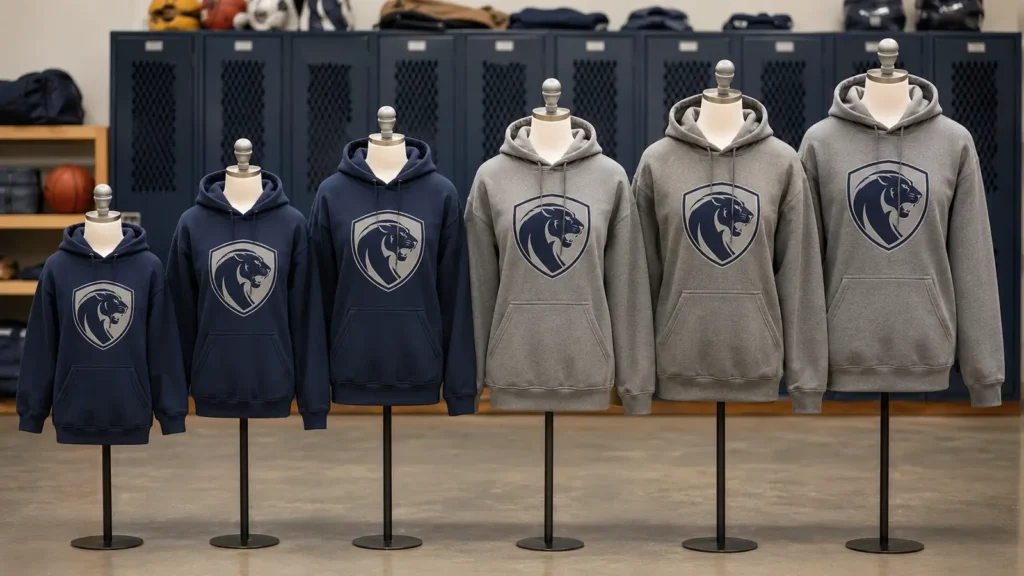
Use Finished Garment Measurements
Size names are not standardized across suppliers. Request a measurement chart that defines at least chest width, body length, sleeve length, shoulder width or raglan sleeve reference, cuff opening, and hem width. State whether measurements are taken flat and identify the allowed production tolerance.
Compare the chart with a garment the program already uses successfully. If athletes will wear the hoodie over a jersey or base layer, approve the sample in that same configuration.
Connect Youth and Adult Grading
Look for sudden jumps or overlaps between the largest youth size and smallest adult sizes. Those transition points cause many exchange problems. A controlled size-set sample—selected sizes rather than every size—can reveal grading issues before production.
Choose the Fit Deliberately
- A regular unisex fit is the simplest starting point for mixed teams and spirit-wear inventory.
- An athletic fit can look cleaner but needs enough chest, shoulder, and arm mobility for layering.
- A relaxed or oversized fit may be appropriate for retail-oriented student merchandise, but it should not be substituted for a team issue fit without approval.
- Separate women’s or shaped fits can improve choice when the program has enough volume to manage additional SKUs.
For school-wide programs, publish both body guidance and finished garment measurements. A try-on size set is more reliable than asking families to guess from age alone.
Construction Details That Improve Durability
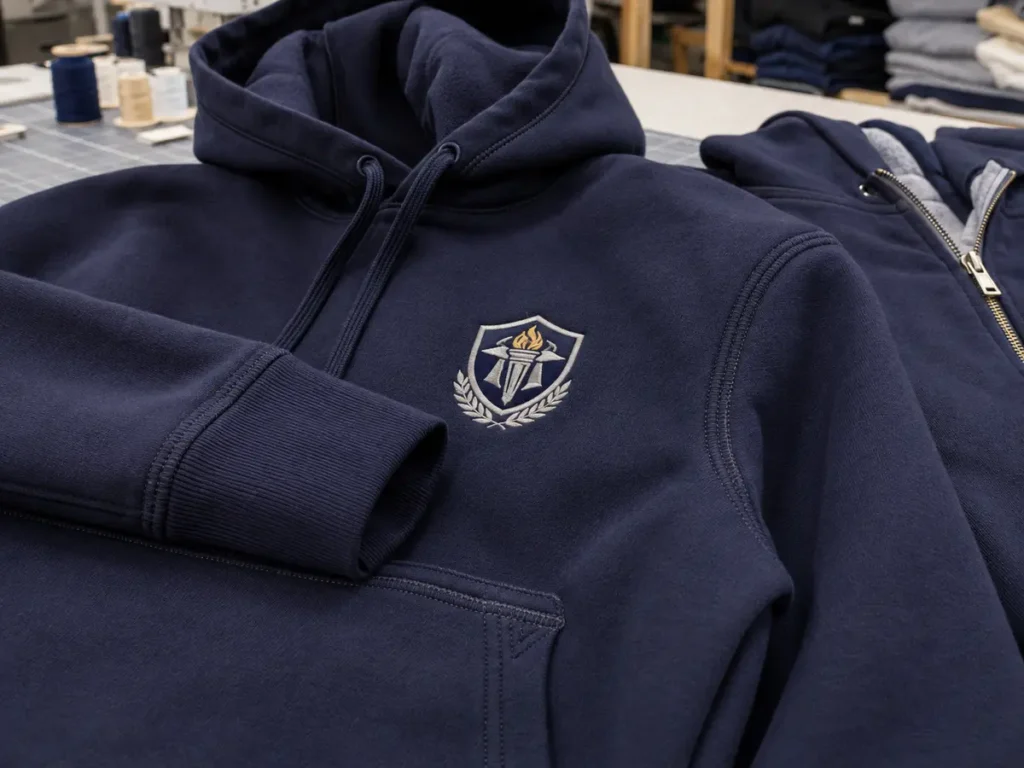
The visible logo gets attention, but the less visible construction details often determine whether a hoodie remains presentable through a season.
Seams and Stress Points
Review seam type, stitch density, and reinforcement at pocket corners, zipper ends, underarms, and hood joins. Double-needle topstitching can create a stable finished appearance, but the underlying seam and thread quality still matter.
Rib Cuffs and Hem
Rib should recover after stretching and remain compatible with the main body color. Ask whether the rib composition differs from the fleece and whether the supplier can maintain the same shade across both materials.
Hoods, Drawcords, and Openings
Decide whether the hood is single- or double-layered and whether its bulk is suitable beneath jackets or on team travel. For younger students, safety details are not optional. The U.S. Consumer Product Safety Commission states that hood and neck drawstrings on children’s upper outerwear in sizes 2T–12, or equivalent sizes, present a substantial product hazard; it also sets conditions for waist and bottom drawstrings in sizes 2T–16. Sweatshirts and hoodies can fall within the guidance’s upper-outerwear scope. Buyers serving the U.S. youth market should review the current CPSC drawstring guidance and confirm compliance responsibility with qualified advisors.
Zippers and Hardware
For full-zip styles, test the zipper repeatedly and inspect alignment on a worn garment. Specify slider finish, tape color, puller shape, and protective top finishing. Avoid sharp or loose components.
Pocket Construction
Kangaroo and welt pockets should be symmetrical, securely attached, and deep enough for the intended use. A phone-sized opening may be useful for travel, but loose objects should never be carried during active play.
Which Decoration Method Is Best for a School Hoodie?
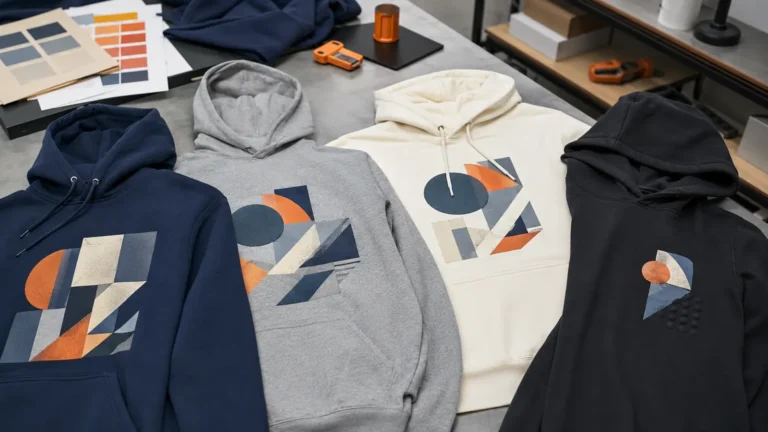
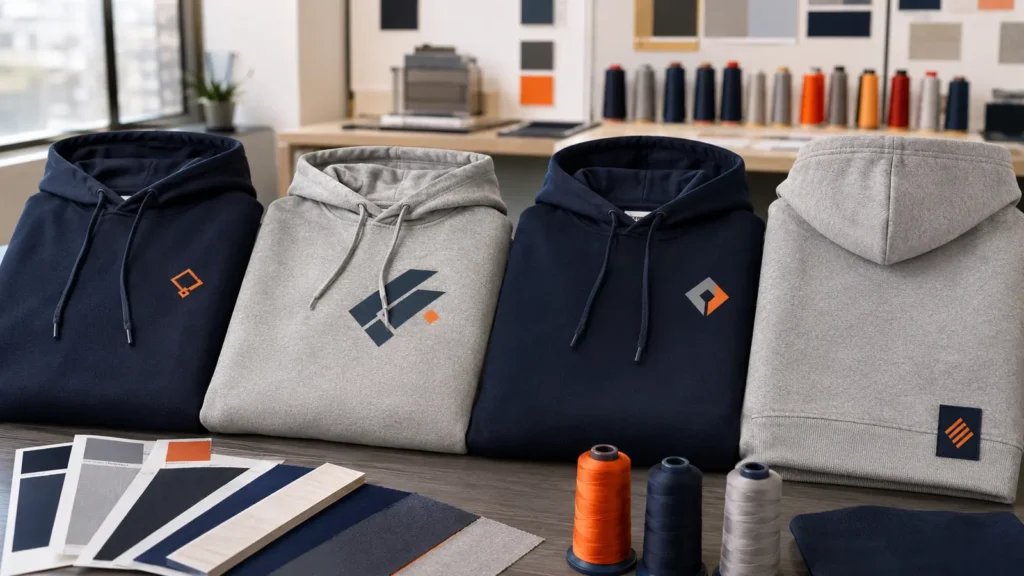
The correct method depends on artwork, quantity, fabric, desired texture, color count, personalization, and budget. A school crest designed for embroidery may need simplification; a large spirit-wear graphic may be better printed.
| Method | Best suited to | Buyer advantage | Approval risk to check |
|---|---|---|---|
| Embroidery | Small chest crests, staff apparel, initials | Dimensional and professional appearance | Small text, dense fills, puckering, backing comfort |
| Screen printing | Larger school graphics and repeat designs | Efficient for suitable quantities and color counts | Hand feel, ink coverage, cracking, color registration |
| Heat transfer | Names, numbers, small runs, detailed graphics | Flexible personalization | Edge lifting, scorch marks, fabric compatibility |
| Sublimation | Polyester panels or purpose-built garments | Integrated color and complex artwork | Not suitable for every fleece or dark finished garment |
| Woven or rubber/PVC patch | Badge-style identity and merchandise | Distinct texture and repeatable shape | Attachment, edge comfort, wash behavior, thickness |
Logo Placement
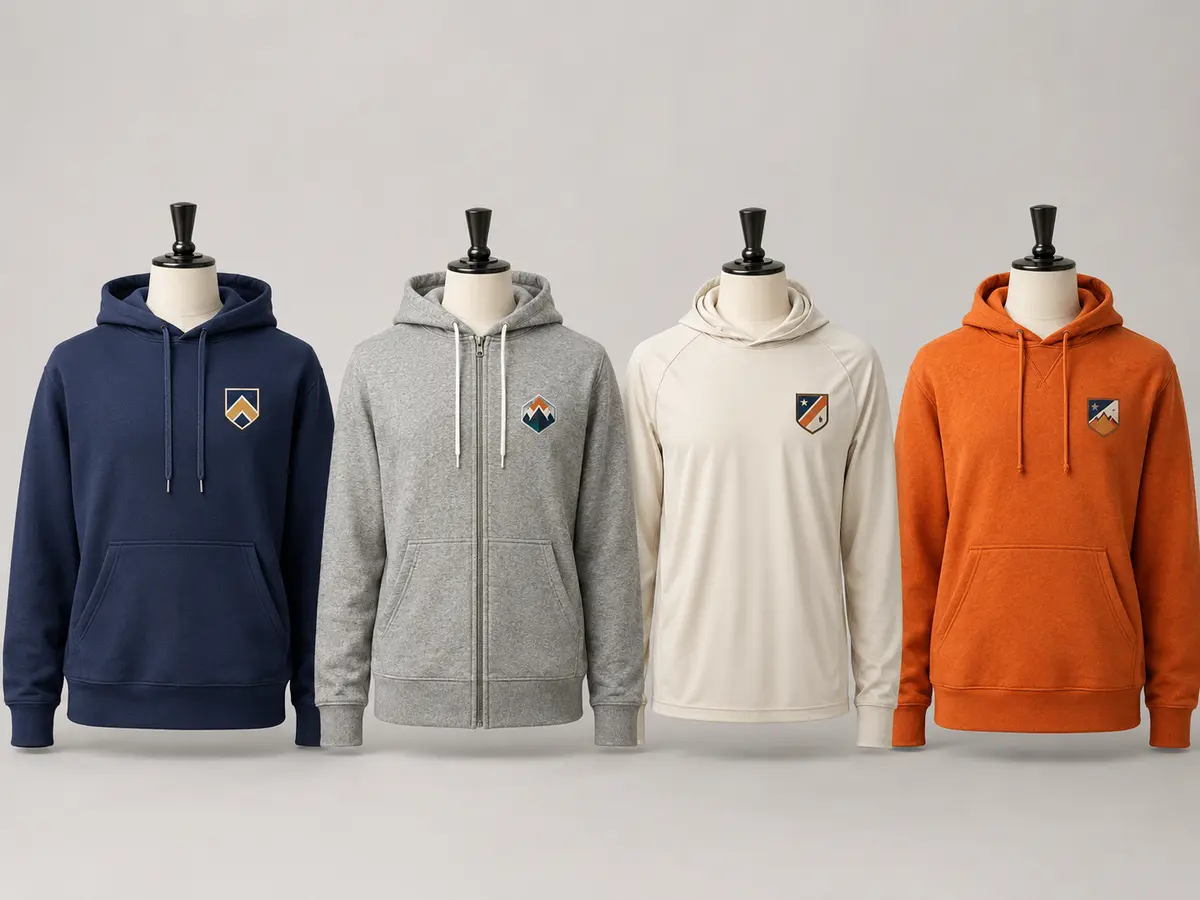
Common placements include left chest, center chest, sleeve, upper back, and small back-neck positions. Place a logo on a physical size sample before approving the full grade. A placement that looks balanced on adult large can appear too low or oversized on youth small.
Names and Numbers
Create a locked roster spreadsheet with one row per garment: player name, displayed name, number, size, style, color, and approval status. Decide how duplicate numbers, accented characters, long surnames, and late roster changes will be handled. Have a second person verify the production roster.
School Identity and Permissions
Obtain written authorization for school marks, mascots, sponsor logos, and fundraising artwork. Provide vector artwork where possible and define exact color references. The manufacturer should reproduce approved assets; it should not be expected to determine whether the buyer has permission to use them.
Safety, Labeling, and Market Requirements
Compliance depends on product design, age classification, destination, and sales channel. A supplier can support documentation and label production, but the importer, brand owner, school, or distributor should identify the requirements that apply to its market.
For the United States, the FTC explains that most covered textile products require labels identifying fiber content, country of origin, and the responsible company name or Registered Identification Number. The FTC also enforces a Care Labeling Rule requiring manufacturers and importers to attach care instructions to garments. Review the FTC’s textile labeling guide and care-label guidance when preparing U.S. orders.
For the European Union, textile products marketed in the EU generally must be labeled or marked to show fiber composition under Regulation (EU) No 1007/2011. The EU’s textile label business guidance provides an accessible overview, while the EUR-Lex regulation page provides the legal text. Other national or product-specific requirements may also apply.
Use these sources as procurement checkpoints, not as a substitute for legal or compliance advice. Requirements can change, and a school-only distribution model may differ from retail resale.
What Drives the Cost of Custom School Team Hoodies?
Quotations vary because the garment and service scope vary. A low headline price may exclude personalization, custom labels, individual packing, size surcharges, sampling, freight, duty, or artwork setup.
| Cost driver | Why it changes the quotation | Cost-control decision |
|---|---|---|
| Fabric weight and composition | Affects material consumption and sourcing | Choose weight by use, not by “premium” language |
| Pullover vs full-zip | Zippers add materials and operations | Use one style where operationally practical |
| Decoration size and method | Changes machine time, screens, stitches, film, or transfers | Simplify artwork while preserving identity |
| Number of colors and placements | Adds setup and production complexity | Prioritize one main placement and one secondary mark |
| Names and numbers | Creates unit-level data and handling | Lock the roster before production |
| Youth/adult size range | More patterns, labels, sorting, and possible surcharges | Consolidate the size curve and approve grading |
| Custom labels and packaging | Adds components and packing steps | Specify only what the channel needs |
| Quantity per style/color | Small splits reduce production efficiency | Combine teams around shared base colors when possible |
| Sample and testing scope | Adds development time and expense | Use targeted tests based on risk and market |
| Delivery method and deadline | Air freight and urgent production cost more | Work backward from the required in-hand date |
Request a line-item quotation and state the commercial terms you expect. Compare landed scope, not just factory unit price.
How to Approve a Sample and Control Quality
Sample Approval Checklist
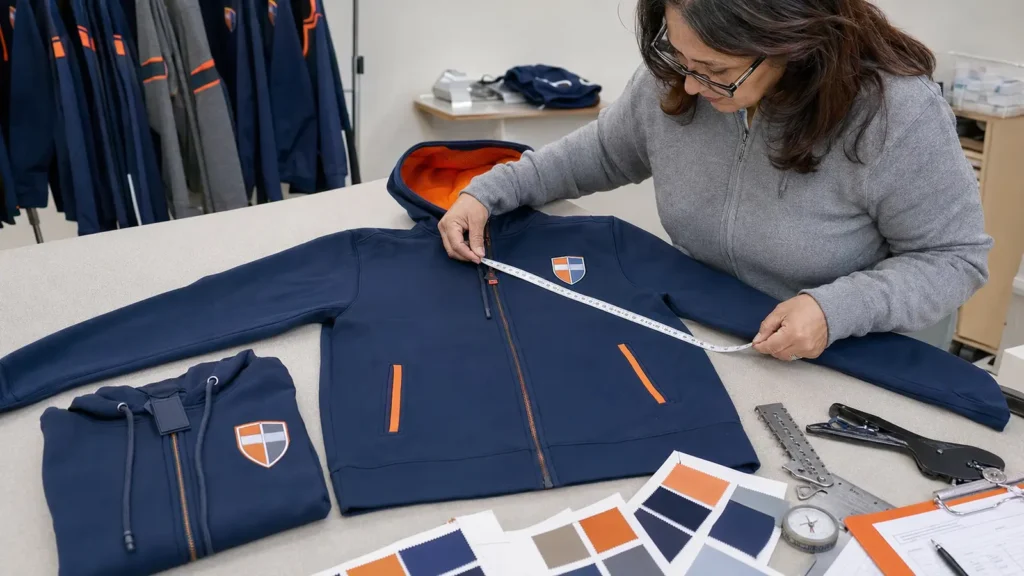
- Confirm style code, pullover or zip construction, hood, pocket, cuff, and hem.
- Record fabric code, fiber composition, target weight, face and inner finish, and approved color.
- Measure the garment using the agreed points of measurement.
- Try the garment on representative athletes with the intended base layers.
- Inspect logo dimensions, location, colors, texture, backing, and edge finish.
- Check personalized names and numbers against the approved roster format.
- Review the main label, size label, care label, country-of-origin marking, hangtag, and packaging.
- Conduct appropriate wash and wear evaluation based on the buyer’s quality plan.
- Photograph and sign off the approved sample and any sealed components.
Bulk Inspection Points
During bulk production, quality control should compare units with the approved reference. Check measurements across selected sizes, fabric shade consistency, visible defects, seam security, pocket and zipper alignment, decoration placement, spelling and roster data, label accuracy, quantity, folding, assortment, and carton marks.
Define inspection timing and acceptance criteria in the purchase order. “Same as sample” is useful only when the approved sample is clearly identified and deviations are measurable.
Planning a Bulk School Hoodie Order
Step 1: Define the Program
State the sport or group, age range, climate, season, use case, sales model, and required delivery date. Clarify whether the hoodie is team-issued, optional spirit wear, a fundraiser, or a mixed program.
Step 2: Build the SKU Structure
Decide how many styles, colors, fits, and decoration versions are necessary. Every additional variation increases data handling and inventory risk. A shared base hoodie with controlled team-specific decoration can simplify a district or multi-sport program.
Step 3: Send a Complete Quotation Brief
Include:
- Pullover, full-zip, or lightweight style
- Target fiber composition and weight, or an approved reference garment
- Youth and adult size range with estimated quantities
- School color references and contrast details
- Vector logo files and written logo-use authorization
- Decoration method, dimensions, and placements
- Personalization roster requirements
- Neck label, care label, hangtag, and packaging needs
- Destination, delivery deadline, and preferred trade terms
- Sampling, testing, and inspection expectations
Step 4: Approve Artwork and Samples
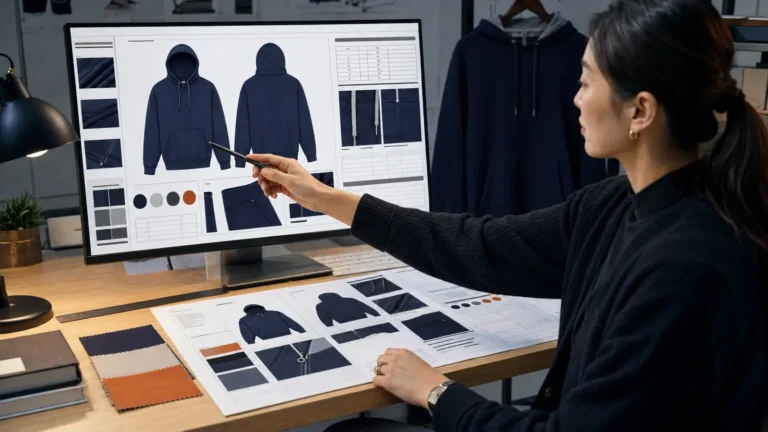
Approve a digital mockup first, then a physical sample. Record all changes in one consolidated comment list so conflicting instructions do not reach production.
Step 5: Lock the Roster and Quantities
Freeze names, numbers, sizes, and team allocations before bulk decoration. Create a written policy for late additions and replacement units.
Step 6: Plan the Reorder
Retain the fabric code, color reference, artwork files, decoration settings, label files, size chart, packing method, and approved sample photographs. Ask how long the supplier can maintain materials and what minimum applies to later top-up orders.
Planning hoodies for a school, district, team, or dealer program? Send JIUMU your target quantity, youth/adult size range, hoodie style, fabric direction, colors, logo files, personalization list, packaging needs, destination, and required delivery date. Explore custom hoodies and request a quotation.
Questions to Ask a Custom Hoodie Supplier
- What is the exact fabric composition, target GSM, knit structure, and finish?
- Can you provide both youth and adult finished garment measurements?
- What measurement tolerances will apply in bulk production?
- Which decoration method is recommended for this artwork and fabric, and why?
- Can you provide a stitch sample, print strike-off, or physical garment sample?
- How will school colors be matched and approved?
- How are names and numbers imported, checked, and reconciled?
- Which labels and markings can be customized for the destination market?
- What tests or inspections are available, and which require third-party arrangements?
- What is included in the quoted price and what is excluded?
- What are the sample, production, and transport timelines?
- What is the minimum for a repeat order or replacement units?
- How will shade variation and decoration placement be controlled?
- What files and approvals do you need before production can begin?
Common Buying Mistakes
Choosing by Price Before Use Case
A low-cost heavy fleece is not a good value if athletes cannot use it during the intended season. Define the role of the garment first.
Approving Only a Digital Mockup
Mockups cannot confirm fit, hand feel, seam quality, or wash behavior. Use a physical sample for a new specification.
Assuming Size Names Are Universal
“Youth large” and “adult small” can vary significantly between patterns. Compare measurements and run a try-on.
Using One Decoration Method for Every Artwork
Fine crest details, large spirit graphics, player numbers, and sleeve marks have different technical needs. Match the method to the artwork and fabric.
Ignoring Youth Drawcord Requirements
Do not copy an adult hood construction into smaller children’s sizes without reviewing the destination market’s safety rules.
Ordering Too Many Variations
Multiple base colors, fits, hood constructions, and decoration packages make the program harder to approve and reorder. Simplify where the wearer experience will not suffer.
Sending an Uncontrolled Roster
Names and numbers are data. Use a locked template, one source of truth, and a second-person check.
Forgetting Labels and Packaging
Retail, team issue, fundraiser, and dealer programs may need different labels, barcodes, polybags, size stickers, assortments, and carton marks. Include these in the first quotation.
Why Source Custom School Team Hoodies with JIUMU?
JIUMU is a Guangdong-based B2B supplier established in 2010, serving buyers in the United States, Canada, the United Kingdom, and Europe. The company supports custom teamwear, logo apparel, uniforms, hats, bags, and branded merchandise for schools, teams, distributors, uniform dealers, promotional companies, and private-label brands.
Relevant hoodie capabilities include OEM and ODM development, fabric sourcing, Pantone color matching, embroidery, screen printing, heat transfer, sublimation where technically appropriate, woven and rubber/PVC patches, private labels, neck labels, hangtags, packaging customization, digital mockups, physical samples, bulk quality control, and export support.
JIUMU’s typical MOQ is 50 pieces, subject to product structure and customization. Buyers can also coordinate hoodies with custom team uniforms, custom team jackets, custom team jerseys, custom baseball caps, and custom team bags to build a consistent school or club package.
The most useful first inquiry is a specification brief, not simply “How much is a hoodie?” Share the quantity, sizes, style, fabric direction, color references, logo artwork, personalization data, labels, packing, destination, and target date. JIUMU can then evaluate the correct production route and identify details that need sampling.
Frequently Asked Questions
Final Recommendation
The best hoodies for school teams and student athletes are built from a clear use case. For most programs, begin with a midweight cotton-poly fleece, a regular youth-to-adult fit, a pullover or full-zip chosen for the layering need, restrained school branding, and construction that can be inspected at pockets, seams, ribs, hoods, and zippers. Use a lightweight alternative for active or mild-weather programs and reserve heavyweight fleece for genuinely cold or merchandise-focused applications.
Approve finished measurements, youth safety details, decoration, labels, care, packing, and a physical sample before bulk production. Then keep the approved files and material references so replacements and next-season reorders can follow the same standard.
Author and Editorial Note
Prepared by the JIUMU Teamwear Sourcing Team using JIUMU’s approved B2B capabilities and current official guidance from the U.S. CPSC, U.S. FTC, European Union, and NFHS. Product and compliance requirements vary by design, age group, destination, and sales channel. Confirm the requirements that apply to your order.