Team-Branded Hoodie Trends for 2026: A B2B Design and Sourcing Guide
Team hoodies have moved beyond basic cold-weather merchandise. For schools, clubs, companies, academies, and uniform distributors, they now sit at the intersection of team identity, everyday comfort, travel apparel, event merchandise, and retail-style branding. That broader role changes what buyers should ask for in 2026.
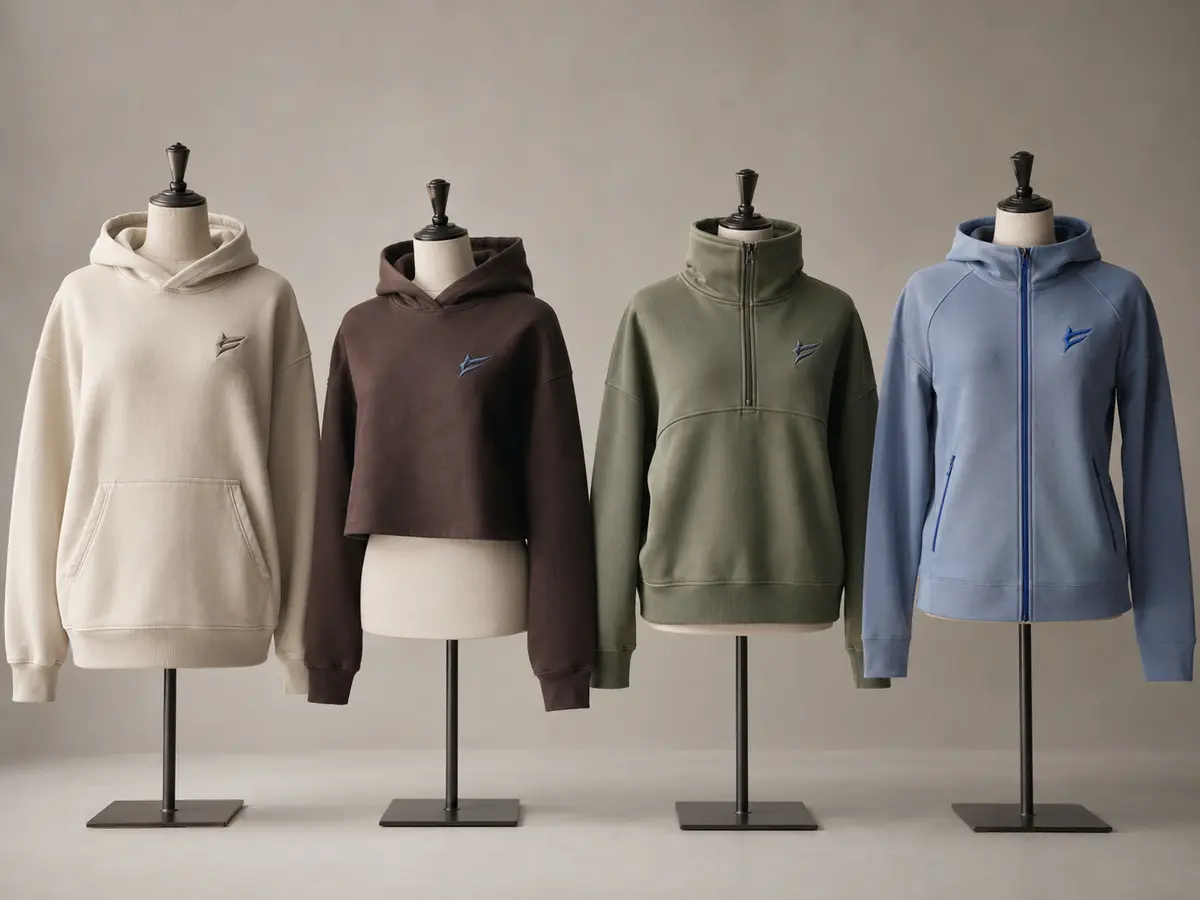
The strongest team-branded hoodie trends for 2026 are not isolated graphics or one fashionable color. They are coordinated product decisions: more intentional fabric weight, relaxed but controlled silhouettes, tactile decoration, versatile color systems, inclusive fit planning, and branding that works across several garments. A successful program should still look current after repeat orders, roster changes, and multiple seasons.
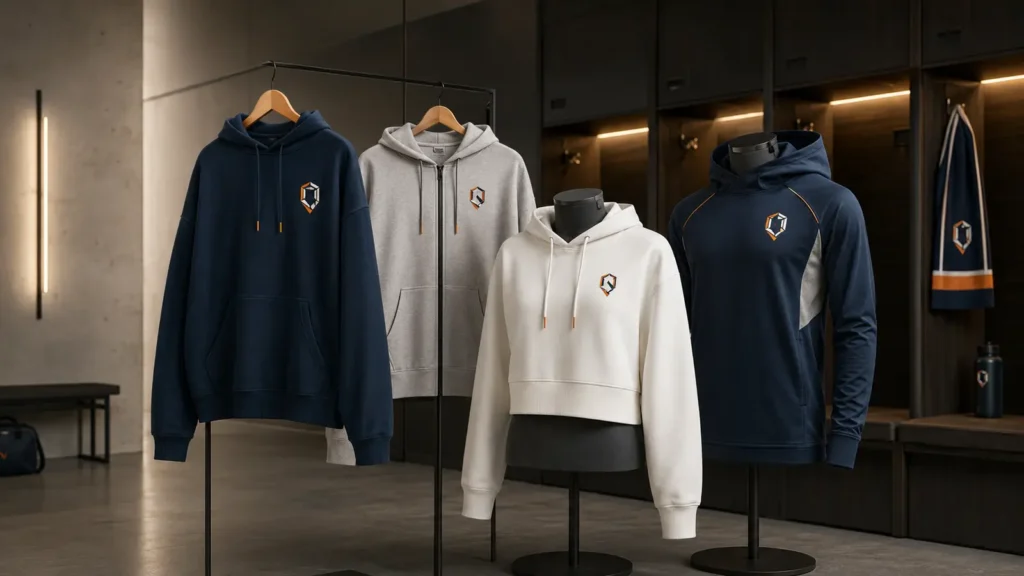
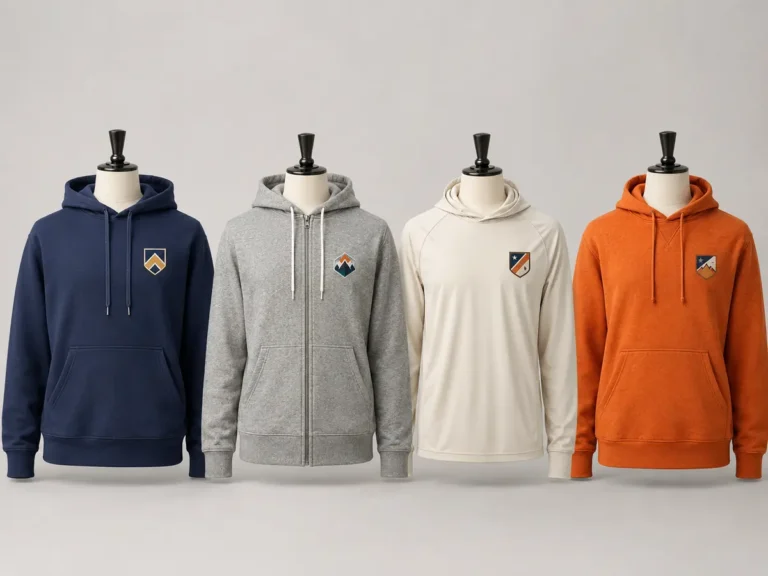
A coordinated hoodie range can serve athletes, staff, supporters, travel, and merchandise without making every garment identical.
Quick Answer
The leading team-branded hoodie trends for 2026 are heavyweight and soft-touch fabrics, refined relaxed fits, modern women’s silhouettes, rich neutrals with controlled accent colors, ’90s and collegiate references, tonal embroidery, tactile patches, subtle multi-location branding, and purpose-specific performance options. B2B buyers should treat these as a menu rather than a checklist. Select the trends that support the wearer, climate, brand system, decoration method, budget, and repeat-order plan.
For most teams, the most durable strategy is a small coordinated range: one heavyweight pullover for sideline and merchandise use, one zip or midweight style for travel and staff, and one performance option for training. Lock the color standard, logo files, placement dimensions, fit specifications, and approved sample before bulk production.
Why Hoodie Trend Decisions Matter to Professional Buyers
A professional buyer needs a hoodie to fit a mixed roster, carry sponsor and team marks, coordinate with other apparel, survive laundering, meet a target price, arrive for launch, and remain available for reorders. Trend-led choices therefore affect five outcomes:
- Wear rate. A comfortable, useful garment is more likely to be worn outside official team activity, extending brand visibility.
- Perceived program value. Fabric hand, fit, trim, and decoration often influence perceived value before the buyer examines technical specifications.
- Roster acceptance. A single generic cut can underserve different body shapes and use cases.
- Decoration reliability. Some fleece surfaces, stretch fabrics, seams, and wash finishes require different artwork or application methods.
- Reorder consistency. Highly seasonal colors or complex constructions can be harder to reproduce than a documented core design system.
The Advertising Specialty Institute’s 2026 reporting highlights deeper neutrals, selected bright tones, heavier and softer fabrics, retail-forward fits, tactile details, and updated heritage styling. These are useful signals, but they do not replace testing or customer knowledge.
The 2026 Trend Map for Team-Branded Hoodies
The following table translates fashion signals into procurement decisions.
| 2026 direction | What it looks like on a hoodie | Best B2B use | Procurement caution |
|---|---|---|---|
| Heavyweight comfort | Dense fleece, substantial rib, structured hood | Sideline wear, premium merchandise, alumni programs | Higher unit weight can affect price, freight, drying time, and warm-climate use |
| Refined relaxed fit | Dropped shoulder, easier body, controlled length | Clubs, brands, unisex programs | “Oversized” needs actual measurements, not a vague label |
| Better women’s options | Boxy, cropped, shaped, or adjusted proportions | Schools, clubs, staff, corporate teams | A fashionable crop may conflict with uniform or school dress requirements |
| Rich neutral palette | Stone, cream, deep brown, sage, charcoal, navy | Corporate teams, academies, premium merchandise | Garment dye and wash effects can introduce shade variation |
| Selective bright accents | Cobalt, Kelly green, coral, powder blue | Youth clubs, events, fan merchandise | Use accents where they support—not compete with—the team identity |
| Heritage athletic details | Varsity rib, raglan lines, contrast panels, V-insert | School, college, baseball, hockey, alumni programs | Avoid copying protected team marks or recognizable branded designs |
| Tonal and tactile branding | Tone-on-tone embroidery, woven or rubber-style patch | Staff apparel, retail capsules, private label | Small detail requires minimum line and text-size checks |
| Performance crossover | Stretch knit, lighter weight, panel construction | Training, travel, coaching staff | Confirm breathability, pilling, stretch recovery, and decoration compatibility |
| Coordinated product system | Shared colors and marks across hoodies, caps, jerseys, bags | Full team packages and dealer programs | Color appearance varies by fiber, dye process, and surface texture |
This is a decision map, not a prediction that every listed treatment will remain fashionable for the same length of time. Core navy, gray, and black can anchor a multi-year program while one seasonal color or decoration creates the 2026 update.
Trend 1: Heavyweight Hoodies Become a Value Signal
Heavier fleece remains one of the clearest visual and tactile signals in current branded apparel. The 2026 ASI trend report specifically points to heavier weights, soft hands, ribbing, garment dyeing, and performance blends as indicators of quality and retail relevance.
For team buyers, “heavyweight” should not be treated as a universal quality grade. Fabric mass is only one variable. A useful specification also covers fiber composition, face yarn, interior finish, knit density, shrinkage expectation, colorfastness, pilling, rib recovery, and intended climate.
A dense cotton-rich fleece can give a pullover structure and support embroidery. A lighter French terry may be more comfortable for indoor use, travel, or transitional seasons. A polyester-rich performance knit can dry faster and support stretch, but it will feel and decorate differently. Ask the supplier to state the actual fabric construction and weight used for the quotation and sample.
When a heavier hoodie makes sense
- Premium sideline or bench apparel
- Cold-weather school and club programs
- Retail or fundraising merchandise
- Alumni and booster collections
- Minimal branding where fabric and fit carry the value
When it may not
- Warm-weather teams
- High-output training
- Low-cost event giveaways
- Orders where international freight weight is a major constraint
- Programs requiring rapid drying between uses
The right decision is based on cost per useful wear, not the highest available GSM. Request at least one physical fabric swatch or finished sample before approving a large order.
Trend 2: Relaxed Fits Become More Deliberate
The relaxed silhouette continues into 2026, but the strongest versions look designed rather than simply oversized. Drop shoulders, wider bodies, shortened or controlled lengths, substantial cuffs, and structured hoods create a recognizable silhouette. ASI’s reporting describes this direction as relaxed but intentional, with particular attention to women’s proportions and retail-forward shaping.
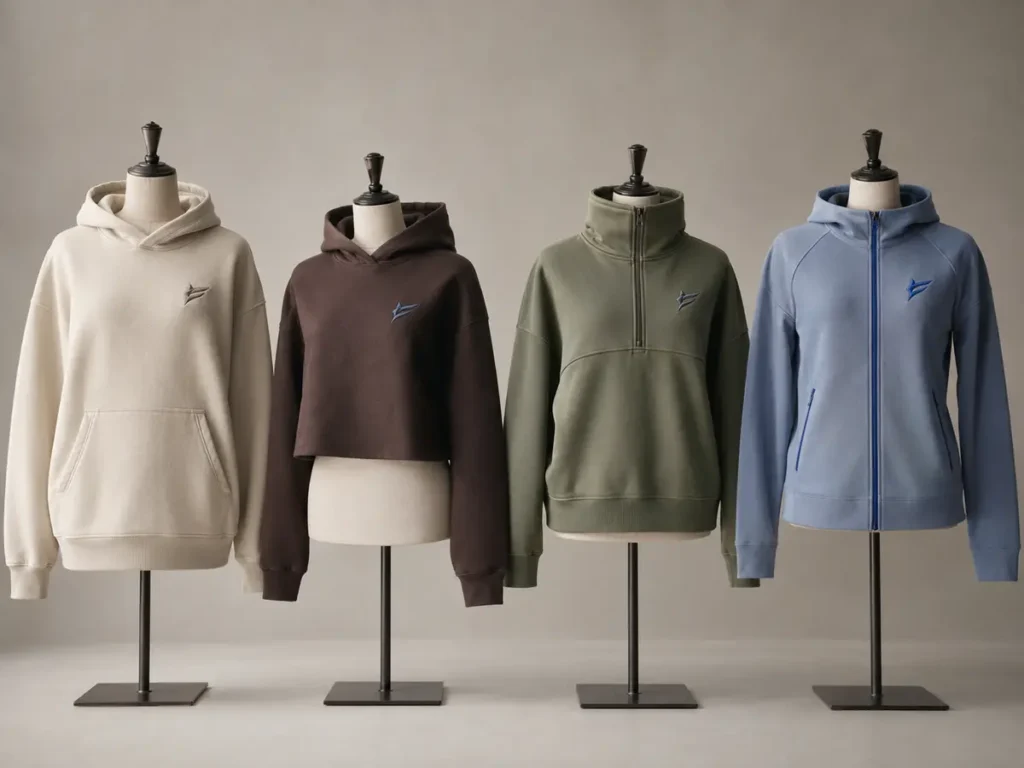
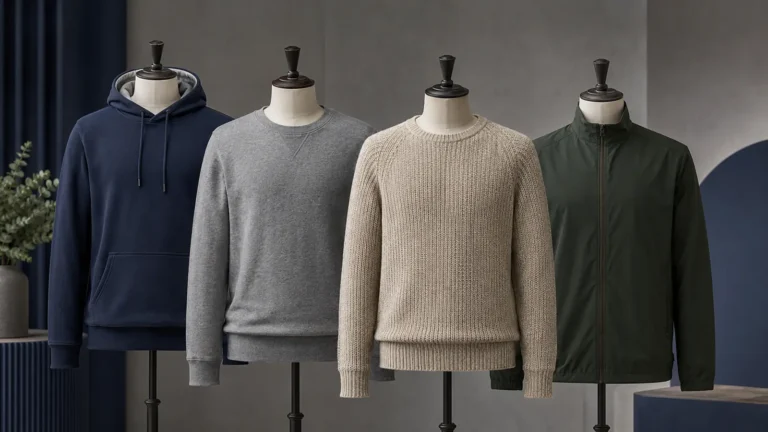
Relaxed, cropped, high-neck, and performance silhouettes can belong to one team system when color and branding are controlled.
For a bulk order, replace subjective fit terms with measurements. “Boxy,” “relaxed,” and “oversized” can mean different things. A tech pack should identify chest width, body length, shoulder width, sleeve length, cuff opening, hood dimensions, and tolerances.
Build an inclusive fit architecture
One unisex hoodie may still be useful as the volume-driving core style. It does not need to be the only option. Depending on the audience, a buyer can pair it with a women’s relaxed fit, a youth pattern, or a more athletic zip style.
Do not assume that a smaller unisex size equals a developed women’s cut. Do not force gendered categories when the team prefers a tested unisex range. Use wearer feedback, sample fittings, and a roster-based size breakdown.
For school and youth programs, check dress-code expectations before choosing cropped lengths, oversized hoods, or drawcords. Product safety and uniform rules can vary by market and age group; confirm the requirements that apply to the final product and destination.
Trend 3: Color Systems Move Beyond Basic Black and Gray
Deep neutrals remain practical, but 2026 palettes are more nuanced. Industry observers identify stone, sage, brown, cream, dusk blue, and other rich neutrals, alongside restrained sorbet or jewel-toned accents. Pantone selected PANTONE 11-4201 Cloud Dancer, a soft white, as its 2026 Color of the Year. That can be a useful palette reference, but it is not a command to make every team hoodie white.
A better B2B approach is to build a three-level color system:
- Core: the team’s long-term navy, black, gray, maroon, green, or another identity color.
- Support: a neutral such as stone, cream, charcoal, or deep brown that works across apparel categories.
- Accent: a seasonal cobalt, coral, powder blue, Kelly green, or orange used in piping, thread, patch borders, drawcord tips, or a limited capsule.
This protects brand recognition without a full-color reset.
Color matching across products
Exact visual matching is difficult when the same color appears on cotton fleece, polyester jersey, nylon bag fabric, embroidery thread, rubber-style patches, and printed packaging. The buyer should define the target using a recognized color reference when appropriate, but also approve physical strike-offs or swatches on the actual substrate.
Specify whether the goal is:
- An exact or closest achievable match
- A deliberate tonal family
- A coordinated contrast
- A washed or garment-dyed variation
Garment-dyed and washed products can show intentional shade and surface differences. Buyers should agree on the acceptable variation and ensure repeat-order expectations are realistic.
Trend 4: Heritage Athletic Design Returns in a Cleaner Form
Varsity stripes, raglan sleeves, contrast panels, V-inserts, collegiate proportions, and ’90s colorblocking are reappearing in polished forms. ASI describes the 2026 heritage direction as nostalgic but updated with better materials and clean construction.
For teamwear, this trend is especially relevant because it already belongs to the visual language of schools and sports. The opportunity is to reference that language without creating a costume or copying a famous college, professional league, or apparel brand.
Use one or two heritage cues:
- A striped rib cuff
- A contrast hood lining
- Raglan seam lines
- A small chenille-style or woven crest
- A V-shaped neck insert
- A restrained two-color body
Avoid combining every retro feature in one garment. A clean body, modern fit, and one heritage detail usually provide more usable logo space and better reorder potential.
Trend 5: Tonal Embroidery and Tactile Patches Replace Oversized Default Logos
Large center-chest prints still have a role in fan merchandise and events. However, 2026 team programs increasingly benefit from a more varied branding hierarchy. A small tonal chest mark can make staff apparel feel refined. A sleeve patch can carry a secondary emblem. A back-neck mark can connect a collection without dominating it.
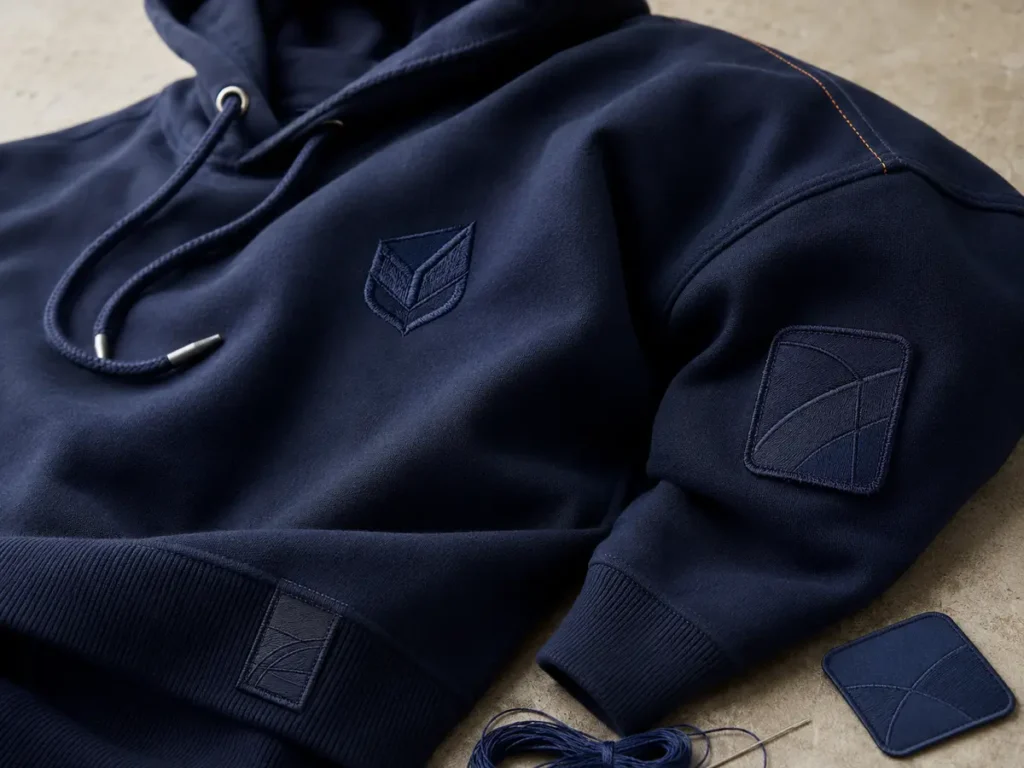
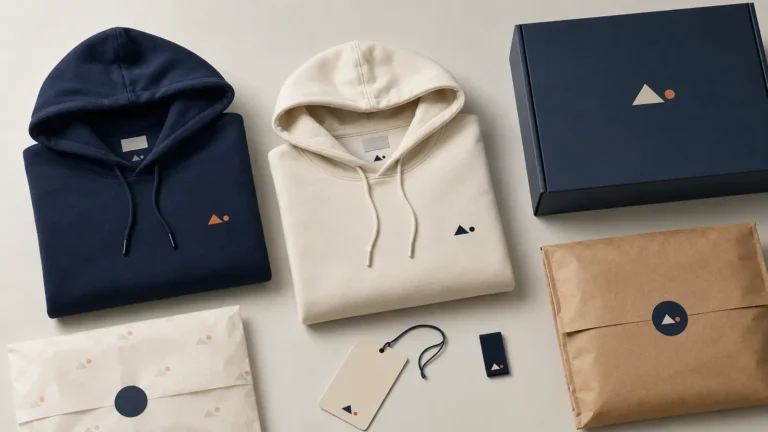
Small tonal embroidery and tactile patches create depth while keeping the garment wearable beyond game day.
Match the decoration to the artwork
| Method | Visual strength | Good for | Check before approval |
|---|---|---|---|
| Flat embroidery | Clean thread texture and durable identity | Crests, initials, small chest or sleeve marks | Minimum line width, stitch count, backing, puckering |
| 3D embroidery | Raised, bold surface | Simple marks with larger solid shapes | Small details can fill in; heavier structure may be needed |
| Woven patch | Fine detail and crisp edges | Crests, labels, multi-color marks | Edge finish, attachment method, small text legibility |
| Rubber/PVC-style patch | Dimensional, modern, weather-tolerant look | Performance and outdoor programs | Flexibility, thickness, color matching, wash test |
| Screen print | Efficient coverage and strong color | Larger graphics and volume programs | Ink hand, stretch, color count, curing, underbase |
| Heat transfer | Flexible artwork and personalization | Names, numbers, short runs, complex graphics | Adhesion, stretch, press marks, wash performance |
| Sublimation | Integrated full-color graphics | Polyester performance panels or all-over designs | Fabric composition, color migration, artwork scale |
Test decoration on the production fabric. For embroidery, review the stitch file or sew-out, not only a flat digital logo.
Trend 6: Branding Becomes Modular Across the Collection
Teams rarely need one logo treatment for every garment. They need a system. A modular identity might use the primary crest at left chest, a simplified mark on the sleeve, a wordmark on the back for event staff, and player personalization only on selected styles.
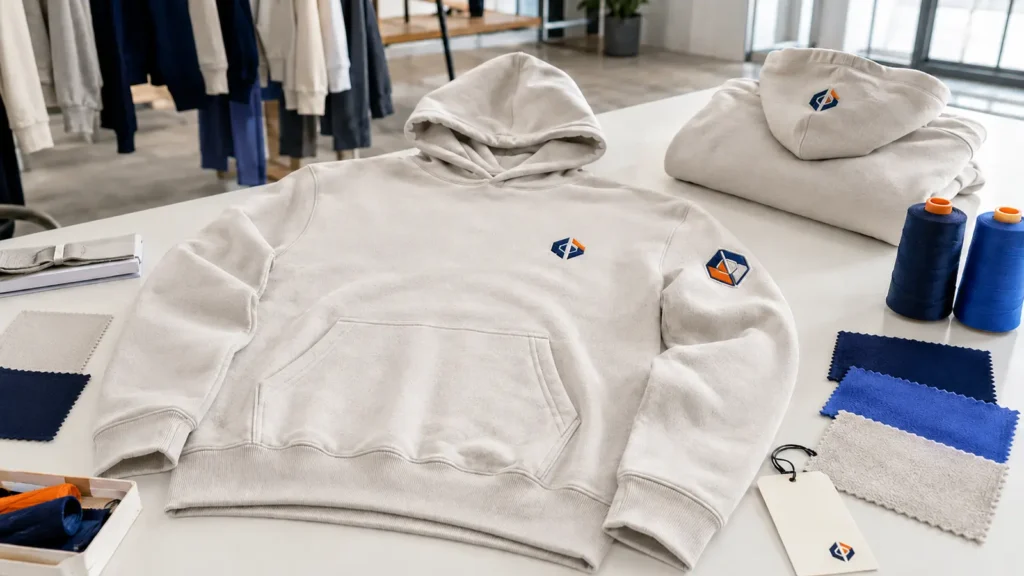
A modular branding system controls mark, placement, scale, and color across different hoodie functions.
Create an artwork matrix before sampling:
| Garment/use | Primary placement | Secondary placement | Personalization | Recommended restraint |
|---|---|---|---|---|
| Player sideline pullover | Left chest crest | Sleeve mark | Optional name or number | Keep front flexible for jacket layering |
| Coach/staff zip hoodie | Left chest small mark | Back shoulder | Role or department if needed | Avoid decoration crossing the zipper |
| Supporter merchandise | Center chest graphic | Back neck | Usually none | Use a clear retail story, not every sponsor |
| Training hoodie | Small chest transfer | Sleeve or hem mark | Optional initials | Prioritize stretch and low bulk |
| Sponsor/event hoodie | Team mark plus planned sponsor area | Sleeve | Event date only if necessary | Confirm sponsor hierarchy before production |
This matrix reduces late artwork changes. It also lets a supplier quote decoration more accurately because stitch count, print area, location, and personalization are defined.
Trend 7: Performance Hoodies Join the Team Package
The traditional fleece pullover remains important, but coaches, athletes, event staff, and travel groups may also need lighter zip styles or stretch layers.
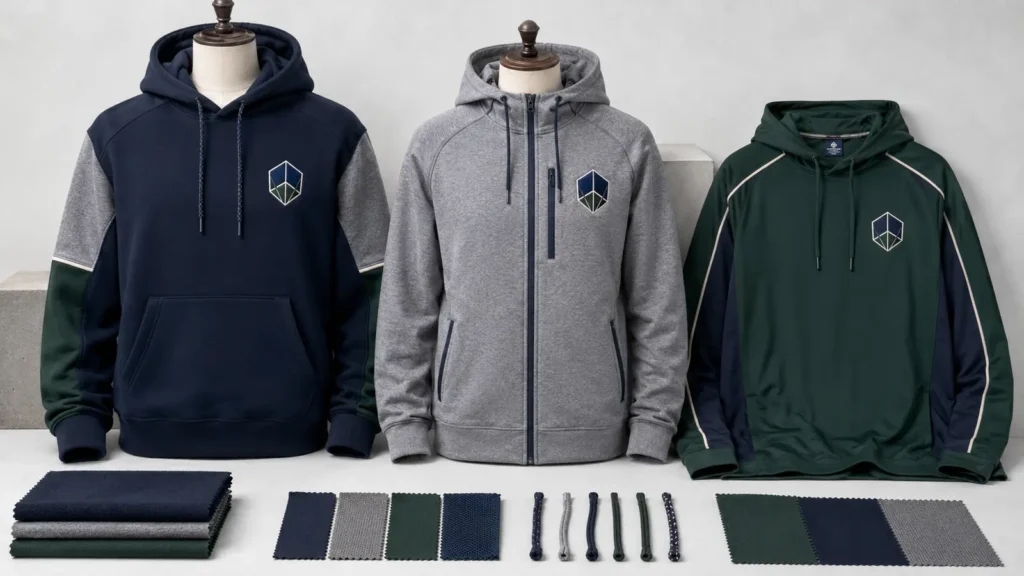
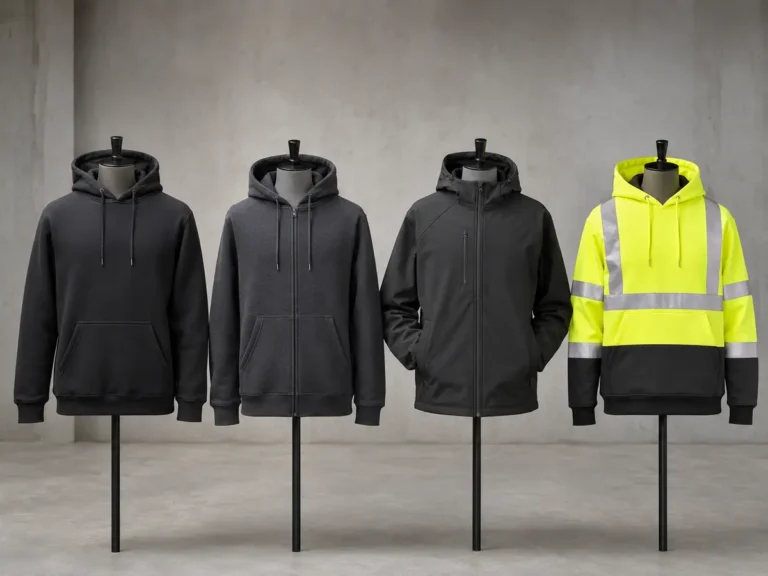
Purpose-specific hoodie configurations can share one team identity while solving different wear conditions.
Specify performance by the required outcome. Ask what the fabric is, how it is constructed, which claims are supported, and how decoration affects stretch or airflow.
For a practical three-style program:
- Heavyweight pullover: cold-weather, sideline, premium merchandise.
- Midweight full zip: travel, staff, layering, year-round use.
- Light performance hoodie: training, warm-up, active events.
Do not assume all three should have identical color. Cotton-rich and polyester-rich fabrics may not dye to the same appearance. A documented tonal relationship can be more achievable than an unrealistic promise of perfect cross-fabric matching.
Trend 8: Material Claims Receive More Scrutiny
Buyers continue to ask about recycled, certified, and lower-impact materials. The direction matters, but the evidence matters more. Textile Exchange’s 2025 Materials Market Report found that global fiber production continued to rise, recycled polyester represented about 12% of polyester in 2024, and less than 1% of the global fiber market came from pre- and post-consumer recycled textiles. It also reported that 34% of global cotton production came from certified sources.
Those figures show both progress and limitations. A buyer should not treat “recycled” as a complete sustainability story or assume that every supplier can provide the same chain-of-custody documentation.
For any environmental material claim, request:
- Exact fiber composition and percentage
- Scope of the claim: fiber, fabric, garment, trim, or packaging
- Relevant certificate or transaction documentation when promised
- Certificate holder and product scope
- Validity dates
- Wording permitted for labels and marketing
- Confirmation that bulk production matches the approved claim
This is especially important for European programs. The EU’s rules on empowering consumers for the green transition apply from September 27, 2026 and strengthen controls around vague or unsupported environmental claims. In the United States, environmental marketing should likewise be specific and substantiated. Buyers should have legal or compliance teams review market-facing claims; a material request is not automatically permission to advertise a broad “eco-friendly” statement.
What Construction Details Deserve Attention in 2026?
Inspect the construction areas most likely to affect wear and repeatability:
- Hood shape, depth, lining, and opening
- Neck seam finishing and reinforcement
- Shoulder and armhole seam balance
- Pocket opening reinforcement
- Zipper type, tape, puller, and alignment
- Rib composition and recovery
- Cuff and waistband seam stretch
- Drawcord, eyelet, and tip construction where permitted
- Embroidery backing and interior comfort
- Print or transfer adhesion
- Panel symmetry and stripe alignment
- Label placement and skin contact
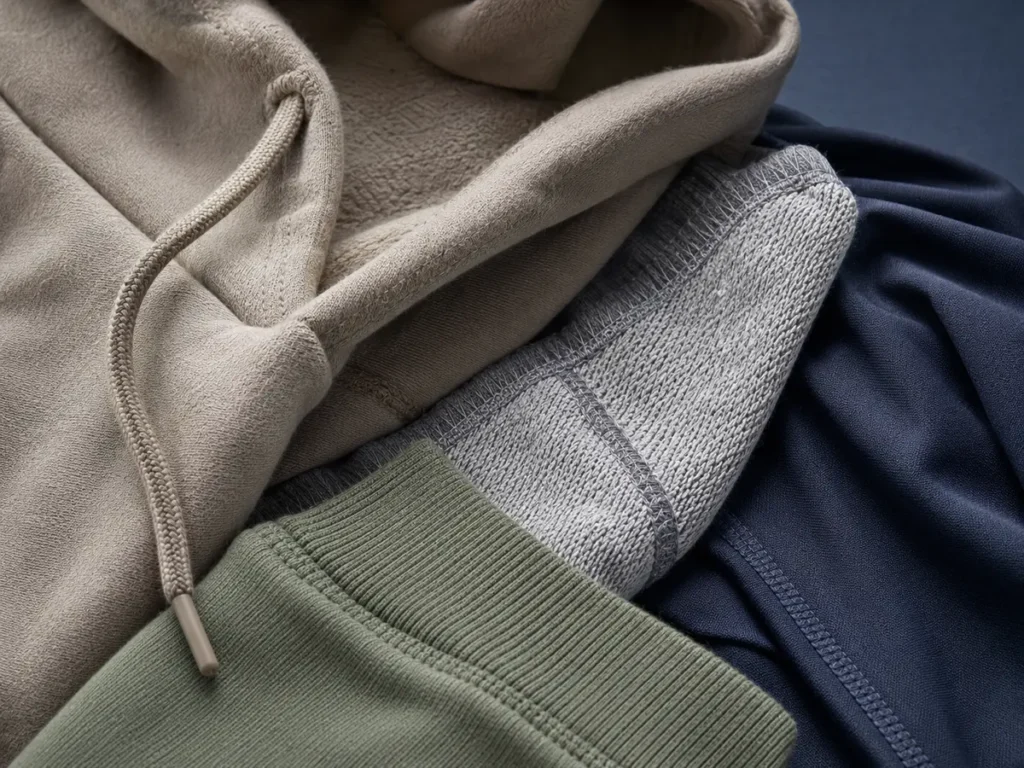
Material selection should be approved together with seams, rib, hood, drawcord, and decoration—not as a fiber percentage alone.
Ask for measurement tolerances and an inspection standard. For uniform packages, compare the hoodie with the other items rather than approving it in isolation.
Planning a 2026 team hoodie range? Send JIUMU your target quantity, market, wearer profile, preferred silhouettes, colors, logo files, decoration locations, packaging, and required delivery date. Request a custom quotation or explore custom hoodies.
Cost Drivers Buyers Should Compare
Trend details can raise or lower cost in different ways. A clean premium-looking hoodie is not necessarily the most complicated one.
Major cost drivers include:
- Fabric composition, construction, weight, finish, and order color
- Custom pattern development versus an existing silhouette
- Pullover, full zip, quarter zip, or complex panel construction
- Hood lining, drawcord, zipper, eyelets, and custom hardware
- Rib quality and custom striping
- Embroidery stitch count and number of locations
- Patch construction and attachment
- Print area, color count, and underbase
- Individual names or numbers
- Private labels, hangtags, and packaging
- Number of colorways and size distribution
- Sampling rounds
- Testing or documentation requested
- Order quantity, freight mode, and delivery schedule
Compare suppliers using the same specification. A lower quote may reflect lighter fabric, fewer decoration locations, generic trims, a different size range, or packaging exclusions. Request a line-item summary when the differences are not clear.
Sample Approval and Quality-Control Checklist
A digital mockup confirms direction, not manufacturing performance. Use a physical sample to approve fabric, fit, color, construction, decoration, trim, and packaging.
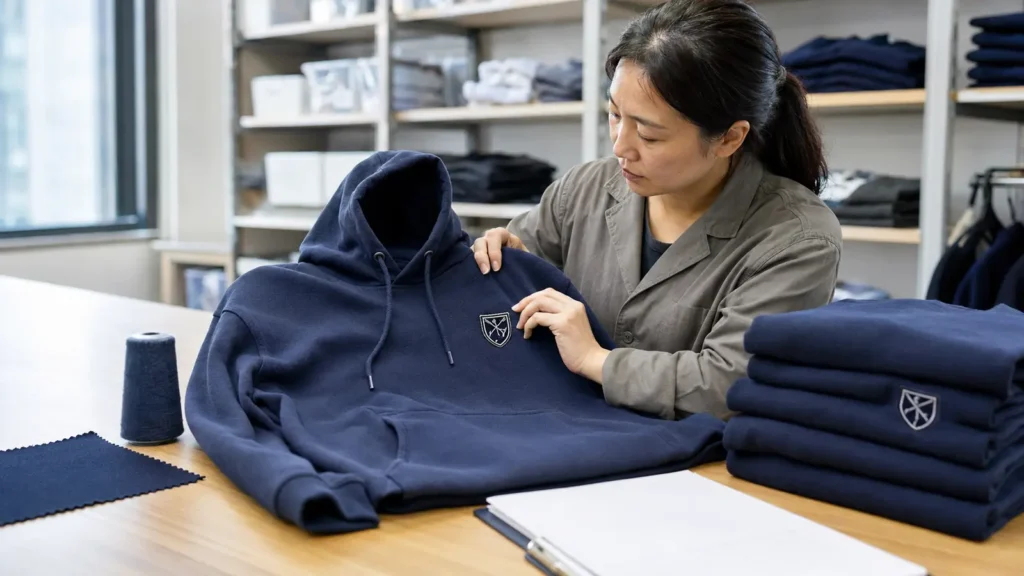
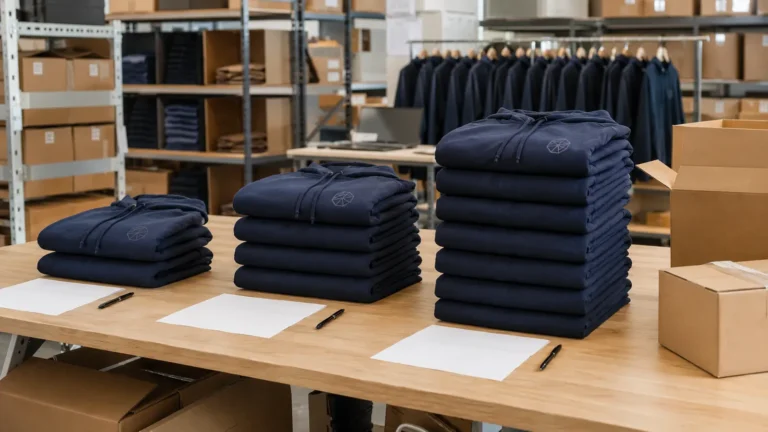
Sample approval should cover appearance, measurements, decoration, construction, labeling, and packaging.
Approve the sample in this order
- Product identity: correct style, market, wearer, and use case.
- Fabric: composition, weight, face, interior, stretch, hand, and color.
- Measurements: compare every point to the approved size specification.
- Construction: seams, pocket, hood, zipper, rib, drawcord, and reinforcement.
- Decoration: artwork, size, placement, color, stitch or print quality.
- Labels: brand, size, fiber, origin, and care content for the destination market.
- Packaging: fold, bag, barcode, carton mark, and assortment if required.
- Wear and wash checks: evaluate shrinkage, twisting, pilling, color change, decoration stability, and rib recovery using an agreed procedure.
In the United States, the FTC requires manufacturers and importers of covered apparel to provide care instructions. Federal textile labeling guidance also covers fiber content, country of origin, and the identity of the responsible company. Requirements differ by market, so confirm the final compliance plan for the destination instead of copying a label from a previous order.
For bulk inspection, define whether checks occur during production, before packing, or before shipment. The inspection method, sample size, defect categories, and acceptance criteria should be agreed in writing.
What Information Should You Send for a Hoodie Quotation?
A useful RFQ reduces assumptions. Send:
- Buyer type and destination market
- Adult, women’s, youth, or unisex fit requirement
- Pullover, full zip, quarter zip, or performance style
- Reference image or technical sketch
- Fabric composition, approximate weight, and finish
- Quantity by style and color
- Size range and estimated size breakdown
- Color references
- Vector logo files and artwork colors
- Decoration method or desired visual result
- Artwork dimensions and placements
- Names, numbers, or variable-data file if needed
- Private-label and hangtag requirements
- Packaging and barcode requirements
- Sample deadline
- Required bulk delivery date and destination
- Any testing, documentation, or market compliance needs
If some specifications are undecided, label them as open questions. A supplier can then propose options without treating an assumption as final approval.
Questions to Ask a Custom Hoodie Supplier
- What exact fabric construction and weight are included in the quote?
- Is the pattern existing, modified, or fully custom?
- Can you provide a measurement chart with tolerances?
- How will the proposed decoration perform on this fabric?
- What artwork limits apply to embroidery, patches, transfers, or printing?
- How will colors be approved on the actual substrate?
- Which trims and labels are custom, and which are standard?
- What physical sample stages are available?
- How are bulk shade, measurements, seams, and decoration inspected?
- Which material or certification documents can be supplied for this exact order?
- How are roster personalization files checked?
- What variables could affect production timing or repeat-order consistency?
- How should care instructions be validated for the final fabric and decoration?
- What packaging and carton details are included?
- What should be locked before the production deposit or order confirmation?
Common Mistakes in Trend-Led Hoodie Programs
Choosing trends without a wearer or use case
A cropped heavyweight hoodie and a lightweight training hoodie solve different problems. Start with the wearer, season, activity, and selling channel.
Ordering “oversized” without measurements
Subjective terminology creates fit disputes. Approve a garment measurement chart and fit sample.
Using one fabric for every purpose
A sideline product, travel layer, and active warm-up may need different weight and fiber choices.
Treating a digital color as a production standard
Screens do not predict dyed fabric, embroidery thread, or rubber patch color. Approve physical materials.
Making every logo large
A branding hierarchy often produces a more wearable collection than repeating the same oversized mark on every item.
Approving artwork without a sew-out or application sample
Embroidery can close small gaps; transfers can show press marks; fleece can affect print edges. Review the real process on the real fabric.
Making broad sustainability claims
Ask for exact composition, documentation, and claim scope. Avoid unsupported terms such as “green,” “eco-friendly,” or “sustainable.”
Ignoring reorders
Archive the approved fabric, measurements, artwork, stitch or print files, color references, trim details, packaging, sample photos, and inspection notes.
Why Work With JIUMU on Custom Team Hoodies?
JIUMU is a Guangdong-based B2B supplier established in 2010, serving buyers in the United States, Canada, the United Kingdom, and Europe. The product scope includes custom teamwear, logo apparel, hats, uniforms, bags, and branded merchandise.
For hoodie programs, JIUMU can support:
- OEM and ODM development
- Fabric sourcing and Pantone color matching
- Embroidery, sublimation, screen printing, and heat transfer
- Woven, rubber/PVC, and leather-style patches
- Private labels, neck labels, woven labels, and hangtags
- Digital mockups and physical samples
- Packaging customization
- Bulk production, quality control, and export support
The typical MOQ is 50 pieces, subject to product structure and customization. Final feasibility, pricing, sampling, and timing depend on the specification and order.
JIUMU can also coordinate hoodies with custom team uniforms, custom team jerseys, custom baseball caps, custom team jackets, and custom team bags.
Frequently Asked Questions
Final Recommendation
The best team-branded hoodie trends for 2026 make the program more wearable, coherent, and repeatable. Start with purpose, build an inclusive fit plan, anchor the collection in core colors, and use modern accents with restraint. Choose decoration for the artwork and fabric, not by trend name.
Document the system. A color standard, measurement chart, artwork matrix, approved sample, packaging specification, and inspection plan turn an idea into a manageable bulk order.
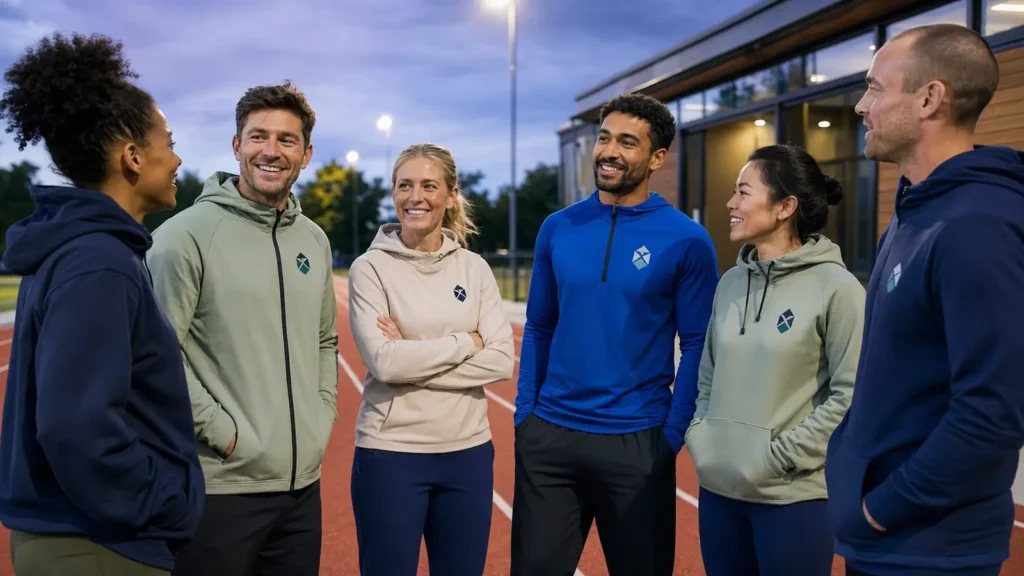
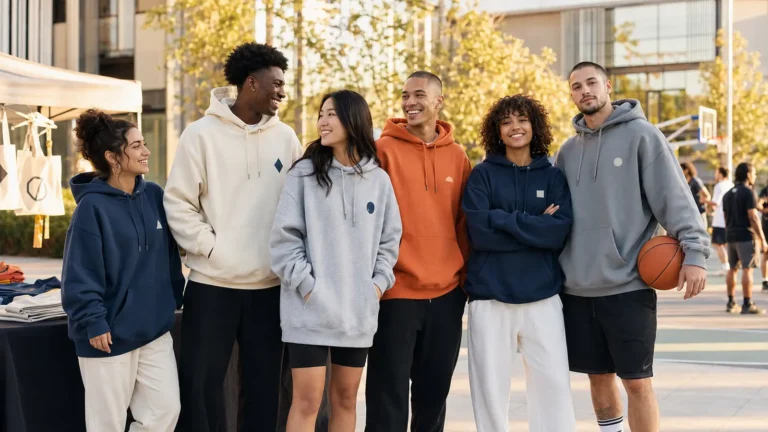
A successful team hoodie system balances different wearer needs while keeping color and branding coherent.
JIUMU Editorial Team
Practical B2B guidance on custom teamwear, logo apparel, sampling, quality control and bulk-order planning.