How to Print on Hoodies: Methods, Durability and Cost
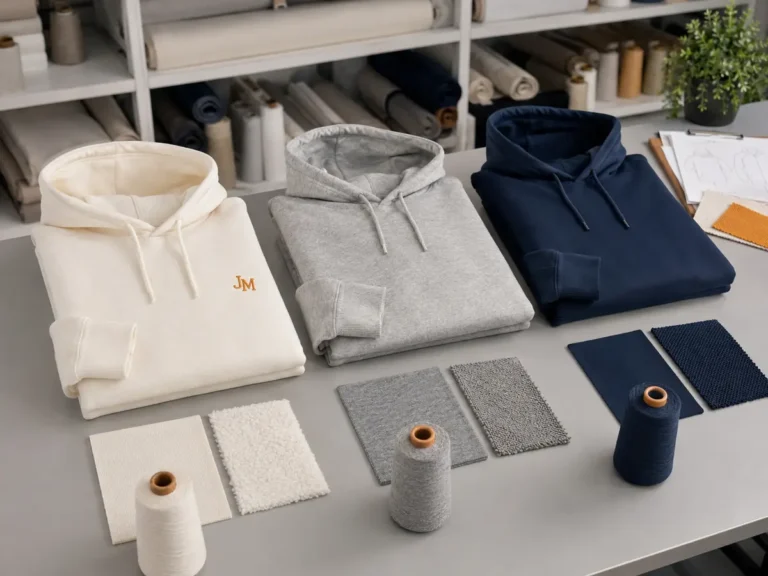
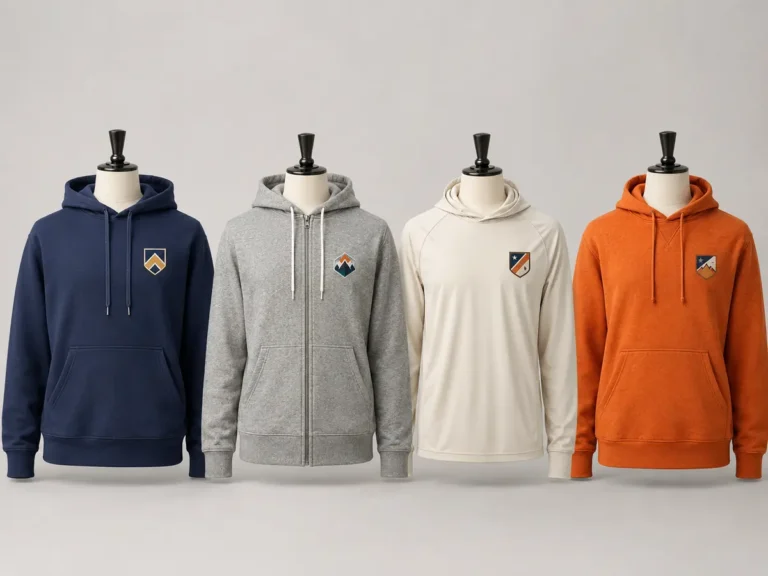
Printing on hoodies looks simple until the garment, artwork and production process are placed in the same specification. Thick fleece, brushed fibers, dark colors, polyester dye, kangaroo pockets, zippers and drawcords all affect how a print is applied and how it performs after washing.
For schools, sports clubs, corporate buyers, apparel brands and uniform distributors, the right question is not only, “Which printing method looks best?” It is, “Which method can reproduce this artwork on this hoodie, at this quantity, with an acceptable hand feel, durability level and landed cost?”
This guide explains the main hoodie printing methods, what makes each process durable, how costs change from 50 to 500+ pieces, and what information a supplier needs before issuing a useful quotation.
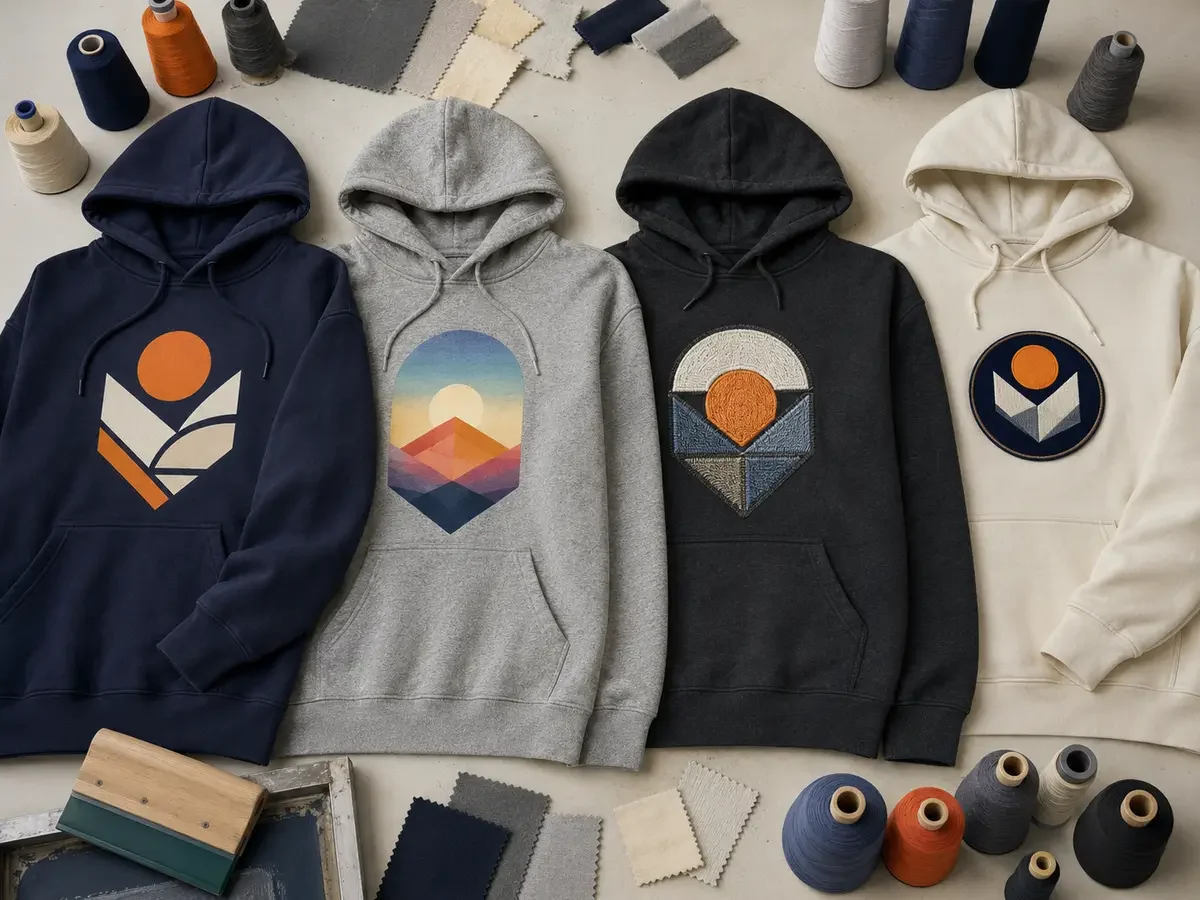
Quick Answer: Screen printing is usually the best-value option for repeated designs with a limited color count. DTF is flexible for detailed multicolor artwork and mixed quantities. DTG works well for complex digital art on compatible garments, especially cotton-rich surfaces. Heat-transfer vinyl suits names, numbers and simple variable graphics. Sublimation is best for polyester cut-and-sew products and all-over designs. Durability depends less on the method name than on fabric compatibility, ink or transfer quality, pretreatment, curing or pressing, artwork coverage and care conditions.
Why Hoodies Are More Difficult to Print Than T-Shirts
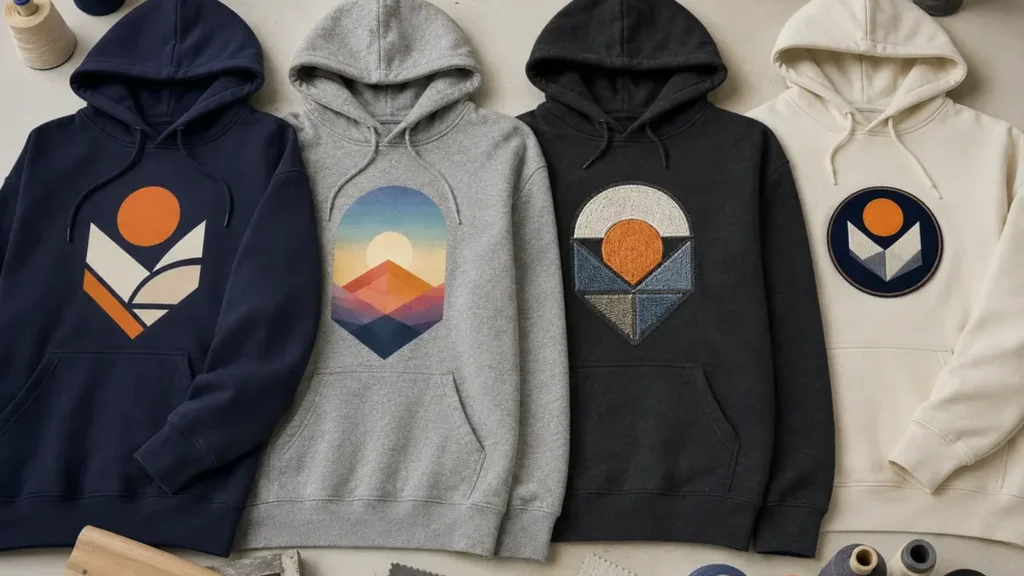
A hoodie is thicker, less flat and more structurally complex than a basic T-shirt. The outer face may be smooth, peached, brushed, heathered or performance-finished. The inside may be fleece or loopback terry. The front may include a kangaroo pocket, zipper, thick seam or drawcord opening. These features create practical printing limits.
A flat print area is essential for screen printing, DTG and heat pressing. If a platen or press cannot apply even contact because a seam or pocket sits under the decoration zone, part of the image may receive less ink, heat or pressure. The result can be incomplete coverage, weak adhesion or a visible press box.
Fabric composition also changes the process. Cotton-rich surfaces normally absorb or accept pigment systems differently from polyester-rich fleece. Polyester dye can migrate when exposed to heat, turning a white or light print pink, gray or another unexpected shade. A heavily brushed outer face can create fibrillation, where loose fibers rise through the print. A water-resistant or silicone-like finish may reduce ink or adhesive bonding.
The practical solution is to approve the hoodie and the printing method as one product system rather than treating the blank garment and decoration as separate purchases.
Hoodie Printing Methods Compared
| Method | Strong fit | Typical visual result | Main durability controls | Typical cost behavior |
|---|---|---|---|---|
| Screen printing | Bold graphics, spot colors, medium and large runs | Strong opacity; soft to noticeable hand depending on ink deposit | Ink selection, underbase, cure, dye migration, fiber control | Setup cost is spread across quantity; often lowest at scale |
| DTF transfer | Detailed multicolor art, flexible quantities, many placements | Sharp full-color image with a film-like surface | Film, ink, adhesive powder, cure, pressure, peel and fabric compatibility | Low screen setup; per-piece application remains significant |
| DTG printing | Detailed or photographic art on compatible garments | Broad color range; can feel relatively soft | Pretreatment, white ink, fabric surface and curing | Useful for small and varied runs; ink and pretreatment raise dark-garment cost |
| Heat-transfer vinyl | Names, numbers and simple logos | Clean solid shapes with a distinct film layer | Material type, cutting, weeding, time, temperature, pressure and edge adhesion | Efficient for personalization; labor rises with many individual names |
| Screen-printed transfer | Repeat graphics applied with a heat press | Similar to a conventional screen print when properly applied | Transfer storage, pressure, temperature, peel and fabric compatibility | Useful when production is distributed or a screen press is unavailable |
| Sublimation | Polyester panels, all-over graphics, performance hoodies | Dye becomes part of the polyester surface; no added print layer | Polyester content, color profile, heat, pressure and panel registration | No color-count penalty, but cut-and-sew and full coverage add cost |
| Puff or high-density print | Streetwear accents and raised graphics | Dimensional surface | Artwork spacing, ink expansion, cure and wash testing | Specialty setup and sampling increase cost |
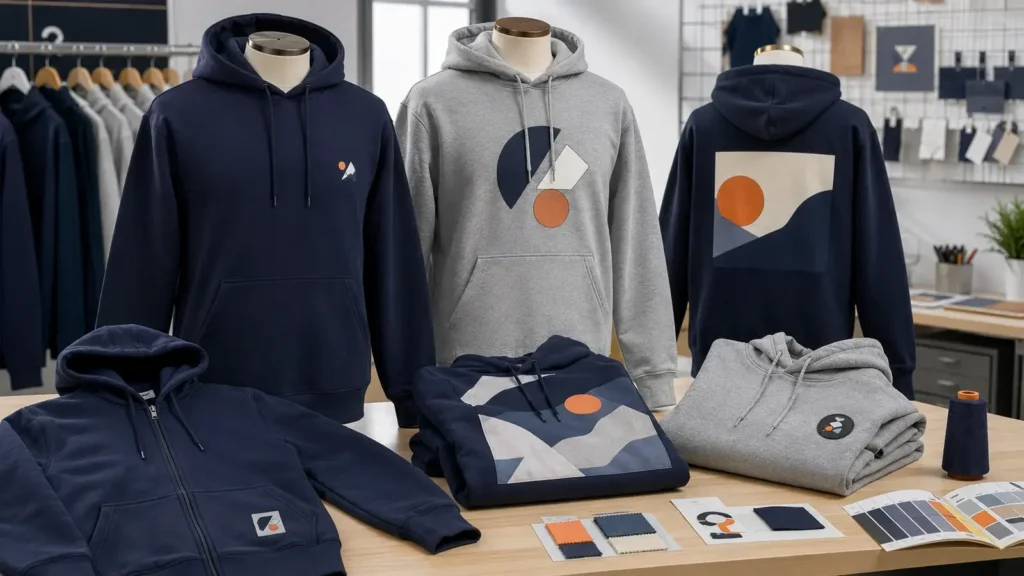
Screen Printing on Hoodies
Screen printing pushes ink through a stencil onto the garment. Each spot color normally requires a screen, and the printer registers the screens so the colors align. The process is highly repeatable when the same artwork is used across a meaningful quantity.
When Screen Printing Is the Best Choice
Screen printing is a strong choice for school marks, club logos, construction-team graphics, event merchandise and streetwear artwork with a controlled color count. Large front and back graphics are common. It is also one of the most flexible methods for specialty effects, including puff, high-density, metallic, reflective and textured inks.
The method becomes less economical when an order contains many small artwork variations, a high number of spot colors, or individual names. Each color and version can require additional preparation, registration and production handling.
Avient’s screen-printing technical materials emphasize the relationship among mesh, ink deposit and curing, and its dryer guidance recommends verifying the heat-and-time profile rather than relying only on a dryer display. See the Avient print technique guide and conveyor dryer profiling guide.
Screen-Printing Risks to Control
- Under-cure: ink may crack, rub off or lose wash performance.
- Overheating: the hoodie can scorch, shrink, gloss or trigger polyester dye migration.
- Fibrillation: loose fibers rise through the print and make the surface look fuzzy.
- Poor registration: colors do not align cleanly.
- Excessive deposit: the print becomes heavy, stiff or prone to cracking in large solid areas.
- Insufficient opacity: the hoodie color shows through light ink.
Ask the supplier to state the ink family, color count, underbase, print dimensions, placement tolerance, cure-control method and whether the selected polyester or blend needs a migration blocker.
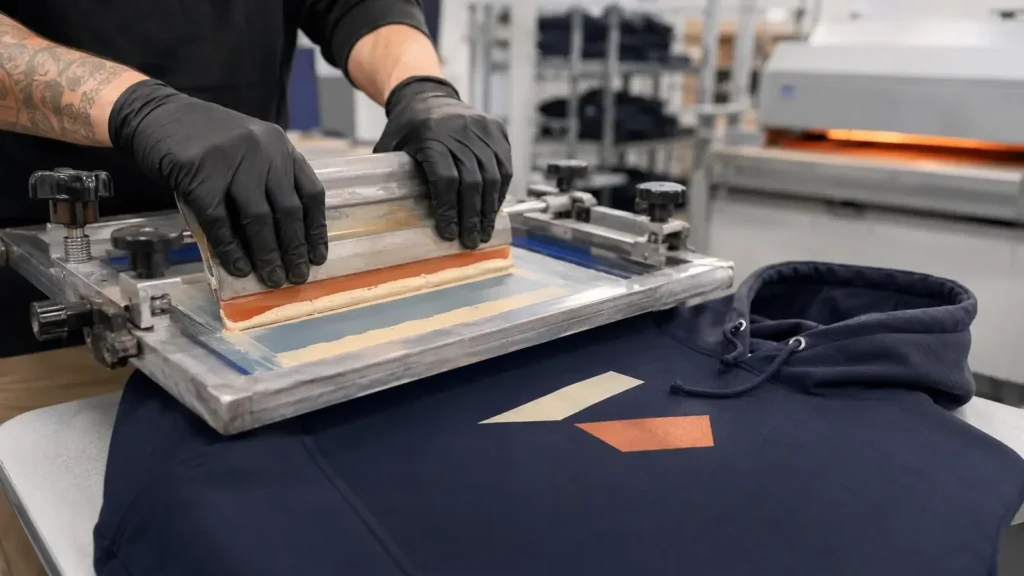
DTF Printing on Hoodies
Direct-to-film printing creates an image on a carrier film, applies adhesive powder, cures the transfer and presses it onto the hoodie. DTF can reproduce fine detail, gradients and many colors without a separate screen for every spot color.
Why Buyers Choose DTF
DTF is useful for short-to-medium programs, mixed logo versions, sponsor marks, sleeve graphics, names and event-specific designs. It can be applied to many cotton, polyester and blended garments when the transfer system and press recipe are compatible with the fabric.
A small DTF chest logo may feel unobtrusive, while a large solid transfer can feel warmer and more film-like. Approve the actual size and coverage.
DTF Durability Checklist
A durable DTF transfer requires even heat and pressure, complete adhesive activation and a garment surface that accepts the bond. STAHLS’ application guidance stresses checking fabric composition, using the material’s specified time, temperature and pressure, and avoiding uneven pressure around seams and raised areas. See Heat Press Application 101 and its pressure guidance.
Inspect:
- edge adhesion and corners;
- white outline or “halo” around the artwork;
- opacity on dark fabric;
- gloss and texture consistency;
- stretch recovery;
- cracking or separation after washing;
- press marks, scorching or dye migration;
- breathability for large areas.
DTG Printing on Hoodies
Direct-to-garment printing jets water-based pigment ink directly onto the garment. It is well suited to detailed illustrations, gradients, photographic effects and artwork with many colors.
Dark garments generally require pretreatment and a white ink underbase. Epson describes a typical DTG workflow as pretreating where needed, printing directly on the garment and curing with heat. Its support documentation also notes that incorrect pretreatment can leave visible marks or contribute to cracking after washing. See Epson’s DTG/DTF process overview, SureColor user guide and pretreatment guidance.
Best Hoodie Surfaces for DTG
A smooth cotton-rich face is commonly preferred because it supports detail and ink interaction. That does not mean every cotton hoodie prints equally well. Yarn quality, surface fibers, garment dye, finishing, moisture and pretreatment consistency can change the result. Polyester and blends may require a printer, pretreatment and ink system designed for those materials.
Kornit notes that dark garments require pretreatment and that proper curing supports durability; incorrect pretreatment, curing or fabric selection can reduce wash performance. See its dark-versus-light DTG guide.
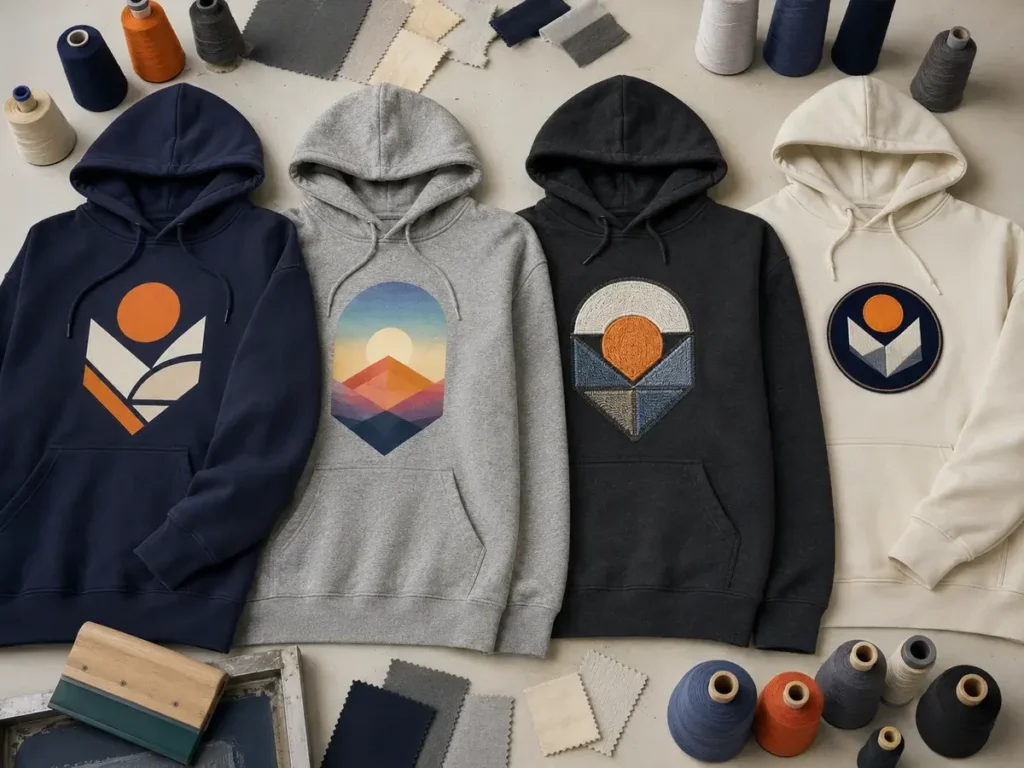
Heat-Transfer Vinyl and Screen-Printed Transfers
Heat-transfer vinyl is cut from colored film, weeded and pressed onto the garment. It is practical for names, numbers, simple logos and small variable runs. Specialty films can create reflective, metallic, flocked or stretch effects.
The major cost driver is labor. A shared logo can be cut and applied repeatedly, but a roster with 50 different names requires individual files, cutting, weeding, matching to sizes and final verification. Layered colors also increase thickness and handling.
Screen-printed transfers are printed separately and applied with a heat press. They can give a screen-print-like result without printing directly on the hoodie. This can be useful for distributed production, repeat logos or programs in which the garments and transfers are stocked separately.
For both methods, confirm:
- film or transfer type;
- compatible fabric compositions;
- application temperature, time and pressure;
- hot, warm or cold peel procedure;
- seam and pocket clearance;
- dye-blocking requirement;
- maximum artwork size;
- wash and drying instructions.
A heat press must provide flat, even pressure. Thick seams, zippers and pockets can interrupt contact, so the operator may need a smaller platen, pillow or other support.
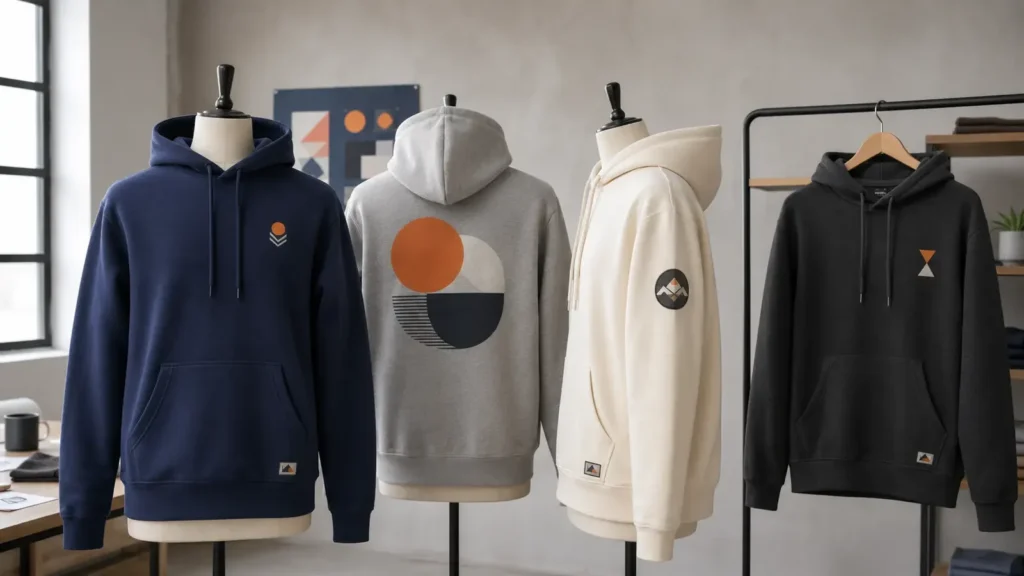
Sublimation Printing for Hoodies
Sublimation uses heat to transfer dye into polyester. Because the color becomes part of the polyester surface, there is no separate ink or film layer on top. This makes sublimation attractive for performance hoodies, esports apparel, training tops and all-over graphic programs.
It works best on white or light polyester, often on panels printed before cutting and sewing; it is not a universal solution for cotton fleece.
Sublimation can reproduce gradients, complex patterns and many colors without a per-color screen charge. However, all-over cut-and-sew production adds costs for panel artwork, printing, cutting, registration, sewing and size grading. Seams can interrupt patterns, and artwork must account for hood panels, pockets, ribs and zippers.
Japan Polymark describes sublimation as heat-vaporized dye transferred to typically white polyester cloth and notes its use in sportswear and workwear. See its sublimation transfer overview.
Puff, High-Density and Other Specialty Prints
Puff ink expands during curing and creates a raised, soft or foam-like surface. High-density systems build a sharper raised edge. Reflective, metallic, foil, glow and silicone-like effects can add a premium or technical appearance.
These processes should be treated as accents rather than automatic upgrades. Fine lines can merge as puff expands. Large raised areas may feel stiff. Metallic or reflective layers can react differently to stretching and washing. A physical strike-off is essential because a flat digital mockup cannot show height, texture, gloss or edge shape.
For specialty prints, approve the artwork at production size, expansion level, surface feel, color, edge quality and wash result. Avoid placing dense raised graphics directly across fold points or highly stretched areas unless the supplier has tested the combination.
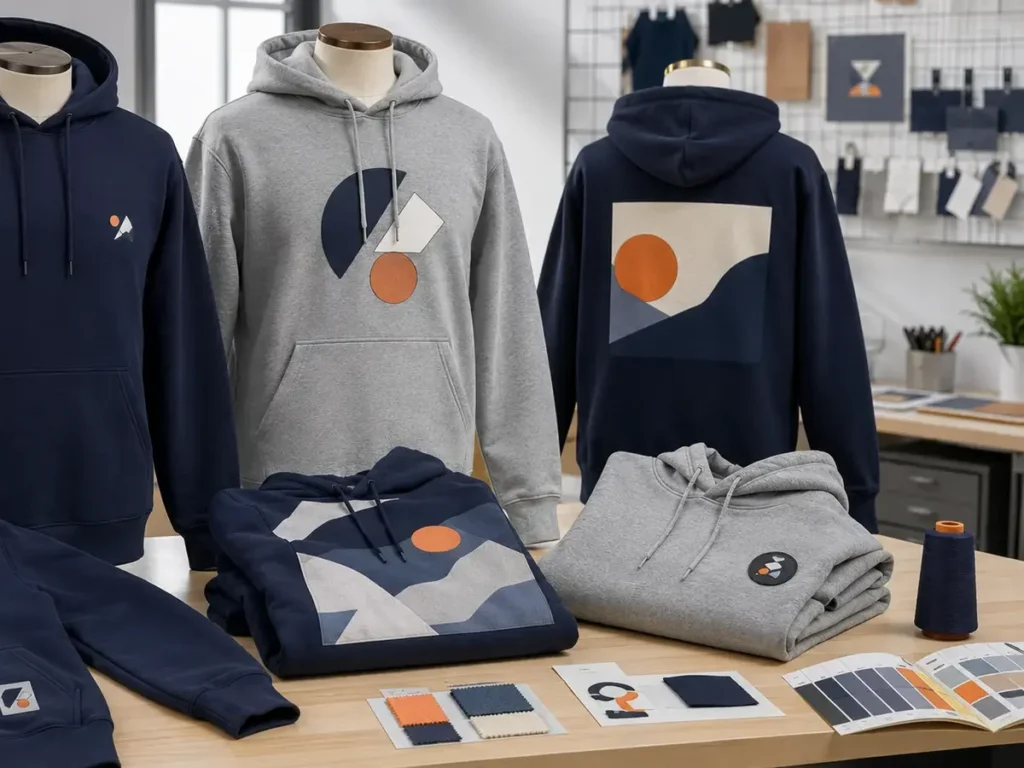
Which Hoodie Fabric Works Best for Printing?
There is no single best fabric for every method. Buyers should compare the outer face, not only the fiber label.
Cotton-Rich Fleece
Cotton-rich fleece is common for casual, school, corporate and streetwear hoodies. A smooth face can work well with screen printing and DTG. Loose fibers may reduce sharpness, and heavy brushing can make the surface less stable.
Cotton-Polyester Blends
Blends can balance softness, dimensional stability, drying speed and cost. The polyester content may increase dye-migration risk under heat, especially in dark or vivid colors. Test the actual colorway.
Polyester Performance Fleece
Polyester is useful for athletic and quick-drying programs. Sublimation is possible when the product is engineered for it. Screen prints and transfers may need low-cure systems or dye blockers. STAHLS notes that lower application temperature and blocker materials can help reduce polyester dye migration. See its performance heat-printing guidance.
Garment-Dyed, Washed or Coated Hoodies
Garment dye, enzyme wash, pigment wash, water resistance and other finishes can affect bonding, color and heat response. A production-representative sample is more important than a generic fabric swatch because the finishing process changes the final surface.
Fabric weight affects body and warmth, but the outer-face stability matters more to print quality. Confirm the exact fabric, color and finish before approval.
How Long Do Hoodie Prints Last?
Durability should be defined by observable change, not by vague claims such as “permanent” or “lasts forever.” A print can remain attached while losing color, cracking, becoming glossy, shrinking differently from the fabric or developing edge lift.
Practical Durability Ranking
The table below assumes professional production on compatible fabric and correct care. It is a relative guide, not a warranty.
| Method | Expected durability potential | Typical failure mode | Best prevention |
|---|---|---|---|
| Screen printing | High | Cracking, fading, migration or fibrillation | Correct ink, deposit, cure and fabric testing |
| DTF | Medium to high | Edge lift, cracking, surface wear | Qualified transfer system and even pressing |
| DTG | Medium to high | Fading, color loss or cracking | Correct pretreatment, ink load, cure and compatible garment |
| Heat-transfer vinyl | Medium to high | Lifting, shrink mismatch or cracking | Correct film and application recipe |
| Sublimation | High on suitable polyester | Color shift, ghosting or seam misalignment | Controlled heat, paper, color profile and cut-and-sew registration |
| Puff/high density | Medium to high | Collapse, cracking or uneven expansion | Artwork control, ink thickness and cure testing |
What a Wash Test Should Record
“Wash tested” is not enough. Record:
- the exact hoodie style, fabric and color;
- the print system and application recipe;
- number of cycles;
- wash temperature and program;
- detergent and bleach restrictions if relevant;
- drying method and temperature;
- evaluation criteria for color, cracking, adhesion and dimension;
- photographs before and after testing.
AATCC publishes textile test methods covering accelerated laundering, dimensional change and appearance after home laundering, including AATCC TM61, TM135, TM150 and TM143. The appropriate method and acceptance criteria should be agreed for the program. See the AATCC standards list.
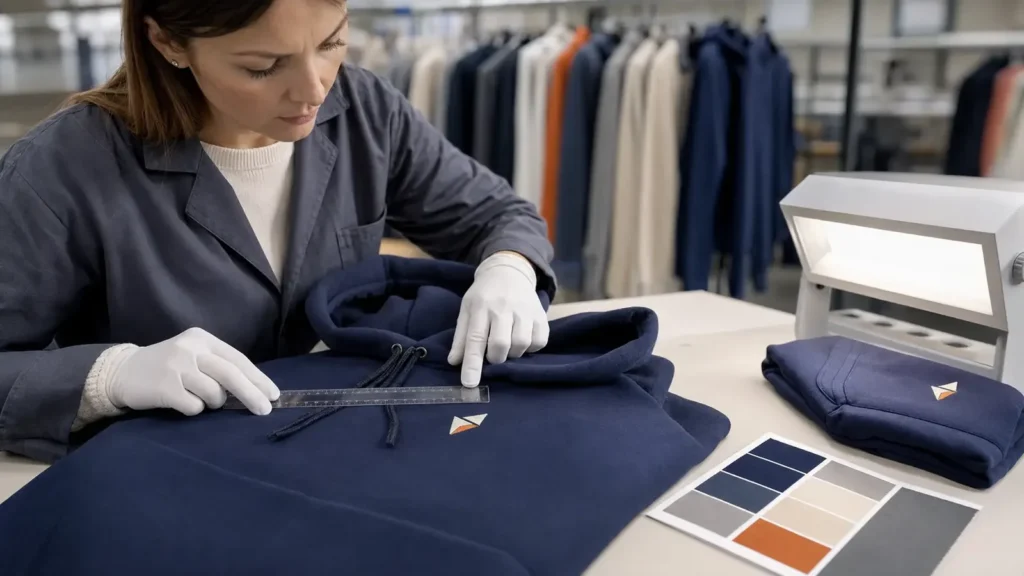
How to Make Printed Hoodies Last Longer
The buyer controls part of durability through specification and part through care communication.
- Select a print system approved for the actual fiber content and finish.
- Keep large solid transfers away from highly stretched zones when possible.
- Avoid printing across heavy seams, pocket edges or zipper teeth.
- Use negative space to reduce thick coverage in large graphics.
- Approve the production sample after wash testing, not only before.
- Print the final care instructions on the product label.
- Wash inside out when appropriate for the approved process.
- Avoid unnecessarily high wash and dryer temperatures.
- Do not iron directly over a heat-applied or raised print unless the supplier confirms it is safe.
- Store repeat-order specifications, including the exact print recipe and approved sample.
How Much Does It Cost to Print on Hoodies?
Hoodie printing cost can mean three different things:
- Decoration-only cost: printing added to a supplied or separately priced hoodie.
- Finished-garment cost: hoodie, printing, labels and standard packing.
- Landed cost: finished goods plus sampling, inspection, freight, duty, tax, brokerage and local delivery.
Do not compare these figures without normalizing the scope.
Illustrative Decoration-Only Planning Bands
The following USD ranges are for early planning only. They are not JIUMU quotations, market averages or promises. They assume one standard placement, production-ready artwork and normal commercial conditions; garment cost, freight, duty, tax and special testing are excluded.
| Method | 50–99 pcs | 100–499 pcs | 500+ pcs | Main reason cost changes |
|---|---|---|---|---|
| 1–2 color screen print | $2.50–$5.00 | $1.50–$3.50 | $0.90–$2.50 | Screens and setup are spread across quantity |
| DTF, medium front graphic | $4.00–$8.00 | $3.00–$6.50 | $2.20–$5.50 | Transfer area and press labor remain per piece |
| DTG, full-color graphic | $6.00–$12.00 | $4.50–$9.00 | $3.50–$8.00 | Ink coverage, white ink, pretreatment and curing |
| Heat-transfer vinyl name or number | $2.50–$6.00 | $2.00–$5.00 | $1.50–$4.50 | Cutting, weeding and variable-data handling |
| Sublimation print component | $5.00–$12.00 | $4.00–$9.00 | $3.00–$7.50 | Print area, panel handling and cut-and-sew scale |
| Puff/high-density surcharge | +$0.75–$2.50 | +$0.50–$2.00 | +$0.35–$1.50 | Specialty ink, screens, testing and slower production |
These bands should be replaced by a quotation based on the actual hoodie, artwork dimensions, color count, quantity split, labels, packaging and destination.
Public Retail Benchmarks Are Not Factory Quotes
Online decorator prices often include the blank hoodie, local service and other items that are not included in a factory decoration-only quote. Public 2026 pages from Custom Ink, RushOrderTees and Transfer Express also show how quantity, blank style, rush service, color matching and cutting change the final price.
The Main Cost Drivers
- hoodie blank or custom cut-and-sew construction;
- order quantity per design and per color;
- number of print locations;
- print dimensions and ink or film coverage;
- spot-color count for screen printing;
- white ink and pretreatment for dark DTG garments;
- personalization and roster management;
- polyester dye-blocking or low-temperature materials;
- specialty effects;
- artwork separation, cleanup or redraw;
- physical sample and wash testing;
- labels, hangtags, barcodes and individual packaging;
- inspection and logistics.
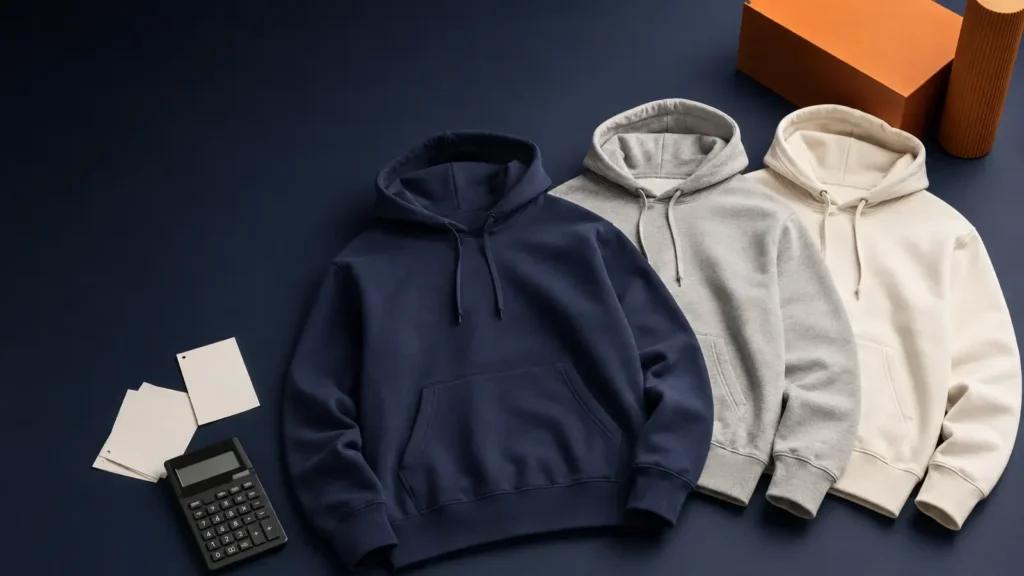
How Quantity Changes the Best Method
At 50 pieces, the buyer may value flexibility more than the lowest theoretical production cost. DTF, DTG or a simple screen print can all be logical depending on artwork. At 500 pieces, screen printing often gains a strong unit-cost advantage for repeated spot-color graphics, while DTF remains attractive when the artwork contains many colors or many small versions.
Quantity should be measured per repeatable setup. A 500-piece order divided into ten designs of 50 is not economically identical to one design of 500. Similarly, five hoodie colors may require different underbases, transfers or color approvals.
Use a quotation table that separates:
- base hoodie cost;
- each print location;
- setup or screen charges;
- personalization;
- labels and packaging;
- sample charges;
- freight and trade term.
This makes it easier to simplify the specification without cutting quality-critical features.
How to Choose the Right Printing Method
Use this sequence:
1. Define the Wearer and Use
Decide whether the hoodie is a uniform, retail product, event item, gift or performance layer.
2. Lock the Hoodie Fabric and Color
Do not choose DTG, DTF or a low-temperature transfer before confirming the fiber composition, outer-face finish and actual garment color.
3. Classify the Artwork
Count colors, gradients, fine details, solid coverage and variable information.
4. Set the Quantity by Design
Provide quantity by hoodie color, size, artwork version and personalization. This determines whether setup-heavy or unit-labor-heavy methods are more efficient.
5. Define Hand Feel and Coverage
State whether the target is soft, matte, glossy, raised, reflective or highly opaque.
6. Agree on Durability and Care
Specify wash conditions, drying method and evaluation criteria. Make sure the approved care method can be placed on the final care label.
7. Approve a Physical Sample
A digital mockup confirms layout. It cannot show opacity, texture, press marks, stretch, edge adhesion or post-wash change.
Planning a bulk printed hoodie program? Send JIUMU the hoodie style, fiber content or fabric preference, garment color, quantity by size, artwork files, print dimensions, locations, desired hand feel, labels, packaging, destination and required date. Explore custom hoodies or request a quotation.
Quality-Control Checklist for Printed Hoodies
Artwork and Placement
- correct artwork version;
- approved print width and height;
- distance from collar, pocket, zipper or seam;
- centered or intentionally offset position;
- graded size rules where applicable;
- names and numbers matched to the roster.
Print Appearance
- color compared under agreed lighting;
- opacity and underbase coverage;
- registration and edge sharpness;
- no pinholes, contamination or missing areas;
- consistent gloss, texture and expansion;
- no obvious press box or scorch mark;
- no dye migration.
Durability and Garment Condition
- adhesion after agreed washing;
- acceptable cracking, fading or surface change;
- hoodie measurements remain within tolerance;
- no seam damage from pressing or printing;
- pockets, zippers and drawcords function normally;
- labels and packaging match the specification.
Information to Send for an Accurate Quote
A complete inquiry should include:
- buyer type and target market;
- pullover or zip-up hoodie;
- adult, youth or mixed size range;
- target fabric composition and GSM, if known;
- stock or custom garment color;
- quantity by color and size;
- vector or high-resolution artwork;
- exact print dimensions and locations;
- spot-color or Pantone references;
- preferred method or desired result;
- names and numbers in a locked spreadsheet;
- private labels, care labels, hangtags and barcodes;
- individual packing and carton requirements;
- shipping destination;
- required delivery date;
- target budget and trade term, if available.
Questions to Ask a Hoodie Printing Supplier
- Which methods are compatible with the selected hoodie fabric and color?
- Will the artwork require an underbase, pretreatment or migration blocker?
- What will the print feel like at the approved dimensions?
- What minimum line width and text size can be reproduced reliably?
- How will time, temperature, pressure or cure be controlled?
- What placement tolerance can the supplier maintain?
- Can the supplier produce a strike-off on the actual fabric?
- What wash test will be used, and what is the acceptance criterion?
- How are variable names, numbers and size assignments verified?
- What is included in the quoted unit price?
- Which charges are one-time setup costs?
- How will the approved recipe be recorded for repeat orders?
Common Printing Mistakes
- Choosing a printing method before selecting the hoodie.
- Sending only a low-resolution screenshot instead of production artwork.
- Treating “DTF,” “DTG” or “screen print” as a complete quality specification.
- Placing a large graphic too close to the kangaroo pocket or zipper.
- Ignoring polyester dye migration.
- Approving only a digital mockup.
- Comparing decoration-only cost with a finished or delivered price.
- Splitting quantity across many designs without recognizing the setup impact.
- Using one print size across youth and extended adult sizes without review.
- Printing care instructions that were not validated with the approved process.
Why Work With JIUMU on Printed Hoodies
JIUMU supports B2B custom teamwear and logo-apparel programs for schools, sports clubs, construction companies, brands, promotional buyers and uniform distributors. Typical projects can include OEM or ODM hoodie development, fabric and color selection, screen printing, heat transfer, sublimation where suitable, embroidery, patches, private labels, hangtags and export packaging.
The typical MOQ is 50 pieces, subject to the hoodie structure, print method, color split, personalization and packaging. JIUMU can coordinate digital mockups, physical samples, bulk production, quality-control requirements and international delivery planning.
Buyers building coordinated programs can also review custom team uniforms, custom team jackets and custom team jerseys.
Frequently Asked Questions
Final Recommendation
To print hoodies successfully, define the garment, artwork and production process together. Screen printing usually provides the best economics for repeated spot-color designs. DTF and DTG add flexibility for detailed artwork. Heat-transfer vinyl solves personalization. Sublimation is the strongest option for polyester all-over graphics. Specialty prints can add value when the artwork and cure are carefully tested.
Do not approve durability or cost from a method name alone. Compare production-representative samples, define wash and appearance criteria, separate setup from unit costs, and record the approved specification for repeat orders.
For a project-specific quotation, send JIUMU your hoodie reference, fabric preference, color, quantity by size, artwork, print dimensions, locations, labels, packaging, destination and required delivery date. Email zhengdong@jiumugear.com, WhatsApp/Phone +86 18507502899, or use the JIUMU inquiry page.
JIUMU Editorial Team
Practical sourcing guidance for teams, schools, distributors and private-label apparel buyers.