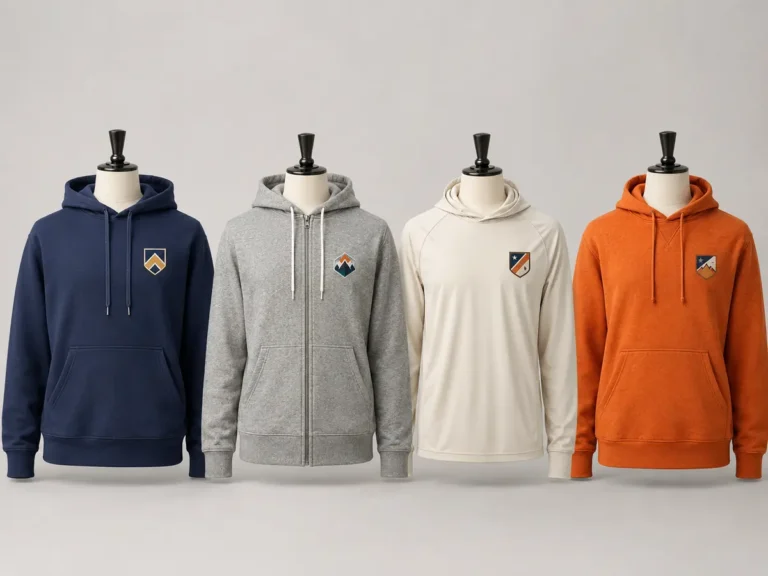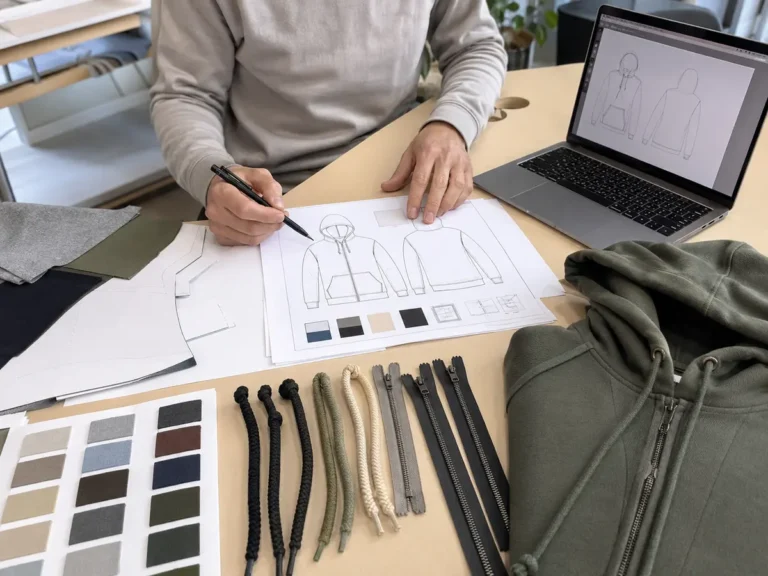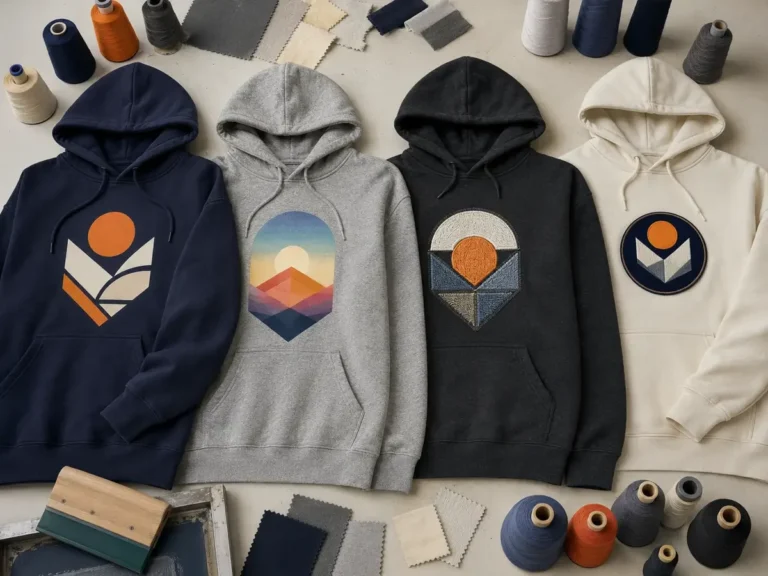
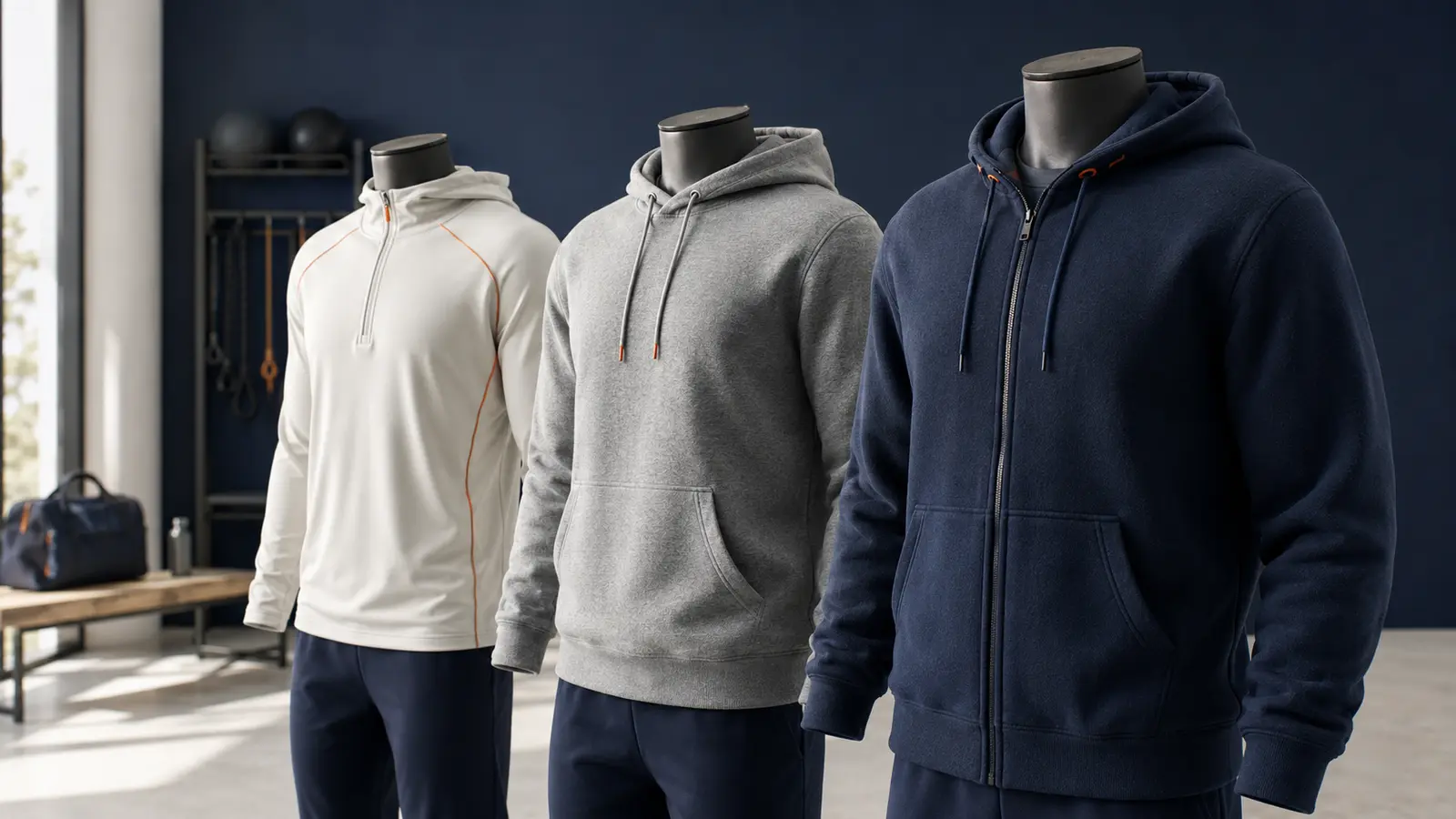
Best Fabrics for Custom Team and Athletic Hoodies
Choosing a hoodie fabric is not simply a choice between cotton and polyester. A purchasing team must decide how the garment will be used, how often it will be washed, which decoration method it needs, how much warmth athletes expect, and whether the same color and hand feel can be repeated in a later order.
For schools, sports clubs, uniform dealers and private-label brands, those decisions affect comfort, appearance, cost and complaints long after the first sample is approved. A soft heavyweight fleece may be ideal for sideline wear but too warm for indoor training. A smooth polyester knit can handle active warm-ups and heat-transfer graphics, yet may not create the casual hand feel expected from a retail-style team hoodie.
This guide compares the best fabrics for custom team and athletic hoodies from a B2B sourcing perspective. It explains fiber blends, knit structures, fabric weight, decoration compatibility, testing and the information a supplier needs to quote accurately.
Quick Answer: For most all-purpose custom team hoodies, a midweight cotton-polyester fleece is the safest starting point because it balances softness, shape retention, decoration options and routine washing. Choose cotton-rich fleece when retail-like comfort and embroidery are priorities; polyester-rich fleece or interlock when faster drying and active use matter more; French terry for breathable layering; and heavyweight brushed fleece for cold-weather sideline wear. The final decision should be based on a physical sample, confirmed GSM, wash testing, decoration trials and an approved color standard—not fiber percentage alone.
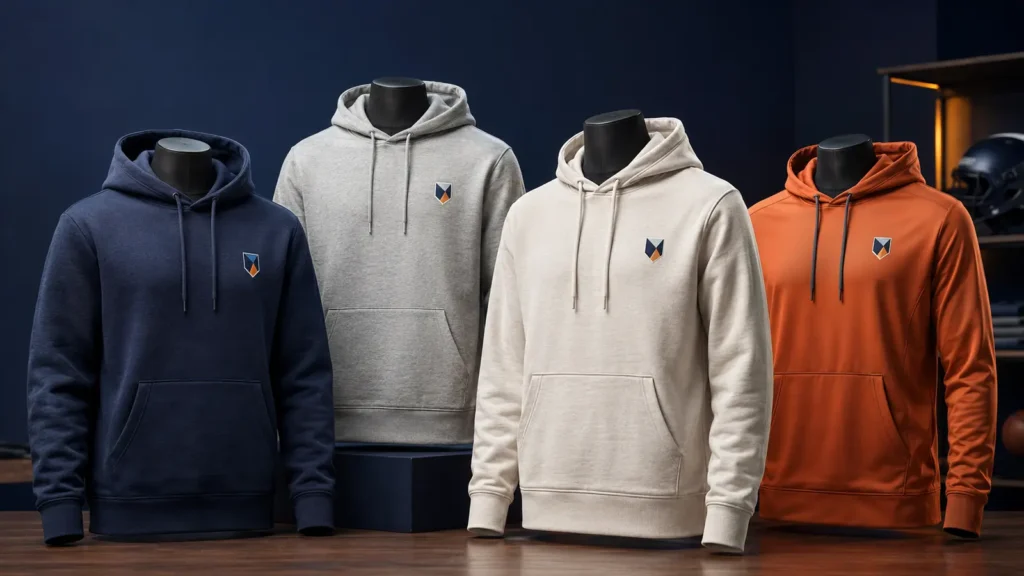
Why Fabric Selection Matters in a Bulk Hoodie Order
The fabric is the largest surface in the product, but its influence goes beyond appearance. It determines how the hood stands, how the body drapes, whether cuffs recover after stretching, how easily the garment pills and how a printed or embroidered logo sits on the chest.
It also affects the buyer’s operational results:
- Teams and schools need a fabric that works across different body types, activity levels and washing habits.
- Clubs and academies may need both travel apparel and warm-up apparel under one visual identity.
- Uniform dealers need specifications that can be reordered without creating obvious shade or weight differences.
- Promotional buyers may prioritize reliable decoration and budget control over technical performance.
- Private-label brands usually care more about hand feel, drape, trims, label presentation and retail-ready finishing.
The phrase “300 GSM cotton hoodie” is not a complete specification. Two fabrics with the same weight and nominal fiber content can feel different because of yarn count, knit density, brushing, finishing, shrinkage control and rib construction. Good sourcing therefore starts with the complete fabric system.
Best Hoodie Fabrics at a Glance
The following comparison is a practical shortlist rather than an absolute ranking.
| Fabric option | Typical strengths | Main limitations | Best-fit applications | Decoration fit |
|---|---|---|---|---|
| Cotton-rich brushed fleece | Soft hand, substantial casual look, good print surface | Can absorb moisture and may shrink if not controlled | Spirit wear, retail merchandise, travel and lifestyle collections | Embroidery, screen print, patches, suitable heat transfer after testing |
| Balanced cotton-poly fleece | Good compromise between comfort, stability and cost | Performance depends heavily on yarn and finishing quality | General teamwear, schools, clubs, promotional programs | Broad compatibility with embroidery, print and transfer |
| Polyester-rich fleece | Shape retention, lower moisture absorption, practical for active programs | Can feel more synthetic and may show heat sensitivity or sheen | Warm-ups, frequent-use teamwear, events, staff apparel | Heat transfer, sublimation only when fabric and color are suitable, embroidery |
| 100% polyester interlock or double knit | Smooth, durable-looking surface, useful for active layering | Less traditional sweatshirt feel; may snag depending on construction | Training, travel, quarter-zips, lightweight athletic hoodies | Heat transfer, sublimation on compatible white/light fabric, embroidery with stabilization |
| Loopback French terry | Breathable layering, cleaner inner surface, less bulky than brushed fleece | Less insulation than brushed fleece | Spring/fall travel, indoor training, fashion-led teamwear | Screen print, embroidery, patches, transfer after testing |
| Heavyweight brushed fleece | Warmth, structured silhouette, premium hand when well finished | Higher cost, shipping weight and longer drying time | Cold climates, outdoor sidelines, premium club merchandise | Embroidery, appliqué, patches and screen print |
| Stretch performance knit | Mobility and close athletic fit | Higher fabric cost; heat and needle settings require control | Coaches, training staff, active warm-ups | Low-temperature transfer, light embroidery with backing |
No row should be approved from a spreadsheet alone. Ask for a swatch or garment sample, then evaluate the fabric after washing and after applying the intended decoration.
Start With Fabric Structure, Not Just Fiber Content
“Cotton,” “polyester” and “elastane” describe fibers. “Fleece,” “French terry” and “interlock” describe how yarns are constructed or finished into a fabric. Both layers of information matter.
CottonWorks explains that fleece can be made in all-cotton, cotton-polyester blends or fully synthetic constructions. This is why the word fleece alone does not tell a buyer how a hoodie will perform.
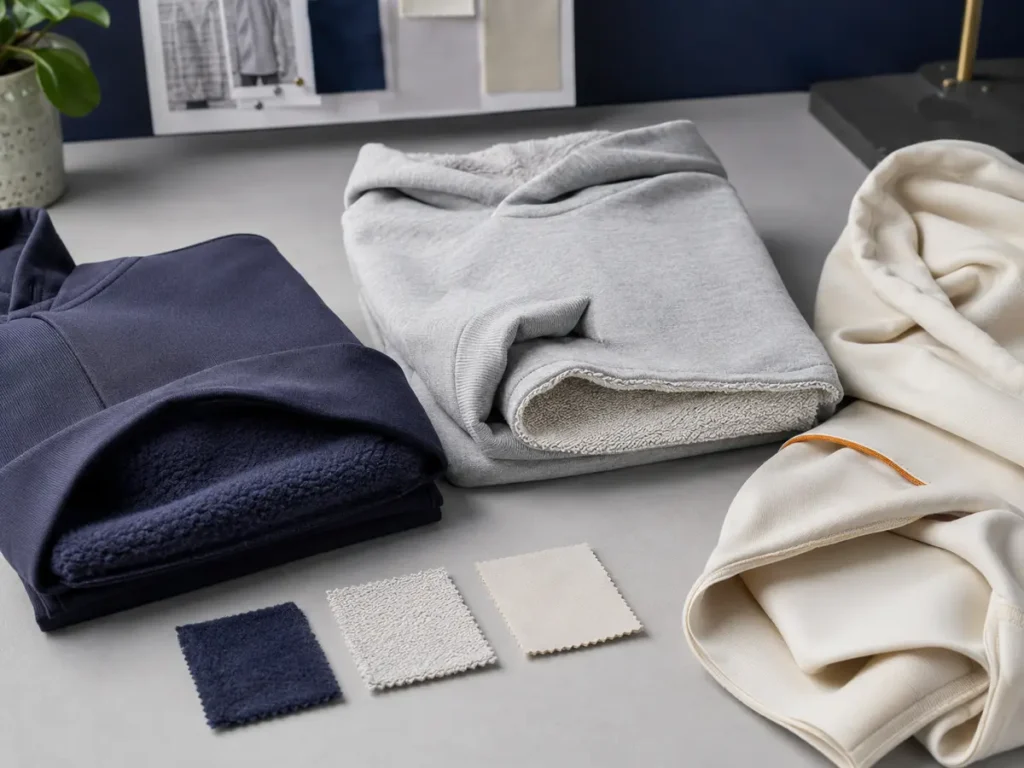
Brushed fleece
Sweatshirt fleece typically presents a smooth knit face on the outside and a brushed, raised surface on the inside. Brushing traps more air and creates a warmer, softer hand. It is the familiar choice for pullover hoodies, zip hoodies, school spirit wear and cold-weather team apparel.
The quality questions are whether the brushing is even, whether loose fiber sheds excessively, whether the surface pills after abrasion and washing, and whether the finished garment remains within the approved measurements.
Loopback French terry
French terry has a smooth face and visible loops on the back. It generally feels less bulky than brushed fleece and works well as a breathable layer for travel, warming up or transitional seasons. The loopback surface also helps buyers visually confirm that the garment is not brushed fleece.
French terry is a strong choice when the brief asks for a “premium athletic lifestyle” product rather than maximum insulation. However, it should still be evaluated for loop snagging, spirality and shrinkage.
Interlock and double knit
Interlock or other double-knit polyester fabrics can create a smooth, stable surface with a more technical appearance. They are commonly considered for lightweight athletic hoodies, quarter-zips and warm-up tops. Their low bulk makes them easier to layer under jackets.
The tradeoff is emotional as well as technical: buyers expecting a classic sweatshirt may interpret a smooth interlock as too similar to a training jersey. The sample should therefore be reviewed by both the purchasing team and the people responsible for the final brand experience.
Jersey and single-knit options
Light jersey can be used for hooded T-shirt styles or summer training layers. It is not a direct replacement for fleece. It drapes more, offers less warmth and may need careful neck, hood and pocket construction to prevent distortion.
Cotton, Polyester or a Blend?
The best fiber composition depends on which risk the buyer is trying to reduce.
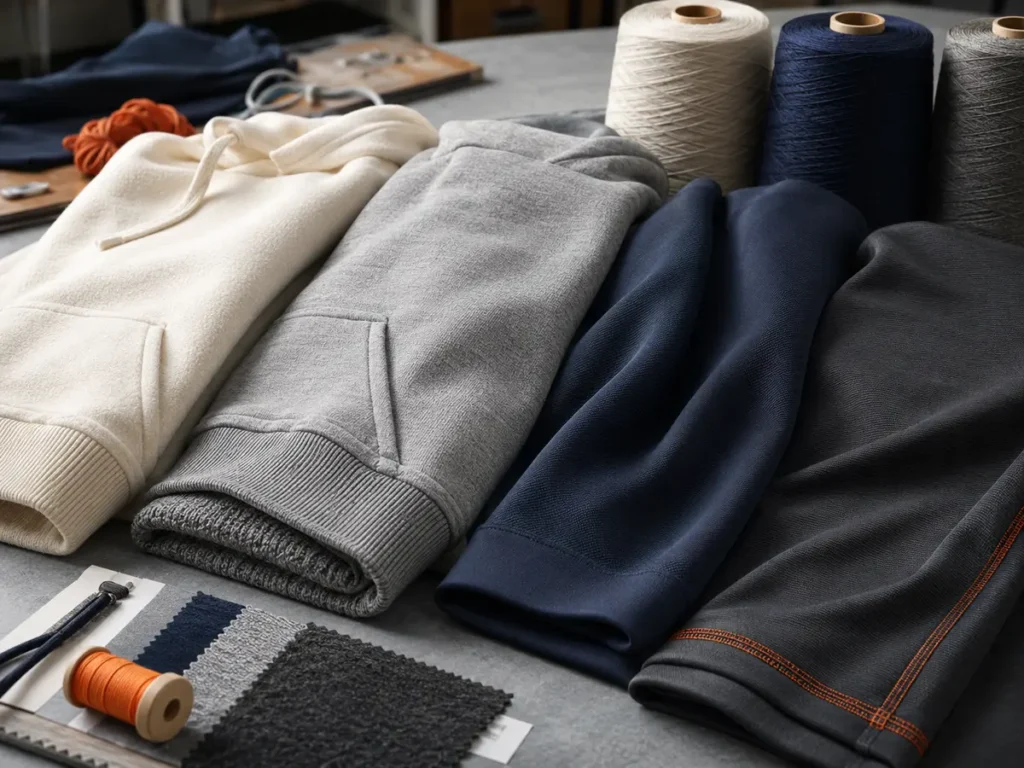
Cotton-rich fabrics for comfort and retail appeal
Cotton-rich fleece is often selected for a soft, familiar hand and a matte appearance. It can support embroidery, screen printing and many patch methods. For merchandise programs, that hand feel can make the garment feel more like casual apparel and less like a uniform.
Cotton is absorbent, so it can feel comfortable against the skin but retain more moisture during intense activity. Untreated cotton should not automatically be described as “moisture-wicking.” Performance claims need a defined fabric technology and testing. CottonWorks publishes examples of treated cotton technologies, but a buyer should only use such claims when the actual ordered fabric and supply chain support them.
Cotton-rich fabrics also need shrinkage control. Ask the supplier for a finished-garment wash result, not only a statement that the fabric is “preshrunk.” Confirm whether measurements are taken before or after conditioning and washing.
Polyester for active use and shape retention
Polyester fibers absorb less moisture than cotton and can be useful in fabrics designed to move or release moisture. Yet fiber content alone does not prove moisture-management performance. Knit construction, yarn geometry and finishing all influence the result.
For objective comparison, a buyer can request a recognized method. AATCC TM195 is intended to measure, evaluate and classify liquid moisture-management properties of textile fabrics. The appropriate test and acceptance target should be agreed before production if the marketing brief includes a specific performance claim.
Polyester-rich fabric can also support strong color and routine washing, but heat-based decoration must be trialed. Excessive heat can create press marks, gloss or dye migration, especially on dark or strongly dyed fabric. A low-temperature transfer may help, but the decoration vendor should test the exact fabric and color.
Cotton-polyester blends for the broadest use
A balanced blend is the default recommendation for many general team programs because it combines a cotton-like hand with improved dimensional stability and practical laundering. Common commercial compositions vary, and there is no universally superior percentage.
Use the brief to select the balance:
- Move toward cotton-rich when softness, matte appearance and retail feel lead the decision.
- Move toward polyester-rich when active use, shape retention, faster drying behavior or lower bulk is more important.
- Keep the exact approved ratio in the purchase specification and label artwork.
The same blend ratio can perform differently from one mill lot to another. Yarn quality, fabric density, dyeing and finishing still require approval.
Elastane for controlled stretch
A small elastane component may be useful in performance hoodies, fitted warm-up tops or rib trims. It can improve stretch and recovery, but it also changes cutting, sewing and heat-application settings.
Do not add stretch fiber automatically. A relaxed fleece hoodie often gets adequate movement from the knit structure and pattern. Elastane is more valuable when the design has a close fit, articulated sleeves or a specific mobility requirement.
How Much Should a Team Hoodie Weigh?
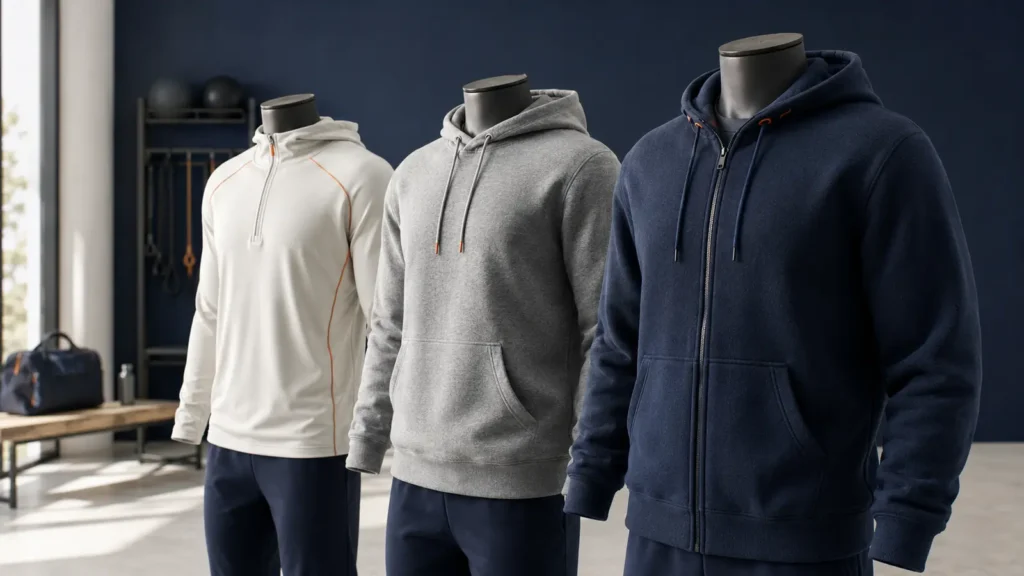
Fabric weight is commonly expressed in grams per square meter (GSM). It is a useful control point, but it is not a direct temperature rating. Fiber, thickness, brushing, air permeability and garment construction all influence warmth.
| Planning range | General character | Suitable use | Buyer watch-outs |
|---|---|---|---|
| Approximately 180–240 GSM | Lightweight, easy to layer, often technical or jersey-like | Indoor training, travel, mild weather, coaches | May feel too thin for merchandise; pocket and hood need stabilization |
| Approximately 250–320 GSM | Midweight and versatile | General teamwear, schools, clubs, all-season layering | Confirm shrinkage, pilling and final hand after decoration |
| Approximately 330–400+ GSM | Heavy, structured and warm | Cold-weather sidelines, premium merchandise, outer-layer use | Higher material and freight cost; longer drying; bulky embroidery areas |
These ranges are sourcing starting points, not guarantees. A dense 300 GSM fabric may feel more structured than a loftier fabric at a similar stated weight. Request a tolerance for production GSM and verify the measurement method.
The most useful specification combines:
- Fiber composition and percentage.
- Knit structure.
- Finished GSM and tolerance.
- Brushed, loopback or smooth interior.
- Color reference.
- Shrinkage and appearance requirements after washing.
- Intended decoration method.
Match Fabric to the Team’s Real Use Case
School spirit wear and club merchandise
Choose a cotton-rich or balanced blended fleece when the hoodie must feel comfortable in classrooms, stands and casual settings. Midweight fabric is often easier to wear across seasons. If the garment will be sold as merchandise, prioritize hand feel, silhouette, color accuracy and decoration appearance.
Outdoor sideline and tournament wear
Heavy brushed fleece works for cold conditions, but consider whether the hoodie will sit under a jacket. A very bulky hood can interfere with outerwear. For variable weather, a midweight hoodie plus a separate team jacket may be more flexible than one extra-heavy garment.
Active warm-ups and coaching apparel
Polyester-rich fleece, interlock or a stretch performance knit can suit movement and repeated use. Pattern design matters here: raglan or shaped sleeves, side panels and adequate body length can add more functional value than a fiber claim alone.
Travel uniforms
For airports, buses and hotels, the priority is often shape retention, comfortable layering and a consistent team appearance. A stable midweight blend or French terry can be an effective compromise.
Promotional programs and staff uniforms
Control complexity. A balanced blend in one or two stock-like colors may offer more predictable pricing and replenishment than a custom-milled fabric. Reserve custom dyeing and complex trims for order volumes that justify their setup and repeatability requirements.
Fabric Choice Changes Logo and Decoration Results
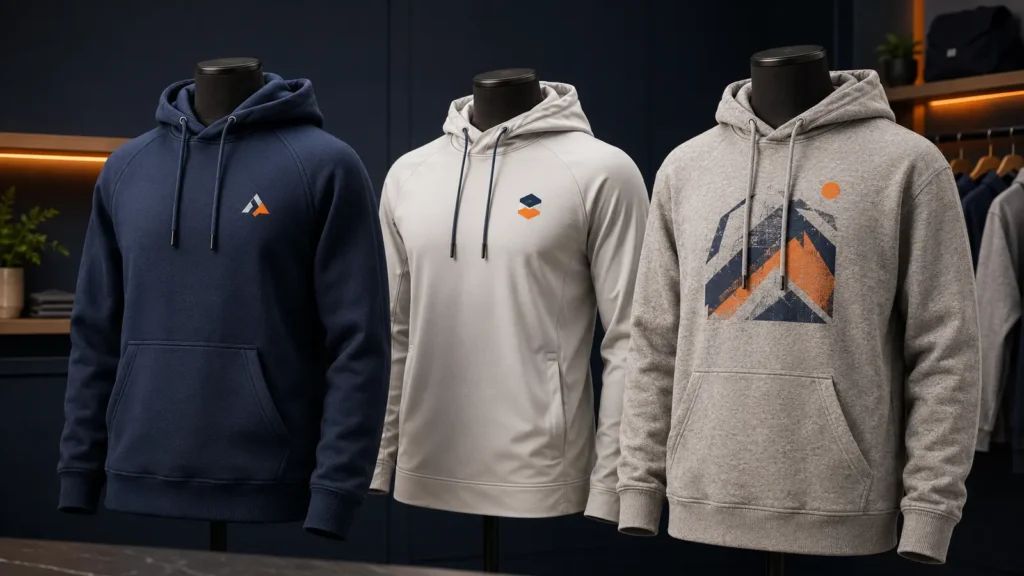
A logo is not applied to an abstract fiber percentage; it is applied to a real surface with texture, stretch, dye and heat sensitivity.
Embroidery
Embroidery can create a durable, dimensional result on fleece and French terry. Heavy designs may pull or ripple lightweight knit, so stitch count, backing and logo size need control. For small chest marks, simplify fine lines and tiny gaps before sampling.
Screen printing
Screen printing works well on many cotton-rich and blended fleece faces. A smooth, stable outer face generally produces cleaner edges. Print ink, underbase, curing conditions and fabric color all affect the final hand and opacity.
Heat transfer
Heat transfer supports names, numbers, sponsor marks and lower-quantity personalization. The exact time, temperature and pressure must be tested against the fabric. Performance polyester and elastane blends may require lower-temperature systems or special blockers to manage shine and dye migration.
Sublimation
Sublimation is most appropriate for compatible polyester fabric, generally in white or light base colors before printing. It is not a universal method for cotton fleece, and it should not be promised for every polyester hoodie without confirming fabric construction and the production process.
Patches and appliqué
Woven, rubber/PVC, leather-style and embroidered patches can create a premium identity. Their weight and edge construction should match the fabric. A rigid patch on a very light stretch knit can distort the garment; a heavyweight fleece can carry more substantial decoration.
Planning a custom program? Send JIUMU your target quantity, use case, climate, preferred fabric feel, GSM range, colors, logo files, decoration locations, size range, packaging needs and delivery target. The team can organize fabric options, digital mockups and physical sample development for comparison. Request a custom hoodie quotation.
Construction Details That Protect the Fabric Investment
The most expensive fabric cannot compensate for weak construction. Review the following areas on the sample:
- Shoulder and armhole seam security.
- Pocket opening reinforcement.
- Hood seam finish and drawcord channel.
- Rib cuff recovery and matching.
- Zipper smoothness and tape stability on zip hoodies.
- Hem stretch and recovery.
- Stitch balance on both face and interior.
- Placement symmetry for logos, pockets and panels.
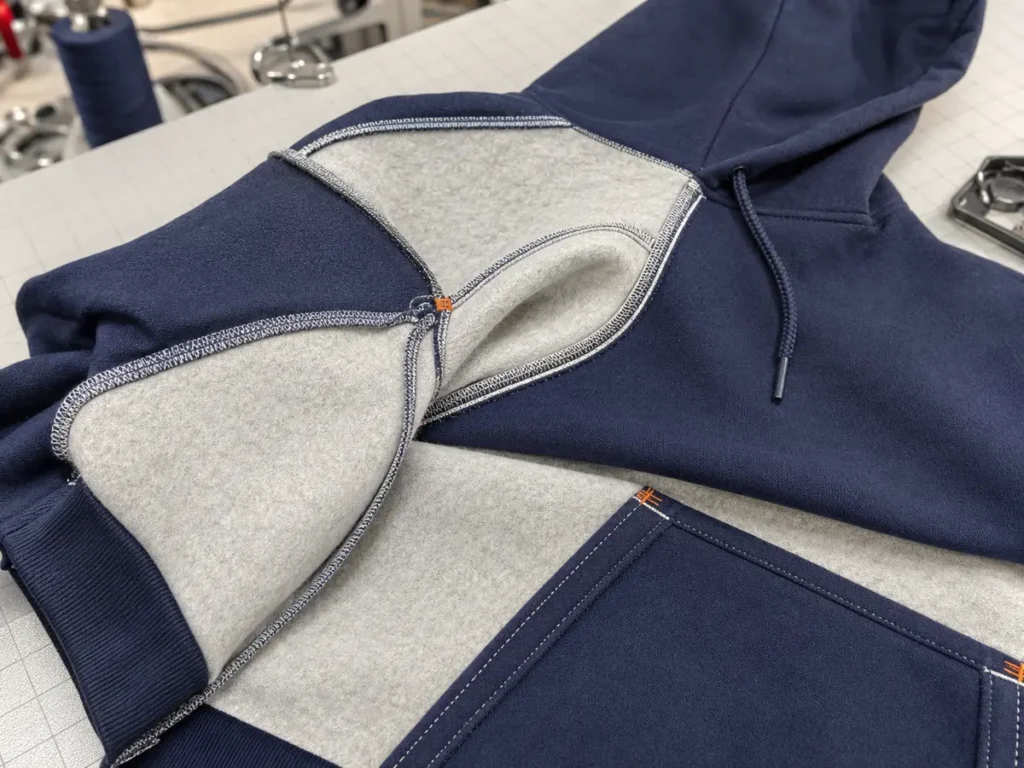
For heavy fleece, needle and seam settings must avoid skipped stitches or excessive bulk. For smooth technical knits, seam stretch should match the wearer’s movement. For French terry, exposed inner loops should not be damaged during sewing or trimming.
What to Test Before Approving Bulk Production
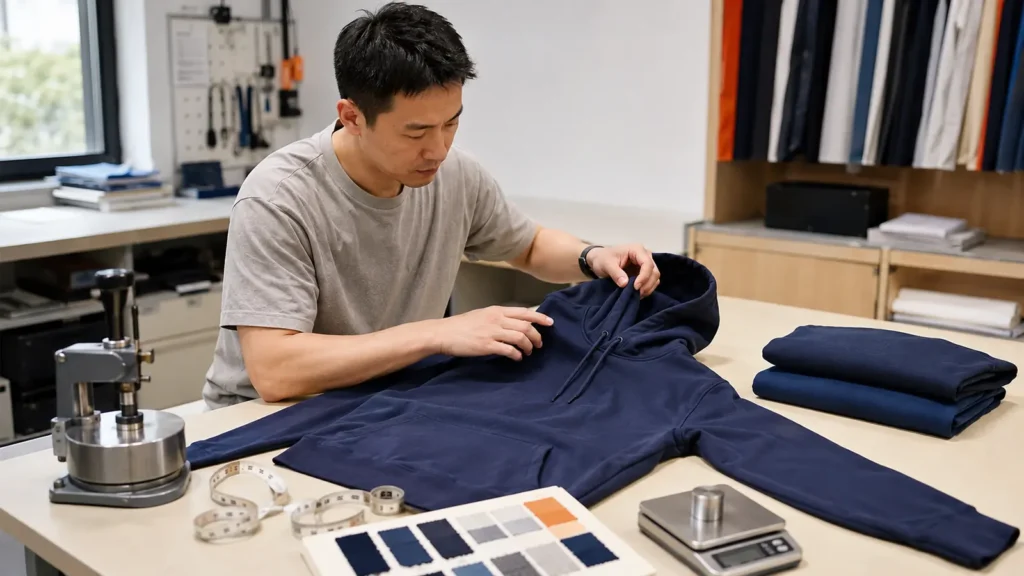
A professional approval process translates subjective words such as “soft,” “warm” and “durable” into observable checks.
1. Appearance after washing
Wash the decorated sample according to the proposed care instruction. Measure body length, chest width, sleeve length and key openings before and after. Check twisting, seam puckering, print cracking, embroidery distortion, shade change and inner-fleece appearance.
ISO publishes textile methods relevant to this process, including standards for domestic washing procedures, dimensional change and pilling evaluation. A buyer does not need to order every possible laboratory test, but should identify the risks that matter and specify the corresponding method and acceptance criteria.
2. Pilling and surface change
Pilling can appear on the outside face, the brushed interior or both. Evaluate high-friction areas such as side body, sleeves and underarms. Do not approve based only on an untouched swatch.
3. Colorfastness and shade consistency
Review color under a consistent light source and compare the bulk fabric with the approved standard. Dark navy, black and saturated team colors deserve particular attention. For repeat programs, record the approved color reference and define what constitutes an acceptable shade difference.
4. Dimensional stability
Shrinkage may differ by direction. A hoodie that loses body length but retains width can change fit even when the total percentage seems modest. Review each critical garment measurement, not just fabric shrinkage.
5. Decoration adhesion and compatibility
Stretch, wash and inspect transfers. Check embroidery backing, puckering and skin-side comfort. Assess print opacity and curing. The decorated sample—not a blank garment—is the true approval sample.
6. Fabric composition and claims
If a recycled or organic content claim is part of the product brief, request documentation that applies to the actual material and supply chain. Textile Exchange states that the RCS and GRS establish criteria for third-party certification of recycled materials and chain of custody; GRS includes additional requirements and a higher minimum recycled-content threshold. A certification name should not be placed in marketing or on labels unless the ordered product, participating facilities and claim rules support it.
Labeling Requirements Belong in the Fabric Brief
Fiber content is not only a sourcing detail. It affects required product information in major markets.
For the United States, the FTC explains that most textile products require labels identifying fiber content, country of origin and the manufacturer or responsible marketer. Its Textile Fiber Rule describes generic fiber names and percentages by weight, while separate FTC guidance addresses care labeling.
For the European market, Regulation (EU) No 1007/2011 concerns textile fiber names and related labeling or marking of fiber composition. Buyers should confirm the final label copy, language and market responsibilities with their compliance adviser or importer.
Do not leave label decisions until packing. Confirm:
- Legal fiber names and percentages.
- Country-of-origin wording.
- Responsible company identity where required.
- Care instructions supported by sample testing.
- Size system and language needs.
- Private label, neck label, side label and hangtag locations.
- Any substantiation needed for environmental or performance claims.
This guide provides sourcing information, not legal advice. Requirements may vary by market, product and sales channel.
Cost Drivers Buyers Should Expect
Fabric cost is influenced by more than cotton percentage.
Fiber and yarn
Specialty yarns, recycled-content inputs, compact yarns, mélange effects and stretch components can increase cost or minimum quantities. The supply route may also affect color availability and repeat orders.
Fabric weight and yield
Heavier GSM generally uses more material per garment and increases shipping weight. Larger sizes and oversized patterns also consume more fabric. Ask whether the quotation is based on a confirmed size ratio.
Custom dyeing
Custom Pantone matching can add laboratory dips, minimum dye lots and shade approval steps. Stock colors may be more economical for smaller programs.
Finishing
Brushing, anti-pilling treatments, garment washing, peaching or performance finishes add process steps. Each claim needs a clear specification and, when relevant, verification.
Decoration
Embroidery price is influenced by stitch count, size and number of locations. Screen printing depends on color separations and setup. Heat transfer depends on artwork, material and application. Patches require their own sampling and attachment method.
Packaging and private labeling
Custom woven labels, hangtags, size stickers, individual polybags, carton marking and retailer packing rules should be included in the initial request, not added after price approval.
A Practical Sample and Bulk-Order Process
- Define the use case. Identify climate, activity, washing frequency, desired hand feel and target price position.
- Shortlist two or three fabrics. Compare structure, composition, GSM, color availability and decoration suitability.
- Approve swatches or a fabric hanger. Record the supplier’s fabric code and the selected color reference.
- Create a digital mockup. Confirm logo size, position, colors, labels and garment details.
- Make a physical sample. Use the intended fabric and decoration method whenever possible.
- Fit and wash test. Record measurements before and after care, then review appearance.
- Approve a sealed reference sample. Keep one approved sample or a documented approval set for bulk comparison.
- Confirm production tolerances. Cover GSM, measurements, color, decoration placement and packing.
- Inspect bulk production. Check materials, workmanship, appearance, quantity and carton marks against the approval.
- Archive the specification. Preserve codes, artwork and approvals to make repeat orders more consistent.
Questions to Ask a Custom Hoodie Supplier
Before placing a bulk order, ask:
- What is the full fiber composition, knit structure and finished GSM?
- Is the interior brushed, loopback or smooth?
- What production tolerance applies to fabric weight?
- Is the fabric a stock program or a custom mill order?
- Which colors are available, and can custom Pantone matching be arranged?
- What sample options are available before bulk production?
- What shrinkage, pilling and colorfastness information can be provided?
- Has the intended print, transfer or embroidery method been tested on this exact fabric?
- How will shade consistency be controlled within the order?
- What labeling and private-label options can be included?
- What is the MOQ for this fabric, color and decoration combination?
- How are replacements and future repeat orders matched to the approved specification?
Common Fabric-Buying Mistakes
Selecting only by percentage
An 80/20 blend is not automatically better than a 60/40 blend. Structure, weight, yarn and finishing may have a larger visible effect.
Using “GSM” as a warmth rating
GSM is mass per area, not a temperature guarantee. Compare real samples with the intended base layers and climate.
Approving a blank but not the decoration
Heat, pressure, needles and ink change the garment. Approve the complete decorated sample.
Ignoring rib fabric
Cuffs and hems may use a different structure or blend from the body. Weak recovery can make an otherwise good hoodie look tired.
Assuming performance from a fiber name
“Polyester” does not automatically mean moisture-wicking, and “cotton” does not automatically mean breathable under every construction. Define the claimed performance and the evidence needed.
Skipping wash evaluation
The first wash can reveal shrinkage, twisting, dye migration, print issues and fleece shedding that are invisible in a new sample.
Forgetting repeat-order controls
Keep the approved fabric code, color reference, garment measurements, artwork and packaging specification. A photo alone is not a sufficient production standard.
Why Work With JIUMU on Custom Hoodies?
JIUMU supplies custom teamwear, logo apparel and branded merchandise for professional buyers in North America and Europe. The company supports OEM and ODM development, fabric sourcing, Pantone color matching, digital mockups, physical samples, bulk quality control and export coordination.
Customization options include embroidery, screen printing, heat transfer, sublimation for suitable products, and woven, rubber/PVC or leather-style patches. Private labels, neck labels, woven labels, hangtags and packaging customization can be coordinated as part of the order.
The typical MOQ is 50 pieces, subject to the hoodie structure, fabric route, color and customization. Buyers can also coordinate hoodies with custom team uniforms, custom team jackets, custom team jerseys and other team merchandise.
Frequently Asked Questions
Final Recommendation
The best fabric for custom team and athletic hoodies is the one that fits the program—not the one with the most impressive fiber label. Begin with how and where the hoodie will be worn. Then specify the structure, composition, GSM, interior, color, decoration and wash expectations as one connected system.
For broad school and club use, start with a midweight cotton-polyester fleece. For premium merchandise, compare cotton-rich fleece and heavyweight options. For active warm-ups, evaluate polyester-rich fleece, interlock or stretch performance knit. For breathable lifestyle layering, add French terry to the sample set.
Finally, approve the decorated garment after washing, keep a sealed production reference and document tolerances for the bulk order. Those steps do more to protect quality than choosing a fiber percentage in isolation.
Sources and Further Reading
- FTC Textile Fiber Rule
- FTC: Threading Your Way Through Textile Labeling Requirements
- European Union Regulation No 1007/2011 on Textile Fiber Labeling
- AATCC TM195: Liquid Moisture Management Properties of Textile Fabrics
- ISO textile standards catalog
- Textile Exchange: Recycled Claim Standard and Global Recycled Standard
- CottonWorks: Single and Double Knits
About the JIUMU Team
JIUMU develops practical sourcing content for schools, sports clubs, uniform dealers, distributors and private-label apparel buyers. The company supports custom teamwear, fabric sourcing, logo decoration, private labels, sampling, quality control and export coordination.