Why Are Hoodies Not Allowed in Some Schools?
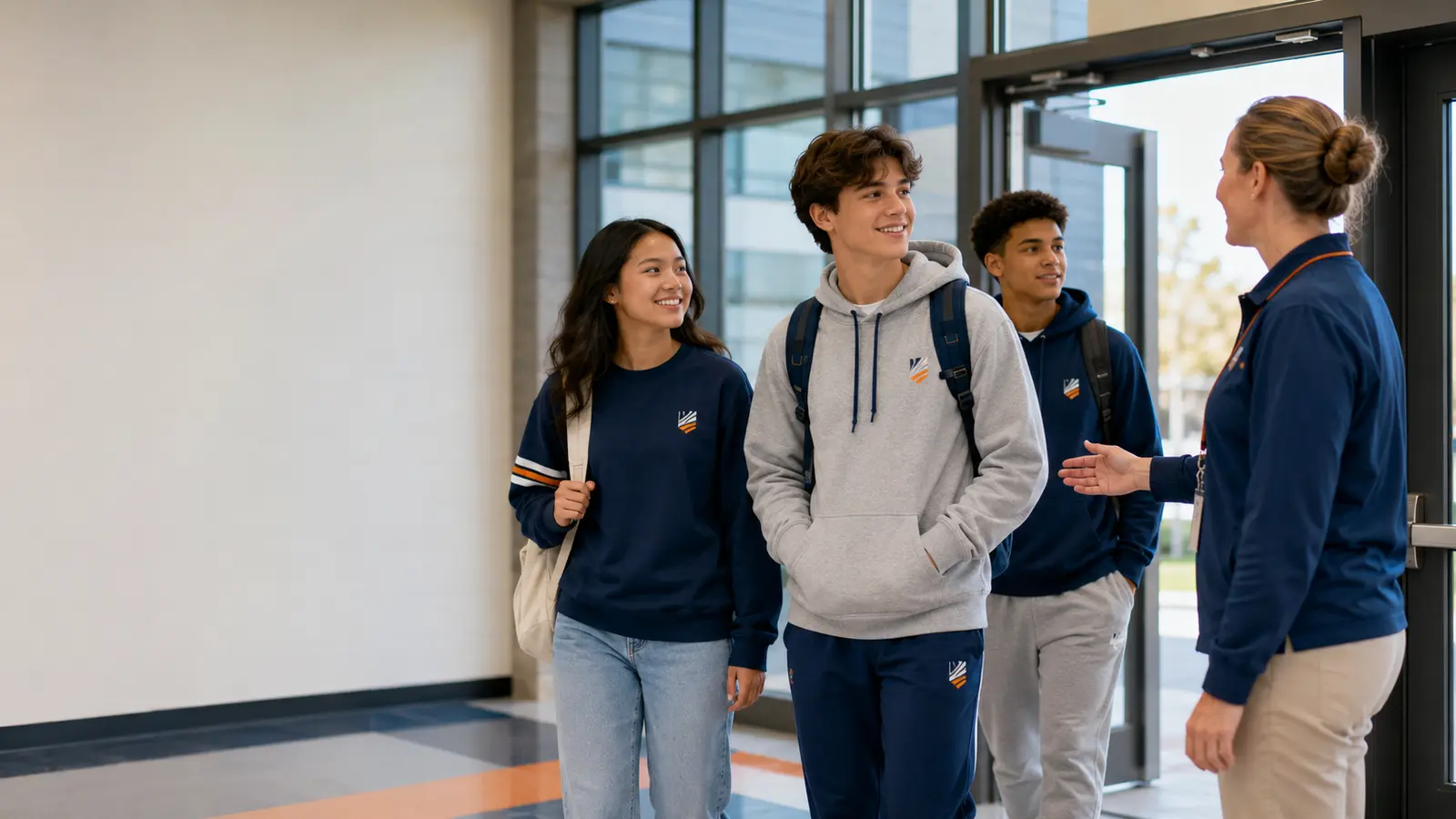
Hoodies are among the most practical garments for students. They are warm, easy to layer, comfortable during travel, and well suited to school colors, team logos, club graphics, and fundraising programs. Yet some schools prohibit hoodies completely, while others allow the garment only when the hood stays down.
For school administrators, uniform dealers, parent associations, sports clubs, and apparel buyers, that difference matters. A custom hoodie program can fail even when the garment itself is well made if the design conflicts with a local dress code. The safest approach is to understand the policy first, then specify the garment around the school’s actual requirements.
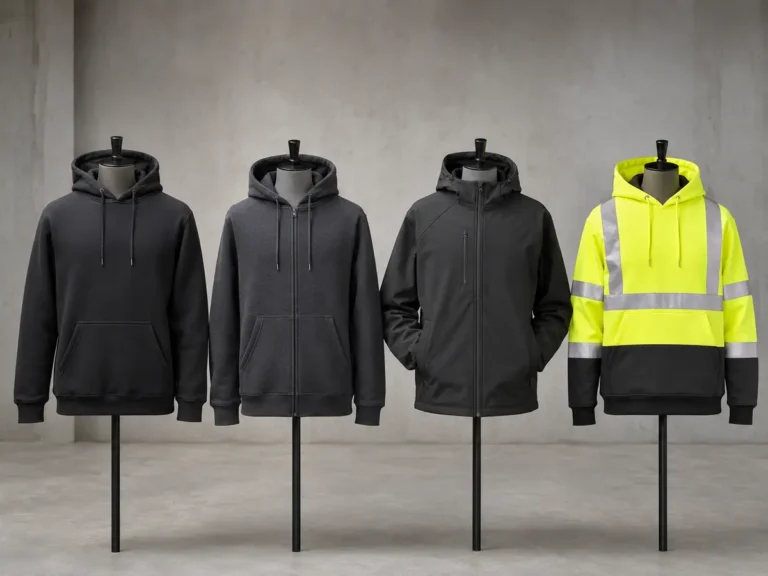
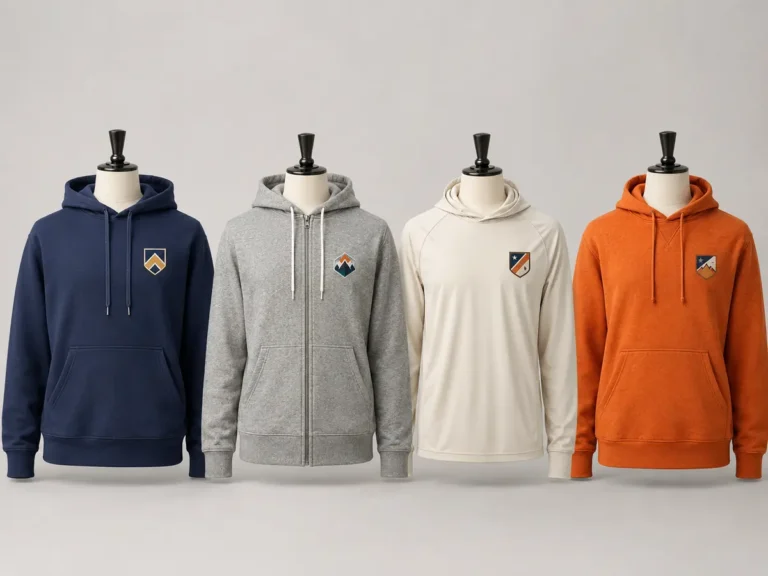
School hoodie rules often focus on how the hood is worn rather than banning every sweatshirt with a hood.
Quick Answer
Some schools do not allow hoodies because a raised hood can make facial identification more difficult, conflict with no-headwear rules, reduce uniform consistency, or create enforcement problems. Other schools cite general safety, security, communication, or classroom-attention concerns. For younger children, hood and neck drawstrings can also create a product-safety issue in certain garments.
However, there is no universal rule that hoodies are prohibited in schools. Policies vary by country, district, individual school, age group, and activity. Many schools permit hoodies if the hood remains down; some allow only school-approved spirit wear; others require crewneck sweatshirts or zip-front jackets instead. Buyers should obtain the written dress code before approving the style, hood construction, drawcord, pocket, color, and logo placement.
Planning School-Approved Custom Hoodies?
Obtain the written school dress code before approving a bulk order. Confirm whether hoods may be worn, whether drawcords are permitted for the age group, approved colors and graphics, required identification, garment weight, size range, quantity, delivery date, and whether a crewneck sweatshirt or team jacket is a safer alternative.
Review custom hoodie options and custom team uniforms, then request a school apparel quotation with your policy and artwork.
Are Hoodies Banned in Every School?
No. “Hoodie ban” is often used as a broad phrase for several different rules.
One school may allow a hoodie but prohibit covering the head. Another may allow only a school-color hoodie with an approved logo. A third may exclude every hooded garment from its uniform. These policies can also change between classrooms, physical education, sports travel, outdoor recess, special events, and normal school days.
Current school policies demonstrate this variation. Bedford City School District in Ohio says hooded sweatshirts may be worn when the hood is not pulled over the head. Richmond County Schools in North Carolina also lists hoodies as permitted tops while requiring the hood to remain off the head inside the building. By contrast, Benjamin Tasker Middle School in Maryland states that hoodies may not be worn in the building. Massey Hill Classical’s published 2026–2027 dress code says garments with hoods are not allowed for school safety and security purposes, with a limited senior-hoodie exception. These examples are not universal standards; they show why buyers must confirm the rule for the specific school. (Bedford City Schools, Richmond County Schools, Benjamin Tasker Middle School, Massey Hill Classical)
| Policy type | What it usually means | Suitable apparel response |
|---|---|---|
| Hood-down rule | Hoodies are allowed, but the hood cannot cover the head indoors | Low-bulk hood, no drawcord where required, clear front identity, school-approved color |
| Approved-spirit-wear rule | Only authorized school, team, or club hoodies may be worn | Controlled artwork, approved logo size, consistent garment color, documented reorder standard |
| No-hooded-garment rule | Any sweatshirt or jacket with a hood is excluded | Crewneck sweatshirt, quarter-zip top, cardigan, or hoodless full-zip jacket |
| Uniform-only rule | Outer layers must match a defined uniform specification | Exact color, approved decoration, specified fit, and supplier-controlled sample |
| Activity-specific rule | Hoodies may be allowed outdoors, during travel, or on spirit days only | Separate everyday and event garments, clearly communicated use |
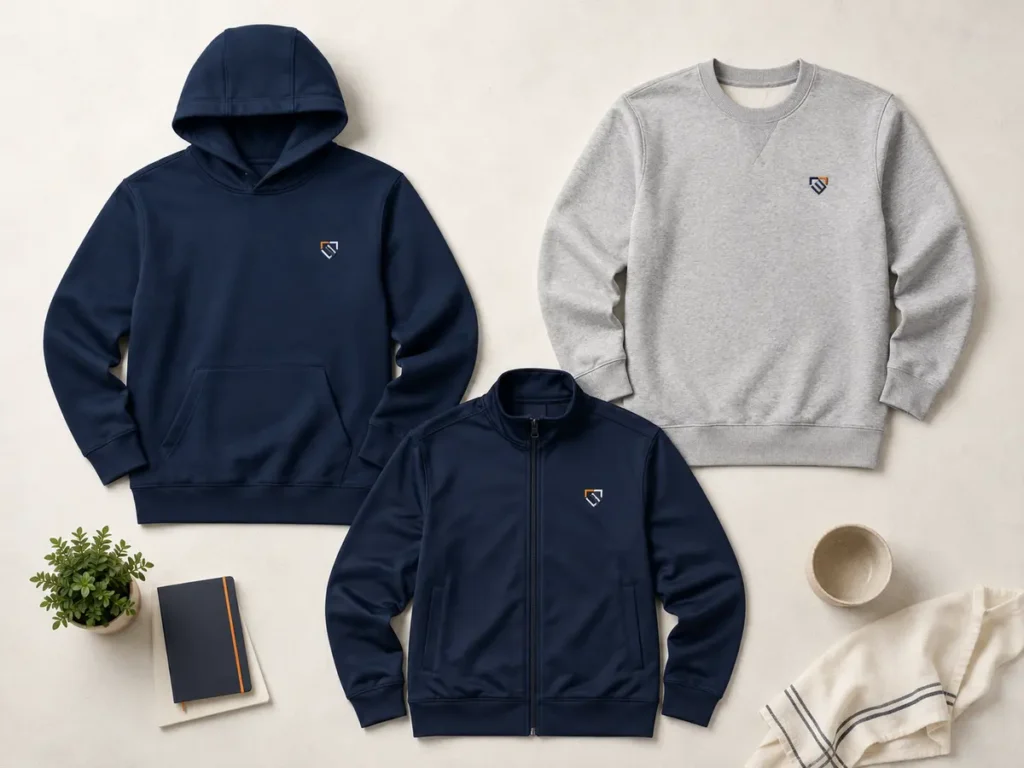
A policy-compatible range can include a drawcord-free hoodie, a crewneck sweatshirt, and a hoodless zip jacket.
Why Do Some Schools Ban Hoodies or Require Hoods to Stay Down?
Schools use different rationales. The most common explanations fall into the following categories.
1. Easier visual identification
A raised hood can cover part of the hairline, profile, and ears. In a busy corridor, entrance, cafeteria, or assembly area, staff may want faces to remain easy to see. A hood-down rule gives administrators a simple standard that can be applied quickly.
This does not mean a student wearing a hoodie is considered suspicious. It means the school has chosen visible faces as part of its supervision procedure. The procurement response is often straightforward: select a hood that rests neatly on the back and make sure students understand when it may be raised outdoors.
2. Consistency with no-headwear rules
Many dress codes group hoods with hats, caps, ski masks, or other indoor head coverings. If hats must be removed inside the building, administrators may apply the same rule to a hood. That is why some policies permit the garment while prohibiting the hood-up position.
For buyers, the wording matters. “No head coverings” is not necessarily the same as “no hooded garments.” A purchasing team should ask the school to clarify whether the restriction concerns the garment, the position of the hood, or both.
3. School safety and security procedures
Some schools expressly connect hood restrictions with safety and security. The intended goals may include quicker recognition, more consistent entry procedures, or fewer disputes over whether a face is obscured. A full prohibition is easier to enforce than a conditional rule, although it is also less flexible.
Apparel suppliers should not describe a garment as “security approved” unless an authorized school has approved that exact product. Instead, offer hoodless alternatives, low-profile hoods, full zippers, no drawcords, limited pockets, and controlled colors.
4. Uniform consistency and school identity
A school uniform system depends on recognizable colors, silhouettes, and logos. Unrestricted retail hoodies can introduce oversized graphics, unrelated brands, slogans, or colors that do not match the uniform. Schools may therefore approve one spirit-wear design while excluding unapproved hoodies.
This is especially relevant to uniform dealers and parent organizations. Color consistency between the approved sample and repeat orders is usually more important than offering many near-matching shades. A documented fabric color, rib color, zipper color, logo file, placement measurement, and size chart make the program easier to manage.
5. Graphics, messages, and affiliations
Sometimes the concern is not the hood. It is the artwork printed on the garment. Dress codes commonly restrict obscene, threatening, drug-related, discriminatory, or gang-associated imagery. A school may prefer official spirit wear because it controls what appears on the front, back, and sleeves.
Use an artwork-approval process. The buyer should approve the logo, wording, sponsor marks, names, graduation year, sleeve details, and back print before sampling.
6. Classroom communication and attention
Teachers may want students’ faces and ears visible during instruction. A raised hood can make it less obvious whether a student is listening, wearing earbuds, or responding to directions. Some schools therefore frame hood-down rules as a classroom-expectation issue rather than a garment ban.
Garment design cannot replace classroom rules, but it can reduce friction. A hood that lies flat, an ordinary neckline, and a fit that does not fall over the face are more suitable than a deep fashion hood designed to create an enclosed silhouette.
7. Drawstring and entanglement safety
For younger children, the construction of the hood is a separate safety issue. The U.S. Consumer Product Safety Commission states that hood and neck drawstrings on children’s upper outerwear in sizes 2T through 12 present a substantial product hazard. The CPSC definition of upper outerwear includes certain sweatshirts intended to be worn over other garments. Waist or bottom drawstrings for sizes 2T through 16 are also subject to dimensional and end-attachment requirements. (CPSC drawstring guidance)
This rule does not mean every hoodie is unsafe, and it does not automatically explain every school policy. It means buyers sourcing children’s hooded sweatshirts for the United States should treat drawcord construction as a compliance specification, not a styling afterthought.
School Policy Must Also Consider Rights, Inclusion, and Cost
A school may have broad authority to establish a dress code, but policies still operate within legal and community constraints. Apparel buyers should avoid turning a simple hoodie restriction into a rule that unintentionally affects protected religious dress, disability-related attire, cultural expression, or access to affordable uniform options.
The U.S. Department of Education’s 2026 guidance states that public schools generally may adopt student dress and uniform policies when consistent with constitutional and statutory civil-rights protections. It also says schools may not target religious attire and ordinarily must provide comparable religious exceptions when they make exceptions for nonreligious needs. (U.S. Department of Education)
New York City Public Schools similarly says dress codes should allow religious headwear and disability-related attire. Its guidelines also emphasize that dress codes should be written, communicated, and implemented consistently. (NYC Public Schools)
In England, Department for Education guidance asks schools to consider equality, religion or belief, sex, race, disability, and other relevant factors when developing a uniform policy. Separate statutory guidance requires governing boards to keep uniform costs reasonable and prioritize value for money. Generic items should be available from multiple retailers where practical, while branded-item supply arrangements should be supported by a written contract. (Developing school uniform policy, Cost of school uniforms)
These points are policy guidance, not legal advice. A school or district should use its own legal and safeguarding review before changing a dress code.

Policy, safeguarding, inclusion, affordability, and garment specifications should be reviewed together before a bulk order.
Why Schools Still Buy Custom Hoodies
Even where hoods must remain down indoors, custom hoodies can serve useful purposes:
- school spirit and alumni merchandise;
- sports-team travel and warm-up apparel;
- club, academy, and tournament clothing;
- outdoor activities and field trips;
- leavers, seniors, or graduation programs;
- staff apparel;
- fundraising and school-store merchandise; and
- casual uniform layers in schools that explicitly permit them.
The key is to separate popularity from permission. A school should approve the intended use before the buyer confirms the product.
Which Sweatshirt Style Works Best for a School?
The right answer depends on the dress code, climate, age group, budget, and purpose.
| Style | Policy compatibility | Main advantage | Procurement watchpoint |
|---|---|---|---|
| Crewneck sweatshirt | High where hoods are prohibited | Simple, warm, easy to layer | Neck rib recovery and fit over uniform shirts |
| Drawcord-free pullover hoodie | Suitable where hoodies are allowed hood-down | Familiar student style and large decoration area | Hood depth, pocket design, age-specific drawcord rules |
| Hoodless full-zip jacket | High for controlled indoor layering | Easy to remove; clear neckline and front opening | Zipper quality, front logo alignment, pocket construction |
| Quarter-zip sweatshirt | Often compatible with smart-casual uniform programs | Adjustable ventilation and polished appearance | Zipper comfort, collar shape, embroidery position |
| Cardigan or knit layer | Suitable for formal uniform systems | Traditional presentation | Pilling, shape retention, more complex sizing |
| Performance warm-up top | Useful for teams and physical education | Lightweight mobility and quick layering | Fabric hand feel, snagging, print adhesion |
If a school bans hoods entirely, do not try to solve the issue by sewing a hood inside the neckline or telling students to tuck it into the garment. Choose a genuinely hoodless construction.
How to Specify a Policy-Compatible School Hoodie
A written product specification should translate the dress code into measurable garment features.
Hood shape
Choose a hood that rests flat against the upper back when not in use. Deep crossover hoods, oversized fashion hoods, and rigid high-neck constructions may look stylish but can create more bulk. For a school program, a conventional two-panel or three-panel hood with controlled depth is usually easier to approve.
Drawcord construction
Confirm the destination market, age range, garment classification, and applicable product-safety requirements. For relevant children’s upper outerwear sold in the United States, eliminate hood and neck drawstrings in the regulated size range. Do not assume that simply shortening the cord solves the requirement.
Pocket configuration
A traditional kangaroo pocket is popular, but some schools may prefer no front pocket, two smaller side-entry pockets, or zip pockets. The choice should reflect the written policy and intended activity. A supplier should be able to show the pocket opening, depth, reinforcement, and placement on the sample.
Fit and size range
Specify whether the garment is youth, adult, unisex, women’s, or a combined program using several blocks. “Small” is not a universal measurement. Approve chest width, body length, sleeve length, shoulder, cuff, hem, and hood opening measurements by size.
Color and branding
Provide a physical color reference or approved color standard. Record logo dimensions and position from stable garment landmarks such as the center front, shoulder seam, or side seam.
Labels and identification
Confirm target-market fiber, origin, responsible-company, care, size, name, and packaging labels. The U.S. Federal Trade Commission publishes requirements for textile identity and care labeling. (FTC textile labeling, FTC care labeling)
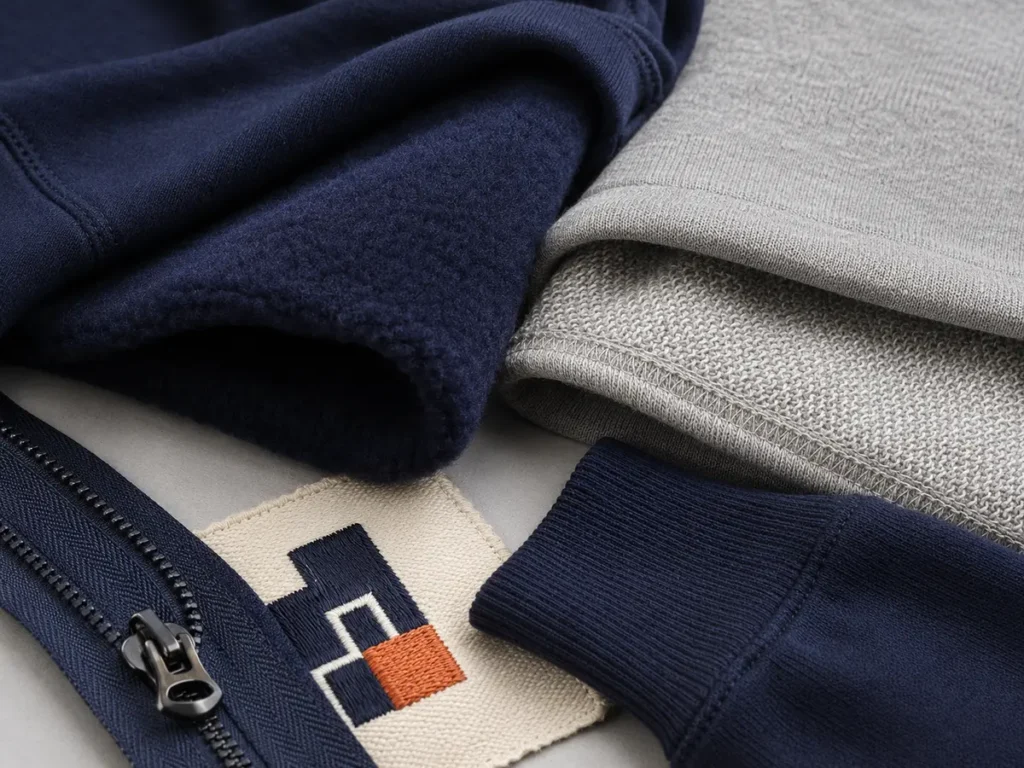
Fabric face, inner structure, rib recovery, and trim quality should be approved as a complete system.
Fabric Choices for School Hoodies and Sweatshirts
Fabric selection affects comfort, warmth, decoration, durability, drying time, and cost. Buyers should specify fiber composition and fabric weight, but they should also evaluate the finished garment.
Cotton-rich brushed fleece
Brushed fleece has a soft, warm inner surface. A cotton-rich blend can provide a familiar hand feel, while polyester may improve dimensional stability and drying performance depending on the construction. The buyer should test shrinkage, colorfastness, pilling tendency, and surface appearance after repeated care cycles.
Cotton-polyester fleece
A balanced blend is common for school and team programs because it can support warmth, printability, and repeat-order practicality. The exact performance depends on yarn, knitting, dyeing, finishing, and garment construction—not simply the fiber percentage.
French terry
French terry has loops on the inner face rather than a fully brushed surface. It is often suitable for transitional weather, indoor layering, or programs that want less bulk. Buyers should compare weight, opacity, stretch, and recovery.
Performance polyester
Polyester knits can work for team warm-ups and active use. Sublimation may be available on suitable light-colored polyester fabrics, while darker garments may require embroidery, patches, screen printing, or transfers. Check snagging, static, hand feel, and odor-management claims carefully; request evidence before repeating any performance claim in marketing.
Rib trims
Cuffs and waistbands often fail before the body fabric. Approve rib composition, stretch, recovery, height, and color match. A sample that looks neat before washing may still wave, twist, or relax after laundering.
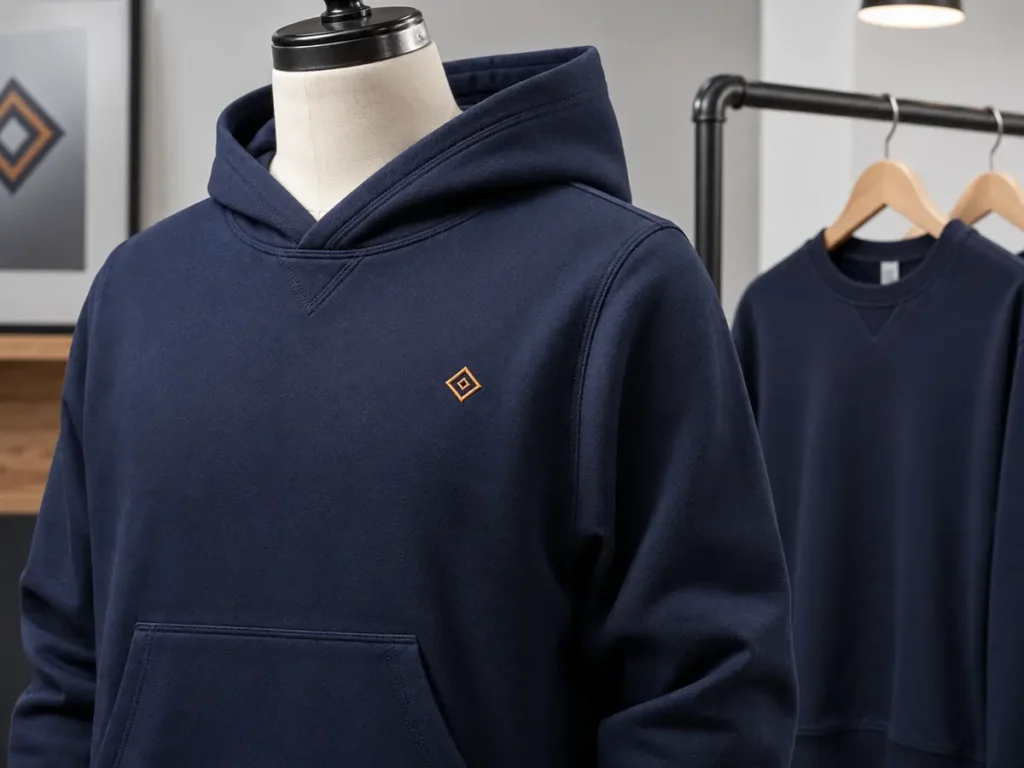
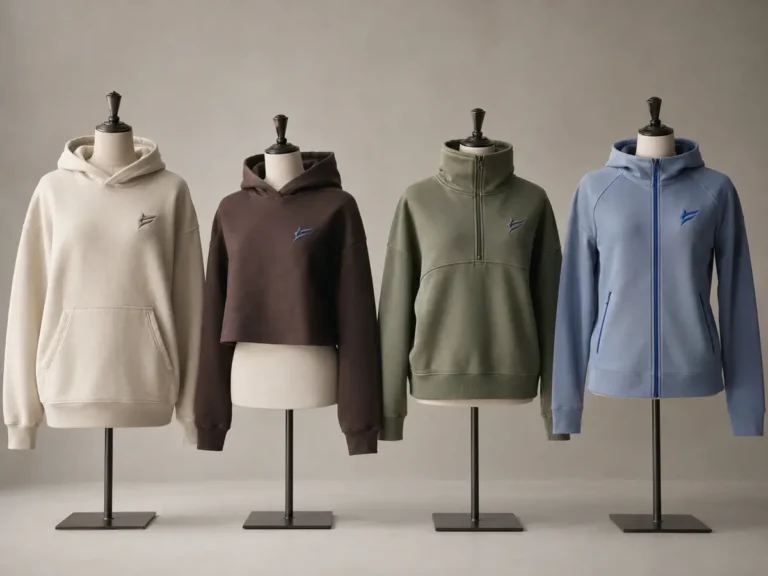
A low-bulk, drawcord-free hood and a true crewneck option help buyers serve different school policies.
Logo and Customization Options
School garments usually need clear, repeatable decoration rather than the largest possible graphic.
Embroidery
Embroidery is suitable for small chest marks, staff apparel, and durable identity details. Ask for stitch count, thread colors, backing, maximum size, and an embroidered approval sample. Dense designs on lightweight fleece can pucker, so the logo should be digitized for the actual fabric.
Screen printing
Screen printing is effective for larger front or back graphics and volume programs. Cost depends on artwork size, number of colors, print locations, underbase requirements, and order quantity. Approve color, registration, hand feel, and wash appearance.
Heat transfer
Transfers can support names, numbers, small runs, and detailed graphics. Confirm the transfer type, application conditions, edge quality, stretch behavior, and compatibility with the fabric finish.
Woven, rubber, and leather-style patches
Patches can create a private-label or club-merchandise look. The school should approve the edge, attachment method, thickness, position, and whether the patch is comfortable against the body or under a backpack strap.
Sublimation
Sublimation is generally used with suitable polyester constructions and is more common for performance teamwear than heavyweight cotton-rich hoodies. Avoid promising an identical decoration method across every garment in a team package when the materials require different processes.
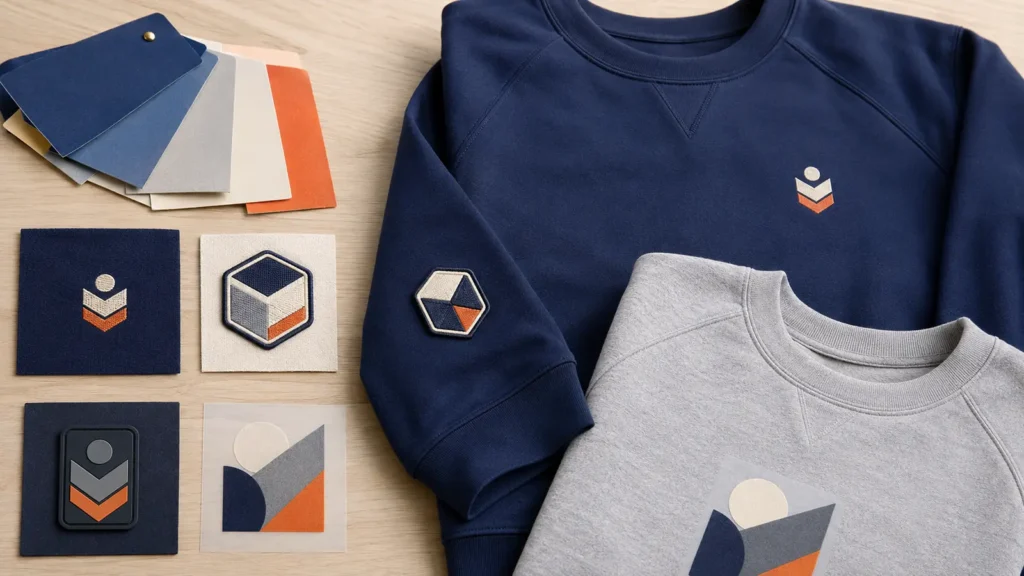
Decoration should be selected for the fabric, artwork, policy, quantity, and expected care conditions.
A Practical School Hoodie Approval Checklist
Before issuing a purchase order, confirm the following:
- written permission for the garment type and intended wearing occasion;
- whether the hood may be raised outdoors, indoors, or never;
- age range and destination-market safety requirements;
- pullover, zip, crewneck, or hoodless alternative;
- hood dimensions and drawcord construction;
- pocket type and permitted storage features;
- fabric composition, weight, hand feel, and approved color;
- youth and adult measurement charts;
- logo artwork, dimensions, colors, and placements;
- personal names, numbers, graduation years, and sponsor approvals;
- label content and private-label requirements;
- packaging, size stickers, carton marks, and distribution method;
- test or inspection requirements;
- pre-production sample approval;
- quantity by style, color, and size;
- target delivery date and shipping destination; and
- repeat-order color and artwork control.
What Drives the Cost of Custom School Hoodies?
Rejected stock, inconsistent reorders, complicated distribution, or a policy mismatch can outweigh a lower unit price.
Key cost drivers include:
- Fabric and weight: heavier or specially developed fabric uses more material and may cost more to ship.
- Custom color: stock colors are usually simpler than custom dyeing and color matching.
- Construction: full zippers, multiple pockets, lined hoods, special panels, and reinforced seams add operations.
- Decoration: embroidery stitch count, print colors, transfer size, patch construction, and number of locations affect cost.
- Size range: youth and adult blocks, extended sizes, and size-specific artwork may require more setup.
- Labels and packaging: private labels, name labels, hangtags, individual bags, size sorting, and club-specific cartons add handling.
- Sampling and testing: development samples, revised samples, performance checks, and third-party testing should be budgeted where required.
- Order quantity: JIUMU’s typical MOQ is 50 pieces, subject to the product structure and customization. Confirm the MOQ for the actual style rather than assuming every option uses the same minimum.
For schools in England, government guidance makes affordability and value for money central to uniform sourcing. Optional spirit wear should be clearly identified as optional.
Sample Approval and Quality Control
A digital mockup confirms the visual direction, but it cannot approve fabric, color, fit, decoration hand feel, zipper operation, or hood shape. Use a physical sample when these details affect the program.
The approval sample should be checked against a signed specification. Record any change in writing rather than relying on messages such as “make it a little bigger” or “use the same navy as last time.”
During production and final inspection, check:
- body and sleeve measurements by selected sizes;
- hood opening, depth, symmetry, and attachment seam;
- absence or construction of drawcords as specified;
- fabric color against the approved standard;
- rib color, stretch, and recovery;
- zipper length, operation, and alignment;
- pocket opening, reinforcement, and symmetry;
- logo size, position, thread or ink color, and appearance;
- stains, holes, skipped stitches, seam puckering, and loose threads;
- label content and placement;
- size assortment and quantity;
- individual packaging and carton assortment; and
- appearance after agreed care or performance checks.
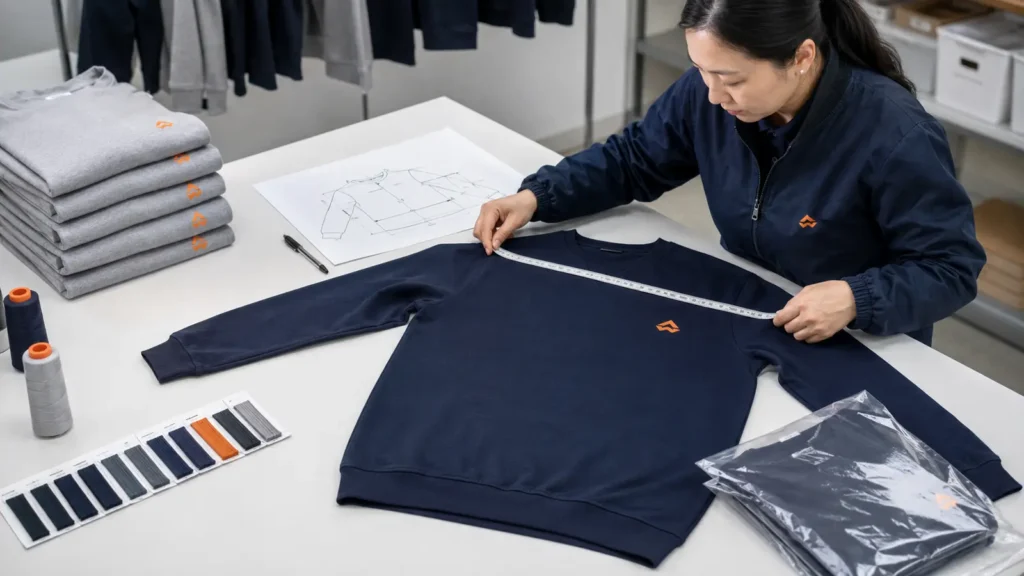
Measure the production garment against an approved size chart and sample rather than relying on generic size names.
Bulk-Order Planning Process
Step 1: Confirm the policy
Collect the current written dress code and ask the school to identify the exact approved use: everyday uniform, spirit day, sports travel, staff wear, merchandise, or outdoor activity.
Step 2: Build a small approved range
Offer only the styles needed. A practical program might include one crewneck, one hood-down hoodie where permitted, and one hoodless zip jacket. Too many silhouettes create approval, stock, and reorder complexity.
Step 3: Create the specification
Document materials, garment measurements, hood and pocket construction, color, artwork, labels, packaging, and required tests.
Step 4: Approve mockups and samples
Approve artwork digitally, then evaluate the physical sample for all tactile and dimensional features. Keep one sealed or signed reference sample.
Step 5: Confirm quantities and distribution
Break the order down by style, color, and size. Decide whether garments will be packed individually, grouped by team, sorted by classroom, or delivered in bulk.
Step 6: Inspect and retain reorder records
Compare production with the approval standard and retain the final artwork, measurements, color reference, label files, packaging instructions, and purchase-order history.
Questions to Ask a School Apparel Supplier
- Can you produce both hooded and genuinely hoodless versions in matching colors?
- Which hood and drawcord options are appropriate for our age group and destination market?
- What are the finished-garment measurements for each youth and adult size?
- How will fabric, rib, zipper, and thread colors be controlled?
- Which logo method is most suitable for this fabric and artwork?
- Can we approve a physical sample before bulk production?
- Which inspections or tests are included, and which require a separate laboratory?
- How are labels and care instructions prepared for our market?
- Can orders be packed by student, classroom, team, or location?
- What files and references will be retained for repeat orders?
- What is the MOQ for this exact combination of style, color, logo, and packaging?
- What information could change the production or shipping schedule?
Common Buying Mistakes
Ordering before checking the dress code
A popular senior hoodie or team hoodie may still be prohibited during ordinary classes. Written approval should come before production.
Treating “hood down” and “no hoodies” as the same rule
They require different products. If the garment itself is prohibited, a drawcord-free hoodie is still a hoodie.
Using adult construction for young children
Age-specific product requirements must be considered during development, especially for hood and neck drawstrings.
Approving color only on a screen
Screens vary, and “navy” covers many shades. Use a physical reference when color consistency matters.
Selecting decoration without considering the fabric
Dense embroidery can pucker; transfers can react differently to coatings or stretch; screen prints can feel heavy at large sizes. Test the proposed combination.
Skipping a size-set review
One medium sample does not prove that youth small, adult XL, and extended sizes grade correctly.
Making unsupported performance claims
Terms such as anti-pilling, colorfast, moisture-wicking, recycled, flame-resistant, or certified should be supported by the relevant specification or evidence.
Forgetting repeat-order controls
Schools often reorder across semesters or years. Keep the approved artwork, measurements, color references, material specification, and packaging files.
What Should You Send for a Custom Quotation?
For an accurate quotation, send:
- the school’s garment-policy requirement;
- target country and student age range;
- product style or reference image;
- estimated quantity;
- youth and adult size breakdown if available;
- fabric preference and approximate weight;
- garment and rib colors;
- logo artwork and decoration method;
- logo sizes and placements;
- names, numbers, years, or personalization rules;
- label and packaging requirements;
- inspection or testing requirements;
- delivery location; and
- target delivery date.
If the school has not chosen between a hoodie and a crewneck, request both options in the same brief. Comparing approved constructions is more useful than comparing unrelated retail garments.
How JIUMU Supports School and Team Apparel Buyers
JIUMU supplies custom teamwear, logo apparel, hats, uniforms, bags, and branded merchandise for B2B buyers in North America and Europe. Its capabilities include OEM and ODM development, embroidery, sublimation, screen printing, heat transfer, woven and rubber/PVC patches, fabric sourcing, color matching, private labels, hangtags, packaging customization, digital mockups, physical samples, bulk production, quality control, and export support.
For school programs, JIUMU can develop coordinated hoodies, crewneck sweatshirts, custom team jackets, custom team uniforms, custom team jerseys, and custom team bags. The typical MOQ is 50 pieces, subject to product construction and customization.
The objective is not to encourage a school to change its policy. It is to translate the approved policy into a garment specification that can be sampled, measured, inspected, and reordered.
Request a policy-compatible school apparel quotation. Send JIUMU the written garment requirement, age range, quantity, colors, logo, sizes, packaging, destination, and target date. Email: zhengdong@jiumugear.com or contact +86 18507502899 by phone or WhatsApp.
Frequently Asked Questions
Final Recommendation
Hoodies are not allowed in some schools because administrators may prioritize visible identification, no-headwear rules, uniform consistency, classroom communication, or local safety procedures. In other schools, the hoodie is permitted as long as the hood remains down or the garment is approved spirit wear.
The purchasing decision should therefore begin with the policy—not the catalog. Confirm whether the restriction applies to a raised hood, all hooded garments, unapproved graphics, specific pockets, or particular age groups. Then choose a drawcord-free hoodie, crewneck, quarter-zip, or hoodless jacket that matches the written requirement.

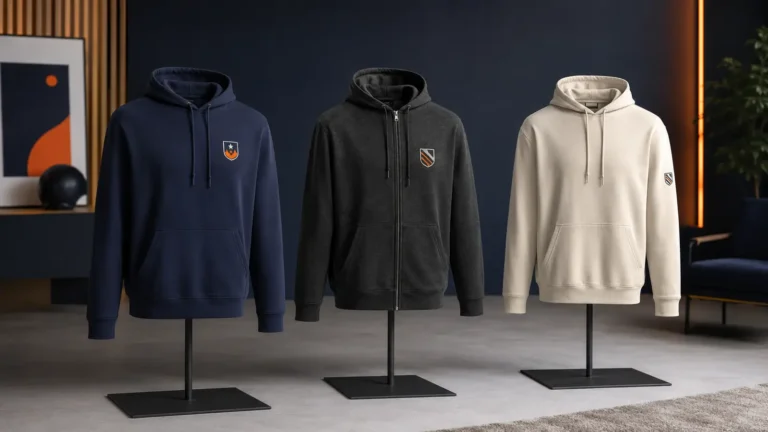
A coordinated range can preserve school identity while giving administrators policy-compatible garment choices.
For a custom proposal, contact JIUMU with the policy, quantity, colors, size range, logo files, packaging needs, destination, and delivery target.
Sources and Further Reading
- U.S. Consumer Product Safety Commission: Drawstrings in Children’s Upper Outerwear
- U.S. Department of Education: 2026 Guidance on Constitutionally Protected Religious Expression in Public Schools
- Federal Trade Commission: Textile and Wool Labeling Requirements
- Federal Trade Commission: Care Labeling Rule Guidance
- NYC Public Schools: Dress Code Guidelines
- UK Department for Education: Developing School Uniform Policy
- UK Department for Education: Cost of School Uniforms
JIUMU Editorial Team
B2B guidance for custom teamwear, school apparel, hats, uniforms, bags, and branded merchandise buyers.