Senior Backpack Ideas for Schools, Graduation Programs and Class Merchandise
Senior backpacks can be more than a practical school item. When the product, artwork and distribution plan are coordinated, a backpack becomes useful class merchandise, a graduation keepsake and a visible part of a school program. For procurement teams, senior committees, distributors and promotional-product buyers, the challenge is not simply choosing an attractive bag. It is choosing a structure that students will use, controlling personalized data, approving school branding correctly and delivering every unit before the event.
This guide explains senior backpack ideas for school stores, graduating classes, recognition programs and coordinated merchandise campaigns. It covers backpack formats, specifications, decoration, personalization, quality control and bulk-order planning from a B2B buyer’s perspective.
Quick Answer: The most versatile senior backpack is usually a medium-size campus or laptop style with padded shoulder straps, an organized main compartment, a front pocket and a school-color body. Use embroidery or a patch for the main school mark, reserve a clean zone for the graduation year or class identity, and decide early whether names are printed individually. The right choice depends on how the bag will be used, the target budget, the amount of artwork, the distribution method and the approved delivery date.
Why Senior Backpack Selection Matters
A graduation item has two jobs. It should feel specific to the class, but it also needs enough everyday usefulness to remain relevant after the ceremony. A decorative bag with weak straps, an awkward opening or insufficient storage can disappoint even when the artwork looks good. A thoughtfully specified backpack can continue into college, work, travel or community activities.
For a school or merchandise buyer, the choice affects more than student preference. It affects:
- the area available for the school logo, mascot, class year and student name;
- the number of artwork versions and the risk of personalization errors;
- packing, sorting and distribution labor;
- sample cost and approval time;
- production complexity, unit cost and replenishment options;
- the consistency of colors and marks across related hoodies, caps or jackets.
The best starting point is the program objective. A school store needs a broadly appealing product that can be held as stock. A senior gift program may prioritize a unified design and individual names. A fundraiser needs a clear margin and a controlled number of options. A graduation bundle may need the backpack to coordinate with apparel and arrive already grouped by recipient.
Senior Backpack Ideas by Program Type
There is no universal senior backpack. The following formats solve different purchasing problems.
| Backpack idea | Best fit | Useful specification focus | Branding opportunity | Procurement watch-out |
|---|---|---|---|---|
| Classic campus backpack | General senior merchandise and school stores | Main compartment, front pocket, bottle pocket | Large front embroidery or patch | Confirm whether the simple interior is sufficient |
| Laptop backpack | Graduation gifts and college-transition programs | Padded device sleeve, structured back and organization | Refined crest, year and subtle name | Sleeve dimensions must match target devices |
| Athletic backpack | Senior athletes and team recognition | Shoe or wet-item separation, reinforced base, large opening | Team mark, player name and number | More compartments increase cost and complexity |
| Heritage-style backpack | Alumni-minded and premium programs | Clean silhouette, durable trim, restrained colors | Woven patch or embroidery | Decorative trim should suit maintenance expectations |
| Compact daypack | Events, orientation and budget programs | Lightweight construction and packability | Bold screen print or heat transfer | Smaller branding item may feel less substantial |
| Convertible backpack/duffel | Travel teams and multi-event programs | Multiple carry points and equipment space | Large team graphic and identifiers | Test loaded carrying comfort and zipper access |
1. The Everyday Senior Campus Backpack
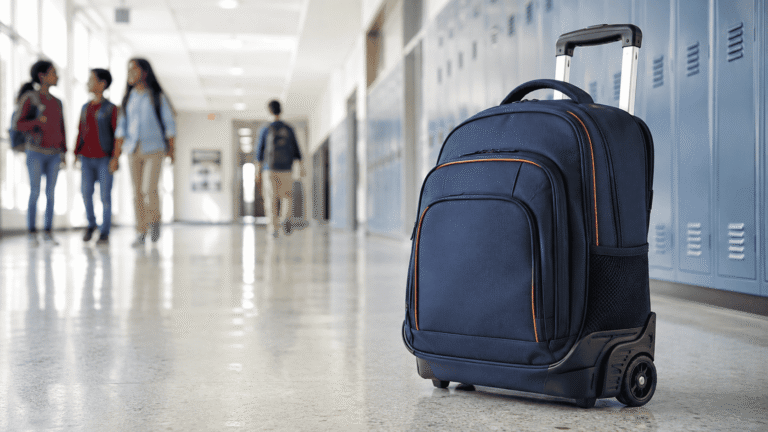
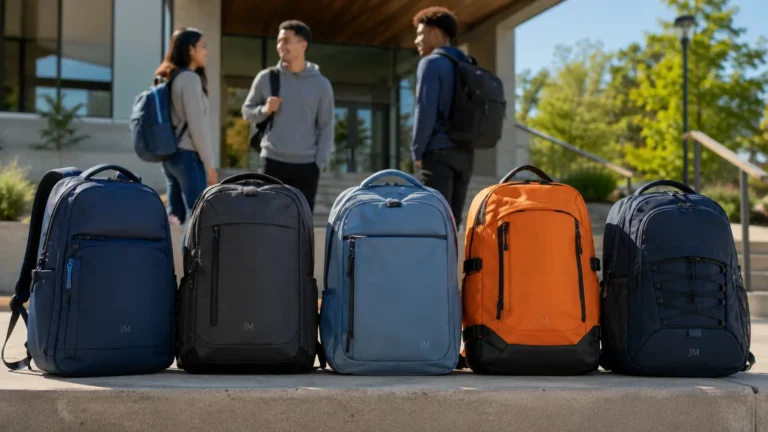
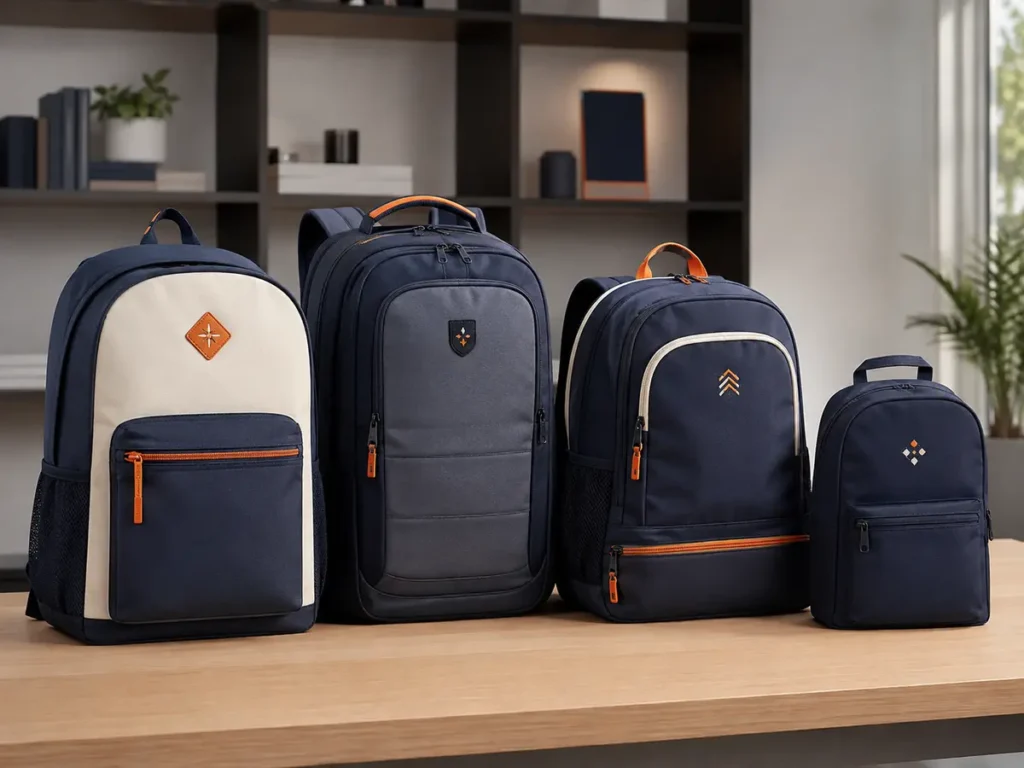
This is the safest direction when the audience is broad. A conventional two-strap silhouette is familiar, easy to wear and flexible enough for books, a light layer and daily essentials. Buyers can control cost by adjusting the number of compartments, lining, padding and hardware rather than changing the entire concept.
A front panel with limited seams provides a useful decoration zone. If the school mark is complex, embroidery digitization or a patch may reproduce it more cleanly than placing it across a pocket seam. A secondary location on the shoulder strap, side panel or zipper pull can carry a class color or small identifier.
2. The College-Ready Laptop Backpack
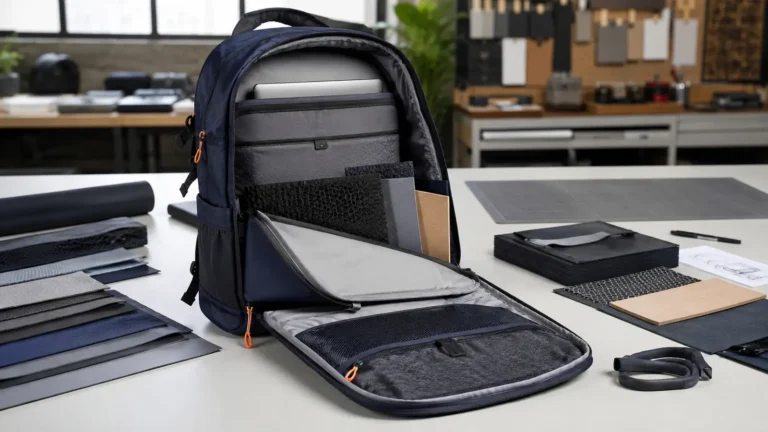
For a graduation gift intended to continue beyond high school, a laptop-oriented style offers a clear practical story. Specify the device sleeve by internal usable dimensions, not by a generic laptop label. Padding, closure method and placement should be reviewed on the physical sample.
The visual direction can be mature: school colors used as accents, a tonal crest, a small graduation-year mark and discreet personalization. This avoids making the bag feel limited to one ceremony. It is also well suited to donor-sponsored programs when sponsor recognition is kept secondary and approved by the school.
3. The Senior Athlete Backpack
Sports programs may need room for footwear, training apparel, a bottle and personal items. A wide opening, reinforced high-stress points and a separate compartment can be more valuable than numerous small pockets. Coordinate backpack colors with existing team uniforms, jackets and caps so that the senior item feels connected to the broader program.
Player name and number are useful for identification, but they create variable data. The order file must connect each name and number to the correct size or product choice if the backpack is part of a larger package.
4. The Graduation Keepsake Backpack
A keepsake direction uses material, trim and decoration to create a more refined feel. Consider a woven or embroidered patch, custom puller, coordinated lining color, private label or presentation packaging. The design should remain practical. Large metallic areas, overly complex trims or fragile surface finishes can add risk without improving daily use.
5. The Fundraiser or School-Store Backpack
Stock programs benefit from fewer variants. One main body color, one artwork version and perhaps two accent choices make inventory easier to control. Avoid printing individual names on stock intended for open sale. Instead, offer a removable name tag, blank personalization zone or a separate made-to-order phase.
6. The Senior Welcome or Event Daypack
For orientation days, senior weeks or event giveaways, a lighter daypack can provide the right balance of visibility and budget. It may hold a folder, bottle and small merchandise items without the structure of a full academic backpack. Screen printing or heat transfer can work well for clean, larger artwork, subject to the fabric and design.
How to Choose Capacity and Organization
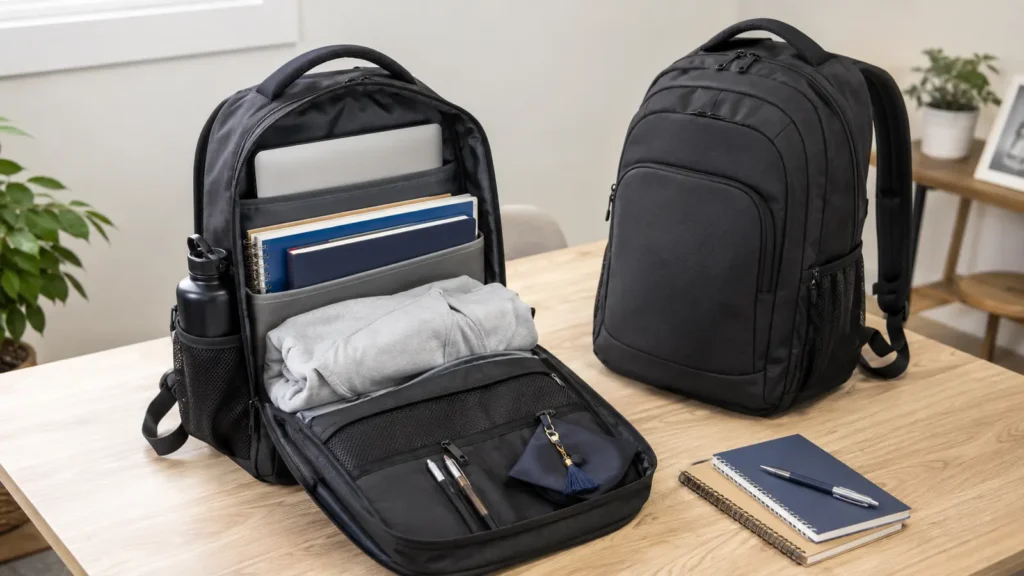
Capacity should follow the intended load, not a round number chosen in isolation. Two bags with similar external dimensions can organize very differently because of padding, curved panels, pocket construction and internal dividers. Ask the supplier for finished dimensions and, where relevant, a stated capacity calculation method. Treat capacity figures as approximate until the sample is packed with representative items.
| Program use | Typical contents to test | Recommended features | Questions for sample review |
|---|---|---|---|
| Daily school use | Notebooks, folders, device, bottle, light layer | Main compartment, device sleeve, front pocket, side pocket | Do folders fit without bending? Is the opening easy to access? |
| Graduation gift | Device, documents, personal items | Padded sleeve, organizer, comfortable back panel | Will it remain useful after graduation? |
| Athletics | Apparel, footwear, bottle, small equipment | Wide opening, reinforced base, separated storage where needed | Can damp items be isolated? Is cleaning practical? |
| Event giveaway | Folder, merchandise, snacks | Lightweight body, simple pocket layout | Is it comfortable for several hours? |
| Travel or senior trip | Device, charger, jacket, documents | Secure internal pockets, luggage-compatible features if specified | Are valuables accessible but protected? |
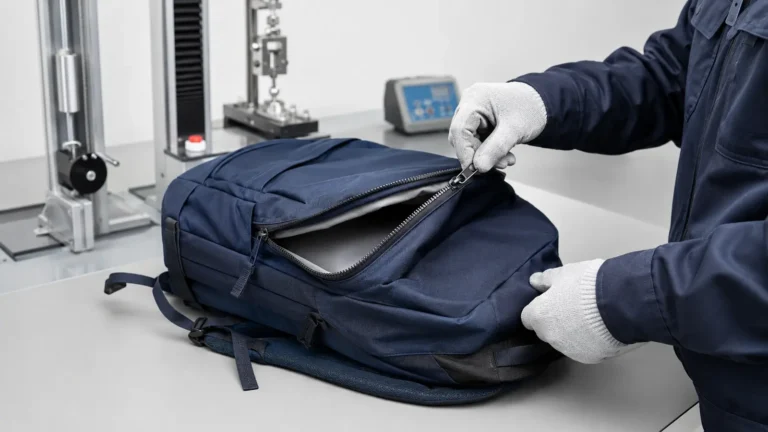
Before approving the structure, make a test kit of the actual or representative objects. Pack the sample fully, close every zipper, lift it by the top handle and wear it with the intended load. This reveals conflicts that a digital drawing cannot show, such as a bottle pocket that becomes tight when the main compartment is full.
Materials and Performance Specifications
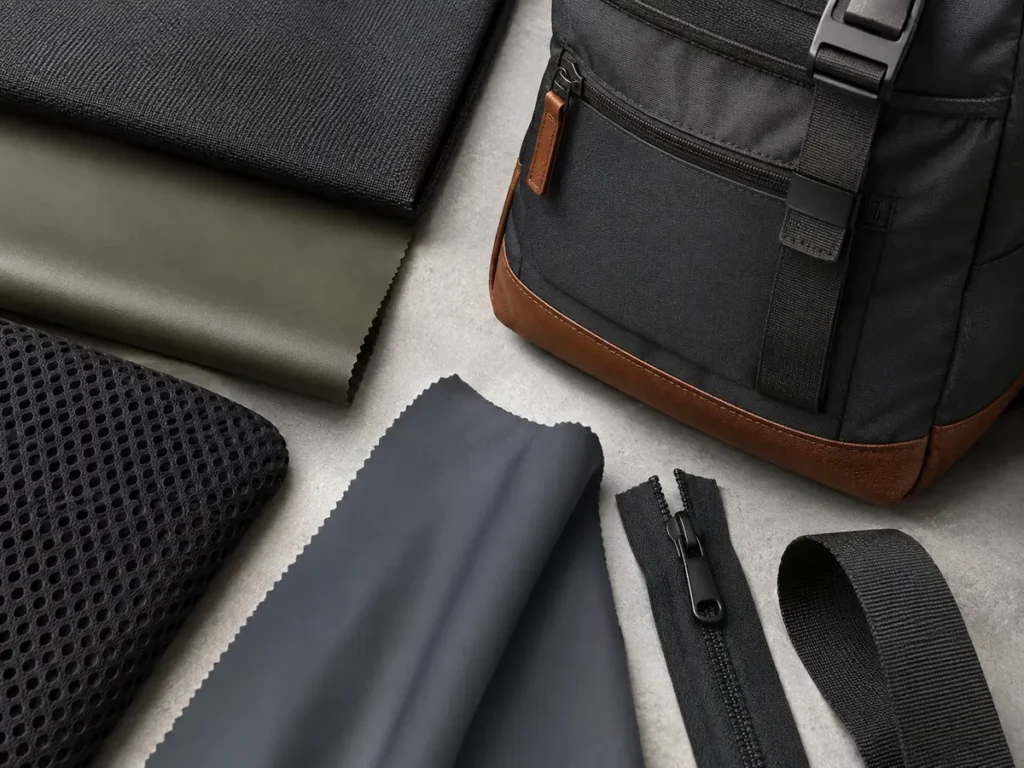
Material names alone do not define performance. “Polyester” can describe many constructions, weights, surface treatments and hand feels. A sourcing brief should state what the buyer needs the material to do and which attributes require physical or laboratory confirmation.
Shell Fabric
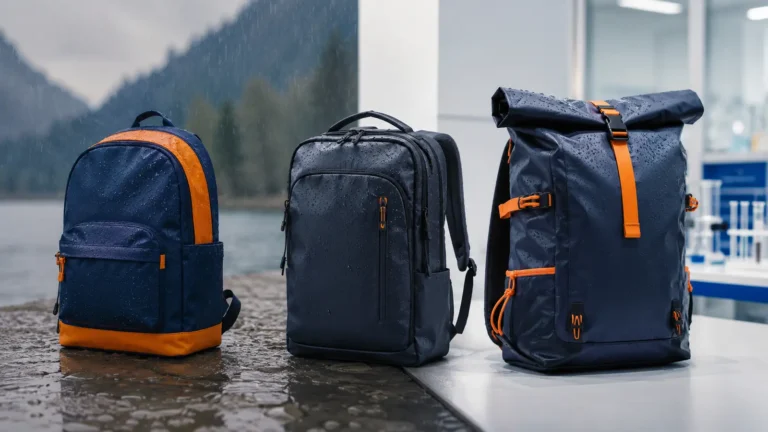
Woven polyester is widely adaptable for school backpacks because color, weight, texture and coating can be adjusted for the concept. Nylon may be considered for particular hand feel or strength-to-weight objectives. Canvas-like fabrics support a casual or heritage appearance, although surface texture affects printing and cleaning. Coated or laminated constructions may improve resistance to light moisture, but a coated fabric does not automatically make the finished backpack waterproof. Seams, zippers and openings remain relevant.
Ask for the material composition, construction or supplier reference, color standard and approved swatch. If abrasion, colorfastness, restricted substances or water resistance matters to the program, state the requested test method and acceptance threshold. The requirement should be confirmed for the finished product or the appropriate material—not inferred from appearance.
Lining and Interior
Lining can improve appearance, protect foam and make the interior easier to inspect. A light or contrasting lining helps users see small items, while a dark lining hides marks. Buyers should review whether the lining pulls into zipper paths, whether pocket edges are bound and whether the color coordinates with the school palette.
Padding and Mesh
Foam affects shoulder-strap shape, device protection and back comfort. More thickness is not automatically better; density, placement, recovery and construction also matter. Breathable mesh is often used on shoulder straps and back panels, but it should be checked for hand feel, snagging and edge finishing.
Zippers, Buckles and Webbing
Hardware is a functional and visual system. Specify zipper color and type, puller form, buckle color, webbing width and any custom component. Operate the zippers around curves with the bag both empty and packed. Review how the webbing feeds through adjusters and whether cut ends are finished cleanly.
Construction Details That Deserve Sample Review
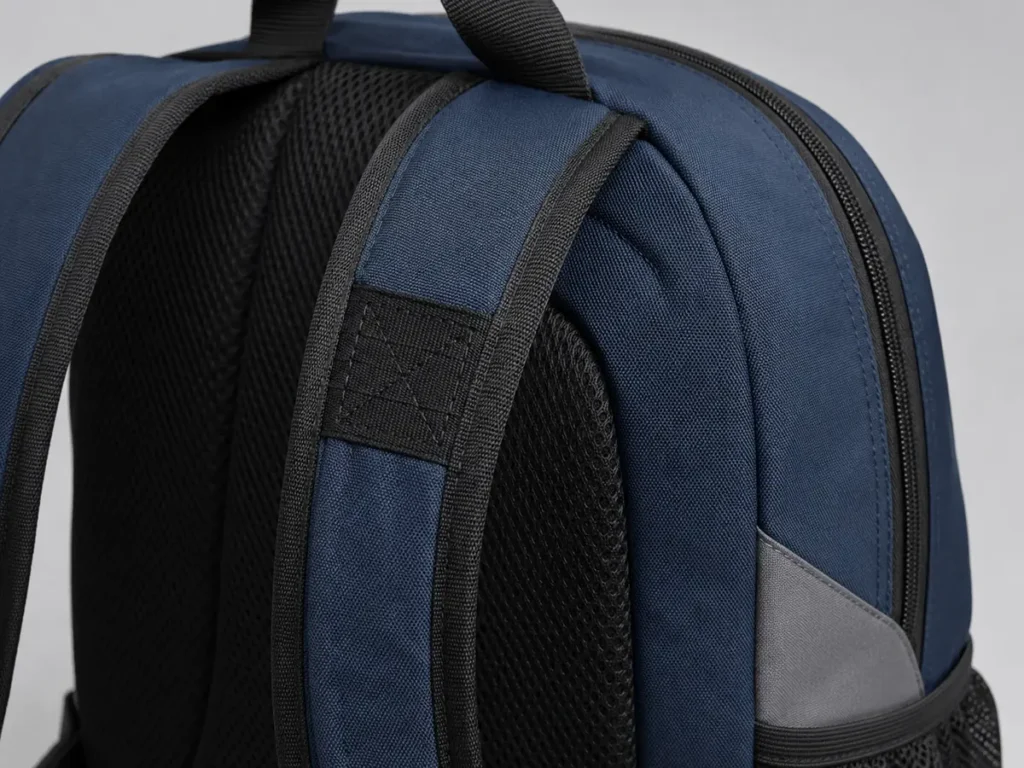
Backpack failures commonly begin at concentrated stress points rather than in the middle of a panel. Buyers should inspect the top handle, shoulder-strap attachment, lower strap anchors, zipper ends and heavily loaded pocket corners.
Look for:
- consistent seam allowance and stitching direction;
- reinforcement appropriate to the construction at strap anchors and handles;
- smooth binding without exposed raw edges where binding is specified;
- symmetrical straps, pockets and visible panels;
- zippers that travel cleanly without catching lining;
- foam that sits flat and returns after compression;
- pocket openings that remain usable when adjacent compartments are filled;
- a base that holds the intended load without excessive distortion.
Do not reduce construction review to stitch counting from a photograph. The sample needs to be handled and loaded. If the bag includes a laptop sleeve, check the sleeve bottom and closure. If it includes an external bottle pocket, test more than one representative bottle diameter.
Custom Senior Backpack Design Ideas
The strongest design hierarchy usually has one primary school identifier, one class identifier and one optional individual identifier. Trying to display the school name, full crest, mascot, motto, graduation year, sponsor and student name at equal size creates visual competition and increases production risk.
School Colors Without an Overly Busy Bag
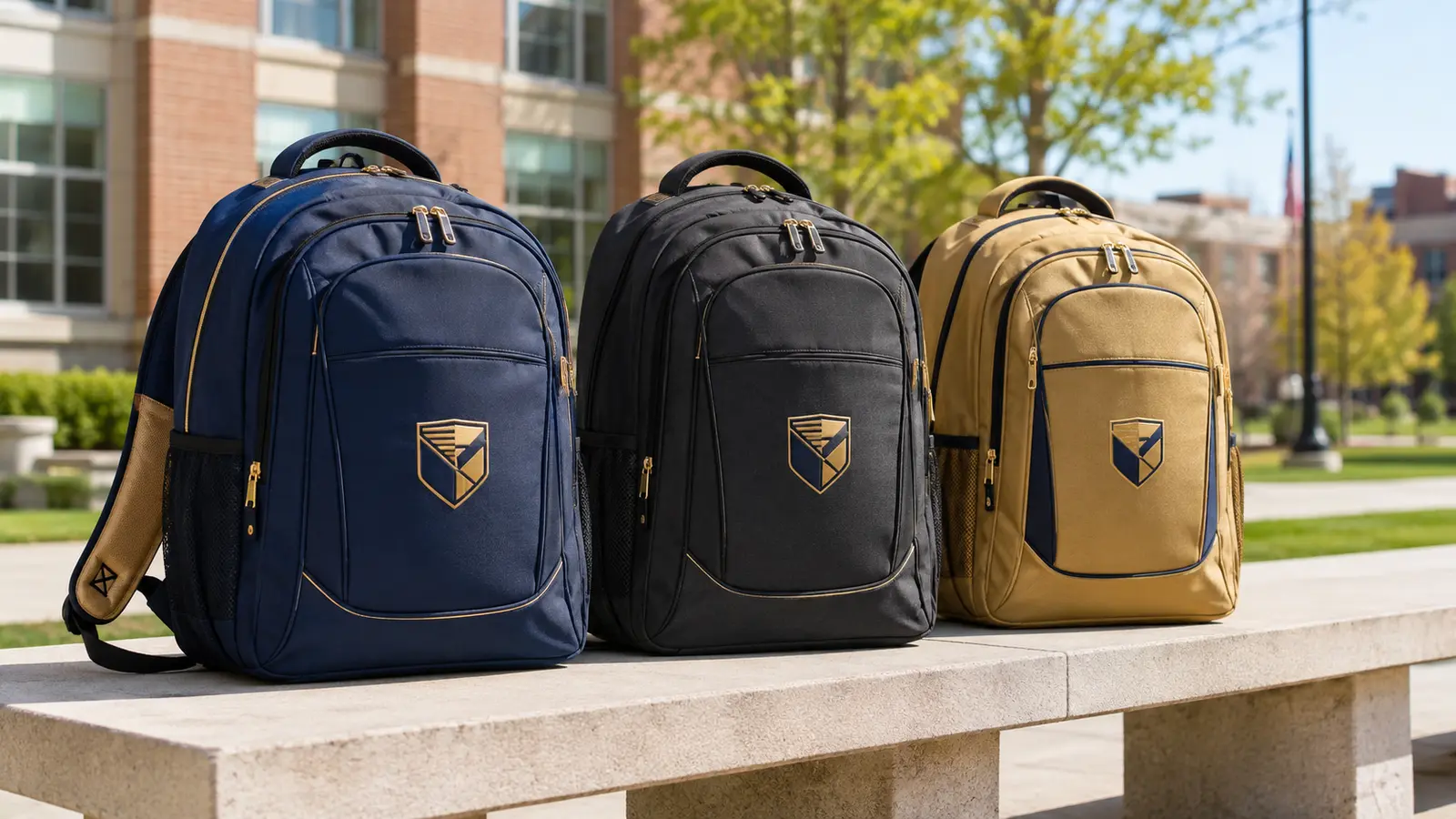
Use the main school color for the body or a large panel, then reserve the second color for piping, zipper tape, bartacks, lining or small panels. Neutral navy, black, charcoal or cream can carry a more vivid school accent. Pantone references help communicate the target, but final color approval should use the material swatch and sample because fabric texture and lighting influence appearance.
Graduation Year and Senior Identity
The graduation year can appear as a small embroidered element, patch detail, zipper-pull concept, lining motif or hangtag. If the content must be reused across years, keep the year on a replaceable artwork component rather than a custom-molded structural part. Buyers should write the year in full in every approval file to avoid ambiguity.
Individual Names, Initials or Numbers
Individual personalization creates emotional value and helps distribution, but it requires disciplined data control. Decide capitalization, punctuation, character limits, placement, letter height and thread or print color. Establish how unsupported characters and duplicate names will be handled.
The final variable-data sheet should have one row per unit and a unique order identifier. Lock the file after approval. Late changes should be documented as a revision rather than sent through informal messages.
Class Signatures or Student Artwork
A class-created graphic can make the backpack distinctive. Convert the chosen concept into production artwork and confirm that every element is authorized for use. Very fine signatures may not reproduce well in embroidery; a print method, woven label or lining application may preserve small detail more effectively. Always review a strike-off or sample.
Coordinated Graduation Merchandise
Backpacks can anchor a package with custom hoodies, caps, team jackets or jerseys. Use a shared color and artwork system while adapting decoration size to each product. The backpack front panel and hoodie chest cannot be treated as identical canvases. Create a product-specific placement sheet for every item.
Choosing the Decoration Method
| Method | Best suited to | Visual character | Key approval points |
|---|---|---|---|
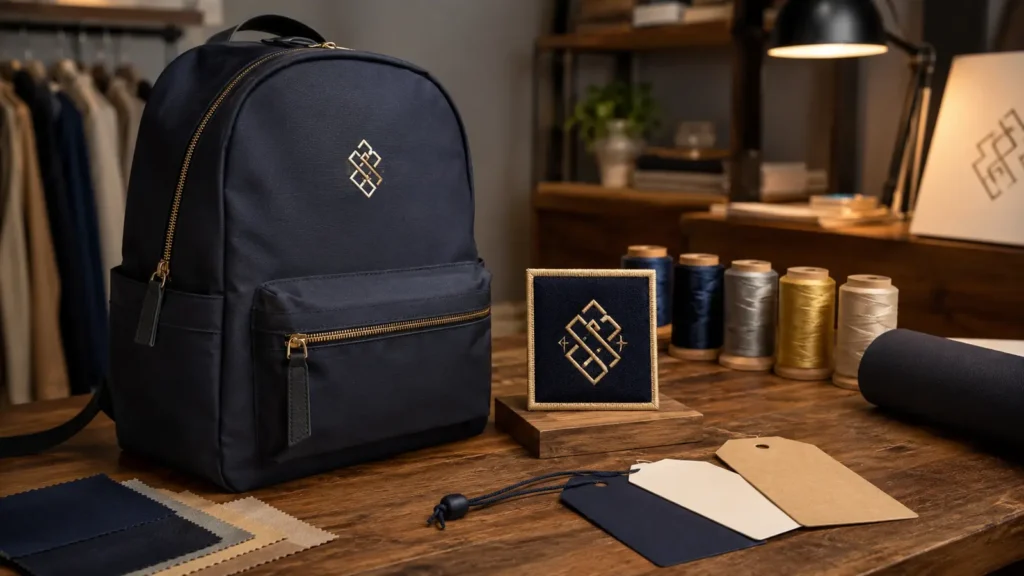
| Flat embroidery | School name, simple crest, initials | Textured and established | Digitized detail, thread colors, backing, placement |
| 3D embroidery | Bold, simple marks on suitable panels | Raised and prominent | Minimum detail size and panel support |
| Woven patch | Detailed crest or compact line work | Crisp and uniform | Border, edge finish, attachment and color sample |
| Rubber/PVC patch | Sport or modern programs | Dimensional and durable-looking | Mold detail, thickness, colors and attachment |
| Leather-style patch | Heritage or alumni-inspired programs | Refined, tonal or debossed | Material definition, mark contrast and care |
| Screen print | Larger, relatively simple graphics | Clean and economical at suitable scale | Ink, opacity, fabric compatibility and curing |
| Heat transfer | Multicolor or variable graphics | Flexible detail and placement | Edge, adhesion, surface compatibility and care |
| Custom label/hangtag | Program story, sponsor or distribution data | Secondary branding | Content accuracy, material, attachment and packaging |
Decoration selection should follow the artwork and fabric. Embroidery adds needle penetrations and may cause puckering on unsupported panels. A patch adds an edge and attachment process. Printing depends on surface texture, coating and heat sensitivity. Ask the supplier to recommend a method only after sharing vector artwork, target dimensions, colors and placement.
Planning a senior merchandise program? Send JIUMU your backpack reference, estimated quantity, school colors, logo file, personalization list, packaging needs and required delivery date. The team can review a custom bag concept, digital mockup and physical sample route.
School Branding, Permissions and Data Control
The buyer is responsible for ensuring that school names, seals, mascots, class artwork and sponsor marks are authorized for use. A manufacturer should not be expected to determine ownership from an image found online. Provide approved vector files and a written branding guide where available.
Keep student personalization data limited to what production and distribution require. A simple ID, approved display name and the relevant product configuration are usually more appropriate than unnecessary personal information. Define who can approve the list, how corrections are recorded and how the final files will be transmitted. After delivery, retain or remove files according to the buyer’s own data policy and applicable requirements.
For younger student programs or products subject to destination-market rules, the buyer and supplier should identify applicable product-safety, labeling, chemical and packaging requirements before production. Requirements depend on the product, intended age group and sales destination; do not assume that a general backpack specification automatically satisfies every market.
What Determines the Cost of Custom Senior Backpacks?
Exact pricing requires a defined product and quantity. The following variables usually have the greatest effect:
- Bag structure: More compartments, shaped panels, padding and internal organization require more materials and operations.
- Material and trim: Shell fabric, lining, foam, mesh, webbing, zipper and custom hardware choices change cost.
- Decoration: Size, stitch count, print colors, patch construction and the number of placements matter.
- Personalization: Each unique name or number adds data preparation, production control and sorting.
- Quantity and variants: A larger total does not always create the same efficiency when it is divided among many body colors or artwork versions.
- Sampling: A new structure, custom component or complex artwork can require additional development rounds.
- Packaging: Individual name labels, gift boxes, inserts and pre-sorted cartons affect materials and labor.
- Delivery plan: Shipping method, destination, carton dimensions and schedule affect landed cost.
Ask for a quotation that identifies assumptions. If one supplier quotes an existing stock structure and another quotes a fully custom bag, the prices are not directly comparable. Align specifications before comparing totals.
A Practical Quality-Control Checklist
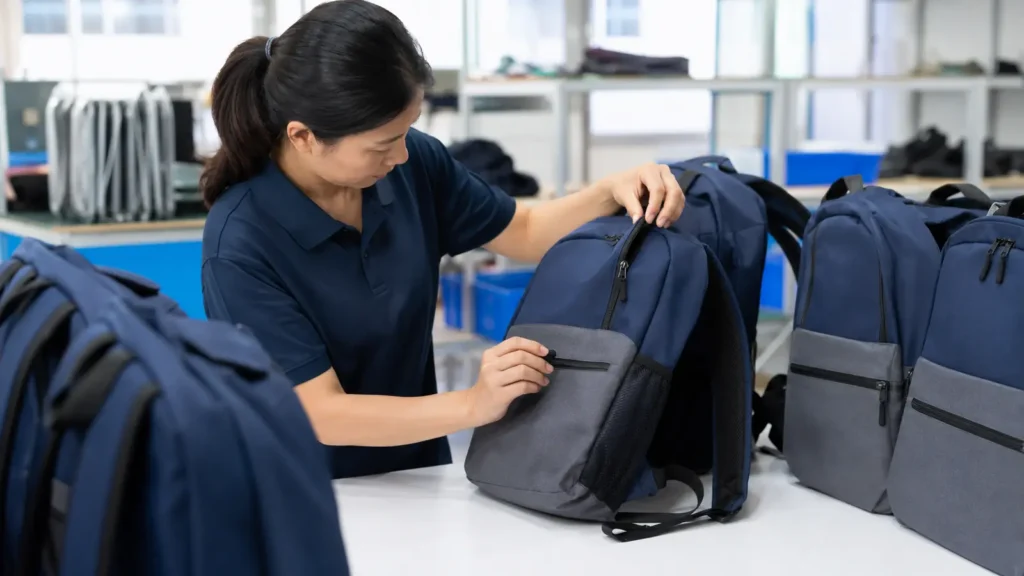
Quality control begins with the approved specification, not at final inspection. A reference sample, measurement table, artwork placement sheet, material swatches, color approvals and packaging instructions establish what inspectors should compare against.
Before Bulk Production
- confirm final dimensions and measurement tolerances;
- approve shell, lining, mesh, foam, webbing, zipper and hardware references;
- approve each embroidery, print or patch sample;
- confirm school-color appearance on actual materials;
- approve personalization spelling and formatting rules;
- test representative contents in the physical sample;
- approve labels, hangtags, polybags, carton marks and sorting method.
During and After Production
- compare visible colors and components with approved references;
- check artwork position, orientation and consistency;
- inspect seams, reinforcement and edge finishing;
- operate zippers, buckles and adjusters;
- compare measurements using the agreed method;
- review individual names against the locked data sheet;
- check quantity by design and personalization group;
- confirm packaging sequence and carton identification;
- document findings and corrective actions before shipment release.
Inspection scope and acceptance criteria should be agreed in advance. A buyer that needs particular laboratory tests, sampling standards or destination-market documentation should include them in the purchase specification and quotation request.
How to Plan a Bulk Senior Backpack Order
Step 1: Define the Program
State whether the backpack is a gift, retail item, fundraiser, recognition product or part of a merchandise bundle. Confirm the recipient group, planned selling or distribution date, target quantity, working budget and destination.
Step 2: Build the Product Brief
Share reference images and explain what you like about them. List approximate dimensions, intended contents, compartments, device sleeve, pockets, padding, body colors, hardware, decoration and packaging. Separate essential requirements from optional ideas.
Step 3: Confirm Artwork Rights and Files
Provide approved vector files where possible. Identify exact color references and the intended placement dimensions. For variable names, agree on the spreadsheet format and naming conventions before collecting data.
Step 4: Review the Digital Mockup
Use the mockup to confirm direction, not final material behavior. Check front, back, side and interior views as relevant. Make sure artwork does not cross seams or pockets unexpectedly.
Step 5: Approve Materials and a Physical Sample
Review color swatches, decoration samples and the complete backpack. Load it with representative items, wear it and operate every closure. Record all changes in one consolidated revision list.
Step 6: Lock Quantities and Personalization
Create a final count by color, artwork version and name. Include a controlled overage strategy if the program needs replacement units. Personalized units are difficult to redirect, so the list deserves a second-person review.
Step 7: Confirm Production and Inspection Milestones
Agree on when material, decoration, in-process and final checks occur. The schedule should include approval time, not only manufacturing time. Late approvals move the usable production window.
Step 8: Plan Packing and Distribution
Choose bulk packing, individual packing, name labels, class-group sorting or pre-packed merchandise bundles. Carton marks should help the receiving team identify groups without opening every carton.
Information to Send for an Accurate Quotation
Send one consolidated brief containing:
- program name and buyer organization;
- backpack reference or target style;
- total quantity and quantity by color;
- approximate dimensions and intended load;
- required compartments and features;
- shell, lining and trim preferences;
- school colors or Pantone references;
- vector logo and all artwork placements;
- individual name/number requirement and estimated variant count;
- private label, hangtag and packaging needs;
- ship-to country and postal code;
- target in-hand date;
- requested testing, inspection or documentation;
- whether a digital mockup and physical sample are required.
This information lets the supplier identify assumptions early. A short request such as “price 500 senior backpacks” cannot distinguish a basic daypack from a structured laptop bag with three decorations and individual packing.
Questions to Ask a Custom Backpack Supplier
- Is the quoted bag an existing structure, a modified structure or a fully custom development?
- What are the finished dimensions, material specifications and included compartments?
- Which decoration method is recommended for our actual logo and fabric, and why?
- What artwork files, color references and placement dimensions are required?
- How will individual names be proofed, produced and matched to packing labels?
- What sample stages are available, and which details can change after each stage?
- What is included in the quotation and what remains an estimate?
- How are color, measurements, stitching, zippers and artwork checked during production?
- Can cartons be sorted by class, homeroom, team or recipient list?
- What schedule is realistic after artwork, materials and sample approval?
- How are replacement or repeat orders handled when the original material is no longer available?
- Which tests or documents can be arranged for the destination and intended user group if specified?
Common Buying Mistakes
Choosing by Appearance Alone
A rendering cannot show carrying comfort, usable capacity or zipper behavior. Approve a physical sample for programs where structure and durability matter.
Using Too Many Versions
Every body color, lining, artwork variation and personalized name creates another control point. Offer meaningful choice, but set limits that the committee and supplier can administer accurately.
Treating a Logo File as Production-Ready
A low-resolution image may be adequate for a mockup but not for embroidery digitization or crisp printing. Supply vector artwork and review a physical decoration sample.
Approving Colors Only on a Screen
Screen displays are not reliable material standards. Approve actual fabric, thread, print or patch references under suitable lighting.
Collecting Names Too Late
Personalization data is part of production planning. Build the collection and verification process before the order deadline, with one owner for final approval.
Ignoring Distribution
Unsorted personalized bags create work at the receiving site. Plan individual labels and carton grouping at quotation stage.
Setting the Event Date as the Shipping Date
The target should be an in-hand date with time for receiving, counting and issue resolution. International transport and local delivery are separate from production.
Why Work With JIUMU on Custom Senior Backpacks?
JIUMU is a Guangdong-based B2B supplier established in 2010, serving buyers in the United States, Canada, the United Kingdom and Europe. Its product scope includes custom team bags, teamwear, custom hats, uniforms and branded merchandise.
For senior backpack programs, relevant capabilities include OEM and ODM development, logo embroidery, screen printing, heat transfer, woven and rubber/PVC patch options, fabric sourcing, Pantone color matching, private labels, hangtags, packaging customization, digital mockups, physical samples, quality control and export support. A typical MOQ is 50 pieces, subject to the bag structure and customization.
The advantage of a coordinated supplier is the ability to connect the backpack with related senior merchandise. Buyers can explore custom team bags, custom hoodies, custom baseball caps and custom team jackets within one visual program.
Frequently Asked Questions
Final Recommendation
The best senior backpack idea is the one that connects a meaningful class identity with an honest use case. Begin with what recipients will carry, select a structure that supports that load, and create a restrained branding hierarchy. Then control artwork, color, personalization, sampling and distribution as one project.
For a broad school program, choose a versatile campus or laptop backpack and keep variants manageable. For athletes, specify equipment access and reinforced stress points. For a premium graduation gift, invest in material, organization and subtle decoration rather than adding visual elements without purpose. In every case, approve the physical sample and lock variable data before bulk production.
About JIUMU
JIUMU is a Guangdong-based B2B supplier established in 2010, supporting custom team bags, apparel, hats, uniforms and branded merchandise for North American and European buyers.