Best Backpacks for College Students
College backpacks are no longer a one-specification product. A commuter carrying a laptop and lunch, a resident student walking between lectures, an athlete moving from class to practice, and a campus organization ordering branded merchandise all place different demands on a bag. For schools, distributors, uniform dealers, promotional buyers, and private-label brands, the right decision therefore starts with use case, load, dimensions, construction, and order controls—not a fashionable silhouette alone.
This guide explains how to specify the best backpacks for college students, compare common formats, assess materials and workmanship, plan customization, and control a bulk order. It is written for professional buyers developing campus programs, retail ranges, student welcome kits, club merchandise, or private-label collections.
Quick answer: For most college programs, the strongest all-purpose specification is a 22–28 L backpack with a padded laptop compartment, two main storage zones, an accessible bottle pocket, shaped padded straps, a breathable back panel, reliable zippers, and a reinforced base. The exact capacity and features should follow the student’s daily load. Approve a physical sample with the intended laptop, books, bottle, and decoration before authorizing bulk production.
Why the College Backpack Purchasing Decision Matters
A backpack sits at the intersection of product performance, student experience, and brand visibility. It may be used five days a week, placed on classroom floors, carried in rain, loaded with devices, and opened dozens of times a day. A problem with a strap attachment or zipper is therefore more visible than a minor defect on occasional promotional merchandise.
Professional buyers also face commercial constraints. Too many colors can fragment quantities. An oversized bag increases material consumption and freight volume. An elaborate logo method may be attractive but unsuitable for the selected fabric or pocket position. A low initial unit price can be offset by weak packaging, inconsistent colors, high defect handling, or a specification that generates returns.
The most defensible buying process converts the application into measurable requirements:
- Who will use the backpack: undergraduate students, graduate students, athletes, commuters, staff, or a mixed audience?
- What must it carry: laptop size, books, laboratory clothing, lunch, gym gear, or an overnight change?
- How will it be sold or distributed: welcome kit, bookstore retail, club order, team package, promotional campaign, or ecommerce?
- What identity is required: school colors, department mark, team logo, individual name, private label, or neutral stock design?
- What must be approved: dimensions, materials, colors, construction, logo size, packaging, and carton marking?
These questions reduce subjective debate and give suppliers a stable basis for quotation, sampling, production, and inspection.
College Backpack Types Compared
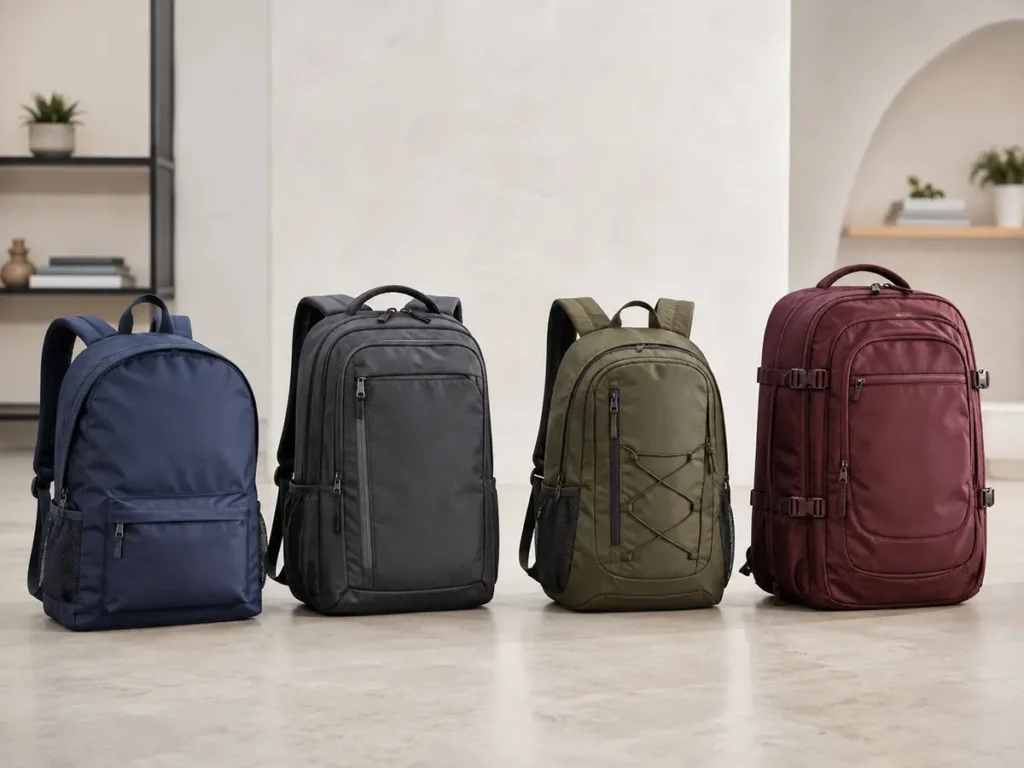
“College backpack” describes an application, not one construction. The first sourcing decision is to select the format that best matches the intended day.
| Backpack type | Best use | Typical specification priority | Main trade-off |
|---|---|---|---|
| Everyday campus daypack | Lectures, library, residence-to-class use | Balanced capacity, organization, low weight | May not isolate sports or travel gear |
| Laptop backpack | Commuters, graduate programs, technology courses | Device protection, document organization, structured back | Added padding can increase weight and cost |
| Athletic campus backpack | Student athletes and sports clubs | Separate footwear or wet-item zone, durable base, bottle storage | Larger silhouette and more components |
| Commuter backpack | Public transit, cycling, long walking routes | Stable fit, quick-access pocket, practical weather resistance | Technical features can raise complexity |
| Travel-ready backpack | International students, weekend trips, study programs | Wide opening, clothing organization, luggage pass-through | Can be too large for a light lecture day |
| Drawstring or lightweight pack | Events, orientation, low-cost giveaways | Simplicity, packability, high logo visibility | Limited structure and device protection |
Everyday campus daypacks
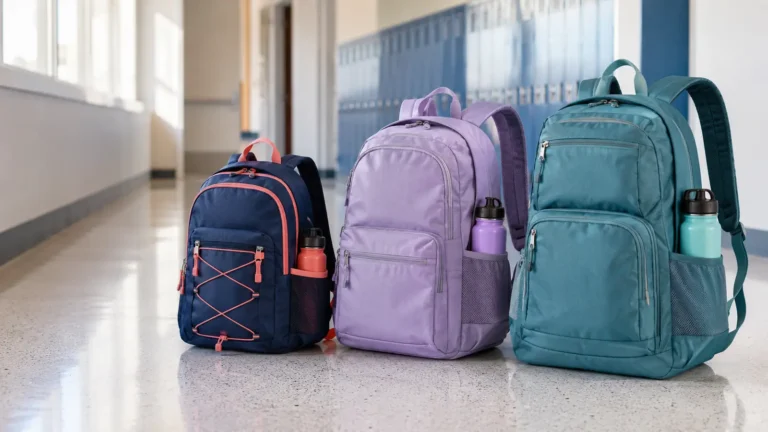
The daypack is the broadest option for school stores, welcome programs, and general private-label ranges. A two-compartment format usually provides enough separation for books and smaller personal items. Buyers should focus on usable internal volume rather than external bulk. A clean front panel also creates an efficient decoration area.
Laptop backpacks
A laptop backpack should be specified around device dimensions, not only a marketing label such as “fits 15-inch laptops.” Screen size does not define the complete device footprint. Ask for the maximum sleeve width, height, and depth, then test with the largest intended device. A suspended or raised sleeve can reduce direct contact between the laptop and the floor, but it must be confirmed on a sample.
Athletic and team backpacks
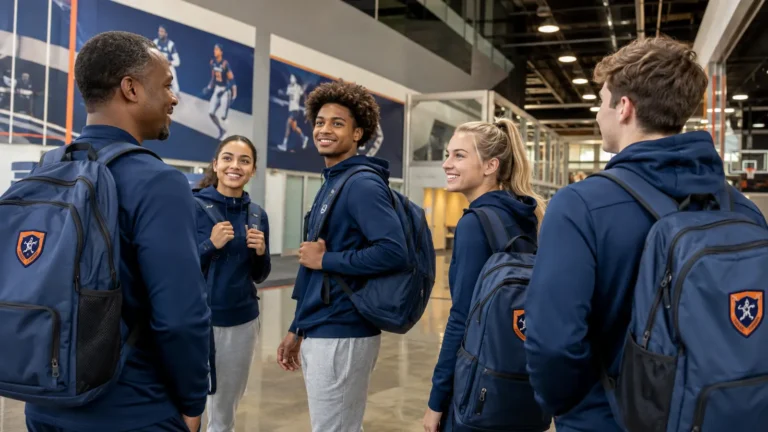
Athletic formats may need a ventilated or wipe-clean footwear compartment, dual bottle pockets, a reinforced base, and space for uniforms. These components add seams, zippers, panels, and labor. Buyers should decide whether every user needs them or whether a separate athlete model would produce a clearer range. JIUMU buyers can also coordinate backpacks with custom team uniforms and broader team packages.
Commuter and travel-ready backpacks
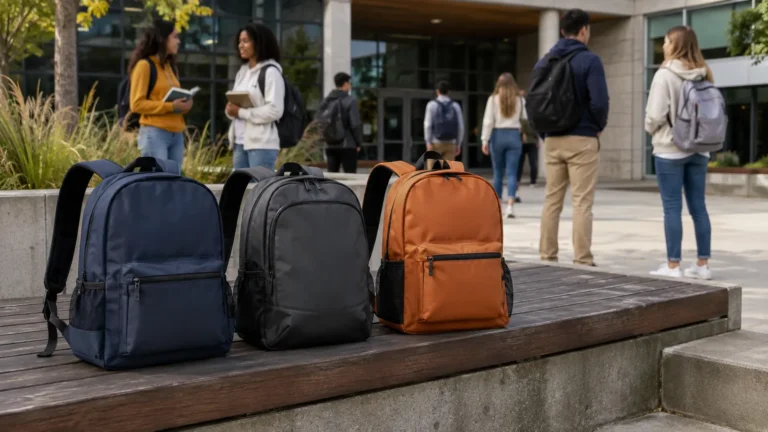
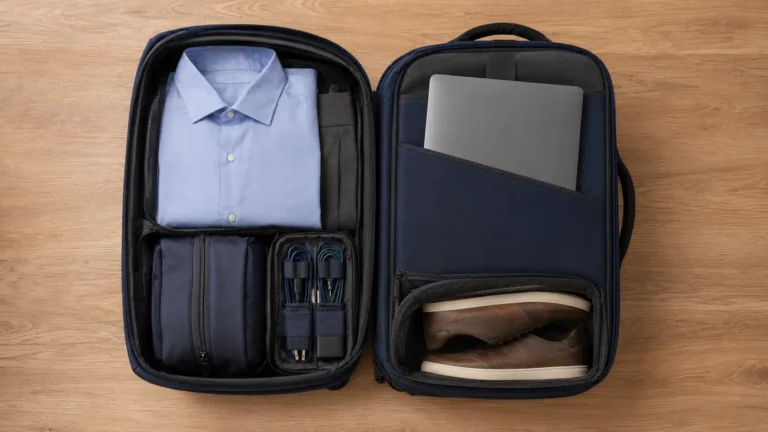
Commuters often value a stable carry, fast access to transit essentials, and an understated appearance. Travel-ready designs may add a clamshell opening, luggage-handle pass-through, or hidden document pocket. Each added feature should solve a real use case; otherwise it adds cost and potential failure points without improving the student experience.
What Capacity Is Best for College Students?
Capacity should be treated as a planning range, not a promise that every bag with the same liter figure will hold the same items. Shape, padding, pocket allocation, and measurement method affect usable space.
| Planned capacity | Suitable load profile | Common buyer use | Watch for |
|---|---|---|---|
| 15–20 L | Tablet or small laptop, notebook, personal items | Events, light course days, compact urban programs | Limited space for lunch, jacket, or multiple books |
| 20–24 L | Laptop, two or three books, bottle, accessories | General campus daypack | Confirm bottle-pocket and sleeve dimensions |
| 24–28 L | Full study day, lunch, light layer, electronics | Strong all-purpose college range | Avoid excessive internal dividers that consume space |
| 28–35 L | Athletics, heavy course load, commuter or short travel | Team and travel-oriented programs | Larger load requires stronger structure and carry comfort |
| 35 L+ | Specialized sport or multi-day use | Equipment and travel programs | Usually too bulky for a universal everyday backpack |
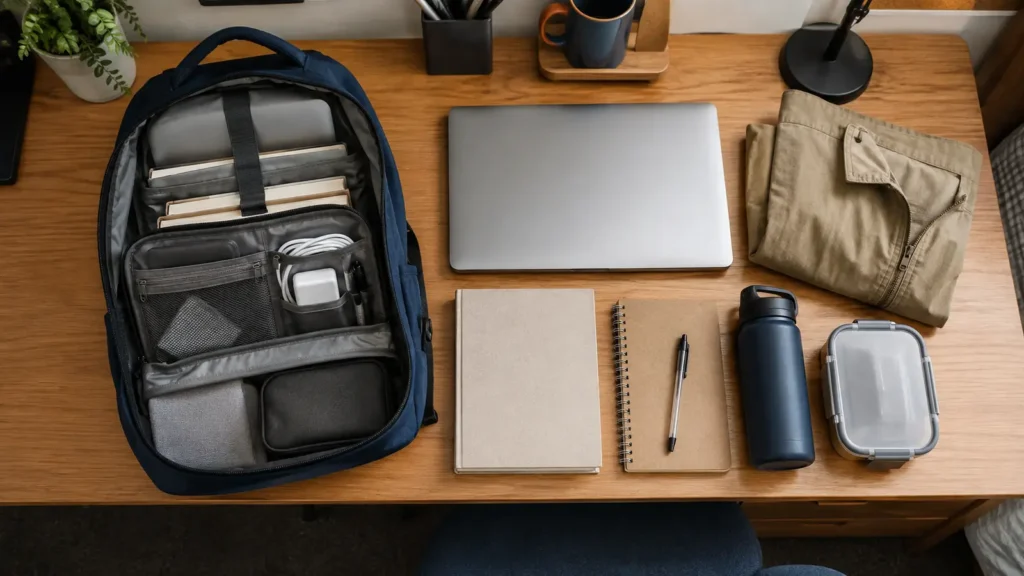
The best specification process uses a physical load set. Assemble the largest laptop, representative textbooks or binders, water bottle, charger pouch, lunch container, and a folded layer. Give the supplier the dimensions or send reference items when practical. During sample review, load the bag and check closure, balance, access, appearance, and strap adjustment.
Laptop size and sleeve design
Request the internal laptop-sleeve dimensions and the sleeve padding specification. Check whether the closure can scratch a device, whether the sleeve interferes with the main opening, and whether the laptop weight pulls the bag away from the back. For programs with varied devices, a slightly flexible sleeve with a secure top closure may serve more students than a tightly fitted compartment.
Organization without unnecessary complexity
Organization should shorten common actions. A front admin pocket can hold pens, cables, and cards. A top or side quick-access pocket can hold keys or earbuds. Internal mesh improves visibility but can snag if placed near sharp stationery. Too many small compartments raise sewing time and make the bag feel smaller. Prioritize the items students reach for repeatedly.
Bottle pockets
Specify the intended bottle diameter and height. Test whether a full bottle remains secure when the backpack is lifted, set down, or worn. Elastic binding, gussets, mesh, and woven fabric each provide a different balance of stretch, appearance, and durability. A pocket that looks generous when empty may become tight when the main compartment is fully packed.
Materials: How to Select the Right Backpack Fabric
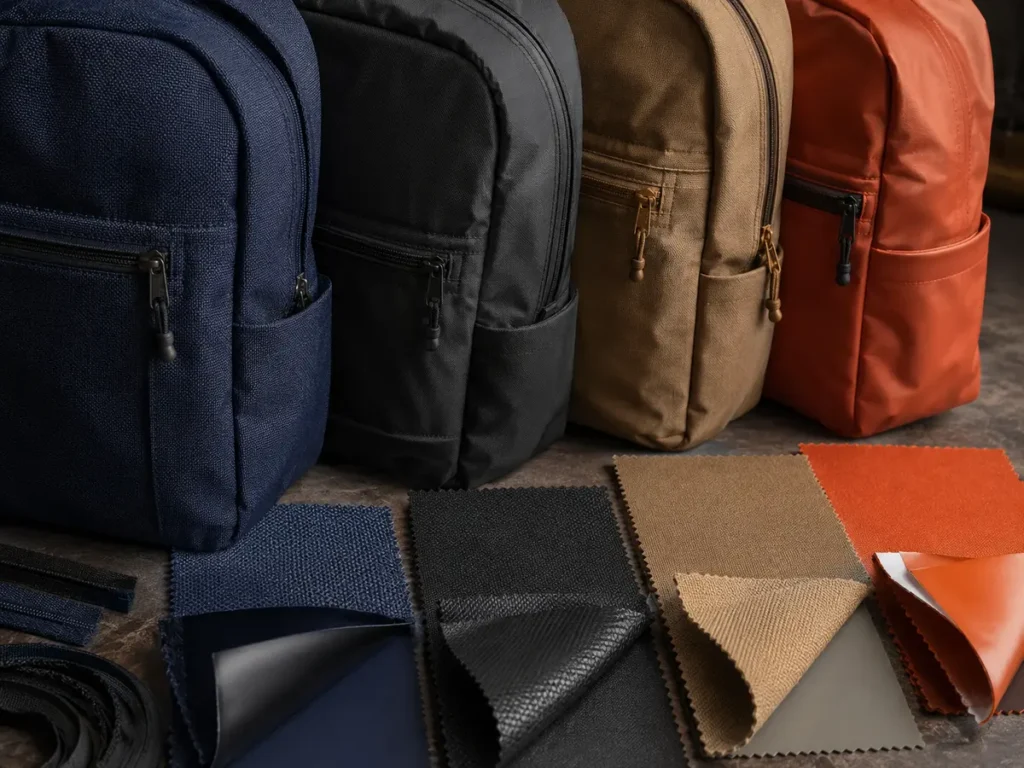
Fabric choice affects appearance, hand feel, weight, decoration compatibility, abrasion behavior, cleaning, and cost. A material name by itself is incomplete. Buyers should also define or approve weight, weave, coating or backing, color, surface finish, and the actual supplier swatch.
| Material family | Buyer advantages | Limitations to evaluate | Suitable programs |
|---|---|---|---|
| Polyester woven fabric | Broad color options, versatile construction, scalable for many price points | Hand feel and abrasion performance vary widely by specification | General campus, promotions, school stores |
| Nylon woven fabric | Often selected for a refined or technical hand and strength-to-weight goals | Can carry a higher material cost; finish varies | Commuter, technical, travel-oriented ranges |
| Canvas-like woven fabric | Substantial, casual appearance and strong lifestyle positioning | Can be heavier; color and shrinkage behavior require control | Bookstores, alumni-style merchandise, fashion programs |
| Coated woven fabric | Smooth technical look and easier surface wiping in some constructions | Coating can crease, mark, or change sewing behavior | Urban commute, base panels, accent zones |
| Mesh | Ventilation, visibility, stretch depending on structure | Snagging and edge durability require attention | Bottle pockets, internal organizers, athletic zones |
Water-resistant is not the same as waterproof
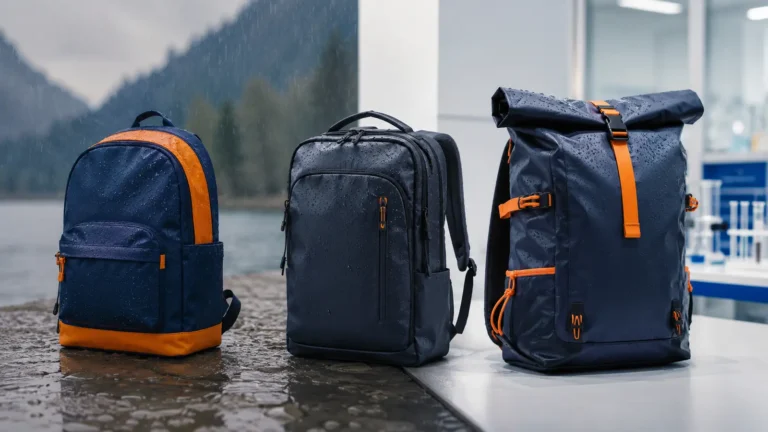
A coated fabric may slow water penetration, but the finished backpack also contains seams, zipper openings, needle holes, and construction transitions. Do not use “waterproof” in product copy unless the complete product has a documented specification and appropriate verification. For most campus programs, the useful sourcing question is what level of incidental weather exposure the bag is designed to handle and which components were selected to support that goal.
Lining and internal materials
Lining creates a clean interior, protects backing layers, and supports pockets. Light-colored lining can improve visibility; dark lining can hide marks. Its weight, tear resistance, colorfastness expectations, and compatibility with binding and seam construction should be part of sample approval. Foam density and thickness also matter in shoulder straps, laptop sleeves, and back panels.
Color control
Provide a Pantone reference when a program requires a defined brand color, then approve the closest achievable material swatch under agreed lighting. Different materials reflect light differently, so woven fabric, mesh, zipper tape, embroidery thread, rubber patches, and webbing may not appear identical even when selected toward one target. A professional specification defines acceptable coordination rather than assuming perfect visual equality across substrates.
Construction Features That Influence Durability
Durability is a system. Heavy fabric cannot compensate for a weak strap attachment, underspecified thread, poor seam allowance, or a zipper that is unsuitable for frequent use. Review the complete construction at high-load and high-contact areas.
Shoulder-strap attachment
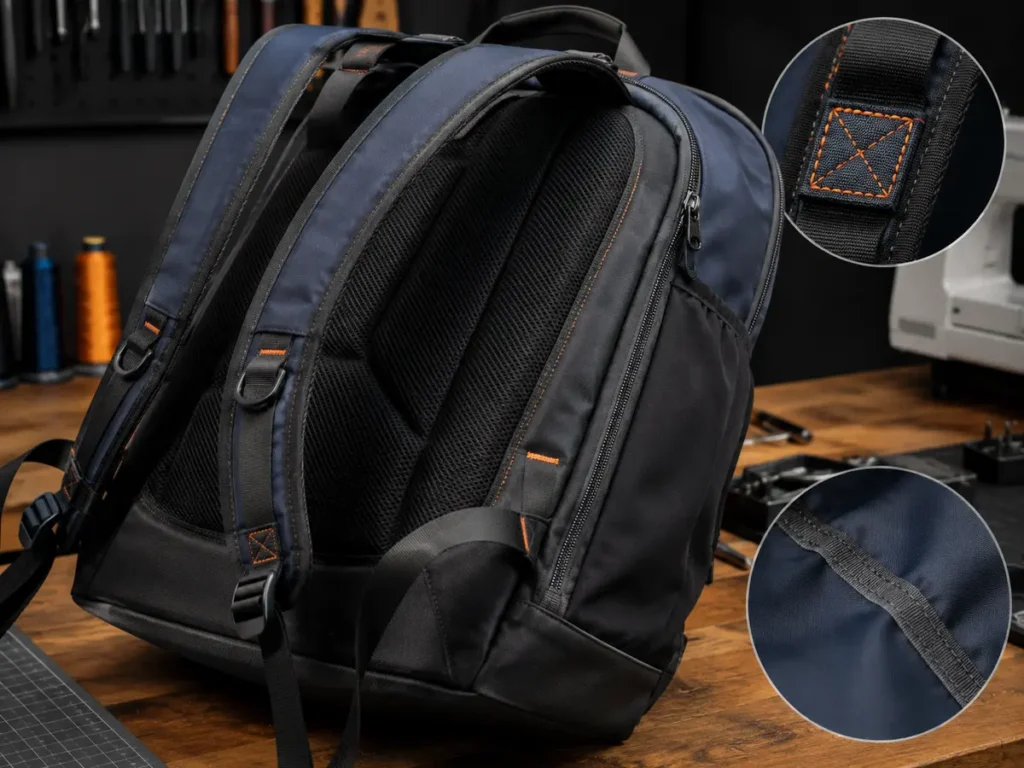
The upper strap joint carries repeated load and movement. Examine the seam pattern, reinforcement material, stitch consistency, and whether the attachment distorts the top panel when loaded. A bar tack may be useful in selected locations, but its size and placement must match the materials and construction. More stitching is not automatically better if it perforates or damages the fabric.
Zippers and pullers
Specify zipper type, size, tape color, slider finish, and puller design. Operate every zipper around curves and near seam intersections on the sample. Check for catching lining, excessive resistance, gaps, and pullers that strike other hardware. Custom pullers can add identity but also require tooling, minimum quantities, and extra approval.
Back panel and straps
Shaped straps can distribute contact more naturally than narrow straight straps. Check finished strap width, foam, edge binding, adjuster position, webbing length, and whether the straps remain symmetrical. A breathable-looking mesh does not by itself establish thermal performance; describe the visible construction accurately and avoid unsupported comfort claims.
Base and high-contact panels
The base encounters floors, moisture, and abrasion. Consider a reinforced or coated lower panel, appropriate seam placement, and a shape that allows the bag to sit without concentrating load on one edge. Inspect corner transitions because several panels and seam allowances often meet there.
Seam finishing
Inside the bag, raw edges should follow the agreed finishing method, such as binding or a controlled seam construction. Loose thread, uneven binding, exposed foam, skipped stitches, and inconsistent seam allowance are useful visual inspection points. Define workmanship expectations with approved-sample photos instead of relying only on the phrase “good quality.”
Turning Features Into Procurement Decisions
Product features are valuable only when they support a user task and fit the program economics.
| User need | Product response | Procurement instruction |
|---|---|---|
| Carry a laptop daily | Padded, dimensioned laptop sleeve | State maximum device dimensions and test sample fit |
| Walk long campus routes | Shaped padded straps and stable back structure | Approve strap width, foam, range, and loaded appearance |
| Carry a large bottle | Gusseted or elastic side pocket | Provide target bottle dimensions and perform retention test |
| Move from class to practice | Larger volume and separated gear zone | Define footwear, uniform, and bottle load; assess cleaning access |
| Promote a campus organization | Clear logo zone and coordinated colors | Supply vector artwork, target logo size, Pantone references, and placement |
| Sell through ecommerce | Consistent appearance and protective packaging | Define folding, stuffing, labels, barcode needs, carton quantities, and photo sample |
This translation keeps a project focused. For example, “add more pockets” is vague; “provide a top pocket that fits a 90 × 70 × 30 mm accessory case without blocking the main zipper” is testable.
Custom College Backpacks and Private-Label Options
Customization can range from adding a logo to developing a new silhouette. The right route depends on budget, quantity, schedule, brand control, and differentiation needs.
Logo methods
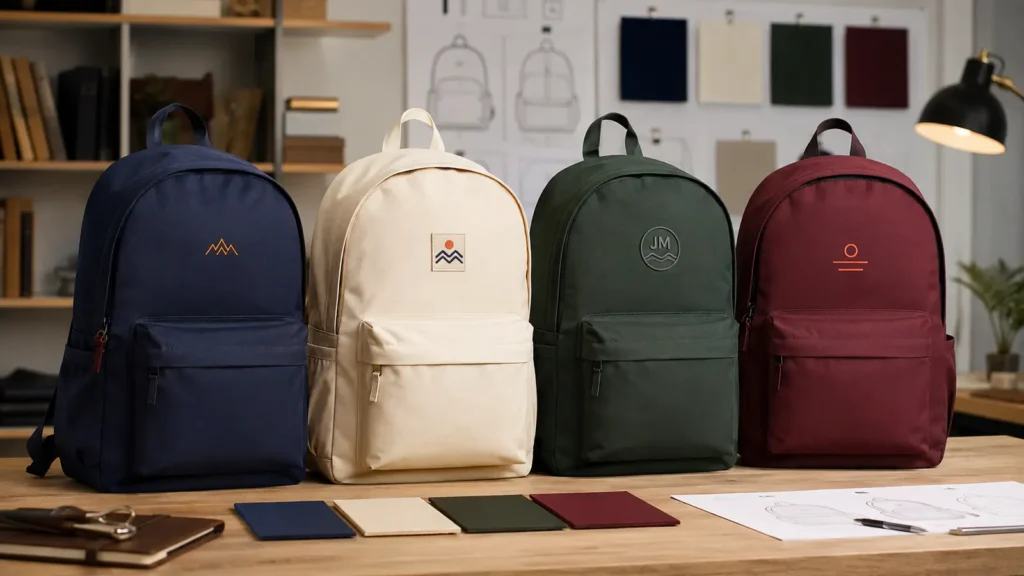
Embroidery provides a dimensional stitched result and works well on many stable woven panels. Dense designs can stiffen or distort lightweight fabric, so stitch coverage, backing, size, and position should be sampled.
Woven patches can reproduce fine woven detail and create a controlled badge shape. The buyer should approve patch dimensions, edge method, attachment stitching, colors, and placement.
Rubber or PVC-style patches create a molded technical look. They may require tooling and color approvals, and their weight and flexibility should suit the panel.
Heat-transfer decoration can support detailed or lightweight graphics. Adhesion and appearance depend on the transfer system, fabric surface, heat process, and intended care. Sample on the production fabric rather than approving artwork alone.
Screen printing can be efficient for suitable graphics and quantities, but ink, mesh, fabric texture, color count, and curing affect the result. Avoid placing a print across seams or strongly curved areas unless a sample proves the result.
Brand colors and panel design
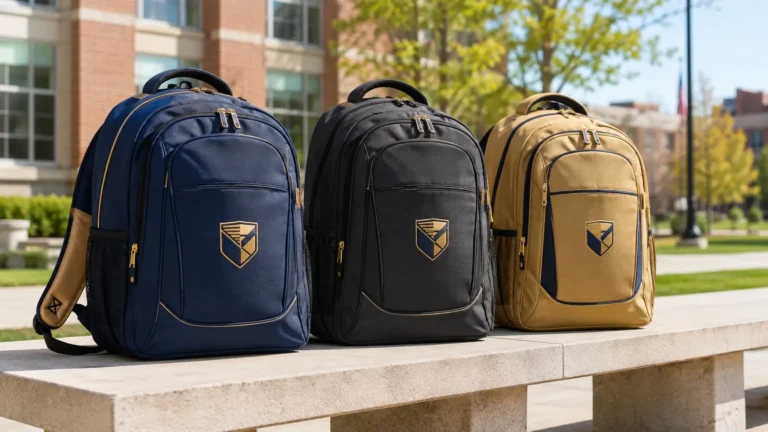
Color blocking can make a range distinctive without adding a complex all-over print. However, each color may introduce another material code and minimum requirement. Consolidate the program around a core body color and use secondary colors on pullers, webbing, lining, piping, or stitching when appropriate.
Private labels and packaging
A private-label program may include woven labels, printed labels, hangtags, barcode stickers, individual polybags or alternative agreed packaging, and export carton marks. Decide which party provides barcode data and translations, who checks legal or market-specific label content, and at what stage packaging proofs are approved. The importer or brand owner should verify applicable labeling and product requirements for the destination market.
Individual personalization
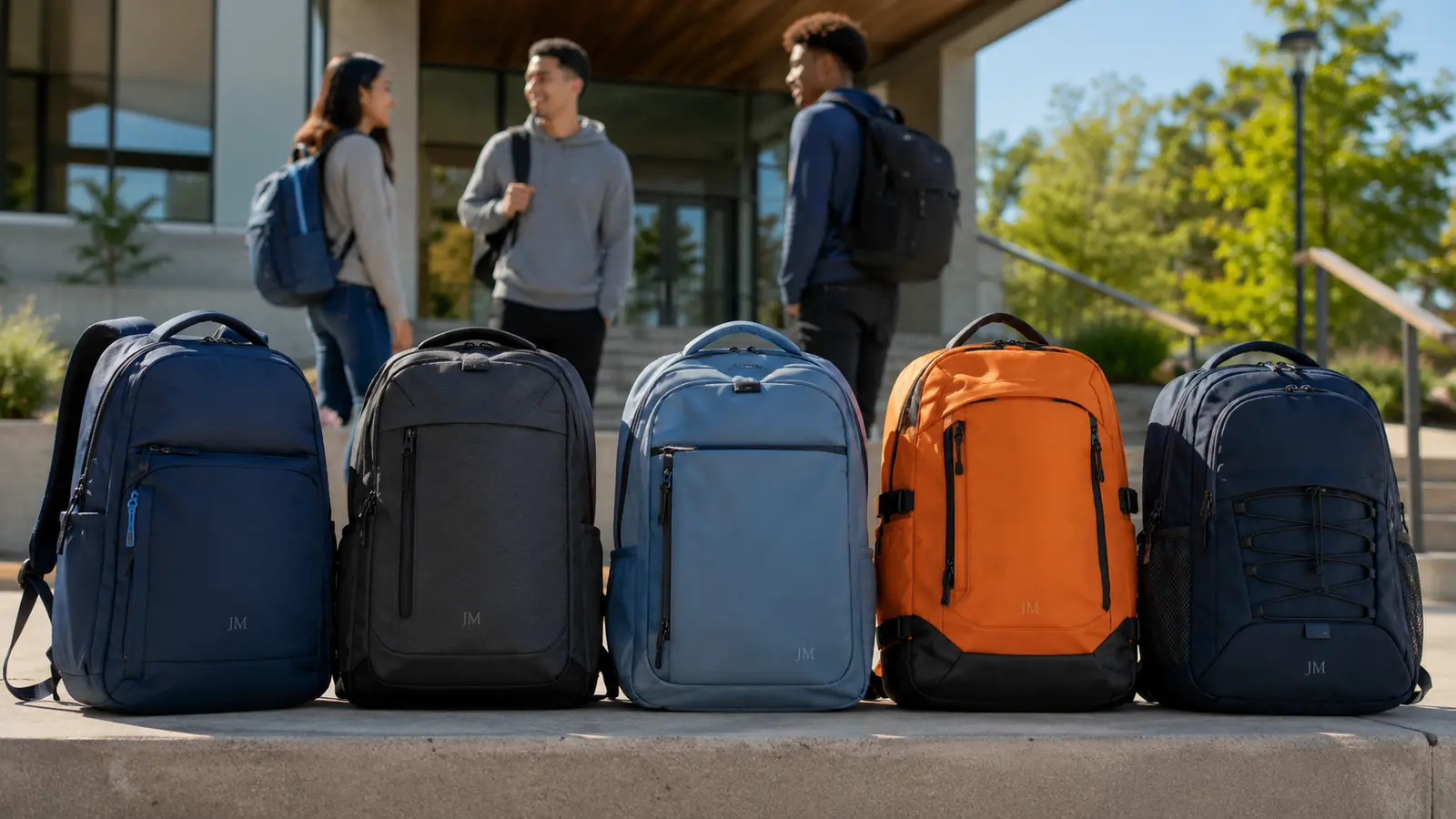
Names, numbers, departments, or teams create operational complexity because every unit can differ. Supply a clean data sheet with one row per item, use locked spelling, assign sizes or colors clearly, and define the replacement policy for buyer-supplied data errors. Ask the supplier how personalized units will be labeled and sorted.
Planning a campus or private-label backpack program? Send JIUMU your reference image or concept, quantity, dimensions or capacity, laptop size, colors, logo files, packaging needs, and target delivery date. Request a custom backpack quotation.
What Determines the Cost of a College Backpack?
Unit price is the result of a specification, not a fixed property of a product name. The main drivers include:
- Fabric and lining: material type, weight, coating, color availability, and purchasing minimums.
- Size and panel count: larger bags use more material; complex patterns require more cutting and sewing.
- Compartments and zippers: every opening adds zipper length, sliders, panels, seam work, and inspection points.
- Padding and structure: laptop protection, back panels, straps, and bases require foam and assembly labor.
- Hardware and trims: buckles, adjusters, webbing, mesh, custom pullers, piping, and labels.
- Decoration: artwork complexity, stitch count, print colors, patch tooling, placements, and personalization.
- Quantity and color split: dividing an order among many colors can reduce production efficiency and trigger material minimums.
- Sampling and development: a custom pattern or new tooling requires more development than adding a logo to an established base.
- Packaging: stuffing, hangtags, barcode labels, special bags, sets, and retail presentation.
- Quality and logistics requirements: inspection level, testing requested by the buyer, carton limits, delivery terms, and shipping method.
To compare quotations fairly, send the same specification and commercial assumptions to each candidate supplier. A price that excludes packaging, custom labels, or a required compartment is not directly comparable with an inclusive quote.
Sample Approval and Quality-Control Checklist
A physical sample turns artwork and specifications into a product that can be handled, loaded, and measured. Treat it as a decision gate rather than a general preview.
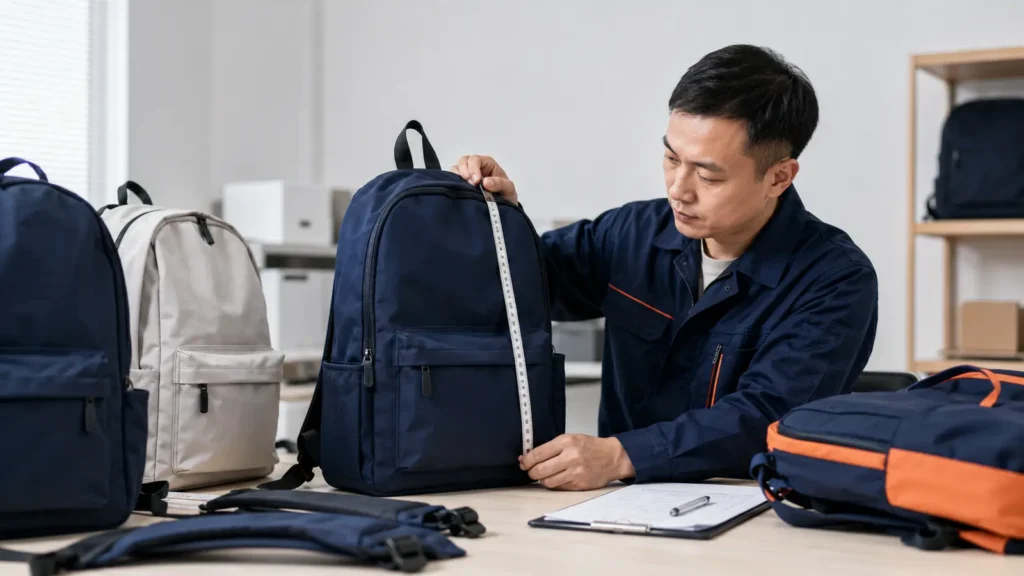
Before approving the sample
- Confirm overall height, width, depth, and agreed tolerance.
- Measure the laptop sleeve and test the intended device.
- Load the planned items and inspect the shape when worn.
- Check every zipper repeatedly, including curved paths and pocket intersections.
- Adjust both straps through their usable range.
- Inspect upper strap attachments, handle, base corners, and webbing joints.
- Compare body fabric, lining, mesh, webbing, zipper tape, thread, and decoration with approved swatches.
- Measure the logo and its distance from agreed reference seams.
- Examine stitching, binding, seam alignment, loose thread, stains, marks, and symmetry.
- Review labels, hangtags, barcode information, individual packaging, carton marks, and folding method.
Document approval with a signed specification, dated photos, color references, artwork version, and sample status. If a change is approved after sampling, revise the specification so production is not forced to choose between conflicting instructions.
Pre-production and production controls
A pre-production sample is useful when the final materials, colors, trims, and artwork differ from an earlier development sample. During production, the supplier can check cut parts, decoration output, critical dimensions, and workmanship. Final inspection should use the approved specification and sample as the reference. Buyers with required sampling plans, laboratory tests, or destination-market protocols should state them before quotation because they affect cost and scheduling.
Golden sample discipline
Keep one clearly identified approved sample with the buyer and one with the supplier when practical. Record whether approval applies to construction, materials, color, decoration, packaging, or all elements. A photographed sample alone may not preserve fabric hand, padding, or exact color, so written specifications remain essential.
How to Plan a Bulk College Backpack Order
1. Define the program
State the buyer type, user group, sales or distribution channel, destination, total quantity, color split, and target date. Separate essential features from optional features.
2. Build the quotation brief
Include reference photos or a tech pack, dimensions, capacity goal, device size, materials, compartments, colors, logo files, labels, packaging, and delivery terms. Ask the supplier to identify assumptions and alternatives.
3. Review the technical proposal
Check whether the proposed materials, dimensions, logo method, and construction match the use case. Resolve ambiguous words such as “large,” “thick,” “durable,” or “waterproof” with measurable or observable requirements.
4. Approve artwork and color direction
Provide vector logo files where available. Approve decoration size and placement on a scaled mockup, then confirm them on the physical sample. Record Pantone references and approve actual swatches.
5. Develop and test the sample
Load the sample with representative items, wear it, open all pockets, inspect seams, and review packaging. Collect feedback from a small stakeholder group using one checklist so preferences do not become contradictory instructions.
6. Confirm the production specification
Freeze the bill of materials, dimensions, colorways, artwork version, labels, packaging, inspection method, quantities, delivery terms, and change-control process.
7. Monitor and inspect
Agree on production updates and required inspection stages. Resolve deviations in writing. Do not rely on informal chat messages as the only specification record.
8. Plan repeat orders
Retain reference codes, approved swatches, artwork files, packaging data, and inspection findings. Ask which materials are likely to remain available and which may require reapproval in a later season.
Information to Send for an Accurate Quotation
An efficient request for quotation should include:
- Intended users and use case
- Destination market and delivery location
- Total quantity and quantity by color or design
- Desired dimensions or capacity range
- Maximum laptop dimensions
- Reference image, sketch, or technical drawing
- Preferred shell, lining, mesh, foam, and trim direction
- Required compartments and functions
- Body, lining, webbing, zipper, and hardware colors
- Vector logo artwork and decoration preference
- Logo dimensions and placement
- Private labels, hangtags, barcode stickers, and packaging
- Target delivery date and requested trade terms
- Sampling, inspection, documentation, or testing requirements
When some details are undecided, mark them as open and ask for two clearly defined options. This produces useful alternatives without allowing the project to drift.
Questions to Ask a Backpack Supplier
- Which details are included in the quotation, and which are assumptions?
- What is the MOQ for the selected structure, material, color split, and logo method?
- Can you provide material and color swatches before sample approval?
- What are the finished internal dimensions of the laptop sleeve?
- Which elements will be custom and which use an existing base pattern?
- How will changes after sample review affect cost and timing?
- What sample stages do you recommend for this specification?
- How will critical dimensions, strap symmetry, zippers, decoration, and packaging be checked?
- How will personalized units be identified and sorted?
- What information is needed to support repeat-order consistency?
- Which packaging and carton options are available for the destination and channel?
- Which party is responsible for confirming destination-market labeling, testing, and compliance requirements?
Clear answers reveal whether the supplier understands the product as a controlled specification rather than a generic bag.
Common College Backpack Buying Mistakes
Choosing by appearance alone
A visual reference does not show internal dimensions, foam, lining, reinforcement, seam finishing, or zipper behavior. Convert the reference into a specification and a sample checklist.
Using capacity as the only size measure
Two bags with the same stated capacity may organize space differently. Confirm dimensions and perform a realistic load test.
Adding every possible feature
More pockets, openings, trims, and hardware increase cost, weight, and inspection points. Retain features that serve frequent user tasks.
Approving logo artwork without a production sample
Fabric texture, seams, curvature, padding, and color affect decoration. Approve the mark on the intended panel and material.
Ignoring the color split
A total order may meet the product MOQ while individual material colors do not. Share quantities by color at the quotation stage.
Treating “waterproof” as a generic fabric benefit
Finished-bag performance depends on fabric and construction. Use qualified language and request documented requirements where performance claims matter.
Leaving packaging until the end
Tags, labels, barcodes, stuffing, folding, carton quantities, and marks affect cost and schedule. Include them in the approved specification.
Ordering bulk before load testing
A backpack can measure correctly yet feel unbalanced or become difficult to close. Use the intended items during sample review.
Why JIUMU Is Relevant to College Backpack Programs
JIUMU, established in 2010 in Guangdong, China, supports B2B custom teamwear, uniforms, hats, bags, and branded-merchandise programs for buyers in North America and Europe. Relevant capabilities include OEM and ODM development, fabric sourcing, Pantone color matching, embroidery, screen printing, heat transfer, woven and rubber/PVC-style patches, private labels, hangtags, packaging customization, digital mockups, physical samples, bulk production, quality control, and export support.
The typical MOQ is 50 pieces, subject to product structure and customization. This is especially useful for schools, sports clubs, uniform dealers, promotional product companies, retailers, ecommerce brands, and private-label buyers who want to coordinate backpacks with custom hoodies, team jackets, team jerseys, or custom hats.
JIUMU does not replace the buyer’s responsibility to define market-specific labeling, testing, and compliance needs. The practical advantage is a sourcing conversation organized around specification, sampling, customization, packaging, quality control, and repeat-order information.
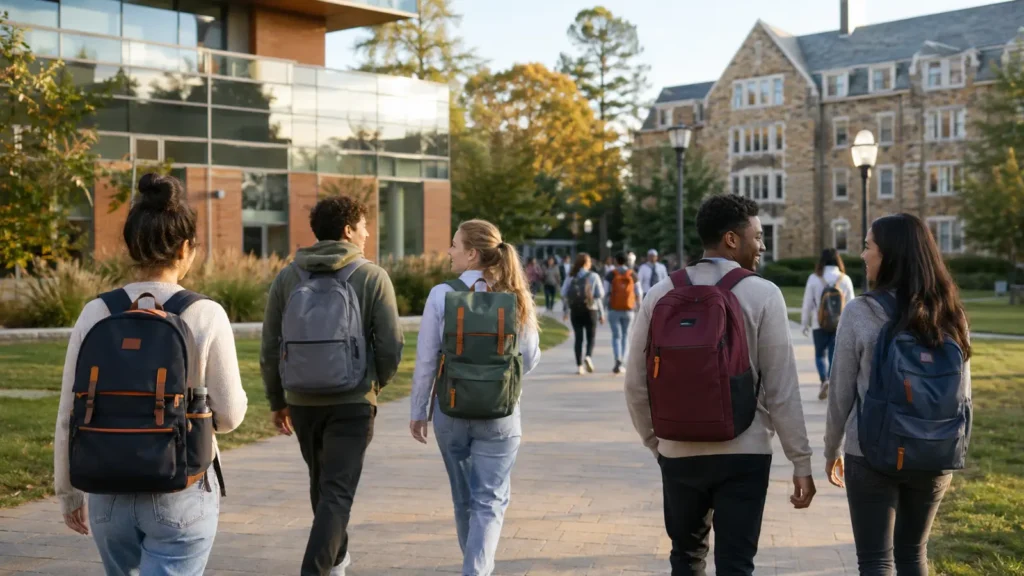
Frequently Asked Questions
Final Recommendation
The best backpacks for college students are not defined by one trendy silhouette. They are the bags whose capacity, device fit, organization, materials, construction, customization, and packaging match a clearly defined campus use. For a broad program, begin with a 22–28 L daypack, a dimensioned padded laptop sleeve, useful rather than excessive organization, shaped padded straps, a practical back panel, dependable zippers, and a reinforced base. Then validate the specification with an actual student load and a physical sample.
Professional buyers should control the order through one approved specification, artwork version, color and material references, sample record, packaging plan, and inspection checklist. This discipline makes quotations easier to compare, reduces avoidable revisions, and creates a stronger foundation for repeat orders.
About JIUMU: JIUMU is a Guangdong-based B2B supplier established in 2010, serving custom teamwear, logo apparel, uniforms, hats, bags, and branded-merchandise programs for North American and European buyers.