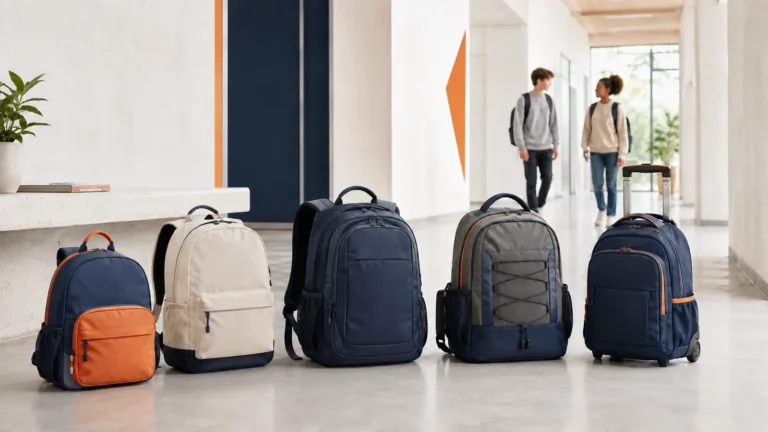
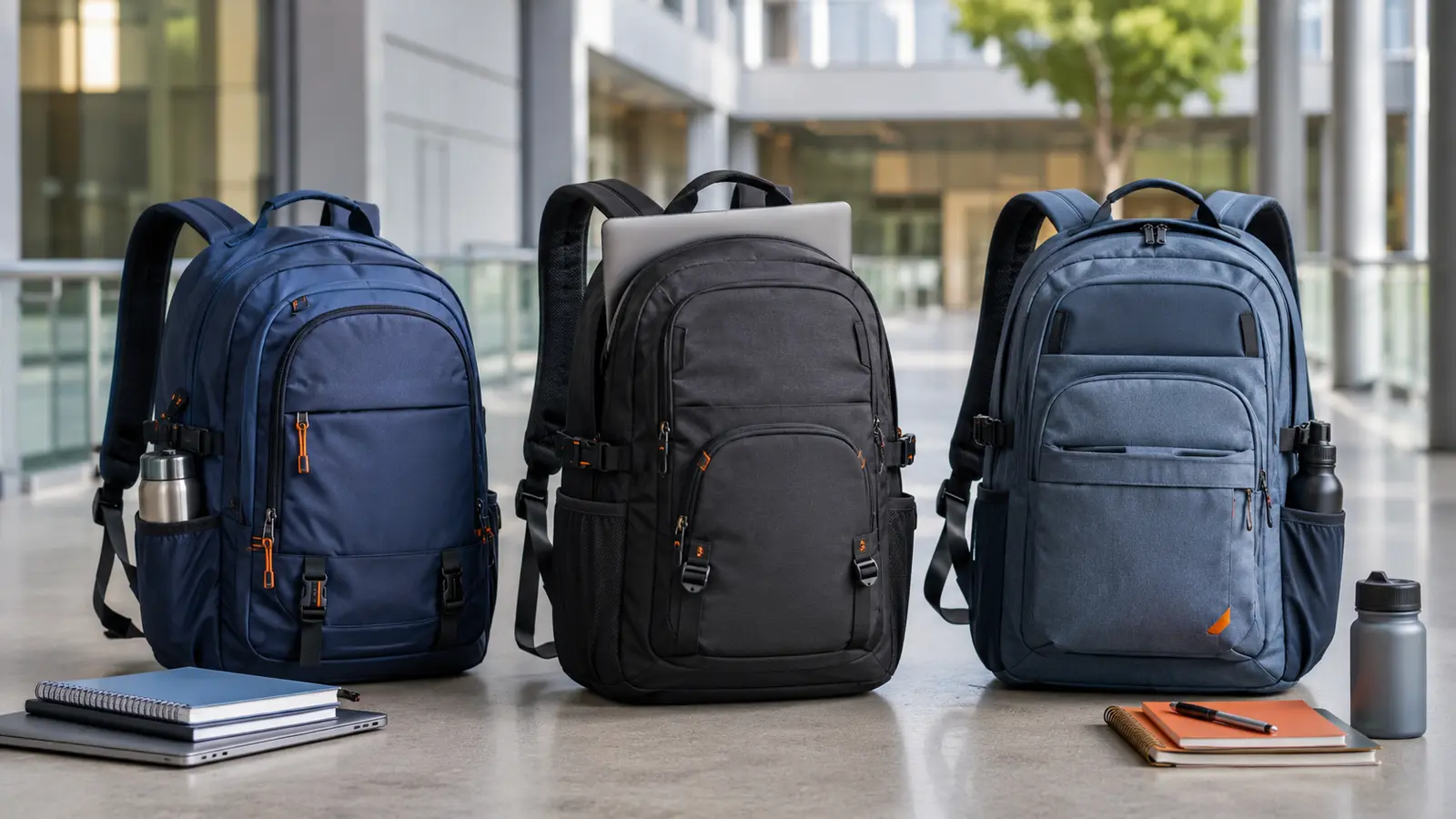
Best Large-Capacity Backpacks for School
Schools, distributors, uniform dealers, promotional companies, and private-label brands often ask for a “large” school backpack without defining what large means. That is where sourcing problems begin. A bag can look generous in a rendering yet lose useful space to a narrow opening, poorly shaped pockets, excessive padding, or an unstable base. It can also hold more than a student should comfortably carry.
The best large-capacity backpacks for school are therefore not simply the biggest models. They combine usable storage, a proportionate fit, organized compartments, durable load points, and a specification that can be reproduced consistently across a bulk order. This guide explains how professional buyers can define those requirements, compare constructions, approve samples, and request a more accurate quotation.
Quick Answer: For most secondary-school and college programs, begin by evaluating backpacks in the approximate 28–35 L range, then validate the physical dimensions and packed sample rather than relying on liters alone. Prioritize two wide padded shoulder straps, an adjustable fit, a padded back, a stable base, a protected device sleeve, and compartments that keep dense items close to the wearer’s back. Capacity should support the timetable—not encourage overloading.
Why Capacity Must Be Balanced With Carrying Comfort
A large-capacity backpack solves real operational needs. Students may carry textbooks, binders, a laptop or tablet, lunch, sportswear, a water bottle, chargers, and personal items between home, school, training, and after-school activities. Buyers also need enough decoration area for a crest or sponsor mark and enough internal structure to reduce daily disorder.
However, capacity and safe load are different specifications. The American Academy of Pediatrics advises that a child’s backpack should not exceed 15% of body weight and recommends wide padded straps and a padded back. The American Academy of Orthopaedic Surgeons similarly recommends using both shoulder straps, keeping the load close to the back, and positioning heavier items low and toward the center. The U.S. Consumer Product Safety Commission also cautions against overly heavy student backpacks.
These recommendations matter in product development. A 35 L bag is a volume envelope, not an instruction to fill every cubic centimeter with dense books. Professional buyers should combine a useful capacity with internal organization, a close-to-body device compartment, and clear user guidance.
Large-Capacity School Backpack Decision Table
| Buyer need | Practical starting point | Features to specify | Main risk to control |
|---|---|---|---|
| Daily secondary school | About 28–32 L | Two main sections, organizer, bottle pockets, padded device sleeve | Oversized body on smaller students |
| College or campus commute | About 30–35 L | 15–16 inch device sleeve, document section, cable pocket, luggage sleeve if needed | Weak laptop protection or unstable base |
| School plus sports | About 32–40 L | Separated apparel/shoe zone, easy-clean lining, compression straps | Wet gear touching books or electronics |
| Travel or boarding program | About 35–45 L | Clamshell access, compression, security pocket, reinforced handles | Excess weight and airline size conflicts |
| Younger pupils | Fit-led, usually below adult “large” sizes | Shorter back length, light empty weight, simple opening | Bag too long or wide for the wearer |
These ranges are sourcing starting points, not universal standards. Liters may be calculated differently by different suppliers. Always compare external dimensions, internal dimensions, empty weight, opening geometry, and a real packed sample.
What Counts as a Large-Capacity Backpack for School?
In school procurement, “large capacity” usually means the bag can accept a full academic load while remaining wearable and organized. It should hold the intended binder format, device, lunch format, and clothing layer without distorting the zippers or pushing hard objects into the wearer’s back.
28–32 L: Practical daily capacity
This is often the most versatile range for older students. It can accommodate several books, A4 or letter-size folders, a device, stationery, and daily accessories while remaining more manageable than a travel-oriented pack. It is a strong starting point for school stores, team programs, and broad student-size ranges.
32–35 L: Expanded academic and campus use
This range is useful when students carry thicker binders, a larger laptop, lunch, and a change of clothes. The pattern must control depth so the load does not project too far behind the wearer. Side compression straps, a structured back, and a firm base can improve stability.
35–45 L: Specialist or mixed-use capacity
These packs may suit boarding school, travel, tournament, or school-plus-sports programs. They require stricter fit validation. Buyers should ask whether the same user truly needs a single combined bag or would be better served by a backpack plus a separate equipment bag.
Which Backpack Type Fits the Program?
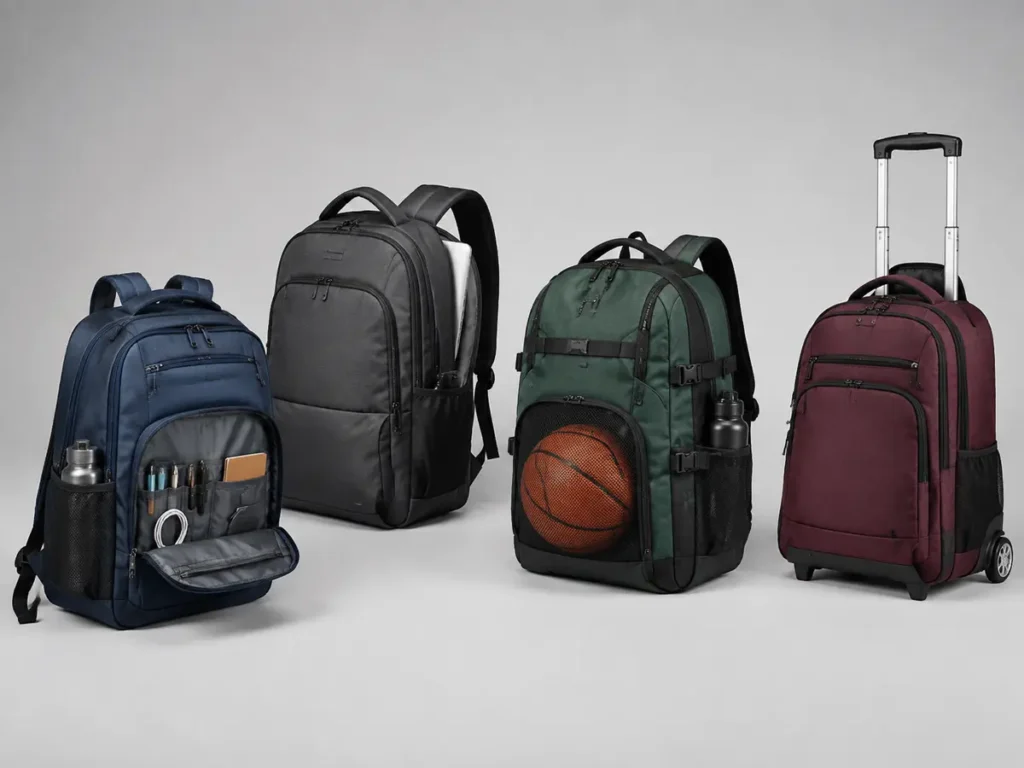
Multi-compartment academic backpack
This is the safest general-purpose format. Two or three zippered sections separate books, electronics, and small items. It works well for schools and distributors because the value is easy to explain and the decoration zone is usually clear.
Laptop-focused school backpack
A device-led model places the padded sleeve against the back panel. Check the actual sleeve dimensions, foam coverage, closure method, and false-bottom clearance. “Fits 15-inch laptop” is not precise enough because device aspect ratios and bezels vary.
School-and-sports hybrid
This format adds a ventilated or wipe-clean zone for shoes or clothing. It is useful for teams and academies, but the extra compartment can consume academic storage. Approve the layout using the real kit list.
Rolling school backpack
A rolling model can reduce carrying time where school rules and building layouts allow it. It adds trolley hardware, wheels, base protection, and weight. Confirm stair use, locker fit, aisle rules, handle height, and whether straps can be covered when rolling.
Expandable backpack
Expansion zippers support occasional extra volume but can move the center of gravity away from the back. Specify the closed and expanded dimensions, zipper path, compression method, and intended loading scenario.
Capacity Is More Than a Liter Number
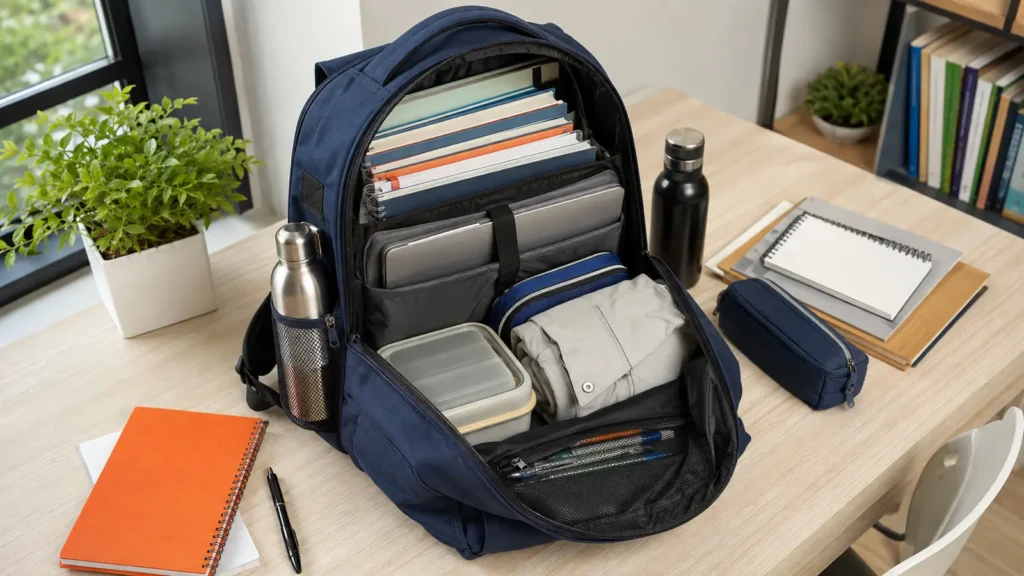
Two nominal 32 L bags can perform very differently. A tapered top, thick dividers, rounded corners, or a shallow zipper opening may make one much harder to pack.
| Capacity factor | What the buyer should verify | Why it affects usable space |
|---|---|---|
| External dimensions | Height × width × depth in a defined condition | Shows overall footprint and locker compatibility |
| Main opening | Zipper length and opening angle | Determines whether binders and lunch boxes load easily |
| Compartment geometry | Flat, tapered, curved, or divided | Irregular zones reduce usable volume |
| Padding | Thickness and coverage | Protection adds bulk and reduces internal space |
| Expansion | Closed and expanded dimensions | Prevents unclear marketing capacity |
| Empty weight | Finished sample weight | Heavy hardware consumes the carrying allowance |
| Packed test | Agreed book, device, bottle, and clothing set | Reveals interference between compartments |
For a quotation, provide the required contents and the maximum acceptable external dimensions. If lockers are involved, send the clear internal locker opening—not only the cabinet’s outside size.
Fit and Load-Management Features
Back length and overall proportions
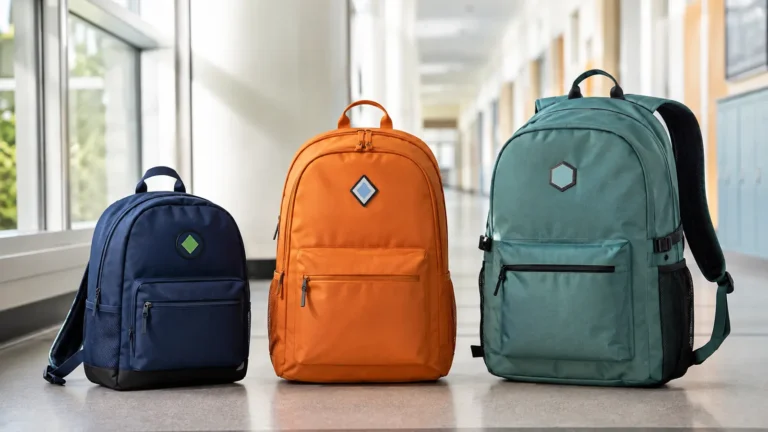
The bag should not be wider than the intended wearer’s torso or hang excessively below the waist. A single adult-size pattern may not serve a wide age range. Consider at least two sizes when a program includes both younger and older students.
Two padded adjustable shoulder straps
Wide straps spread pressure better than narrow webbing. Specify finished width, foam type and thickness, edge binding, adjustment range, and strap curve. Check whether the strap anchors lie flat under a realistic load.
Back panel
A padded panel protects the wearer from hard contents and helps the bag retain shape. Spacer mesh may improve surface airflow, though it does not make a loaded backpack “cool.” Evaluate comfort, abrasion, seam placement, and drying behavior.
Sternum strap and waist support
A sternum strap can stabilize a tall pack, especially during cycling or walking. It should be adjustable and removable if the buyer wants simpler styling. A true load-bearing hip belt is uncommon on conventional school bags; decorative waist webbing should not be presented as equivalent.
Compression straps
Side compression can bring a partly filled load closer to the back. Confirm that buckles do not block the main zipper and that loose webbing ends can be managed.
Organization Features That Improve Daily Use
The most effective layout places dense, flat items close to the back. A padded laptop sleeve should sit behind books rather than on the front face. The main compartment should accept the target binder without forcing the zipper.
Useful features include:
- a raised, padded laptop or tablet sleeve;
- a document divider that keeps papers flat;
- two bottle pockets with tested opening diameter and retention;
- a front organizer for pens, cards, and cables;
- a soft-lined pocket for glasses or small electronics;
- a key clip positioned away from a device screen;
- a bright lining that improves visibility;
- a stable base that allows the bag to rest without collapsing.
More pockets are not automatically better. Every divider adds material, labor, weight, and potential failure points. Build the layout around a defined packing list.
Materials for Large School Backpacks
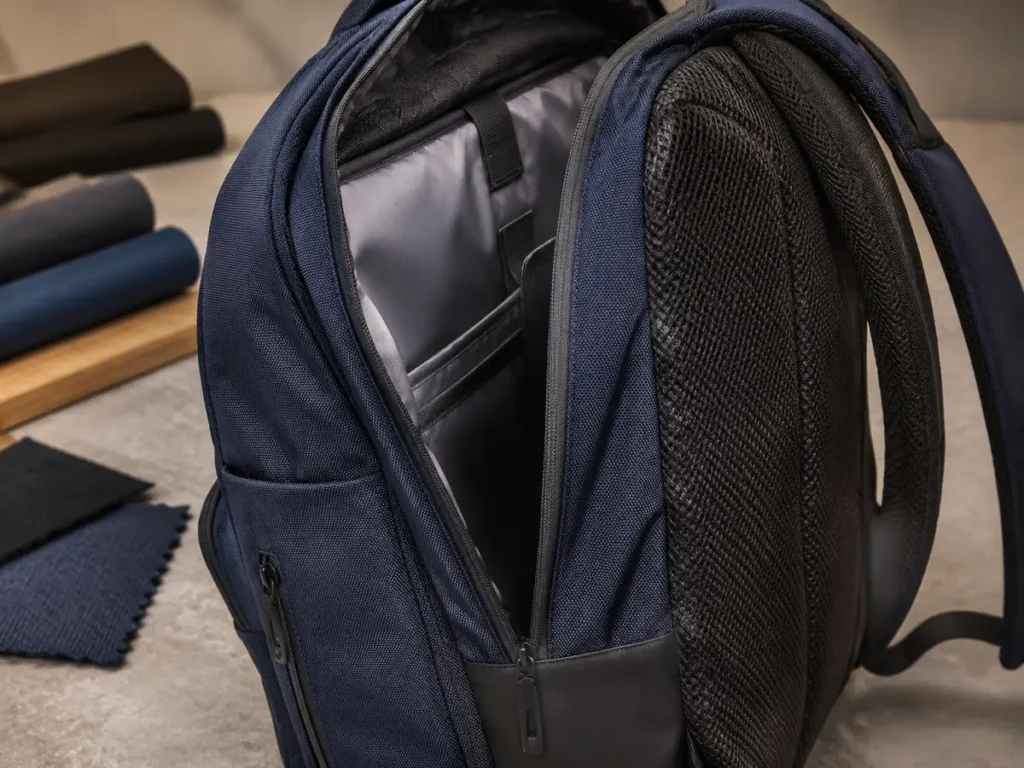
Polyester woven fabric
Polyester is widely used because it supports many colors, coatings, and price levels. Specify fabric weight or supplier construction, weave, backing or coating, color standard, and performance requirements. A generic “polyester” line is not a complete specification.
Nylon woven fabric
Nylon can provide strong abrasion performance at appropriate constructions and is often used for more technical positioning. It may increase cost. Compare finished fabrics rather than assuming fiber name alone determines durability.
Recycled-content fabrics
Recycled polyester can support a sustainability brief, but claims require documentation and controlled chain-of-custody language. Ask what evidence is available, which components are covered, and how the statement may be used in the destination market. Do not print an environmental claim before it has been substantiated.
Lining, mesh, and base materials
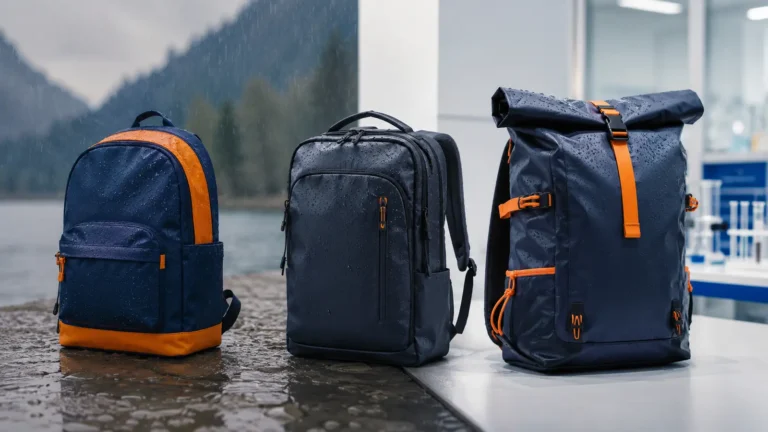
Lining should resist snagging around books and zipper sliders. Bottle-pocket mesh needs recovery and abrasion resistance. A reinforced or coated base helps with floor contact, but seams and needle holes mean “waterproof” should not be claimed without a defined construction and test method. “Water-resistant fabric” is not the same as a waterproof finished bag.
Construction Details That Matter in Bulk Orders
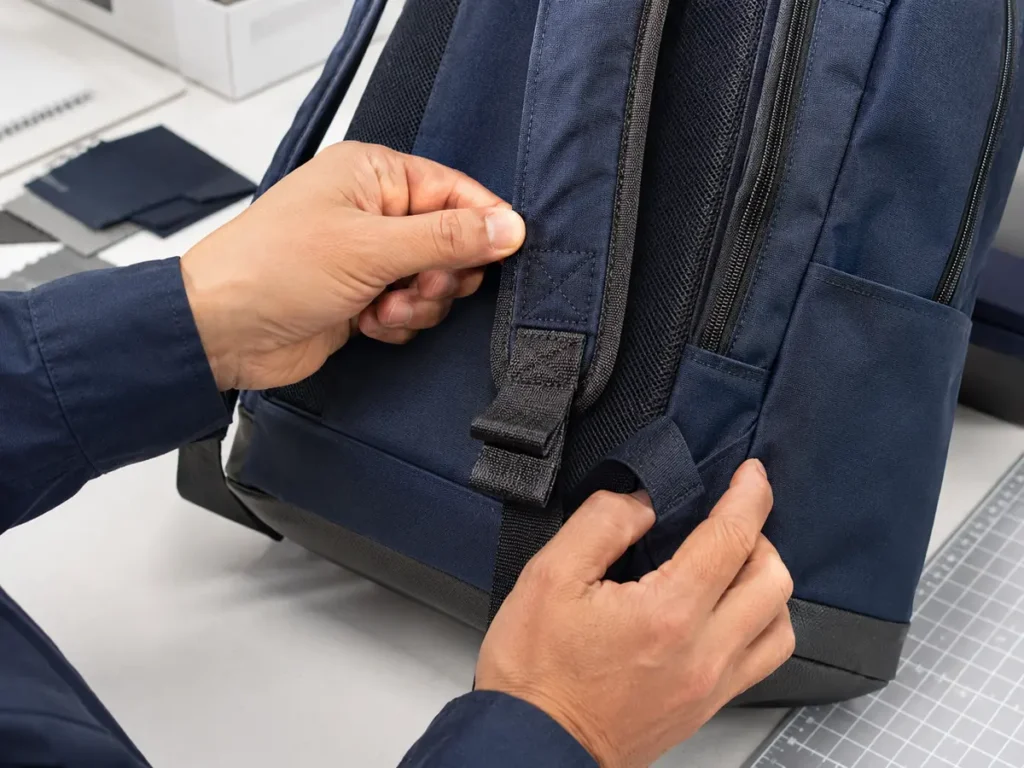
Large bags place greater stress on shoulder anchors, handles, bottom seams, and zippers. Buyers should examine:
- Shoulder-strap anchoring: Look for adequate seam allowance, reinforcement, and consistent bartacks or box stitching.
- Top handle: Define whether it is a quick grab handle or intended for sustained lifting.
- Zipper size and path: Tight curves raise operating force. Test the bag packed, not empty.
- Seam binding: Internal raw edges should be controlled and free from loose threads.
- Base structure: Inspect abrasion zones and whether the bag stands or folds under load.
- Pocket attachment: Bottle and front pockets should remain symmetrical across units.
- Foam consistency: Uneven foam causes twisting, lumps, and an inconsistent retail appearance.
Customization and Private-Label Options
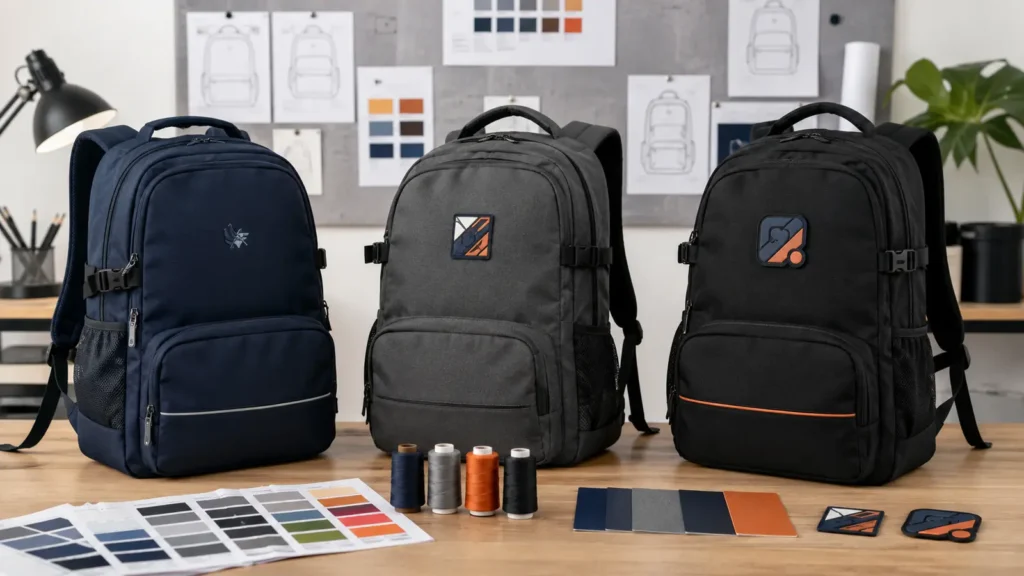
Large-capacity backpacks offer useful branding space, but decoration should respect pockets, seams, and internal layers.
Embroidery
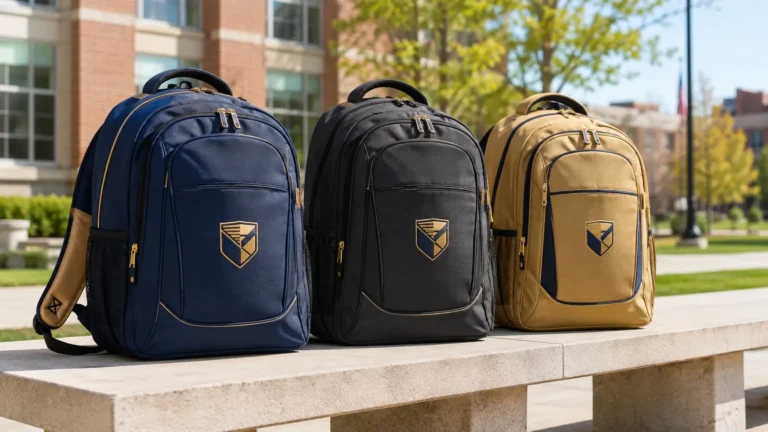
Embroidery suits school crests, team marks, and durable identity programs. Confirm artwork size, stitch density, thread colors, placement tolerance, and backing. Dense embroidery can pucker lightweight fabric, so sample the actual panel construction.
Woven and rubber/PVC-style patches
Woven patches reproduce fine shapes with a flat surface. Rubber-style patches create a dimensional technical look. Confirm attachment method, edge shape, colors, and whether the patch remains flexible on a curved pocket.
Screen print and heat transfer
These methods can support larger graphics and more economical logos depending on fabric and quantity. Approve color, adhesion, hand feel, and performance on the chosen coating. Decoration tests must use production-equivalent material.
Private labels and packaging
Buyers may specify woven labels, care or content labels where applicable, hangtags, barcode stickers, carton marks, and individual packaging. Destination-market labeling should be confirmed with the importer or compliance adviser. Requirements can depend on construction, claims, age grading, and the market of sale.
Planning a custom school backpack program? Send JIUMU your target quantity, capacity or dimensions, student age group, intended contents, fabric/color direction, logo file, packaging needs, destination, and target delivery date. A reference image or tech pack will make the quotation more precise.
What Drives the Cost of a Large-Capacity Backpack?
Capacity alone does not set the price. The largest cost changes often come from material consumption, number of compartments, zipper length and grade, padding, mesh, buckles, trolley hardware, decoration, labels, packaging, and order complexity.
| Cost driver | Lower-complexity direction | Higher-complexity direction |
|---|---|---|
| Pattern | One main body, simple curves | Multiple structured zones, expansion |
| Materials | Standard stock fabric/color | Custom fabric, special finish, custom-dyed components |
| Organization | Basic sleeve and front pocket | Multiple lined and padded organizers |
| Decoration | One small logo | Multiple locations or mixed processes |
| Hardware | Standard sliders and buckles | Custom pulls, premium or specialized hardware |
| Packaging | Standard individual bag/carton | Retail box, custom insert, barcode program |
| Sizing | One pattern | Multiple sizes or fit groups |
Ask suppliers to separate one-time development charges, sample charges, unit price assumptions, packaging, testing, and freight terms. This makes revisions easier to compare.
Sample Approval: Test the Real Use Case
A good approval process begins before the sample is made. Freeze a specification sheet that lists dimensions, tolerances, materials, colors, component references, logo size and coordinates, pocket openings, device-sleeve dimensions, labels, and packaging.
When the sample arrives:
- Measure the bag in the agreed condition.
- Weigh the empty finished sample.
- Pack the exact intended contents.
- Operate every zipper with the bag full.
- Adjust straps on representative users or fit forms.
- Check the device sleeve, bottle retention, and base stability.
- Review stitching at handles and strap anchors.
- Compare logo color and placement to the approval sheet.
- Photograph all approved details and revisions.
- Create a signed or digitally confirmed approval record.
Do not approve only from front-view photos. Side depth, back-panel proportions, internal layout, and packed behavior determine whether the capacity is actually useful.
Bulk Quality-Control Checklist
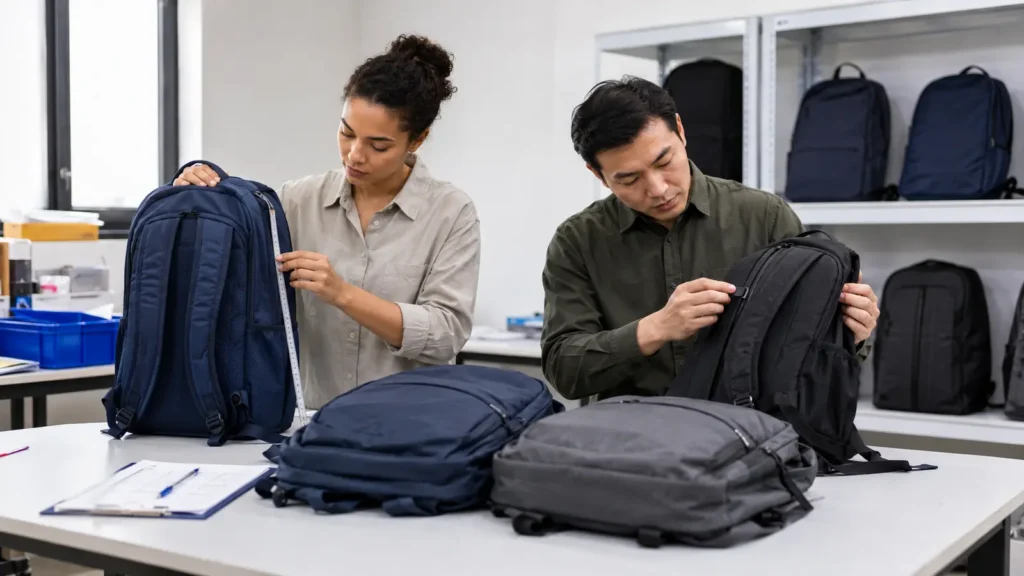
Quality control should use the approved sample and specification as references. A buyer’s inspection plan may include:
- material, color, and surface appearance;
- finished dimensions and empty weight;
- pocket and device-sleeve dimensions;
- zipper operation and slider orientation;
- shoulder-strap symmetry and adjustment range;
- reinforcement at handles and load points;
- seam quality, binding, loose threads, and needle damage;
- logo method, color, size, and placement;
- label content and position;
- odor, stains, marks, or contamination;
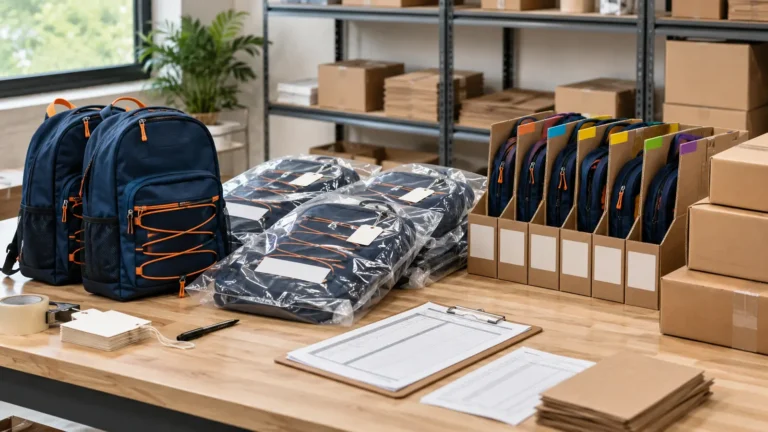
- packing method, barcode, polybag, carton quantity, and carton marks;
- functional checks agreed for the order.
If laboratory testing is required, define the method, laboratory, sample stage, pass criteria, and responsibility before production. Avoid vague requests such as “pass all tests.”
Bulk-Order Planning Process
1. Define the user and packing list
State the student age range, approximate body-size range, device dimensions, binder format, bottle size, clothing, and specialist gear.
2. Set size and capacity boundaries
Provide maximum external dimensions, desired volume range, and empty-weight target. Decide whether multiple sizes are needed.
3. Choose the structure
Confirm opening type, number of sections, device protection, bottle pockets, organizer layout, back panel, straps, handle, and optional compression.
4. Approve materials and branding
Use physical swatches or controlled references where color is critical. Approve logo artwork, method, scale, and position on production-equivalent fabric.
5. Produce and review a sample
Run a packed-use review and record changes. If a major material or pattern changes, request a revised sample rather than relying on description alone.
6. Freeze the purchase specification
Connect the purchase order to the approved specification, artwork, sample, packing requirements, inspection plan, delivery terms, and change-control process.
7. Inspect production and shipment
Use agreed checkpoints, retain representative records, and verify cartons and shipping marks before release.
Questions to Ask a School Backpack Supplier
- How is the stated capacity calculated, and what are the finished dimensions?
- Can you build a packed sample using our real content list?
- What are the device-sleeve internal dimensions and foam coverage?
- Which fabric construction, coating, lining, mesh, and base materials are proposed?
- How are shoulder straps and the top handle reinforced?
- What components are stock and what must be customized?
- Which logo methods suit the chosen front panel?
- What tolerances will apply to dimensions, color, and decoration placement?
- What is included in sample and bulk quality control?
- What documentation is available for any material or environmental claim?
- How are labels, individual packs, barcodes, and cartons controlled?
- What information could change the price or production schedule?
Common Buying Mistakes
Choosing the highest liter figure
A large number may conceal poor geometry and creates an overloading risk. Compare packed samples and dimensions.
Using one size for every student
A bag suitable for a college student may overwhelm a smaller pupil. Segment users by age and body size.
Approving an empty sample
Zippers, balance, back-panel feel, and pocket interference change under load. Always test the intended contents.
Calling coated fabric waterproof
Finished performance depends on seams, zippers, construction, and testing. Use qualified claims supported by evidence.
Adding pockets without a use map
Unused dividers add cost and weight. Assign every pocket a purpose.
Leaving compliance until shipment
Labels, claims, product classification, and destination requirements should be discussed before sampling. In the United States, products primarily intended for children 12 or younger may fall within CPSC children’s-product rules depending on their design and use; importers should determine applicable requirements for the exact product.
Why Work With JIUMU?
JIUMU, established in 2010 in Guangdong, supplies custom teamwear, hats, uniforms, bags, and branded merchandise for B2B programs in North America and Europe. Backpack projects can include OEM/ODM development, fabric sourcing, Pantone color matching, embroidery, screen printing, heat transfer, woven or rubber/PVC-style patches, private labels, hangtags, packaging customization, digital mockups, physical samples, bulk quality control, and export support.
The typical MOQ is 50 pieces, subject to the backpack structure and customization. For large-capacity school bags, the practical advantage is a specification-led process: define the user, validate the packed sample, approve branding on the real material, and carry those references into production.
Frequently Asked Questions
Final Recommendation
The best large-capacity backpacks for school are the models that carry the required daily kit efficiently while maintaining fit, organization, and repeatable construction. Start around 28–35 L for many older-student programs, but let the user profile and packing test—not the biggest marketing number—make the decision.
Define dimensions, contents, materials, load points, decoration, labels, tolerances, and QC before placing a bulk order. This turns “large capacity” from a vague request into a product that can be sampled, inspected, and reordered consistently.
Request a custom JIUMU quotation: Email zhengdong@jiumugear.com or contact +86 18507502899. Send your quantity, size/capacity target, intended contents, logo, colors, packaging, destination, and delivery target. You can also explore Custom Team Bags or contact JIUMU.