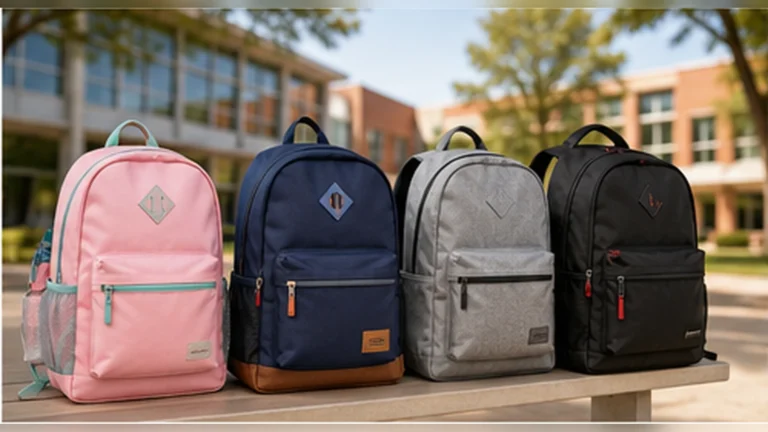
Backpack vs Briefcase: Which Is Better for Work and Business Travel?
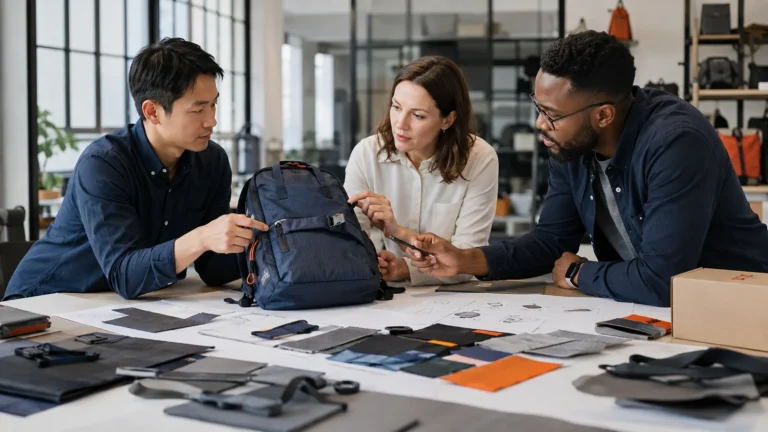
Choosing between a backpack and a briefcase is no longer simply a question of casual versus formal style. For a professional buyer, the decision affects how employees carry laptops, move through airports, present a company brand, organize equipment, and use the bag over repeated trips. A good work bag must fit the actual journey—not only the dress code at the destination.
For daily commuters, sales teams, consultants, conference staff, distributors, and private-label brands, both formats can work. The better choice depends on load, walking distance, transport mode, workplace expectations, laptop size, access needs, and the image the organization wants to project. This guide compares the two formats from both an end-user and bulk-procurement perspective.
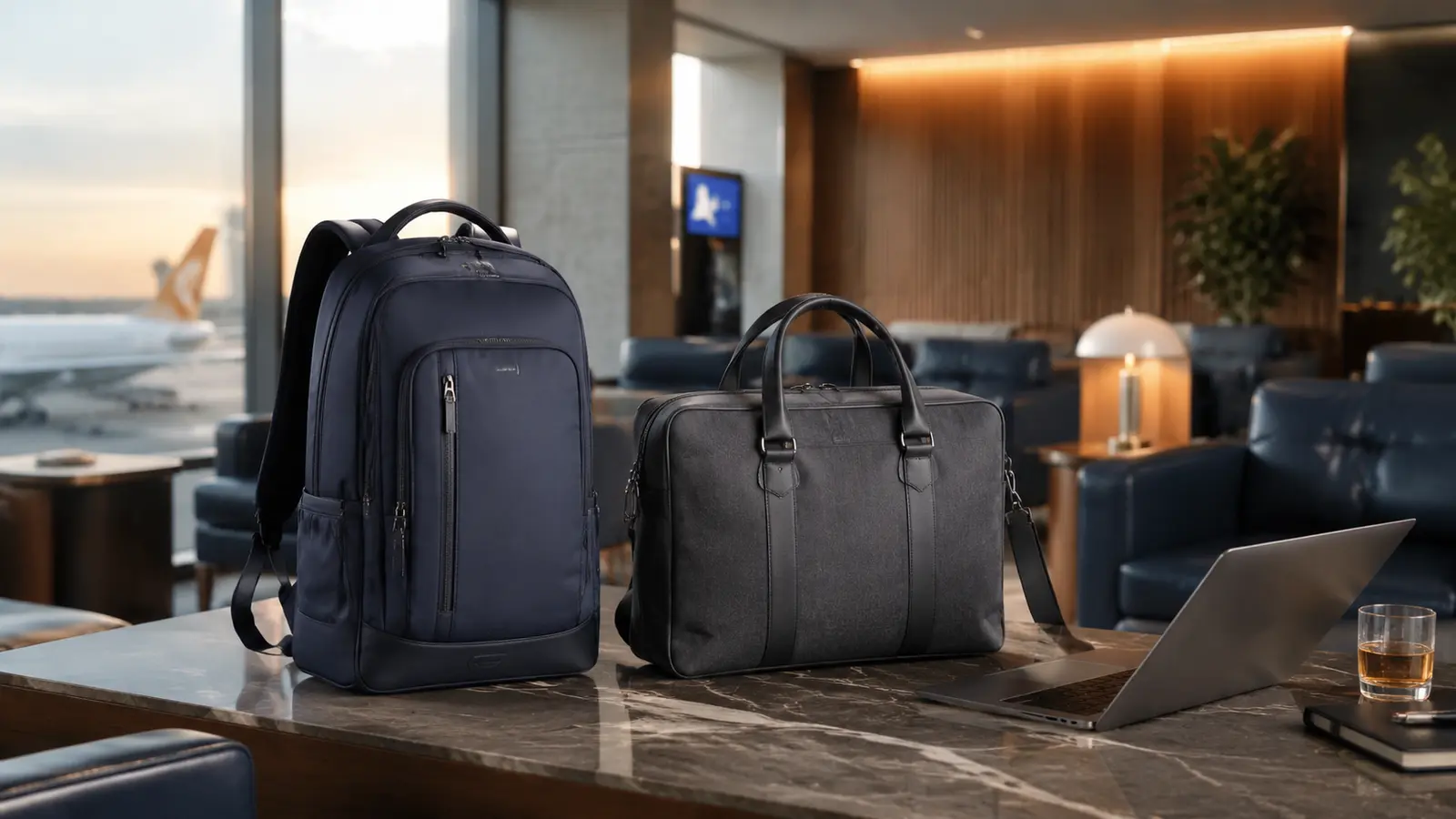
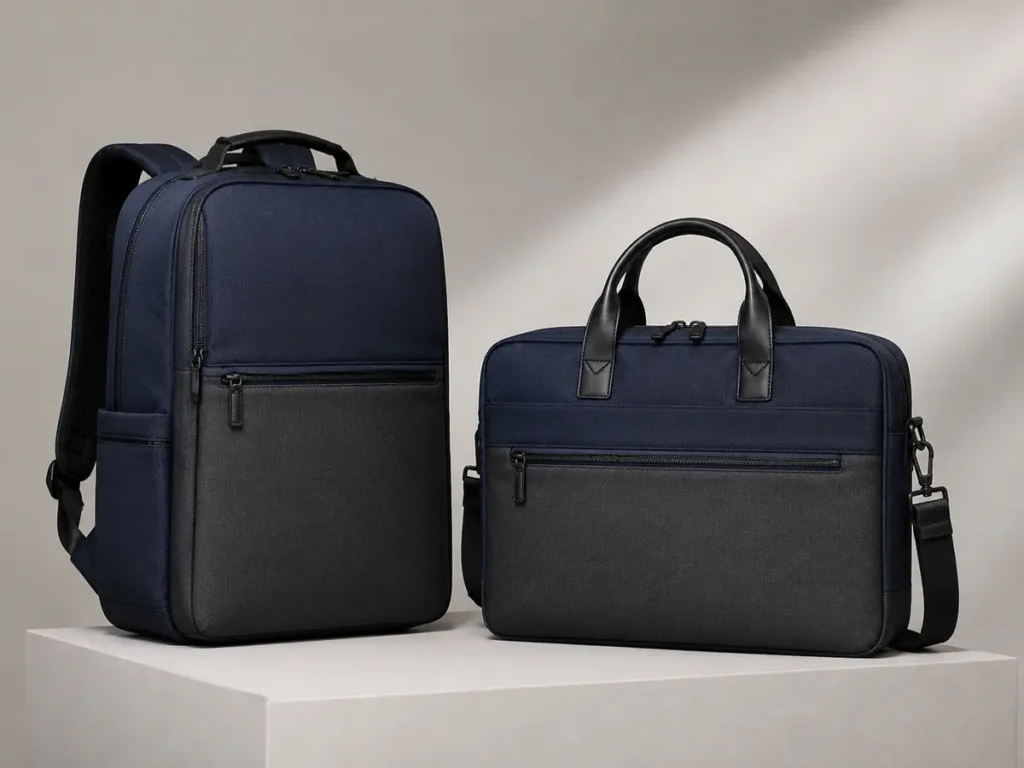
Quick Answer: A professional backpack is usually better for long commutes, airport transfers, heavier technology loads, and hands-free mobility. A briefcase is usually better for formal meetings, lighter document-and-laptop loads, and a traditional executive appearance. For mixed teams or varied travel, a coordinated backpack-and-briefcase range—or a convertible design—often gives procurement teams the most practical solution.
Why This Work-Bag Decision Matters
A work bag is used far more frequently than many branded gifts. It may travel from home to train, from airport security to a client office, and from a conference hall to a hotel on the same day. Small design choices become highly visible: straps that twist, a sleeve that does not fit the company laptop, a briefcase that tips over, or a zipper that catches can undermine an otherwise attractive product.
The purchase also communicates something about the organization. A structured briefcase can reinforce a formal, client-facing identity. A clean, slim backpack can signal mobility, technology, and modern hybrid work. Neither message is universally superior. The right message should match the wearer, the environment, and the brand.
Procurement teams should therefore evaluate three layers together:
- User task: what the person carries and how they travel.
- Product specification: dimensions, materials, structure, organization, comfort, and durability.
- Brand program: logo method, color consistency, packaging, allocation, and repeat-order requirements.
Backpack vs Briefcase Comparison
| Decision factor | Professional backpack | Business briefcase | Procurement implication |
|---|---|---|---|
| Carrying method | Two shoulder straps; hands remain free | Top handles or one shoulder strap | Backpacks suit transfers and walking; briefcases suit short formal movements |
| Load distribution | Load can be shared across both shoulders | Load is concentrated in one hand or on one shoulder | Test both at the intended packed weight |
| Typical capacity | Often more volume and depth | Usually slimmer and document-oriented | Confirm actual usable dimensions, not only quoted liters |
| Laptop protection | Dedicated rear or suspended sleeve is common | Padded central or rear compartment is common | Match sleeve dimensions to the laptop fleet and protective case |
| Organization | Multiple zones for technology, personal items, and bottles | Flat organization for files, laptop, charger, and stationery | Avoid excessive pockets that increase cost without improving use |
| Business appearance | Modern, mobile, technology-led | Traditional, executive, meeting-ready | Choose silhouette, fabric, and branding for the organization’s dress culture |
| Airport movement | Strong for long terminals and transit connections | Easy to place beside a seat; less comfortable over distance | Consider luggage pass-throughs and quick-access electronics |
| Clothing interaction | May crease a jacket or create heat on the back | Keeps the back clear | Consider the wearer’s typical clothing and climate |
| Branding area | Front panel, upper panel, patch, zipper pull | Front face, corner mark, handle tab | Use restrained branding for professional programs |
| Storage when not carried | Can be bulky unless structured efficiently | Usually slim and easy to store beside a desk | Carton size and warehouse space also affect bulk programs |
When Is a Backpack Better for Work?
A backpack is the stronger option when movement is the central requirement. Employees who walk between transit stops, change trains, cycle for part of a commute, navigate large campuses, or move through long airport terminals benefit from keeping both hands available. This is particularly useful when the traveler also handles a suitcase, phone, ticket, coffee, or identification.
Commuting with technology
Modern workers may carry a laptop, power supply, headset, mouse, notebook, phone accessories, access cards, and occasionally a tablet. A backpack can divide this load into a protected technology zone and a separate personal-item compartment. The organization should still resist overbuilding the product. Every extra pocket, zipper, layer, and piece of foam adds weight and cost.
A rear laptop compartment can keep the device close to the wearer’s body and reduce movement. A suspended sleeve bottom may help prevent the device from directly striking the floor when the bag is set down, but the protective effect depends on foam density, construction, fit, and testing. Buyers should not accept the word “padded” as a complete specification.
Airports and multi-stage trips
Backpacks work well for travelers who pull rolling luggage because they do not consume a hand. A luggage pass-through can be useful during smooth sections of a journey, while shoulder straps are useful on stairs and crowded platforms. For U.S. screening, the TSA advises travelers to keep large electronics accessible and states that laptops generally need to be removed in standard screening lanes; procedures can vary by program and location. A compartment that opens quickly is therefore more valuable than a decorative “travel-ready” label.
Buyers must also check the baggage rules of the specific airline and fare. There is no universal “airline-approved” work backpack size. Dimensions that fit one carrier’s personal-item limit may exceed another’s, and a soft bag can still become too large when overpacked.
Field work, campuses, and events
IT teams, trainers, event crews, sales representatives, and project staff often move between locations throughout the day. A backpack can carry demonstration materials, cables, a compact garment layer, and personal essentials without forcing the user to repeatedly change hands. For this group, reinforced strap attachments, a stable base, comfortable padding, and sensible internal weight placement matter more than fashion details.
Where backpacks are less suitable
A backpack may be less appropriate when the user wears tailored clothing, carries only a thin laptop and documents, or enters a conservative professional setting where a traditional case is expected. Back panels can also trap heat, and shoulder straps can press or crease a jacket. A large outdoor-style silhouette may look out of place in a boardroom even when its technical performance is excellent.
When Is a Briefcase Better for Work?
A briefcase is effective when the journey is short, the load is controlled, and the presentation is formal. It keeps documents flat, allows quick access while seated, and can be placed beside a conference chair without loose shoulder straps. A restrained case in a woven technical fabric, coated textile, or leather-style material can look professional without being excessively traditional.
Client meetings and executive settings
The briefcase still has an advantage when arrival and presentation are part of the job. Legal, financial, consulting, real-estate, and senior management roles may favor a clean horizontal case. The shape naturally accommodates documents and makes a laptop easy to remove at a meeting table.
The key is proportion. An oversized, overfilled briefcase looks less professional and becomes uncomfortable. A slim case should hold the intended device, charger, notebook, and essential documents with enough clearance to close without distorting the sidewalls.
Short commutes and vehicle travel
For employees who travel mainly by car or move between a vehicle and an office, the ergonomic advantage of a backpack may be less important. A briefcase can be easier to set on a passenger seat, slide beside a desk, and access without unpacking a larger main compartment.
Document-heavy roles
Horizontal files, samples, and presentation folders fit naturally in many briefcases. Internal dividers should be designed around real document sizes and quantities. Buyers should ask whether the dividers are sewn, bound, or simply loose sleeves; construction affects both appearance and long-term usability.
Where briefcases are less suitable
One-sided carrying becomes tiring as weight and walking distance increase. A detachable shoulder strap helps, but a narrow strap or poorly positioned attachment points can cause the case to tilt and press into the body. A briefcase is also awkward when the traveler must simultaneously handle a roller bag, phone, and documents.

Which Bag Is Better for Business Travel?
The phrase “business travel” covers very different journeys. A one-night trip by car is not the same as a three-flight itinerary with rail connections. The following decision table converts common travel patterns into product requirements.
| Travel pattern | Better starting format | Features to prioritize | Main risk to avoid |
|---|---|---|---|
| Daily train or bus commute | Backpack | Slim depth, two comfortable straps, quick-access transit pocket | Oversized bag that obstructs crowded spaces |
| Frequent air travel with roller luggage | Backpack or convertible | Luggage pass-through, accessible laptop zone, secure small-item pocket | Claiming universal airline compliance |
| Short vehicle-to-office travel | Briefcase | Stable base, comfortable handle, document dividers | Excess weight from decorative structure |
| Formal client meetings | Briefcase | Clean silhouette, restrained logo, structured sides | Large logo or casual outdoor styling |
| Conference and exhibition staff | Backpack | Comfortable carry, organized chargers, water-bottle separation | Too many small compartments |
| Hybrid employee program | Coordinated range | Shared materials, colors, trims, and logo standards | One design forced on every role |
| One-bag overnight trip | Travel backpack | Clamshell access, clothing zone, laptop protection | Excessive depth for daily office use |
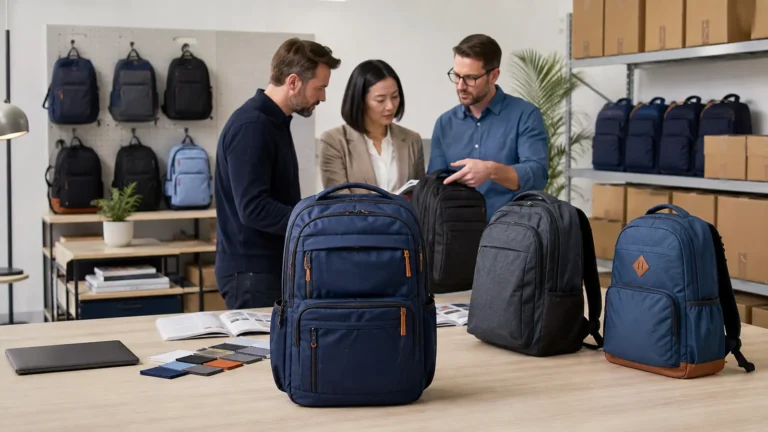
For many companies, “backpack versus briefcase” should not end with one universal winner. Role-based allocation can be more effective: backpacks for technical and mobile teams, briefcases for formal client-facing roles, and matching materials and color standards across both.
Capacity and Laptop Fit: Measure Before You Buy
Capacity labels are useful for comparison but do not reveal the complete internal shape. Foam, lining, dividers, curved panels, and structure consume space. Two bags with the same external volume may hold different equipment.
Start with the actual company laptop fleet. Record width, height, depth, and whether users keep the device in a protective shell. Define the usable internal sleeve dimensions, not merely a marketing label such as “fits 15-inch laptops.” Laptop screen classes do not guarantee identical chassis dimensions.
Then build a load list:
- Laptop and protective case
- Charger and plug type
- Mouse, headset, adapters, and power bank
- Notebook or document folder
- Phone and access cards
- Water bottle or compact umbrella
- Personal items or a light layer
- Product samples, if relevant
Request a sample and pack these objects—or dimensionally equivalent test pieces—into it. Confirm that the zipper closes without tension, corners are protected, the bag stands or rests predictably, and frequently used items remain accessible.
Materials: Appearance Is Only One Part of Performance
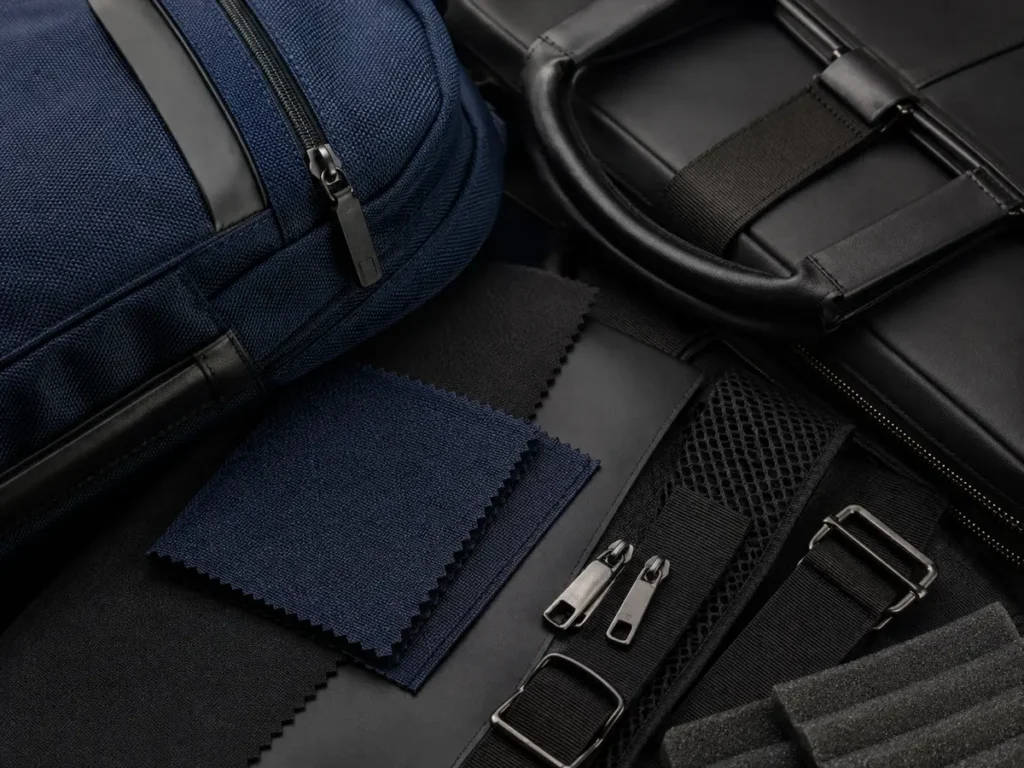
Professional bags may use polyester, nylon, canvas, coated textiles, microfiber or synthetic leather trims, natural leather, or combinations. Fiber name alone does not determine performance. Fabric weight, weave, coating, backing, colorfastness, abrasion behavior, seam construction, and the total product design all matter.
Polyester and nylon
Woven polyester is widely used because it offers flexible appearance, color options, and cost positioning. Nylon can provide a smooth technical look and good toughness in appropriate constructions, although the specific performance depends on yarn, weave, finish, and testing. Buyers should specify the target appearance and test requirements rather than assuming one generic fiber is automatically superior.
Coated and leather-style materials
Coated fabrics and leather-style trims can add structure and a formal appearance. They may also show surface wear, hydrolysis, cracking, color transfer, or edge damage if the material and construction are not suitable for the intended environment. Ask for material specifications and relevant test evidence when claims are important.
Lining, foam, and reinforcement
The unseen components often determine how the bag feels after months of use. Lining should not be so loose that it catches in zippers. Foam needs enough recovery to protect and retain shape without making the bag unnecessarily heavy. Reinforcement at handles, shoulder straps, D-rings, and luggage straps should match the expected load.
Water resistance needs qualification
A coated fabric may resist light moisture, but the completed bag includes seams, zipper openings, needle holes, and panels. “Water-resistant fabric” is not the same as a waterproof finished bag. If weather performance matters, define a test method and acceptance level for the finished construction.
Construction Details That Affect Durability
The bag should be evaluated as a system. Strong outer fabric cannot compensate for weak strap attachment, poor zipper installation, or insufficient reinforcement.
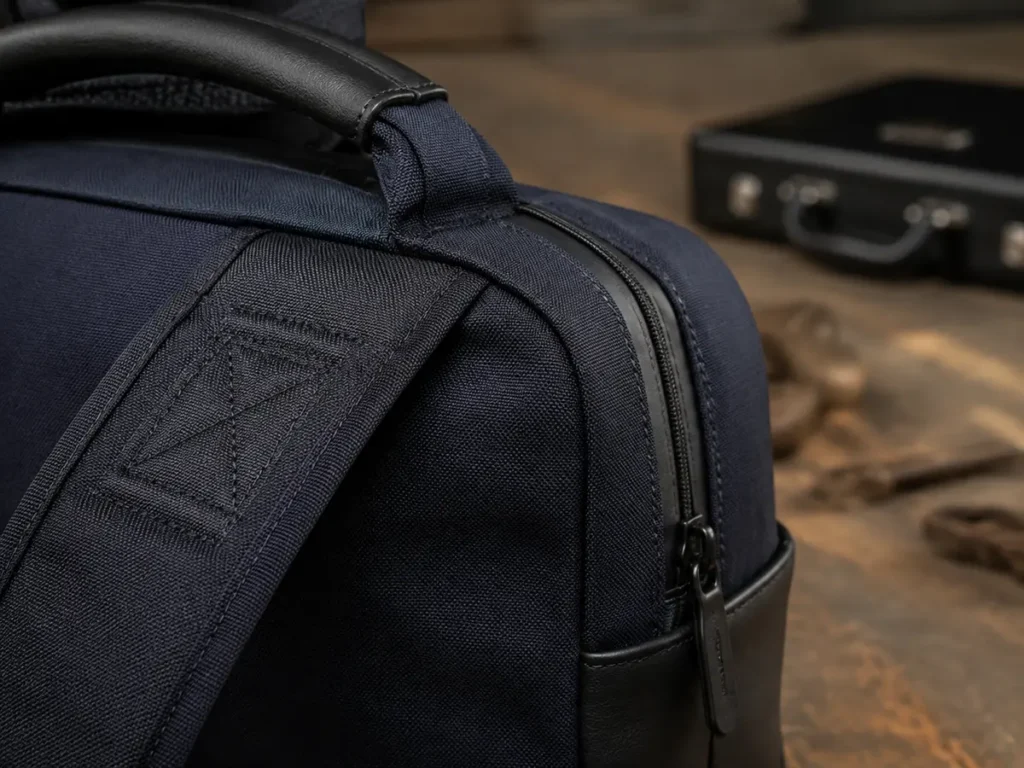
Key inspection points include:
- Shoulder-strap attachment: inspect stitch pattern, reinforcement layers, symmetry, and whether the seam distorts under load.
- Handle anchoring: confirm the handle is comfortable and securely integrated, not attached only to a light outer panel.
- Zipper paths: curves should operate smoothly without lining interference; pulls should be easy to grip.
- Laptop sleeve: verify usable dimensions, foam placement, closure, and clearance from the bottom and sides.
- Base structure: a reinforced or padded base can improve shape and device protection, but also adds cost and weight.
- Edge binding: internal seams and cut edges should be cleanly controlled.
- Hardware: buckles, hooks, D-rings, and sliders should match webbing width and expected load.
- Symmetry and panel alignment: especially important on structured briefcases and geometric front panels.
For bulk orders, define objective tolerances where possible. “Neat stitching” is subjective; stitch appearance, skipped stitches, loose threads, panel alignment, finished dimensions, and functional operation can be described more clearly in an approved sample and QC checklist.
Comfort and Ergonomics: Translate Features into Use
Backpacks distribute a load across two shoulder straps, which can be advantageous over longer distances. That does not make every backpack comfortable. Strap width, curvature, padding, adjustment range, back-panel shape, bag length, and the position of dense items all influence the result.
A briefcase places the load in one hand or on one shoulder. For light, short-duration loads this may be entirely acceptable. For heavier loads or long walks, users may alternate sides, but that is not equivalent to balanced two-strap carrying.
Procurement teams should conduct a practical wear trial rather than relying on photographs:
- Pack the intended load.
- Adjust the straps for several users with different body sizes.
- Walk, climb stairs, sit, and remove the bag repeatedly.
- Wear typical work clothing, including a jacket if relevant.
- Record pressure points, movement, heat, access problems, and garment interference.
This is not a medical assessment. If an employee has a health condition or a workplace accommodation requirement, seek appropriate professional guidance and choose equipment accordingly.
Organization and Security
The most useful organization is task-based. A traveler needs fast access to identification, phone, charging cable, laptop, and liquids without exposing every personal item. A commuter may need a transit-card pocket reachable without removing the bag. A salesperson may need flat space for samples and presentation materials.
Security features should be described precisely. A hidden pocket is less visible, but it does not make a bag theft-proof. Lockable zipper pulls may accept a small lock, but soft fabric can still be cut. RFID-related claims require appropriate materials and verification. Avoid turning modest design features into absolute security promises.
For airport screening, a laptop compartment that opens cleanly or allows quick device removal can reduce packing friction. The TSA travel checklist recommends placing large electronics near the top layer for accessibility. Travelers should still follow instructions at the checkpoint, because procedures can differ.
Business Appearance and Brand Positioning
A professional backpack does not need to look like hiking equipment. A controlled silhouette, limited exterior webbing, tonal zippers, clean panels, and restrained color can fit a modern office. Similarly, a briefcase does not need to imitate expensive leather; technical fabrics and matte trims can create a credible, contemporary business product.
Consider the audience:
- Technology and startup teams: slim backpacks, functional organization, understated marks.
- Consulting and financial teams: structured cases or minimal executive backpacks.
- Conference programs: recognizable color, easy distribution, practical capacity.
- Sales teams: organized samples, documents, technology, and travel features.
- Employee onboarding: a versatile design that works across commute types.
- Retail and private label: a defined target persona, price position, and coherent collection.
Custom Branding and Private Label Options
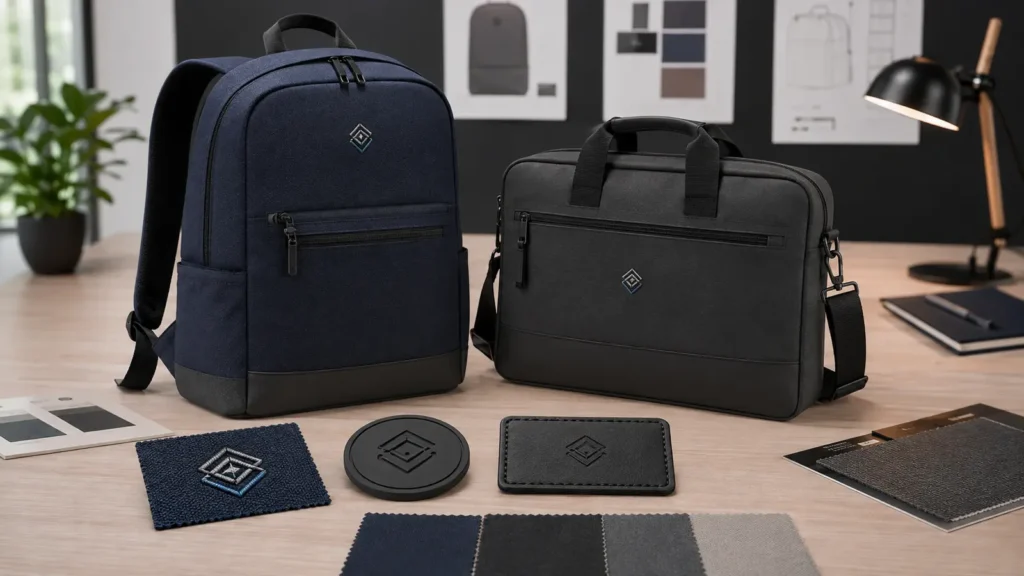
The best branding method depends on the bag surface, logo detail, order quantity, target appearance, and durability requirement. JIUMU supports embroidery, screen printing, heat transfer, woven patches, rubber/PVC patches, leather-style patches, private labels, hangtags, and packaging customization, subject to product design and order specification.
Embroidery
Embroidery adds texture and can suit a professional textile bag when the logo is simplified and sized appropriately. Dense stitching can distort thin or heavily padded panels, so backing, placement, stitch count, and sample approval matter.
Heat transfer and printing
Heat transfer can reproduce fine shapes and multiple colors, but adhesion, flexibility, surface compatibility, and heat sensitivity must be evaluated. Screen printing can be efficient for suitable flat panels and simplified colors. Ask for a sample on the actual production material.
Woven and rubber/PVC patches
Woven patches can show fine details in a textile format. Rubber/PVC patches create a dimensional technical look and can work well on modern backpacks. Patch thickness, edge design, attachment method, and color matching should be approved.
Leather-style patches and debossing
A leather-style patch can give a restrained executive character. Buyers should confirm substrate composition, surface finish, color, thickness, attachment, deboss depth, and any material restrictions relevant to their market or brand policy.
Private-label components
Woven labels, lining prints, custom zipper pulls, hangtags, packaging, and carton marks can create a complete program. These elements may have different minimums, tooling costs, and lead times. Consolidate them in one specification sheet to reduce mismatches.
Planning a custom work-bag program? Send JIUMU your target bag style, quantity, laptop dimensions, colors, logo file, preferred decoration, packaging needs, destination, and required delivery date. The team can review the concept for a digital mockup, sample, and bulk quotation. Explore custom team bags or request a quotation.
What Drives the Cost of Custom Backpacks and Briefcases?
Price per piece cannot be evaluated responsibly from a photograph alone. Major cost drivers include:
| Cost driver | Why it matters | Buyer decision |
|---|---|---|
| Bag dimensions and structure | More fabric, foam, stiffener, lining, and labor | Define required load; remove unused volume |
| Material specification | Fabric construction, coating, trims, and testing affect price | Request comparable options with clear specifications |
| Number of compartments | Each zipper, divider, and pocket adds components and sewing | Keep only task-relevant organization |
| Hardware | Custom pulls and metal fittings may need tooling or higher minimums | Use standard hardware unless brand value justifies custom parts |
| Logo method | Stitch count, colors, patch tooling, and placement affect cost | Simplify artwork where appropriate |
| Private labels and packaging | Adds components, setup, handling, and carton requirements | Separate mandatory from optional elements |
| Sampling and testing | Reduces production risk but adds development cost and time | Budget for approval rather than skipping it |
| Quantity and color breakdown | Small splits reduce production efficiency | Consolidate colors or plan allocation carefully |
| Delivery schedule and shipping | Urgent schedules reduce flexibility | Share the in-hands date at the start |
For an accurate quotation, suppliers need a complete brief. Comparing quotes with different fabric, foam, compartments, decoration, packaging, or delivery assumptions produces a misleading result.
Sample Approval and Quality Control
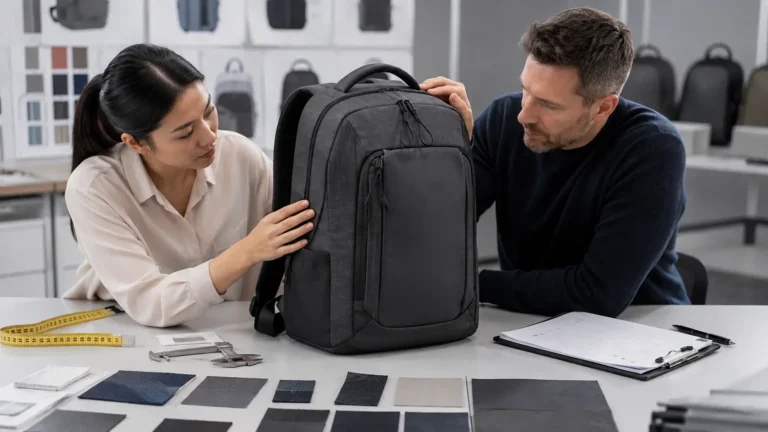
Sampling is where visual preference becomes a production reference. A digital mockup confirms placement and proportion but cannot validate feel, capacity, zipper operation, balance, or comfort. A physical pre-production sample is especially important for a new construction or private-label program.
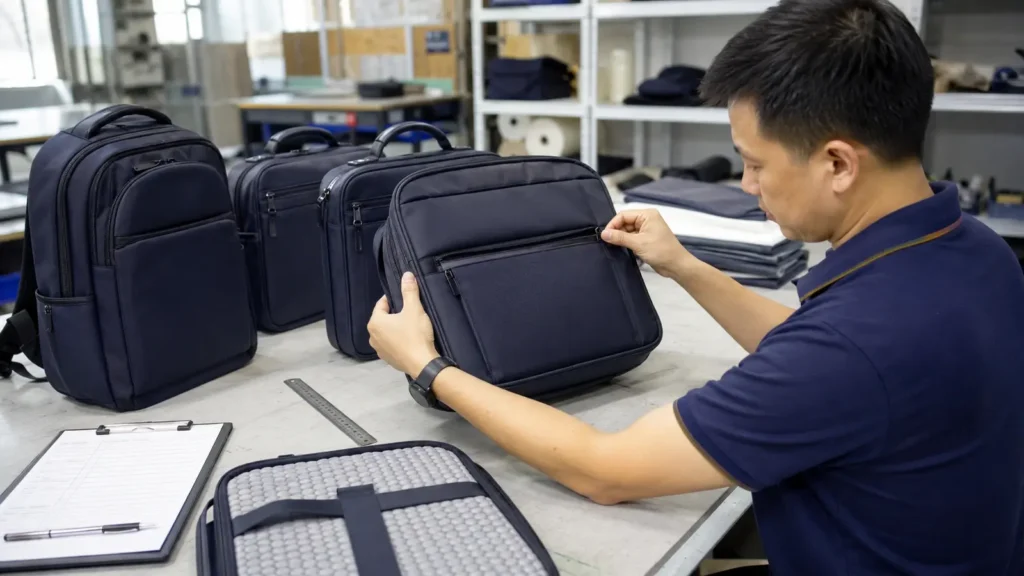
Sample approval checklist
- Finished external dimensions and usable internal dimensions
- Laptop sleeve fit with representative devices
- Packed comfort and balance
- Fabric color under relevant lighting
- Logo size, position, color, and surface quality
- Zipper operation and lining clearance
- Handle and strap construction
- Pocket dimensions and access
- Base stability and overall shape
- Label, hangtag, packaging, and carton details
Approve the sample with written comments and dated images. State whether the sample is approved as-is, approved with listed changes, or rejected. Keep one approved reference when practical.
Bulk inspection priorities
Inspection should check workmanship, function, appearance, quantity, assortment, packaging, and agreed tests. Random units should be packed with a representative load. Zippers, buckles, hook attachments, and adjusters should be operated repeatedly. Logo placement and color should be compared against the approved reference within agreed tolerances.
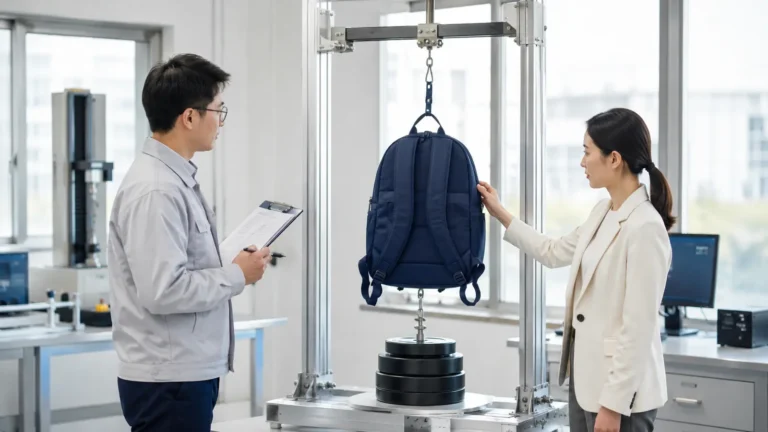
Testing requirements vary by market, material, claim, and buyer policy. Define them before production. Do not ask for a vague “full test”; identify the relevant property, method, laboratory requirement, and acceptance level.
How to Plan a Bulk Order
1. Define the user and journey
Describe who receives the bag, what they carry, how far they walk, how they travel, and where they use it. This prevents a design team from optimizing only for appearance.
2. Build the specification
Include external dimensions, laptop sleeve dimensions, capacity target if used, materials, color references, compartments, hardware, branding, labels, packaging, and tests.
3. Share artwork correctly
Provide vector artwork when possible, Pantone or other agreed color references, minimum clear-space rules, and any restricted uses. Ask for a decoration-specific proof.
4. Review a digital mockup
Confirm silhouette, panels, logo scale, placement, color blocking, zipper color, and label positions. A mockup is a visual checkpoint, not final proof of materials.
5. Approve a physical sample
Test the actual load and journey. Include representatives from procurement, brand, and intended user groups when possible.
6. Lock the production reference
Create a final specification version and record every approved change. Avoid sending conflicting instructions across informal messages.
7. Confirm production and inspection plan
Agree on quantity by color, packing, carton marks, inspection points, delivery terms, and destination. Build schedule contingency around approvals and shipping.
What Information Should You Send for a Quotation?
Send the following in one organized inquiry:
- Backpack, briefcase, convertible, or coordinated range
- Reference photos, sketch, or tech pack
- Order quantity and breakdown by color or design
- Target external size and laptop sleeve size
- Intended contents and use case
- Preferred fabric, lining, foam, and trim direction
- Logo artwork and decoration preference
- Pantone or target colors
- Private labels, hangtags, packaging, and carton marks
- Required tests or compliance documentation
- Delivery destination, trade terms if known, and required in-hands date
- Target price range, if it is a real project constraint
If some specifications are undecided, label them as open decisions. A supplier can then propose controlled options instead of guessing.
Questions to Ask a Work-Bag Supplier
- What are the usable laptop-sleeve dimensions?
- Which material specifications and colors are available at my quantity?
- Which panels need reinforcement for the intended packed load?
- What branding methods suit this exact surface?
- Will embroidery distort the selected panel?
- Are custom zipper pulls or hardware subject to separate tooling and minimums?
- How will color be approved and controlled?
- What sample stages are recommended?
- Which tests can be arranged for the finished bag or materials?
- How will bulk workmanship and logo placement be inspected?
- What packaging options protect the shape while controlling volume?
- What information could delay sampling or production?
- How are repeat-order materials and color references recorded?
- Can backpacks and briefcases be coordinated as one range?
Common Buying Mistakes
Choosing only from a front-view image
A front photograph does not reveal sleeve fit, base construction, balance, strap comfort, lining, or pocket access. Always request internal views and a sample for a serious bulk program.
Treating every “15-inch laptop” as the same size
Screen class is not a reliable sleeve specification. Measure the device chassis and any case.
Adding too many compartments
Extra organization can make a product heavy, confusing, expensive, and difficult to manufacture consistently. Design around actual tasks.
Using a large, bright logo on a formal bag
Corporate branding should fit the context. A small tonal embroidery, woven mark, or leather-style patch may be more usable than a large promotional print.
Assuming fabric performance equals finished-bag performance
A water-resistant or abrasion-resistant material does not automatically make every seam, zipper, or finished bag perform the same way.
Skipping loaded wear trials
An empty bag can feel excellent and behave poorly when filled. Test the intended load across relevant users.
Comparing incomplete quotations
Low pricing may reflect different materials, foam, structure, decoration, packaging, testing, or delivery assumptions. Normalize the specification before comparing.
Calling a bag “TSA approved” or “airline approved”
Screening procedures and airline dimensions vary. Describe specific access features and dimensions instead of making a universal claim.
Why Work with JIUMU for Custom Business Bags?
JIUMU is a Guangdong-based B2B supplier established in 2010, serving buyers in North America and Europe. Its broader custom merchandise capabilities include OEM and ODM development, fabric sourcing, Pantone color matching, embroidery, printing, heat transfer, woven and rubber/PVC patches, leather-style patches, private labels, hangtags, packaging customization, digital mockups, physical samples, quality control, and export support.
For custom bags, this matters because the visible logo is only one part of the program. Buyers also need controlled materials, dimensions, laptop fit, colors, labels, packing, inspection, and repeat-order documentation. JIUMU’s typical MOQ is 50 pieces, subject to product structure and customization. More complex constructions, custom materials, hardware, or tooling may require different minimums.
Frequently Asked Questions
Final Recommendation
Choose a backpack when employees carry more technology, walk longer distances, navigate transit, or need both hands free. Choose a briefcase when the load is light, the journey is short, documents need to stay flat, and a formal meeting appearance is central. For organizations with several job roles, a coordinated range often makes more sense than forcing one format on everyone.
The decisive step is not selecting a category name; it is defining the journey, load, dimensions, construction, appearance, and brand program in measurable terms. Test the proposed bag with real equipment and real users before approving bulk production.
Request a custom quotation from JIUMU. Share your preferred format, quantity, laptop dimensions, reference image or tech pack, colors, logo, decoration method, labels, packaging, destination, and target delivery date. Email zhengdong@jiumugear.com, contact WhatsApp/Phone +86 18507502899, or visit the JIUMU contact page.