How to Wash and Clean a Backpack Safely
A backpack collects crumbs, ink, dust, sweat, spills, and repeated handling. Cleaning can restore appearance and reduce odor, but the wrong method can fade a logo, distort foam, weaken a coating, damage a zipper, or leave padding damp.
The safest approach is to identify the construction, read the care label, remove detachable components, test the cleaner, and use the least aggressive effective method. This guide also helps schools, teams, distributors, and merchandise buyers plan care for custom backpacks.
Quick Answer: Empty the backpack completely, vacuum or shake out debris, check the care label, and remove detachable parts. Spot-clean first with lukewarm water, a small amount of mild detergent, and a soft cloth or brush. Hand-wash only when the materials and construction allow it. Machine-wash only when the manufacturer’s label explicitly permits it. Rinse away all detergent, reshape the bag, open every compartment, and air-dry it in a ventilated place away from direct heat and prolonged sunlight. Never store the backpack until the seams, foam, pockets, and back panel are fully dry.
Before You Start: Choose the Safest Cleaning Level
Cleaning intensity should match the actual problem. A dusty bag does not need immersion. A localized sauce stain does not require a full wash. A heavily soiled, label-approved fabric backpack may justify hand washing, while a molded, wheeled, leather-trimmed, or electronically equipped bag normally needs controlled surface cleaning.
| Condition | Recommended first method | Why | Escalate when |
|---|---|---|---|
| Loose dust, sand, or crumbs | Empty, shake, and vacuum | Avoids unnecessary wetting | Residue or odor remains |
| One fresh stain | Blot and spot-clean | Limits color and coating exposure | Stain spreads or penetrates lining |
| Sweat or general grime | Wipe high-contact areas; hand-wash if permitted | Targets straps, back panel, and base | Whole bag remains dirty or smells |
| Major spill inside | Remove contents, blot, clean lining, rinse locally | Prevents liquid spreading through padding | Spill reached inaccessible foam |
| Mud | Let it dry, brush it off, then spot-clean | Wet scrubbing can push mud deeper | Fine residue remains after brushing |
| Musty smell or visible mold | Isolate bag and assess severity | Mold can affect health and porous padding | Growth is extensive, recurring, or deep |
Always treat the sewn-in care label and product-specific instructions as the controlling guidance. General internet advice cannot account for every coating, adhesive, frame, print, patch, or foam system. REI’s backpack-care guidance advises against machine washing or tumble drying for packs generally and recommends lukewarm water, gentle brushing, and shade drying. Osprey similarly recommends mild soapy warm water, a sponge or soft brush, thorough rinsing, and drying in a ventilated area away from direct sunlight. These are conservative methods, not permission to ignore a specific care label.
What You Need to Clean a Backpack
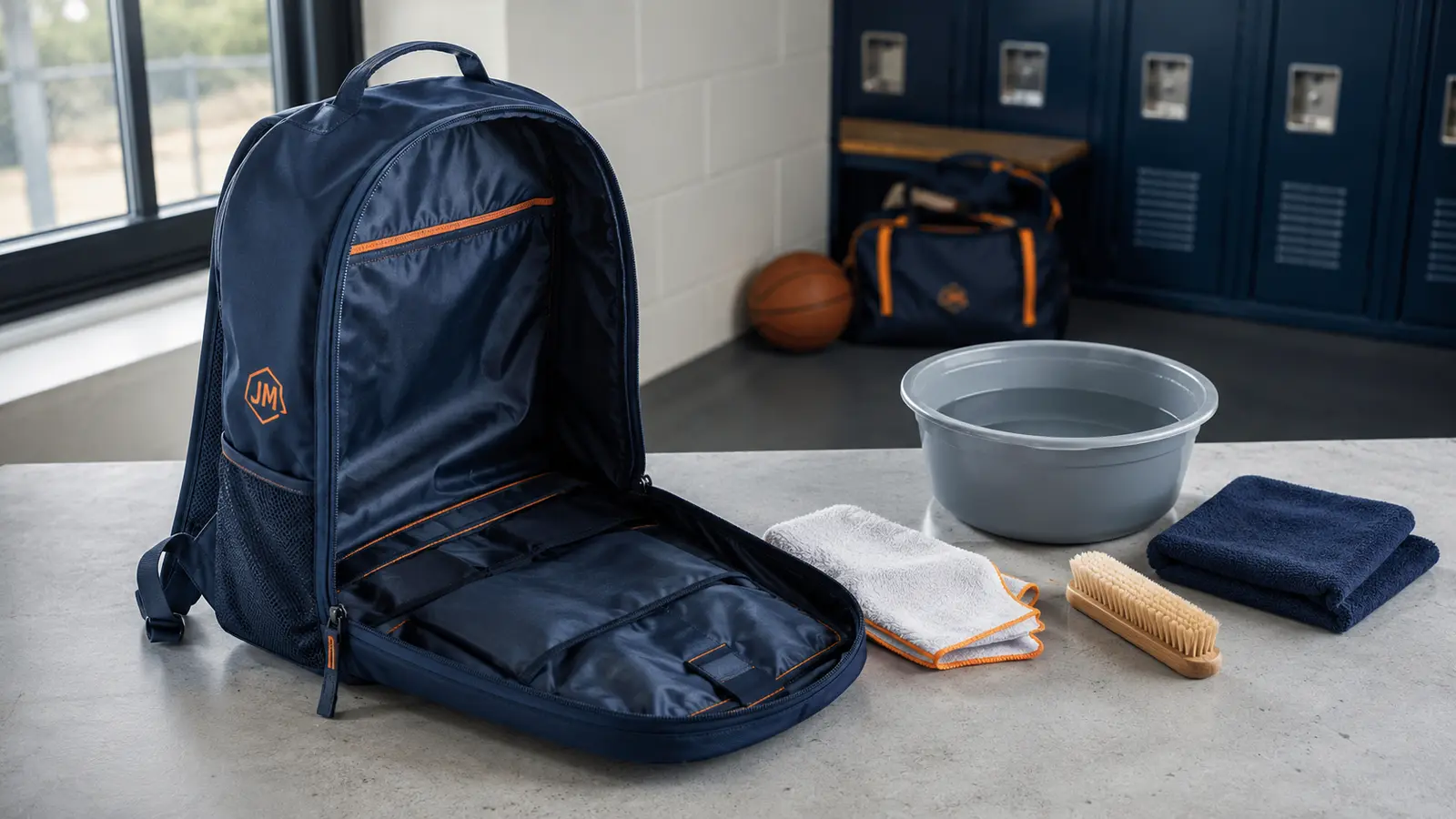
Prepare these tools before wetting the bag:
- A vacuum with a crevice tool or a clean handheld vacuum
- Two white or colorfast microfiber cloths
- A soft-bristle brush or clean soft toothbrush
- A basin, large sink, or bathtub for label-approved hand washing
- Lukewarm water
- A small amount of mild, fragrance-light liquid detergent
- Clean towels for blotting and supporting the wet bag
- A drying rack, broad hanger, or ventilated shaded area
- Optional cotton swabs for zipper tracks and narrow seams
Avoid chlorine bleach, undiluted disinfectants, solvents, boiling water, abrasive pads, and heavy fragrance unless specifically approved. Strong chemicals can alter color, attack coatings, leave residue, or affect printed and bonded details. Never mix cleaning chemicals.
Step-by-Step: How to Wash a Backpack Safely
1. Empty Every Compartment
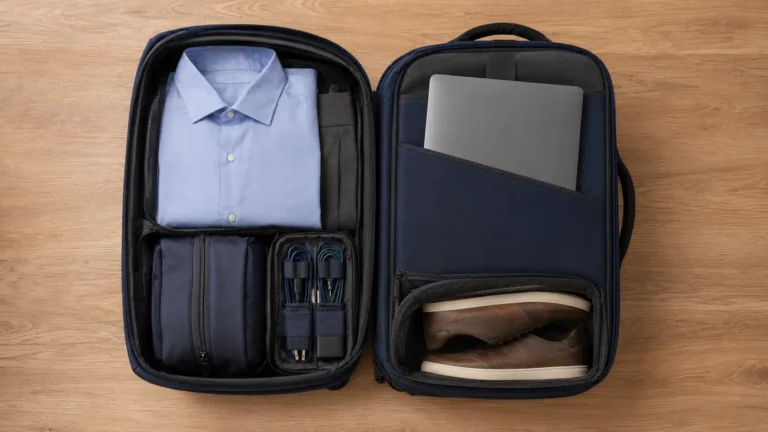
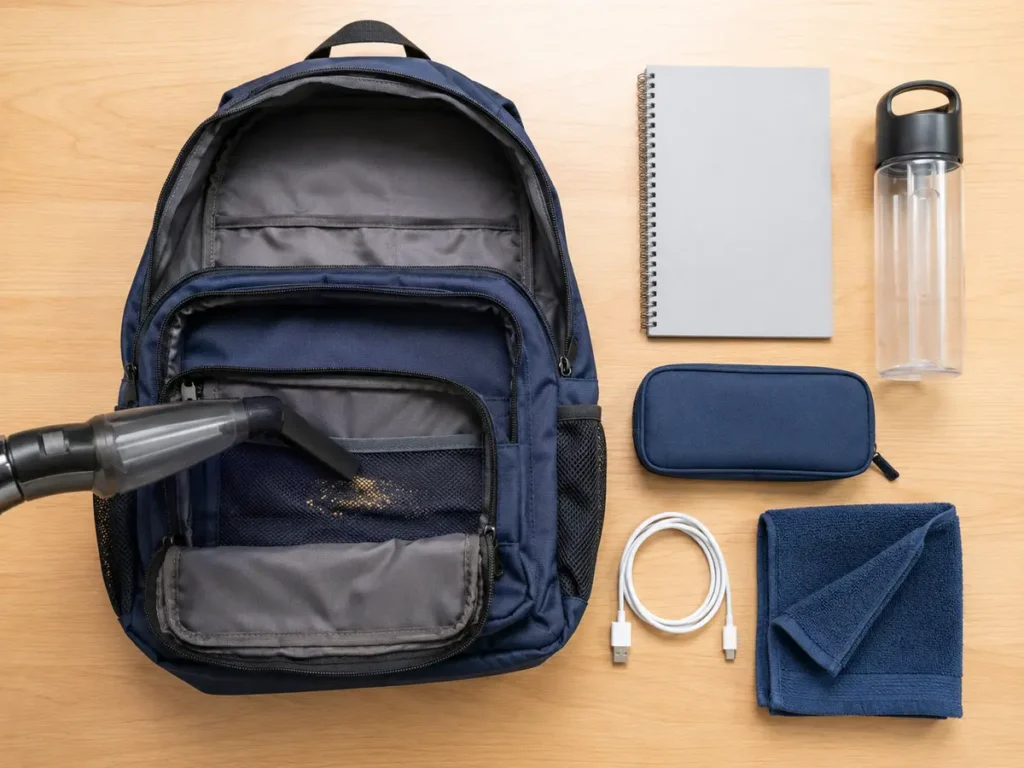
Open the main compartment, front pockets, hidden security pockets, bottle sleeves, laptop sleeve, pencil organizer, and small zip pouches. Turn pockets inside out where the construction permits. Remove paper because it can dissolve into fibers and seams. Check for pens, batteries, gum, food, metal objects, USB devices, and removable power banks.
For a school or team program, use a contents checklist. Medication, identity cards, keys, and electronics should never enter a centralized wash process.
2. Read the Care Label and Identify Special Components
The label may specify hand washing, machine temperature, bleaching restrictions, drying method, or “do not wash.” If the label is missing, use the conservative spot-cleaning method and contact the supplier when the bag has specialized construction.
Pay special attention to:
- Leather, suede, waxed cotton, or leather-style trims
- Printed, embroidered, rubber/PVC, woven, or leather-style logo patches
- Waterproof or water-resistant coatings and seam treatments
- Molded EVA panels, rigid frames, stays, or internal boards
- Wheels, telescoping handles, and trolley chassis
- Insulated food compartments
- Battery cables, charging ports, lights, or tracking devices
- Hydration reservoirs and drinking tubes
These components may need separate care. Osprey, for example, advises against immersing wheeled travel packs with its chassis. Safe instructions should describe the exact model, not merely call backpacks “washable.”
3. Remove Detachable Parts
Take out frame sheets, metal stays, hip belts, rain covers, hydration reservoirs, power banks, and removable organizers only when they are designed to detach. Do not force stitched or tightly fitted components out. Close hook-and-loop fasteners so they do not abrade mesh or knit fabric. Loosen straps to expose hidden dirt. Leave zipper compartments open for hand cleaning, but follow the care label for machine preparation.
4. Remove Dry Debris
Hold the bag upside down and gently shake it. Vacuum the lining, corners, seams, organizer slots, and bottle pockets. Use a soft dry brush for dried mud. Cleaning dry material first keeps it from turning into slurry when water is added.
5. Test the Cleaner
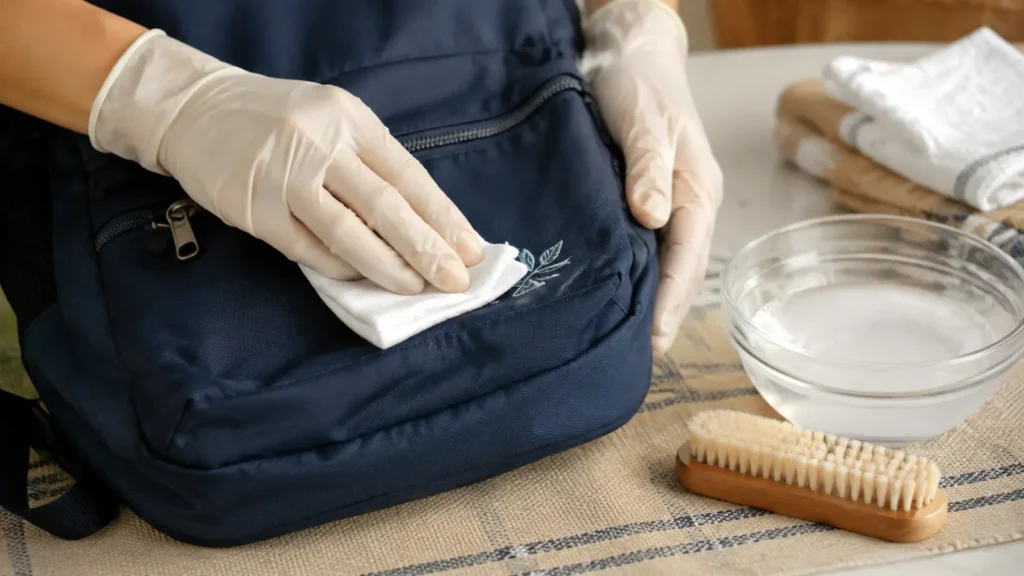
Mix a small amount of mild detergent into lukewarm water. Apply it to a hidden area using a white cloth. Wait several minutes, blot with clean water, and inspect after drying. Stop if color transfers, the surface becomes sticky, the print changes, or the coating develops a cloudy appearance.
6. Spot-Clean High-Contact Areas
Work from the outside of a stain toward the center to reduce spreading. Blot rather than rub aggressively. Use a soft brush on durable woven fabric, but use a cloth around prints, coated panels, embroidery, patches, mesh, and delicate trims. Common high-contact areas include shoulder straps, the top handle, back panel, zipper pulls, bag base, and pocket openings.
7. Hand-Wash Only If Suitable
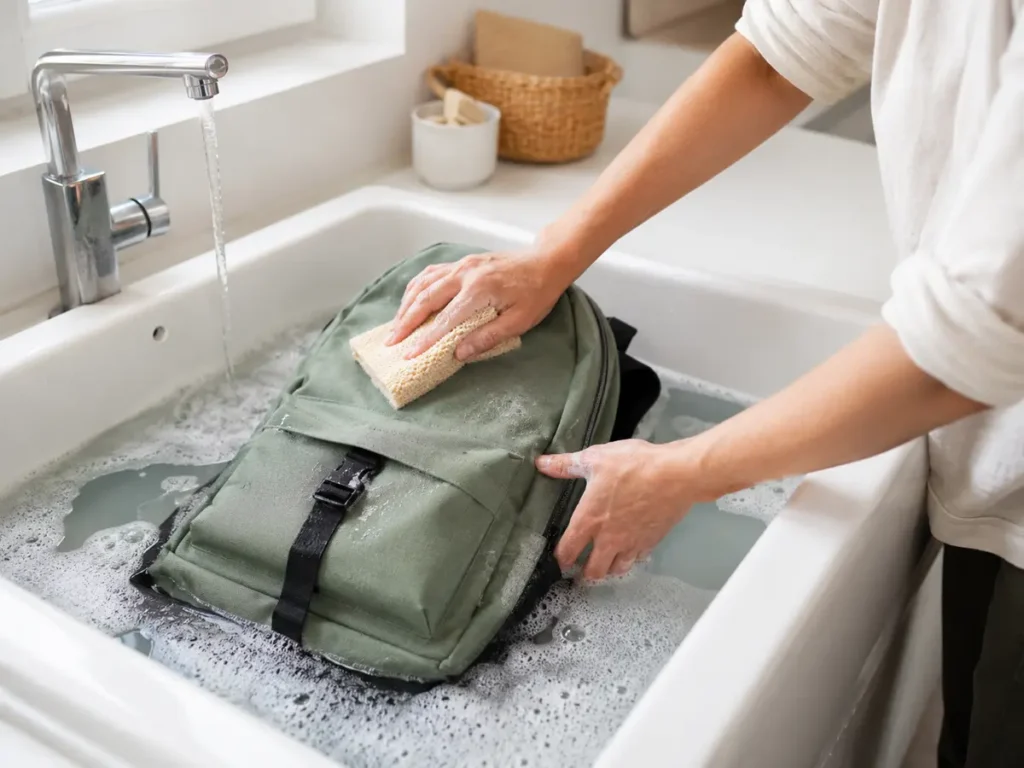
For a label-approved fabric backpack without incompatible components, fill a basin with lukewarm water and a small amount of mild detergent. Gently move the bag through the water. Clean the interior and exterior with a soft cloth or brush, concentrating on soiled areas. Avoid long soaking unless the manufacturer allows it; soaking can saturate foam and stress adhesives.
Support the backpack when lifting it. A saturated bag is heavy, and lifting by one strap can strain bartacks and seams. Drain the dirty water and rinse with clean, cool or lukewarm water until no visible suds remain. Detergent residue can attract soil and irritate skin.
8. Machine-Wash Only When the Label Explicitly Allows It
Some simple fabric daypacks or school bags may carry machine-washing instructions. Many structured, coated, framed, padded, or decorated backpacks do not. If the label permits machine washing:
- Remove approved detachable components and empty all pockets.
- Treat stains first.
- Protect straps and hardware according to the label, often with a mesh laundry bag or pillowcase.
- Use the specified temperature and cycle; a gentle cycle and mild detergent are common, but the label governs.
- Do not add bleach or fabric softener unless expressly allowed.
- Remove the backpack promptly and inspect it before drying.
Avoid a central-agitator washer unless specifically allowed; straps can catch and the bag may twist. “Polyester” alone does not make the finished bag machine washable. Foam, coatings, prints, zippers, labels, and adhesives also matter.
9. Rinse Thoroughly
Soap can collect behind padding, inside pockets, and around zipper tape. Rinse or wipe with clean water until the fabric is not slick and no foam appears when gently pressed. Keep non-removable electronics dry.
10. Reshape and Air-Dry Completely
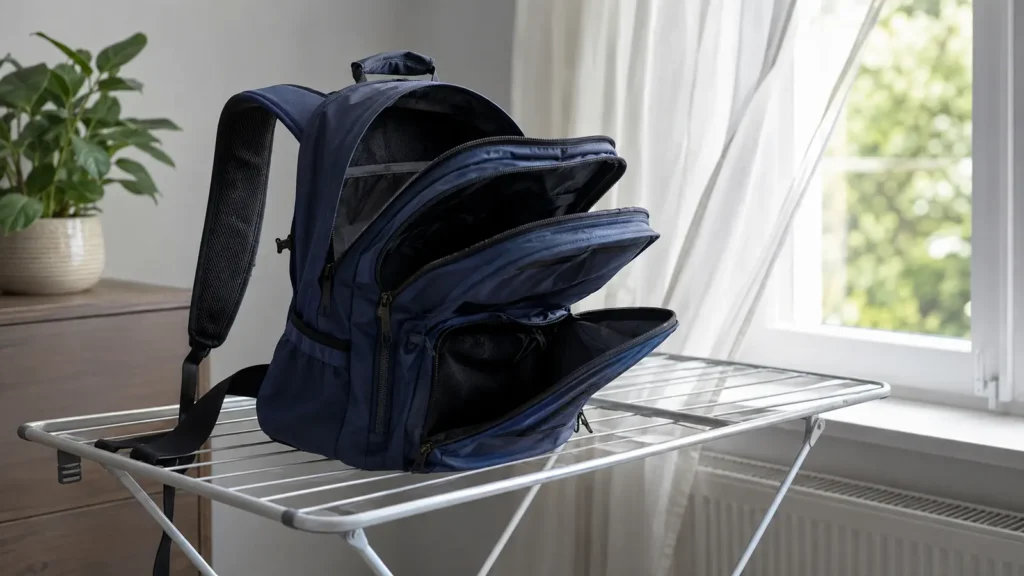
Do not wring or twist the backpack. Blot excess water with clean towels. Restore the bag’s shape, open all compartments, and position it so air can circulate through the lining and back panel. Hang it from a broad, supported point or lay it on a ventilated rack. Rotate it during drying and reposition thick straps.
Dry in a well-ventilated place away from radiators, hair dryers, high heat, and prolonged direct sunlight. High heat can distort foam, affect coatings, shrink components, or weaken bonded elements. REI notes that UV exposure can degrade fabric, while Osprey stresses ventilation to prevent a pack from remaining damp too long.
The outside may feel dry while interior foam remains wet. Press thick shoulder straps, smell internal pockets, and check the base and laptop sleeve before storage. Never reload a damp bag with clothing or paper.
Backpack Material and Construction Cleaning Guide
The fiber named in a product description is only part of the decision. Buyers should request care information for the complete construction.
| Material or component | Safer default | Main risk | Procurement implication |
|---|---|---|---|
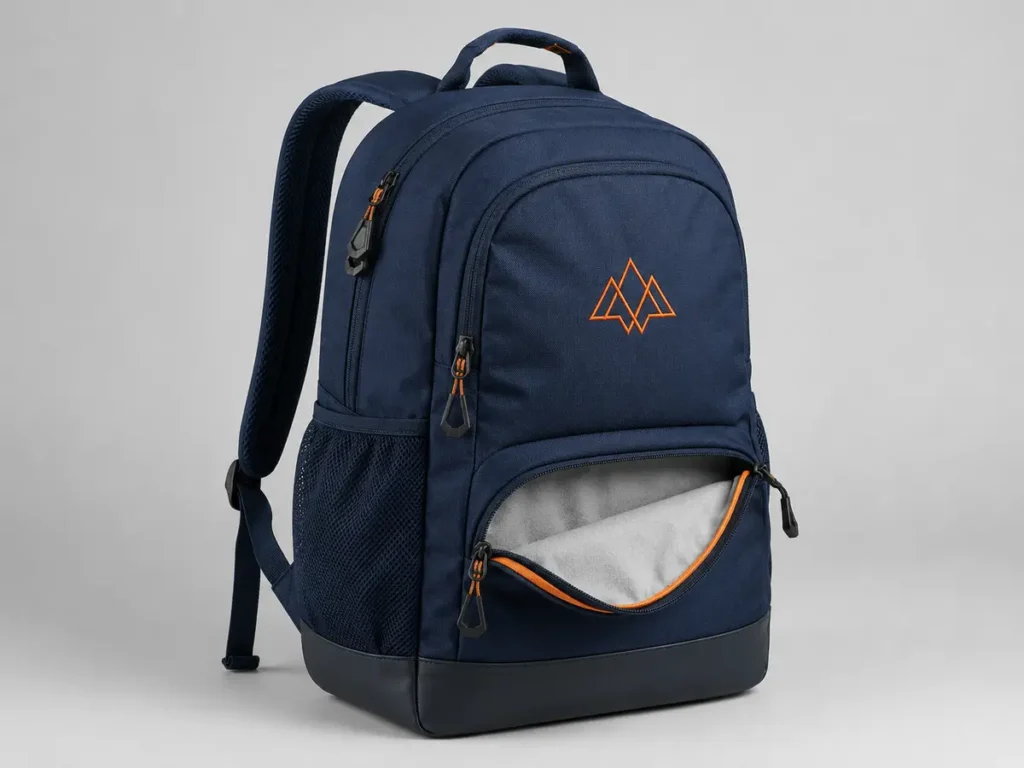
| Polyester or nylon woven shell | Spot-clean; hand-wash if approved | Coating damage, dye transfer, trapped water | Confirm finished-bag care, not fiber alone |
| Cotton canvas | Spot-clean or label-approved wash | Shrinkage, fading, distortion | Preproduction wash test may be useful |
| Waxed canvas | Cold damp-cloth cleaning; follow supplier | Detergent strips wax finish | Supply a dedicated care card |
| Mesh pockets | Gentle cloth or soft brush | Snagging and stretching | Inspect mesh gauge and binding |
| EVA or padded back panel | Minimal wetting; ventilate well | Water trapped in foam | Specify drying guidance and drainability |
| PU-coated fabric | Mild cleaner, low abrasion | Hydrolysis, peeling, clouding | Avoid unsupported “waterproof” claims |
| Leather or suede trim | Specialist/product-specific care | Staining, stiffening, dye migration | Keep generic wash claims off the label |
| Sublimated panel | Test and use mild cleaning | Heat or abrasion effects | Approve care after decorated sample testing |
| Screen print or heat transfer | Turn away from abrasion; low heat | Cracking, lifting, fading | Test adhesion after cleaning cycles |
| Embroidery or patches | Gentle cleaning and reshaping | Thread snagging, edge lift, dye bleed | Check backing and border finish |
| Wheels or trolley frame | Wipe chassis; avoid immersion | Rust, trapped water, mechanism damage | Provide component-specific instructions |
| Electronics or charging port | Remove power source; avoid wetting | Short circuit and corrosion | Include visible electrical-care warnings |
How to Treat Common Backpack Stains and Odors
Act quickly, but do not improvise with aggressive chemicals. First blot liquid, remove solids, and test the treatment.
Food and Drink
Lift solids with a spoon or dull edge. Blot from both sides where possible. Use a dilute mild detergent solution, then blot with clean water. Avoid flooding padded sections. For dairy, protein drinks, or sweet beverages, repeat the rinse carefully because residue can cause odor.
Ink and Marker
Ink formulas vary and solvents can spread dye or damage coatings. Place an absorbent white towel behind the stain, test a small hidden area, and use only a treatment approved for the bag. For customized bulk bags, contact the supplier before using alcohol-based cleaners near prints or coatings.
Oil, Sunscreen, and Cosmetics
Blot excess material without rubbing. Apply a small amount of mild detergent to break up oily residue, then rinse locally. Repeat gentle applications rather than using a concentrated degreaser.
Mud and Grass
Allow mud to dry, brush off loose material, then spot-clean the remaining mark. Grass pigments may be difficult to remove completely without affecting color, so test carefully and accept a lighter residual mark rather than damaging the fabric.
Sweat and Body Odor
Focus on shoulder straps, handles, back padding, and hip belts. Wipe with a mild solution, then remove detergent with clean water. Maximum ventilation is essential because damp foam can recreate the odor. Do not mask persistent moisture with fragrance.
Musty Odor and Mold
A musty smell warrants inspection of the bag, storage area, and contents. The U.S. CDC says mold may appear as colored spots or smell musty; remove it and correct the moisture problem. Sensitive people may face greater risks.
Do not brush a moldy bag indoors or mix bleach with other products. Isolate it and follow public-health guidance. Extensive, recurring, or deeply embedded growth may justify professional assessment or replacement. This is not medical or remediation advice.
What Not to Do When Washing a Backpack
- Do not machine-wash simply because the bag fits in the washer.
- Do not tumble-dry unless the care label specifically permits it.
- Do not use boiling or very hot water.
- Do not use chlorine bleach on colors, coatings, prints, or unknown materials.
- Do not scrub decorative logos with a stiff brush.
- Do not soak wheeled chassis, leather trims, frames, or electronics.
- Do not lift a saturated backpack by one shoulder strap.
- Do not close pockets while the lining is damp.
- Do not store the bag in a sealed plastic container before it is fully dry.
- Do not claim a cleaned backpack is disinfected unless a validated, material-compatible process supports that claim.
A Practical Cleaning Schedule for Schools and Teams
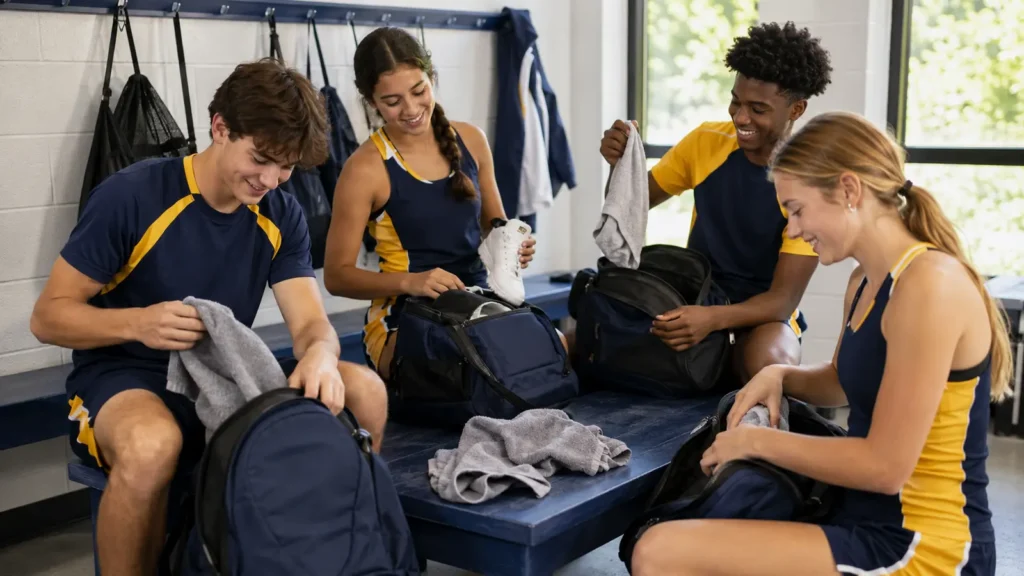
Frequency depends on use, weather, spills, and storage. A fixed weekly full wash is usually unnecessary and may shorten service life. Use a condition-based routine.
| Timing | School or team action | Purpose |
|---|---|---|
| After each use | Remove wet clothing, food, and bottles | Prevent odor and trapped moisture |
| Weekly during active use | Empty crumbs; wipe handles and visible soil | Control routine buildup |
| After rain or tournaments | Open all pockets and air-dry | Protect padding and contents |
| After a spill | Blot and spot-clean immediately | Reduce staining and odor |
| End of season or term | Inspect, clean as label allows, repair, dry, inventory | Prepare for storage or reissue |
| Before bulk reissue | Verify cleanliness, function, ID removal, and dry condition | Support safe, consistent handover |
Assign the bag to its user during cleaning if personalization is present. Use washable ID tags or a tracking sheet rather than adhesive notes that may detach. Centralized programs should separate heavily contaminated bags and should not promise sanitization through an ordinary detergent wash.
Why Care Instructions Matter in a Custom Backpack Order
For a purchasing team, cleanability is a product specification. A bag used by a baseball team, school district, construction crew, or event staff may need different fabric, lining, logo, and structure choices.
An attractive light-colored lining helps users see contents but may reveal staining sooner. Dense padding improves protection but dries more slowly. Large rubber patches can tolerate different treatments than screen prints. A coated base may wipe clean easily, but its coating needs material-compatible care. Detachable boards, removable organizers, and accessible pocket shapes can simplify maintenance.
The procurement question is therefore not “Can polyester be washed?” It is “How should this exact finished backpack—with its coating, foam, thread, zipper, print, patch, labels, trims, and packaging—be cleaned without unacceptable change?”
Planning a custom team or school backpack? Share the intended users, quantity, dimensions, fabric preference, color references, logo artwork, decoration method, compartments, packaging, and target delivery date with JIUMU. Ask for care instructions to be confirmed alongside the decorated sample. Explore custom team bags or request a quotation.
Sample Approval and Cleaning Tests for Bulk Buyers
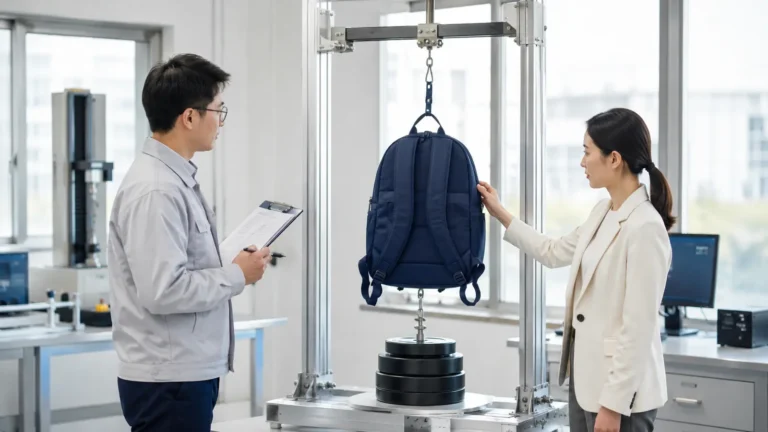
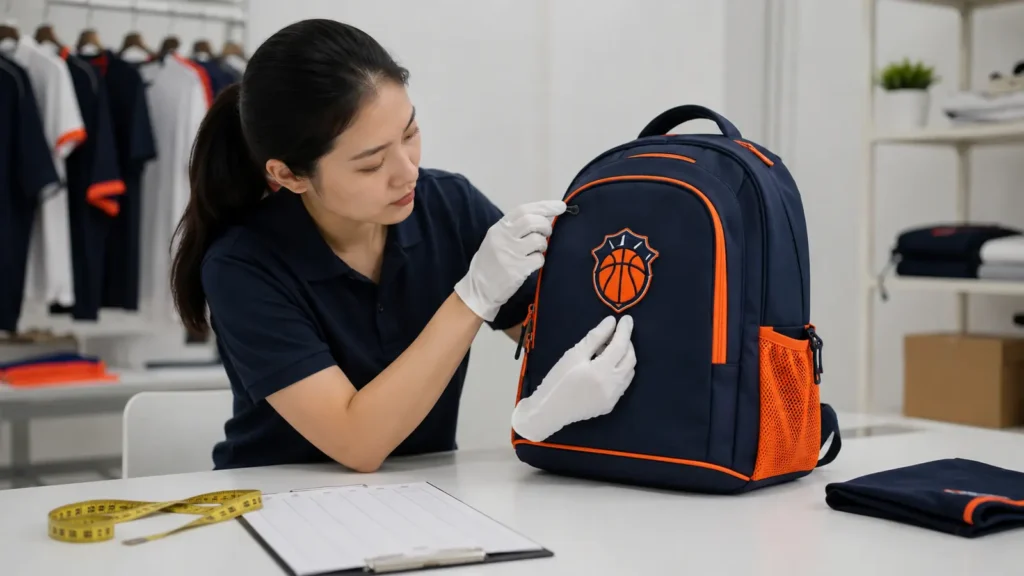
A physical sample is the best stage to identify cleaning limitations before bulk production. The test should reflect the final decoration and construction, not an undecorated fabric swatch alone.
Create an Approval Baseline
Photograph the sample under consistent light. Record dimensions, color reference, logo position, print or patch edges, zipper operation, strap symmetry, foam shape, and surface appearance. Note the exact cleaning product, dilution, water temperature, method, duration, rinse process, and drying environment used in any trial.
Inspect After Complete Drying
Do not judge a wet sample. After it is fully dry, check:
- Color change or dye transfer
- Dimensional change and panel distortion
- Coating cloudiness, tackiness, peeling, or cracking
- Print cracking, lifting, bleeding, or loss of opacity
- Patch edge lift or embroidery puckering
- Zipper movement and hardware discoloration
- Foam compression or lumps
- Seam appearance, loose threads, and bartack integrity
- Residual odor or detergent residue
- Readability and attachment of the care label
A single internal trial is not a laboratory durability claim. If the buyer needs a defined number of wash cycles, colorfastness criteria, restricted-substance documentation, or a recognized test method, those requirements should be agreed in the specification and handled through appropriate testing before production.
Care-Label and Packaging Content for Custom Backpacks
A useful care instruction should be concise, visible, and specific to the product. Depending on the design and market, it may include:
- Empty all pockets and remove detachable parts
- Spot-clean or hand-wash instruction
- Maximum water temperature where applicable
- Detergent and bleaching restrictions
- Drying method and heat restrictions
- Warning for leather, electronic, wheeled, or coated components
- Instruction to dry fully before storage
- Separate hydration-reservoir care, if relevant
- Supplier or brand contact for product-specific questions
The buyer remains responsible for confirming legal labeling requirements in the destination market. Care symbols and wording should not be copied from a different product merely for convenience.
Quality-Control Checklist for Cleanable Backpack Design
Before approving bulk production, a buyer or inspection team can review:
- Shell, lining, mesh, coating, foam, and trim materials match the specification.
- Logo method and placement match the approved sample.
- Decoration edges are secure and are not placed where constant folding causes stress.
- Zippers move smoothly and pocket openings are accessible for cleaning.
- Strap ends, bartacks, and handles show consistent construction.
- Internal boards or organizers detach only as designed.
- Care label is correct, legible, securely attached, and not contradicted by marketing copy.
- Packaging does not trap production moisture or deform padded sections.
- Random units are checked for odor, stains, oil marks, loose thread, and foreign material.
- Carton storage and transport instructions protect the goods from moisture.
What to Send a Supplier for an Accurate Backpack Quotation
Cleaning and care cannot be planned without the full product brief. Send:
- Buyer type and use case: school, team, club, corporate, retail, or promotion
- Order quantity and expected repeat-order pattern
- Target dimensions or capacity and load requirements
- Reference images, sketches, or a tech pack
- Shell, lining, mesh, padding, and base preferences
- Compartment list, laptop size, bottle pocket, and equipment needs
- Pantone or physical color references
- Vector logo artwork and required decoration method
- Private labels, hangtags, user ID, barcode, and packaging requirements
- Destination country, target delivery date, and shipping expectations
- Required care wording, test methods, compliance documentation, or inspection criteria
- Sample quantity and approval process
Be explicit if the bag must tolerate a particular cleaning method. “Easy to clean” is subjective; “wipe-clean coated base,” “label-approved hand wash,” or a defined test protocol gives the supplier a usable target.
Questions to Ask a Custom Backpack Supplier
- What are the shell, lining, coating, foam, and reinforcement materials?
- What cleaning method is recommended for the finished decorated bag?
- Which components must be removed or kept dry?
- Has the proposed logo method been evaluated with that cleaning method?
- Can you provide a decorated physical sample for buyer testing?
- What color and dimensional changes should be expected after cleaning?
- How will care instructions appear on the label or packaging?
- How are color, dimensions, logo placement, stitching, and function checked in production?
- Can Pantone references, private labels, hangtags, and custom packaging be supported?
- What is the MOQ for this construction and customization? JIUMU’s typical MOQ is 50 pieces, subject to the product structure and customization.
- What information is needed to confirm production and export timing?
- How will approved specifications be preserved for repeat orders?
Common Buying and Care-Planning Mistakes
Common mistakes include treating every polyester backpack alike, approving a logo without checking its care method, and publishing generic instructions before the decorated sample is tested. “Water-resistant,” “waterproof,” “washable,” “antimicrobial,” and “disinfectable” are not interchangeable; use only supported claims. Also plan for thick padding to dry slowly and favor routine emptying and spot cleaning over unnecessary full washing.
Why JIUMU Is Relevant to Custom Team and School Backpacks
JIUMU, established in 2010 in Guangdong, China, supplies B2B custom teamwear, logo apparel, hats, uniforms, bags, and branded merchandise for buyers in North America and Europe. Relevant capabilities include OEM and ODM development, fabric sourcing, Pantone color matching, multiple logo methods, private labels, hangtags, packaging customization, digital mockups, physical samples, quality control, and export support.
For a backpack project, buyers can use the sample stage to confirm layout, colors, dimensions, pockets, padding, logo execution, labels, packaging, and proposed care language. JIUMU’s typical MOQ is 50 pieces, subject to the backpack structure and customization. No generic supplier profile can replace a project quotation, so provide the intended use and complete specification for confirmation.
Frequently Asked Questions
Final Recommendation
Start gently: empty, inspect, remove dry debris, test, and spot-clean. Hand-wash only when the construction permits it, and machine-wash only when the product-specific label allows it. Rinse thoroughly and air-dry completely.
For B2B buyers, confirm materials, decoration, removable components, care wording, sample testing, and quality checks before production so users receive realistic care instructions.
Request a Custom Backpack Quotation: Send JIUMU your quantity, target dimensions, use case, materials, color references, logo artwork, compartments, label and packaging needs, cleaning expectations, destination, and target delivery date. Visit Custom Team Bags or Contact JIUMU. Email zhengdong@jiumugear.com or WhatsApp +86 18507502899.