Best Training Apparel for Student Athletes
Schools do not need another collection of fashionable sportswear pieces that happen to share a color. They need a training-apparel system that works across changing weather, repeated laundering, different body shapes, multiple sports, and realistic budgets. For athletic directors, coaches, uniform dealers, distributors, and school purchasing teams, the “best” option is therefore not one fabric or one garment. It is a coordinated range with clear specifications, dependable fit, sensible layering, durable construction, and a repeatable supply plan.
This guide explains how to specify and source training apparel for student athletes in North America and Europe. It covers core garment types, fabric choices, fit validation, decoration, safety considerations, cost drivers, quality control, and the information a supplier needs to prepare an accurate quotation.
Quick Answer: The best training apparel for student athletes is a coordinated, size-inclusive system: lightweight training tees and shorts for high-output sessions; tapered pants and quarter-zips for warm-ups; and a breathable shell or light insulated layer for cool or wet conditions. Buyers should prioritize verified fabric composition and weight, freedom of movement, easy-care colorfast materials, reinforced high-stress seams, safe trims, legible size labeling, and pre-production fit approval. No garment replaces a school’s heat-illness prevention, hydration, acclimatization, weather, or supervision policies.
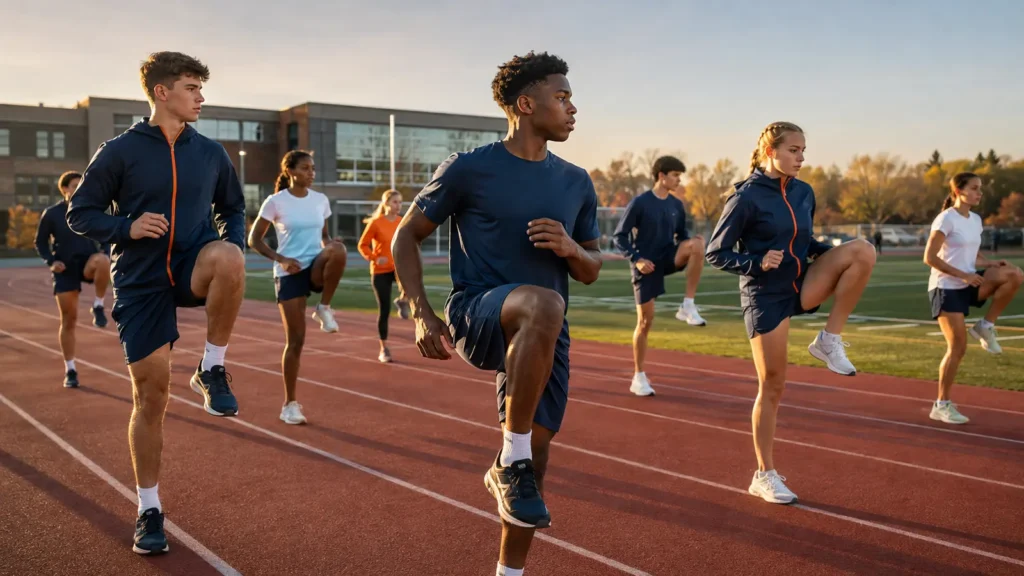
Planning a Student Athlete Apparel Order?
Prepare the sport, roster size range, garment list, target use, colors, logo files, decoration preference, delivery destination, and required date before requesting a quote. These details help a supplier recommend suitable fabrics, confirm sampling needs, and separate optional upgrades from essential specifications.
Review JIUMU GEAR’s custom team uniform options and custom team jerseys, then request a training apparel quotation with your roster and artwork.
Why the Training-Apparel Decision Matters
Training clothes are usually worn more frequently than match uniforms. They move through strength rooms, fields, buses, lockers, home washing machines, and sometimes institutional laundry. A weak seam, unstable color, abrasive transfer, or inconsistent size may therefore become visible quickly. The purchasing decision also affects participation: students are more likely to use a range consistently when it accommodates different builds, modesty preferences, weather conditions, and sport-specific movement.
The correct buying question is not “Which shirt looks most athletic?” It is “Which specification will remain comfortable, identifiable, washable, and reorderable across our program?” That reframing protects the budget. A low unit price can become expensive if the program must replace cracked logos, split seams, failed zippers, or unpopular sizes in the first season.
Training apparel also sits between performance and institutional identity. Match kits may be sport-specific, while training gear can give baseball, football, soccer, track, volleyball, and general physical-education groups a common visual system. A school can control cost by using the same navy, gray, and accent palette across teams while changing only a small crest, sport identifier, or player initial.
What Should a Student Athlete Training Kit Include?
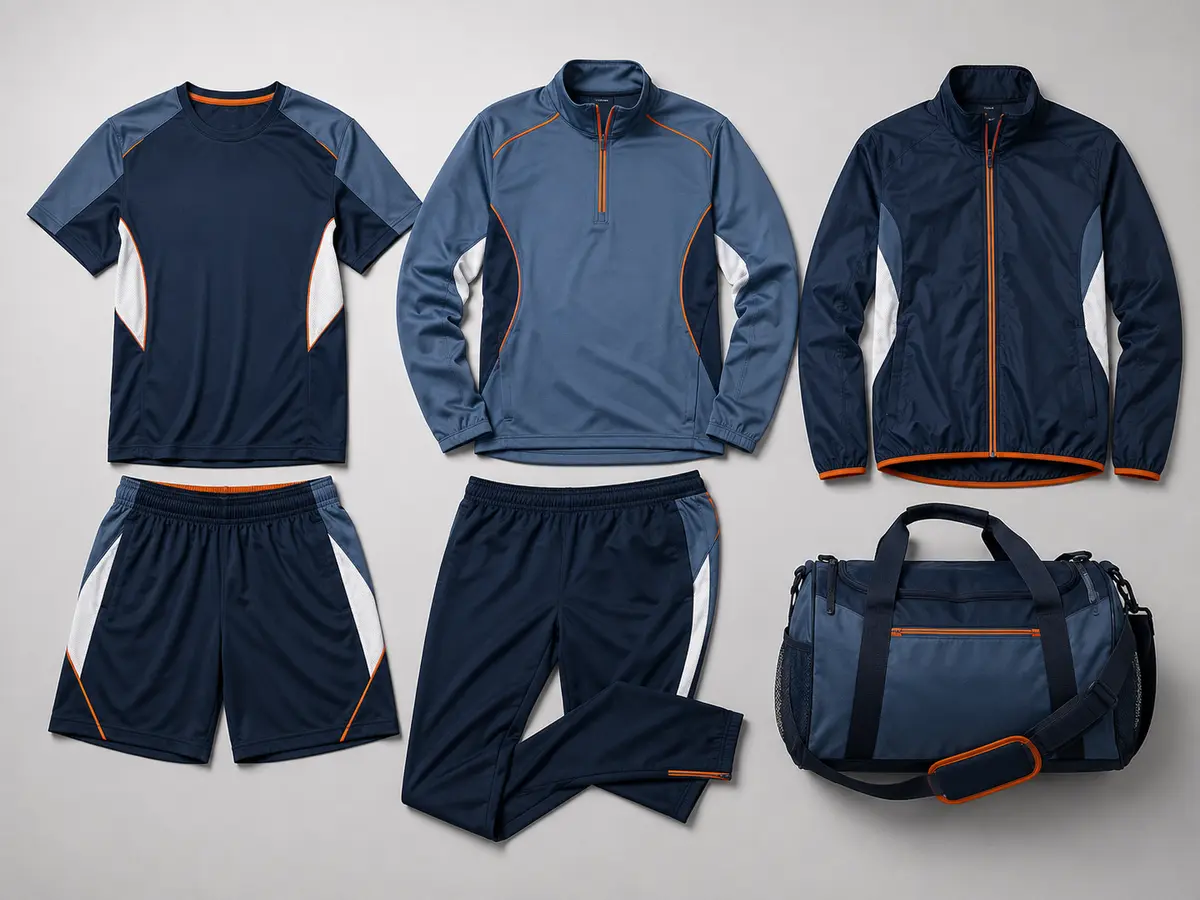
A practical core kit normally combines garments for high-output training, transit, warm-up, and changing weather. The exact pieces depend on climate, sport calendar, laundry access, and budget.
| Garment | Primary role | Useful specification direction | Main buying risk |
|---|---|---|---|
| Short-sleeve training tee | Indoor and outdoor conditioning | Lightweight polyester knit or blended stretch knit; regular athletic fit | Fabric becomes clingy, transparent, or abrasive when wet |
| Training shorts | Running, drills, gym work | Lightweight woven or knit shell; secure elastic waist; optional liner | Restricted stride, poor pocket security, unstable waistband |
| Tapered training pants | Warm-up, travel, cool sessions | Stretch knit or woven fabric; articulated leg; ankle opening or zipper | Calf too narrow, knee bagging, zipper irritation |
| Quarter-zip or crew layer | Warm-up and temperature transitions | Midweight knit with soft inner face; easy on/off | Collar, zipper guard, or seams rub during movement |
| Lightweight jacket | Wind and light weather protection | Breathable woven shell; mesh or light knit lining where needed | Unsupported “waterproof” claim or poor breathability |
| Hoodie or fleece | Travel and low-output use | Brushed fleece with stable rib; age-appropriate trim design | Too heavy for active training; drawstring compliance overlooked |
| Compression/base layer | Optional close-fitting layer | Stretch recovery, smooth seams, opaque fabric | Poor grading, excessive compression, limited student acceptance |
| Team bag | Kit organization | Ventilated compartments and durable handles | Bag capacity or pocket layout not validated |
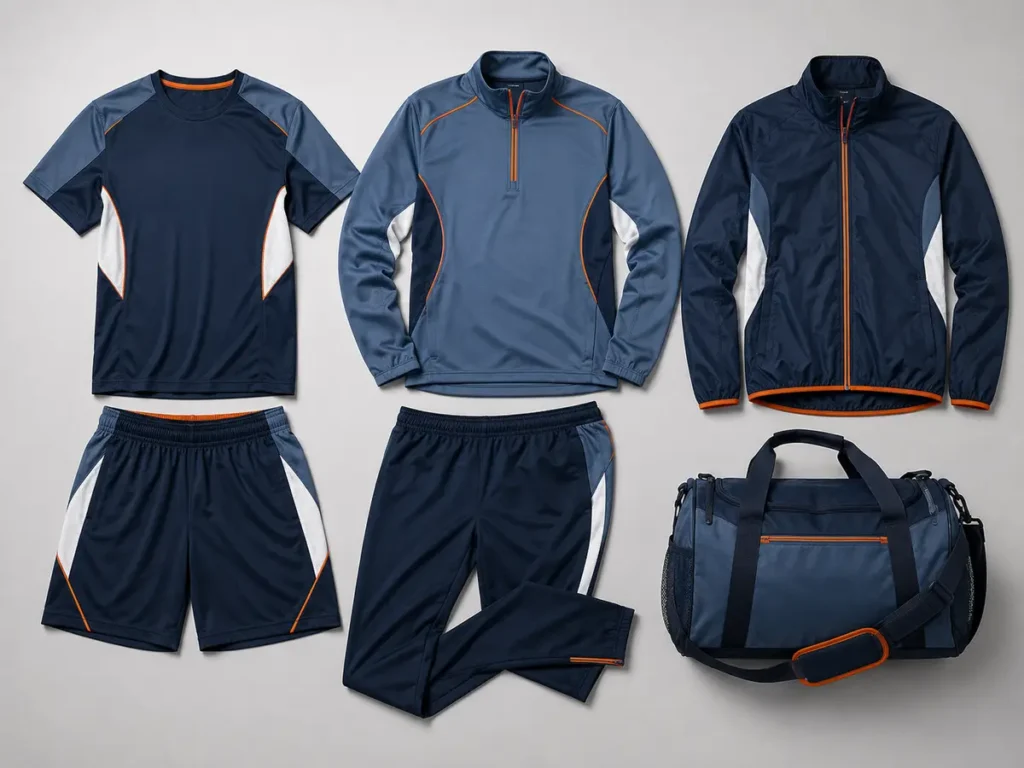
For many schools, the most efficient starting package is a tee, short, tapered pant, and quarter-zip. A jacket can be added for outdoor programs; a hoodie can be offered as a travel or spirit-wear option rather than a compulsory performance layer. Compression garments should usually remain optional and be handled with careful fit and privacy considerations.
How to Choose Fabric for Student Athlete Training Apparel
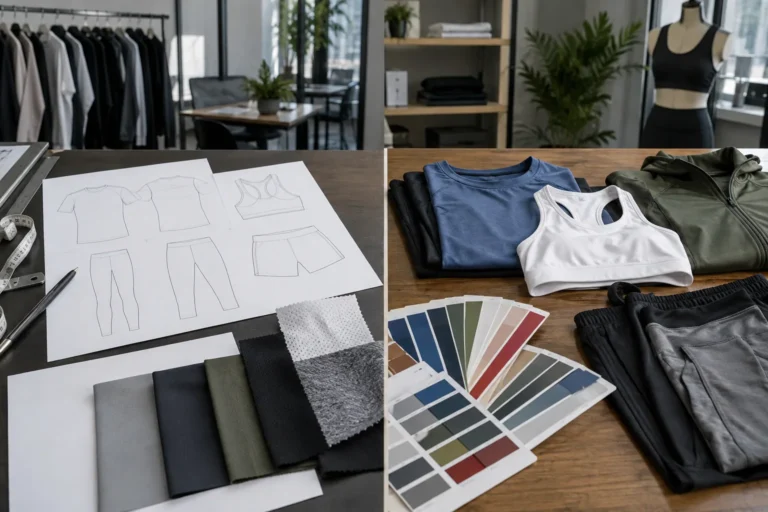
Fabric names alone do not define performance. “Polyester” can describe a thin mesh, a dense interlock, a brushed knit, or a woven shell. A buyer should request at least fiber composition, fabric construction, nominal weight in GSM, stretch direction, finish, color standard, and the supplier’s test or inspection plan.
Polyester performance knits
Polyester knits are common because they can be lightweight, quick to dry, color consistent, and compatible with sublimation or transfer decoration. Interlock provides a smooth surface and good opacity; birdseye or micro-mesh increases visible ventilation; jersey constructions can feel softer and lighter. The appropriate choice depends on the garment and the school’s climate.
“Moisture-wicking” should not be treated as a complete specification. Ask whether the effect comes from fiber geometry, fabric construction, or a chemical finish, and how the supplier evaluates it after laundering. If a claim will appear on packaging or a product page, agree on a test method and acceptance threshold before production.
Polyester-spandex stretch knits
Adding elastane/spandex can improve mobility and recovery, especially in tapered pants, fitted tops, and inserts. More stretch is not automatically better. The fabric should return to shape, remain opaque at extension, and avoid growth at knees and seat. Buyers should assess recovery after repeated extension and washing, not only the hand feel of a new sample.
Lightweight woven fabrics
Woven polyester or nylon fabrics work well for shorts and shells because they can provide low weight and surface durability. Mechanical stretch or elastane may improve range of motion. If water resistance is required, define the claim carefully. A light water-repellent finish is different from a waterproof garment with coated fabric and sealed seams. Do not approve marketing language before construction and test evidence support it.
Brushed fleece and midlayers
Polyester-rich or cotton-polyester fleece can provide warmth for travel and low-intensity use. Cotton can improve familiar hand feel but normally retains more moisture and takes longer to dry than lightweight synthetic training knits. A school may therefore use fleece for arrival, recovery, and sideline periods rather than demanding that one hoodie serve every training condition.
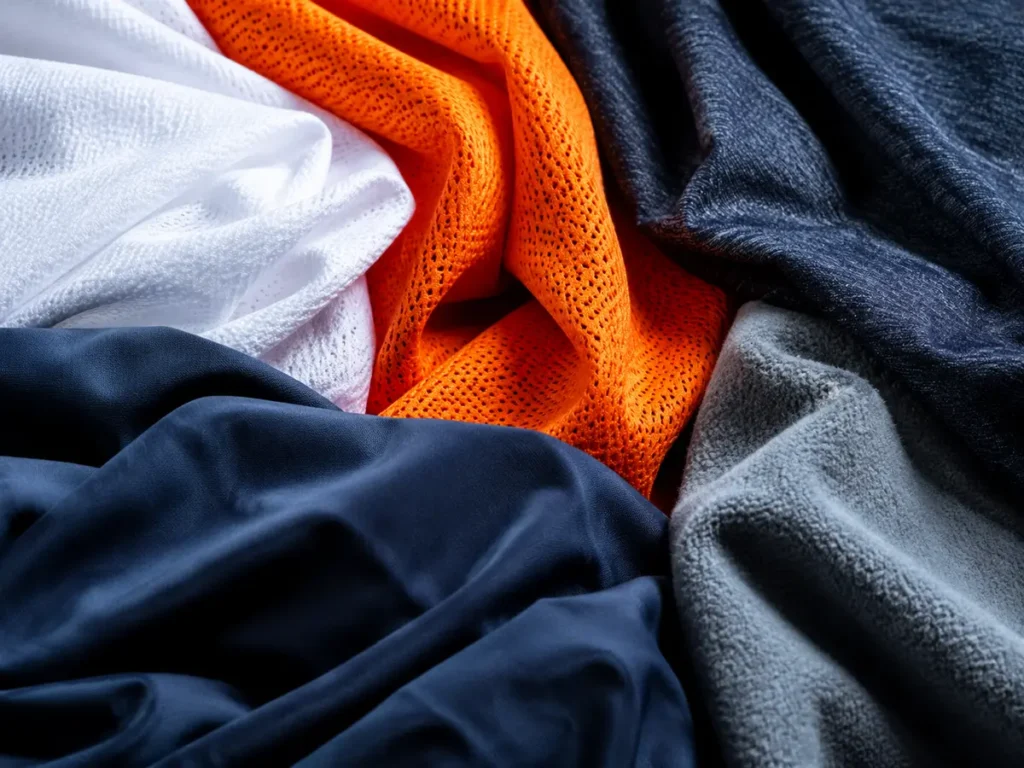
| Fabric question | What the answer controls | What to verify on a sample |
|---|---|---|
| What is the composition? | Stretch, hand feel, care, labeling | Supplier documentation and sewn-in label |
| What is the nominal GSM? | Weight, warmth, opacity, cost | Compare approved swatch and bulk tolerance |
| Knit or woven construction? | Drape, airflow, snag behavior, mobility | Surface, stretch, and use-case suitability |
| How is color achieved? | Color range and repeat-order consistency | Lab dip, strike-off, or Pantone comparison under controlled light |
| Is there a functional finish? | Wicking, repellency, odor-control claims | Named test method, target, wash durability, and limitations |
| How should it be washed? | User experience and decoration life | Complete care label and practical wash trial |
Heat, Cold, and Weather: Apparel Is Only One Control
Student athlete safety requires policies and trained supervision, not a product shortcut. The U.S. Centers for Disease Control and Prevention advises athletes in heat to wear loose, lightweight, light-colored clothing and also recommends scheduling activity in cooler periods, pacing activity, drinking water, and monitoring teammates. This supports choosing lightweight, nonrestrictive practice garments in hot conditions, but it does not make a shirt a heat-illness prevention system by itself.
Protective equipment can restrict heat loss. Programs using helmets, pads, or other equipment should coordinate apparel decisions with their governing body, athletic trainer, medical guidance, weather monitoring, acclimatization plan, and emergency procedures. Dark school colors can remain part of the identity, but buyers can specify light alternate training tops for the hottest outdoor sessions.
For cold or variable weather, a layered system is more adaptable than one heavy garment. A lightweight base training top, midlayer, and wind-resistant outer layer let coaches adjust clothing as intensity and conditions change. Wet or sweat-saturated garments can accelerate discomfort during low-output periods, so teams should plan access to dry replacement layers.
Fit and Size Inclusion: Approve Movement, Not Just Measurements
A unisex size chart may be simple to administer, but it does not fit every student equally well. Schools should decide whether they need youth, adult, women’s, men’s, or inclusive/unisex blocks. The aim is not to create unnecessary styles; it is to give students reasonable options without forcing one silhouette across the whole program.
The size chart should list garment measurements, not only body ranges. Useful points include half chest, body length, shoulder or raglan sleeve, waist relaxed and extended, hip, inseam, thigh, and leg opening. State the measurement method and tolerance. Two factories can measure “chest” differently unless the points of measurement are illustrated in the tech pack.
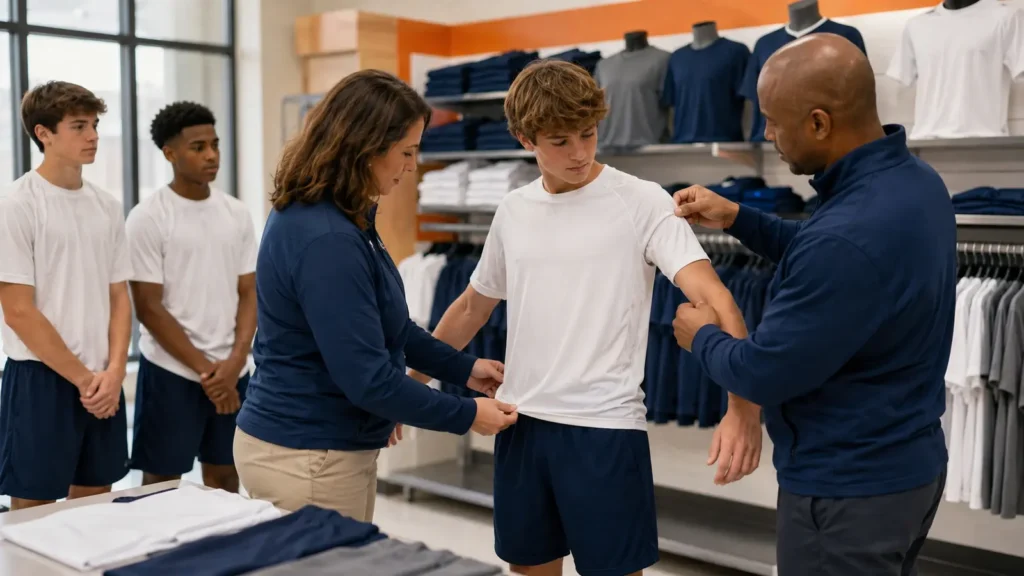
Conduct a size-set fitting
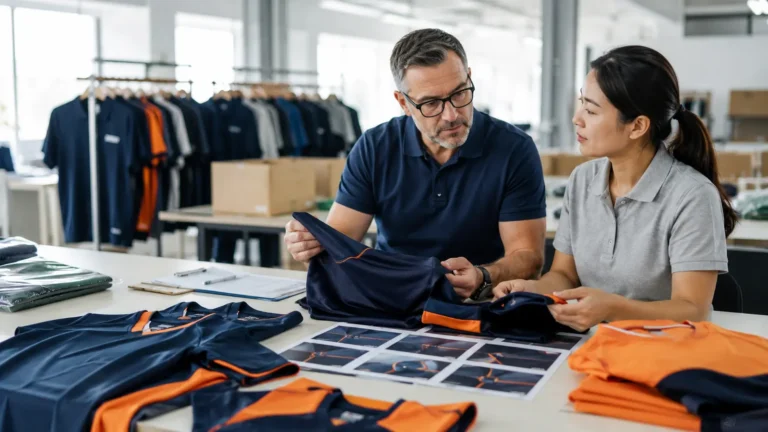
Request a size set or at least representative middle and edge sizes. Test it with students or fit models who reflect the intended population, following the school’s safeguarding and privacy practices. Conduct normal movements: overhead reach, squat, lunge, sprint posture, seated travel position, and layering beneath a jacket. Record feedback by garment and size rather than accepting general comments such as “runs small.”
Key fit checks include:
- The shirt hem remains adequately covered during overhead and rotational movement.
- Armholes permit reach without pulling the body upward.
- Shorts allow full stride and squat without excessive riding.
- Waist elastics remain secure without relying on exposed cords.
- Tapered pants clear the calf and ankle and fit over required socks or footwear.
- Jackets fit over the approved midlayer without restricting the shoulder.
- Decoration placement remains visually centered across the size range.
Plan reasonable quantities at size extremes. A size curve based solely on a previous supplier may not transfer to a new pattern. Keep a controlled record of the approved chart so repeat orders use the same garment measurements rather than merely the same letter sizes.
Construction Details That Determine Durability
The most valuable construction features are often quiet ones. Seam type, stitch density, reinforcement, zipper quality, elastic recovery, and inside finishing have more effect on service life than decorative complexity.
For stretch garments, use seams that can extend with the fabric. Flatlock or low-profile seams may reduce bulk in close-fitting pieces, while overlock plus coverstitch is common for tees and hems. High-stress points—pocket openings, zipper ends, drawcord exits, and bag handles—may need bar tacks or reinforcement appropriate to the material. A reinforcement should not create a hard edge that irritates the wearer.
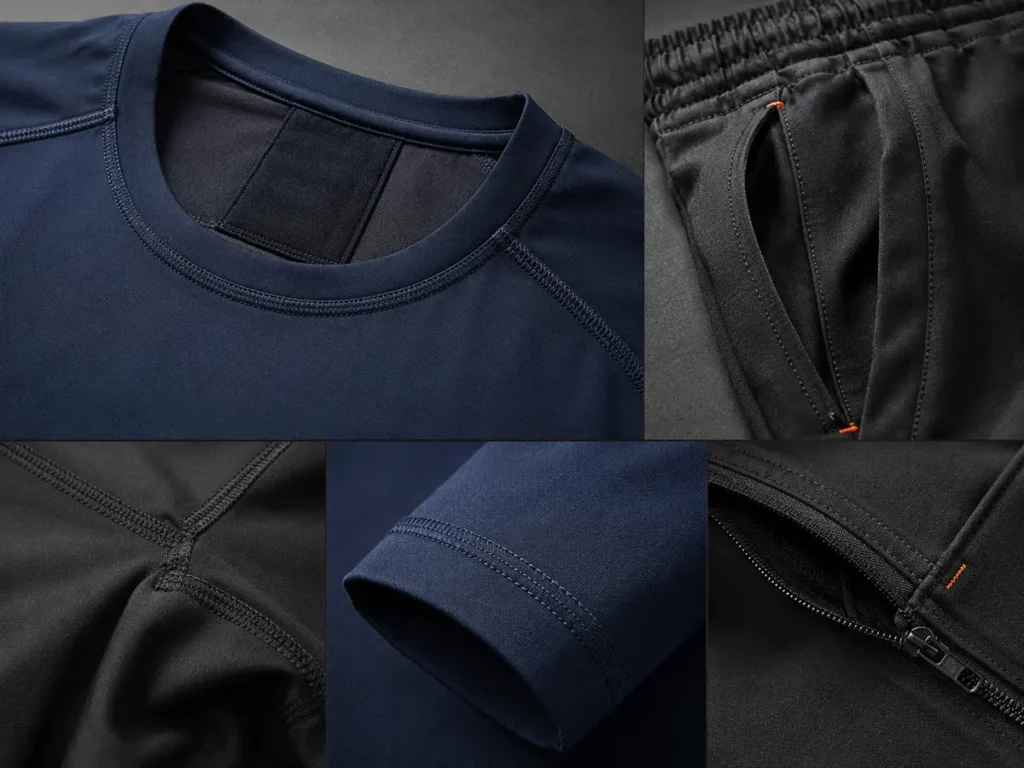
Inspect the inside. Loose thread ends, rough label edges, exposed zipper backs, and bulky seam intersections can undermine an otherwise attractive garment. A heat-transfer neck label can reduce bulk, but the ink and adhesive must remain comfortable and legible after washing. Woven labels should use a soft construction and secure placement.
Zippers deserve a defined specification: coil or molded teeth, puller shape, reverse or standard orientation, locking behavior, and color. For school garments, easy operation and smooth guards are usually more important than unusual hardware. Request replacement consistency if the same style will be reordered.
Safety and Compliance Questions for School Buyers
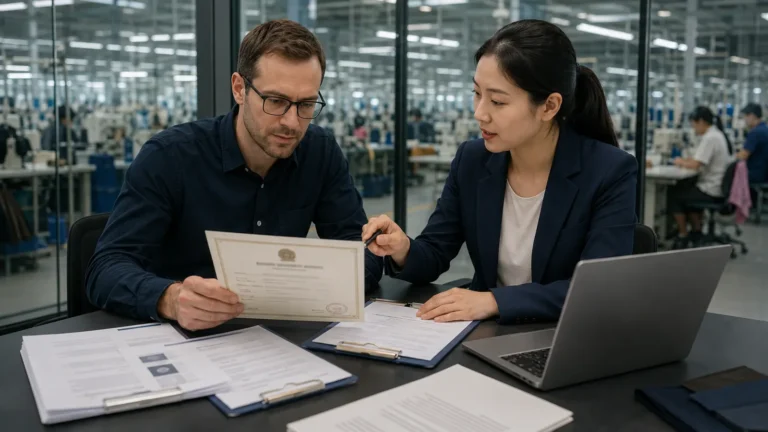
Product rules vary by market, age, garment type, and claim. The importer or brand remains responsible for identifying applicable requirements; a supplier questionnaire does not replace legal review or laboratory advice.
In the United States, the Consumer Product Safety Commission states that hood and neck drawstrings on children’s upper outerwear in sizes 2T through 12 are prohibited, and waist or bottom drawstrings in sizes 2T through 16 are subject to limits. The CPSC definition includes garments such as jackets and sweatshirts. Buyers offering youth hoodies or jackets should therefore define the size range, market, and trim design early, and obtain current compliance advice.
Also review fiber-content labeling, country-of-origin marking, care labeling, flammability requirements, chemical restrictions, small parts, reflective or protective claims, and applicable EU/UK requirements for the destination market. If a fabric is described as recycled, antibacterial, UV-protective, waterproof, or certified, request traceable documentation and ensure the visible claim matches its scope.
Customization Without Sacrificing Performance
The best decoration method depends on artwork, fabric, order size, stretch, hand feel, and expected wash cycle.
| Method | Good use | Buyer advantage | Approval focus |
|---|---|---|---|
| Embroidery | Small crest on jacket, fleece, polo, or bag | Dimensional and familiar appearance | Backing comfort, puckering, stitch count, small details |
| Heat transfer | Initials, numbers, compact logos | Flexible personalization and sharp edges | Adhesion, stretch, hand feel, wash resistance |
| Screen printing | Repeated simple graphics on suitable fabric | Efficient for stable artwork and volumes | Ink compatibility, opacity, cure, stretch cracking |
| Sublimation | Polyester panels or all-over designs | Color integrated into compatible fabric | White base, color strike-off, migration, panel alignment |
| Woven patch | Detailed badge on structured garments | Consistent badge form | Edge finish, attachment, stiffness, color |
| Rubber/PVC-style patch | Modern accent on jackets or bags | Texture and weather-tolerant appearance | Weight, flexibility, attachment, legal material requirements |
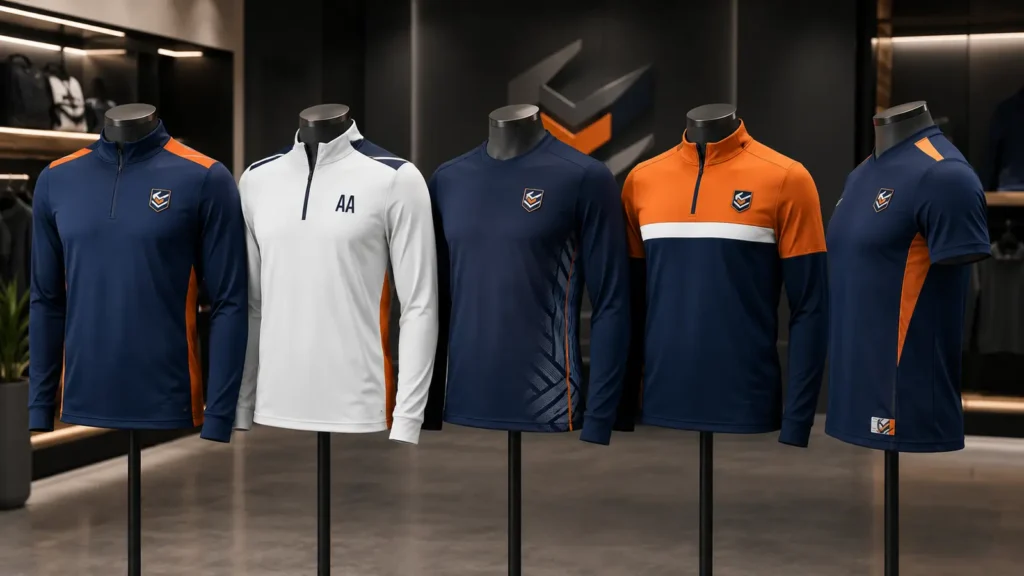
Large, heavy decorations can reduce breathability and flexibility. For hot-weather training tees, use a small crest and minimal player identification rather than covering the chest with an impermeable film. On stretch panels, perform an extension check and laundering trial. On sublimated garments, approve a strike-off with critical colors and gradients before cutting production fabric.
A sensible identity system might use one crest size, one staff identifier, one optional player-initial position, and a controlled set of colorways. Record exact placement from seam reference points for every garment size. “Left chest” is not enough for consistent production.
Planning a custom student-athlete range? Send JIUMU the garment list, quantities by size, target colors or Pantone references, logo artwork, decoration positions, destination market, packaging needs, and required delivery date. A digital mockup and physical sample can then be evaluated against one written specification. Request a custom quotation.
What Drives the Cost of a Bulk Training-Apparel Order?
Unit cost is shaped by more than quantity. Fabric composition and weight, custom dyeing, pattern complexity, number of panels, zipper and trim quality, decoration area, personalization, size range, packaging, testing, sampling, freight terms, and delivery schedule all matter.
Custom colors may require material minimums that exceed the garment minimum. A school ordering several styles can sometimes improve efficiency by sharing fabric and trims across a tee, quarter-zip, and pant. Conversely, adding a different fabric to every panel increases sourcing complexity and repeat-order risk.
Personalized names and numbers require a clean data process. Buyers should supply a locked spreadsheet with one row per garment, validated spelling, size, number, and style. Use this team roster checklist to organize names, numbers, sizes and approvals before submitting the order. Agree who approves the data and how late changes are handled. The cost of one corrected personalized garment can exceed the decoration cost saved by choosing a cheaper process.
Ask for a quotation that separates product, sampling, decoration, individual packing, testing where required, freight, duty responsibility, and optional services. Compare equivalent Incoterms and specifications. A quote without a fabric weight, decoration description, packaging definition, and delivery basis is not ready for comparison.
Quality-Control Checklist Before Bulk Production
Quality control should begin at specification, not after cartons are packed. Use a staged approval process.
- Artwork and specification review: Confirm fabric, color, measurements, grading, seam construction, trims, artwork files, decoration method, placement, labels, packaging, and destination requirements.
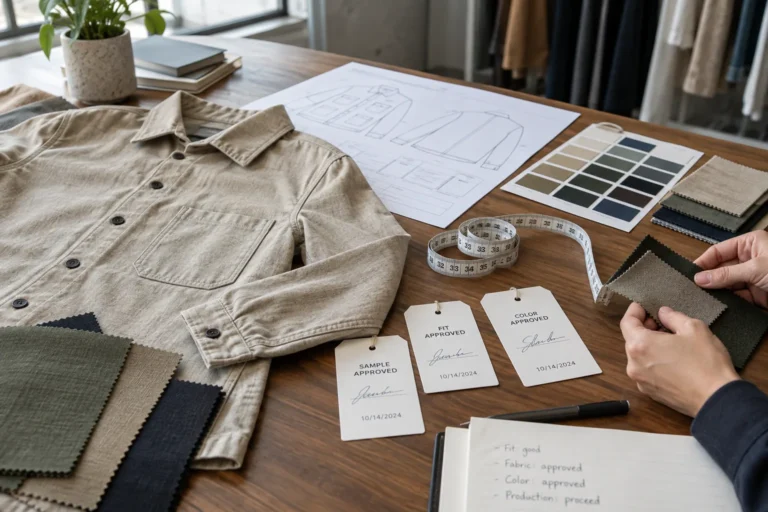
- Material approval: Approve lab dips, strike-offs, fabric swatches, zipper tape, elastic, cord, labels, and patches under consistent lighting.
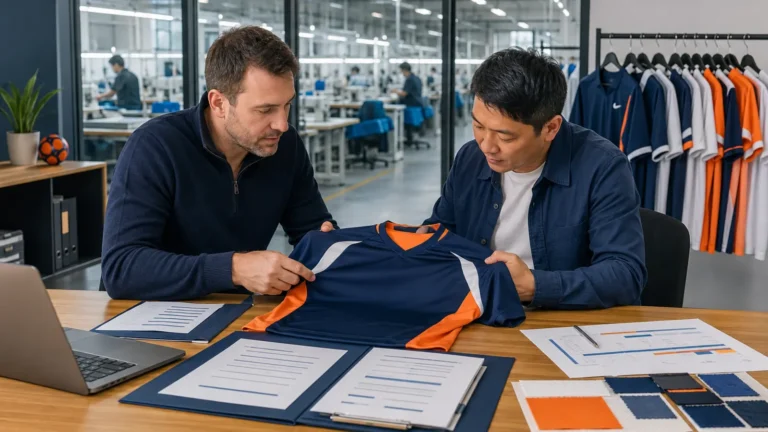
- Fit or development sample: Evaluate appearance, movement, inside comfort, measurements, and construction. Record every requested change in one revision log.
- Pre-production sample: Confirm the production-intent materials, colors, logos, trims, measurements, labels, and packaging. Approve with a signed or time-stamped record.
- In-line inspection: Check early output before the whole quantity is complete. Focus on measurements, shade, decoration, seam security, and workmanship.
- Final inspection: Use an agreed sampling plan and acceptance criteria for quantity, measurements, appearance, function, packaging, and carton marks.
- Shipment reference: Retain an approved sample, measurement report, color reference, and production photos for repeat orders and claims investigation.
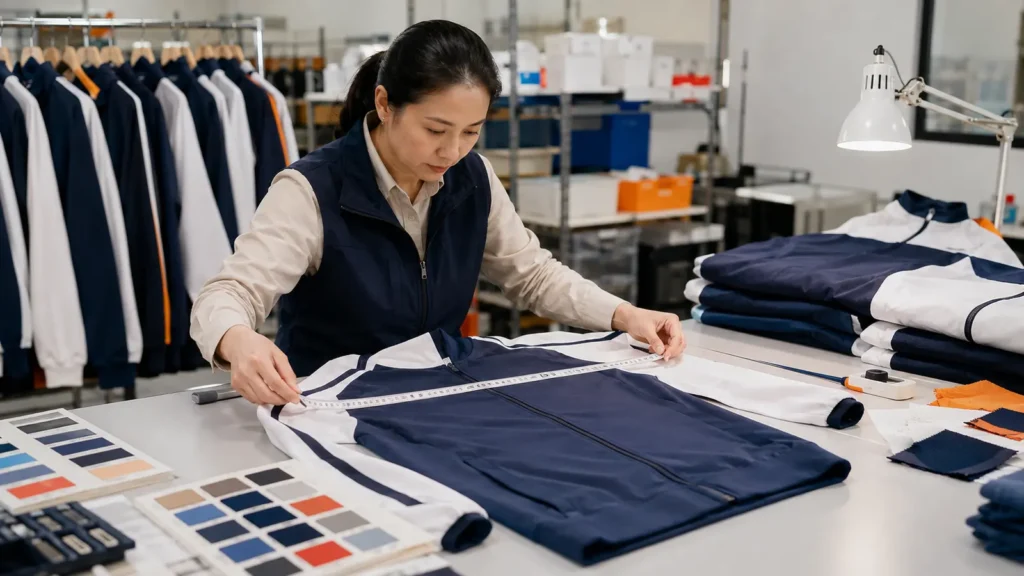
The purchase agreement should define tolerances and defects. Examples include measurement outside tolerance, holes, open seams, oil marks, shade variation beyond the approved reference, incorrect logo, peeling transfer, failed zipper, missing label, mixed sizes, and inaccurate carton assortment. Not every small variation is a major defect; classify critical, major, and minor issues according to risk and the school’s requirements.
Practical wash and wear checks
Before approval, wash the sample according to the intended care instructions several times and inspect dimension change, twisting, pilling, snagging, color transfer, decoration adhesion, zipper behavior, elastic recovery, and label legibility. A sample that looks excellent only before washing is not a reliable production standard.
How to Plan a Bulk Order
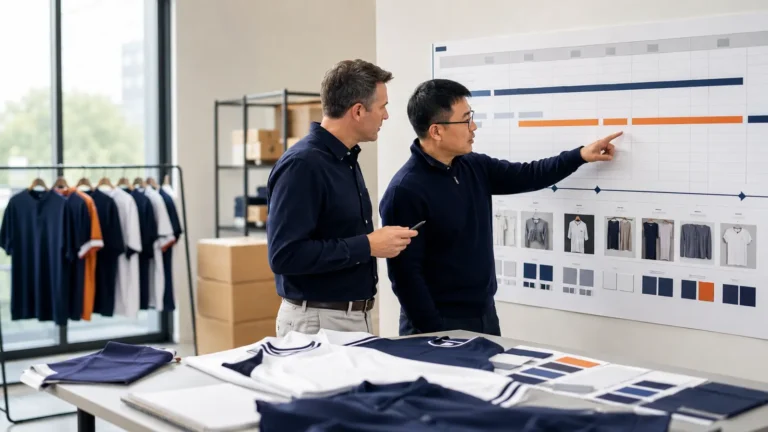
Start with the program calendar and work backward from the required in-hands date. Allow time for specification, quotation, artwork, sample production, review, revision, bulk production, inspection, freight, customs, and local distribution. Actual lead time depends on material availability and customization; obtain a project-specific schedule rather than assuming a generic promise.
Consolidate feedback. One authorized buyer should issue one revision list after coaches, administrators, and brand stakeholders review the sample. Multiple message threads create conflicting instructions.
Use a structured order brief:
- Buyer organization, destination, and intended sales or distribution markets
- Student age/size range and required fit blocks
- Sports and use cases
- Garment list and quantity by style, color, and size
- Reference images or tech pack
- Fabric composition, construction, GSM, stretch, and finish
- Garment measurement chart and tolerances
- Pantone or physical color references
- Vector logo files and decoration requirements
- Personalization data, if any
- Labels, hangtags, bags, carton assortments, and barcode needs
- Compliance and testing responsibilities
- Target sample date, delivery date, shipping term, and destination
Questions to Ask a Training-Apparel Supplier
- Can you provide fabric composition, construction, nominal GSM, and available test information?
- Will the quoted material be used in the pre-production sample and bulk order?
- Which measurement points and tolerances will production follow?
- Can you make the youth/adult or multiple fit blocks our program needs?
- How will stretch, opacity, seam strength, color, and decoration be checked?
- What artwork format and minimum detail size are required?
- How will Pantone colors be approved, and what variation should we expect?
- Which parts of the order are custom, and which may be reordered from stock materials?
- What is the process for personalized names, numbers, and corrections?
- Can you provide a pre-production sample using production-intent materials?
- What inspection checkpoints and reports are available?
- How are mixed sizes, spare pieces, individual packing, and carton assortments controlled?
- What destination-market information do you need for labeling and product compliance?
- What are the project-specific MOQ, sample timing, production window, and shipping options?
- How will an approved specification be preserved for repeat orders?
Common Buying Mistakes
Selecting by GSM alone
GSM measures mass per area, not breathability, softness, snag resistance, opacity, or durability. Compare construction and performance as well as weight.
Using one garment for every condition
A heavy hoodie is not ideal for hot conditioning; a thin tee is insufficient for cold sidelines. A small layered range usually performs better.
Approving only one middle size
Problems often appear at the smallest and largest sizes. Review grading and representative edge sizes.
Treating “moisture-wicking” as proof
Functional claims require definitions and evidence. Ask what is being tested, how, and after how many washes.
Overdecorating training tops
Large films, dense embroidery, and multiple badges can add heat, stiffness, cost, and failure points. Use decoration where it supports identification.
Ignoring inside comfort
Students feel rough labels, zipper edges, backing, and bulky seams. Inspect the inside and conduct movement trials.
Ordering from a visual mockup only
A mockup communicates design; it does not replace measurements, material data, construction details, tolerances, and an approved physical sample.
Failing to plan reorders
Record fabric, color, trims, pattern version, and decoration details. Ask what can realistically be reproduced and whether material minimums apply.
Why Work With JIUMU?
JIUMU is a Guangdong-based B2B custom teamwear and logo-apparel supplier established in 2010. Buyers can review the company facts and verification guidance behind key business claims. The company supports schools, sports teams, clubs, distributors, uniform dealers, promotional buyers, and private-label brands in North America and Europe.
Relevant capabilities include OEM and ODM development, fabric sourcing, Pantone color matching, digital mockups, physical samples, size grading, embroidery, sublimation, screen printing, heat transfer, patches, private labels, hangtags, customized packaging, bulk quality control, and export support. The typical MOQ is 50 pieces, subject to product structure and customization.
JIUMU’s value in a student-athlete program is the ability to coordinate multiple categories—such as custom team uniforms, team jerseys, team jackets, custom hoodies, and team bags—around one color, logo, labeling, and packing plan. Specifications and samples still need buyer approval; JIUMU does not replace the buyer’s legal, safety, medical, or governing-body responsibilities.
Frequently Asked Questions
Final Recommendation
The best training apparel for student athletes is a controlled system, not a single “performance” product. Begin with the athletes’ real training environments, build a concise layered range, define fabrics and construction in measurable terms, validate movement across the size range, keep decoration proportionate, and approve production-intent samples before bulk manufacturing. Add current safety, compliance, weather, and medical procedures at the school level; apparel supports those systems but cannot replace them.
JIUMU Teamwear Sourcing Team
Practical guidance for schools, clubs, distributors, uniform dealers and private-label buyers.