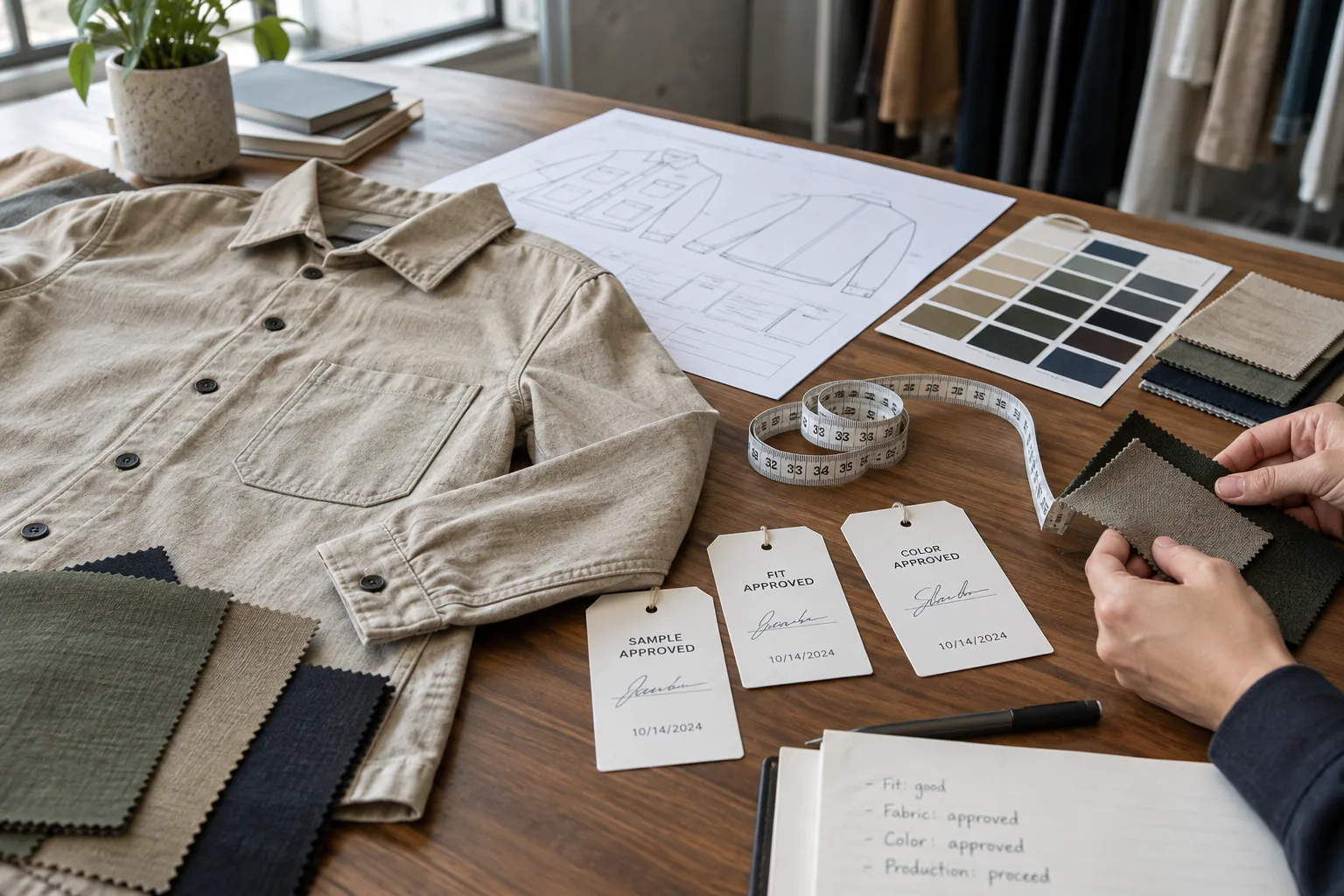
Conditional Sample Approval vs Re-Sampling: When Can Bulk Production Start?
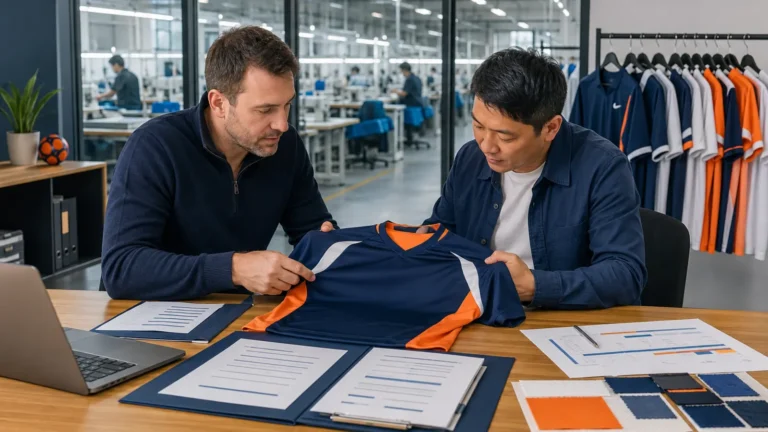
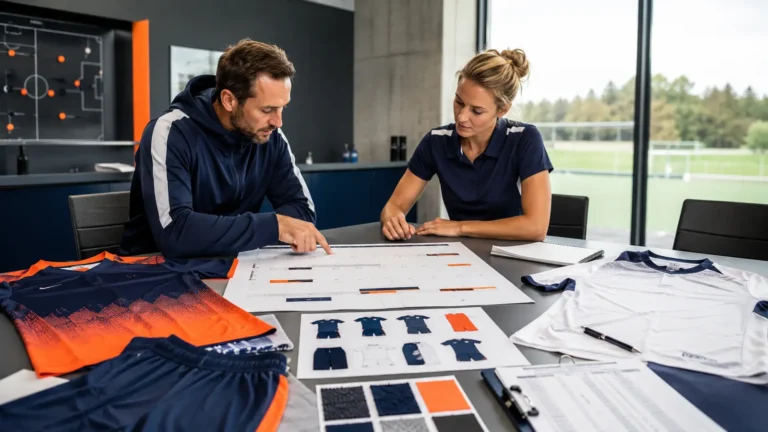
Short answer: Bulk production should start only when every release-critical issue is closed. Conditional approval is appropriate only for limited, measurable corrections that can be verified before or during production without changing fit, material, color, artwork or compliance. If an unresolved point could affect the whole order, request a revised sample or place the order on hold.
Why This Decision Is Different from a Sample Checklist
A sample checklist explains what to inspect. This guide explains what to do after inspection. Buyers often find small deviations and then face a commercial decision: approve, approve with conditions, request another sample or reject the sample. The safest choice depends on severity, reversibility, evidence and the production stage—not on how quickly everyone wants to proceed.
Four Possible Sample Decisions
| Decision | Use it when | Bulk release |
|---|---|---|
| Full approval | All specifications and release-critical items match | Release against a signed reference sample and document version |
| Conditional approval | Only minor, measurable and low-risk corrections remain | Release only with written conditions and verification evidence |
| Revised sample required | The correction affects fit, appearance, construction or repeatability | Do not release until the revised sample is approved |
| Reject or hold | Material, compliance, workmanship or supplier-control risk is unresolved | Stop and investigate before any commitment |
Issues That Should Normally Block Bulk Production
- Wrong fabric composition, weight, stretch, shade or approved supplier.
- Fit or measurement deviations outside the agreed tolerance.
- Incorrect artwork scale, placement, spelling, color or decoration method.
- Construction changes that affect strength, comfort, safety or appearance.
- Missing test evidence, legal labeling or destination-market requirements.
- A sample made by a process or subcontractor that will not make the bulk order.
These issues are difficult to correct consistently after cutting, printing, embroidery or assembly begins. A verbal promise is not an adequate production control.
When Conditional Approval Can Be Reasonable
Conditional approval may be appropriate for a correction that is objectively defined, does not change the design foundation and can be verified before irreversible production. Examples may include trimming a specified thread tail, correcting a removable packing label, or submitting a final barcode proof. The approval record must state the exact correction, owner, deadline, evidence and consequence if it is not closed.
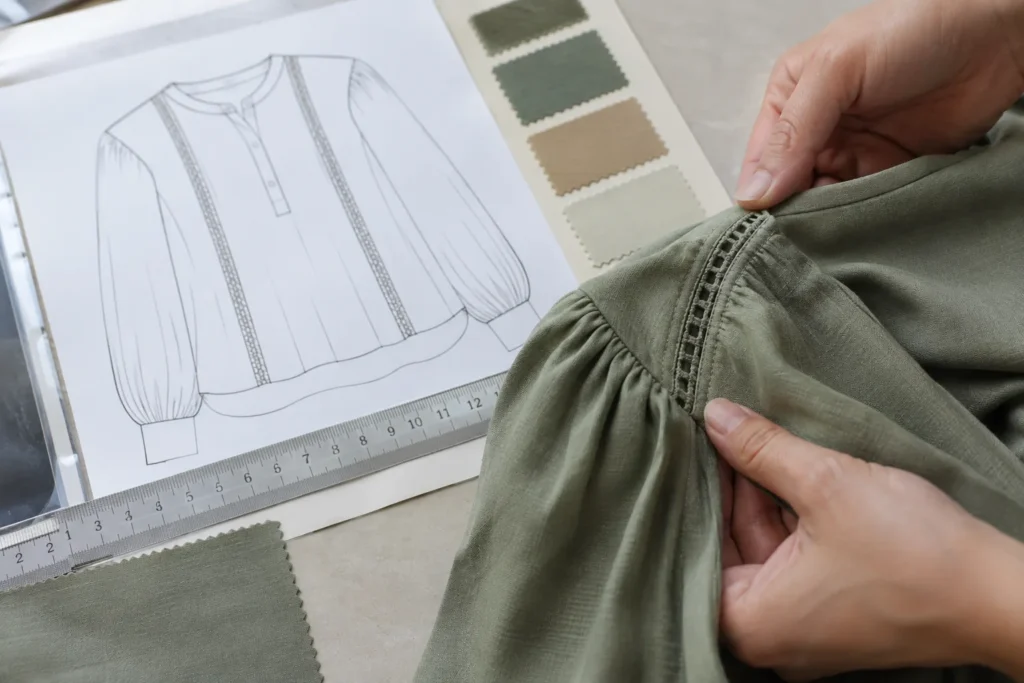
A Five-Test Decision Rule
- Severity: Could the issue cause rejection, a claim or unusable goods?
- Scale: Would the same defect repeat across every unit?
- Reversibility: Can it be corrected without damaging finished goods?
- Verifiability: Can the buyer confirm the correction with measurements, photos, test results or a retained sample?
- Timing: Is verification possible before cutting, decoration or packing locks the error into production?
If any answer indicates high risk, re-sampling is usually more defensible than conditional approval.
What a Conditional Approval Record Must Contain
- Style, colorway, size and sample identification.
- Tech pack, bill of materials and artwork version numbers.
- Clear photos or marked drawings of every open point.
- Target value, tolerance and inspection method.
- Person responsible and evidence due date.
- The production stage that cannot begin before closure.
- Who accepts cost and delay if the condition is not met.
Evidence Before Production Release
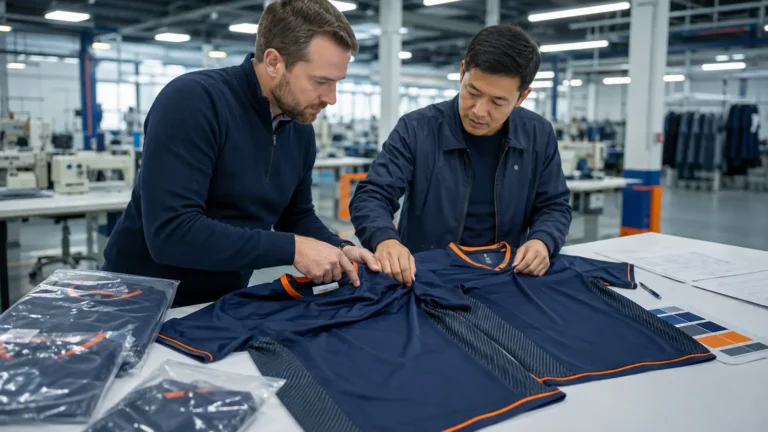
Choose evidence according to the risk. A dated photo with a ruler may verify placement; a measurement sheet may verify dimensions; a strike-off can verify print color; a lab report may be required for performance or compliance; and a revised physical sample is appropriate when hand feel, fit or construction cannot be judged remotely. Evidence must be tied to the same style and document version.
Who Should Sign the Decision?
The buyer should name one approval authority. Design, merchandising, technical and compliance teams may review separate areas, but the final release should consolidate their decisions. The supplier should acknowledge the same signed record. Conflicting chat messages should never override the controlled approval document.
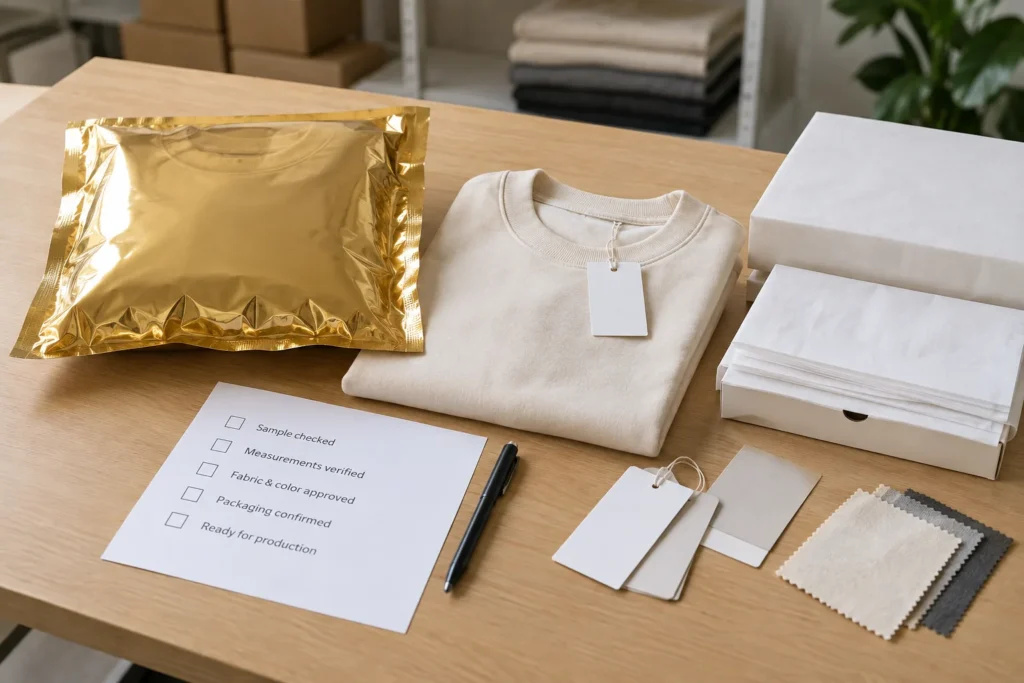
Production Release Checklist
- Approved sample or approved deviation is identified and retained.
- All critical comments are closed with evidence.
- Bulk materials and decoration standards match the approval basis.
- Size set, grading and colorways are approved where applicable.
- Packaging and labeling instructions use the current version.
- Inspection checkpoints and acceptance criteria are agreed.
Frequently Asked Questions
Does conditional approval mean the sample passed?
Not completely. It means production is authorized only under stated conditions. If those conditions are not satisfied, the release is no longer valid.
Can photos replace a revised sample?
Only for issues that photographs can prove reliably. Photos cannot fully verify fit, hand feel, stretch, shade under controlled light or hidden construction.
Who owns the risk when production starts with open comments?
The approval record should state this explicitly. Without written responsibility, both buyer and supplier may interpret the decision differently.
Should every small issue trigger another sample?
No. Re-sampling should be proportional to repeatability and commercial risk. Minor corrections can be conditionally approved when they are measurable and verified before irreversible work.
Related Review Resources
First use our apparel sample inspection checklist to identify issues. Then use the decision framework above to control release. For a project-specific review, contact JIUMU with the current tech pack, sample photos, quantity and required delivery date.