Training Apparel vs Running Apparel: Fabric, Fit and Performance Differences
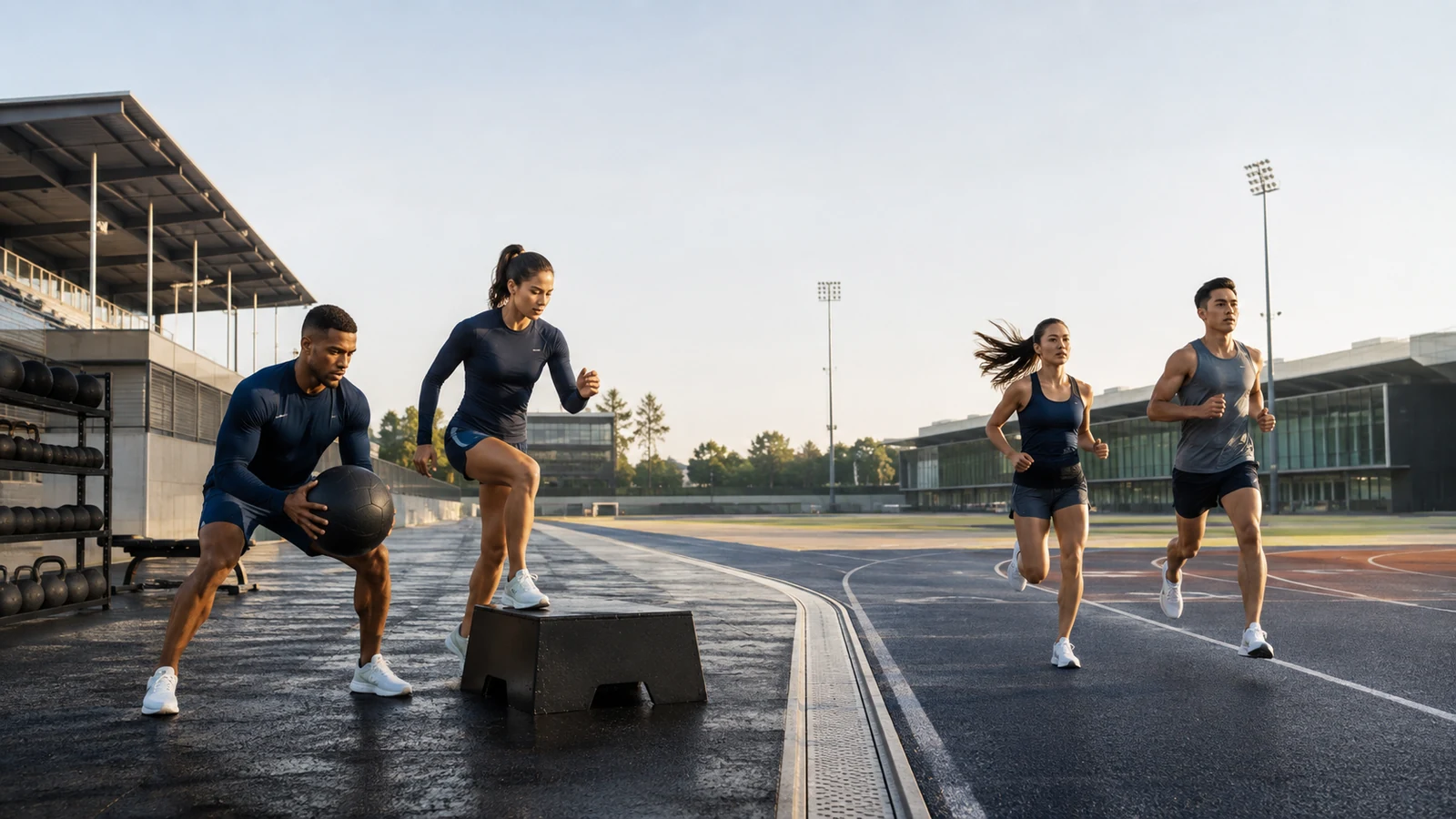
Training apparel and running apparel may look similar on a product page, but they are engineered around different movement patterns. A training kit must tolerate squats, lunges, lifting, floor work and repeated changes of direction. A running kit is usually optimized for continuous forward motion, heat release, low weight and reduced friction over many repeated strides.
For clubs, schools, sportswear brands and uniform dealers, that distinction affects more than product naming. It changes fabric weight, stretch requirements, seam placement, garment fit, pocket design, decoration choices and the tests used to approve a sample. Ordering one generic “performance shirt” for every activity can create avoidable complaints: a running top may feel too delicate in a gym, while a robust training tee may retain more heat than runners want.
This buyer’s guide explains how to specify both categories, where they can overlap, and how to build a coordinated custom collection without forcing every athlete into the same garment.
Quick Answer
Training apparel is generally built for multidirectional movement, coverage and resistance to repeated contact, while running apparel is generally built for forward motion, low bulk, ventilation and reduced chafing. Training garments often use medium-weight stretch knits, stable waistbands and reinforced or strategically placed seams. Running garments often use lighter knits or wovens, body-mapped ventilation, minimal seam bulk and silhouettes that reduce fabric movement. The correct choice depends on the activity, climate, wear duration, decoration and target price—not the fiber name alone.
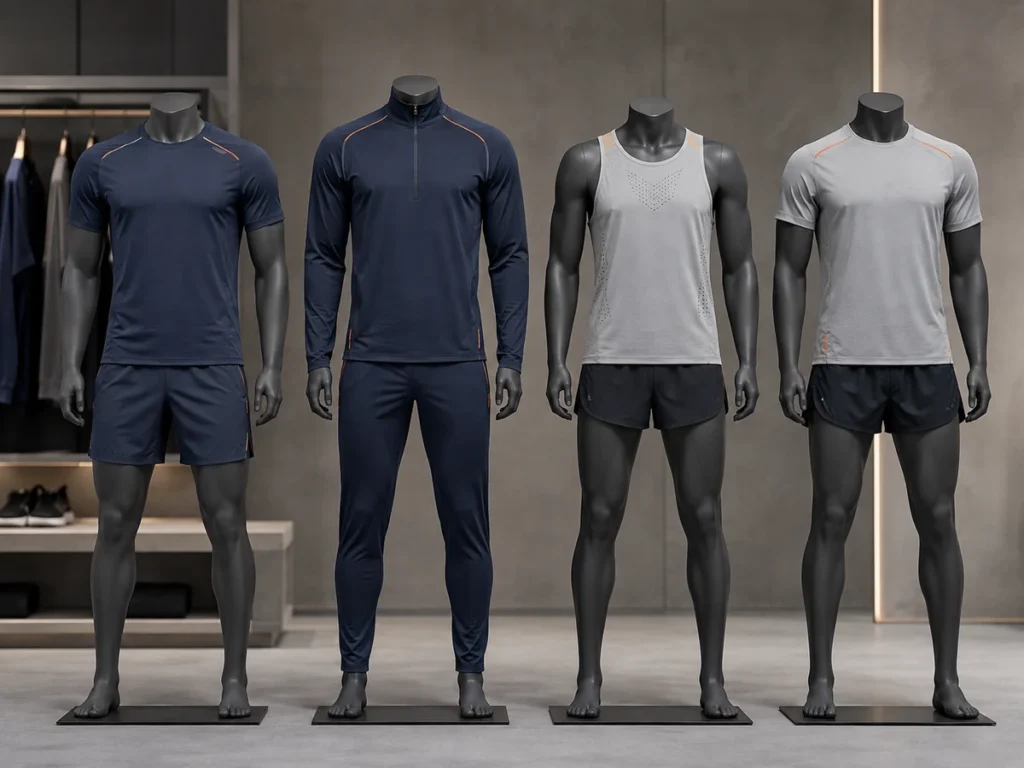
Training Apparel vs Running Apparel at a Glance
| Buying criterion | Training apparel | Running apparel | Procurement implication |
|---|---|---|---|
| Primary movement | Multidirectional: squat, jump, rotate, lift, crawl | Repetitive forward stride and arm swing | Test samples in the intended motion, not only while standing |
| Typical priority | Mobility, coverage, stability and abrasion tolerance | Low weight, heat release and friction control | Write different performance priorities into each tech pack |
| Common fabric direction | Medium-light or medium-weight stretch jersey/interlock; durable woven stretch | Lightweight jersey, mesh, micro-perforated knit or lightweight woven | Specify construction, weight and stretch, not “polyester” alone |
| Fit | Athletic with room at shoulders, hips and thighs | Streamlined with controlled ease and limited flutter | Use category-specific finished measurements |
| Seams | Strong, flexible; may include gussets or reinforced stress areas | Low-profile and positioned away from friction zones | Inspect seam type, placement and recovery after stretching |
| Shorts | Stable waistband, coverage, pockets where needed | Lightweight shell, split or shaped hem, secure small storage | Confirm phone/key needs and liner preference |
| Decoration | Embroidery, heat transfer, screen print or sublimation, subject to fabric | Lightweight heat transfer or sublimation often suits low-bulk designs | Test decoration for stretch, hand feel and breathability |
| Best suited to | Gym sessions, team conditioning, warm-ups, coaching and travel | Road, track, trail and run-club sessions | A coordinated range can share colors while using different specifications |
These are design tendencies rather than universal rules. A cold-weather running quarter-zip can be heavier than an indoor training tee. A high-intensity training singlet can be extremely light. Use the end activity as the starting point and treat category labels as a shorthand, not a specification.
Why the Difference Matters to B2B Buyers
A consumer can try a garment and return it. A teamwear buyer may be approving hundreds of coordinated pieces across sizes, colors and decoration placements. Small specification errors therefore multiply.
The main commercial risks are predictable:
- Wrong-use returns or complaints. Athletes may report riding hems, transparent stretch areas, bouncing pockets, heavy sweat retention or underarm friction.
- Inconsistent brand presentation. A generic blank may accept a large logo but perform poorly during the target activity.
- Sample-to-bulk drift. Fabric weight, hand feel, stretch recovery or color can vary when they are not documented in the approved specification.
- Decoration incompatibility. A thick transfer can obstruct a ventilated running panel; dense embroidery can distort a light knit.
- Assortment confusion. Sales teams struggle when “training” and “running” products have no distinct use case or benefit.
The solution is not necessarily more styles. It is clearer product architecture. Many buyers can cover most needs with one core training top, one training short, one lightweight running top, one running short and optional layering pieces.
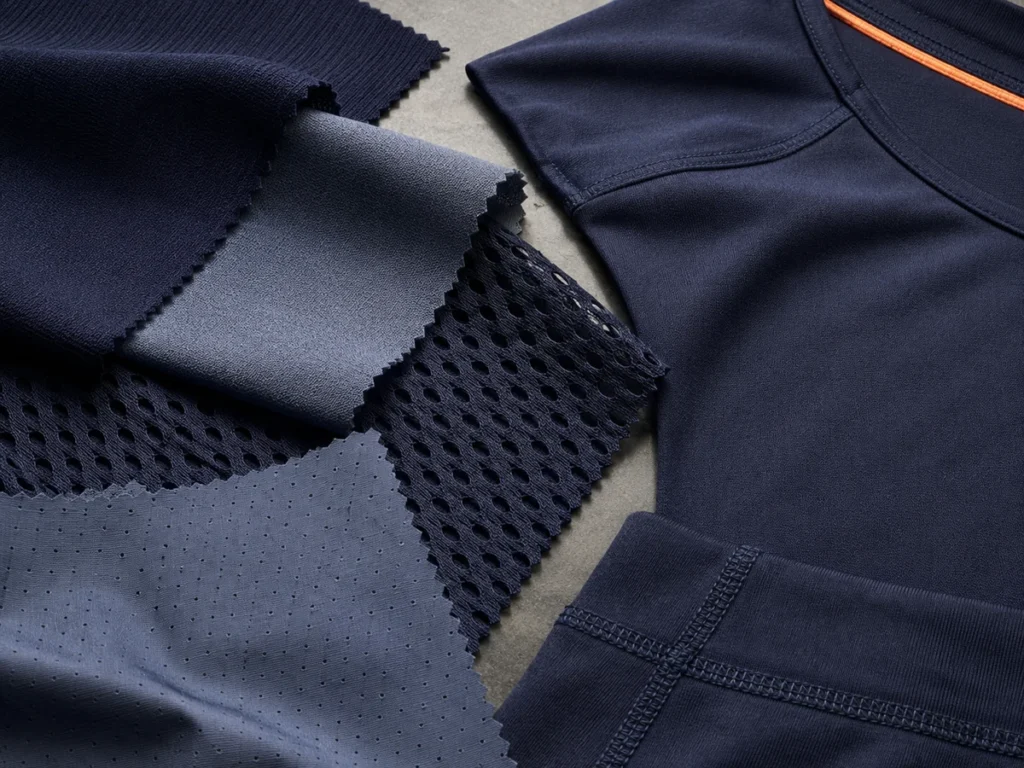
Fabric Differences: Fiber Content Is Only the Beginning
“Polyester sports fabric” is not a useful purchasing specification. Two fabrics with the same fiber percentages can differ substantially because of yarn, knit structure, weight, finishing, stretch direction and surface texture.
Training fabrics prioritize controlled stretch and stability
Training tops commonly benefit from jersey or interlock structures that balance mobility with coverage. Elastane may be added when close fit or multidirectional stretch is required, but stretch performance should be evaluated directly rather than inferred from the percentage alone. A fabric that stretches easily but recovers poorly can bag at elbows, knees or seat areas.
Training bottoms often need more structure. For shorts used around benches, turf or equipment, buyers may prefer a smooth woven stretch shell or a stable knit with enough weight to avoid cling. Leggings and compression-style pieces need opacity under deep flexion, consistent recovery and a waistband that remains stable during repeated movement.
Useful training-fabric approval points include:
- Finished fabric weight in grams per square meter (GSM), with an agreed tolerance
- Two-way or four-way stretch behavior and recovery
- Opacity under extension for leggings and fitted bottoms
- Pilling and abrasion performance appropriate to the intended use
- Dimensional stability after the proposed wash cycle
- Surface compatibility with heat transfers, printing or embroidery
- Hand feel and moisture-spreading behavior on the actual colorway
Running fabrics prioritize heat and moisture management with low bulk
Running tops frequently use lightweight jersey, engineered mesh or micro-perforated structures. The objective is often to move moisture away from the skin, increase air exchange and reduce the amount of saturated fabric the runner carries. The lightest option is not automatically the best: excessively open fabric may become transparent, snag easily or provide an unstable base for decoration.
Running shorts commonly use lightweight woven shells because they can move freely without clinging. Side splits, curved hems or gussets help stride mobility. Some designs add an inner brief or compression liner; others stay unlined so the wearer can choose a separate base layer.
For running fabrics, buyers should review:
- Weight and airflow in the finished color—not only a white lab dip
- Wet cling and visual transparency
- Drying behavior under the care method the buyer will recommend
- Surface roughness at underarms, chest and inner thigh
- Snag resistance for trail or mixed-surface use
- Print show-through and color change when wet
- Compatibility with low-profile reflective details if specified
Moisture-wicking is a system, not a magic fiber
Moisture transport depends on fiber chemistry, yarn structure, fabric construction and finishing. A supplier should be able to describe the proposed fabric and provide a sample for comparison. Buyers who need a defined claim should agree on the test method, preconditioning, wash history and acceptance threshold before relying on marketing language.
In practical sourcing, a wear trial is still valuable. Ask testers to note perceived cling, drying comfort, temperature, odor retention and chafing under realistic duration and intensity. Subjective feedback does not replace laboratory testing, but it can reveal design problems a fabric data sheet cannot.
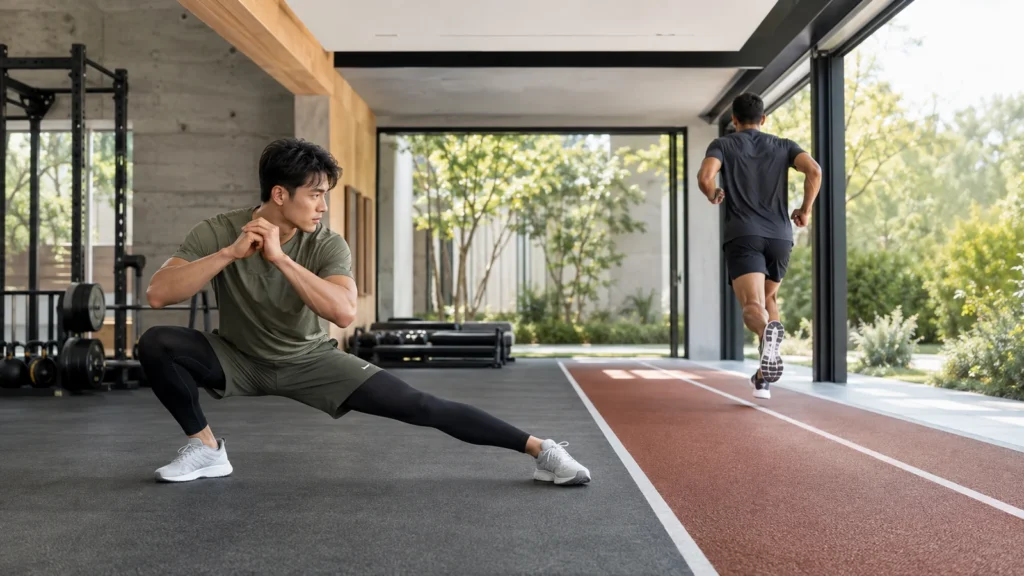
Fit Differences: Movement Determines the Pattern
Training fit needs mobility without unwanted exposure
During squats and overhead movements, a training shirt must accommodate shoulder flexion and torso length. If the body is too short or the armhole too restrictive, the hem lifts. Raglan sleeves, underarm gussets or carefully shaped armholes can improve mobility, but pattern execution matters more than the feature name.
Training shorts require enough ease through the hip and thigh for lunges and lateral work. A crotch gusset may reduce seam stress and improve range of motion. For team environments, buyers should also define the desired coverage in deep squat, floor exercise and coaching situations.
Running fit controls fabric movement and friction
A running top is usually closer to the body than a casual tee, though it should not restrict breathing or arm swing. Excess fabric can flutter, hold moisture and rub over long distances. Conversely, an overly tight armhole can chafe, especially when sweat and repeated motion are added.
Running shorts need stride clearance. The ideal inseam depends on the program and market: a race-oriented collection may use shorter splits, while a school or club range may require more coverage. The specification should define inseam, outseam, rise, leg opening and whether the measurement includes a liner.
| Fit checkpoint | Training sample test | Running sample test |
|---|---|---|
| Top length | Overhead reach, push-up and deep squat | Continuous arm swing and forward lean |
| Armhole/sleeve | Pressing, pulling and rotation | Repeated swing with damp fabric |
| Bottom rise | Deep squat and lateral lunge | Easy run and higher-knee stride |
| Waistband | Jump, bend and loaded movement | Sustained movement with keys/phone if carried |
| Leg opening | Side lunge and floor work | Full stride without edge restriction or flutter |
| Seams | Stretch at stress points | Friction check at underarm, side and inner thigh |
Never grade a running style and a training style from one base pattern merely because their front views look similar. Establish the intended fit block, sample size and size range for each category. For unisex programs, document how the silhouette should work across the actual wearer population rather than relying on a generic label.
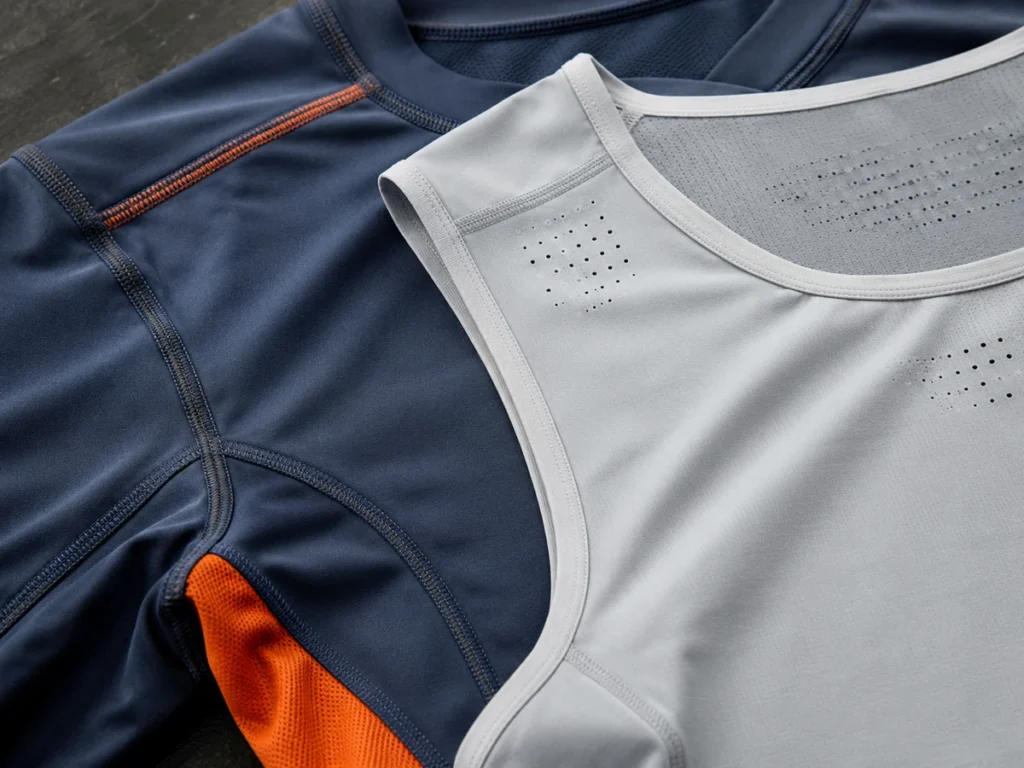
Construction and Seam Placement
Training garments experience force in many directions. Stress frequently appears at shoulder joins, crotch seams, pocket openings and waistband attachments. Strong overlock or coverstitch construction can work well when thread stretch and seam allowance are appropriate. Bartacks may reinforce selected openings, but unnecessary dense stitching can create stiffness.
Running garments need strength too, yet friction control becomes more prominent. Flat or low-profile seams may be used at sensitive zones. Moving a side seam away from the point of arm contact can matter more than changing the stitch type. Bonded finishes can reduce bulk in some designs, but they require material and process validation and may add cost.
When approving construction, inspect the garment inside and out:
- Stretch each seam in the direction it will be loaded.
- Check for skipped stitches, tunneling, waviness and exposed rough edges.
- Confirm seam placement against the body during movement.
- Wash the sample as instructed and repeat the inspection.
- Compare decoration areas before and after stretching.
- Record the approved seam, thread color and visible stitch details in the tech pack.
Performance Features That Should Not Be Confused
Ventilation
For running, ventilation may be concentrated at the upper back, underarm or side body. Training garments can use similar zones, but an open mesh panel placed where equipment contacts the body may snag or feel uncomfortable. Map ventilation to both heat zones and the activity environment.
Pockets
Training shorts may need hand pockets, a zip pocket or phone storage for coaches and athletes moving between sessions. Running storage must control bounce. A small secure key pocket, rear waistband pocket or close-to-body phone pocket is usually more relevant than a loose side pocket. Test every loaded pocket while moving.
Visibility details
Reflective-looking trim should not be described as a safety feature without supporting specification and test evidence. If visibility is part of the brief, define the material, placement, durability expectations and verification method. Also explain that apparel details do not replace appropriate lighting, route selection or other safety practices.
Weather protection
“Water-resistant” and “wind-resistant” require qualification. A dense woven shell may reduce wind penetration, while a finish may help shed light moisture, but buyers should agree on test language before making claims. Running shells also need ventilation and packability; training outerwear may prioritize warmth, durability and team branding.
Which Garments Can Work for Both Training and Running?
A crossover garment is practical when the activity demands overlap. A medium-light performance tee with smooth seams, moderate stretch and controlled fit may serve gym warm-ups, easy runs and general team travel. A lightweight quarter-zip can support warm-up laps and outdoor conditioning.
However, crossover should be a deliberate tier in the assortment—not an excuse to ignore specialist needs. A simple architecture is:
- Core performance: versatile tee, shorts and quarter-zip for general team use
- Training-specific: more stable stretch top, training short, pant or legging
- Running-specific: lightweight singlet/tee, running short and optional shell
- Identity layer: coordinated jacket, hoodie, cap or bag for arrival and travel
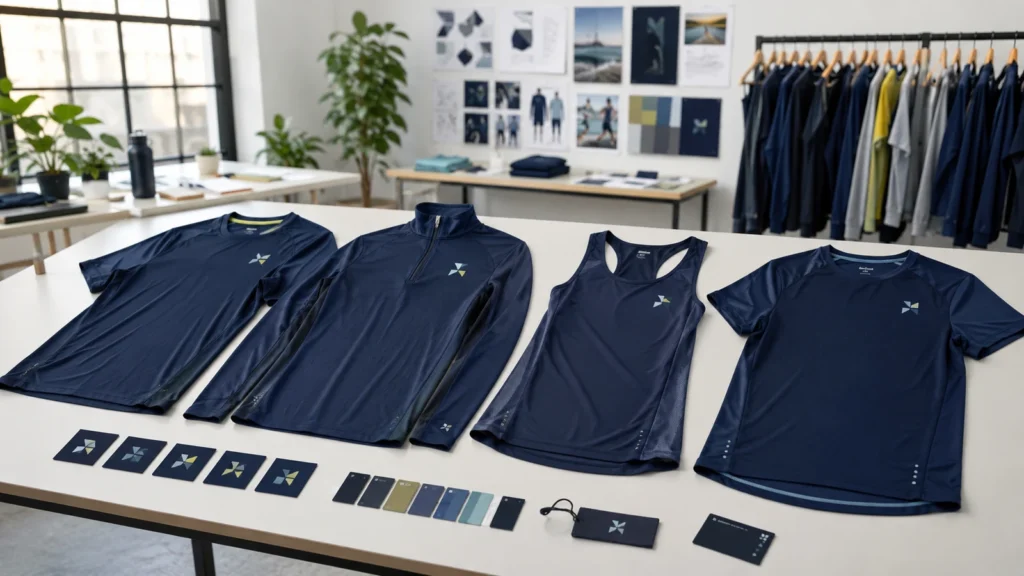
Use the same Pantone targets, logo system and trim language across categories, while allowing fabric and pattern to change. This creates a coherent team appearance without compromising function.
Customization and Logo Placement
The decoration method should follow the substrate and use case.
Sublimation
Sublimation can integrate color and graphics into compatible polyester fabric without adding a raised print layer. It is useful for all-over team designs and complex gradients. Buyers must still approve fabric hand, color targets, print sharpness, show-through and panel alignment. Sublimated colors can appear different across fabric structures.
Heat transfer
Heat transfer supports names, numbers, sponsor marks and smaller logos. On lightweight running fabric, use a film and application setting validated for the specific substrate. Review stretch, edge lifting, hand feel and whether the transfer blocks an intended ventilation zone.
Screen printing
Screen printing can be efficient for appropriate quantities and designs, but ink coverage affects hand feel and airflow. Large solid areas may be undesirable on very light running tops. Test the actual print size and ink system rather than approving from artwork alone.
Embroidery and patches
Embroidery and patches can suit training jackets, heavier tops and lifestyle layers. Dense embroidery may pull or distort a lightweight running knit. If embroidery is essential, consider a stable placement, reduced stitch density or a different garment tier.
Building one coordinated training and running range? Send JIUMU your reference images or tech pack, target quantities, size range, Pantone colors, logo files, decoration preferences, packaging needs and required delivery date. The team can review suitable OEM/ODM options and prepare a quotation. Request a custom apparel quotation.
Cost Drivers for Custom Training and Running Apparel
Price should be compared against an identical specification. The largest drivers commonly include:
- Fabric construction, weight, elastane content and special finishes
- Number of panels, mesh zones, gussets, pockets and zippers
- Seam type and labor complexity
- Liner, waistband and drawcord construction
- Decoration method, artwork coverage, number of placements and color count
- Custom labels, hangtags and individual packaging
- Size range and order quantity per color/style
- Physical sampling and test requirements
- Shipping method, destination and delivery schedule
A lightweight running piece is not automatically cheaper. Fine lightweight fabric, bonded details, laser perforation or a complex liner can increase cost. Likewise, a simple training tee can be efficient even at a slightly higher GSM. Ask suppliers to itemize alternatives that materially change function or cost.
Sample Approval and Quality-Control Checklist
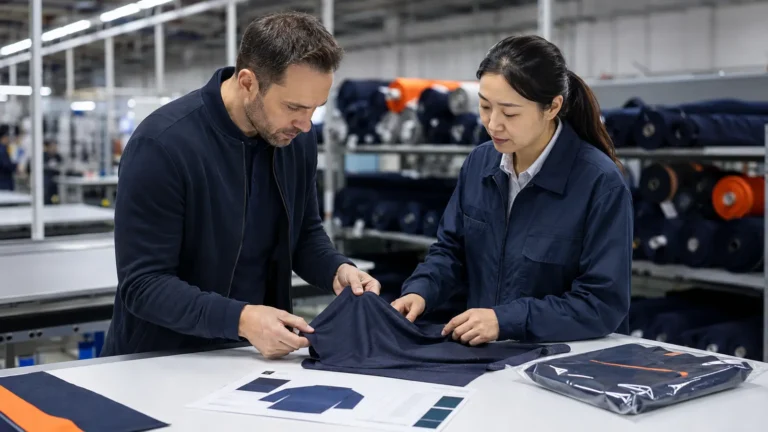
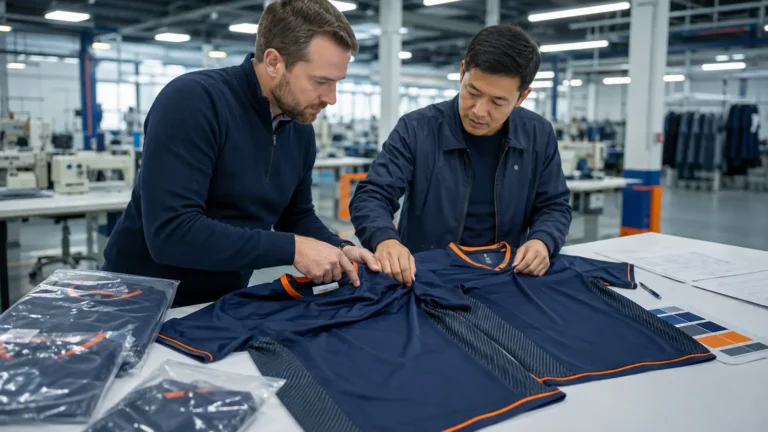
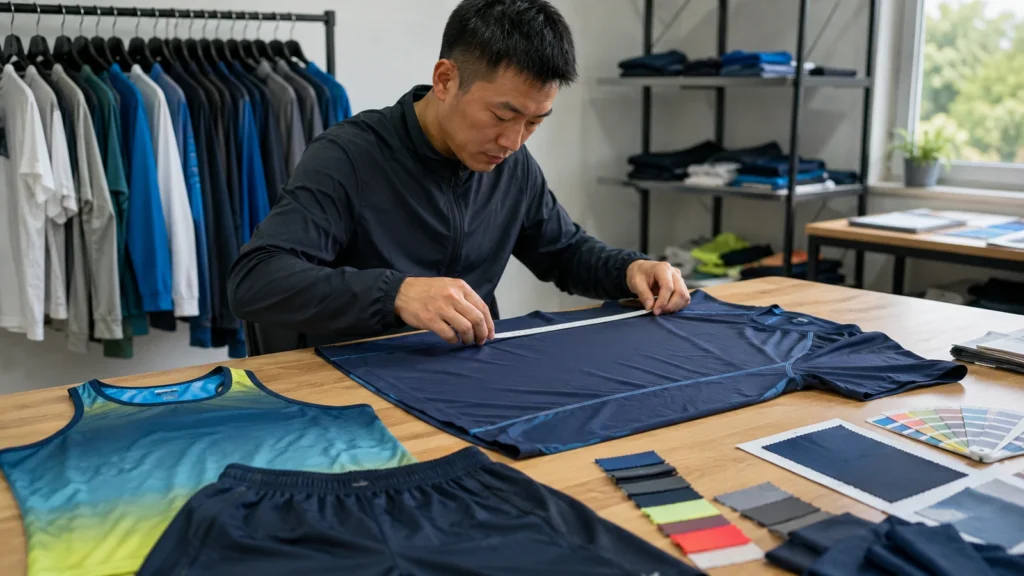
Create one approval record per style and colorway. Photographs are useful, but retain a sealed physical sample when practical.
Before the sample is made
- Confirm sketch, bill of materials and measurement chart
- State fabric composition, construction, target weight and color
- Provide vector artwork and decoration dimensions
- Mark logo locations from fixed reference points
- Define label copy, care instructions and packaging
- Identify required tests and acceptance criteria
During fit and wear review
- Measure the sample on a flat surface using the agreed method
- Test training pieces through squat, lunge, rotation and overhead reach
- Test running pieces during a run long enough to reveal movement and friction issues
- Load pockets with the intended items
- Review opacity in strong light and under stretch
- Check wet appearance and cling where relevant
- Collect feedback separately for fit, fabric, construction and styling
Before bulk production
- Approve fabric and color against a physical standard
- Confirm the pre-production sample and all revisions
- Lock measurement tolerances and grading
- Approve labels, hangtags, polybags and carton marks
- Define inspection level or buyer-specific QC process
- Confirm shipment plan and final delivery information
Bulk inspection focus
Inspect workmanship, measurements, color consistency, print/embroidery placement, shade variation, stains, holes, seam integrity, trims, labeling, packing assortment and carton markings. Performance claims should be supported by the agreed testing route; visual inspection alone cannot validate moisture management, colorfastness or reflectivity.
What to Send for an Accurate Quotation
The fastest RFQ is not the shortest email. Provide enough detail for suppliers to price the same product:
- Product list and intended activity for each style
- Men’s, women’s, youth or unisex fit direction
- Estimated quantity by style, color and size
- Reference images, sketches or tech packs
- Preferred fabric or required performance outcome
- Pantone colors or physical color references
- Logo files, decoration method, size and placement
- Custom label, hangtag and packaging requirements
- Target market and applicable compliance needs
- Delivery destination, required date and preferred shipping terms
If the fabric is not fixed, describe the use case: indoor strength training, outdoor conditioning, summer road running, trail running or mixed club activity. A capable supplier can then propose options for sampling, but the final specification should be documented before bulk production.
Questions to Ask a Supplier
- What fabric structure, weight and stretch do you recommend for this exact activity?
- Can you provide comparable swatches before the garment sample?
- How will the chosen color affect transparency or print appearance?
- Which seam construction and thread will be used at stress or friction zones?
- Can the decoration withstand the required stretch and care cycle?
- How are measurement tolerances and grading controlled?
- What is included in the sample charge and revision process?
- How will fabric, color and trims be matched on repeat orders?
- Which checks occur during and after bulk production?
- What is the MOQ per style/color, and which details may change it?
- What packaging and export support are available?
- Which claims require third-party or buyer-specified testing?
Common Buying Mistakes
Choosing only by GSM
GSM indicates mass per area, not airflow, durability or comfort by itself. Compare fabric construction and finished garment performance.
Treating stretch as recovery
A fabric may extend significantly and still fail to return to shape. Evaluate recovery after repeated movement and washing.
Approving fit while standing still
Static fitting misses hem lift, waistband roll, pocket bounce and friction. Use category-specific movement tests.
Applying one large logo to every fabric
Decoration must be scaled to garment weight, stretch and ventilation. Test the actual artwork on production-intent fabric.
Using one size chart for different fit blocks
A relaxed training tee and streamlined running top need distinct finished measurements even if both are labeled medium.
Making unsupported performance claims
Terms such as moisture-wicking, UV-protective, reflective or water-resistant should be tied to a defined material specification and, where needed, an agreed test method.
Skipping repeat-order planning
Record approved fabric codes, color standards, trims and artwork. Ask how substitutions will be communicated before future production.
Why JIUMU Is Relevant for Custom Performance Apparel
Established in 2010 in Guangdong, China, JIUMU supplies custom teamwear, logo apparel, uniforms, bags, hats and branded merchandise for B2B buyers in North America and Europe. Its capabilities include OEM/ODM development, fabric sourcing, Pantone color matching, digital mockups, physical samples, bulk quality control and export support.
Decoration options include sublimation, screen printing, heat transfer, embroidery and several patch formats, depending on the garment and substrate. Private labels, woven labels, neck labels, hangtags and customized packaging can support club programs, uniform dealers, promotional buyers and private-label brands.
JIUMU’s typical MOQ is 50 pieces, subject to product construction and customization. Buyers planning a complete identity system can coordinate performance apparel with custom team uniforms, custom hoodies, custom team jackets and custom team bags.
Frequently Asked Questions
Final Recommendation
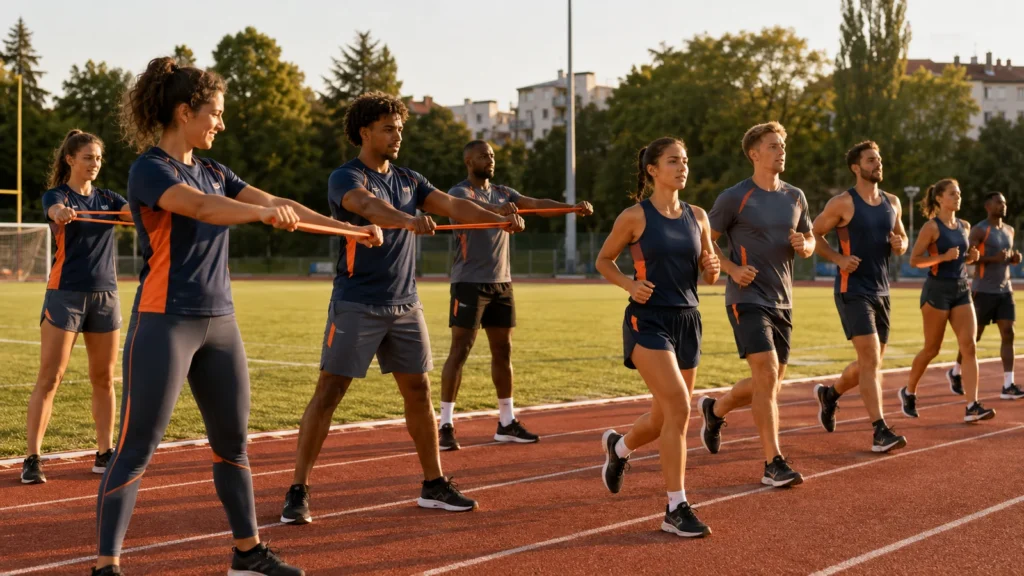
Choose training apparel for controlled stretch, coverage, stability and multidirectional durability. Choose running apparel for low bulk, ventilation, stride freedom and friction control. When a program needs both, coordinate the visual identity but keep separate specifications, fit tests and sample approvals.
The most reliable buying process is activity first, specification second and decoration third. Define what the athlete will do, translate that into fabric, pattern and construction requirements, then validate the complete decorated garment before bulk production.
Ready to develop a custom range? Send JIUMU your product list, intended activities, quantities, size range, Pantone colors, logo artwork, packaging requirements, delivery destination and target date. Contact JIUMU for an OEM/ODM quotation, email zhengdong@jiumugear.com, or WhatsApp +86 18507502899.
Develop Your Custom Performance Apparel Range
Send quantities, sizes, Pantone colors, logo files, packaging and delivery requirements.