Pullover vs Zip-Up Team Hoodies: Which Is Better?
Choosing between pullover and zip-up team hoodies affects warmth, layering, logo placement, pocket design, cost, fit, and how often people wear the garment. For a school, sports club, company, uniform dealer, or promotional buyer, those differences shape both wearer satisfaction and bulk-order consistency.
The strongest choice starts with the job the hoodie must do. A cold-weather sideline layer has different priorities from staff merchandise used indoors and outdoors. A fanwear program may benefit from a large uninterrupted print area, while an event crew may value fast removal and easy temperature control. Fabric, fit, decoration, and quality control still matter regardless of closure type.
This B2B sourcing guide explains the tradeoffs, specifications, costs, sample checks, compliance points, and quotation details behind the decision.
Quick Answer: Pullover or Zip-Up Team Hoodie?
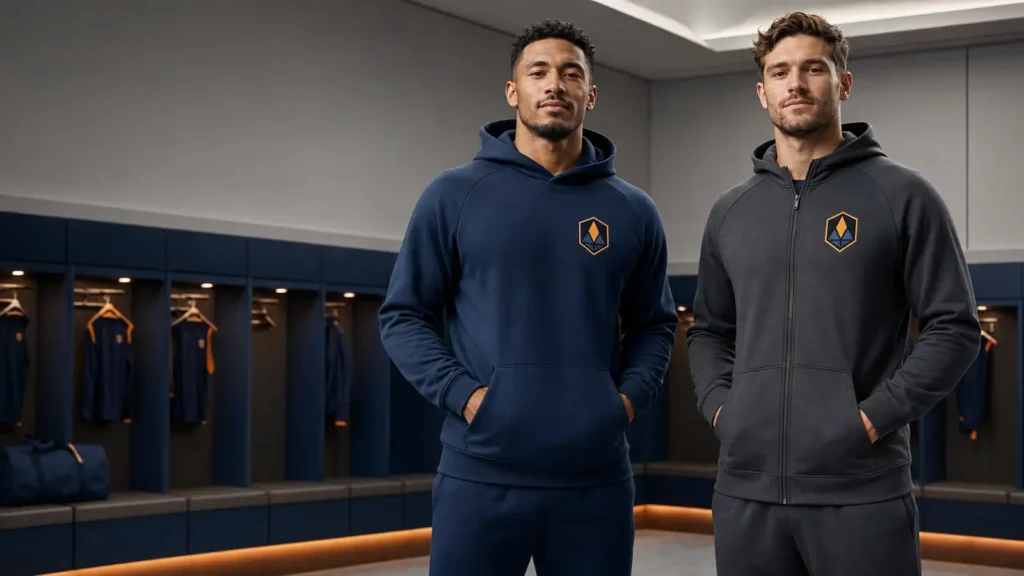
Pullover hoodies are usually better when warmth, a continuous front logo area, a classic team look, and a simpler construction are the priorities. Zip-up hoodies are usually better when easy on-and-off wear, ventilation, layering, and staff versatility matter more.
For many organizations, the best answer is not one style for everyone. A mixed program can use pullovers for athletes, fan merchandise, or cold-weather wear and zip-ups for coaches, staff, travel, and everyday layering. Keep the fabric family, colors, rib, labels, and logo system consistent so both styles still read as one team collection.
Why This Team Hoodie Decision Matters
A hoodie often becomes one of the most frequently used pieces in a teamwear package. It may be worn to practice, during travel, on the sideline, at school, at work, at events, or as casual branded merchandise. If the style conflicts with the wearer’s routine, the hoodie may stay in a closet even when the graphic looks excellent.
The decision also changes the specification. A zip-up adds a separating zipper, two front pocket sections, and center-opening alignment; a pullover provides one uninterrupted body panel. Evaluate the wearer, environment, base layer, branding, youth/adult size range, price position, and repeat-order plan together.
Pullover vs Zip-Up Team Hoodies: Comparison Table
| Decision factor | Pullover hoodie | Zip-up hoodie | Buyer implication |
|---|---|---|---|
| Warmth | Continuous front helps retain warmth | Front opening makes ventilation easier | Prefer pullovers for colder, lower-activity use; zip-ups for changing temperatures |
| On/off convenience | Must be pulled over the head | Opens fully at the front | Zip-ups suit staff, travel, indoor-outdoor transitions, and frequent layering |
| Front decoration | Large uninterrupted chest area | Zipper divides the chest | Pullovers support larger centered graphics; zip-ups favor left-chest, right-chest, back, or zipper-aware designs |
| Pocket format | Usually one kangaroo pocket | Usually two split pockets | Confirm usable depth, opening shape, and reinforcement on either style |
| Construction complexity | Fewer components | Adds zipper, tape, slider, insertion, and alignment | Zip-up samples need more hardware and symmetry checks |
| Cost tendency | Often lower when other specifications match | Often higher due to zipper and added operations | Compare like-for-like fabric, weight, decoration, size mix, and packaging |
| Layering | Comfortable over a tee or light base layer | Easy to wear open over jerseys, polos, or uniforms | Zip-ups usually offer greater temperature control |
| Fit tolerance | Body fit is visually forgiving | Center front exposes twisting or misalignment | Approve garment measurements and zipper lay in the sample |
| Classic team identity | Strong athletic and collegiate feel | More versatile staff or lifestyle look | Match the style to the intended program, not a generic trend |
| Maintenance | No zipper hardware to manage | Zipper quality and care matter | Include zipper function and wash appearance in QC for zip-ups |
This table assumes similar fabric, pattern quality, stitching, and decoration. A well-engineered zip-up can outperform a weak pullover, and vice versa. Closure type should never substitute for a complete technical specification.
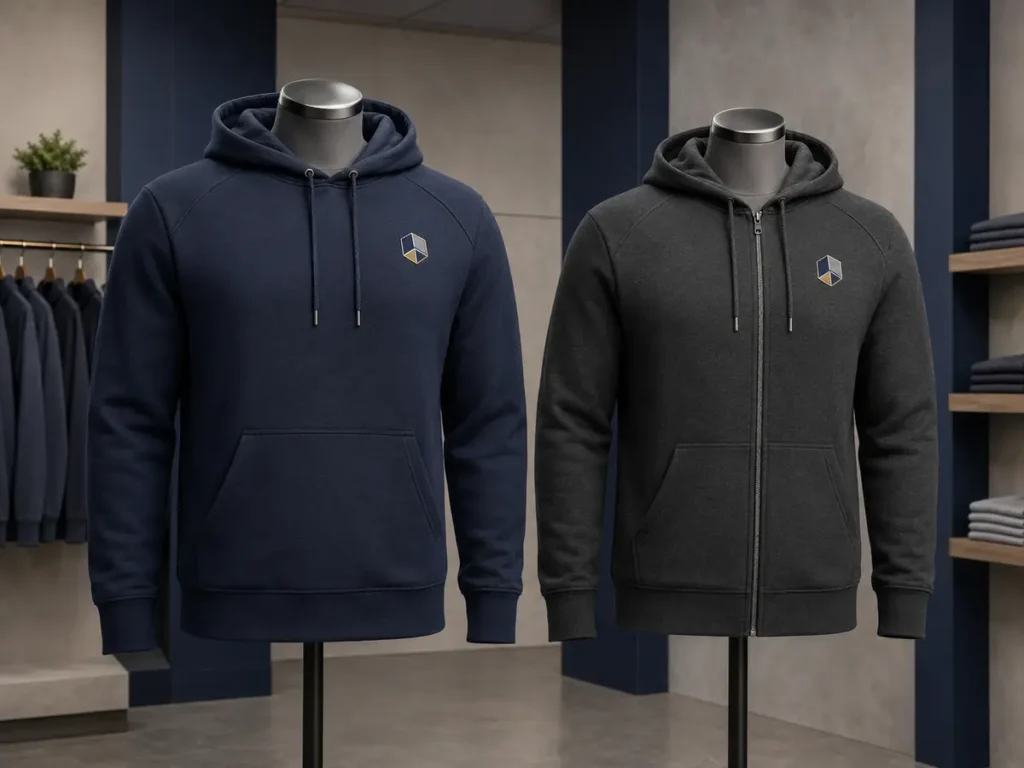
When Pullover Team Hoodies Are the Better Choice
Cold-weather sidelines and warm-up periods
A pullover’s continuous front removes the opening created by a zipper. That makes it a practical option for players and staff who want a simple insulating layer while waiting, watching, traveling, or warming up. Fabric weight, knit density, brushed interior, cuff recovery, hood construction, and garment fit will still determine the actual comfort level.
Large front graphics and merchandise programs
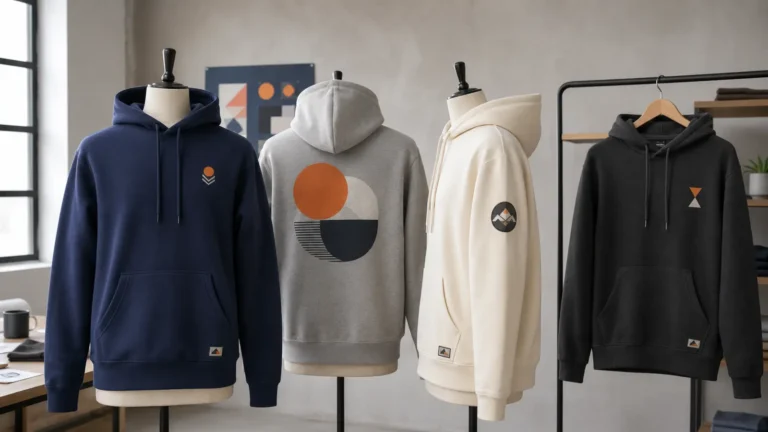
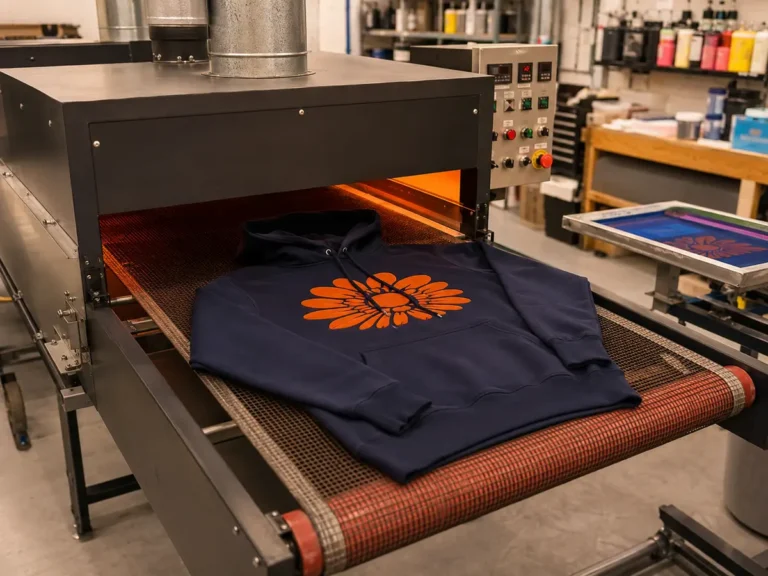
Pullover hoodies give designers a broad chest panel without a center break. This is useful for team names, event graphics, school marks, sponsor-led artwork, or retail-style graphics that need to read from a distance. Screen printing, heat transfer, applique-style decoration, and certain embroidery layouts can all use the uninterrupted area.
Before approving a large design, check its relationship to the kangaroo pocket, neckline, drawcord, and grading across sizes. A graphic that looks balanced on an adult large may feel crowded on a youth small if the same dimensions are used without adjustment.
Simple, recognizable teamwear
The pullover silhouette communicates a relaxed team identity without requiring an exposed base layer, so it works well when the hoodie must look complete on its own.
Cost-sensitive bulk programs
When other specifications match, a pullover often has a cost advantage because it omits the separating zipper and zipper-setting operation. Specialty fabric, heavy decoration, private labels, complex panels, packaging, and small color runs can outweigh that saving.
When Zip-Up Team Hoodies Are the Better Choice
Coaches, staff, crews, and frequent transitions
A full zip lets coaches, staff, event crews, and frequent travelers change layers without pulling the garment over the head or disturbing other uniform elements.
Layering over uniforms and branded shirts
An open zip-up can reveal a jersey, polo, tee, or credential. Compare its chest, armhole, sleeve volume, and finished measurements with the intended base layer; simply ordering one size larger is not a reliable fit strategy.
Mild weather and variable temperatures
Zip-ups make ventilation easier during travel, indoor training, or changeable weather. Wearers can open the front partially or fully rather than removing the garment. For programs spanning multiple seasons, this flexibility may increase usage enough to justify the added cost.
Subtle corporate or premium merchandise
A clean zip-up with restrained embroidery and private labels can bridge athletic and business-casual environments for managers, coaches, school staff, and branded merchandise programs.
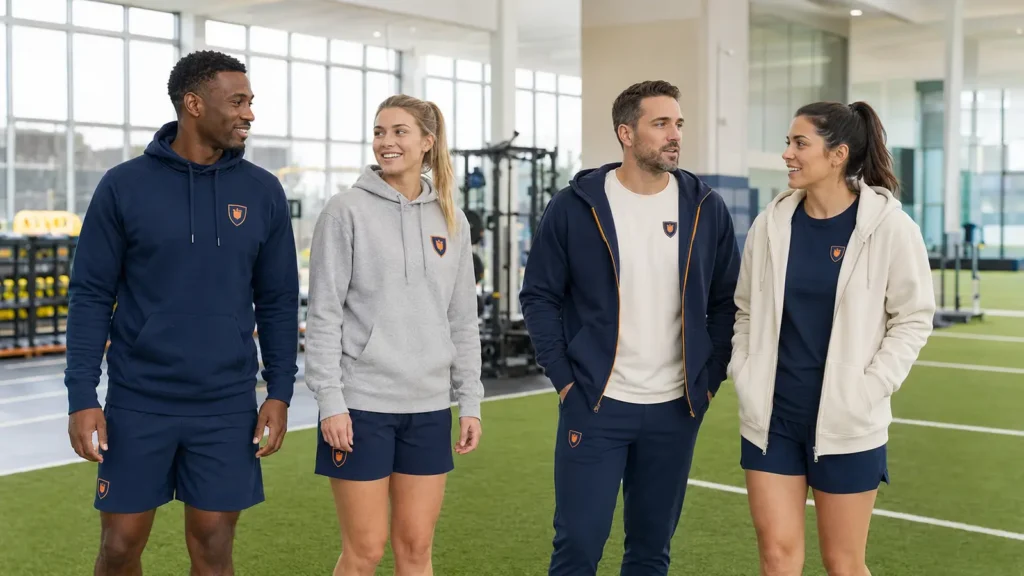
The Best Choice by Buyer and Use Case
| Buyer or program | Usually stronger starting point | Why | Specification note |
|---|---|---|---|
| Baseball or softball team | Pullover for players; zip-up for coaches | Warmth and team look for players; flexible layering for staff | Match navy, gray, trim, crest, and labels across both styles |
| School spiritwear | Pullover | Broad front artwork and familiar retail silhouette | Confirm youth/adult size grading and drawcord requirements |
| Tournament travel package | Zip-up or mixed | Easy removal during buses, airports, and indoor venues | Test pockets, zipper operation, and layering fit |
| Construction or outdoor crew | Depends on weather and task | Pullover favors warmth; zip-up favors ventilation | Consider visibility, snag points, work rules, and garment suitability separately |
| Corporate staff merchandise | Zip-up | Works over polos and tees in varied environments | Use restrained decoration and confirm dress expectations |
| Promotional giveaway | Pullover for budget; zip-up for perceived versatility | Construction and program position differ | Compare landed cost rather than garment price alone |
| Retail/private label brand | Either | Collection concept and consumer segment decide | Develop fit, labels, trims, color standards, and packaging as a system |
| Uniform dealer or distributor | Mixed range | Serves more end-use cases and creates upsell options | Standardize core fabrics and colors to support repeat orders |
These are starting points. Surveying a representative group of wearers or approving a small size set can reveal preferences that the procurement team would otherwise miss.
Fabric, Weight, and Interior Finish Matter More Than the Zipper Alone
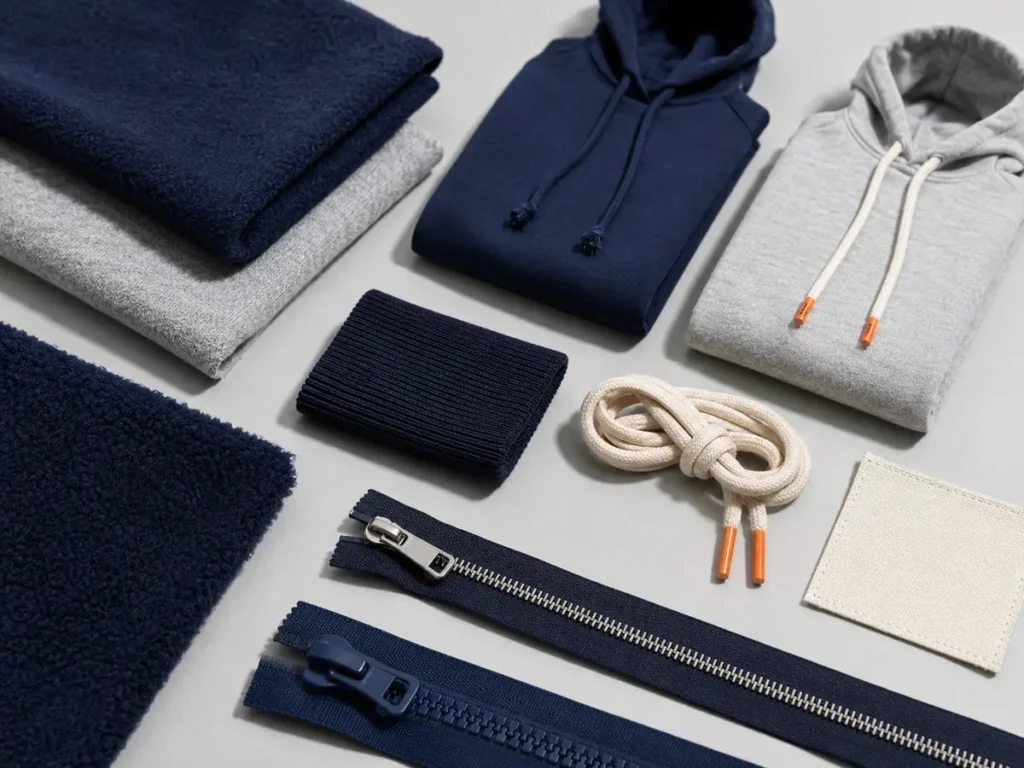
Closure style is visible, but fabric controls much of the comfort, appearance, print behavior, shrinkage risk, and perceived value. Buyers should request a complete fabric specification instead of accepting labels such as “premium fleece” or “heavy hoodie” without supporting details.
Cotton-polyester fleece
Cotton-polyester blends can balance softness, stability, drying behavior, print compatibility, and price. Results depend on fiber percentages, yarn, knit, finishing, and treatment. Ask whether the stated composition applies only to the body or also to rib, hood lining, and pocketing.
Cotton-rich or all-cotton options
Cotton-rich fabrics can provide a substantial casual hand. Discuss shrinkage, colorfastness, pilling appearance, drying, and decoration during sampling; fiber content alone does not establish performance.
Brushed fleece versus French terry
Brushed fleece has a raised interior that generally feels warmer and softer. French terry uses loops on the inside and can be appropriate for lighter or transitional programs. The intended climate, indoor/outdoor balance, garment weight, and brand position should guide the choice.
Rib, hood lining, and drawcord
Cuffs and bottom rib should recover after stretching and remain visually consistent with the body. A lined hood can add structure and perceived substance, but it also adds material and weight. Drawcord diameter, tip finish, eyelet type, color, and youth-market safety requirements should be specified rather than left as generic trim choices.
Fit and Size Planning for Bulk Team Orders
“Unisex” does not describe a universal measurement system. Two suppliers may use the same size label while producing different chest widths, body lengths, sleeve lengths, shoulder shapes, and hood proportions. For team programs, use finished garment measurements and an approved size chart tied to the exact pattern.
Check at least these points:
- half-chest width;
- body length from the defined high-point shoulder location;
- sleeve length and measurement method;
- shoulder width or raglan sleeve reference;
- bottom opening and rib height;
- armhole and bicep width for layering;
- hood depth, height, and opening;
- pocket opening and usable pocket depth.
For a zip-up, also check whether the closed zipper lies flat and whether the front lengths match at the hem. For a pullover, confirm that the neck opening and hood seam allow comfortable dressing without excessive distortion.
Approve a pre-production sample in the intended fabric and selected graded or extreme sizes for broad ranges. Record tolerances and the approved size-chart version in the quotation and purchase order.
Construction and Durability Checkpoints
Both hoodie types depend on consistent cutting, seam control, reinforcement, and finishing. The presence or absence of a zipper changes where problems are most likely to appear.
Pullover checkpoints
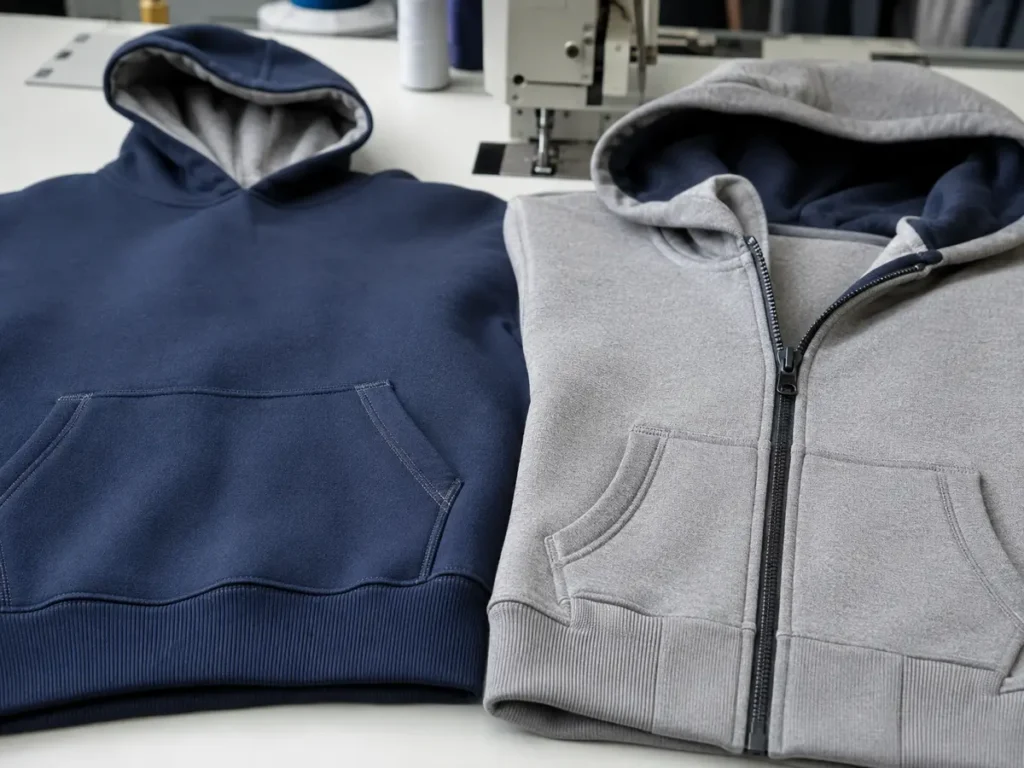
Inspect kangaroo-pocket symmetry, pocket opening shape, corner reinforcement, hood attachment, drawcord channel, cuff matching, hem recovery, and the centering of front artwork. Watch for a pocket that shifts after washing or a large graphic that sits too close to the pocket seam.
Zip-up checkpoints
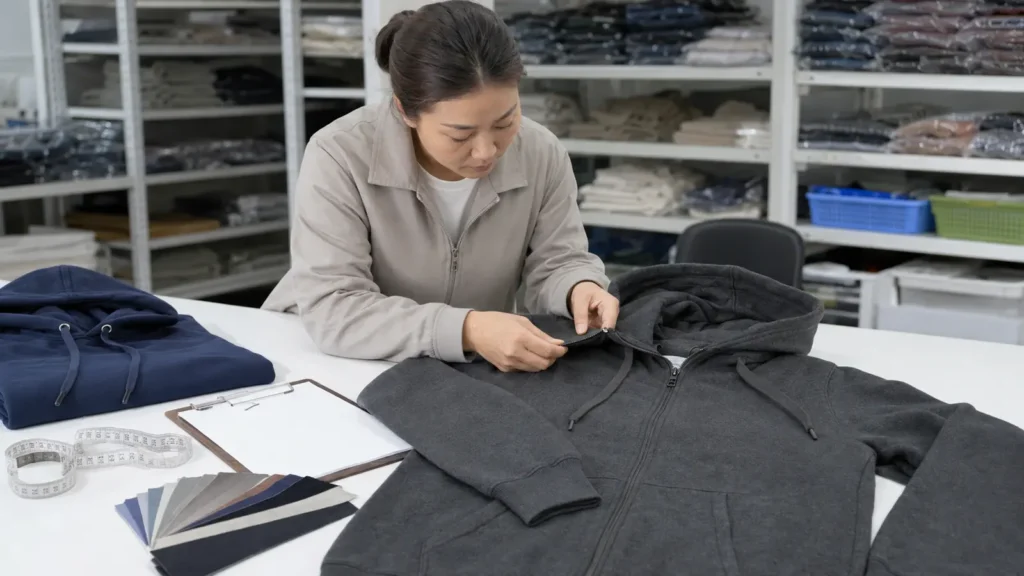
Operate the zipper repeatedly on the sample. Check the slider movement, insertion box and pin, top stops, bottom alignment, tape exposure, zipper length, and whether the front twists or waves when closed. Pockets should mirror each other, and any chest decoration should be aligned to the body rather than visually pulled toward the zipper.
Shared checkpoints
Review loose threads, skipped stitches, puckering, rib attachment, shade variation, stains, holes, labels, decoration, garment dimensions, and packed assortment. Define test methods and acceptance criteria before production for any important performance claim.
Logo Placement and Decoration Options
Pullover logo planning
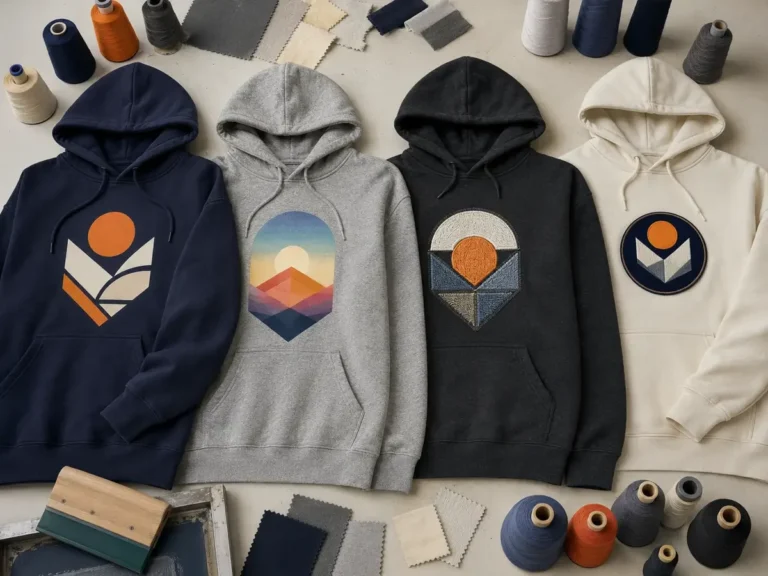
The uninterrupted front is a key advantage. Common directions include a centered team name, large school graphic, left-chest crest, sleeve mark, upper-back identity, or sponsor arrangement. Match the decoration method to the artwork, fabric surface, desired texture, color count, quantity, and care expectations.
Zip-up logo planning
Avoid treating a zip-up like a pullover with a zipper added afterward. A graphic split across the zipper is harder to align and may be less legible when the garment is open. Left-chest or right-chest marks, sleeves, shoulders, and backs are normally more forgiving. If a design must cross the zipper, approve a physical decorated sample and define alignment tolerance.
Decoration methods
JIUMU supports logo embroidery, sublimation printing, screen printing, heat transfer, and woven, rubber/PVC, or leather-style patches. Not every method suits every hoodie construction or fabric. Sublimation is most naturally associated with compatible polyester components or purpose-developed panels, while embroidery weight and stitch density must suit the fleece and backing. Screen print and heat-transfer systems should be selected with the fabric surface and artwork in mind.
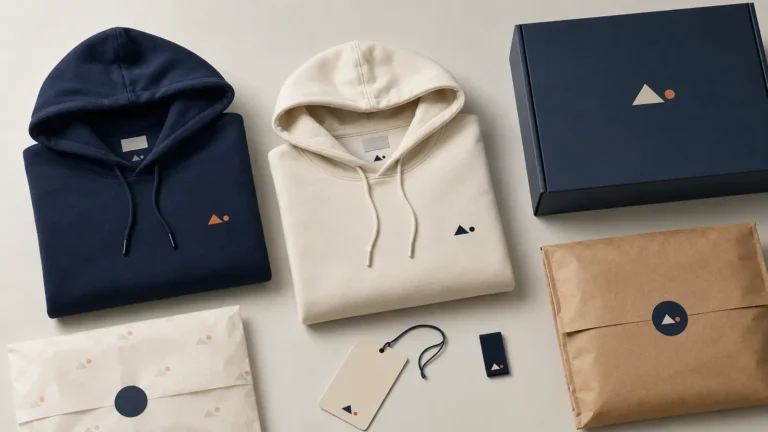
Private labels, hangtags, packaging, color matching, and coordinated accessories can extend the team identity. Confirm every included element in the quotation.
Planning a hoodie program? Send JIUMU your expected quantity, size range, delivery market, pullover/zip-up preference, fabric target, colors, artwork, decoration locations, packaging needs, and target delivery date. Request a custom team hoodie quotation or review JIUMU custom hoodie capabilities.
Cost Drivers: Why a Zip-Up May Cost More
The zipper itself is only one variable. A meaningful quotation should define the complete garment. Important cost drivers include:
- Fabric composition and weight. Heavier or specialty fabrics change material consumption, handling, and shipping weight.
- Garment pattern and size range. Oversized fits, extended sizes, lined hoods, added panels, and complex grading can increase consumption or development work.
- Zipper specification. Material, gauge, color, puller, length, quality level, and custom features influence cost.
- Decoration. Embroidery stitch count, print colors, transfer size, patch construction, and the number of locations matter.
- Color assortment. Multiple low-volume colorways may be less efficient than a concentrated order.
- Labels and packaging. Private labels, hangtags, individual polybags, size stickers, barcodes, carton marks, and retail packing add components and operations.
- Sampling and testing. Complex prototypes, graded samples, third-party testing, or repeated artwork revisions should be planned into the project.
- Quantity and size breakdown. The total order and distribution across styles, colors, and sizes affect production efficiency.
- Freight and import requirements. Compare the landed program cost and delivery plan, not only the quoted garment unit price.
Ask suppliers to quote the pullover and zip-up against the same base fabric, weight, logo method, labels, size mix, packaging, trade terms, and destination. Otherwise, a price comparison may reflect different specifications rather than the closure type.
Compliance and Labeling Points for US, EU, and UK Buyers
Market requirements depend on product, wearer age, claims, destination, and the buyer’s role in placing goods on the market. Treat the following as planning prompts, not a complete legal determination.
For the United States, the Federal Trade Commission explains that most textile products require disclosures covering fiber content, country of origin, and the identity of the manufacturer or another responsible business; apparel is also subject to care-label requirements. Review the FTC’s official textile labeling guidance and Care Labeling Rule guidance for the program.
For the European Union, Regulation (EU) No 1007/2011 governs textile fiber names and related fiber-composition labeling. The European Commission’s textile label overview and the regulation text are useful starting points. UK buyers can review current UK textile labeling guidance.
Youth programs need special attention. The US Consumer Product Safety Commission states that hood and neck drawstrings on children’s upper outerwear in sizes 2T to 12 or equivalent present a substantial product hazard, and it also describes restrictions for waist and bottom drawstrings. See the CPSC’s current drawstring business guidance. Confirm the exact product scope, destination, size range, and current rules before approving youth hoodie details.
Do not add fiber, recycled-content, performance, origin, or sustainability claims until documentation and labeling have been reviewed for the destination market.
Sample Approval and Quality-Control Process
A strong sample process prevents subjective comments such as “make it more premium” from reaching bulk production. Use measurable approvals.
1. Confirm the specification package
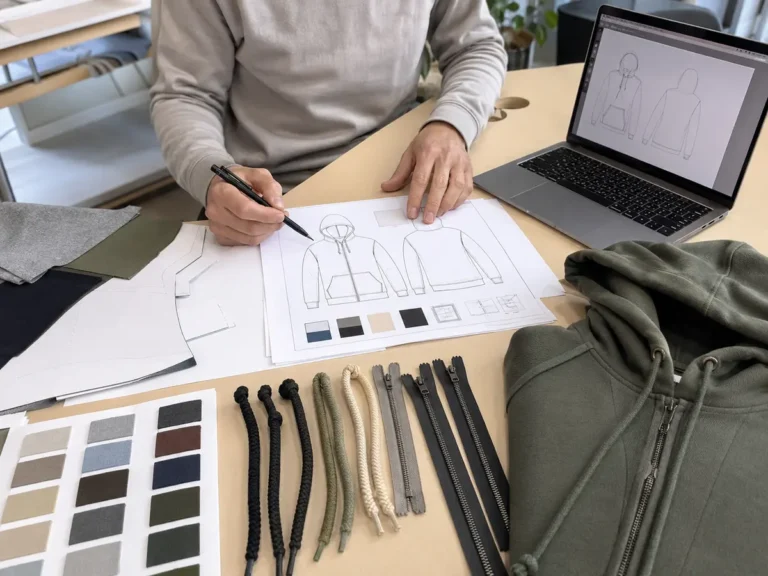
Provide front and back sketches or reference images, closure type, fabric composition and weight target, color references, finished measurements, rib details, hood construction, pocket shape, zipper requirements, artwork files, decoration dimensions, labels, hangtags, packaging, and size breakdown.
2. Review the development sample
Evaluate silhouette, layering room, fabric hand, hood shape, pocket usability, zipper function, artwork scale, label comfort, and overall balance. Photograph comments and mark exact changes. Avoid approving only from a digital mockup when fit, construction, or decoration behavior is important.
3. Approve colors and decoration
Confirm fabric color under suitable lighting and review the production method on the intended material. For embroidery, examine density, backing, edge definition, and fabric distortion. For prints or transfers, review coverage, surface interaction, placement, and applicable care or test expectations.
4. Approve the pre-production sample
The pre-production sample should represent the approved combination of fabric, trim, construction, decoration, labels, and packaging as closely as practical. Record the approved sample date and specification version.
5. Define bulk inspection criteria
Agree on measurement points and tolerances, workmanship defects, color/shade expectations, decoration placement, zipper function, labeling, packing assortment, and carton identification. Retain an approved reference sample for comparison.
What to Send for an Accurate Hoodie Quotation
The faster a supplier can eliminate assumptions, the more useful the quotation will be. Send the following information:
- buyer type and intended use;
- destination country or region;
- pullover, full-zip, or mixed style plan;
- estimated total quantity and quantity per style/color;
- adult, youth, women’s, men’s, or unisex size range;
- target fit and finished size chart, if available;
- fabric composition, weight, interior, and color target;
- hood lining, drawcord, rib, pocket, and zipper requirements;
- logo artwork in vector or high-resolution format;
- decoration method, size, color, and placement;
- private labels, care labels, hangtags, barcodes, and packaging;
- compliance or testing requirements communicated by the importer;
- desired sample process;
- target delivery date and shipping destination;
- preferred trade terms, if already decided.
If the specification is not final, send a reference image and explain the intended price position and use case. JIUMU can support digital mockups, physical samples, fabric sourcing, color matching, private labels, packaging customization, and bulk export coordination. Any final capability, timing, or MOQ should be confirmed against the specific design.
Questions to Ask a Custom Hoodie Supplier
Use these questions to compare suppliers on the same basis:
- What is the exact body fabric composition, weight, knit, and interior finish?
- Are rib, hood lining, and pocket materials different from the body?
- Which finished garment measurements and tolerances will control production?
- What zipper specification is proposed for the full-zip style?
- How will zipper waviness, front alignment, and pocket symmetry be checked?
- Which decoration method is recommended for the artwork and fabric, and why?
- Can one fabric and color standard be used across pullover and zip-up styles?
- What samples are included, and what changes are possible before bulk production?
- How are fabric shade, measurements, decoration placement, labels, and packing inspected?
- What information is needed for youth-market or destination-specific compliance planning?
- What is the MOQ by style, color, or design rather than only the overall order?
- How will repeat-order specifications and approved samples be recorded?
Common Buying Mistakes
Choosing by unit price without normalizing the specification
A lighter fabric, simpler label, smaller print, lower zipper grade, or different packing method can make one quote look cheaper. Build a comparison sheet that holds the specification constant.
Using one graphic unchanged on both closures
The center zipper changes the usable front area. Adapt the layout so each style looks intentional while preserving a common identity.
Ignoring the base layer
A zip-up intended over a jersey may need different ease from a pullover intended over a tee. Approve the fit in the real wearing context.
Approving only one middle size
Problems often appear at the ends of the size range: decoration crowding, sleeve proportion, pocket scale, zipper length, or hood size. Review selected extreme sizes for broad programs.
Treating “heavyweight” or “premium” as a specification
These terms are not enough for procurement. Request composition, fabric weight, construction details, finished measurements, trim specifications, decoration data, and sample approval criteria.
Forgetting youth drawcord and destination requirements
Youth apparel can require different design decisions. Identify destination and size range before sample approval, not after bulk production.
Assuming one style must serve everyone
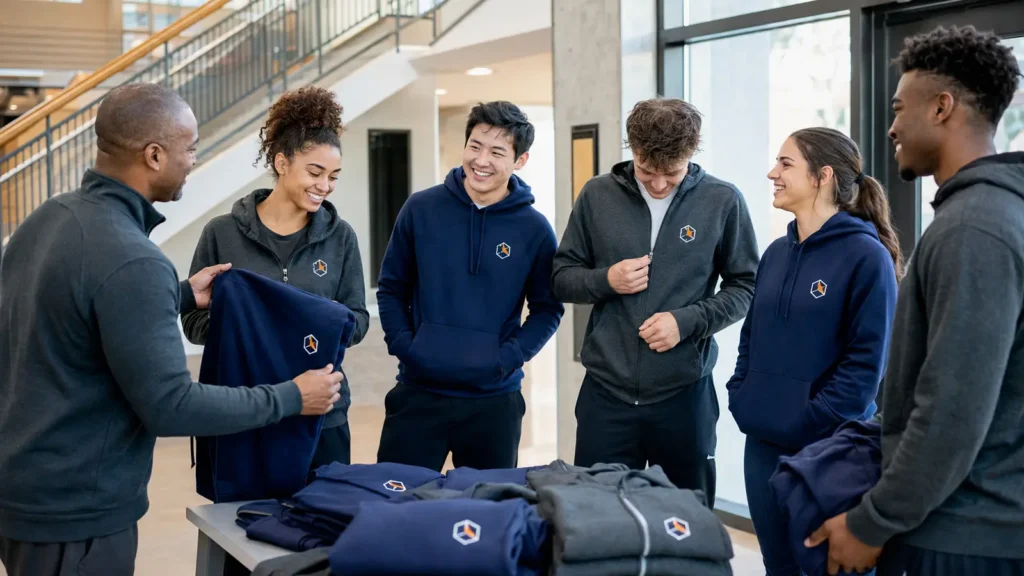
Players, coaches, staff, supporters, and retail customers may use hoodies differently. A controlled two-style program can improve adoption without weakening the brand.
A Practical Mixed-Style Team Hoodie Program
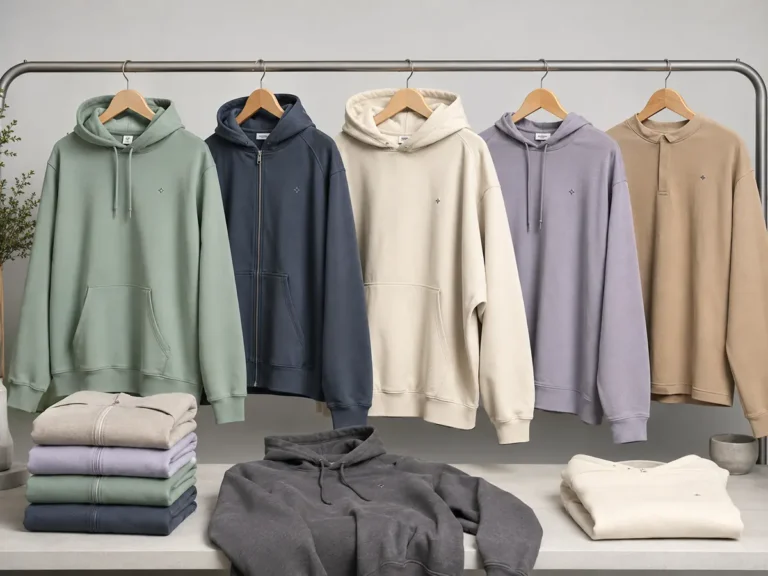
A mixed program works when it is deliberately standardized. Use the same approved fleece family, core colors, rib character, hood lining approach, labels, packaging, and logo language across both styles. Then adapt the artwork placement and fit to each construction.
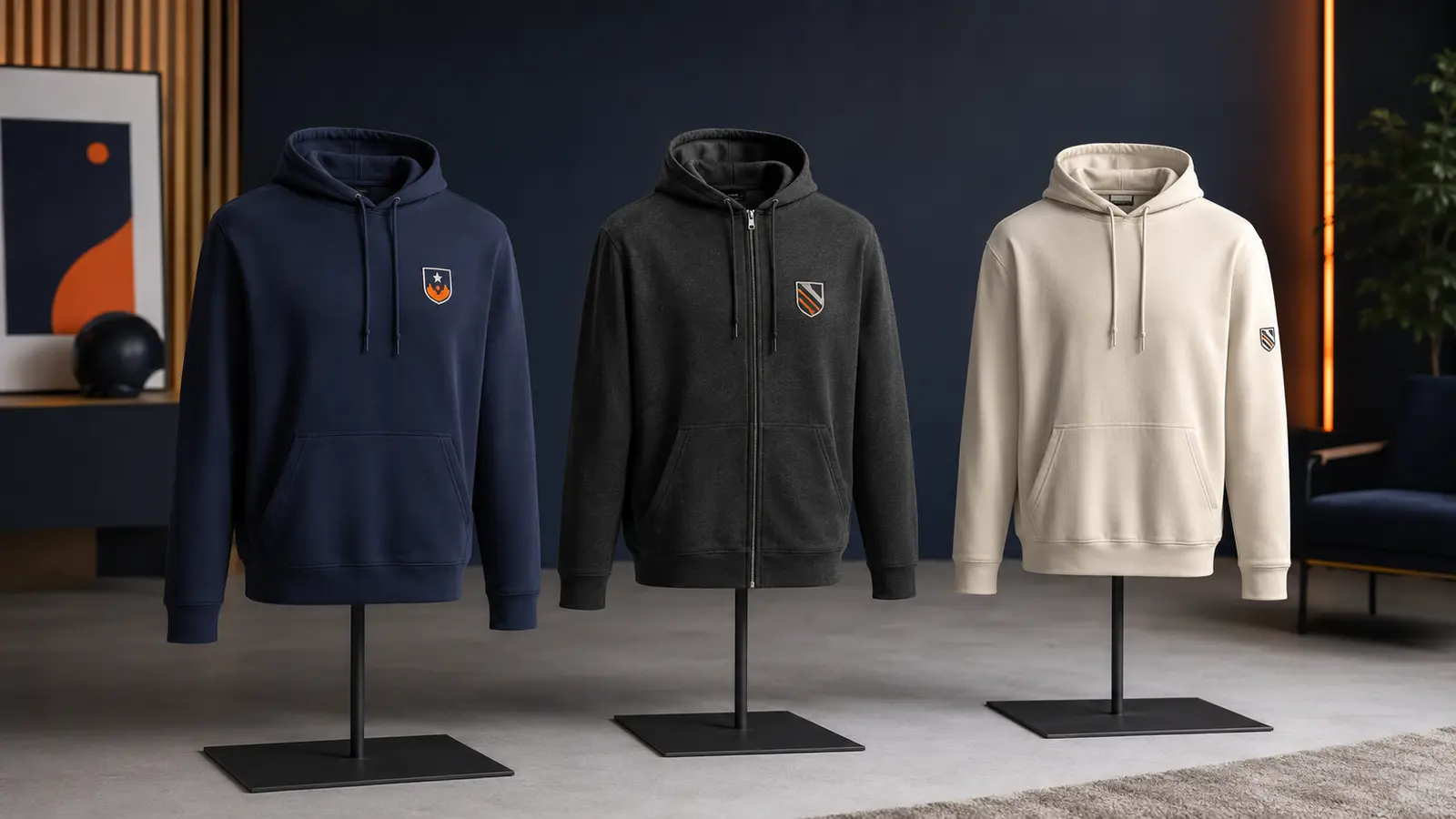
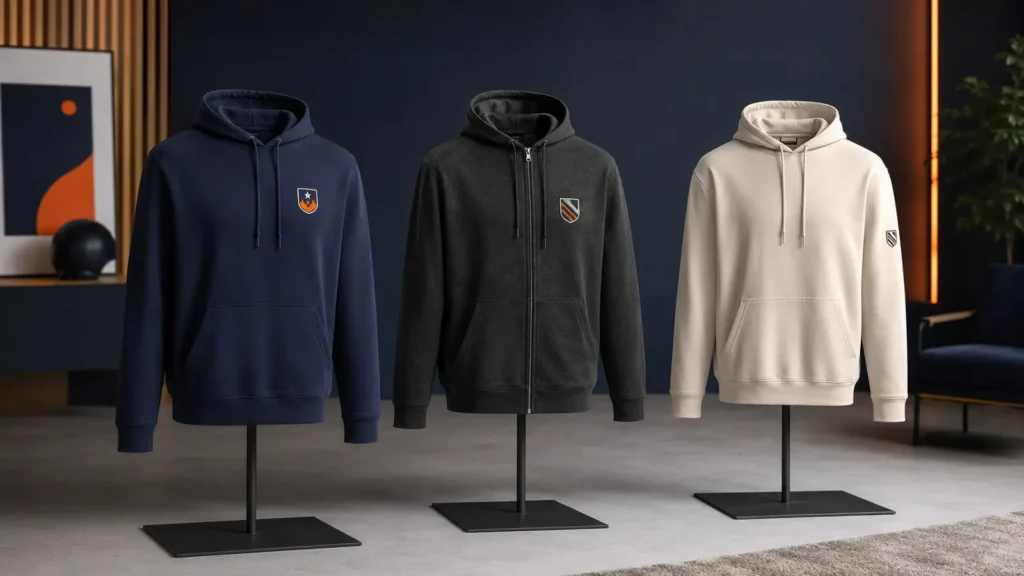
For example, pair a navy player/supporter pullover with a charcoal coach/staff zip-up. Adapt placement to each construction while keeping crest proportions, accent color, labels, and packaging consistent.
Consolidate the size/quantity worksheet so the supplier can see totals and separate assortments. Define whether mixed styles can contribute toward the minimum order; JIUMU’s typical MOQ is 50 pieces, subject to product structure and customization, so the exact allocation must be confirmed for the project.
Why Source Custom Team Hoodies with JIUMU?
Established in 2010 in Guangdong, China, JIUMU supplies custom teamwear and branded merchandise to schools, teams, clubs, distributors, uniform dealers, promotional companies, retailers, and private-label brands in North America, the United Kingdom, and Europe.
Programs can include OEM/ODM development, fabric sourcing, color matching, embroidery, printing, heat transfer, suitable patches or sublimation, private labels, packaging, mockups, samples, quality control, and export support.
A hoodie can be coordinated with custom team uniforms, baseball team packages, team jackets, jerseys, caps, and bags so colors and logos function as one system.
Frequently Asked Questions
Final Recommendation
Choose a pullover when your priorities are warmth, a classic team silhouette, a large uninterrupted front graphic, and simpler construction. Choose a zip-up when your priorities are easy removal, layering, ventilation, staff use, and indoor-outdoor flexibility. Choose both when distinct wearer groups have different needs and the program can maintain one coordinated material and branding system.
The closure decision should follow the use case, not lead it. First define the wearer, environment, base layer, fit, fabric, decoration, size range, destination, quantity, and delivery target. Then compare physical samples against those requirements.
JIUMU Team
JIUMU prepares practical sourcing guidance for schools, sports clubs, distributors, uniform dealers, promotional buyers, retailers and private-label brands ordering custom teamwear.