Embroidery vs Woven vs PVC Patches for Custom Hats: A Three-Way Decision Guide
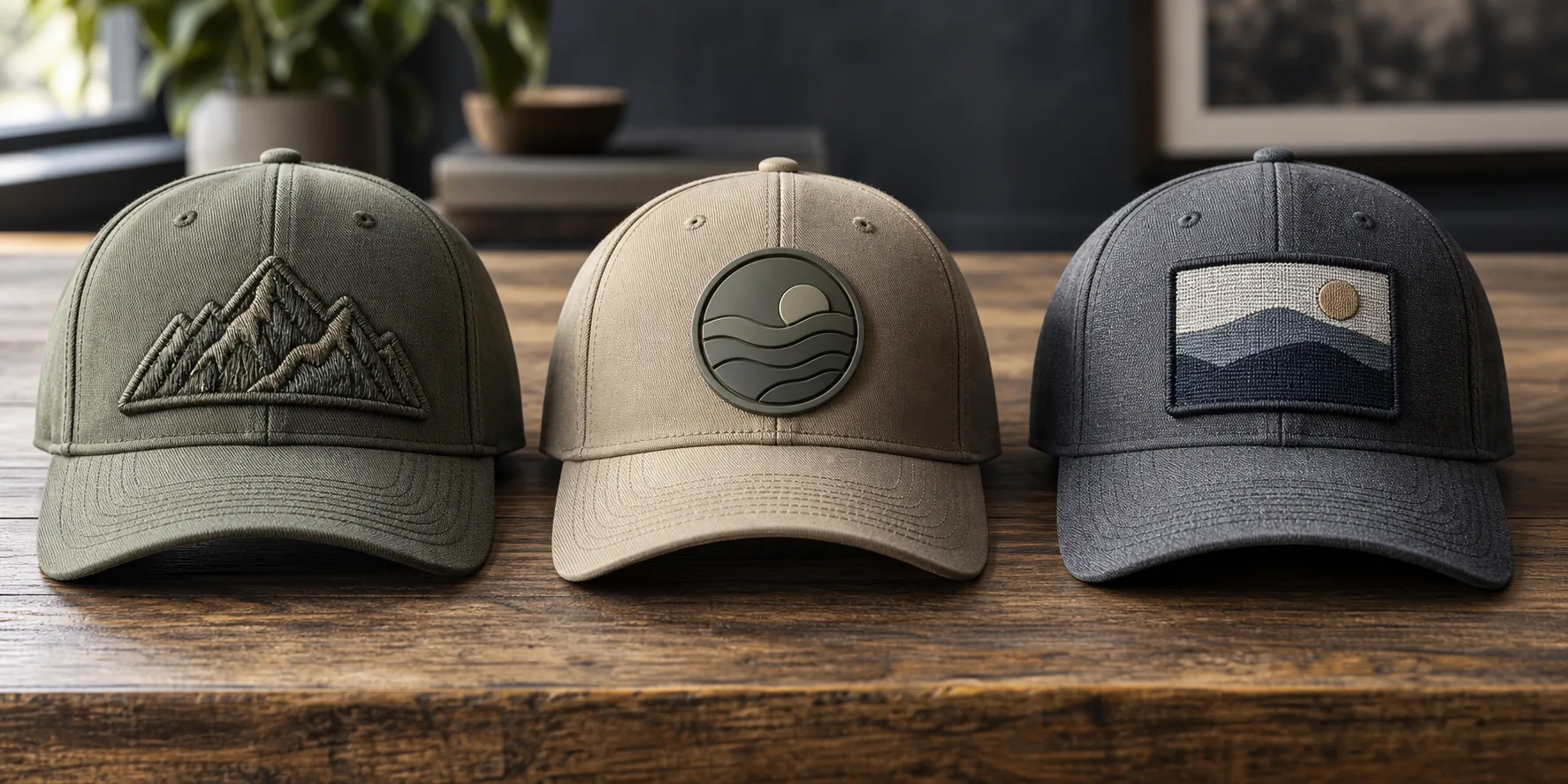
Short answer: Choose direct embroidery for a stitched premium look, woven patches for fine flat detail and small text, and PVC patches for bold dimensional graphics and easy surface cleaning. The right option also depends on crown structure, patch weight, flexibility, attachment method, artwork and order requirements.
A True Three-Way Comparison
This guide compares embroidery, woven and PVC as three production systems. It does not assume that one is universally better. Buyers should judge visual detail, hand feel, weight, crown compatibility, durability target, setup requirements and approval risk together.
| Factor | Direct embroidery | Woven patch | PVC patch |
|---|---|---|---|
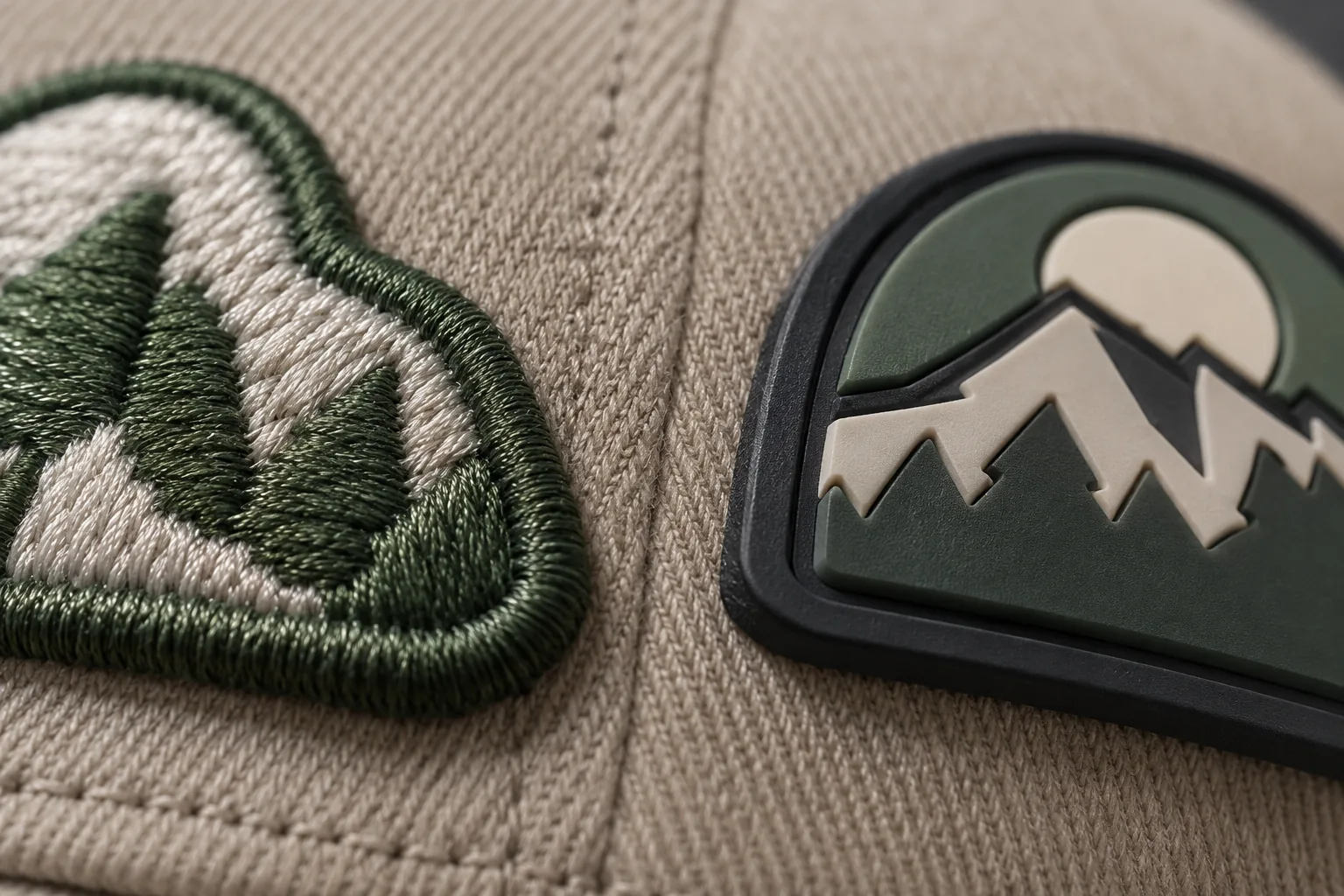
| Appearance | Textured stitched surface | Flat, crisp textile graphic | Raised molded or layered rubber look |
| Fine detail | Limited by thread and stitch density | Strong for small lines and text | Depends on mold depth and minimum feature size |
| Weight/flex | Built into crown; dense designs can stiffen it | Usually light and flexible | Can be thicker and heavier |
| Setup | Digitizing and embroidery sample | Woven artwork and edge/shape setup | Mold or tooling specification and color sample |
| Attachment | Stitched directly | Sew-on, heat-applied or combined | Usually sew-on channel or specified attachment |
1. Direct Embroidery
Direct embroidery places thread into the hat panel. It suits logos that benefit from texture and a classic premium appearance. Cost and execution are influenced by stitch count, coverage, thread colors, backing, design size and location. Dense embroidery may distort a soft or lightweight crown, so the decoration sample should be evaluated on the actual hat construction.
Best Fit
- Medium-detail logos with clear shapes.
- Structured crowns that support stitching.
- Brands seeking a traditional stitched finish.
2. Woven Patches
Woven patches form artwork with fine threads before attachment to the hat. Their flatter surface can reproduce smaller lettering and thinner lines than typical embroidery. Specify the patch shape, finished dimensions, border type, backing and attachment. A sharp patch still requires enough contrast and a readable design at actual size.
| Factor | Direct embroidery | PVC patch | Woven patch |
|---|---|---|---|
| Visual character | Classic, stitched and premium | Bold, dimensional and modern | Flat, refined and highly detailed |
| Fine detail | Moderate; depends on stitch size | Moderate; thin features need enough molded width | Strong for small lettering and fine lines |
| Texture | Thread raised from fabric | Flexible rubber-like relief | Smooth woven textile surface |
| Typical strengths | Logos, monograms, team marks | Outdoor, tactical and dimensional branding | Detailed illustrations and compact labels |
| Key approval | Digitized stitch-out | Molded sample and color match | Woven sample and border finish |
Best Fit
- Detailed emblems and small readable text.
- Lightweight textile branding.
- Artwork needing a clean edge and consistent shape.
3. PVC Patches
PVC patches create a molded, tactile surface with flat or raised levels. They work well for bold marks and outdoor-inspired styling, but thickness and weight must suit the hat crown. Confirm minimum line width, minimum gap, relief height, edge profile, exact colors and sew channel. A water-resistant patch does not make the entire hat waterproof; seams, fabric, eyelets and closure remain separate variables.
Best Fit
- Bold graphics with dimensional levels.
- Designs that benefit from a wipe-clean surface.
- Structured hats able to carry the specified weight.
Crown Compatibility and Placement
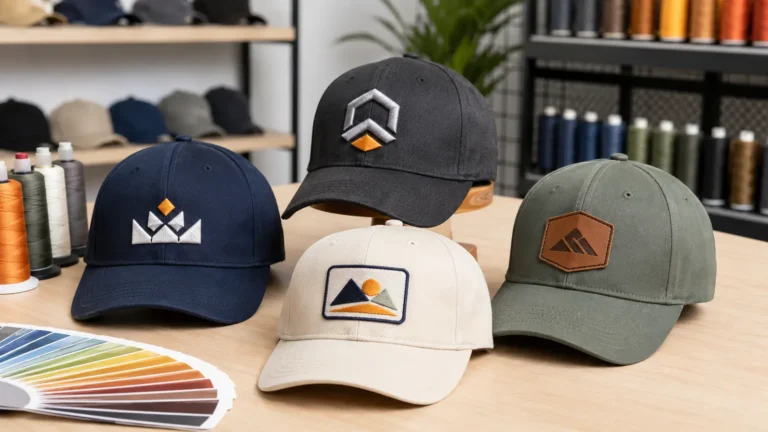
A front decoration sits across curved panels and may cross a center seam. Test patch width, height and flexibility on the selected silhouette. A thick PVC piece may lift at the edges on a sharply curved crown; dense embroidery may pucker thin fabric; and an oversized woven patch may cover ventilation or interfere with panel shape.
Attachment Method Matters
Sew-on attachment provides a visible mechanical connection and should include a defined stitch channel or border. Heat application depends on compatible backing, fabric and process control. Adhesive used only for temporary positioning is not the same as a permanent attachment specification. Ask the supplier to state the method in writing.
Artwork Preparation by Method
- Embroidery: simplify tiny gaps, confirm stitch direction and test dense areas.
- Woven: define readable text size, border, cut line and background.
- PVC: separate color levels, specify relief, minimum features and mold dimensions.
Sample Approval Checklist
- Actual size and placement on the selected hat.
- Color standard under consistent light.
- Small text, line separation and logo proportions.
- Patch edge, backing and attachment quality.
- Crown distortion, comfort and weight balance.
- Appearance after reasonable handling or agreed testing.
Decision Guide
Choose direct embroidery when stitch texture is central to the brand. Choose woven when fine textile detail is the priority. Choose PVC when dimensional relief and a technical surface matter more than textile softness. If two methods remain viable, approve physical decoration samples on the same hat rather than comparing isolated swatches.
Frequently Asked Questions
Which method shows the smallest text?
Woven patches often reproduce fine textile detail well, but readability must be tested at final size.
Is PVC always more durable?
No universal claim applies. Material formula, relief, attachment, environment and the hat itself determine performance.
Can a soft cap use a PVC patch?
Possibly, if size, weight and flexibility are compatible. A physical sample should confirm drape and edge lift.
Which option has the lowest cost?
It depends on artwork, size, quantity, setup, attachment and hat construction. Request quotes against one controlled specification.
Request a Decoration Review
Contact JIUMU with your vector artwork, hat style, patch size, quantity and target appearance. The recommendation should be confirmed by a sample rather than a generic method claim.