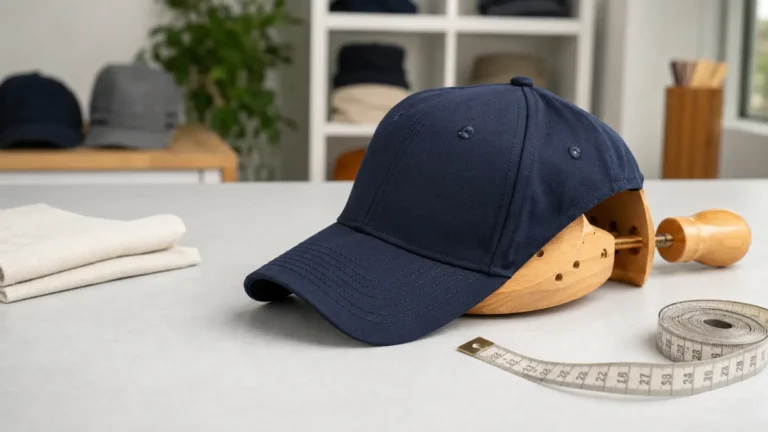
Baseball Cap Size Chart: How to Measure Your Head and Choose the Right Fit
Ordering baseball caps looks simple until a team, school, distributor, or private-label brand must fit many different people. A tight cap creates pressure; a loose cap can move during play or make the crown look oversized. In a bulk custom order, the problem affects every wearer and replacement.
This guide explains how to measure head circumference, read a baseball cap size chart, compare fitted and adjustable sizing systems, and build a practical size breakdown for youth and adult groups. It also explains why crown profile, sweatband construction, fabric, decoration, and production control can change the way a cap feels even when the stated size is the same.
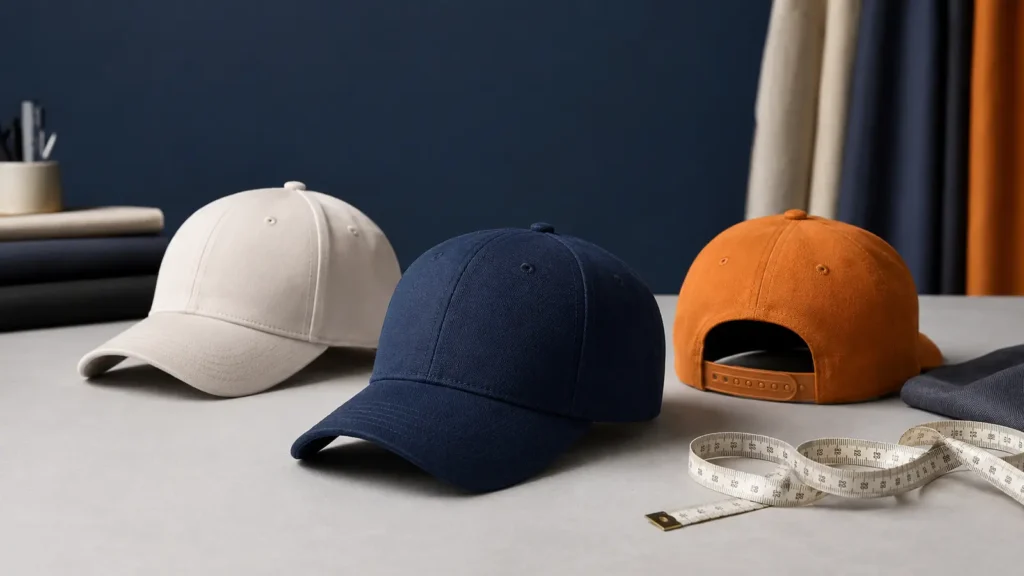
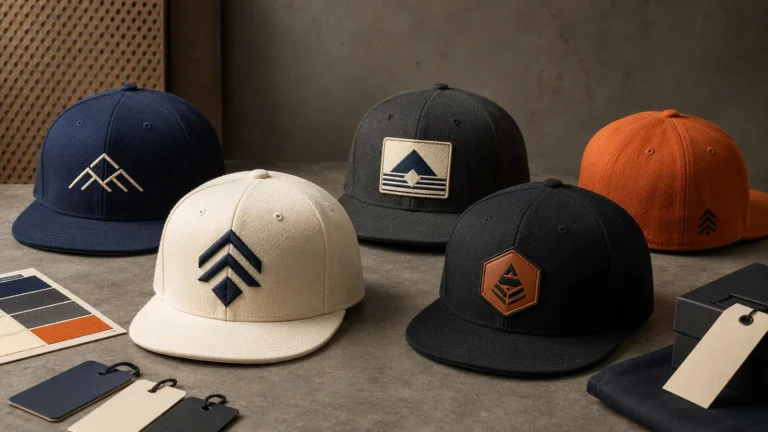
A useful cap size decision combines head circumference, cap construction, closure type, and the intended fit.
Quick Answer
Measure around the widest part of the head with a flexible tape, keeping it level approximately 1 inch (2.5 cm) above the eyebrows and slightly above the ears, where the cap will actually sit. Keep the tape snug but do not pull it tight. Record the measurement in both centimeters and inches, repeat it two or three times, and compare the largest consistent result with the specific supplier’s size chart.
For a fitted cap, choose the exact listed size or the next size up when the measurement falls between sizes and a comfortable fit is preferred. For a snapback, strapback, or buckle-back cap, confirm that the measured circumference falls near the middle of the closure’s usable adjustment range. For a stretch-fit cap, compare the measurement with the supplier’s S/M, M/L, or L/XL range and test a physical sample before a bulk order.
The chart below is a practical fitted-cap reference, not a universal production specification. Cap blocks, sweatbands, fabrics, and finishing methods vary. Always approve the final JIUMU or supplier-specific chart and a decorated fit sample before production.
Baseball Cap Size Chart in Inches and Centimeters
Fitted baseball cap sizes are traditionally expressed as fractions such as 7, 7 1/4, or 7 1/2. Each step represents a small increase in the cap’s internal circumference. The following reference uses the measurement progression published in the New Era fitted-cap size guide. It is useful for converting a measured head circumference into a familiar fitted-cap number, but it should not replace the approved specification for a custom style.
| Fitted cap size | Head circumference (cm) | Head circumference (in) | Practical interpretation |
|---|---|---|---|
| 6 | 48.2 | 19 | Small youth range; confirm availability and crown proportions |
| 6 1/4 | 50.1 | 19 3/4 | Youth range; use a youth-specific sample |
| 6 3/8 | 51.1 | 20 1/8 | Youth or smaller head circumference |
| 6 1/2 | 52.0 | 20 1/2 | Youth or small adult, depending on cap structure |
| 6 5/8 | 53.0 | 20 7/8 | Larger youth or smaller adult range |
| 6 3/4 | 53.9 | 21 1/4 | Transition range; crown depth matters |
| 6 7/8 | 54.9 | 21 5/8 | Common smaller adult fitted size |
| 7 | 55.8 | 22 | Small-to-medium adult reference |
| 7 1/8 | 56.8 | 22 3/8 | Medium adult reference |
| 7 1/4 | 57.7 | 22 3/4 | Medium adult reference |
| 7 3/8 | 58.7 | 23 1/8 | Medium-to-large adult reference |
| 7 1/2 | 59.6 | 23 1/2 | Large adult reference |
| 7 5/8 | 60.6 | 23 7/8 | Large adult reference |
| 7 3/4 | 61.5 | 24 1/4 | Extra-large adult reference |
| 7 7/8 | 62.5 | 24 5/8 | Extended adult size |
| 8 | 63.5 | 25 | Extended adult size |
Age and gender do not determine cap size reliably. Use “youth” and “adult” to describe product proportions or target groups, not as substitutes for measurement. A buyer may choose exact fitted sizes for a premium retail program, range sizes for a uniform program, or an adjustable closure for a mixed group. The decision depends on fit expectations, inventory risk, reorders, and appearance.
How to Measure Your Head for a Baseball Cap
The measurement process takes less than a minute, but consistency matters. The Nike hats and headwear guide advises measuring at the point where the hat will sit, about 1 inch or 2.5 cm above the eyebrows. New Era’s guide similarly begins just above the ear and wraps the tape evenly around the head.
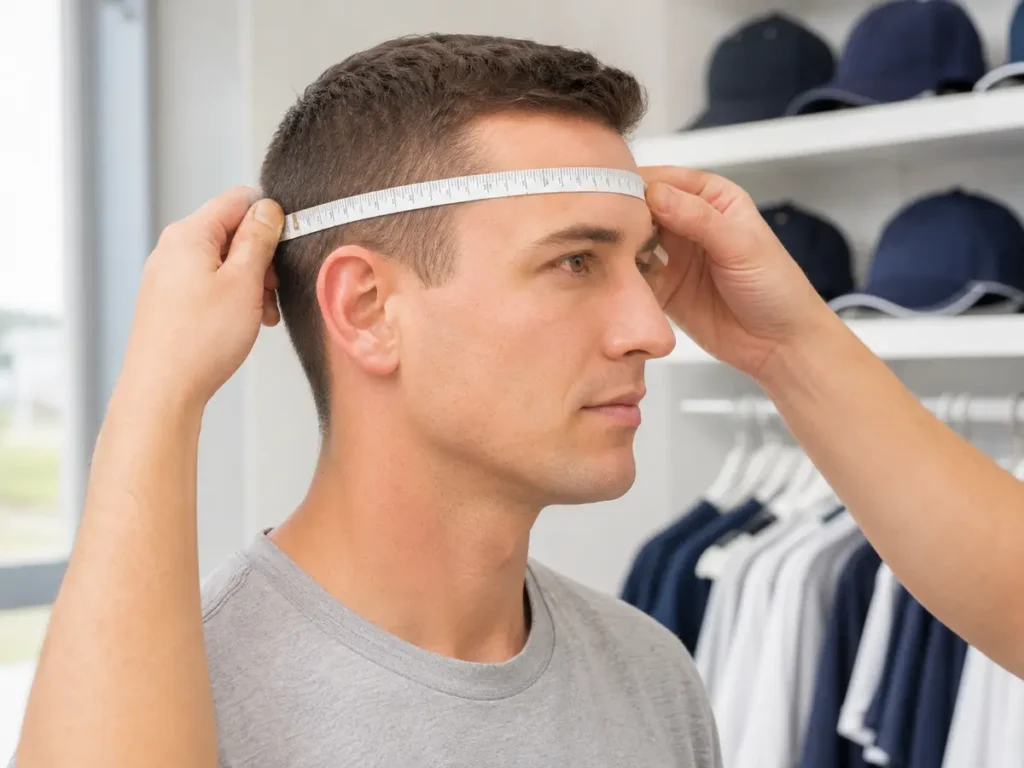
Keep the tape level around the cap’s intended wearing position and avoid compressing the hair or skin.
Step 1: Use the right measuring tool
Use a flexible tailor’s tape marked in centimeters and inches. A rigid construction tape does not follow the curve of the head accurately. If a flexible tape is not available, wrap a non-stretch string around the head, mark the overlap point, lay the string flat, and measure it with a ruler. Do not use elastic cord because it can stretch and produce a smaller result.
Step 2: Position the tape where the sweatband will sit
Place the tape approximately 1 inch (2.5 cm) above the eyebrows. Guide it above the ears and around the widest part at the back of the head. Keep the tape in one horizontal plane. If the wearer prefers a cap higher or lower than usual, measure along that actual wearing line.
Step 3: Keep the tape comfortably snug
The tape should touch the head all the way around without indenting the skin or flattening the hair aggressively. A loose tape adds unwanted circumference; a tight tape can lead to a cap that causes pressure. Ask the wearer to keep a neutral facial expression and normal hairstyle.
Step 4: Record centimeters and inches
Record both units instead of converting from memory later. Centimeters are especially useful in product development because they allow a more precise specification. Inches remain useful for fitted cap numbers and buyers in the United States.
Step 5: Repeat the measurement
Measure two or three times. If the readings vary, reposition the tape and repeat until two results agree closely. For a bulk program, use one trained coordinator or a short illustrated measuring instruction so that every participant follows the same method.
Step 6: Decide what to do between sizes
When a measurement sits between two fitted sizes, the preferred result depends on the wearer and construction. Choose the smaller size only when a close fit is intentionally desired and the cap does not create pressure. Choose the larger size for more comfort, thicker hair, or extended wear. Nike’s published fit guidance likewise frames the smaller option as tighter and the larger option as looser.
For a stretch-fit cap, do not assume the lower range will “stretch enough.” A wearer near the upper limit can feel excessive pressure from the elastic band. For an adjustable cap, avoid a size that only fits at the first or last closure position; a centered adjustment leaves more flexibility for individual preference.
Common Measuring Mistakes
A baseball cap size chart is only as reliable as the measurement entered into it. These are the errors that most often create avoidable exchanges or poor bulk-order distributions:
- Measuring around the middle of the forehead instead of the cap’s actual wearing line.
- Letting the tape slope downward at the back of the head.
- Pulling the tape tight enough to compress the skin.
- Measuring over a bulky hairstyle that the wearer does not normally use with a cap.
- Relying only on age, “men’s,” “women’s,” or “one size” descriptions.
- Measuring an old, stretched cap instead of the wearer’s head.
- Rounding down before comparing the number with the supplier’s chart.
- Mixing centimeters and inches in a roster without clear unit labels.
- Collecting sizes from multiple cap brands and assuming the same label means the same finished fit.
For team orders, create a shared form with separate fields for head circumference, unit, preferred fit, and selected cap size. Do not use one free-text field. Structured data prevents entries such as “medium, about 23” from reaching production without clarification.
Fitted, Stretch-Fit, Snapback, and Strapback Sizing
The word “baseball cap” describes a shape, not one sizing system. Closure type determines how much measurement precision, inventory depth, and on-head adjustment a program needs.
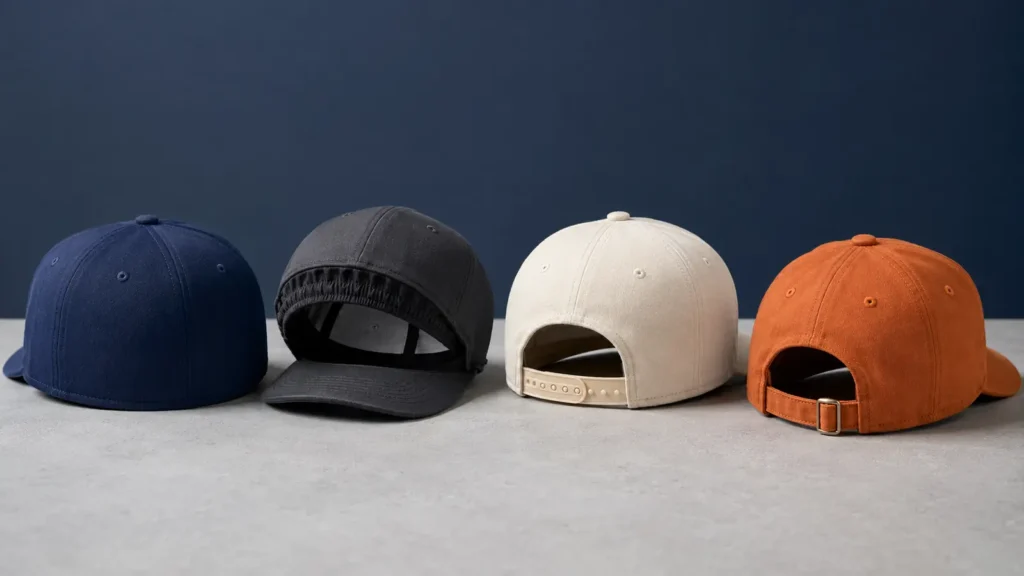
Fitted, stretch-fit, snapback, and strapback caps solve different fit and inventory problems.
| Sizing system | How it fits | Best for | Main procurement advantage | Main risk to control |
|---|---|---|---|---|
| True fitted | Closed back in one exact circumference | Premium team, retail, and heritage baseball programs | Clean uninterrupted back and precise fit | Requires a reliable size distribution and more SKUs |
| Stretch-fit | Elastic sweatband covers a size range | Staff, team, golf, and active programs | Fewer sizes than a fitted program with a close look | Pressure can be uncomfortable near the top of a range |
| Snapback | Plastic snaps adjust through fixed positions | Teams, events, streetwear, and promotional programs | Broad adjustability and simple inventory | Closure range and crown size may still exclude small or large heads |
| Strapback or buckle-back | Fabric or leather-style strap adjusts continuously | Corporate, casual, golf, and lifestyle programs | Refined appearance with flexible adjustment | Strap length, buckle hardware, and opening shape affect comfort |
| Hook-and-loop | Overlapping adjustable tab | Staff, workwear, training, and practical promotions | Fast adjustment and easy use | Appearance and long-term fastening performance must match the use case |
True fitted caps
A fitted cap has no opening or adjuster at the back. This creates a traditional continuous crown but makes size accuracy critical. Each fractional size is a separate SKU, so buyers must plan demand and preserve the approved cap block and sweatband specification for reorders.
Stretch-fit caps
Stretch-fit caps use an elasticized sweatband or fabric to cover a range such as S/M or L/XL, but those labels are not universal. Flexfit’s official sizing page describes its caps as range sizes rather than fixed fitted sizes. Request the actual centimeter range for the selected custom body.
Snapback caps
A snapback covers a range, not every head. The plastic strap has minimum and maximum usable positions, while the crown retains a fixed volume. Ask for both the closure range and intended crown profile.
Strapback and buckle-back caps
These closures offer finer adjustment than fixed snaps. Check strap length, minimum overlap, hardware edge finish, opening height, and how excess strap is stored. A correct circumference does not compensate for uncomfortable hardware.
Why Two Caps in the Same Size Can Fit Differently
Size labels describe only part of the experience. A 58 cm cap can feel different across styles because the head is three-dimensional.
Crown depth and profile
A low-profile crown feels compact, while a high-profile cap has more vertical volume and can appear oversized even when the circumference is correct. Reducing only the circumference while retaining an adult crown can create an awkward youth fit.
Head shape
Head shape may be oval or round. A cap that feels correct front to back can still feel tight at the sides, making a physical fit sample essential for a premium fitted program.
Sweatband material and thickness
A padded sweatband occupies more internal space than a thin woven band, while elastic adds compression. Measure the completed cap with the production sweatband installed.
Fabric and structure
Cotton twill, wool blends, polyester, mesh, and stretch fabrics behave differently. Buckram helps a structured cap hold its form; an unstructured cap conforms more closely to the head. Care guidance and testing should match the selected material.
Brim shape and balance
A flat or curved brim does not change circumference, but it affects visual balance and how high or low the wearer positions the cap.
Decoration
Dense embroidery can stiffen panels, while side decoration, internal labels, and seam tape can add localized thickness. The final decorated sample—not only an undecorated blank—is the relevant fit reference.
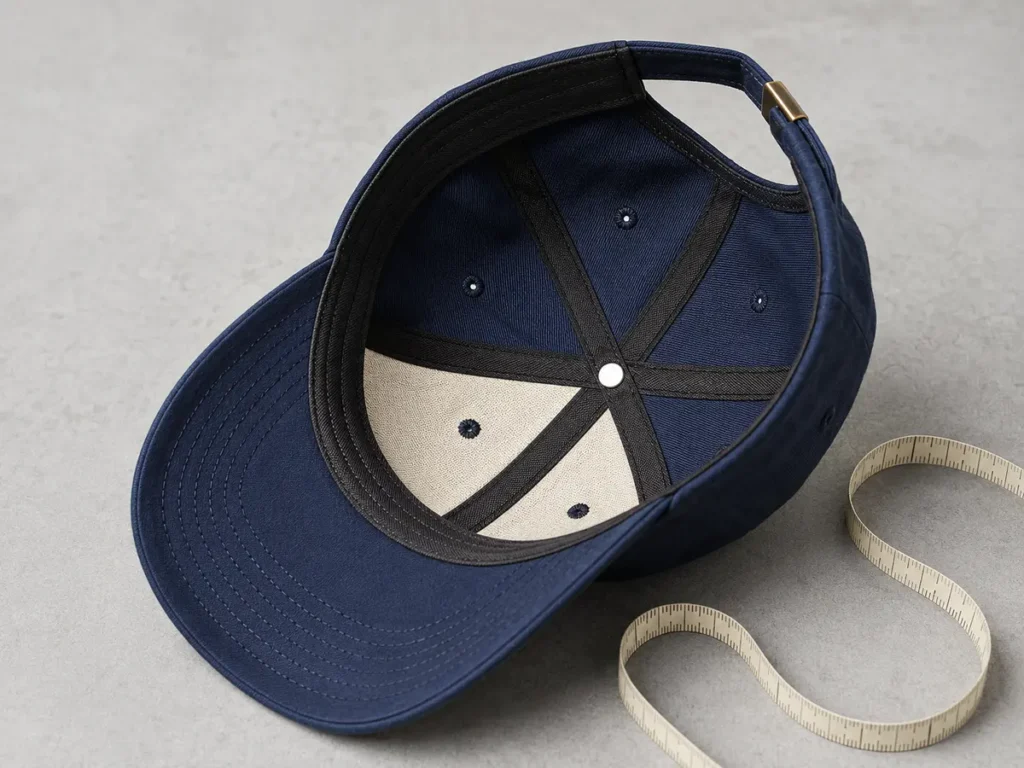
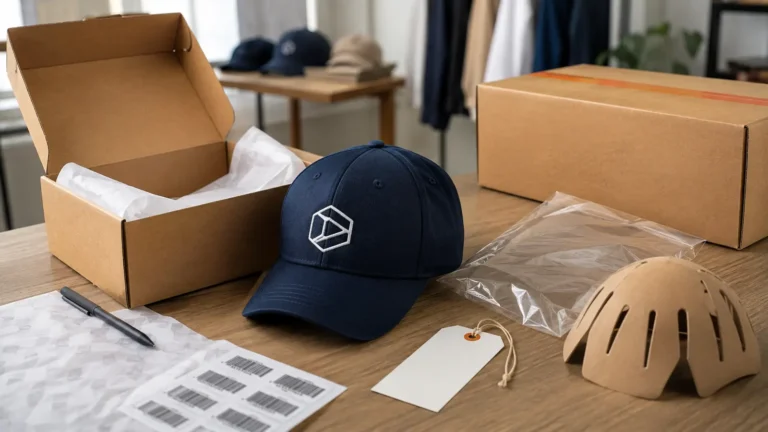
Finished internal construction—not only the size label—determines how a cap feels on the head.
Youth vs. Adult Baseball Cap Sizing
Youth caps are not simply adult caps with a shorter closure. A well-developed youth style can use a smaller circumference, reduced crown depth, adjusted panel shape, a proportionate brim, and a closure that does not leave excessive material at the back.

Youth and adult caps should be assessed for both circumference and overall proportion.
Do not assign size only by age. Collect measurements during registration or a fitting day. When individual data is unavailable, adjustable youth and adult bases can reduce risk, but test samples on a representative group.
An adjustable youth style allows room for growth and easier reissue. A true fitted youth cap delivers a traditional look but needs precise sizing and a plan for late registrations.
For mixed programs, a youth crown plus an adult crown often produces better proportions. Approve logo scale separately on each base because adult embroidery can overwhelm a smaller youth front panel.
How Should a Baseball Cap Fit?
A correct fit is secure without continuous pressure. Use these checks during sample approval:
- The sweatband contacts the head evenly rather than pinching at the forehead or temples.
- The cap stays in place when the wearer turns, bends, or moves at normal activity speed.
- The wearer can insert a fingertip under the sweatband without a large loose gap.
- The crown sits at the intended height and does not collapse or float above the head unexpectedly.
- The front edge rests at the preferred position above the eyebrows.
- The ears are not pushed down by the lower edge of the cap.
- An adjustable closure sits comfortably and has useful positions available in both directions.
- The cap can be worn for at least 15–30 minutes without a pressure line, headache, or repeated need for adjustment.
Fit preference is real. Some baseball players want a close, stable fit. Retail and lifestyle customers may prefer a relaxed fit. Record the target as part of the product specification rather than treating one subjective sample comment as a universal rule.
Turning Individual Measurements into a Bulk Order
The goal of a team or merchandise buyer is not only to select one size; it is to create a defensible order quantity by size.
Use a measured roster
Create one row for each wearer and include:
- Person or player identifier
- Youth or adult base
- Head circumference
- Measurement unit
- Selected size or adjustable range
- Fit preference
- Name or number personalization, if applicable
- Approval status
Protect personal data according to your organization’s policies. The supplier usually needs the size and personalization mapping, not unnecessary personal details.
Summarize the size distribution
Convert the roster into totals by size. Check that the sum equals the total quantity. Separate fitted sizes, youth/adult bases, and personalized units. Keep a small number of unpersonalized replacement caps only when the program expects late additions or loss; the appropriate quantity depends on group turnover and budget.
Test edge sizes
Do not sample only the middle size. A bulk program should check the smallest, central, and largest intended sizes when practical. This reveals whether crown depth, brim proportion, and logo scale remain consistent across the range.
Lock the approved specification
The purchase order or approved tech pack should identify:
- Cap style and crown profile
- Size list or adjustment range
- Finished internal circumference measurement method
- Sweatband construction
- Fabric and color
- Closure type and hardware
- Brim shape
- Logo method, size, and location
- Internal labels and packaging
- Agreed measurement tolerance
- Approved sample reference and revision date
Do not assume the words “adult snapback” or “medium fitted cap” contain enough information for repeat production.
Customization Without Losing Fit Consistency
Custom baseball caps can combine fit systems with embroidery, woven patches, leather-style patches, rubber/PVC patches, heat transfer, custom fabric colors, labels, and packaging. The creative brief should be evaluated against the chosen crown and size range.
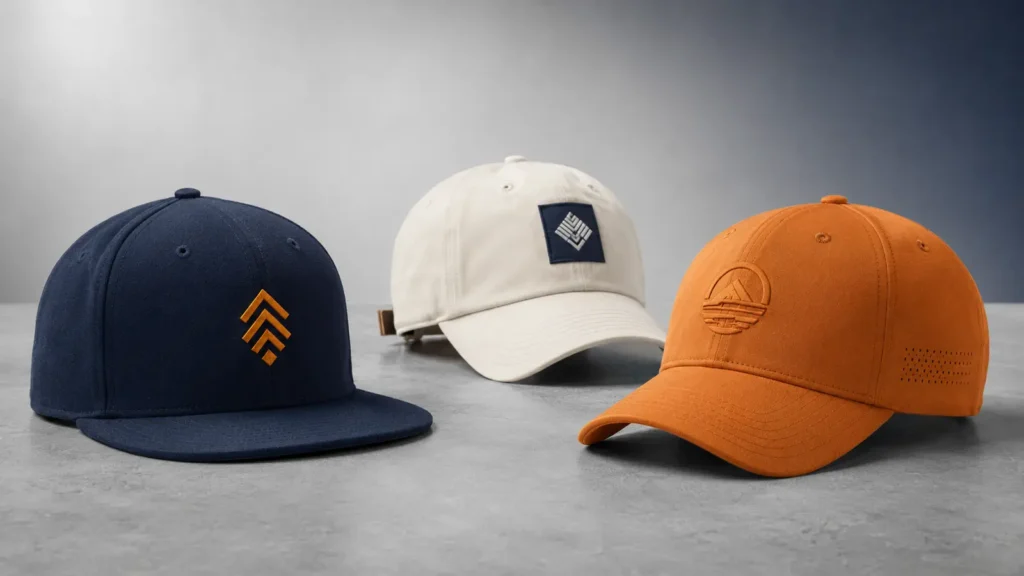
Logo scale, placement, and stiffness should be approved on the actual cap base and size range.
A large embroidered logo may require a structured front and enough crown height. Keep side patches away from uncomfortable seam or temple positions, and finish interior label edges smoothly.
Use proportional artwork for youth and adult caps rather than applying one embroidery file unchanged. In private-label programs, make sure size labels match the finished system and packaging does not mix similar variants.
Planning a custom cap order for a team, school, distributor, or private-label collection? Send JIUMU your quantity, youth/adult breakdown, head-size data, cap style, logo file, colors, decoration method, packaging needs, and target delivery date. Request a custom quotation or explore custom baseball caps.
Sample Approval and Size Quality Control
A fit sample is the bridge between a chart and a reliable bulk order. Approve an undecorated blank for general shape if needed, then approve a decorated pre-production sample before mass production.
What to evaluate on the sample
Measure the finished inside circumference along the sweatband using the same defined method for every sample. Compare it with the specification; do not measure across the outer crown. Check crown height, front width, brim length and curve, closure range, sweatband recovery, embroidery distortion, label comfort, and overall balance on representative wearers.
What to record
Use photos, measurement values, sample date, material references, artwork revision, and written comments. Avoid approvals such as “looks good” without identifying the exact sample. If the fit changes, update the specification and confirm which revision replaces the previous one.
What to inspect during production
Size control should continue after sample approval. A production inspection can verify:
- Correct size labels and carton assortments
- Finished internal circumference using the agreed method
- Closure function and usable range
- Crown and brim consistency
- Sweatband attachment and elasticity
- Panel symmetry and seam alignment
- Logo placement and deformation
- Color consistency against the approved reference
- Personalization mapping
- Packaging and quantity by size
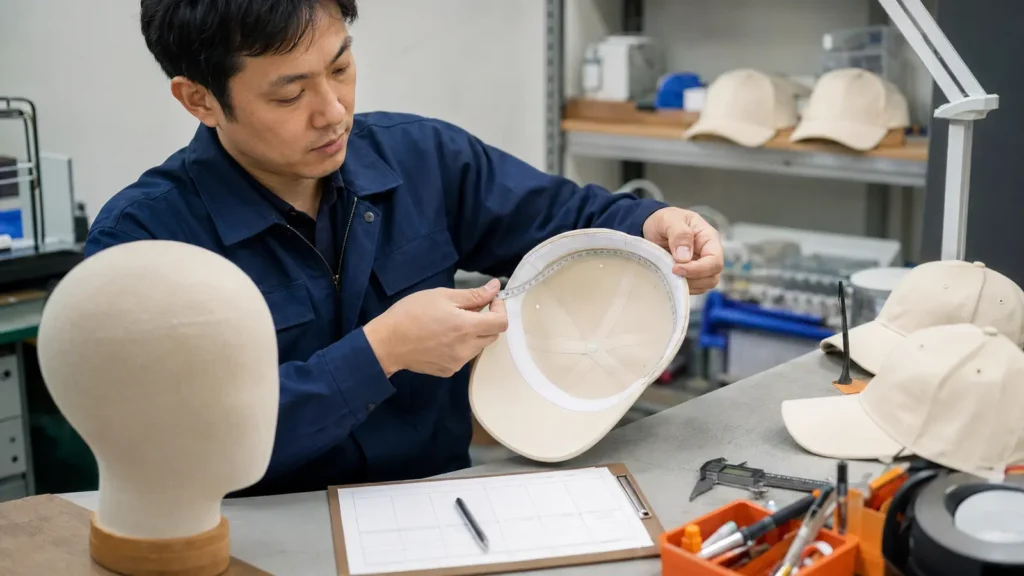
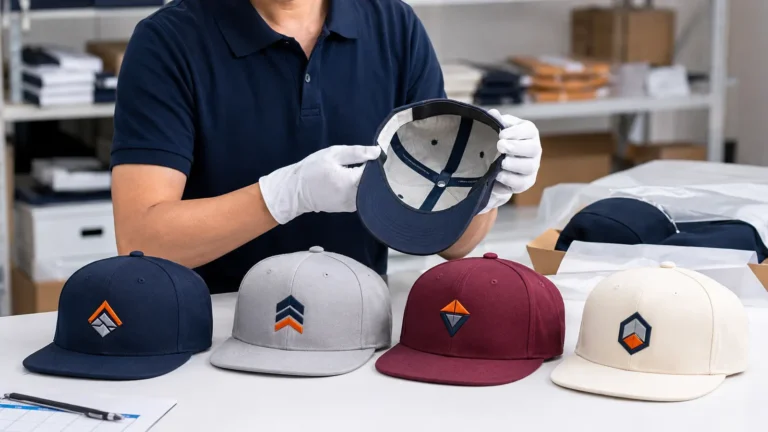
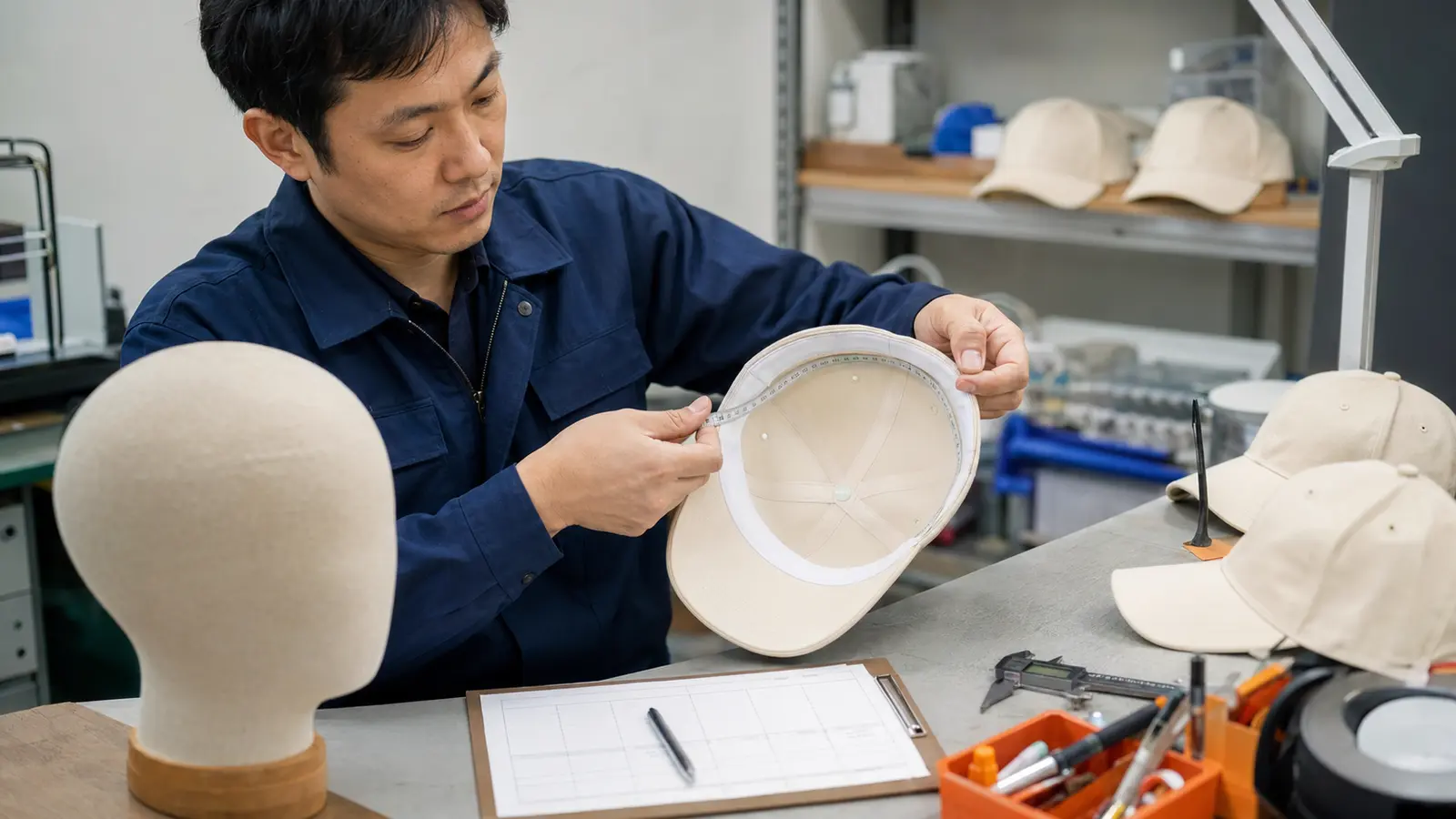
Size inspection should use a repeatable method on the completed cap, with the sweatband and decoration installed.
The buyer and supplier should agree on measurement tolerances before production. A single universal tolerance is not appropriate for every fabric, cap structure, and size system. The tolerance must be realistic for the construction while still protecting the intended fit.
Questions to Ask a Custom Baseball Cap Supplier
Use these questions before approving a quotation:
- Is the style true fitted, stretch-fit, snapback, strapback, buckle-back, or hook-and-loop?
- What exact head-circumference range does each size cover in centimeters and inches?
- Is there a separate youth pattern or only a smaller closure setting?
- What are the crown height, profile, panel structure, and brim dimensions?
- How is finished internal circumference measured?
- What tolerance will be used for each size?
- Can we approve size-set or edge-size samples?
- Does the decorated sample use the same fabric, sweatband, labels, and embroidery as production?
- Can logo dimensions be adjusted for youth and adult cap bases?
- How will size labels, personalization, polybags, and cartons be organized?
- What is the MOQ for the total order and for each size or color combination?
- How will repeat orders reference the approved pattern and sample?
- Which quality checks are completed before shipment?
- What information is required to prepare a digital mockup and physical sample?
These questions turn “What size is this cap?” into a controlled product-development conversation.
Cost and Inventory Considerations
Sizing affects cost even when material and logo remain unchanged. A fitted program creates more patterns, labels, sorting, and inventory positions; personalization also limits reallocation. Adjustable styles consolidate SKUs, but one adult crown may still fit youth wearers poorly. Retail and distributor programs should use sales, preorder, or measured pilot data for the size curve instead of assuming a universal percentage distribution.
Common Bulk-Ordering Mistakes
- Choosing a cap blank before defining the wearer group and fit target.
- Using the supplier’s alpha size labels without requesting circumference ranges.
- Ordering one adult adjustable cap for both small youth and large adult heads.
- Approving the logo on a digital mockup without testing the decorated cap.
- Sampling only one central size in a fitted program.
- Failing to define how internal circumference is measured.
- Treating a brand-specific size chart as an industry-wide standard.
- Submitting a roster with missing units or mixed size systems.
- Forgetting spare, late-registration, or replacement needs.
- Changing fabric, sweatband, or closure after fit approval without resampling.
- Assuming a repeat order will match unless the approved pattern and sample reference are retained.
Why Work With JIUMU for Custom Baseball Caps?
Established in 2010 in Guangdong, China, JIUMU supplies custom hats, teamwear, uniforms, bags, and branded merchandise for professional buyers in North America and Europe. The brand supports OEM and ODM product development, logo embroidery, screen printing, heat transfer, woven and rubber/PVC patches, leather-style patches, fabric sourcing, Pantone color matching, private labels, hangtags, custom packaging, digital mockups, physical samples, bulk production, quality control, and export support.
For many custom products, JIUMU’s typical MOQ begins at 50 pieces, subject to cap structure, size breakdown, color, and customization. This makes it important to discuss the total quantity and the number of variants together. A fitted cap order distributed across many sizes has different production requirements from one adjustable cap in two crown bases.
JIUMU can use your reference image, product concept, logo, colors, head-size data, and packaging requirements to develop a project specification. Buyers should still approve the exact size chart, sample, tolerances, and delivery plan for their order; no generic chart can replace style-specific confirmation.
Explore JIUMU’s custom baseball caps, review the broader custom team uniform program, or learn more about JIUMU.
Frequently Asked Questions
Final Recommendation
Use the baseball cap size chart as a conversion tool, not a substitute for product development. Measure at the actual cap line, choose a sizing system that matches the audience and inventory plan, then approve the production fabric, sweatband, closure, decoration, labels, and measurement method. The result is a secure fit and a repeatable specification that can be sampled, inspected, and reordered.

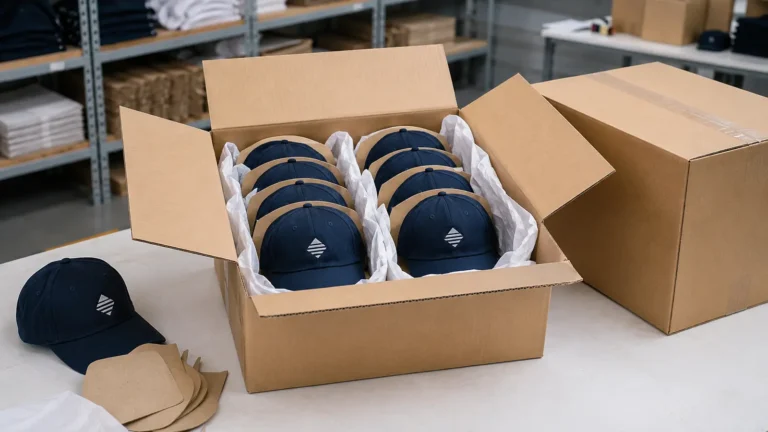
A measured roster and organized size distribution reduce uncertainty when caps are issued to a team.
Request a JIUMU custom cap quotation: Share your quantity, head-size breakdown, youth/adult bases, style, colors, logo, decoration, packaging, destination, and target delivery date. Contact JIUMU by online inquiry, WhatsApp/phone at +86 18507502899, or email zhengdong@jiumugear.com.
Sources and Measurement References
- New Era Europe — Fitted Caps Size Guide
- Nike — Hats and Headwear Size Chart
- Nike — How to Measure Your Head to Find Your Hat Size
- Flexfit — Sizing Chart
Editorial note: Third-party size guides are cited only as measurement references. JIUMU is not claiming an affiliation with those brands. Product dimensions and fit ranges must be confirmed for each custom style.
About the JIUMU Editorial Team
JIUMU has supported B2B custom teamwear, logo apparel, custom hats, uniforms, bags, and branded merchandise projects since 2010. This guide combines public sizing references with practical product-development and bulk-order planning guidance.