Dad Hat vs Baseball Cap: Structure, Fit, Brim and Best Uses
Choosing between a dad hat and a baseball cap is not simply a question of fashion. For a sports club, school, corporate merchandise program, apparel brand or promotional buyer, the choice affects how the cap fits, how the logo appears, how consistently the product looks across a bulk order and whether recipients will actually wear it.
The terms also overlap. A dad hat is a type of baseball-style cap, but it normally has an unstructured, low-profile crown, a pre-curved brim and an adjustable back. “Baseball cap” is the broader category. In sourcing conversations, however, buyers often use the term to mean a more structured six-panel cap with a firmer front, a medium profile and a clean athletic appearance.
This guide uses that practical sourcing distinction. It compares the two styles by structure, fit, brim, fabric, decoration and end use, then explains what to approve before placing a customized bulk order.
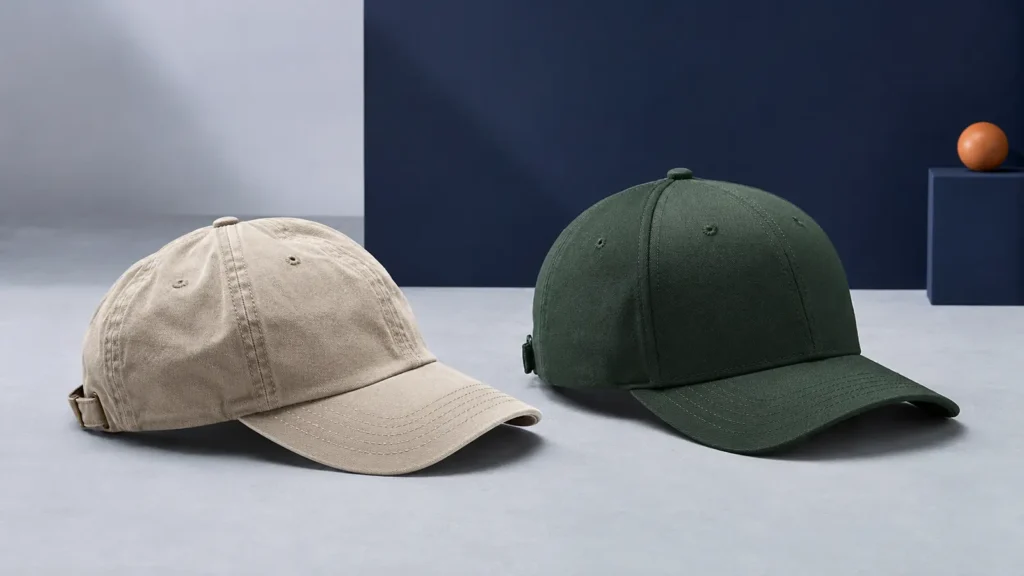
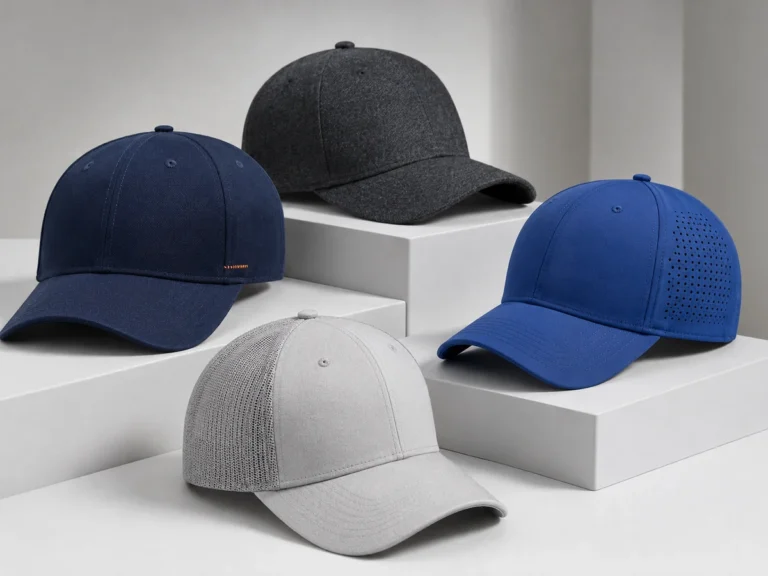
A dad hat has a soft low-profile crown, while a structured baseball cap holds a more defined front shape.
Quick Answer: What Is the Difference Between a Dad Hat and a Baseball Cap?
A dad hat usually has a soft, unstructured crown that follows the shape of the wearer’s head. It tends to sit lower, use washed or brushed cotton, include a gently curved brim and close with a fabric strap and metal buckle. Its overall look is relaxed, casual and lifestyle-oriented.
A structured baseball cap normally uses supporting material behind the front panels. It holds a more defined crown shape, offers a larger and flatter area for embroidery or patches, and creates a uniform athletic or workwear appearance. It may use a snapback, hook-and-loop, buckle, stretch-fit or fitted closure.
Choose a dad hat when softness, easy casual wear and a lived-in appearance matter most. Choose a structured baseball cap when logo visibility, shape retention, team identity or a consistent staff appearance matters more.
Dad Hat vs Baseball Cap Comparison
| Comparison point | Dad hat | Structured baseball cap |
|---|---|---|
| Crown | Usually unstructured and soft | Supported front panels that retain shape |
| Profile | Commonly low profile | Commonly mid profile; low and high profiles are also available |
| Typical panel count | Usually six panels | Often six panels; five-panel versions also exist |
| Brim | Pre-curved, soft visual line | Curved or flat depending on the specification |
| Fit impression | Close to the head and relaxed | More defined, upright and uniform |
| Common closure | Fabric strap with metal buckle | Snap, hook-and-loop, buckle, stretch-fit or fitted |
| Typical fabric | Washed cotton or cotton twill | Cotton twill, cotton-poly blend, polyester or performance fabric |
| Logo area | Best for small to medium, flexible designs | Better for larger, sharper or raised front decoration |
| Best visual direction | Lifestyle, heritage, casual merchandise | Sports, uniforms, workwear and bold branded merchandise |
| Packing behavior | Crown can fold more easily | Requires more protection to preserve crown shape |
The correct decision still depends on the exact blank specification. A low-profile structured cap may sit closer to the head than some unstructured caps, while a performance dad hat can be made from polyester rather than cotton. Always approve a physical sample instead of buying from a style name alone.
What Makes a Dad Hat “Unstructured”?
The defining feature of a dad hat is not the word “dad”; it is the soft construction. Most traditional dad hats do not use firm supporting material behind the front panels. When the cap is not being worn, the crown can collapse or fold. On the head, the fabric conforms more closely to the wearer.
This construction creates several procurement benefits:
- The cap feels softer from the first wear.
- The low crown suits casual apparel collections and understated merchandise.
- The cap packs relatively flat, which can reduce wasted space.
- Washed finishes can create a familiar, broken-in appearance.
- Small embroidered marks can look intentionally subtle rather than overly promotional.
There are also limitations. A soft crown does not provide the same stable embroidery surface as a supported front panel. A large, dense logo can pull or pucker the fabric. Very tall artwork may sit too close to the top seam. Heavy patches can overpower the crown or make it fall forward.
For buyers, “unstructured” should therefore be treated as a construction specification, not just a marketing description. Ask the supplier to confirm whether the front panels contain fusible material, buckram or another support layer, and request interior photos before sampling.
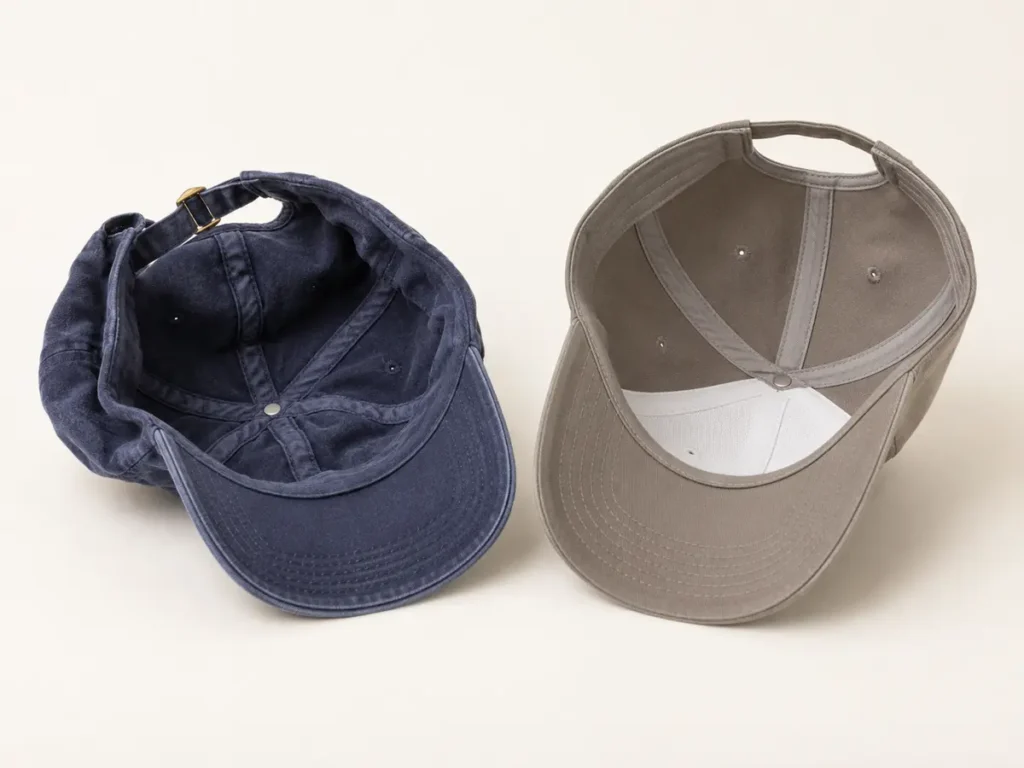
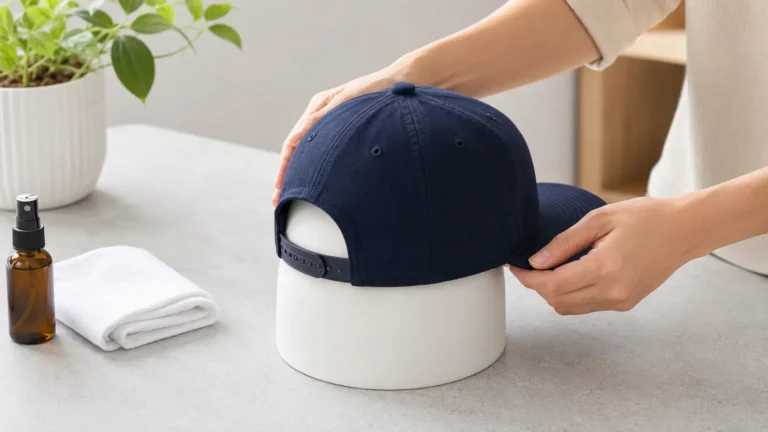
Interior construction shows how crown support changes cap shape and decoration stability.
What Makes a Baseball Cap “Structured”?
A structured baseball cap uses a support layer in the crown, most noticeably behind the front panels. The support helps the cap stand upright when it is not being worn and gives the front decoration area a more consistent surface.
The result is a cleaner, more athletic profile. Structured caps are common for baseball teams, school programs, company uniforms, construction crews, tournament merchandise and retail collections that need a bold front logo.
Structured does not automatically mean stiff or uncomfortable. Comfort depends on the crown height, circumference, sweatband, fabric, seam construction and closure. The support can range from light to firm. For example, Flexfit’s published specifications distinguish between lightly structured styles and structured styles using hard buckram, illustrating why buyers should confirm the support level rather than rely only on the word “baseball cap.” (Flexfit product specifications, structured cap example)
For a bulk order, review the crown from the front, side and top. A cap can look acceptable from the front but appear too tall, too narrow or too angular from another view. If the cap will be sold online, photograph the approved sample from multiple angles before authorizing production.
How Do the Two Caps Fit Differently?
Fit is where recipients notice the difference most quickly.
A dad hat generally sits lower and follows the contour of the head. The front seam may slope back gently, and the soft crown can show natural folds. The style is forgiving visually, but the circumference still needs to match the intended wearer range.
A structured baseball cap creates more space between the front of the head and the crown. Its shape is more consistent from wearer to wearer, which helps teams and staff groups look coordinated. A crown that is too high, however, can feel oversized to buyers expecting a classic low-profile cap.
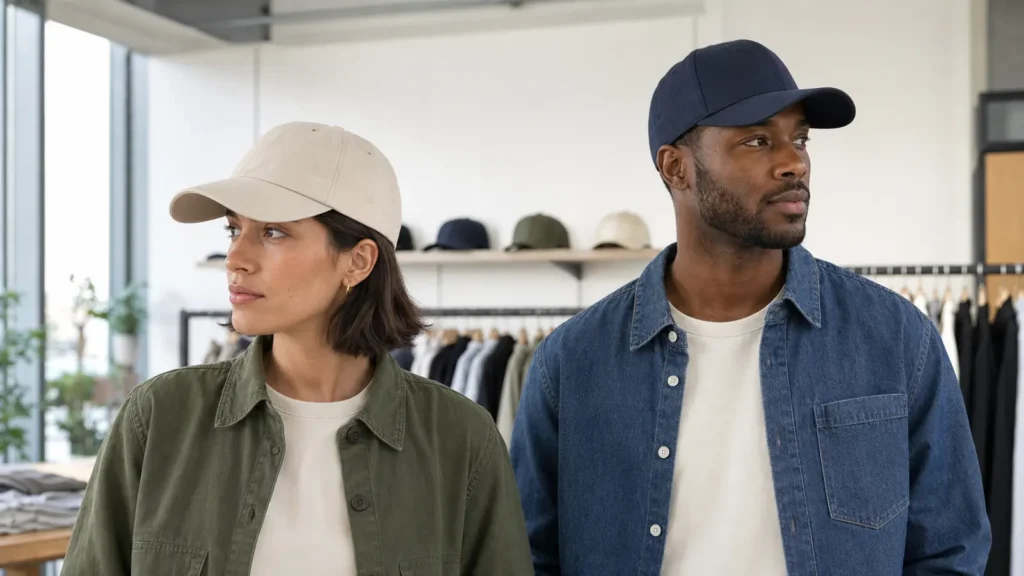
A low-profile dad hat follows the head, while a structured cap creates a more upright front profile.
Fit specifications to confirm
| Specification | Why it matters | What to request |
|---|---|---|
| Crown height | Controls low-, mid- or high-profile appearance | Measurement from base seam to top button |
| Head circumference range | Determines who can wear an adjustable style | Minimum and maximum fitted circumference |
| Front-panel width | Affects perceived shape and logo area | Flat measurement and sample photo |
| Sweatband | Influences comfort and moisture management | Material, width, softness and stretch |
| Closure type | Changes adjustment range and rear appearance | Closure material, color and hardware finish |
| Depth | Determines whether the cap sits securely | Physical sample on more than one head size |
Do not assume that “one size fits all” means the same thing across factories or cap patterns. Ask for the actual adjustment range. If the program includes youth and adults, separate patterns may be needed. For a broad promotional giveaway, an adjustable closure is usually safer than a closed-back fitted style because it reduces size complexity.
Brim Shape: Similar Curve, Different Visual Effect
Both dad hats and classic baseball caps commonly use curved brims, but the visual effect differs because of crown construction and visor firmness.
The dad hat brim is generally pre-curved and visually relaxed. It works with the low crown to frame the face and create a casual profile. A washed fabric can soften the edge further.
A structured baseball cap can also have a pre-curved brim, but the visor often feels firmer and holds a cleaner line. Some structured baseball caps use a flat brim, especially for modern streetwear or team merchandise, but a flat brim should be specified explicitly. It should not be assumed from the term “baseball cap.”
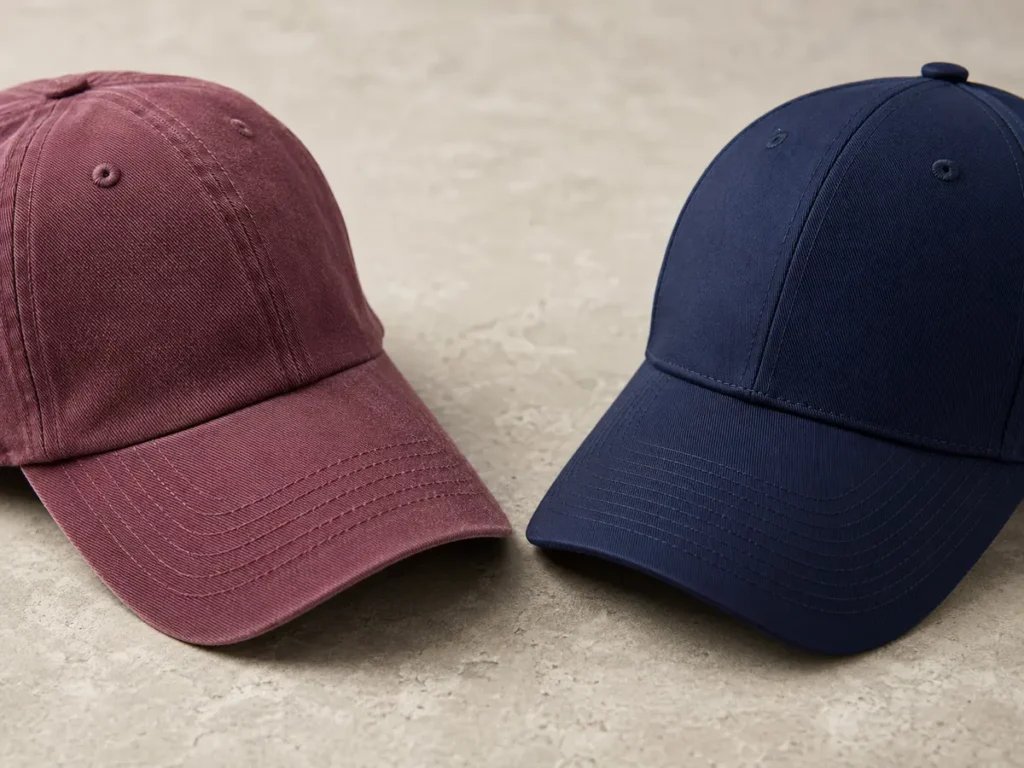
Brim firmness, curve and stitch alignment should be checked on the physical sample.
When reviewing a brim sample, check:
- Curve depth and symmetry
- Visor length and width
- Number and spacing of stitch rows
- Smoothness of the outer edge
- Alignment with the center front seam
- Upper and underside fabric colors
- Flexibility after repeated handling
If the order uses a sandwich brim, contrast underside or printed underside, include those details in the tech pack and artwork approval. Slight changes to the underside color can strongly affect the cap when viewed at eye level.
Materials and Finishes
Dad hats are closely associated with washed cotton, but buyers can use other materials when the required performance and appearance are clear. Structured baseball caps offer an even broader range because the crown support can be combined with cotton, blends or synthetic performance fabrics.
| Material or finish | Dad hat suitability | Structured baseball cap suitability | Buyer considerations |
|---|---|---|---|
| Cotton twill | Excellent for soft casual programs | Good for classic team or corporate caps | Confirm fabric weight, shrinkage handling and color consistency |
| Washed cotton | Signature dad-hat appearance | Possible, with a more relaxed structured look | Wash variation is part of the aesthetic; approve an acceptable range |
| Brushed cotton | Soft hand feel and understated surface | Suitable for premium casual caps | Can show lint and handling marks more easily |
| Cotton-poly blend | Adds stability and faster drying | Common for uniforms and promotions | Confirm blend ratio and hand feel |
| Polyester | Useful for lighter or quick-dry styles | Common for sports and workwear | Confirm breathability, sheen and heat sensitivity |
| Performance mesh | Less typical for a classic dad hat | Useful for athletic and warm-weather programs | Confirm hole size, stretch and logo-method compatibility |
| Corduroy or denim | Strong lifestyle and fashion direction | Possible for seasonal branded collections | Test seam bulk and embroidery performance |
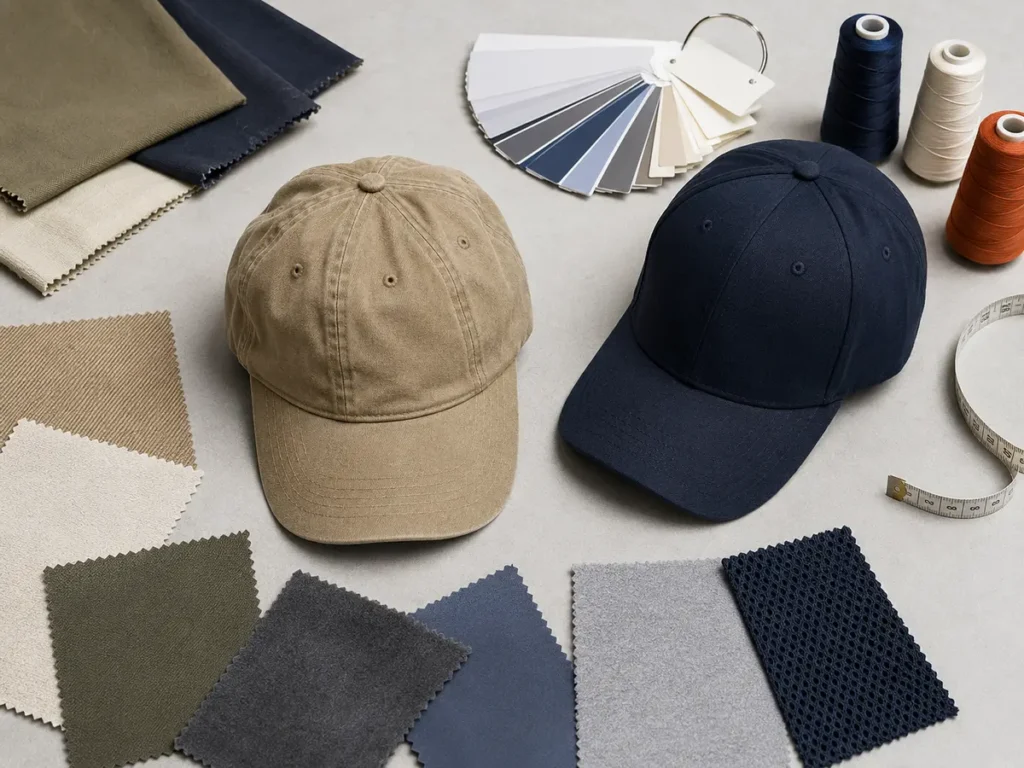
Fabric weight, finish and hand feel influence cap structure, comfort and end use.
The fabric name is only a starting point. A 100% cotton twill can feel light and flexible or dense and firm depending on yarn, weave, weight and finishing. Ask for a fabric swatch or existing material sample. For a washed cap, approve the final wash effect on the actual cap—not only on a flat swatch—because seams, brim edges and panel folds can take color differently.
For outdoor programs, avoid making a “waterproof” claim unless the material, seams and finished cap have been tested to a defined method. “Quick-dry,” “water-resistant” and “moisture-wicking” should also be treated as performance specifications that require confirmation rather than decorative copy.
Logo Placement and Decoration
The cap structure should support the logo, not fight it.
Dad hat decoration
Small flat embroidery is the most reliable choice for a classic dad hat. Short wordmarks, compact symbols and tonal designs complement the relaxed crown. Woven patches and small leather-style patches can also work when their size and stiffness are controlled.
Three-dimensional embroidery is possible on some unstructured caps, but it requires careful testing. Dense raised stitching adds weight and may distort the front panel. A large rubber/PVC patch can have the same problem.
Structured baseball cap decoration
The supported front creates a more stable platform for:
- Flat embroidery
- Three-dimensional embroidery
- Woven patches
- Embroidered patches
- Rubber/PVC patches
- Leather-style patches
- Heat-transfer graphics, subject to fabric compatibility
The structured style is generally better when the buyer wants a large crest, a bold team initial or a front design that must look consistent across many units.
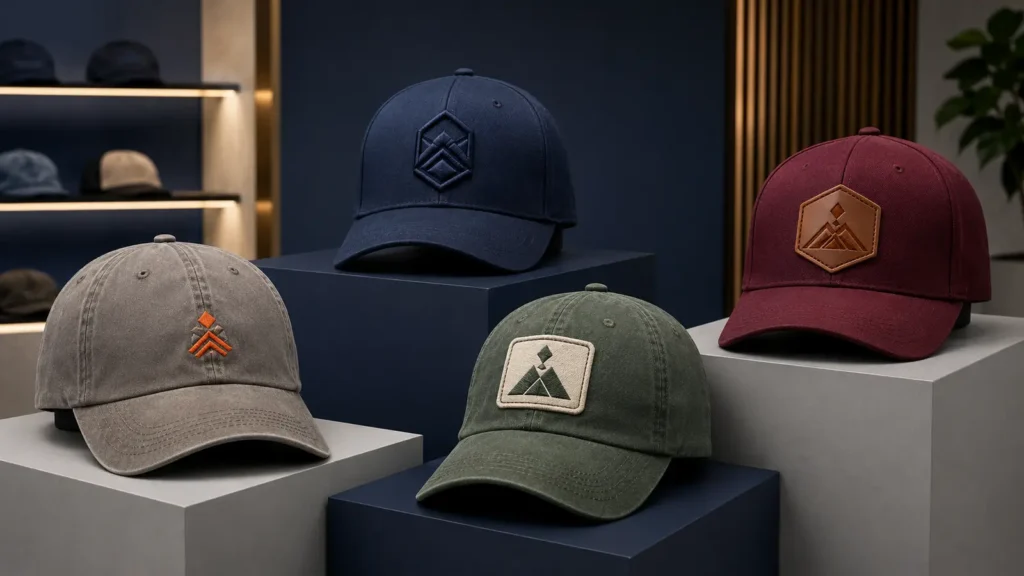
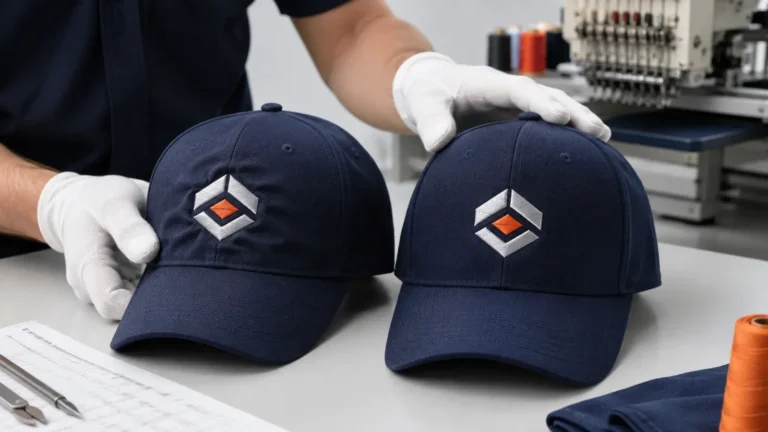
Select a decoration method that matches the crown support, logo size and intended appearance.
Artwork checks before sampling
Send vector artwork when possible and specify:
- Finished logo width and height
- Front, side, back or closure-area placement
- Thread or patch colors
- Flat or raised embroidery
- Border style for patches
- Required small-text minimums
- Whether the cap fabric should show through the design
- Reference photos showing the intended visual scale
Avoid approving a digital mockup alone. A mockup confirms placement direction, but it does not prove that fine lines, small letters, stitch density or patch edges will reproduce correctly. The physical sample is the production reference.
Planning a custom cap program? Share the cap style, quantity, colors, logo file, decoration method, packaging needs and target delivery date with JIUMU. Request a sample and quotation through the JIUMU contact page.
Best Uses for Dad Hats
Dad hats work best when wearability and an easy lifestyle look are more important than a rigid uniform appearance.
Apparel brands and retail merchandise
The soft crown and washed finish fit casual, vintage-inspired and minimalist collections. Small embroidery can make the product feel like apparel rather than a promotional giveaway.
Corporate gifts and internal merchandise
A subtle dad hat can suit creative agencies, technology teams, hospitality groups and employee welcome kits. It is especially useful when the buyer wants merchandise that staff may wear outside work.
Events and community programs
Adjustable sizing and a casual silhouette make dad hats practical for alumni events, outdoor gatherings, clubs and volunteer programs. The logo should remain simple enough for the soft front.
Golf and leisure
Low-profile dad hats work for relaxed golf, resort and hospitality merchandise. If heat and moisture are priorities, consider a performance fabric while retaining the dad-hat silhouette.
Fashion-led promotional campaigns
Washed colors, tonal thread and understated placements help a branded cap look more retail-oriented. Consistency of the wash still needs an approved tolerance because garment washing naturally creates some variation.
Explore JIUMU’s custom dad hats when your program needs a relaxed unstructured profile with embroidery, patches, custom colors or private-label details.
Best Uses for Structured Baseball Caps
Structured baseball caps are the stronger choice when uniformity, shape retention and prominent front branding are central.
Baseball and softball teams
The structured crown creates a familiar athletic profile and supports a visible team logo. Cap colors can be coordinated with custom baseball jerseys and other uniform components.
School and club uniforms
A consistent crown shape helps groups look coordinated in photos, events and competition. Buyers should confirm adult and youth fit requirements separately.
Staff uniforms and workwear
Structured caps hold a cleaner appearance during repeated use. Polyester or blended fabrics may be useful when faster drying and easy maintenance are priorities.
Tournaments and fan merchandise
The larger front decoration area supports bold crests, event marks and patches. Packaging should protect the crown during transport and retail handling.
Distributors and promotional buyers
A structured cap covers a broad range of corporate, sports and promotional needs. Buyers can create several colorways from one approved pattern while controlling logo placement and closure details.
Review JIUMU’s custom baseball caps for structured and unstructured options, logo methods, fabrics and bulk customization.
Which Style Is Better for Your Program?
Use the purchasing objective—not personal preference—as the decision rule.
| Program priority | Better starting point | Reason |
|---|---|---|
| Soft, casual everyday wear | Dad hat | Low-profile unstructured crown feels relaxed |
| Bold front embroidery | Structured baseball cap | Stable front helps decoration hold its shape |
| Vintage or washed collection | Dad hat | Fabric and construction support a lived-in look |
| Team uniform consistency | Structured baseball cap | Crown shape appears more uniform across wearers |
| Broad promotional sizing | Either, with adjustable closure | Closure range matters more than style name |
| Compact packing | Dad hat | Soft crown can pack with less empty volume |
| Retail display and crown presentation | Structured baseball cap | Upright crown creates stronger shelf presence |
| Understated corporate merchandise | Dad hat | Smaller logo and casual shape reduce giveaway feel |
| Staff or field use | Structured performance cap | Firm shape and synthetic fabric options suit uniform programs |
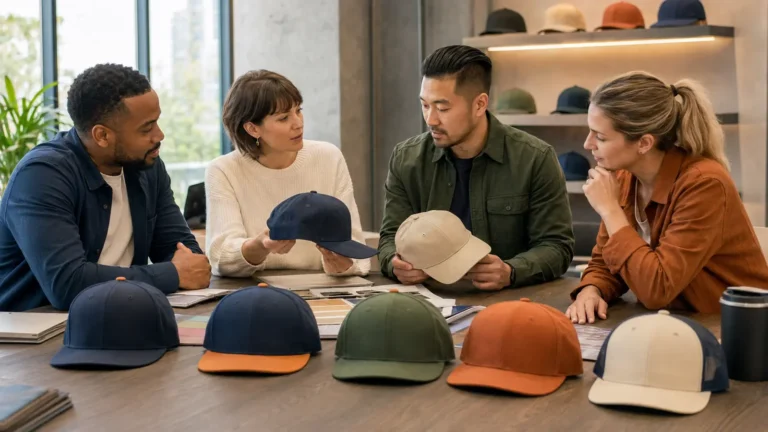
Some projects should include both. An apparel brand might offer a washed dad hat for lifestyle customers and a structured cap for sport or workwear customers. A school can use structured caps for the team and dad hats for alumni merchandise. Using related colors and logo systems can keep the collection coherent without forcing one product to serve every audience.
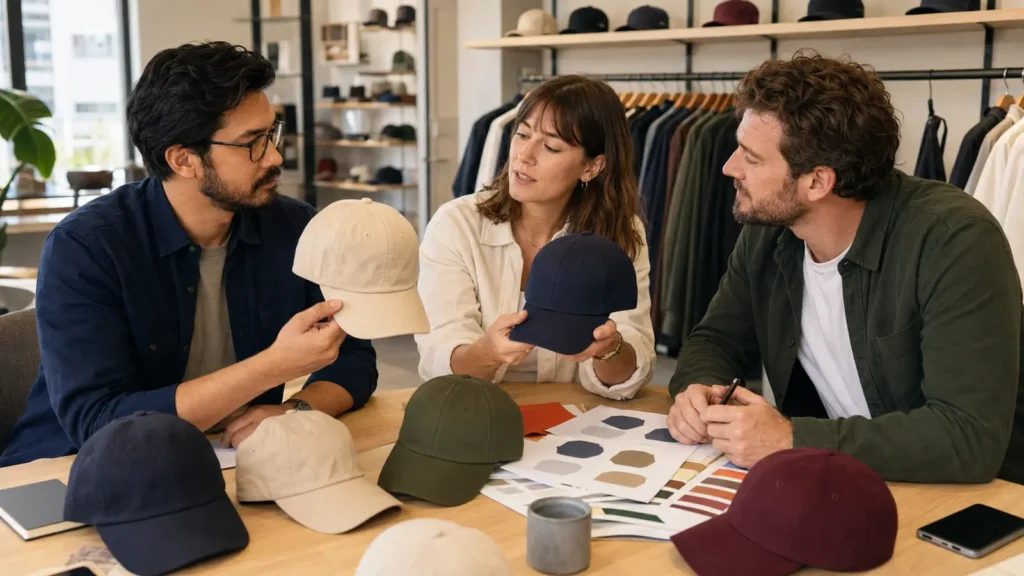
A buyer can select different cap structures for lifestyle merchandise, uniforms and team programs.
What Drives Bulk-Order Cost?
The difference in unit cost is not determined by style alone. A simple structured cap may cost less than a heavily washed dad hat with custom hardware and private labels. The main cost drivers are:
- Order quantity per style and color
- Fabric type, weight and finish
- Custom dyeing or stock fabric use
- Number of panels and construction complexity
- Closure and metal-hardware specification
- Embroidery stitch count and number of colors
- Raised embroidery or appliqué layers
- Patch material, molding or border method
- Side and back decoration
- Interior labels, seam tape and sweatband customization
- Individual packaging and carton requirements
- Sample type and revision count
- Testing or documentation required by the buyer
Ask suppliers to quote the same specification. Comparing one price for a stock cotton dad hat with another price for a fully customized performance baseball cap does not reveal which supplier is more competitive.
Sample Approval and Quality Control
A pre-production sample should establish the reference for bulk manufacturing. Approve it in writing and retain clear photos, measurements and color references.
Sample approval checklist
- Crown profile matches the requested low, medium or high profile
- Structured or unstructured construction is correct
- Circumference and adjustment range meet the size requirement
- Brim length, width and curve match the approved shape
- Fabric, weight, hand feel and finish are correct
- Panel seams are balanced and the top button is centered
- Eyelets are aligned and clean
- Sweatband is comfortable and evenly attached
- Closure operates smoothly and matches the approved material
- Logo size, position, color and relief match the artwork
- Small embroidered details remain legible
- Patch edges are secure and flat
- Labels and packaging match the specification
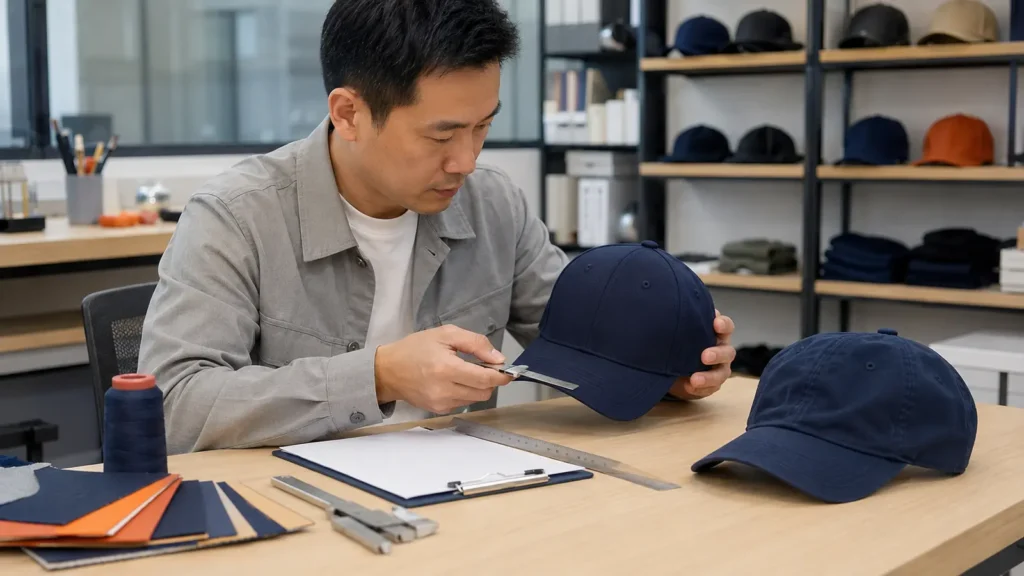
Bulk inspection should compare measurements, construction, decoration and packing with the approved sample.
During bulk inspection, compare production against the approved sample. Check randomly selected units from different cartons rather than only the top layer. Review measurements, shade consistency, crown symmetry, brim curve, embroidery placement, loose threads, stains, hardware operation, labels, quantity and packing.
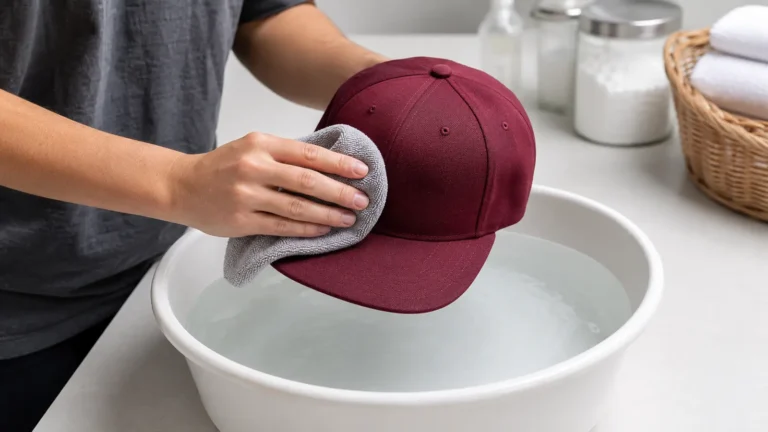
For a washed dad hat, define an acceptable appearance range. Trying to make every washed unit visually identical may be unrealistic; allowing uncontrolled variation is equally problematic. Reference samples or approved photos help both buyer and supplier distinguish intended character from a defect.
What Information Should You Send for a Quotation?
A complete request reduces clarification time and makes supplier comparisons more meaningful. Send:
- Cap style: dad hat, structured baseball cap or both
- Construction: panel count, crown support and profile
- Quantity: total and breakdown by style, color and size
- Fabric: material, weight or reference sample
- Color: stock color, Pantone target or physical reference
- Brim: curved or flat, dimensions, upper and underside colors
- Closure: buckle, snap, hook-and-loop, stretch-fit or fitted
- Logo: vector file, dimensions, colors and placement
- Decoration: flat embroidery, raised embroidery, patch or print
- Branding: woven label, interior label, hangtag or private packaging
- Compliance needs: market-specific documentation or testing requested by your organization
- Delivery: destination, target date and preferred shipping terms
If you only have a reference image, send it with notes identifying what you want to copy conceptually—such as crown height, brim curve or wash effect. Do not assume the supplier knows which detail matters most.
Questions to Ask a Custom Cap Supplier
- Is the proposed crown structured, lightly structured or fully unstructured?
- What are the crown height and head-circumference range?
- Is the fabric a stock option or custom-dyed?
- How much color variation should we expect after washing?
- Which decoration method is safest for our logo and cap structure?
- What is the recommended maximum front-logo size?
- Will you provide an embroidery or patch sample before the cap sample?
- Can we approve a physical pre-production sample?
- How will bulk production be checked against that sample?
- Can you maintain the same cap pattern, fabric and colors for repeat orders?
- How will structured crowns be protected during packing?
- What information can be included on labels, hangtags and cartons?
- Does the MOQ apply per design, color or total order?
- Which lead-time milestones begin after artwork and sample approval?
Common Buying Mistakes
Treating “dad hat” and “baseball cap” as complete specifications
These names do not define every measurement or material. Add crown height, support level, closure, fabric, brim shape and decoration requirements.
Choosing the cap before checking the logo
A tall, dense crest may not suit a low, soft dad-hat crown. Review artwork and cap construction together.
Approving color only on a screen
Screen colors vary. Use a recognized color reference and approve the actual fabric or cap sample.
Ignoring the back view
The closure, opening shape, strap end, rear embroidery and label placement affect the finished appearance. Include rear and side photos in the approval.
Using one sample on one wearer
Adjustable does not mean universal. Test the sample on several people within the target group, or use fit models representing the intended size range.
Packing structured caps too tightly
Compression can deform the crown and brim. Confirm inserts, stacking direction, carton dimensions and recovery after transit.
Changing several variables after sample approval
Switching fabric, color, logo size or closure can change the result. Treat material changes as a reason to review or resample.
Why Work With JIUMU on Custom Caps?
JIUMU was established in 2010 in Guangdong, China and supports B2B buyers in the United States, Canada, the United Kingdom and Europe. The company works with sports teams, schools, clubs, distributors, promotional buyers, retailers and private-label brands.
For dad hats and baseball caps, available project support includes OEM and ODM development, embroidery, screen printing, heat transfer, woven and rubber/PVC patches, leather-style patches, fabric sourcing, Pantone color matching, private labels, hangtags, customized packaging, digital mockups, physical samples, bulk production coordination and quality control.
The typical MOQ is 50 pieces, subject to cap structure and customization. The most useful first step is to send the intended style, quantity, logo, colors, closure, packaging requirements and target delivery date. JIUMU can then clarify feasible specifications and prepare a quotation or sampling plan.
Frequently Asked Questions
Final Recommendation
Choose a dad hat when the program needs a soft, low-profile and casual product that recipients can wear with everyday clothing. Choose a structured baseball cap when the program needs a more defined athletic or workwear profile, stronger front-logo presentation and consistent group appearance.
For the best result, convert the style name into a measurable specification and approve a physical sample. Crown height, support, fit range, brim curve, fabric, closure and logo method matter more than the label on a supplier’s catalog.
Ready to compare options for your program? Send JIUMU your quantity, color breakdown, logo file, preferred cap structure, closure, decoration, packaging and target delivery date. Request a custom cap quotation or explore the full range of custom hats.
About JIUMU
JIUMU is a Guangdong-based B2B supplier established in 2010, providing custom teamwear, logo apparel, hats, uniforms, bags and branded merchandise for buyers in North America and Europe.
zhengdong@jiumugear.com · WhatsApp/Phone: +86 18507502899