What Is a Snapback Hat? Structure, Fit, Closure and Customization
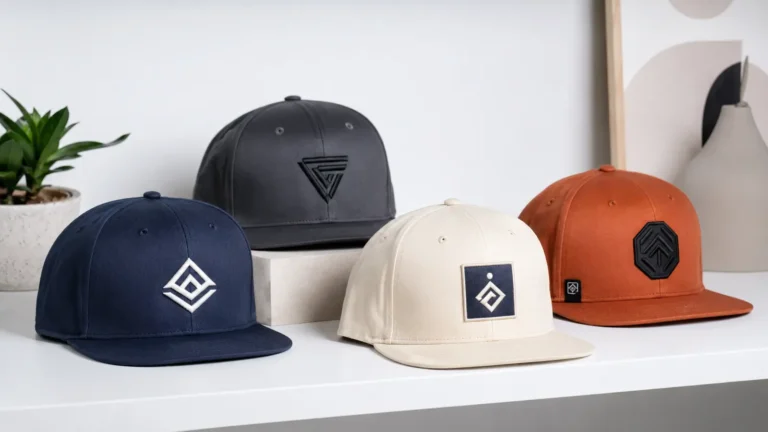
A snapback hat is easy to recognize from the adjustable plastic strap at the back, but that closure is only one part of the product. The crown profile, panel construction, front reinforcement, visor shape, fabric, sweatband and decoration method all influence how the hat looks, fits and performs.
For a consumer, a snapback may simply be a resizable casual cap. For a sports team, school, apparel brand, distributor or promotional buyer, it is a specification-driven product. Crown height changes the silhouette, buckram affects logo presentation, and the closure and visor influence fit and packing.
This guide explains what a snapback hat is, how it differs from other cap styles, and what professional buyers should specify before requesting samples or bulk production.
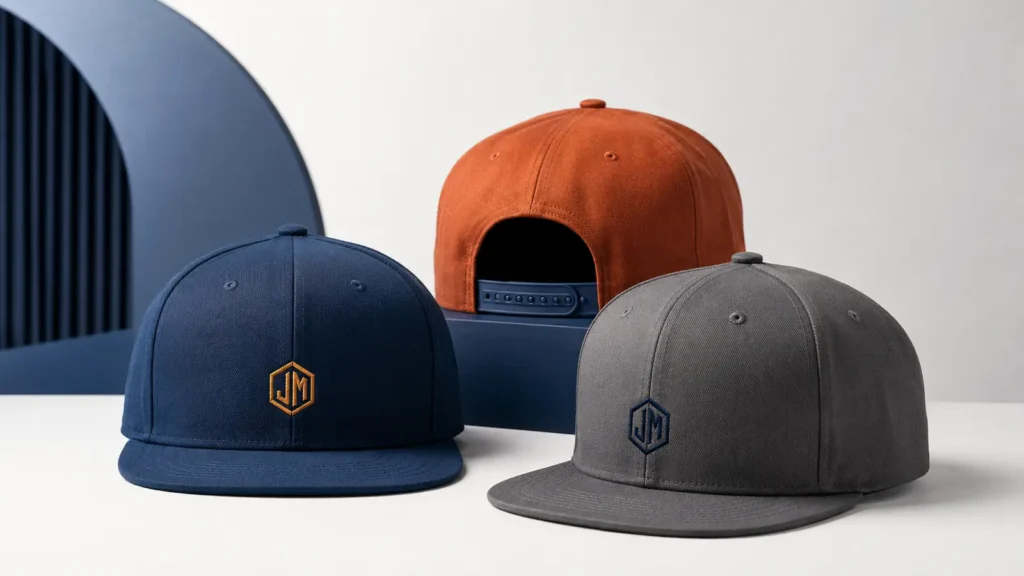
Quick Answer: A snapback hat is an adjustable cap with a rear plastic strap made of interlocking snaps. Most classic snapbacks use a structured five- or six-panel crown, a medium-to-high profile and a flat or slightly curved visor. The closure allows one cap size to fit a range of head circumferences. For custom orders, buyers should define the crown shape, panel count, visor, fabric, closure color, logo method, internal labels, packaging and approved fit sample—not just request “a snapback.”
Why the Definition Matters for B2B Buyers
“Snapback” describes the closure, not a single universal shape. Many people associate the term with a structured, high-profile, six-panel cap and a flat brim because that silhouette is widely used in sports and streetwear. However, an adjustable snap closure can also appear on five-panel caps, trucker caps, semi-structured caps and lower-profile designs.
If a buyer sends only “custom snapback,” a supplier must still interpret several decisions:
- Should the front be firm and upright or softer and more relaxed?
- Is the crown a conventional six-panel form, a five-panel form or a pinched front?
- Does the visor stay flat, arrive pre-curved or use a custom curve?
- Is the back made from the same fabric as the front or from mesh?
- Is the plastic closure tone-on-tone, contrasting or matched to a Pantone reference?
- Does the logo require flat embroidery, 3D embroidery, a woven patch or another method?
A precise brief reduces revisions and makes quotations comparable.
Snapback Hat Structure at a Glance
The classic snapback is a system of connected components. Each component affects fit, appearance, durability or decoration.
| Component | Common snapback specification | Why it matters to buyers |
|---|---|---|
| Crown | Structured, medium- or high-profile | Determines silhouette and logo presentation |
| Panels | Five or six panels | Changes seam placement and available decoration area |
| Front support | Buckram or another reinforcement | Helps the front retain shape and support embroidery |
| Visor | Flat, slightly curved or pre-curved | Sets the visual style and affects packing |
| Undervisor | Matching or contrasting color | Adds a visible brand detail |
| Closure | Adjustable plastic snap strap | Creates a multi-position fit range |
| Eyelets | Sewn or metal, depending on design | Provides ventilation and a finishing detail |
| Sweatband | Cotton, polyester or blended construction | Influences comfort, moisture handling and internal fit |
| Decoration | Embroidery, patch, print or transfer | Controls texture, detail, cost and visual impact |
| Internal branding | Woven label, printed label or seam label | Supports private-label and retail programs |
The official New Era 9FIFTY silhouette guide describes its classic snapback as an open-back adjustable style with a structured crown, flat visor and snapback closure. Flexfit/Yupoong’s official 6089M specification provides another recognizable example: a structured six-panel, high-profile cap with hard buckram, a flat bill and a matching snap closure. These are useful reference points, but they are not rules that every snapback must follow.
What Does the “Snap” in Snapback Mean?
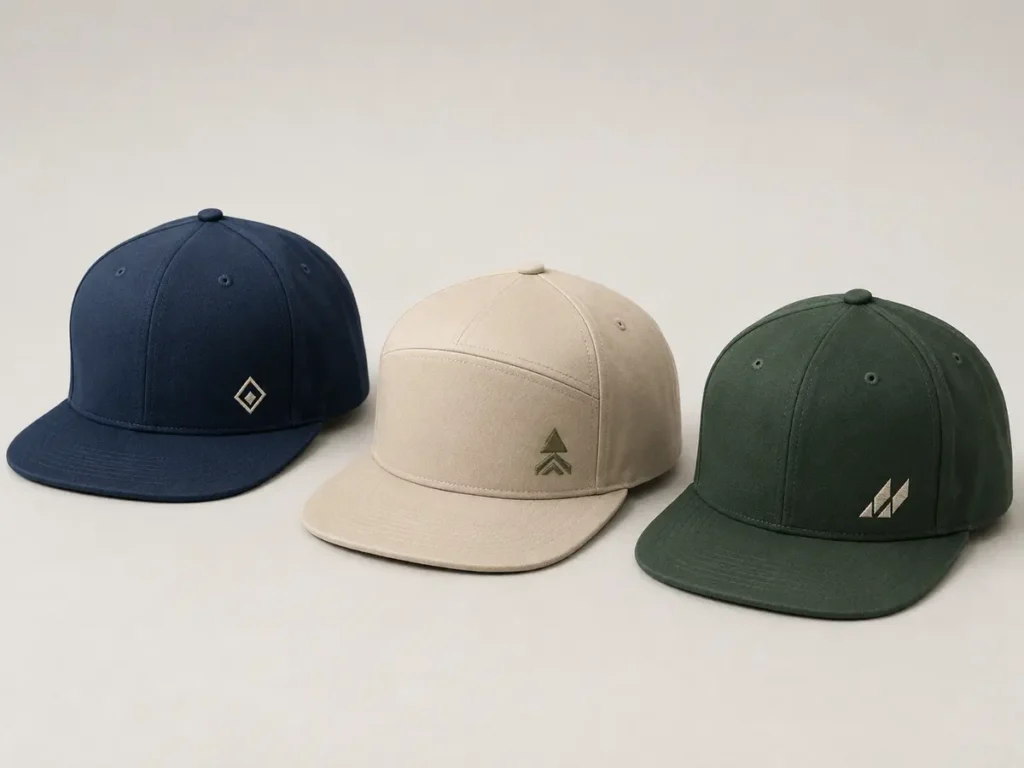
The rear strap usually consists of two molded plastic sections. One side carries small projecting studs, while the other has a row of receiving holes. The wearer presses—or snaps—the selected stud and hole together to set the circumference.
The closure offers several advantages:
- Adjustability: A single stock size can cover a range of head sizes.
- Simple operation: The wearer can resize the cap without tools or complex hardware.
- Visible styling: The closure can match or contrast with the crown.
- Inventory efficiency: Organizations may need fewer size variants than with fitted caps.
“One size fits most” should not be treated as “one size fits everyone.” The usable range depends on the crown pattern, sweatband, fabric behavior and closure length—not only the number of holes. Youth and adult programs may require different patterns even when both use snap closures.
Crown Structure: Structured, Semi-Structured and Unstructured
The crown is the fabric body that surrounds the head. Its internal support is one of the most important distinctions between a classic snapback and a relaxed cap.
Structured crown
A structured crown uses reinforcement behind the front panels. Buckram is common. It helps the cap stand upright when it is not being worn and provides a firm surface for embroidery. This construction is strongly associated with traditional flat-brim snapbacks.
For brand buyers, the main advantage is presentation. A firm front can display large team initials, streetwear marks or dimensional embroidery with a clean outline. The trade-off is a more defined fit and less collapsibility during packing.
Semi-structured crown
A semi-structured crown uses lighter reinforcement. It can preserve a recognizable front shape while feeling less rigid. This may suit lifestyle merchandise, hospitality programs or brands that want a softer hand without moving fully into dad-hat territory.
Unstructured crown
An unstructured crown has little or no rigid front backing. It follows the wearer’s head more closely and can collapse when placed on a table. Some adjustable caps with snap closures use this approach, although consumers may perceive them as relaxed caps rather than classic snapbacks.
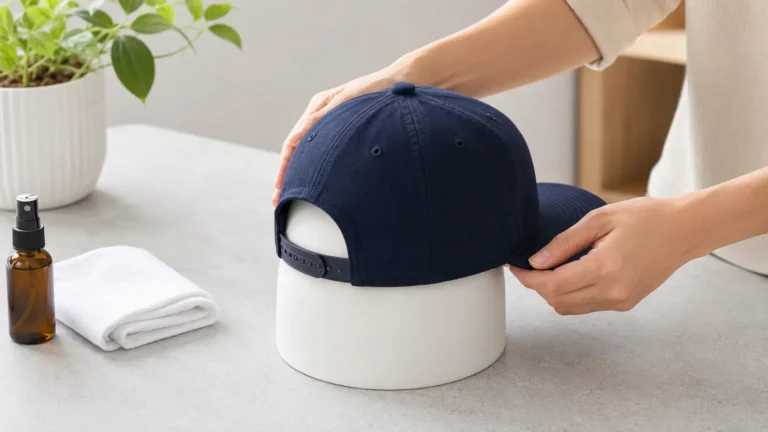
When comparing samples, buyers should judge the actual crown on a head form or wearer. A cap that looks acceptable in a flat product photo may sit too tall, too narrow or too soft in use.
Five-Panel vs Six-Panel Snapback Hats
Panel count affects the front surface, seams and shape.
Six-panel snapback
A six-panel crown is formed from six sections that meet near the top button. A center seam normally runs down the front. This construction creates the rounded athletic-cap shape many buyers expect.
It works well for:
- Team and club merchandise
- Classic sports-inspired collections
- Small or medium front logos
- Side and rear embroidery programs
- Two-tone crown and visor combinations
The center seam must be considered when placing fine embroidery. A design with very small lettering or a critical vertical detail may need adjustment so the seam does not reduce clarity.
Five-panel snapback
A five-panel cap commonly uses a broader uninterrupted front panel. Depending on the pattern, it may create a flatter, squarer or more pinched presentation.
It works well for:
- Wide wordmarks
- Woven or rubber/PVC patches
- Lifestyle and streetwear collections
- Designs that benefit from an uninterrupted front field
Five-panel caps do not share one silhouette. A reference image and side-profile drawing are more useful than panel count alone.
| Decision point | Five-panel snapback | Six-panel snapback |
|---|---|---|
| Front surface | Often broad and uninterrupted | Usually divided by a center seam |
| Visual character | Flat, square or pinched depending on pattern | Rounded, athletic and familiar |
| Wide patches | Often convenient | Possible, but seam must be considered |
| Small center embroidery | Strong option | Strong option when digitized for the seam |
| Typical programs | Streetwear, lifestyle, promotions | Teams, schools, retail and general merchandise |
How Does a Snapback Hat Fit?
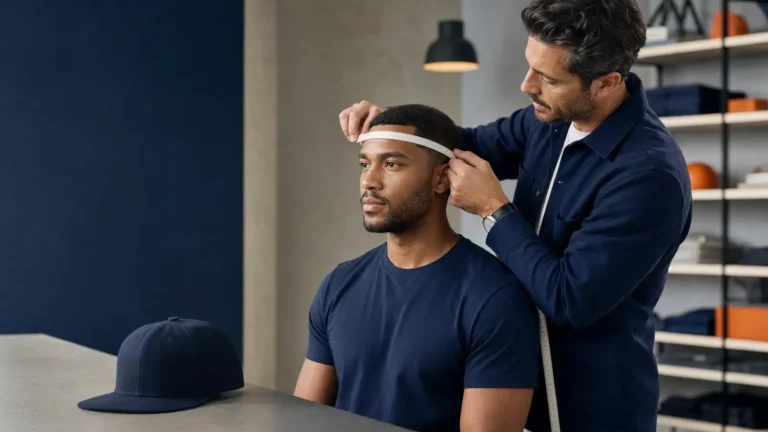
Snapback fit is influenced by circumference, depth, profile and pattern shape.
Circumference
The snap strap changes the inside circumference in steps. Closing more snaps creates a smaller setting; using fewer creates a larger one. The practical size range should be measured on the completed cap, because seam allowances, sweatband thickness and fabric tension all affect the result.
Crown depth
Depth describes how far the crown sits down over the head. A deep cap may feel secure but can touch the ears for some wearers. A shallow cap may sit high and feel less stable. Two caps with similar circumference can fit very differently if their crown depths differ.
Profile
Profile describes the height and angle of the front crown:
- Low profile: Sits closer to the head with a restrained silhouette.
- Mid profile: Balances front display area with broad wearability.
- High profile: Creates an upright front and strong streetwear or sports look.
Crown shape
Round, square, pinched and A-frame-style fronts distribute volume differently. Buyers should not assume that “high profile” from two suppliers means the same shape. Pattern dimensions and sample fit are the real reference.
Test the sample on more than one wearer. For retail and private-label orders, document the internal circumference at several snap settings, crown height, visor width and crown depth.
Snapback vs Fitted Hat, Dad Hat, Trucker Hat and Baseball Cap
The following comparison separates closure from overall style.
| Hat type | Closure | Typical crown | Typical visor | Main procurement advantage |
|---|---|---|---|---|
| Snapback hat | Plastic snap strap | Often structured, mid/high profile | Flat or slightly curved | Adjustable fit and strong logo surface |
| Fitted hat | No opening or adjuster | Usually structured | Flat or curved | Clean continuous back and precise sizing |
| Dad hat | Strap, buckle or other adjuster | Usually unstructured, low profile | Curved | Relaxed look and soft fit |
| Trucker hat | Often snapback | Structured or foam front with mesh back | Flat or curved | Ventilation and recognizable two-material style |
| Adjustable baseball cap | Hook-and-loop, buckle, snap or other | Structured or unstructured | Usually curved | Broad category with multiple fit systems |
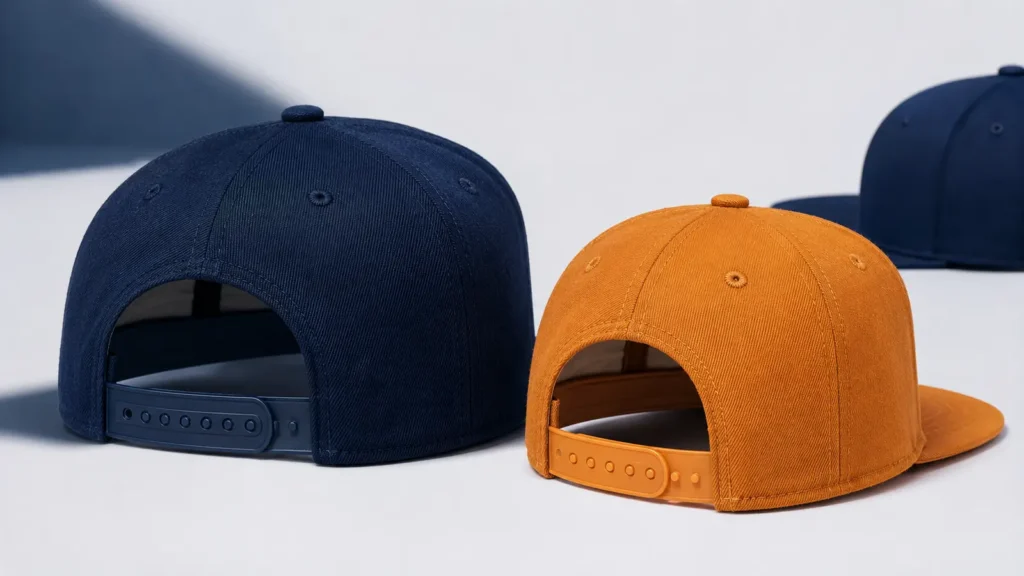
A trucker hat can also be a snapback because it may use a plastic snap closure. A baseball cap can also use a snapback closure. In other words, “trucker” often describes the mesh-backed construction, while “snapback” describes the adjustment mechanism and, in common usage, a related fashion silhouette.
This is why category names alone are not enough for manufacturing. Use a written specification with reference images and measurements.
Visor and Brim Options
“Visor,” “bill” and “brim” are often used interchangeably for the projecting front portion of a cap. In production discussions, consistency matters more than the preferred term.
Flat visor
A flat visor reinforces the classic snapback appearance. It creates a broad graphic line and is commonly paired with a high, structured crown. Some wearers later curve it by hand, but the delivered shape should still be specified.
Pre-curved visor
A pre-curved visor creates a more athletic or everyday look. The amount and symmetry of the curve should be checked during sampling. A curve that is too aggressive can change perceived sizing or create pressure at the temples.
Slight curve
A gentle curve provides a middle option for buyers who want a modern snapback without a completely flat bill. Use side-view approval photos or a physical curve template so that “slightly curved” is not left to interpretation.
Visor construction details
Buyers can also specify:
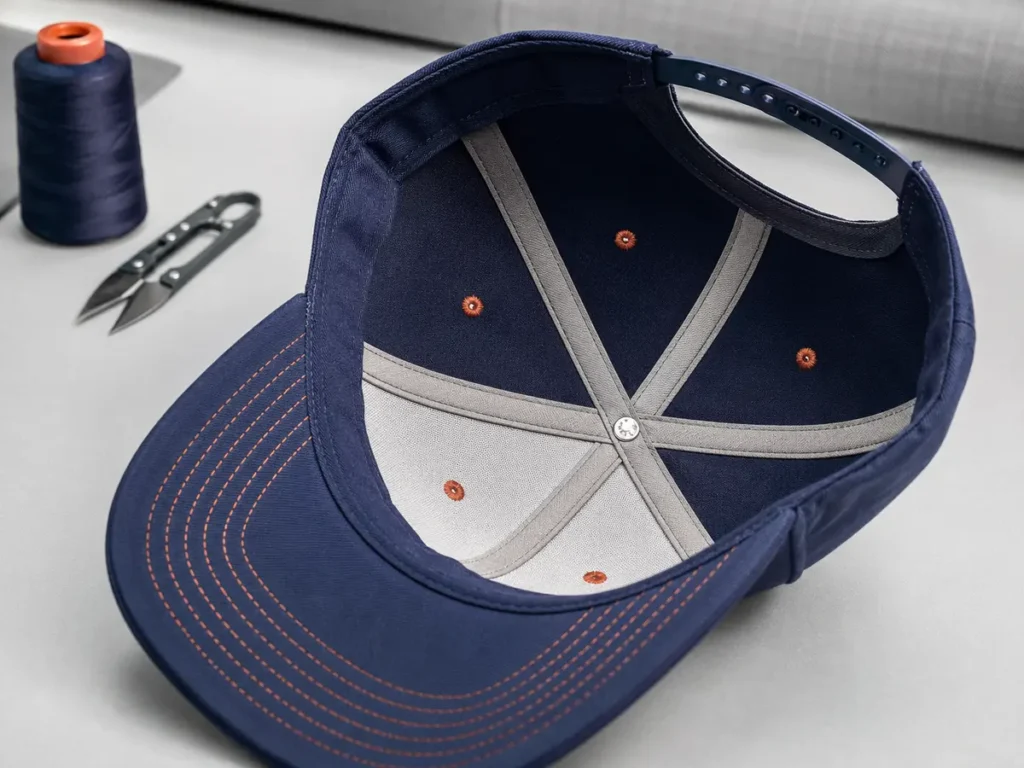
- Matching, contrasting or printed undervisor
- Edge thickness and number of topstitching rows
- Sandwich piping
- Visor length and width
- Interior insert material
- Custom trim color
These details are small individually, but they strongly influence how intentional the finished cap feels.
Common Snapback Materials
Material selection should reflect the intended market, climate, decoration and price target.
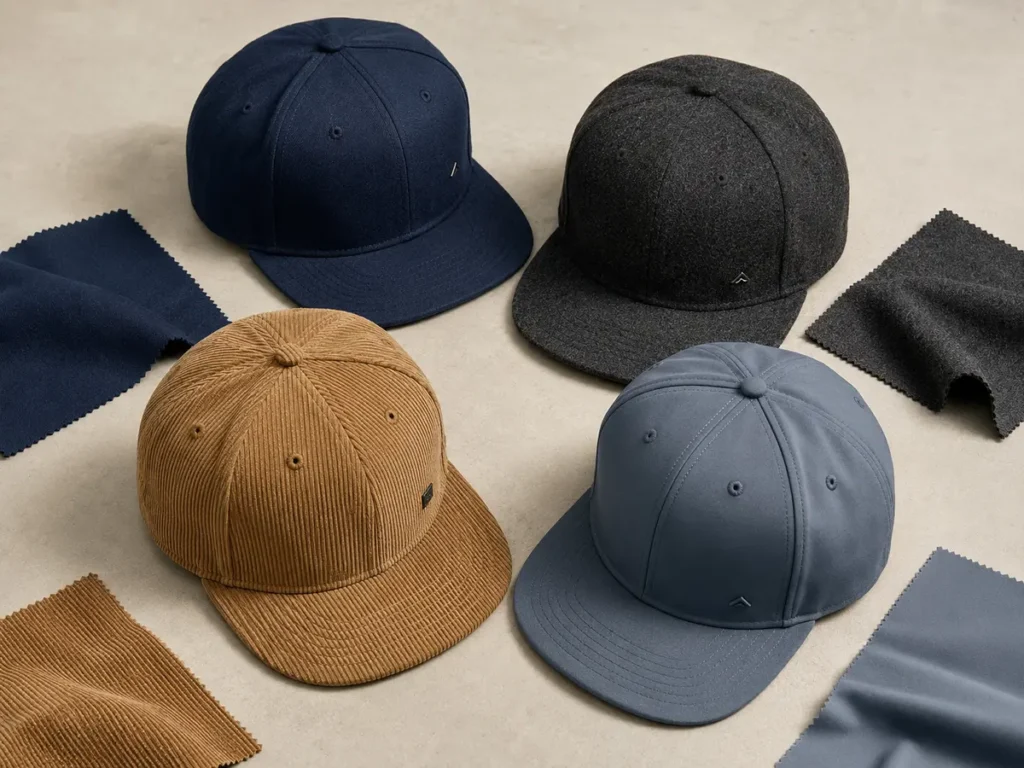
Acrylic and wool blends
Acrylic-wool blends are associated with the traditional structured snapback look. They can provide a smooth, substantial surface and hold a defined shape. Blend percentages vary by style and color, so buyers should approve the exact fabric rather than rely on a generic category name.
Cotton twill
Cotton twill provides a familiar natural-fiber hand and works across team, promotional and lifestyle programs. Weight, weave density, shrink behavior and colorfastness should be considered when the cap will be embroidered or washed.
Polyester
Polyester can support consistent color, lower moisture absorption and performance-oriented programs. It may be used in woven fabrics, technical textures or blends. “Polyester” alone does not describe breathability or water resistance; those properties require a specific construction or documented finish.
Corduroy and textured fabrics
Corduroy, canvas, denim and other textured options can differentiate a seasonal or fashion collection. Decoration must account for surface height and weave. A fine embroidered line that works on smooth twill may disappear into a deep corduroy wale.
Recycled-content options
If recycled content is a purchasing requirement, buyers should request material documentation and define whether the claim applies to the main fabric, mesh, closure, sweatband, thread or complete product. Do not market a cap as recycled based only on a vague fabric name.
Snapback Customization Options
Customization extends beyond placing a logo on a blank cap. A coherent program coordinates the cap structure, color system, decoration, trims and packaging.
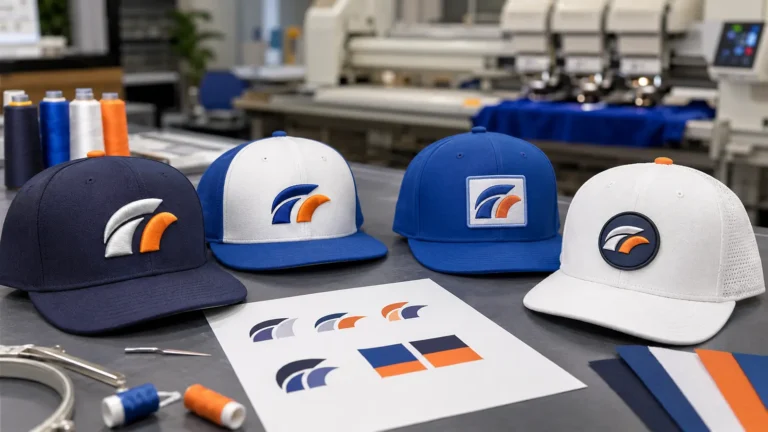
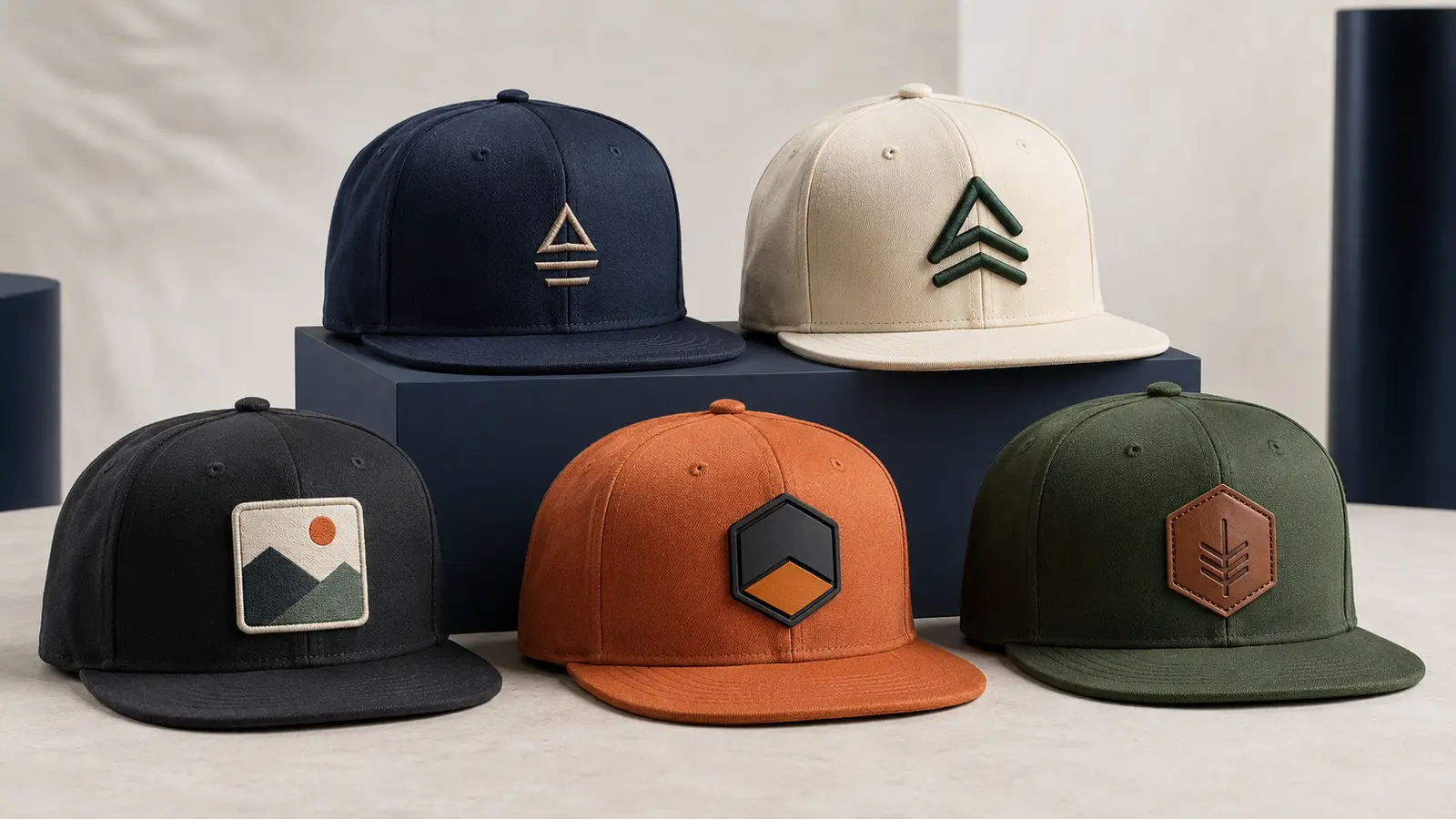
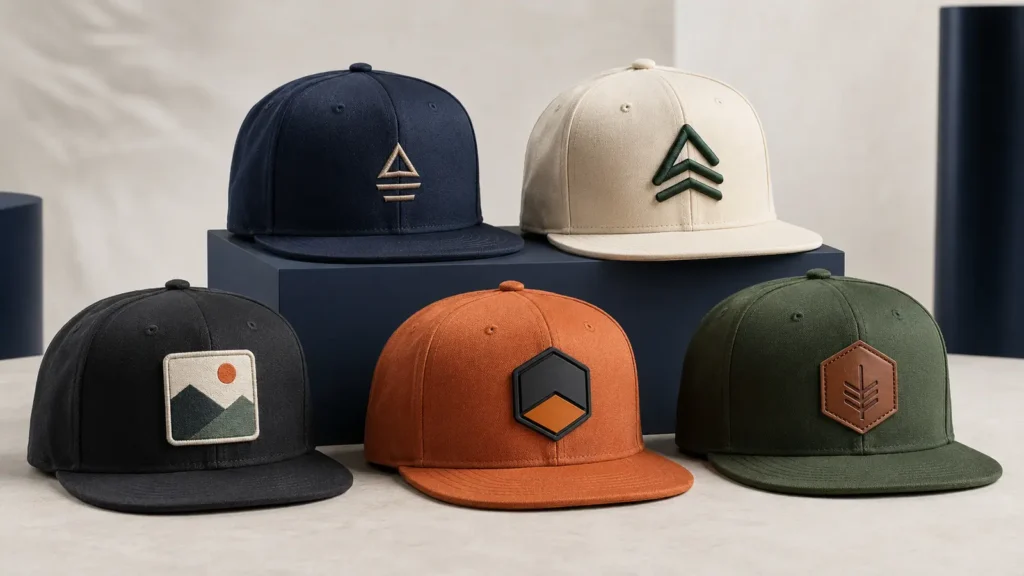
Flat embroidery
Flat embroidery is suitable for detailed marks, lettering and multi-position branding. Stitch count, thread type, minimum detail size and the relationship between the artwork and panel seams affect the result.
3D or puff embroidery
Foam beneath the top stitching creates a raised appearance. This method works best with bold shapes and sufficiently thick strokes. Very small text, sharp internal corners and densely detailed art may not translate well. A digitized embroidery proof and physical sample are essential.
Woven patch
A woven patch can reproduce smaller details and fine lettering more cleanly than some direct embroidery applications. Buyers should specify patch shape, edge finish, attachment method and background color.
Embroidered patch
An embroidered patch adds texture and can create a traditional sports or workwear look. It may be sewn to the cap with a visible or concealed edge stitch.
Rubber/PVC patch
A molded rubber or PVC-style patch can create dimensional branding and resist fraying. The design should be simplified for molding, and buyers should approve color, height, flexibility and attachment.
Leather-style patch
Leather or leather-style patches support outdoor, heritage and lifestyle positioning. The brief should define material, color, thickness, debossing or engraving effect, stitch color and edge shape. If a vegan or material-composition claim matters, it must be verified.
Printing and heat-applied decoration
Screen printing, heat transfer and other printed methods may suit particular artwork, quantities or fabric types. Compatibility must be tested because heat, coating and surface texture can affect adhesion and appearance.
Branding positions
Common positions include:
- Front center
- Front offset
- Left or right side
- Rear above the opening
- Undervisor
- Interior seam tape
- Sweatband print or label
- Woven side flag label
More decoration positions increase handling and quality-control requirements. Buyers should prioritize the marks that help the product rather than fill every available surface.
Develop a Custom Snapback Specification: Share your reference image, target quantity, crown profile, panel count, fabric, colors, logo files, decoration positions, packaging and required delivery date with JIUMU. We can review the concept, prepare a digital mockup and confirm the appropriate sample route before bulk production.
What Drives the Cost of Custom Snapback Hats?
Pricing depends on the approved specification and order conditions. The main drivers can be identified before quotation.
| Cost driver | Why it changes the quotation | How to control it |
|---|---|---|
| Order quantity | Setup and handling are distributed across units | Consolidate compatible colors or releases where practical |
| Custom pattern | New shapes require development and sampling | Start from an established shape if the silhouette permits |
| Fabric | Specialty blends, textures and documented materials vary in cost | Define performance needs before selecting fabric |
| Embroidery | Stitch count, size, density and positions affect machine time | Simplify artwork and prioritize visible positions |
| Patch construction | Tooling, layers, borders and attachment add steps | Match the patch method to the artwork rather than trend alone |
| Color matching | Custom-dyed materials and trims require control | Use stock colors when exact Pantone matching is unnecessary |
| Labels and packaging | Private-label components add setup and handling | Standardize one system across related SKUs |
| Sample rounds | Multiple revisions add development time and shipping | Approve a complete brief before the first sample |
| Quality level | Tighter tolerances and inspection plans require control | Define measurable acceptance criteria |
| Delivery plan | Production and freight method affect landed cost | Share the required in-hand date at the quotation stage |
The lowest unit quote is not always the lowest project cost. Poor fit, unreadable embroidery or inconsistent trim can create delays and unusable inventory.
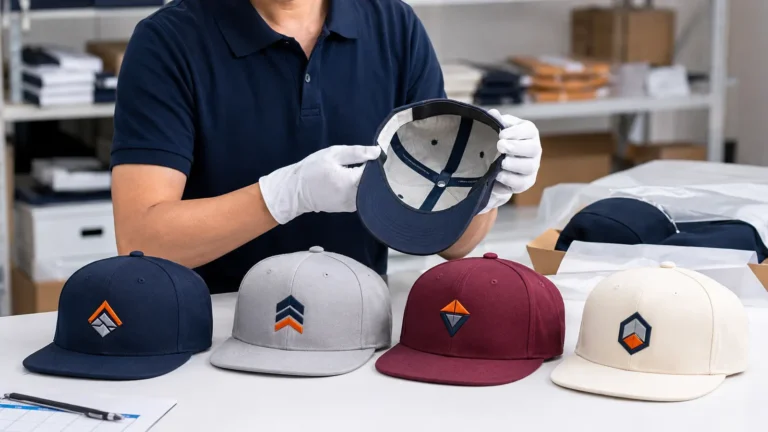
Sample Approval and Quality Control
The approved sample should function as a measurable reference, not only a visual impression.
Review the sample in this order
- Overall silhouette: Check front, side, rear and top views.
- Fit: Test multiple closure settings and more than one wearer when possible.
- Measurements: Record crown height, depth, internal circumference, visor dimensions and opening size.
- Fabric and color: Review under consistent lighting and against approved references.
- Decoration: Check position, scale, stitch coverage, patch edges and small details.
- Closure: Test snap engagement, alignment, color and surface finish.
- Internal construction: Inspect sweatband, seam tape, labels, loose threads and reinforcement.
- Packaging: Confirm folding, brim protection, polybag, barcode or carton requirements.
Bulk quality-control checklist
- Crown height and shape remain consistent across sampled units
- Front panels are symmetrical
- Center seam is straight
- Visor curve or flatness matches the approved sample
- Visor topstitching is evenly spaced
- Closure is centered and snaps securely
- Embroidery registration and thread colors match approvals
- Patch placement and edge attachment are consistent
- Eyelets, top button and sweatband are secure
- Labels show the approved information and orientation
- Visible stains, fabric flaws and loose threads are controlled
- Packaging protects the crown and visor during transport
Define the inspection level and acceptance criteria in the purchase agreement. “Good quality” is subjective; measurable tolerances and an approved sample are actionable.
How to Plan a Bulk Snapback Order
A disciplined order process helps reduce miscommunication.
Step 1: Define the use case
State whether the caps are for retail, a sports team, a school store, corporate merchandise, an event, a distributor catalog or a private-label launch. The use case guides structure, packaging and decoration choices.
Step 2: Build the specification
Include:
- Adult, youth or both
- Five- or six-panel construction
- Structured, semi-structured or unstructured crown
- Low-, mid- or high-profile target
- Flat, slightly curved or pre-curved visor
- Main fabric and any mesh
- Crown, visor, undervisor, eyelet, top-button and closure colors
- Artwork in vector format where possible
- Decoration method, dimensions and positions
- Internal label and packaging requirements
- Quantity by color and design
- Target delivery date and destination
Step 3: Approve the digital mockup
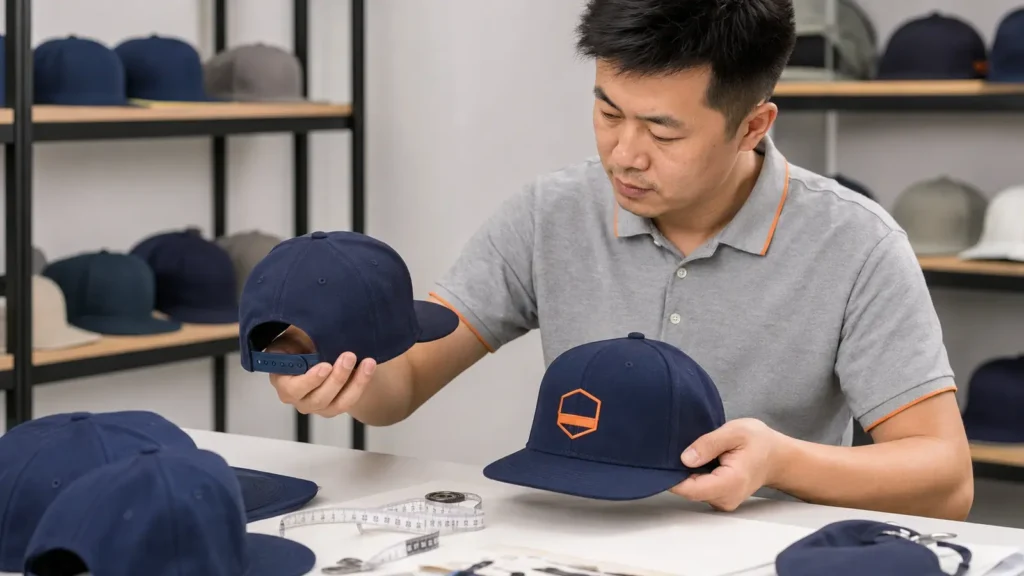
The mockup should show front, side and rear views with placement dimensions. It is useful for checking color blocking and logo scale, but it cannot fully prove fit, fabric hand or embroidery performance.
Step 4: Approve a physical sample
Use the sample to confirm construction, fit and decoration. Record approved measurements and retain approval photos or a signed sample reference.
Step 5: Confirm production controls
Clarify material approvals, inspection expectations, packaging, carton markings and how changes will be documented.
Step 6: Plan repeat orders
Store the final specification, artwork files, color references, embroidery files, label files and sample measurements. Repeat-order consistency is easier when the product is documented as a controlled specification rather than remembered as “the same cap as last time.”
Questions to Ask a Snapback Supplier
Ask specific questions before comparing quotations:
- Which crown profiles and panel patterns are available for this design?
- Is the front structured with hard buckram, light reinforcement or another material?
- What finished head-circumference range does the proposed closure provide?
- Are youth and adult patterns separate?
- Can the visor be supplied flat, slightly curved or pre-curved?
- What fabrics, weights, blends and documented material options are available?
- Which decoration method best preserves the small details in our artwork?
- What minimum stroke width or lettering size is recommended for embroidery?
- Can closure, eyelet, top-button and undervisor colors be customized?
- What digital and physical approvals are provided before bulk production?
- How are bulk units checked against the approved sample?
- Can private labels, hangtags, barcode labels and custom packaging be included?
- What information is required for an accurate quotation?
- How does the proposed MOQ change by color, design or construction?
- What production and transport assumptions are included in the delivery estimate?
Comparable quotes require comparable specifications. A stock blank with one logo and a fully custom private-label cap are not the same product.
Common Snapback Buying Mistakes
Treating all snapbacks as the same fit
Closure type does not standardize crown depth or shape. Always approve the actual pattern.
Selecting decoration before evaluating fabric
Fine embroidery, puff embroidery and patches interact differently with smooth twill, corduroy, mesh and performance fabrics.
Ignoring the front seam
A six-panel center seam can interrupt very small artwork. Adjust placement or choose a suitable patch or five-panel structure.
Using “one size fits all” in marketing without evidence
Fit ranges vary. Use a measured range or qualified “one size fits most” wording only when supported by the approved product.
Approving only a front-view mockup
Side profile, rear opening, closure, visor angle and internal branding all affect the finished result.
Skipping a physical sample
Digital artwork cannot confirm crown height, fabric feel, closure strength or actual embroidery texture.
Changing artwork after sample approval
Even a small logo revision can change stitch count, balance and production settings. Document and approve changes before bulk manufacturing.
Focusing only on unit price
Consider sampling, packaging, inspection, freight assumptions, repeat-order documentation and the cost of errors.
Why Work With JIUMU on Custom Snapback Hats?
Established in 2010 and based in Guangdong, China, JIUMU supplies custom hats, teamwear, logo apparel, bags and branded merchandise for B2B programs in North America and Europe.
For snapback projects, JIUMU can support:
- OEM and ODM product development
- Digital mockups and physical samples
- Fabric sourcing and Pantone color matching
- Flat and dimensional embroidery
- Woven, rubber/PVC and leather-style patches
- Screen printing and heat-transfer options where suitable
- Private labels, woven labels and hangtags
- Packaging customization
- Bulk production coordination, quality control and export support
JIUMU’s typical MOQ is 50 pieces, subject to the cap structure and customization requirements. The correct starting point is a project brief containing quantity, colors, desired cap shape, logo files, packaging and required delivery date. This allows the team to confirm what is feasible and what should be sampled.
Explore custom snapback hats or view JIUMU’s broader custom baseball cap options.
Frequently Asked Questions
Final Recommendation
The most useful answer to “what is a snapback hat?” is not simply “a cap with an adjustable plastic strap.” A snapback is a configurable product whose crown, panel layout, reinforcement, visor, fabric, closure and branding must work together.
For a reliable order, define the user, silhouette, fit, construction, decoration, labels and packaging. Approve a digital mockup for layout and a physical sample for fit and workmanship. Document measurable standards for bulk production and repeat orders.
Request a Custom Snapback Quotation: Send JIUMU your reference image or tech pack, quantity by color, adult or youth requirement, crown profile, panel count, visor shape, fabric, logo artwork, decoration positions, packaging, destination and target delivery date. Contact JIUMU by form, WhatsApp/phone at +86 18507502899, or email zhengdong@jiumugear.com.
Sources and Further Reading
- New Era 9FIFTY Silhouette Guide — official terminology for the classic adjustable snapback silhouette, crown, panels, visor and closure.
- Flexfit/Yupoong 6089M Premium Snapback — official example specification for a structured six-panel, flat-bill snapback.
About JIUMU
Established in 2010 and based in Guangdong, China, JIUMU supplies custom teamwear, logo apparel, custom hats, uniforms, bags and branded merchandise for B2B buyers in North America and Europe.