Custom Hat Manufacturing Cost: What Changes the Quote?
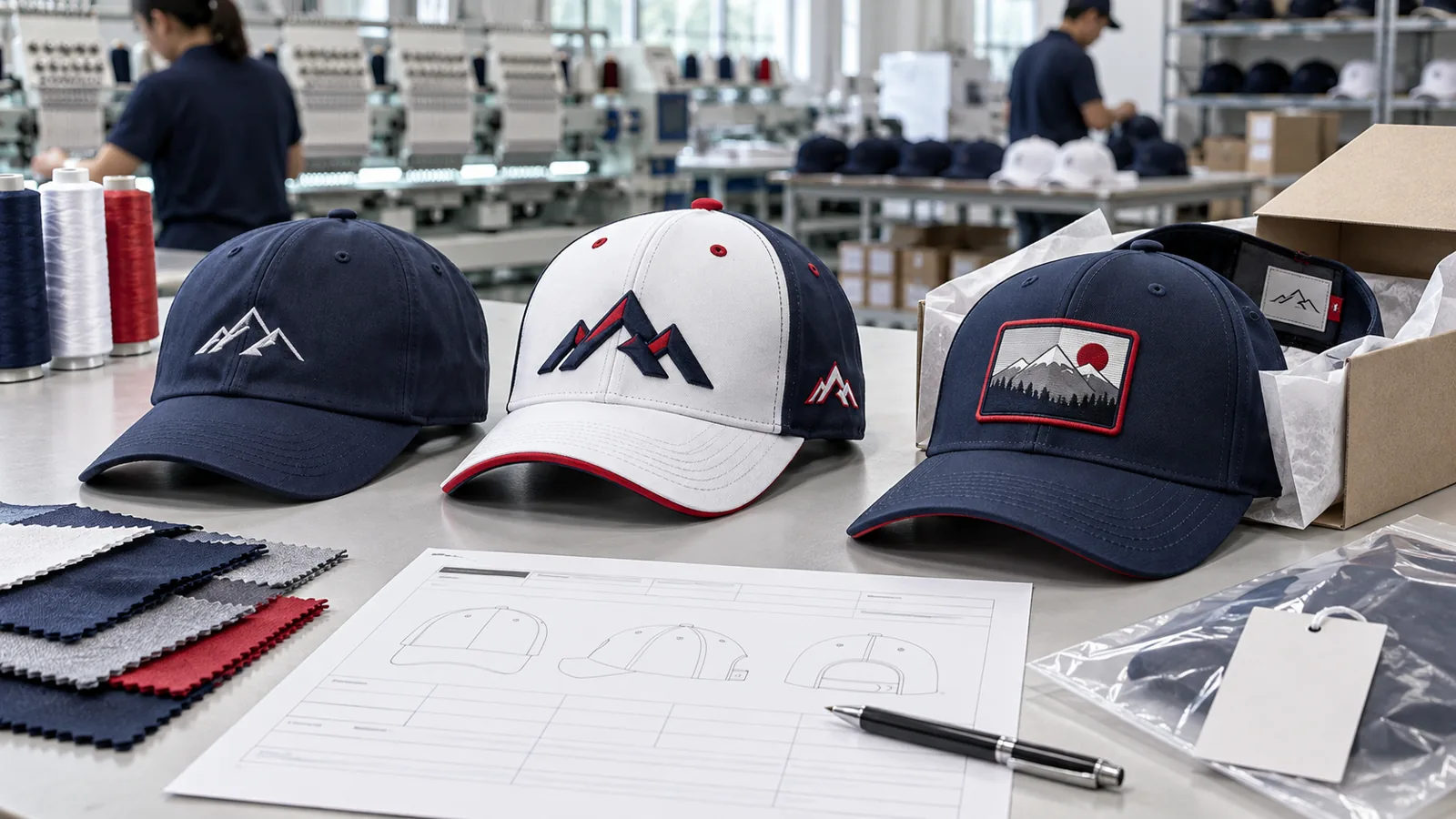
Custom hat manufacturing cost depends on the complete product specification—not quantity alone. Hat construction, fabric, color, closure, logo method, decoration positions, private labels, packaging, sampling and delivery requirements all affect a quotation. The most useful comparison is therefore a specification-based quote in which every supplier prices the same product.
This guide explains the major cost drivers for brands, teams, distributors and promotional-product buyers. It does not provide a fixed price because an accurate price requires current material availability, artwork, quantity, destination and production timing.
Custom Hat Manufacturing Cost: Key Takeaways
- Two hats that look similar in a photograph can require different materials, patterns and production processes.
- Order quantity affects unit efficiency, but it does not remove minimum requirements for custom fabric, closures, patches or packaging.
- Embroidery cost depends on artwork size, stitch count, coverage, positions and technical suitability—not simply whether a logo is present.
- A digital mockup, physical sample, revision and courier shipment should be identified separately in the quotation.
- Shipping should be compared using the same destination, transport method and Incoterm.
- The fastest route to an accurate quote is a complete brief containing product type, quantity, artwork, destination and required delivery date.
What Should a Custom Hat Quote Include?
A professional quotation should identify the product being priced closely enough that the buyer can compare it with the approved sample and eventual bulk order. A one-line description such as “custom embroidered cap” leaves too many unanswered questions.
- Hat style and panel construction
- Structured or unstructured crown
- Crown profile and fit
- Visor construction and shape
- Main fabric, mesh and supporting materials
- Color reference and whether custom dyeing is required
- Closure and hardware
- Sweatband, inside taping and eyelets
- Logo method, dimensions, colors and positions
- Private labels, hangtags and barcode requirements
- Individual packaging and carton marks
- Sample, inspection and shipping scope
The 10 Main Factors That Change a Custom Hat Quote
1. Order Quantity and Quantity Allocation
Higher quantities can distribute pattern preparation, embroidery setup and production coordination across more pieces. However, the total quantity is only part of the calculation. A 100-piece order in one fabric and one color is different from 100 pieces divided among ten colors, several closures and multiple logo variations.
When requesting a quotation, state whether the quantity is per design, per color or the total across all variations. Ask the manufacturer to confirm the minimum allocation for each material, color and decoration version.
2. Hat Construction
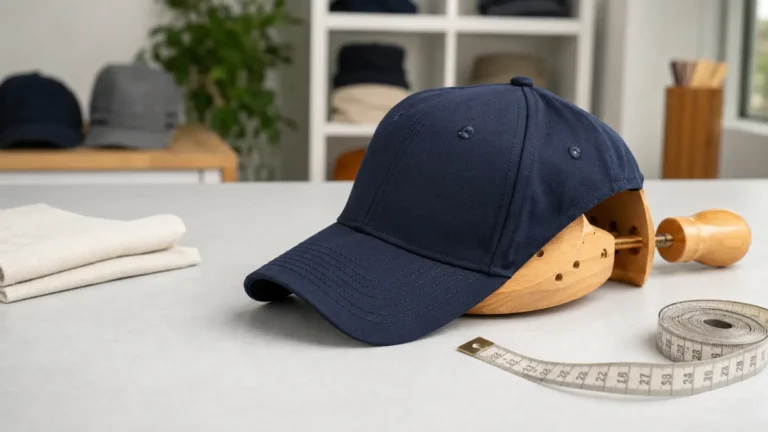
A five-panel foam trucker hat, a six-panel structured baseball cap and a closed-back fitted cap use different patterns, internal support, closures and assembly steps. Features such as sandwich visors, contrast underbrims, laser perforations, waterproof seams or custom crown profiles can add materials and operations.
3. Fabric and Material Availability
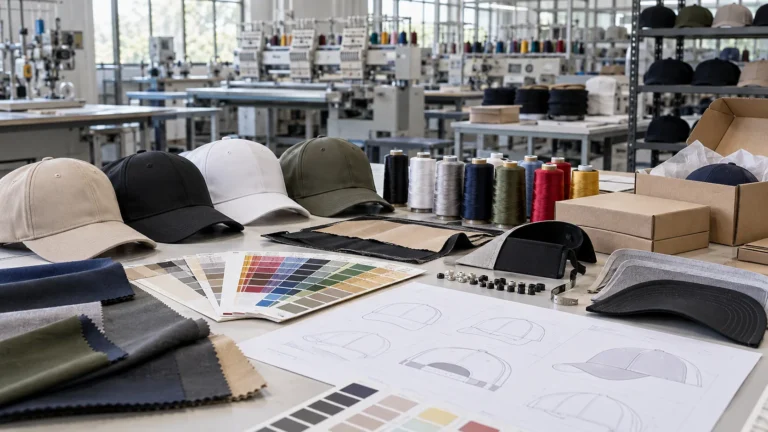
Stock cotton twill or polyester may be easier to source for a small project than a custom-dyed performance fabric. Fabric weight, finish, stretch, water resistance, mesh type and color availability should be confirmed. Custom-developed materials may carry their own mill minimums that are separate from the sewing factory’s finished-hat MOQ.
4. Logo and Decoration Method
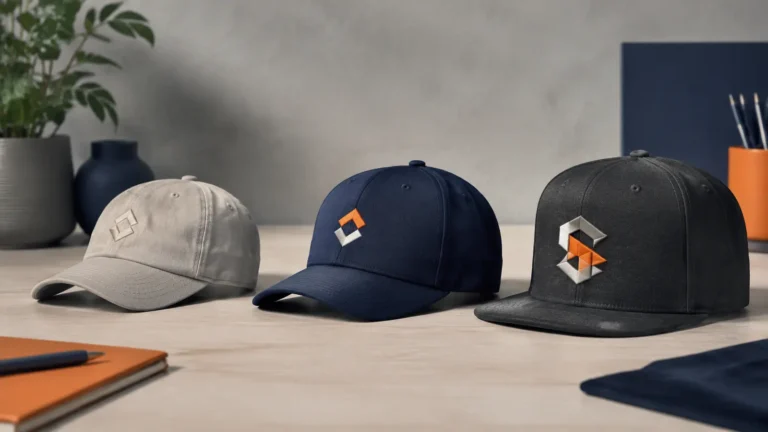
Flat embroidery, 3D puff embroidery, woven patches, embroidered patches, PVC patches, leather patches, screen printing and heat transfer do not use the same setup or production process. The correct method depends on artwork detail, desired texture, cap material and intended use.
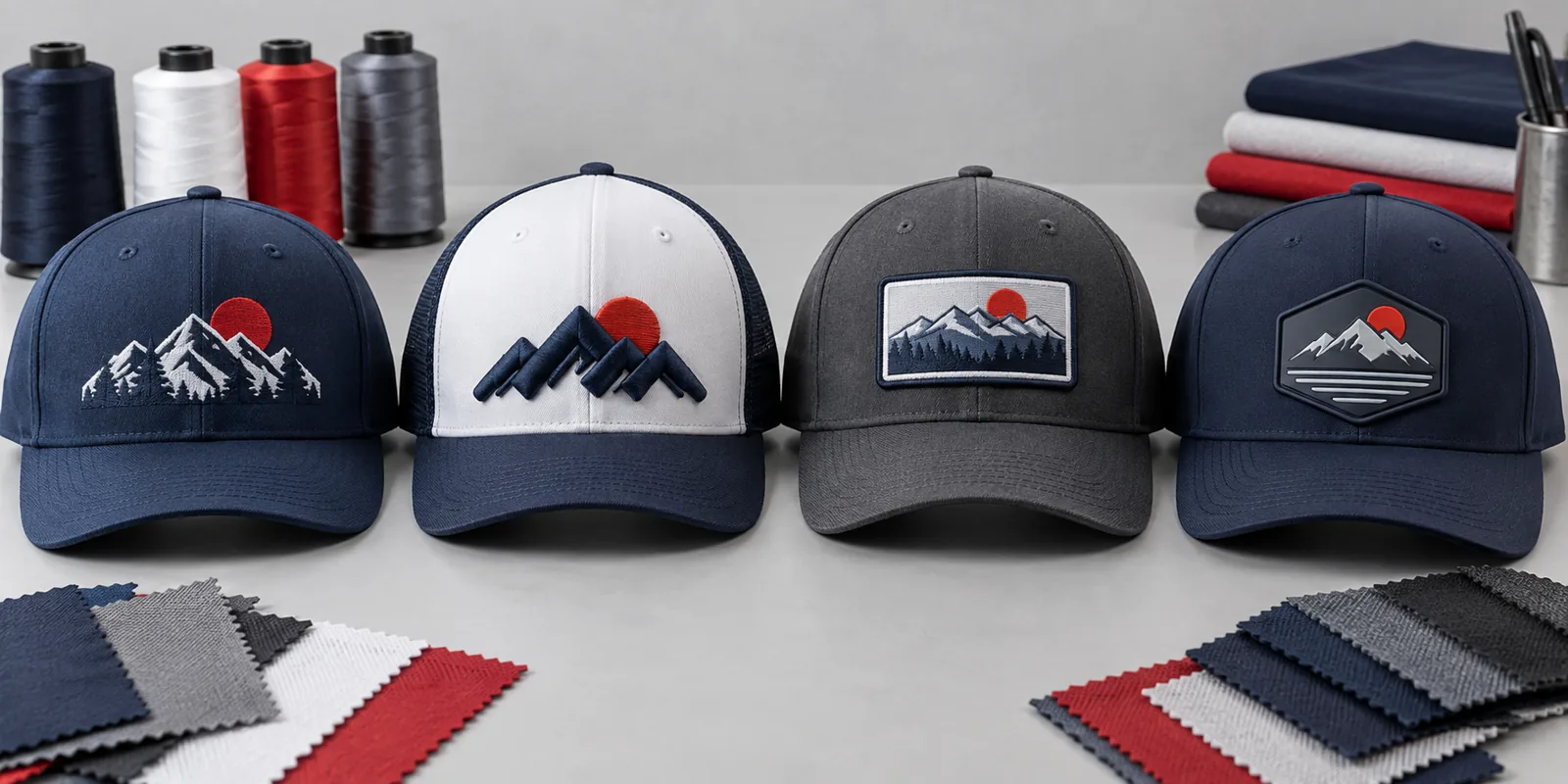
| Method | Typical visual result | Important quotation details |
|---|---|---|
| Flat embroidery | Traditional stitched surface | Logo size, stitch coverage, colors and positions |
| 3D puff embroidery | Raised, bold logo | Suitable line thickness, foam coverage and edge treatment |
| Woven patch | Fine, flatter detail | Patch size, border, backing and attachment method |
| PVC patch | Dimensional rubber-like finish | Mold or setup, colors, thickness and attachment |
5. Artwork Complexity and Stitch Count
Large filled areas, many thread colors, small lettering and several separated elements can require more machine time or artwork adjustment. A design that works on a screen may not reproduce clearly in thread. The supplier should review the vector artwork and intended physical dimensions before confirming the method.
6. Number of Decoration Positions
Front, side, back, visor and inside decoration are separate operations. State the exact dimensions and method for every position. “Logo on cap” is not specific enough to compare quotations.
7. Closures and Custom Components
Plastic snapbacks, fabric straps, metal buckles, hook-and-loop closures and fitted sizing create different sourcing and assembly requirements. Custom-colored hardware, engraved buckles, zipper pockets or special sweatbands may require separate component minimums.
8. Private Labels and Inside Branding
Private-label programs may include woven labels, printed labels, size labels, care labels, branded seam tape, hangtags and custom sweatbands. Each item needs an artwork file, dimensions, colors, placement and attachment method. Ask whether label setup and minimum quantities are included.
9. Packaging Requirements
A standard individual polybag is different from retail-ready packaging with printed bags, hangtags, barcode labels, inserts, carton assortment rules or custom boxes. Packaging also changes carton volume, which can affect freight.
10. Sampling, Inspection and Delivery
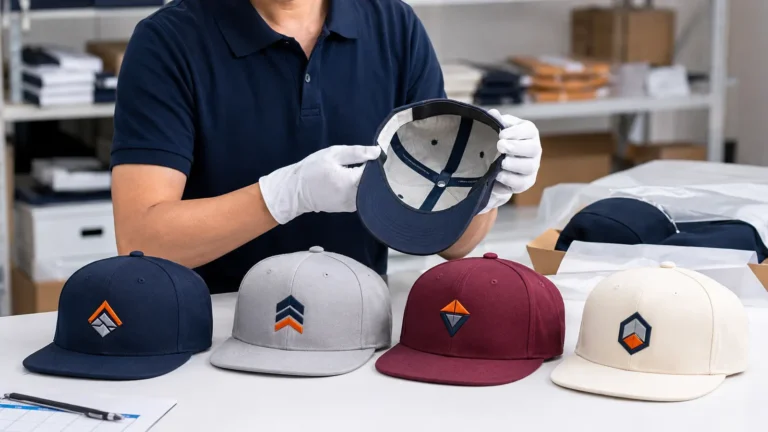
Clarify whether the quotation includes a digital mockup, physical sample, sample revision, sample courier, bulk inspection, export packing and shipping. Production lead time and international transit time are separate. A low product price can become a poor comparison if essential services are omitted.
Why a Single “Price per Hat” Can Be Misleading
Consider two projects with the same total quantity. Project A uses a stock fabric, standard snapback closure and one flat-embroidered front logo. Project B uses a custom fabric, front 3D embroidery, side embroidery, a woven inside label and retail packaging. The products do not have the same bill of materials or production route, so the unit prices should not be expected to match.
Before choosing the lowest quote, place each supplier’s offer into a comparison table. Mark any field that is missing or described differently. Request clarification rather than assuming an unspecified item is included.
Information Needed for an Accurate Custom Hat Quote
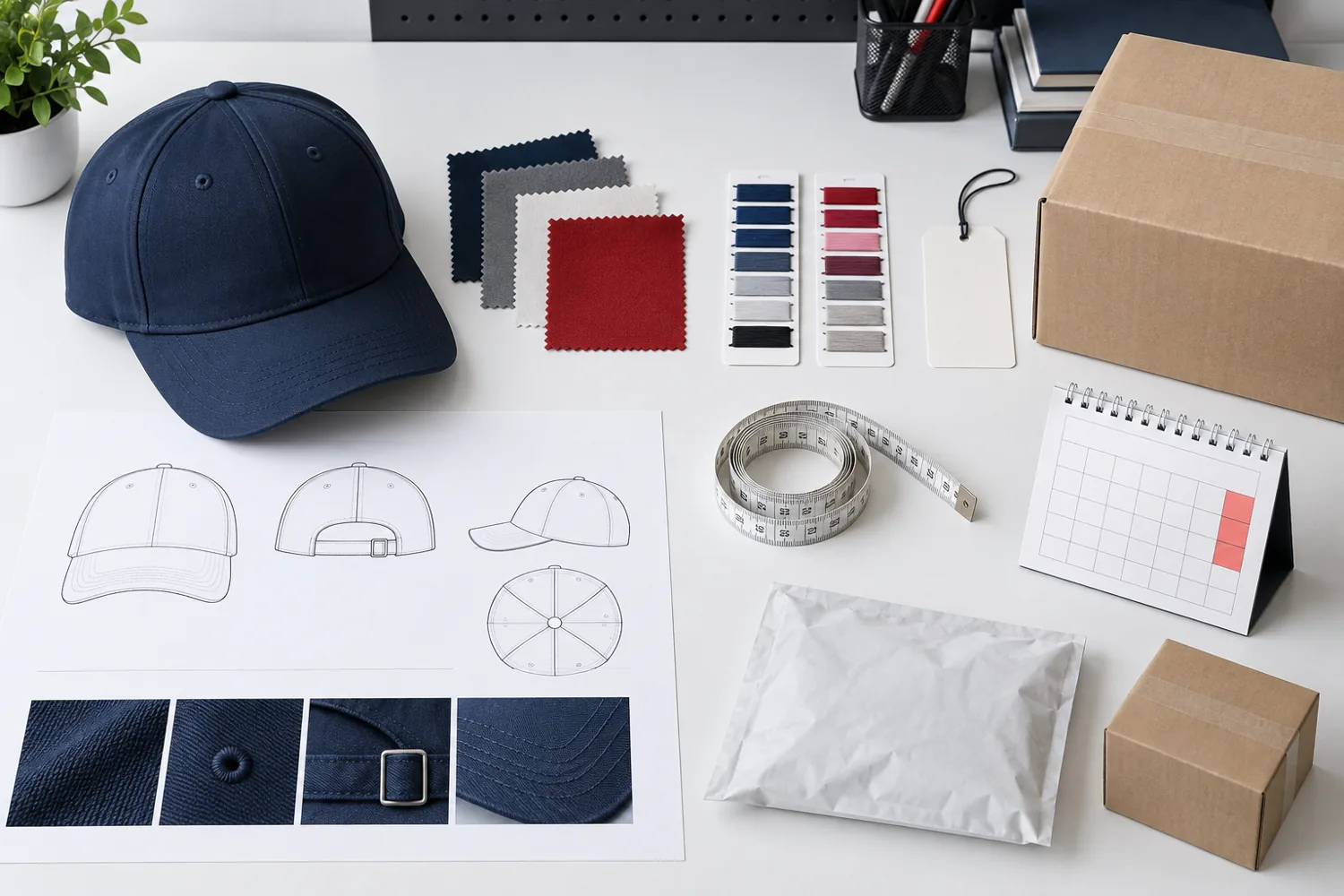
- Hat style: baseball cap, snapback, fitted, trucker, dad hat, golf hat or another construction.
- Quantity: total quantity and allocation by color, size or design.
- Fabric: preferred material, weight, performance requirement or reference sample.
- Colors: commercial color reference, physical swatch or clearly identified standard.
- Artwork: vector file where possible, plus intended dimensions and positions.
- Closure: snapback, strapback, buckle, hook-and-loop or fitted sizes.
- Inside branding: labels, taping, sweatband and care information.
- Packaging: individual bag, hangtag, barcode, retail pack and carton marks.
- Destination: country, postal code and delivery-address type.
- Required date: the date the goods must arrive, not only the preferred production-completion date.
How to Compare Quotes From Different Manufacturers
| Comparison point | What to verify |
|---|---|
| Product specification | Same construction, fabric, closure and dimensions |
| Decoration | Same method, size, coverage, colors and positions |
| Sampling | Digital mockup, physical sample, revisions and courier |
| Packaging | Individual packing, labels, inserts and carton requirements |
| Quality control | Inspection standard, tolerance and reporting scope |
| Shipping | Same destination, method, Incoterm and tax assumptions |
| Lead time | Approval point, production time and transit time |
How JIUMU Reviews a Custom Hat Quotation
JIUMU reviews the requested hat style, estimated quantity, fabric, artwork, decoration, private-label requirements, packaging, destination and delivery target before preparing a quotation. Typical MOQ starts from 50 pieces for custom hats, but the workable quantity can change according to the selected materials, color allocation, construction and components.
Buyers can explore JIUMU’s custom hat manufacturing options, compare individual categories such as custom baseball caps and custom snapback hats, or send a complete brief for review.
Frequently Asked Questions
Can I get a custom hat price from a photograph?
A photograph can help identify the general style, but it may not reveal the fabric specification, internal construction, closure, logo dimensions, labels or packaging. A preliminary estimate may be possible, while a production quotation requires additional details.
Does a larger order always reduce the unit price?
Larger quantities can improve production efficiency, but the result depends on how the order is divided and whether it requires custom materials, several designs or special components.
Why does 3D puff embroidery cost differently from flat embroidery?
The two methods use different digitizing, foam, stitch structure and machine time. Artwork may also need to be simplified or rebuilt for a stable raised result.
Are sample and shipping costs included in the unit price?
Not necessarily. Ask every supplier to identify sample development, revisions, courier, bulk freight, duties and taxes separately.
What is the fastest way to receive an accurate quote?
Provide the hat style, quantity, artwork, colors, logo method, packaging, destination and required delivery date in one organized request.
Request a Specification-Based Hat Quote
Send your product type, estimated quantity, artwork or reference image, destination country and required delivery date. JIUMU will review the manufacturing requirements before preparing a quotation.