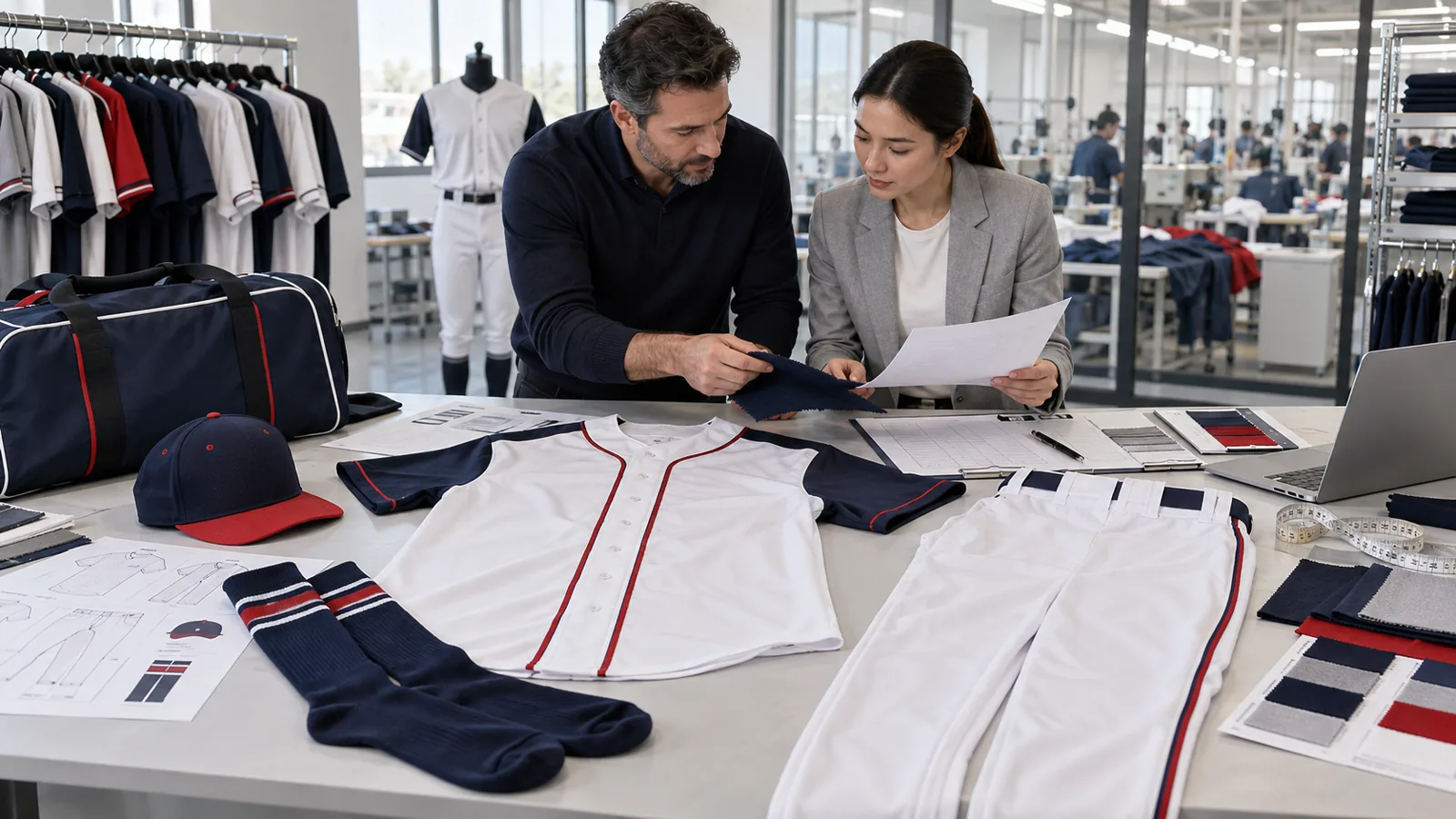
Baseball Uniform Manufacturer Checklist: 15 Things to Verify
A baseball uniform manufacturer should be evaluated on more than jersey appearance and quoted price. Buyers should verify the legal supplier, fabric and construction, size system, decoration capability, roster control, sample approval, quality inspection, packing, delivery planning and repeat-order records.
This checklist is designed for baseball and softball teams, schools, clubs, academies, leagues, uniform dealers and private-label sportswear brands. Use it before sample development and again before approving bulk production.
Baseball Uniform Manufacturer Checklist: Quick Summary
- Verify the legal company and production location.
- Confirm the complete product scope.
- Review fabric specifications.
- Check jersey and pant construction.
- Compare decoration methods.
- Verify youth and adult size systems.
- Test roster and personalization control.
- Review the sample-development process.
- Define measurable quality standards.
- Confirm color-control methods.
- Review MOQ and quantity allocation.
- Separate sampling, production and transit time.
- Confirm individual packing and carton requirements.
- Check repeat-order recordkeeping.
- Agree on corrective action before production.
1. Verify the Company and Production Location
Confirm the legal name of the company signing the agreement, the payment beneficiary and the address where the principal products will be assembled. Ask which processes are in-house and which are subcontracted. Baseball packages can involve sublimation, sewing, embroidery, cap manufacturing, socks and bags, so a single project may pass through several specialist processes.
The supplier should explain who controls materials, approves subcontracted work, conducts final inspection and handles corrective action. Review company documents, current facility evidence and relevant production records together rather than relying on a factory photograph alone.
2. Confirm the Complete Product Scope
A “baseball uniform” may refer only to a jersey or to a complete package. Define every component at the quotation stage.
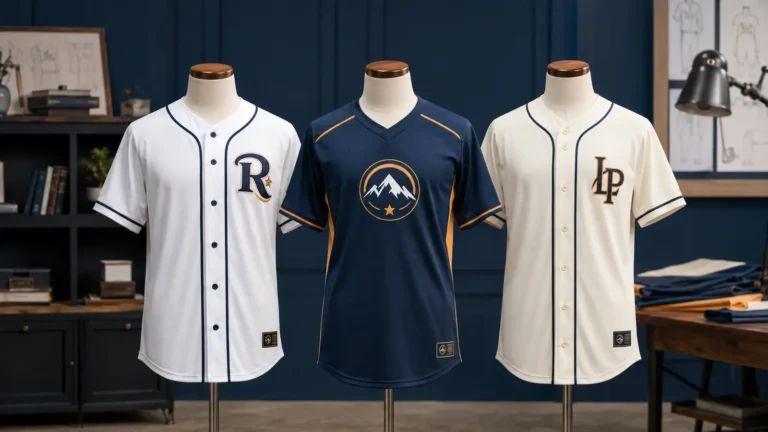
- Full-button, two-button, pullover or V-neck jersey
- Baseball pants or shorts
- Team cap
- Socks and belt
- Hoodie or warm-up jacket
- Player bag or equipment bag
- Coach apparel
- Labels, individual packing and roster identification
If several products must share team colors or logo treatments, use one coordinated project brief. Identify which details must match exactly and which can be visually coordinated within the limitations of different fabrics and production processes.
3. Review the Fabric Specification
“Performance polyester” is not a complete specification. Ask for fabric composition, weight, knit structure, stretch direction, mesh zones, finish and color reference. Determine whether the supplier will use stock fabric, source a comparable fabric or develop a project-specific material.
- Composition and fabric construction
- Weight or other agreed specification
- Stretch and recovery expectations
- Breathability or moisture-management requirement
- Color reference
- White-fabric opacity
- Wash and care requirements
- Required testing standard, if applicable
Do not claim a moisture-wicking, colorfast or other performance result unless it is supported by an applicable test or clearly defined material specification.
4. Check Jersey and Pant Construction
Construction affects appearance, fit, movement and manufacturing complexity. Review collar shape, button spacing, placket, sleeve construction, side panels, piping, seam type and reinforcement. For pants, confirm waistband construction, belt loops, pocket style, knee reinforcement, leg opening and piping.
Use detailed front, back and side views. A reference photograph can communicate the general design, but the production specification should describe the actual construction.
5. Compare Decoration Methods
| Method | Suitable use | What to approve |
|---|---|---|
| Sublimation | Full-color polyester jersey designs | Artwork scale, color placement and panel alignment |
| Embroidery | Chest marks, caps and raised branding | Dimensions, stitch structure, backing and position |
| Appliqué | Traditional layered team lettering | Materials, layers, edge stitching and weight |
| Heat transfer | Names, numbers and selected graphics | Film type, dimensions, position and application |
| Screen printing | Suitable repeat graphics | Ink, color count, coverage and curing requirements |
Ask the manufacturer to explain why a method is recommended for the selected fabric and intended use. Small text, fine outlines and large solid areas may need artwork adjustment.
6. Verify Youth and Adult Size Systems
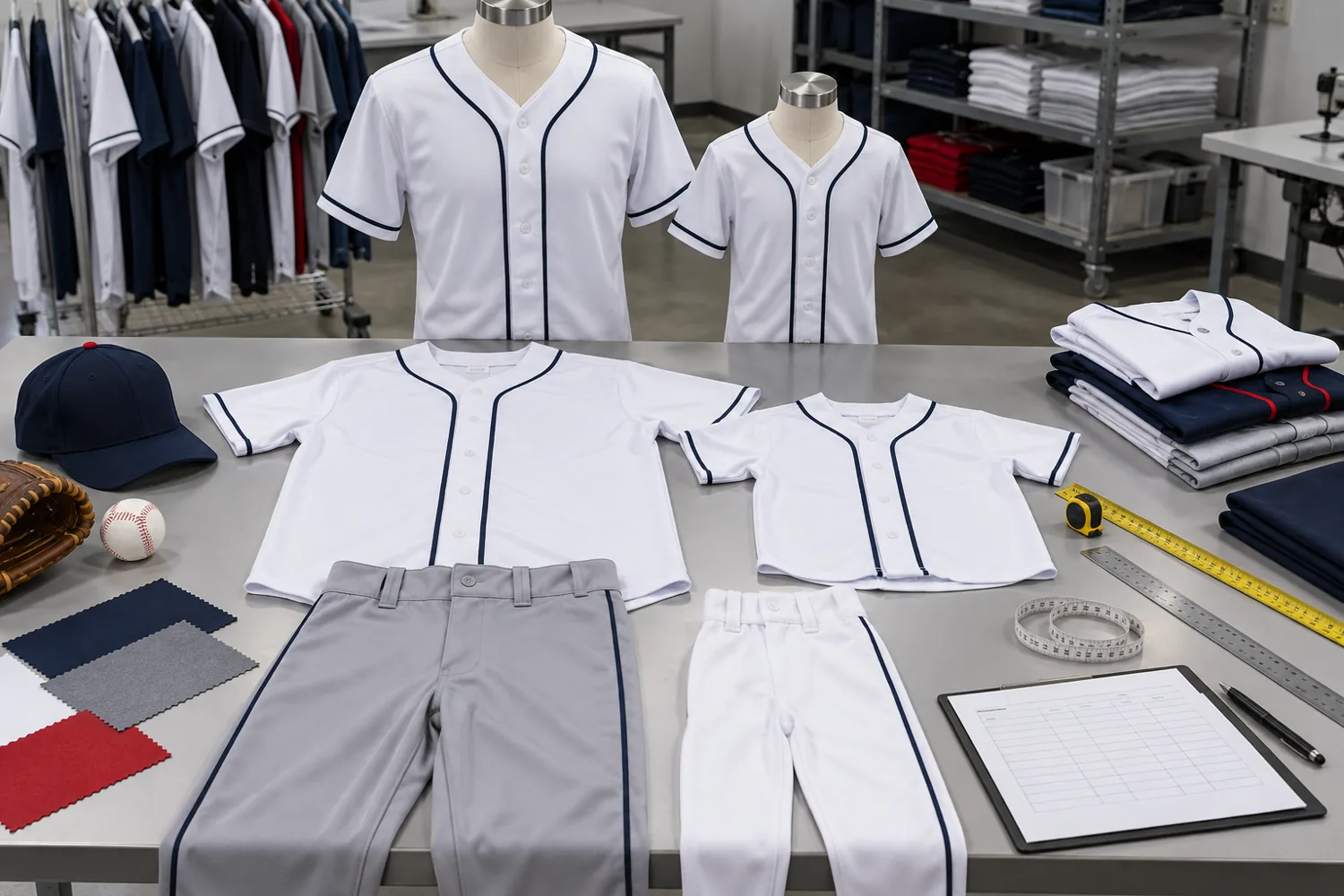
Youth and adult sizes should not be combined into one unexplained scale. Request a measurement chart showing the actual points of measurement, measurement method and tolerance. Confirm whether jerseys and pants follow separate size systems and whether players can select different top and bottom sizes.
| Product | Example points of measurement |
|---|---|
| Jersey | Chest width, body length, shoulder, sleeve length and opening |
| Pants | Waist, hip, rise, inseam, thigh and leg opening |
| Cap | Head circumference, crown height and closure range |
| Jacket or hoodie | Chest, body length, shoulder, sleeve and cuff |
A fit sample in one size does not automatically confirm the grading of every size. For broad youth-to-adult programs, ask how patterns and grading are controlled.
7. Test Roster and Personalization Control
Every player should occupy one row in the final roster. Use separate columns for printed name, number, jersey size, pant size, cap size and optional products. Avoid sending revisions across multiple emails and chat messages.
| Roster field | Why it matters |
|---|---|
| Player ID | Provides a stable reference when names change |
| Printed name | Controls exact spelling and capitalization |
| Number | Prevents duplicate or incorrect numbers |
| Jersey size | Should be separate from pant size |
| Pant size | Allows mixed-size packages |
| Optional products | Controls caps, bags, hoodies or coach items |
| Notes | Records captain marks or approved exceptions |
Ask the supplier to return a consolidated production roster for final approval. After approval, any change should receive a new version number and a written review of its effect on production.
8. Review the Sample-Development Process
The sampling route may include a digital mockup, material references, color approval, size sample and decorated physical sample. Confirm what each sample is intended to prove. A digital mockup can approve layout, but it cannot prove fit, texture or exact physical color.
- Sample ID and revision
- Material code
- Color reference
- Size represented
- Artwork version
- Decoration method
- Measurements and tolerance
- Labels and packaging included
- Written approval status
9. Define Measurable Quality Standards
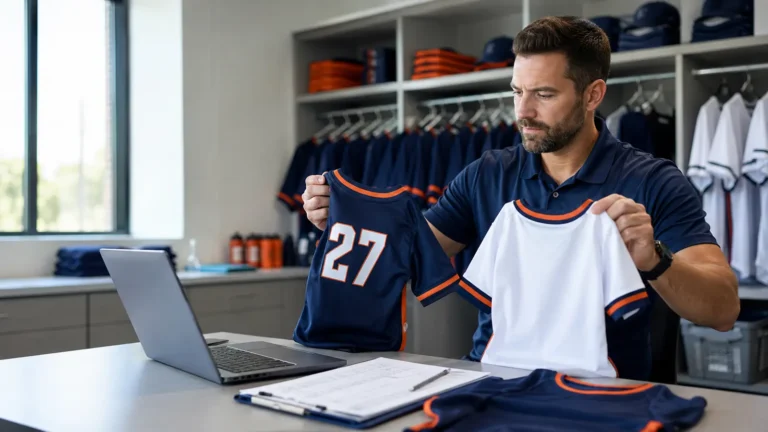
Replace subjective requirements such as “premium quality” with measurable inspection criteria. Agree on measurements, tolerance, logo dimensions, placement, color reference, stitching, appearance and packing. Identify the inspection level or sampling plan when relevant.
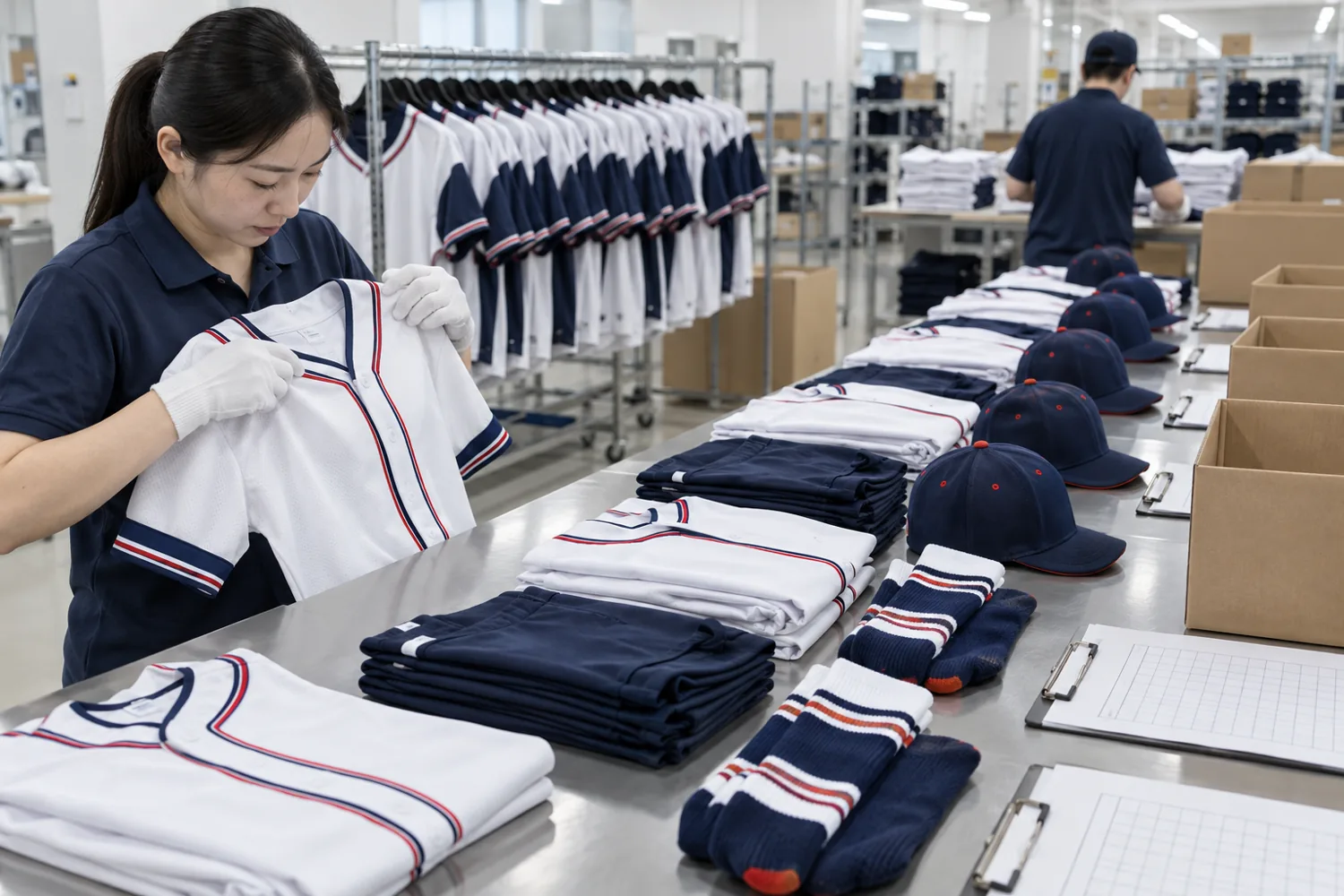
Final inspection should address
- Fabric and color against the approved reference
- Construction and seam condition
- Measurements and fit-related points
- Logo dimensions and placement
- Player names and numbers
- Buttons, zippers, labels and accessories
- Stains, damage and loose threads
- Size and roster quantities
- Individual packaging and carton marks
10. Confirm Color Control Across the Package
Caps, jerseys, pants, socks and bags use different materials and processes, so an identical digital color value may not create an identical physical appearance. Define which item is the master reference and how the other products will be coordinated. Physical swatches or samples are especially important when exact commercial colors matter.
11. Clarify MOQ and Quantity Allocation
Ask whether MOQ applies to the total package, each product, each design or each color. JIUMU states that typical MOQ starts from 50 pieces for custom apparel and hats, while custom team bags may start from 20 pieces. Final MOQ depends on construction, materials, decoration, personalization and packaging.
A 50-piece jersey order divided among player names and sizes can be workable because the base product is coordinated, but five different fabric designs with ten pieces each may create different production requirements. Obtain confirmation for the actual allocation.
12. Separate Sample, Production and Shipping Time
Create one timeline with distinct milestones. Sample development, sample courier, revision, material confirmation, bulk production, inspection, freight booking, international transit, customs and final delivery are separate stages.
Standard production may take approximately 25–30 days after the agreed approvals, while complex projects can require longer. This is planning guidance, not a guaranteed schedule. The manufacturer should confirm the current plan after reviewing the exact products and required date.
13. Confirm Packing and Carton Requirements
- One player set per bag or product-by-product packing
- Size sticker and player identifier
- Roster sequence
- Barcode or buyer SKU
- Polybag and warning requirements
- Carton assortment
- Carton marks
- Retail-ready packaging, if required
Packing requirements should be approved before bulk production, not added after finished goods have already reached the packing department.
14. Check Repeat-Order Support
Ask how the supplier retains the approved pattern, size chart, material reference, artwork, personalization files, labels and packaging instructions. Repeat-order records reduce avoidable variation, but materials and colors should still be reviewed because batches and availability can change.
15. Agree on Corrective Action Before Production
Define what happens if inspection finds incorrect measurements, colors, artwork, personalization, shortages or packing errors. The process should include isolation of affected goods, evidence, comparison with the approved specification, correction or reproduction where appropriate, and reinspection.
The commercial agreement should identify responsibility, acceptance criteria and dispute handling. For legal terms or high-value orders, obtain advice appropriate to the buyer’s jurisdiction.
Manufacturer Comparison Scorecard
| Category | Suggested weight | Minimum evidence |
|---|---|---|
| Company identity | 10% | Registration, contract and payment details |
| Product capability | 15% | Comparable construction and production route |
| Fabric and materials | 10% | Specification and approved references |
| Sample quality | 15% | Measured, identified sample |
| Size and roster control | 15% | Size chart, roster and version system |
| Quality control | 15% | Criteria, inspection records and corrective action |
| Communication | 10% | Clear summaries and risk identification |
| Delivery and packing | 10% | Milestone plan and packing specification |
Frequently Asked Questions
What should I send to a baseball uniform manufacturer first?
Send the required products, estimated quantity, size range, artwork, team colors, roster requirements, destination and required delivery date. Reference images are useful, but they should be converted into a written specification.
Can youth and adult sizes be included in one order?
They may be included when the size range, pattern, quantity and allocation are confirmed. Review separate youth and adult measurement charts.
Can every player have a different name and number?
Yes, subject to the approved production method and roster. The final list should be checked for spelling, duplicate numbers, sizes and product allocation.
Should I approve a physical sample before bulk production?
A physical sample is strongly useful for new construction, fit, material, color or decoration. Define exactly which features the sample approves.
Can one supplier coordinate jerseys, pants, caps and bags?
A coordinated package is possible when every component, supplier responsibility, color reference, roster and packing requirement is documented. Review JIUMU’s baseball team uniform package options.
Request a Baseball Uniform Manufacturing Review
Send your required products, estimated quantity, size range, artwork, roster requirements, destination and required delivery date. JIUMU will review the manufacturing requirements before preparing a quotation or production recommendation.
You can also review custom baseball jerseys, custom team uniforms and JIUMU’s quality-control process.