Trucker Hat vs Baseball Cap: Key Differences in Structure, Fabric and Use
For a casual shopper, a trucker hat and a baseball cap may look like close variations of the same product. For a sports team, promotional distributor, outdoor brand, retailer or private-label buyer, the distinction is more important. The two styles can use a similar curved brim and familiar six-panel silhouette, yet their rear-panel construction, ventilation, crown feel, decoration area, fit and perceived use are often different.
Choosing the wrong base style can create practical problems. A logo balanced on cotton twill may feel undersized on a tall foam-front crown. An all-fabric cap selected for a hot outdoor event may not provide the expected airflow.
This B2B sourcing guide covers structure, materials, comfort, closures, logo methods, applications, cost drivers, sampling and quality control.
Quick Answer: A trucker hat normally combines solid front panels with open mesh rear panels and an adjustable snap closure. It is often structured, breathable and associated with outdoor workwear, lifestyle merchandise, events and warm-weather use. A baseball cap is the broader all-purpose category, usually built with fabric panels around most or all of the crown. It may be structured or unstructured and can use a strap, buckle, hook-and-loop, snap or fitted closure. Choose a trucker hat when ventilation and a distinctive two-material appearance are priorities. Choose a baseball cap when you want broader fabric, crown, closure and uniform-program options.
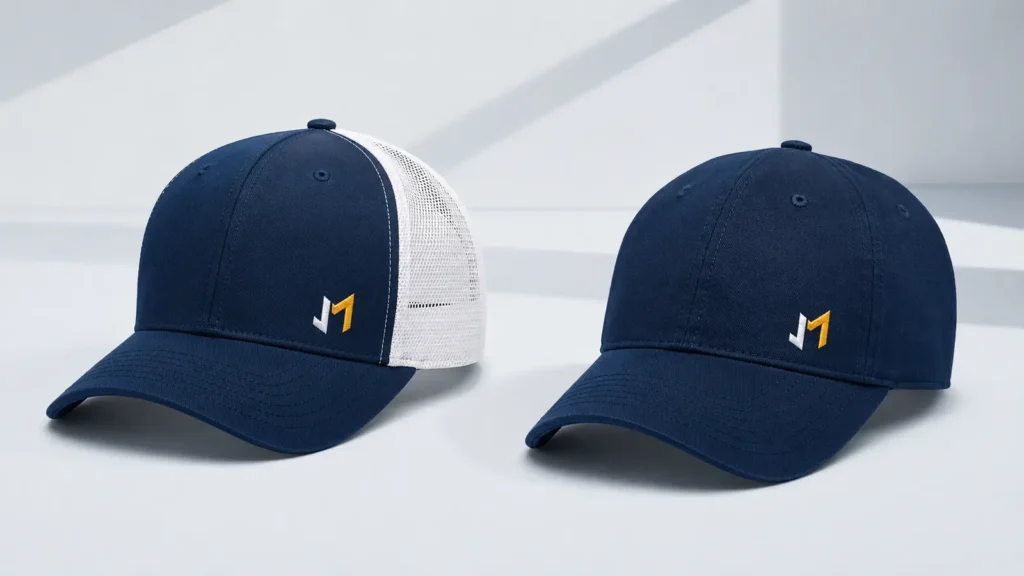
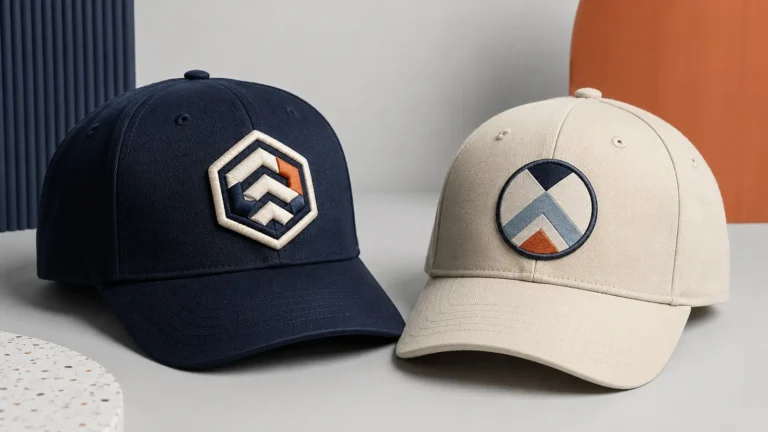
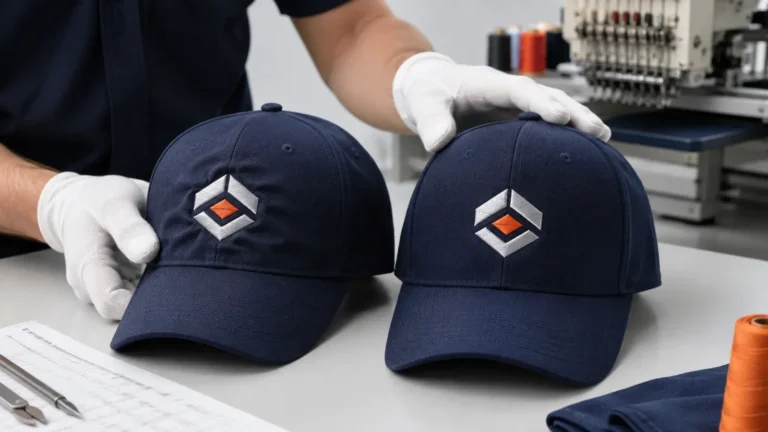
A classic mesh-back trucker hat beside an all-fabric baseball cap, showing the most visible construction difference.
Trucker Hat vs Baseball Cap: Comparison at a Glance
The terms overlap because a trucker hat is part of the wider baseball-style cap family. The practical sourcing question is therefore not whether one is a “real cap,” but which construction package best serves the buyer’s project.
| Comparison point | Trucker hat | Baseball cap |
|---|---|---|
| Rear crown | Usually open polyester mesh | Usually cotton, polyester, wool-blend, nylon or other solid fabric |
| Front crown | Often structured fabric or foam-backed panels | Structured or unstructured fabric panels |
| Common panel layouts | Five-panel or six-panel | Most commonly six-panel; five-panel options also exist |
| Typical closure | Adjustable plastic snapback | Strap and buckle, snapback, hook-and-loop, elastic, or fitted |
| Ventilation | High through the mesh rear panels | Depends on fabric, eyelets, perforation and construction |
| Crown appearance | Often mid- or high-profile with a distinct front/rear contrast | Low-, mid- or high-profile; broad range of silhouettes |
| Common decoration | Embroidery, woven patch, embroidered patch, rubber/PVC patch, leather-style patch, print on solid front | Flat embroidery, 3D embroidery, patches, print and heat transfer, depending on fabric |
| Typical use | Outdoor brands, construction crews, events, promotional merchandise, casual retail | Teams, schools, uniforms, corporate merchandise, retail, clubs and everyday branding |
| Main buying advantage | Airflow and recognizable mesh-back styling | Maximum flexibility in fabric, fit, closure and brand presentation |
| Main sourcing risk | Weak or distorted decoration on unsuitable foam/front structure; inconsistent mesh or snap color | Crown/profile mismatch, fabric shrinkage or color variation, inaccurate sizing for fitted versions |
An industry product line such as Richardson’s mesh-back collection separates profile, fit and adjustment choices even within the trucker category, illustrating why “trucker” alone is not a complete production specification. Its classic examples also identify mesh airflow and an adjustable snapback as defining functional details. Buyers should still confirm each component rather than rely on a category name alone. (Richardson mesh-back headwear; Richardson 112 overview)
What Is a Trucker Hat?
A trucker hat is a baseball-shaped cap with solid front panels and ventilated mesh panels across the sides and back. Many versions have a structured front, a curved or semi-curved brim and a plastic snapback closure. Five-panel trucker caps often provide a broad, uninterrupted front face; six-panel versions have a center seam that creates a more traditional cap shape.
The front may be cotton twill, polyester, canvas or a foam-backed material. The mesh is commonly polyester because it holds an open structure, dries quickly and can be produced in contrast colors. The crown may be relatively tall, especially when the design is intended for a large patch or bold promotional graphic. However, low-profile and soft-structure trucker variations also exist.
The style developed a strong association with agricultural suppliers, transport businesses and work crews, but its commercial use is now broader. Outdoor brands, festivals, clubs, construction companies and streetwear labels all use mesh-back caps.
The key functional value is ventilation. Open mesh allows more air exchange around the rear of the head than a tightly woven solid crown. That does not mean every trucker hat automatically manages moisture or provides a tested level of sun protection. Those performance claims depend on the exact mesh, sweatband, front fabric and documented testing.
What Is a Baseball Cap?
A baseball cap is a broad category defined by a rounded crown and projecting brim. A classic version has six fabric panels joined at the top with a covered button, embroidered eyelets for limited ventilation and a curved brim. Unlike a trucker hat, the rear crown is generally made from the same or a related solid fabric as the front.
Baseball caps can be structured, with reinforcement behind the front panels, or unstructured, allowing the crown to collapse more naturally. They may use cotton twill, brushed cotton, polyester, wool or acrylic blends, nylon, canvas, denim, corduroy or performance fabrics. Closures range from fabric straps and metal buckles to plastic snaps, hook-and-loop tabs, stretch constructions and closed fitted backs.
This wider specification range suits sports, corporate uniforms, school programs, hospitality, events and retail. A team may want a structured performance-polyester cap; a lifestyle brand may prefer washed, unstructured cotton; a uniform program may prioritize consistent color and a restrained logo.
JIUMU’s custom baseball caps page reflects this breadth by listing multiple panel structures, fabrics, brims, closures and decoration methods. That flexibility is the main reason buyers should not assume “baseball cap” describes one fixed bill of materials.
How Does the Structure Differ?
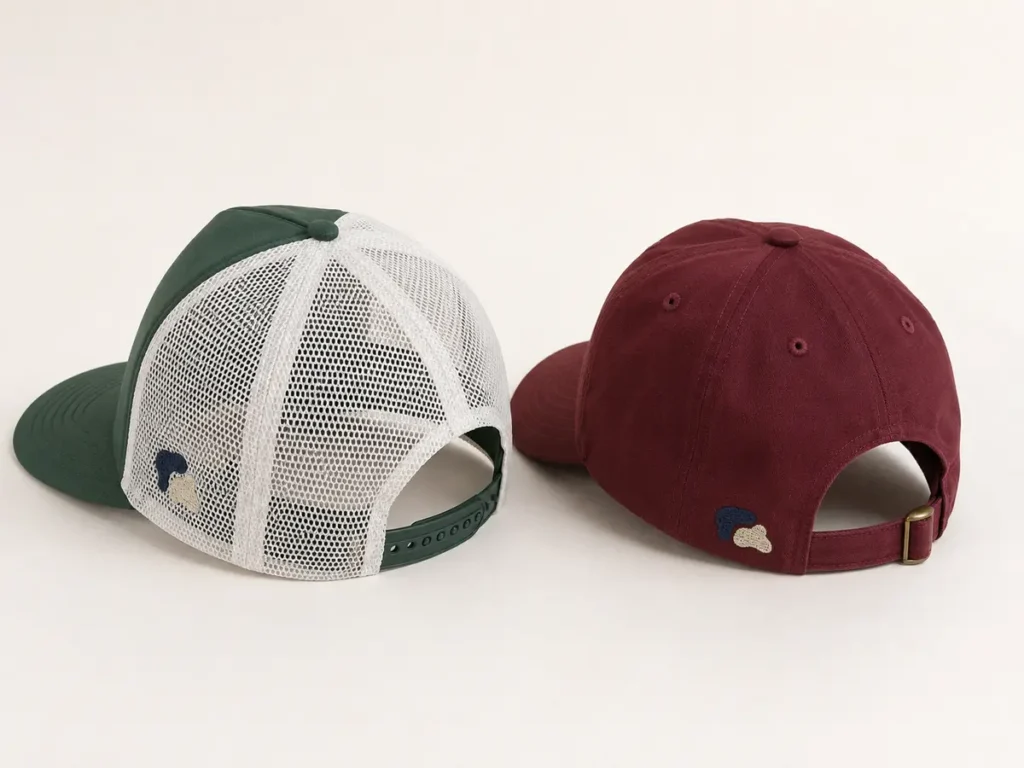
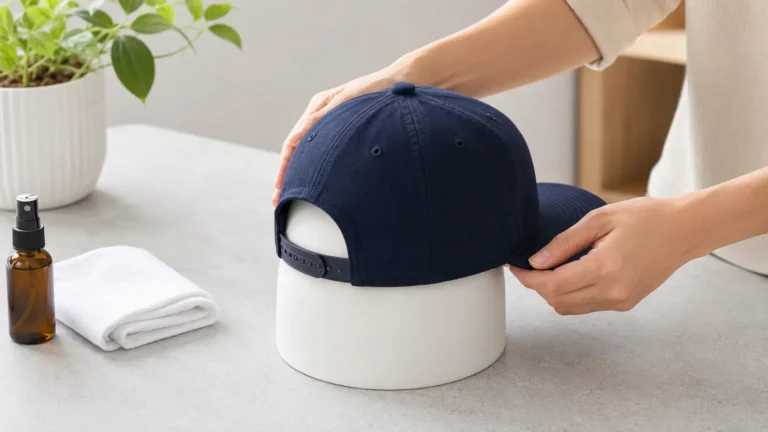
Rear views make the mesh, fabric panels and closure systems easy to compare.
Front panels and reinforcement
Many trucker hats use a firm front because the style is designed to carry a visible patch or logo. A foam-backed front can create a smooth, tall display area, while buckram or another reinforcement can support a more traditional structured crown. A five-panel front removes the vertical center seam from the main decoration area, which is useful for wide patches and some printed graphics.
A baseball cap can use the same type of structured reinforcement, but it can also be deliberately soft and unstructured. This gives the buyer a larger aesthetic range. Structured fronts look crisp and uniform; unstructured fronts feel more relaxed and may suit washed cotton, golf, hospitality or lifestyle merchandise.
Rear panels
The rear crown is the clearest difference. A trucker hat normally uses open mesh, while a baseball cap usually continues with solid woven or knitted fabric. The mesh changes weight, ventilation, stretch behavior, transparency and the way color is perceived. White mesh creates a high-contrast two-tone look. Tonal navy or black mesh produces a more restrained appearance.
Solid rear panels offer more surface area for side and back embroidery, woven labels or tonal details. Mesh can still accept certain small labels or carefully planned patches, but the supplier must consider support, stitch density and comfort. Direct dense embroidery across open mesh is usually a poor choice because the mesh can distort.
Panel count
Both categories can use five- or six-panel construction. A six-panel crown usually has a center front seam. A five-panel front often provides a larger continuous area for decoration, although the exact geometry varies. Buyers should request a technical drawing or physical sample rather than assume every five-panel cap shares the same front dimensions.
Brim and visor
Both styles can use flat, semi-curved or curved brims. The brim is not a reliable category separator. The production specification should state brim shape, length, width, number of stitch rows, top and underside colors, and whether the sample should arrive pre-curved. If the brim will carry printed underside artwork or contrast piping, include that in the artwork pack.
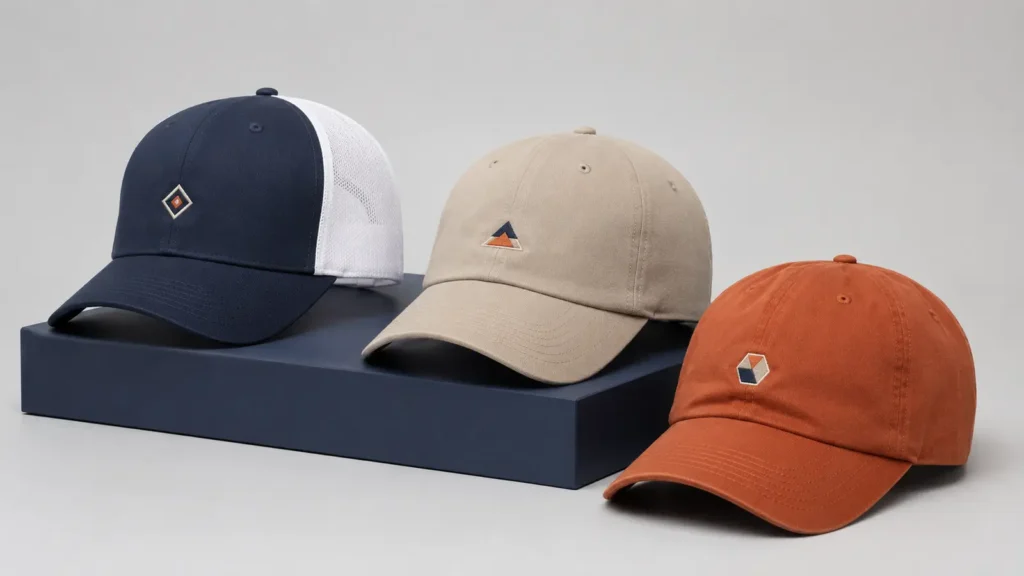
Profile and brim choices can change the final appearance as much as the mesh-versus-fabric decision.
Fabric Differences: Mesh, Twill, Foam and Performance Materials
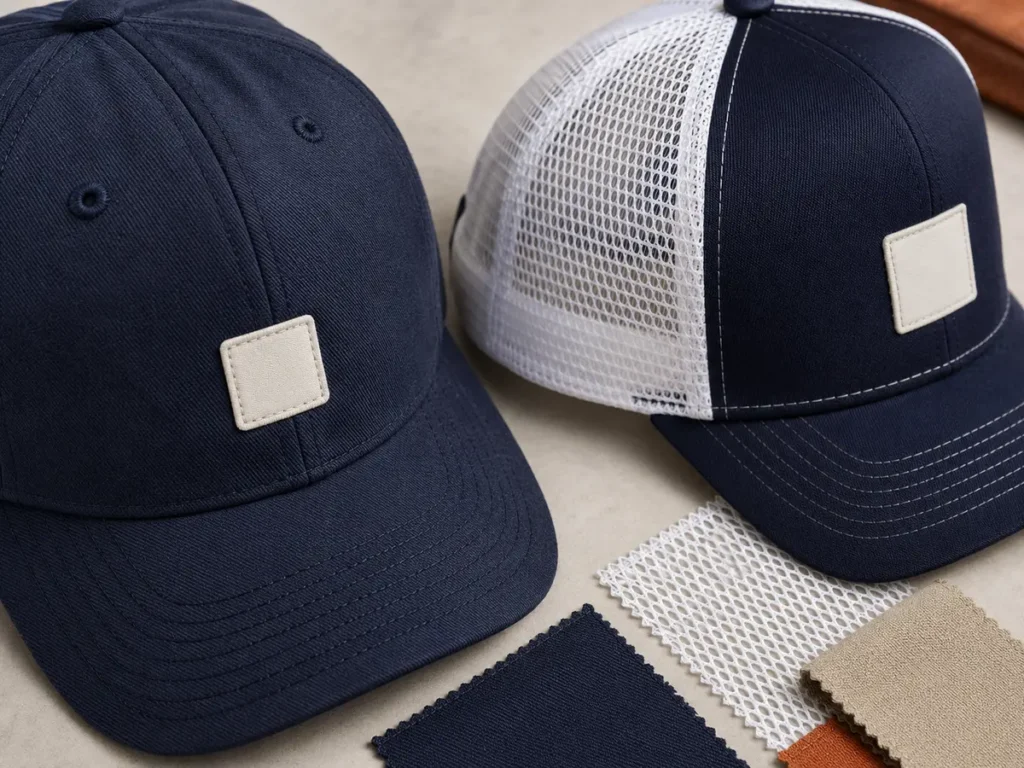
Close inspection of the textile surfaces helps buyers specify hand feel, openness, weight and color.
Trucker-hat material combinations
A common trucker construction uses cotton or polyester twill at the front and polyester mesh at the back. The front supplies opacity, body and a decoration surface. The mesh supplies ventilation and the signature visual identity. Some promotional versions use a foam front for a lightweight, high-profile shape. Premium retail versions may replace basic foam with a better structured fabric, custom lining, improved sweatband and more refined mesh.
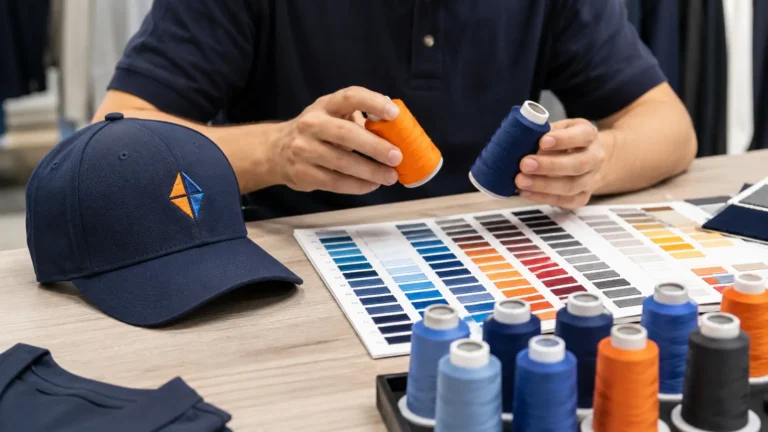
Important mesh variables include hole size, firmness, stretch, recovery, hand feel and color. Approve mesh and solid fabric together under the same lighting because the same color can look different on different textile structures.
Baseball-cap material choices
Cotton twill remains a familiar choice because it has a natural hand feel and supports embroidery well. Brushed or washed cotton can create a softer, lived-in appearance. Polyester is suitable when buyers need color consistency, lighter weight or performance-oriented constructions, subject to the exact fabric specification. Wool and acrylic blends can create a traditional team or streetwear feel. Nylon works for lightweight outdoor styling, while canvas, denim and corduroy add a distinct fashion texture.
Material names alone are insufficient. Ask for composition, fabric weight or comparable sample, finish, color standard, shrinkage expectations and care guidance. Request documentation for any recycled-content, water-resistance, UV or moisture-management claim on the exact construction.
Sweatbands and interior materials
The sweatband affects comfort, perceived quality and repeat wear. Options may include cotton blends, polyester, moisture-management fabrics or elastic constructions. Buyers should confirm sweatband width, softness, recovery and color. Dark sweatbands can conceal visible staining but may transfer color if poorly controlled. Light sweatbands may suit a clean retail presentation but require more attention during handling.
Which Hat Is More Breathable?
In a like-for-like comparison, a trucker hat with open rear mesh normally provides more direct airflow than a tightly woven all-fabric cap. That is why trucker styles are common for summer events, outdoor crews, fishing, landscaping, field sales and casual warm-weather merchandise.
Breathability is not determined by the category name alone. A baseball cap made with lightweight perforated polyester may ventilate well, while a trucker hat with a thick foam front and basic sweatband may feel warmer at the forehead. Climate, activity level, crown depth, sweatband and fit all affect comfort.
For a buyer, the better question is: where will the hat be worn, for how long and at what activity level? If users work outdoors in warm conditions, test the complete sample during real wear. If the product is primarily retail merchandise, tactile quality, silhouette and brand story may matter as much as maximum airflow.
Fit, Profile and Closure Options
Trucker hats are often adjustable snapbacks. A plastic snap closure gives a familiar look, supports one-size programs and is easy to color-match. The closure should be checked for engagement, flexibility, edge comfort and resistance to cracking under normal use.
Baseball caps provide a wider closure range:
- Fabric strap with metal buckle for a refined lifestyle or corporate look
- Plastic snapback for sportswear and easy size adjustment
- Hook-and-loop closure for practical team or work programs
- Elastic or stretch-fit construction for a close athletic fit
- Fitted closed back for a clean silhouette, requiring a planned size range
Profile refers to crown height and how the cap sits on the head. High-profile caps provide a strong front presentation and can support larger decoration. Mid-profile shapes are versatile. Low-profile caps sit closer to the head and often feel more casual. Profile preferences vary by market and customer group, so a physical fit sample is more reliable than a verbal label.
| Buyer requirement | More suitable starting point | Specification note |
|---|---|---|
| Maximum rear ventilation | Trucker hat | Confirm mesh softness, hole size and color |
| Traditional baseball-team appearance | Structured baseball cap | Confirm profile, brim curve and closure or fitted sizes |
| Large front patch | Five-panel or tall-front trucker | Request exact usable decoration area |
| Relaxed lifestyle merchandise | Unstructured cotton baseball cap | Approve wash, hand feel and crown collapse |
| Outdoor work or field promotion | Trucker hat | Test comfort, snap closure and sweatband |
| Corporate uniform | Baseball cap or tonal trucker | Prioritize consistent color and restrained decoration |
| Retail private label | Either | Add inside label, hangtag, packaging and size/fit plan |
| One-size event giveaway | Adjustable trucker or baseball cap | Test closure range on representative wearers |
Logo and Decoration Methods
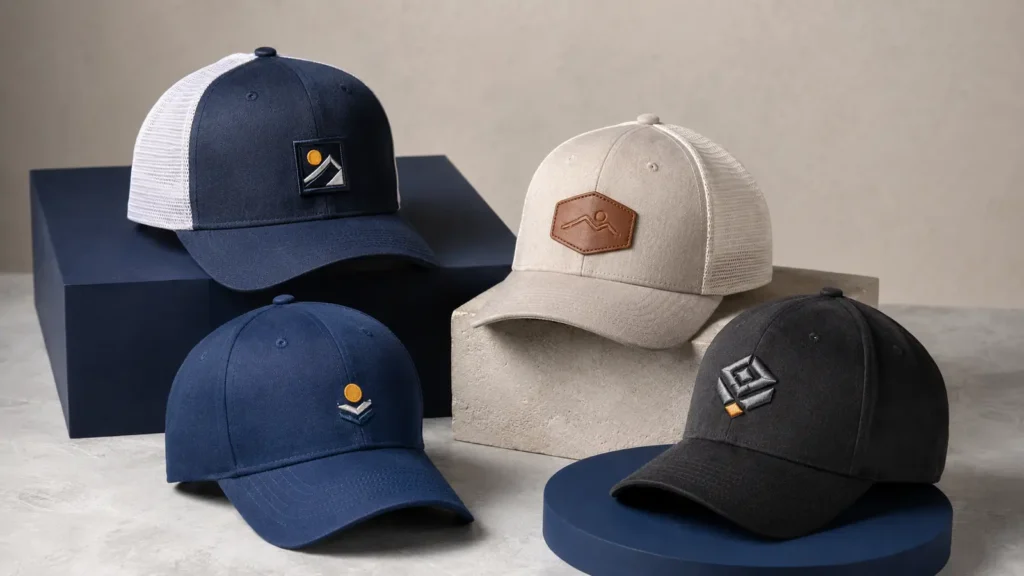
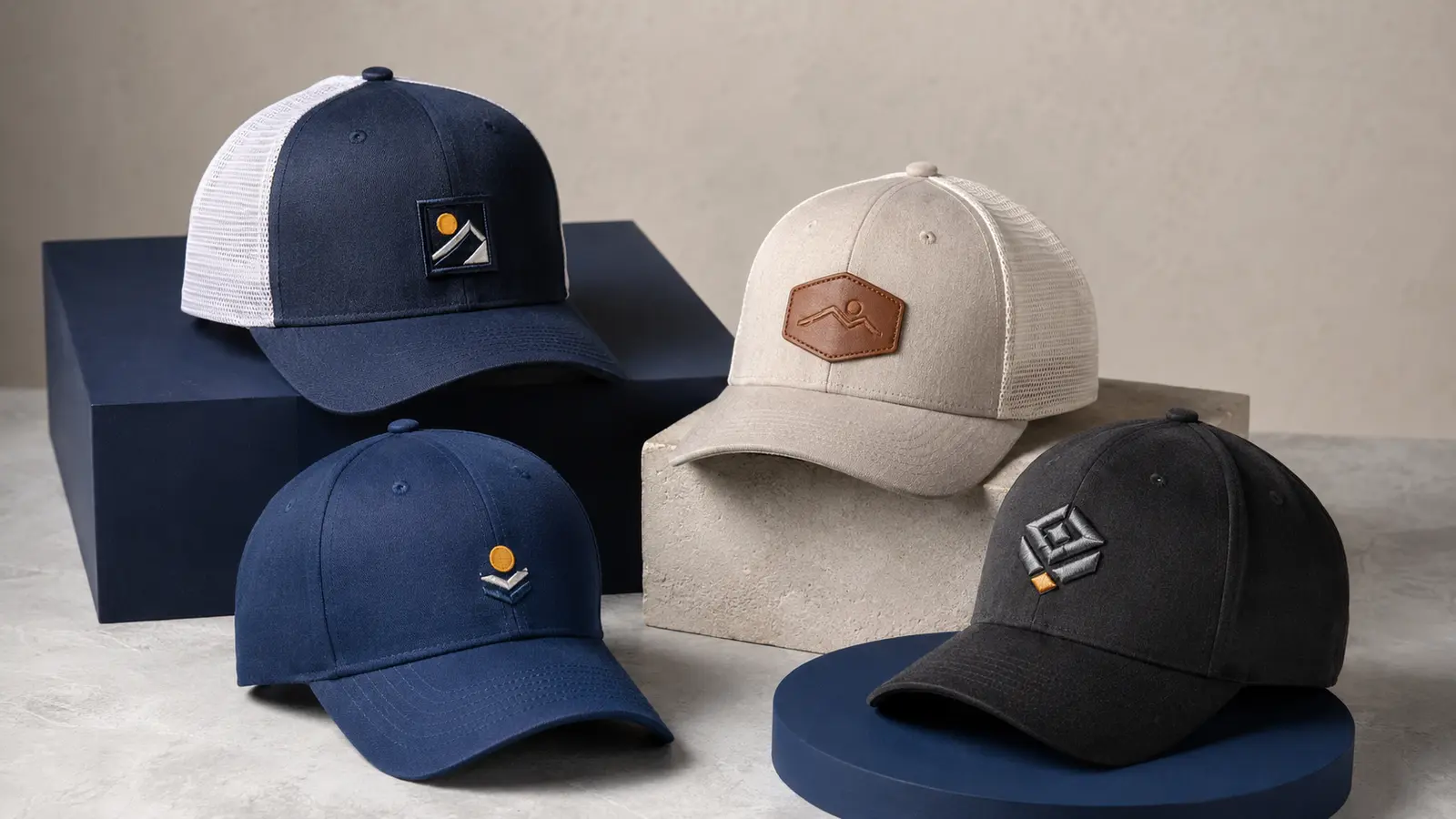
Front structure, fabric and decoration size should be approved as one combined system.
Embroidery
Flat embroidery works across many structured baseball caps and trucker fronts. It suits detailed but controlled logos, text and side marks. 3D puff embroidery creates a raised appearance but needs adequate letter or shape width, suitable digitizing and a stable front. Very small gaps and thin strokes may close during stitching.
Direct embroidery is generally easier on solid fabric than open mesh. If a trucker design requires side branding, place it on the solid front-side area where possible or use a lightweight label designed for the mesh structure. Always approve embroidery on the actual production fabric, not only as a digital rendering.
Patches
Woven patches reproduce fine lines and small details. Embroidered patches provide a traditional textured look. Rubber or PVC patches can support bold outdoor styling. Leather-style patches create a heritage or workwear impression. Patch size, edge finish, thickness, attachment method and curvature must suit the crown.
A tall trucker front often displays a patch well. On a low-profile baseball cap, a large rigid patch may fight the crown curve. The supplier should test whether the patch sits flat, whether its corners lift and whether backing causes discomfort.
Print and heat transfer
Printing and heat transfer can work for certain logos, gradients or smaller quantities, depending on fabric and coating. Heat and pressure settings must suit the cap material and reinforcement. Curved surfaces are more difficult than flat garment panels, so a production trial is important. Sublimation is relevant only where the polyester construction and cut-and-sew process support it; it is not a universal method for every finished cap.
Use Cases: When Should a Buyer Choose Each Style?
Choose a trucker hat for:
- Outdoor, construction, transport, agriculture or field-service teams
- Fishing, camping and active lifestyle merchandise
- Warm-weather events and festivals
- Promotional programs that need a recognizable two-tone silhouette
- Retail collections built around workwear or heritage styling
- Large front patches and five-panel graphic treatments
Choose a baseball cap for:
- Baseball, softball and multi-sport team programs
- Schools, clubs and academies
- Corporate uniforms, hospitality and staff wear
- Golf, travel and everyday lifestyle merchandise
- Brands needing broad choices in fabric, profile and closure
- Fitted or stretch-fit programs with a controlled size range
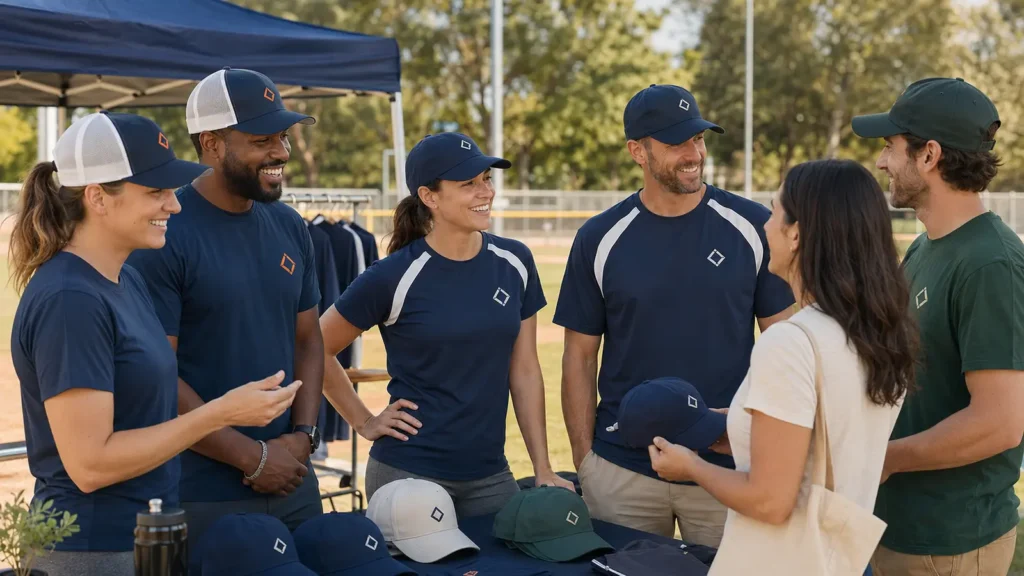
The correct style depends on the wearer, environment, uniform system and desired brand image.
The categories are not mutually exclusive. A baseball club may use fitted fabric caps for competition and trucker hats for coaches, supporters or fundraising merchandise. A construction company may choose high-visibility work headwear for specific safety contexts and a separate trucker-style promotional cap for off-site events. The product must be appropriate for the actual use; a casual hat is not a substitute for certified protective headgear.
What Drives the Cost of Custom Trucker Hats and Baseball Caps?
Buyers should compare quotations against the same specification.
Key cost drivers include:
- Material combination: Standard mesh and stock twill may be more economical than custom-dyed fabric, specialty nylon, corduroy or documented performance textiles.
- Crown construction: Five versus six panels, reinforcement, lining and custom pattern development affect labor and materials.
- Decoration: Stitch count, thread colors, puff embroidery, multiple placements and custom patches change unit cost.
- Color development: Stock colors simplify sourcing. Custom Pantone matching may require dyeing, higher minimums and additional approval.
- Closure and trims: Custom snaps, branded buckles, woven labels, sweatband printing, brim stickers and special seam tape add components.
- Packaging: Individual polybags, hangtags, barcode labels, retail boxes and carton markings change both cost and packing time.
- Order quantity and size mix: Larger quantities can distribute setup costs, while fitted cap programs may require more size-level inventory planning.
- Sampling and testing: Multiple samples, courier charges and third-party tests should be budgeted when the project requires them.
JIUMU’s typical MOQ is 50 pieces, subject to product structure and customization. Buyers should confirm the applicable MOQ after submitting the exact style, material, logo method, color and packaging requirement.
Planning a custom cap program? Send JIUMU your reference image or tech pack, logo file, target quantity, preferred colors, front and rear material, closure, decoration method, packaging and delivery destination. The team can review whether a trucker hat, baseball cap or mixed program better fits the project.
Sampling and Quality Control
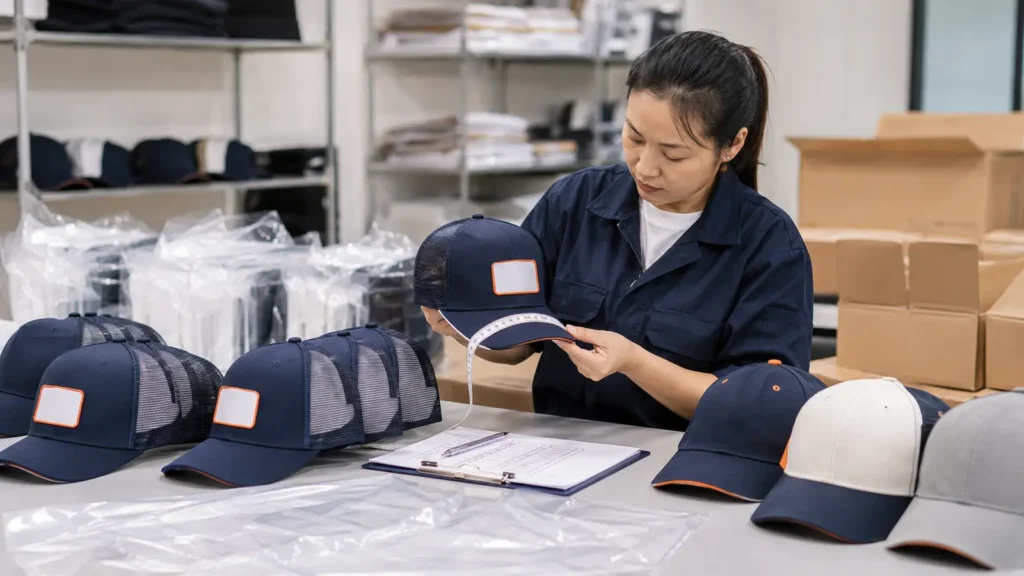
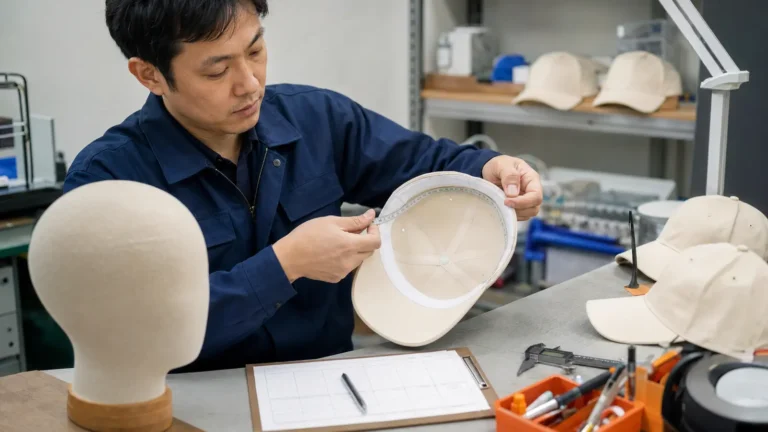
Sample approval and measurable inspection points reduce variation during bulk production.
A digital mockup confirms placement and color direction, but it cannot fully represent crown feel, mesh stiffness, brim curve or embroidery behavior. Approve a physical sample before bulk production.
Review the sample in this order:
1. Overall silhouette
Place the cap on a neutral surface and on representative wearers. Check crown height, symmetry, brim angle and how the front panels recover after handling. Compare the product with the approved reference from front, side and rear views.
2. Materials and color
Compare front fabric, mesh, brim, sweatband, closure and thread under consistent lighting. For two-tone trucker hats, ensure the solid and mesh colors create the intended contrast. Record the approved swatches or master sample for repeat orders.
3. Decoration
Measure logo width, height and distance from the brim seam. Check stitch coverage, loose threads, puckering, patch alignment, edge attachment and small-detail clarity. Ensure the decoration remains visually centered when the cap is worn, not only when it is flat.
4. Construction
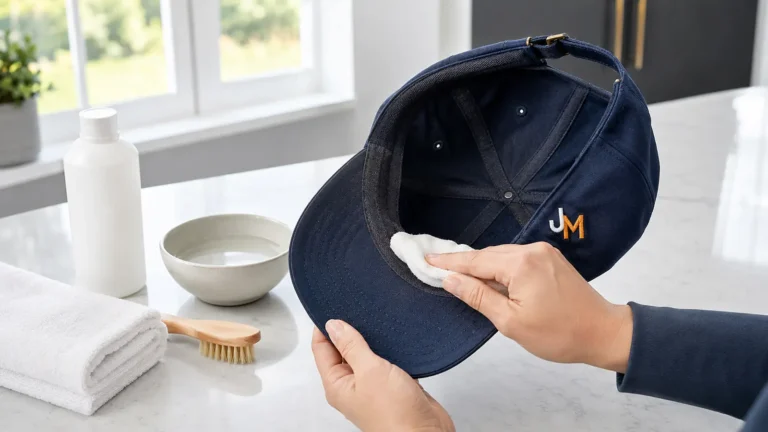
Inspect panel seams, top button, eyelets, seam tape, sweatband joining, visor stitch rows and closure attachment. Turn the cap inside out to look for sharp edges, loose threads and uncomfortable backing.
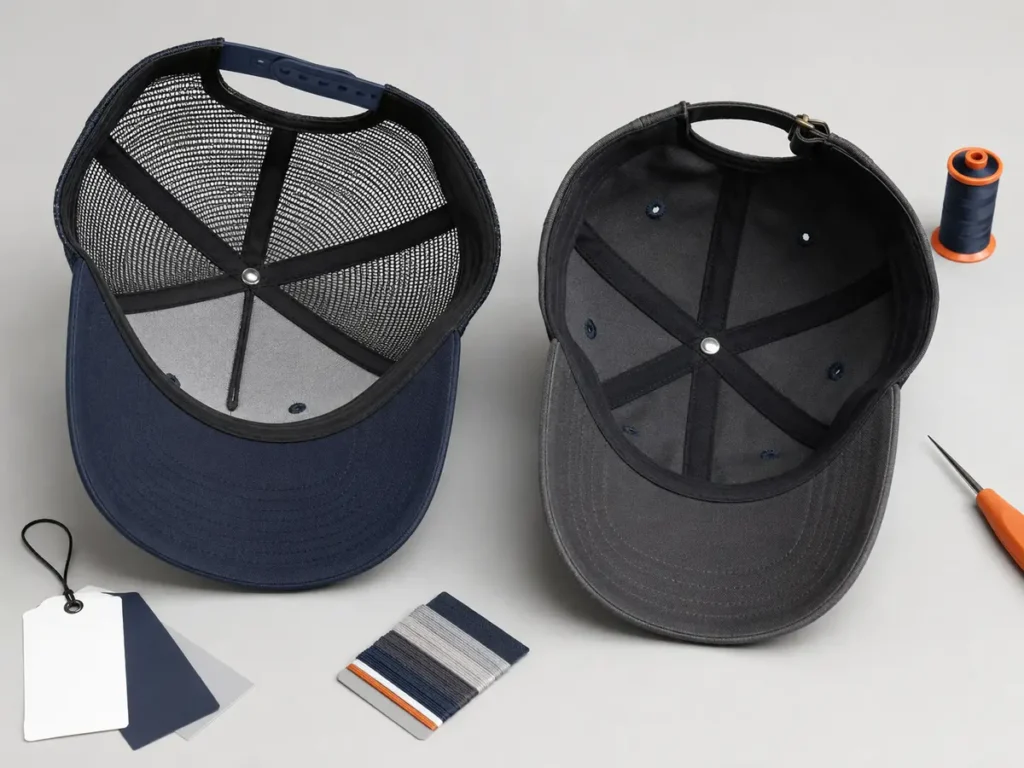
Interior inspection reveals reinforcement, seam tape, sweatband attachment and closure finishing.
5. Fit and closure
Test the adjustment range on representative head sizes. Open and close the snap, buckle or hook-and-loop system repeatedly during sampling. For fitted caps, approve actual circumference and size labeling rather than relying on nominal names alone.
6. Packaging
Confirm how caps are nested, supported and protected against crown crushing or brim deformation. Check hangtag position, barcode accuracy, polybag requirements, carton quantity and carton marks.
For bulk inspection, agree on a method, sample size and defect classification before production. Performance or compliance requirements should reference the destination market and an appropriate test method.
Information to Send for an Accurate Quotation
An efficient request for quotation should include:
- Product type: trucker hat, baseball cap or both
- Five-panel or six-panel construction
- Crown profile: low, mid or high
- Structured or unstructured front
- Front, side and rear materials
- Brim shape, size, stitch rows and underside color
- Closure type and required color
- Target quantity by color and, for fitted caps, by size
- Vector logo file and decoration dimensions
- Decoration method and placement
- Pantone or other approved color references
- Inside labels, hangtags, stickers and packaging
- Target market and intended use
- Delivery destination and required delivery date
- Reference images, existing sample or tech pack
- Testing or documentation requirements
This information allows suppliers to quote the same product rather than sending prices for visually similar but materially different caps.
Questions to Ask a Custom Hat Supplier
- What exact front fabric, mesh and sweatband are included in the quotation?
- Is the crown structured with foam, buckram or another reinforcement?
- What are the crown height and usable front decoration dimensions?
- Can the supplier provide a physical sample using the production material?
- How will the logo be digitized or the patch attached?
- Can mesh, solid fabric, snap and thread colors be approved together?
- What tolerance will apply to logo placement and finished dimensions?
- How are brims protected from deformation during packing?
- How will repeat-order colors and construction be controlled?
- Which packaging, labels and carton marks are included?
- What inspection method is available before shipment?
- Which claims require testing or documentation for the destination market?
Common Buying Mistakes
Treating “trucker hat” as a complete specification
Trucker hats vary by panel count, crown height, front reinforcement, mesh, brim and closure. Provide dimensions and an approved sample.
Selecting decoration before selecting the crown
A logo method that works on stable twill may fail on foam, soft unstructured fabric or open mesh. Develop the hat and decoration together.
Approving color on a screen only
Monitor color is directional. Approve fabric, mesh, thread and trims using physical references when color consistency is commercially important.
Ignoring the rear and interior
Buyers focus on the front logo, but users feel the sweatband, seam tape and closure. Interior finishing affects comfort and perceived quality.
Using unsupported performance language
Mesh suggests ventilation, but terms such as moisture-wicking, UV-protective, water-resistant or recycled need qualification and, where required, documentation for the exact product.
Skipping pack-out approval
Caps can reach the customer with crushed crowns or distorted brims if packing is poorly planned. Include pack-out in sample approval.
Why Work With JIUMU on Custom Headwear?
Established in 2010 in Guangdong, China, JIUMU supports B2B custom hats, teamwear, logo apparel, bags and branded merchandise for buyers in North America, the United Kingdom and Europe. The service is designed for schools, sports teams, clubs, distributors, promotional product companies, retailers and private-label brands.
Available capabilities include OEM and ODM product development, embroidery, printing, heat transfer, woven and molded patches, fabric sourcing, Pantone color matching, private labels, hangtags, packaging, digital mockups, physical samples, bulk production, quality control and export support.
Buyers can develop custom trucker hats, custom baseball caps or a coordinated headwear range. For team buyers, caps can also be planned with custom team uniforms or baseball team uniform packages to improve color and logo consistency across the program.
Frequently Asked Questions
Final Recommendation
Choose a trucker hat when open rear ventilation, a recognizable mesh-back look, an adjustable snap and a strong front patch area are central to the project. Choose a baseball cap when you need maximum flexibility in fabric, crown profile, closure, fit, side and rear decoration, or integration with a formal team or corporate uniform.
For many B2B programs, the best answer is not one universal cap. A coordinated range can use structured baseball caps for teams or staff, unstructured cotton caps for lifestyle merchandise and trucker hats for outdoor events or warm-weather promotion. The important step is to define each product by measurable construction, material, decoration and packaging requirements.
Ready to develop your headwear range? Share your logo, target buyer, use case, quantity, colors, desired structure and delivery destination with JIUMU. Contact JIUMU by WhatsApp/phone at +86 18507502899 or email zhengdong@jiumugear.com to request a custom quotation and sample plan.
About the author: The JIUMU Product Development Team prepares practical sourcing guidance for custom hats, teamwear, logo apparel and private-label merchandise. JIUMU has supported B2B customization projects since 2010.