Baseball Pants Size Chart and Fit Guide for Youth and Adults
Ordering baseball pants for one player is mostly a sizing decision. Ordering them for a youth league, school, club, distributor, or private-label program is a specification-management decision. A buyer has to translate different body shapes, growth stages, fit preferences, pant lengths, fabrics, and decoration details into a size run that can be produced consistently.
This guide explains how to use a baseball pants size chart without treating it as a universal standard. It covers youth and adult measurement, full-length and knicker fits, body measurements versus garment measurements, sample approval, roster planning, and the information a custom supplier needs before quotation.
Quick Answer: Measure the player’s waist at the location where the baseball belt and waistband will sit, measure the fullest part of the hips, and measure the inside leg from the crotch to the intended hem. Match the largest relevant measurement to the supplier’s chart. If the waist and hips indicate different sizes, select the size that accommodates the larger measurement and confirm the rise, thigh, and length during a fitting. For bulk orders, approve a physical size-set sample before production because baseball pants sizing is not fully standardized across brands, fabrics, or fit blocks.
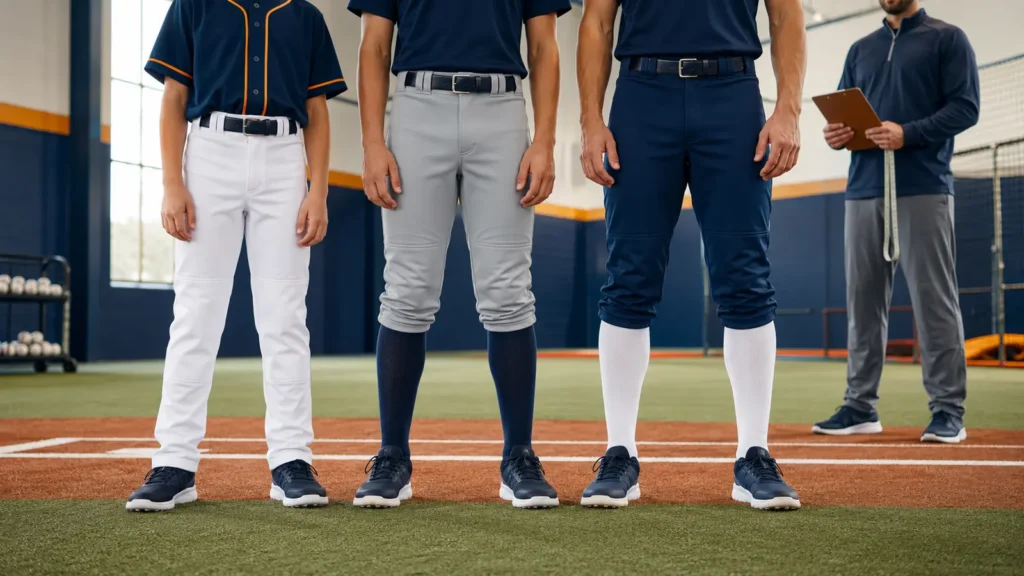
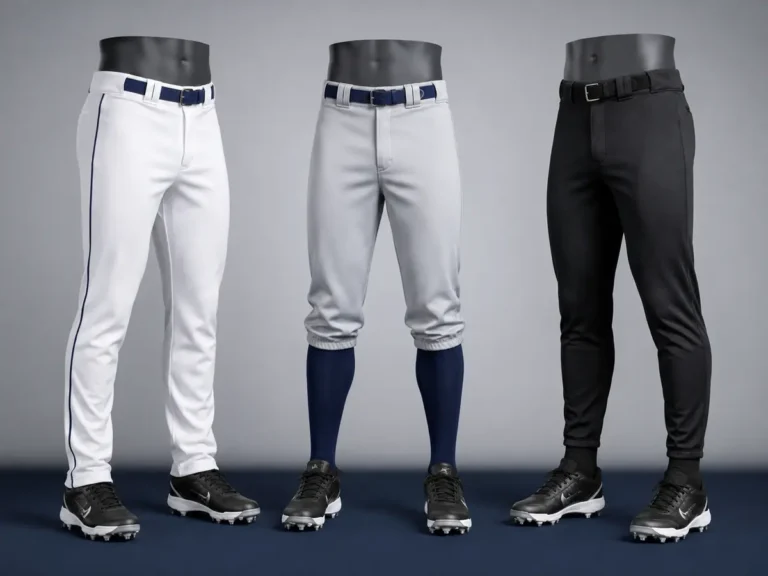
Different ages and pant silhouettes require a measurement-led size plan rather than an age-only estimate.
Is There a Universal Baseball Pants Size Chart?
No. Size labels such as Youth Medium, Adult Small, or 32-inch waist are useful starting points, but they do not guarantee the same finished garment dimensions across suppliers.
Current manufacturer charts illustrate the variation. Rawlings publishes product-family charts that separate youth and adult waist ranges and also distinguishes full-length pants from knicker pants. Under Armour publishes youth and men’s bottom measurements that include waist and hip ranges. Nike’s general bottom-sizing guidance likewise separates waist, hips, and—in some products—inseam. These sources agree on the importance of measuring the body, but their size blocks and product specifications are not identical.
For procurement, treat any online chart as one of three things:
- A body-measurement chart: the player’s body measurements are mapped to a labeled size.
- A garment-measurement chart: the finished pants are measured flat or along defined garment points.
- A planning reference: an approximate size range used before a supplier issues the final product-specific chart.
Never mix these formats. A 30-inch body waist is not automatically the same as a 30-inch relaxed garment waistband, especially when the pants include elastic, gripper tape, stretch fabric, or an adjustable youth waistband.
Baseball Pants Size Chart: Youth Planning Reference
The following table is a practical starting point for roster planning. The waist ranges align with a current Rawlings youth baseball pants reference, while the metric values are rounded conversions. It is not a JIUMU production specification and should not replace a product-specific size chart or approved sample.
| Youth size | Reference waist (in) | Reference waist (cm) | Typical buying use |
|---|---|---|---|
| YXS | 21–22 | 53–56 | Smaller youth players; verify rise and length carefully |
| YS | 23–24 | 58–61 | Early youth size run |
| YM | 25–26 | 64–66 | Common mid-youth planning size |
| YL | 27–28 | 69–71 | Larger youth or early-teen players |
| YXL | 29–30 | 74–76 | Older or broader youth players |
| YXXL | 31–32 | 79–81 | Extended youth range; compare with adult small |
Source context: Rawlings Premium Knicker Baseball Pants sizing. Fit and inseam vary by product family.
Age, height, and weight may help a team estimate the first size assortment, but they are not reliable final size selectors. Two players of the same age can have different waist, hip, thigh, rise, and leg-length requirements. A youth player near YXL or YXXL should try both the largest youth size and the nearest adult size because adult patterns may have a longer rise, wider thigh, and different waistband structure.
Adult Baseball Pants Size Chart: Planning Reference
This adult table uses the waist ranges published for a Rawlings adult knicker product family. It is a reference for planning, not a universal standard or a promised JIUMU garment specification.
| Adult size | Reference waist (in) | Reference waist (cm) | Procurement note |
|---|---|---|---|
| S | 28–30 | 71–76 | Compare with extended youth sizes for teen players |
| M | 32–34 | 81–86 | Confirm hip and thigh ease for athletic builds |
| L | 36–38 | 91–97 | Check rise and seat, not waist alone |
| XL | 40–42 | 102–107 | Confirm waistband stretch and belt compatibility |
| XXL | 44–46 | 112–117 | Include only after checking the supplier’s grading rules |
Source context: Rawlings adult and youth knicker sizing. A different product, fabric, or manufacturer may use different ranges.
If a team needs XS, 3XL, tall, short, or custom extended sizing, ask the supplier whether those sizes use the same grade increments as the core range. Extended sizes should not be created by simply adding width everywhere. Rise, thigh, knee position, leg opening, and length must remain proportionate.
How to Measure for Baseball Pants
Use a flexible measuring tape and record measurements over close-fitting athletic clothing. The player should stand naturally, with feet approximately hip-width apart. Keep the tape level and snug without compressing the body.
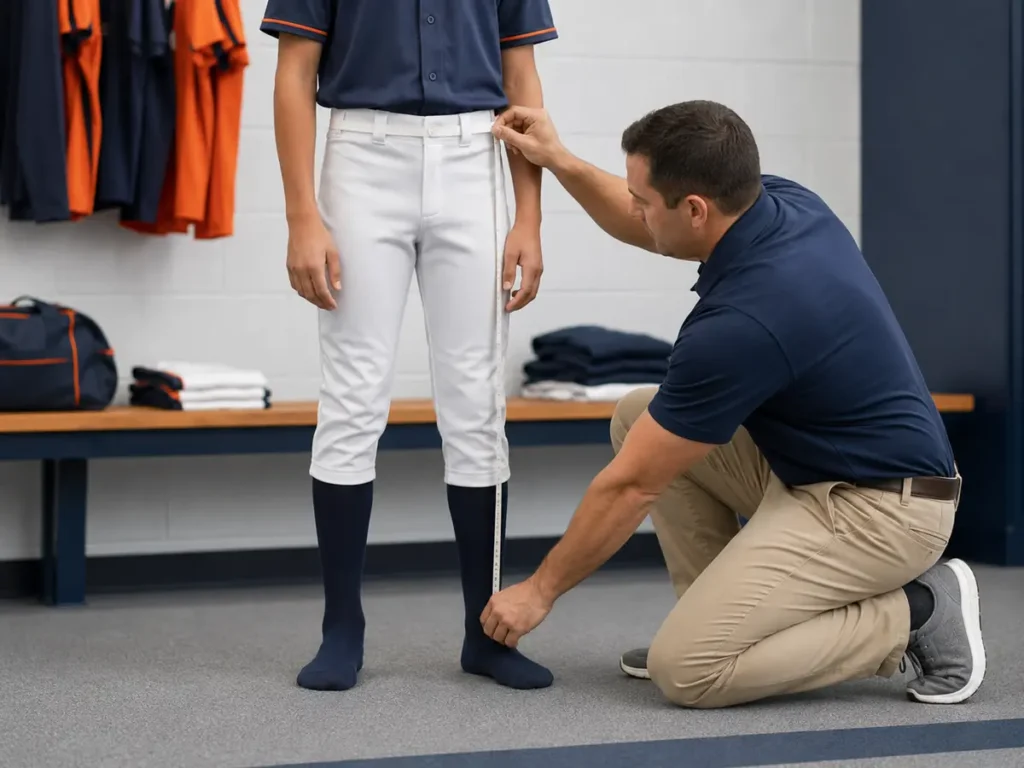
Measure at defined body points and record the method so the team and supplier interpret the data consistently.
1. Waist
Measure around the point where the baseball pants waistband and belt will actually sit. This may be slightly different from the narrowest natural waist.
Rawlings instructs players to measure above the top of the hip bone, approximately where the belt is worn. Nike’s general bottom-sizing instructions define the natural waist as the narrowest area and tell the user to keep the tape horizontal. Both methods are valid within their own size systems. The important purchasing rule is to use the measurement location specified by the selected supplier and apply it consistently to the entire roster.
2. Hips and Seat
Measure around the fullest part of the hips and seat with the tape parallel to the floor. This measurement is essential for players with a muscular lower body or when choosing a more tapered cut. Nike and Under Armour both include hip measurements in their general bottom size guidance.
If the waist fits but horizontal strain lines appear across the front or seat, the hip or thigh area may be too small. Moving up a size may solve the problem, but the waistband may then need adjustment. For custom programs, a supplier can evaluate whether the pattern needs a different seat-to-waist ratio.
3. Inseam
Measure from the crotch point down the inside of the leg to the intended finished hem. Full-length open-bottom pants generally finish over the top of the cleat according to the team’s preferred break. Elastic-bottom pants finish above the shoe. Knicker pants finish below the knee and are worn with long socks.
Nike’s numeric bottoms guide defines inseam as the garment length from the crotch seam to the hem. That is a garment measurement, not always the same as a body leg measurement. Ask the supplier which definition appears in its chart.
4. Outseam
Measure from the top edge of the waistband along the side seam to the finished hem. Outseam helps confirm overall length and rise when an inseam alone does not explain the fit.
5. Front Rise and Back Rise
Rise determines how the pants sit through the crotch and waist. It is especially important when a roster contains both lean and athletic builds. For garment measurement, front rise is commonly measured from the crotch seam to the top of the front waistband; back rise follows the back seam to the top of the back waistband.
6. Thigh and Leg Opening
Measure the body around the fullest thigh for fit selection. For a garment specification, measure the pants flat at the defined point below the crotch, then double the width if the supplier reports circumference. The leg opening should match the style: wide enough to fall over cleats for open-bottom pants, secure enough for elastic cuffs, and appropriately shaped for knickers.
Body Measurements vs. Finished Garment Measurements
This distinction causes many team-order errors.
| Measurement type | What it describes | How buyers should use it |
|---|---|---|
| Body waist | Circumference of the player at a defined waist point | Select the starting size |
| Garment waistband, relaxed | Pants measured without stretching the elastic | Check minimum fit and construction |
| Garment waistband, extended | Waistband stretched to an agreed tension | Check usable stretch range; method must be defined |
| Body hip | Fullest body circumference at hips and seat | Prevent tightness through seat and upper thigh |
| Garment hip | Finished pants measured at a defined level | Verify ease against the approved pattern |
| Body inseam | Inside leg to the desired wearing point | Choose a target length |
| Garment inseam | Crotch seam to finished hem | Verify the produced pant length |
Ease is the difference between body dimensions and garment dimensions. Woven polyester baseball pants usually need enough functional room through the seat and thigh for running, crouching, sliding, and throwing. Stretch content may reduce the amount of added ease required, but it does not eliminate the need for correct pattern balance.
When reviewing a supplier chart, ask:
- Are the values body measurements or finished garment measurements?
- Is the waistband value relaxed, stretched, or both?
- Where exactly are hip, thigh, and rise measured?
- Are tolerances included?
- Does the fabric have mechanical or elastane stretch?
- Does every colorway use the same fabric specification?
Choosing the Right Baseball Pants Fit
Sizing and fit are related but different. Size controls the dimensional range; fit describes the silhouette and wearing position.
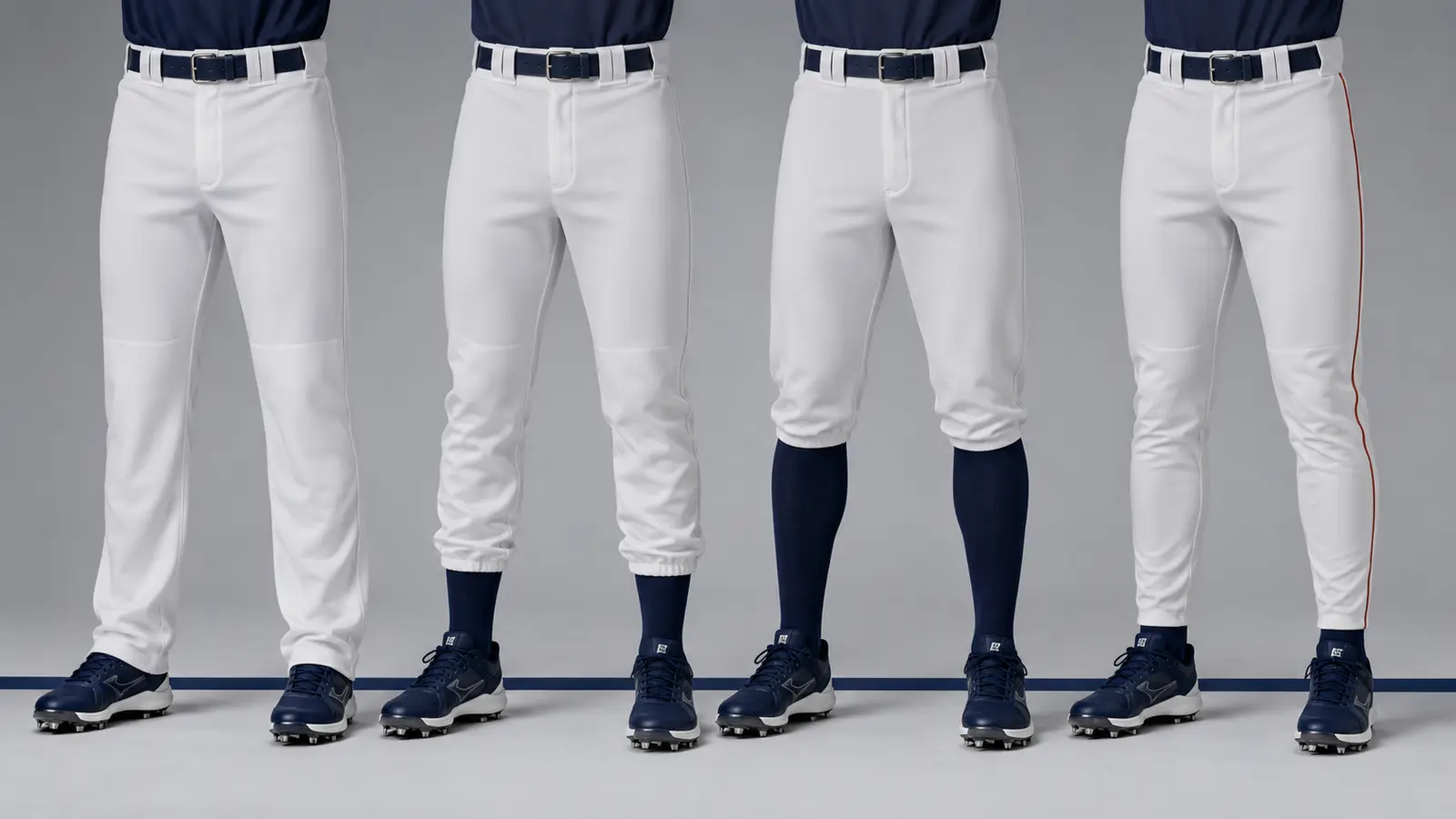
Approve the silhouette before finalizing the size run because the same labeled size can feel different in each fit.
| Fit style | Visual profile | Best evaluated by | Bulk-order risk |
|---|---|---|---|
| Full-length open bottom | Longer hem falls over cleats | Inseam, outseam, hem opening, break | Excess length drags; short length exposes socks |
| Full-length elastic bottom | Cuff finishes above shoe | Inseam, cuff tension, calf room | Cuff may ride up or feel tight |
| Knicker | Hem finishes below knee with long socks | Knicker inseam, knee position, cuff opening | Hem may sit above or below the intended point |
| Tapered | Narrower from knee to ankle | Thigh, knee, calf, opening | Tightness restricts movement or causes strain |
| Relaxed | More room through seat and thigh | Hip, rise, thigh, leg width | Oversizing can look loose at waist and knee |
Full-Length Open-Bottom Pants
These pants need enough length for the chosen break without being stepped on. Fit the player in cleats, not only socks. Check the pants while standing, jogging, crouching, and taking a fielding stance.
Elastic-Bottom Pants
The cuff must stay in position without cutting into the lower leg. Confirm cuff circumference and recovery after stretching. A pant that looks correct standing still may ride upward during running if the calf area is too tight.
Knicker Baseball Pants
Knicker length is not a shortened version of a full-length inseam. The hem position, cuff structure, knee reinforcement, and sock overlap must work together. A current Rawlings knicker chart, for example, publishes youth inseams that progress by size and adult inseams that differ by product size. That demonstrates why buyers should request style-specific charts rather than converting one full-length chart.
How Should Baseball Pants Fit?
A good fit should pass both a visual check and a movement check.
At the waist, the pants should stay in place before the belt is pulled excessively tight. The fly should close flat. Belt loops should align and accept the intended baseball belt width.
Through the seat and thigh, the fabric should lie smoothly without deep horizontal pulling lines. The player should be able to squat, sprint, lunge, and rotate without the waistband pulling downward or the crotch binding.
At the knee, reinforcement should cover the high-abrasion zone when the player bends. If a youth player wears pants that are too large “for growth,” the reinforced panel may sit below the knee and provide less useful coverage.
At the hem, full-length pants should achieve the approved break over cleats. Knicker and elastic-cuff styles should remain at the intended height during movement.
Use this five-step fitting test:
- Stand naturally and check waistband, fly, seat, and hem.
- Raise each knee to hip height.
- Perform a deep athletic squat.
- Jog and make two lateral fielding movements.
- Wear a belt and protective equipment normally used with the uniform.
Youth vs. Adult Baseball Pants: What Changes?
Youth and adult patterns differ in more than waist size. Youth garments usually need proportionate rise, thigh, knee placement, and leg length for growing athletes. Adult blocks may add length and body room in ways that make them unsuitable for a youth player, even if the waist measurement overlaps.
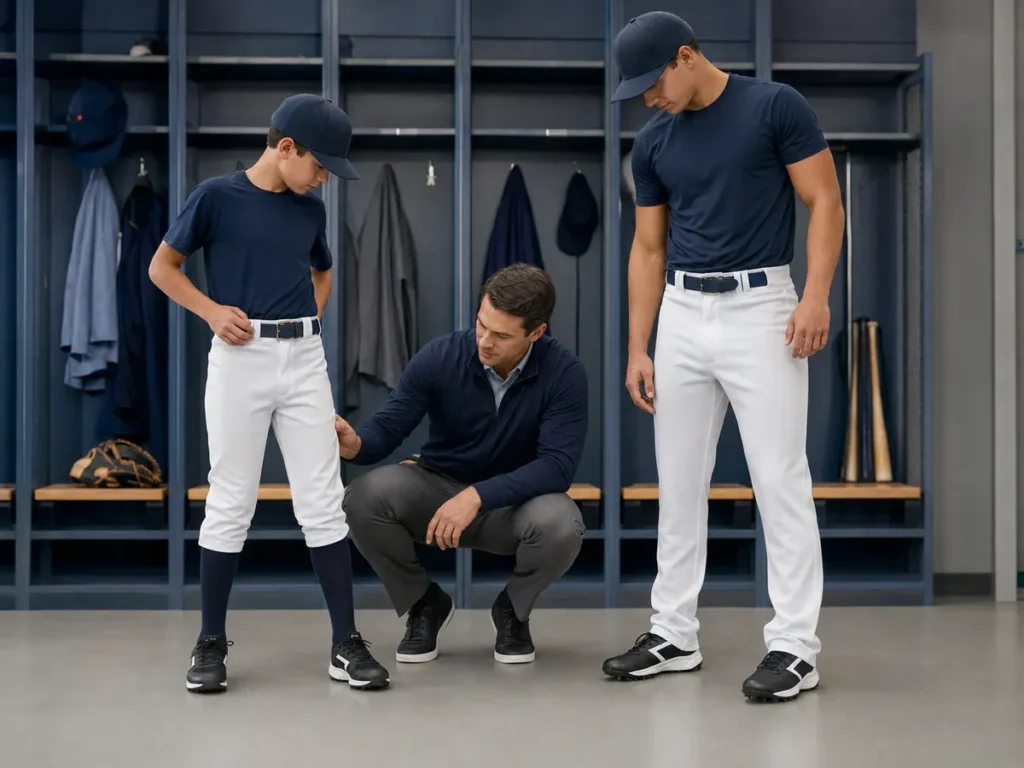
At crossover sizes, compare the complete pattern—not only the waistband label.
For a player between youth and adult ranges, compare:
- waistband position and adjustment range;
- front and back rise;
- hip and seat ease;
- thigh mobility;
- knee reinforcement position;
- inseam or knicker length;
- leg opening or cuff;
- appearance with the complete jersey, belt, socks, and cleats.
Avoid assigning sizes by school grade or age alone. A roster spreadsheet should record measured waist, hip, inseam, selected size, fit style, and fitting approval.
Fabric and Construction Affect Perceived Fit
Two pants built from the same pattern can feel different when the material changes. Fabric weight, stretch, surface finish, shrinkage behavior, and recovery influence how the garment moves and how closely it can fit.
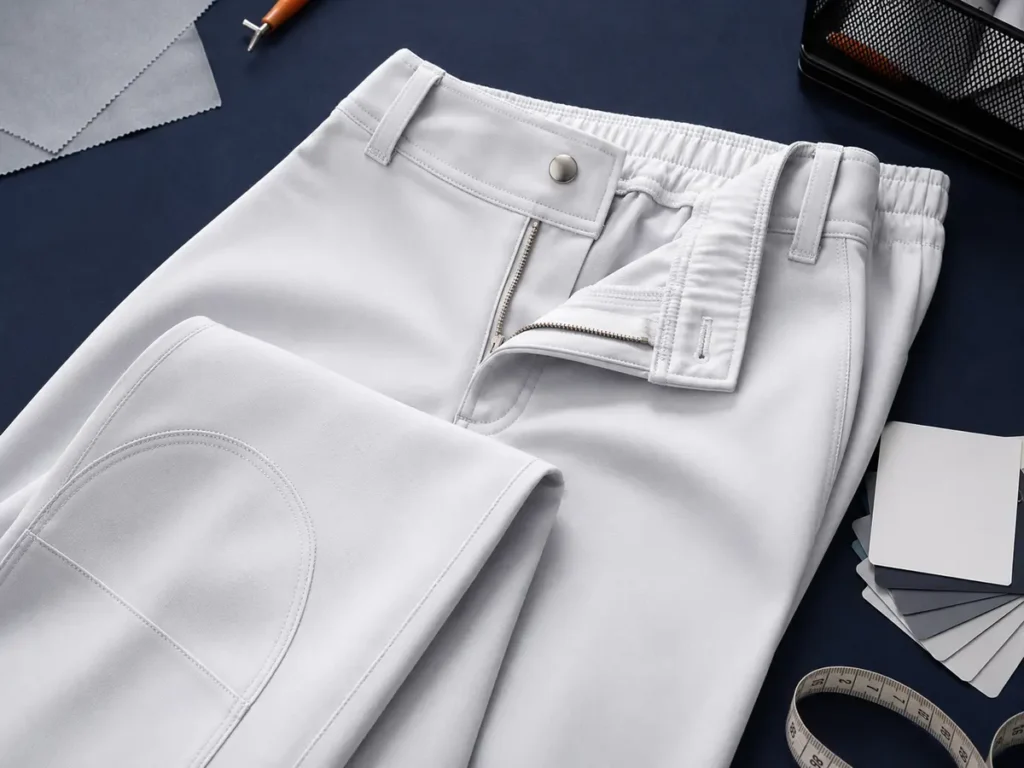
Fabric and component changes should be included in sample approval because they can alter comfort and dimensions.
Key construction points include:
- polyester fabric weight and stretch direction;
- reinforced or double-layer knee;
- elastic waistband strength and recovery;
- internal gripper elastic, if specified;
- metal or durable resin snap;
- zipper length and fly construction;
- belt-loop quantity, width, and reinforcement;
- side seam or piping alignment;
- bartacks at stress points;
- seam allowance and stitch density;
- hem or cuff construction.
White baseball pants also need a fabric and lining review under realistic light. Buyers should assess opacity, but should not assume that a heavier fabric automatically provides better movement or comfort. The specification must balance coverage, durability, breathability, and flexibility for the intended level of play.
Custom Baseball Pants Options That Influence Sizing
Customization is not limited to color and logos. Pattern and component decisions can change fit:
- traditional, athletic, relaxed, or tapered block;
- youth, adult, and extended size grading;
- full-length, elastic-bottom, or knicker length;
- standard, short, or tall inseam options;
- adjustable youth waistband;
- belt-loop and waistband construction;
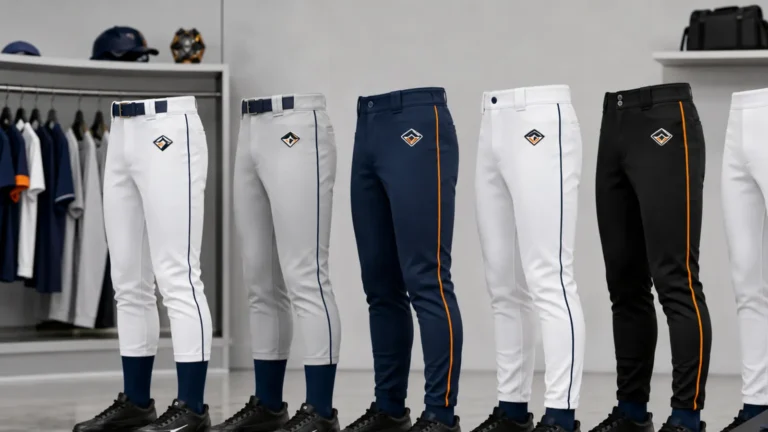
- side piping or contrast panels;
- reinforced knee dimensions;
- logo label, woven label, heat-transfer mark, or embroidery detail;
- private-label size and care labels;
- player-by-player or size-group packaging.
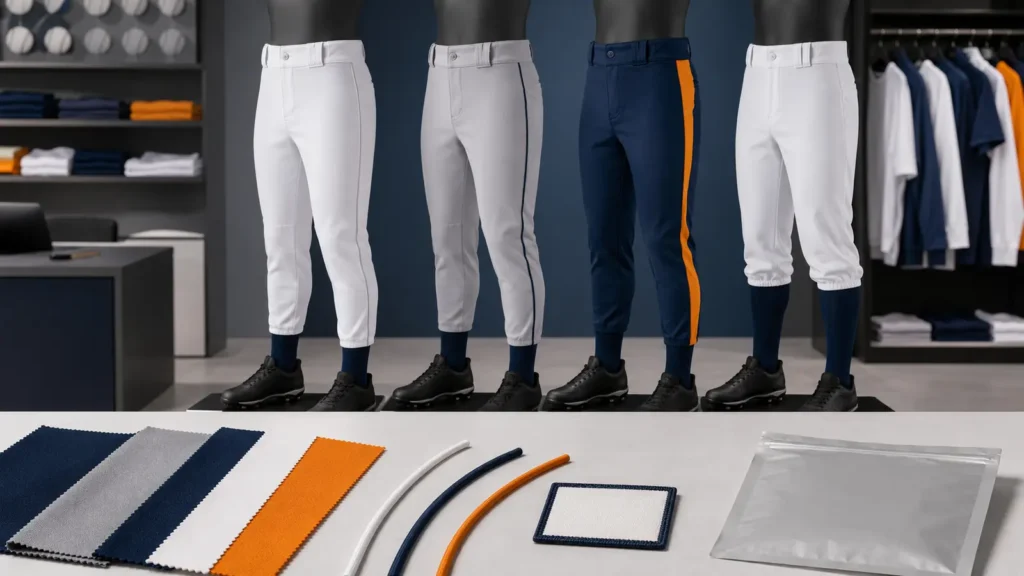
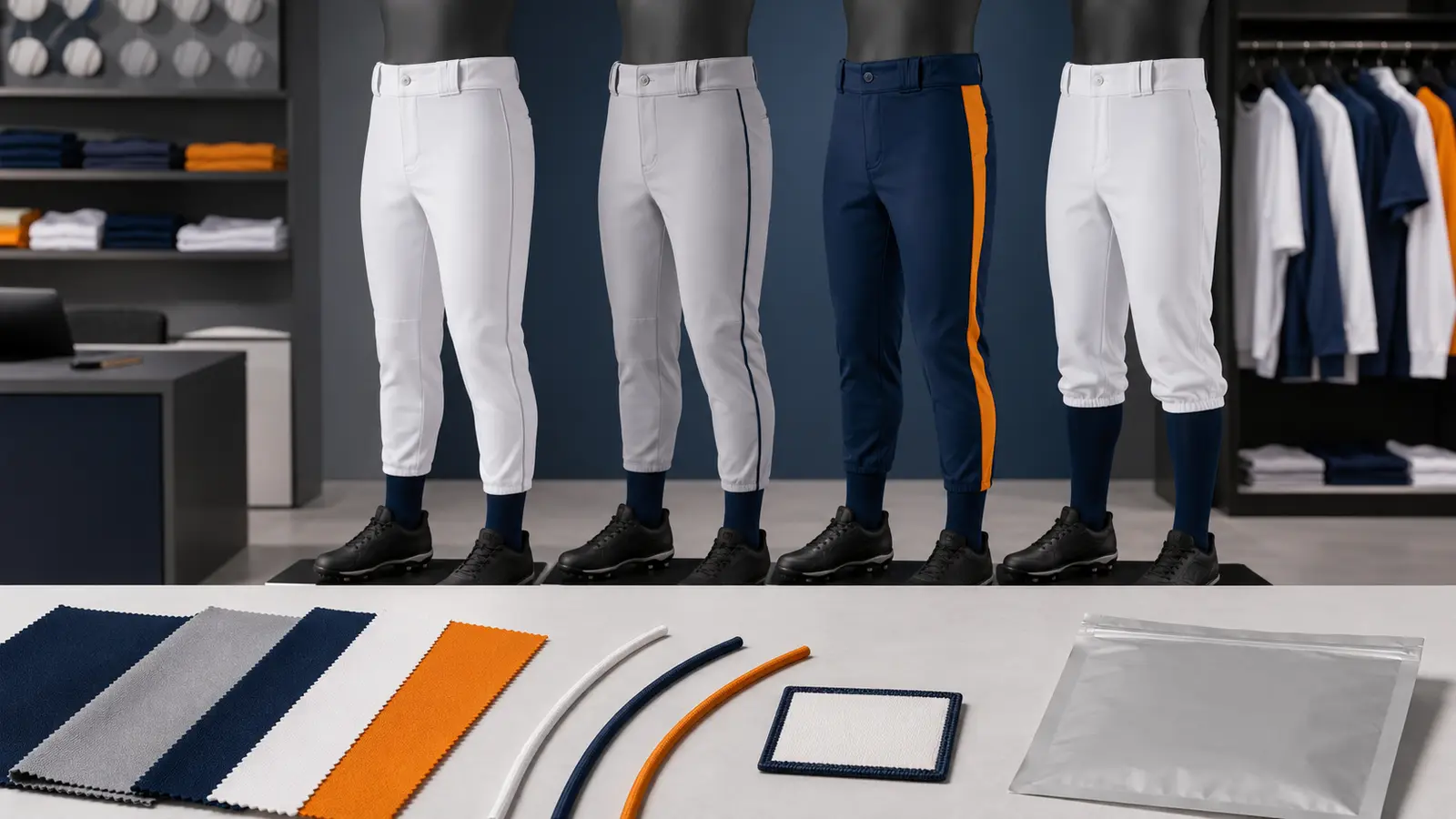
Finalize fit, fabric, piping, trims, and packaging in one approval set to prevent mismatched specifications.
Mid-Article Buyer CTA
Planning a youth, adult, school, club, or private-label order? Send JIUMU your target quantity, size range, fit style, color or Pantone references, fabric requirement, piping details, logo files, packaging method, destination country, and required delivery date. JIUMU can review the specification and prepare a custom quotation, digital mockup, and physical sample plan.
Explore custom team uniforms or contact JIUMU.
How to Build a Size Run for a Team Order
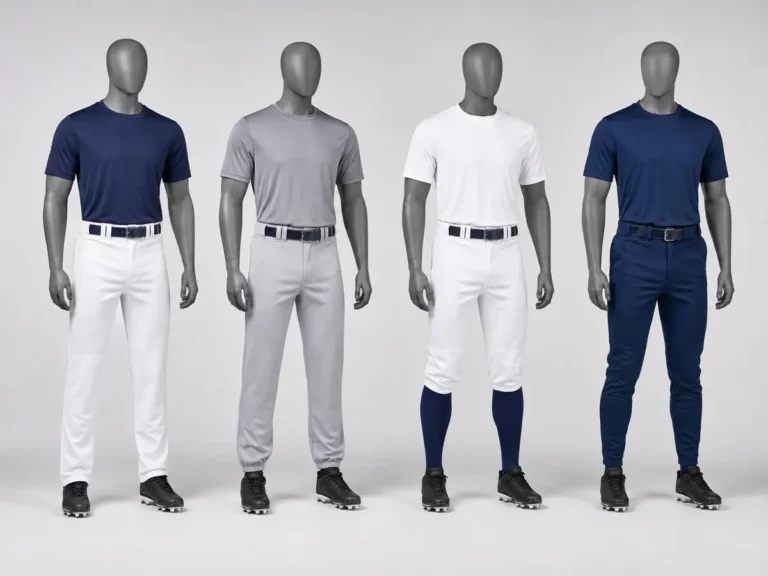
The most reliable approach is roster-led ordering.
Step 1: Define One Measurement Protocol
Create a one-page measurement instruction with diagrams or photos. Identify where to measure waist, hips, inseam, and any product-specific points. State whether players should wear compression shorts or other base layers during fitting.
Step 2: Collect Roster Data
Use one row per player:
| Player ID | Age group | Waist | Hip | Inseam | Preferred style | Trial size | Approved size | Notes |
|---|---|---|---|---|---|---|---|---|
| Example 01 | Youth | — | — | — | Knicker | — | — | Complete after fitting |
Avoid putting unnecessary personal information into production files. A player name or number may be required for personalization, but birth date and unrelated data are not.
Step 3: Conduct a Size-Set Fitting
Obtain a representative size set in the final or closest approved fabric. Include sizes around the highest-volume part of the roster and crossover sizes such as YXL/YXXL and Adult S.
Step 4: Record the Selected Size
Do not rely on verbal selections. Have the team coordinator record each approved size and any player-specific length option.
Step 5: Add Controlled Spares
Spare quantities should reflect the league’s replacement policy, late registrations, roster turnover, and likely high-use sizes. There is no universal spare percentage; determine it from the program’s historical demand and budget.
Step 6: Freeze the Order File
Give the approved roster file a version number and date. Changes after production begins may affect material allocation, personalization, packaging, cost, or delivery.
Sample Approval and Quality-Control Checklist
A digital mockup confirms appearance but cannot prove fit. Approve at least one physical sample, and for a broad size range consider a graded size set.
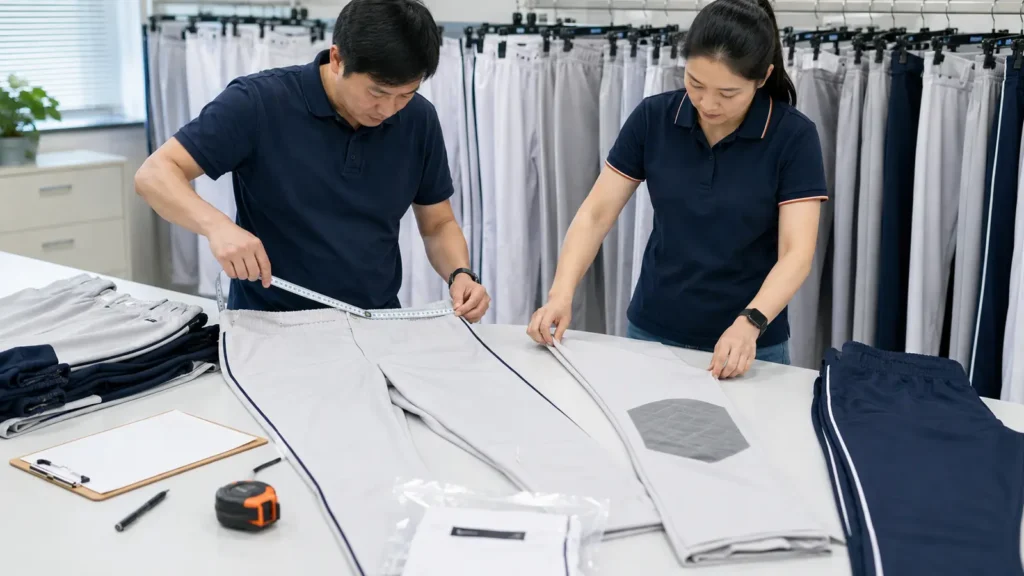
The approved reference sample and measurement sheet should control bulk inspection.
Check the sample in this order:
- Identity: style number, colorway, size, fabric, and revision match the approval sheet.
- Measurements: waistband relaxed and extended, hip, front rise, back rise, thigh, inseam, outseam, knee position, and leg opening.
- Fit: assess standing posture and baseball movements on representative players.
- Construction: inspect seams, bartacks, belt loops, fly, snap, zipper, knee reinforcement, and cuffs.
- Appearance: verify piping width and alignment, panel symmetry, shade consistency, and surface defects.
- Decoration: confirm mark position, method, dimensions, color, and adhesion or stitch quality where applicable.
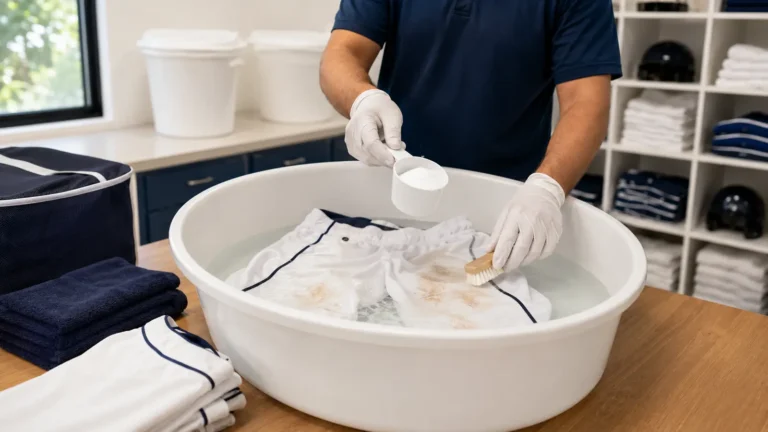
- Care test: use an agreed wash test based on the final care instructions; record dimensional change and appearance.
- Packaging: verify size labels, player sorting, bag labels, carton assortment, and packing list.
The purchase agreement should define measurement tolerances and inspection method. “Normal tolerance” is too vague for a controlled custom order.
Questions to Ask a Baseball Pants Supplier
Before placing a bulk order, ask:
- Is your chart based on body or garment measurements?
- Can you provide a point-of-measure diagram?
- What are the relaxed and extended waistband measurements?
- Which measurements are graded between sizes?
- Are youth and adult patterns separate?
- Are short, regular, tall, or custom inseams available?
- Is the knicker chart separate from the full-length chart?
- What fabric composition, weight, and stretch direction are proposed?
- Are knee panels reinforced, and where are they positioned by size?
- Can we approve a size set in the final fabric?
- What measurement tolerances apply to bulk production?
- How are shade, piping, labels, and packaging checked?
- Can pants be packed by player, team, size, or product category?
- What files and order details are required before quotation?
Common Baseball Pants Sizing Mistakes
Ordering by Age Alone
Age brackets are convenient but cannot represent every body shape. Use actual measurements and a fitting.
Assuming the Size Label Is Universal
A Youth Large from one product line may not match another. Keep each supplier’s chart with its product code and revision date.
Measuring the Wrong Waist Position
The natural waist and baseball belt position may differ. Follow the chart’s defined method.
Ignoring Hips and Thighs
Waist-only sizing can produce tightness through an athletic seat and thigh. Compare the larger controlling measurement.
Using a Full-Length Chart for Knickers
Knicker knee position and cuff length require a style-specific chart.
Buying Excessive “Growth Room”
Oversizing can move the knee panel, create excess fabric, and reduce waistband stability. For youth programs, plan replacement or future-season sizing rather than compromising current fit.
Approving Only a Digital Mockup
Color placement can be reviewed digitally, but fit, fabric hand, opacity, stretch recovery, and construction need a physical sample.
Changing Fabric After Fit Approval
A different fabric can alter stretch, drape, shrinkage, and perceived size. Reconfirm the sample when material changes are meaningful.
Why JIUMU for Custom Baseball Pants and Team Uniform Programs
Established in 2010 in Guangdong, China, JIUMU supplies custom teamwear, logo apparel, hats, uniforms, bags, and branded merchandise for professional B2B buyers in North America and Europe.
For baseball programs, JIUMU can support OEM and ODM product development, fabric sourcing, Pantone color matching, private labels, digital mockups, physical samples, packaging customization, bulk quality control, and export coordination. Decoration capabilities include embroidery, sublimation, screen printing, heat transfer, and several patch formats where appropriate to the product design.
The typical MOQ is 50 pieces, subject to product structure and customization. Buyers should confirm the exact MOQ, sample plan, price, and delivery schedule for the proposed specification.
JIUMU is most relevant when a buyer needs coordinated pants, jerseys, caps, socks, bags, jackets, or other team items managed through one specification and color system. Explore baseball team uniform packages and custom team jerseys.
Frequently Asked Questions
Final Recommendation
Use a baseball pants size chart as the beginning of the decision, not the final authority. Measure waist, hips, and intended length consistently; separate body measurements from garment measurements; choose the fit style before building the size run; and approve the final fabric and graded pattern through physical samples.
For youth and adult programs, the strongest order file combines a measured roster, selected sizes, fit approvals, decoration details, packaging requirements, and a revision-controlled specification. That process reduces exchanges, player dissatisfaction, inconsistent repeat orders, and avoidable production changes.
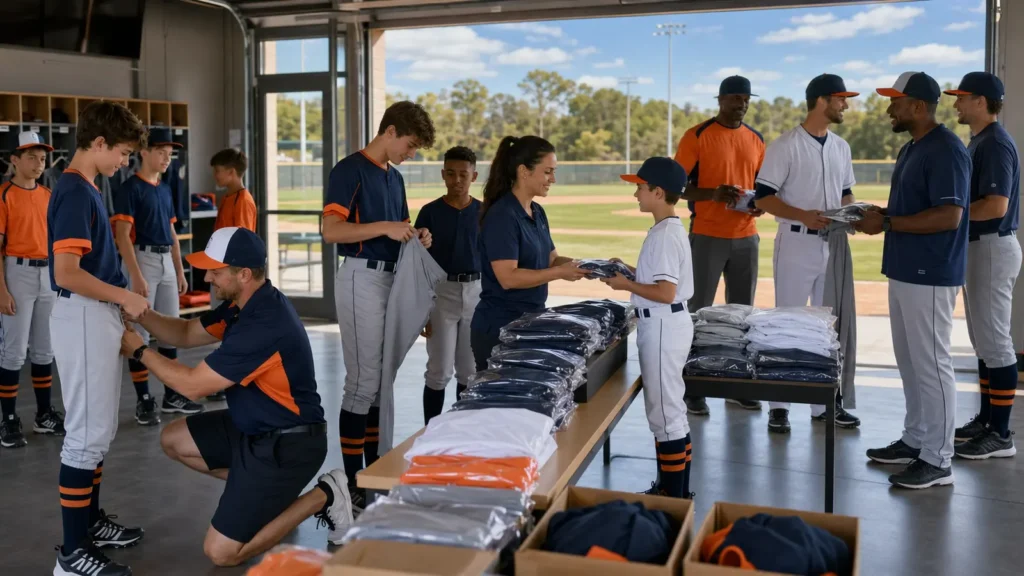
A measured roster, approved samples, and organized size distribution make team orders easier to manage.
Request a Custom Baseball Pants Quotation
Send JIUMU:
- total quantity and size range;
- youth and/or adult roster requirements;
- full-length, elastic-bottom, knicker, tapered, or relaxed fit;
- body or approved garment measurements;
- fabric and color references;
- piping, panels, labels, logos, and packaging requirements;
- destination country and target delivery date.
JIUMU will review the specification and advise the next step for quotation, digital mockup, sampling, and bulk-order planning.
WhatsApp / Phone: +86 18507502899
Email: zhengdong@jiumugear.com
Website: jiumugear.com
Sources and Measurement References
- Rawlings Premium Knicker Baseball Pants — youth and adult sizing
- Rawlings Launch Piped Knicker Baseball Pants — measurement method and size ranges
- Nike Men’s Bottoms Size Chart — waist and hip measuring guidance
- Nike Men’s Numeric Bottoms — garment inseam definition
- Under Armour Boys’ Pants and Shorts Size Chart
- Under Armour Men’s Shorts and Pants Size Chart
Editorial note: The reference charts above were accessed for this guide in July 2026. Manufacturers may revise products and sizing. Verify the current chart for the exact style before publishing or ordering.
Request a Custom Baseball Pants Quotation
Share your quantity, youth and adult size range, fit style, colors, fabric, piping, labels, packaging, destination, and required delivery date.
JIUMU Editorial Team
Practical sourcing guidance for custom teamwear, logo apparel, and baseball uniform programs. Updated July 25, 2026.