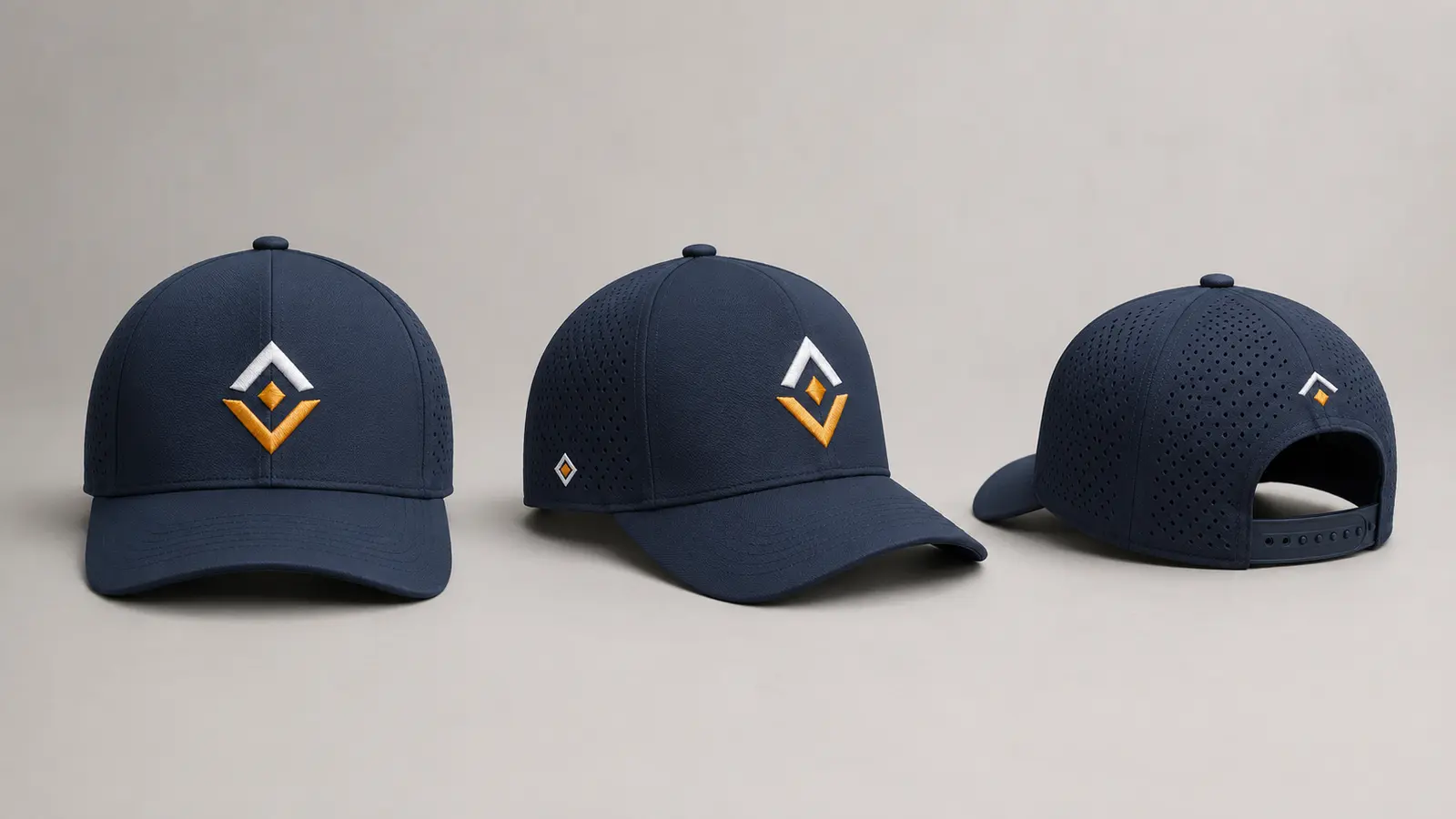
Golf Hat Logo Ideas for Clubs, Events and Brands
Custom golf hats can reinforce club membership, coordinate tournament participants and become retail merchandise for golf or lifestyle brands.
A strong concept can still fail when artwork is too detailed for embroidery, the mark crosses a center seam or the cap structure does not suit the audience. Professional buyers should make the logo, hat and decoration decisions together.
This guide presents practical golf hat logo ideas for clubs, events and brands, then explains how to convert a creative direction into a repeatable bulk order. It covers hat styles, logo positions, embroidery and patch options, artwork preparation, sample approval, quality control and the information a supplier needs to prepare an accurate quotation.
Quick Answer: The most effective golf hat logos are simple, distinctive and readable at a small size. Clubs often benefit from a refined crest, monogram or course-inspired symbol. Events can use a compact tournament emblem, year-free core mark or sponsor-compatible system. Brands usually need a recognizable icon, wordmark or patch that remains consistent across multiple hat styles. Before bulk production, match the artwork to the cap structure, confirm the decoration method, approve a physical sample and document the final logo size, color, position and construction.
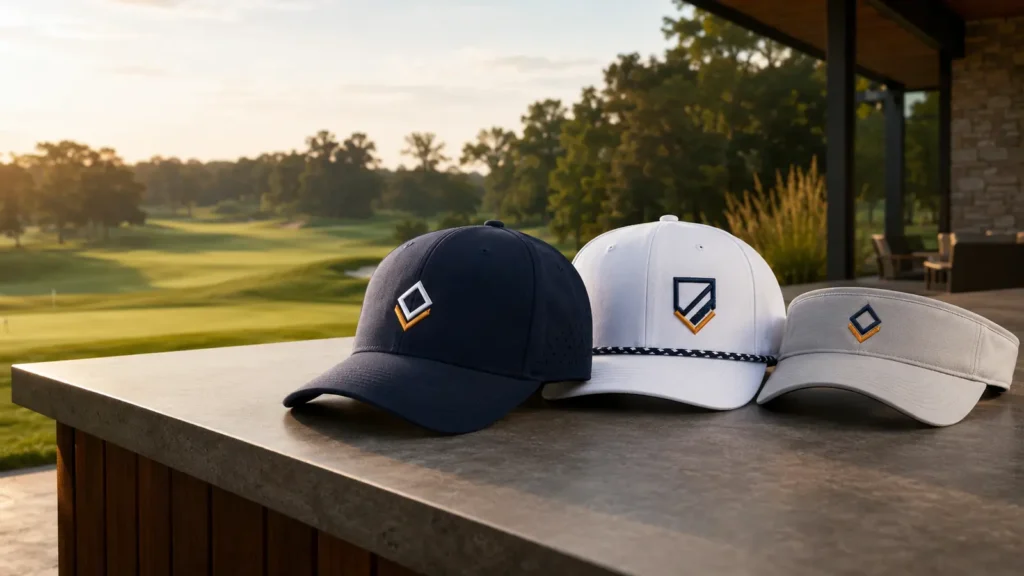
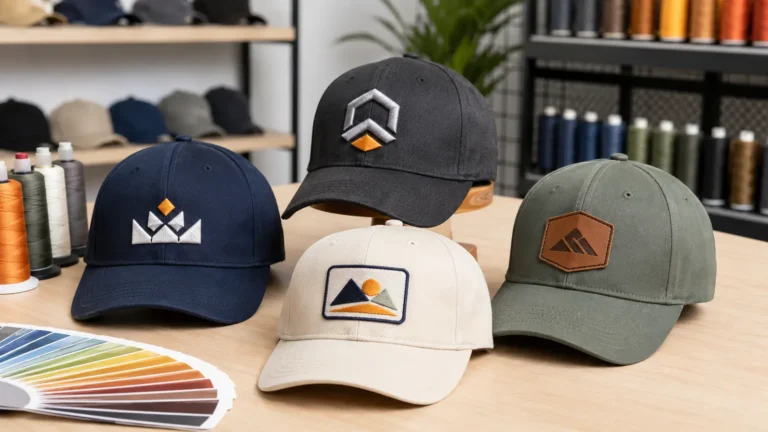
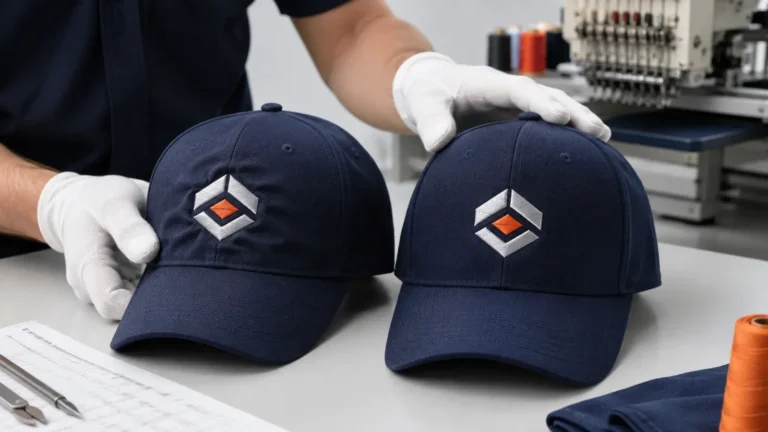
Original golf hat concepts showing how a coordinated color palette can support multiple cap styles.
Why Golf Hat Logo Design Matters in B2B Purchasing
A golf hat is viewed from a distance, worn outdoors and photographed from many angles. Its usable branding area is smaller and more curved than the front of a shirt or bag. Those conditions reward disciplined design.
The best choice is not simply the most attractive sketch. It is the concept that:
- can be reproduced at the intended size;
- remains recognizable on the selected fabric and color;
- works with the crown panels, seams and ventilation;
- supports front, side and back applications without visual clutter;
- can be documented for repeat orders;
- fits the buyer’s budget, quantity and delivery plan; and
- does not create avoidable trademark or licensing risk.
The United States Patent and Trademark Office identifies fanciful, arbitrary and suggestive marks as stronger categories than descriptive or generic wording. Buyers developing a commercial identity should review the USPTO guidance on strong trademarks and obtain qualified legal advice where necessary.
Golf Hat Logo Ideas at a Glance
The following directions can be adapted to different buyer types. They are creative starting points, not templates to copy from another organization.
| Logo direction | Best suited to | Visual character | Production notes |
|---|---|---|---|
| Initial monogram | Clubs, corporate outings, brands | Clean, established, compact | Keep strokes open enough for small embroidery |
| Shield or crest | Private clubs, academies, heritage brands | Traditional, formal, membership-led | Simplify internal lines and avoid miniature text |
| Course-landscape symbol | Clubs, resorts, destinations | Local, memorable, place-based | Use a few bold shapes instead of a detailed illustration |
| Abstract golf motion | Events, performance brands | Dynamic, modern, athletic | Avoid generic clip-art silhouettes |
| Tournament emblem | Charity and corporate events | Purpose-built, energetic | Create a core mark that can work with or without the year |
| Minimal flag or pin motif | Clubs and golf brands | Immediately relevant, understated | Differentiate the geometry and color system |
| Letter plus icon | Brands, retailers, club shops | Flexible and recognizable | Prepare icon-only and full-signature versions |
| Woven badge | Lifestyle brands, destination clubs | Detailed, collectible, retail-ready | Useful when fine shapes exceed practical embroidery detail |
| Rubber or PVC-style patch | Performance and outdoor brands | Technical, dimensional, weather-oriented | Confirm patch thickness, flexibility and attachment |
| Small tonal mark | Premium clubs and corporate programs | Quiet, refined, versatile | Test contrast under real lighting before approval |
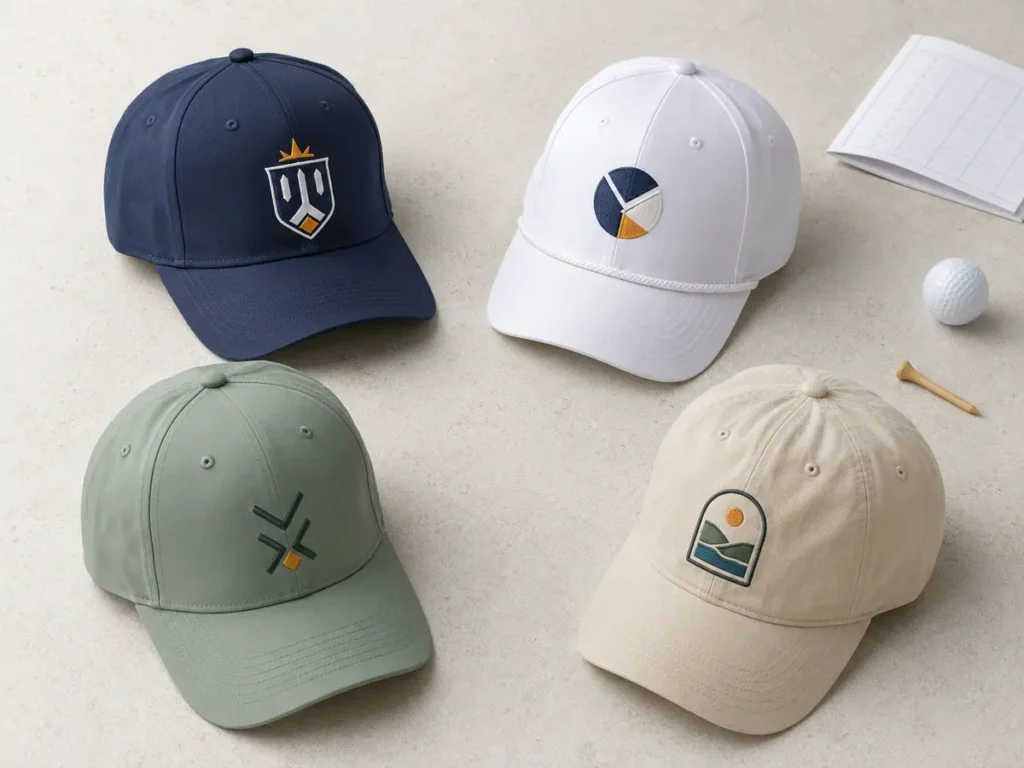
A club crest, event emblem, corporate symbol and lifestyle badge require different levels of formality and detail.
Golf Hat Logo Ideas for Private Clubs and Golf Associations
Club headwear usually needs to communicate belonging without looking temporary. It may be sold in a pro shop, included in a membership package, worn by employees or issued to teams. The design should therefore feel stable enough to support repeat orders.
1. A simplified club monogram
Combine one to three initials into a compact mark. A monogram works well when the club name is long or when members already recognize its initials. Interlocking letters can create a heritage appearance, while separated geometric letters feel more contemporary.
For embroidery, remove very thin outlines and excessive overlaps. A digital mockup may make tiny negative spaces look clear, but thread fills those spaces differently on a curved crown. Ask the supplier to confirm which gaps or strokes need adjustment.
2. A modernized shield
A shield or crest can suit an established club, but it should not become a miniature coat of arms. Select one or two meaningful elements: an abstract fairway, a tree line, a hill, a water feature or an architectural shape connected to the clubhouse. Use the full crest on merchandise and a simplified icon on staff caps or side embroidery.
3. A course-signature symbol
Instead of a generic golfer or golf ball, draw from a distinctive course characteristic. Possibilities include:
- the outline of a recognizable but non-trademarked landscape feature;
- a stylized bridge, dune, ridge or coastal line;
- a native tree or regional plant;
- the contour of a signature hole reduced to a few shapes; or
- a geometric interpretation of a flag position and fairway.
The goal is not to reproduce a course map. It is to create a symbol members associate with the place.
Golf Hat Logo Ideas for Tournaments, Charity Days and Corporate Events
Event headwear has a different job. It needs to look coordinated on the day, photograph well and often accommodate more stakeholders. Buyers planning quantities, sponsor placements and delivery dates can use this custom golf hats for tournaments guide to prepare the sourcing brief. The design must also remain practical if the event is repeated.
6. A reusable tournament core mark
Build the main emblem without a year, then add the year as a removable side or back detail. This makes the core identity reusable and reduces the need to redesign digitizing files each year. The event can still feel current through a seasonal color, small date element or packaging change.
7. A cause-led symbol
For a charity tournament, use an original symbol related to the organization’s mission rather than combining a generic ribbon, golf ball and multiple lines of text. A restrained cause color can appear in the emblem, sandwich brim, rope or side embroidery.
The event organizer should confirm that it has permission to use the charity’s name, logo and protected assets before sending them to production.
8. A host-and-sponsor hierarchy
Place the event or host identity on the front and a presenting sponsor on one side. Secondary sponsors can appear on packaging, a hangtag or other event materials instead of being reduced to unreadable embroidery. If several logos must appear on the hat, consider a clean woven patch that is approved by every rights holder.
9. A location-based event badge
Use a simple regional reference such as mountains, coastline, desert contours or city geometry. Pair it with a compact event name only if the lettering remains legible. The design should feel specific to the destination without copying tourism marks or course logos.
Golf Hat Logo Ideas for Apparel, Lifestyle and Corporate Brands
Commercial brands need a mark that can move across products and still be recognized. The cap may be a promotional item, a uniform component or a retail SKU. When hats must coordinate with polos, jerseys, jackets or team accessories, the custom golf team apparel packages guide helps buyers organize product categories, colors and approvals. That affects how much detail, color and decoration complexity is sensible.
12. A standalone brand icon
Develop a symbol that can work without the full company name. It may be a geometric form, an abstract movement cue, a transformed initial or a shape derived from the brand’s product category. An icon is useful for the front of a cap, while the complete wordmark can appear on packaging or a back label.
13. A compact wordmark
A short name can work in flat embroidery if the lettering is bold and open. Custom lettering is usually more distinctive than a common font typed directly onto the cap. Avoid compressing a long business name into an unreadable front mark; an abbreviation or icon may work better.
14. A rope-cap heritage badge
Rope caps support golf heritage and contemporary lifestyle positioning. Combine a restrained rope color with a simple front patch or embroidery. The logo should not compete with the rope; use one element as the primary focus and the other as an accent.
Match the Logo to the Golf Hat Style
The same logo behaves differently on a structured performance cap, unstructured cotton cap, rope cap, visor or bucket hat. Buyers should select the product architecture before finalizing the artwork.
| Hat style | Branding surface | Strong logo choices | Buyer considerations |
|---|---|---|---|
| Structured performance cap | Stable front panels, often with side ventilation | Flat embroidery, moderate 3D embroidery, small patches | Check seam location, perforation and front-panel stiffness |
| Unstructured golf cap | Softer, more relaxed crown | Small flat embroidery, tonal marks, lightweight patches | Large dense embroidery may distort the crown |
| Rope cap | Defined front panel plus rope detail | Compact embroidery or patch above the rope | Coordinate logo scale and rope color |
| Golf visor | Reduced front height | Short wordmark, monogram or shallow emblem | Tall crests may not fit comfortably |
| Five-panel golf cap | Broad uninterrupted front on some constructions | Patches, wordmarks and geometric icons | Confirm actual panel shape and crown profile |
| Bucket hat | Curved, flexible surface | Small front embroidery, repeat symbol or patch | Avoid overly rigid, heavy applications |
Performance polyester suits lightweight, ventilated designs. Cotton twill provides a classic hand feel, while ripstop adds technical texture. Claims such as “recycled” or “water resistant” should be verified against the exact fabric specification and required documentation.
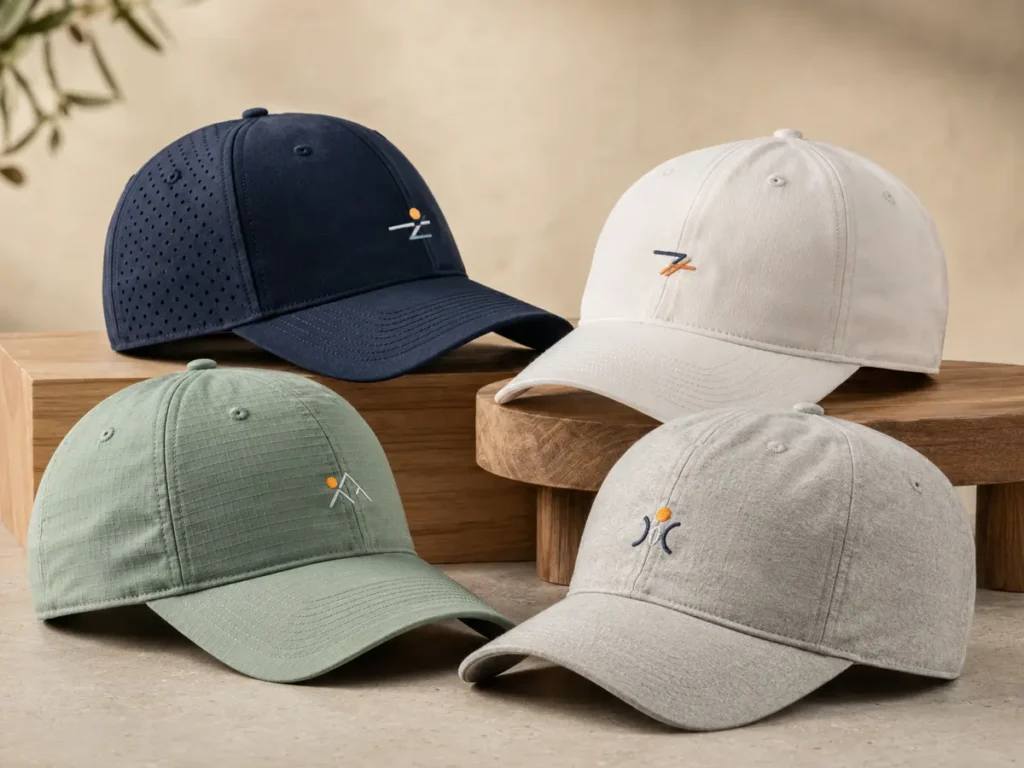
Material texture, crown structure and ventilation influence both comfort and logo reproduction.
Choose the Right Logo Position
Front-center decoration receives the most attention, but it is not the only useful location. A coordinated placement system can create more value without crowding the cap.
Front center
Use the front for the primary club, event or brand identity. Confirm the available decoration area on the actual hat pattern. A design that crosses a center seam may require additional adjustment, especially when the artwork contains a fine vertical detail.
Front offset
A small logo placed slightly to the wearer’s left or right creates a contemporary retail appearance. This position suits icon-only marks and can be effective on unstructured caps.
Side panel
Side embroidery can identify an event year, sponsor, team division or product collection. Keep it secondary in scale. Side panels may contain ventilation holes or laser perforation, so the supplier must confirm the usable area.
Above the back closure
This position works for a small club initial, founding year, website shorthand or secondary icon. Review the relationship between the logo, opening and closure construction.
Underbrim or internal branding
Printed underbrims, woven labels, sweatband labels and seam tape can support private-label programs. These options may introduce additional minimums, sampling steps or material requirements. They should be specified early rather than added after the cap sample is complete.
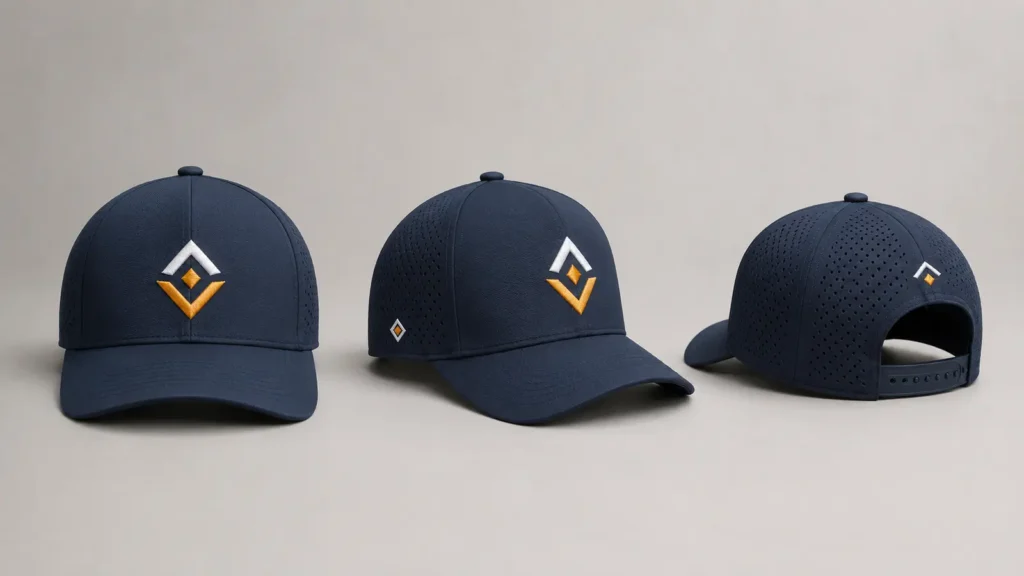
Primary and secondary logo positions should form a clear hierarchy rather than compete for attention.
Compare Golf Hat Logo Decoration Methods
Decoration changes the visual weight, texture, cost and reproducibility of a logo. Select the method after reviewing the artwork and cap material.
| Method | Appearance | Works well for | Watch for |
|---|---|---|---|
| Flat embroidery | Clean stitched surface | Monograms, icons, short wordmarks, club crests | Very small text, thin lines and tight negative spaces |
| 3D or puff embroidery | Raised, bold and dimensional | Simple letters and broad shapes | Fine details, small marks, overlapping narrow elements |
| Woven patch | Smooth, detailed textile badge | Illustrative logos, event badges, small lettering | Border finish, patch size, attachment and color approval |
| Embroidered patch | Traditional stitched badge | Crests, destination marks and heritage concepts | Thickness and visual weight on lightweight caps |
| Rubber/PVC-style patch | Technical, molded appearance | Performance, outdoor and modern brand identities | Flexibility, thickness, color matching and edge shape |
| Leather-style patch | Warm, lifestyle-oriented appearance | Resorts, heritage brands and gift programs | Material consistency, deboss clarity and care requirements |
| Heat transfer | Smooth graphic surface | Gradients, fine shapes and lightweight applications | Adhesion compatibility, stretch, wash or wear testing |
| Screen print | Flat ink-based application | Simple graphics and selected fabrics | Curved surfaces, fabric compatibility and setup requirements |
Direct embroidery is often the starting point for golf hats, but it is not automatically the best solution for every logo. A woven patch may preserve fine detail more clearly. A rubber/PVC-style patch may suit a technical collection. A small tonal embroidery may better support a private club’s understated identity.
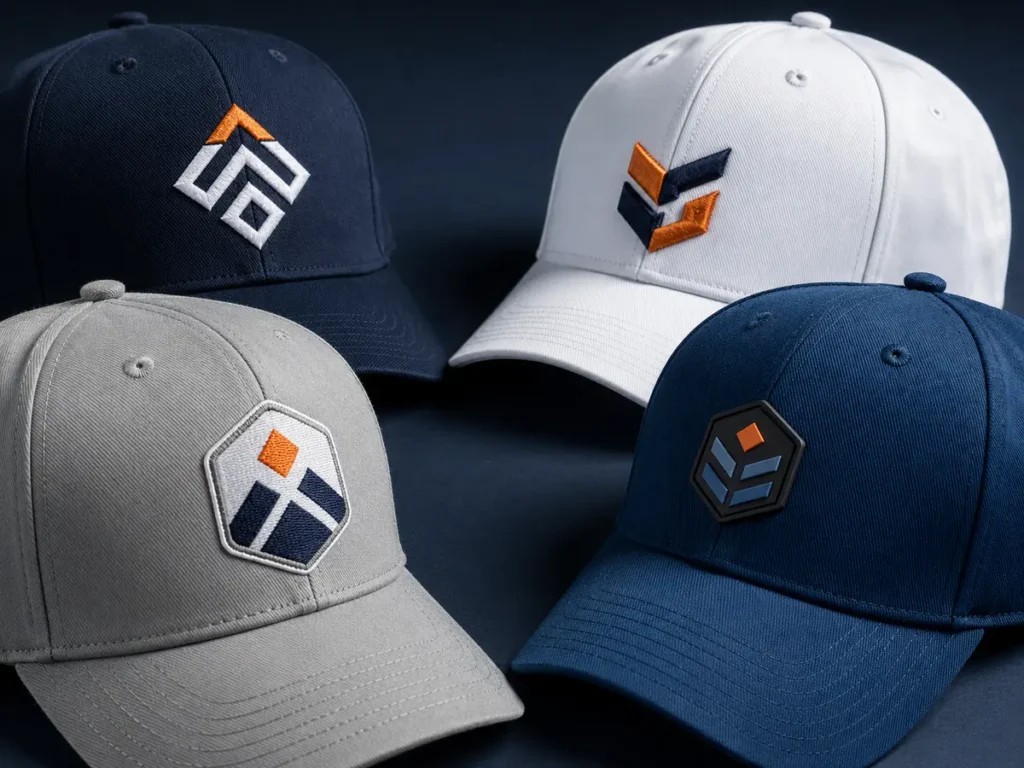
Decoration methods should be selected according to artwork detail, cap material and intended brand character.
Prepare Logo Artwork for Production
A professional quotation and sample require more than a low-resolution image. Send vector artwork when available, such as AI, EPS, SVG or editable PDF.
The production brief should define:
- the exact logo version;
- intended decoration method;
- finished width and height;
- placement measured from a clear hat reference point;
- thread, patch or print colors;
- cap style, fabric and color;
- front, side, back and internal branding requirements;
- whether the logo may be simplified for production; and
- which details cannot be changed.
Simplify with purpose
Simplification should preserve identity, not merely delete detail. Begin by removing elements that do not contribute at small scale: thin outlines, tiny dates, miniature slogans, subtle shadows and unnecessary gradients. Then test whether the remaining silhouette is recognizable.
Build a one-color version
A logo that works in one color is easier to adapt across tonal embroidery, dark and light hats, staff uniforms and economical event programs. The full-color version can still be used where the process supports it.
Define clear space and minimum size
Set a practical minimum application size for the cap version of the mark. This may differ from the minimum used on a website or sign. The supplier should confirm the final production limit after reviewing stitch behavior, patch construction or transfer detail.
Clear trademark and licensing rights
Before approving production, verify that the organization owns or is authorized to use every logo, name, sponsor mark and graphic element. A search can identify obvious conflicts but may not replace professional legal clearance. The USPTO provides an official Trademark Search system, and WIPO explains that a trademark is a sign capable of distinguishing one enterprise’s goods or services from another’s in its trademark overview.
Use Color and Contrast Deliberately
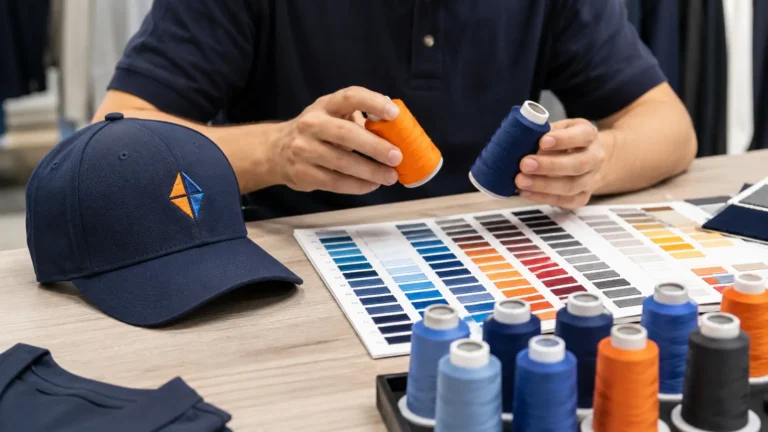
Start with the actual cap colors. Navy thread on black may suit subtle staff branding but fail a sponsor’s visibility goal. White thread on navy creates strong contrast but a more athletic appearance. Screens, thread, fabric and molded patches also reproduce color differently, so approve the physical combination under normal indoor and outdoor lighting. When an order includes several colorways, document the cap, primary logo and accent colors in a simple approval matrix.
Translate Product Features into Procurement Decisions
Every creative choice changes the sourcing brief.
- A detailed crest may point toward a woven patch instead of small direct embroidery.
- A lightweight unstructured cap may need a smaller, less dense logo to preserve crown shape.
- Multiple event sponsors may require a front-and-side hierarchy or a packaging solution.
- Several hat colorways require a documented logo-color matrix.
- A retail program may need private labels, hangtags, packaging and repeat-order color control.
- A one-day event may prioritize clear identification, delivery planning and quantity allocation by role.
- A club uniform program may prioritize consistent replenishment and compatibility across caps and visors.
This translation is where a good idea becomes an order that a supplier can quote and reproduce.
Planning custom golf hats for a club, tournament or brand? Send JIUMU your logo file, preferred hat style, quantity, colorways, decoration method, packaging needs and target delivery date. The team can review the concept, prepare a digital mockup and advise which details should be confirmed before sampling. Explore custom golf hats or request a quotation.
What Determines the Cost of Custom Golf Hats?
Buyers should compare quotations against the same specification. A lower unit price may reflect a different fabric, closure, sweatband, embroidery coverage, patch construction, packaging method or inspection standard.
Typical cost drivers include the crown pattern, fabric, ventilation, closure, logo positions, stitch coverage or patch complexity, number of colors, rope or brim treatments, private labels, packaging, order quantity, sampling, inspection and delivery plan.
Do not request price based only on “a logo cap.” Provide enough detail for suppliers to quote the same product.
Approve a Sample Before Bulk Production
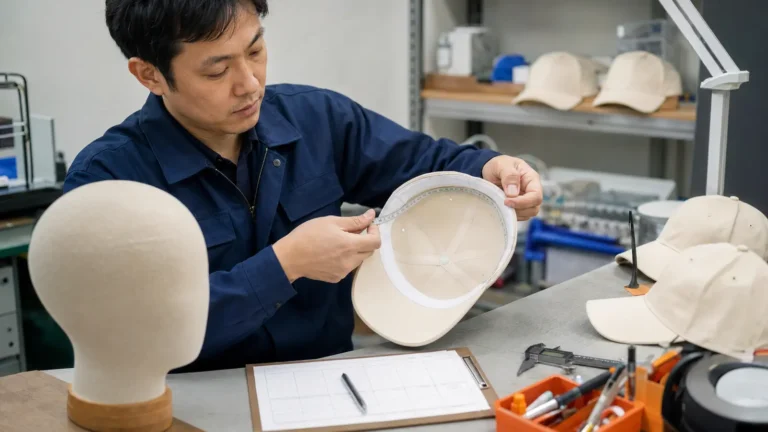
A digital mockup is useful for position and proportion, but it cannot fully show crown behavior, stitch texture, patch thickness, thread sheen or actual color. A physical sample is especially important for a new hat structure, new logo, new decoration method or private-label program.
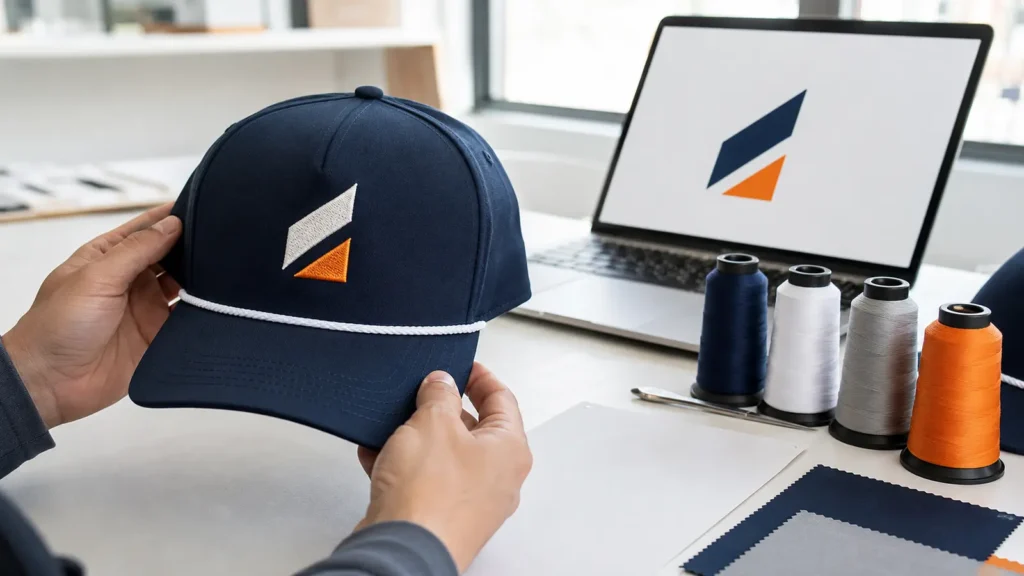
A physical sample allows the buyer to evaluate logo scale, thread color, crown shape and construction together.
Use a written sample approval checklist:
- Is the cap style, profile and fit correct?
- Does the front panel hold the decoration without puckering?
- Is the logo centered according to the approved reference?
- Are the finished width and height correct?
- Are small gaps, letters and borders clean?
- Does the thread or patch color match the approved reference?
- Is the brim curve and stitching consistent?
- Are eyelets or perforations clear and evenly placed?
- Is the closure correct and functional?
- Are labels, hangtags and packaging accurate?
- Does the sample match the approved mockup in every intended logo position?
- Which sample becomes the signed or sealed production reference?
If revisions are needed, change one controlled version of the specification. Avoid sending separate instructions through unrelated email or chat threads without updating the master approval record.
Quality-Control Checklist for Bulk Golf Hat Orders
Bulk inspection should compare production against the approved sample and specification, not against memory. The inspection plan can vary by buyer and order, but it should cover the characteristics that would make the goods unacceptable.
Logo and decoration
- placement, size and orientation;
- embroidery tension and thread trimming;
- missing stitches, gaps or distorted edges;
- patch shape, border and attachment;
- correct colors across all colorways; and
- consistency between front, side and back marks.
Hat construction
- crown symmetry and panel alignment;
- brim shape, stitching and insert condition;
- eyelet, mesh or perforation consistency;
- sweatband attachment;
- closure type and operation;
- label content and position; and
- visible stains, marks, broken seams or loose threads.
Packing and order accuracy
- quantity by color and style;
- individual packaging requirements;
- carton assortment and markings;
- hangtag and barcode accuracy where applicable; and
- protection against crushing or moisture during transit.
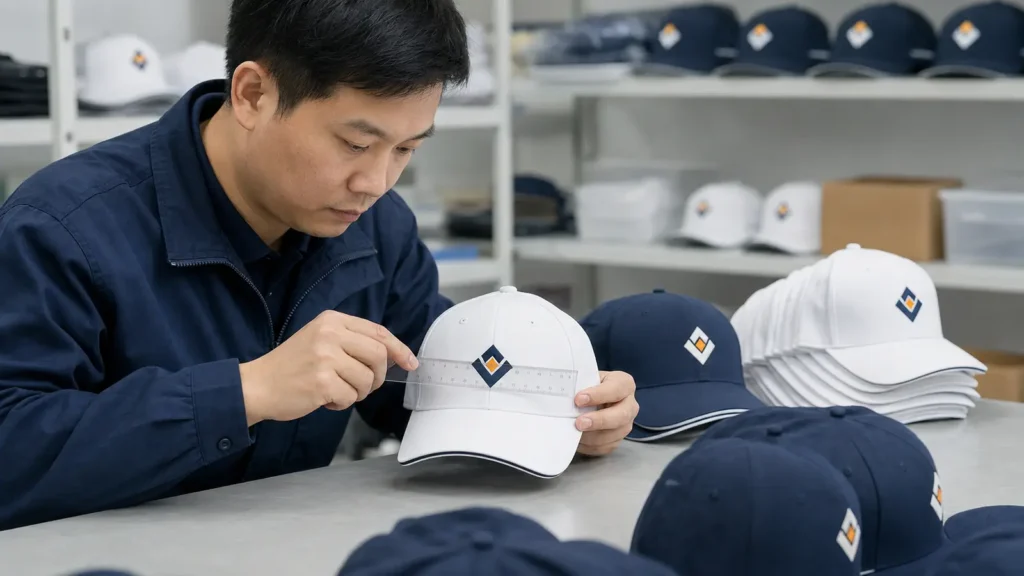
Production inspection should use the approved sample, measurements and color references as objective standards.
What to Send for an Accurate Custom Golf Hat Quotation
Prepare the following information:
- Buyer type and use case: private club, tournament, sponsor gift, staff uniform, retail collection or promotional campaign.
- Hat style: performance cap, rope cap, visor, unstructured cap, five-panel cap or another reference.
- Quantity: total units and allocation by color or style.
- Logo files: vector artwork plus a visual reference.
- Decoration: flat embroidery, 3D embroidery, woven patch, rubber/PVC-style patch, transfer or another method.
- Positions: front, side, back, underbrim and internal branding.
- Colors: cap, thread, patch, rope, brim and closure colors.
- Materials: preferred fabric and any performance or compliance documentation required.
- Branding extras: woven labels, hangtags, barcodes or packaging.
- Sample plan: digital mockup, pre-production sample or size/fit review.
- Delivery destination and target date: include the country, postal code and event deadline.
- Special requirements: testing, inspection, carton assortment or retailer-specific packing.
If some details are undecided, identify them as open questions. A supplier can then offer options without treating guesses as approved specifications.
Questions to Ask a Custom Golf Hat Supplier
- Which hat structures are suitable for this logo and buyer group?
- What artwork changes are recommended for the selected decoration method?
- What is the usable front, side and back decoration area?
- Can the supplier provide material, thread or patch options for approval?
- Does the MOQ vary by color, logo or construction?
- Which steps require a digital mockup or physical sample?
- How are revised samples and approval versions controlled?
- What quality points are checked during and after production?
- How are repeat-order specifications recorded?
- Which private-label and packaging options are available?
- How should goods be packed to protect the crown and brim?
Answers should be tied to the exact product, quantity and customization. Avoid assuming that one MOQ, lead time or material claim applies to every design.
Common Golf Hat Logo Buying Mistakes
Using a detailed logo at an unrealistic size
A logo that looks clear on a large presentation slide may lose definition on a cap. Create a dedicated small-format version.
Selecting the logo before the hat
The crown structure, seam position and fabric affect decoration. Develop them together.
Adding every sponsor to the front
Too many small marks reduce visibility and can make approval difficult. Establish a hierarchy and use secondary positions or packaging.
Approving color from a screen only
Digital colors are useful references, not physical proof. Review thread, fabric or patch materials.
Skipping the physical sample
This removes the buyer’s best opportunity to evaluate shape, texture and real placement before bulk production.
Changing instructions without updating the master specification
Version confusion creates preventable production errors. Maintain one approved artwork and specification set.
Ignoring intellectual-property permissions
Do not reproduce a course, league, sponsor, charity or brand mark without authorization. Confirm rights before production.
Comparing prices without comparing specifications
Two quotations may describe different hats. Compare fabric, structure, decoration, labels, packing, inspection and shipping assumptions.
Why Work with JIUMU on Custom Golf Hats?
Established in 2010 and based in Guangdong, China, JIUMU supports B2B buyers in North America, the United Kingdom and Europe with custom hats, teamwear, bags and branded merchandise.
Relevant capabilities include OEM and ODM product development, embroidery, woven and rubber/PVC-style patches, heat transfer, fabric sourcing, color matching, private labels, hangtags, packaging customization, digital mockups, physical samples, bulk-production quality control and export support.
JIUMU’s typical MOQ is 50 pieces, subject to the hat structure, materials and customization. Buyers should share the complete brief so feasibility, sampling and pricing can be confirmed for the actual design.
For coordinated programs, JIUMU can also help buyers connect custom golf hats with custom team bags, custom team jackets or custom hoodies.
Frequently Asked Questions
Final Recommendation
The strongest golf hat logo ideas are not necessarily the most complicated. They are distinctive enough to identify the club, event or brand; simple enough to reproduce; and flexible enough to work across the intended hat styles and order cycles.
Begin with the buyer’s purpose. Choose a club crest, tournament emblem, brand icon or other direction that supports that purpose. Then confirm the cap structure, decoration method, placement, color system, sample and inspection criteria. This process protects both the creative idea and the procurement result.

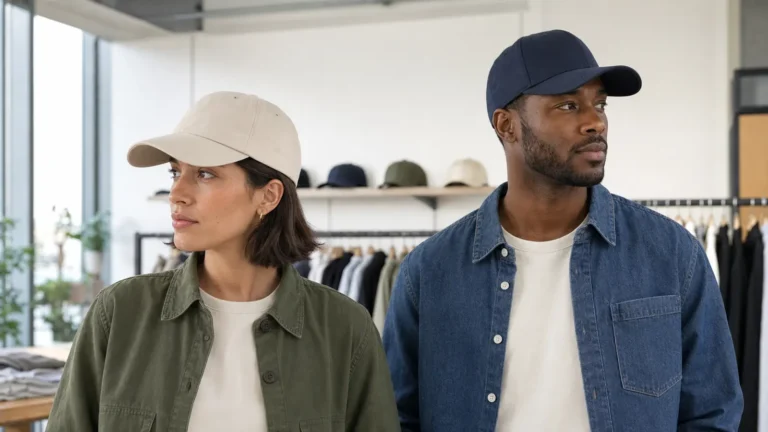
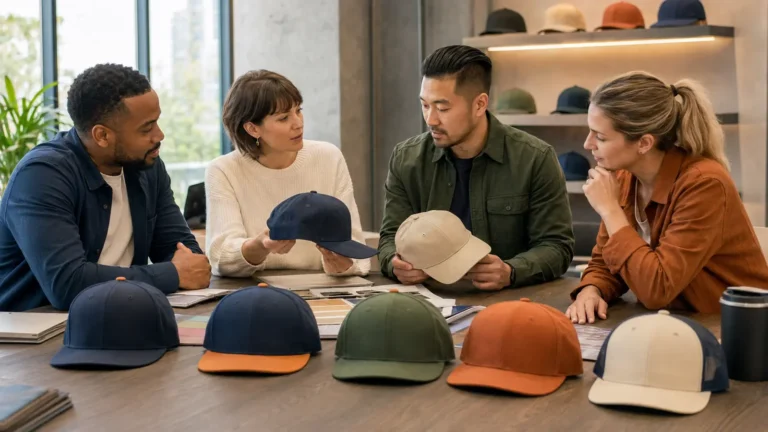
Coordinated custom hats can unify players, staff and event teams while keeping the visual identity consistent.
About JIUMU
Established in 2010, JIUMU supports professional buyers with custom hats, teamwear, bags and branded merchandise. Its capabilities include OEM/ODM development, logo decoration, sampling, private labeling, quality control and export support.