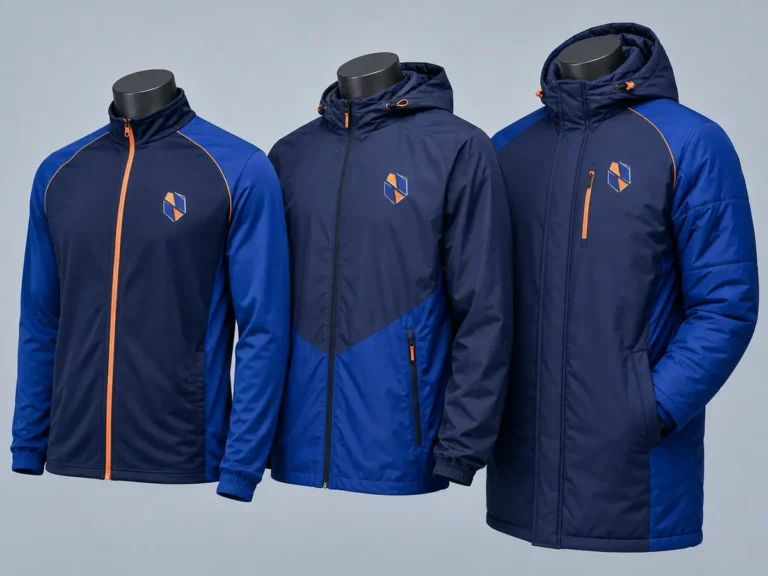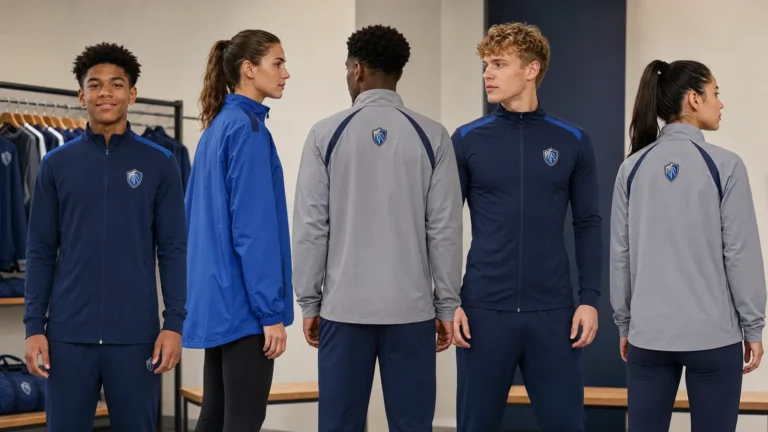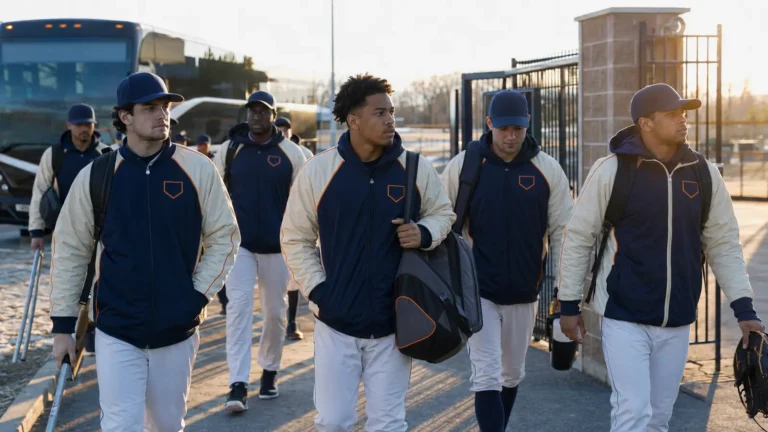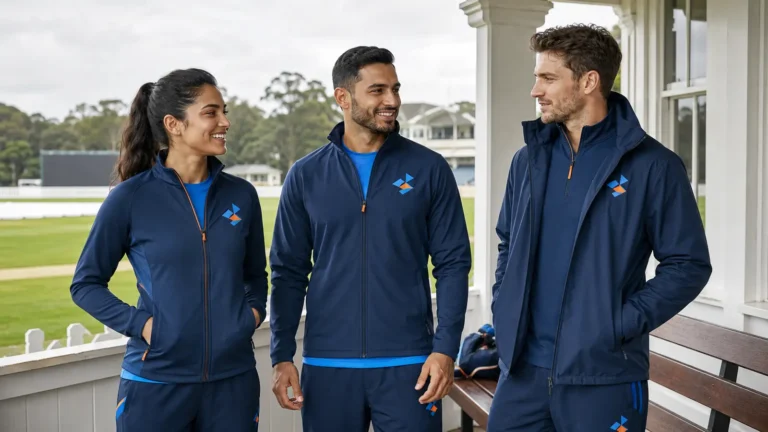

Team Jacket Logo Ideas and Decoration Methods: A B2B Guide
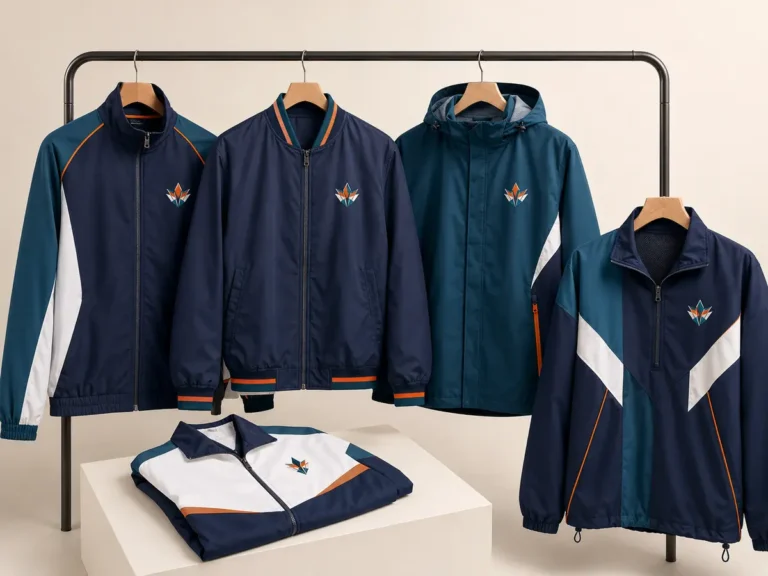
A team jacket carries more than a crest. It identifies players and staff, connects multiple age groups or departments, gives sponsors a controlled place in the design, and makes the organization recognizable away from the field. For schools, clubs, academies, uniform dealers and sportswear brands, the logo program also has to survive bulk production. A strong concept is not enough if the artwork cannot be reproduced consistently on different sizes, fabrics and reorder batches.
This guide explains practical team jacket logo ideas and decoration methods. It compares embroidery, patches, heat transfer, screen printing and sublimation, and shows how jacket construction, logo detail, placement, quantity, care and target market affect the choice.
Quick Answer: Which Logo Method Is Best for Team Jackets?
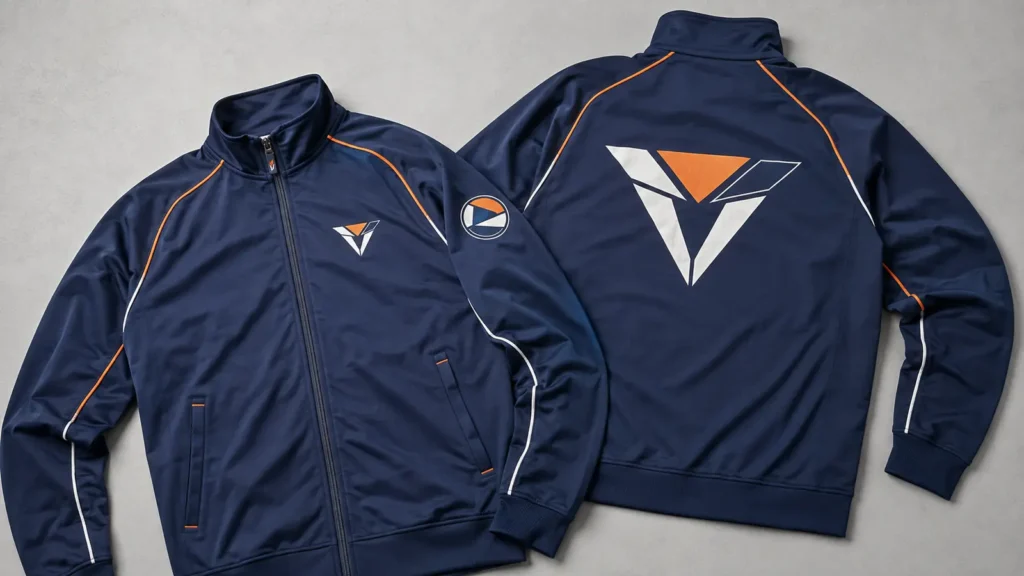
For most team jackets, embroidery is the safest choice for a small, durable chest crest; woven patches are useful for detailed badge artwork; rubber/PVC patches create a modern dimensional look; heat transfer works well for names, numbers and detailed multicolor graphics; screen printing becomes efficient for larger, simpler graphics at suitable quantities; and sublimation is best when the artwork should cover the garment rather than sit on top of it.
The right method depends on five questions: What fabric is being decorated? How detailed is the logo? Where will it be placed? How will the jacket be washed and used? How many pieces and variations are required? Confirm the answer on the actual jacket through a physical sample before approving bulk production.
Why Team Jacket Logo Decisions Matter in B2B Orders
Logo decoration sits at the intersection of design, material and manufacturing. A buyer may see one finished badge, but the supplier must manage artwork conversion, thread or ink colors, placement references, backing materials, heat settings, hoop access, panel construction and finishing tolerances. Each decision can influence appearance, cost, production time and consistency.
A poorly planned decoration can close fine text, stiffen a lightweight shell, cross a seam, overwhelm youth sizes or create roster errors. Treat decoration as a specification: store the artwork, approved colors, dimensions, coordinates, method, finish and signed sample together for production and reorders.
Team Jacket Logo Placement Ideas
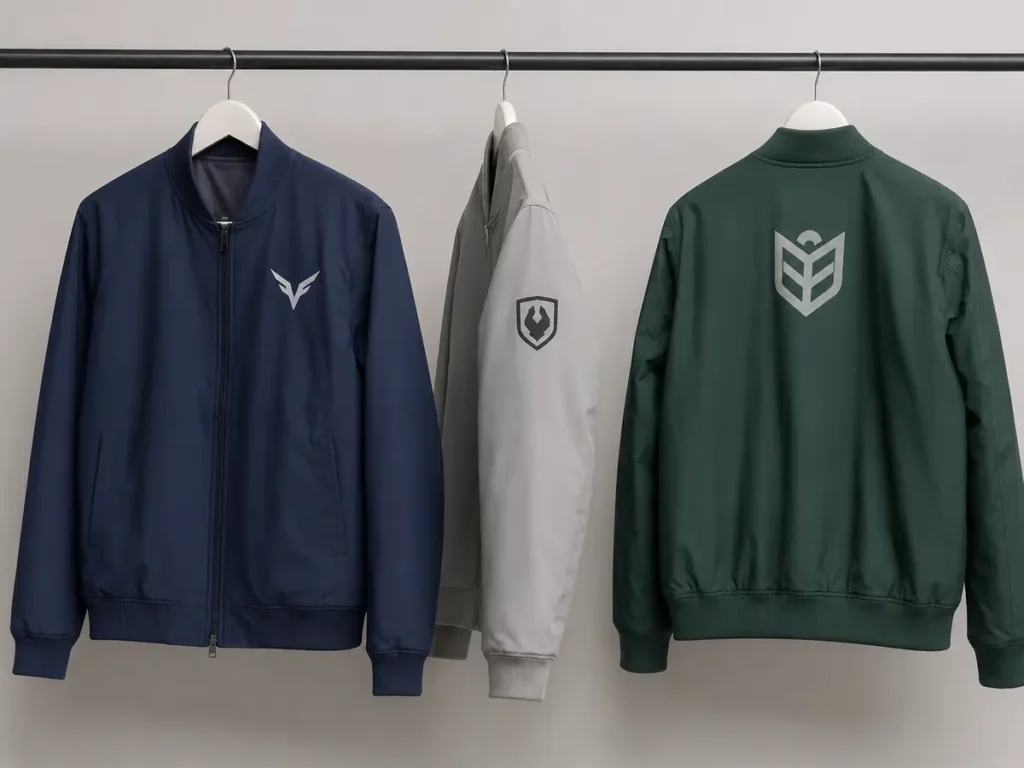
Placement should support visibility without interfering with zippers, pockets, seams, ventilation panels or player movement. A complete team identity can use several placements, but each one should have a clear purpose.
| Placement | Typical role | Design guidance | Production checks |
|---|---|---|---|
| Left chest | Primary team crest or school mark | Keep the silhouette clear and readable at a compact size | Measure from center front and shoulder seam; check zipper and panel access |
| Right chest | Player number, staff title or secondary mark | Balance the left chest without making both sides equally heavy | Confirm whether every jacket is personalized |
| Upper back | Team name, club mark or staff identification | Use a broad, simple composition visible at a distance | Check collar clearance and whether a back yoke interrupts the art |
| Full back | Large mascot, event graphic or sponsor campaign | Simplify detail and select a method suitable for a larger area | Test stiffness, weight, breathability and seam crossings |
| Upper sleeve | Sponsor, national flag concept, academy or division badge | Keep the mark compact and allow for sleeve curvature | Confirm distance below the shoulder seam and left/right orientation |
| Lower sleeve | Player number, initials or small partner logo | Use only when the sleeve remains visually clean | Check cuff clearance and grading on youth sizes |
| Collar or nape | Small heritage mark or private-label detail | Best for a restrained secondary identity | Confirm comfort, seam construction and folding behavior |
| Hem tab or woven label | Brand signature, collection name or team package identifier | Suitable for subtle private-label presentation | Approve label material, fold, attachment and placement |
Decoration Method Comparison
No single method is automatically superior. The best selection is the method that reproduces the artwork on the selected jacket while meeting the buyer’s desired appearance, care routine, quantity and budget.
| Method | Visual result | Best suited to | Main advantages | Watch-outs |
|---|---|---|---|---|
| Embroidery | Textured, dimensional thread | Chest crests, simple sleeve marks, staff logos | Professional appearance; strong perceived value; no printed surface film | Fine detail can close; dense large art adds weight and stiffness |
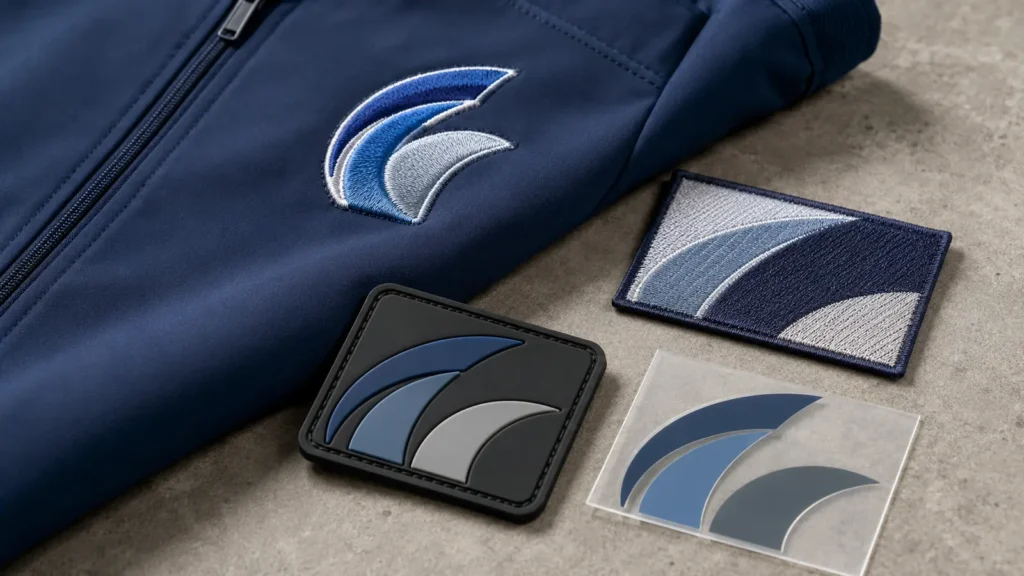
| Woven patch | Flat, detailed textile badge | Crests with fine lines or small lettering | More detail than standard embroidery; consistent badge shape | Requires patch edge and attachment approval |
| Rubber/PVC patch | Modern, molded dimension | Outdoor-inspired, training and lifestyle jackets | Distinct tactile look; clean shapes and color blocks | Minimum feature size, thickness and flexibility must be sampled |
| Leather-style patch | Heritage, workwear or lifestyle look | Varsity, coach and merchandise jackets | Adds material contrast and a premium accent | Material, colorfastness and care compatibility vary |
| Heat transfer | Smooth or lightly raised surface | Names, numbers, gradients and detailed small runs | Supports personalization and multicolor detail | Film, adhesive and heat compatibility must match the fabric |
| Screen printing | Ink printed onto the surface | Larger simple graphics and repeat quantities | Efficient for bold art; broad color coverage | Each color and placement affect setup; seams complicate printing |
| Sublimation | Artwork dyed into polyester fabric | Full-garment gradients, patterns and integrated numbers | No heavy surface layer; high design freedom on suitable fabric | Requires suitable light-colored polyester and panel printing before sewing |
Embroidery for Team Jacket Logos
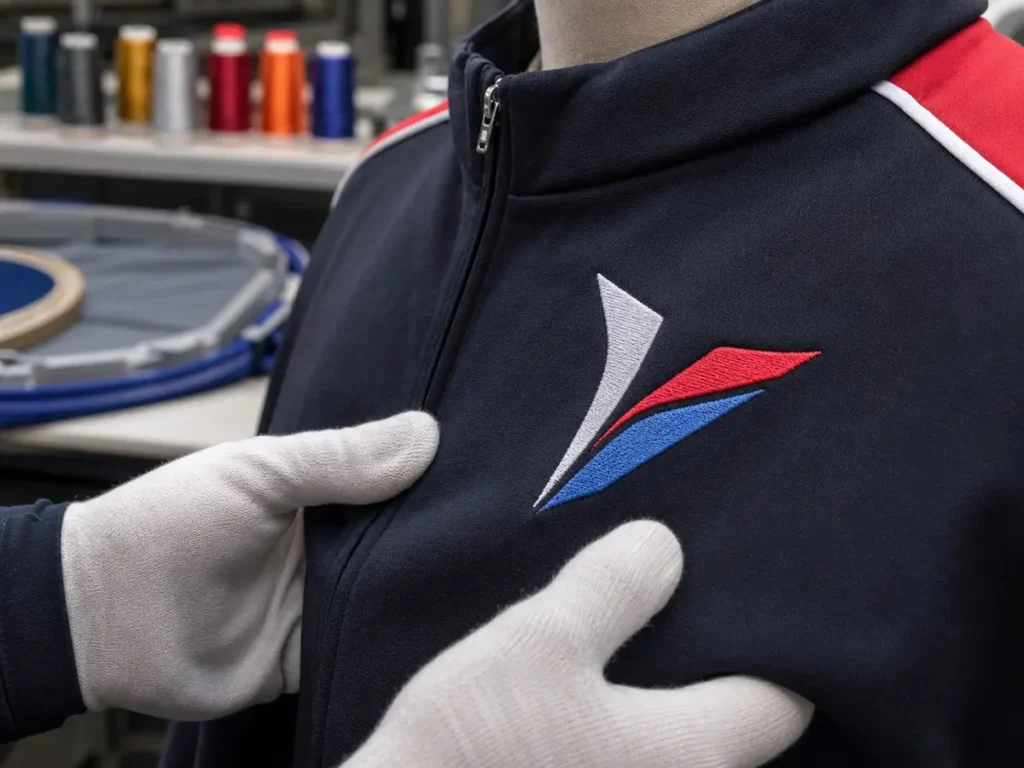
Embroidery remains a common choice for team crests because thread gives the mark a permanent-looking, tactile finish. It is particularly effective on bomber jackets, coach jackets, track jackets, softshell styles and varsity-inspired products when the fabric and internal construction support hooping.
When Embroidery Works Best
Choose embroidery when the logo has a strong outline, moderate color count and limited fine detail. Compact chest and sleeve placements usually make better use of embroidery than a very large solid back graphic. Tonal embroidery—such as navy thread on a navy jacket—can give staff, corporate or merchandise jackets a refined appearance without removing the team identity.
How Artwork Changes in Embroidery
The supplier converts vector artwork into a stitch file, a process usually called digitizing. This is not a simple file conversion. Stitch type, direction, underlay, density, pull compensation and sequence all affect the result. A designer may need to:
- Enlarge or remove very small text.
- Simplify narrow gaps and thin outlines.
- Replace subtle gradients with defined thread-color areas.
- Adjust negative spaces so they remain open after stitching.
- Add a border around a badge for better edge definition.
Ask to approve a sewn sample, not only a digital embroidery simulation. Review the sample from normal viewing distance and at close range. The crest should be recognizable without puckering the jacket panel.
Woven, Rubber/PVC and Leather-Style Patches
Patches allow the logo to be developed as a separate component and then attached to the jacket. They are useful when a buyer wants a consistent badge shape across jackets, caps, team bags and other items in a coordinated custom team uniform program.
Woven Patches
Woven patches use interlaced threads to form the design. They can reproduce finer lines and smaller elements than a conventional fully embroidered patch because the surface is flatter. They work well for detailed club crests, school seals and compact multicolor emblems. Buyers should approve the edge finish, backing, attachment stitch and final dimensions.
Rubber/PVC Patches
Rubber or PVC patches provide a molded, modern surface that suits training jackets, outdoor teamwear and branded merchandise. Raised and recessed areas can separate color zones. However, extremely fine artwork is still unsuitable; the mold needs enough space to form each feature. Sample the thickness and flexibility because a rigid patch may not follow a curved sleeve or lightweight chest panel comfortably.
Leather-Style Patches
Leather-style patches can suit varsity, workwear, golf, coach and lifestyle jackets. They often work best with a debossed, embossed or printed simple mark. The buyer should specify whether the material is genuine leather, synthetic leather or another leather-look material, since appearance, care and market requirements differ.
Heat Transfer for Names, Numbers and Detailed Graphics
Heat transfer applies a prepared film, transfer or printed graphic using controlled temperature, pressure and time. It is commonly used for player names, numbers, staff titles, sponsor marks and artwork with color detail that would be difficult to embroider.
The term “heat transfer” covers different materials and processes. Buyers should not approve the method by name alone. Ask which transfer system is proposed, what jacket fabric it is intended for, whether the surface has a water-repellent or other finish, and which care instructions apply.
Heat transfer is especially useful for individual names, numbers, multicolor sponsor marks and shorter runs with many variations. Some synthetics can show heat marks, dye migration, surface flattening or adhesive failure, so test a strike-off or pre-production sample on the actual material.
Screen Printing for Bold Team Graphics
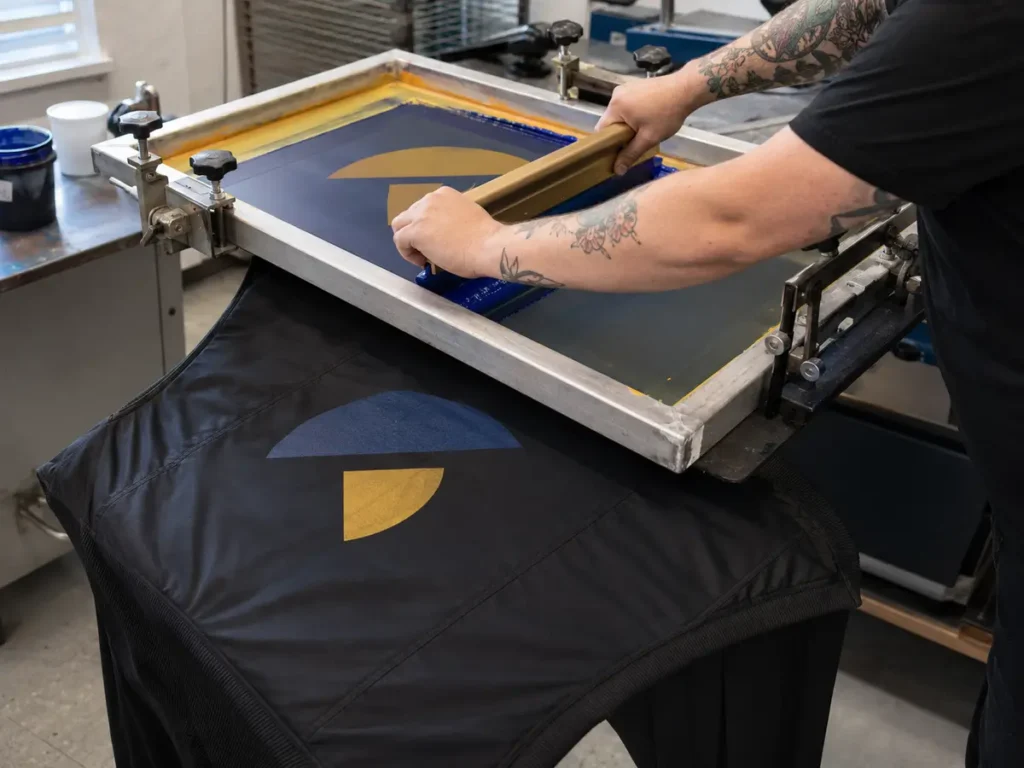
Screen printing is effective when the artwork has strong shapes and a controlled number of colors. It can be a practical option for a large back mark, event graphic or merchandise-style team jacket when the garment panel is accessible and the quantity supports the setup.
Sublimation for Full-Coverage Team Jacket Designs
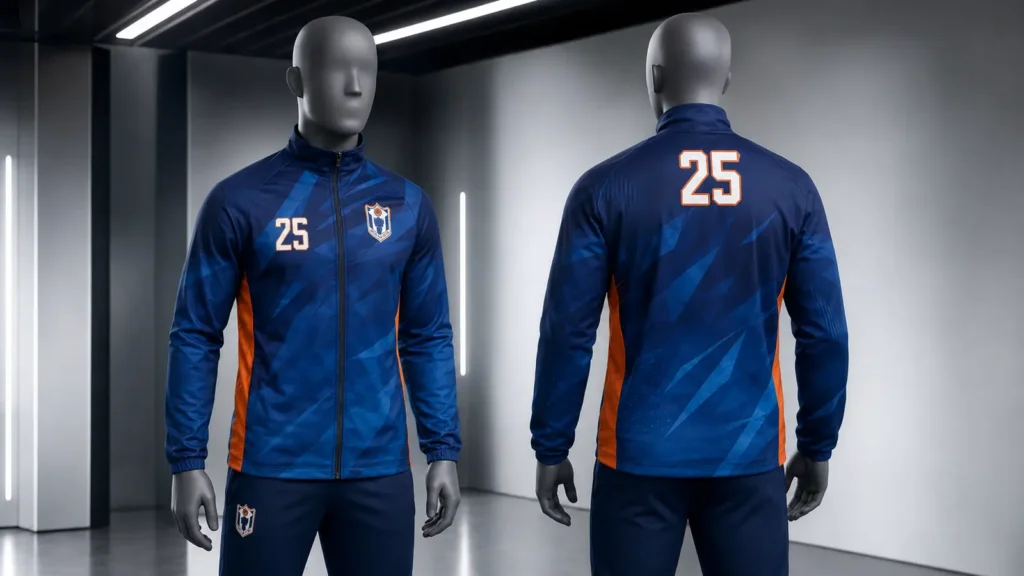
Sublimation is a strong option for lightweight polyester warm-up jackets when the team wants gradients, geometric patterns, sponsor integration, names or numbers as part of the garment design. The artwork is transferred into suitable polyester fabric before the panels are cut and sewn. The finished design has no thick printed layer sitting on top of the fabric.
Need Help Matching a Logo Method to Your Jacket?
Send the jacket fabric, logo vector, placement, quantity and target market. JIUMU can review compatible decoration directions before sampling.
How Jacket Material Changes the Decoration Choice
The same logo can behave differently on two jackets. Before choosing a method, identify the face fabric, stretch, weight, coating, insulation and panel structure.
| Jacket type | Common decoration direction | Questions to confirm |
|---|---|---|
| Polyester track or warm-up jacket | Embroidery, heat transfer or sublimation | Does the fabric stretch, migrate dye or show heat marks? Is it designed for sublimation? |
| Woven coach jacket | Small embroidery, patch, transfer or screen print | Is the shell coated? Can the panel be hooped or printed cleanly? |
| Softshell jacket | Embroidery, selected patches or compatible transfer | Will needle penetration or heat affect weather resistance? How thick is the laminated fabric? |
| Fleece jacket | Embroidery or sewn patch | Is the pile stable enough for small detail? Is a topping material needed during embroidery? |
| Insulated jacket | Patch, controlled embroidery or compatible transfer | Can decoration be applied without compressing fill or damaging the lining? |
| Varsity-style jacket | Embroidery and sewn patches | Are body and sleeve materials different? What backing is needed for a clean interior? |
If weather protection is important, decoration may pierce or alter the face material. Do not describe the finished jacket as waterproof or certified unless the complete decorated product has evidence supporting that claim. A practical specification can instead describe the selected shell, construction and intended use without overpromising.
Creative Team Jacket Logo Ideas That Stay Production-Friendly
Good logo ideas do not need to be complicated. The following concepts create variety while remaining manageable for teamwear production.
1. Classic Crest and Number
Place the main crest on the left chest and a player number on the right chest or sleeve. This creates a balanced uniform appearance and makes personalization easy to isolate in the specification.
2. Oversized Back Mark
Use a simplified mascot silhouette or geometric team symbol on the upper or full back. Choose screen print, heat transfer, a large patch or sublimation according to the material. Avoid copying a highly detailed chest crest at a much larger scale without redesigning it for the placement.
3. Tonal Staff Edition
Use the same jacket as the players but render the crest in tonal embroidery or a monochrome patch. Staff remain visually connected to the team while their role is distinguished in a restrained way.
4. Sleeve Badge System
Reserve the sleeve for a division, academy, championship year, sponsor or country-inspired badge. Use original artwork and confirm whether the left sleeve, right sleeve or both are required. A sleeve system can be updated without rebuilding the primary chest crest.
5. Heritage or Anniversary Mark
Create a limited badge that combines the established year, initials or a historical element. Keep the regular crest unchanged and use the anniversary mark as a secondary sleeve, nape or hem detail.
6. Player Journey Detail
For academies or clubs, a small year group, level or squad indicator can create progression across the program. Use color, a small woven label or a secondary mark rather than changing the complete jacket design for every group.
7. Coordinated Team Package Branding
Repeat one core crest across jackets, jerseys, caps and team bags, then adjust method and scale for each product. The same vector master may become embroidery on a jacket, a woven patch on a cap and print on a bag. Approve each application separately because material and dimensions change the result.
8. Private-Label Brand Architecture
Uniform dealers and sportswear brands may combine a customer-facing team crest with their own neck label, woven hem label, hangtag and packaging. Keep these layers separate in the tech pack so the factory-facing file makes clear which mark belongs to the team and which belongs to the private-label brand.
Color Planning and Logo Accuracy
Screen colors are not physical production standards. Send vector artwork and identify the intended color reference system. JIUMU can work with Pantone color references, but buyers should still approve physical materials because thread, ink, rubber, fabric and screen displays reflect color differently. Pantone describes its Fashion, Home + Interiors system as a color language for textile and product applications; the relevant physical standard should be identified for the material being sourced (Pantone color systems).
For a coordinated package, create a color matrix listing each application:
| Brand color | Jacket fabric | Embroidery thread | Patch | Print or transfer | Approval reference |
|---|---|---|---|---|---|
| Primary navy | Fabric swatch code | Thread card code | Woven/rubber sample | Ink/transfer strike-off | Signed physical sample |
| Accent orange | Fabric swatch code | Thread card code | Woven/rubber sample | Ink/transfer strike-off | Signed physical sample |
| White or light neutral | Fabric/piping sample | Thread card code | Patch component | Ink/transfer strike-off | Signed physical sample |
The aim is visual coordination, not an unrealistic promise that different materials will appear identical under every light. State the approved reference and acceptable comparison conditions.
What Determines Decoration Cost?
Buyers often ask for a per-piece price before the artwork and placement plan are defined. A useful quotation requires more detail because decoration cost is driven by the complete application.
Major cost factors are jacket construction, quantity, placement count, logo dimensions, embroidery stitch count, print colors, patch tooling, personalization, artwork preparation, sampling, private labeling, packaging and inspection.
To control cost without weakening the identity, simplify one variable at a time. Reduce a back design’s color count, use one standard chest crest across all jackets, limit personalization to numbers, or move a complicated mark to a woven patch. Ask the supplier to quote clearly defined alternatives rather than requesting a vague “cheaper method.”
Sample Approval and Quality-Control Checklist
A digital mockup confirms layout direction, but a physical sample confirms how the decoration interacts with the jacket. Use both.
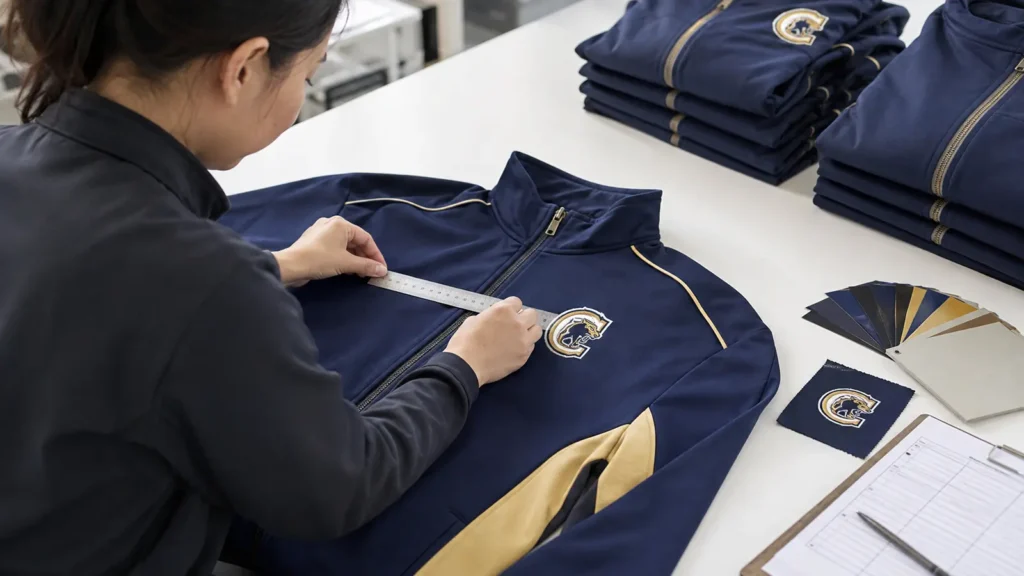
Digital Mockup Review
- Correct jacket style, color blocking and trim.
- Correct front, back and sleeve artwork.
- Logo dimensions shown in centimeters or inches.
- Placement measured from stable garment reference points.
- Names and numbers linked to an approved roster.
- Youth and adult size differences represented where necessary.
- Private labels and packaging shown separately.
Physical Sample Review
- Logo size and position match the approved specification.
- Colors are compared with the agreed physical references.
- Small letters, gaps and borders remain clear.
- Embroidery does not create unacceptable puckering.
- Patch edges are secure and the badge follows the garment surface.
- Print or transfer has even coverage and clean edges.
- Zippers, pockets, seams and lining operate normally after decoration.
- The interior finish is acceptable for direct contact with clothing or skin.
- Garment measurements remain within the agreed tolerance.
- Care labeling and packaging are correct for the target program.
Pre-Production and Bulk Inspection
After the sample is signed off, use it as the visual reference for bulk production. A pre-production check should confirm the final artwork files, color components, placement templates and roster. Bulk inspection should verify a defined sample of garments for decoration, construction, measurements, assortment and packaging. Personalized orders need an additional roster-to-garment reconciliation before cartons are sealed.
How to Plan a Bulk Team Jacket Order
- Define users and the jacket platform. Separate player, staff, youth and adult variants; confirm fabric, fit, colors and size range.
- Organize artwork and placements. Supply vectors and record method, dimensions, colors and coordinates.
- Lock the roster. Control names, numbers, roles and sizes in one dated spreadsheet.
- Approve mockup and sample. Check every view, then confirm materials, fit, decoration and care on a physical jacket.
- Confirm and inspect production. Align quantities, packaging, delivery and inspection, then compare bulk goods with the signed sample.
- Archive the specification. Keep final artwork, component codes and sample photos for reorders.
What to Send for an Accurate Quotation
Send the following information with your inquiry:
- Buyer type, target market, intended use and season.
- Jacket reference or required construction; quantity by color and size range.
- Logo vector files, preferably AI, EPS, SVG or editable PDF.
- Decoration method if known, plus logo dimensions, placements and personalization count.
- Pantone or other approved color references.
- Private labels, packaging, sample schedule, target delivery date and destination.
- Required testing, documentation and inspection protocol.
For JIUMU, the typical MOQ is 50 pieces, subject to jacket structure and customization. A complete brief allows the team to assess whether that quantity applies to the selected style, color and decoration mix.
Questions to Ask a Team Jacket Supplier
- Which logo method do you recommend for this exact jacket fabric, and why?
- Can you show dimensions and placement measurements, and identify artwork that needs simplification?
- Will the jacket be decorated as a finished garment or as panels before assembly?
- What physical sample or strike-off will be provided before bulk production?
- How are color references translated to each material, and which care instructions apply?
- How will names, numbers and size assignments be controlled?
- What inspection points are used for logo placement, appearance and attachment?
- How are approved artwork and component references stored for repeat orders?
- Which packaging and compliance documents are relevant to the destination and end user?
Common Team Jacket Logo Mistakes
- Reusing web artwork unchanged: Fine lines, shadows and gradients may not translate to thread, print or molded rubber. Create production-specific art.
- Choosing the method before the material: Check the shell, coating, lining and insulation first.
- Giving every mark equal emphasis: Establish a hierarchy for crest, sponsor, number and private label.
- Ignoring youth grading: Approve one workable badge size or documented graded dimensions.
- Approving only a mockup: A physical sample is needed to assess stitches, patches, heat effects, opacity and care.
- Splitting roster changes across messages: Use one dated, approved name-number-size file.
Labeling and Market Considerations
Decoration planning should be coordinated with the labeling and safety obligations for the destination market. In the United States, the Federal Trade Commission states that manufacturers and importers of textile wearing apparel must provide care instructions, and most textile products also require disclosures such as fiber content, country of origin and the responsible business identity (FTC Care Labeling guidance; FTC textile labeling guidance).
For products designed and intended primarily for children age 12 or younger in the United States, additional rules may apply. The U.S. Consumer Product Safety Commission explains that children’s products generally require visible, legible tracking information on the product and packaging to the extent practicable (CPSC tracking-label guidance).
For goods placed on the European Union market, the General Product Safety Regulation has applied since December 13, 2024 and establishes the current general product-safety framework (European Commission GPSR overview).
These are starting points, not a complete legal determination for every jacket. Requirements depend on product design, age grading, materials, claims, sales channel and destination. The buyer or responsible economic operator should identify the applicable requirements before production and communicate the necessary tests, labels, documentation and traceability details to the supplier.
Why Work With JIUMU on Custom Team Jackets?
JIUMU, established in 2010 in Guangdong, China, supplies custom teamwear, logo apparel, hats, uniforms, bags and branded merchandise for B2B buyers. Its relevant capabilities include OEM and ODM development, embroidery, sublimation, screen printing, heat transfer, woven patches, rubber/PVC patches, leather-style patches, fabric sourcing, Pantone color matching, private labels, hangtags, packaging customization, digital mockups, physical samples, bulk quality control and export support.
JIUMU can translate a design into a jacket specification, compare decoration options, coordinate materials and branding, prepare samples and organize a repeatable production reference. Typical MOQ is 50 pieces, subject to product structure and customization.
Explore custom team jackets or a broader custom teamwear program.
Frequently Asked Questions
Final Recommendation
Start with the jacket, the end use and the visual hierarchy—not with a decoration method. Select one primary crest, decide where secondary and personalized marks belong, and adapt the artwork for each process. Embroidery is a practical chest-logo default; patches support badge detail and material contrast; heat transfer helps personalization; screen printing suits bold graphics; and sublimation provides the greatest all-over design freedom on suitable polyester products.
Then turn the design into a controlled production specification. Record dimensions, coordinates, colors, materials, roster data and packaging. Approve a physical sample on the actual jacket, use it for bulk inspection and archive it for reorders.
About JIUMU
Established in 2010 in Guangdong, China, JIUMU supplies custom teamwear, logo apparel, hats, uniforms, bags and branded merchandise for B2B buyers in North America and Europe. Typical MOQ is 50 pieces, subject to product structure and customization.