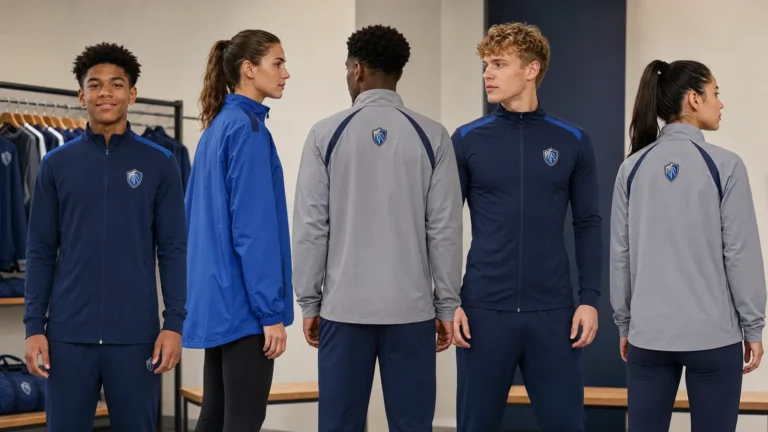
Custom Color Guard Team Jackets: Design and Ordering Guide
Color guard jackets do more than keep performers warm between rehearsals. They identify the ensemble in transit, provide a consistent layer during warm-ups, and give directors a durable piece of team apparel that can serve across a season. A good jacket must also work with movement: performers need to raise their arms, rotate their shoulders, carry equipment and layer the jacket over rehearsal clothing without feeling restricted.
That combination makes a color guard jacket different from a generic promotional windbreaker. Directors, booster organizations, schools, uniform dealers and teamwear distributors need to make coordinated decisions about silhouette, fabric, mobility, decoration, size grading and replenishment. If those decisions are left until after artwork approval, the result may look right in a mockup but fit poorly, decorate inconsistently or arrive with avoidable size gaps.
This guide explains how to define and order custom color guard team jackets for youth, school, independent and collegiate programs. It focuses on specifications that a supplier can quote, sample and inspect—not vague claims such as “premium quality.”
Quick Answer: The best custom color guard team jacket is usually a lightweight full-zip style with enough shoulder mobility for warm-ups, a fabric selected for the actual climate, a color-blocking plan that remains consistent across youth and adult sizes, and decoration placed away from high-stretch or high-friction areas. Approve a physical sample in a representative size before bulk production. For a quotation, send the jacket style, quantity by size, fabric preference, colors, vector logo, decoration locations, packaging needs and required delivery date.
Why Color Guard Jacket Design Requires a Team-Specific Brief
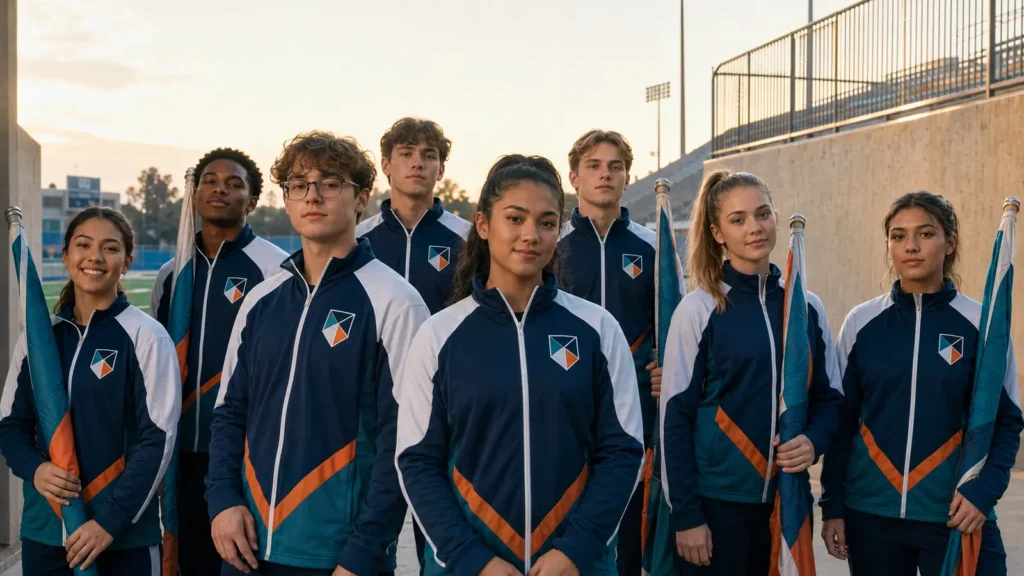
A jacket for a color guard program sits between athletic warm-up apparel and branded school merchandise. It should coordinate visually with the program, but it should not copy the performance costume so literally that the design becomes difficult to reproduce or wear outside a show.
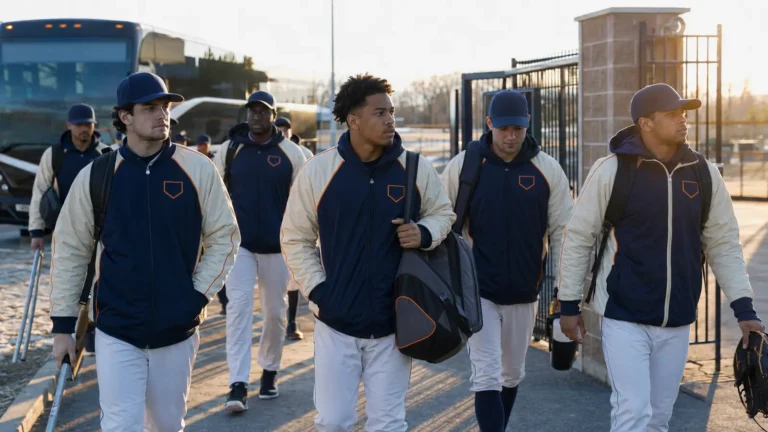
The jacket may be used for warm-ups, travel, sideline coverage, photographs, ceremonies and future-member replenishment. Each use affects the specification. A knit jacket is comfortable indoors, a woven shell provides more wind protection, and a lined travel style adds warmth and bulk. Start with use, not appearance: decide where it will be worn, who receives it and whether it must coordinate with other custom team uniforms.
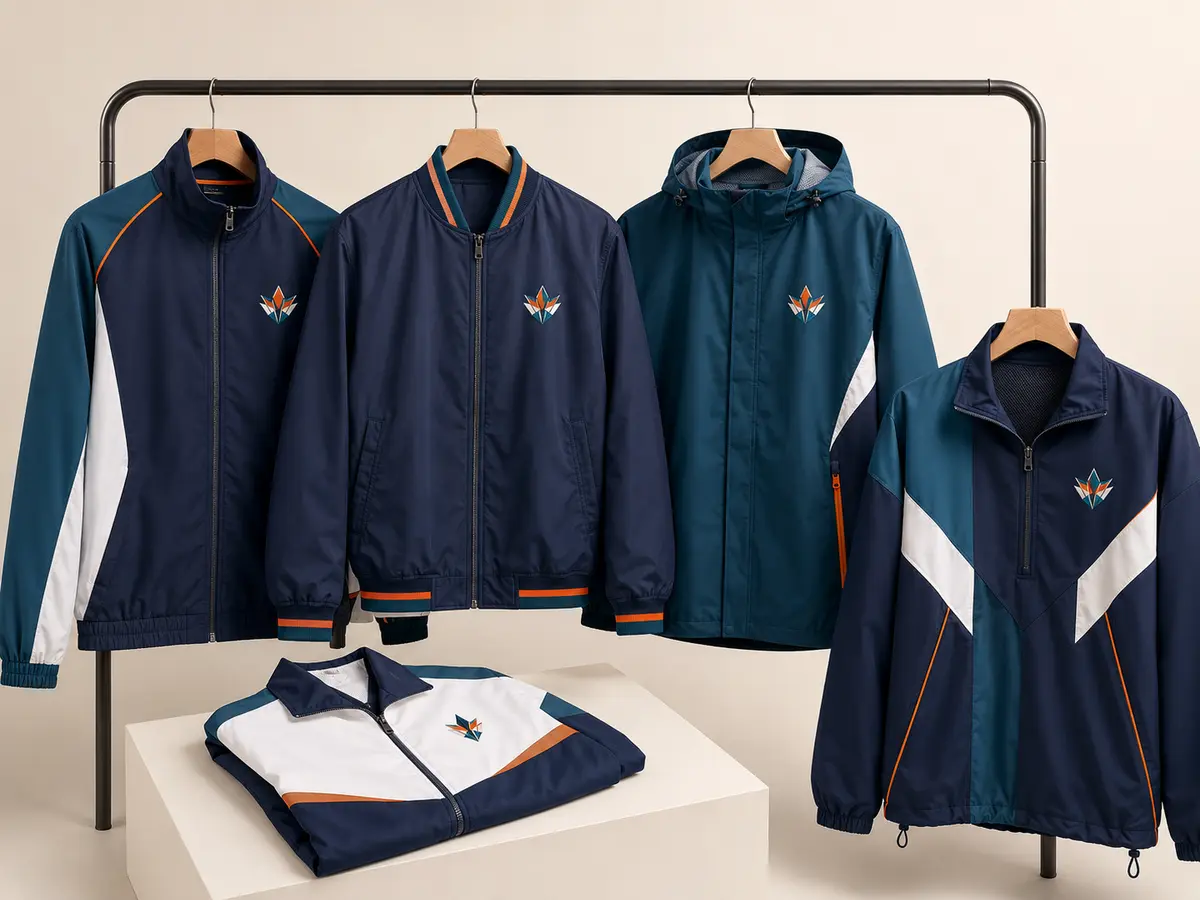
Which Jacket Style Is Best for a Color Guard Team?
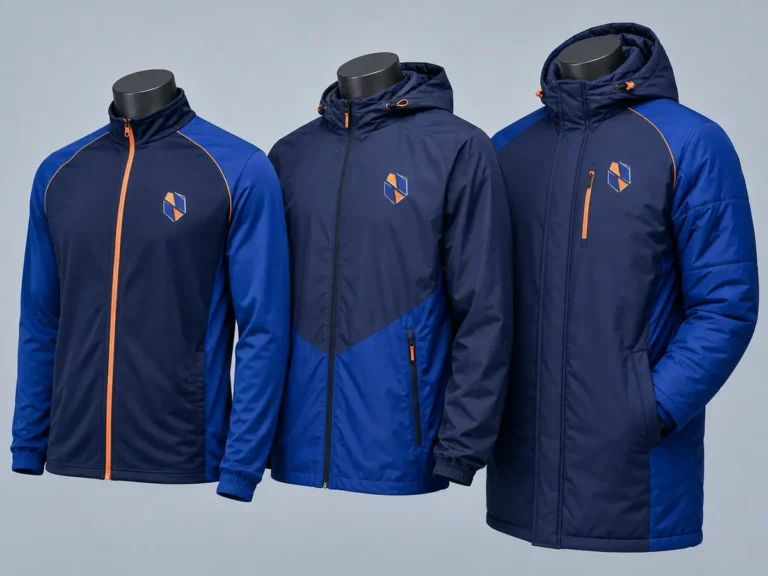
There is no single jacket style for every program. The table below translates common options into procurement decisions.
| Jacket style | Typical strengths | Limitations to manage | Best fit for |
|---|---|---|---|
| Full-zip knit warm-up jacket | Flexible, comfortable indoors, easy to layer and remove | Lower wind resistance than a woven shell | Indoor guard, rehearsal, mild climates, broad team use |
| Lightweight woven track jacket | Clean color blocking, compact packing, better wind protection | Non-stretch versions need more ease through shoulders | Outdoor warm-ups, travel, school programs |
| Water-resistant shell | Useful for light weather exposure; can include a mesh lining | “Water-resistant” must be supported by the selected fabric and construction; not automatically waterproof | Outdoor programs and variable climates |
| Bomber-style team jacket | Strong lifestyle appeal and clear branding area | Rib waistband and a shorter body may not suit every fit preference | Spiritwear, travel and presentation use |
| Softshell jacket | Structured appearance and warmth with some stretch | Heavier, usually more expensive and less compact | Cold-weather travel, staff and director apparel |
| Packable windbreaker | Lightweight and easy to carry | Thin fabric may show print-through or feel less substantial | Budget-sensitive warm-up and event coverage |
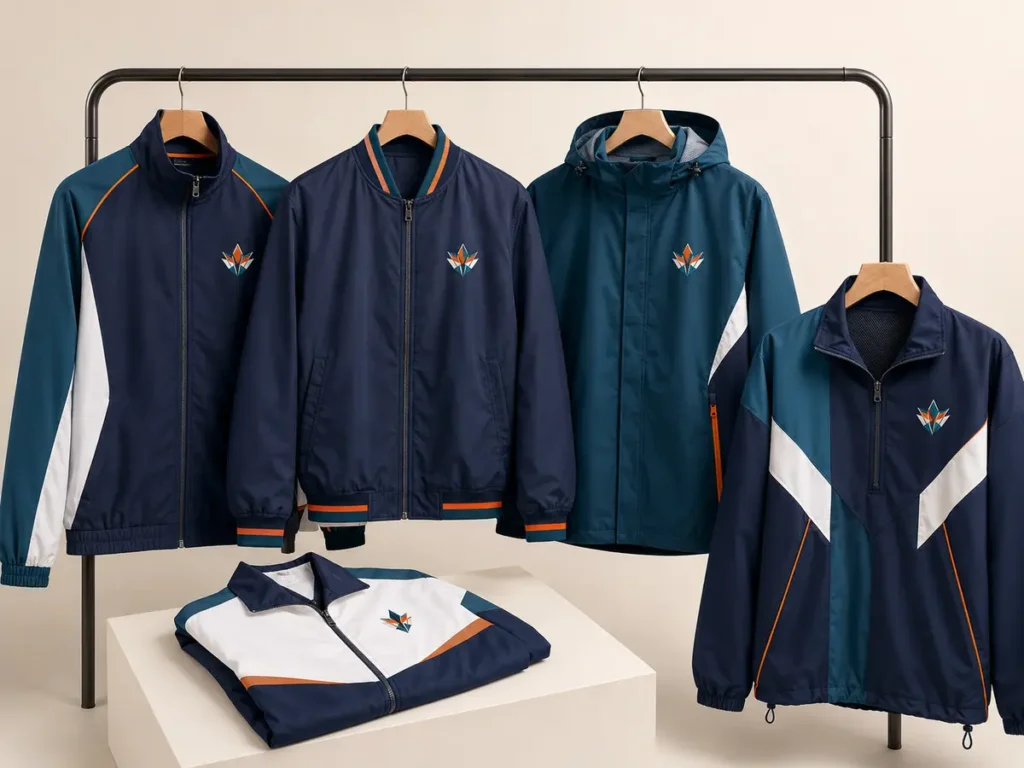
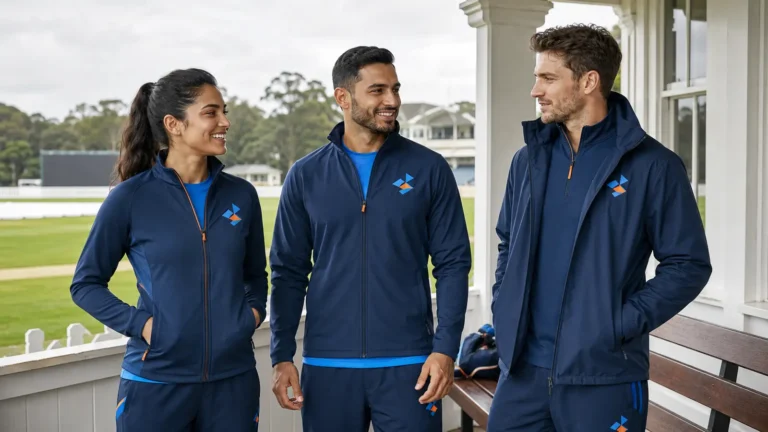
For many programs, a full-zip jacket is the practical starting point. Performers can open it during warm-ups, remove it without disturbing hair or headwear, and regulate temperature more easily than with a pullover. A standing collar avoids the bulk of a hood and leaves the back neckline available for a small team mark if desired.
If the roster includes younger members, discuss any cord or drawstring details early. The U.S. Consumer Product Safety Commission identifies hood and neck drawstrings on children’s upper outerwear in sizes 2T–12 as a substantial product hazard and limits certain waist or bottom drawstrings in sizes 2T–16. Buyers should confirm the applicable age range, market and current legal requirements with a qualified compliance professional; this guide is not legal advice. See the CPSC business guidance on children’s outerwear drawstrings.
Build the Design Around Movement, Layering and Appearance
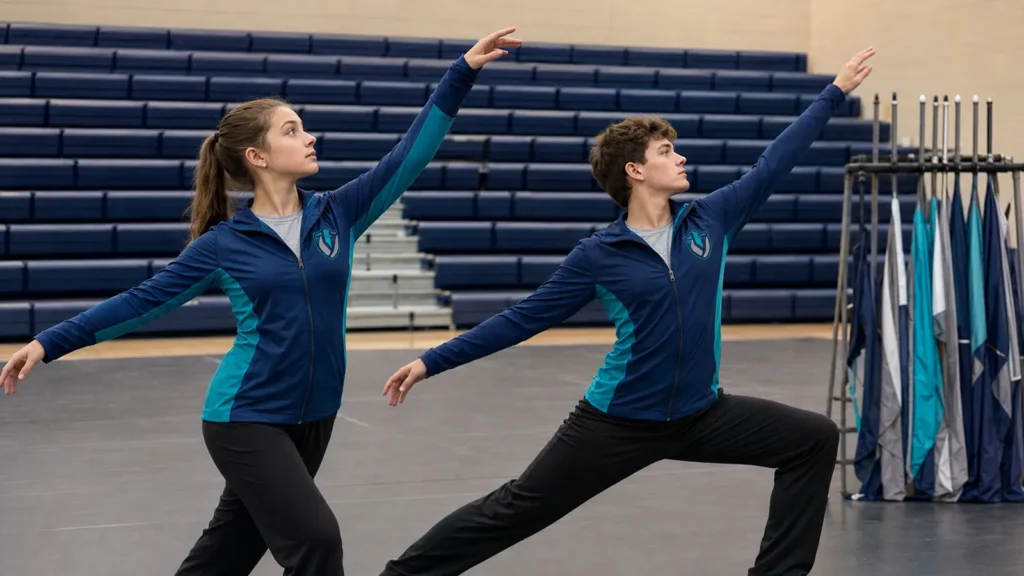
A color guard jacket should look consistent when the group stands together, but fit cannot be judged only in a static front view. The sample wearer should test a rehearsal range of motion while wearing the intended base layer.
Shoulder and Arm Mobility
Ask the wearer to reach both arms overhead, extend them horizontally, cross them in front of the chest and rotate through the shoulders. Watch for:
- the jacket hem lifting excessively;
- tightness across the upper back;
- sleeve cuffs pulling far above the wrist;
- armholes cutting into the underarm;
- decorative panels restricting stretch;
- zipper distortion when the torso rotates.
Mobility can come from stretch fabric, knit construction, added ease, raglan sleeves, articulated pieces or underarm gussets. Ask which feature is in the design and verify it in the sample.
Layering Allowance
Define the layer worn under the jacket. A style fitted over a T-shirt may be too tight over a rehearsal hoodie. Conversely, adding excessive ease to every size can make smaller performers look lost in the garment and can shift logo placement.
A useful review uses the actual rehearsal layer and records the wearer’s chest, height, selected size and fit comments. Do not rely only on labels such as “youth large,” because size names vary by supplier.
Body and Sleeve Length
The body should remain covered during overhead movement without becoming so long that it bunches at the hips. Sleeve length should be checked with arms relaxed and extended. Rib cuffs can help accommodate a range of arm lengths, while open cuffs create a cleaner shell silhouette but need more precise grading.
Choose Fabric by Climate and Use—not by Fabric Name Alone
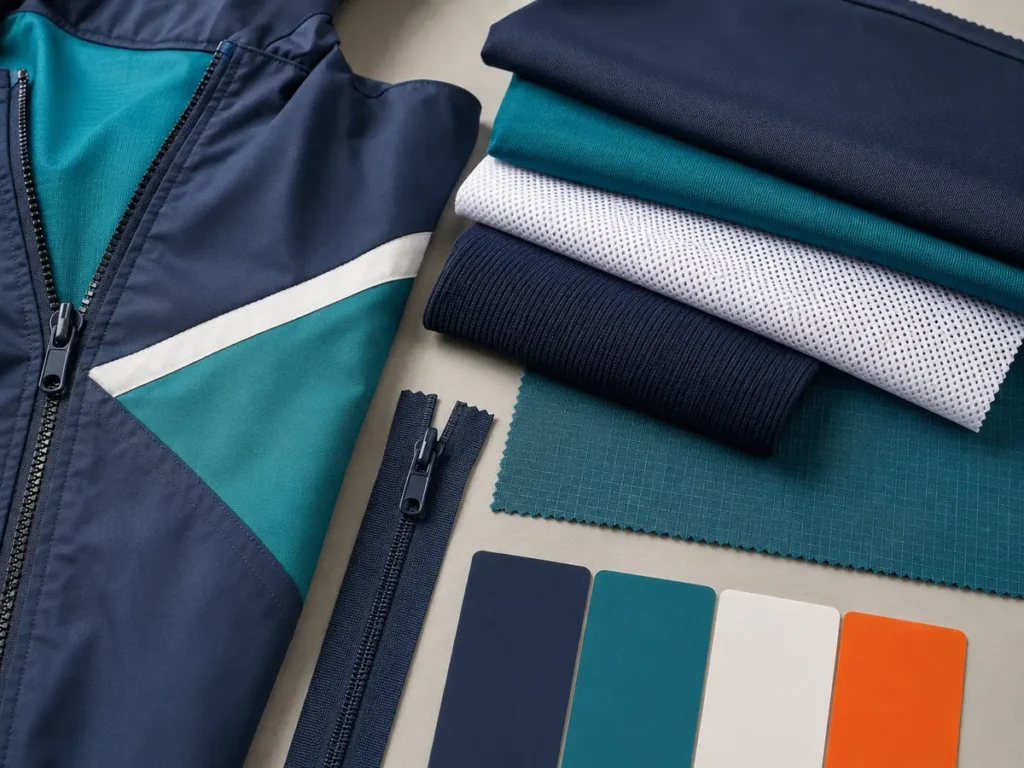
“Polyester jacket” is not a complete specification. Polyester can describe a thin woven shell, a smooth interlock knit, a brushed warm fabric or a laminated weather-resistant material. Ask for construction, weight or a physical swatch, stretch behavior, lining and finish.
| Fabric direction | Hand feel and function | Decoration considerations | Buyer questions |
|---|---|---|---|
| Polyester interlock knit | Smooth, flexible and comfortable for active warm-ups | Works with embroidery, transfers and selected print methods; test puckering | What is the fabric weight? Is stretch one-way or two-way? |
| Woven polyester or nylon shell | Lightweight, wind-resistant feel and crisp color blocking | Needle holes and heat sensitivity require method testing | Is it lined? What performance claim is documented? |
| Mechanical-stretch woven | Cleaner shell appearance with added mobility | Panel seams should not cancel the stretch benefit | How much stretch and recovery does the finished fabric provide? |
| Softshell laminate | Substantial, warmer and structured | Embroidery can be effective; confirm needle and backing choices | What are the face, membrane and backing layers? |
| Mesh lining | Improves separation from the shell and can support comfort | Lining must be secured cleanly around openings | Is the mesh full-body or only in selected zones? |
| Rib knit | Useful at cuffs, collar and hem for recovery | Color matching can differ from the body fabric | Is rib color lab-dip matched to the shell? |
Breathability Versus Weather Protection
A warmer or more weather-resistant fabric is not automatically better. Performers may become hot during movement even in cool conditions. Indoor ensembles often benefit from a breathable knit or unlined woven jacket. Outdoor groups may prioritize a shell that blocks wind, plus a mesh lining or venting strategy.
For claims such as “waterproof,” “water-resistant,” “breathable” or “recycled,” ask what material, construction and evidence support them. A coated fabric alone does not make the finished jacket waterproof.
Colorfastness and Care Compatibility
Color guard palettes often combine dark navy or black with saturated accent colors and white. That increases the importance of colorfastness and care testing. Ask the sample team to review whether dark panels transfer color to white panels during washing, whether decoration tolerates the recommended care process, and whether the full garment—not just each component—supports the care instruction.
For U.S. consumer sales, the Federal Trade Commission’s Care Labeling Rule generally requires manufacturers and importers of covered apparel to provide care instructions and maintain a reasonable basis for them. The FTC also says care guidance should account for attached components such as linings, trims, buttons and zippers. See the FTC Care Labeling Rule guidance.
Construction Details That Affect Durability and Presentation
The difference between visually similar jackets often appears at stress points and inside the garment.
Zipper and Front Opening
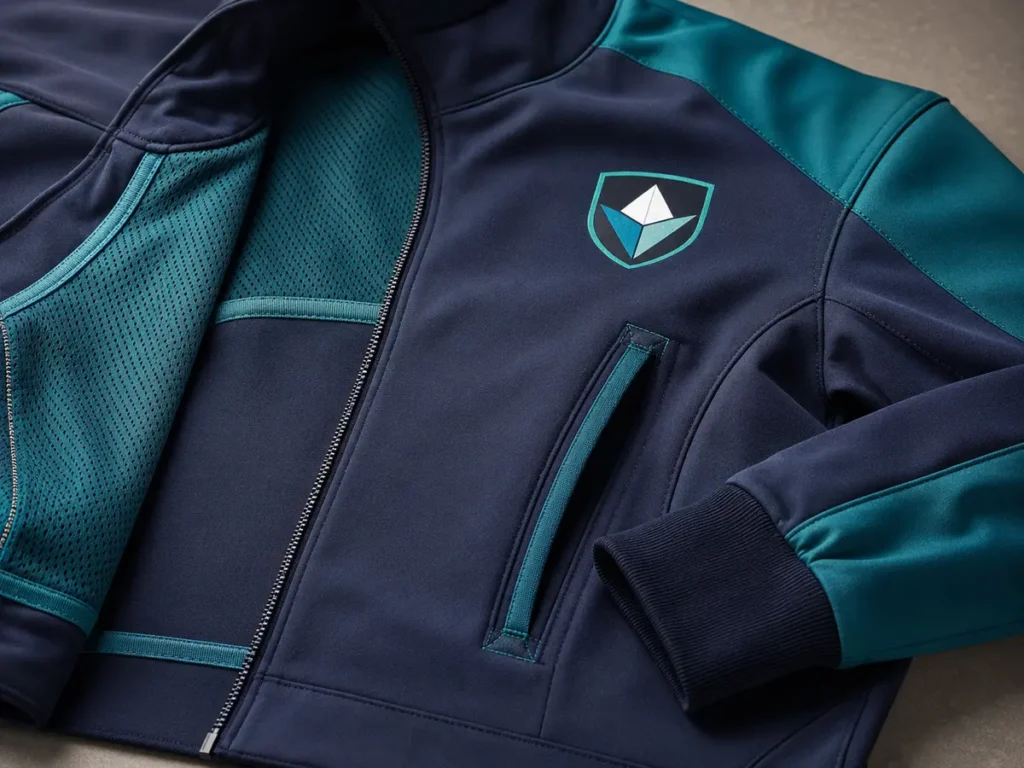
Check whether the zipper runs smoothly, lies flat and has a top guard where appropriate. Include it in sample wear and wash evaluation, and approve zipper tape and pull color.
Pockets
Decide whether pockets should be open, zippered or omitted. Zippered pockets add cost but improve security during travel. Test pocket opening and depth on the sample.
Seams and Reinforcement
Inspect shoulder, armhole, underarm, cuff and pocket seams for consistent stitching, secure ends, even seam allowance and no puckering. Reinforce actual stress points.
Lining and Interior Finish
For lined jackets, inspect attachment at the zipper, hem, cuffs and pockets, and confirm the lining does not twist or catch. Check private, size and care labels at the same time.
Create a Color and Branding System That Can Be Reordered
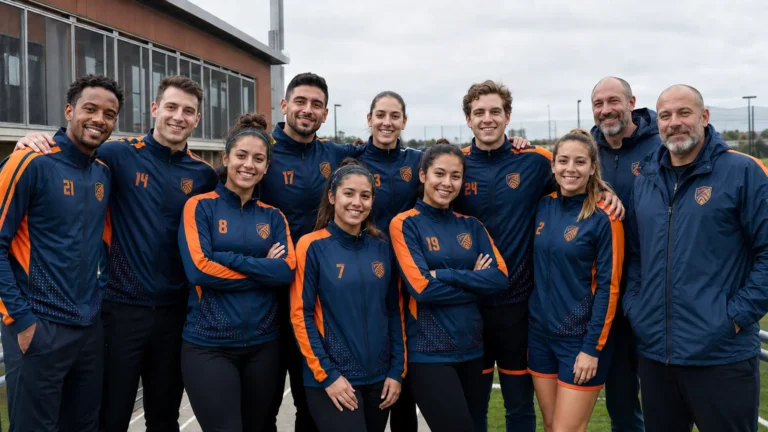
The core jacket should usually represent the long-term team identity. Keep a season-specific motif in a limited location so the main color system can remain stable for future members.
Define Colors in More Than One Way
Provide a recognized color reference, then approve the actual fabric swatch or lab dip. Shell, rib, thread, transfer film and screens can render the same reference differently. Record every approved physical component and make unavoidable differences look intentional.
Keep Color Blocking Gradeable
Complex panels change proportion across youth and adult sizes. Review critical lines, piping and logo positions across the range, and define placement relative to seams.
Select Logo Locations by Visibility and Wear
Common placements include the chest, upper sleeve and back yoke. Consider contact from flags, seat belts and a custom team bag. Large back art may be covered, while dense sleeve embroidery may feel stiff.
Compare Embroidery, Heat Transfer, Screen Print and Patches
The decoration method should match the logo, fabric, order volume and desired feel.
| Method | Visual result | Strengths | Watch points |
|---|---|---|---|
| Flat embroidery | Textured, durable stitched mark | Strong for crests and compact chest logos | Dense designs can pucker lightweight fabric; small details may need simplification |
| Heat transfer | Smooth, precise color and detail | Useful for gradients, fine shapes and names | Adhesive, temperature and stretch must be tested on the selected fabric |
| Screen printing | Clean graphic color areas | Efficient for suitable volumes and simple designs | Seams, coatings and color opacity affect the result |
| Woven patch | Crisp small detail with a textile surface | Consistent emblem shape and removable development path | Edge, backing and attachment method need approval |
| Rubber/PVC-style patch | Dimensional, modern and weather-friendly look | Strong for simplified geometric marks | Adds weight and needs flexibility/attachment review |
| Sublimated panels | Design becomes part of a compatible polyester panel | Broad color freedom without a heavy surface print | Best planned before cutting; mixed fabrics may render colors differently |
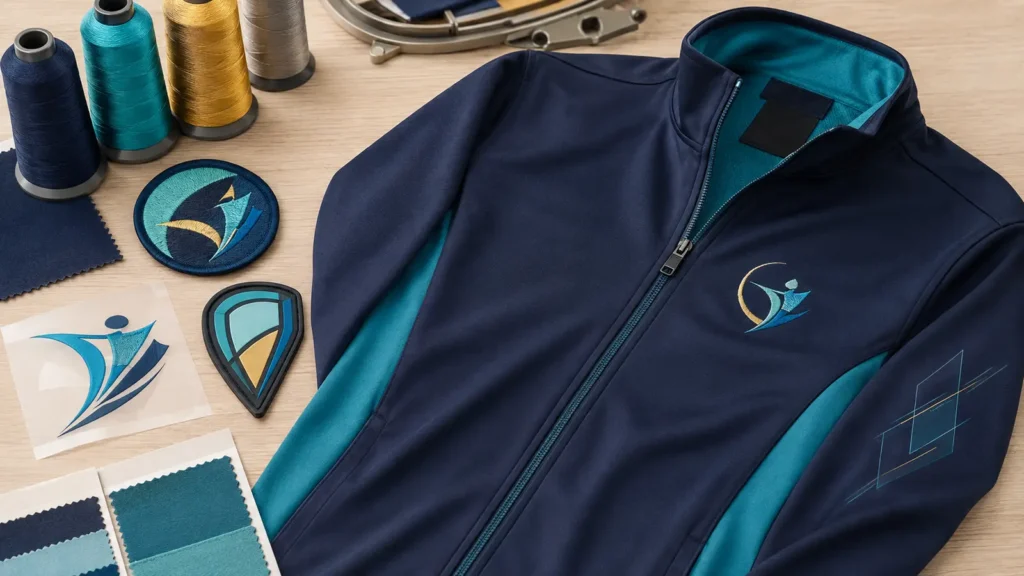
Artwork Preparation
Send vector artwork with official colors, finished size and any simplified embroidery version. For individual names, provide a validated roster with capitalization and location rules, then freeze it before production.
Planning a custom color guard jacket order? Share your reference image or tech pack, estimated quantity, youth/adult size range, colors, vector logo, decoration locations, packaging needs and target delivery date with JIUMU. Start at the custom team jackets page or email zhengdong@jiumugear.com for a specification review.
Plan Youth Sizing, Compliance and Product Labels Early
Many color guard programs combine youth and adult wearers. Buyers should not assume that an adult pattern can simply be scaled down. Youth proportions, sleeve lengths, pocket placement and safety details require deliberate grading and review.
Create a size plan with a garment measurement chart, a body-measurement guide and representative fit samples or a size set when the roster is large or the fit is unfamiliar.
For U.S. textile products, federal labeling rules generally require most textile and wool products to disclose fiber content, country of origin and the identity of the manufacturer or another responsible business. The exact responsibilities can depend on the product and distribution model; review the FTC apparel labeling overview and obtain compliance advice for the destination market.
If the program includes children, confirm which product-safety, tracking-label, flammability and testing requirements apply to the finished garment and its intended market. Do not accept a generic statement that “the fabric is compliant” as proof that the completed jacket and labeling program meet all applicable requirements.
What Determines the Cost of Custom Color Guard Jackets?
An accurate quotation requires a finished specification. The following factors usually have the greatest effect:
| Cost driver | Why it changes the quotation | How to control it |
|---|---|---|
| Jacket pattern and number of panels | More pattern pieces require more cutting, alignment and sewing | Use purposeful color blocking; remove lines that do not add visual value |
| Fabric and lining | Specialty finishes, stretch, laminates and multiple materials change sourcing and handling | Choose properties based on use; approve actual swatches |
| Decoration method and coverage | Stitch count, print area, colors and patches add separate operations | Simplify small marks and reserve large decoration for priority locations |
| Individual personalization | Names and unique elements increase data handling and production control | Supply a frozen, validated roster in one format |
| Size range | Youth, extended adult sizes and unusual grading may require additional patterns or consumption | Confirm the full size range before sampling |
| Labels and packaging | Private labels, hangtags, size stickers and individual bags add components and labor | Define what distributors, schools or teams actually need |
| Sample rounds | Major design changes after sampling can create new pattern and material work | Approve the design brief before the first physical sample |
| Quantity and split shipments | Smaller runs and multiple destinations reduce production efficiency | Consolidate where practical and reserve extra pieces for later needs |
Do not compare quotations only by unit price. Compare what each quote includes: sample charges, artwork setup, labels, individual packaging, size surcharges, freight terms, duties, quality documentation and the remedy process for nonconforming goods.
Approve a Physical Sample Before Bulk Production
A digital mockup verifies layout, but not mobility, fabric hand, zipper behavior, embroidery stiffness, pocket function or actual color. Use a documented physical pre-production sample as the bulk reference.
Sample Approval Checklist
- jacket style and overall silhouette;
- fabric, lining, rib and trim against approved swatches;
- chest width, body length, sleeve length and key grading points;
- overhead reach and shoulder mobility with the intended base layer;
- color-blocking proportion and piping alignment;
- zipper operation, guard and puller;
- pocket type, opening, depth and closure;
- logo size, color, location, edge quality and fabric interaction;
- label content and placement;
- care instruction supported by the finished construction;
- packaging, size sticker and carton-marking format;
- photos and signed comments that identify the approved sample version.
Avoid comments such as “make the blue better.” State the swatch ID, finished logo width and placement from a defined seam.
Use a Bulk Quality-Control Plan That Matches the Approved Sample
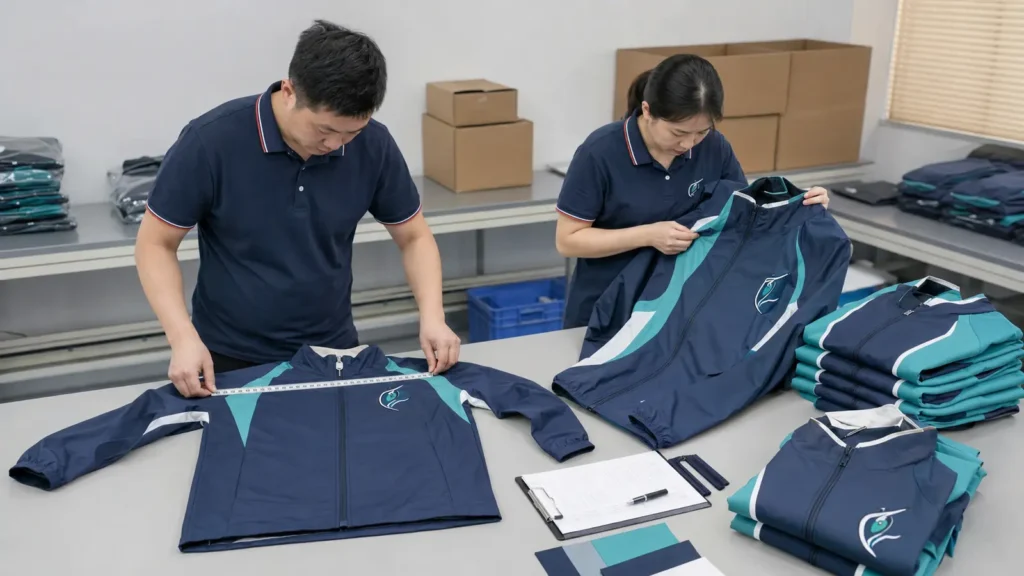
Bulk inspection should verify consistency, not redesign the product. Establish the inspection criteria before production and retain the approved sample, artwork, measurement chart, bill of materials and packaging specification.
Key checks include:
- quantity by style, color and size;
- measurements at defined points using the agreed tolerance;
- fabric and trim identity against approvals;
- color consistency within and between garments;
- panel orientation and seam alignment;
- stitch security and appearance at stress points;
- zipper and pocket function;
- logo method, dimensions, colors and placement;
- label accuracy and size identification;
- visible stains, holes, shade variation or damage;
- folding, individual packaging, assortment and carton count.
For repeat orders, keep a controlled reference set and record substitutions. Fabrics and trims can change between dye lots or production periods. If the original component is unavailable, require approval of the replacement rather than accepting a silent “closest match.”
A Practical Bulk-Ordering Process
1. Define the Program
Confirm wearer group, use cases, climate, budget direction, quantity, target arrival date and whether the jacket must coordinate with uniforms, bags or other merchandise.
2. Send the Design Brief
Provide reference images, brand guide, vector logos, official colors, preferred silhouette, decoration locations and a roster estimate. State which elements are fixed and which can be adapted for manufacturing.
3. Align the Specification and Quotation
Review fabric, lining, pattern, pockets, zipper, decoration, labels, packaging, size range, MOQ and commercial terms. JIUMU’s typical MOQ is 50 pieces, subject to product structure and customization.
4. Approve Digital Artwork
Check front, back and side views; logo dimensions; placement; color blocking; trim colors and personalization rules. Digital approval should precede the physical sample but does not replace it.
5. Review Fabric and Decoration Samples
Approve swatches, lab dips and strike-offs where needed. Compare them under consistent lighting and retain labeled references.
6. Fit and Test the Physical Sample
Use a representative wearer and intended base layer. Record all revisions in one consolidated comment document, then confirm the revised sample or evidence before releasing bulk production.
7. Freeze Sizes and Personalization
Collect the final size breakdown and roster. Validate spelling and quantities, assign one authorized approver, and keep a small overage strategy for common sizes if the program expects late additions.
8. Inspect, Pack and Ship
Conduct the agreed bulk checks, confirm carton assortment and shipping documents, then coordinate dispatch against the program’s receiving deadline. Build contingency into the calendar rather than planning arrival immediately before the first event.
What Should You Send for a Custom Jacket Quotation?
Send the following in one organized inquiry:
- buyer organization, destination country and contact information;
- intended wearer group and jacket use;
- estimated total quantity and quantity by youth/adult size if available;
- preferred jacket silhouette and closure;
- fabric, lining and weather-performance preferences;
- color references and any approved physical swatches;
- vector logo files plus placement and finished-size instructions;
- decoration method preference or desired visual result;
- names, numbers or role titles, if any;
- private labels, hangtags, size stickers and packaging requirements;
- target delivery date and delivery location;
- reference photos, tech pack or existing sample photographs.
If you do not yet have a complete tech pack, separate required features from optional ideas. That allows the supplier to recommend a manufacturable specification without guessing which details can change.
Questions to Ask a Custom Team Jacket Supplier
- Which jacket construction do you recommend for our indoor/outdoor use, and why?
- What fabric, lining, weight and stretch characteristics are included in the quote?
- Can you provide swatches or a physical sample before bulk production?
- How will the color-blocking design grade across youth and adult sizes?
- Which decoration method best fits our logo detail and jacket fabric?
- What measurement chart and tolerances will be used for bulk inspection?
- How do you control logo placement and color consistency during production?
- What labeling information do you need from us for the destination market?
- What is included in packaging, and can cartons be assorted by team or size?
- How are repeat orders handled if a fabric or trim is no longer available?
- What information must be frozen before production begins?
- What happens if inspection finds a mismatch with the approved sample?
Specific answers are more useful than a generic claim of “strict QC.” Ask the supplier to connect each control to a document, sample or measurable criterion.
Common Ordering Mistakes
Designing Only for a Front-View Mockup
A jacket is three-dimensional and worn in motion. Review side panels, sleeve graphics, back layout, pocket access and overhead movement.
Collecting Sizes Before Confirming the Size Chart
Size names differ. Collect final sizes only after the team has the supplier’s garment measurements or fit samples.
Treating Every Blue as the Same Color
Shell, rib, thread and print can render color differently. Approve components together and record intentional differences.
Adding Too Many Individual Variations
Names, roles, graduation years and show references create data and replenishment risk. Use personalization where it provides clear value and standardize the rest.
Skipping the Physical Sample
A mockup cannot prove fit, hand feel or construction. Sample approval is one of the strongest controls in a custom order.
Ordering Exactly the Current Roster
Late members and replacement needs are common. Evaluate whether a small reserve in high-use sizes is more economical than a very small reorder, while avoiding unnecessary inventory.
Planning Around the Event Date Instead of the Receiving Date
Set an internal arrival target that leaves time for inspection, distribution and corrections.
Why JIUMU Is Relevant to Color Guard Jacket Projects
JIUMU is a Guangdong-based B2B custom teamwear and branded-merchandise supplier established in 2010. Its capabilities include OEM and ODM development, embroidery, sublimation, screen printing, heat transfer, woven and rubber/PVC-style patches, fabric sourcing, Pantone color matching, private labels, hangtags, packaging customization, digital mockups, physical samples, bulk quality control and export support.
Buyers can develop coordinated colors, custom panels, decoration, youth/adult sizing, labels and packaging within one managed project. The typical MOQ is 50 pieces, subject to construction and customization.
JIUMU serves schools, clubs, distributors, uniform dealers, promotional buyers and private-label brands in North America and Europe. Explore custom team jackets or coordinate the jacket with custom team uniforms and custom team bags.
Frequently Asked Questions
Final Recommendation
Treat custom color guard team jackets as a uniform-development project. Define the use environment, choose a silhouette that supports movement and layering, approve real fabrics and colors, and match decoration to the construction. A physical sample and written bulk-inspection plan provide stronger control than a mockup alone.
For a clear quotation, send JIUMU the quantity, size range, style, fabric direction, colors, vector logo, decoration locations, packaging needs and target delivery date.
About JIUMU Editorial Team
JIUMU creates B2B sourcing guides grounded in its custom teamwear, logo apparel, sample development, private-label and bulk quality-control capabilities.