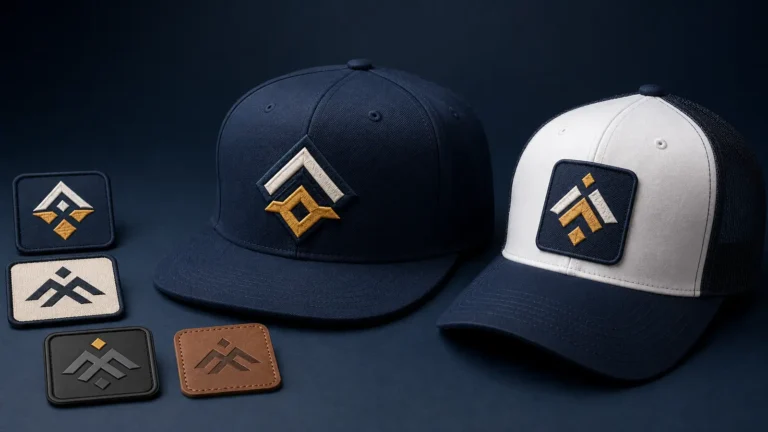
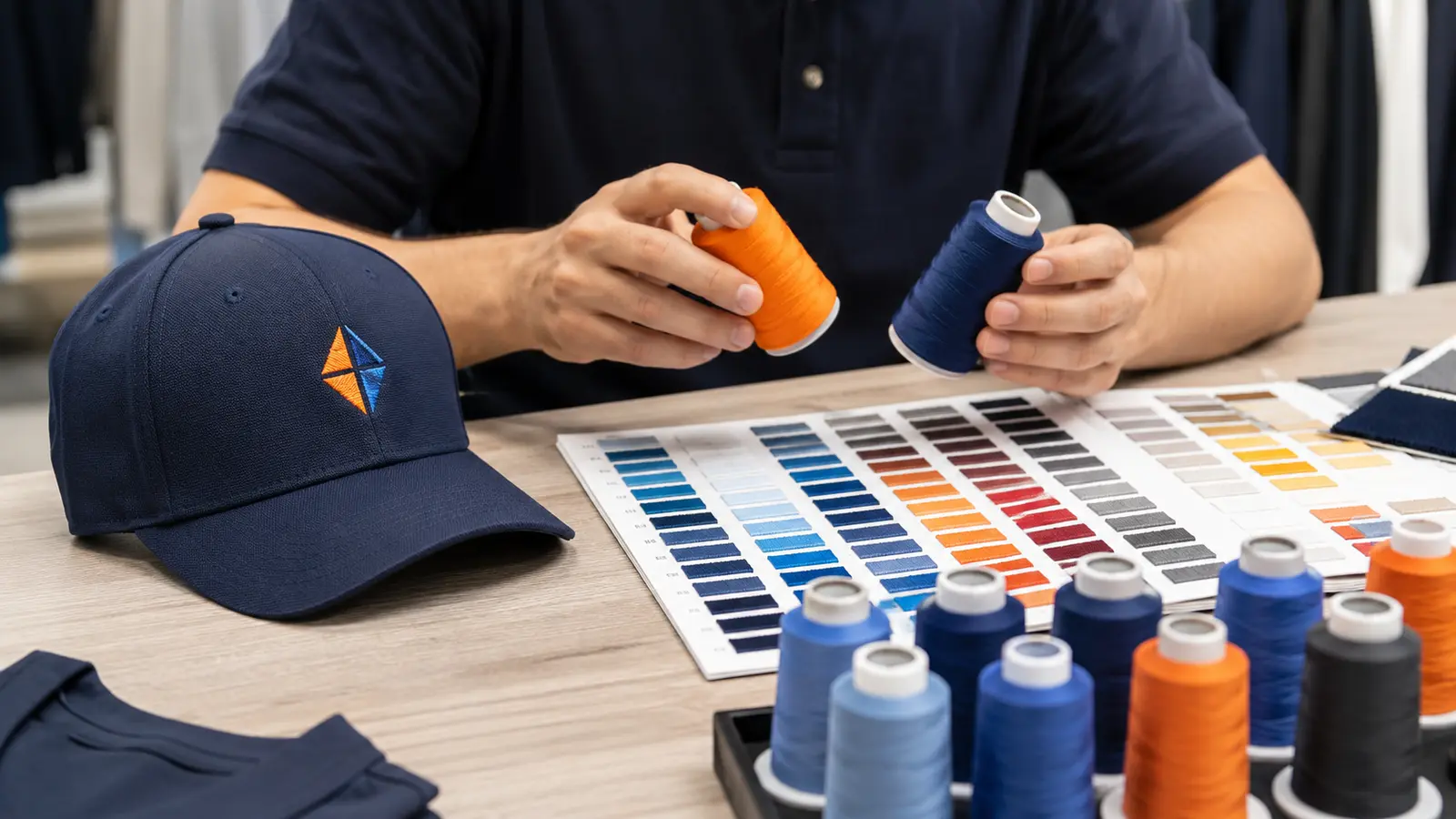
How to Match Embroidery Thread to Brand Colors
Matching embroidery thread to a brand color is not as simple as sending a Pantone number and asking a supplier to “use the same blue.” A Pantone reference is a target. The thread mill’s color code identifies a specific stocked thread. The finished embroidery is a three-dimensional textile surface that reflects light differently from ink, paint, or a screen.
For a dependable result, buyers need a controlled approval chain: define the correct physical color standard, shortlist thread colors from a physical shade card, sew the design on the actual cap fabric, approve it under agreed lighting, and preserve the approved thread and sew-out records for reorders.
Quick Answer: To match embroidery thread to brand colors, provide the complete Pantone reference—including the color system and suffix—then compare it with a current physical thread shade card. Select two to four promising stock thread colors and make sew-outs on the actual cap fabric using the final logo size, stitch file, density, backing, and thread type. Review the sewn samples under agreed controlled lighting and in the product’s normal use environment. Approve a named thread manufacturer, fiber, weight, color code, and, where practical, dye lot. Keep the approved cap or sew-out, thread sample, digital program version, and production record for future orders.
An exact visual match is not always possible because dyed thread and printed Pantone references use different materials and surface structures. When no stock shade is acceptable, the practical choices are to approve the closest stock color, adjust the artwork or background for better visual contrast, or request custom-dyed thread subject to supplier availability, minimum quantity, development time, and lot controls.
Why Embroidery Color Matching Is Different From Printing
A printed spot color is designed to create a controlled ink appearance on a specified substrate. Embroidery replaces that flat surface with hundreds or thousands of raised stitches. Each filament catches light, and the visible highlight changes as the cap moves or the viewing angle changes. The logo can therefore look lighter, darker, brighter, or more metallic even when the thread itself has not changed.
This is why three different meanings of “match” should be separated in the purchase specification:
| Match type | What it means | Suitable approval evidence |
|---|---|---|
| Target-color match | The embroidery is intended to represent a named brand color | Complete Pantone code and physical standard |
| Thread-code match | Production uses the approved manufacturer, range, fiber, weight, and shade code | Thread cone label, physical thread card, retained yarn sample |
| Finished-appearance match | The sewn logo is visually acceptable on the actual product | Approved sew-out or golden sample under agreed lighting |
The first describes intent. The second controls the material. The third controls what the buyer will actually receive. A strong purchase order records all three instead of treating them as interchangeable.
Pantone Target Color vs Physical Embroidery Thread Card
Pantone systems are useful because they give buyers and suppliers a shared color language. However, the full designation matters. A request such as “Pantone 186” is incomplete if the system and suffix are missing. A coated graphics reference, an uncoated graphics reference, and a textile reference are not automatically the same physical standard.
For textile merchandise, confirm whether the brand guide specifies a Pantone Graphics color, a Fashion, Home + Interiors textile color, or another defined standard. Do not silently convert between systems. If the brand owner controls only a digital RGB or hexadecimal value, ask which physical reference should govern production.
Pantone states that on-screen simulations may not accurately match physical Pantone standards. It also recommends proper viewing conditions for visual evaluation. A current physical guide or official swatch should therefore be the primary target when color is critical, while PDFs, screenshots, and browser color pickers remain communication aids. See Pantone’s notes on color systems, on-screen simulations, and controlled visual evaluation.
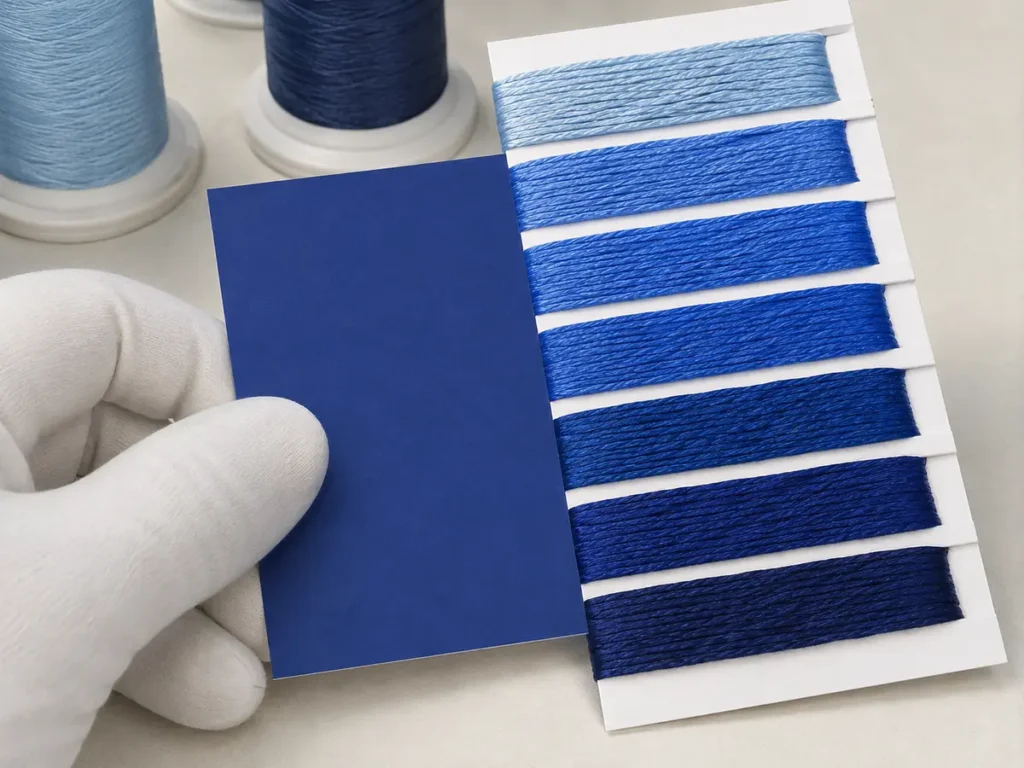
Thread manufacturers use their own stock color codes. Some offer conversion tools or suggested Pantone equivalents, but a conversion is a shortlist, not proof that the finished embroidery will be visually identical. Madeira, for example, provides digital shade cards for guidance and directs users to physical cards with yarn strips for accurate color checking. That distinction is valuable for any thread brand: use digital tools to narrow the range, then verify real thread. Buyers can review the manufacturer’s physical shade-card guidance and polyester thread guidance.
If your wider merchandise program includes fabric, printing, patches, and embroidery, establish one master color policy. Our Pantone Color Matching guide explains how the target standard can be carried across different materials without pretending that every process has the same surface appearance.
Why the Same Thread Can Look Like a Different Color
The thread code may remain constant while the visual result changes. Procurement teams should understand the variables before reporting a “wrong color” defect.
Fiber, filament shape, and finish
Polyester and rayon/viscose are common machine-embroidery thread families. They can differ in luster, hand, resistance properties, available shades, and recommended end uses. Neither should be described as universally superior; selection depends on the required appearance, care conditions, application, and supplier range.
Many bright polyester embroidery threads use a trilobal continuous-filament construction. Its shape is designed to reflect light strongly. AMANN identifies Isacord Recycled, for example, as a trilobal continuous-filament polyester thread, while Madeira describes rayon/viscose embroidery as having a soft feel and subtle sheen. These manufacturer descriptions illustrate why fiber and construction belong in the approved specification, not only the shade number. See AMANN’s product data and Madeira’s rayon/viscose guidance.
Matte, metallic, recycled, fire-resistant, or high-visibility thread ranges can produce different optical effects and performance characteristics. If a supplier changes from one range to another but keeps a “similar” shade, the logo may no longer look the same. Record the full product family.
Stitch direction changes highlights
Satin stitches running left to right reflect light differently from stitches running diagonally or vertically. Curved letters often contain several directions, so one area of the same logo can appear brighter than another. This is an optical effect, not necessarily mixed thread.
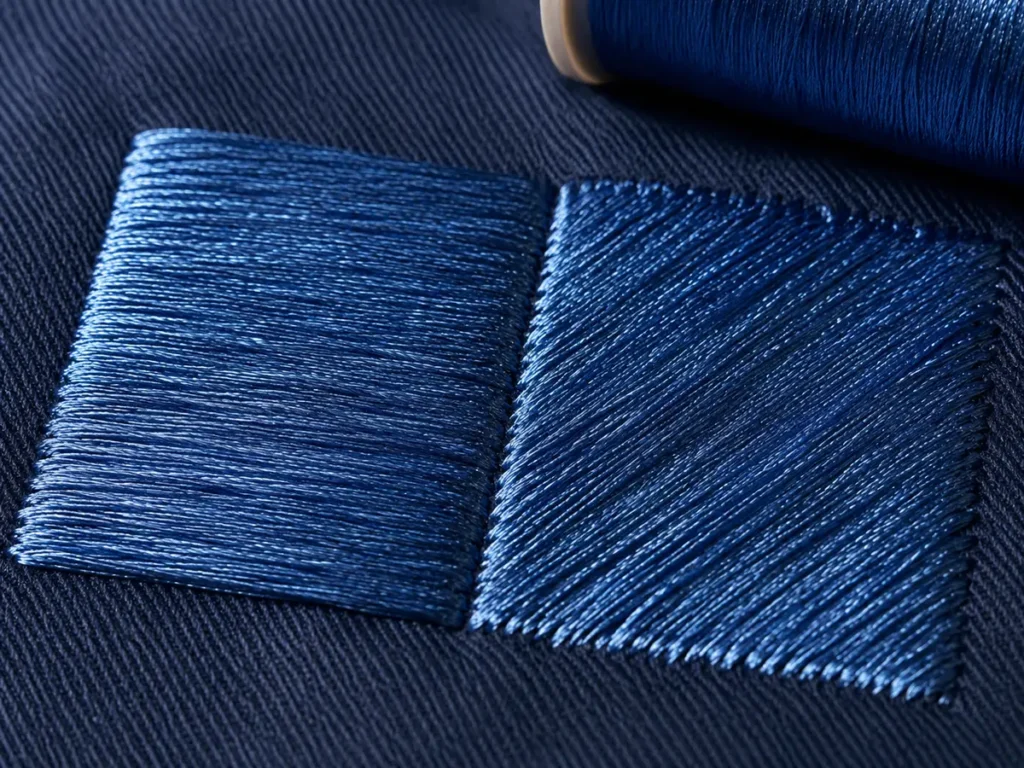
Long satin stitches, short fill stitches, tatami patterns, underlay, stitch density, and pull compensation also alter the visible surface. A dense field may look deeper and more saturated than a narrow outline. Excessive density can make the embroidery rigid and change the way highlights group across the logo.
The cap fabric changes contrast
The same orange thread can appear cleaner on navy twill and softer on beige twill because the surrounding colors change visual contrast. Fabric texture, nap, weave, and reflectance also matter. A smooth performance fabric, washed cotton, wool-like blend, and mesh-front panel will not present the same background.
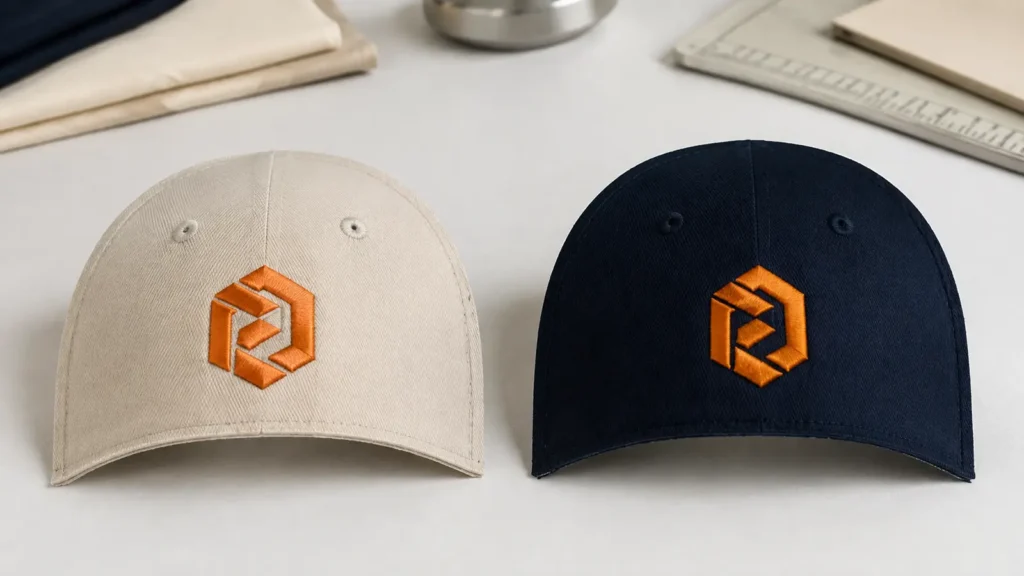
Coverage is another factor. If the stitch file is too open, the ground fabric may show between stitches. Dark show-through can make a light thread appear duller. Correct underlay, backing, topping where appropriate, density, and tension help create consistent coverage. Color approval should therefore happen after the logo has been digitized for the actual fabric and size.
Embroidery method changes the result
Flat embroidery offers the greatest control for most small and medium brand-color areas. Three-dimensional puff raises the stitching over foam, creates more shadow, and typically needs bolder artwork. A thread may look darker along puff edges because of shadow and stitch angle. A woven or embroidered patch adds its own ground fabric, border, and attachment method. If color consistency is especially important across cap colors, a patch with a controlled background can sometimes reduce the influence of the cap fabric, although the patch itself still requires physical approval.
The source artwork also affects color communication. Provide editable vector art and an explicit color map rather than relying on colors embedded in a screenshot. See Logo File for Hat Embroidery for the file and artwork details that help digitizing proceed accurately.
Why Screen Color and Room Lighting Are Not Final Standards
Screens vary by panel technology, brightness, color profile, calibration, browser, and ambient light. A hexadecimal value identifies a digital color, but it does not guarantee that two uncalibrated screens will show the same appearance. It also cannot reproduce the physical sparkle of glossy embroidery filament.
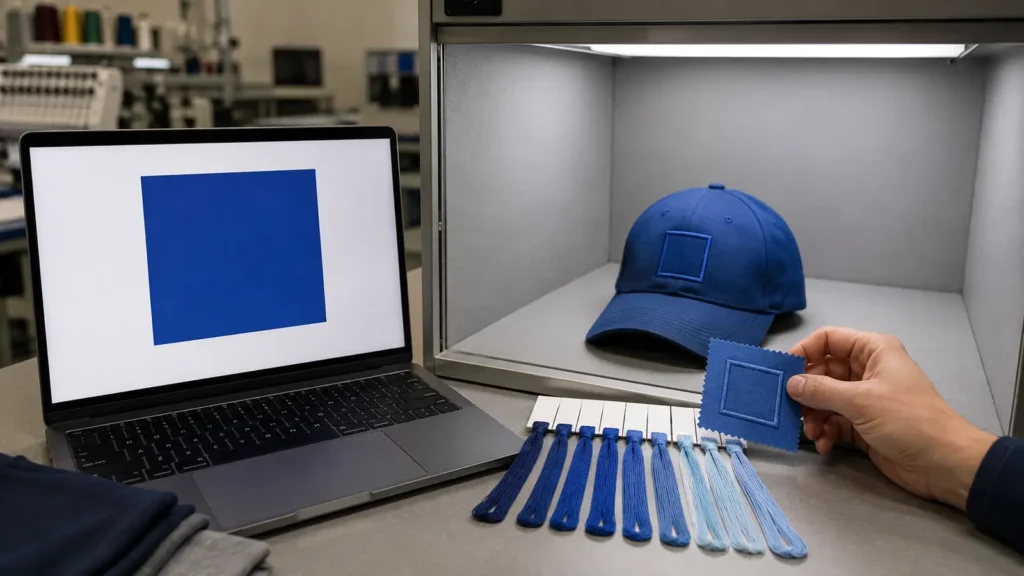
Lighting can produce a second problem: two materials may appear close under one source and separate under another. This behavior is commonly discussed as metamerism. A practical approval routine is to examine the physical target and sew-out under one agreed standard source—often D65 daylight for textile evaluation—then check them under a second source relevant to actual use, such as store or office lighting. The buyer and supplier should record the viewing conditions instead of using phrases like “normal light.”
Pantone recommends a light booth for accurate visual comparison and specifically references D65 evaluation for its textile standards. It also notes that physical guides change with handling, light, humidity, and age. Keep the guide clean, store it properly, and replace it in line with the standard owner’s current recommendations rather than treating an old, faded book as permanent truth.
A Practical Embroidery Thread Color-Matching Workflow
The most reliable workflow moves from a defined target to increasingly realistic physical evidence.
1. Define the brand target completely
Send the complete Pantone designation, including system and suffix. If the brand standard is a physical textile swatch or other master sample, identify its edition and ownership. State which element of a multicolor logo each target applies to.
Also specify whether the color is critical, preferred, or flexible. A global corporate identity may require closer control than a one-season promotional graphic. This priority affects sampling time and whether custom dyeing is commercially reasonable.
2. Confirm the embroidery construction
Provide cap style and color, fabric composition and finish, logo dimensions, placement, flat or puff embroidery, and expected care conditions. Ask the supplier to confirm the thread family and weight suitable for that construction. Do not approve shade before confirming the material range that will actually run in production.
3. Shortlist physical stock shades
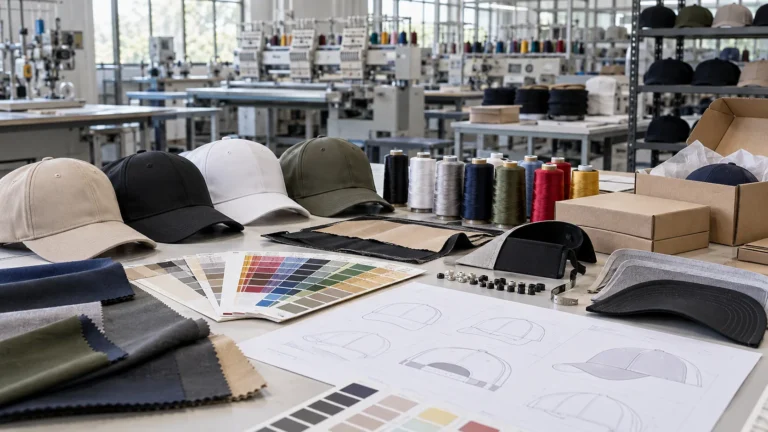
Compare a current physical brand standard with a physical thread card under controlled lighting. Select two to four close stock colors. The shortlist should include the manufacturer, product range, fiber, thread weight or ticket, and shade code.
4. Make actual-fabric sew-outs
Run each selected shade on the actual bulk fabric or the closest confirmed production fabric. Use the final embroidery file, logo size, stitch types, direction, density, underlay, backing, and any topping or puff foam. A loose bundle of thread is useful for screening, but it does not reproduce the final stitched surface.
5. Review color and construction together
Place the target standard and sew-out side by side under the agreed lighting. Review at close range for thread coverage and at normal viewing distance for overall brand recognition. Tilt the sample slightly to understand how sheen changes. Then check it in the expected use lighting.
6. Issue written approval
Approve one specific option by code and sample ID. Record any accepted difference, such as “slightly brighter than the paper target under D65 but approved on navy fabric.” Avoid approvals such as “blue one looks good,” which can become ambiguous after the email thread is separated from the samples.
7. Freeze and archive the production reference
Link the approval to the purchase order, embroidery program version, fabric color or lot, and thread details. Retain the approved sew-out or cap and, where practical, a portion of the approved thread. This reference becomes the baseline for incoming inspection and reorders.
Send JIUMU the complete Pantone reference, editable logo file, cap style and color, order quantity, embroidery dimensions, required thread performance, packaging needs, and target delivery date. We can prepare a thread shortlist and confirm what physical sample evidence is appropriate before bulk production.
What to Do When No Stock Thread Matches Exactly
An exact match may not exist in the selected thread range. That is normal: a stocked embroidery palette contains discrete dyed shades, while the brand target may come from a much larger or fundamentally different color system.
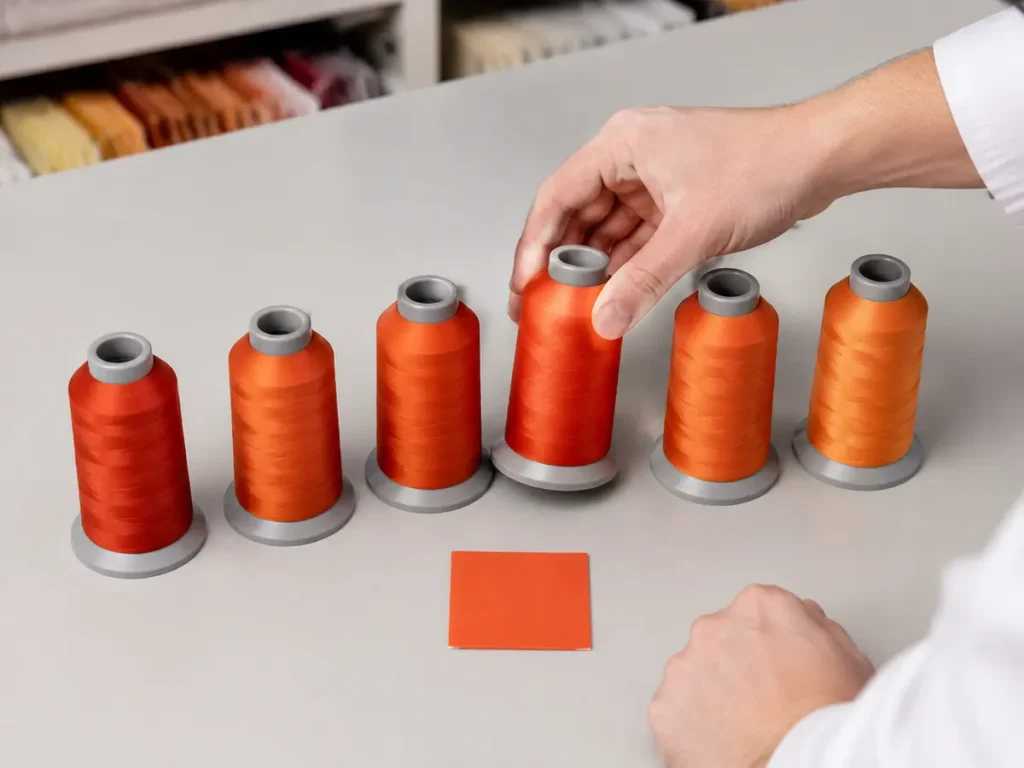
Use this decision table:
| Option | Best when | Advantages | Tradeoffs and controls |
|---|---|---|---|
| Approve closest stock shade | Difference is small and brand owner accepts the sewn appearance | Usually simpler sourcing, lower development burden, easier replenishment | Record the accepted deviation and exact stock code |
| Adjust artwork or background | Contrast is the main problem, or a border can protect visual identity | Can improve perceived color and legibility without new dyeing | Requires brand/design approval and a new sew-out |
| Change thread family | Another stocked range offers a closer shade or more suitable luster | May improve both appearance and performance | Recheck fiber, care, weight, needle, sheen, and availability |
| Custom-dye thread | Color is critical and order economics support development | Creates a shade developed toward the supplied standard | May require MOQ, lab development, added lead time, setup cost, lot control, and reorder planning |
When choosing the closest shade, do not judge hue alone. Review lightness, saturation, contrast on the cap, and sheen. A numerically or visually close loose thread may not create the best logo once stitched. In some cases, a slightly darker thread gives better brand recognition on a pale cap; in others, a border or controlled patch background solves the problem more effectively.
Can Embroidery Thread Be Custom Dyed?
Custom-dyed embroidery thread can be available, but feasibility depends on the thread manufacturer, fiber, finish, shade, performance requirements, and required quantity. Madeira, for example, states that custom colors can be dyed to order and directs customers to request minimum-quantity and delivery information. That is the correct way to frame the option: possible subject to project-specific commercial and technical confirmation, not a universal low-quantity service.
A custom-dye request normally needs a physical target, thread specification, estimated consumption, order quantity, required tests or care conditions, and schedule. The supplier may need a lab sample or trial lot before production approval. Buyers should ask:
- What is the development quantity and production MOQ?
- Are sampling, color development, or setup charges separate?
- What lead time is required before embroidery sampling can start?
- Which tolerances and viewing conditions govern acceptance?
- Will the entire order use one dye lot?
- Can surplus thread be reserved for repair pieces or a planned reorder?
- How will a future dye lot be compared with the retained master?
Custom dyeing can be justified for a recurring program or a large brand-critical order. For a small one-time cap order, the closest stocked shade may offer better cost, speed, and repeatability. Make this decision before confirming the production schedule.
How to Approve the Physical Embroidery Sew-Out
A proper sew-out controls more than color. It proves how the color and construction work together on the real substrate.
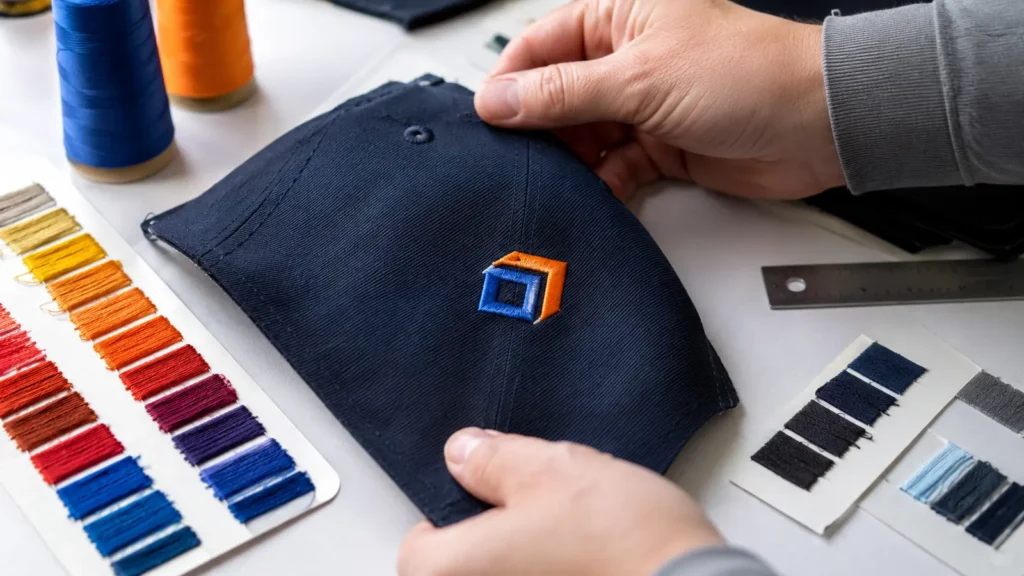
Use a table like this in the sample approval record:
| Approval field | Required record |
|---|---|
| Brand target | Full Pantone code, system, suffix, guide or swatch edition/reference |
| Logo element | Exact area to which the color applies |
| Thread | Manufacturer, product family, fiber, weight/ticket, stock or custom shade code |
| Thread lot | Dye-lot or traceability code when supplied and commercially relevant |
| Cap substrate | Style, fabric, fabric color, finish, and sample/bulk fabric reference |
| Embroidery program | File name, version, dimensions, stitch count, stitch types and direction |
| Construction | Flat/puff, foam if used, underlay, backing, topping, density and machine settings as controlled by the supplier |
| Viewing | Agreed primary and secondary light sources, review date and location |
| Decision | Approved, approved with stated deviation, or revise |
| Approval evidence | Signed/identified sew-out or cap, photos, approver, date, purchase order |
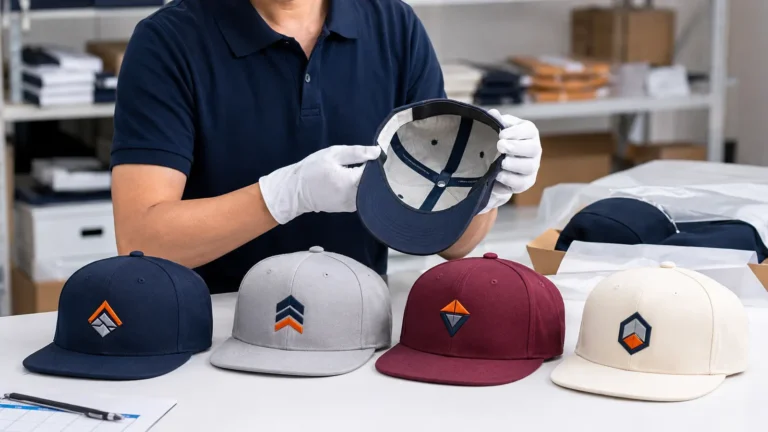
At close range, check for fabric show-through, poor edge coverage, looping, thread breaks, skipped areas, inconsistent tension, puckering, and unwanted outline gaps. At normal viewing distance, check whether the logo reads as the intended brand color rather than focusing only on individual highlights.
If the sample is rejected, report the difference in actionable terms: “Option B is too red under D65; please sew options using the two adjacent orange stock codes on the same navy fabric.” Attach the sample ID and mark the affected logo element. Do not ask for an undefined result such as “make it more premium.”
The broader inspection plan should connect color approval to incoming materials, first-piece approval, in-process checks, and final inspection. See JIUMU’s Quality Control page for the quality process context that should sit around the color record.
How to Keep Embroidery Color Consistent on Reorders
Reordering the same shade code is necessary but may not be sufficient. Thread suppliers control production, yet small differences between dye lots can occur in dyed textile materials. Fabric lots may also move, and a new cap background can change perceived contrast. The embroidery file or machine setup can be revised without the buyer noticing.
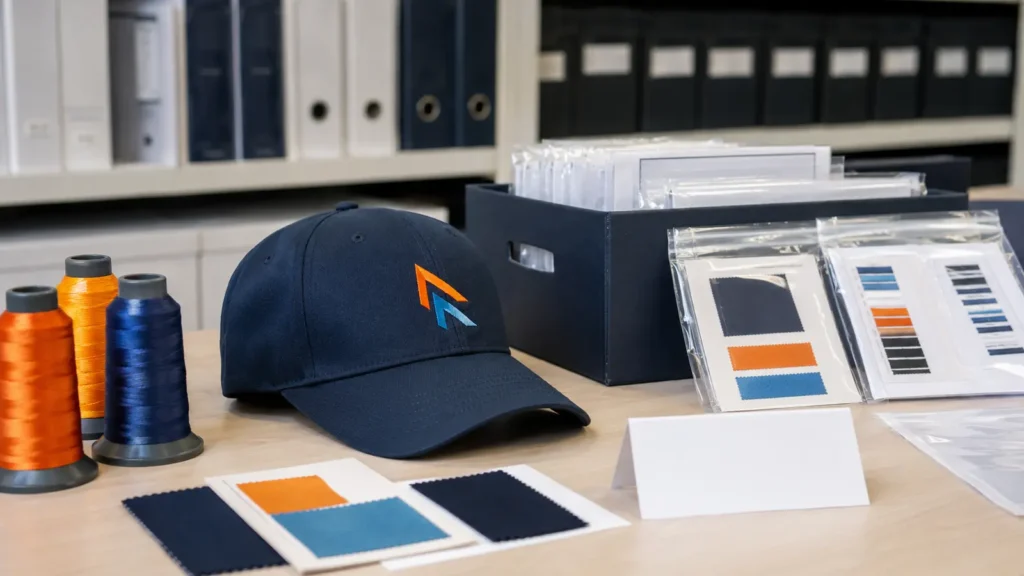
Build a repeat-order archive containing:
- Full Pantone target and color system
- Current physical standard reference and condition
- Thread manufacturer, family, fiber, weight, color code, supplier, and purchase date
- Dye-lot or traceability information when available
- Retained thread tail, mini cone, or card strip
- Approved actual-fabric sew-out and golden cap sample
- Cap fabric specification, color code, and relevant lot record
- Embroidery file name and locked version
- Logo dimensions, placement, stitch count, density, and construction notes
- Approval date, approver, viewing conditions, and accepted deviation
- Purchase order, sample revision, and production batch references
- Color-controlled photos for communication, clearly labeled as secondary evidence
For one production order, request that the required thread be planned from the same available lot where practical. At incoming inspection, compare the production thread with the retained reference. At first-piece inspection, compare the sewn logo with the approved sample under the recorded conditions. If stock from the original lot is unavailable for a reorder, make a new comparison and escalate any visible difference before bulk embroidery.
Do not store the physical archive in direct sunlight, heat, moisture, or an area where samples become dusty or handled daily. A damaged golden sample is a poor standard. Record when a standard is replaced and preserve version traceability. Our Repeat Order Consistency guide expands this principle across fabric colors, cap measurements, trims, logos, and packaging.
Cost, MOQ, and Lead-Time Factors
Stock thread color matching is commonly part of normal sample development, but the total cost depends on the number of options, physical sample shipments, digitizing revisions, cap construction, and order size. Every additional sew-out consumes machine time and materials. International courier shipment may be worthwhile for a brand-critical program but excessive for a flexible promotional shade.
Custom-dyed thread can add development fees, minimum quantity, trial approval, and extra production time. MOQ is not a fixed industry-wide number. It changes with mill, fiber, color, finish, cone format, and commercial relationship. Ask for a written project quotation instead of publishing or relying on a generic threshold.
The lowest-cost decision is not always the thread with the lowest cone price. A widely available stock code can reduce reorder risk, while a special shade may require more inventory planning. Conversely, accepting a visibly wrong brand color can create costly rejection or reputational problems. The procurement decision should balance brand criticality, order value, repeat frequency, launch date, and tolerance.
Quality-Control Checklist for Bulk Production
Use the approved sew-out as a working control, not a sample that disappears after signoff.
- Incoming thread: Verify manufacturer, product family, fiber, weight, shade code, quantity, and lot information against the purchase record.
- Incoming cap material: Confirm fabric color and finish against the approved substrate because background changes can alter the result.
- First embroidered piece: Compare the actual logo with the approved sample before the full run.
- Machine setup: Confirm the correct program version, thread sequence, needle suitability, tension, backing, foam, and placement.
- In-process review: Watch for cone substitutions, thread depletion, tension changes, coverage problems, and mixing between lots.
- Final inspection: Review color identity, logo location, dimensions, appearance, construction faults, and pack-out under defined conditions.
- Record closure: Save the production thread and sample references for reorders, and document any approved substitution.
Information to Send for an Accurate Quotation
Send one consolidated brief rather than spreading color information across messages:
- Cap style, crown structure, material, and cap color
- Order quantity by color and expected reorder frequency
- Editable vector logo and a color-separated visual
- Full Pantone references with systems and suffixes
- Logo width, height, placement, and number of embroidery locations
- Flat embroidery, 3D puff, appliqué, or patch requirement
- Preferred thread fiber or performance requirement, if controlled
- Required care, outdoor exposure, industrial laundry, or chemical-resistance conditions
- Whether the closest stock shade is acceptable
- Whether custom dyeing should be quoted as an alternative
- Required sample format: photo, loose thread, sew-out, or finished cap
- Packaging, shipping destination, and target delivery date
This information lets the supplier price the correct development route and identify schedule risks early.
Common Mistakes to Avoid
Sending only a screenshot or hex code
This leaves no controlled physical target. Supply the brand’s official physical reference or authorize a clearly documented physical conversion.
Omitting the Pantone system and suffix
A number alone can refer to a different material or system. Record the complete designation exactly as shown in the brand guide.
Approving loose thread instead of sewn thread
A thread bundle does not show stitch direction, density, background contrast, or coverage. Approve an actual-fabric sew-out.
Changing thread range without reapproval
Two ranges can have similar shade names but different fiber, sheen, weight, or performance. Treat a range change as a material change.
Comparing samples under mixed or undefined light
Window light, warm ceiling light, and phone-camera processing can disagree. Record the primary evaluation light and relevant secondary-use light.
Failing to archive the approval
An email saying “approved” cannot identify a cone, lot, stitch file, or physical result. Preserve a complete sample and production record.
Promising a zero-tolerance exact match
Different materials and dye lots have practical variation. Define an approval method and accepted result instead of using an absolute promise unsupported by a measurement agreement.
How JIUMU Supports Thread Color Approval
JIUMU is a Guangdong-based B2B supplier established in 2010, supporting custom hats, teamwear, logo apparel, uniforms, bags, and branded merchandise. Relevant capabilities include logo embroidery, woven and other patch options, fabric sourcing, Pantone color matching, digital mockups, physical samples, private labels, packaging customization, quality control, and export support.
For a custom hat project, JIUMU can review the buyer’s logo and color references, identify practical stock-thread candidates, arrange the appropriate sample route, record approved specifications, and connect those controls to bulk production. Typical MOQ is 50 pieces, subject to product structure and customization. Thread color development, custom dyeing, special materials, and physical sample shipping should be confirmed for the specific order.
Frequently Asked Questions
Final Recommendation
Treat embroidery color as an approved material-and-process specification, not a digital color selection. Start with the complete physical brand standard. Use a real thread card to shortlist candidates. Sew the final artwork on the final cap fabric. Review it under defined lighting, document any accepted difference, and preserve the approved sample with the full thread and production record.
That process will not make dyed thread behave like printed ink, but it gives buyers and suppliers a clear, repeatable basis for decisions—and greatly reduces avoidable disputes during production and reorders.
Request a thread color-matching review: Send JIUMU your editable logo, complete Pantone references, cap style and color, quantity, embroidery size and method, packaging requirements, shipping destination, and target delivery date. Contact us at zhengdong@jiumugear.com or WhatsApp/phone +86 18507502899 to confirm a quotation and sample plan.
Technical Sources
- Pantone: Color Systems Explained
- Pantone Color Finder: Digital Simulation Notice
- Pantone: Best Practices for FHI Polyester and Nylon Standards
- Pantone: Updating Physical Guides
- Madeira: Physical and Digital Shade Cards
- Madeira: Polyester Embroidery Threads
- Madeira: Rayon/Viscose Embroidery Threads and Custom Colors
- AMANN: Isacord Recycled Construction and Color Range