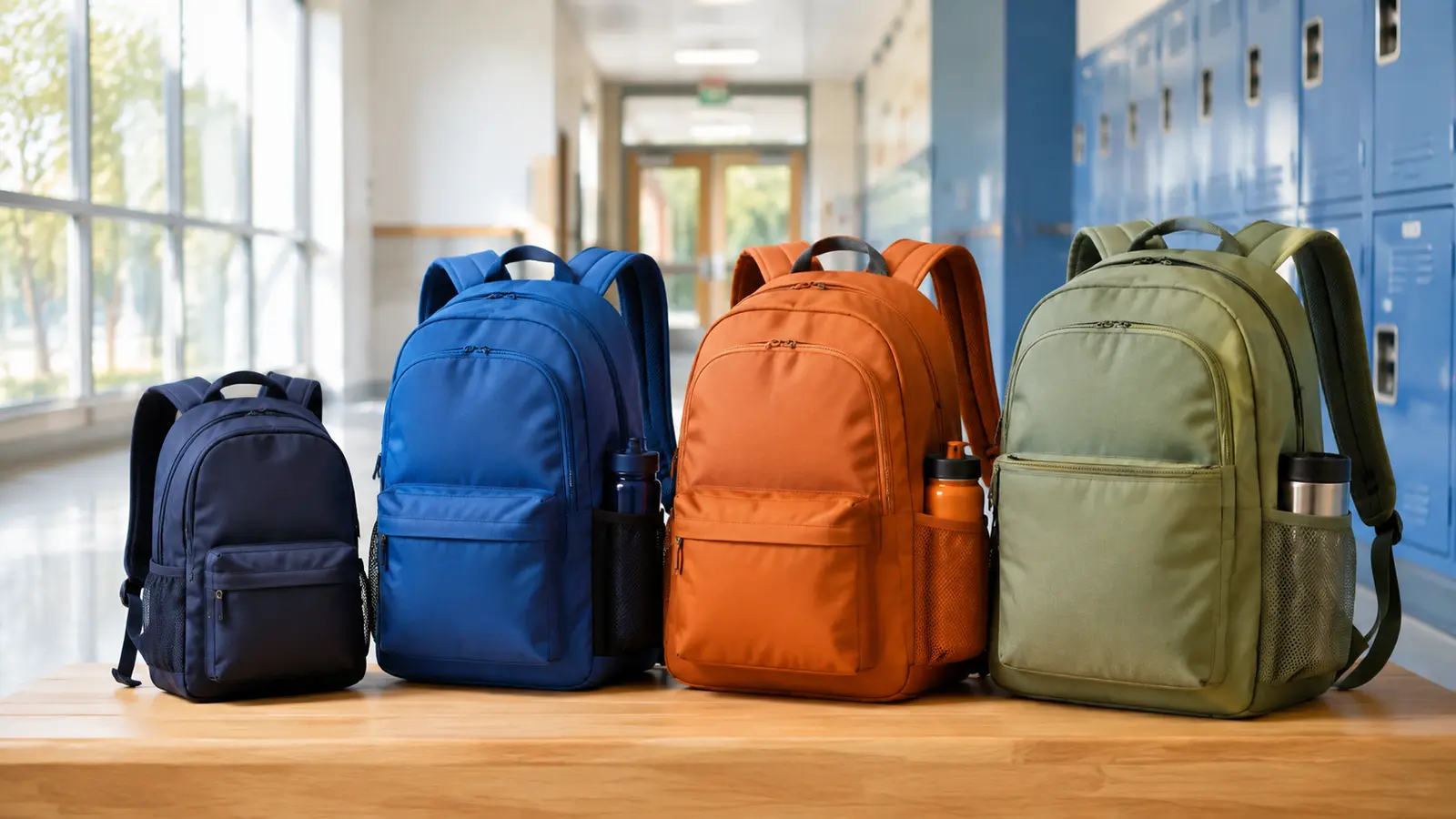
Best Back-to-School Backpacks in 2026
Back-to-school backpack buying in 2026 is not simply a choice between colors and price points. Schools, distributors, promotional product companies, uniform dealers, and private-label brands need products that fit the intended age group, hold the expected daily load, survive repeated use, carry branding cleanly, and arrive with consistent specifications across the full order.
For a professional buyer, the “best” backpack is therefore the one that matches a clearly defined use case. A compact elementary-school bag should not be evaluated by the same criteria as a laptop-ready high-school backpack. Likewise, a low-cost event giveaway and a school-store retail program need different materials, construction, packaging, and quality-control plans.
This guide explains how to build a 2026 back-to-school backpack assortment around practical specifications rather than vague quality labels. It covers backpack types, capacity, comfort, materials, reinforcement, customization, compliance planning, cost drivers, sampling, inspection, and the information a supplier needs to quote accurately.
Quick Answer: The best back-to-school backpacks in 2026 are age-appropriate, lightweight before loading, fitted with two wide padded shoulder straps, organized so heavy items can sit close to the back, and built with reinforced high-stress seams and dependable zippers. For bulk programs, buyers should select the size and compartment layout by student stage, approve a physical sample, define test and inspection requirements for the destination market, and qualify every environmental or performance claim with evidence.
What “Best” Means for a 2026 Bulk Backpack Program
A useful purchasing definition of “best” has five parts:
- Right user: The body length, strap range, volume, and opening style suit the intended student group.
- Right load: The internal structure fits the actual books, folders, devices, lunch items, and sports gear students carry.
- Right construction: Seams, attachment points, zipper assemblies, handles, and base materials are engineered for the expected service level.
- Right program: Decoration, labels, packaging, carton quantities, price, and delivery plan support the buyer’s channel.
- Right evidence: Product safety, material, recycled-content, and performance claims are supported by documentation appropriate to the sales market.
The American Academy of Pediatrics advises choosing wide, padded shoulder straps and a padded back, using all compartments, and placing heavier items near the center of the back. It also says a loaded backpack should not exceed 10%–20% of the child’s body weight. This is user guidance, not a universal product certification, but it has direct design implications: unnecessary bag weight, poor balance, and oversized capacity can work against safe loading habits (HealthyChildren.org, American Academy of Pediatrics).
For buyers, that means “more liters” is not automatically better. Start with the load list, then specify the smallest practical body and the organization needed to keep the load stable.
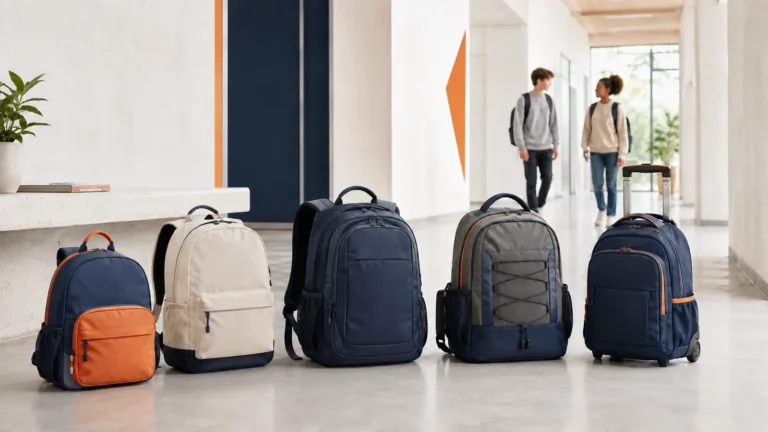
Best Back-to-School Backpack Types by Buyer and Use Case
| Backpack type | Best-fit users or programs | Practical specification priorities | Watch-outs |
|---|---|---|---|
| Compact elementary backpack | Younger students, welcome programs, school merchandise | Shorter back panel, low empty weight, simple main opening, two padded straps, name-label area | Oversized body, long loose straps, detachable decorative parts |
| Middle-school daypack | Daily class changes, clubs, general school retail | Balanced capacity, two main sections, bottle pockets, organizer, reinforced base | Too many small pockets, weak zipper curves, undersized folder opening |
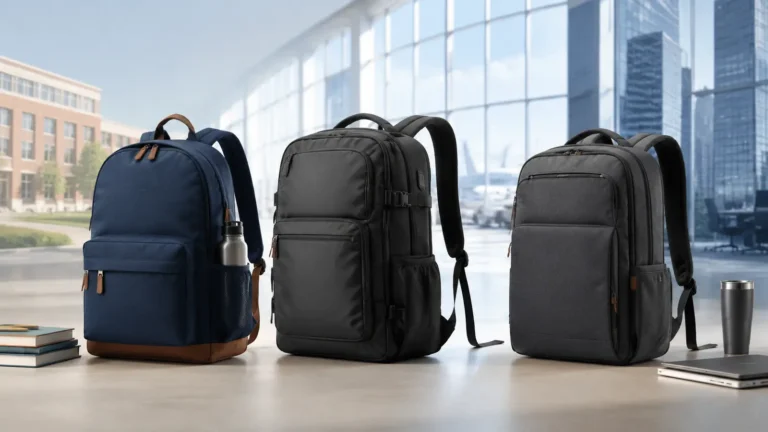
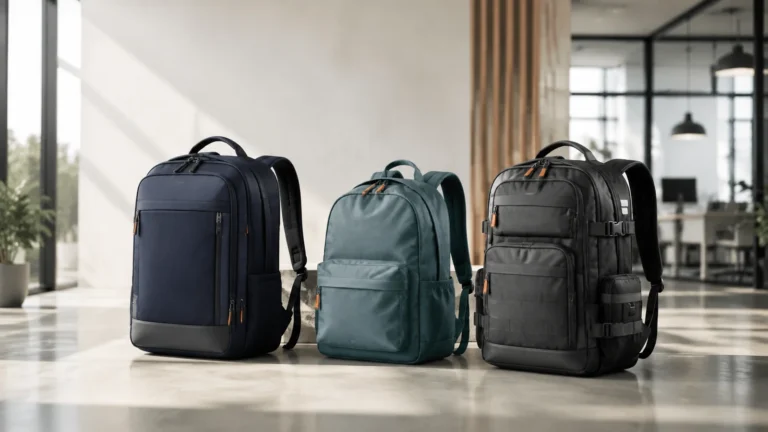
| High-school laptop backpack | Older students, device programs, school stores | Padded device sleeve, structured back, stronger handle, charger organization | Sleeve size not confirmed, device corner exposure, excessive empty weight |
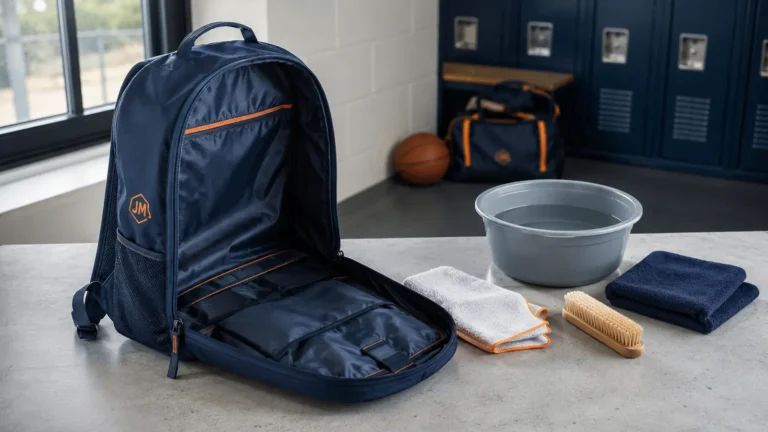
| School-and-sports backpack | Teams, PE programs, academies | Larger opening, ventilated or wipe-clean secondary zone where justified, bottle storage, team branding | Claims of ventilation or odor control without validation; overloaded dimensions |
| Roll-top or flap backpack | Retail and private-label lifestyle collections | Adjustable volume, distinctive silhouette, secure closure, clean branding area | Slower access, complex hardware, water ingress at opening if poorly designed |
| Clear or security-oriented bag | Venues or schools with defined bag rules | Exact policy dimensions, clear material specification, reinforced binding | Policies differ; do not assume one size is universally accepted |
| Promotional value backpack | Orientation events, campaigns, donor programs | Simple construction, large decoration zone, controlled weight and price | Cutting reinforcement too far; vague durability expectations |
| Wheeled backpack | Specific mobility or heavy-load use cases | Stable wheel housing, telescopic handle, protective base, usable shoulder straps | Added weight, stairs, storage constraints, higher repair risk |
Elementary-school programs
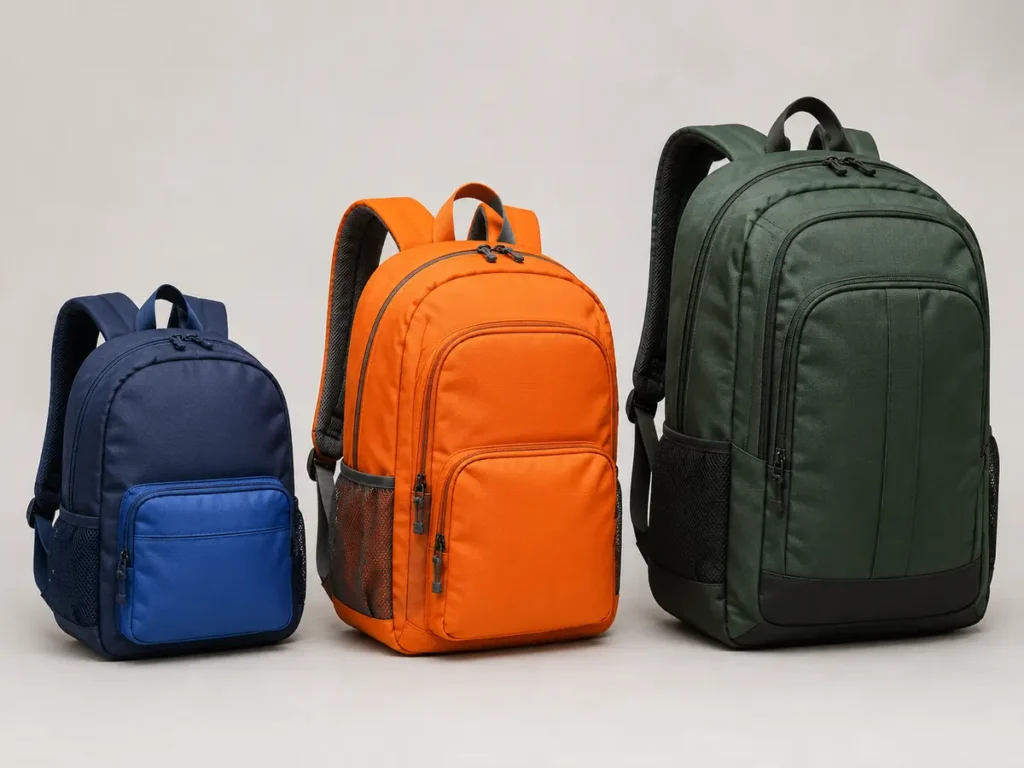
Elementary bags benefit from visual simplicity and manageable proportions. A wide U-shaped zipper opening can make packing easier than several narrow compartments. The shoulder straps need enough adjustment range without leaving excessively long loose ends. Buyers should scrutinize small decorative components and zipper-pull construction, especially when the product will be used by younger children.
Avoid selecting capacity by copying an adult daypack. Ask the school or distributor for the largest folder, lunch container, and classroom item that must fit. A sample pack-out is more valuable than a nominal liter number alone.
Middle-school programs
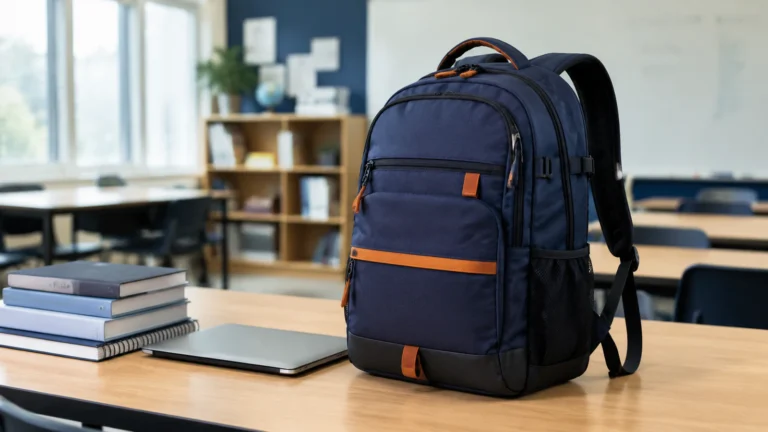
Middle-school backpacks often need the broadest balance of capacity, organization, and price. Students may move between classrooms, carry more folders, and add a device or activity gear. Two main sections plus a front organizer are usually easier to source and inspect than a highly fragmented interior.
This segment also carries strong merchandising potential. Color blocking, embroidered school emblems, woven patches, custom zipper pulls, and coordinated pencil cases can create a recognizable range without changing the entire bag structure.
High-school and laptop programs
Older students may carry larger devices, chargers, water bottles, and personal items. Specify the device itself—not just a marketing phrase such as “fits most laptops.” Provide maximum device width, height, thickness, and whether a protective case is used. The sleeve should hold the device close to the back, use appropriate padding, and avoid placing an exposed device corner directly against the base.
For a school-issued-device program, conduct a real pack-out and drop/handling assessment using the intended device dummy or an approved equivalent. The backpack should complement the device-protection policy; it should not be marketed as guaranteeing damage prevention unless a defensible test program supports that claim.
Choose Capacity from the Load, Not the Age Label
Backpack capacity is commonly stated in liters, but supplier calculations may vary because soft bags do not have a perfectly fixed internal volume. Treat liters as a comparison aid and confirm external dimensions, usable opening, compartment layout, and a physical pack-out.
| Planning range | Typical application | What to validate in the sample | Procurement note |
|---|---|---|---|
| About 10–15 L | Compact elementary or light promotional use | Folder fit, lunch item, strap range, empty weight | Keep the body short enough for the intended user |
| About 15–22 L | General elementary to middle-school daily use | Full-size folders, notebooks, bottle, light layer | Often the most versatile school-program range |
| About 20–28 L | Middle/high school and device use | Laptop sleeve, charger, textbooks, bottle clearance | Control depth so the load does not project excessively |
| About 25–35 L | School plus sports, travel, or heavy schedule | Footwear/gear separation, loaded stability, handle strength | Higher capacity can invite overpacking; validate the actual program |
These are planning ranges, not health rules or universal age standards. Student size, school supply lists, lockers, climate, transport, and device programs all change the requirement.
Build a pack-out sheet
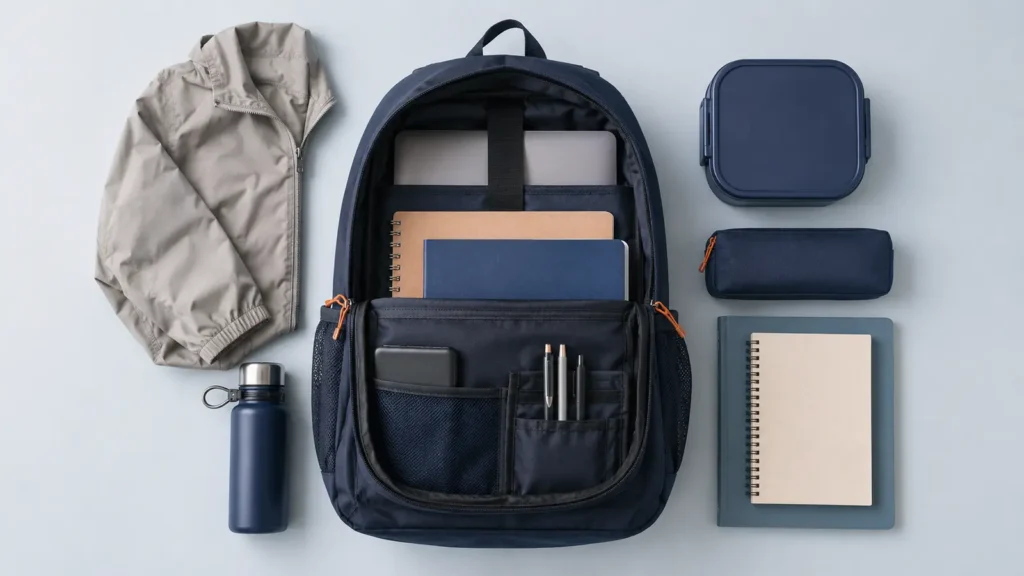
Before requesting quotations, list every item the bag must hold and record its dimensions and approximate weight. Include:
- Largest folder, binder, or textbook
- Laptop or tablet with protective case
- Charger and cable pouch
- Lunch container
- Reusable bottle diameter and height
- Pencil case and calculator
- Light jacket or PE layer
- Any team, music, or activity-specific item
Then decide where each item should sit. Heavy or rigid items should be held near the back rather than floating at the outer front. Bottle pockets should retain the intended bottle without forcing it into the main compartment. A usable opening matters as much as nominal volume: a narrow zipper path can make a theoretically large compartment awkward.
Comfort and Carry Features That Affect Procurement
Comfort cannot be reduced to “more padding.” The structure must distribute the expected load without creating unnecessary weight or heat.
Shoulder straps
Specify strap width, padding thickness or foam type where necessary, attachment shape, edge finishing, adjuster hardware, and adjustment range. Wide padded straps align with AAP guidance. Both straps should be used; a design that naturally sits well on two shoulders is preferable to one that encourages single-shoulder carrying.
Back panel
A padded back can cushion book edges and device corners. Spacer mesh may improve feel and airflow, but “breathable” is a relative claim unless the buyer defines a test. Sculpted foam channels add tooling and sewing complexity; use them when the channel benefit supports the program rather than as decoration.
Sternum and waist straps
A sternum strap can help stabilize certain larger or activity-focused packs. It also introduces extra webbing, hardware, fit considerations, and inspection points. Waist belts are more relevant to larger loads than to a simple school daypack. For younger users, review strap ends and components carefully under the applicable destination-market risk assessment.
Empty weight
Record finished sample weight as a controlled specification. Material upgrades, molded panels, many pockets, oversized hardware, and thick foam can create a backpack that looks substantial but consumes more of the user’s reasonable carrying allowance before it is packed.
Materials for Back-to-School Backpacks in 2026
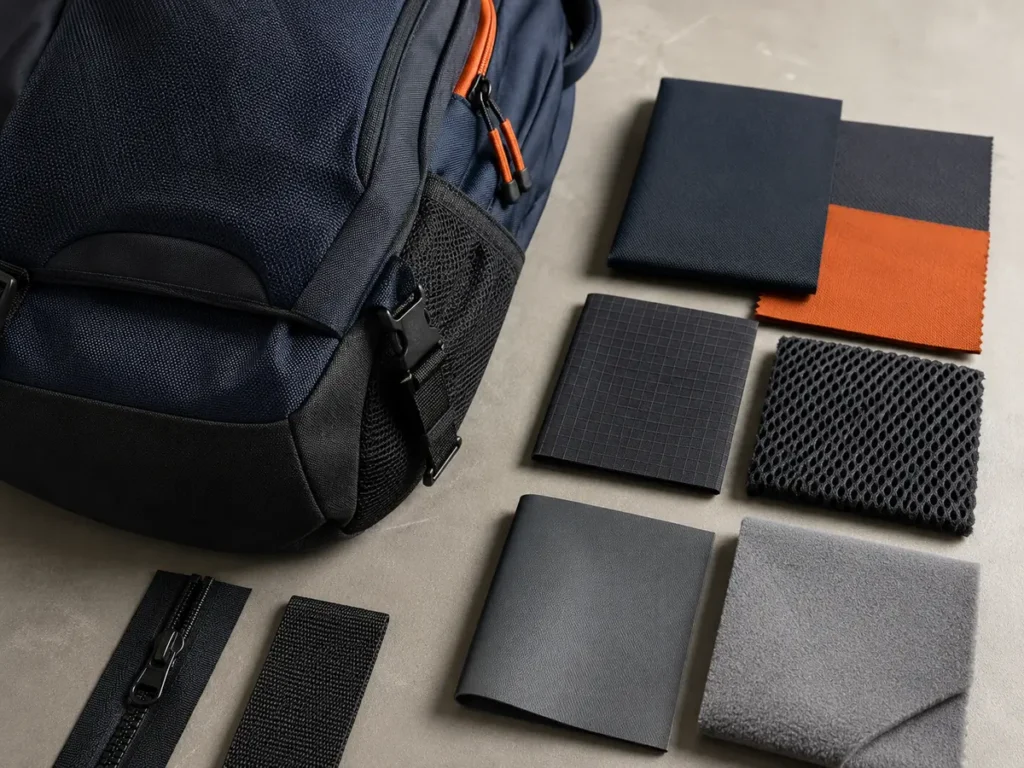
The right material is a system: face fabric, backing or coating, lining, mesh, foam, webbing, thread, zipper tape, binding, and decoration must work together.
| Material option | Strengths | Limitations | Suitable programs |
|---|---|---|---|
| Woven polyester | Broad color availability, printable, practical cost, common for school bags | Hand feel and abrasion performance vary widely by yarn and construction | Most school, promotional, and private-label programs |
| Nylon | Can provide strong performance at relatively low fabric weight | Usually higher cost; appearance and dye behavior differ by specification | Technical or premium lightweight ranges |
| Ripstop weave | Visible reinforcement grid and technical look | A ripstop pattern does not by itself prove a specific tear result | Sports, outdoor-inspired, youth lifestyle ranges |
| Cotton canvas | Natural hand and lifestyle appearance | Heavier, can absorb moisture, may show abrasion or color change | Fashion-led school-store or private-label collections |
| Coated fabric | Can improve resistance to light rain and facilitate wiping | Coating may affect hand, odor, aging, print adhesion, and recyclability | Commuter, device, or weather-conscious programs after testing |
| Recycled-content textile | Supports a specific material story when traceability is available | Claim scope and percentage must be documented; performance still needs validation | Buyers with defined sourcing and claim requirements |
Avoid vague denier shortcuts
Terms such as 600D describe yarn linear density, not the finished bag’s total durability. Two fabrics sold under the same shorthand can differ in weave density, backing, coating, weight, colorfastness, abrasion behavior, and hand feel. Put measurable or sample-referenced criteria on the specification sheet instead of approving only a commercial fabric name.
Water-resistant is not waterproof
A coated face fabric may resist light moisture, but water can enter through seams, zippers, needle holes, and openings. If the sales copy will use “water-resistant,” define the intended claim and test method. Do not call a conventional sewn backpack waterproof without a product design and test program that supports the complete-bag claim.
Recycled-content and environmental claims
For U.S. marketing, the Federal Trade Commission says broad, unqualified claims such as “green” or “eco-friendly” should not be used, and partial recycled-content claims should state the amount—for example, a defined percentage—rather than implying the entire product is recycled (FTC Green Guides summary).
For a bulk program, request the chain-of-custody or transaction evidence required by your claim policy and identify whether the percentage applies to the face fabric, all textile components, or the complete finished product. Also define how trims, foam, coatings, and packaging are treated. A recycled yarn story does not automatically establish lower total impact or finished-bag recyclability.
Construction Details That Determine Service Life
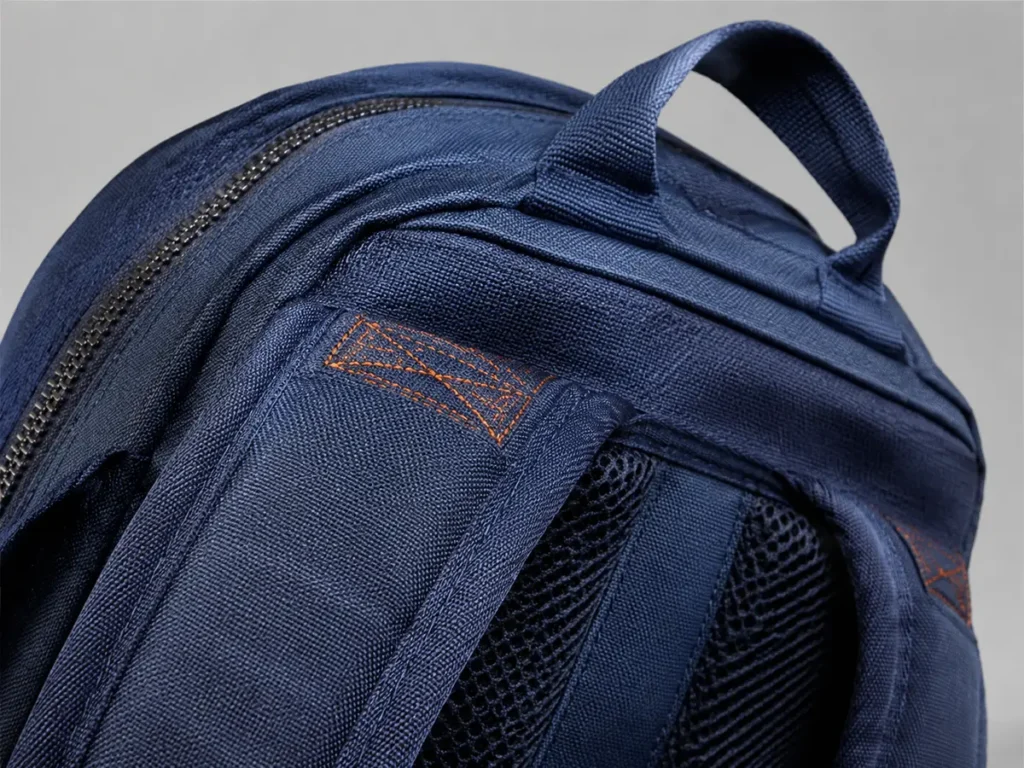
Most early backpack failures occur at interfaces: strap-to-body attachments, top handles, zipper ends, pocket corners, seams near stiff objects, and base edges.
High-stress reinforcement
Map the load path from the filled body into the straps and handle. Reinforcement may include bar tacks, box stitching, extra backing layers, webbing continuations, or combinations. The correct method depends on material and construction. A large visible stitch pattern is not automatically stronger if it perforates or misses the reinforcement layer.
Zippers
Specify zipper type and size appropriate to the compartment, slider count, pull design, tape color, opening direction, and end treatment. Curves should be smooth enough that the slider does not bind. Inspect closed-end security, alignment, skipped teeth, slider movement, and fabric clearance.
Seams and binding
Define seam allowance, stitch density range, thread requirements, back-tacking, internal binding, and appearance tolerance. Bound seams can improve neatness and protect raw edges, but poor binding tension may cause puckering or missed edges.
Base and bottle pockets
The base meets floors and carries concentrated book corners, so consider a heavier or coated material, double layer, or structured transition. Bottle-pocket elastic needs recovery after repeated use. Mesh offers visibility and drainage but can snag; woven pockets are more protective but less flexible.
Customization and Private-Label Options
Decoration should be selected with the logo artwork, fabric, order quantity, desired hand feel, placement, and wear exposure in mind.
| Method | Visual result | Best use | Technical consideration |
|---|---|---|---|
| Flat embroidery | Textured, established uniform look | School crests, initials, club marks | Dense designs add weight and can distort light fabric; digitization matters |
| Woven patch | Fine detail with a textile finish | Detailed emblems and repeat programs | Edge type, attachment stitch, backing, and color approval must be defined |
| Rubber/PVC patch | Dimensional, sporty, wipeable look | Team, outdoor, and youth lifestyle ranges | Check weight, flexibility, attachment, and destination-market material requirements |
| Heat transfer | Smooth multicolor artwork | Gradients, names, campaign art | Adhesion and surface compatibility require testing; heat can mark coated fabrics |
| Screen print | Efficient bold color areas | Promotional and larger graphic programs | Ink, pretreatment, mesh texture, color registration, and cure must be controlled |
| Sublimation | Integrated all-over graphics on compatible polyester panels | Complex team or branded patterns | Printed panels must be cut and aligned; color depends on fabric and process |
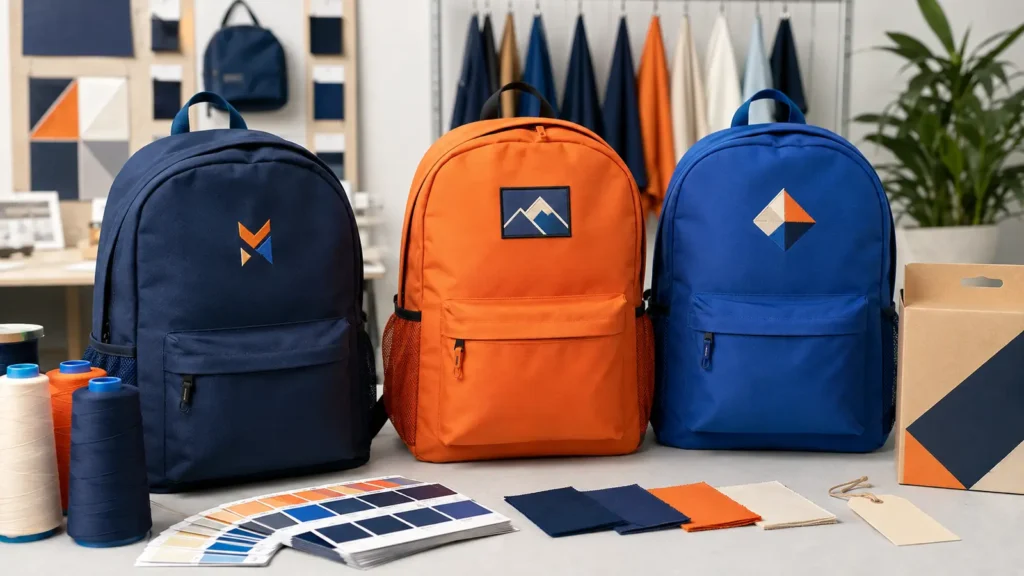
Keep logos away from heavy folds, zipper paths, and highly padded transitions unless the construction has been sampled. Ask for an artwork mockup showing size and placement in millimeters, then approve the decorated physical sample under the intended lighting.
Private-label options can include woven labels, printed care or identity labels, blank or branded hangtags, zipper pulls, polybags or alternative packaging, barcode labels, carton marks, and coordinated accessories. Every added component needs an artwork version, location, color, material, and approval owner.
Planning a 2026 school or private-label backpack program? Send JIUMU your target student group, reference image or tech pack, quantity by color, required dimensions, load list, logo files, packaging needs, destination market, and requested delivery date. Request a custom quotation or explore custom team bags.
2026 Product Safety and Market-Access Planning
Backpacks sold as ordinary consumer products do not all follow one global backpack certification. Requirements depend on product design, intended user, materials, claims, destination, and sales channel. The importer or brand should define the compliance plan with qualified testing and legal professionals.
In the European Union, the General Product Safety Regulation (EU) 2023/988 has applied since December 13, 2024. Official EU guidance notes that products must be safe under normal or reasonably foreseeable use and that safety assessment considers composition, packaging, labeling, warnings, and the categories of consumers using the product. It also requires a responsible economic operator in the EU for covered products (EU Access2Markets GPSR overview).
For procurement, do not treat compliance as a generic supplier checkbox. Provide the destination countries, intended age group, sales channel, packaging design, traceability needs, chemical restrictions, and any retailer protocol before sample approval. The EU Safety Gate allows buyers and economic operators to review alerts involving dangerous non-food products and should be part of market surveillance and risk review (European Commission Safety Gate). In the United States, buyers can review the CPSC recall database and back-to-school guidance; CPSC specifically warns against backpacks that are too heavy (CPSC back-to-school safety).
Cost Drivers in a Custom Backpack Order
Unit price is shaped by more than fabric name and quantity. Important drivers include:
- Body dimensions and material consumption
- Fabric weight, weave, coating, lining, mesh, and color minimums
- Number and complexity of compartments
- Foam thickness and structured panels
- Zipper size, slider count, pullers, buckles, and adjusters
- Reinforcement layers and sewing time
- Embroidery stitch count, print colors, patch tooling, or all-over sublimation
- Custom labels, hangtags, barcode work, and packaging
- Sample rounds and required testing
- Order quantity by design and color—not only total quantity
- Inspection level, freight mode, carton dimensions, and delivery schedule
Compare quotations against a shared specification sheet. A lower price based on thinner fabric, fewer reinforcement layers, generic hardware, or different packaging is not a like-for-like saving.
JIUMU’s typical MOQ is 50 pieces, subject to product structure and customization. A low total MOQ does not mean every color, size, or logo variation can be split without impact; confirm the minimum per variant during quotation.
Sample Approval and Quality-Control Checklist
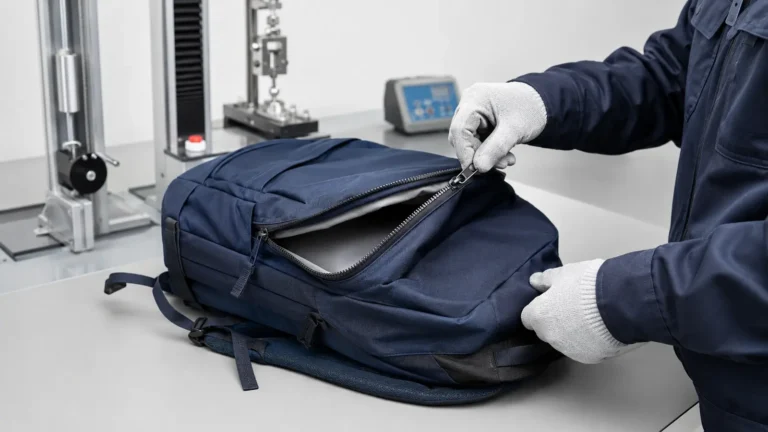
A digital mockup confirms general appearance, but a physical sample is needed to assess proportions, opening, pack-out, weight, hand feel, color, logo execution, sewing, and hardware.
Approve these points before bulk production
- Finished dimensions and measurement method
- Finished empty weight tolerance
- Face fabric, lining, mesh, foam, webbing, thread, and backing
- Color standard and viewing conditions
- Compartment count, opening direction, and internal layout
- Device sleeve dimensions and base protection
- Strap width, length, adjustment range, and reinforcement
- Handle construction and attachment
- Zipper, slider, puller, buckle, and adjuster references
- Logo size, placement, colors, and decoration workmanship
- Label content, position, language, and traceability fields
- Packaging, barcode, carton assortment, and shipping marks
- Required tests, inspection method, defect definitions, and retained sample
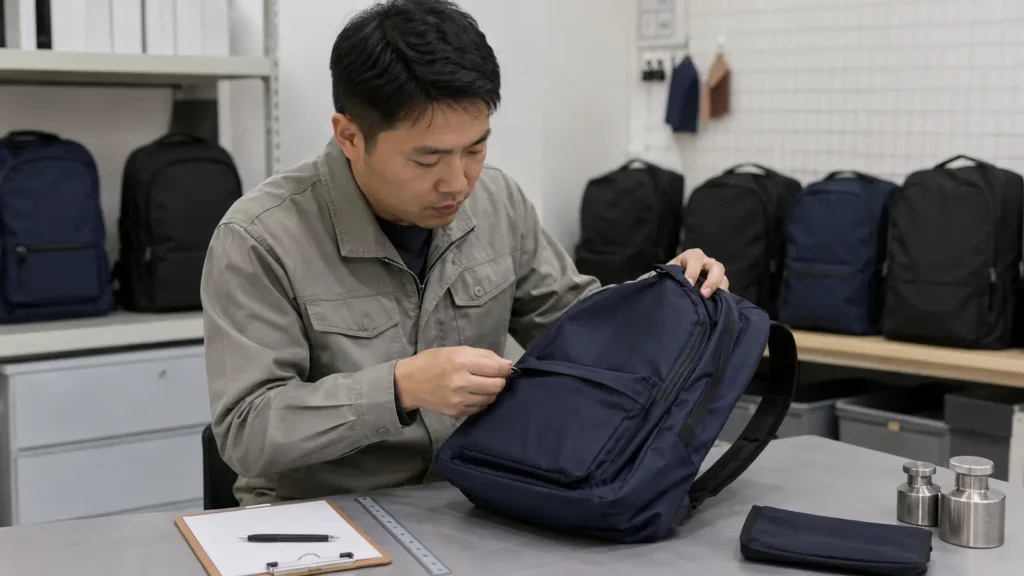
Inspect the bulk order systematically
Inspection should combine appearance, measurement, function, and packing checks. Review a statistically appropriate sample plan agreed with the buyer or inspection provider. Typical checks include material and color consistency, dimensions, zipper cycles or functional operation, strap adjustment, seam security, loose threads, stains, odor, decoration position, labels, quantities, polybag warnings where required, barcode scanning, carton condition, and assortment.
Performance tests should be linked to a defined method and acceptance criterion. Terms such as “load test,” “zipper test,” and “abrasion test” are incomplete unless the parties agree on equipment, load, cycle count, conditioning, sample size, and pass/fail result.
A Practical Bulk-Order Timeline
- Define the program. Confirm user group, sales region, channel, quantity, price target, launch date, and claims.
- Build the specification. Set dimensions, materials, compartments, components, decoration, labels, packaging, and tests.
- Review artwork and digital mockup. Freeze logo version, colors, size, and placement.
- Produce and evaluate the sample. Conduct pack-out, fit, function, appearance, and preliminary compliance review.
- Revise and seal approval. Record every approved change and retain a signed or otherwise controlled reference sample.
- Start bulk production. Control incoming materials, color lots, first production pieces, and critical operations.
- Inspect and test. Complete agreed in-process and final checks; resolve nonconformities before shipment.
- Pack and ship. Verify assortment, labels, carton marks, documentation, and logistics plan.
Allow buffer for artwork correction, custom-dyed material, patch tooling, sample shipment, testing, school approvals, and peak-season freight. Work backward from the date the backpacks must be in the buyer’s warehouse—not from the first day of school.
What to Send for an Accurate Quotation
Send one consolidated request containing:
- Buyer/company name and destination country
- Intended student group and use case
- Reference photos, sketch, or tech pack
- External dimensions and desired capacity range
- Required compartments and item pack-out
- Preferred materials, lining, foam, and hardware
- Quantity by color and design
- Vector logo artwork and decoration preference
- Color references or Pantone targets
- Label, hangtag, barcode, packaging, and carton requirements
- Required compliance/testing protocol
- Target delivery date, destination, and preferred shipping term
- Price target, if it is tied to a fixed program budget
If the design is not final, separate must-have features from optional ones. This lets the supplier recommend cost reductions without silently removing a critical requirement.
Questions to Ask a Backpack Supplier
- Which specifications are included in the quoted sample and unit price?
- What is the minimum quantity per color, logo, and packaging variation?
- Which material and component references will be controlled for repeat orders?
- How will finished dimensions and weight be measured?
- Where are reinforcement layers used at straps and handles?
- Which decoration method best fits the artwork and fabric, and why?
- What physical sample stages are available before bulk production?
- Which tests are recommended for the destination and sales channel?
- How are color, workmanship, labels, barcodes, and packing inspected?
- What changes can affect price or timing after sample approval?
- How are substitutions handled and approved?
- What information is needed to reproduce the same bag in a later order?
Common Buying Mistakes
Buying by appearance alone
A render cannot show zipper feel, empty weight, strap range, lining quality, or how a folder passes through the opening. Combine visual approval with a real sample and pack-out.
Choosing one backpack for every age group
A single style may simplify inventory but produce poor proportions at one end of the user range. Consider at least two body sizes or a deliberately flexible middle range when a program spans young children through teenagers.
Using capacity as a performance claim
Large capacity is not automatically an advantage. It can increase depth and encourage overpacking. Specify the real load, body dimensions, and organization.
Approving “waterproof” or “eco-friendly” language too early
Performance and environmental claims require scope, evidence, and destination-market review. Use precise wording such as a documented recycled-content percentage or a defined water-resistance result when evidence supports it.
Comparing unmatched quotes
Two bags that look alike may have different fabric weight, backing, foam, zippers, reinforcement, decoration, inspection, and packaging. Normalize the bill of materials and service scope before comparing price.
Leaving seasonal timing to the supplier
Back-to-school dates are fixed, while sample changes and freight can vary. Set approval deadlines, responsible owners, and a warehouse arrival date with contingency.
Why JIUMU for Custom Back-to-School Backpacks
JIUMU is a Guangdong, China–based B2B supplier established in 2010, serving buyers in the United States, Canada, the United Kingdom, and Europe. Its capabilities include OEM/ODM development, fabric sourcing, Pantone color matching, embroidery, sublimation, screen printing, heat transfer, woven and rubber/PVC-style patches, private labels, hangtags, packaging customization, digital mockups, physical samples, bulk quality control, and export support.
For school districts, distributors, uniform dealers, promotional companies, retailers, and private-label brands, this supports a specification-led workflow: define the user and load, select materials and construction, develop the visual identity, approve a sample, document quality requirements, and prepare the bulk shipment. JIUMU’s typical MOQ is 50 pieces, depending on the backpack structure and customization.
Frequently Asked Questions
Final Recommendation
For most 2026 school, distributor, and private-label programs, the strongest starting point is a two- or three-style assortment rather than one oversized universal bag: a compact elementary model, a versatile middle-school daypack, and a structured high-school/device option. Standardize brand colors and visual identity across the range, but tune back length, capacity, compartments, and reinforcement to each load.
The buying sequence matters: define the use case, build a measurable specification, review destination-market obligations, approve an actual packed sample, control claims, and inspect the bulk goods against the approved reference. This process produces a more defensible “best backpack” decision than chasing a trend or the lowest initial unit price.
About JIUMU: JIUMU provides B2B custom teamwear, hats, uniforms, bags, and branded merchandise development for professional buyers in North America and Europe. Established in 2010 in Guangdong, China, JIUMU supports OEM/ODM development, customization, sampling, bulk quality control, and export coordination.