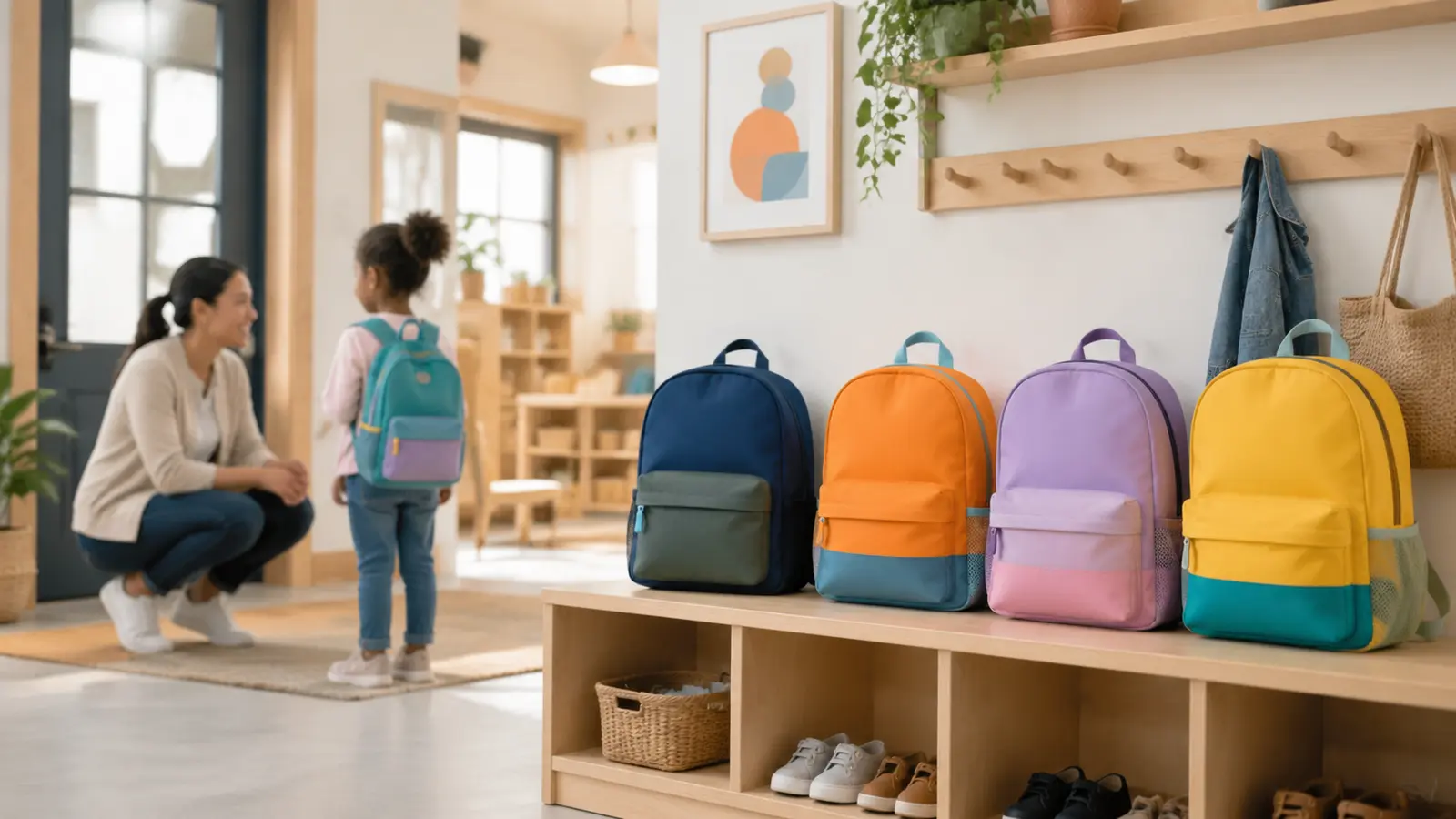
Best Backpacks for Kindergarten and Preschool
Choosing the best backpacks for kindergarten and preschool is not simply a matter of selecting a small version of an elementary-school bag. Young children have shorter torsos, carry fewer items, use zippers with developing motor skills, and often store their bags in compact classroom cubbies. Schools, distributors, retailers, uniform dealers, and private-label brands therefore need a product specification built around the actual routine of children aged roughly three to six.
This guide explains how professional buyers can compare size, capacity, materials, construction, safety details, decoration, quality control, and bulk-order cost. It is not a retail ranking of third-party brands. Instead, it gives procurement teams a repeatable framework for developing or sourcing an age-appropriate preschool backpack collection.
Quick answer: The best backpacks for kindergarten and preschool are compact, lightweight, easy for small hands to operate, and large enough for the school’s required folder, spare clothing, snack or lunch, and water bottle—without becoming oversized. For most programs, prioritize two padded adjustable shoulder straps, a practical top handle, smooth zippers, rounded forms, secure components, reinforced stress points, wipe-clean materials, and a name-label solution. Always confirm the school’s cubby dimensions and carry list before approving the size. For bulk or private-label orders, approve a fully loaded fit sample and define measurable workmanship criteria before production.
Why Preschool Backpack Purchasing Requires Its Own Specification
A preschool bag looks simple, but the buyer must reconcile several users. The child needs a bag that is easy to carry and open. A parent needs space for the daily essentials and a way to identify the owner. Teachers need a shape that fits storage and does not create unnecessary classroom friction. A distributor or retailer needs consistent sizing, appealing colorways, responsible claims, packaging efficiency, and repeat-order consistency.
The correct procurement question is therefore not “Which backpack looks cutest?” It is: Which verified configuration solves the intended school routine with the least avoidable complexity?
The American Academy of Pediatrics’ HealthyChildren.org advises that backpacks should generally not exceed 15% of a child’s body weight and identifies leaning forward as a warning that a bag may be too heavy. This is a general health guideline, not a preschool product certification or a substitute for local school policy. For young children, buyers should treat low empty-bag weight and controlled capacity as design priorities, then ask the school or program what children are actually expected to carry. Source: HealthyChildren.org
Kindergarten and Preschool Backpack Decision Table
| Buying criterion | Practical target | Why it matters | What to verify in a sample |
|---|---|---|---|
| Overall size | Based on child torso, cubby, and required folder | Prevents a bag that is too large or too small for the routine | Fit on representative children or a dress form; test cubby and folder |
| Empty weight | As low as practical for the construction | Leaves more of the carry allowance for contents | Record weight using the approved sample |
| Capacity | Enough for required daily items, not speculative extras | Controls bulk and discourages overpacking | Conduct a defined packing test |
| Shoulder straps | Two adjustable, appropriately padded straps | Supports stable two-shoulder carrying | Check symmetry, adjustment range, edge comfort, and attachment |
| Opening | Wide, visible, and simple | Helps small hands and reduces teacher assistance | Child-use trial with intended zipper pull |
| Main material | Wipe-clean woven fabric with declared composition | Balances appearance, cleaning, durability, and cost | Confirm face fabric, backing, coating, color, and hand feel |
| Hardware | Smooth, secure, and proportionate | Reduces failure and snag risks | Cycle zippers; inspect pullers and attachment points |
| Identification | Interior name label, card pocket, or controlled personalization | Helps schools return misplaced bags | Check writing surface, legibility, and privacy placement |
| Decoration | Flat, securely attached, and age-appropriate | Supports branding without unnecessary complexity | Confirm stitch density, patch edge, adhesion method, and placement |
| QC documentation | Approved sample plus measurable tolerances | Converts subjective expectations into inspection criteria | Sign off specification, color reference, packing method, and defect rules |
Which Backpack Type Fits the Program?
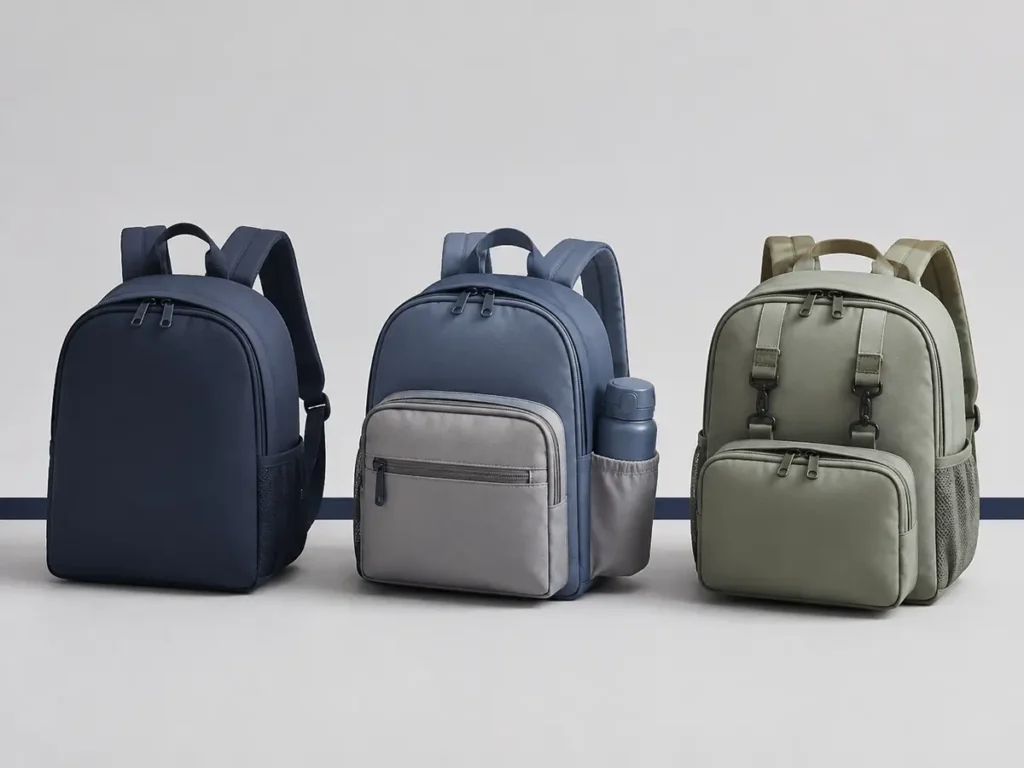
Compact Day Backpack
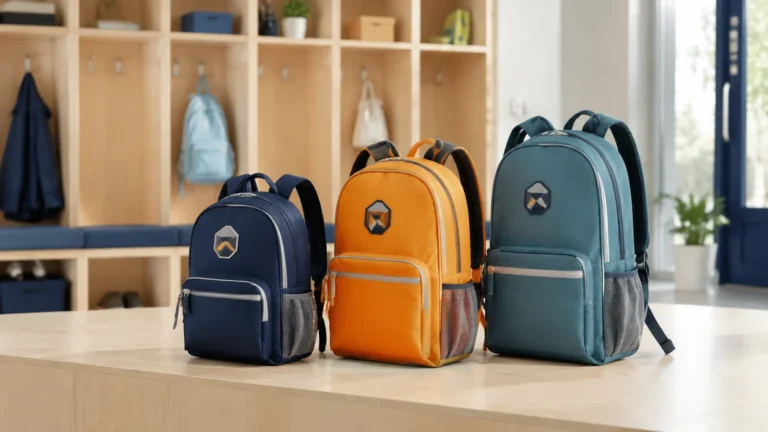
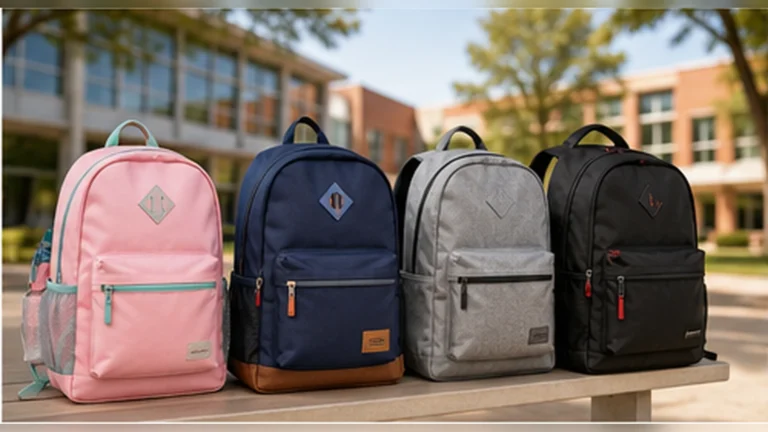
The compact day backpack is the most flexible choice for preschools, early-learning centers, school merchandise programs, and children’s retail ranges. A single main compartment with one front pocket keeps the interior understandable. Side bottle pockets can be useful, but their height and elastic recovery should match the intended bottle size.
This style works when the carry list is modest: a small folder, spare clothing, snack, and one small bottle. It also provides a clean canvas for embroidery, a woven patch, a rubber/PVC patch, or a printed panel.
Folder-Compatible Kindergarten Backpack
Some kindergarten programs require a standard-size communication folder. In that case, the pack must be sized around the actual folder, including the zipper opening—not merely the internal body dimensions. A bag can be theoretically wide enough yet still difficult to load because the top curve or zipper opening is restrictive.
Buyers should send the supplier the folder’s exact length, width, and thickness, then request a packing photo or sample test. Do not assume that “kids size” means folder compatible.
Backpack and Lunch-Bag Set
A coordinated set can increase order value and create a stronger school or private-label presentation. It also adds specification work. The buyer must decide whether the lunch bag fits inside, clips securely to the outside, or remains separate. External attachment systems should avoid long, loose straps and should be evaluated for snagging, balance, and ease of use.
If food-contact performance or insulation claims are planned, specify the complete material structure and confirm which target-market requirements apply. Do not use broad claims such as “food safe,” “antibacterial,” or “non-toxic” without appropriate documentation for the exact materials and intended market.
Activity or Library Bag
A handled activity bag can work for book exchange, art items, or short supervised transfers. However, it is not automatically a substitute for a two-strap backpack. Define whether children will carry it on their backs, in the hand, or only between a classroom and a vehicle. The carrying method should guide handle length and closure design.
How to Select the Right Size and Capacity
There is no universal liter capacity that is correct for every preschool. Product titles that rely only on age ranges are too imprecise for bulk purchasing. A sound size decision uses four inputs:
- The required contents. Obtain the actual daily carry list, including the largest folder or book.
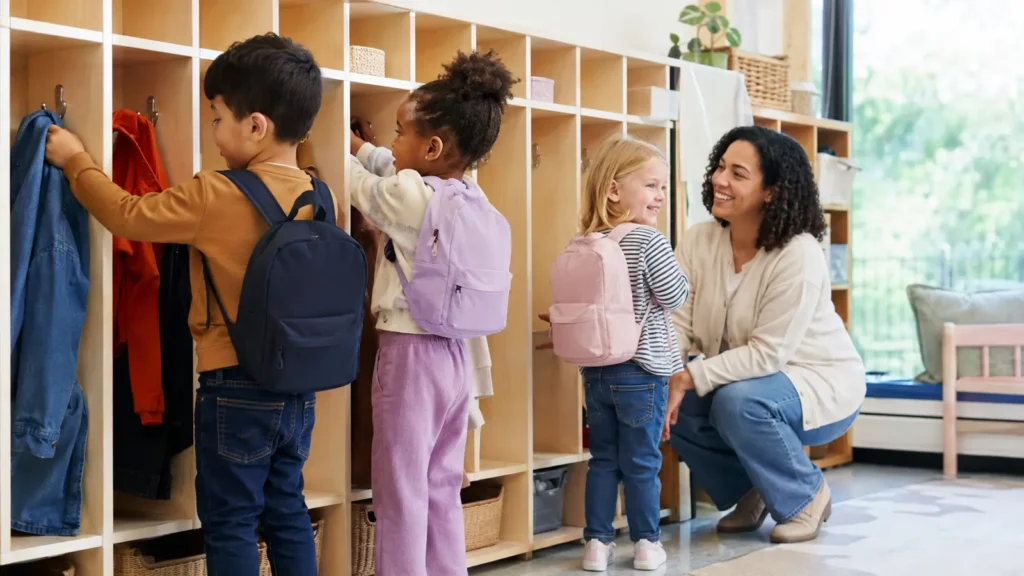
- The storage space. Record cubby width, height, and depth, and consider the top handle.
- The wearer. Evaluate body width, torso length, strap range, and where the bottom of the pack rests.
- The selling channel. A school-issued bag, a retail daypack, and a promotional giveaway may require different capacity and presentation.
As a starting development range—not a universal fit claim—many compact preschool concepts are roughly 10–13 inches high, while folder-oriented kindergarten concepts may need additional height or width. Final dimensions should be set by the pack test and fit sample, not copied from a generic age chart.
Run a Defined Packing Test
Create a bill of contents before sampling. For example:
- one specified communication folder;
- one spare top and bottom in a soft pouch;
- one snack container or lunch bag;
- one small water bottle;
- one comfort item, if the program allows it;
- one sheet or small notebook, where applicable.
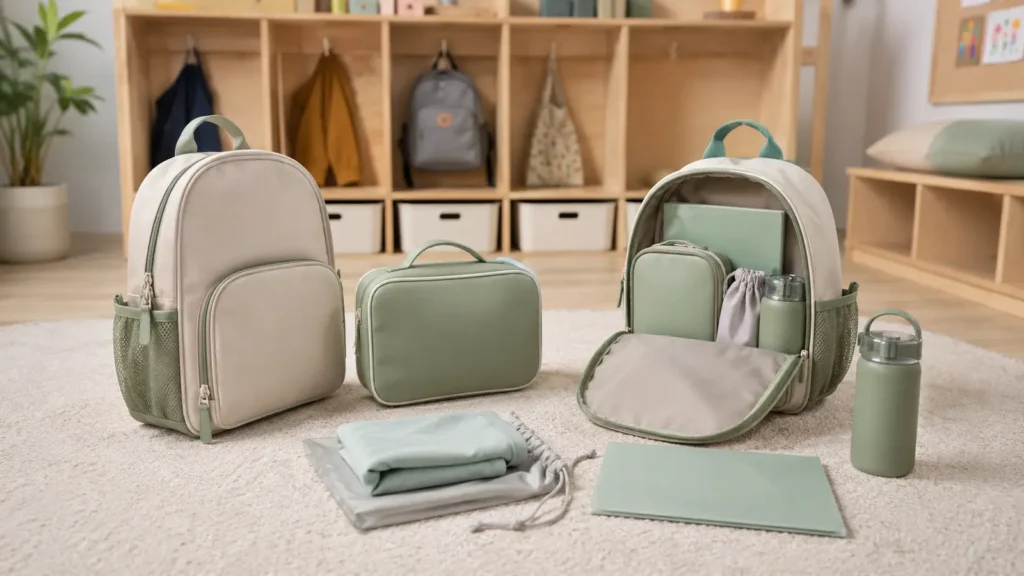
Load the sample the same way a parent would. Confirm that the zipper closes without forcing, the bottle remains stable, and the loaded bag does not distort. Then remove nonessential volume. Overspecifying capacity usually adds fabric, foam, zipper length, freight volume, and temptation to overpack.
Fit Is More Than Height
A good fit sample should be checked from the front, side, and back. The shoulder straps should adjust short enough for small users while retaining useful adjustment for outerwear. The bag should sit close to the back, and its lower edge should not hang far below the waist area. The strap edges should not press into the neck.
Materials: Translate Marketing Words Into a Bill of Materials
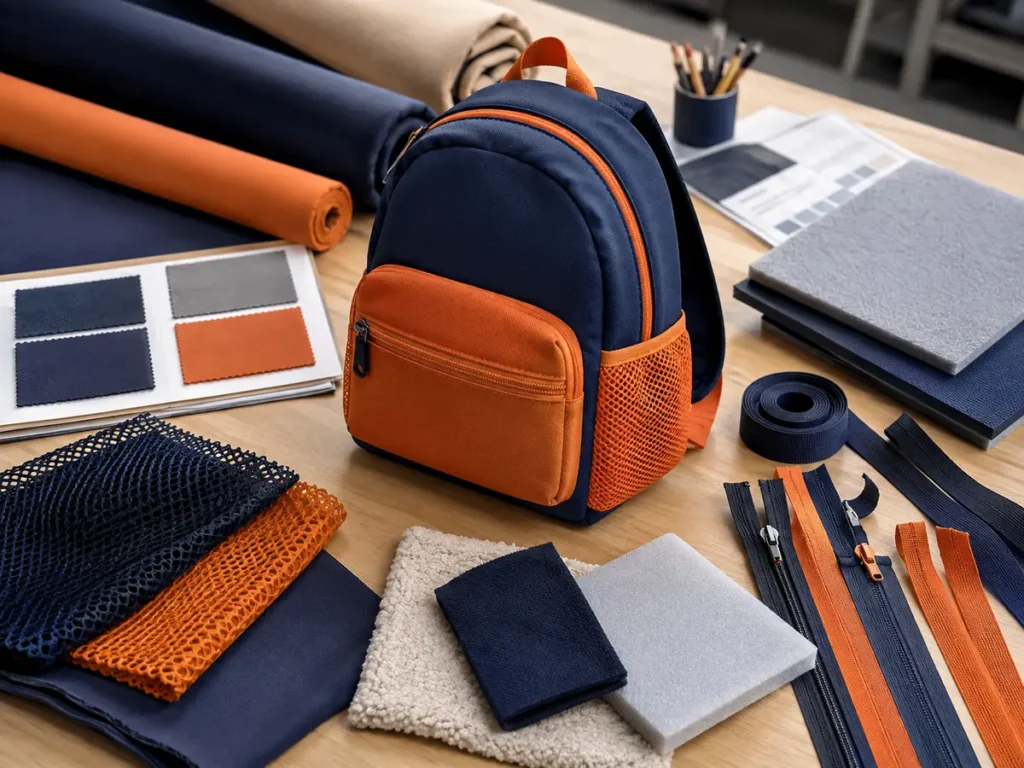
“Durable polyester” is not a complete specification. Two fabrics with the same fiber name can differ in yarn size, weave, weight, backing, coating, abrasion behavior, hand feel, colorfastness, and price. Buyers should define each relevant layer.
| Component | Common options | Procurement considerations |
|---|---|---|
| Outer shell | Woven polyester, nylon-type woven fabric, cotton canvas, blended textiles | Appearance, weight, cleaning, color range, backing, abrasion expectations, target price |
| Lining | Lightweight polyester or another specified woven lining | Light colors improve visibility; verify seam coverage and color transfer expectations |
| Back panel | Shell plus foam and spacer mesh, or lightly padded shell | Balance comfort, structure, drying, and empty weight |
| Shoulder straps | Webbing, shell fabric, foam, mesh, binding | Confirm width, foam thickness, adjustment range, edge finish, and stitch pattern |
| Bottle pocket | Mesh, elastic-top woven pocket, or stretch fabric | Test retention with defined bottles and after repeated stretch |
| Zipper | Coil zipper with metal or molded puller | Specify size, color, slider type, pull shape, and opening direction |
| Reinforcement | Internal fabric patches, bartacks, box-X stitching | Place at top handle and shoulder-strap load points based on construction |
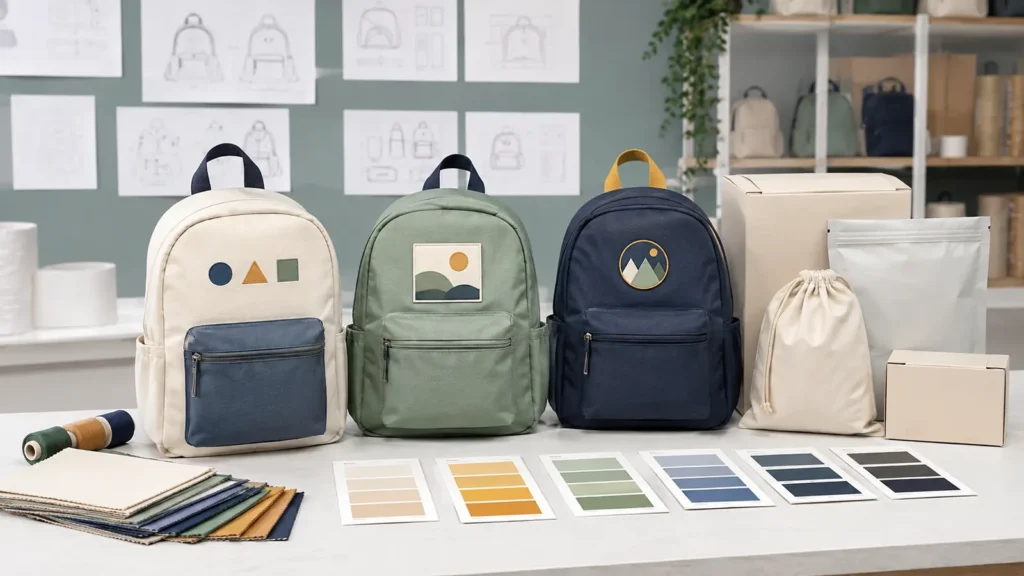
| Decoration | Embroidery, screen print, heat transfer, woven patch, rubber/PVC patch | Check hand feel, edge security, artwork detail, color, and placement |
Water-Resistant Is Not Waterproof
Coated woven fabrics may help resist light moisture, but water can enter through seams, zipper openings, or uncoated components. Unless the finished bag has been designed and tested for a defined standard, describe the specific feature accurately—for example, “coated outer fabric” or “wipe-clean surface”—instead of claiming the entire backpack is waterproof.
Recycled-Content and Sustainability Claims
If a buyer wants recycled polyester, the quotation and purchase order should define the fiber, the component in which it is used, the claimed percentage, and the supporting chain-of-custody or transaction documentation required for that program. Recycled content in the shell does not automatically mean every component is recycled. Packaging reductions, replaceable components, efficient carton packing, and a design intended for repeat use may also be useful sustainability decisions, but claims should remain specific and supportable.
Construction Details That Matter in Daily Use
Preschool bags are frequently lifted by the top handle, pulled by one strap, packed unevenly, and opened quickly. The construction specification should anticipate these behaviors.
Shoulder-Strap Attachment
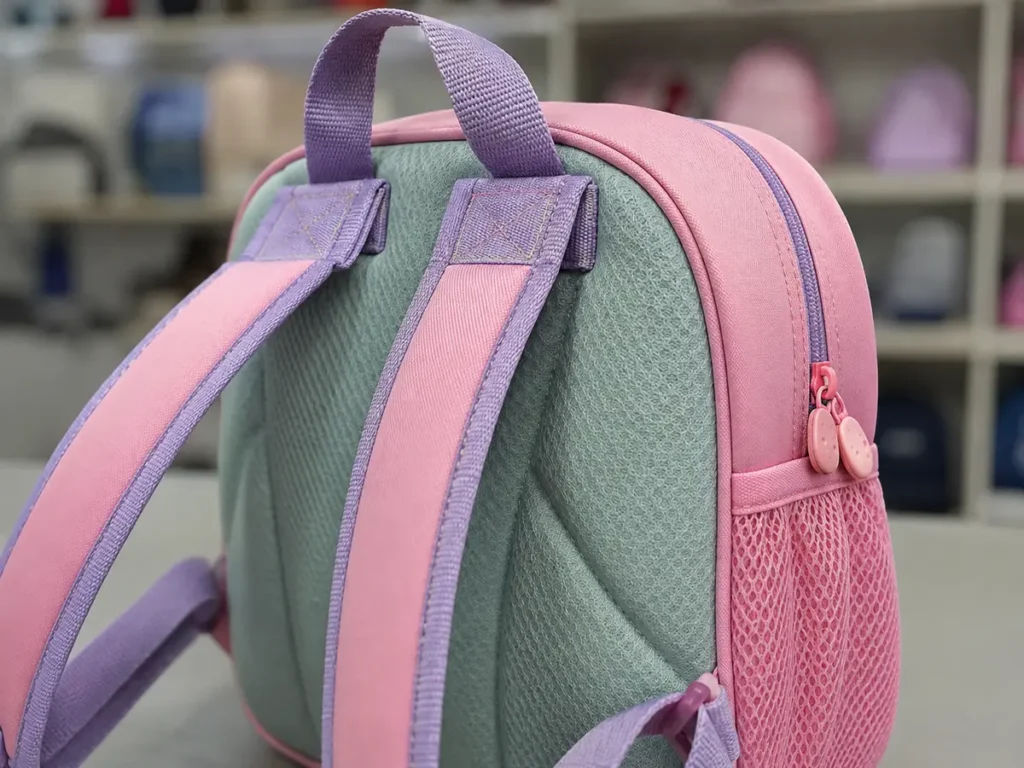
Check the upper strap seam and lower webbing anchor. Reinforcement may use internal patches, box-X stitching, bartacks, or another approved method. The appropriate construction depends on the materials and design. In the preproduction sample, compare left and right strap position and confirm that the stitch pattern does not cut excessively into the webbing.
Top Handle
Teachers and parents often use the handle more than expected. It should provide enough clearance for an adult hand without becoming a long loop. Check the reinforcement, edge softness, and finished loop height.
Zipper Opening and Pulls
Small hands benefit from a smooth-running zipper and a pull that can be grasped without an elaborate dangling ornament. Test around the curved top, where resistance commonly occurs. Confirm that lining fabric does not catch in the slider. Decorative pullers should be secure, proportionate, and included in the target-market product review.
Seam and Binding Finish
Inside binding should cover raw edges consistently. Inspect tight curves and compartment junctions. Loose thread ends, missed stitches, puckered piping, exposed foam, and uneven binding are visible defect categories that can be written into an inspection checklist.
Safety and Compliance: What Buyers Should Verify
Backpack compliance depends on the product design, intended age, materials, claims, and destination. A bag is not automatically a toy, garment, or children’s product in every jurisdiction, and requirements can differ. The importer or brand owner should determine the applicable rules with a qualified compliance professional and provide the supplier with a written testing and documentation plan.
Use the following risk-review questions during design:
- Are there detachable decorative components that could become small parts?
- Are cords, loops, pullers, and external straps longer than necessary?
- Are edges, rivets, zipper stops, and molded parts smooth and secure?
- Could a bottle pocket elastic, buckle, or hook create an avoidable snag point?
- Are coatings, inks, patches, and accessories included in the material and chemical test plan?
- Are warning, tracking, origin, fiber, or responsible-party labels applicable to this exact product and market?
- Does the artwork include restricted claims, licensed characters, or unverified sustainability language?
The U.S. Consumer Product Safety Commission maintains recall and business-education resources that buyers can use when building their risk review. CPSC guidance about drawstrings is written for children’s upper outerwear, not backpacks, so it should not be misrepresented as a backpack-specific rule. It is still a useful reminder that long cords and snag hazards deserve deliberate review in products used around playgrounds and school equipment. CPSC recalls and CPSC business education
For U.S. textile labeling, the FTC states that covered textile products generally disclose fiber content, country of origin, and the identity of the manufacturer or another responsible business. Coverage and label format should be confirmed for the exact backpack and market. FTC textile labeling guidance
For the EU, do not simply copy U.S. labels. The European Commission’s textile FAQ notes that certain travel goods made of textile materials, including travel bags, are listed among products not subject to mandatory fiber labeling under the cited textile regulation; other general product-safety, traceability, chemical, packaging, and national requirements may still apply. Obtain current product-specific advice before production. European Commission textile regulation FAQ
Need a custom preschool backpack specification? Send JIUMU your target age group, quantity, bag dimensions or required contents, colors, logo artwork, decoration method, packaging needs, destination market, and target delivery date. JIUMU can review the concept and prepare a quotation or sampling path. Request a custom quotation
Customization and Private Label Options
Decoration should reinforce the school or brand identity without compromising usability. The best method depends on artwork, fabric, order quantity, tactile preference, wash or cleaning expectations, and budget.
Embroidery
Embroidery provides a dimensional, established appearance for school crests, initials, and simple logos. Dense embroidery can stiffen a light panel, so the sample should be checked from both the face and reverse. Small artwork may need simplification; the supplier should provide a stitch simulation or sew-out before bulk production.
Screen Printing and Heat Transfer
Printing can reproduce larger areas and fine shapes with less weight than dense embroidery. The buyer should specify color references, print size, placement tolerance, surface compatibility, and any required performance testing. A digital mockup is useful for layout, but the physical sample determines actual color and hand feel.
Woven, Rubber/PVC, and Leather-Style Patches
Patches create a private-label look and can be applied across related products. Check corner design, thickness, attachment method, stitch distance from the edge, and whether the patch remains flat on a curved front panel. For young-child products, avoid unnecessary detachable or sharp components.
Name Personalization
Individual names can support school programs but change the order workflow. The buyer must provide a final spelling list, define capitalization and font, approve placement, set a cut-off date, and decide how replacements will be handled. For privacy, many schools may prefer an internal write-on label rather than a large visible name on the front.
Color and Packaging
Pantone references help communicate color intent, but the buyer should still approve the actual fabric or lab dip under consistent lighting. Packaging can include individual polybags where appropriate, paper bands, hangtags, barcode labels, carton marks, or school-set packing. Packaging requirements affect labor, material cost, carton utilization, and receiving efficiency.
What Drives the Cost of a Bulk Preschool Backpack?
There is no responsible single “cost per piece” without a specification. The main drivers are:
- order quantity and the number of colorways;
- dimensions and material consumption;
- face-fabric type, weight, backing, and coating;
- number of compartments, zipper length, and hardware specification;
- foam, mesh, lining, piping, and internal binding;
- custom dyeing or available stock colors;
- decoration method, artwork size, color count, and individual personalization;
- custom labels, hangtags, barcodes, and packaging;
- sample rounds, testing plan, inspection method, and shipping terms;
- destination, carton size, freight mode, and delivery schedule.
To compare quotations fairly, issue the same request-for-quotation sheet to each supplier. A lower price may represent a different fabric weight, fewer reinforcements, a stock-color substitution, simpler packaging, or excluded testing. Ask suppliers to state assumptions and exceptions rather than comparing only the final unit number.
Quality-Control Plan for Bulk Orders
A useful QC plan begins before production. Final inspection cannot reliably correct an ambiguous size, weak artwork file, or incompatible material choice.
1. Approve the Specification
Record finished dimensions and measurement points; materials and colors; zipper, buckle, webbing, foam, mesh, lining, binding, label, logo, packaging, and carton details; workmanship requirements; and destination-market documentation responsibilities.
2. Approve a Physical Sample
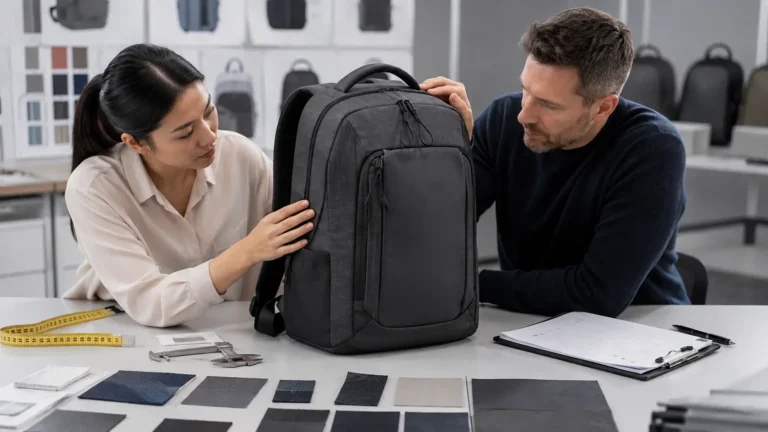
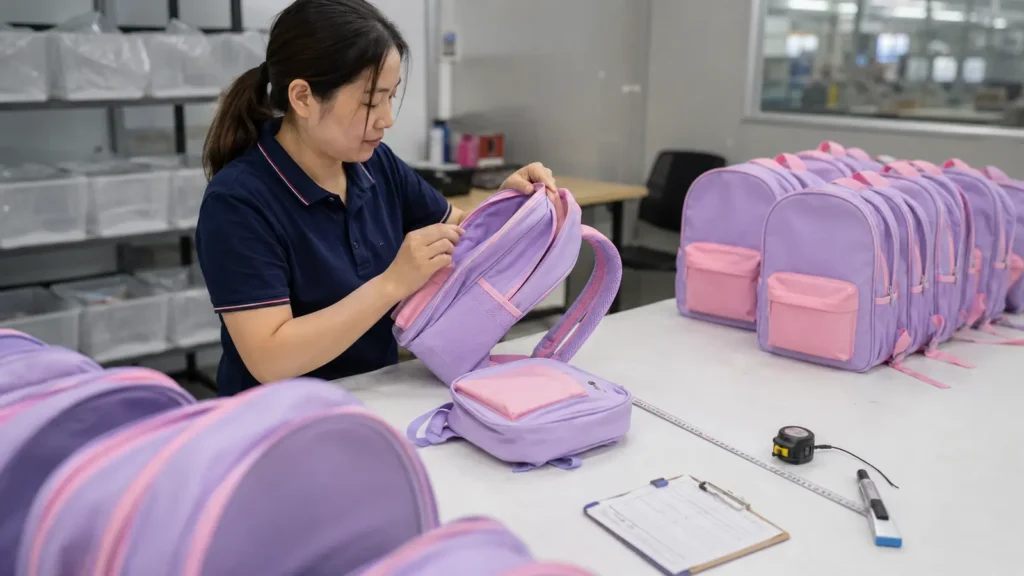
Use the sample for fit, packing, appearance, opening, color, hardware, and decoration review. Photograph the approved sample and keep a signed or otherwise controlled reference. If the buyer approves with comments, list every correction and require confirmation in the preproduction sample or production file.
3. Define Measurable Checks
Instead of “good stitching,” define what will be checked: skipped stitches, open seams, unsecured thread ends, bartack location, strap symmetry, zipper function, logo placement, stain, shade variation, dimension tolerance, and packing accuracy. Sampling level and acceptance criteria should be agreed according to the buyer’s risk policy and inspection arrangement.
4. Check During Production Where Risk Is Highest
Early checks are valuable for color grouping, embroidery or print placement, reinforcement construction, label content, and packaging setup. Correcting these after the full order is completed can be expensive or impossible.
5. Conduct Final Inspection and Carton Verification
Confirm quantity, assortment, workmanship, dimensions, function, labeling, packaging, carton marks, and any agreed tests or documents before shipment release. Retain a production sample for future reorder comparison.
Bulk Order Planning: From Brief to Shipment
- Write the use case. Identify school, retail, promotional, uniform, or private-label channel and destination market.
- Send the content list and dimensions. Include the largest folder, bottle, lunch item, cubby, and desired outer dimensions.
- Choose the construction. Confirm compartments, bottle pocket, straps, handle, materials, colors, and hardware.
- Supply artwork. Send vector logo files where possible, color references, target size, and placement.
- Define labels and packaging. Include owner identification, private label, barcode, hangtag, individual packing, and carton assortment.
- Request a quotation with assumptions. State quantity per color, delivery destination, trade terms if known, and target date.
- Approve digital mockups and physical sample. Use a consolidated comment sheet to control revisions.
- Confirm compliance and inspection plan. The buyer should specify required documentation and third-party testing or inspection where applicable.
- Authorize production. Freeze the approved specification and change-control process.
- Inspect, release, and retain references. Keep records that support repeat orders.
Questions to Ask a Preschool Backpack Supplier
- Can you build the sample around our actual folder, bottle, lunch box, and cubby dimensions?
- Which materials and colors are stock, and which require custom development?
- What is included in the quoted material specification?
- How will the top handle and shoulder-strap attachments be reinforced?
- Can we approve an embroidery sew-out, print strike-off, or patch sample?
- What is the sample process, and how are revisions recorded?
- What order quantity applies to each color or design? JIUMU’s typical MOQ is 50 pieces, subject to product structure and customization.
- How will color variation between production lots be controlled?
- Which labels, hangtags, barcodes, and carton marks can be customized?
- What testing or documentation can be arranged, and which responsibilities remain with the importer?
- What inspection checkpoints and final defect criteria will be used?
- How are reorder materials, artwork files, and approved samples controlled?
Common Buying Mistakes
Choosing by Age Label Alone
Children of the same age vary, and school requirements differ. Use physical dimensions, fit, cubby space, and a packing test.
Copying an Elementary Backpack at a Smaller Scale
Reducing every dimension can make the opening, zipper pulls, bottle pockets, and artwork unusable. Redesign the interfaces for small hands and required contents.
Adding Too Many Compartments
Extra pockets add weight, cost, sewing operations, and places to lose items. Each compartment should have a defined purpose.
Treating a Rendering as Sample Approval
A mockup cannot confirm fabric hand feel, zipper smoothness, real color, fit, weight, stitching, or patch thickness. Approve a physical sample for bulk production.
Using Unqualified Claims
Words such as waterproof, orthopedic, antibacterial, non-toxic, eco-friendly, and certified require precise definitions and evidence. State observable product features and retain the relevant documentation.
Ignoring Carton Volume
Structured padding and bulky sets may increase freight cost. Ask for estimated packed dimensions and carton utilization during development, not after production.
Why Work With JIUMU on Custom Preschool Backpacks?
JIUMU, established in 2010 in Guangdong, China, supplies custom teamwear, logo apparel, hats, uniforms, bags, and branded merchandise for B2B buyers in North America and Europe. Relevant capabilities include OEM and ODM development, fabric sourcing, Pantone color matching, embroidery, screen printing, heat transfer, woven and rubber/PVC patches, private labels, hangtags, packaging customization, digital mockups, physical samples, bulk production coordination, quality control, and export support.
For a preschool backpack program, this means a buyer can discuss the complete product rather than only adding a logo to a stock bag. The project can start with required contents, size, color direction, decoration, labels, packaging, and destination-market needs. JIUMU’s typical MOQ is 50 pieces, subject to product structure and customization.
Frequently Asked Questions
Final Recommendation
The best backpacks for kindergarten and preschool are not the most feature-heavy bags. They are the products that fit the intended child, required contents, classroom storage, brand program, and destination-market responsibilities with clear, testable specifications.
Start with the school’s daily routine. Keep capacity controlled. Make openings and adjustments easy to use. Specify materials and construction rather than relying on broad marketing terms. Review potential snag points and small components. Approve a loaded physical sample, and write the quality standard before production begins.
Build your JIUMU preschool backpack brief: Share a reference image or product concept, quantity, required contents or dimensions, colors, logo file, decoration, labels, packaging, destination, and target delivery date. JIUMU will use these details to discuss feasibility, sampling, and a custom quotation. Email zhengdong@jiumugear.com, WhatsApp +86 18507502899, or contact JIUMU.
About JIUMU: JIUMU is a Guangdong-based B2B supplier established in 2010, supporting custom bags, teamwear, uniforms, hats, logo apparel, and branded merchandise for professional buyers. This article provides general sourcing information and is not legal, medical, or compliance advice. Product requirements must be confirmed for the exact design and destination market.