Best Affordable School Backpacks: How to Compare Value
Buying affordable school backpacks in bulk is not simply a search for the lowest unit price. For schools, distributors, promotional companies, retailers, and private-label brands, the better question is: Which specification delivers the required user experience, acceptable durability, reliable branding, and manageable landed cost?
A backpack that costs less at quotation stage may become expensive if straps fail, zippers jam, colors vary between batches, cartons waste freight space, or the design cannot be reordered consistently. Conversely, a feature-heavy design can consume budget without improving the way students actually use the bag. Good value sits between those extremes.
This guide explains how professional buyers can compare school backpack value through use case, material, construction, size, comfort, customization, quality control, and total order cost. It is designed for bulk programs rather than consumer “top brand” shopping.
Quick Answer: The best affordable school backpack is the least complex design that reliably meets the intended student age, daily load, branding, distribution, and durability requirements. Compare suppliers using one written specification and an approved sample—not price alone. Prioritize reinforced strap attachments, suitable fabric, dependable zippers, balanced capacity, clear workmanship tolerances, and repeat-order consistency. Calculate landed cost and expected usable life before selecting the lowest quotation.
What “Affordable” Should Mean in Bulk Backpack Sourcing
Affordability is a relationship between cost and fitness for purpose. The relevant number is not merely the ex-works or FOB unit price; it is the cost of obtaining bags that arrive on time, match the approved design, perform adequately, and create no avoidable replacement or reputation problem.
For a one-time school event, a simple lightweight bag may be the right value. A daily secondary-school bag carrying books and a laptop needs a different construction. A retailer must also consider shelf presentation, packaging, return risk, and replenishment. A district program may value simple color management, carton identification, and delivery to multiple sites. The “best” specification changes with the program.
Use this working equation:
Program value = required performance + acceptable consistency + useful customization ÷ total landed cost and risk
This is not a laboratory formula. It is a procurement discipline: define the outcome first, then spend only on features that support it.
Compare Value at a Glance
| Decision factor | Low-price shortcut | Better-value specification | What the buyer should verify |
|---|---|---|---|
| Main fabric | Unspecified “polyester” | Defined fabric type, weight or approved hand feel, color and finish | Physical swatch and sample |
| Shoulder straps | Thin foam and basic attachment | Appropriate padding, symmetric shape and reinforced attachment | Sample fit and seam inspection |
| Zippers | Unspecified components | Agreed zipper size, smooth operation and consistent pullers | Repeated opening on sample and production checks |
| Capacity | Large-looking shell | Dimensions and compartments matched to the packing list | Pack-out test with typical items |
| Decoration | Cheapest available logo | Method selected for artwork, fabric and expected appearance | Decorated pre-production sample |
| Packaging | Individual bags without plan | Packaging and carton count optimized for distribution | Packing specification and carton marks |
| Quality | “Standard QC” | Written checkpoints, tolerances and approval references | Inspection checklist before order |
| Reorders | Visual matching only | Retained specs, color references and artwork files | Repeat-order record process |
Start With the Student and the Use Case
A value comparison fails when unlike backpacks are treated as equivalents. First segment the users.
Elementary and primary-school programs
Younger students generally need a smaller, lighter-looking bag with simple organization. Oversized shells encourage overpacking and can look poorly proportioned. Rounded forms, easy-to-grip pullers, a name-label area, one main compartment, a front pocket, and accessible bottle pockets are often more useful than multiple hidden compartments. If the program targets a specific age band, request a size sample and assess it on an age-appropriate wearer before bulk approval.
Middle- and high-school programs
These bags commonly carry more notebooks, devices, chargers, lunch items, and sports accessories. Value comes from reliable strap construction, a stable base, sensible compartment depth, and an optional laptop sleeve. Adding many small pockets increases sewing time and potential failure points; specify only the organization the student will use.
College and campus programs
Laptop protection, a clean appearance, commuting comfort, and quick-access storage become more important. Buyers may choose a more restrained palette and subtle branding. A sleeve should be evaluated with the intended device dimensions, including a protective case—not only a nominal screen size.
School teams and activity groups
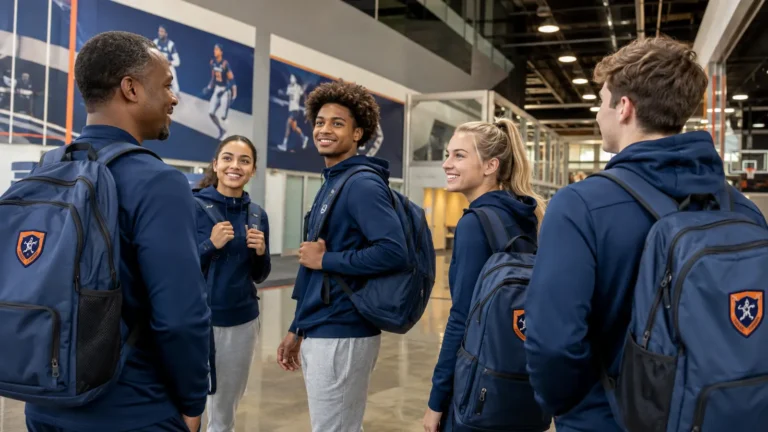
Team programs may need roster names, numbers, school colors, equipment separation, or coordination with uniforms. If names vary by unit, ask how personalization files will be submitted, proofed, sorted, packed, and replaced. Administration can cost more than the decoration itself when the data workflow is unclear.
Match Capacity to a Real Packing List
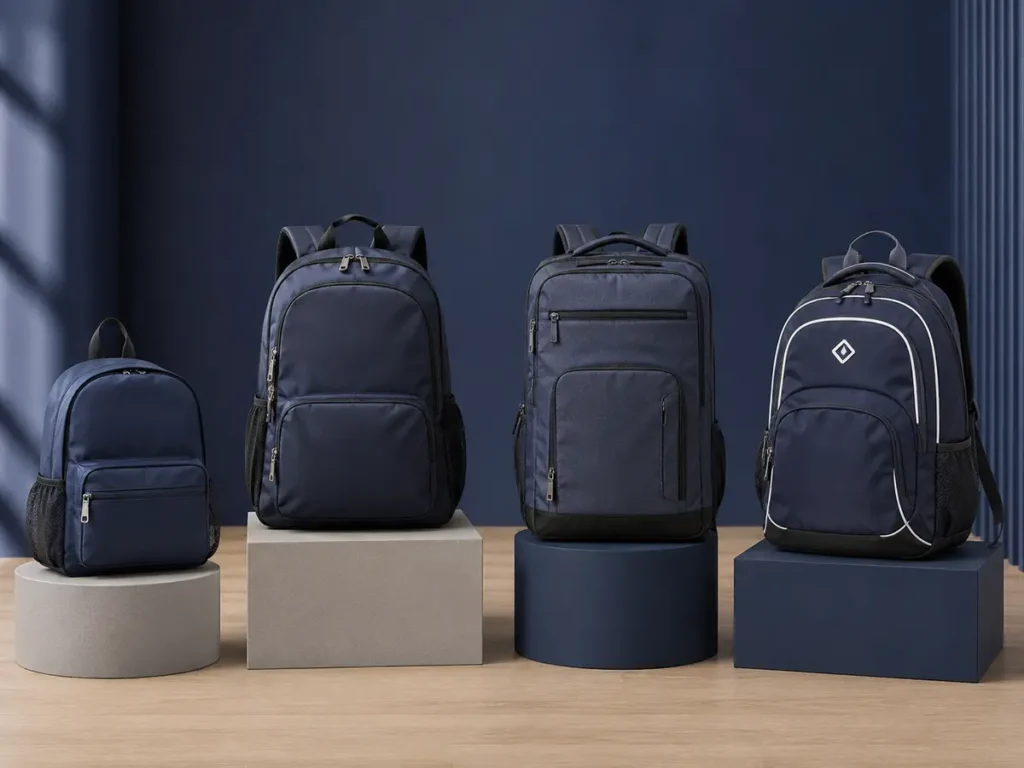
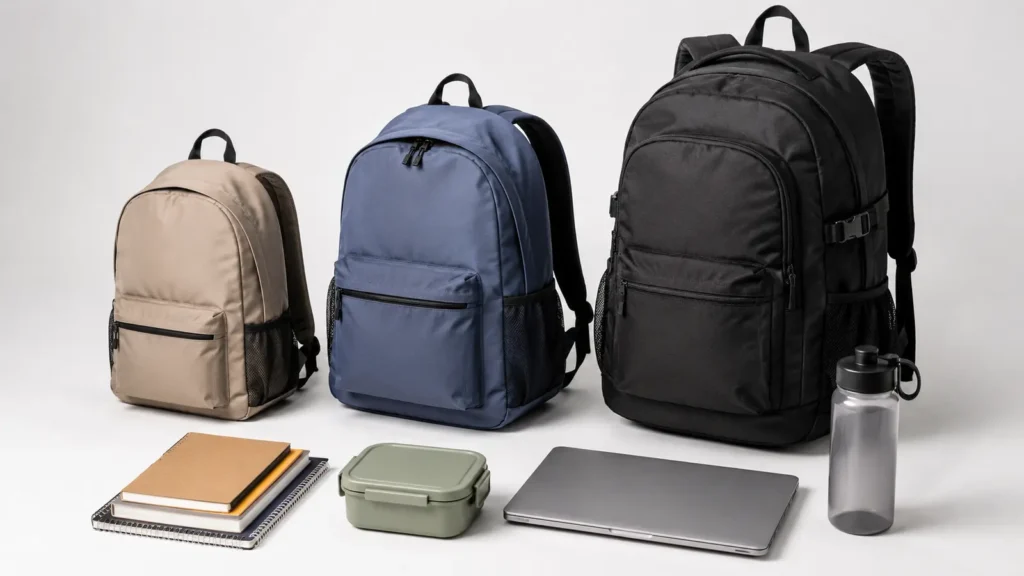
Capacity claims are difficult to compare when suppliers use different shapes or measurement methods. Ask for finished external dimensions and, where necessary, key internal dimensions. Then conduct a physical pack-out using representative contents.
| Program | Typical contents to test | Useful configuration | Avoid paying for |
|---|---|---|---|
| Primary school | Folders, small books, lunch, bottle, light layer | Simple main section, front pocket, two bottle pockets | Oversized laptop section and complex organizer |
| Secondary school | Textbooks, notebooks, device, charger, bottle | Two main zones or one main zone plus sleeve | Decorative webbing with no function |
| College/commuter | Laptop, documents, cable pouch, bottle, personal items | Padded sleeve, quick-access pocket, comfortable back | Excessive school-age graphics |
| Team/activity | Uniform, footwear, bottle, small gear | Wider opening, separation where necessary, name ID | Office organizer unrelated to the activity |
| Promotional event | Handouts, merchandise, light daily items | Simple construction and visible logo area | Heavy padding beyond expected use |
A larger bag is not automatically better value. It consumes more fabric, lining, foam, labor, packaging volume, and freight space. It may also feel bulky. Approve the smallest format that fits the agreed load without strain.
Compare Materials Without Relying on Vague Labels
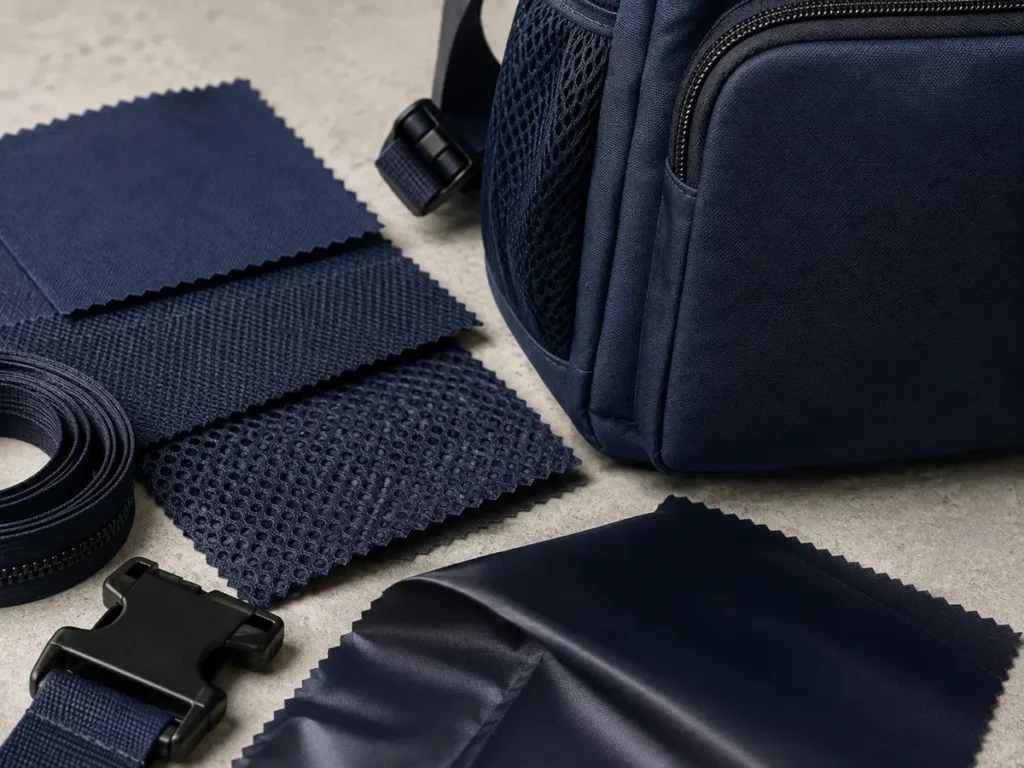
“Polyester backpack” is not a complete specification. Fabric appearance and performance can vary with yarn, weave, weight, coating, finish, backing, and color process. Nylon-like or polyester fabrics can both suit school bags, but the selection should be tied to price target, hand feel, appearance, and expected use.
Main shell fabric
Ask the supplier to identify the proposed fabric in the quotation and retain the approved swatch. For value programs, a practical woven polyester is common because it offers broad color and cost options. Higher-density or heavier-feeling constructions may improve perceived value but also increase cost. Do not assume a number such as “600D” alone fully predicts finished performance; compare actual samples and request relevant verification if the program has a formal requirement.
Lining
Lining improves the interior appearance, hides seam construction, and can protect internal contents. A full lining adds material and labor. An unlined or partially lined design may be acceptable for a simple promotion but may not suit a retail or daily-school product. Light-colored linings make contents easier to see, while dark linings hide marks.
Foam and mesh
Foam thickness matters, but density, recovery, placement, and shape also affect comfort. A thick, soft sample can compress quickly. Evaluate the complete strap and back-panel system under a realistic load. Mesh can improve touch and appearance, but unnecessary panels increase cost and seams.
Coatings and water resistance
Many bag fabrics use a backing or finish that can help resist light moisture. Avoid describing the finished backpack as “waterproof” unless the complete construction and claim are supported by an agreed test method. Needle holes, zippers, and seams remain possible entry points. Use qualified wording such as “water-resistant fabric” only when the specification and evidence justify it.
Hardware and trim
Zippers, sliders, buckles, webbing, elastic, binding, and pullers influence both failure risk and perceived quality. A modest shell fabric paired with dependable components can provide better value than an expensive fabric with weak trim. Confirm colors, dimensions, surface appearance, function, and supplier substitutions in writing.
Construction Details That Protect Value
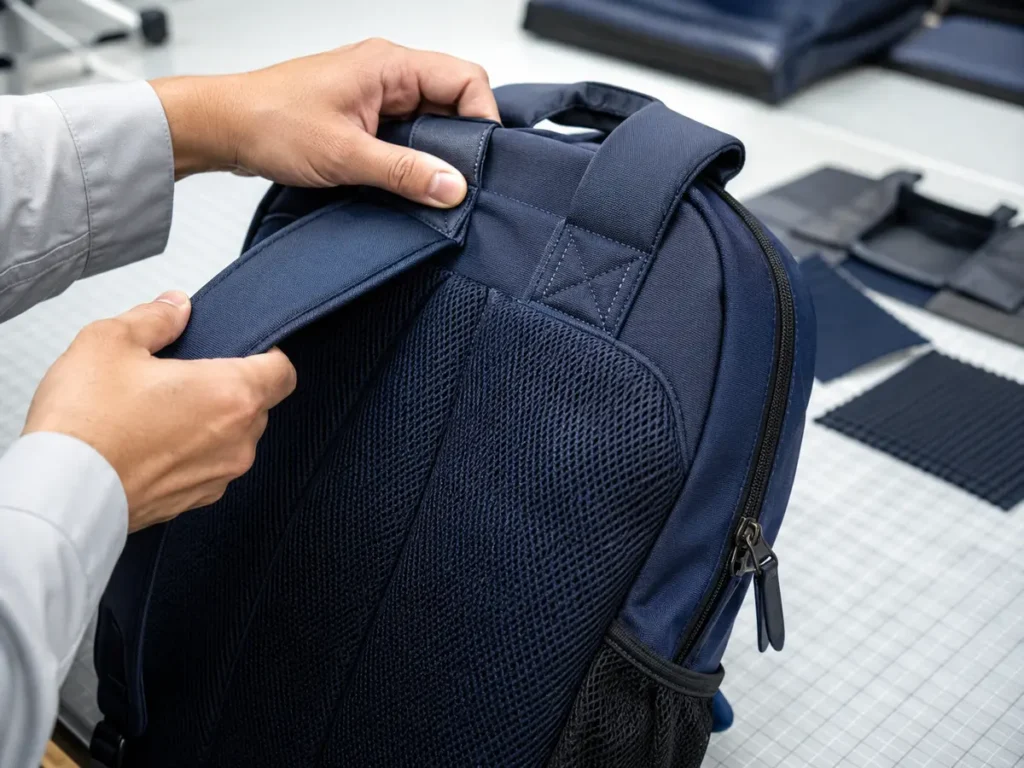
Most school backpack problems occur at load-bearing or frequently operated points. A buyer does not need to specify every stitch, but should identify critical construction areas.
Shoulder-strap attachment
The upper strap joint transfers much of the carried load. Review the attachment area, reinforcement method, stitch coverage, symmetry, and how the joint integrates with the back panel. The exact solution varies by design; what matters is that the approved construction is documented and reproduced.
Seams, binding, and stress points
Inspect seam allowance, edge binding, loose threads, skipped stitches, puckering, and reinforcement at handles, strap ends, and pocket corners. More stitching is not automatically better. Consistent placement and suitable reinforcement at the right points matter more than decorative complexity.
Zipper paths
A zipper may operate well as a loose component but bind when sewn around a tight curve. Open and close the finished sample repeatedly while the bag is lightly packed. Check corner movement, slider alignment, puller grip, and whether fabric catches in the teeth.
Base structure
The base receives abrasion and impact when students place the bag on floors. Depending on the target, value improvements may include a doubled fabric panel, appropriate lining, piping, or a simple internal support. A heavy molded bottom may be unnecessary for a price-sensitive school program and can add freight weight.
Pocket engineering
Bottle pockets must match likely container sizes and should remain usable when the main compartment is full. Laptop sleeves need a sensible opening and bottom position. Avoid compartments that photograph well but cannot be reached or loaded comfortably.
Turn Features Into Procurement Decisions
Use a “must have / useful / remove” review before quotation.
| Feature | Keep when | Simplify or remove when | Cost/value implication |
|---|---|---|---|
| Laptop sleeve | Devices are part of daily use | Program is for young children or events | Adds lining, foam and sewing |
| Second main compartment | Users separate books and devices | A single packing zone is sufficient | Adds zipper length and labor |
| Two bottle pockets | Daily school use needs accessibility | Promotional bag has light use | Adds mesh/elastic and operations |
| Padded back panel | Loads and wear duration justify comfort | Bag carries only light handouts | Adds foam, mesh and quilting |
| Custom zipper puller | Retail identity needs a distinctive detail | Budget program can use stock pullers | Often adds tooling, MOQ or setup |
| Individual names | Team allocation requires them | Central program does not | Adds data, proofing and sorting risk |
| Custom packaging | Retail or multi-site distribution needs it | Bulk handout can use simple packing | Can add unit cost but reduce handling |
This exercise often saves more than negotiating a small percentage from a design containing unnecessary parts.
Customization: Spend Where the Brand Is Seen
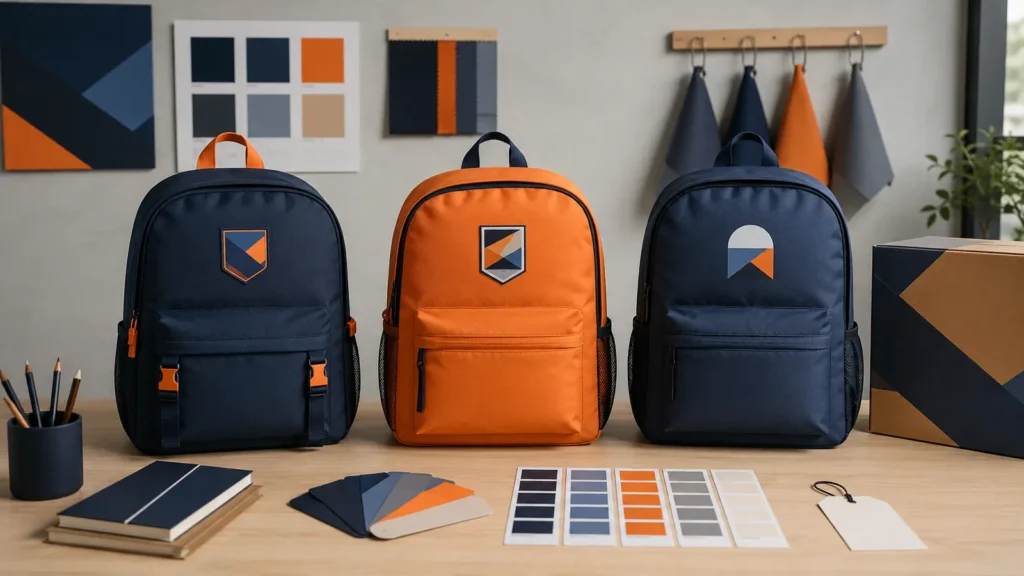
Logo embroidery can create a dimensional, durable appearance, while screen printing or heat transfer may suit certain artwork, colors, quantities, and fabrics. Woven, rubber/PVC, or leather-style patches create different visual effects. The right choice depends on logo detail, size, placement, base fabric, budget, and desired identity—not a universal hierarchy.
For affordable school backpacks, keep artwork production-friendly. Reduce very small details, confirm minimum line widths with the supplier, and limit placements that require separate setup. One well-positioned logo often delivers more value than several small marks.
Color matching also affects value. Supply a recognized color reference where accuracy matters, then approve it on the actual fabric because texture and finish influence appearance. “Navy” is not a sufficient instruction for a coordinated school program.
Private labels, woven labels, hangtags, and packaging can support a retailer or distributor, but each element should have a job. A hangtag may communicate care and product information; an internal label may support size or ownership; carton labels may simplify school-site distribution. Remove redundant packaging before removing construction quality.
Planning a bulk school backpack program? Share your quantity, user age group, target dimensions, reference image, colors, logo file, packaging, destination, and required delivery date with JIUMU. We can review the specification, recommend suitable customization, and prepare a quotation or sample plan. Request a custom quotation.
What Actually Drives the Cost of a School Backpack?
Suppliers price a combination of material consumption, components, cutting and sewing operations, decoration, setup, packaging, order quantity, quality requirements, and logistics. Two bags with similar front views can have very different costs.
Material consumption
Dimensions, depth, pocket count, lining coverage, foam panels, and fabric direction affect usage. Curved shapes can increase cutting waste. Simplifying the silhouette and reducing redundant layers can save cost while preserving the main experience.
Sewing complexity
Every pocket, zipper, binding run, webbing tab, bartack, and decorative seam adds operations. Complexity also increases the opportunity for inconsistency. A clean two-compartment design may outperform a cheaper-looking multi-pocket design at a similar total cost.
Decoration and personalization
Logo method, color count, stitch count, patch type, artwork setup, placement, and individual names influence price. Ask whether setup or sampling charges are separate, whether personalization is included, and how corrections will be handled.
Quantity and color splitting
JIUMU’s typical MOQ is 50 pieces, subject to product structure and customization. However, splitting an order into many shell colors, logo versions, or individualized packs can change material minimums and production efficiency. State both total quantity and quantity per variant.
Packaging and freight
Packaging affects protection, carton volume, distribution labor, and landed cost. Ask for an estimated packing method, pieces per carton, carton dimensions, and gross weight once the design is stable. Freight quotations made before sample dimensions are confirmed should be treated as estimates.
Compare Quotations on a Like-for-Like Basis
Create one request-for-quotation sheet and send the same version to every shortlisted supplier. Include:
- product reference and intended user group;
- target finished dimensions and capacity objective;
- main fabric, lining, foam, mesh, webbing, zippers, and buckles;
- compartment and pocket list;
- logo method, size, colors, placement, and artwork;
- color references and quantities per color;
- labels, hangtags, individual packing, carton marks, and sorting;
- sample requirement and approval milestones;
- target quality checks or test requirements;
- shipping term, destination, delivery window, and order quantity.
Then normalize the responses. One supplier may include decoration, export cartons, or sampling while another excludes them. Record assumptions and exceptions beside the price.
| Quotation line | Supplier A | Supplier B | Supplier C |
|---|---|---|---|
| Exact specification version | Confirmed / exception | Confirmed / exception | Confirmed / exception |
| Unit price and currency | |||
| Included decoration | |||
| Sample and setup charges | |||
| Packaging included | |||
| Quantity per color/design | |||
| Trade term and named place | |||
| Estimated carton data | |||
| Production timing after approval | |||
| Inspection arrangement | |||
| Key exclusions or substitutions |
Never fill this table using assumptions. Ask each supplier to confirm missing fields.
Sampling Is a Cost-Control Tool
A sample is not just a presentation piece. It is the physical translation of the specification and the most practical point to remove misunderstanding before bulk production.
Start with a development or reference sample when the design is new. Review silhouette, dimensions, pocket function, load balance, strap length range, stitching, component feel, color direction, and decoration placement. Mark every change in a consolidated comment sheet. Multiple informal messages can create conflicting instructions.
Before production, approve a sample that reflects the final materials, colors, artwork, and construction as closely as the project permits. State which deviations remain open. Photograph key measurements and details, assign the approval date or version, and retain one physical reference when possible.
Do not approve appearance alone. Pack the sample, wear it, set it down, operate every zipper, adjust the straps, load the bottle pockets, and inspect the interior. For formal performance or chemical requirements, define the applicable market, standard, method, sample selection, laboratory, and acceptance criteria with a qualified compliance professional. Requirements vary by product, claim, age group, and destination.
A Practical Quality-Control Checklist
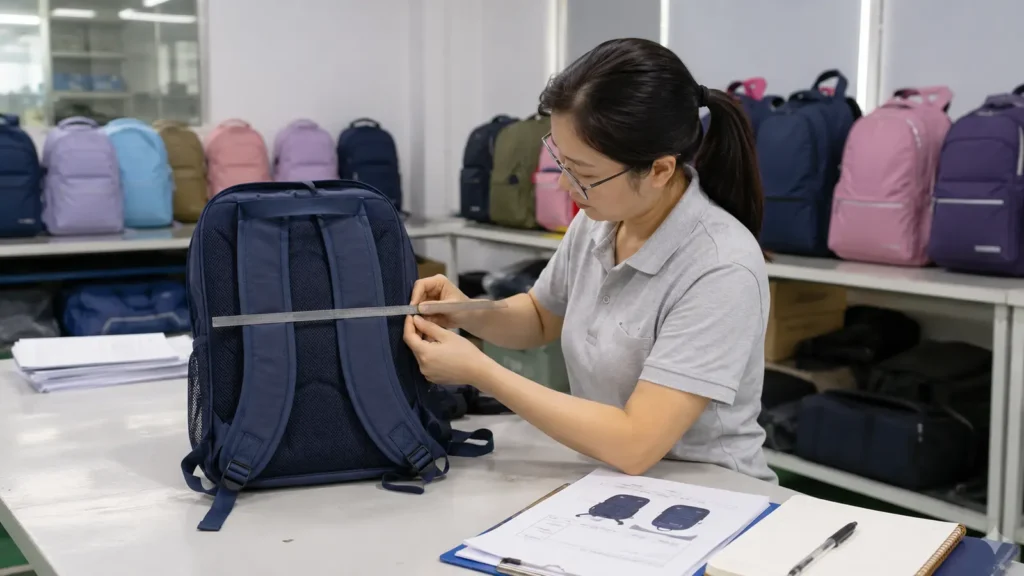
Quality control should reference agreed specifications and the approved sample. A useful checklist includes:
- Identity: style, order number, color, logo version, and quantity.
- Materials: shell, lining, mesh, foam, webbing, zipper, buckle, labels, and packaging against approvals.
- Dimensions: finished bag and critical pockets within agreed tolerances.
- Workmanship: seams, binding, skipped stitches, loose threads, reinforcement, symmetry, and cleanliness.
- Function: all zippers, buckles, adjusters, pockets, handles, and straps operate as intended.
- Decoration: position, size, orientation, color, legibility, surface condition, and personalization data.
- Appearance: consistent shape, matching panels, acceptable shade, no obvious marks or damage.
- Packing: correct unit packaging, assortment, carton quantity, marks, and documents.
The inspection level, sampling plan, defect categories, tolerances, and remedies should be agreed before production. “Do good QC” is not measurable.
Calculate Total Value, Not Just Unit Price
Build a simple landed-cost model:
Product cost + decoration/setup + samples + inspection/testing + packaging + freight + duties/taxes + receiving/distribution + expected replacements = program cost
Some elements depend on the buyer’s country, tariff classification, transport mode, and commercial terms. Confirm them with the appropriate logistics and customs professionals. A sourcing comparison should also include schedule risk, communication clarity, and reorder capability even when those factors do not fit neatly in a spreadsheet.
One helpful metric is estimated cost per period of acceptable use. If Bag A costs slightly more but is reasonably expected—based on evidence, sampling, and comparable construction—to remain usable longer, it may be the affordable choice. Do not turn that estimate into a guarantee without validated performance data.
Questions to Ask a School Backpack Supplier
- What exact materials and components are included in this quotation?
- Which details differ from our reference image or tech pack?
- What is the MOQ for the style and for each color or logo version?
- Can you provide a material swatch and decorated sample before production?
- How will dimensions, colors, logo placement, and workmanship be checked?
- What substitutions require our written approval?
- How are individualized names or site assortments proofed and packed?
- What carton configuration is expected after sample approval?
- What information starts the production timeline, and which approvals can delay it?
- How are production records retained for repeat orders?
- Which product claims or destination-market requirements need third-party verification?
- What happens if inspection identifies a material or workmanship discrepancy?
Clear answers are valuable. A very low quotation accompanied by vague specifications transfers risk back to the buyer.
Common Mistakes When Buying Affordable School Backpacks
Choosing from a photo alone
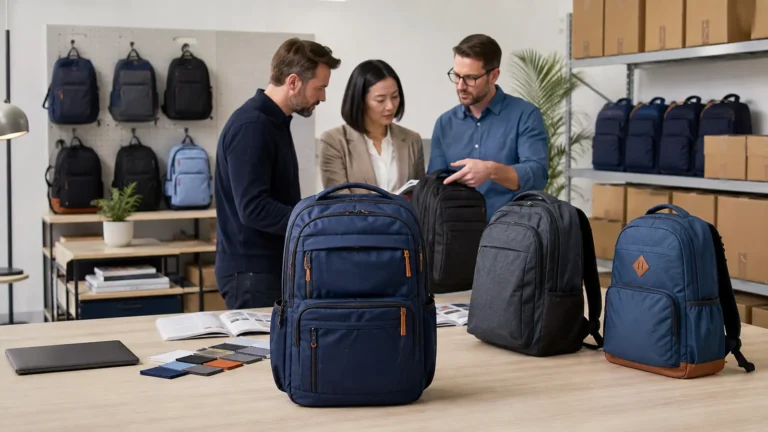
A photo cannot define fabric, lining, padding, zipper quality, internal construction, dimensions, or tolerances. Use it as a design reference, then create a written specification.
Comparing different specifications
If one supplier includes lining, a padded sleeve, a decorated logo, retail packing, and reinforced straps while another does not, the prices are not comparable.
Overdesigning the bag
Extra pockets, contrast panels, custom hardware, and elaborate packaging can dilute budget. Protect the primary use and visible identity first.
Cutting cost at stress points
Removing appropriate reinforcement, reducing functional strap construction, or accepting weak zippers can create disproportionate risk. Simplify nonessential styling before compromising load-bearing areas.
Ignoring variant complexity
Ten colors and individual names may sound like one order but behave like many small orders. Confirm the quantity, artwork, sorting, and proofing process for every variant.
Treating sample approval casually
Verbal approval or scattered comments leave room for dispute. Use one dated approval record with photos and open points.
Forgetting cartons and distribution
A school district or promotion can lose time if cartons do not identify site, color, grade, or recipient. Plan the last mile before bulk packing.
Why JIUMU Is Relevant to Bulk School Backpack Programs
JIUMU, established in 2010 in Guangdong, China, supports North American and European B2B buyers with custom bags, teamwear, hats, uniforms, and branded merchandise. Relevant capabilities include OEM and ODM development, fabric sourcing, Pantone color matching, embroidery, sublimation, screen printing, heat transfer, several patch formats, private labels, hangtags, customized packaging, digital mockups, physical samples, bulk production support, quality control, and export coordination.
The typical MOQ is 50 pieces, subject to the backpack structure and customization. This can suit schools, sports clubs, distributors, promotional product companies, uniform dealers, retailers, and private-label brands that want to develop a defined program rather than select an unknown retail product.
JIUMU does not need a feature-heavy brief to begin. A buyer can share a reference image and commercial requirements; the team can help translate those into a clearer specification and identify where simplification may protect the target cost. Explore custom team bags or see how coordinated products can fit a baseball team uniform package.
Frequently Asked Questions
Final Recommendation
The best affordable school backpacks are not necessarily the products with the fewest features or lowest quoted price. They are backpacks whose materials, capacity, construction, comfort, branding, and packaging are deliberately matched to the program. Define the user, pack a sample with real contents, protect high-stress areas, remove features without a job, and compare total landed cost using one specification.
For a reliable decision, build three approval references: a written specification, approved materials and artwork, and a physical sample. Then connect production inspection to those references. This process makes value visible and reduces surprises that a low unit price can hide.
Request a JIUMU school backpack quotation: Send your reference image or tech pack, quantity and color split, dimensions, logo artwork, required pockets, packaging, destination, and target delivery date. JIUMU will review the brief and discuss a suitable specification, customization route, sample plan, and quotation. Contact JIUMU · WhatsApp/Phone: +86 18507502899 · Email: zhengdong@jiumugear.com
About the author: JIUMU Content Team. This buyer’s guide is based on JIUMU’s approved customization and sourcing capabilities. Product requirements vary by design, market, intended age group, claim, and use. Buyers should confirm applicable compliance, testing, logistics, and customs requirements with qualified professionals.