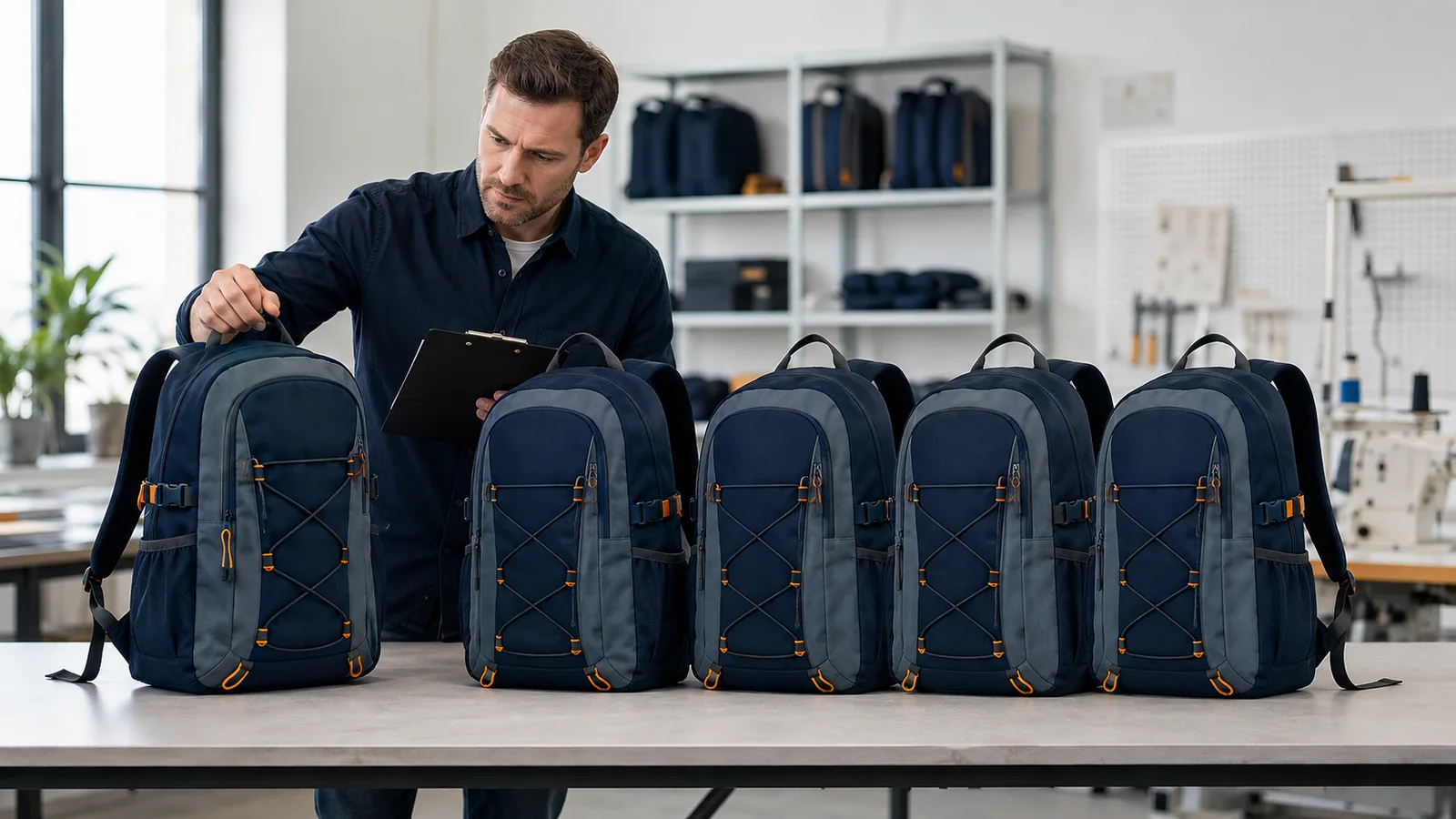
How to Make Sure Bulk Production Matches Your Approved Sample
An approved sample can look excellent while the bulk order arrives with a different fabric hand, a slightly wrong color, inconsistent dimensions, weak stitching, or a logo that no longer looks like the artwork. For a startup brand, this is more than a quality problem. It can delay a launch, create returns, damage wholesale relationships, and tie up cash in inventory that cannot be sold as planned.
The solution is not simply to tell a supplier to “make bulk exactly like the sample.” A sample is a physical result, but bulk consistency comes from a controlled system: one approved reference, written specifications, sealed materials, clear tolerances, documented change approval, production-stage checks, and a defined shipment-release decision.
This guide explains how buyers can build that system for custom backpacks, team bags, duffel bags, promotional bags, and related sewn products.
Quick Answer: To make bulk production match an approved sample, identify one final Golden Sample, keep matching copies with the buyer and supplier, and connect that sample to a signed specification pack. Seal the fabric, lining, color, trims, dimensions, logo method, workmanship standard, packaging, and approved tolerances. Require written approval before any material or construction change. Then compare a first production piece, in-line units, and pre-shipment samples against the same controlled reference. The sample shows the target; the documents make the target repeatable.
Why Can Bulk Production Differ From the Approved Sample?
A prototype and a production lot are made under different conditions. A sample may be cut by one experienced technician using a small piece of available fabric. Bulk production involves full fabric rolls, many cut panels, multiple sewing operations, a larger workforce, production equipment, packing lines, and time pressure. If the approved result has not been translated into controlled inputs and inspection points, variation becomes likely.
The most common causes are not mysterious. They usually come from missing decisions, unclear references, uncontrolled versions, or changes that were never communicated.
| Why variation happens | What the buyer may see | Practical prevention |
|---|---|---|
| Sample fabric was temporary or locally available | Different texture, weight, coating, sheen, or stiffness | Approve bulk fabric from the intended mill or lot and record the exact construction and reference |
| Color was approved from a screen or one photograph | Bulk looks warmer, cooler, lighter, or more reflective | Approve a physical color reference and agree on viewing conditions |
| Dimensions were inferred from the sample | Pocket, strap, opening, or body dimensions drift | Create a measurement table with defined measurement points and tolerances |
| Artwork was approved without a production strike-off | Embroidery becomes too dense, small text closes, or print color changes | Approve the actual decoration method on the actual bulk fabric |
| Components were described only as “same quality” | Zipper, buckle, webbing, foam, or lining changes | Seal component samples and record supplier codes or measurable requirements |
| Multiple sample versions remain in circulation | Production follows an older version | Use one version number and cancel previous versions in writing |
| Material becomes unavailable after approval | Supplier substitutes a similar material | Require written buyer approval before any substitution or construction change |
| Inspection happens only after packing | A repeat defect affects most of the lot | Check the first production piece and inspect during production |
Price pressure can also create risk. A quotation may have been based on one material assumption while the final sample uses an upgraded fabric, added reinforcement, a larger embroidery area, or more complex packaging. If the revised specification is not reflected in the final bill of materials and price confirmation, the production team may work from the commercial assumptions rather than the approved sample.
The buyer should therefore ask one direct question before paying the bulk deposit: Is the final quotation based on the exact approved sample and its final bill of materials?
What Is a Golden Sample?
A Golden Sample is the final physical product approved as the visual and workmanship reference for bulk production. It should represent the agreed materials, construction, dimensions, logo execution, trims, labels, and packaging as closely as practical.
The phrase is widely used in sourcing, but the name alone does not create control. A Golden Sample is useful only when everyone knows which version it is, what it approves, what it does not approve, and which written documents take priority if a hidden feature cannot be confirmed from the physical item.
For example, a finished backpack does not prove the internal fabric composition, coating specification, foam density, color reference, test requirement, or carton quantity. Those details belong in the specification pack. The Golden Sample and the written documents work together.
Keep Two Matching Controlled Samples
Whenever practical, the buyer and supplier should retain matching samples from the same approved version. The buyer’s sample supports receiving inspection and brand review. The supplier’s sample supports production meetings, first-piece comparison, in-line QC, and final inspection.
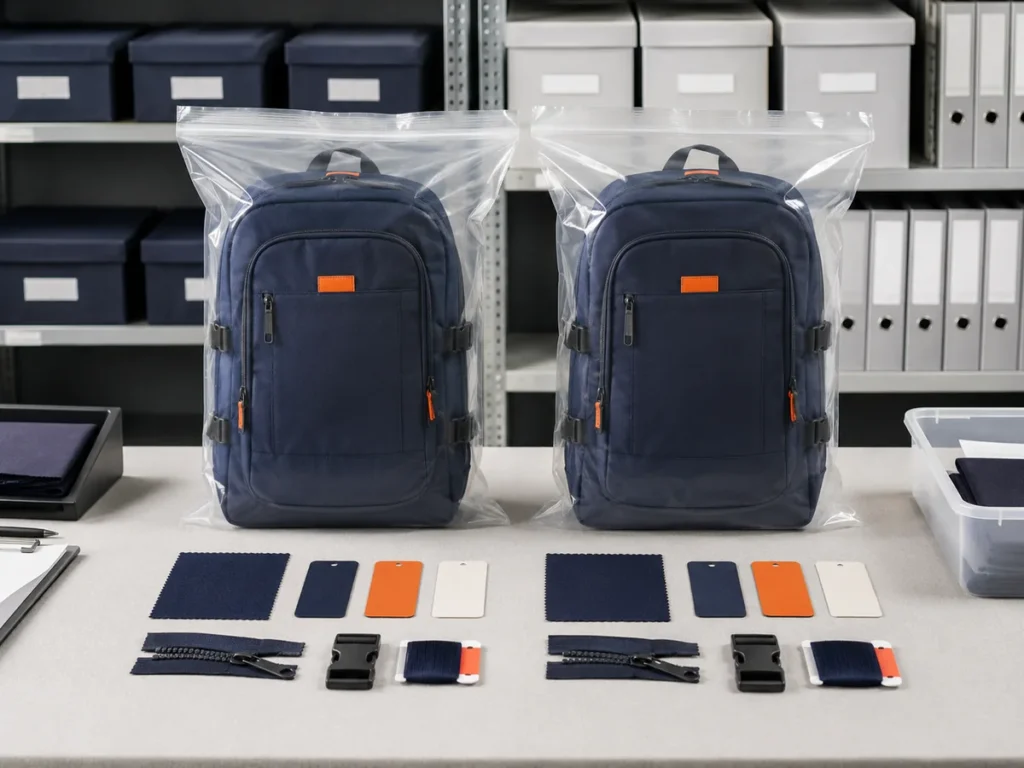
Each controlled sample should be protected from dirt, moisture, sunlight, unauthorized use, and accidental mixing with ordinary samples. Attach or store an approval record that includes:
| Golden Sample control field | What to record |
|---|---|
| Project identification | Buyer name or code, product style, purchase-order reference when available |
| Version | Final sample version and date approved |
| Physical ownership | Buyer copy, supplier copy, and storage location |
| Approval status | Approved, approved with listed corrections, or not approved |
| Connected documents | Tech pack, bill of materials, artwork, color reference, packaging file, measurement table |
| Known limitations | Any feature not represented by the sample, such as final carton print or pending test |
| Approvers | Named buyer and supplier contacts or documented electronic approval trail |
| Change status | Record of later approved amendments and whether a replacement Golden Sample is required |
Do not write “approved” on several similar samples. If the buyer approves a later correction, clearly cancel the earlier version. A photograph of the final sample can support the record, but it should not replace the physical reference for texture, color, hand feel, construction, or workmanship.
How Should Fabric, Color, Dimensions, Logo, and Trims Be Sealed?
The goal of sealing is to convert subjective expectations into identifiable inputs and observable acceptance criteria. “Use durable fabric” or “match navy blue” is not enough. The production team needs to know what material and result have actually been approved.
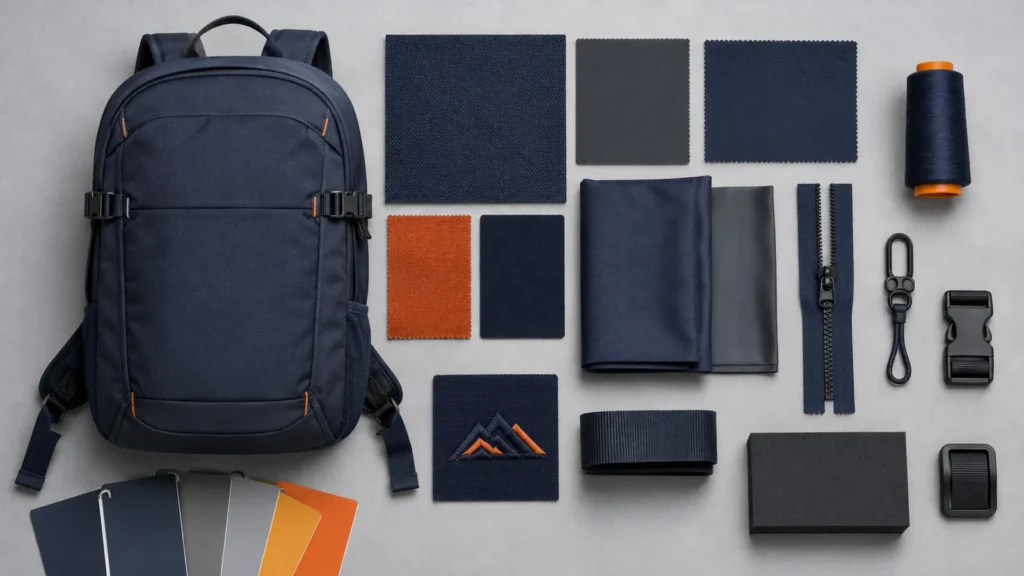
Fabric and Lining
Record the fabric type, construction, nominal weight when specified, composition when required, finish or coating, surface appearance, hand feel, and approved color. For coated or performance fabrics, write down the exact requirement and evidence needed rather than relying on general terms such as “waterproof.” If performance matters, define the relevant test or buyer-approved evaluation.
Ask whether the bulk fabric will come from the same approved lot. If not, require a bulk-lot swatch or cutting for approval before mass cutting. Natural, recycled, solution-dyed, coated, and textured materials may show normal variation, so the acceptable range must be discussed before production.
Color
Color approval should identify the physical master: a fabric swatch, lab dip, thread card, approved trim, printed strike-off, or other agreed reference. Pantone references can help communicate a target, but the appearance of a color changes with substrate, dye method, surface texture, lighting, and viewing device.
For a bag using several materials, approve the relationship between colors as well as each component. Navy polyester, navy zipper tape, navy webbing, and navy embroidery thread may not appear identical because their surfaces reflect light differently. The buyer must decide whether tonal coordination or a tighter visual match is required.
Dimensions and Measurement Method
A measurement table should define where and how each dimension is taken. “Bag height” can be measured along the front panel, through the center, or including a handle; those methods produce different results. The same issue applies to pocket height, gusset depth, zipper opening, shoulder-strap length, webbing width, and logo position.
Use diagrams or annotated sample photographs for ambiguous points. State units and tolerances. Tolerances should reflect function, construction, material behavior, buyer expectations, and production feasibility. There is no responsible universal tolerance for every bag and every measurement.
Logo and Decoration
Approve logo size, position, orientation, color, method, backing, surface appearance, and acceptable edge quality. Embroidery should be approved as a sew-out on the intended fabric because stitch density, underlay, thread, backing, logo scale, and fabric stability influence the result. Printed or heat-transferred artwork should be approved on the actual fabric for color, adhesion, opacity, hand feel, edge definition, and distortion.
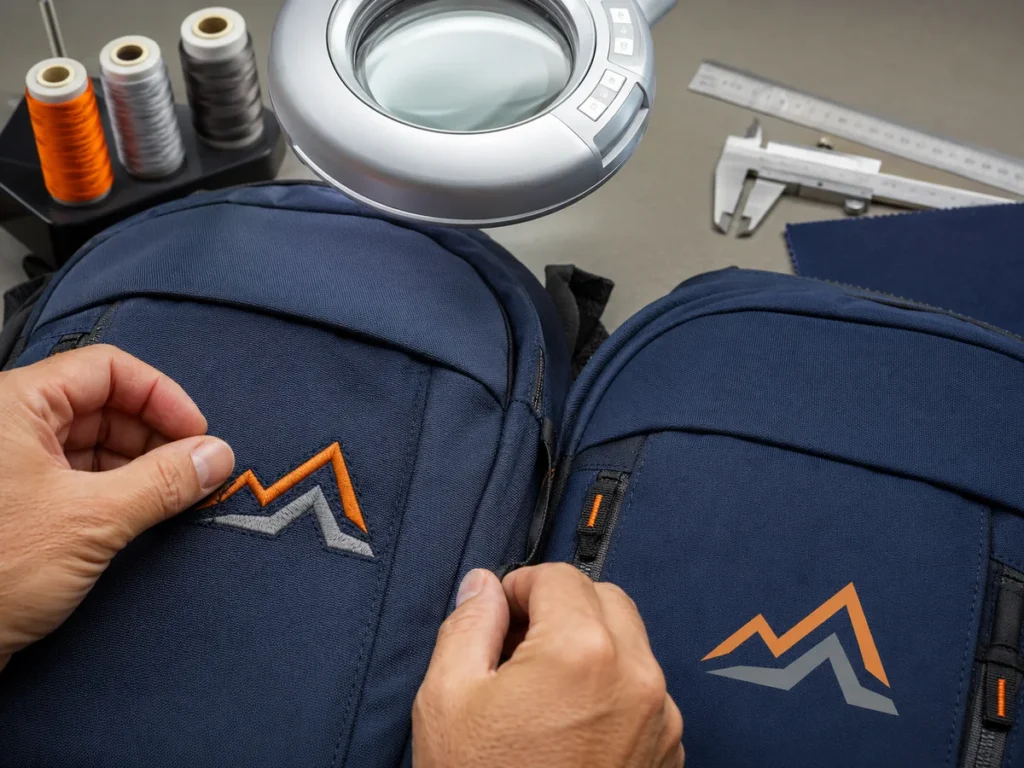
Small lettering and thin lines that look clear in a vector file may not reproduce well at the requested size. Resolve this during sample development, not after bulk decoration has started.
Zippers, Buckles, Webbing, Foam, Labels, and Packaging
Sealing should include every component that influences appearance, function, compliance, or customer experience:
- zipper brand or performance requirement, size, tape color, teeth finish, slider, puller, and opening direction;
- buckle, hook, adjuster, D-ring, snap, or other hardware material, dimensions, color, finish, and function;
- webbing width, thickness, weave, color, hand feel, and tensile requirement if applicable;
- foam type, thickness, firmness, placement, and recovery expectation;
- sewing thread color and visible stitch requirements;
- woven labels, care labels, size labels, country-of-origin marking, hangtags, and barcode placement;
- polybag, tissue, insert, carton, assortment, carton marks, and packing quantity.
The bill of materials should identify these components. Physical trim cards or component samples make the written description easier to apply.
Pre-Production Approval Checklist
A pre-production review should happen after the final sample and commercial terms are confirmed but before bulk cutting, decoration, or assembly proceeds too far. The purpose is to ensure that purchasing, sample development, production, quality, and packing teams are all using the same approved information.
Use the following checklist as a starting point and adapt it to the product and market.
| Approval item | Evidence to confirm | Status options |
|---|---|---|
| Golden Sample | Correct final version held by buyer and supplier | Approved / conditional / open |
| Final quotation | Price reflects approved construction and packaging | Confirmed / revise |
| Tech pack and drawings | Current revision, readable measurements, construction notes | Released / revise |
| Bill of materials | Fabric, lining, trims, thread, foam, labels, packaging identified | Released / open item |
| Bulk fabric | Intended source, construction, color, finish, lot approval route | Approved / submit bulk swatch |
| Color references | Physical masters and viewing method identified | Approved / open |
| Dimensions | Measurement points and order-specific tolerances documented | Approved / open |
| Logo execution | Production method, artwork revision, size, position, colors, strike-off | Approved / open |
| Workmanship | Seams, stitch appearance, reinforcement, thread trimming, cleanliness | Approved / clarify |
| Function | Zippers, buckles, straps, pockets, closures and relevant use checks | Approved / test needed |
| Labels and compliance | Artwork, language, placement, claims and required documentation | Approved / legal review |
| Packaging | Folding, protection, polybag, assortment, carton and markings | Approved / open |
| Inspection plan | Stages, defect definitions, sampling plan, records and release authority | Agreed / open |
| Change control | Named contacts and written approval process for deviations | Agreed / open |
| Delivery plan | Critical dates, inspection window, booking and shipment release | Confirmed / at risk |
Do not allow an unresolved item to disappear inside a meeting note. Give it an owner, deadline, and release condition. If a pending item can affect material purchase or cutting, production should not proceed through that decision point until it is closed.
Never Substitute Materials Without Written Buyer Approval
Material substitution is one of the clearest routes from a good sample to disappointing bulk. A change may begin with a reasonable operational issue: the approved fabric is unavailable, a zipper lead time is longer than expected, a buckle mold has changed, or the original supplier cannot meet the quantity. The problem is not that changes are never necessary. The problem is making a change without assessing and approving its impact.
Your purchase terms should state that no fabric, lining, component, decoration process, construction, label, or packaging substitution may be made without documented buyer approval.
A substitution request should include:
- the original approved item;
- the reason for the proposed change;
- the proposed alternative and its source;
- side-by-side physical samples or clear supporting evidence;
- differences in appearance, composition, dimensions, function, testing, cost, and lead time;
- any effect on claims, labeling, compliance, or customer instructions;
- the supplier’s proposed validation plan;
- the buyer’s explicit approval, rejection, or conditional approval.
Silence should not count as approval. Approval of one substitution should not authorize future substitutions. If the change alters a visible or functional feature, update the bill of materials and consider creating a new controlled sample or amendment reference.
Use Three Inspection Stages, Not One Final Check
Final inspection can identify a problem, but it may be too late to correct an entire lot without delay and rework. A more effective system uses inspection at decision points where action is still possible.
| Inspection stage | Main purpose | Typical comparison points | Buyer decision |
|---|---|---|---|
| First production piece | Confirm production setup before repetition | Materials, color, construction sequence, dimensions, logo, critical function | Continue, correct setup, or hold |
| In-line inspection | Detect drift while work is in progress | Cut parts, seam construction, reinforcement, component use, workmanship, measurements | Correct process, segregate affected work, expand review |
| Pre-shipment inspection | Decide whether the completed lot is ready for release | Finished appearance, function, measurements, assortment, labels, packaging, quantity | Release, rework, sort, reinspect, or hold |
First Production Piece
The first production piece is made with bulk materials and production methods. It is valuable because the approved development sample may have been produced under sample-room conditions. Compare the first piece with the Golden Sample and specification before the same setup is repeated across the lot.
Check the product as a system. A dimension may be within tolerance while the overall silhouette is visibly different. A zipper may function while the opening direction is wrong. A logo may be the correct size but placed relative to the wrong seam. Record the result and any corrections.
In-Line Quality Control
In-line inspection happens while production is underway. The timing and sample selection should reflect the process, risks, order size, previous performance, and contract. Early checks are useful for irreversible or high-repetition operations such as material cutting, logo decoration, pocket positioning, and reinforcement.
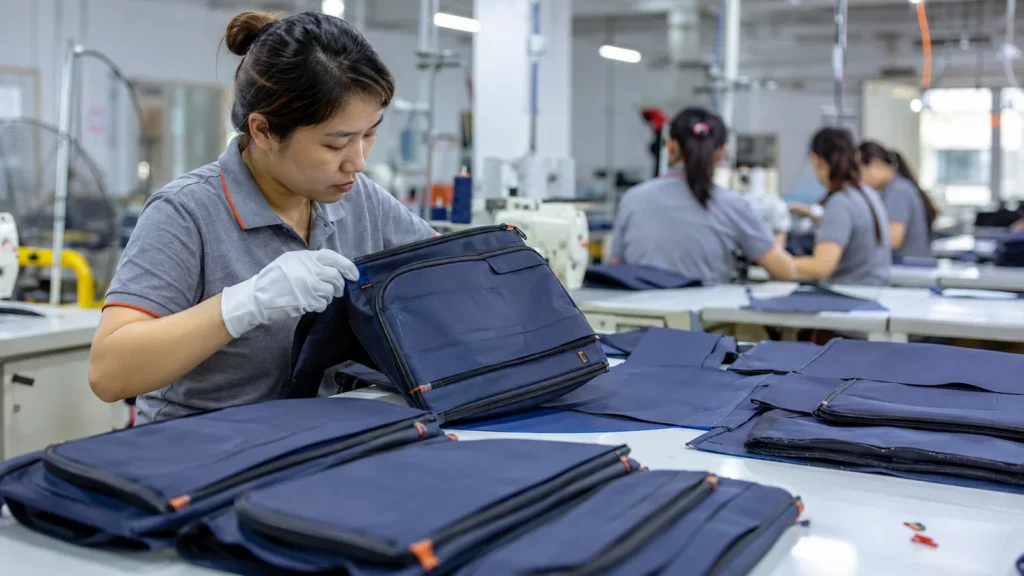
Do not inspect only the neat products placed at the end of a table. Samples should represent different operators, bundles, production times, colors, and sizes where relevant. If a repeated defect is found, identify the affected production range and investigate the cause rather than repairing only the inspected pieces.
Pre-Shipment Inspection
Pre-shipment inspection should occur when the lot is sufficiently complete and packed for a meaningful release decision. The agreed inspection plan should define lot identity, sampling method, defect categories, checks, acceptance criteria, report format, and authority to release shipment.
The current ISO 2859-1:2026 provides AQL-indexed sampling schemes for lot-by-lot inspection by attributes. However, citing the standard does not choose the buyer’s AQL, inspection level, sample size, or acceptance thresholds. Those choices must be documented for the order and should reflect product risk and commercial requirements. See the official ISO overview.
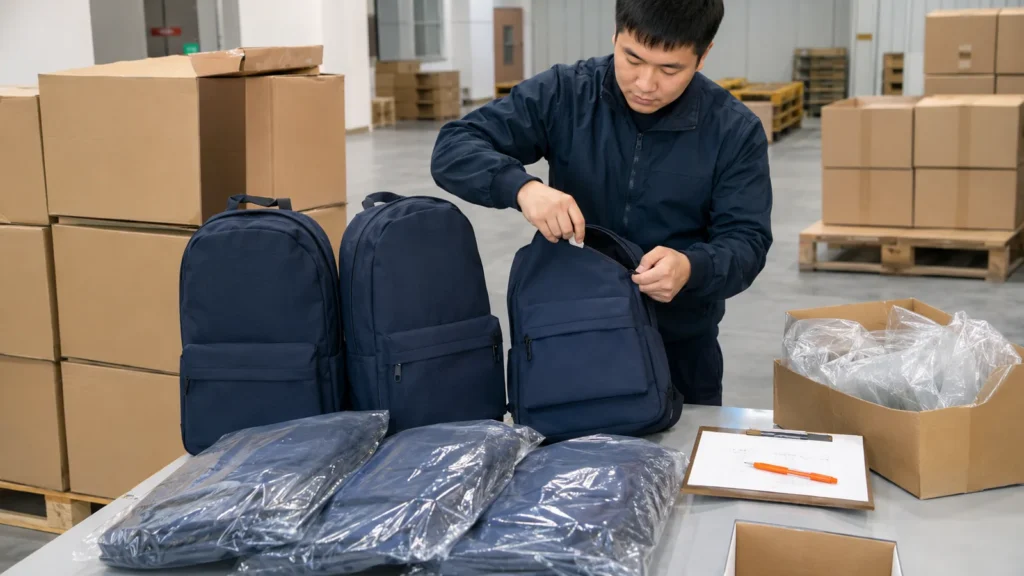
For bags, the final checklist may include identity, color, odor, cleanliness, dimensions, stitch security, reinforcement, zipper operation, buckle engagement, strap adjustment, pocket configuration, logo appearance, labels, barcode placement, accessories, assortment, polybag protection, carton quantity, and carton condition. Product-specific performance or compliance tests should be separately defined.
What Happens When Production Deviates From the Sample?
Not every difference requires rejection, and not every small-looking difference is harmless. The response should depend on function, safety, compliance, customer visibility, quantity affected, ability to rework, and the buyer’s approved tolerance.
| Deviation type | Immediate action | Evidence needed | Possible disposition |
|---|---|---|---|
| Wrong or unapproved material | Stop affected use and segregate inventory | Material identification, quantity affected, comparison sample | Replace, remake, or buyer-approved concession |
| Color outside approved range | Hold cutting or affected products | Side-by-side controlled assessment under agreed conditions | Re-dye if feasible, replace, sort, or concession |
| Dimension outside tolerance | Check measurement method and production range | Measurement records by size/color/time | Adjust process, rework, sort, remake, or concession |
| Logo size, color, or position error | Stop decoration and identify affected units | Artwork revision, placement guide, inspected quantity | Rework, replace panels, sort, or concession |
| Repeated seam or reinforcement defect | Correct method and inspect affected range | Cause analysis and expanded inspection | Repair, remake, reinspect |
| Packaging or assortment error | Hold shipment release | Packing list, carton records, recount | Repack, relabel, recount, reinspect |
Use a documented corrective-action loop:
- contain the affected material or units;
- define the deviation against the approved reference;
- identify when and where it started;
- assess how much production may be affected;
- correct the process, not only the visible defect;
- verify corrected output;
- agree on disposition and commercial impact;
- update records so the issue does not repeat.
Do not ship a known deviation and hope it will be acceptable. Request a written concession when the buyer is willing to accept a controlled difference. The concession should identify the exact issue, affected quantity, order, and one-time decision.
Common Mistakes Startup Brands Should Avoid
Approving From Photos Alone
Photos are useful for fast communication, but they are weak references for color, fabric hand, coating, padding, stiffness, zipper quality, internal construction, and scale. Use physical samples for the features that cannot be reliably judged on screen.
Saying “Same as Sample” Without a Specification
The sample cannot communicate hidden material data, exact measurements, test needs, packaging quantities, or acceptable variation. A buyer who skips the specification makes later disputes harder to resolve.
Mixing Feedback Across Email, Chat, and Calls
When comments are scattered, the sample team may apply one instruction while production follows another. Consolidate final corrections into one revision-controlled approval document.
Approving a Sample Made From Substitute Materials
A shape sample made with available fabric can be useful, but mark its limitations. Do not treat it as approval of color, hand feel, coating, structure, or performance. Require a bulk-material approval step.
Waiting Until the Final Inspection
A final inspection does not prevent repeated defects. Review the first production piece and use in-line inspection to catch problems while correction is still practical.
Choosing an Inspection Plan After Problems Appear
Define inspection scope, defect categories, sampling method, acceptance criteria, and remedies before production. A quality dispute is not the right time to negotiate what “acceptable” means.
Questions to Ask Your Bag Supplier Before Bulk Production
Use these questions during supplier evaluation and pre-production review:
- Which sample version will production use as the Golden Sample?
- Can the buyer and supplier retain matching final samples?
- Is the final quotation based on the exact approved bill of materials?
- Will bulk fabric be from the same approved source or lot?
- How will a new bulk lot be approved before cutting?
- Which dimensions have defined measurement methods and tolerances?
- Will the production logo use the approved method, fabric, artwork, thread or ink?
- How are zipper, buckle, webbing, foam, label, and packaging references controlled?
- Who is authorized to request a substitution, and who must approve it?
- What first-piece and in-line checks will be documented?
- What lot identity, sampling plan, defect classes, and release criteria will be used for final inspection?
- Can the buyer arrange a third-party inspection if required?
- What happens if the inspection finds a repeated defect or unapproved material?
- How are repeat-order references stored and updated?
Clear answers are more valuable than broad promises about “strict QC.” Ask for the actual records and decision points that connect the approved sample to production.
How JIUMU Supports Sample-to-Bulk Consistency
JIUMU supports B2B development for custom team bags, backpacks, apparel, hats, and branded merchandise. Available services include OEM/ODM development, digital mockups, physical samples, fabric sourcing, Pantone color matching, embroidery, sublimation, screen printing, heat transfer, patches, private labels, hangtags, packaging customization, bulk production coordination, quality control, and export support.
For a custom bag inquiry, share the product concept, reference images or tech pack, intended use, dimensions, quantities, colors, logo files, material preferences, labeling, packaging, target market, and required delivery date. These inputs allow the development team to identify open decisions before sample approval.
Explore JIUMU’s Custom Team Bags, Manufacturing Capabilities, and Quality Control pages for related information.
Planning a custom bag order? Send JIUMU your reference image or tech pack, quantity, colors, dimensions, logo files, packaging requirements, target market, and delivery date. Ask for the Golden Sample and pre-production approval steps to be included in the quotation process. contact JIUMU.
Frequently Asked Questions
Final Recommendation
The strongest way to make bulk production match an approved sample is to remove ambiguity before production starts. Keep one controlled Golden Sample. Seal every important material and component. Define measurement methods, tolerances, logo requirements, packaging, and inspection criteria. Prohibit unapproved substitutions. Check the first production piece, inspect during production, and release shipment only against the same approved reference system.
A good supplier relationship still needs documentation. Clear controls protect both sides: the buyer receives a more predictable product, and the supplier receives a practical definition of what to make and how acceptance will be decided.