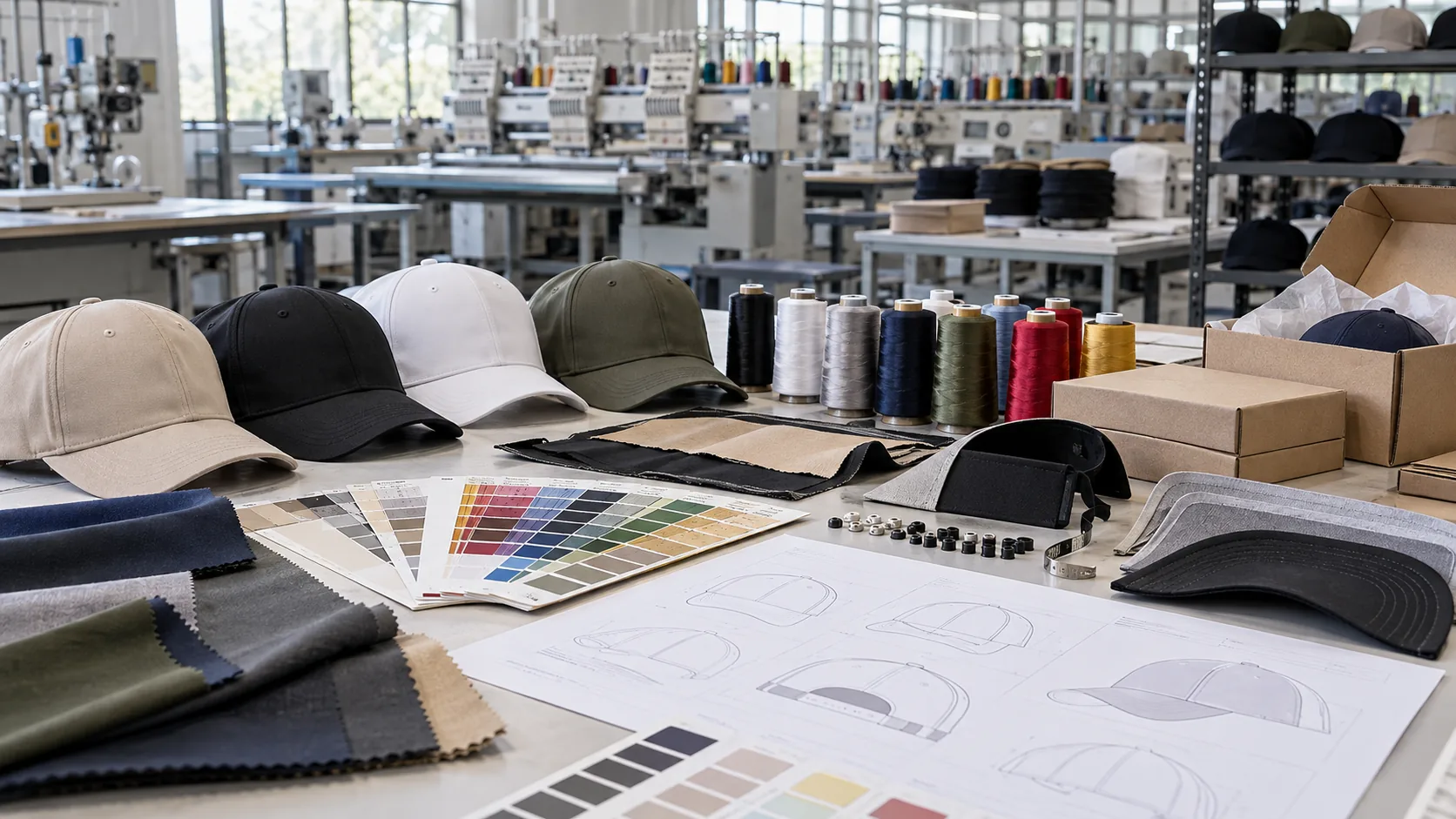
Private Label Hat Manufacturing Process: From Brief to Bulk Order
Short answer: Private label hat manufacturing turns a buyer’s design brief into a repeatable product through specification, material selection, artwork preparation, sampling, approval, bulk production, inspection and shipping. The safest orders use a written tech pack, an approved physical sample and measurable quality standards before production starts.
A successful private label cap program is not simply a matter of placing a logo on a stock hat. Buyers must define the hat structure, fabric, fit, decoration, labeling, packaging and acceptance criteria clearly enough that the same result can be reproduced across hundreds or thousands of units. This guide explains the complete workflow and the decisions that most affect quality, timing and quotation accuracy.
What Is Private Label Hat Manufacturing?
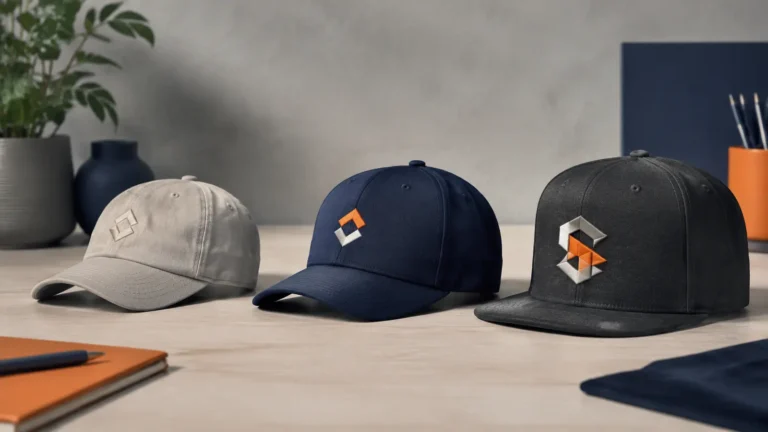
Private label hat manufacturing means a supplier produces hats for sale under the buyer’s brand. The buyer normally controls the product concept, logo, colors, labels and packaging, while the manufacturer develops or adapts the construction and manages production. It differs from buying ready-made blank caps because more elements can be customized and documented for repeat orders.
| Model | Buyer controls | Best for |
|---|---|---|
| Blank cap + decoration | Logo and placement | Fast tests and simple promotions |
| Private label | Branding, materials, colors, trims and packaging | Brands needing a distinctive repeatable product |
| Full custom development | Pattern, fit, construction and all components | Unique silhouettes or technical requirements |
The 9-Step Private Label Hat Manufacturing Process
1. Define the product brief
Start with the intended user, sales market, target positioning, order quantity and required delivery date. Identify whether the product is a structured baseball cap, unstructured dad hat, trucker cap, snapback, bucket hat or another style. Reference photos help communicate direction, but they do not replace specifications.
2. Build the tech pack
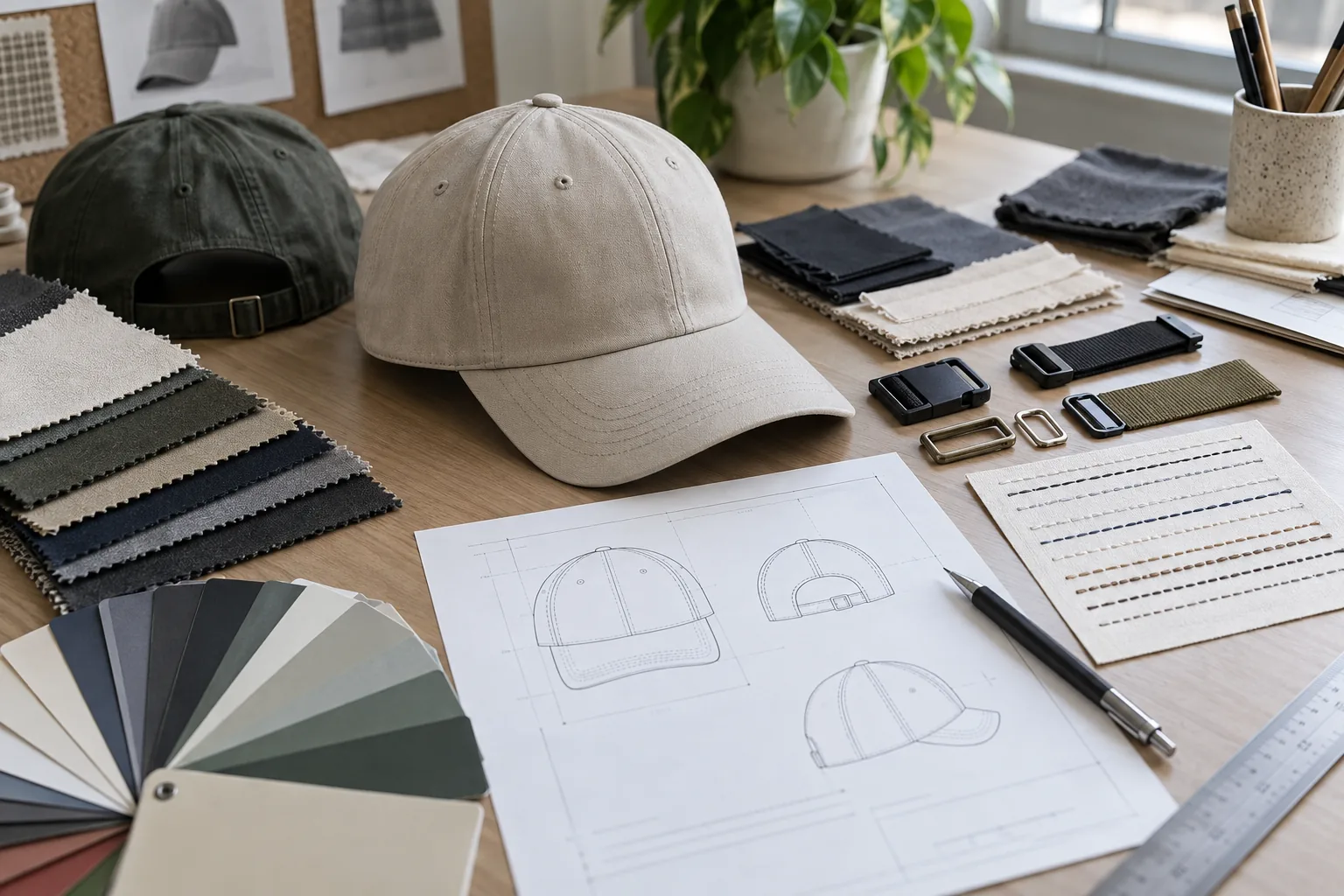
The tech pack should state panel construction, crown height, visor shape, fabric composition and weight, closure, sweatband, eyelets, seam tape, decoration sizes, Pantone references, labels, packaging and measurement tolerances. Give every revision a date or version number so purchasing and production teams refer to the same specification.
3. Select materials and components
Choose fabric according to appearance, climate, durability and care requirements. Common options include cotton twill, polyester, nylon, canvas, corduroy and performance fabrics. Also confirm interfacing, mesh, sweatband, buckle or snap closure, thread colors and any required recycled or certified content. Ask whether quoted materials are standard stock or custom sourced because this affects minimums and lead time.
4. Prepare decoration artwork
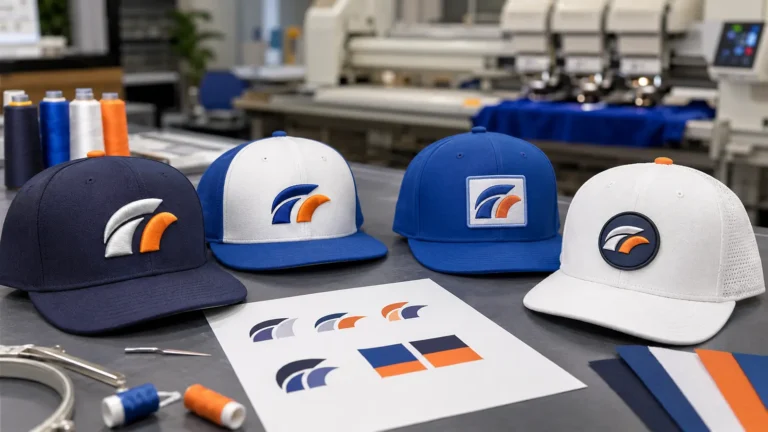
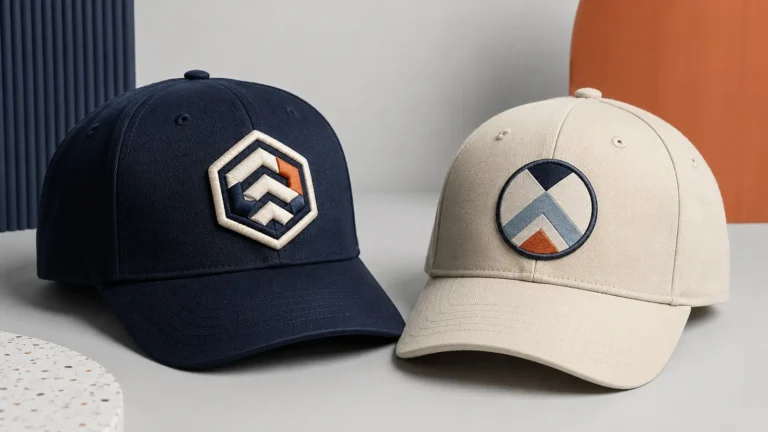
Vector artwork is preferred. The supplier should confirm decoration method, finished dimensions, placement from seams, thread or material colors and backing. Small text, thin lines and gradients may need adjustment. For a method comparison, see our guide to embroidery, PVC and woven patches for bulk hats.
5. Review the quotation
A comparable quotation should identify the exact construction, fabric, decoration, quantity by color, sample fees, packaging, production basis, Incoterm, payment terms and quote validity. Low prices based on missing specifications are not meaningful. Learn more in what drives the cost of custom caps
6. Develop and evaluate samples
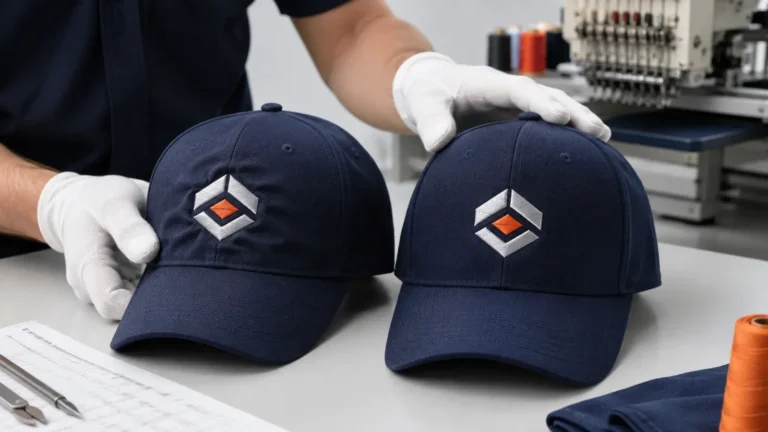
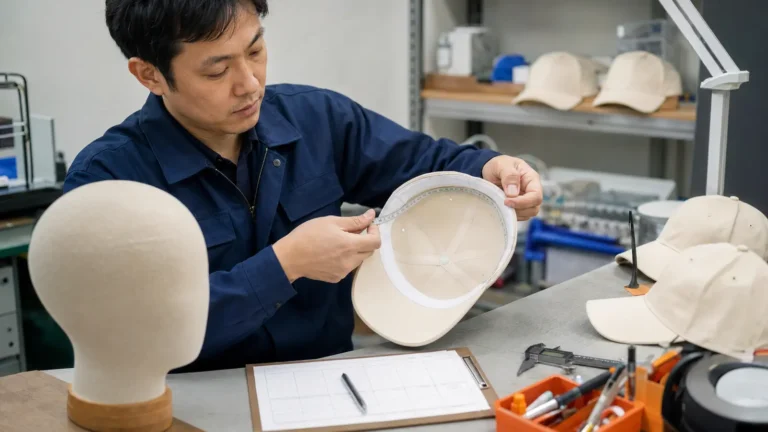
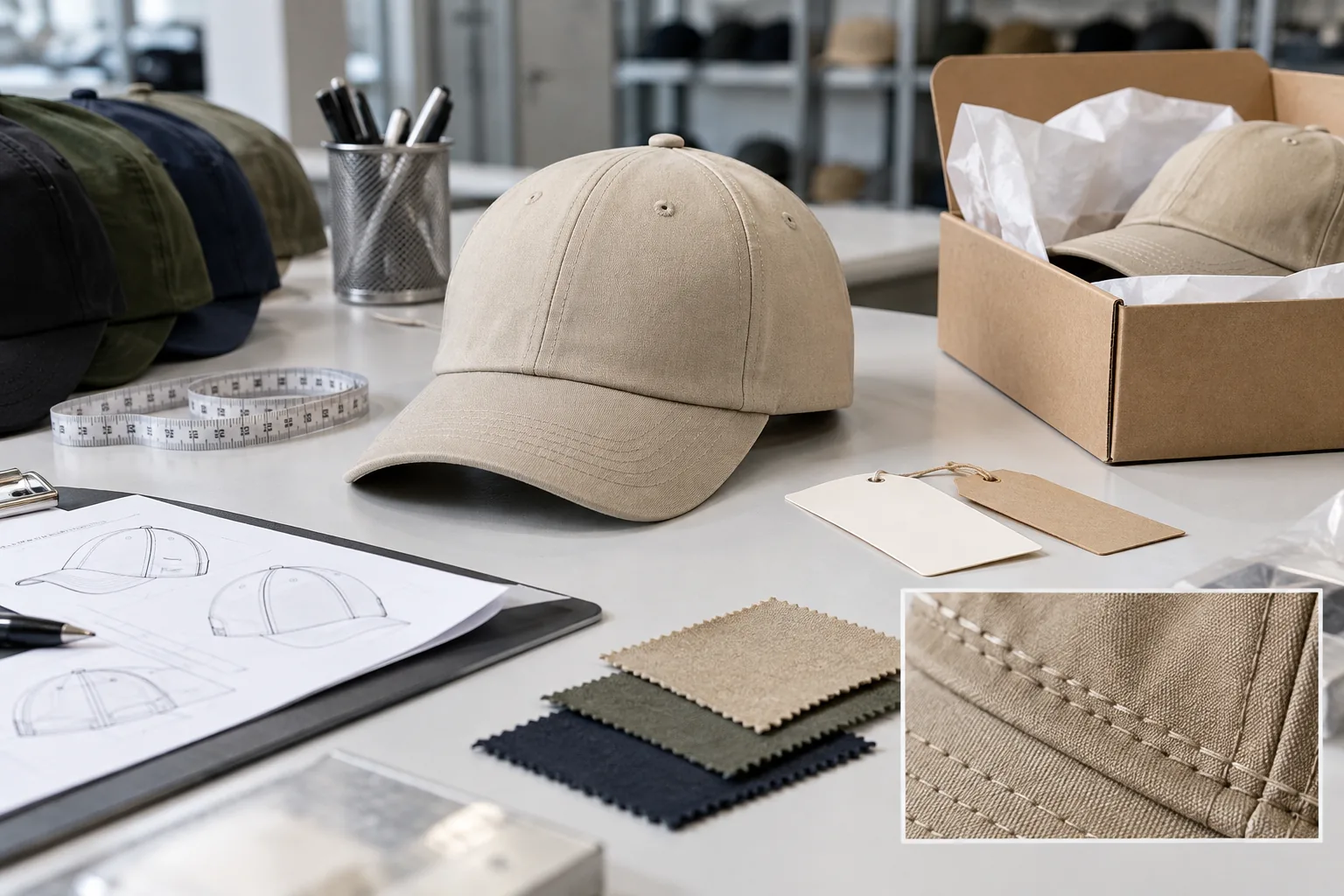
Sampling may include a material swatch, decoration strike-off, fit sample and pre-production sample. Evaluate the physical sample under normal light and, where relevant, on representative users. Measure crown, circumference, visor and closure range; inspect symmetry, stitch tension, logo registration, color and comfort.
7. Approve a sealed pre-production sample
Approval should be written and linked to a specific sample version. Record accepted measurements, materials, colors, decoration, labels and packaging. Keep one approved sample with the buyer and one with the factory when practical. Production should not start while important comments remain open.
8. Bulk production and quality control
Typical operations include fabric inspection, cutting, panel decoration, sewing, visor forming, closure attachment, finishing and packing. Quality checks should occur during production as well as before shipment. Define how measurements are sampled, what counts as a critical, major or minor defect, and what remedy applies if the agreed standard is not met.
9. Pack and ship
Confirm inner packing, carton dimensions, carton markings, assortment, moisture protection and documents before shipment. Caps may require supports or controlled stacking to protect crown and visor shape. Freight choice should be based on shipment volume, deadline and Incoterm rather than unit price alone.
Information to Send for an Accurate Quote
- Hat style and reference images
- Quantity by color and design
- Fabric composition, weight or performance requirement
- Decoration artwork, size, method and placement
- Closure, labels, hangtags and packaging
- Target market and any applicable test requirement
- Required delivery date and destination country or port
- Preferred Incoterm
Common Risks and How Buyers Reduce Them
| Risk | Control |
|---|---|
| Sample and bulk do not match | Seal the approved sample and list measurable tolerances |
| Color varies by material | Approve physical swatches under agreed lighting |
| Logo is distorted on a curved panel | Approve a decoration strike-off on the actual fabric |
| Late changes delay production | Freeze artwork and specifications before material booking |
| Packaging damages the hat shape | Approve the packing method and carton arrangement |
Frequently Asked Questions
What is the MOQ for private label hats?
MOQ depends on construction, material availability, decoration and the number of colors. A standard fabric and common closure may support a lower minimum than custom-dyed fabric or molded components. Ask for the MOQ per design and per color, not only the total order MOQ.
How long does private label hat manufacturing take?
Total lead time includes specification review, material sourcing, sampling, revisions, production, inspection and transportation. The supplier should separate sample lead time from bulk lead time and state when the production clock begins.
Can a manufacturer copy a reference cap exactly?
A reference can communicate fit and construction, but buyers should respect third-party intellectual property and should not assume identical materials are available. Convert the desired features into an original, documented specification and approve a sample.
Request a Private Label Hat Manufacturing Review
If you are preparing a private label cap order, send JIUMU your artwork, quantity, preferred hat style, material direction, destination and required delivery date. We can review the specification, identify missing decisions and prepare a project-based quotation. Contact JIUMU for a custom hat manufacturing review or explore our custom hat options.