
Warning Signs of an Unreliable Clothing Manufacturer
A low quote, fast reply or polished website does not prove that a clothing manufacturer can deliver the product you specified. Reliability becomes visible in how a supplier asks questions, identifies its legal entity, documents materials, develops samples, controls revisions, communicates production status, accepts inspection and explains every charge.
One weak signal is rarely enough to label a company fraudulent. A small factory may use simple documents. A trading company may coordinate capable specialist factories. A legitimate exporter may receive payment through a related entity when the relationship is disclosed and verified. The real danger appears when important inconsistencies cannot be explained, evidence is withheld, pressure replaces documentation, or payment and shipment decisions must be made before the buyer can verify the facts.
This guide helps startups, schools, teams, distributors and first-time importers distinguish a correctable information gap from a reason to pause or stop an order.
Quick Answer
The strongest warning signs of an unreliable clothing manufacturer are an immediate price without enough product information, an unrealistic delivery promise, refusal to identify materials in writing, unverifiable company details, unexplained changes to the bank beneficiary, avoidance of physical samples, poor version control, generic production images, inability to explain quality control, hidden sample or tooling charges, resistance to inspection and long periods of silence after payment.
Do not react to one signal with an accusation. Pause the next irreversible step, request specific evidence, verify it through an independent source, record the answer and decide whether the risk has been resolved. Stop when identity or payment information cannot be verified, documents appear manipulated, inspection is obstructed, or the supplier asks you to ignore a material contradiction.
A Warning Sign Is a Trigger to Verify, Not Automatic Proof of Fraud
Good supplier vetting uses evidence and proportional action. A yellow signal requires clarification. An amber signal should pause payment, sample approval or production until it is resolved. A red signal justifies stopping the transaction and preserving records.
| Risk level | Typical situation | Buyer action |
|---|---|---|
| Yellow: clarify | A quotation lacks one detail; a photo is old; a cost category is not yet finalized | Ask for the missing field, owner and confirmation date |
| Amber: pause | Legal name differs across documents; material remains unspecified; production evidence is repeatedly avoided | Freeze payment or production authorization and conduct independent verification |
| Red: stop | Beneficiary changes without verification; documents appear false; inspection is blocked; supplier becomes unreachable with funds or goods at risk | Stop the transaction, secure evidence and contact the relevant bank, platform, insurer or adviser |
The number, severity and connection of signals matter. A vague quote plus pressure to pay, an inconsistent company identity and refusal to show production is more serious than any one issue alone.
1. The Supplier Quotes Before Understanding the Product
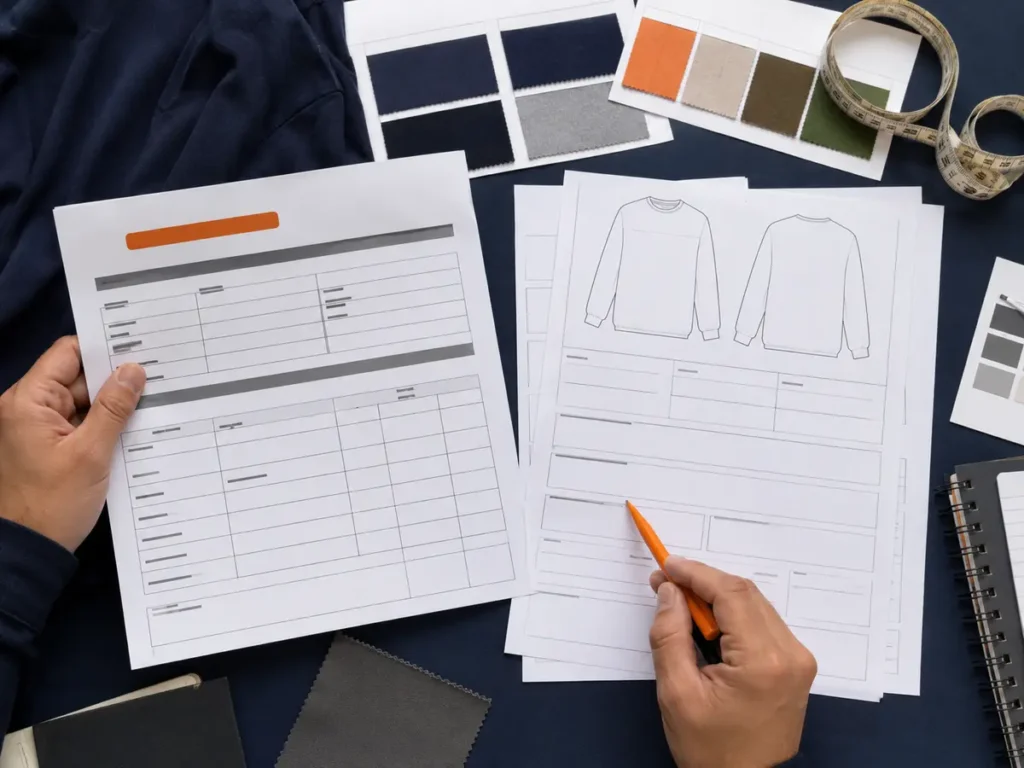
Custom apparel price depends on the actual specification. At minimum, the supplier normally needs the product type, quantity, size range, fabric, construction, color, decoration, labels, packaging, destination and required date. A ballpark range can be useful early, but a firm quote without these inputs is not ready to become a purchase order.
This warning sign often appears as one price for an undefined “custom jersey,” “hoodie” or “cap.” The quote may omit fabric composition and weight, whether printing is sublimation or heat transfer, the number of logo locations, size surcharges, individual names, label type, unit packing, carton requirements, Incoterm and freight scope.
The risk is not only that the first price increases. The supplier may silently interpret the product differently from the buyer. When the sample or bulk order arrives, both parties can claim that their assumption was reasonable because no controlling specification exists.
Ask for an itemized quotation tied to a dated specification version. It should identify included and excluded work, sample terms, setup charges, unit packing, shipping basis and the validity period. Compare suppliers only after normalizing the specification.
2. The Lead-Time Promise Ignores Materials, Approval and Capacity
A reliable schedule explains when time starts and what must happen before shipment. It may include material sourcing, artwork review, sample development, sample delivery, buyer approval, bulk production, inspection, rework, packing and transport. A supplier that promises an exceptionally fast date without checking these dependencies may be guessing or assuming that specifications will be simplified later.
Ask five questions:
- Does the stated lead time begin at deposit, final artwork, material approval or sample approval?
- Are materials in stock, reserved or still to be sourced?
- Does the date include personalization, labels and packaging?
- When will final inspection occur, and is there time for correction?
- Does “delivery” mean factory completion, carrier handover, port arrival or delivery to your address?
A fast plan is not automatically unreliable. Available stock material, an approved repeat design or allocated capacity can shorten a schedule. The evidence is a milestone plan that matches the exact order—not confidence alone.
3. The Supplier Discourages a Meaningful Sample
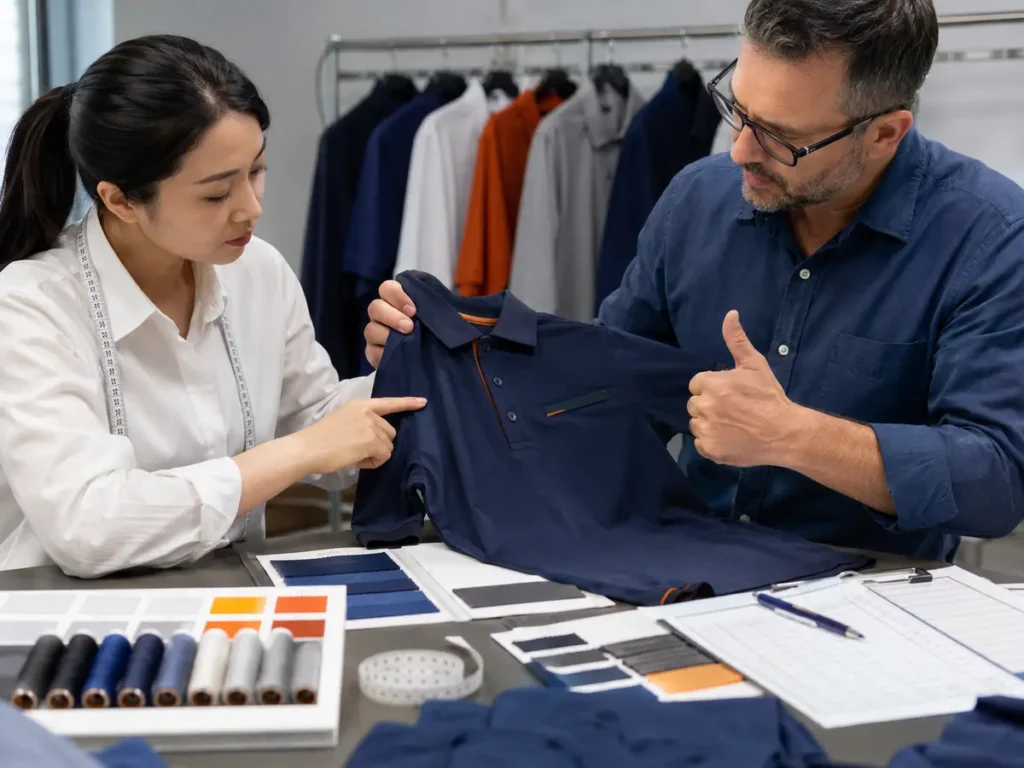
Sampling reduces uncertainty about material, color, fit, measurements, construction, decoration, labels and packaging. A digital mockup can confirm artwork direction, but it cannot prove fabric hand feel, seam quality, print behavior, embroidery distortion or finished fit.
Not every repeat order requires a new couriered sample, and buyers sometimes choose a factory-retained pre-production sample to save time. The warning sign is a supplier that refuses to make an appropriate sample, discourages physical review without explaining the risk, or begins bulk production before the agreed approval gate.
Clarify what the sample represents. A prototype made with substitute fabric may confirm construction but not final color or performance. A photo sample may confirm appearance but not fit. A size-set sample may confirm grading. A pre-production sample should represent production-intent materials and workmanship as closely as agreed.
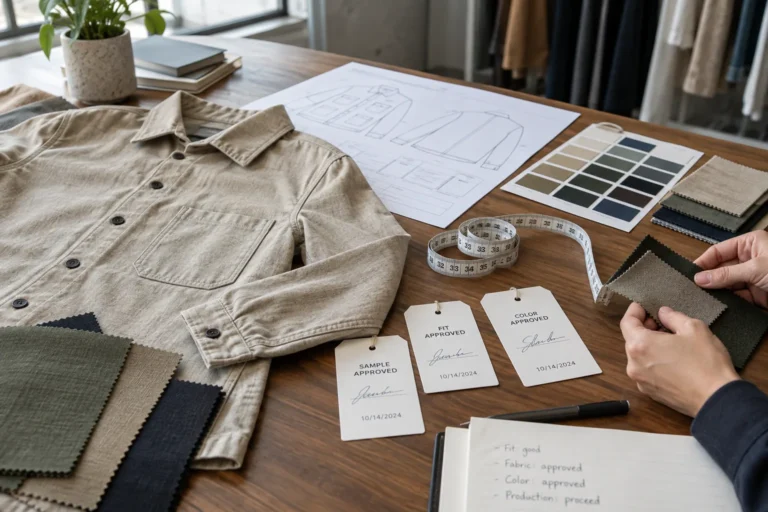
The sample approval record should include its identifier, date, approved elements, unresolved exceptions and any written corrections. If the factory retains the approved reference, require it to be linked to the same order and specification version.
4. Materials Are Described Only With Generic Words
“Polyester,” “premium cotton,” “mesh” and “waterproof fabric” are not complete material specifications. Fabrics with the same fiber name can differ in weight, knit or weave, yarn, stretch, finish, coating, shade, shrinkage and performance.
An unreliable process leaves the material as a chat message or reference photo and allows the factory to choose whatever fits the target price. A dependable process records measurable or traceable attributes: composition, nominal weight, construction, supplier article or approved swatch, color standard, finish, performance requirement and permitted tolerance. Trims and components need similar control.
Substitution should not be treated as automatically improper. Material availability can change. The control is that the supplier discloses the proposed substitute, explains the effect on price and timing, provides appropriate evidence or a physical sample, and obtains written buyer approval before use.
If the supplier refuses to name the material after receiving an order, says all alternatives are “the same,” or changes the fabric without written approval, pause production.
5. The Legal Entity Cannot Be Verified
A website name or English trading name may not be the legal name of a Chinese company. The buyer should request the Chinese company name and Unified Social Credit Code, then compare the business license with the contract, invoice and public registration record.
China’s National Enterprise Credit Information Publicity System allows searches using a company name, Unified Social Credit Code or registration number and includes categories such as enterprise information, abnormal operations and serious violations. The system is evidence of registration status and public records; it is not proof that the company has the exact production capability claimed.
Check at least:
- complete Chinese legal name;
- Unified Social Credit Code;
- registration status;
- legal representative;
- establishment date;
- registered address;
- business scope;
- relevant change records;
- abnormal-operation or serious-illegality records where displayed.
The legal name on the contract should be explainable against the license. The invoice issuer and payment beneficiary also need a documented relationship to the contracting party. A mismatch may have a legitimate explanation—for example, an affiliated export company—but “our finance team uses another account” is not sufficient by itself.
Use JIUMU’s planned Business License Verification guide for a field-by-field process once that page is confirmed live.

6. The Payment Beneficiary Changes Unexpectedly
An unexpected request to change a bank account, beneficiary, country, currency or payment procedure is a high-priority verification event. It can arise from a legitimate corporate change, but it is also a known business-email-compromise pattern.
The FBI advises businesses to verify changes in account numbers or payment procedures with the person making the request and to use independently known contact information rather than contact details supplied in the suspicious message. Slightly altered email domains, unusual urgency and requests to bypass normal approval are additional warning signs.
Use a written bank-change procedure:
- Pause the transfer.
- Compare the sender address and domain with earlier correspondence.
- Call a previously verified contact using a number already on file.
- Require formal documentation showing the beneficiary relationship.
- Obtain a second internal approval.
- Record who verified the change, when and through which channel.
- Consider a controlled test or bank verification when appropriate to the transaction.
Do not rely only on the same email thread that announced the change. A compromised mailbox can contain genuine historical messages and order details.

7. The Supplier Shows Only Generic Product Images
Portfolio images can help communicate style, but they do not establish who made the product. Warning signs include identical images found on unrelated websites, inconsistent backgrounds or factory settings, refusal to provide current evidence, and inability to explain how the shown item was constructed.
Ask for evidence proportionate to the order:
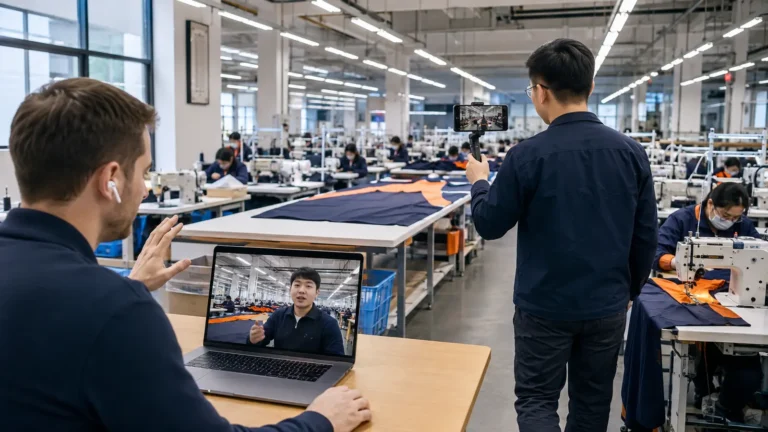
- a live video call from the stated location;
- the exterior or address context when appropriate;
- sample room, material area and relevant production processes;
- a current date cue or buyer-provided nonconfidential reference;
- the actual sample being measured or inspected;
- production photos tied to the order number without exposing another buyer’s IP;
- an explanation of which processes are in-house and which are subcontracted.
Prerecorded video is marketing evidence, not proof of a live capability on a particular date. A factory should also protect other customers’ designs and personal data, so reasonable restrictions on filming are not automatically suspicious.

8. Nobody Can Explain the Quality-Control System
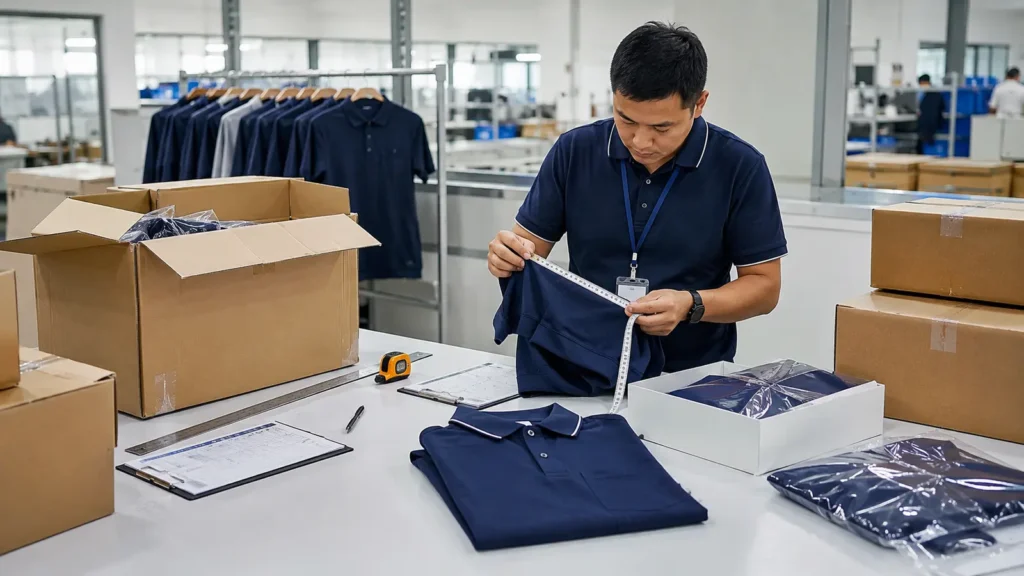
“We check quality” is not a quality plan. A capable supplier should be able to explain what is checked, against which reference, at what stage, by whom, using which method, how findings are recorded and what happens to nonconforming goods.
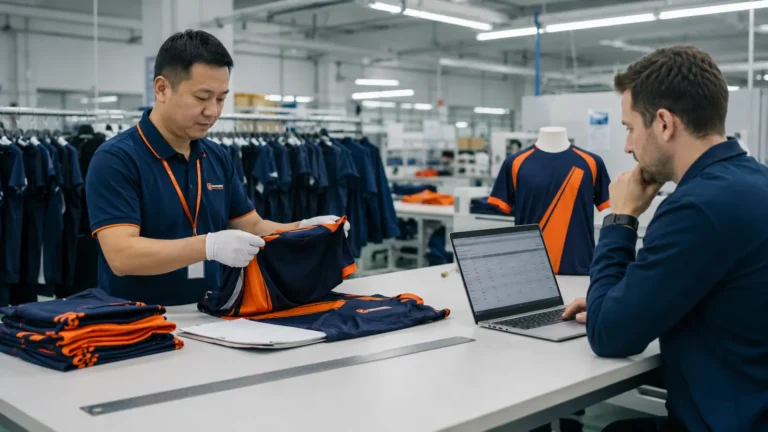
For custom apparel, quality control can include incoming material checks, first-piece approval, inline checks, finished measurements, decoration placement, workmanship, labels, personalization, packaging, carton assortment and final random inspection. The exact plan depends on product risk and buyer requirements.
Ask the supplier to walk through a defect example. If a logo is misplaced or a garment is outside tolerance, how is the affected scope identified? Are units isolated? Who authorizes rework? Is the corrected quantity reinspected? Who releases the shipment?
A polished quality manual is not enough if the team cannot connect it to your order. Conversely, a small supplier may use simple forms but still demonstrate clear standards, traceable records and effective corrective action.
Review JIUMU’s Quality Control process for the checkpoints a buyer can discuss before production.
9. Specifications Are Scattered Across Chat Threads
Messaging tools are useful for questions and fast decisions. They are dangerous as the only production record. A color change may appear in one message, the size chart in another attachment and a revised logo in a personal email. Production then uses the wrong file because no one knows which instruction controls.
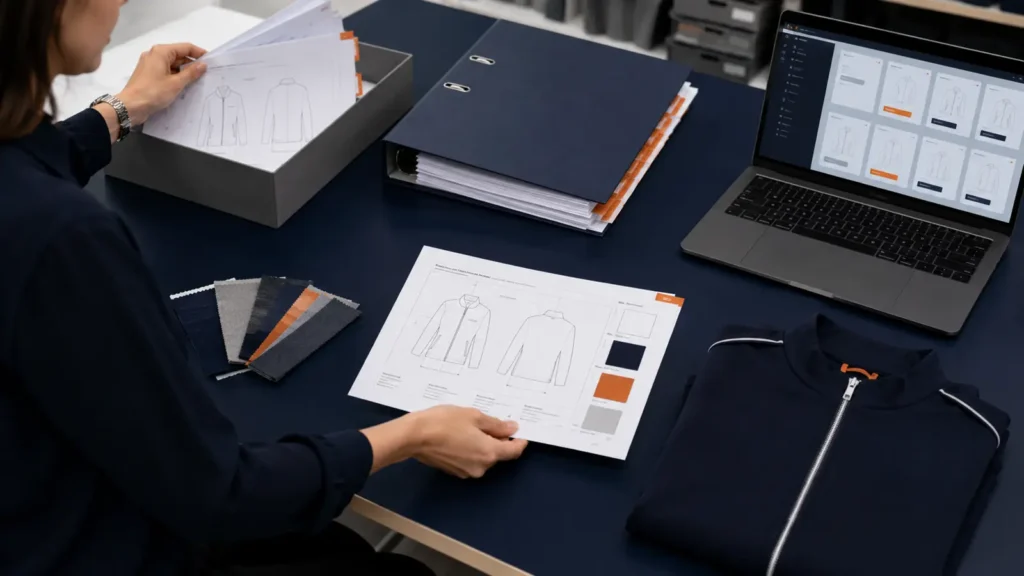
Require one master specification package with an active version. It should connect the purchase order, tech pack, bill of materials, artwork, measurement chart, roster, labels, packing instruction and sample approval. Each revision should state what changed, who approved it and whether price or timing changed.
After an important call or chat, send a structured summary and ask the supplier to acknowledge it. Do not overwrite an approved file silently. Archive obsolete versions and mark them clearly so they cannot return to production.
10. Sample, Tooling, Packaging and Freight Costs Are Not Transparent
Custom orders can include legitimate charges beyond the unit price: sample labor, courier, custom dyeing, embroidery digitizing, print screens, molds, patch tooling, woven labels, special packaging, testing, inspection, export handling and freight. The warning sign is not the existence of these costs. It is discovering them only after the buyer is commercially committed or being unable to determine what is refundable, reusable or buyer-owned.
Before paying, request a cost schedule with:
| Cost category | Questions to confirm |
|---|---|
| Sample | What sample type, quantity, materials and courier are included? Is any amount credited after bulk order? |
| Tooling and setup | What is being created, who owns it, how long is it retained and what triggers a new fee? |
| Labels and packaging | Are setup, printing, minimum quantity and unused inventory included? |
| Testing and inspection | Who appoints the provider, who pays, and what happens after failure? |
| Freight | Which Incoterm, route, chargeable weight, destination charges and validity period apply? |
| Changes | Which revisions create new sample, material, tooling or schedule costs? |
Do not assume “free sample” means free delivery or production-intent materials. Do not assume “shipping included” means duties, taxes, customs and final delivery are included. Require the scope in writing.
11. The Supplier Refuses Reasonable Inspection
Inspection should be agreed before production, including timing, scope, reference documents, access, sampling plan, reporting, correction, reinspection and shipment release. A supplier may reasonably protect trade secrets, worker privacy and other customers’ property. It may also require notice and safe-site rules. Those controls differ from refusing inspection without a defensible reason.
Intertek describes textile and apparel inspection at pre-production, during-production and before-delivery stages. Third-party inspection does not guarantee every unit or replace factory quality control, but it gives the buyer independent evidence at a defined point.
Warning signs include delaying access until goods have shipped, selecting only “inspection samples” outside the lot, refusing carton selection, preventing comparison with the approved sample, or pressuring the buyer to release shipment before the report is reviewed.
If inspection fails, the agreement should define isolation, corrective action, additional inspection and final authorization. Payment terms can be linked to an agreed milestone, but buyers should obtain legal and financial advice appropriate to their transaction.
12. Communication Stops After Payment or During Production
Production work does not require daily marketing-style updates, and short response gaps can be normal. The risk is a material change in behavior: named contacts disappear, repeated milestone requests receive no answer, promised evidence never arrives, phone or video contact is refused, or the supplier only responds when asking for more money.
Set the communication plan before the deposit. Define the project owner, backup contact, update frequency, milestone evidence and escalation channel. Useful evidence might include material receipt, first-piece approval, inline status, quantity completion, packing and final inspection—not hundreds of unstructured photos.
When communication fails, document each attempt, stop approving new spending, use alternative verified contacts and assess payment, platform, insurance and legal options promptly. Do not send additional funds solely because someone claims they are needed to “unlock” an already unexplained delay.
Is the Lowest Clothing-Manufacturer Quote the Best?
Not unless the scope and risk are equivalent. A lower unit price can reflect efficient production, available material, lower overhead or a strategic order. It can also exclude important items or assume a lower specification.
Normalize the quote before comparison:
| Comparison field | Supplier A | Supplier B | Supplier C |
|---|---|---|---|
| Product and specification version | Confirm | Confirm | Confirm |
| Fabric composition, weight and construction | Confirm | Confirm | Confirm |
| Decoration and logo locations | Confirm | Confirm | Confirm |
| Sizes, grading and personalization | Confirm | Confirm | Confirm |
| Labels and unit packaging | Confirm | Confirm | Confirm |
| Sample, setup and tooling | Confirm | Confirm | Confirm |
| Inspection and testing | Confirm | Confirm | Confirm |
| Incoterm and freight scope | Confirm | Confirm | Confirm |
| Payment schedule | Confirm | Confirm | Confirm |
| Corrective-action responsibility | Confirm | Confirm | Confirm |
Then consider total landed cost, inventory exposure, replacement risk, delay consequences and management time. The cheapest quote can be the best only after it survives the same verification as the others.
A Seven-Step Manufacturer Verification Process
Step 1: Define the product before judging the quote
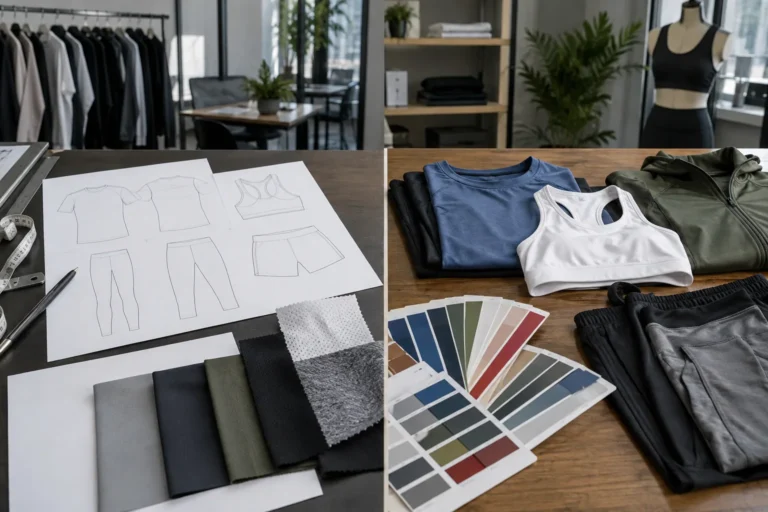
Prepare a concise request for quotation containing product type, quantity, fabric target, sizes, decoration, labels, packaging, destination and required date. Note what remains open.
Step 2: Verify the contracting entity
Collect the business license and Chinese legal name. Search the official registration system. Compare the contract, invoice and beneficiary relationship. Record discrepancies and explanations.
Step 3: Verify relevant capability
Ask the supplier to explain the production route for your exact product. Confirm which processes are internal and external. Use live video, current samples and process evidence where proportional.
Step 4: Develop and approve the right sample
Define what the sample proves. Measure it, inspect materials and workmanship, test relevant functions and record every approved exception.
Step 5: Lock documents and commercial terms
Approve one version of the specification, quotation, purchase order, agreement, artwork and packing instructions. State substitution rules, costs, timing and change control.
Step 6: Monitor production with milestone evidence
Use incoming-material, first-piece and inline checkpoints based on risk. Escalate missed dates early instead of waiting for final packing.
Step 7: Inspect and authorize release
Conduct internal or independent inspection against the approved documents and sample. Resolve findings, reinspect when required and record who authorized shipment.
For a broader vetting sequence, link this article to JIUMU’s planned Manufacturer Vetting guide after confirming that page is live.
Documents to Request Before a Custom Apparel Deposit
The correct package varies by order, country and payment method. A practical baseline is:
- supplier’s complete legal name and business license;
- Unified Social Credit Code and official registry result;
- quotation tied to a specification version;
- purchase order or manufacturing agreement;
- bank-beneficiary information and relationship to the contracting entity;
- sample scope, fee, delivery and approval rule;
- bill of materials or agreed material description;
- measurement chart, artwork and packaging specification;
- production milestones and communication plan;
- inspection rights, defect handling and shipment release rule;
- Incoterm and freight responsibility;
- invoice and deposit terms.
Documents do not eliminate risk. They create references that can be verified and used to control the order. For high-value or legally sensitive transactions, use qualified legal, financial, insurance and compliance professionals.
What Buyers Should Send for a Reliable Quotation
Send suppliers the same structured brief so their responses can be compared:
- product category and intended market;
- quantity by style, color and size;
- reference image, sketch or tech pack;
- fabric composition, weight, construction or performance target;
- color standard;
- decoration method, artwork and placement dimensions;
- fit, finished measurements and tolerance;
- labels, hangtags, barcodes and packaging;
- testing, compliance and inspection requirements;
- delivery destination and target arrival date;
- preferred Incoterm and shipping assumptions;
- sample requirement and decision deadline.
Need an order-specific feasibility review? Send JIUMU your product brief, quantity, artwork, materials, packaging and required arrival date. The team can identify missing specifications before sampling or production begins.
How JIUMU Supports Verifiable Order Control
JIUMU is a Guangdong-based B2B custom teamwear, logo apparel, hat, uniform and bag supplier established in 2010. Relevant capabilities include OEM and ODM development, fabric sourcing, Pantone color coordination, embroidery, sublimation, screen printing, heat transfer, patches, private labels, packaging, digital mockups, physical samples, bulk quality control and export support.
Buyers can review Company Facts and the visible Quality Control process, then request order-specific evidence and terms. Typical MOQ is 50 pieces, subject to product structure and customization. Actual sample, production, inspection and shipping arrangements must be confirmed for the exact order.
Frequently Asked Questions
Final Recommendation
Choose a clothing manufacturer by the quality of its evidence and controls, not by confidence, speed or price alone. A reliable supplier does not need to be perfect or large. It needs to identify who is contracting, define what will be made, disclose how it will be made, document changes, support appropriate sampling and inspection, communicate material problems and keep payment instructions verifiable.
Use the warning signs as decision gates. Clarify yellow issues, pause on amber contradictions and stop when identity, payment, documents or inspection cannot be trusted. This protects the buyer without making unsupported accusations against legitimate suppliers.
Planning a custom apparel, teamwear, hat or bag order?
Contact Us with your product specification, quantity, artwork, packaging and required arrival date for a structured feasibility and quotation review.