Structured vs Unstructured Hats for Custom Logos
The best cap for a custom logo is not determined by style name. Caps can share six panels yet differ in front support, profile, fabric, fit, and decoration response. For a buyer, the question is which construction will present the logo consistently, suit the wearer, and survive packing and repeat production.
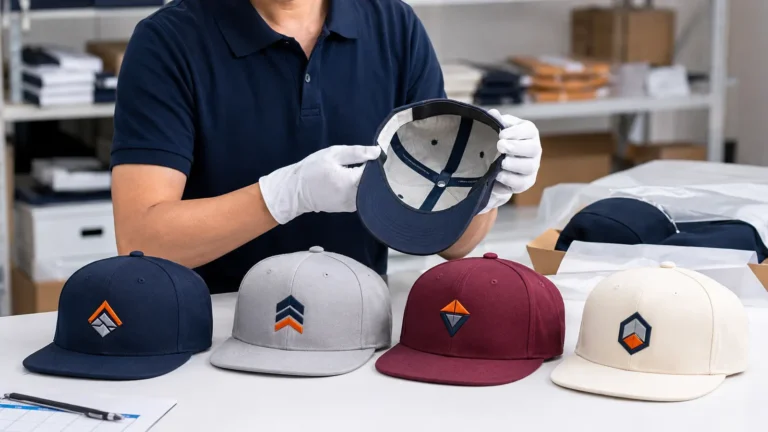
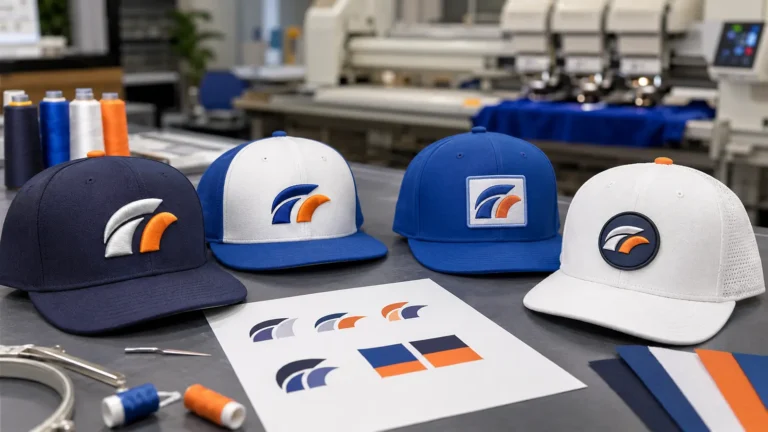
Quick answer: A structured hat is usually the safer starting point for a large, dense, or raised front logo because reinforced front panels help the crown stay upright. An unstructured hat is usually better when the brief calls for a soft, relaxed silhouette and the logo can use lighter flat embroidery or a flexible patch. Neither construction is universally superior. Select the cap, artwork, decoration method, and packing specification as one system, then approve a physical sample.
Structured vs unstructured hats at a glance
| Buying factor | Structured hat | Unstructured hat |
|---|---|---|
| Front construction | Front panels contain firm reinforcement such as buckram or fused support | Front panels have little or no firm reinforcement and follow the head |
| Empty-crown appearance | Usually stays upright and presents a defined silhouette | Commonly collapses or folds when not worn |
| Large front logo | Stable starting point for broad or dense designs | Possible, but weight and stitch density can pull on a soft crown |
| Flat embroidery | Well suited to bold and detailed work within normal embroidery limits | Well suited to small or moderate, lighter designs with correct backing |
| 3D puff | Usually the safer default because the surface is more stable | Possible only on suitable fabric and artwork after sampling; not the default |
| Patch | Supports many patch types, including firmer or heavier constructions | Flexible, lightweight patches usually preserve the relaxed hand better |
| Wearing character | Crisp, uniform, athletic, promotional, or streetwear presentation | Relaxed, broken-in, lifestyle, hospitality, or casual presentation |
| Shape in transit | Needs crown protection so the defined shape is not crushed | Easier to nest, but hard creases and decoration distortion still need control |
| Typical associations | Many snapbacks, trucker caps, team and uniform caps | Many dad hats, washed cotton caps, and low-profile lifestyle caps |
| Best approval method | Physical cap sample plus packing test | Physical cap sample on a wearer plus recovery and packing check |
The table describes common tendencies, not naming rules. A supplier may offer an unstructured snapback, a structured low-profile cap, or a trucker with a soft front. Confirm the technical construction of the exact style rather than buying from the product name.
What is a structured hat?
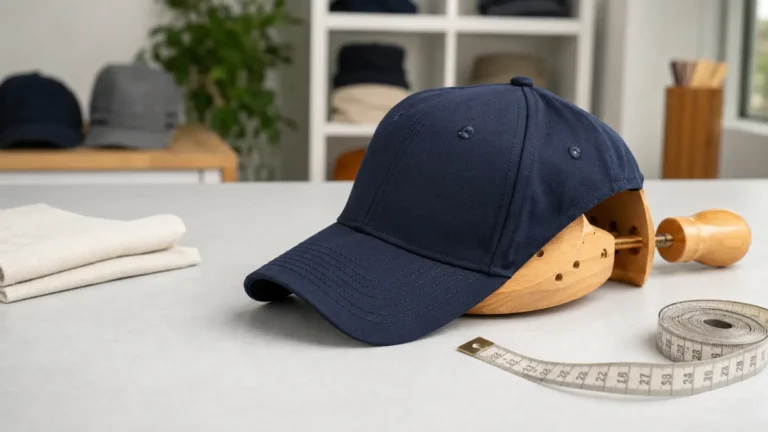
A structured hat has reinforcement behind its front panels. Depending on the cap, that support may be buckram, fused fabric, foam, or another stabilizing layer. It allows the front of the crown to stand away from the wearer’s forehead and retain a defined shape when the cap is displayed.
The support provides a more predictable decoration surface. It does not make every logo automatically sewable, and it does not remove the curve, panel seams, sweatband, visor, or hooping limits of a finished cap. It simply gives the front greater resistance to collapse and deformation.
Official Flexfit specifications illustrate the construction. Its structured sport, trucker, and on-field models list hard buckram and a structured crown. The company also describes a five-panel UniPanel model as providing an uninterrupted front canvas, showing why front-panel layout matters alongside support.
Structure is not the same as crown profile
“Structured” describes front support. “Low,” “mid,” and “high profile” describe crown height and silhouette. The two attributes interact but are not interchangeable. A cap can have a low crown and still contain front reinforcement; another can have a taller relaxed crown without firm buckram.
Panel count is separate too. Five-panel and six-panel caps can be structured or unstructured. A six-panel cap normally places a vertical seam through the center front, while many five-panel constructions provide a single front panel. The absence of a center seam can help a wide wordmark or patch, but the panel’s slope, crown height, and usable decoration field still have to fit the artwork.
Closure is also independent. Snapback, buckle, hook-and-loop, fitted, and stretch-fit describe adjustment or fit systems, not the front structure. Put each attribute on the product specification so that “structured snapback” cannot be mistaken for a generic snapback.
What is an unstructured hat?
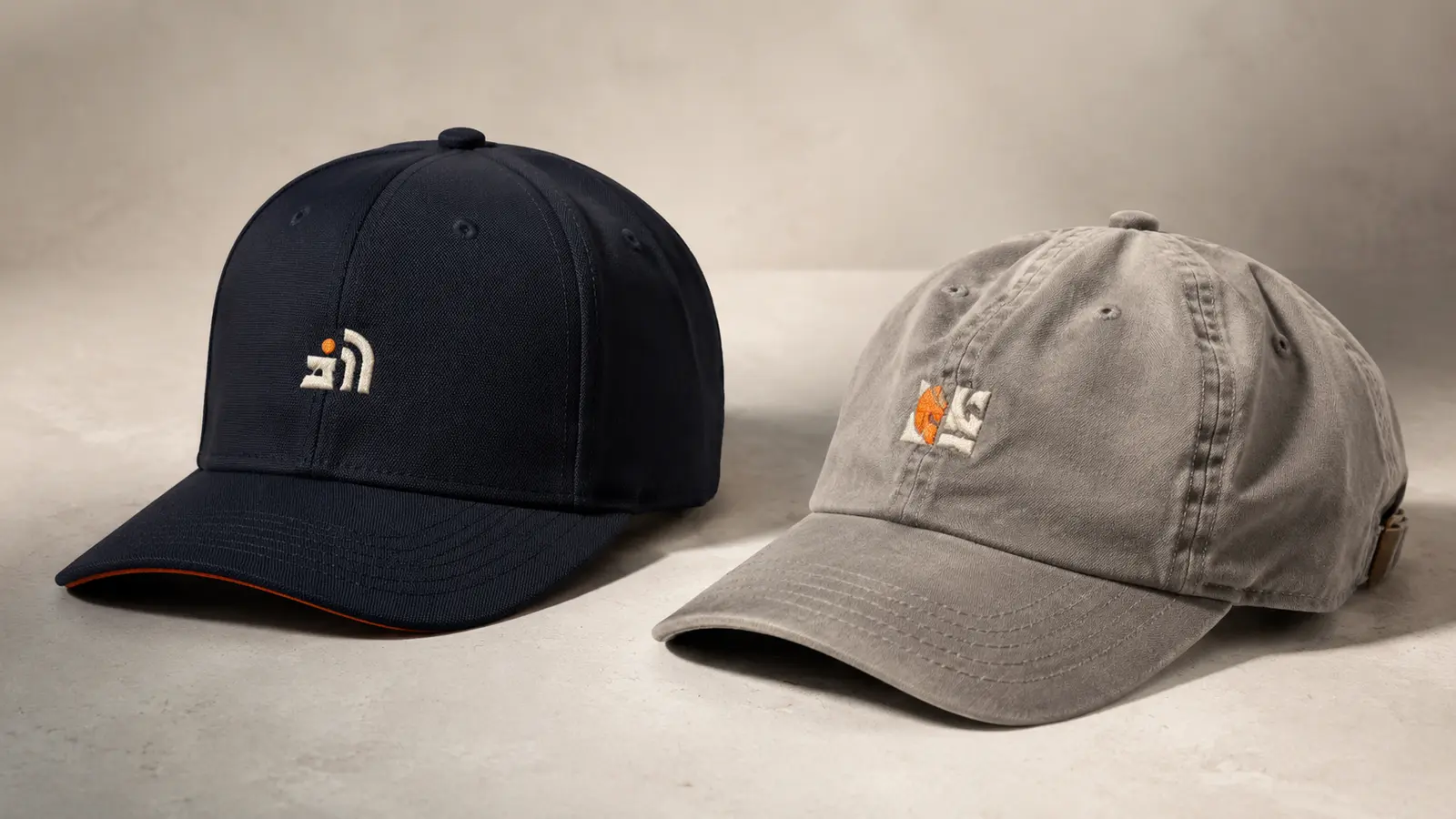
An unstructured hat has little or no firm reinforcement in the front panels. The crown conforms more closely to the wearer’s head and often collapses when placed on a table. Washed cotton dad hats commonly use this construction because the soft crown, curved visor, and low-profile fit create a relaxed, already-worn character.
Unstructured does not mean unfinished or low quality. It is an intentional product choice. Fabric weight, seam construction, panel shape, internal tape, sweatband, stitching, and washing all influence how cleanly the cap drapes. A premium soft cap can require as much development as a crisp uniform cap.
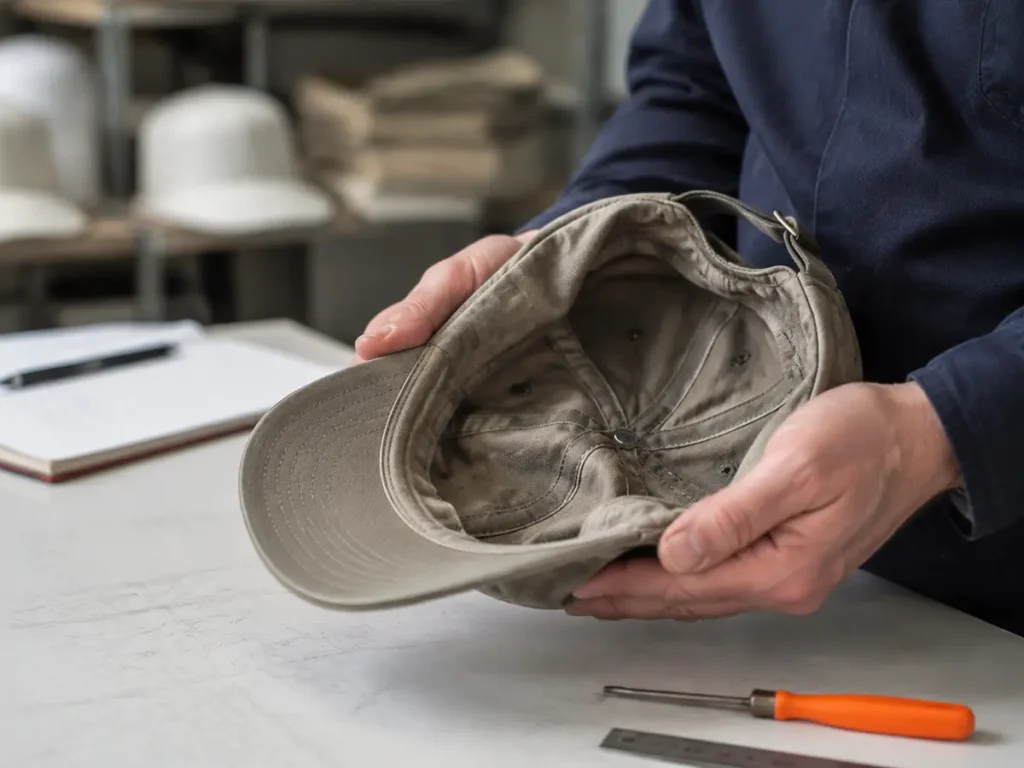
The softer front needs careful control during embroidery. Melco’s cap-embroidery guidance recommends backing for both structures and specifically calls for more backing on an unstructured cap than on a structured one. Madeira likewise offers cap backing intended to maintain tension on structured and non-structured caps. The production team still needs the right hooping, sewing sequence, digitizing, needle, backing, and machine settings for the selected fabric.
Which structure is best for embroidery?
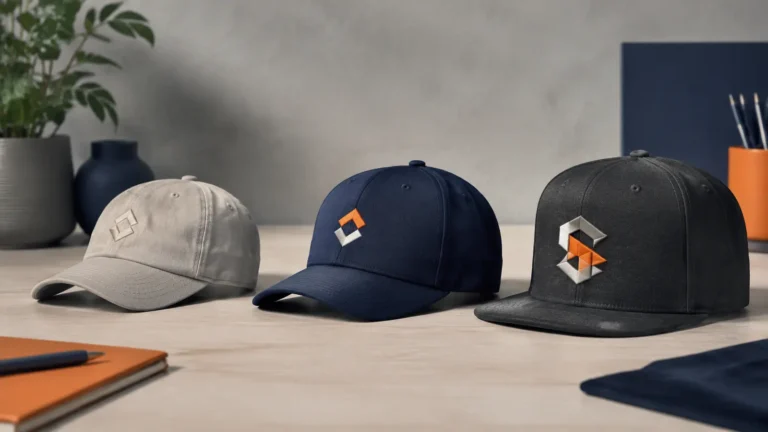
For a large or stitch-heavy front logo, structured is normally the better starting point. The reinforced panels resist the pull of dense fills and broad satin columns, keep the decorated surface upright, and help multiple finished caps present a consistent retail silhouette. That is valuable for team crests, corporate uniforms, bold promotional marks, and designs intended to be seen from a distance.
For a small, light, or intentionally understated logo, either structure may work. Unstructured hats can produce excellent flat embroidery when the artwork is appropriately digitized and the crown is supported during sewing. They are often chosen because the brand wants the soft cap aesthetic, not because embroidery is absent.
Do not reduce the decision to “structured equals good embroidery.” Check the complete system:
- Fabric: cotton twill, washed cotton, performance polyester, wool blend, corduroy, and mesh-backed constructions react differently.
- Front support: reinforcement type and stiffness determine how the crown handles density.
- Panel layout: a center seam can interrupt a narrow line or letter; a single front panel can offer a cleaner field.
- Logo geometry: wide satin columns, tiny counters, long thin outlines, and large solid fills create different risks.
- Stitch count and density: a dense design can make a soft cap pucker and can also make a structured cap hard or inflexible.
- Backing and underlay: these control the fabric but should be engineered, not added indiscriminately.
- Hooping and sewing order: cap embroidery is commonly planned from the center outward and from the visor upward to manage movement.
The strongest buying instruction is not “embroider this on any cap.” It is “test this final-size file on cap style and color X using the proposed production setup, then submit the physical sample for approval.”
Flat embroidery on structured and unstructured caps
Flat embroidery is the most versatile direct-decoration method for both structures. The thread lies close to the fabric, so it can support wordmarks, emblems, outlines, and moderate detail without the extra height of foam.
On a structured crown, flat embroidery can support a larger field and higher visual density, but the design still must respect the center seam and crown curve. Very dense backgrounds or overlapping fills can cause stiffness, needle deflection, registration problems, or distortion around the seam.
On an unstructured crown, use the lightest construction that produces the approved coverage. A simplified logo, sensible underlay, proper backing, and controlled density help preserve the soft hand. If the logo covers much of the front, the finished embroidery may effectively create a stiff island on an otherwise relaxed cap. That can be a valid look, but the buyer should see it before ordering.
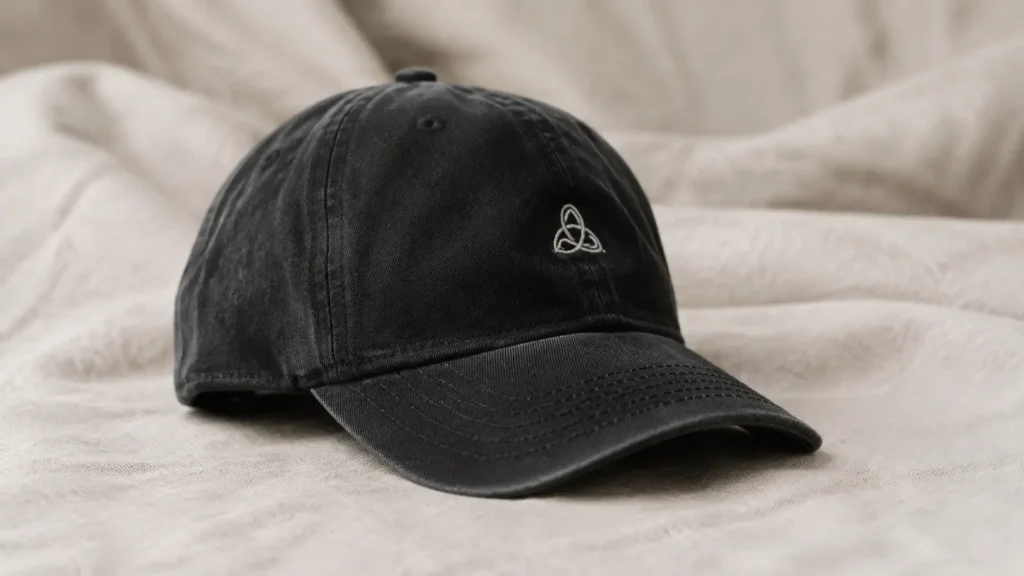
Ask the supplier to assess minimum line width, enclosed spaces, total design size, the area crossing the seam, and thread color contrast. Approve the sewn result at normal viewing distance as well as close up. A technically clean sample can still fail if the logo disappears from across a room.
Can 3D puff be used on an unstructured hat?
It can sometimes be used, but an unstructured hat is not the safest default for 3D puff. Puff embroidery places foam under broad satin columns to create a raised surface. The stitches must cover, compress, and secure the foam, and the artwork needs ends and corners designed to prevent exposed foam. Madeira’s guidance positions embroidery foam for caps and other stable woven fabrics and stresses designs digitized specifically for the process.
A structured front usually gives the pressure and stitch coverage a more stable platform. It also visually supports the bold, upright character buyers often expect from puff. This is why structured snapbacks and team-inspired caps are common candidates.
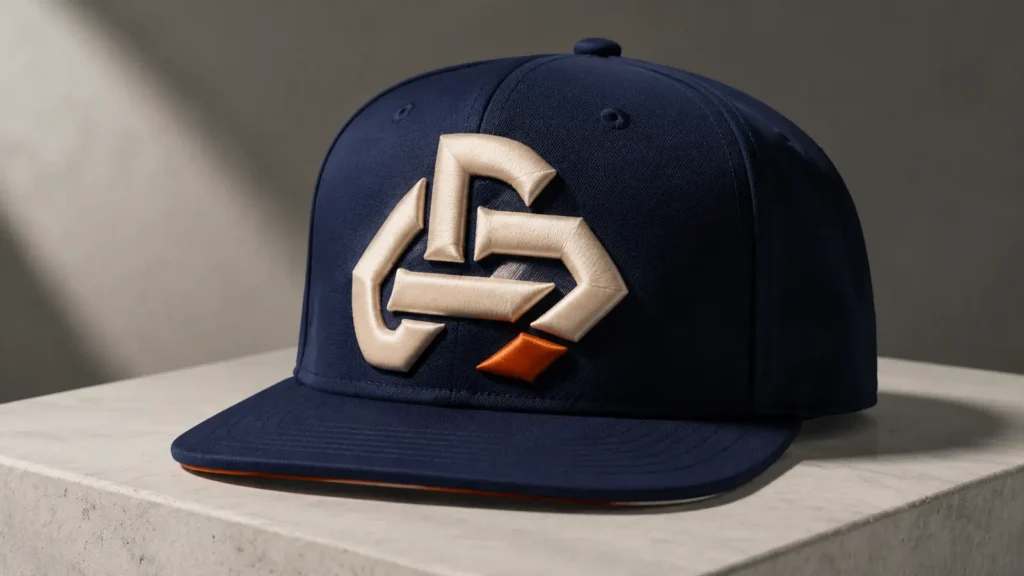
Puff on an unstructured cap should be treated as a development project. It has the best chance when the base fabric is reasonably stable, the mark is compact, the satin columns are broad enough, the foam thickness is suitable, and the finished stiffness does not conflict with the intended drape. A thin washed fabric, large foam field, or intricate logo is a poor combination.
Use flat embroidery for small secondary copy. Do not apply foam under tiny text, narrow outlines, sharp internal details, or large filled areas simply to make the whole logo “3D.” A hybrid design can use puff for a bold monogram and flat stitching for compatible details. See Flat vs 3D Puff Embroidery for Hats for a method-specific comparison.
How patches behave on both structures
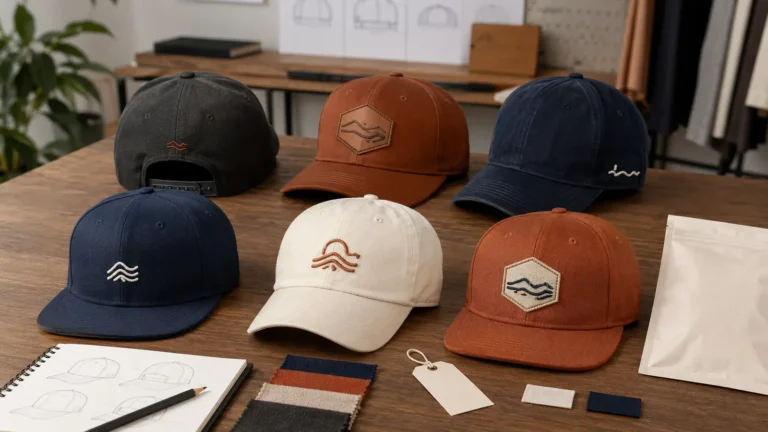
Patches move some detail production away from the cap itself. The emblem is made first, then attached by sewing, heat application, or another specified process. This can be useful for detailed artwork, repeat branding across multiple cap styles, and materials that create a distinctive retail finish.
Structured hats and patches
A firm crown generally carries a larger or heavier patch more predictably. Embroidered, woven, PVC, felt, and leather-style patches can work, subject to cap curvature and attachment capability. A broad rectangular patch may look flat in a digital mockup yet lift at the corners on a curved crown. The sample must show edge contact, stitch consistency, and how the patch crosses or avoids the center seam.
Unstructured hats and patches
A patch can also reinforce the area it covers. On a soft crown, a lightweight woven or thin embroidered patch often follows the curve better than a thick, rigid badge. Heavy PVC or leather-style constructions may pull the crown forward or create a pronounced stiff area. That may be acceptable for the collection, but it changes the drape.
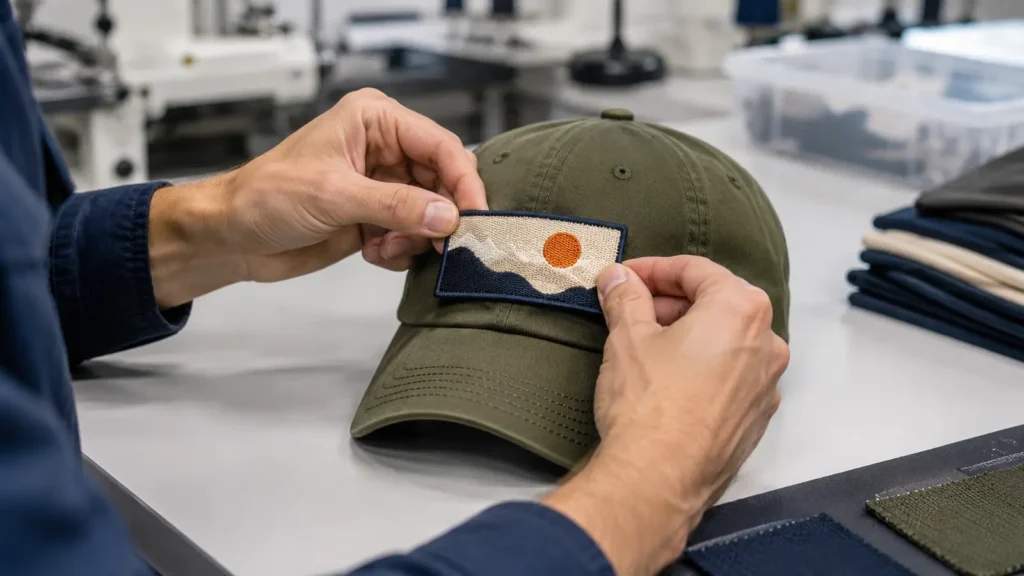
Choose a woven patch when small lettering or fine lines exceed practical embroidery limits. Choose an embroidered patch for more textured thread character and bolder shapes. For a full method comparison, use the related Embroidered vs Woven Patch guide. In either case, confirm the patch dimensions, border, thickness, backing, attachment method, position from the visor, and wash or care expectations.
Large logos, crown stability, and shape retention
A large logo changes more than the appearance. It introduces stitch weight or patch stiffness across a broad part of the crown. On a structured cap, the internal support helps distribute that load and hold a consistent presentation. This is useful when a team or uniform program expects every cap to look aligned in group photographs and retail displays.
On an unstructured cap, the wearer’s head becomes part of the presentation surface. A wide logo may look flat and centered when worn but fold when the cap is off the head. If the design crosses multiple panels, it can also change with head size and crown tension. Evaluate it on representative wearers rather than judging only a tabletop sample.
Logo stability also depends on placement. A design set too high may lean back; one too close to the visor can be difficult to frame. Ask for the exact decoration field and final dimensions.
Do unstructured hats lose shape?
They are intended to be soft, so an empty unstructured crown naturally collapses. That is not the same as permanent damage. When worn, a well-made unstructured cap should recover its designed silhouette around the head. However, a hard crease, excessive carton pressure, heat, moisture, or a stiff decoration can create an unwanted set.
Structured hats also lose their intended appearance if the reinforcement is crushed. Their risk is more visible because the product promise is a defined crown. Neither type is shape-proof. Specify how the caps are nested, supported, bagged, and cartoned, then review a packed sample or packing photograph before shipment.
Comfort and wearing experience
Comfort is not decided by structure alone. Unstructured caps often feel soft and conforming, especially in washed cotton, and suit casual wear, hospitality, creator merchandise, and lifestyle retail.
Structured caps provide more space between the front panel and forehead and maintain a crisp profile. Performance fabrics, moisture-management sweatbands, ventilation, closure type, size range, seam tape, visor curve, and crown depth may matter more to comfort than buckram. A team cap that looks excellent but sits too shallow will not become comfortable merely because it is structured.
Fit-test several head sizes. Note crown depth, temple pressure, closure range, visor position, sweatband, and internal backing. For uniforms, test during actual movement when practical.
Shipping, packing, and shape recovery
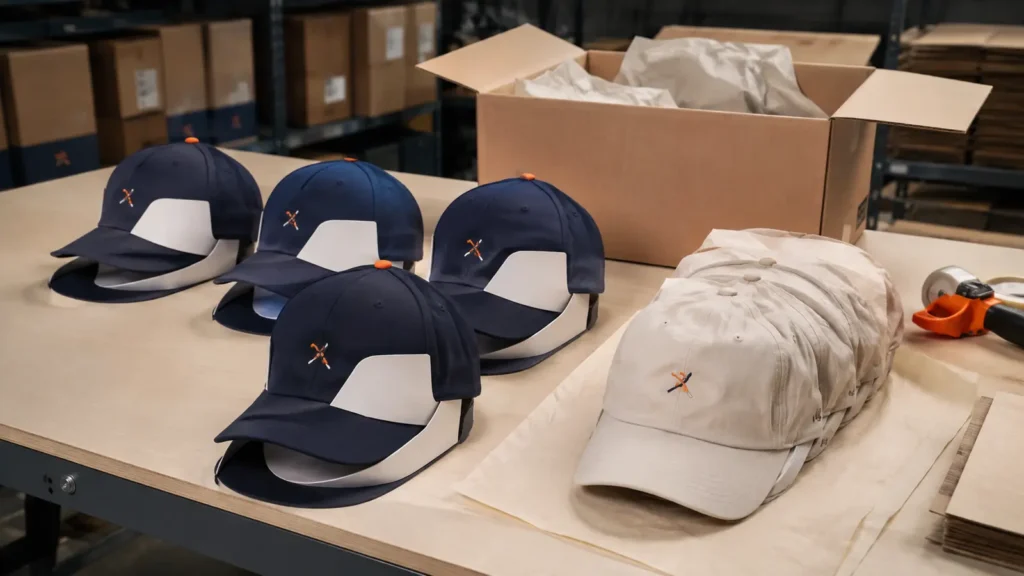
Structured hats need protection against crushing. Common controls include nesting caps in aligned groups, using crown inserts where required, avoiding excessive headspace or carton compression, and keeping heavy items away from the crown. The exact pack count and carton strength should be confirmed against cap depth and shipment method.
Unstructured hats can usually nest more compactly, but folding through an embroidered logo or rigid patch can set a crease. Avoid pressure directly on raised embroidery, patch corners, buckles, and metal closures. Separate hardware where it could scratch another cap.
Add a packing test to sample approval:
- Pack the proposed quantity using production inserts, bags, and carton.
- Apply realistic stacking and handling pressure without intentionally abusing the product.
- Unpack and allow the caps to relax under normal room conditions.
- Inspect crown symmetry, visor shape, creases, patch lifting, puff compression, and abrasion.
- Place samples on representative wearers and compare them with the approved reference.
Do not promise that steaming will fix every problem. Heat and moisture can affect fabric, adhesives, foam, color, and care instructions. Recovery methods should follow the material and supplier’s tested guidance.
Snapback, trucker, dad hat, and baseball cap: common relationships
| Style term | Common construction | What the buyer must verify |
|---|---|---|
| Snapback | Often structured, mid or high profile, with a plastic snap closure | Front reinforcement, crown height, panel count, visor shape, and whether puff is approved |
| Trucker hat | Often a structured or foam front with mesh back and snap closure | Front material, seam layout, mesh stiffness, foam or buckram, and logo method |
| Dad hat | Commonly unstructured, low profile, curved visor, and buckle or strap closure | Crown depth, wash effect, fabric weight, closure, and flat-embroidery limits |
| Baseball cap | Broad category that can be structured or unstructured, fitted or adjustable | Complete technical specification rather than the category name |
| Performance team cap | Commonly structured or semi-structured with technical fabric | Fit system, sweatband, stretch, ventilation, decoration compatibility, and care |
| Five-panel lifestyle cap | Can be structured or unstructured with one broad front panel | Panel angle, crown profile, available field, and how the patch or embroidery sits |
Flexfit’s structured mesh and snapback examples show why trucker and snapback products are often associated with support, while its YP Classics dad caps show the common unstructured, low-profile, buckle-closure combination. These are useful patterns, not universal definitions.
Browse Custom Snapback Hats for bold, adjustable styles; Custom Trucker Hats for mesh-back options; Custom Dad Hats for relaxed silhouettes; and Custom Baseball Caps for broader program development.
Which hat is better for each business use case?
Sports teams and clubs
Structured is usually the first option for sports teams because it presents a bold crest consistently, supports larger front embroidery, and aligns with familiar on-field and fanwear silhouettes. Richardson’s PTS performance cap, for example, specifies a structured Mid Pro profile. Puff can work for broad initials or numbers when the artwork is designed for it.
However, the best team cap also needs secure fit, suitable size coverage, ventilation, sweat management, and care performance. A recreational club may prefer a relaxed unstructured cap for off-field merchandise. Separate the performance uniform requirement from the supporter-merchandise requirement.
Corporate uniforms and events
A structured cap suits programs that need a consistent, visible company mark across crews, dealers, or event staff. It holds its shape in presentation photographs and can support a substantial front logo. A mid-profile cap often balances visibility and broad wearer acceptance, subject to fit testing.
Unstructured can be better for hospitality, cafés, outdoor service, creative agencies, and brands that want staff to look approachable rather than formally uniformed. Use a lighter logo and check backing comfort for long shifts. Corporate buyers should also confirm color repeatability, reorder specifications, label requirements, and packing by location.
Lifestyle and retail brands
Unstructured washed caps are a strong choice for understated fashion, heritage, wellness, travel, and creator collections. The softness and wash variation can be part of the product story. Small tonal embroidery or a woven patch often complements this aesthetic.
Structured caps fit streetwear, collegiate, motorsport, outdoor, and bold graphic collections. High or mid profiles give raised embroidery and large emblems more visual authority. A retail assortment can use both: one structured hero cap for strong logo expression and one unstructured cap for quiet everyday wear.
Promotional campaigns and merchandise
Structured fronts maximize event logo visibility. Unstructured caps may feel more wearable after the campaign. Compare landed cost, decoration, fit, packing volume, and perceived quality—not blank price alone.
How to approve a physical sample
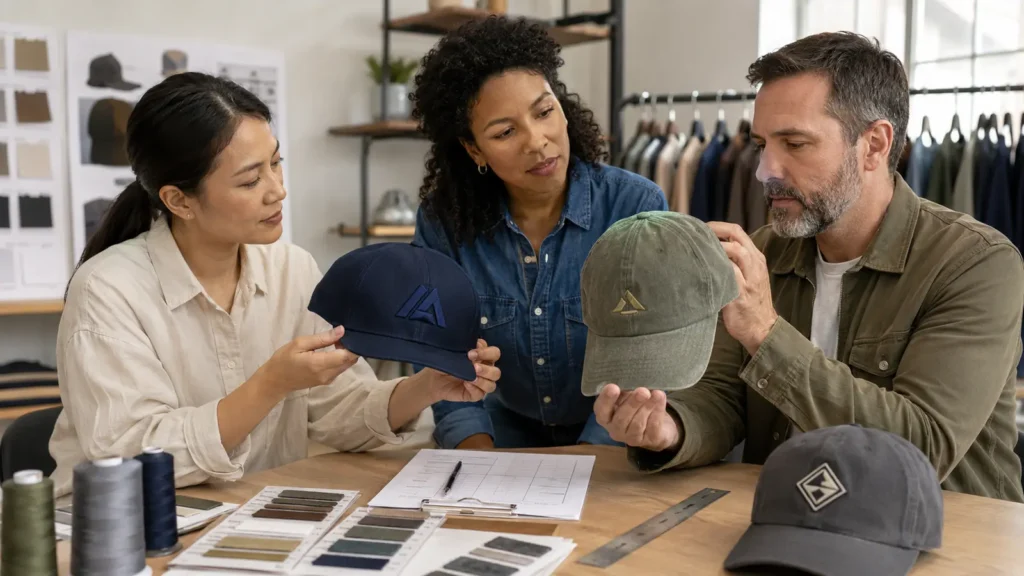
A digital mockup checks scale, color, and placement. It cannot prove depth, hand feel, stitch behavior, patch curvature, puff coverage, or fit. Approve a physical sample before bulk production.
Use this review sequence:
- Confirm the blank or custom cap specification. Record structure, profile, panel count, fabric, visor, closure, size, color, sweatband, labels, and any wash.
- Measure the crown. Check overall depth and the distance from visor to top seam. Compare the silhouette on several head sizes.
- Verify the logo. Record final width and height, position from fixed landmarks, thread or patch colors, stitch type, and whether it crosses a seam.
- Inspect decoration close up. Look for puckering, gaps, exposed foam, loose threads, center-seam distortion, patch lifting, uneven edges, or backing problems.
- Check normal viewing distance. View the cap at arm’s length and several feet away in typical light. Confirm recognition, contrast, and perceived centering.
- Wear-test it. Photograph front, side, and three-quarter views. Check comfort, crown collapse, visor position, and how the artwork changes around the head.
- Review the inside. Confirm backing finish, trims, sweatband cleanliness, label placement, and potential abrasion.
- Run a packing check. Nest and carton samples using the proposed pack, then inspect recovery and decoration after unpacking.
- Sign the approval record. Attach dated photos, dimensions, cap code, decoration file/version, color references, and permitted tolerances.
For a first order or a meaningful design change, ask for a pre-production sample and, where appropriate, a first-piece or production-top check. If a reorder changes fabric lot, cap supplier, support material, artwork size, thread, foam, patch, or machine program, confirm whether reapproval is required.
Common sourcing mistakes
Choosing from a silhouette photo alone
A photograph may not reveal reinforcement, depth, or stiffness. Request the specification and a physical cap.
Treating “snapback” as a structure specification
Snapback only identifies the closure. State structured or unstructured, profile, panel layout, and material separately.
Using the same embroidery file on every cap
Digitizing may change with fabric, support, seams, size, backing, or puff. Link production files to the approved cap code.
Making a soft cap carry a heavy logo
Large dense embroidery or a rigid patch can defeat the relaxed design. Reduce density, simplify the mark, change the patch, resize it, or select a more supportive crown.
Expecting puff to reproduce fine detail
Puff needs broad foam-compatible satin shapes. Put small text and narrow detail in flat embroidery or redesign the mark.
Ignoring packing until production ends
The approved silhouette can be lost in an overfilled carton. Develop and document the pack with the sample.
Approving only the empty cap
An unstructured hat is designed to be worn. A structured cap’s crown may also sit differently across head sizes. Approval should include on-head photographs and fit notes.
Information to send for an accurate custom-hat quotation
- intended market, use case, and target quantity;
- structured or unstructured preference, plus reference photos;
- cap style, profile, panel count, visor, closure, size range, and fabric;
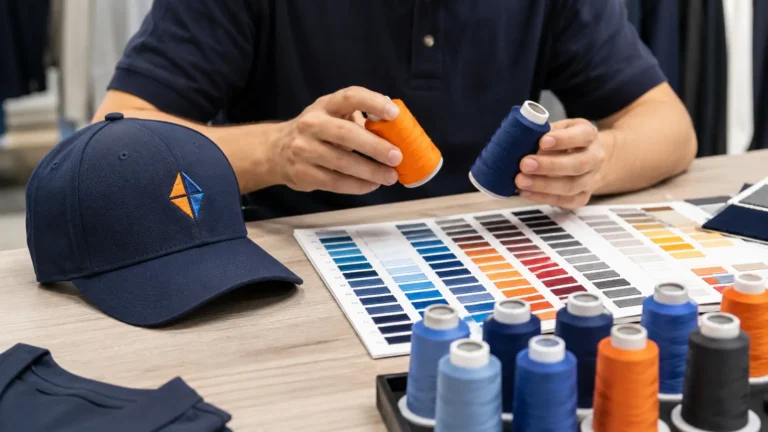
- Pantone or approved color references;
- editable vector artwork and the smallest acceptable logo size;
- preferred flat embroidery, 3D puff, woven patch, embroidered patch, PVC, or leather-style patch;
- front, side, or rear placement and final dimensions;
- custom labels, hangtags, packaging, and carton requirements;
- delivery country, target date, and compliance or testing requirements;
- whether a digital mockup, physical sample, packing test, or first-piece approval is required.
JIUMU, established in 2010 in Guangdong, supports B2B custom headwear programs with OEM/ODM development, embroidery and patches, Pantone matching, labels, packaging, samples, quality control, and export coordination. A typical starting MOQ is 50 pieces, subject to customization. Confirm the actual MOQ, sample cost, lead time, packing, and delivery terms in the quotation.
Frequently Asked Questions
Final recommendation
Start with the logo and the wearer, then choose the cap. Use a structured crown when the program needs a crisp, repeatable silhouette, broad front branding, or puff embroidery. Use an unstructured crown when softness, conformity, and a relaxed retail character are central—and keep the decoration compatible with that drape.
Do not approve from a product name or mockup alone. Confirm support, profile, panels, fabric, closure, decoration, packing, and fit on the actual sample.
To develop a structured or unstructured custom-cap program, send JIUMU your artwork, target quantity, preferred style, destination, and required date through the contact page or email zhengdong@jiumugear.com. You can also contact +86 18507502899 for project requirements.
Technical references
- Flexfit structured Cool & Dry Sport Cap
- Flexfit structured Trucker Mesh Cap
- Flexfit unstructured Classic Dad Cap
- Melco: how to embroider a cap
- Madeira E-Zee cap backing
- Madeira 3D embroidery foam guidance
- Richardson PTS20 structured performance cap
JIUMU is a B2B supplier of custom hats, teamwear, bags, and branded merchandise. Established in 2010, the team supports artwork review, sampling, customization, quality control, packaging, and export coordination.