Best Backpacks for Middle School Students in 2026
Middle school changes what a student carries and how a backpack is used. A bag may need to move between several classrooms, hold binders and a device, fit in a locker, survive a bus ride, and still look appropriate to an 11- to 14-year-old. For schools, distributors, uniform dealers, promotional companies, and private-label brands, the “best” backpack is therefore not one universal model. It is a well-specified program that balances fit, organized capacity, low empty weight, dependable construction, age-appropriate styling, and repeat-order consistency.
This 2026 guide explains how professional buyers can compare backpack formats, materials, construction, customization, samples, and quality-control requirements. It also gives parents and school program managers a practical framework for evaluating everyday use. Product capacities and performance claims should always be confirmed on a physical sample; they should not be inferred from appearance alone.
Quick Answer: The best backpacks for middle school students in 2026 are lightweight, correctly proportioned two-strap packs with a padded back, wide adjustable shoulder straps, organized compartments, a stable base, and enough—not excessive—capacity for the actual school-day load. For most programs, start with a structured everyday or laptop-organized backpack, confirm fit on representative students, test it with a realistic load, and approve materials, stitching, zippers, logos, labels, and packaging before bulk production.
What “Best” Means for a Middle School Backpack in 2026
A retail list often defines “best” by popularity or price. A procurement team needs a more durable definition. A good middle school backpack must suit the students, timetable, transport pattern, device policy, locker dimensions, climate, branding brief, budget, and expected service period.
The American Academy of Pediatrics advises that a loaded backpack should not exceed 15% of a child’s body weight and recommends using both shoulder straps, adjusting the bag close to the body, and using a chest or waist strap when present. The American Academy of Orthopaedic Surgeons likewise recommends two wide padded straps, a padded back, an appropriately sized bag, and organizing heavier items low and toward the center. These are general safety guidelines, not a substitute for advice from a school nurse or clinician when a student has pain or a medical condition.
For buyers, this guidance translates into several specification decisions. Keep the empty bag reasonably light. Do not add pockets, foam, hardware, or decorative components without a clear function. Position the laptop or book compartment close to the back panel. Make the shoulder straps easy to adjust and difficult to slip during normal wear. Validate the complete loaded system, not only the empty sample.
2026 buyer priorities
- Right-sized capacity: enough for the published supply list without encouraging unnecessary overpacking.
- Device organization: a sleeve sized for the school’s actual Chromebook or laptop, including its case.
- Repair-resistant construction: reinforced load points, controlled seam allowances, and hardware matched to the expected load.
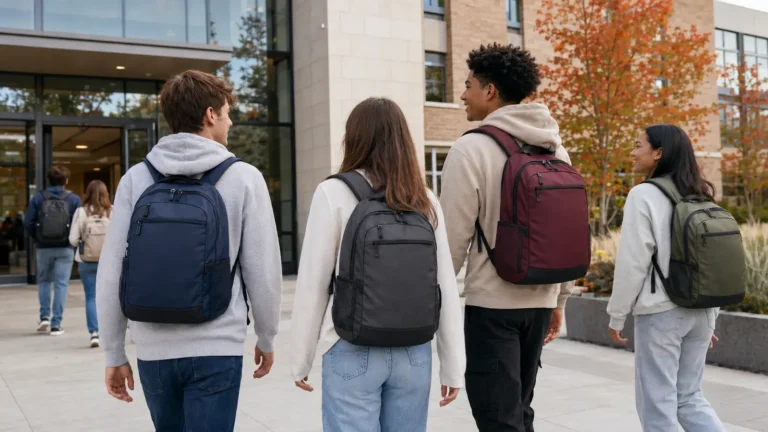
- Age-appropriate design: more mature than an elementary bag, but not oversized like a travel pack.
- Clear material claims: “water-resistant,” recycled content, and abrasion performance should be qualified and documented where used.
- Program consistency: agreed color standards, logo placement, packaging, and tolerances for repeat orders.
Best Backpack Types by Student Use Case
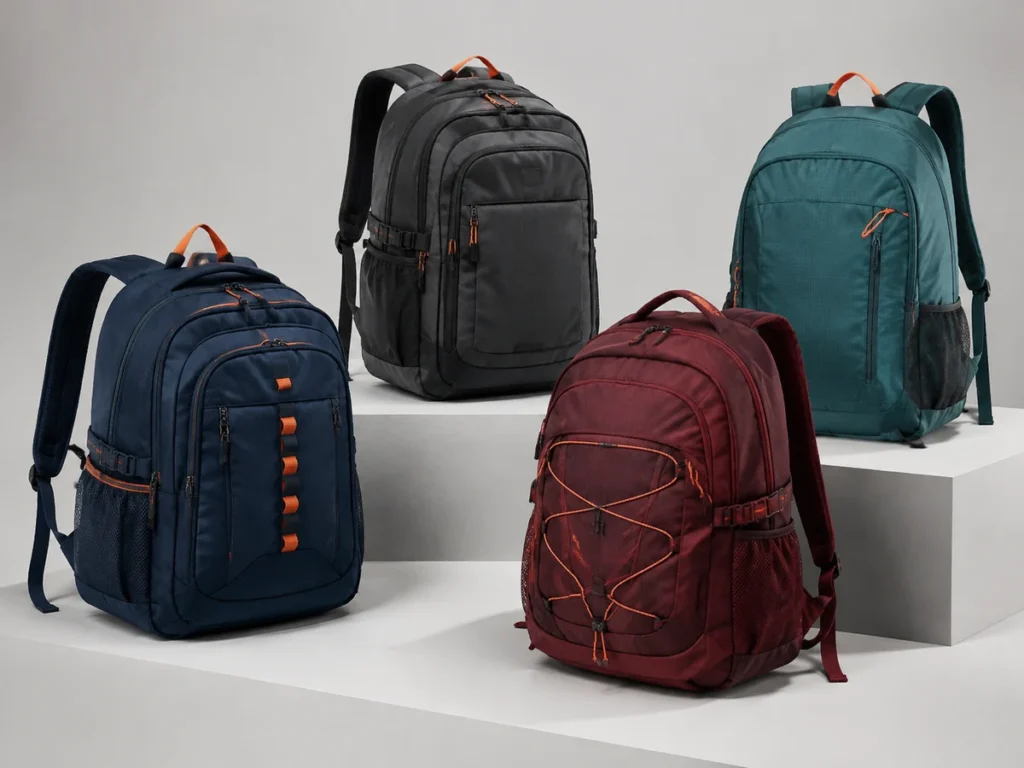
| Backpack type | Best suited to | Useful specification | Main trade-off |
|---|---|---|---|
| Structured everyday backpack | General classroom rotation | Two main zones, front organizer, bottle pockets | Too many layers can increase empty weight |
| Laptop-organized backpack | One-to-one device programs | Padded sleeve close to back, cable pocket, stable base | Sleeve dimensions must match the device and case |
| Lightweight daypack | Lockers, lighter timetables, short commute | Simple main compartment, minimal hardware | Less protection and internal separation |
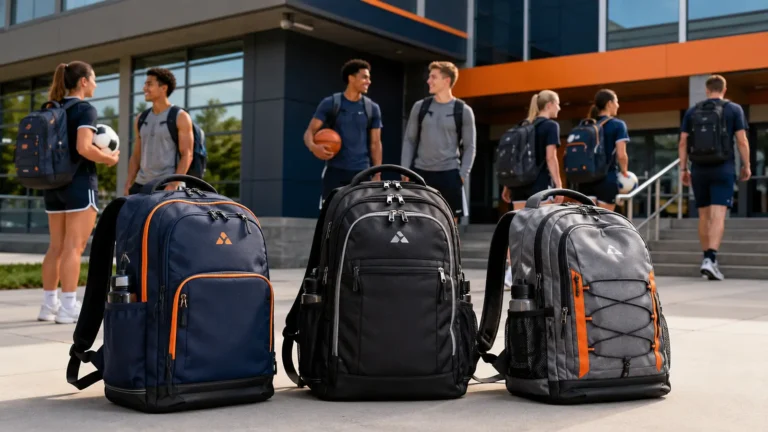
| School-and-sports backpack | Clubs, PE, after-school practice | Ventilated or wipe-clean secondary zone | Added volume may become bulky in corridors or lockers |
| Rolling backpack | Approved cases with heavy loads | Stable telescoping handle and durable wheels | Often heavier; school rules and stairs may limit use |
Structured everyday backpacks: the safest default for a bulk program
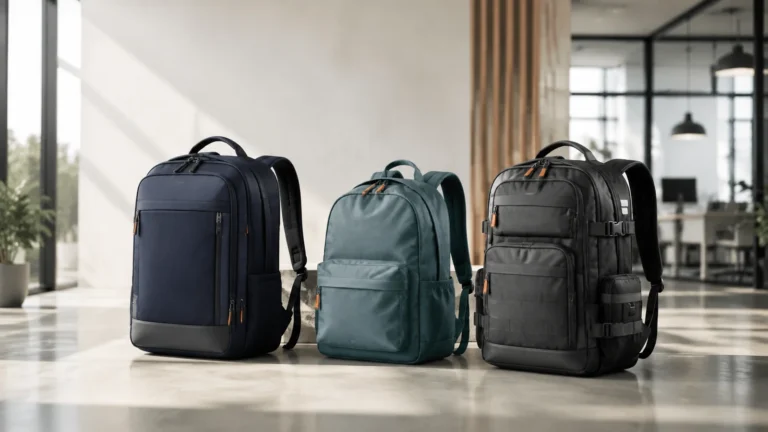
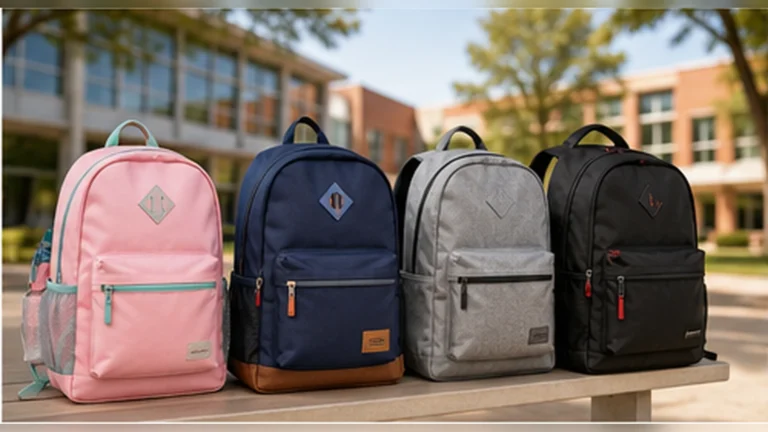
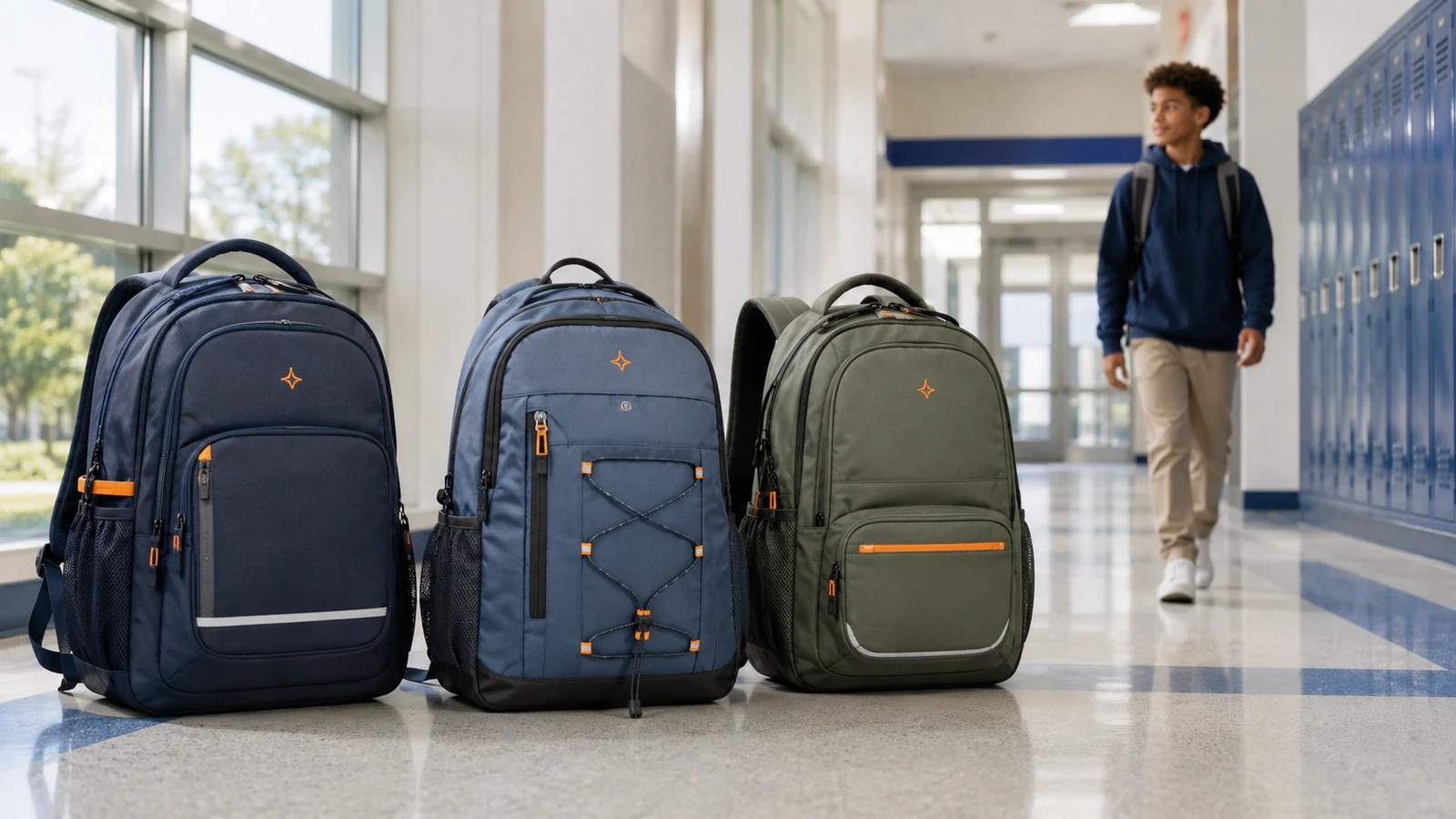
For a broad student population, a medium, structured two-strap pack is the most adaptable starting point. The main compartment can hold binders and notebooks, while a secondary compartment separates smaller supplies. Two usable bottle pockets reduce the temptation to put a bottle beside electronics. A shallow front organizer is easier to search than several narrow decorative pockets.
The pack should stand or lean predictably when loaded, but it does not need a heavy molded base. A reinforced fabric base often provides a better balance of weight, cost, and repairability. Ask the supplier to show the internal arrangement and finished measurements rather than quoting only a nominal liter capacity.
Laptop-organized backpacks: best for device-based learning
Device programs need more than a generic padded pocket. Confirm the device’s width, height, depth, case, charging accessories, and how students are expected to carry them. The sleeve should be close to the back panel so dense weight stays near the body. A raised or padded sleeve bottom can reduce direct impact when the bag is set down, but the design should never be marketed as impact-proof without relevant testing.
A laptop sleeve can consume usable binder space. Load a sample with the exact school-day kit and inspect whether zipper curves, seams, or bottle contents press against the device. If a separate device case is mandatory, avoid duplicating excessive padding inside the backpack.
School-and-sports backpacks: best for combined programs
Students moving directly to PE, a club, or practice may need a larger opening or a separate zone for shoes and apparel. That zone should be easy to clean and should not compromise the back panel. Ventilation can help airflow, but mesh alone does not prevent odor or moisture transfer. Buyers should define whether the goal is separation, wipe-clean surfaces, drainage, or actual ventilation.
Lightweight daypacks: best where lockers reduce the load
A simpler daypack can work when students carry only a few subjects at a time. It may use less foam, fewer zippers, and one main compartment. The important distinction is “lightweight,” not “flimsy.” Shoulder attachments, zipper ends, base seams, and bottle pockets still need reinforcement appropriate to the program.
What Size Backpack Is Best for Middle School?
There is no single correct liter figure for every middle school student. Volume calculations also vary with bag shape, panels, and measurement method. Treat capacity as a comparison aid, then verify external dimensions and conduct a physical load test.
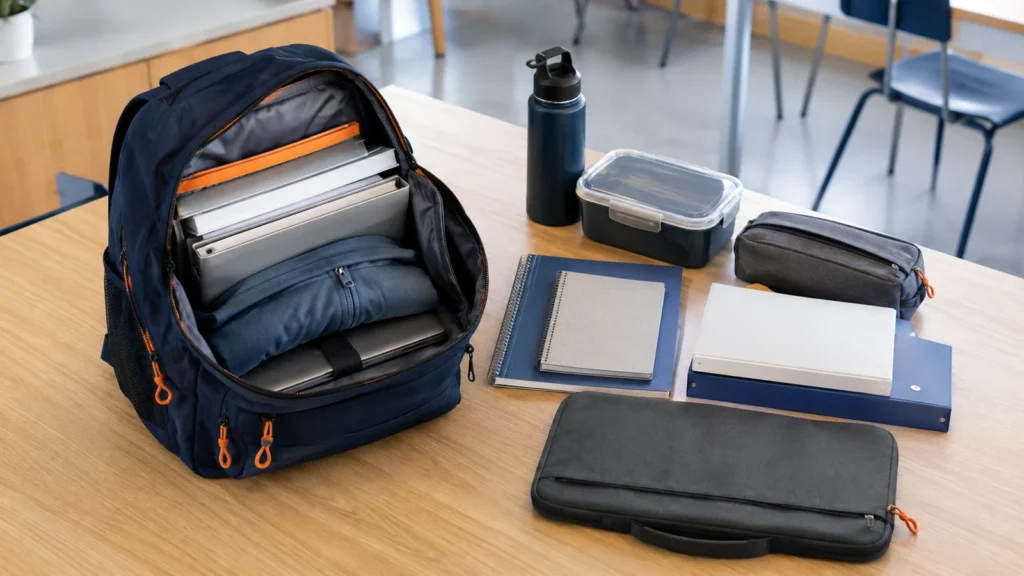
| Requirement | What the buyer should measure | Sample approval question |
|---|---|---|
| Student fit | Back length, shoulder width range, strap adjustment range | Does the bag sit close to the torso without hanging far below the waist? |
| Academic load | Largest binder, notebook count, textbooks, folders | Can the required items load without distorting the zipper? |
| Device | Device plus case dimensions | Is the sleeve secure without being excessively tight? |
| Lunch and bottle | Container and bottle dimensions | Are food, liquid and electronics sensibly separated? |
| Locker or cubby | Internal clear opening and depth | Does the loaded bag fit without crushing handles or hardware? |
| Transit | Bus seat, bicycle policy, walking distance | Is the loaded profile stable and comfortable for the route? |
Build a representative load kit
Create a photographed and weighed reference kit before requesting samples. Include the largest binder, typical notebooks, the school-issued device and case, charger if carried, a filled water bottle, lunch container, pencil case, and the bulkiest seasonal layer students are expected to pack. Note which items are daily and which are occasional.
Use this kit for every sample comparison. Record empty-bag weight, loaded weight, ease of loading, zipper closure, balance, strap range, and whether the bag fits the storage space. A consistent kit prevents design discussions from becoming subjective.
Fit checks for growing students
Middle school covers a wide size range, so one body size cannot represent the entire population. Test the sample on several appropriately consented fit participants or use representative forms. The top should not interfere with normal head and neck movement. The lower edge should not hang excessively below the waist. Shoulder straps should adjust for light and heavier clothing without long loose tails becoming a nuisance.
Fit is also behavioral. Observe whether students can find the adjustment buckles, use both straps, close the sternum strap if provided, and reach the bottle pockets. A technically correct feature that students consistently avoid may need redesign.
Materials: What Buyers Should Specify
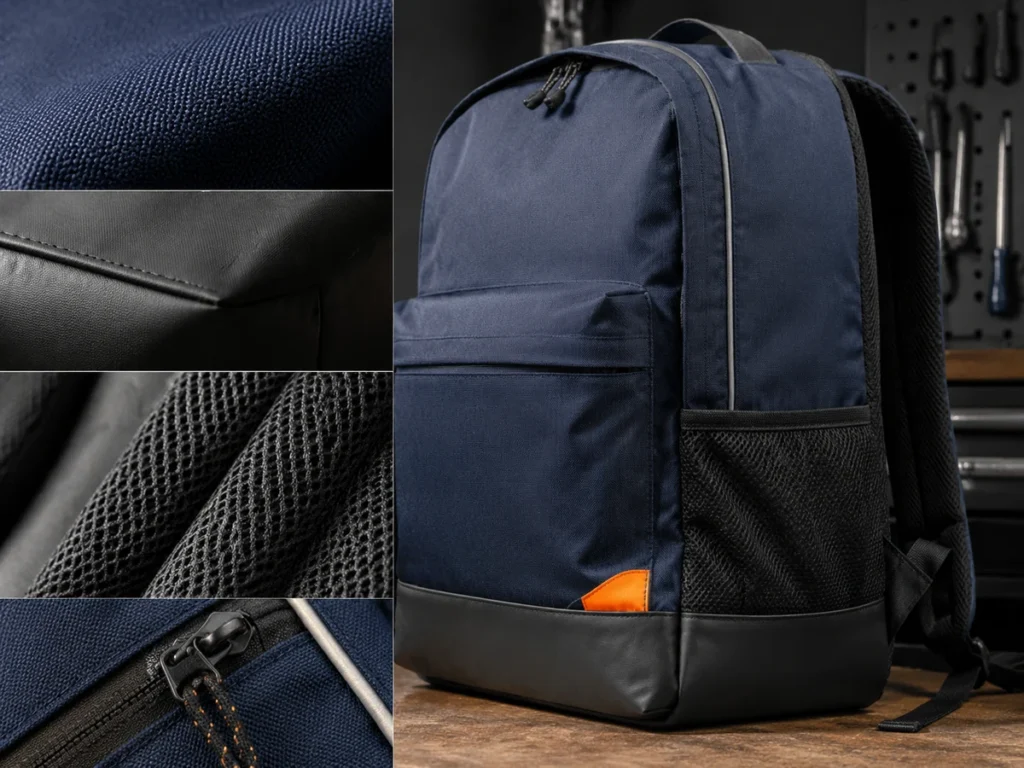
Polyester and nylon shells
Polyester is common for school backpacks because it offers broad color and finish options at different price levels. Nylon can offer an attractive hand feel and strength-to-weight balance, but the real result depends on yarn, weave, denier, coating, finishing, and construction. “600D” or another denier value is not a complete durability specification.
Ask for a physical swatch in the intended color and finish. Define whether the visual goal is matte, textured, heathered, or smooth. Confirm backing or coating, color-matching method, and any performance tests required by the destination market or buyer. If recycled content is part of the brief, require traceable documentation appropriate to the claim rather than relying on appearance or a hangtag statement.
Coatings and water resistance
A coated fabric and covered zipper can help resist light rain, but a sewn backpack contains seams, openings, and attachment points. Do not use “waterproof” as a casual synonym for “water-resistant.” Decide what exposure the product is designed to handle, which test method and acceptance level apply, and whether seams require special treatment. Visible claims on product pages, labels, and packaging should match verified performance.
Back panels and shoulder-strap padding
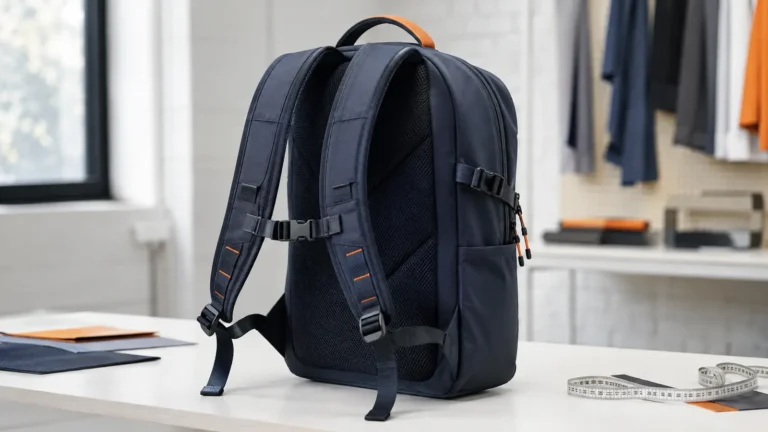
Padding should spread pressure without creating unnecessary thickness and weight. Spacer mesh can improve surface airflow and feel, but it does not make the entire system cool in all conditions. Evaluate foam density, recovery, edge binding, strap width, curvature, and the distance between straps. Check how the panel feels with a realistic load, because unloaded hand feel can be misleading.
Zippers, buckles, webbing and bottle pockets
Hardware is a system. Specify zipper size and type, puller style, slider finish, buckle dimensions, webbing width, adjustment performance, and color. Test repeated operation after the bag has been loaded. Bottle pockets need enough depth, elastic recovery, and an attachment method suited to common bottle diameters. Mesh pockets that are too shallow fail even when the mesh itself is strong.
Construction Details That Improve Service Life
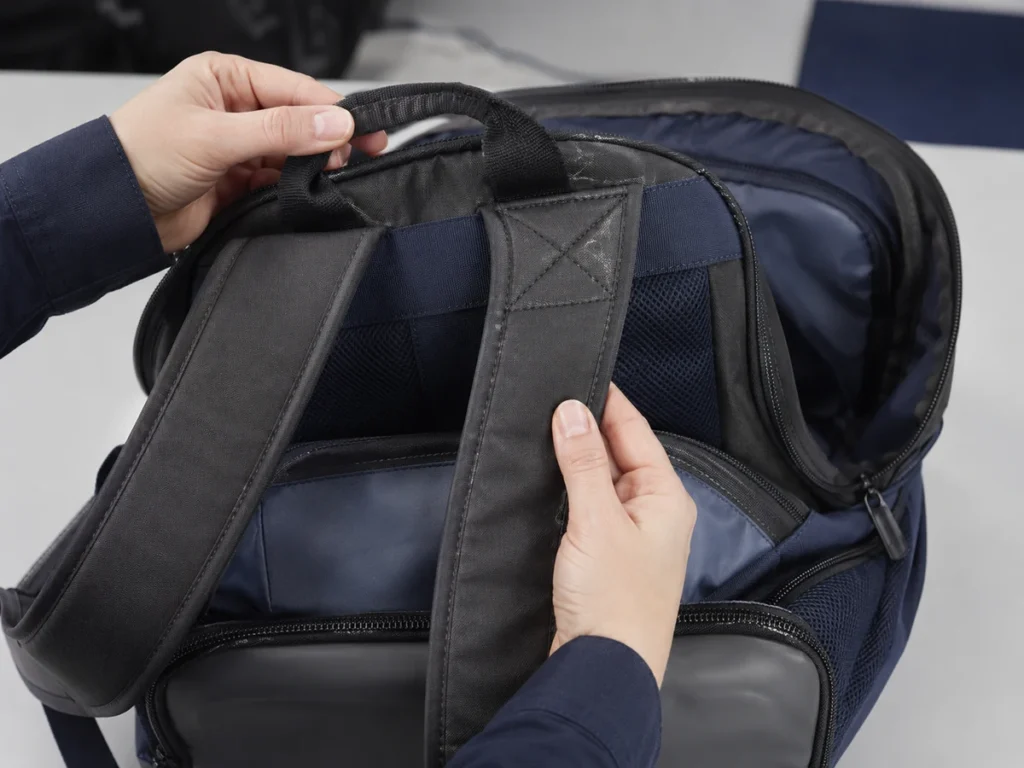
Backpacks usually fail at concentrated stress points before the broad face fabric wears out. Buyers should inspect shoulder-strap anchors, grab handles, zipper ends, bottle-pocket corners, base corners, and any point where a rigid component meets fabric.
Shoulder-strap anchors
The upper strap attachment carries repeated dynamic load. Reinforcement may involve additional backing material, a folded seam structure, box stitching, bar tacks, or a combination chosen for the design. More visible stitching is not automatically stronger. The supplier should use a repeatable construction that the sample and production line can reproduce.
Seam allowances and binding
Inspect inside the bag. Seam allowances should be consistent and raw edges appropriately controlled. Binding must catch the full edge without wandering off the seam. Tight curves need enough allowance and careful feeding to avoid puckering or skipped material. A neat exterior can hide a weak internal seam, so sample approval should include internal photographs.
Base construction
The base encounters floors, rough surfaces, spills, and concentrated contents. Options include a second fabric layer, coated reinforcement, piping, foam, or a separate abrasion-oriented material. Select the lightest construction that meets the use case. Confirm that reinforcement extends far enough into the seam and does not create a stiff edge that rubs adjacent material.
Zipper installation
Run every zipper around the full path with the bag empty and realistically loaded. Curves should not force the slider, lining should not snag, and paired pulls should meet consistently. Inspect zipper-end security and whether pullers remain easy to grip with cold or wet hands.
Comfort and Load Management
Comfort is not a single foam thickness. It comes from proportion, load position, empty weight, strap geometry, adjustability, and how students pack the bag. A pack with excessive capacity can become uncomfortable simply because it invites more contents.
The AAP’s general 15% guideline provides a useful ceiling for discussion, but schools should encourage students to carry only what is needed that day. Heavier objects should sit low and toward the center, close to the back. Both shoulder straps should be used. If a student leans forward to support the load, reports pain, numbness, or weakness, or cannot put the bag on normally, the load and fit need attention; persistent symptoms warrant appropriate professional advice.
For procurement, add an empty-weight target and loaded fit evaluation to the specification. If a sternum strap is used, confirm comfortable placement across the size range and make it easy to adjust. Waist straps can help in appropriate use cases but may add dangling parts for short corridor trips; choose them deliberately rather than as a marketing feature.
Custom School Backpacks and Private-Label Options
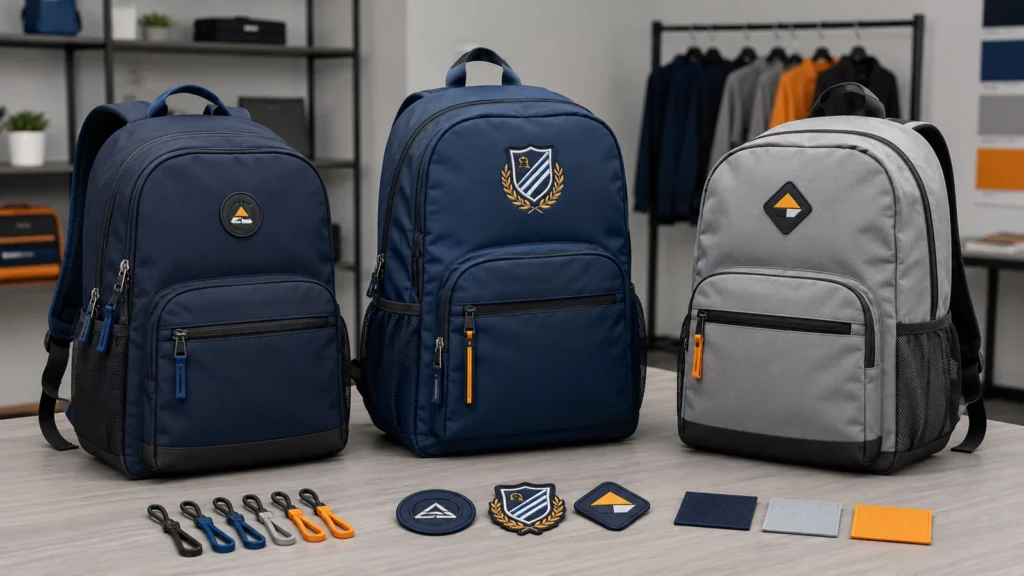
JIUMU supports OEM and ODM development, logo embroidery, screen printing, heat transfer, woven, rubber/PVC and leather-style patches, Pantone color matching, private labels, hangtags, packaging customization, digital mockups and physical samples. The correct method depends on artwork, fabric, panel structure, quantity, hand feel, budget, and expected use.
Embroidery
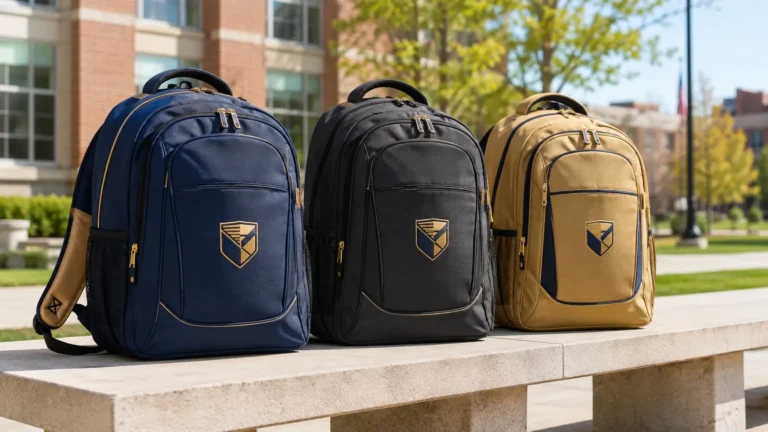
Embroidery gives a dimensional, established look for school crests, initials, club marks, and staff programs. Dense designs add weight and stiffness to a panel, and very small details may close up. Request an embroidery sample on the exact outer fabric with approved thread colors. Check backing, puckering, edge clarity, and placement relative to pockets and seams.
Woven and rubber/PVC patches
Woven patches can reproduce finer graphic detail than many embroidered treatments. Rubber/PVC patches create a modern dimensional effect and can support bold, simplified marks. Patch thickness, edge shape, attachment method, color tolerance, and flexibility should be approved. Any material or compliance claim must be supported for the specific component and destination.
Screen print and heat transfer
Printing can suit larger, flatter artwork. The face fabric texture and coating affect adhesion and clarity, so artwork should be sampled on the finished material. Evaluate flexing, rubbing, and appearance after the care procedure specified for the product. Avoid placing large stiff decoration where the panel must bend.
Labels, names and identification
Schools may want an internal write-on name panel, woven identity label, serialized asset label, or removable identification card. Balance identification with privacy: do not put a child’s full name in a highly visible exterior position by default. For private-label programs, define main label, country-of-origin information, care information where applicable, hangtag, barcode, carton marks, and online claim language with the responsible compliance adviser for each market.
Planning a school, distributor or private-label backpack program? Send JIUMU your target quantity, student age range, required contents, device dimensions, preferred backpack size, colors, logo files, decoration method, packaging, destination and target delivery date. A digital mockup and physical sample can then be aligned to one written specification. Request a custom quotation or explore custom team bags.
2026 Design Directions Worth Considering
“Trend” should not override usability. For 2026, the most useful direction is quieter, adaptable design: mature color blocking, restrained contrast, modular organization, device-aware interiors, and branding that looks intentional rather than oversized. These directions can serve school identity programs and retail assortments without becoming obsolete after one season.
Color collections can include a dependable core—navy, graphite, forest, burgundy—plus one controlled accent. Reflective piping or details may improve visibility in certain conditions, but reflective appearance should not be described with a performance value unless tested. Removable zipper pullers or replaceable patches can allow cohort colors or house identification without changing the complete bag construction.
Buyers interested in lower-impact materials should define the claim precisely: recycled input, reduced packaging, replaceable components, or longer intended service life are different objectives. Obtain documentation, keep records for the supplied lot, and ensure marketing wording matches the evidence.
What Determines the Cost of a Custom Middle School Backpack?
Unit cost is driven by the complete specification, not simply the outside dimensions. Two bags that look similar can have different material consumption, labor time, hardware, reinforcement, testing, and packaging requirements.
| Cost driver | Lower-complexity direction | Higher-complexity direction | Buyer decision |
|---|---|---|---|
| Pattern | Simple panels and straight seams | Multiple shaped panels and piping | Keep only features students will use |
| Organization | One main plus one front pocket | Multiple lined zones and device system | Build around the actual supply kit |
| Material | Standard stocked construction | Custom texture, coating or documented content | Match claims and durability needs |
| Hardware | Standard zippers and buckles | Custom pulls, finishes or molded parts | Use custom hardware where it adds identity |
| Decoration | One-position simple logo | Multiple methods and placements | Approve every location on a sample |
| Packaging | Standard protective packing | Individual retail pack, barcode and inserts | Define the sales channel before quoting |
| Testing/QC | Agreed visual and dimensional checks | Additional buyer or market protocols | Specify methods and acceptance criteria early |
MOQ is typically 50 pieces for JIUMU, subject to product structure and customization. A low quantity combined with custom-dyed fabric, molded hardware, many colorways, or complex packaging may be impractical or disproportionately expensive. Ask for a quotation based on a defined specification and clearly state which elements can use stocked options.
Sample Approval and Quality Control
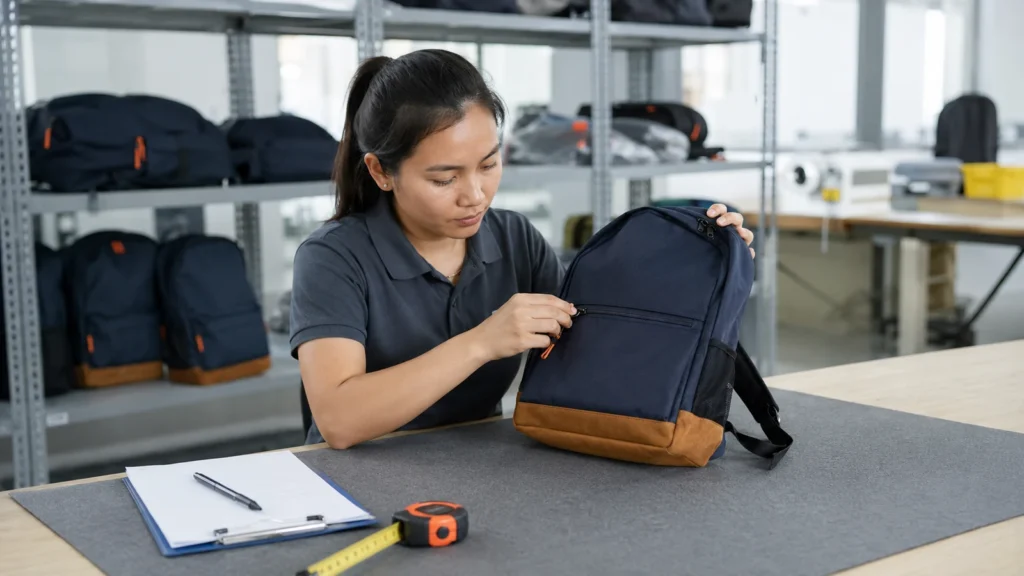
A beautiful digital rendering is not a production standard. Approve a physical sample and retain a signed or otherwise controlled reference. If changes are made after the sample, document them in a revision log and confirm whether a new sample or component approval is required.
Pre-production approval checklist
- Confirm overall width, height, depth, key pocket dimensions, strap length, handle drop, and permitted tolerances.
- Photograph exterior, interior, base, back panel, labels, packaging, and logo placement.
- Identify face fabric, lining, mesh, foam, reinforcement, webbing, zipper, buckle, thread, and decoration references.
- Load the realistic school kit and check balance, closure, device separation, bottle retention, and locker fit.
- Operate zippers and buckles repeatedly and inspect for snagging, slipping, sharp edges, or loose components.
- Review stitching density, seam allowance, reinforcement location, symmetry, and visible thread cleanup.
- Confirm color under agreed lighting and against approved swatches or standards.
- Confirm packaging, barcode data, carton assortment, carton marks, and any warning or market information.
Define inspection criteria before production
Create defect categories and an agreed sampling or inspection approach appropriate to the order. Examples of critical concerns may include a sharp component or an incorrect required label; major concerns may include an open load-bearing seam, broken zipper, missing logo, or wrong dimensions; minor concerns may include limited cosmetic variation that does not impair use. The actual classification and acceptance rules must be agreed for the product and market rather than copied blindly from a generic list.
Validate claims with the right evidence
If the brief requires colorfastness, abrasion, seam strength, zipper cycling, water resistance, chemical restrictions, recycled content, or another performance or compliance claim, name the applicable method, laboratory or documentation requirement, sample selection, and acceptance level with qualified advisers. Testing one development sample does not automatically prove that every future lot is identical; maintain material and production controls.
How to Plan a Bulk School Backpack Order
- Define the use case. Record age range, school schedule, transport, locker constraints, device policy, sports needs, intended service period, destination and sales channel.
- Build the load kit. Measure and photograph real contents. Establish empty and loaded weight expectations.
- Choose a base format. Select everyday, laptop-organized, lightweight, sports, or another justified structure.
- Create the specification. List dimensions, materials, colors, components, construction, logo, labels, packaging, testing and tolerances.
- Review a digital mockup. Use it for layout and color direction, not final proof of materials or fit.
- Approve materials and a physical sample. Test fit, load, storage, operation and appearance; record all changes.
- Confirm production and inspection references. Freeze artwork, bill of materials, sample version, measurement chart, packaging and defect rules.
- Plan delivery backward. Include time for sample review, revisions, production, inspection, freight, customs and local distribution. Lead time is specification- and schedule-dependent.
- Retain order records. Save approved files, color standards, sample photographs, test reports where required, and carton configuration for repeat orders.
What to Send a Backpack Supplier for an Accurate Quote
Avoid requesting “your best price” with only a photograph. A supplier must know what is included in the price and which elements remain assumptions. Send:
- buyer type, destination country and intended sales channel;
- estimated total quantity and quantity per color or design;
- target student age range and representative body-size range;
- required external dimensions or actual contents and device measurements;
- reference images or a tech pack, with must-have and optional features labeled;
- preferred shell, lining, padding, mesh, base and hardware direction;
- Pantone or other agreed color references;
- vector logo files and desired decoration methods and locations;
- private label, care/origin information, hangtag, barcode and packaging requirements;
- performance, chemical, labeling or documentation requirements identified by your compliance team;
- sample deadline, target delivery date and shipping destination.
If the specification is still open, state the target price band and non-negotiable functions. A responsible development conversation may offer stocked colors, simpler pocketing, standard pullers, or alternative decoration without quietly changing the intended use.
Questions to Ask a Custom Backpack Supplier
- Which details in the quotation are confirmed, and which are assumptions?
- Can the device sleeve be built around our device and protective case dimensions?
- What is the empty sample weight, and which components contribute most to it?
- Which fabric, coating, lining, foam, mesh, zippers and buckles are included?
- How are shoulder straps, handles, zipper ends, bottle pockets and the base reinforced?
- Which colors and components are stocked, and which require custom minimums?
- How will logo size, color, backing and placement be approved?
- What sample stages are recommended, what can change after approval, and how are revisions recorded?
- What dimensional tolerances and appearance standards will production follow?
- How are inline and final checks documented?
- Which test reports or material documents can be supplied for the specific order when required?
- How are replacements, repeat-order color matching and component substitutions handled?
- What packaging, barcode, carton assortment and shipping information are included?
Common Buying Mistakes
Choosing by nominal capacity alone
A quoted liter number does not confirm that a binder, device case, bottle and lunch box fit together. Use dimensions and a physical load kit.
Oversizing “for flexibility”
Extra space encourages extra load and can fit poorly on smaller students. Define the largest normal day, not every unusual event.
Adding features without measuring their cost and weight
Every pocket, buckle, foam layer and molded puller affects material, labor, weight and potential failure points. Ask what user problem each feature solves.
Approving color and logos only on screen
Screens cannot confirm fabric texture, thread sheen, patch thickness, print adhesion or appearance under real lighting. Approve physical materials and decoration.
Treating “waterproof,” “recycled,” or “durable” as self-proving terms
Claims need definitions and evidence. Specify the intended performance and documentation rather than accepting broad marketing words.
Leaving packaging and labels until the end
Labels, barcode placement, warnings, inserts and cartons affect patterns, artwork, workflow and delivery. Include them in the original specification.
Why JIUMU for Custom Middle School Backpack Programs?
JIUMU has served B2B buyers since 2010 from Guangdong, China. Its scope includes custom team bags, teamwear, logo apparel, hats, uniforms and branded merchandise for schools, teams, distributors, uniform dealers, promotional companies, retailers and private-label brands in North America and Europe.
For backpack programs, the relevant capability is coordinated OEM/ODM development: fabric sourcing, Pantone color matching, embroidery, printing, heat transfer, woven and rubber/PVC patch options, private labels, hangtags, packaging customization, digital mockups, physical samples, bulk production, quality control and export support. Typical MOQ is 50 pieces, subject to the chosen structure and customization.
JIUMU should be evaluated against your written specification and approved sample like any professional supplier. Share the intended use and evidence requirements early so the development route can be matched to the program rather than built around an unsupported claim.
Frequently Asked Questions
Final Recommendation
The best backpacks for middle school students in 2026 are not the bags with the most pockets or the boldest claim. They are right-sized systems built around a real school day. Begin with a structured two-strap format, keep empty weight under control, position dense contents near the back, make organization simple, reinforce concentrated load points, and validate the design with representative students and a realistic load kit.
For a school, club, distributor, retailer or private-label collection, convert those decisions into a controlled specification. Approve the material swatches, physical sample, dimensions, logo, labels, packaging and inspection criteria before production. That process creates a product that is easier to quote, compare, reproduce and reorder.
Develop Your Custom School Backpack Program
Send quantity, destination, student age range, device dimensions, colors, logo, packaging and target delivery date.