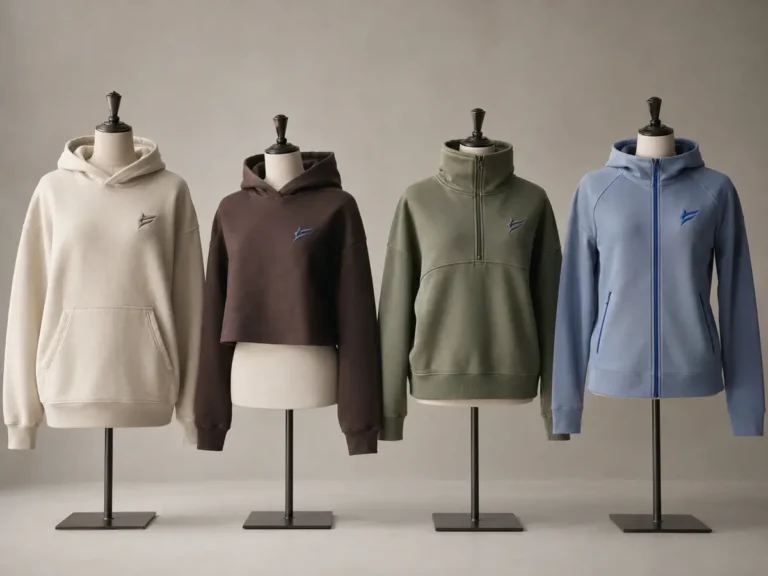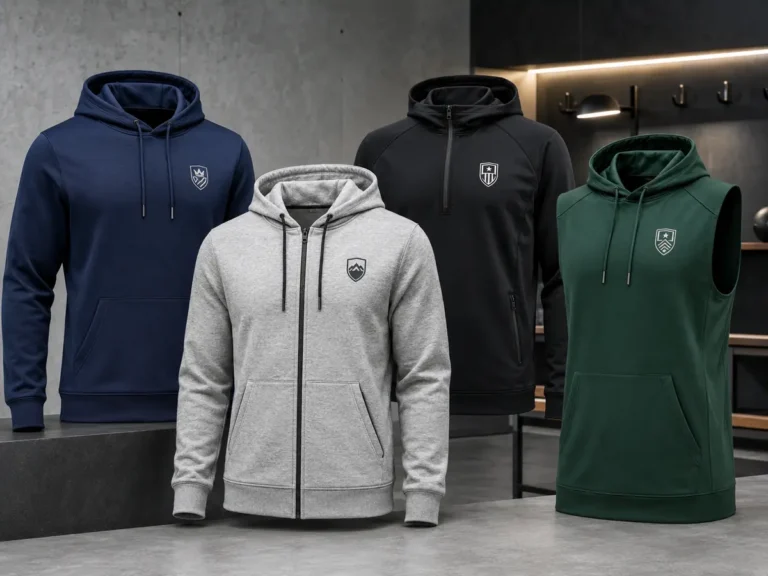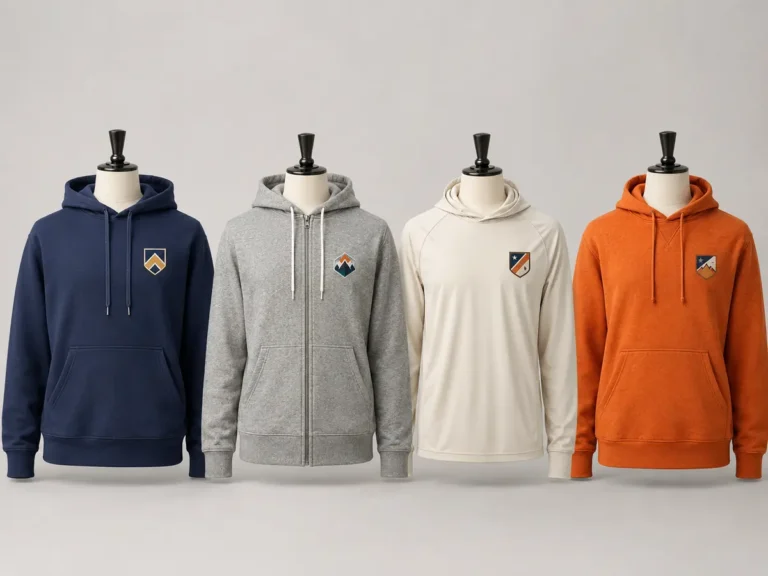
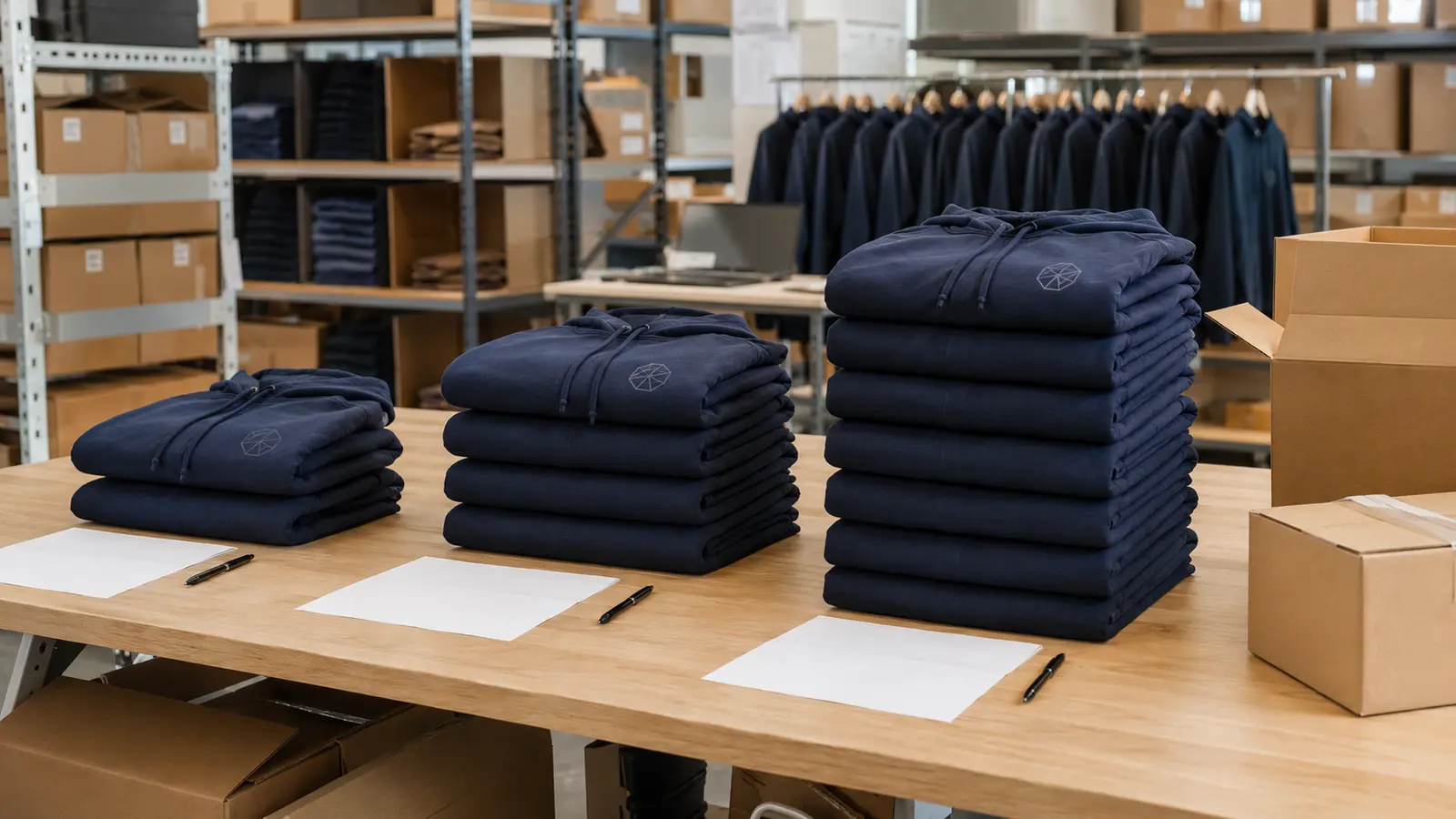
How Much Do Custom Hoodies Cost Per Piece?
Custom hoodies can cost anywhere from the low teens to more than $40 per piece, depending on what is being compared. A factory-made bulk hoodie, a decorated stock blank, and a print-on-demand hoodie are three different products with different cost structures. Buyers who ask only for “the price per hoodie” often receive quotes that cannot be compared fairly.
For a realistic B2B budget, define the garment, decoration, order quantity, packaging, trade term, and delivery destination before judging the unit price. A simple 50-piece order with one small logo will not cost the same as 500 heavyweight cut-and-sew hoodies with custom labels, sleeve graphics, individual names, and retail packaging.
Quick Answer
A practical planning range for bulk custom hoodies is about $10–$30 per piece before international freight, import charges, and local delivery. Basic programs at larger quantities may fall below that band, while heavyweight fabrics, complex construction, multiple decoration locations, individual personalization, premium trims, or small quantities can push the price above it.
This range is a planning tool, not a JIUMU quotation or a universal market average. Public North American decorator and print-on-demand prices are usually higher because they may include the blank garment, decoration, local labor, fulfillment, and sometimes domestic shipping. For example, Printful currently lists custom hoodies from $20.75 and offers bulk discounts from 25 units, while Custom Ink publishes a typical decorated range of $20–$45 per piece on its platform. Those figures are useful retail/POD benchmarks, but they are not directly comparable with an OEM factory price. Sources: Printful custom hoodies and Custom Ink custom hoodie guide.
Custom Hoodie Price at a Glance
The following bands help buyers start a budget conversation. They are deliberately broad because fabric, construction, decoration, quantity, and trade terms can change the result substantially.
| Custom hoodie level | Indicative planning band* | Typical specification | Best suited to |
|---|---|---|---|
| Basic bulk program | $10–$16 per piece | Standard pullover, economical cotton-poly fleece, one simple print, limited trims | Events, promotions, large team distribution |
| Mid-range team or corporate program | $16–$24 per piece | Better fabric hand, controlled fit, one or two decorations, color matching, standard labels | Schools, clubs, staff uniforms, company merchandise |
| Premium private-label program | $24–$35+ per piece | Heavyweight or specialty fabric, custom pattern, multiple decorations, private labels and upgraded packaging | Streetwear, premium retail, brand launches, client gifts |
| Domestic decorator or POD benchmark | Often $20–$45+ per piece | Catalog blank plus local printing or embroidery; low or no MOQ options | Small runs, fast local fulfillment, inventory-light ecommerce |
*Planning bands exclude freight, duty, tax, testing, special sample development, and other project-specific costs unless a quotation explicitly includes them.
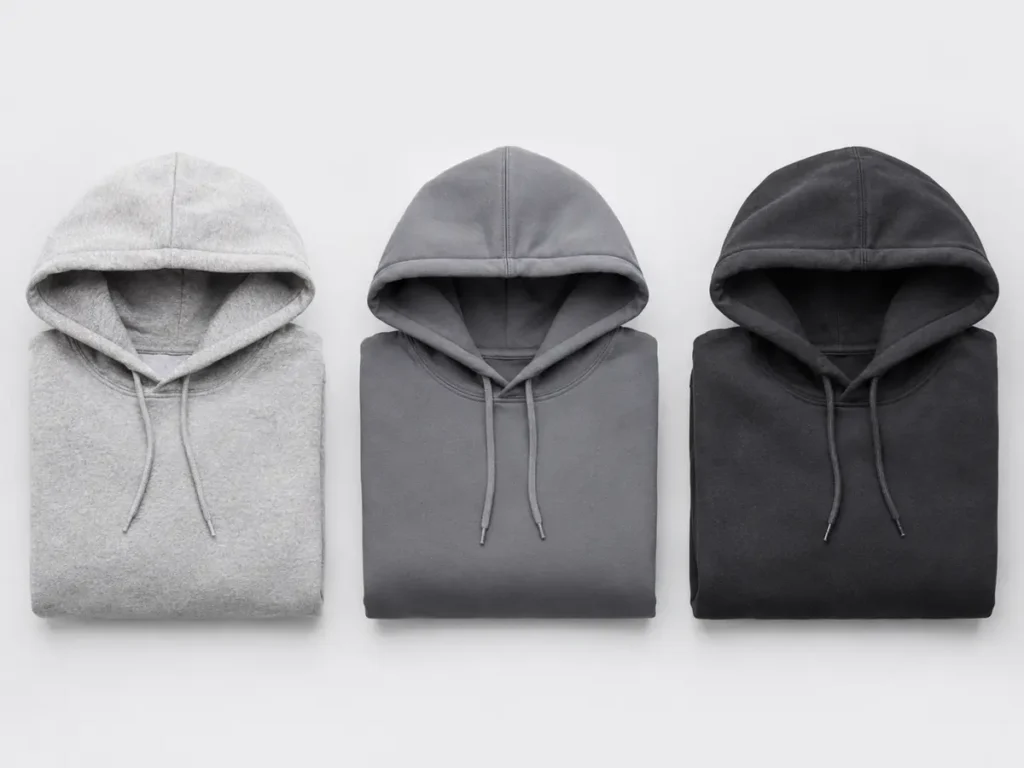
The lowest quote is not automatically the lowest total cost. A cheap hoodie that pills, shrinks, arrives in inconsistent colors, or needs to be remade may be more expensive than a better-specified product. The useful question is: What specification and service are included in the quoted price?
Why Two Custom Hoodie Quotes Can Be Far Apart
Two suppliers can quote the same quantity yet be pricing different products. One may use an existing blank and add a chest print. Another may source custom fabric, develop a pattern, dye a Pantone-matched color, add branded labels, inspect the order, and pack every garment for retail. Both are “custom hoodies,” but their material, labor, setup, risk, and service costs are not equivalent.
The quotation format also matters. An EXW price normally covers goods at the supplier’s premises. An FOB price includes delivery to the agreed port and export handling under the stated terms. A DDP proposal may include much more of the international logistics chain. Never compare EXW from one supplier with DDP from another as if both were factory unit prices.
Before comparing quotes, normalize these fields:
- Currency and quotation validity
- Product specification and approved reference
- Quantity per style and per color
- Included size range and any plus-size surcharge
- Decoration method, size, location, and color count
- Labels, hangtags, packaging, and carton requirements
- Sample charges and whether revisions are included
- Quality-control scope
- Trade term, named place or port, and freight inclusion
- Import duty, tax, and local delivery responsibility
The 10 Main Factors That Change Custom Hoodie Cost Per Piece
1. Order quantity
Quantity affects fabric purchasing, pattern and artwork setup, machine preparation, cutting efficiency, decoration setup, quality-control time, and packing. These fixed or semi-fixed costs are divided across more units as quantity grows.
However, “500 pieces” is not always one 500-piece production run. Five colors with 100 pieces each may cost more than one color with 500 pieces because each color can require separate fabric sourcing or dyeing, cutting organization, decoration setup, and inventory control.
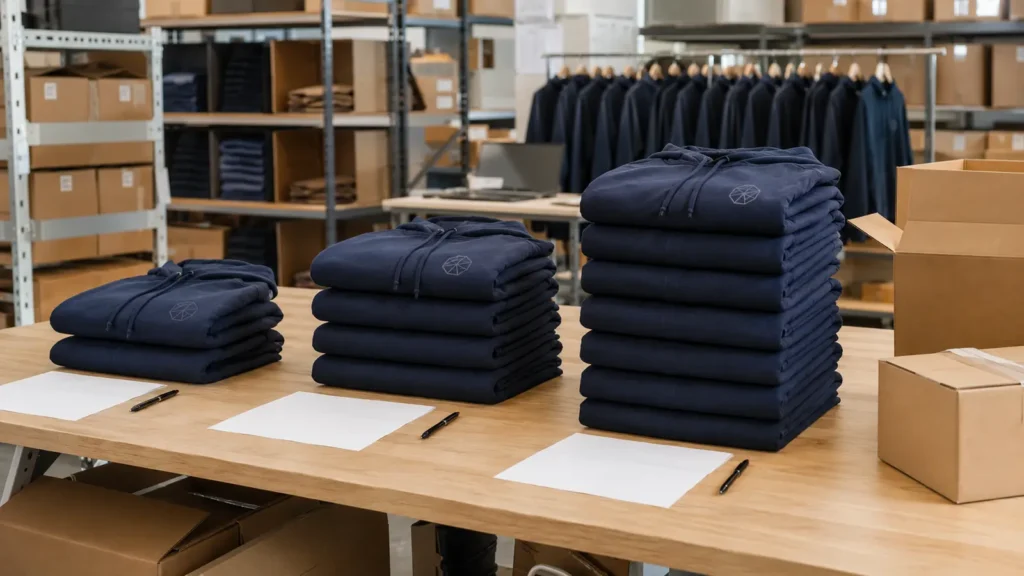
| Order structure | Pricing effect | Buyer action |
|---|---|---|
| 50 pieces, one color, shared logo | Higher unit cost but simple management | Use a standard fabric and limit decoration locations |
| 100–299 pieces, two colors | Better efficiency if colors use available fabric | Consolidate logo methods and approve one base pattern |
| 300–499 pieces, several sizes | Stronger material and setup efficiency | Confirm the size breakdown early |
| 500+ pieces, repeatable program | Best opportunity for negotiated unit cost | Lock specifications, tolerances, packaging, and reorder rules |
| Same total split across many designs | Unit cost may rise | Treat each design/color combination as a mini production lot |
2. Fabric composition
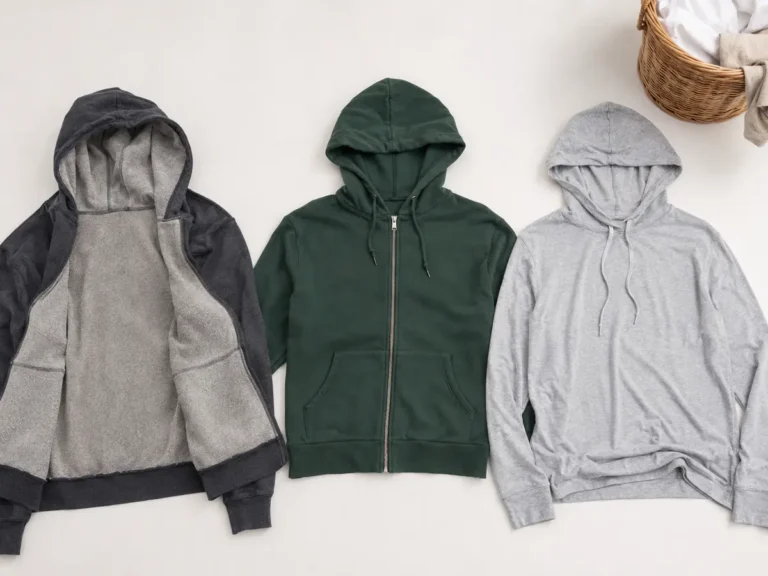
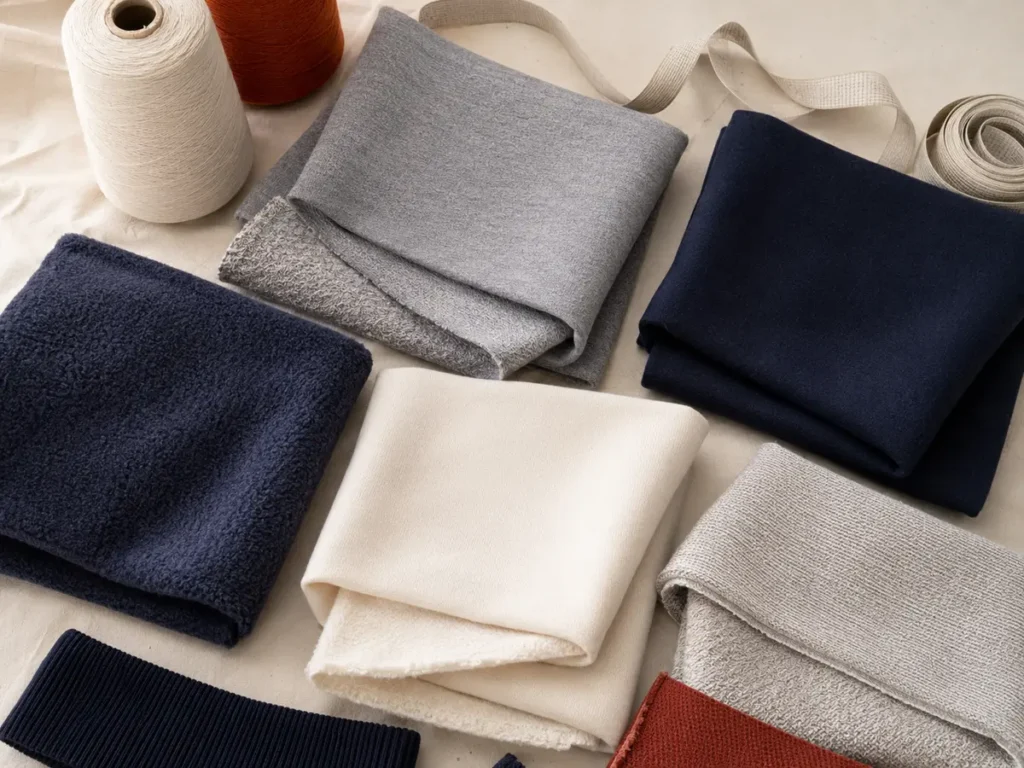
Fabric is usually one of the largest components of garment cost. Cotton-rich fleece, cotton-poly blends, polyester performance fleece, French terry, brushed fleece, and fabrics with recycled or organic inputs have different yarn, finishing, minimum-order, and sourcing profiles.
A cotton-poly blend can offer a practical balance of softness, dimensional stability, and cost for team or staff use. A cotton-rich face may create a smoother surface for certain print methods. Polyester is necessary for full sublimation, while premium streetwear programs may favor heavyweight cotton-rich fleece. The best option depends on use, decoration, climate, washing expectations, and target retail position.
3. Fabric weight
Fabric weight is commonly expressed in grams per square meter (GSM), but GSM alone does not define quality. Knit construction, yarn, brushing, finishing, density, and recovery also influence feel and performance.
As a planning framework:
- Lightweight hoodies may use roughly 240–280 GSM fabric.
- General team and corporate hoodies often sit around 280–330 GSM.
- Premium or colder-weather programs may use 350–450 GSM or more.
These are specification bands, not quality grades. A poorly finished heavy fabric can still perform badly, while a well-engineered midweight fabric may be ideal for active teams.
4. Pullover, zip-up, or custom cut-and-sew construction
A basic pullover normally has fewer components than a zip-up hoodie. Zip-up styles add zipper hardware, zipper installation, front alignment, and extra inspection points. Custom cut-and-sew programs can also involve pattern development, grading, custom panels, drop shoulders, oversized silhouettes, special pockets, hood construction, contrast inserts, thumbholes, or custom rib.
If the goal is a cost-efficient team hoodie, begin with a proven pullover shape. If the garment is intended to define a retail brand, pattern and construction development may justify the extra investment.
5. Decoration method
The logo method can change both appearance and price.
| Decoration method | Main cost drivers | Usually economical when | Watch for |
|---|---|---|---|
| Screen printing | Number of colors, screens, print locations, print size | Artwork has few colors and quantity is moderate or large | Setup cost and color registration |
| Embroidery | Stitch count, logo size, thread colors, locations | A small durable chest or sleeve logo is needed | Dense artwork can become heavy or distort fabric |
| Heat transfer | Transfer type, area, film, application time | Small runs, names, numbers, or detailed graphics are required | Hand feel and wash performance depend on material and process |
| Sublimation | Printed area, panel design, polyester fabric | Full-color, all-over team graphics are required | Requires suitable polyester-based construction |
| Woven or printed patch | Patch size, shape, border, attachment | A repeatable badge look is desired | Patch and sewing/application may be separate costs |
| Rubber/PVC-style patch | Mold or setup, colors, size, attachment | A dimensional brand detail supports the design | Higher setup and minimums may apply |
One small left-chest logo is usually more economical than large front and back graphics plus two decorated sleeves. Ask the supplier to quote each decoration location separately if you want to understand where the budget is going.
6. Individual names and numbers
Personalization increases data handling and production control. A shared team logo can be produced repeatedly. Fifty different player names require a verified roster, correct size-to-name mapping, unique production files, sorting, and final checking.
To control cost and error risk, provide a locked spreadsheet with one row per garment: style, color, size, name, number, and any special note. Approve the spelling and capitalization before production begins.
7. Custom colors and Pantone matching
Stock fabric colors are normally less expensive and faster to source than custom-dyed colors. Pantone matching can require lab dips, minimum fabric quantities, color approval, and tolerance management. A digital screen color is not a reliable approval standard because monitors differ.
For a first 50-piece order, choose an available fabric close to the brand color when possible. For a repeat program or larger brand launch, a controlled custom color may be worth the setup.
8. Labels, hangtags, and packaging
Private-label elements can include a woven neck label, printed neck label, size tab, care label, hem label, hangtag, barcode sticker, individual polybag, branded mailer, insert card, or retail box. Each component has its own minimum quantity, setup, material, and application cost.
Packaging can also affect shipping volume. A rigid presentation box may create a premium unboxing experience but raise freight and storage cost. For bulk team distribution, a size sticker on a standard individual bag may be more useful than an elaborate box.
9. Sample development
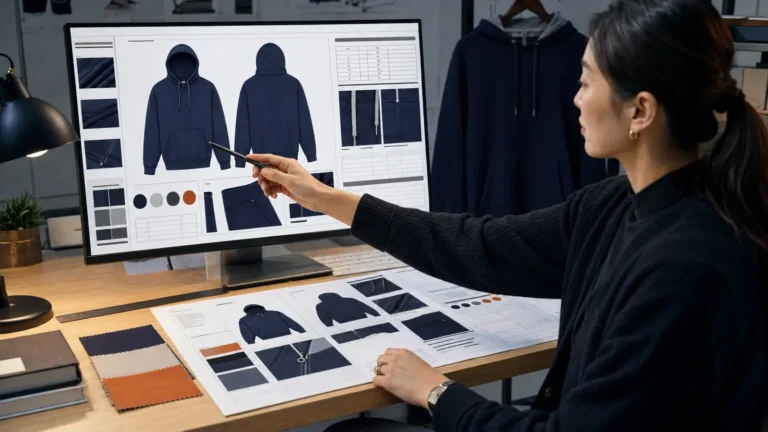
A physical sample is not simply one bulk unit at the bulk unit price. It may require pattern work, fabric purchasing below normal minimums, artwork setup, individual cutting and sewing, decoration trials, courier delivery, and revision time.
Budget separately for:
- A digital mockup or artwork confirmation
- A development or fit sample
- A decorated pre-production sample
- Courier freight
- One planned revision, if necessary
A well-managed sample can reduce the risk of a much more expensive bulk correction.
10. Freight, duty, tax, and delivery speed
The ex-factory or FOB unit price is not the landed cost. International freight, insurance, duty, customs brokerage, tax, port or terminal charges, and final delivery may all apply. Air courier is often faster but more expensive per unit than ocean freight. Volumetric weight also matters because hoodies are bulky.
Ask for carton dimensions, gross weight, units per carton, and the quotation trade term. Your freight forwarder can then estimate logistics using the same shipment assumptions across suppliers.
How Decoration Choices Change the Budget
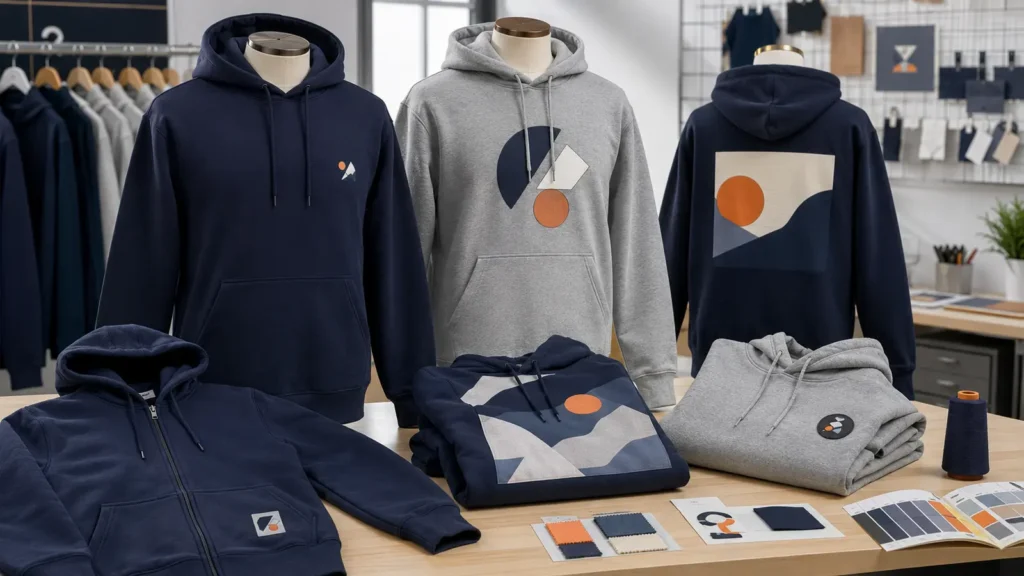
A useful way to control cost is to rank every customization as essential, valuable, or optional.
Essential elements create the core identity: base color, team logo, approved fit, and required player information. Valuable elements improve perceived quality: a lined hood, better rib, an inside label, or a second small decoration. Optional elements can be removed if they do not support the buyer’s goal: oversized secondary graphics, custom metal trims, elaborate boxes, or unique artwork for every subgroup.
For example, a school may get more value from a durable one-color chest print and a reliable size range than from expensive sleeve graphics. A private-label streetwear brand may make the opposite decision because fabric weight, silhouette, neck label, and back artwork are central to the retail concept.
Send JIUMU your quantity, target budget, reference image, fabric preference, color count, size breakdown, logo files, packaging needs, delivery country, and target date. We can review the specification and prepare a project-specific quotation. Request a custom hoodie quotation.
Factory Price Versus Landed Cost
Use the following equation when building a buying budget:
Landed unit cost = (goods + sampling amortization + decoration/setup + packaging + inspection + international freight + duty/tax + brokerage + local delivery) ÷ sellable units
“Sellable units” is important for retailers. If a business orders 500 pieces but expects a small allowance for inspection rejects, samples, marketing units, or damage, dividing the total project cost by 500 can understate the real cost of each revenue-generating unit.
Illustrative landed-cost model
This example demonstrates the method only. It is not a JIUMU quote.
| Cost item | Illustrative project amount |
|---|---|
| 300 midweight custom hoodies at $17.50 | $5,250 |
| Sample and artwork setup | $250 |
| Individual labels and packaging | $180 |
| Pre-shipment inspection allowance | $150 |
| Freight, brokerage, and local delivery | $1,050 |
| Estimated duty/tax allowance | $420 |
| Total project cost | $7,300 |
| Calculated landed cost per ordered unit | $24.33 |
If ten units are reserved for photography, fit reference, or service replacement, the commercial cost per available unit becomes $7,300 ÷ 290, or about $25.17. The arithmetic is simple, but it produces a more honest margin model.
How to Reduce Hoodie Cost Without Making the Product Look Cheap
Cost reduction should simplify the specification, not remove the features buyers notice most.
- Consolidate colors. One or two stock fabric colors create better production efficiency than many low-volume colors.
- Use one strong decoration. A well-sized chest or back graphic often looks more intentional than several small, unrelated decorations.
- Choose the right weight for the use case. Do not pay for 450 GSM fabric if the hoodie is for indoor events or warm climates.
- Standardize the base pattern. Use one approved unisex or adult pattern when the audience allows it.
- Plan sizes before ordering. Late size changes can disrupt cutting, personalization, and packing.
- Combine repeat demand. A season or annual program may justify a larger planned order, but only if inventory risk is acceptable.
- Use practical packaging. A recyclable shipping carton and clearly labeled individual bags may serve team distribution better than retail boxes.
- Approve artwork early. Late changes can waste screens, transfers, embroidery files, or decorated samples.
- Compare the same trade term. A lower EXW price may not beat a higher FOB or delivered price after local charges.
- Protect quality-critical details. Keep requirements for fabric hand, shrinkage expectations, color, measurements, seam integrity, and decoration placement.
Quality Control: What Buyers Should Approve
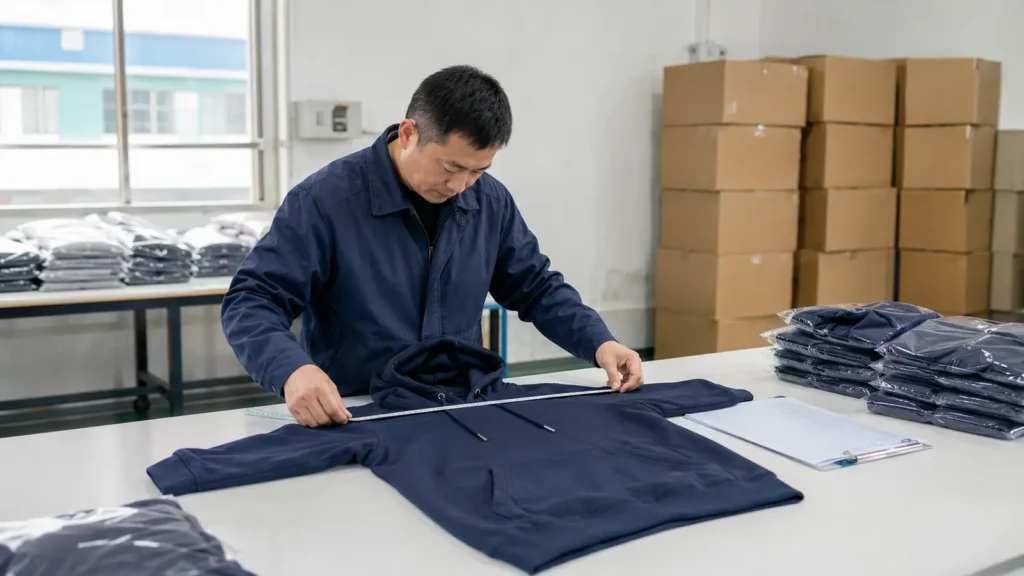
The sample and bulk inspection plan should focus on observable requirements. Avoid instructions such as “make it high quality” because they are difficult to measure.
Before the sample
- Confirm style, fit reference, target measurements, and tolerance expectations.
- Confirm fabric composition, nominal GSM, color, surface, and inside finish.
- Send vector logo artwork or the highest-resolution source available.
- Define decoration dimensions and placement from clear reference points.
- State label content, packaging method, and carton marks.
During sample approval
- Measure chest, body length, sleeve length, shoulder, cuff, and hood.
- Check fabric hand, color in normal light, and visible surface defects.
- Check print edge, color registration, embroidery density, or patch attachment.
- Try the sample on the intended size range or fit model.
- Wash-test according to the care method the final product will use.
- Record every approved change in one revision sheet.
During bulk inspection
- Compare random units with the sealed approved sample.
- Verify color consistency between units and components.
- Check critical measurements across sizes.
- Inspect seams, pocket corners, hood attachment, cuff recovery, and drawcord symmetry.
- Confirm logo position, orientation, color, and appearance.
- Match personalized names and numbers to the final roster.
- Verify labels, size stickers, quantities, assortment, carton marks, and packing.
What to Send for an Accurate Custom Hoodie Quote
A complete RFQ saves more time than asking ten suppliers the same one-line question. Send:
| RFQ field | Example |
|---|---|
| Product | Unisex pullover hoodie |
| Quantity | 300 pieces |
| Color breakdown | Navy 200, heather gray 100 |
| Size breakdown | XS–3XL, attached spreadsheet |
| Fabric | Cotton-poly brushed fleece, target 320 GSM |
| Fit | Regular team fit; reference sample available |
| Decoration | 9 cm embroidered left-chest logo; 28 cm one-color back print |
| Personalization | None |
| Labels | Woven neck label, care label, size tab |
| Packaging | Individual bag with size sticker; export carton |
| Quality requirements | Approved pre-production sample; measurement and appearance inspection |
| Delivery | Toronto, Canada |
| Trade term requested | Quote FOB and DDP separately |
| Target arrival | Exact required date |
| Artwork | Vector AI, EPS, PDF, or SVG |
Ask the supplier to identify assumptions instead of hiding them. If a fabric, trim, or packaging detail is not confirmed, the quotation should state what was used for costing.
Questions to Ask a Custom Hoodie Supplier
- Is the quote based on a catalog blank or custom cut-and-sew production?
- What exact fabric composition, weight, knit, and finish are included?
- Is the fabric color stock, lab-dip matched, or custom dyed?
- Is MOQ calculated per style, color, decoration, or total order?
- Which logo size, stitch count, colors, and locations are included?
- Are artwork setup, sample, label, and packaging costs included?
- What size range is included, and do larger sizes cost more?
- What are the measurement tolerances and inspection method?
- What is the production lead time after final sample approval?
- Which trade term and named place apply to the price?
- What are the carton dimensions, gross weight, and packing quantity?
- How are repeat-order color and fit consistency controlled?
Common Costing Mistakes
Comparing a blank price with a finished hoodie price
A low blank price may exclude printing, embroidery, labels, packing, and handling. Compare the final specification, not the first number shown.
Ignoring color and design splits
One 300-piece design can be more efficient than six 50-piece designs. Show every style/color/design split in the RFQ.
Treating sample cost as the bulk unit price
Samples carry one-off development and courier costs. They should be budgeted as product-development expense.
Choosing fabric by GSM alone
Weight does not describe yarn, knit density, brushing, shrinkage, pilling behavior, surface smoothness, or recovery. Approve the actual fabric and sample.
Forgetting landed cost
Freight, duty, tax, brokerage, and delivery can change the result significantly. Use the same destination and trade term when comparing suppliers.
Removing quality control to save a small amount
Inspection is usually cheaper than sorting or replacing an entire international shipment after arrival.
Choosing the Right Supply Model
Public pricing also varies because buyers are choosing different supply models.
| Supply model | MOQ and inventory | Customization depth | Relative unit cost | Best use |
|---|---|---|---|---|
| Print on demand | No or very low MOQ; little inventory | Catalog garment and available print locations | Higher | Testing designs, single-unit ecommerce fulfillment |
| Local decorator | Low to medium MOQ | Stock blank plus print or embroidery | Medium to high | Fast domestic programs and local support |
| Overseas blank plus decoration | Medium MOQ | Limited garment changes; flexible decoration | Medium | Teams and promotions using proven blanks |
| OEM cut-and-sew | Usually medium or higher MOQ | Fabric, fit, panels, labels, trims, packaging | Efficient at scale but development costs apply | Private label, controlled teamwear, repeat programs |
Printful states that its bulk program can mix colors, sizes, and designs within the same product from 25 pieces, while Custom Ink says its per-piece pricing decreases with quantity. These conveniences are useful, but buyers should compare them with inventory, branding, garment-control, and lead-time requirements rather than price alone. Sources: Printful bulk hoodies and Custom Ink bulk hoodie guide.
Why Buyers Consider JIUMU
JIUMU supports B2B custom teamwear and branded-apparel projects for schools, sports teams, clubs, distributors, uniform dealers, promotional companies, and private-label brands. Established in 2010 and based in Guangdong, China, JIUMU offers OEM and ODM development with a typical MOQ of 50 pieces, subject to product structure and customization.
Relevant hoodie capabilities include fabric sourcing, Pantone color matching, embroidery, sublimation, screen printing, heat transfer, woven and rubber/PVC-style patches, private labels, hangtags, packaging customization, digital mockups, physical samples, bulk quality control, and export support.
Buyers can start with the JIUMU custom hoodies category, coordinate hoodies with custom team uniforms, or request a project review through the contact page.
Frequently Asked Questions
Final Recommendation
Use $10–$30 per piece as an early bulk-planning band, then replace that estimate with a specification-based quote. Separate factory price from landed cost. Compare identical fabrics, construction, decoration, packaging, quality-control scope, and trade terms. Approve a physical sample before bulk production and keep one sealed reference for inspection.
The right target is not the cheapest hoodie. It is the lowest defensible total cost for a garment that meets the buyer’s fit, appearance, durability, brand, delivery, and margin requirements.
Request a JIUMU Custom Hoodie Quote
Send the following to JIUMU:
- Reference image or tech pack
- Quantity by color and size
- Fabric composition and target GSM
- Pullover or zip-up style and fit
- Logo files, dimensions, locations, and preferred methods
- Personalization list, if required
- Labels, hangtags, packaging, and barcode needs
- Delivery country, target date, and preferred trade term
Request a custom quotation or contact zhengdong@jiumugear.com / WhatsApp +86 18507502899.
About the author: JIUMU’s sourcing and teamwear team prepares practical product-development guidance for schools, clubs, distributors, promotional buyers, and private-label apparel brands. Pricing examples in this article are planning illustrations and public market references, not binding offers.