How to Start a Custom Fitted Hat Business: A Step-by-Step Guide
Starting a custom fitted hat business is not simply a matter of placing a logo on a blank cap. A fitted hat has no adjustable closure, so crown construction, size grading, fabric behavior, embroidery placement, and inventory planning all have to work together. That added complexity can become a competitive advantage when the product is designed carefully—and an expensive source of returns when it is not.
This guide explains how to build a private-label fitted hat business for the United States, Canada, the United Kingdom, or Europe. It is written for ecommerce founders, streetwear labels, sports organizations, promotional buyers, and distributors creating an original product.
Quick answer: To start a custom fitted hat business, choose a specific customer and product position, validate demand before buying deep inventory, clear your brand name, create a detailed hat specification, select an OEM/ODM supplier, approve a physical sample, calculate landed cost by size, place a controlled first order, and launch with a replenishment plan. The most important fitted-hat decision is the size architecture: every size is a separate inventory unit, so your size curve should be based on real audience data rather than guesswork.
The custom fitted hat business roadmap
| Stage | Main decision | Practical output |
|---|---|---|
| 1. Positioning | Who is the hat for, and why should they choose it? | One target audience, one use case, one brand promise |
| 2. Validation | Is there evidence of demand? | Interviews, waitlist, preorder signals, or small paid test |
| 3. Business setup | Can you trade under the name and meet local rules? | Entity, tax setup, trademark review, labeling plan |
| 4. Product design | What exactly will be manufactured? | Tech pack, size range, materials, colors, artwork |
| 5. Supplier selection | Who can reproduce the product consistently? | Compared quotations, capability checks, references |
| 6. Sampling | Does the real hat meet the specification? | Approved physical sample and recorded revisions |
| 7. Unit economics | Can the business make money after all costs? | Landed cost, target margin, break-even model |
| 8. First order | How much should be ordered in each size? | Conservative SKU plan and purchase order |
| 9. Quality control | How will defects and variation be managed? | Inspection checklist and acceptance agreement |
| 10. Launch | How will the first customers discover and trust it? | Content, product page, email list, channel plan |
| 11. Replenishment | What should be reordered, changed, or retired? | Size-level sell-through and reorder rules |
What is a fitted hat?
A fitted hat is a cap made in fixed head sizes rather than with a snap, strap, buckle, or hook-and-loop closure. The rear panels are closed, creating a continuous crown. The familiar silhouette can be structured or less structured, high-, mid-, or low-profile, and paired with a flat or curved visor.
The commercial difference between fitted and adjustable hats is inventory. A snapback design may use one adjustable size for most customers. A fitted design may require several circumference sizes for the same color and logo. If a brand offers two colors across six sizes, it has twelve stock-keeping units before adding any other design.
That does not make fitted hats a poor startup product. It means the business should win on fit, identity, collectible design, and product credibility—not on having dozens of untested variations.
Step 1: Choose a focused market position
“People who wear hats” is too broad to guide a product. Begin with a group whose style, use case, and purchase behavior you can understand.
Possible starting niches include:
- Local baseball or softball communities
- Independent streetwear audiences
- University clubs and alumni groups
- Golf, automotive, outdoor, or music communities
- Corporate merchandise programs
- Regional identity and tourism concepts
- Artist, creator, and event merchandise
- Private-label collections for existing retailers
Define the customer in operational terms. Where do they discover products? What do they already buy? Do they prefer understated embroidery, large graphics, or material-led design? Are they buying one hat, a team run, or wholesale assortments?
Then write a one-sentence positioning statement:

Validate a product concept with real buyer feedback before committing to deep inventory.
Step 2: Validate demand before ordering inventory
Market research should reduce uncertainty, not produce a thick document nobody uses. The U.S. Small Business Administration recommends combining market research with competitive analysis to understand customers and identify a competitive advantage (SBA market research guide).
Start with three forms of evidence:
- Customer evidence: Interview at least a small set of target buyers. Ask what they currently wear, what fits badly, what they pay attention to, and what would stop them from ordering.
- Competitive evidence: Map products by profile, material, decoration, size range, price band, shipping promise, and review themes. Look for an underserved combination rather than copying a logo or colorway.
- Behavioral evidence: Test a landing page, email waitlist, sample-based preorder, retailer conversation, or modest paid campaign. Measure sign-ups, qualified inquiries, preorder conversion, and size requests.
Avoid treating likes as purchase intent. A useful validation test asks someone to provide an email, request a quotation, reserve a product, place a refundable deposit, or make a purchase.
Build a minimum viable fitted-hat collection
An early collection usually benefits from fewer variables:
- One crown block and profile
- One visor shape
- One primary fabric
- One or two logo systems
- Two or three carefully selected colorways
- A deliberate but controlled size range
Add colors or new embroidery stories after the brand has size-level sales data.
Step 3: Set up the business and protect the brand
Registration, tax, privacy, consumer-rights, and import obligations depend on where the business operates and sells. Confirm applicable requirements with qualified local advisers.
Choose and register the business structure
Select the legal structure that fits ownership, tax, liability, and fundraising needs. Register the company and any required trade name in the relevant jurisdiction. In the United States, an Employer Identification Number is a federal tax identification number for businesses and can be obtained directly from the IRS without a fee (IRS EIN guidance).
Clear the brand name before buying labels
Search for similar names, not only identical names. Check search engines, domains, social handles, marketplaces, company registers, and relevant trademark databases. The USPTO explains that federal database searching is one essential part of a broader trademark clearance process and notes that a comprehensive search can involve several sources (USPTO clearance guidance).
Plan product labeling and market compliance
For the United States, most covered textile and wool products require labels identifying fiber content, country of origin, and the manufacturer or another responsible business. The FTC provides specific textile-labeling guidance, while U.S. Customs may impose separate origin-marking requirements (FTC textile labeling guide).
If you sell consumer products into the European Union, review the General Product Safety Regulation and the obligations that apply to your role in the supply chain, including online sales and economic-operator information. The regulation covers consumer products sold online as well as through physical channels (European Commission GPSR overview).
Also confirm requirements for packaging, chemical restrictions, children’s products, substantiation of environmental claims, and local language information where applicable. Do not print “Made in USA,” “organic,” “recycled,” “waterproof,” or similar claims without documentation that supports the exact wording.
Step 4: Turn the idea into a manufacturable specification
A mood board communicates style; a tech pack communicates a product. A strong request for quotation should remove ambiguity about what the supplier is pricing.
Specify the crown and fit
Record:
- Panel count and panel geometry
- Structured or unstructured crown
- Low, mid, or high profile
- Crown height target
- Closed fitted back
- Front-panel reinforcement
- Eyelet count, type, and color
- Sweatband material and width
- Interior seam taping
- Visor shape, length, and number of stitch rows
- Flat or pre-curved visor
- Top button and under-visor color
Ask the supplier whether the sample uses an existing crown block or a newly developed pattern. An existing block can reduce development uncertainty, while a custom block may better support a distinctive fit. Either route should be measured and approved.
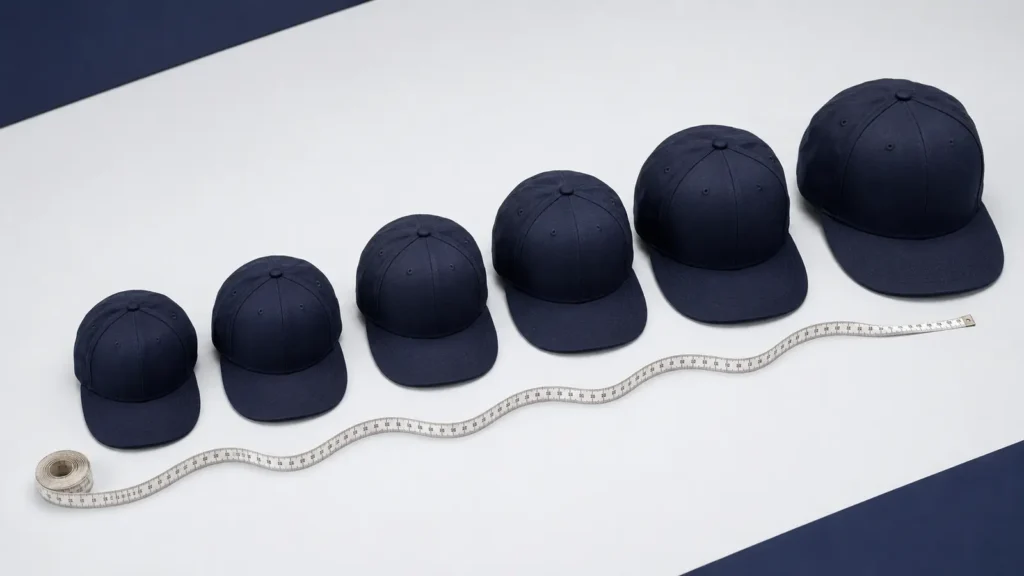
Every fitted size is a separate SKU, making the size curve a central inventory decision.
Design a sensible size architecture
Do not rely only on size names such as S/M or 7 1/4. Record the target internal circumference in centimeters and inches, along with the tolerance and the measurement method.
| Size-planning element | Decision to document | Why it matters |
|---|---|---|
| Size labels | Numeric fitted sizes, alpha sizes, or a controlled hybrid | Determines customer expectations and SKU count |
| Circumference | Target internal measurement for every size | Makes the fit measurable |
| Grade interval | Difference between adjacent sizes | Prevents gaps or excessive overlap |
| Tolerance | Acceptable production variation | Enables consistent inspection |
| Measurement condition | Relaxed, lightly tensioned, and at a defined line | Reduces disputes between teams |
| Size curve | Units ordered in each size | Controls stock-outs and dead inventory |
Use customer measurements, preorder selections, existing audience sales, or comparable product data to choose the first size curve. If reliable data is unavailable, keep colorways narrow and reserve budget for replenishment. A size that sells through quickly is easier to fix with a repeat order than a broad collection of slow-moving sizes.
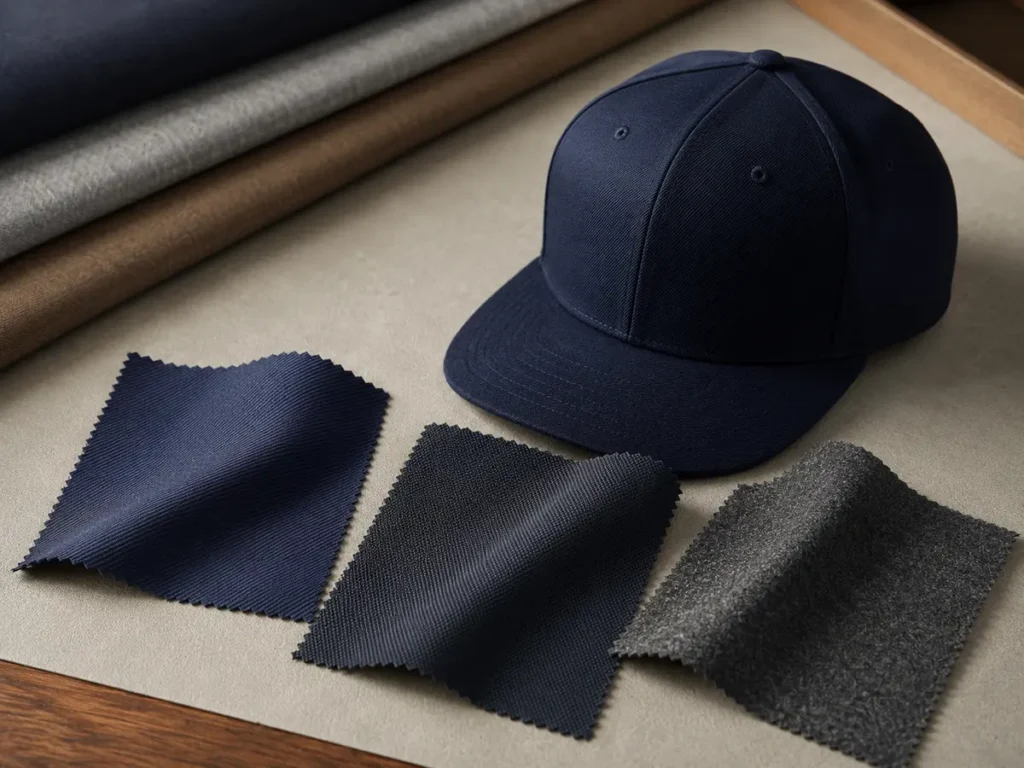
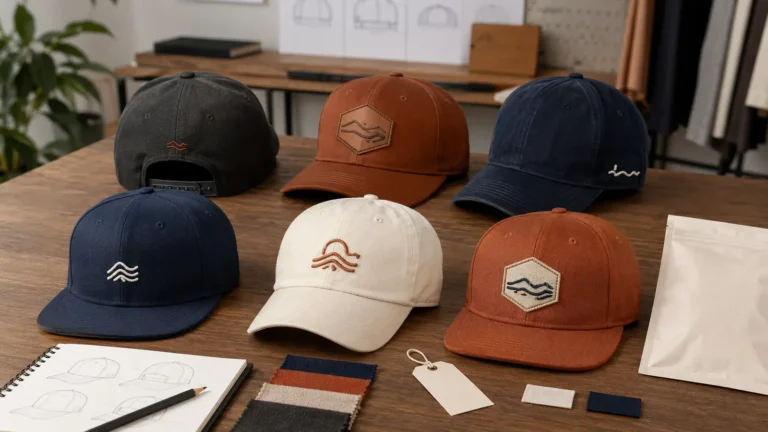
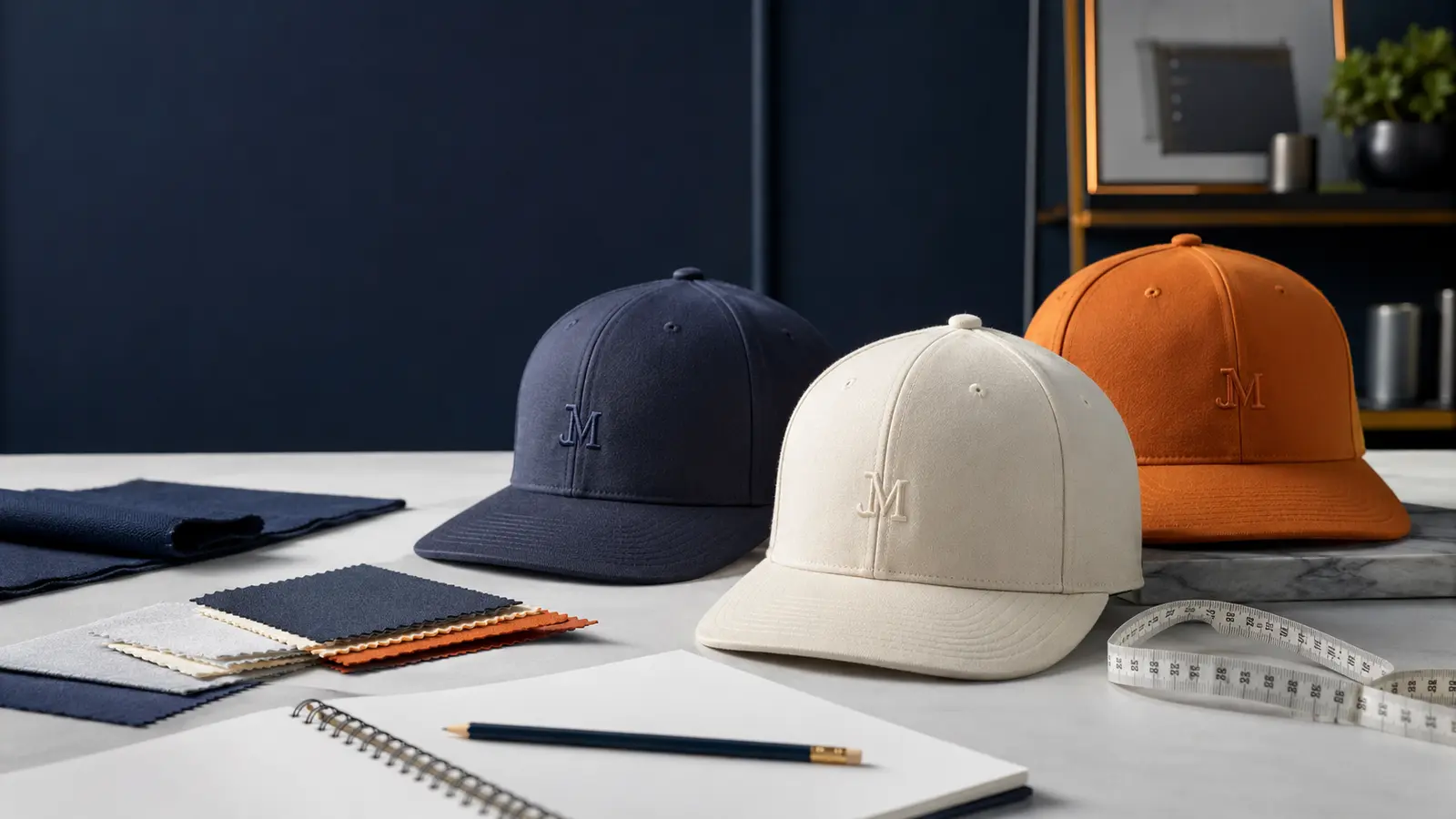
Select fabric for the intended fit, decoration, appearance and use environment.
Choose fabric for the intended use
Common options include cotton twill, polyester, acrylic blends, wool blends, performance fabrics, mesh combinations, corduroy, denim, canvas, nylon, and qualified recycled materials. Ask for actual composition, weight, hand feel, colorfastness expectations, and available color standards.
Material selection should connect to use:
- Cotton twill can support a familiar lifestyle appearance and comfortable hand.
- Polyester and blended fabrics can provide shape retention and color options, depending on construction.
- Wool blends can create a traditional sports or heritage feel.
- Performance fabrics may suit golf, training, and warmer environments.
- Corduroy or denim can create a seasonal fashion statement but may affect embroidery and panel handling.
Request swatches when color and texture are central to the collection. Digital screens do not reliably communicate fabric hand or exact color.
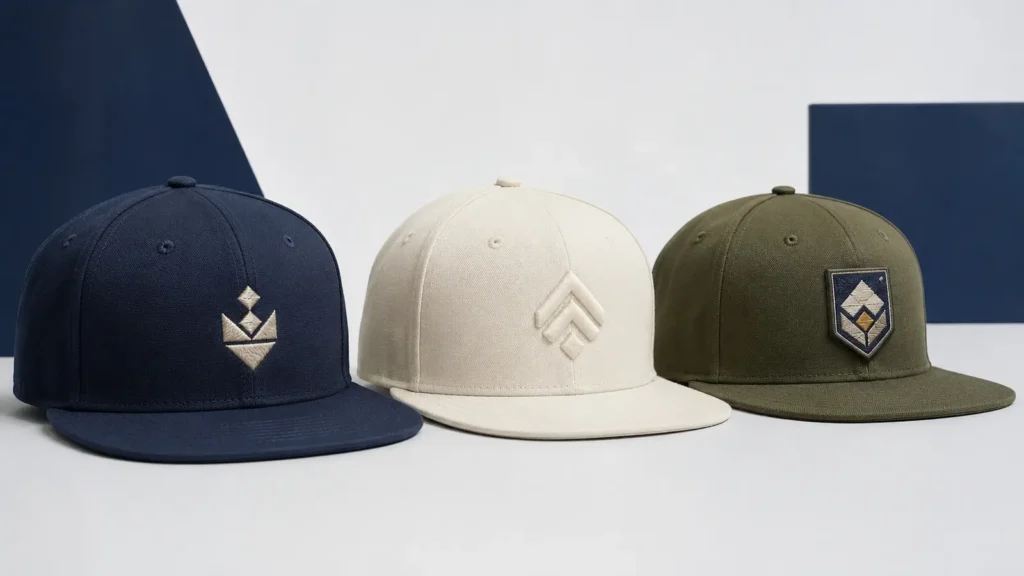
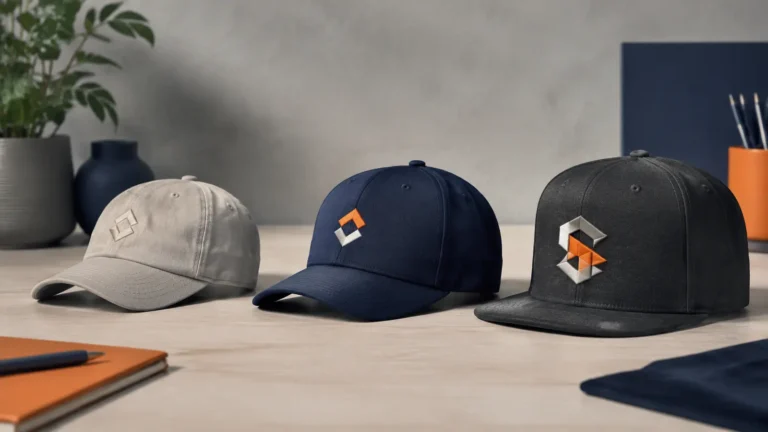
Match the logo method to the artwork, fabric and intended visual character.
Select decoration methods intentionally
| Method | Visual character | Best use | Production consideration |
|---|---|---|---|
| Flat embroidery | Clean and versatile | Detailed logos, side marks, text | Fine details need suitable stitch density and minimum line width |
| 3D or puff embroidery | Raised and bold | Simplified front marks | Small counters and thin lines may close |
| Woven patch | Fine graphic detail | Complex badges and heritage styling | Border, backing, and attachment method must be specified |
| Embroidered patch | Textured, traditional | Team and club concepts | Dense patches add weight and stiffness |
| Rubber/PVC patch | Dimensional, modern | Outdoor and performance concepts | Color, thickness, and flexibility require approval |
| Leather-style patch | Premium, understated | Lifestyle and workwear collections | Confirm material claim and deboss/emboss detail |
| Heat transfer or print | Smooth graphic treatment | Artwork unsuitable for stitching | Test adhesion and appearance on the chosen fabric |
Simplify artwork before sampling. A logo that looks good on a screen may fail when translated into thread, especially at small sizes. Define front, side, and rear placements with dimensions measured from fixed seams.
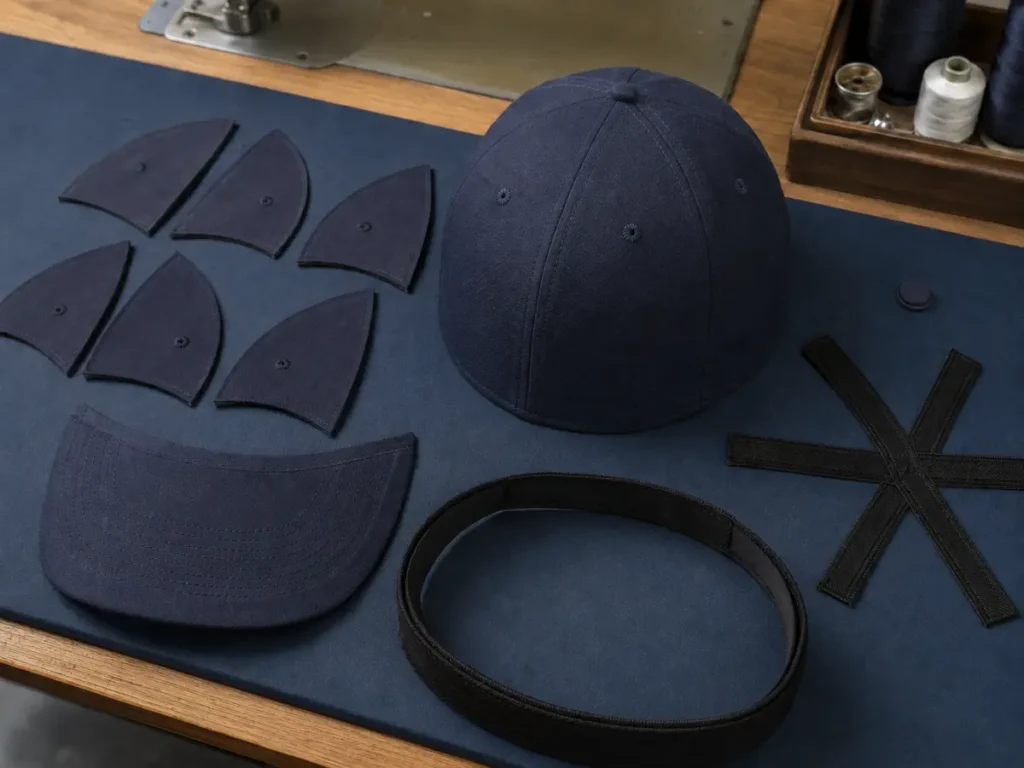
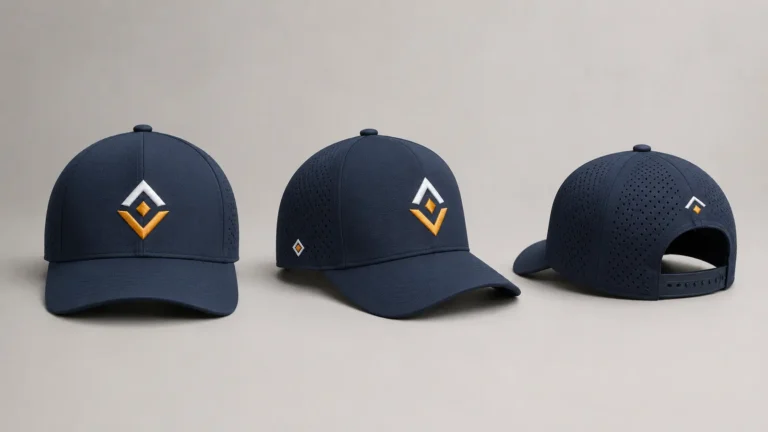
A manufacturable specification defines the crown, visor, sweatband, taping and finishing details.
Step 5: Find and evaluate a custom fitted hat manufacturer
Search for a supplier that can demonstrate the specific capabilities your product needs. “Can make hats” is not enough. Fitted construction requires controlled crown blocks, size grading, sweatband execution, and consistent closed-back assembly.
Ask potential suppliers:
- Which fitted crown profiles and size systems are available?
- Can you provide target circumference and tolerance by size?
- Which fabrics are stocked, and which require custom sourcing?
- Which embroidery and patch methods are completed in-house or by partners?
- What is the minimum order quantity by design, color, and size?
- What does the sample fee include, and how many revisions are allowed?
- How are Pantone colors and thread colors approved?
- What quality checks are recorded during and after production?
- How are replacement, rework, or shortage issues handled?
- What packaging, carton marking, export, and shipping documents can be provided?
- Can approved sample details be retained for repeat orders?
- What information can change the production schedule?
Compare quotations on the same specification. Check whether labels, embroidery, packaging, inspection, freight, duties, and development are included.
What to send when requesting a quotation
Prepare one inquiry package containing:
- Product type: closed-back fitted hat
- Target quantity and estimated size breakdown
- Number of designs and colorways
- Reference photos used only to explain shape—not to copy protected designs
- Panel structure, crown profile, and visor specification
- Fabric type, composition preference, and color references
- Logo artwork in vector format where possible
- Decoration method, dimensions, placements, and thread colors
- Interior branding, labels, taping, hangtags, stickers, and packaging
- Destination country and postal code
- Required delivery window
- Testing, documentation, or inspection requirements
This information helps the supplier quote a comparable product and identify feasibility issues early.
Planning a fitted-hat launch? Send JIUMU your quantity, target sizes, crown profile, fabric preference, logo files, packaging needs, destination, and target delivery date. The team can review the concept for OEM/ODM development and prepare a custom quotation. Request a fitted-hat quotation.
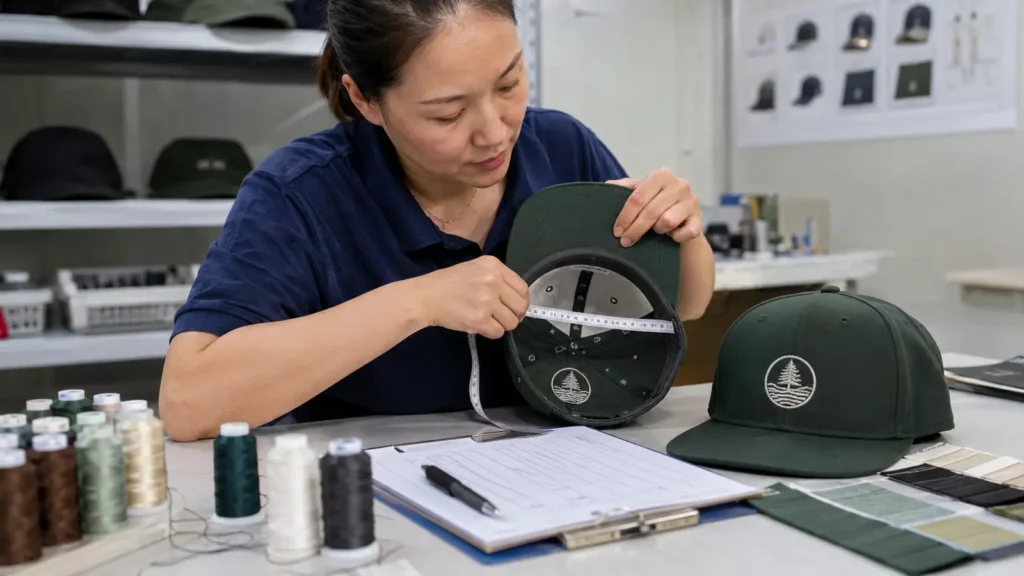
Physical samples and measurable tolerances help control fit, decoration and repeat-order consistency.
Step 6: Approve a physical sample before bulk production
The sample is a decision tool, not a formality. Review it on actual wearers and against written measurements.
Fitted-hat sample approval checklist
| Area | What to inspect | Record |
|---|---|---|
| Fit | Circumference, depth, pressure points, size consistency | Measurement and wearer notes by size |
| Silhouette | Crown height, front shape, side profile, rear curve | Front, side, rear, and top photos |
| Visor | Length, curvature, symmetry, stitch rows | Measurement and approved curve |
| Fabric | Composition, color, texture, wrinkles, panel matching | Swatch or supplier reference code |
| Embroidery | Dimensions, placement, density, registration, backing | Close-up photos and artwork version |
| Construction | Seams, eyelets, top button, taping, sweatband | Defect and tolerance notes |
| Branding | Interior labels, country of origin, size label, hangtag | Exact approved copy and position |
| Packaging | Bag, barcode, sticker, carton assortment | Packing specification |
Approve each change in writing. Use version numbers for artwork and tech packs. If the fit changes materially, request the relevant graded-size samples or measurement confirmations instead of assuming every size will follow correctly.
Keep an approval sample as the production reference. Use a second sample for photography and wear testing when possible.
Step 7: Build unit economics from landed cost
The factory unit price is only one part of cost. Calculate landed cost before deciding retail or wholesale pricing.
Landed cost per sellable hat
Product + decoration + labels + packaging + inspection + freight + duty/tax + payment/banking + inbound handling + expected defect allowance
Then model contribution after channel costs:
Net selling price – landed cost – transaction fees – fulfillment – outbound shipping subsidy – returns/allowances – variable marketing cost
Use your own quotations and market-specific tax advice. Do not adopt a generic “multiply cost by three” rule without checking channel economics.
Example unit-economics worksheet
| Input | Your amount | Notes |
|---|---|---|
| Factory product and decoration | $___ | Use the approved specification |
| Labels and packaging | $___ | Include barcode or retailer requirements |
| Inspection allocation | $___ | Divide by sellable units |
| Freight and import allocation | $___ | Use destination-specific estimates |
| Duty, tax, brokerage | $___ | Confirm classification and local treatment |
| Defect/shortage allowance | $___ | Use a documented planning assumption |
| Landed cost | $___ | Sum of the above |
| Net selling price | $___ | Exclude collected sales tax/VAT where appropriate |
| Channel and transaction fees | $___ | Platform, payment, affiliate, or wholesale costs |
| Fulfillment and shipping subsidy | $___ | Use actual rate tables |
| Variable marketing | $___ | Track by channel |
| Contribution per unit | $___ | Before fixed overhead and tax |
Also model cash timing. A profitable purchase order can still create a cash-flow problem if deposits, production balances, freight, and marketing are paid long before customers pay.
Step 8: Plan the first order by SKU, not only total units
A 300-piece order can behave like twelve smaller inventory bets when spread across colors and sizes. Create a SKU table showing units, landed cost, launch price, reorder point, and expected lead time for every size-color combination.
Use three principles:
- Concentrate evidence. Put more units behind the color and design with the strongest validation.
- Protect core sizes. Use available measurement or preorder data to avoid running out of the most requested sizes immediately.
- Keep a reorder reserve. Do not spend the entire cash budget on the first production run.
If a supplier offers a typical MOQ of 50 pieces, confirm whether that minimum applies per design, color, size, or total order. JIUMU’s typical MOQ is 50 pieces, subject to product structure and customization; the size and color allocation should be confirmed during quotation.
Step 9: Establish bulk-production quality control
Quality cannot be inspected into a product that was never clearly specified. Begin with an approved sample, measurable tolerances, and a defect classification.
Suggested inspection points
- Purchase material and color confirmation
- Pre-production artwork and placement confirmation
- First-piece embroidery review
- In-line checks for panel alignment and sewing
- Size measurement using an agreed method
- Visual inspection under consistent lighting
- Needle, thread, adhesive, and loose-component checks as relevant
- Quantity, size-ratio, barcode, packaging, and carton verification
- Pre-shipment photo report or third-party inspection when required
Define critical, major, and minor issues for your product. Examples might include the wrong size label, materially incorrect circumference, reversed artwork, severe embroidery damage, broken stitching, color mismatch beyond the approved standard, or incorrect carton assortment. The parties should agree on the inspection method and remedy before production begins.
Repeat-order consistency matters as much as the first run. Retain approved artwork, thread codes, fabric references, measurements, packaging files, and sample photos. When a material must be substituted, approve it before the supplier continues.
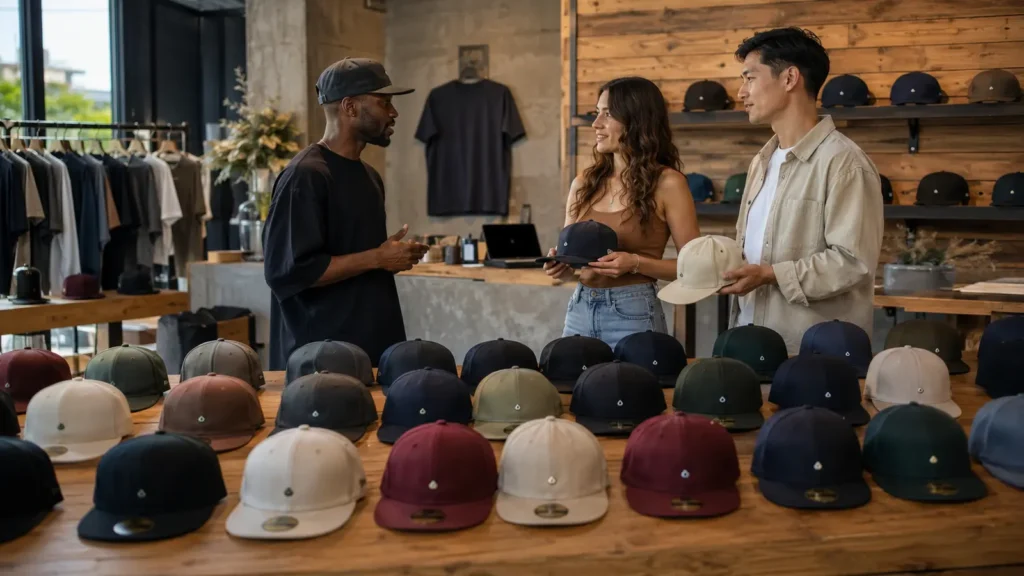
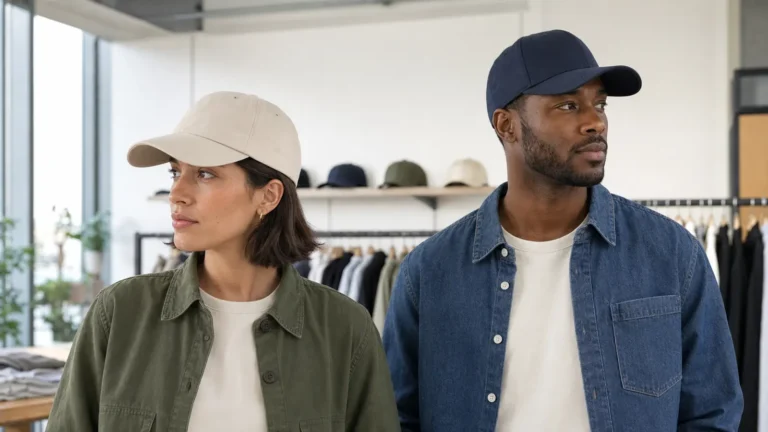
A focused product, clear fit guidance and authentic sample photography support a credible launch.
Step 10: Build a launch system, not a single announcement
Your product page should answer the questions a customer has before buying a fixed-size hat:
- How do I measure my head?
- What does the crown look like from the side?
- Is the visor flat or curved?
- What material is used?
- How does each labeled size correspond to circumference?
- What should I do if I fall between sizes?
- Can I exchange a size?
- What do the embroidery and interior details look like?
- When will the order ship?
Use real sample photography. Include a front view, side view, rear view, interior view, embroidery close-up, on-head view, and size guide. Avoid using only 3D mockups after the product is available.
Channel strategy
For direct-to-consumer sales, build an email list before inventory arrives. Publish sample development, fit testing, material decisions, and styling content.
For wholesale, prepare a line sheet with SKU, available sizes, wholesale price, suggested retail price where permitted, order minimum, production or stock status, packaging, and delivery terms. Buyers also need clear reorder information.
For teams and organizations, simplify collection management. Offer an approved core hat, a controlled color system, player or member sizing instructions, and a repeat-order process.
Step 11: Measure what to reorder
Track performance at size and color level. Total sales can hide a poor size curve.
Useful metrics include:
- Product-page conversion rate
- Size-guide engagement
- Add-to-cart rate by size
- Sell-through by SKU
- Out-of-stock demand and back-in-stock sign-ups
- Return or exchange reason by size
- Gross margin and contribution by channel
- Customer acquisition cost by campaign
- Repeat purchase and wholesale reorder rate
- Days from order placement to sellable inventory
Read customer service messages as product data. Repeated comments such as “too shallow,” “tight at the sweatband,” or “between sizes” should be translated into measurable revisions for the next sample.
Common mistakes when starting a fitted hat brand
Launching too many colors and sizes
Variety feels impressive, but it divides cash and attention across more SKUs. Validate one coherent product system first.
Choosing a supplier on unit price alone
Compare the complete specification, sampling support, tolerances, packaging, communication, inspection, and landed-cost assumptions.
Approving only a digital mockup
A digital image cannot confirm circumference, crown depth, fabric hand, embroidery, or comfort. Approve a physical sample.
Treating the logo as the entire product
Customers experience the fit, sweatband, crown, visor, seams, and packaging. The logo cannot compensate for inconsistent sizing.
Guessing the size curve
Each fitted size is inventory. Use audience measurements, preorder data, or controlled initial quantities.
Copying protected team or brand designs
Create original artwork and clear your name.
Ignoring label and online-listing obligations
Plan fiber, origin, responsible-business, safety, and market information before bulk labels and packaging are produced.
Forgetting replenishment cash
Keep resources for winning-size reorders, freight changes, content, customer service, and product improvements.
A practical 90-day fitted-hat launch plan
| Period | Priority | Deliverables |
|---|---|---|
| Days 1–15 | Position and validate | Audience definition, competitor map, interviews, landing page, name shortlist |
| Days 16–30 | Set up and specify | Business setup, trademark search, tech pack, artwork, quotation brief |
| Days 31–50 | Source and sample | Supplier comparison, material selection, first physical sample |
| Days 51–65 | Revise and approve | Fit testing, artwork corrections, approved sample, packaging plan |
| Days 66–75 | Prepare launch | Product photography, size guide, product page, email sequence, wholesale sheet |
| Days 76–90 | Order or open preorder | Purchase order, quality plan, campaign launch, KPI dashboard |
Actual sampling and production timing varies by design complexity, revision count, material availability, order size, quality requirements, holidays, and shipping route. Build the launch calendar from the supplier’s current written schedule rather than a generic timeline.
How JIUMU can support a fitted-hat startup
Established in 2010 in Guangdong, China, JIUMU supplies custom hats, teamwear, logo apparel, bags, and branded merchandise for professional buyers in North America and Europe.
For a fitted-hat project, relevant capabilities include:
- OEM and ODM product development
- Fabric sourcing and Pantone color matching
- Flat and 3D embroidery
- Woven, embroidered, rubber/PVC, and leather-style patches
- Heat transfer and printing options where suitable
- Private labels, woven labels, hangtags, and custom packaging
- Digital mockups and physical samples
- Bulk production, quality control, and export support
The typical MOQ is 50 pieces, subject to the fitted-hat structure, size distribution, colors, decoration, and packaging. A clear specification allows the team to review feasibility and prepare a more accurate quotation.
Explore custom fitted hats or learn more about JIUMU’s custom hat manufacturing capabilities.
Frequently Asked Questions
Final recommendation
Strong custom fitted hat businesses begin with a narrow product promise and a disciplined size plan. Validate the audience, clear the brand, specify the product in measurable terms, approve a physical sample, and calculate contribution from landed cost. Then place a controlled first order and let size-level sales and customer feedback guide the next production run.
JIUMU can help translate a fitted-hat concept into a sampled and production-ready OEM/ODM project.
Sources and accuracy notes
- U.S. Small Business Administration: Market research and competitive analysis
- Internal Revenue Service: Employer Identification Number
- United States Patent and Trademark Office: Federal trademark searching
- Federal Trade Commission: Textile and Wool Acts labeling guidance
- European Commission: General Product Safety Regulation overview
This article provides general business and sourcing information, not legal, tax, customs, or financial advice. Requirements vary by product, claim, sales channel, destination, and business role. Confirm applicable obligations with qualified professionals and the relevant authorities.
JIUMU Editorial Team
Practical sourcing guidance from JIUMU, a B2B custom hats, teamwear, logo apparel and branded merchandise supplier established in 2010.