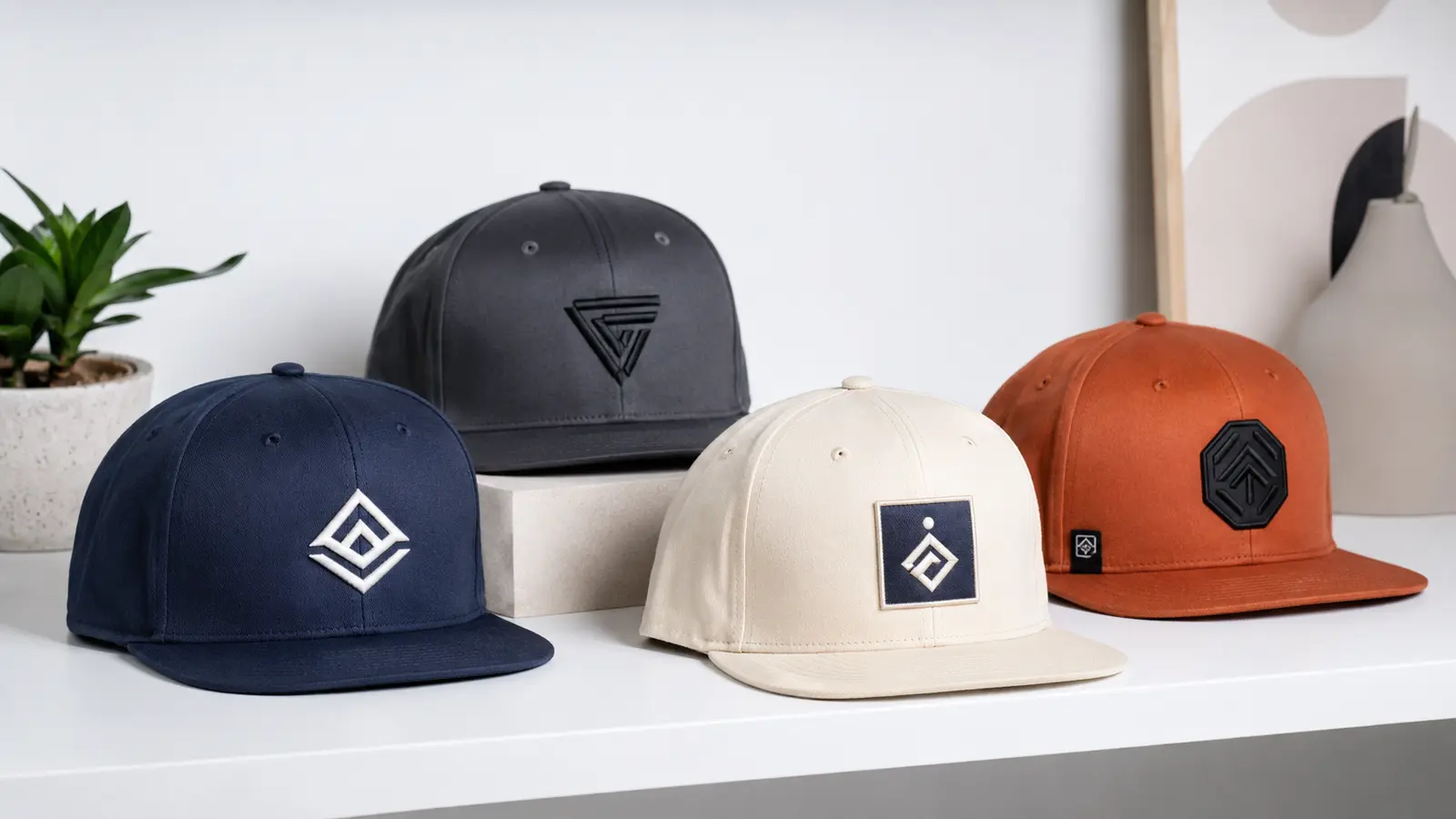
Snapback vs Fitted Hat: Sizing, Closure, Fit and Best Uses
Choosing between a snapback and a fitted hat is not only a style decision. For a team, brand, school, distributor, or promotional buyer, closure and sizing affect inventory risk, wearer satisfaction, decoration, and SKU count.
A snapback uses an adjustable snap closure at the rear and is commonly sold in one-size or broad size ranges. A true fitted hat has a closed back and is produced in specific head sizes. Both can use structured crowns, flat or curved visors, embroidery, patches, and private-label details, so appearance alone is not always enough to identify the correct construction.
This guide explains the differences between snapback and fitted hats from a B2B purchasing perspective. It covers sizing, closure, crown fit, decoration, best-use cases, sampling, quality control, cost drivers, and the information a supplier needs to prepare an accurate quotation.
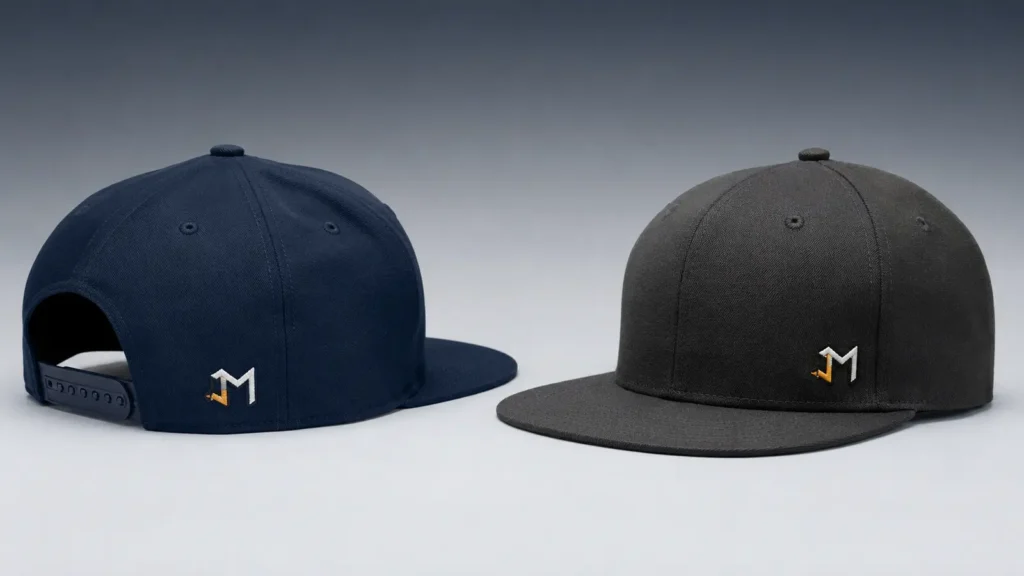
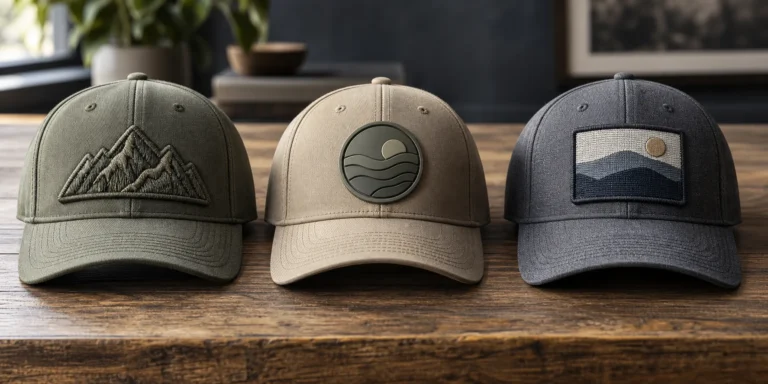
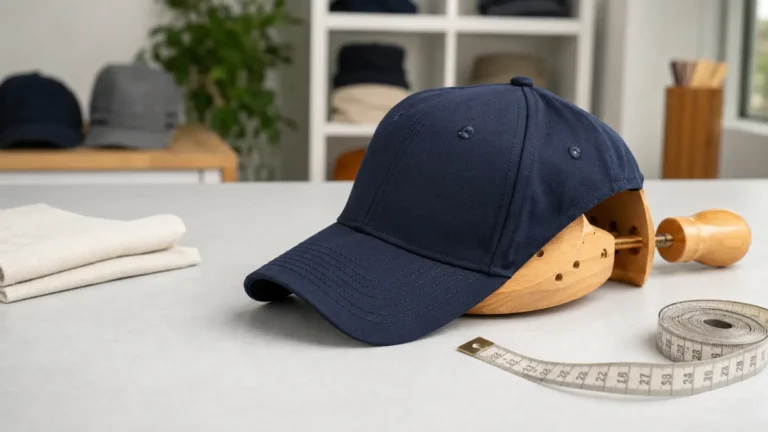
An adjustable snapback and a closed-back fitted hat can look similar from the front but use different sizing systems.
Quick Answer: Choose a snapback when you need adjustable sizing, fewer inventory SKUs, easier group distribution, or a flexible promotional product. Choose a true fitted hat when exact sizing, a clean closed-back silhouette, and a more specialized sport or streetwear presentation matter more than inventory simplicity. For mixed audiences, a snapback usually reduces sizing risk. For a committed fanwear or fashion program with dependable size data, fitted hats can deliver a more tailored result.
Snapback vs Fitted Hat at a Glance
The most reliable way to compare the two styles is to separate the closure, size system, fit experience, and commercial use rather than relying on crown shape alone.
| Decision factor | Snapback hat | True fitted hat |
|---|---|---|
| Rear construction | Open back with adjustable plastic snap closure | Closed back with no adjustable opening |
| Sizing model | Usually one size fits most or broad grouped sizes | Individual numeric or fractional sizes |
| Fit adjustment | Wearer can tighten or loosen the closure | Fit is determined by the ordered size |
| SKU complexity | Lower; often one size per color and design | Higher; stock must be divided across multiple sizes |
| Size-exchange risk | Usually lower for mixed groups | Higher if head-size data is inaccurate |
| Back decoration | Limited by the opening and closure | Continuous rear panels allow a clean closed-back look |
| Distribution | Easy for events, teams, staff, and promotions | Best when individual wearer sizes are collected |
| Retail positioning | Broad, accessible, easy to merchandise | Specialized, size-specific, often collection-driven |
| Reorders | Simpler size planning | Requires reliable sales or roster size history |
| Best fit for | Promotions, schools, clubs, broad retail assortments | Fanwear, fashion drops, uniforms, premium size-led collections |
These are procurement tendencies, not absolute rules. A snapback can be produced as a highly detailed private-label cap, and a fitted hat can be designed for everyday casual wear. Crown height, structure, fabric, visor shape, sweatband, and pattern all influence the final result.
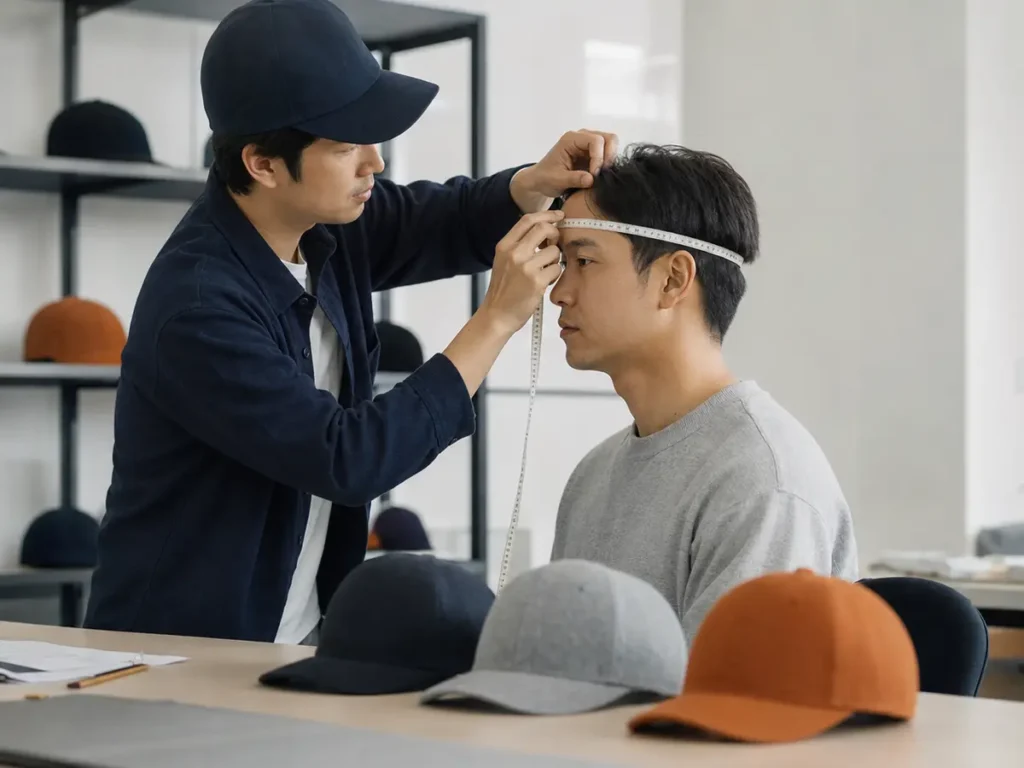
The rear construction determines adjustability, decoration space, and size planning.
What Is a Snapback Hat?
A snapback is an adjustable cap with interlocking plastic tabs at the back. The wearer selects one of several snap positions to change the circumference. Many snapbacks have a structured five- or six-panel crown and a flat visor, but “snapback” technically describes the closure rather than a single crown profile.
That distinction matters in a specification. The word “snapback” does not define the panel count, crown height, visor, fabric, or sweatband. A complete description may read:
“Six-panel, structured, high-profile snapback with a flat visor, polyester-wool blend shell, matching plastic closure, black cotton sweatband, front 3D embroidery, side flat embroidery, and private woven label.”
Official product specifications also show how much variation can exist within the category. For example, Flexfit lists an adjustable model with a six-panel structured crown, snap closure, mid profile, and a stated OSFA range of 6 5/8 to 7 5/8. That range belongs to that specific model; it should not be treated as a universal measurement for every snapback blank or custom pattern. See the Flexfit adjustable-cap specification.
Why snapbacks are easier for bulk distribution
The adjustable closure absorbs part of the natural variation in head circumference. A buyer can often purchase one main adult size rather than dividing the order among many exact sizes. That makes snapbacks practical for:
- school spirit merchandise;
- company uniforms and employee gifts;
- promotional campaigns and events;
- youth clubs with changing rosters;
- distributors serving several customer types;
- ecommerce brands that want a simpler size selector; and
- team stores that need easier replenishment.
The adjustment range does not guarantee universal fit. Crown depth, hairstyle, head shape, and closure length still matter. Mixed audiences may need youth or extended-size samples.
What Is a Fitted Hat?
A true fitted hat has a closed back and no adjustable closure. It is made in a specific circumference size, commonly shown as fractional cap sizes such as 7, 7 1/8, 7 1/4, or 7 3/8, or as a supplier-defined centimeter range.
New Era describes its 59FIFTY silhouette as a “true fitted” closed-back style available in true fitting sizes. Its official silhouette guide also separates true fitted, adjustable, and stretch-fit constructions, illustrating why buyers should not use these terms interchangeably. See the New Era 59FIFTY silhouette guide.
A fitted hat creates a continuous rear surface and a clean, uninterrupted silhouette. It is closely associated with on-field baseball styling, fanwear, streetwear, and collector-led product programs. The precise size can feel secure and balanced when the pattern and measurement are correct.
True fitted vs stretch fitted
This is one of the most common sourcing misunderstandings.
- True fitted: closed back, produced in exact sizes, with little or no circumference adjustment.
- Stretch fitted: closed back, but the sweatband or shell contains elastic or stretch material; commonly offered in grouped sizes such as S/M and L/XL.
- Adjustable stretch cap: combines stretch components with an adjustable closure; it is not a true fitted hat.
Flexfit’s own product descriptions, for example, identify a closed-back stretch-fitted cap, while its size guide explains that its stretch caps cover size ranges rather than traditional exact fitted sizes. Those official descriptions show that “fitted” is sometimes used more broadly in the marketplace. Buyers should therefore specify true fitted or stretch fitted in RFQs and tech packs. See the Flexfit fitted-cap example and Flexfit sizing guidance.
Sizing: Adjustable Range vs Exact Head Size
Sizing is the largest operational difference between snapbacks and true fitted hats.
How to measure head circumference
Use a soft measuring tape and place it evenly around the head, above the ears and above the eyebrows, where the sweatband will sit. Keep the tape level and snug without compressing the skin. New Era’s official measuring guidance uses this general method and recommends converting the circumference through the relevant product’s size guide. See New Era Customer Care: How do I find my cap size?.
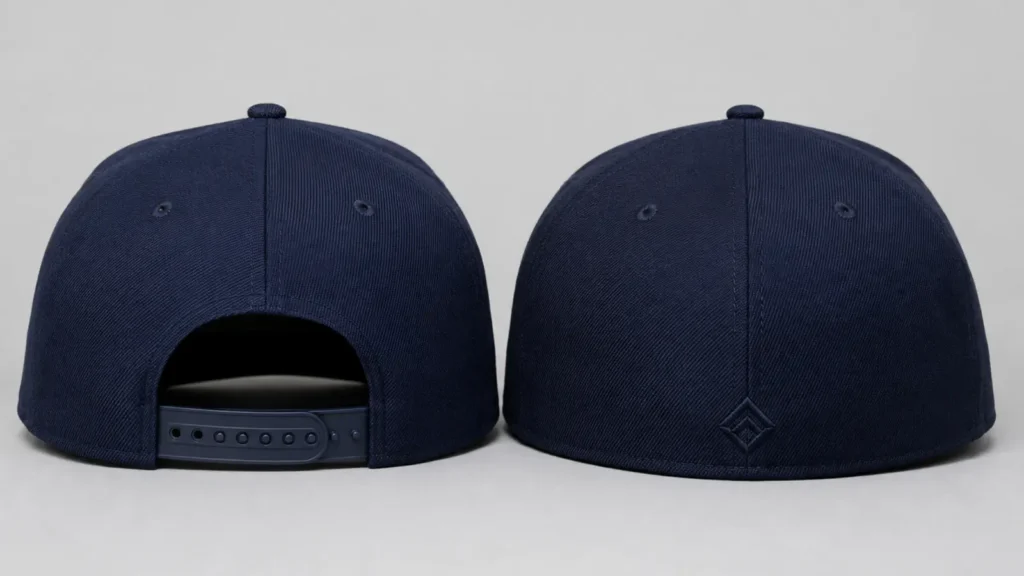
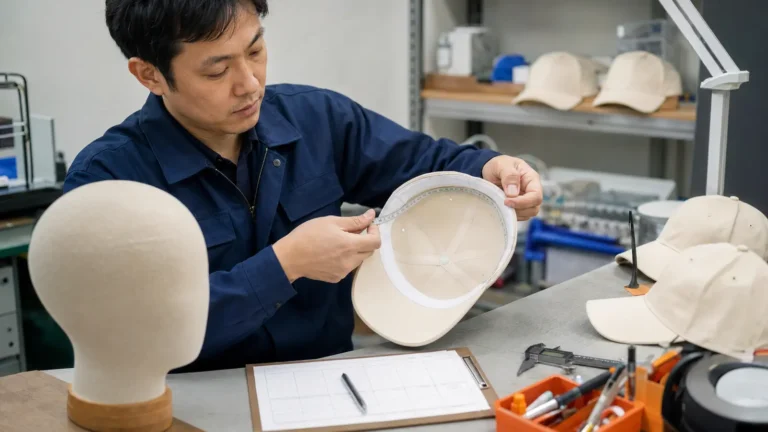
Measure where the sweatband sits and confirm the result against the selected cap pattern.
For a team or wholesale program:
- Use the same measuring instructions for every wearer.
- Record circumference in centimeters for more precise data handling.
- Measure twice when the result sits close to a size boundary.
- Note whether the wearer prefers a snug, standard, or relaxed fit.
- Confirm the supplier’s finished-cap tolerance and size chart.
- Approve physical samples before allocating the bulk size breakdown.
Hair volume, braids, head shape, and wearing position can change the preferred size. New Era also notes that hair length and even a bunched care label can affect perceived fit. This is a useful reminder that circumference is necessary but not the only fit variable.
Snapback sizing for bulk orders
Snapbacks are often described as OSFM or OSFA, but these terms are not universal standards. They mean “one size fits most” or “one size fits all” within a supplier’s own pattern and intended market. A professional purchase specification should include:
- minimum and maximum comfortable circumference;
- number of usable snap positions;
- crown depth and profile;
- back-opening dimensions;
- youth or adult grading;
- sweatband width and material; and
- fit-test results from the approved sample.
When the end users are unknown, ask the supplier for the actual finished circumference at the smallest and largest usable settings. Do not rely on an abbreviation alone.
Fitted sizing for bulk orders
True fitted orders require a planned size curve. A size curve is the quantity ordered in each size. It can be based on:
- individual team-roster measurements;
- previous sales by size;
- preorder data;
- customer account history;
- a limited pilot run; or
- a clearly documented estimate when no history exists.
The risk comes from committing inventory before the buyer has trustworthy size data. Equal quantities across every size rarely reflect real demand, while unmeasured team orders can create exchanges.
| Order situation | Recommended sizing approach | Why |
|---|---|---|
| One-time event with unknown recipients | Adult snapback, plus youth option if needed | Minimizes size collection and SKU complexity |
| Named team roster | Measure every wearer; use fitted or snapback based on preference | Roster data supports exact allocation |
| New streetwear launch | Start with preorder data or a controlled size curve | Reduces unsold fitted inventory |
| Repeat wholesale program | Use historical sell-through by size | Improves replenishment accuracy |
| School store with mixed ages | Separate youth and adult adjustable patterns | One adult OSFM cap may not cover the audience |
| Premium fanwear collection | True fitted with a documented size chart | Supports a specialized, size-led product offer |
Closure and Rear-Panel Design
The closure changes more than circumference.
Snapback closure considerations
A plastic snap closure should be checked for:
- material thickness and flexibility;
- clean molding without sharp edges;
- secure engagement between studs and holes;
- color match with the shell or deliberate contrast;
- resistance to cracking during repeated adjustment;
- centered attachment;
- consistent back opening; and
- enough adjustment positions for the specified size range.
The back opening may support small embroidery above it or decoration on adjacent panels, but the closure limits the continuous rear area. Large back graphics may be divided or moved to the side.
Closed-back fitted construction
A true fitted cap offers uninterrupted rear panels. This can create a cleaner 360-degree appearance and more freedom for small back embroidery, a rear wordmark, a player number, or a woven flag label positioned near a seam.
However, the lack of adjustment makes seam accuracy, sweatband length, panel grading, and finished circumference more critical. Small construction differences can be noticeable because the wearer cannot compensate by changing a closure setting.
Fit Is More Than Circumference
Two caps with the same labeled size can feel different. Approve the whole fit architecture.
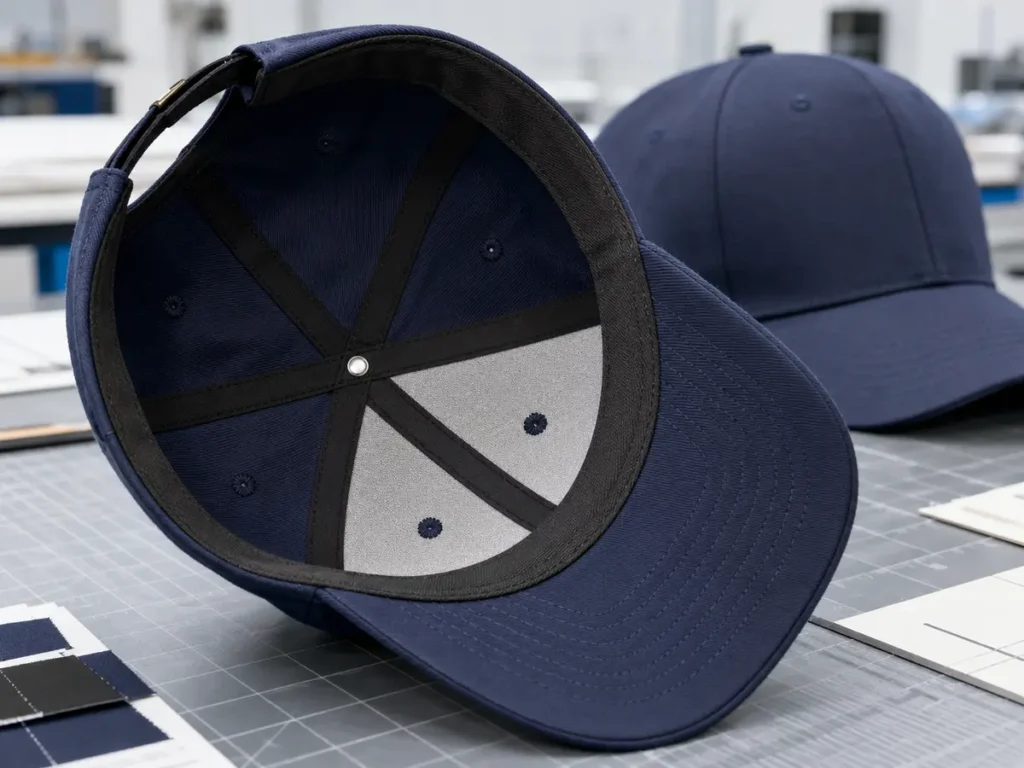
The sweatband, internal support, and panel construction influence fit as much as circumference.
Crown profile
- Low profile: sits closer to the head and usually has less vertical space above the forehead.
- Mid profile: balances head coverage with a moderate front area.
- High profile: provides a taller front and often suits bold embroidery or a classic streetwear silhouette.
Structured vs unstructured
A structured cap uses support material, often buckram, behind the front panels to maintain shape. An unstructured cap follows the head more closely. Snapbacks and fitted hats can both be structured, although high-profile structured builds are especially common in streetwear and team-merchandise programs.
Head shape and pattern
Head circumference does not fully describe head shape. A sample may match the circumference yet create pressure or gaps. Test several wearers in each target size.
Visor shape
“Snapback” does not automatically mean flat visor, and “fitted” does not require one visor shape. A flat visor can be curved by the wearer if the construction permits, while a pre-curved visor arrives with a defined shape. The visor specification should cover:
- flat, slight curve, or pre-curved;
- visor length and width;
- number of topstitching rows;
- upper and under-visor colors;
- sandwich edge or contrast insert;
- board stiffness; and
- acceptable symmetry.
Which Hat Is Better for Different Uses?
The better option is the one that fits the distribution model and brand promise.
| Use case | Better default | Procurement reason |
|---|---|---|
| Promotional giveaway | Snapback | Fast distribution and broad adjustability |
| School or club merchandise | Snapback | Easier inventory across mixed recipients |
| Baseball fanwear | Fitted or snapback | Fitted supports authenticity-led styling; snapback broadens accessibility |
| On-field team use | Depends on league, uniform concept, and measured sizes | Secure fit and roster accuracy matter |
| Streetwear capsule | Fitted for size-led exclusivity; snapback for simpler launch | Choice depends on merchandising strategy |
| Corporate uniform | Snapback | Easy assignment and replacement |
| Private-label ecommerce | Snapback for first launch | Fewer variants simplify product setup |
| Established fitted-cap retailer | Fitted | Existing size history supports inventory planning |
| Youth program | Youth-specific snapback or measured fitted | Adult patterns may be too deep or wide |
| Distributor catalog | Snapback | Broad customer compatibility and simpler samples |
Choose a snapback when:
- recipient measurements are unavailable;
- the item will be distributed at an event;
- the buyer wants fewer size SKUs;
- the order includes mixed departments or age groups;
- exchange handling is difficult;
- a visible adjustable closure fits the design language; or
- the program needs simple repeat ordering.
Choose a fitted hat when:
- the closed-back silhouette is central to the product concept;
- wearer measurements or sales-by-size data are available;
- exact sizing supports the expected customer experience;
- the collection targets sport, fanwear, streetwear, or collector audiences;
- the buyer can manage multiple size SKUs; or
- continuous rear decoration is important.
Consider a stretch-fitted option when:
- the buyer wants a closed back with some fit flexibility;
- grouped sizes are acceptable;
- the audience prefers a cleaner rear silhouette; and
- the brand can clearly communicate the size ranges.
Stretch fitted is not a substitute for all true-fitted programs. It is a third option with its own material, recovery, and size-range requirements.
Materials and Their Effect on Fit
Fabric changes structure, stretch, heat management, decoration stability, and the way the cap breaks in over time.
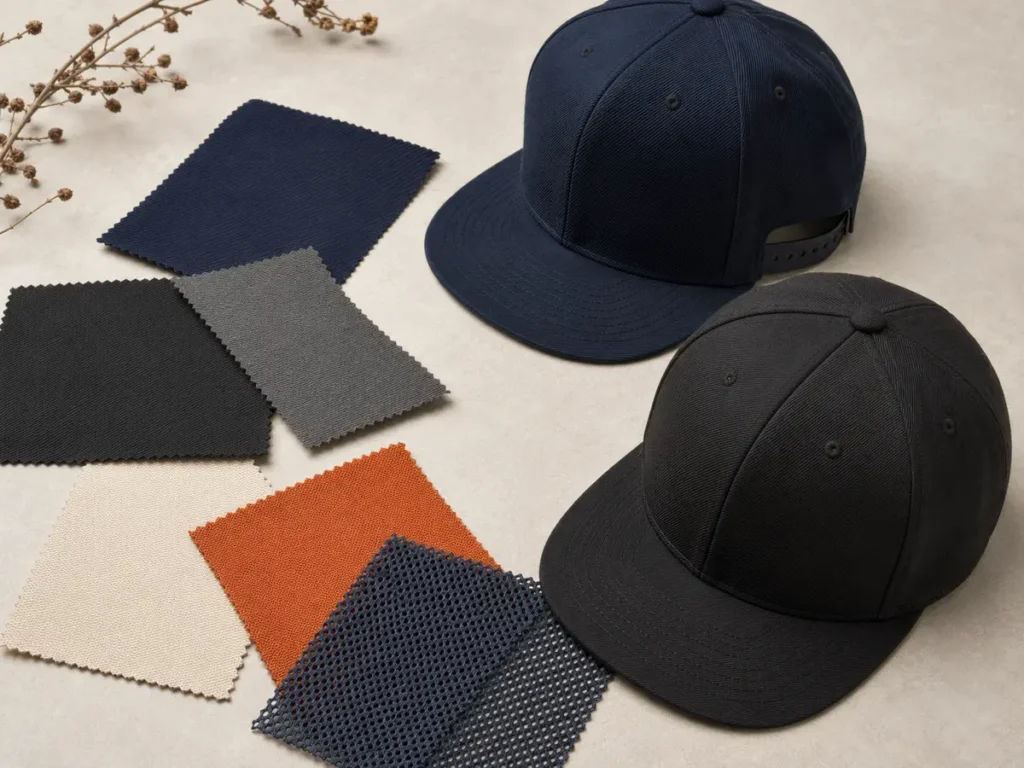
Fabric choice affects structure, stretch, decoration stability, and the final wearing experience.
Cotton twill
Cotton twill offers a familiar matte surface and works well for embroidery. Buyers should approve fabric weight, shrinkage expectations, colorfastness requirements, and whether washed effects are intentional.
Polyester and performance fabrics
Polyester can support color consistency, dimensional stability, and performance-oriented constructions. Any performance claim should be tied to the selected material and available documentation.
Wool-blend and wool-like fabrics
These fabrics are common in structured sport and streetwear silhouettes. Request the exact fiber content rather than approving only a visual reference.
Stretch blends
Elastane or PU-spandex may be added to stretch-fitted shells or sweatbands. Define the intended size range and recovery expectations.
Mesh
Mesh is common in trucker-style snapbacks and some stretch-fitted caps. Approve mesh type, stiffness, transparency, and color matching.
Logo Decoration and Private-Label Options
Both snapback and fitted hats can support sophisticated branding. Decoration suitability depends more on the panel, fabric, support, seam position, and logo than on the closure alone.
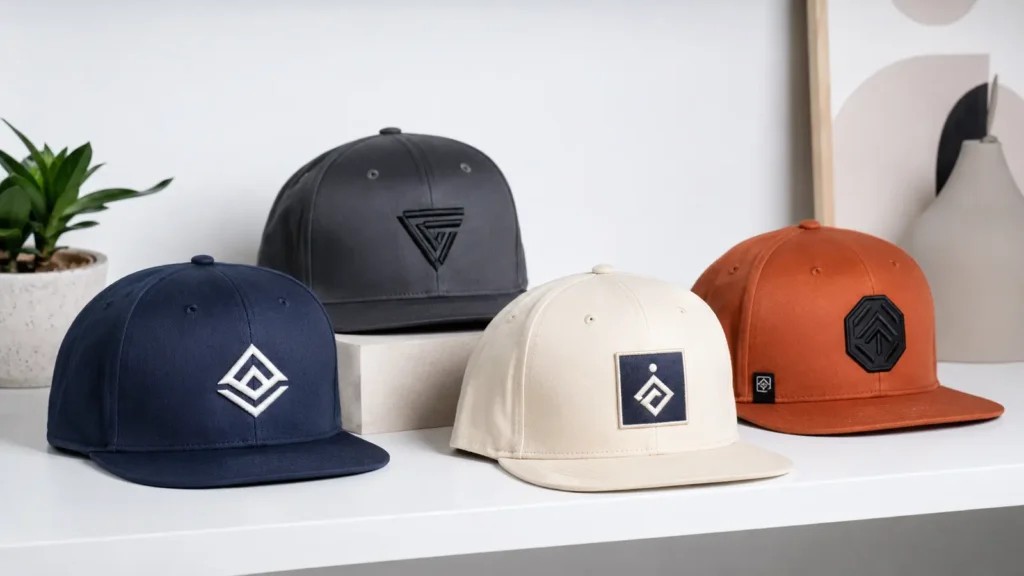
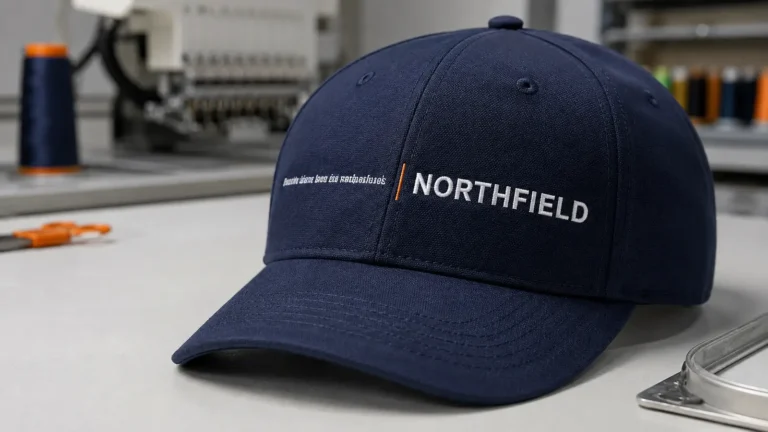
Decoration should be sampled on the selected fabric, panel structure, and seam layout.
Common methods include flat and 3D embroidery, woven or rubber/PVC patches, leather-style patches, heat transfer, side and rear embroidery, woven labels, custom inside taping, branded sweatbands, private labels, hangtags, and custom packaging.
Front-logo engineering
A wide or dense logo may cross panel seams, which can affect registration. Five-panel or A-frame constructions can offer a larger uninterrupted front area, while six-panel designs create a center seam. The artwork should be digitized and tested on the selected fabric and crown—not approved only as a screen mockup.
Decoration near the closure
On a snapback, back decoration must account for the opening and moving closure. On a fitted hat, the closed back offers more continuous space, but seam intersections can still affect small lettering. Ask for a decoration placement template with dimensions from seams, visor, and sweatband.
Planning a custom hat program? Send JIUMU your target quantity, wearer profile, reference images, preferred crown and visor, color requirements, logo files, decoration locations, packaging needs, and target delivery date. JIUMU can review the specification and recommend whether a snapback, true fitted, or stretch-fitted construction is the most practical starting point. Request a custom quotation.
Cost Drivers Buyers Should Expect
There is no universal price difference between the styles. The quotation depends on the specification and order structure.
Key cost drivers include the pattern, shell fabric, colorway count, fitted-size count, quantity per size, crown support, visor details, embroidery stitch count, patch tooling, custom closure color, internal branding, packaging, sampling rounds, requested testing or documentation, shipping method, and destination.
Fitted programs may create more operational complexity because production and packing must be separated by size. Snapbacks can simplify size allocation, but a custom-colored closure, special mold, or complex multi-location decoration can still add cost.
For an accurate comparison, request quotations for two matched specifications. Keep the fabric, panel count, visor, color, logo method, packaging, and quantity consistent; change only the closure and size system.
Sample Approval and Quality Control
Digital mockups confirm layout, not fit, hand feel, crown shape, or closure performance. Approve a physical sample for any new pattern.
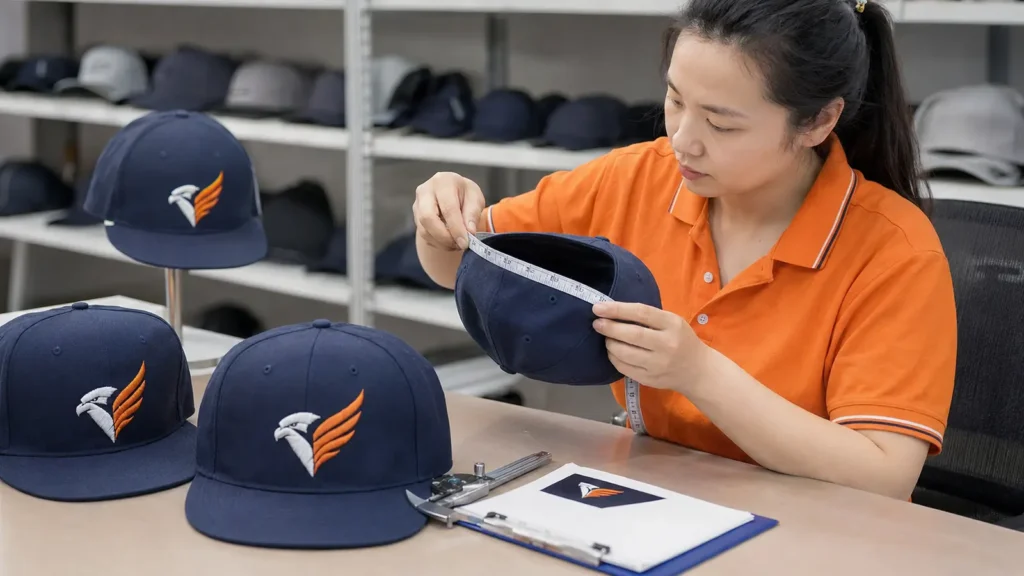
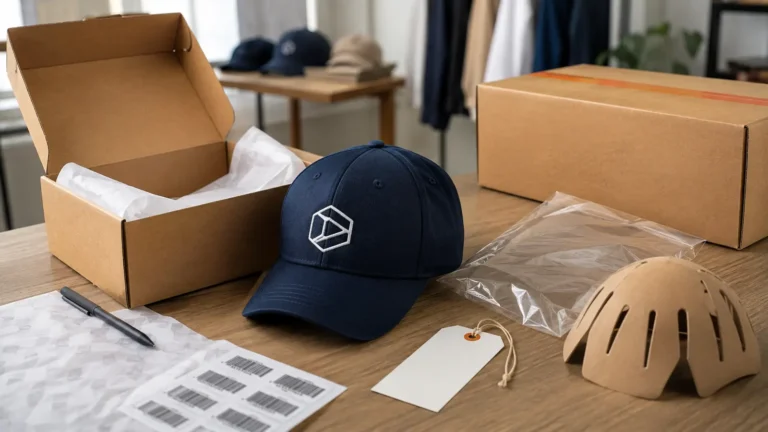
Bulk inspection should verify fit, closure, decoration, labeling, and packing against the approved specification.
Sample approval checklist
- Confirm identity: style number, revision, colorway, and size are clearly labeled.
- Measure fit: record internal circumference, crown depth, opening, and visor dimensions.
- Wear test: test representative head sizes and shapes.
- Inspect symmetry: compare panels, eyelets, visor centering, and crown alignment.
- Check structure: verify front support, seam smoothness, and crown recovery.
- Test the closure: operate every usable snap position and inspect attachment.
- Review decoration: check placement, thread density, puckering, patch edges, and small-letter clarity.
- Approve colors: review shell, thread, closure, under-visor, sweatband, and labels under consistent light.
- Check inside finishing: inspect seam tape, sweatband joining, care label, and loose threads.
- Document approval: sign or digitally confirm the approved sample and change list.
Bulk-production inspection points
During bulk inspection, compare production units with the approved sample and specification sheet. For fitted hats, check circumference by size and verify size labels and packing. For snapbacks, check the usable adjustment range and closure engagement. Across both styles, sample units from different cartons and production stages rather than inspecting only top-layer pieces.
| Inspection area | Snapback focus | Fitted focus |
|---|---|---|
| Size | Smallest/largest setting and adult/youth pattern | Finished circumference by exact size |
| Rear | Closure molding, attachment, and opening symmetry | Closed-back seam alignment |
| Labeling | OSFM or size-range accuracy | Correct fractional/metric size label |
| Packing | Color and design separation | Size ratio and carton breakdown |
| Fit | Adjustment comfort and crown depth | Pressure points, looseness, and size consistency |
| Decoration | Clearance around opening and closure | Rear placement and seam crossing |
Bulk-Order Planning Process
A disciplined buying process prevents most fit and inventory problems.
1. Define the wearer and sales model
State whether the hats are for named players, unknown event attendees, retail customers, employees, or distributors. The right size system follows the distribution model.
2. Select the construction
Choose true fitted, stretch fitted, or snapback. Then define panel count, profile, structure, visor, fabric, sweatband, closure, and back opening.
3. Provide artwork and placement requirements
Send vector artwork when available, Pantone references, decoration dimensions, and all front, side, rear, and internal branding locations.
4. Build the size plan
For snapbacks, confirm adult, youth, and extended-fit needs. For fitted hats, provide the exact size curve and decide how replacements or exchanges will be handled.
5. Approve digital mockups
Check spelling, logo proportions, thread colors, positions, labels, and packaging marks.
6. Approve a physical sample
Measure it, wear test it, and record every approved detail. Do not rely on photographs alone for fit approval.
7. Confirm the bulk specification
Freeze the approved revision, quantity by color and size, carton marking, inspection criteria, delivery address, and target schedule.
8. Inspect and document
Use measurement records, production photos where appropriate, and a final packing list. Save the approved specifications for repeat orders.
What to Send for a Quotation
An effective RFQ should include the intended use; snapback, true fitted, or stretch-fitted preference; total quantity by color and size; adult, youth, or extended-size needs; panel count; crown profile; structure; fabric; visor; closure; logo files and decoration dimensions; Pantone references; labels and packaging; destination; target date; and reference images or an existing sample.
If some details are undecided, identify them as open choices. A supplier can then quote a defined base option and list the variables rather than hiding assumptions inside one number.
Questions to Ask a Custom Hat Supplier
- Is this pattern true fitted, stretch fitted, or adjustable?
- What finished circumference and tolerance apply to each size?
- What is the smallest and largest comfortable snapback setting?
- Are adult, youth, and extended-size patterns available?
- Can the supplier provide a measurement diagram?
- Which fabric composition and weight are proposed?
- What structure material supports the front panels?
- How will the logo be digitized and sampled?
- Which seams will the decoration cross?
- Can the closure, thread, under-visor, and shell colors be matched?
Common Buying Mistakes
Treating “fitted” and “stretch fitted” as the same
They use different sizing logic. State the exact construction in the purchase order.
Assuming every OSFM cap has the same range
Usable circumference varies by pattern, closure, crown, and sweatband. Request measurements.
Choosing from appearance alone
A product photo does not confirm crown depth, circumference, or internal construction.
Ordering fitted inventory without a size curve
Collect roster measurements, preorders, or sales history before finalizing quantities.
Ignoring youth fit
An adult adjustable closure may tighten enough in circumference while the crown remains too deep or wide.
Approving embroidery only on a digital mockup
Real fabric and seams change the result. Approve a physical decoration sample.
Changing several variables after sampling
Switching fabric, structure, logo size, or closure after approval can change fit and appearance. Document every revision and resample material changes.
Why Work With JIUMU on Custom Hats?
Established in 2010 in Guangdong, China, JIUMU supplies custom teamwear, hats, uniforms, bags, and branded merchandise to North American and European B2B buyers.
Capabilities include OEM/ODM development, embroidery, printing, patches, fabric sourcing, Pantone matching, private labels, packaging, mockups, samples, quality control, and export support.
For custom hats, this allows buyers to coordinate the visible design with the less visible details that determine repeat-order performance: pattern, fabric, crown support, sweatband, sizing, closure, labels, packaging, and inspection criteria.
JIUMU’s typical MOQ is 50 pieces, subject to product structure and customization. Confirm exact minimums and production requirements against the requested specification. Explore custom baseball caps, review JIUMU’s custom team uniform capabilities, or contact JIUMU with an RFQ.
Frequently Asked Questions
Final Recommendation

Snapbacks simplify mixed-group distribution, while fitted hats suit measured rosters and size-led fanwear.
For a mixed group, event, school store, corporate program, or first private-label launch, a snapback is usually the lower-risk choice because it reduces size SKUs.
For measured teams, established fanwear, specialized retailers, or streetwear collections with reliable size demand, a true fitted hat can deliver a precise fit and closed-back appearance.
If the decision is close, sample an adjustable snapback, a true fitted cap, and a stretch-fitted option on the same core specification. Wear-test them and compare the inventory implications.
Sources and Further Reading
- New Era Customer Care: How do I find my cap size?
- New Era 59FIFTY Silhouette Guide
- Flexfit Sizing Chart
- Flexfit Adjustable Cap Product Specification
- Flexfit Closed-Back Stretch-Fitted Cap Example
Request a custom snapback or fitted-hat quotation: Share your reference image or tech pack, quantity, colorways, size plan, crown profile, visor, fabric, logo methods, private-label details, packaging, destination, and target delivery date. Contact JIUMU by inquiry form, WhatsApp/phone at +86 18507502899, or email at zhengdong@jiumugear.com.