Snapback vs Trucker Hat: Structure, Breathability and Branding Space
Snapbacks and trucker hats often share an adjustable plastic closure, but they are not the same product. For a retail brand, sports club, promotional distributor or corporate merchandise buyer, the important difference is not the closure. It is the crown construction. A typical snapback uses solid fabric around most or all of the crown, while a trucker hat combines a fabric or foam front with open mesh at the sides and back.
This guide compares snapback vs trucker hat specifications from a B2B sourcing perspective. It explains how to select a cap for a brand collection, team program, event campaign or private-label order—and what information to send before requesting a quotation.
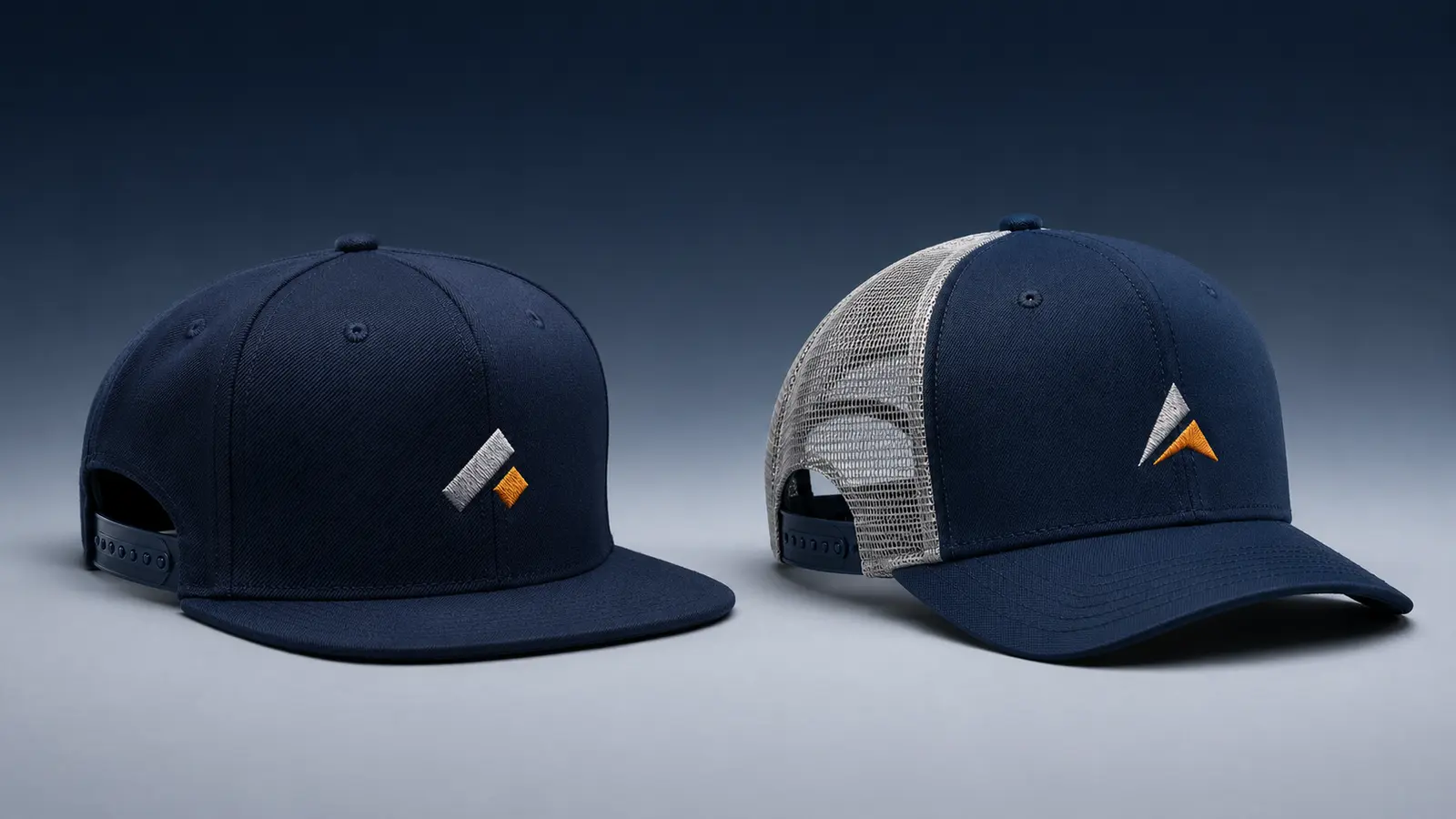
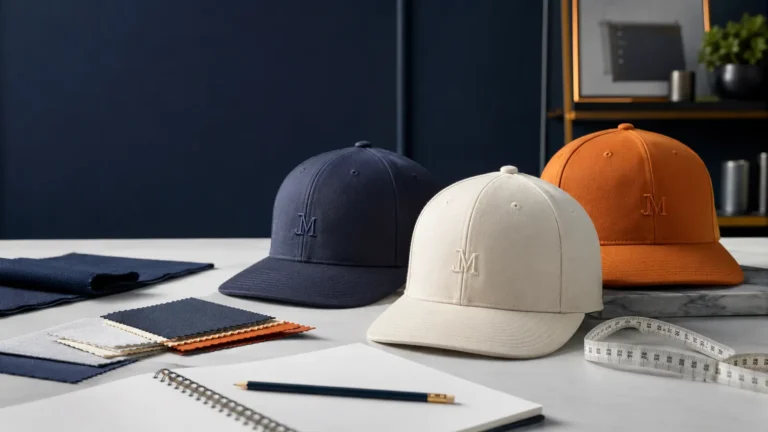
A solid-crown snapback and a mesh-back trucker hat can use the same adjustable closure while delivering different structure, airflow and brand presentation.
Choose a snapback when you want a solid, structured crown, a fashion-led or teamwear silhouette, and more continuous fabric for front, side and rear decoration. Choose a trucker hat when ventilation, lower perceived weight and an outdoor or workwear identity are more important.
Both can offer a structured front, flat or curved visor, five- or six-panel construction and an adjustable snap closure. The decisive specification is the back of the crown: solid woven panels for most snapbacks versus open mesh panels for most trucker hats. A five-panel trucker can also provide a broad, uninterrupted front for large patches, so a trucker hat does not automatically mean less front branding space.
Snapback vs Trucker Hat at a Glance
| Buying criterion | Typical snapback | Typical trucker hat | Procurement implication |
|---|---|---|---|
| Crown construction | Solid woven fabric across the crown | Fabric or foam front with mesh sides and back | Trucker hats generally provide more direct airflow |
| Common panel layouts | Five or six panels | Five or six panels; some specialty layouts vary | Panel seams determine usable decoration zones |
| Front structure | Often structured with buckram | Often structured; foam-front versions are common | Confirm whether the sample must hold a tall, firm shape |
| Visor | Commonly flat or mildly curved | Commonly curved, but flat-bill versions are available | Specify the approved curve rather than relying on the style name |
| Closure | Adjustable plastic snap closure is common | Adjustable plastic snap closure is common | Closure alone does not distinguish the two categories |
| Branding area | Front, sides and sometimes rear solid panels | Strong front area; limited embroidery on open rear mesh | Choose placement after reviewing the panel map |
| Breathability | Depends on fabric and eyelets; generally less open | Mesh creates visible ventilation across much of the crown | Better suited to hot, active and outdoor use when mesh is appropriate |
| Visual identity | Streetwear, fanwear, teams, fashion and merchandise | Outdoor, workwear, event, casual, lifestyle and promotional programs | Match the cap to the audience and sales channel |
| Color blocking | Solid, tonal or multi-panel combinations | Front/mesh/visor/closure can contrast clearly | Trucker hats support recognizable two-tone programs |
| Packing behavior | Structured crowns need shape protection | Mesh can compress, but the front still needs protection | Define carton packing and brim protection for both |
Public product specifications illustrate the overlap. A classic structured snapback may use hard buckram, a six-panel crown and a snap closure, while a classic trucker cap may also use hard buckram and a snap closure but add mesh rear panels. Examples from Flexfit’s classic snapback specification and classic trucker specification reinforce why buyers should compare the full construction, not just the closure.
What Is a Snapback Hat?
A snapback is an adjustable cap named for the interlocking plastic snap closure at the back. In commercial headwear, the familiar version has a structured crown, a flat or slightly curved visor, and five or six solid fabric panels. However, “snapback” describes the closure system more reliably than it describes every other feature.
A buyer can source different profiles, front structures, visor curves and materials. This variety creates a sourcing risk: two suppliers can both quote a “six-panel snapback” while proposing visibly different crown heights, front curves and fabric weights. A sample specification should therefore record:
- panel count and seam arrangement;
- crown profile and approximate height;
- structured, lightly structured or unstructured front;
- visor shape, length, stiffness and approved curve;
- shell fabric and color;
- sweatband material;
- eyelet type and color;
- snap closure color and row count;
- front, side, rear and underbill decorations;
- internal labels and retail packaging.
What Is a Trucker Hat?
A trucker hat is a cap with a solid front section and open mesh across much of the sides and back. Many trucker hats use an adjustable snap closure, which is why the terms sometimes overlap in product listings. The mesh is the defining commercial feature.
The front may be cotton or polyester twill, foam-laminated fabric, a performance textile or another woven material. The mesh is commonly polyester. A six-panel trucker usually has a center seam across the front; a five-panel or seamless-front version can offer a broad surface for screen printing, heat transfer or a large patch.
Trucker hats are associated with outdoor recreation, workwear, festivals, casual uniforms and promotional campaigns, but modern versions can also be minimal or technical. Buyers should not assume every trucker hat has a tall foam front or strongly curved visor.
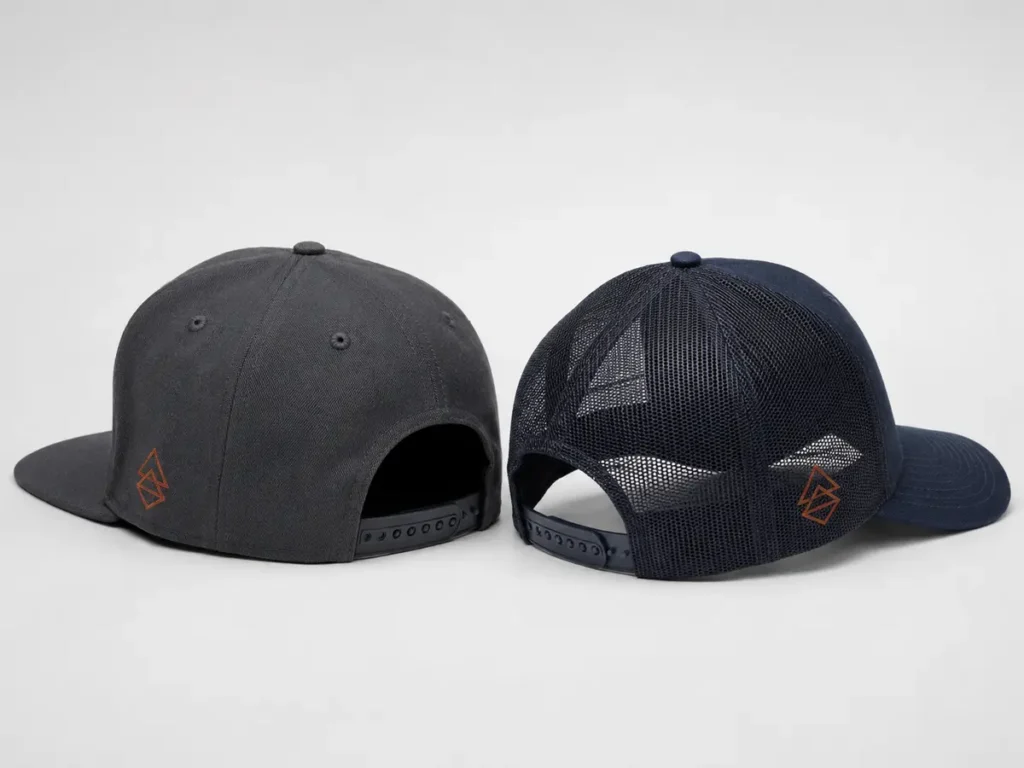
The back panels—not the snap closure—create the clearest structural difference between the two categories.
How Does Crown Structure Affect Fit and Appearance?
The crown determines how a cap presents the wearer’s head shape and how consistently the product looks in photography, on a retail shelf or across a team.
Snapback crown behavior
A structured snapback normally uses support material behind the front panels. This helps the crown stand away from the forehead and maintain a defined silhouette. Solid side and rear panels create visual continuity around the cap, while embroidered eyelets provide limited ventilation.
High-profile snapbacks support bold proportions and raised embroidery, while low-profile styles sit closer to the head but may provide less vertical logo space. Six-panel construction creates a center seam, so digitizing and placement must account for it. Five-panel construction may provide a wider uninterrupted front.
Trucker crown behavior
A structured trucker front can hold a shape similar to a snapback when both use comparable support. The difference begins behind the front panels, where mesh creates a lighter and more open appearance. Mesh tension, crown depth and panel geometry influence whether the back looks smooth or collapses.
Foam can create a tall, uniform trucker front for prints and patches, but excessive embroidery density may compress it. A woven fabric front generally supports conventional embroidery more predictably.
Fit cannot be inferred from the category name
Both categories are commonly sold as adjustable one-size styles, yet crown depth, back opening, sweatband length and closure dimensions still change fit. For youth, extended-size or mixed adult programs, request measurements and fit trials instead of relying only on “OSFA.” Compare the same brim condition as well: a flat visor changes both perceived fit and style.
Which Hat Is More Breathable?
In a conventional comparison, the trucker hat is more breathable because the open mesh exposes a larger portion of the crown to air movement. A solid snapback relies on fabric permeability and small eyelets, so it does not provide the same open ventilation.
That does not mean every trucker hat performs identically. Mesh aperture, yarn, stiffness and finishing can change airflow and hand feel. The front panel remains solid, and a foam laminate may retain more heat at the forehead than a lightweight woven front. The sweatband also influences perceived comfort.
A snapback can add lighter fabrics or perforated panels, but those are specific performance constructions, not qualities implied by the word “snapback.” Flexfit’s published perforated five-panel snapback illustrates this distinction.
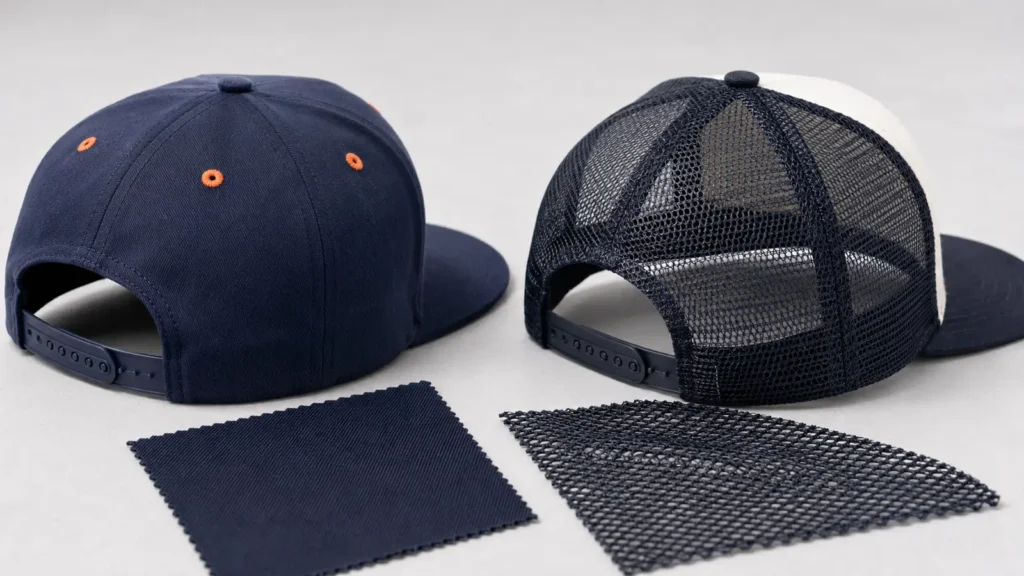
Open mesh normally provides more direct ventilation than a solid woven crown, while the front material and sweatband still influence wearer comfort.
Translate breathability into the use environment
Select based on actual wear conditions:
| Use environment | Better starting point | Why | Specification to verify |
|---|---|---|---|
| Outdoor summer event | Trucker hat | Open mesh supports ventilation | Mesh color, stiffness, hand feel and UV-related claims only if documented |
| Landscaping, construction or field service | Trucker hat or performance cap | Ventilation and casual workwear identity | Sweatband, wash expectations, visibility colors and logo durability |
| Streetwear retail collection | Structured snapback | Solid crown and fashion silhouette | Profile, visor, embroidery height and underbill |
| Baseball fan merchandise | Either | Choice depends on desired style and season | Fit range, team-color consistency and decoration placement |
| Indoor corporate merchandise | Snapback or refined trucker | Appearance may matter more than maximum airflow | Crown height, tonal color matching and subtle branding |
| Outdoor club or beverage activation | Trucker hat | Recognizable two-tone styling and ventilation | Front patch size, mesh matching and repeat-order consistency |
| Premium private-label capsule | Either | Materials and detailing determine perceived value | Fabric, trims, labels, packaging and sample approval |
Do not market a cap as “cooling,” “UV protective,” “waterproof” or “moisture-wicking” unless the relevant material and supporting documentation justify the claim. “Mesh-back” is a visible construction statement; performance claims require stronger evidence.
Which Hat Offers More Branding Space?
The answer depends on where the branding must appear.
Front branding space
Both styles can provide a strong front decoration zone. A five-panel snapback or five-panel trucker may offer an uninterrupted surface that is useful for a broad patch or print. A six-panel crown introduces a center seam, but skilled digitizing can still produce clean embroidery when the design, size and stitch direction are suitable.
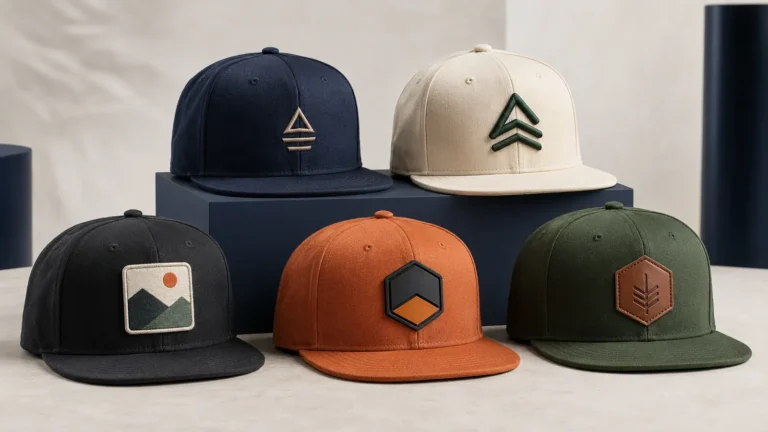
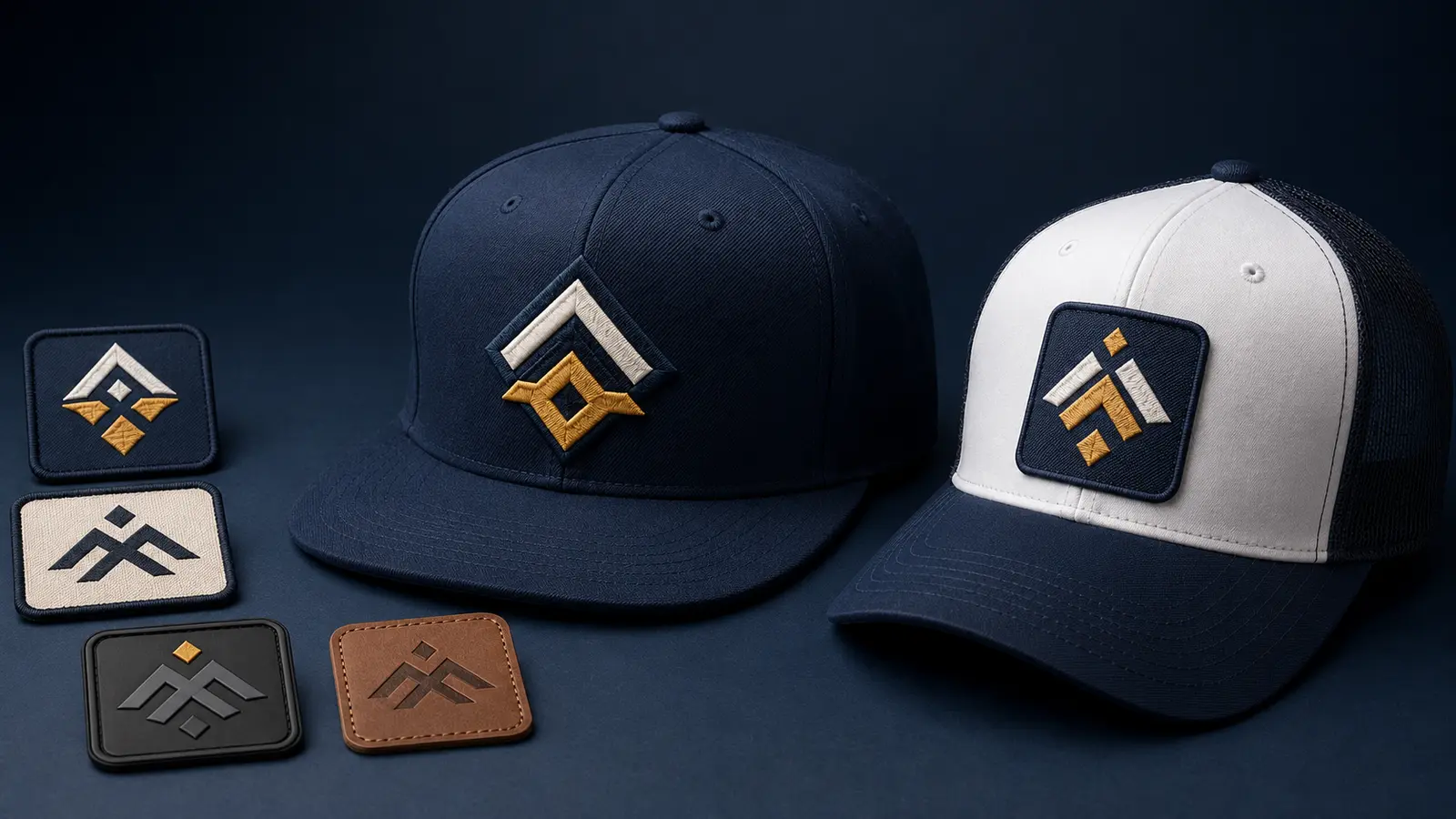
The trucker hat can be especially effective for patches because a patch creates a self-contained brand unit on the solid front. Woven patches can carry relatively fine graphic detail; embroidered patches add texture; rubber/PVC-style patches support a technical or outdoor direction; and leather-style patches suit heritage or workwear concepts. Material claims should accurately describe whether a component is genuine leather, synthetic leather or another material.
Side and rear branding
A solid snapback usually provides more usable side and rear fabric. Small side embroidery, a rear wordmark above the opening, a woven tab or an interior private label can be combined into a layered identity system.
The mesh on a trucker hat limits direct embroidery at the sides and rear. Buyers can still use a woven flag label at a seam, a closure-area label, a small patch engineered for mesh attachment or interior branding. Each option changes labor and should be sampled because heavy components can pull on the mesh.
Logo size is not the same as usable branding space
The maximum panel area is not automatically the correct logo size. Decoration should follow the crown curve and avoid:
- the visor seam and lower crown edge;
- excessive proximity to the top button;
- deep curves that distort a rigid patch;
- a six-panel center seam that cuts through fine details;
- mesh transitions and panel joins;
- eyelets, piping or rope;
- areas that become hidden when the cap is worn.
Record logo width, height and placement from fixed reference points. A digital mockup alone cannot show how the same dimensions look on different crown profiles.
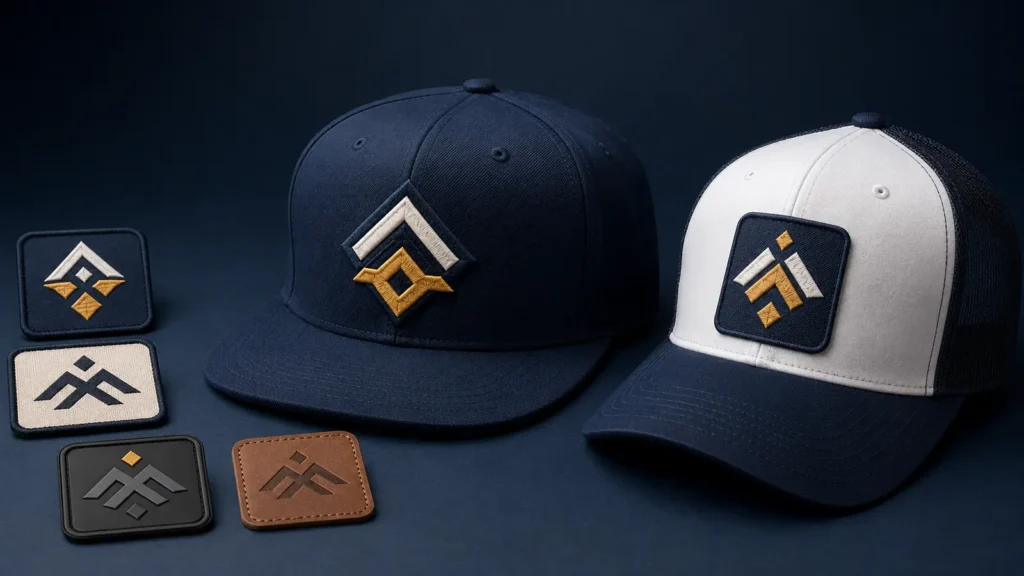
Front-panel geometry and decoration method matter more than a simple assumption that one hat always has a larger logo area.
Material Options and What They Change
Material selection affects shape retention, surface texture, weight, airflow, color appearance and decoration compatibility.
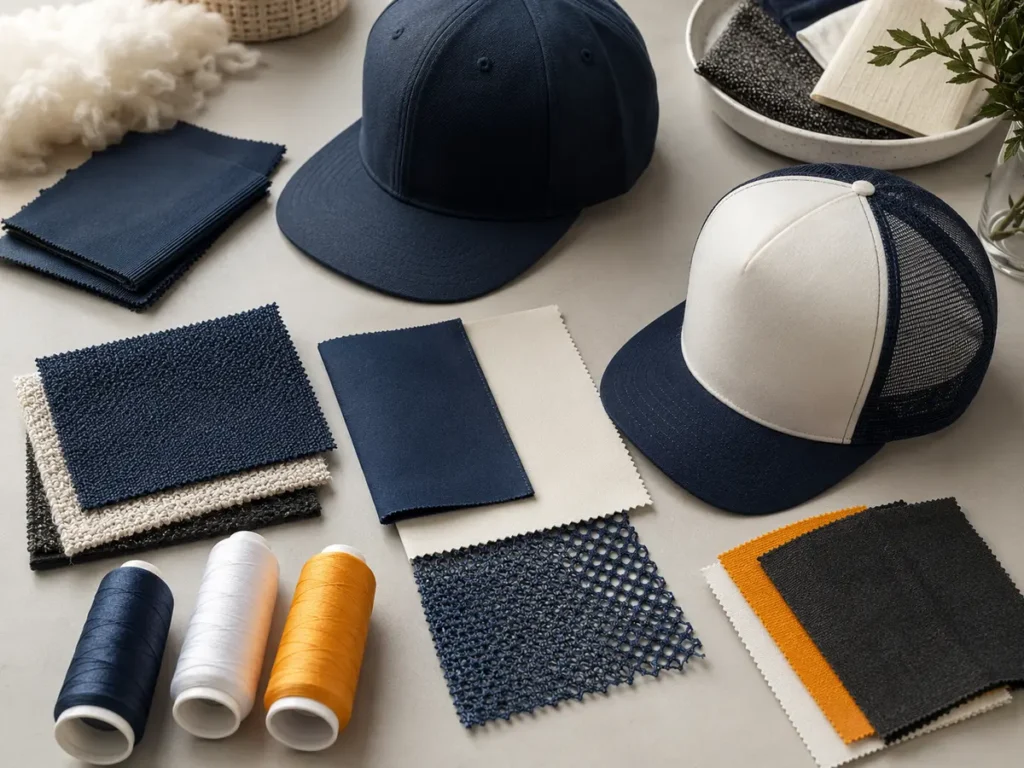
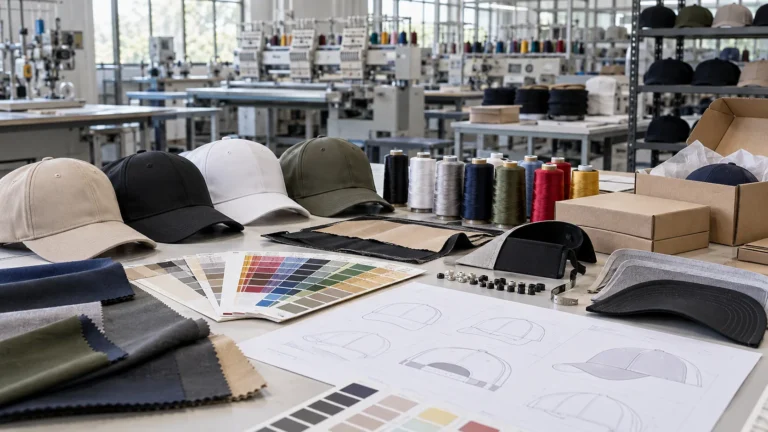
Approve shell, mesh, support, sweatband and thread as a coordinated material system rather than selecting each component in isolation.
Cotton twill
Cotton twill has a familiar matte surface for casual, team and lifestyle programs. Evaluate color and shrinkage against the intended care method.
Polyester
Polyester is widely used for trucker mesh and shell panels, but it covers many constructions. Request composition, weight and swatches instead of treating all polyester as identical.
Acrylic-wool-style blends
These blends are associated with classic structured snapbacks. Confirm the exact composition because it affects labeling, care and import documentation.
Foam-front construction
Foam creates a tall trucker front and smooth display area. Confirm thickness, resilience, lamination and decoration compatibility, then protect it from creasing in transit.
Mesh
Specify mesh opening, stiffness, recovery, color, shine and hand feel. Mesh that is too soft may collapse; mesh that is too stiff may feel harsh.
Sweatband and internal components
Define sweatband material, width, color and seam quality. Review internal tape, labels, backing and thread ends because these details influence comfort and finish.
Decoration Methods for Snapbacks and Trucker Hats
| Decoration method | Snapback suitability | Trucker suitability | Best use | Main sampling risk |
|---|---|---|---|---|
| Flat embroidery | Strong on stable woven fronts and sides | Strong on fabric fronts; mesh placement is limited | Team marks, wordmarks, compact graphics | Small text filling in or distortion across seams |
| Raised/3D embroidery | Common on structured fronts | Possible on stable fabric fronts | Bold initials and simplified marks | Excessive density, foam compression or uneven height |
| Embroidered patch | Good on front and solid side panels | Very strong for the front | Heritage, club, outdoor and promotional identity | Patch curve and edge lift |
| Woven patch | Good for finer detail | Strong for solid front panels | Detailed logos and labels | Fine lines still need minimum production tolerances |
| Rubber/PVC-style patch | Suitable with compatible attachment | Common for technical trucker styles | Outdoor and modern branding | Weight, stiffness and attachment method |
| Leather-style patch | Suitable for lifestyle programs | Popular on trucker fronts | Workwear and heritage concepts | Material naming, edge finish and color variation |
| Heat transfer | Works on compatible smooth surfaces | Works on compatible solid fronts, including some foam constructions | Gradients or detail not suited to embroidery | Adhesion, heat marks and surface deformation |
| Screen printing | Useful on selected five-panel surfaces | Often useful on smooth foam or fabric fronts | Bold flat graphics | Ink coverage, cracking and seam interference |
Send a vector logo when possible. If only a raster image exists, provide the highest-resolution original and identify required colors. The supplier should confirm whether the artwork needs simplification for the chosen process. Small negative spaces, fine outlines and tiny text are common sources of disappointment.
Construction Details That Affect Durability
Durability is not a single “heavy-duty” label. It is the combined result of material, seam construction, component attachment and use.
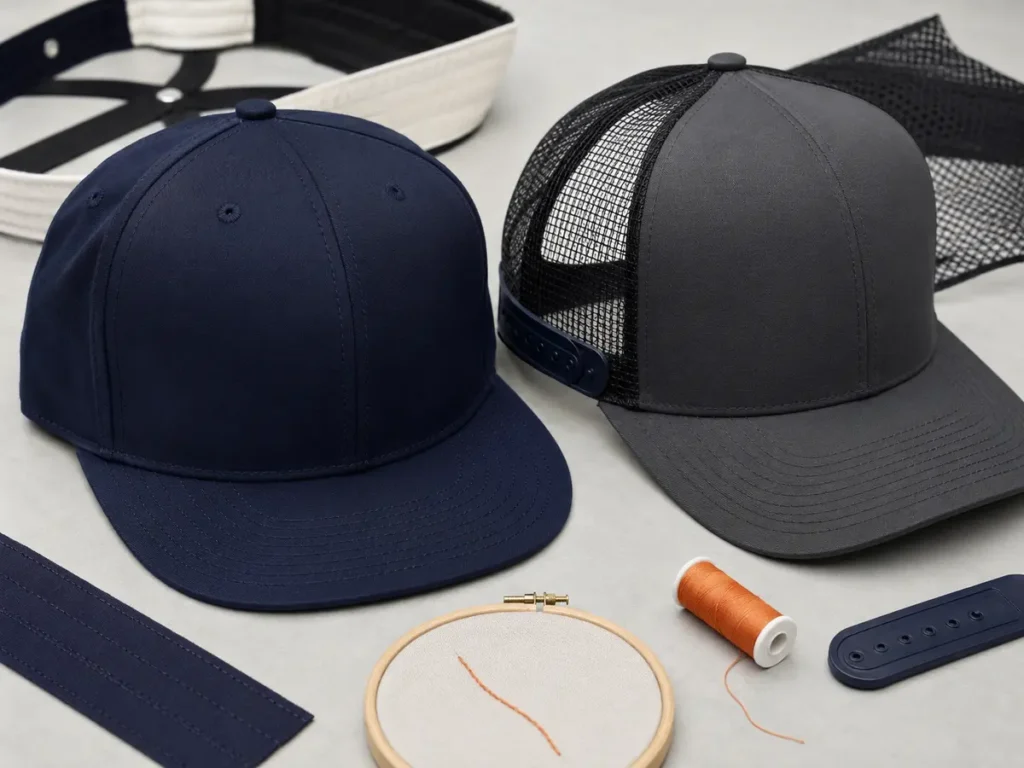
Check these construction points during sampling:
- Crown symmetry: Compare left and right panel shapes from the front and top.
- Front support: Confirm that the crown recovers after gentle handling and does not show unwanted creases.
- Panel seams: Look for consistent seam allowance, straight topstitching and no skipped stitches.
- Mesh attachment: Inspect the join between the solid front and mesh, including tension and puckering.
- Visor: Check shape, edge smoothness, stitch rows and consistency of the approved curve.
- Closure: Open and close several positions; inspect the anchoring and edge finish.
- Sweatband: Look for even attachment, comfortable seams and clean joins.
- Decoration: Confirm alignment, density, backing, loose threads and distortion.
- Labels: Verify content, spelling, placement and regulatory or customer requirements.
- Packing recovery: Remove the cap from its planned packaging and check whether the crown and visor return to the approved shape.
The sample should be tested in the same packing configuration planned for bulk production. A well-made crown can still arrive deformed if cartons are too tight or inner support is inadequate.
Cost Drivers in a Bulk Custom Hat Order
The base style is only one cost input. Buyers should expect the quotation to change with:
- custom fabric or stock fabric;
- number of custom-dyed components;
- five-, six- or specialty-panel pattern;
- foam, buckram, mesh and sweatband specification;
- visor construction and contrast underbill;
- flat embroidery versus raised embroidery;
- stitch count and number of logo positions;
- custom patch material and mold or setup requirements;
- woven labels, seam labels and hangtags;
- individual bags, barcode labels or retail boxes;
- sample rounds and testing requirements;
- order quantity by color and design;
- shipping method and target delivery date.
A trucker hat is not automatically cheaper because it uses mesh, and a snapback is not automatically more expensive because it uses solid fabric. Material sourcing, decoration complexity, minimums by component and packing requirements can reverse the expected relationship.
To compare quotations fairly, send the same specification to each supplier. A low quote based on a generic stock cap is not comparable with a quote for custom colors, private labels, multiple embroidery locations and retail packing.
Sample Approval and Quality-Control Checklist
Use a signed physical sample, approved specification sheet or both as the production reference. The approval record should identify:
- style code and revision date;
- panel count and crown profile;
- measurements and fit range;
- fabric, mesh, sweatband and support materials;
- component colors under an agreed lighting condition;
- visor shape and approved curve;
- closure type and color;
- logo files, dimensions, color references and placements;
- decoration construction and backing;
- label copy and location;
- packing method and carton requirements;
- acceptable tolerances and critical defects.

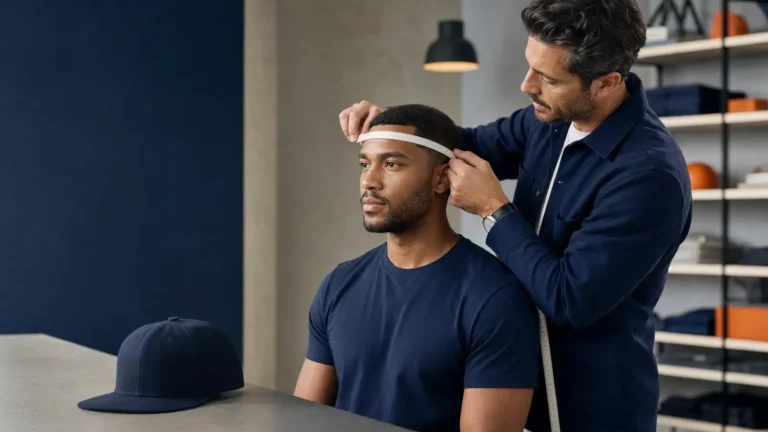
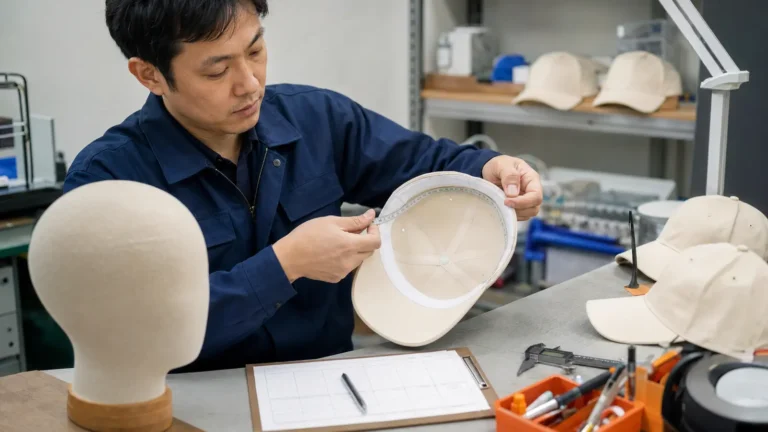
A physical sample connects artwork and written specifications to crown shape, comfort, decoration and packing behavior.
For bulk inspection, use a consistent checklist across randomly selected units. Examine appearance, dimensions, function, workmanship and packaging. If the order contains several colorways, inspect each colorway rather than assuming one approval covers all materials.
Photographs help document the result, but they should not replace physical color evaluation when color is critical. Screens, cameras and lighting can shift navy, charcoal and other dark tones.
What to Send for an Accurate Quotation
A supplier can respond faster and more accurately when the inquiry contains:
- preferred style: snapback, trucker or both;
- reference images showing crown and visor shape;
- estimated quantity per design and color;
- adult, youth or special fit requirements;
- five- or six-panel preference;
- crown profile and structured level;
- shell, foam and mesh material preferences;
- target colors or color references;
- visor shape and underbill color;
- logo files and decoration method;
- logo sizes and positions;
- private labels, hangtags and packaging;
- destination country and postal code;
- target delivery date;
- any testing, labeling or documentation requirements.
If some specifications are undecided, mark them as open. A capable supplier can propose options, but the final quotation should state the assumptions. This prevents a suggested material from being treated as an approved material.
Planning a custom headwear program? Send JIUMU your reference cap, vector logo, quantity, colors, decoration positions, packaging needs and target delivery date. The team can help compare a custom snapback hat with a custom trucker hat before sampling.
Questions to Ask a Custom Hat Supplier
Before approving an order, ask:
- Is the quoted cap a stock blank, a modified stock style or a fully custom construction?
- What are the exact shell, mesh, support and sweatband materials?
- Which crown profile and measurements will be used?
- Will the bulk order follow a sealed physical sample?
- How will logo position and size be controlled?
- What decoration changes are recommended for the center seam or foam front?
- Can the supplier provide material and color swatches before the cap sample?
- How are custom mesh and shell colors matched across repeat orders?
- What is included in the price: labels, hangtags, individual packing and cartons?
- How will structured crowns be protected during shipping?
- What inspections occur before packing?
- Which details may vary within agreed tolerances?
- What information is needed for destination-specific labeling or documents?
Common Buying Mistakes
Treating “snapback” as a complete specification
The word confirms a closure category but not crown height, structure, fabric, panel geometry or visor. Always add measurements and visual references.
Assuming every trucker hat has the same mesh
Mesh varies in openness, stiffness, color and hand feel. Approve the actual mesh, especially for white, neon or custom-dyed programs.
Choosing decoration before selecting the front material
Embroidery, heat transfer, printing and patches interact differently with twill, foam and performance fabric. Select them as a system.
Using an oversized logo
A large logo can crowd the visor seam or distort around the crown. Use the physical cap to judge visual balance.
Ignoring secondary branding
Side embroidery, seam labels, closure tabs, inside labels and packaging can build a stronger private-label presentation. On trucker mesh, however, every attachment must be engineered for the material.
Approving only the front view
Review front, side, rear, top and inside views. Confirm the crown profile when worn, not only on a table.
Compressing the shipping carton
Both styles have structured fronts that can crease. Approve packing density and recovery after transit simulation or representative handling.
How JIUMU Supports Custom Headwear Programs
Established in 2010 in Guangdong, China, JIUMU supplies custom hats, teamwear, logo apparel, bags and branded merchandise for professional buyers. Typical projects include sports teams, schools, clubs, distributors, promotional product companies, retailers and private-label brands in North America and Europe.
JIUMU supports OEM and ODM development, multiple logo methods, fabric sourcing, color matching, private labels, hangtags and custom packaging. Digital mockups and physical samples can confirm specifications before bulk production. A typical minimum order starts around 50 pieces, subject to the product structure and customization.
For this comparison, the useful question is not “Which hat is universally better?” It is “Which construction fits the wearer, climate, brand identity, decoration and distribution plan?” JIUMU can quote a snapback, trucker hat or coordinated range after the buyer confirms the required variables.
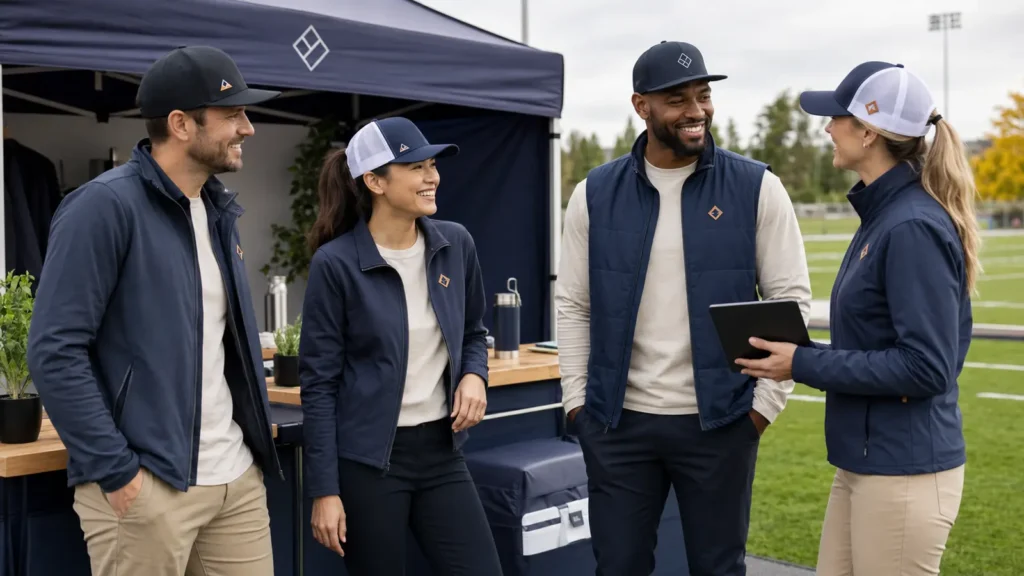
A coordinated program can use both silhouettes while keeping colors, logo language and apparel consistent.
Frequently Asked Questions
Final Recommendation
For a fashion-led, team or private-label program that needs a solid silhouette and multiple decoration zones, begin with a structured snapback. For outdoor work, summer events, casual uniforms or merchandise that benefits from visible ventilation and a recognizable mesh-back look, begin with a trucker hat.
If branding space is the deciding factor, compare the actual panel map. A five-panel trucker may give a large clean front for a patch, while a six-panel snapback may provide more total fabric across front, sides and rear. If comfort is the deciding factor, evaluate the complete material system and fit—not the product name alone.
The safest bulk-order process is to define the use case, compare material and crown options, approve artwork, review a physical sample and document the final specification before production.
Editorial Sources
- JIUMU: Custom Snapback Hats
- JIUMU: Custom Trucker Hats
- Flexfit / YP Classics: Premium Classic Snapback Cap
- Flexfit / YP Classics: Classic Trucker Cap
- Flexfit / YP Classics: Five-Panel Snapback with Perforation
JIUMU Editorial Team:JIUMU has supplied custom teamwear, logo apparel, hats, bags and branded merchandise since 2010. This guide is written for professional buyers comparing product construction and customization options.
Request a custom quotation from JIUMU. Share your cap reference, logo file, quantity by color, crown profile, visor shape, material preference, decoration positions, packaging and delivery destination. Contact JIUMU through the inquiry page, WhatsApp/phone at +86 18507502899, or email zhengdong@jiumugear.com.