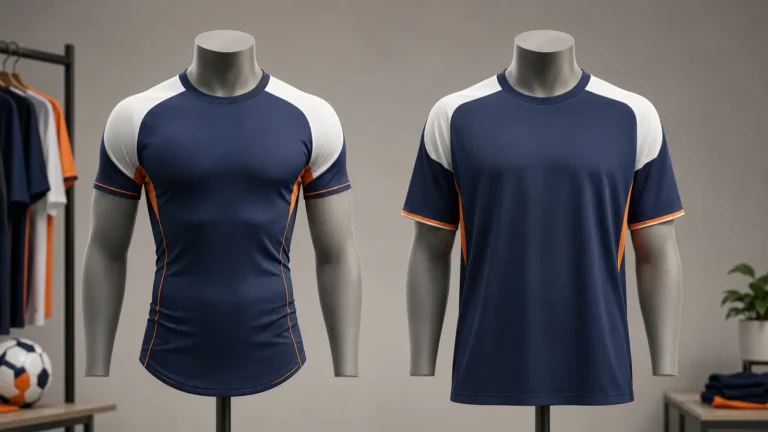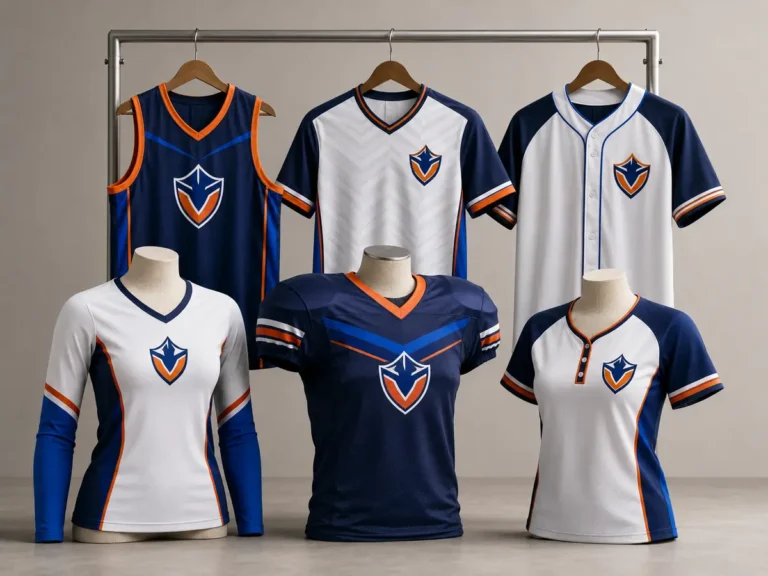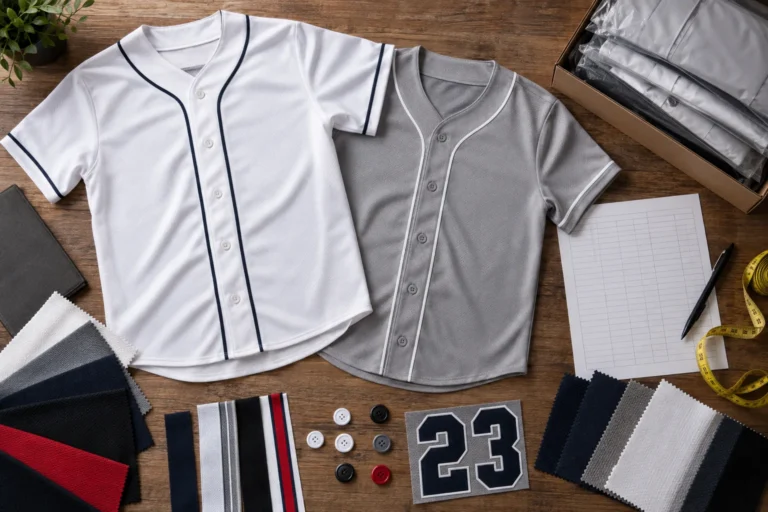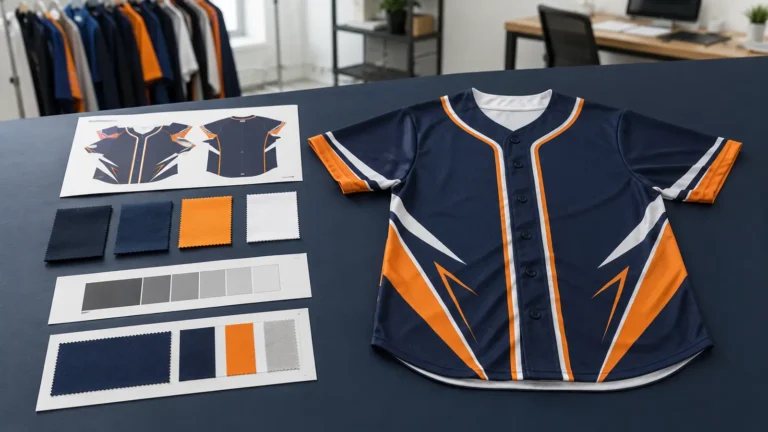
Custom Jerseys for Volleyball, Cricket, Cycling and Other Sports
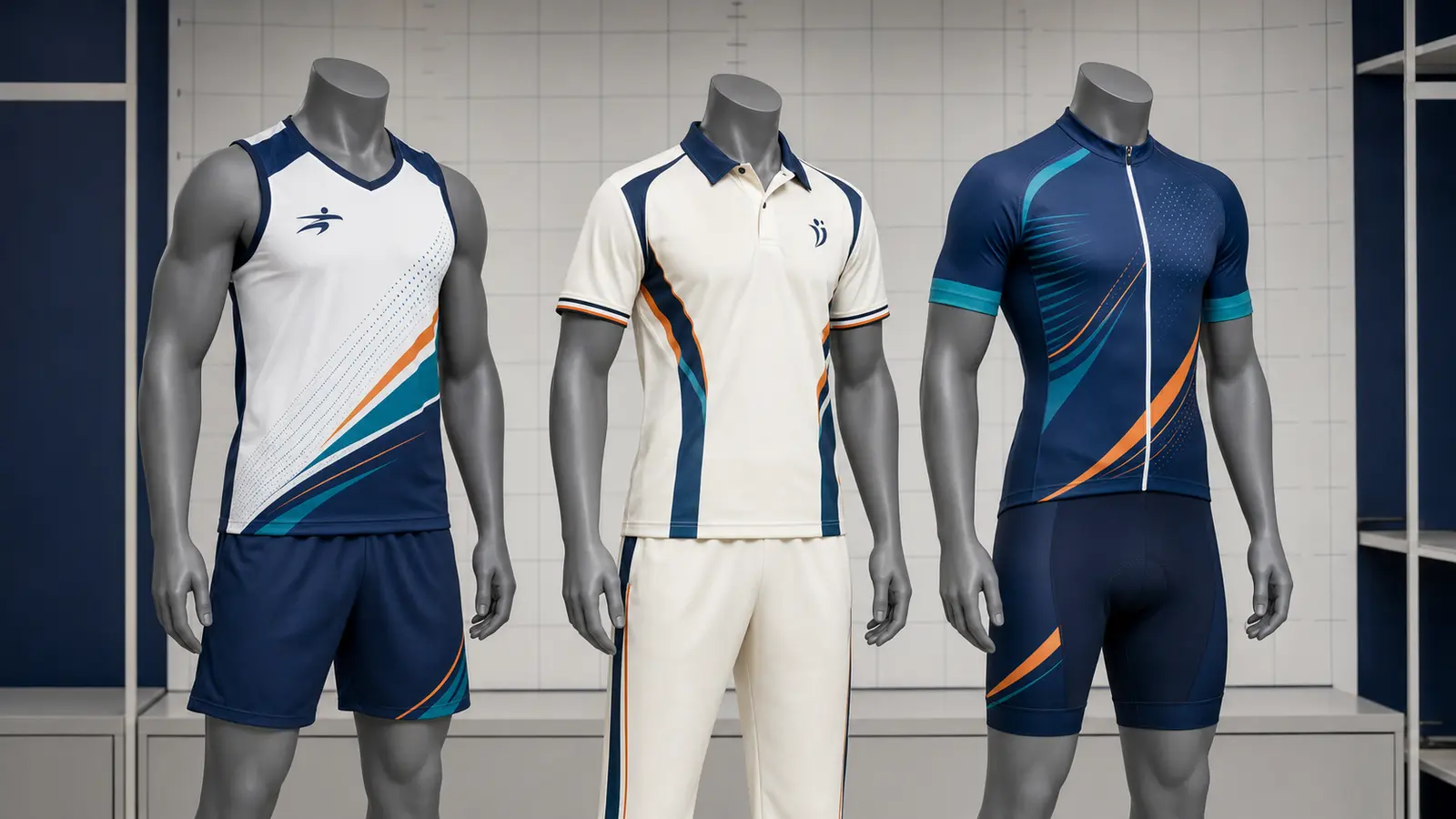
Ordering custom jerseys for a multi-sport program is not simply changing artwork on one standard shirt. Volleyball needs unrestricted shoulder movement. Cricket may require different formats. Cycling needs a close body shape, reliable zipper and rear pockets. Rugby and lacrosse add fit, strength and numbering requirements.
For schools, clubs, academies, distributors and private-label brands, the challenge is to create a recognizable visual system while specifying each garment for its actual sport. This guide compares jersey types, fabrics, fit, construction, decoration and competition requirements.
Quick Answer
The best custom jersey is designed around the movement, climate, contact level and competition rules of its sport. Use lightweight breathable fabric and open arm movement for volleyball; a regular athletic fit, collar options and climate-appropriate sleeves for cricket; and stretch fabric, a close fit, zipper, rear pockets and hem grip for cycling. Rugby, lacrosse, field hockey, running and esports each need a different pattern rather than a renamed generic T-shirt.
Before ordering, send the supplier your sport, player quantity, size range, target fit, fabric preference, colors, logo files, names and numbers, packaging needs, competition level and required delivery date. Approve a physical sample with actual artwork before bulk production. For regulated competition, confirm the latest uniform rules with the organizer or governing body before approving number sizes, logo positions or sponsor marks.
Why Sport-Specific Jersey Design Matters
A jersey is both a performance garment and an identification system. A pattern that restricts movement, traps heat or fits incorrectly over protective pads cannot be rescued by good graphics. Poor number contrast or prohibited sponsor placement can also make a jersey unsuitable for competition.
Treat the project as a controlled specification:
- Performance specification: sport, climate, movement, contact and equipment.
- Visual specification: colors, graphics, logos, names, numbers and sponsor hierarchy.
- Fit specification: intended wearer, size chart, garment measurements and wearing ease.
- Commercial specification: quantity by size, sample route, packaging, target price and delivery window.
- Compliance specification: league rules, organizer approvals and intellectual-property permission.
This approach lets a buyer compare suppliers on the same requirements instead of comparing incomplete prices.
Custom Jersey Types at a Glance
The following table is a sourcing overview, not a substitute for the rules of a specific league or event.
| Sport | Typical jersey shape | Important performance details | Common customization route | Buyer checks before approval |
|---|---|---|---|---|
| Volleyball | Sleeveless or short sleeve; athletic but not restrictive | Open armholes, stable neckline, lightweight body, side ventilation | Full sublimation, heat transfer, selective embroidery | Number contrast and placement, libero color, body length, armhole comfort |
| Cricket | Short- or long-sleeve polo, crew or V-neck depending on format | Breathability, sun coverage, collar comfort, durable underarm and shoulder seams | Sublimation, embroidery, heat transfer, screen print | Match format, sponsor/logo limits, white versus colored kit, sleeve choice |
| Cycling | Close-fitting short- or long-sleeve jersey | Stretch, zipper, rear pockets, dropped back hem, hem grip, ventilation zones | Sublimation is common; small transfer or woven details where suitable | Riding-position fit, zipper quality, pocket stability, sleeve and hem grip |
| Rugby | Close athletic fit with strong stretch recovery | Reinforced seams, low-profile neckline, tear resistance appropriate to use | Sublimation, heat transfer, applique or embroidery where suitable | Sleeve and clothing rules, number visibility, contact durability, sponsor placement |
| Lacrosse | Roomier cut to fit over protective equipment | Shoulder and torso volume, strong seams, ventilation, adequate length | Sublimation, applique, heat transfer | Pad-on fitting, front/back number size, color contrast, duplicate numbers |
| Field hockey | Sleeveless, short-sleeve or polo-based cut | Shoulder movement, moisture management, durable side seams | Sublimation, heat transfer, embroidery | League-specific numbering, home/away contrast, skirt/short coordination |
| Running / athletics | Singlet, short sleeve or fitted top | Low weight, chafe control, ventilation, reflective details where requested | Sublimation or heat transfer | Event bib interaction, seam placement, visibility needs, local rules |
| Esports | Relaxed short-sleeve jersey or polo | Comfort during long wear, stable collar, sponsor visibility | Sublimation, embroidery, heat transfer | Sponsor hierarchy, camera readability, unisex grading, retail presentation |
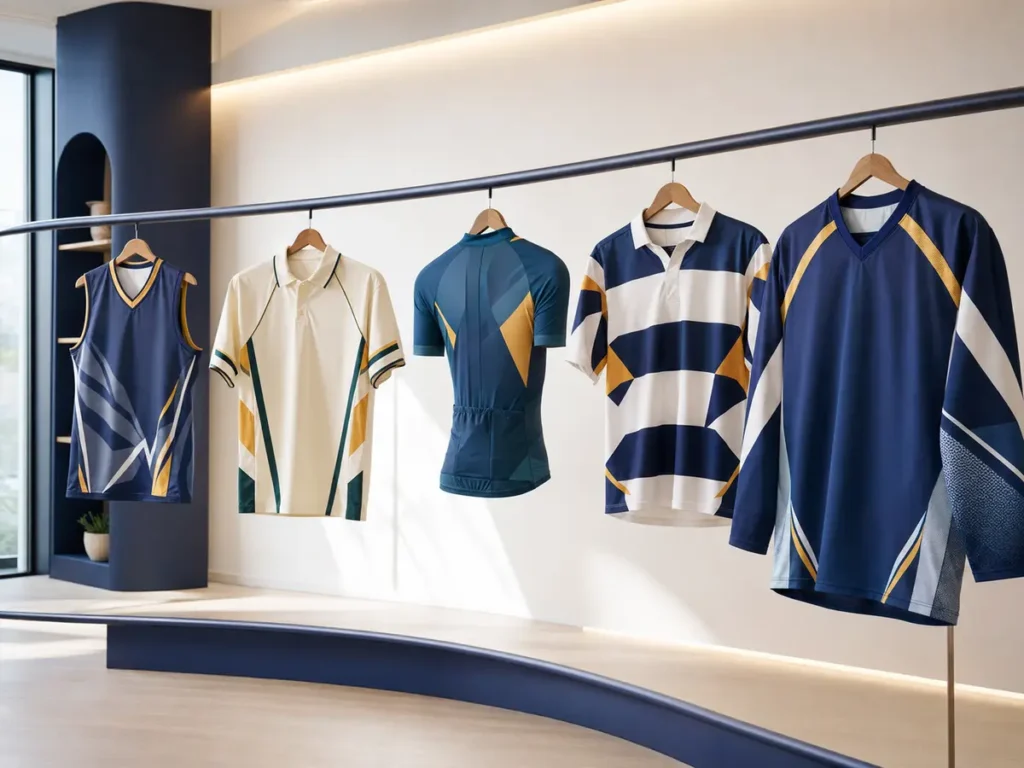
Custom Volleyball Jerseys
Volleyball repeatedly places the arms overhead, so the jersey pattern must protect shoulder mobility. A sleeveless V-neck is common, but some teams prefer cap sleeves or short sleeves. The right choice depends on player preference, league rules, modesty requirements, climate and the rest of the uniform.
Fit and construction priorities
Armholes should allow serving, setting and blocking without pulling the body upward. An armhole that is too deep can expose more than intended, while one that is too tight can rub or restrict movement. The neckline should remain stable during jumps and dives. Side seams, shoulder joins and hems should lie flat enough to reduce irritation.
For women’s, men’s and youth programs, do not assume that one unisex block will serve everyone. Ask for finished-garment measurements and test the jersey on representative players. Important measurements include chest width, body length, shoulder width, armhole depth and hem width.
Numbers, color and the libero
The FIVB Official Volleyball Rules 2025–2028 require player jerseys to carry contrasting numbers centered on the front and back; the standard rules use numbers 1–20, with extensions possible in certain official competitions. FIVB event rules also require the libero to wear a clearly contrasting uniform.
Those international requirements do not automatically govern every school or local league. They do show why number contrast, placement and a planned libero colorway should be settled before production. Confirm the applicable organizer’s current rules.
Suitable decoration
Full sublimation is useful when a volleyball jersey contains gradients, multiple colors, names and numbers because the design is dyed into compatible polyester fabric. Heat transfer can work for smaller runs or simpler personalization. Embroidery may suit a small crest, but a large dense embroidered area can add weight and stiffness to a lightweight performance top.
Custom Cricket Jerseys
Cricket apparel varies more by format, climate and tradition than many buyers first expect. A club may need a white or cream long-sleeve shirt for longer-format play, a colored short-sleeve polo for limited-overs matches and a separate training jersey. The quotation should identify each version rather than combining them under one vague description.
Select the shirt by use
For warm-weather limited-overs play, a lightweight short-sleeve polo or crew-neck shirt may be appropriate. Long sleeves can offer coverage but should still allow a bowler’s shoulder rotation. Raglan or carefully shaped set-in sleeves can both work when the pattern is tested. Underarm panels may use a more open mesh, provided the color and transparency remain acceptable.
The collar deserves attention. A structured collar can support a traditional appearance, but a heavy collar can retain heat or curl after laundering. Ask how the collar is knitted, stabilized and attached.
Logo and sponsor planning
At international level, the ICC Clothing and Equipment Regulations control the types, locations and dimensions of permitted marks. School, club, national-association and tournament rules can differ. Therefore, a buyer should never approve a sponsor-heavy layout based only on visual preference.
Create an artwork map that identifies the team crest, player number, player name, manufacturer identification, event mark and each sponsor. Confirm the permitted location and size with the competition organizer. Keep editable artwork so placements can be changed without rebuilding the entire design.
Custom Cycling Jerseys
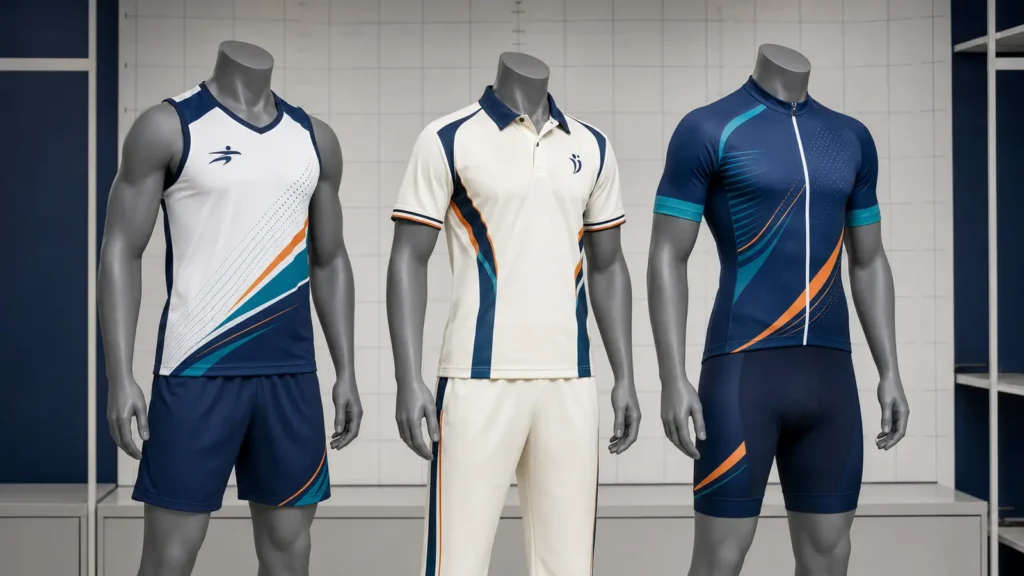
A cycling jersey is a functional garment system. Its fit is judged in the riding position, not only while standing. It typically combines stretch panels, a front zipper, rear storage pockets, a longer back hem and some form of hem stabilization.
Club fit versus race fit
A club fit allows more room through the torso and is often suitable for mixed-age groups, charity rides, corporate cycling teams and recreational clubs. A race fit sits closer to the body and may use more contoured panels and stretch. Using a race pattern for a broad community order can create avoidable sizing problems; using an overly loose pattern for competitive riders can lead to fabric movement and discomfort.
Ask the supplier to name the intended fit and provide garment measurements. If the size chart is based on body measurements, ask for the corresponding garment measurements too. Test the sample while the rider bends forward with hands in a normal riding position. Check the front hem, back coverage, collar, sleeve grip and pocket access.
Zipper, pockets and hem
A full-length zipper makes ventilation and dressing easier, while a half or three-quarter zipper changes cost, comfort and artwork continuity. Verify zipper gauge, slider function, top zipper guard and whether the printed design aligns acceptably across the opening.
Rear pockets should hold their shape when loaded. Check pocket height, opening stretch, seam reinforcement and position. Optional zipped storage should be tested with the intended contents. The rear hem should cover the lower back in the riding position, while the front should avoid bunching. Silicone or elastic grippers must be specified and sampled; their feel and holding power vary.
Cycling regulations
The Union Cycliste Internationale maintains current regulations, equipment guidance and team jersey visual guidelines. Requirements can depend on team status, discipline, national champion status and competition category. A competitive cycling team should check the edition effective for its event and obtain any required approval before bulk artwork is locked.
Rugby, Lacrosse, Field Hockey, Running and Esports
“Other sports” should not become a catch-all pattern. The supplier needs enough information to select or develop the correct block.
Rugby jerseys
Rugby places high loads on seams and fabric. A close fit can reduce loose material, but it must retain mobility and recover after stretch. Reinforce high-stress joins and keep the neckline low profile. Large, stiff decoration should be avoided in areas that flex or experience contact.
World Rugby Law 4 defines permitted player clothing, while World Rugby Regulation 11 addresses marks and player identification for international matches. Buyers should confirm local union and event rules, including sleeves, back numbers and advertising, rather than relying on a generic rugby template.
Lacrosse jerseys
Lacrosse sizing must account for protective equipment in the relevant discipline. A jersey that looks generously sized on a normal mannequin may still bind across shoulder pads. Conduct at least one fitting over the equipment players will actually use.
The World Lacrosse 2026–2028 Sixes rules specify contrasting individual front and back numbers and prohibit duplicates within a team. Other lacrosse disciplines use different requirements, so identify box, field or sixes at the quotation stage.
Field hockey and running tops
Field hockey buyers should specify sleeveless, short-sleeve or polo styles and any separate goalkeeper colors. Running tops prioritize low weight, ventilation and chafe control. Test singlets around the armhole and neckline. If reflective details are requested, define their purpose and support performance claims with appropriate documentation.
Esports jerseys
Esports jerseys are not designed around outdoor exertion, but they still need a deliberate fit. Priorities may include seated comfort, camera-readable sponsor placement, a stable collar, inclusive grading and retail-ready private labeling. Sublimation supports complex graphics; embroidery or patches can add texture when used selectively.
How to Choose Jersey Fabric
“Polyester” is not a complete fabric specification. Two polyester fabrics can differ in weight, stretch, air permeability, hand feel, opacity, snag resistance and print result. Request swatches and document the selected fabric code on the sample approval.
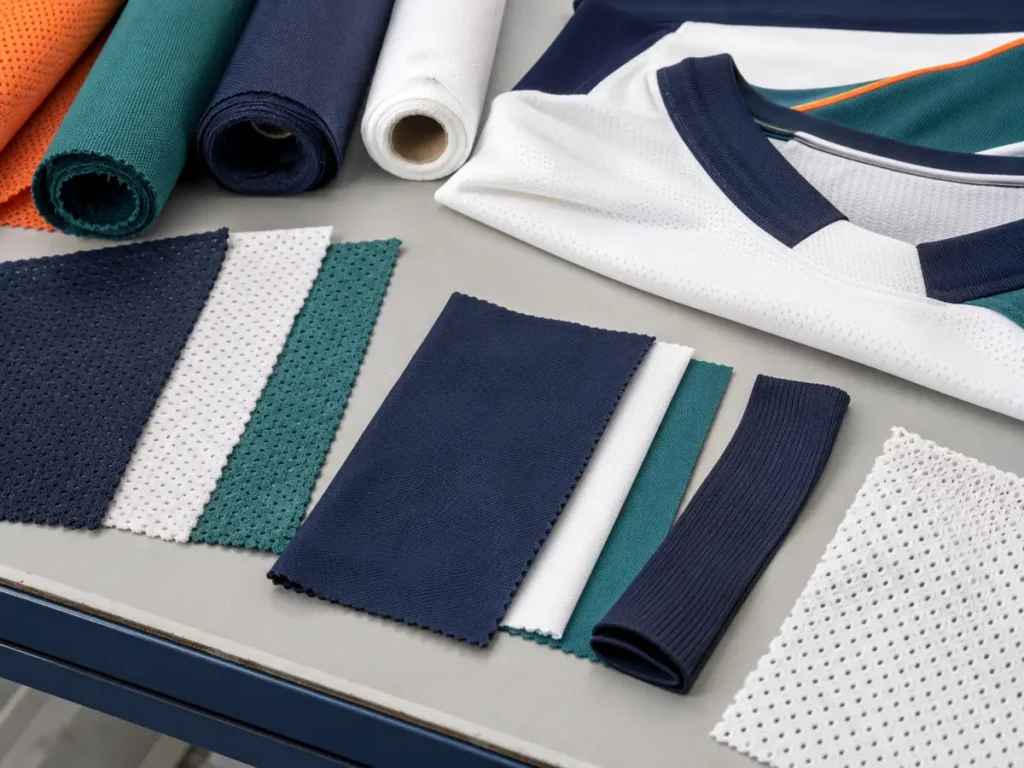
| Fabric or structure | Useful characteristics | Suitable applications | Questions for the supplier |
|---|---|---|---|
| Polyester interlock | Smooth surface, stable structure, good print definition | Cricket polos, volleyball bodies, esports jerseys | What is the weight, stretch and opacity in light colors? |
| Micro-mesh polyester | More open construction and ventilation | Volleyball, training tops, underarm or side panels | Is it suitable for the full body or only ventilation zones? |
| Polyester-spandex blend | Greater stretch and closer fit potential | Cycling, rugby panels, fitted performance tops | What is the stretch direction and recovery after wear? |
| Birdseye or small-hole mesh | Visible texture with airflow | Team jerseys and training wear | Will names, numbers and fine graphics remain sharp? |
| Rib knit | Stretch and recovery for collars or cuffs | Volleyball, cricket, rugby and esports trims | Will the rib color match the body and recover after laundering? |
| Brushed or insulated knit | More warmth and a softer inner face | Cold-weather training or long-sleeve cycling versions | Is it intended for competition, training or layering? |
Evaluate weight alongside structure: lighter is not automatically cooler or better. Open mesh may improve airflow but can be more transparent or prone to snagging. Test pale colors over likely undergarments. Claims such as “moisture-wicking,” “quick-dry” or “UV protection” should be supported by an identified treatment, test method or supplier documentation.
Construction Details That Affect Durability
Durability comes from a compatible combination of fabric, pattern, seam type, thread, decoration and use. A strong seam placed in the wrong position can still irritate a player. A high-stretch fabric joined with a low-stretch seam can fail during movement.
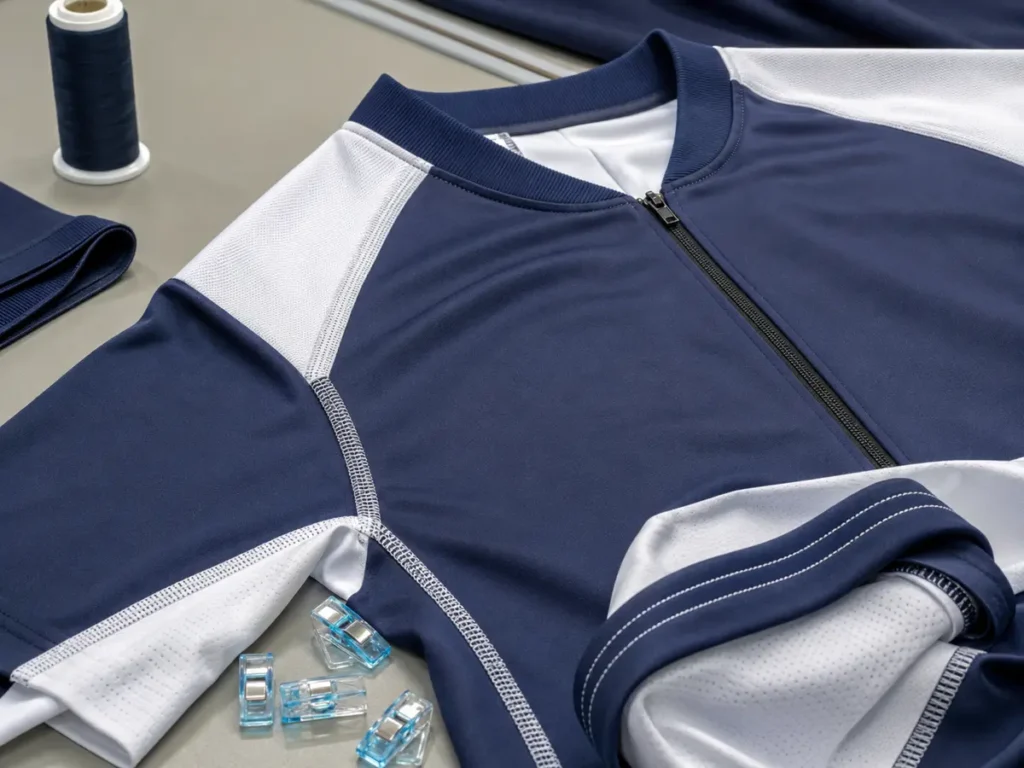
Review these details on the physical sample:
- Shoulder and underarm seams lie flat and allow the intended movement.
- Side seams are aligned and do not twist.
- Neck rib or binding is even, secure and able to recover.
- Hems are consistent and do not wave excessively.
- Zippers run smoothly, sit flat and include a comfortable top finish where specified.
- Cycling pockets are level, reinforced and stable under load.
- Contact-sport seams are reinforced according to the product specification.
- Printed panels align within the agreed tolerance at visible joins.
- Loose threads, needle damage, skipped stitches and seam puckering are not acceptable.
For repeat orders, keep the approved sample, measurement chart, fabric code, color reference and artwork version together. A photograph alone is not enough to reproduce fit and construction.
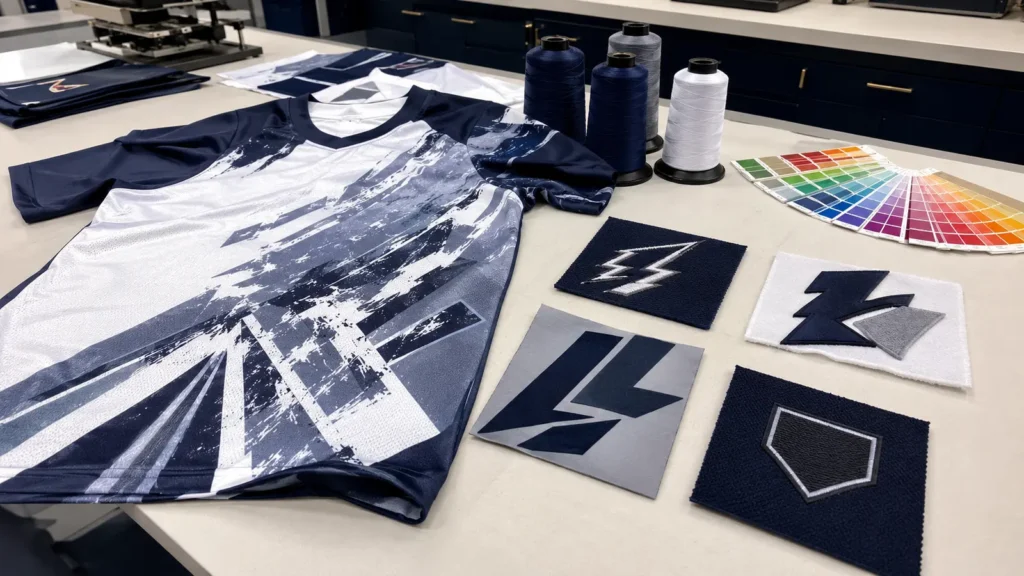
Sublimation, Embroidery, Heat Transfer or Applique?
Decoration should match the artwork, quantity, fabric and sport.
| Method | Best suited to | Advantages | Limitations to plan for |
|---|---|---|---|
| Sublimation | Polyester jerseys with all-over graphics, gradients, names and numbers | Design is integrated into compatible fabric; supports many colors without heavy surface layers | Fabric compatibility matters; exact colors require sampling; white base and cut-and-sew alignment affect results |
| Embroidery | Small crests, initials and selective premium details | Tactile and durable appearance | Adds weight and backing; large dense areas can stiffen lightweight fabric |
| Heat transfer | Names, numbers, sponsors and smaller runs | Flexible artwork changes and sharp detail | Film hand feel, adhesion and wash process must be tested on the selected fabric |
| Tackle twill / applique | Bold numbers and heritage styling | Dimensional, traditional appearance | More labor, weight and stitching; less suitable for very light or close-fit garments |
| Screen printing | Simple graphics in appropriate quantities | Useful for defined spot colors on compatible fabrics | Setup and color count affect cost; stretch and fabric chemistry must be considered |
| Woven or rubber/PVC patch | Private-label or decorative accents | Distinct texture and reusable brand element | Placement, edge comfort, weight and sport rules must be checked |
For a multi-sport program, one visual identity can use different methods: full sublimation for volleyball, sublimation plus a small crest for cricket, and mostly sublimated graphics for cycling.
Cost Drivers in a Bulk Custom Jersey Order
The main cost drivers include:
- pattern complexity and number of cut panels;
- selected fabric, weight and stretch content;
- zipper, pocket, gripper, collar and trim choices;
- decoration method and artwork complexity;
- individualized names and numbers;
- size range and youth/adult grading;
- quantity per sport, design and colorway;
- private labels, hangtags, barcodes and individual packaging;
- sample type and number of revision rounds;
- inspection requirements, shipping method and delivery schedule.
When comparing quotations, confirm what is included: artwork support, sample, personalization, labels, packaging, freight, duties and any remake terms. A lower unit price based on a different fabric or incomplete packaging is not an equivalent offer.
Sample Approval and Quality-Control Checklist
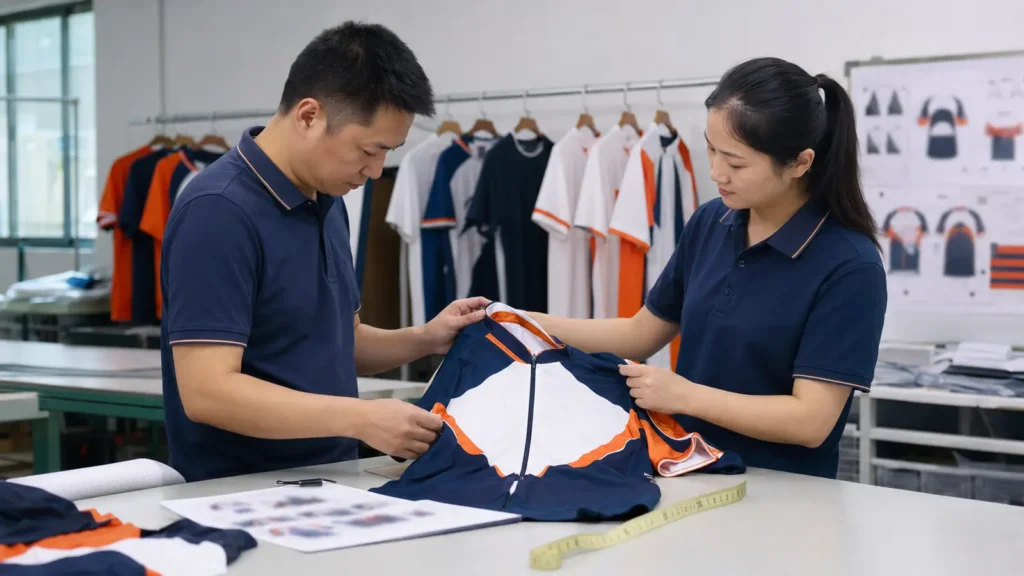
A digital mockup confirms design direction, but it cannot verify fit, hand feel, opacity, zipper function or seam comfort. Approve a physical sample for any new jersey construction or fabric.
Pre-production sample checks
- Compare the sample with the signed tech pack and latest artwork.
- Measure the garment on a flat surface using the agreed method.
- Fit it on representative players and, for lacrosse, over actual pads.
- Test volleyball overhead movement and cycling riding posture.
- Inspect light-color opacity under realistic conditions.
- Confirm print color under neutral light and compare it with the approved reference.
- Check names, numbers, sponsor marks and spelling.
- Operate zippers and load cycling pockets.
- Review seams, hems, collar recovery and internal comfort.
- Record every correction in one consolidated approval document.
Bulk inspection points
| Inspection area | Practical check | Record to retain |
|---|---|---|
| Quantity and assortment | Count by style, color and size | Packing list and carton breakdown |
| Measurements | Check agreed points against approved tolerance | Measurement report |
| Color and print | Compare bulk pieces with approved sample under neutral light | Approved swatch/sample and photos |
| Personalization | Match names and numbers to roster | Roster cross-check |
| Sewing | Inspect seams, hems, collar, zipper and pockets | Defect log and inspection photos |
| Appearance | Check stains, snags, print marks and pressing | Final inspection report |
| Labels and packaging | Verify brand label, size, hangtag, barcode and bag | Packaging approval and sample |
| Cartons | Verify markings, assortment and protection | Carton list and shipping marks |
Define who approves the sample and what constitutes approval. Comments scattered across email, messaging apps and annotated screenshots create version risk. Use one final file with a date or version number.
How to Plan a Multi-Sport Bulk Order

Step 1: Build a sport-by-sport matrix
List each sport, style, quantity, size range, colorway, player personalization, competition level and delivery date. Separate match, training and staff garments.
Step 2: Define the shared identity
Choose master colors, an approved crest and rules for sponsor hierarchy. Decide what must remain consistent and what can change by sport. Do not force identical panel graphics onto incompatible patterns.
Step 3: Confirm garment specifications
For each sport, document fit, fabric, collar, sleeve, seams, zipper, pockets, grippers and decoration. Add league requirements and organizer approvals.
Step 4: Prepare artwork and rosters
Provide vector artwork where possible. Keep names and numbers in a structured spreadsheet with one row per player. Flag special characters and confirm capitalization. Obtain permission to use logos, sponsors and protected marks.
Step 5: Approve mockups and samples
Review both front and back, including the libero or alternate colorway. Approve physical samples with actual fabric and decoration. Freeze the artwork version before bulk production.
Step 6: Inspect, pack and retain records
Approve the packing method. Retain the measurement chart, sample, color standard and artwork for repeat orders.
Planning a custom multi-sport jersey program? Send JIUMU your sport list, quantity by style, size range, reference images, logo files, colors, personalization spreadsheet, packaging needs and target delivery date. Request a custom quotation or explore custom team jerseys.
What to Send for an Accurate Quotation
Use the following brief:
- buyer/company name and destination country;
- sport and competition level;
- jersey style and intended fit;
- quantity by style, color and size;
- adult, youth, women’s, men’s or unisex grading;
- preferred fabric or required performance characteristics;
- reference images or tech pack;
- vector logo files and color references;
- player names and numbers;
- sponsor and event marks;
- decoration method, if already selected;
- private label, hangtag, barcode and packaging requirements;
- sample requirement and approval deadline;
- bulk delivery date and preferred shipping method.
If some details are undecided, identify them rather than guessing. A capable supplier can propose options, but the quotation should state the assumptions.
Questions to Ask a Custom Jersey Supplier
- Is the pattern developed for the named sport?
- Can you provide finished-garment measurements and the measurement method?
- What are the fabric code, composition, weight, stretch and intended use?
- How will light-color opacity be checked?
- Which decoration method is recommended, and why?
- How are colors controlled from sample to repeat order?
- Can the physical sample use actual names, numbers and logos?
- What tolerances apply to measurements, print placement and panel alignment?
- How are personalized rosters and final quality checked?
- What is included in the quotation, and how does the MOQ apply?
Common Buying Mistakes
- Using one generic jersey for every sport: graphics do not change arm movement, pad allowance, riding posture or pocket function.
- Approving only a standing fit: test volleyball overhead movement, the cycling position and lacrosse fit over pads.
- Treating the size label as a measurement: approve garment measurements and the measurement method.
- Choosing fabric from a screen image: review a physical swatch or sample for color, hand feel, opacity and stretch.
- Ignoring rules until production: confirm number, contrast, logo, sponsor and alternate-jersey requirements before artwork is frozen.
- Scattering approvals across messages: consolidate corrections and name the version approved for bulk.
- Comparing different assumptions: align fabric, construction, personalization, packaging and shipping scope first.
Why Work with JIUMU on Custom Team Jerseys
JIUMU is a Guangdong-based B2B supplier established in 2010, serving buyers in the United States, Canada, the United Kingdom and Europe. The product scope includes custom teamwear, logo apparel, hats, uniforms, bags and branded merchandise.
For custom jersey projects, available capabilities include OEM and ODM development, fabric sourcing, Pantone color matching, sublimation, embroidery, screen printing, heat transfer, patches, private labels, hangtags, packaging customization, digital mockups, physical samples, bulk quality control and export support.
The typical MOQ is 50 pieces, subject to product structure and customization. Buyers can combine jersey planning with custom team uniforms, custom team jackets and custom team bags to build a more consistent program.
JIUMU’s role is to help translate the buyer’s sport, identity and commercial requirements into a clear specification. Competition eligibility remains subject to the buyer’s league, organizer or governing body, so regulatory requirements should be included in the brief and confirmed before bulk approval.
Frequently Asked Questions
Final Recommendation
Start with the sport, not the graphic. Define how the player moves, what equipment is worn, what the competition requires and how the jersey should fit. Then choose fabric, construction and decoration that support those conditions. Approve one controlled physical sample and use it with the measurement chart, artwork and color reference as the standard for bulk production.
For a multi-sport program, keep the identity consistent but let each jersey remain true to its function. Volleyball, cricket, cycling, rugby and lacrosse should look related without sharing an unsuitable generic pattern.
JIUMU Editorial Team
Practical sourcing guidance for custom teamwear, logo apparel and multi-sport uniform programs.