How to Style Sports Jerseys: Football, Soccer and Basketball Outfit Ideas
Sports jerseys have moved far beyond the stadium. A football jersey can anchor a relaxed streetwear outfit, a soccer shirt can replace a graphic tee, and a basketball jersey can work as either a warm-weather top or a layering piece. The key is not to disguise the jersey. It is to balance its color, volume and athletic details with clothing that gives the outfit a clear direction.
This guide explains how to style sports jerseys for everyday wear, game day, travel, school and club events. It also shows teams, schools, distributors and apparel brands how styling decisions translate into better custom jersey specifications. That matters because a jersey designed only for competition may not be the jersey supporters want to wear after the season ends.
Quick Answer: To style a sports jersey well, start with proportion. Pair an oversized football jersey with straight or wide-leg bottoms, a fitted soccer jersey with relaxed trousers or a skirt, and a basketball jersey with a clean base layer when more coverage is needed. Repeat one jersey color elsewhere in the outfit, keep competing graphics limited, and choose shoes and outerwear that match the occasion. For a custom program, decide whether the jersey is primarily for play, fanwear or both before approving the fit, fabric, graphics and size range.
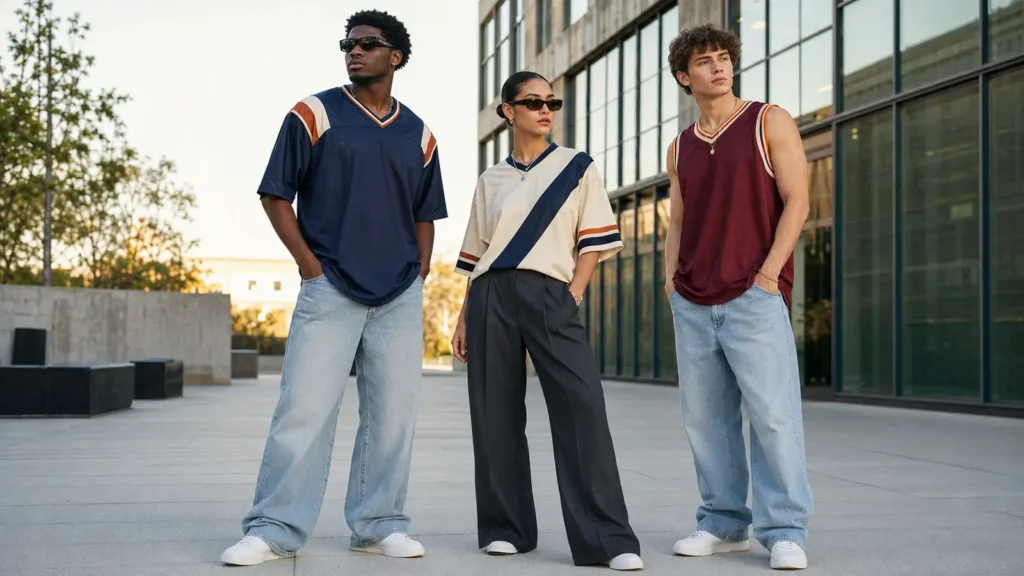
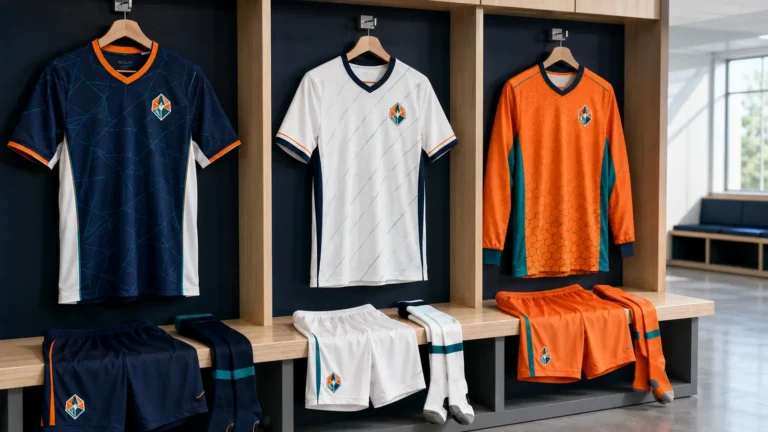
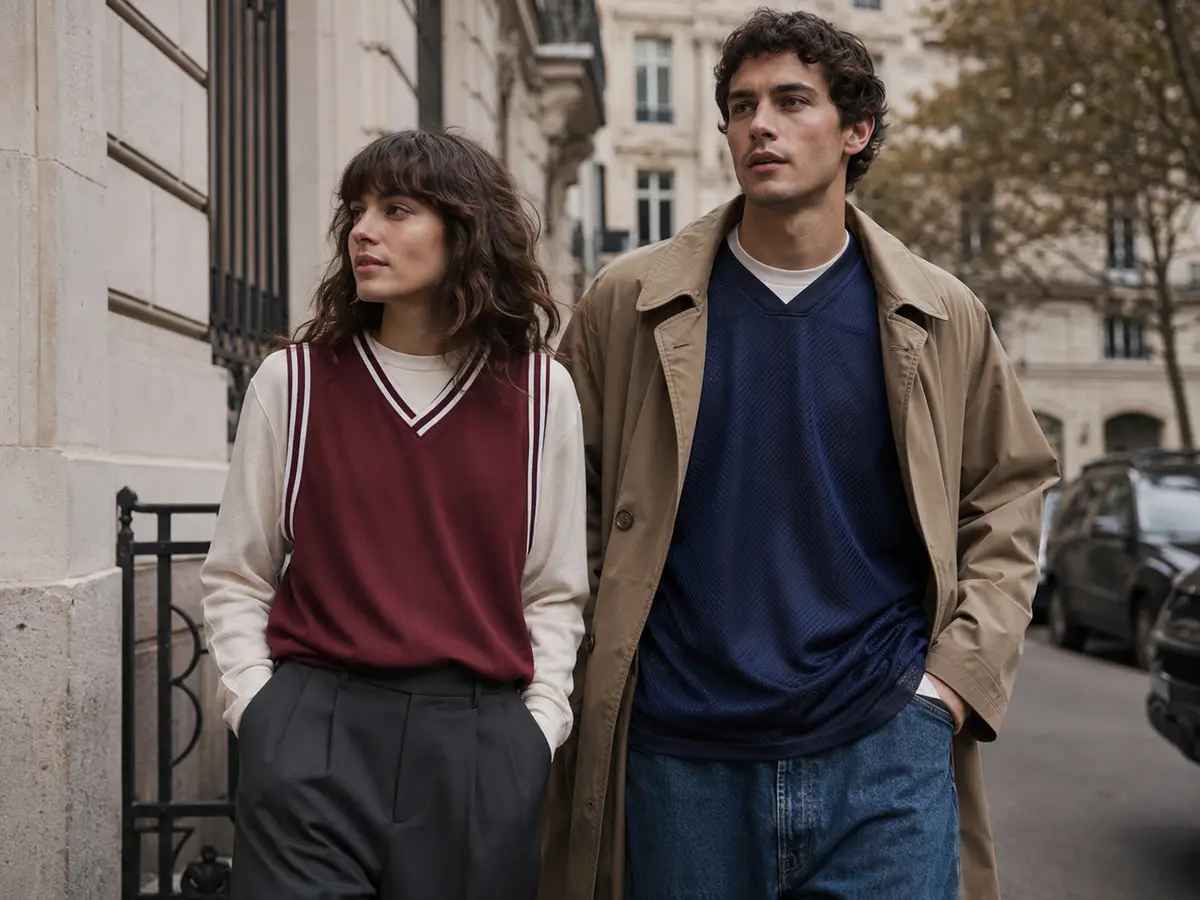
Football, soccer and basketball-inspired jerseys styled with denim, tailored trousers and clean sneakers.
Why Jersey Styling Starts With the Garment, Not the Accessories
A sports jersey already carries more visual information than a plain T-shirt. It may include contrast panels, a team crest, a large player number, sponsor positions, piping or an all-over sublimated pattern. Adding several more statement pieces can make the outfit look unplanned.
Begin by reading the jersey as a garment:
- Silhouette: Is it fitted, straight, boxy or intentionally oversized?
- Length: Does the hem finish at the waist, hip or upper thigh?
- Sleeves: Are they slim, dropped, sleeveless or designed to fit over protective equipment?
- Color: Is one color dominant, or are several high-contrast colors competing?
- Graphic density: Does the jersey have a small crest or a full front-and-back design?
- Fabric: Does it look technical and glossy, soft and matte, or retro and textured?
Once those points are clear, the rest of the outfit has a job: balance the silhouette, support the color story and set the level of formality.
Current fashion coverage shows jerseys paired with skirts, tailored outerwear and refined footwear, while brand guidance emphasizes fit and layering. See recent references from adidas, Who What Wear and Vogue.
Football, Soccer and Basketball Jerseys: What Changes?
The three jersey types create different proportions, so the same styling formula will not work equally well for all of them.
| Jersey type | Typical visual shape | Best everyday balance | Easy layering direction | Watch for |
|---|---|---|---|---|
| American football jersey | Boxy body, roomy sleeves, strong shoulder line, large numbers | Straight jeans, cargo pants, shorts or a fitted skirt | Long-sleeve tee underneath or clean jacket over the top | Excess bulk around shoulders and a hem that is too long |
| Soccer jersey | Usually lighter, closer to the body and more T-shirt-like | Relaxed denim, tailored trousers, track pants or midi skirt | Overshirt, bomber, trench or light jacket | Too many competing sportswear pieces |
| Basketball jersey | Sleeveless, long in the body, open armholes | Loose denim, shorts, parachute pants or streamlined skirt | Tee, fitted long sleeve, hoodie or jacket underneath/over it | Exposed armholes, overly long shorts and top-heavy color blocking |
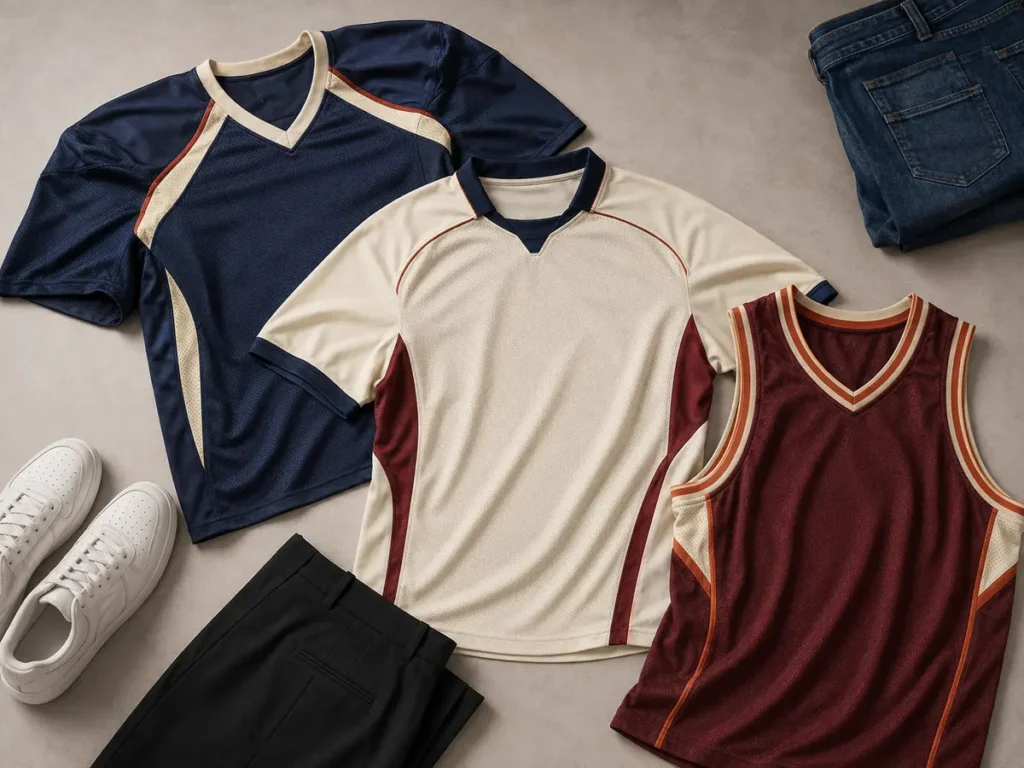
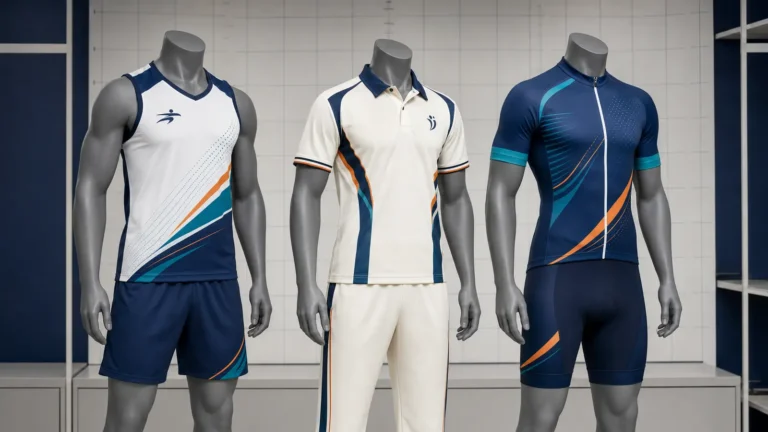
The construction of each jersey type changes how it should be balanced in an outfit.
A simple three-part outfit rule
Let the jersey provide the color and graphics, the bottoms establish the silhouette, and the shoes or one accessory finish the look. If a jersey contains navy, cream and orange, neutral trousers and cream shoes are enough to connect the outfit.
How to Style a Football Jersey
American football jerseys are usually the boldest of the three categories. Their shoulder shape, sleeve stripes and large numbers create a strong upper-body silhouette. The easiest way to style one is to accept that volume and give it a clean foundation.
1. Football jersey with straight-leg jeans
Choose jeans that fall straight from the hip rather than extremely skinny denim that exaggerates the jersey’s width. A standard-length jersey can remain untucked; a longer, flexible jersey may take a small front tuck. Finish with low-profile sneakers, retro runners or simple boots.
2. Oversized football jersey with wide-leg trousers
An oversized top can work with wide bottoms when the trousers have a defined waistband and clean front. Push the sleeves slightly upward or add a compact crossbody bag to create shape. Technical jersey fabric also contrasts well with matte woven trousers.
3. Football jersey over a fitted long-sleeve tee
Layer a short-sleeve jersey over a close-fitting cream, white, gray or black long-sleeve tee. If the jersey already has shoulder stripes, piping and large numbers, keep the base layer solid.
4. Football jersey with a skirt
A straight denim skirt, pleated midi or clean mini creates a useful athletic-versus-refined contrast. With a midi skirt, use a controlled front tuck. With a mini, make sure its hem remains visibly distinct beneath a longer jersey.
5. Football jersey under a jacket
Choose a relaxed bomber, chore jacket, trench or unstructured coat with enough shoulder and sleeve room. Keep it open so the jersey remains visible; use neutral outerwear with a bright jersey.
6. Game-day football outfit
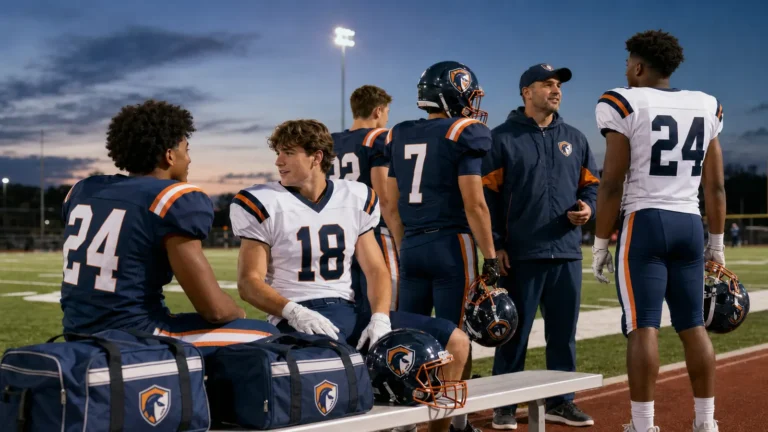
For a stadium or watch party, choose jeans or cargos, comfortable shoes and a packable layer. Supporters often wear jerseys over tees and sweatshirts, so fanwear sizing may need more ease than a performance version.
How to Style a Soccer Jersey
Soccer jerseys are generally the easiest to integrate into everyday wardrobes because many are cut like lightweight T-shirts. Their collars, crests and all-over graphics still give them a distinctive identity, but they usually layer more easily than football jerseys.
7. Soccer jersey with relaxed denim
Use the jersey as the graphic top and keep the jeans quiet. Straight or loose denim works well. Wear a fitted jersey untucked; give an oversized jersey a partial tuck or shorter hem.
8. Soccer jersey with tailored trousers
Pleated trousers, a belt and clean leather sneakers or loafers move a jersey beyond pure sportswear. Full-length trousers and a polo-style jersey collar make the combination especially cohesive.
9. Soccer jersey with track pants
Choose minimally branded track pants with a silhouette that differs from the jersey. Avoid mixing unrelated stripes and giant logos. One shared color and neutral shoes are enough.
10. Soccer jersey with a midi skirt
A straight, pleated, nylon or softly structured midi skirt changes the jersey’s context without hiding it. Let a short fitted jersey sit naturally above the skirt, or tuck an oversized jersey slightly at the front.
11. Soccer jersey under a trench or overshirt
A tan, navy, charcoal or olive trench adds a long vertical line and quiets a busy jersey; an open overshirt gives a more casual version. Both work well for travel and changing temperatures.
12. Retro soccer shirt with simple basics
Let a retro shirt’s heavier collar, textured knit or muted palette lead. Pair it with washed denim, corduroy or understated trousers. During custom sampling, check collar stability, stripe alignment and color consistency.
How to Style a Basketball Jersey
Basketball jerseys are long, sleeveless and visually open around the shoulders. That creates excellent layering options, but the armhole depth and body length require attention.
13. Basketball jersey over a white T-shirt
This is the most accessible formula. Use a tee with sleeves that sit neatly under the jersey and a neckline that does not compete with the rib trim. A heavier cotton tee can add structure; a lighter tee gives a softer drape.
Pair with loose jeans, chinos or shorts. Keep the base layer free of visible graphics unless the jersey front is extremely minimal.
14. Basketball jersey over a fitted long sleeve
A close black, white or cream long sleeve makes a basketball jersey useful in cooler weather. The long vertical body of the jersey can be balanced with wider trousers or straight denim.
For a more fashion-led outfit, use a turtleneck or mock-neck base layer, but check that the jersey neckline sits flat instead of bunching.
15. Basketball jersey with shorts
Avoid making both pieces finish at nearly the same length. A long jersey with long, wide basketball shorts can hide the body’s proportions. Either choose a slightly shorter jersey, show a clear waistband, or select shorts with a defined hem and moderate volume.
Crew socks and sneakers complete the athletic direction. For a more neutral look, use canvas shoes or retro runners instead of performance basketball footwear.
16. Basketball jersey with cargo or parachute pants
The sleeveless upper body and wider lower body create a balanced streetwear silhouette. Keep pocket details controlled if the jersey has large graphics. A compact bag worn across the body can create an additional diagonal line and shorten the visual length of an oversized jersey.
17. Basketball jersey with a blazer or coat
An open relaxed blazer can frame the jersey and make it appropriate for a creative event, dinner or fashion-oriented watch party. Choose soft tailoring rather than a narrow corporate suit jacket. A longer coat can also work over a jersey and base layer.
Use one refined element—tailored outerwear, a clean bag or polished shoes—not all of them. The jersey should still look deliberately casual.
18. Basketball jersey as a warm-weather top
When worn without a base layer, check armhole coverage and garment length before leaving home. A lifestyle version may need a shallower armhole than a competition jersey. Pair with structured shorts, denim or a skirt and keep undergarments unobtrusive.
For private-label development, this distinction matters. A court jersey and a retail lifestyle jersey can share the same visual identity while using different armhole depths, body lengths and fabric weights.
Fit and Proportion: How Oversized Should a Jersey Be?
“Oversized” should look intentional, not accidental. The shoulder may drop, the body may widen and the hem may lengthen, but all three do not need to increase equally.
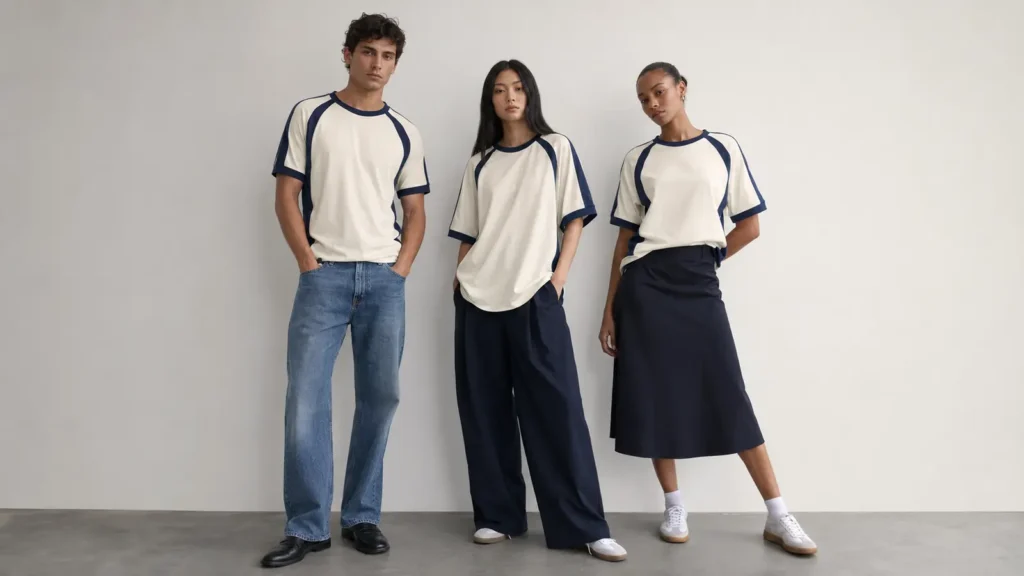
Fitted, oversized and partially tucked jerseys create different relationships with jeans, wide trousers and skirts.
| Desired look | Jersey fit | Bottom silhouette | Styling adjustment |
|---|---|---|---|
| Clean and minimal | Regular or slightly relaxed | Straight or tailored | Wear untucked; repeat one jersey color in footwear |
| Current streetwear | One to two sizes visually larger, depending on the actual size chart | Wide or straight with visible structure | Show wrist, waistband or bag strap to create definition |
| Layered fanwear | Enough ease for a tee or hoodie | Straight jeans, cargos or leggings | Test the jersey over the real layer before ordering |
| Refined contrast | Regular, cropped or controlled oversized fit | Pleated trouser or midi skirt | Use a small tuck and simple accessories |
| Warm-weather basketball look | Regular body with appropriate armhole | Shorts, denim or skirt | Confirm coverage from side and back views |
Do not rely only on the size label. Compare actual garment measurements: chest width, body length, shoulder or sleeve span, armhole depth and hem width. For custom jerseys, approve these measurements on a physical sample and record them in the final size specification.
Layering Sports Jerseys Without Adding Bulk
Layering works when each garment has enough space and the necklines cooperate.
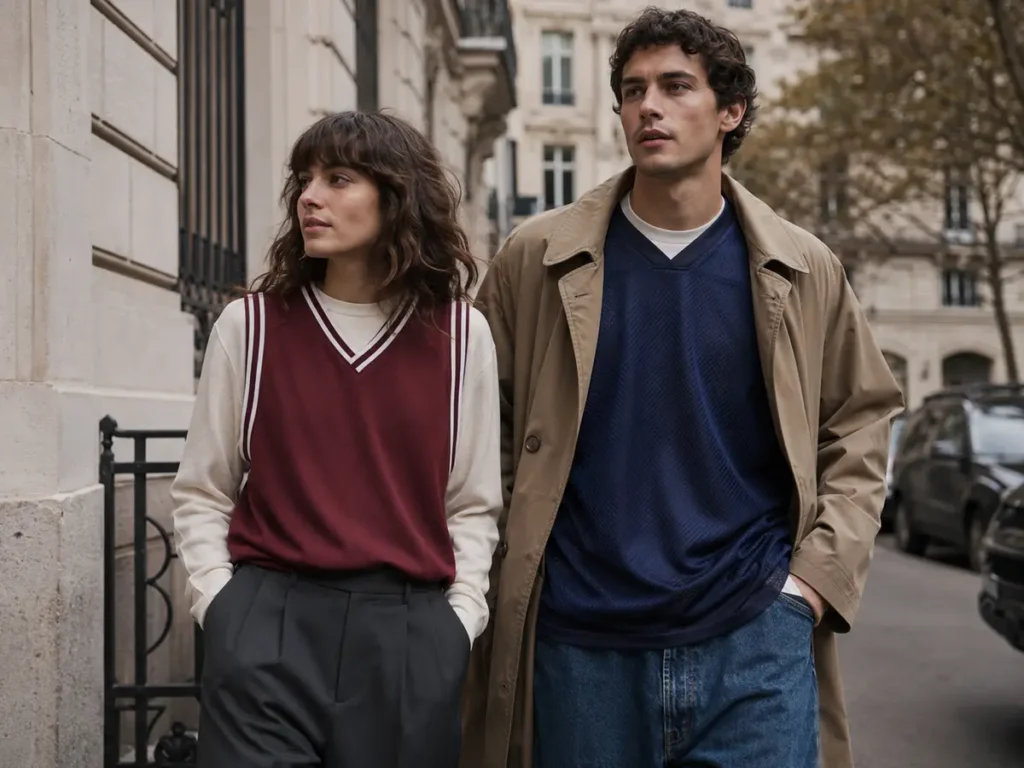
Slim base layers and relaxed outerwear preserve the jersey’s shape without unnecessary bulk.
Base layers
Use fitted tees, long sleeves, mock necks or light hoodies. Check that the jersey does not pull across the chest or form folds beneath the arm. Basketball jerseys usually accept base layers easily; soccer jerseys need a little extra ease; football jerseys may already have enough volume but can become bulky at the shoulder.
Outer layers
Bombers, overshirts, chore jackets, trenches and relaxed coats are more forgiving than narrow tailored jackets. Keep the outer layer open when the jersey contains the main graphic.
Seasonal formulas
- Spring: soccer jersey + overshirt + straight jeans + sneakers
- Summer: basketball jersey + structured shorts + low-profile shoes
- Autumn: football jersey + fitted long sleeve + cargos + light jacket
- Winter: soccer jersey + thin base layer + relaxed coat + wool trousers
Shoes, Caps, Bags and Jewelry
Accessories should finish the outfit rather than turn it into a merchandise display.
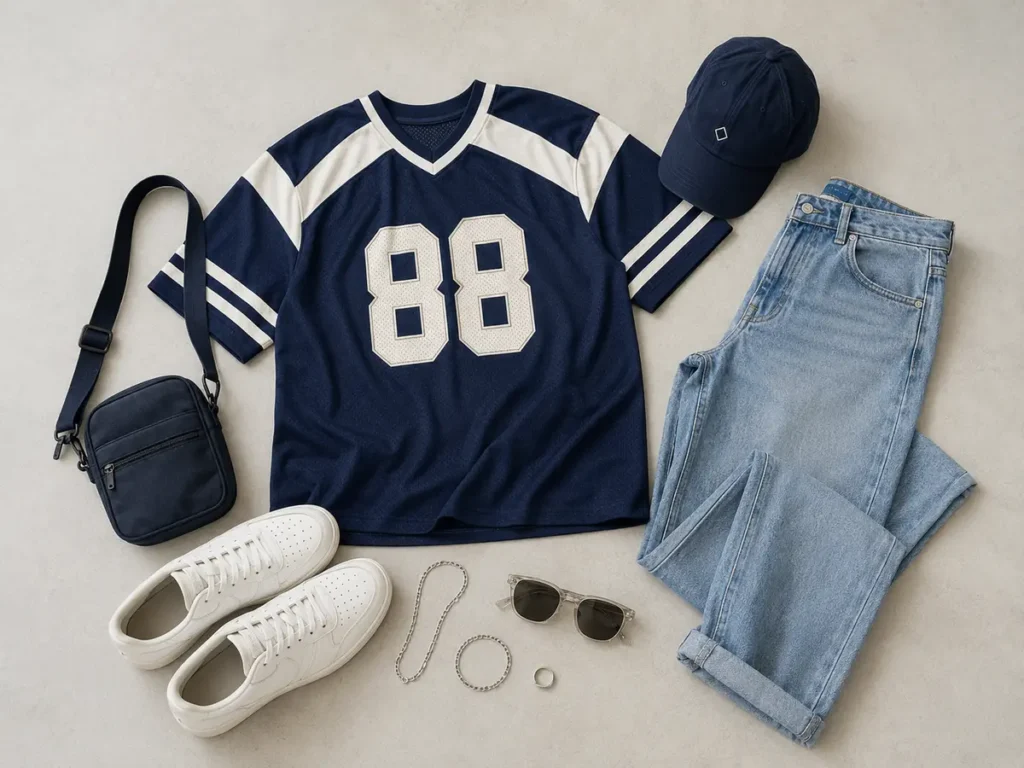
Neutral accessories and one repeated jersey color create a coordinated everyday outfit.
Shoes
Clean sneakers are the easiest option, but they are not the only option. Loafers can sharpen a soccer jersey and trouser combination. Boots can ground an oversized football jersey. Minimal sandals can work with a basketball jersey and skirt in warm weather. Match the formality of the shoe to the bottom half, not just to the jersey.
Caps
A plain cap or one small mark is usually enough when the jersey already has a crest and number. For coordinated team merchandise, use the same color standards across jerseys and custom baseball caps but vary the logo scale so every product does not look identical.
Bags
Crossbody bags create shape across a long jersey. Totes work for relaxed daywear. Backpacks make sense for travel, school and training, especially when colors coordinate with the team program. See JIUMU’s custom team bags for a broader merchandise system.
Jewelry
Simple chains, small earrings, watches and rings can add detail without competing with printed numbers. Avoid pieces that catch easily on open mesh or embroidery.
Color Coordination That Does Not Look Like a Full Uniform
Use one of four reliable methods:
- Neutral base: Jersey colors remain the focus; bottoms and shoes stay black, gray, cream or denim.
- One-color repeat: Repeat one jersey color in a cap, shoe or bag.
- Tonal outfit: Use darker and lighter versions of the same color family.
- Controlled contrast: Pair one strong jersey color with a complementary accent and keep everything else neutral.
Avoid trying to match shades by memory when developing merchandise. Navy, royal blue and burgundy vary significantly between fabrics and decoration processes. For a bulk order, compare lab dips, printed strike-offs, embroidery thread and physical samples under consistent lighting.
Outfit Ideas by Occasion
| Occasion | Recommended formula | Practical note |
|---|---|---|
| Stadium or arena | Jersey + jeans/cargos + comfortable shoes + packable layer | Confirm venue bag and weather requirements |
| Watch party | Jersey + tailored trouser or skirt + clean sneakers | One refined piece makes the outfit feel planned |
| Travel day | Soccer jersey + overshirt + relaxed trousers + backpack | Choose breathable fabric and wrinkle-tolerant layers |
| School spirit day | Jersey + straight jeans + coordinated cap | Keep names and graphics appropriate for the institution |
| Club event | Basketball jersey over tee + cargos + team jacket | Use consistent colors across categories |
| Retail launch | Retro jersey + neutral trousers + styled display accessories | Merchandise the jersey as an outfit, not an isolated product |
| Corporate sports event | Subtle jersey + chinos/trousers + clean outerwear | Use smaller branding and inclusive sizing |
What These Styling Choices Mean for Custom Jersey Buyers
For a team, school, retailer or promotional buyer, outfit inspiration should influence the product brief. A competition jersey is evaluated for movement and performance. A fan jersey is evaluated for comfort, layering and appearance. A private-label lifestyle jersey also needs a retail-ready silhouette, label system and packaging.
Before requesting a quotation, define the primary use:
- Performance only: prioritize movement, ventilation, durability and sport-specific fit.
- Fanwear only: prioritize comfort, inclusive sizing, layering ease and cost-effective decoration.
- Dual purpose: use a balanced fabric and fit, or create separate player and supporter versions with one visual identity.
- Retail fashion: specify body length, shoulder shape, armhole, fabric hand feel, trims, labels and packaging as carefully as the graphics.
Decoration methods affect the outfit
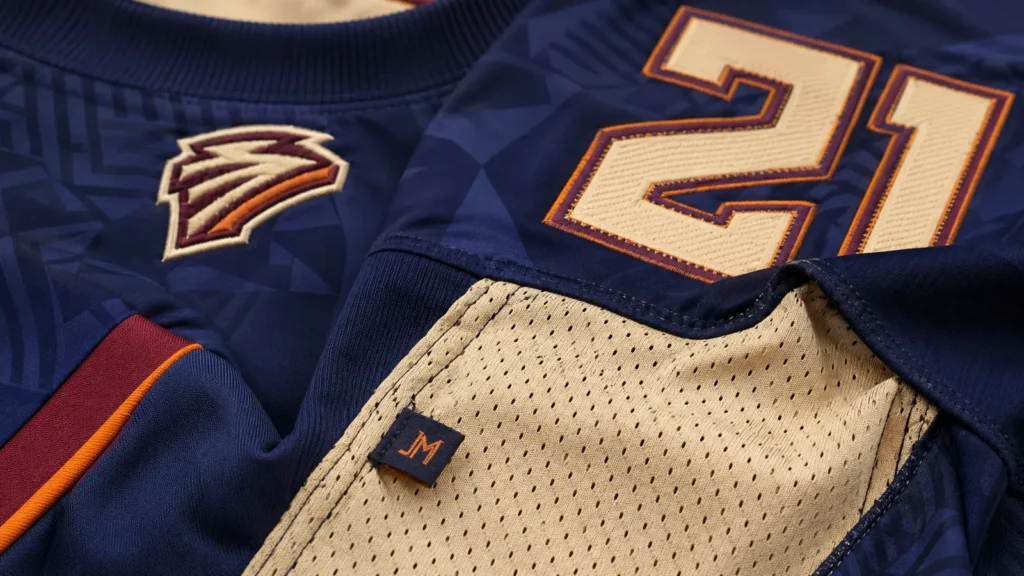
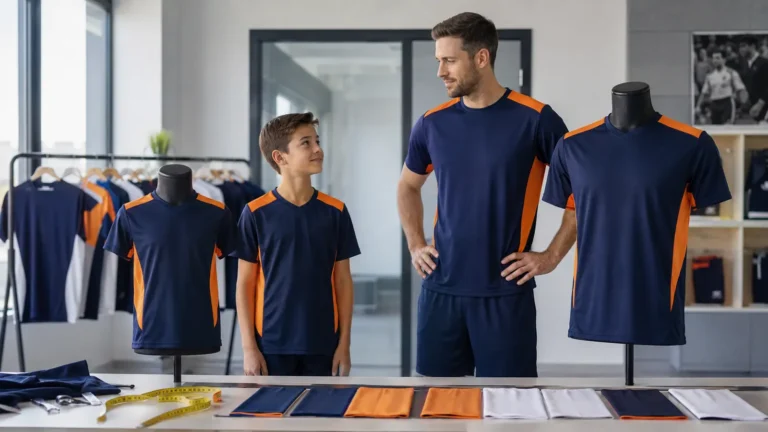
Decoration, trim and fabric choices affect both the visual style and the way a jersey drapes.
| Method | Visual effect | Best suited to | Buyer check |
|---|---|---|---|
| Sublimation | Integrated color and all-over graphics | Polyester performance jerseys | Color strike-off, panel alignment and print clarity |
| Embroidery | Raised, textured logo detail | Crests, small marks and premium accents | Stitch density, backing, puckering and skin-side comfort |
| Tackle-twill style appliqué | Traditional dimensional number or lettering | Football, basketball and heritage looks | Edge stitching, weight and wash durability |
| Heat transfer | Clean names, numbers or sponsor marks | Short runs and flexible personalization | Adhesion, hand feel and placement |
| Screen printing | Solid graphic areas with a classic surface feel | Fanwear and selected jersey constructions | Ink coverage, stretch and curing quality |
| Woven or rubber/PVC patch | Distinct branded accent | Private-label and merchandise programs | Edge finish, attachment and wash suitability |
Planning custom jerseys that players and supporters will actually wear? Send JIUMU your sport, quantity, size range, reference images, colors, logo files, decoration preference, packaging needs and target delivery date. Request a custom jersey quotation.
Sample Approval and Quality-Control Checklist
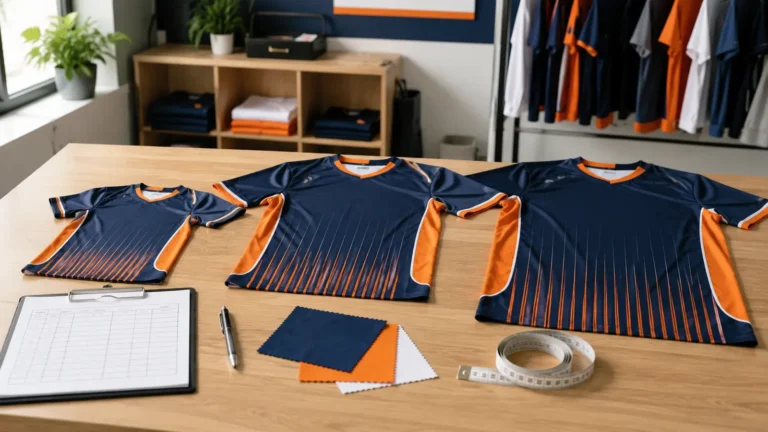
A digital mockup confirms graphic direction, but it cannot prove fit, fabric hand feel or construction. Use a physical sample when those details affect the order.
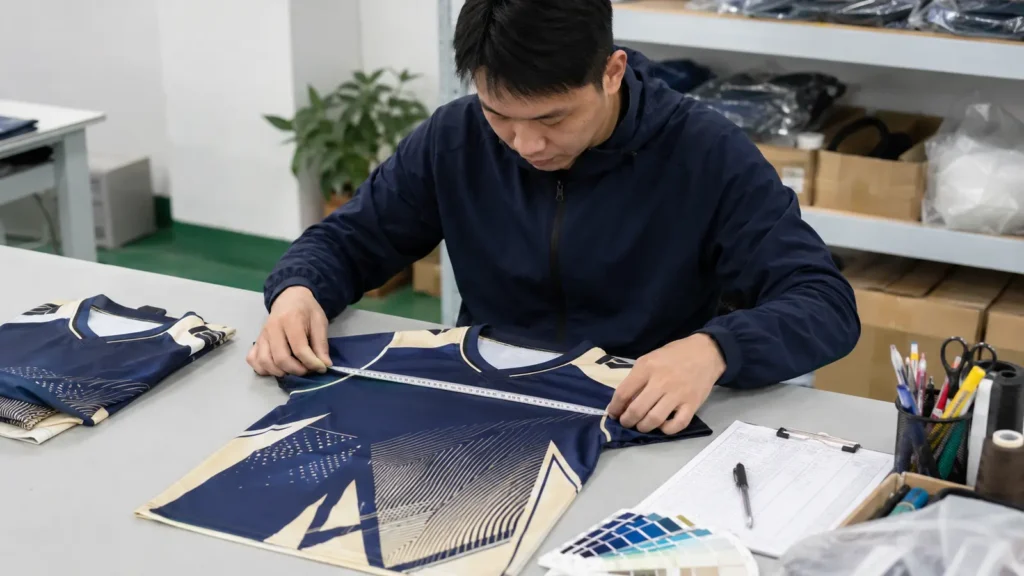
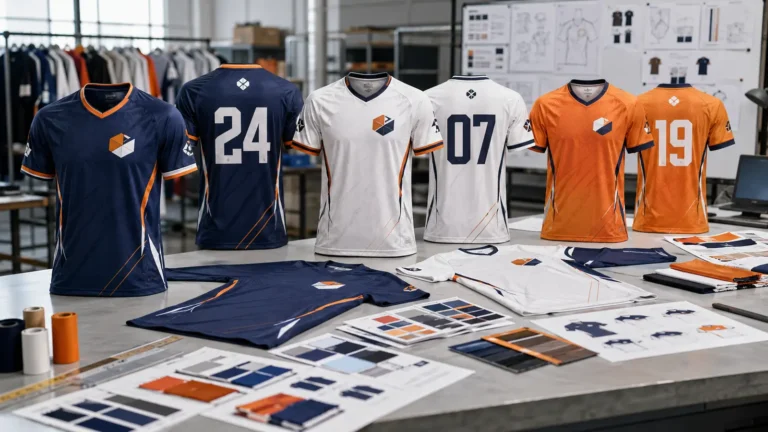
A physical sample allows buyers to verify measurements, construction, color and decoration before bulk production.
Review the sample in this order:
- Identity: Confirm style code, sport, colorway and version number.
- Measurements: Check chest, length, shoulder/sleeve, armhole and hem against the approved tolerance.
- Fit: Test the jersey on the intended body type and over any expected base layer.
- Fabric: Confirm weight, stretch, opacity, surface texture and breathability expectations.
- Color: Compare body fabric, rib, thread, transfer and printed panels under consistent light.
- Graphics: Check logo proportions, sponsor position, name spelling, number size and safe distance from seams.
- Construction: Inspect seam type, reinforcement, loose threads, puckering and trim attachment.
- Comfort: Examine the inside for rough backing, labels or seam allowances that may irritate the wearer.
- Care: Confirm the proposed care instructions match the selected material and decoration.
- Packaging: Approve folding, size stickers, individual bags, hangtags and carton marks when required.
Record corrections in one consolidated approval document. Marking changes across several chat threads creates avoidable version errors.
Information to Send for an Accurate Quotation
Provide as much of the following as possible:
- Sport and jersey style
- Player, fanwear or lifestyle use
- Adult, youth and unisex size range
- Quantity by style, color and size
- Target fit and actual garment measurements
- Fabric preference or performance requirement
- Color references or Pantone targets
- Vector logo files and graphic placement
- Player names, numbers and variable-data format
- Decoration method preference
- Collar, cuff, panel, piping and closure details
- Private label, hangtag and packaging needs
- Delivery country, destination and target date
- Required sample type and approval schedule
If some specifications are undecided, state that clearly. A supplier can then propose options instead of making hidden assumptions.
Common Jersey Styling and Buying Mistakes
Styling mistakes
- Wearing an oversized jersey with bottoms that have no visible structure
- Mixing several unrelated team colors and logos
- Choosing a base layer thicker than the jersey can accommodate
- Letting a basketball jersey and shorts finish at almost the same length
- Forcing a bulky football jersey into a narrow jacket
- Matching every accessory exactly instead of creating a controlled color story
- Ignoring side and back coverage when wearing deep-armhole jerseys
Buying mistakes
- Approving only the front mockup and not the back, sleeves or side panels
- Ordering from a generic size label without checking garment measurements
- Using one fit for players and fans without testing both use cases
- Assuming colors will match across polyester, rib, embroidery and accessories
- Adding names and numbers before confirming the final roster data
- Selecting decoration only by unit price instead of weight, feel and durability
- Skipping a physical sample when fit and retail presentation are critical
- Forgetting reorder continuity, label files and packaging records
Why JIUMU for Custom Team Jerseys and Coordinated Merchandise
JIUMU was established in 2010 in Guangdong, China and supports B2B buyers across North America and Europe with custom teamwear, logo apparel, hats, bags and branded merchandise.
Relevant capabilities include OEM and ODM development, sublimation, embroidery, screen printing, heat transfer, woven and rubber/PVC patches, fabric sourcing, Pantone color matching, private labels, hangtags and custom packaging. Digital mockups and physical samples help buyers verify the specification before bulk production, while quality-control and export support help maintain consistency across the order.
The typical MOQ is 50 pieces, subject to product construction and customization. Buyers planning a broader program can explore custom team jerseys, custom team uniforms, custom team jackets and custom hoodies.
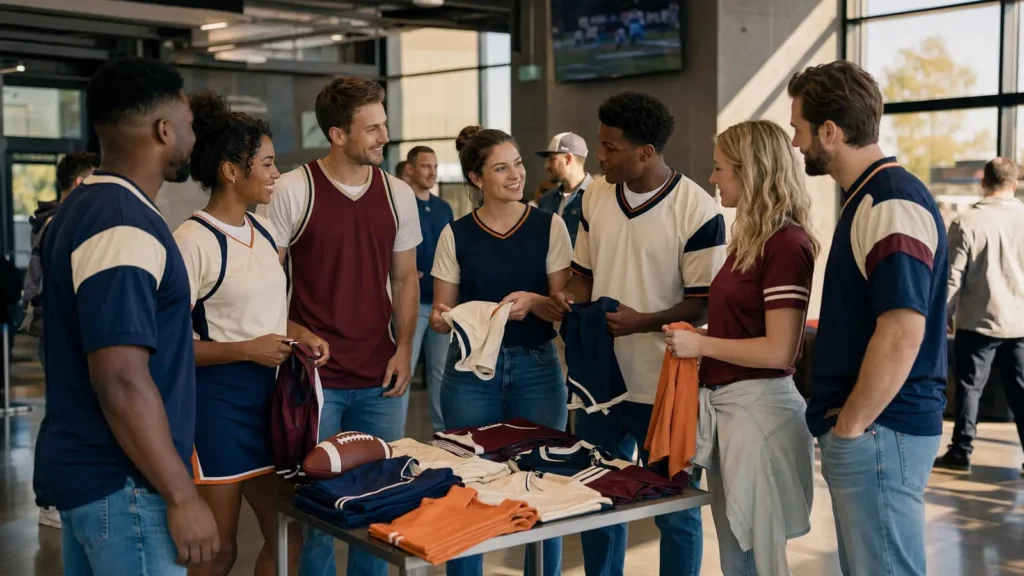
A coordinated jersey program can serve players, supporters, schools, clubs, retailers and merchandise buyers.
Frequently Asked Questions
Final Recommendation
The best sports jersey outfit ideas begin with three decisions: what silhouette the jersey creates, what occasion the wearer is dressing for and which one or two elements should carry the color story. Football jerseys need proportion control, soccer jerseys adapt easily to smart-casual combinations, and basketball jerseys become especially versatile through layering.
For teams and brands, the same logic should shape product development. A jersey that works visually with denim, jackets, skirts, caps and bags has a longer life beyond the match. Define performance, fanwear or retail use first; then approve measurements, fabric, graphics, decoration and packaging against that purpose.
Ready to develop a coordinated jersey program? Share your reference image or tech pack, sport, quantity, size range, colors, logo files, personalization data, packaging requirements and target delivery date. Contact JIUMU by inquiry form, WhatsApp/phone at +86 18507502899, or email zhengdong@jiumugear.com.
Editorial Sources
- adidas: How to Style a Soccer Jersey
- Who What Wear: 4 Ways to Style a Soccer Jersey
- Vogue: Zendaya’s Sporty Summer Style
JIUMU Teamwear Editorial Team
Practical guidance for teams, schools, distributors and private-label buyers planning custom teamwear and branded merchandise.