Best Custom Baseball Jerseys for Teams: A B2B Buying Guide
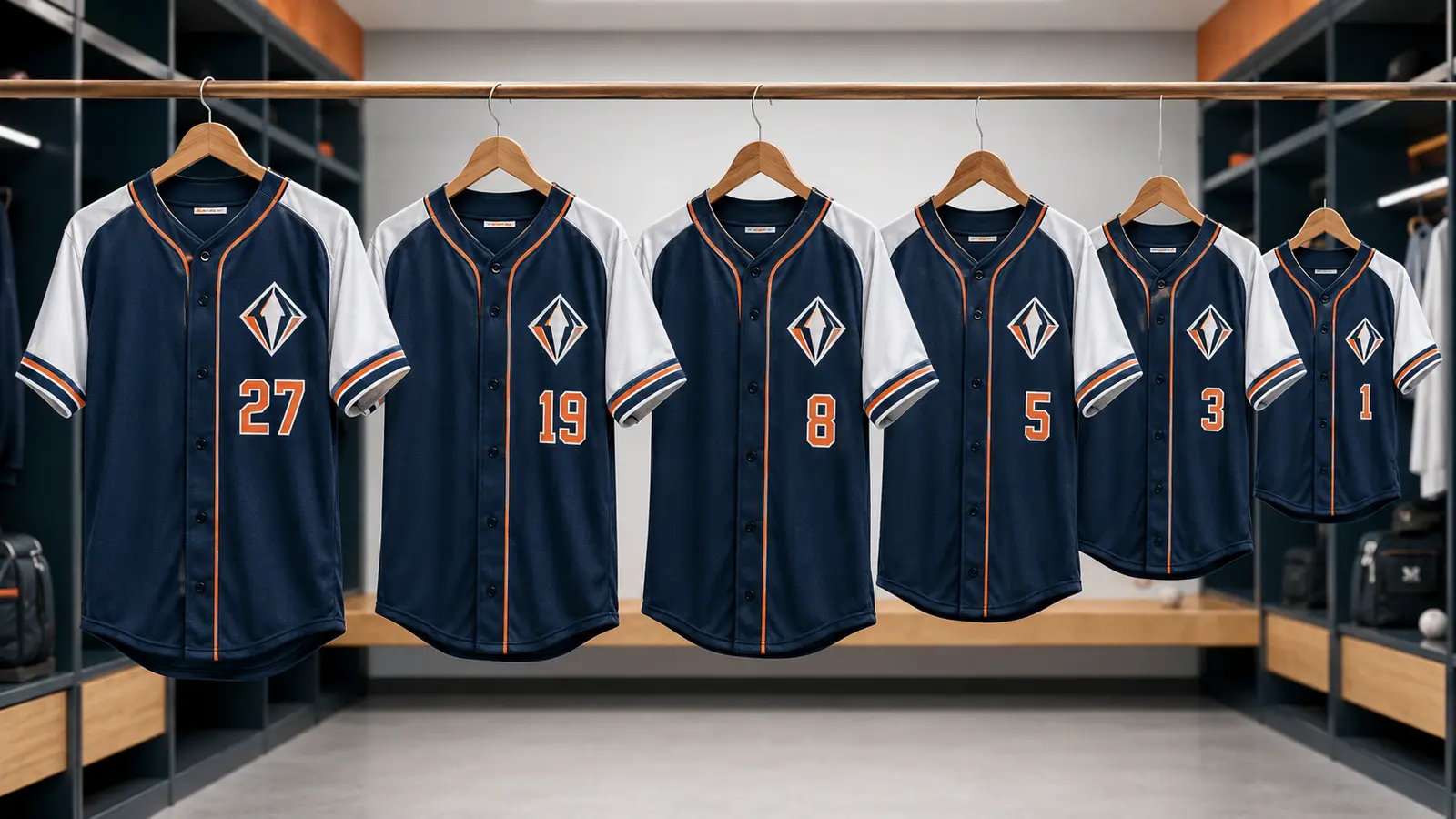
Choosing the best custom baseball jerseys for a team is not simply a design decision. A jersey must support movement, remain comfortable through a long season, reproduce the team identity accurately, fit every player in the roster, and arrive in the correct quantities before opening day. For schools, clubs, academies, distributors, and private-label buyers, the order also has to be repeatable when new players join or a second season begins.
That makes specification control more important than a dramatic mockup. The right supplier should help the buyer define the garment construction, fabric, fit, decoration method, roster data, labeling, packaging, and approval process before bulk production starts. This guide explains how to compare those variables and turn a visual concept into an order that can be checked objectively.
Quick Answer: The best custom baseball jerseys for teams are the jerseys that match the level of play, climate, desired appearance, roster range, care routine, and budget of the program. For most active teams, a lightweight polyester interlock or performance knit with reinforced seams is a practical base. Sublimation works well for complex full-color designs; embroidery and tackle twill create a dimensional traditional appearance; and heat transfer can suit names, numbers, or smaller controlled runs. Before ordering, approve a physical sample, confirm a written size chart, review every roster entry, and define measurable quality standards for fabric, color, construction, decoration, labels, and packaging.
Why the Baseball Jersey Buying Decision Matters
A baseball jersey sits at the intersection of athletic equipment, team identity, and program administration. Players need a cut that allows throwing, batting, and fielding without excess restriction. Coaches need consistent numbers that can be identified from a distance. Program managers need predictable sizing and an order process that does not create dozens of manual corrections. Brand and merchandise buyers also need logo consistency, private labeling, packaging, and repeat-order control.
The cheapest quoted unit price can become expensive when the specification is incomplete. Common hidden costs include sample revisions, incorrectly entered names, mixed dye lots, decoration that does not suit the fabric, expedited replacement pieces, and freight charged on a poorly planned reorder. A useful comparison therefore evaluates the total delivered program rather than the garment alone.
The word “best” should be translated into observable requirements:
- appropriate fit and mobility for the intended players;
- a fabric weight and ventilation level suited to the climate;
- decoration that supports the artwork and care routine;
- legible numbers that follow the applicable league rules;
- controlled colors across jerseys and related teamwear;
- accurate roster personalization;
- documented sample approval and bulk inspection;
- practical packaging and reorder procedures.
Best Custom Baseball Jersey Styles for Different Teams
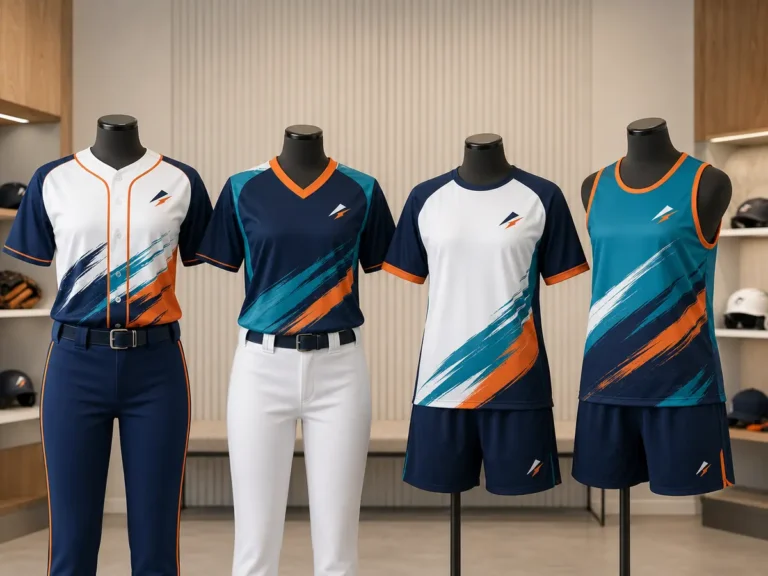
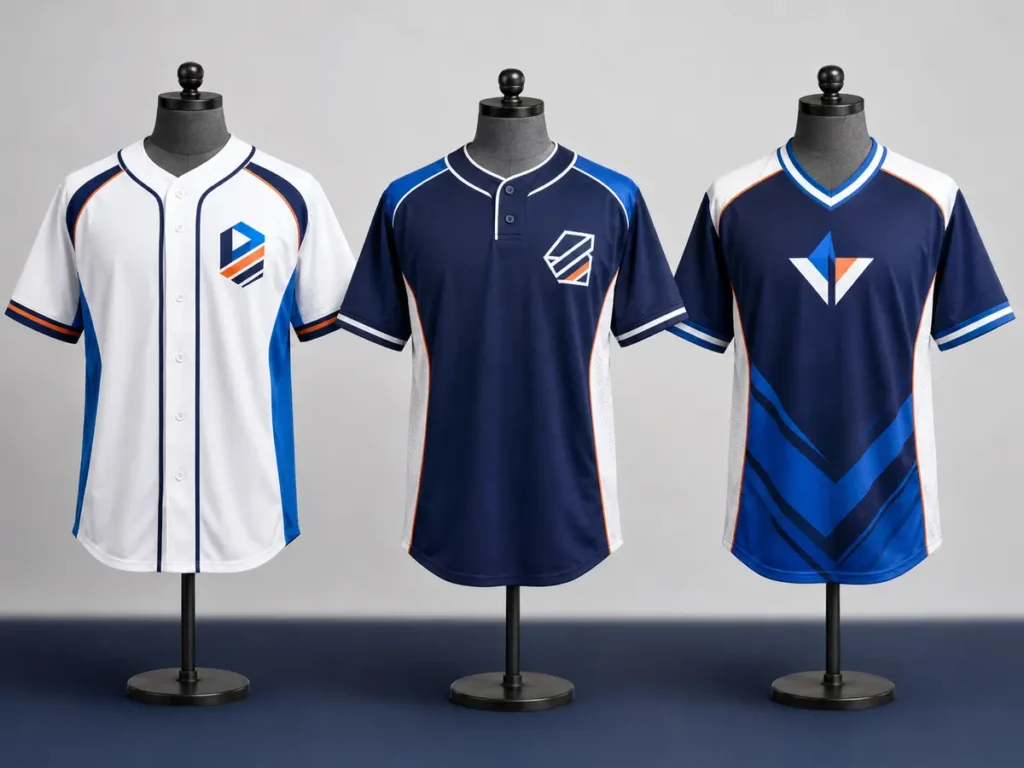
The jersey silhouette sets the tone of the uniform and affects production cost, ventilation, and decoration space. There is no single style that is correct for every team.
| Jersey style | Visual character | Practical strengths | Points to confirm | Common B2B use |
|---|---|---|---|---|
| Full-button jersey | Traditional professional baseball look | Large front and back decoration areas; easy to layer | Placket alignment, button spacing, piping alignment | School teams, clubs, tournament uniforms, retail programs |
| Two-button henley | Athletic and streamlined | Fewer buttons; good balance of tradition and movement | Collar shape, placket depth, reinforced opening | Travel teams, academies, training collections |
| V-neck pullover | Clean and modern | Simple construction; lightweight feel; efficient roster dressing | Rib quality, neck stretch, front logo placement | Youth leagues, practice jerseys, budget-controlled team orders |
| Crew-neck performance jersey | Contemporary training look | Comfortable base-layer feel; suitable for graphic designs | Neck recovery, body length, sleeve opening | Training, camps, fanwear, promotional programs |
| Raglan-sleeve jersey | Sport-focused contrast styling | Shoulder mobility and bold color-block options | Sleeve seam strength and artwork alignment | Club teams, softball crossover programs, branded collections |
| Pinstripe jersey | Heritage-inspired appearance | Strong traditional identity | Stripe alignment across panels and placket | Alumni, old-school collections, school programs |
Full-Button Jerseys
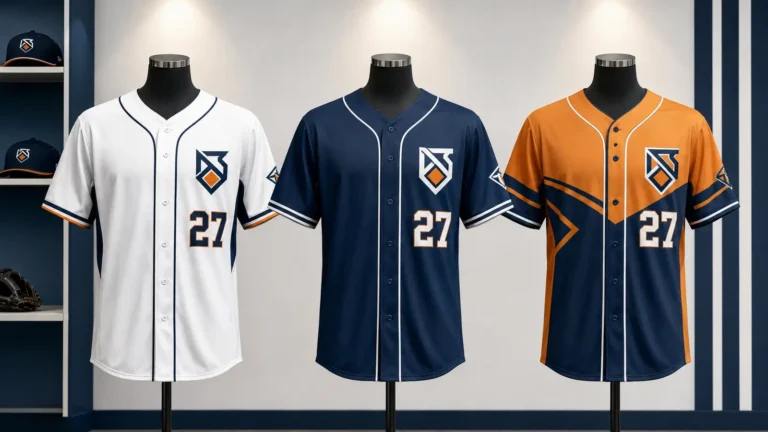
Full-button jerseys are often selected when the buyer wants a classic game-day presentation. They provide broad front panels for a team wordmark, but the artwork must be planned around the center placket. If a printed or sublimated wordmark crosses the opening, the two halves should align when the jersey is buttoned. Piping should also meet cleanly at the collar and hem.
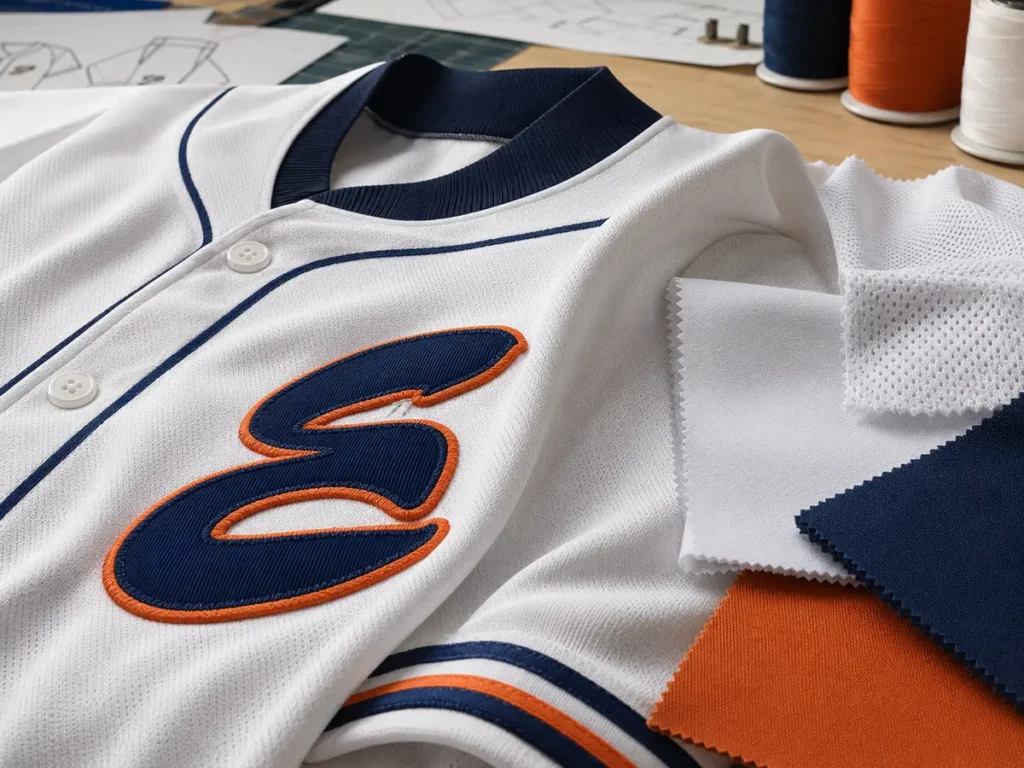
For embroidered or tackle-twill programs, the sample should show how the decoration sits near the placket. Thick lettering placed too close to the opening can make the front rigid or distort the alignment.
Two-Button and V-Neck Jerseys
A two-button henley keeps a baseball-specific profile while reducing placket complexity. A V-neck pullover provides an even cleaner front and can be a practical option for youth, practice, or tournament programs. In both cases, collar recovery matters: the rib should return to shape after stretching rather than becoming wavy.
The buyer should also confirm whether the body is straight, athletic, or relaxed. Style names are not universal across suppliers, so the written measurements matter more than labels such as “pro fit” or “classic fit.”
How to Choose Baseball Jersey Fabric
Polyester dominates custom baseball jerseys because it can be engineered in different weights, structures, and finishes and works with several decoration methods. However, “100% polyester” does not define a complete fabric specification. Two polyester jerseys can differ substantially in hand feel, stretch, opacity, airflow, snag resistance, and print behavior.
Interlock Polyester
Interlock knit has a smooth surface and stable structure. It can provide a clean base for sublimation, heat transfer, or stitched decoration. It is often a practical choice for game jerseys because the surface supports sharp graphics and the fabric can be specified in multiple weights.
Ask for the actual fabric code, composition, nominal weight in grams per square meter, usable width, color reference, and any relevant finish. A repeat order should use the same approved fabric code or require written approval for a substitution.
Mesh and Ventilation Panels
Mesh can improve airflow in side, underarm, or back panels. The trade-off is that an open structure may be less opaque and may not reproduce a graphic in the same way as the main body fabric. If the design crosses from interlock to mesh, examine the physical sample for a visible color or density change.
Full-mesh jerseys can be useful in hot conditions or for training, but buyers should check snag behavior, see-through risk, and the stability of stitched decoration.
Stretch Performance Knits
A modest amount of mechanical or fiber-based stretch can improve movement and accommodate athletic fit. More stretch is not automatically better. Excessive stretch can distort names, numbers, button plackets, or large heat transfers. The fabric and decoration must be tested as a system.
Fabric Questions for the Supplier
- What is the exact fiber composition and nominal fabric weight?
- Is the fabric interlock, mesh, birdseye, pique, or another knit structure?
- Is stretch mechanical or created with elastane?
- Are ventilation panels available, and will their color match the main fabric?
- Is the white fabric sufficiently opaque in the intended fit?
- Will the same fabric code be available for repeat orders?
- What wash and abrasion tests, if any, can be arranged for the approved construction?
Size, Fit, and Roster Planning
Sizing errors affect every part of the order. A supplier’s “adult medium” may not match a jersey already used by the team, and youth-to-adult grading can create abrupt changes in body width, length, sleeve opening, or neck size. Buyers should approve the size chart before collecting the roster—not after.
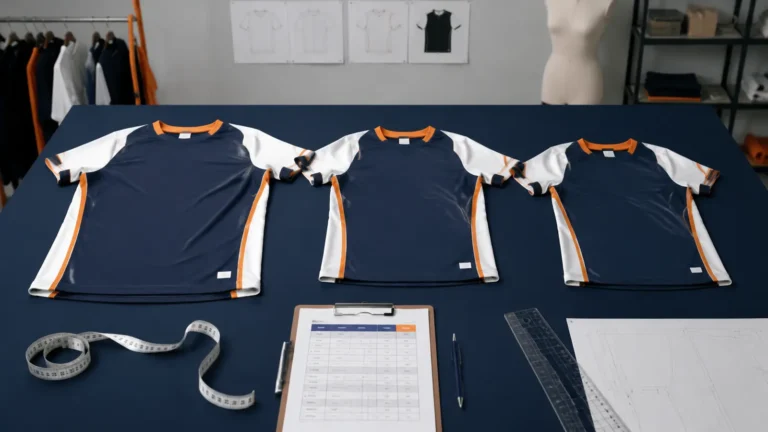
The size specification should include garment measurements, measurement points, and tolerances. Useful points include chest width, body length from high point shoulder, shoulder width, sleeve length, sleeve opening, and bottom sweep. For button jerseys, add placket length and button spacing where relevant.
| Fit decision | What to collect | Why it matters | Approval method |
|---|---|---|---|
| Youth and adult range | Required sizes and expected quantity per size | Confirms whether one pattern family covers the roster | Review graded size chart and fit samples |
| Athletic vs. relaxed fit | Preferred ease over body measurements | Changes mobility, layering, and visual silhouette | Compare sample to a known reference jersey |
| Body length | Tucked or untucked use | Prevents jerseys from pulling out or appearing oversized | Measure front and back length |
| Sleeve shape | Range of throwing movement | Affects comfort at shoulder and upper arm | Wear-test sample during baseball movements |
| Layering | Undershirt or cold-weather base layer | Changes required ease | Fit test with intended layer |
| Reorder allowance | Extra blank or personalized pieces | Reduces urgent small reorders | Add agreed spare quantity by common sizes |
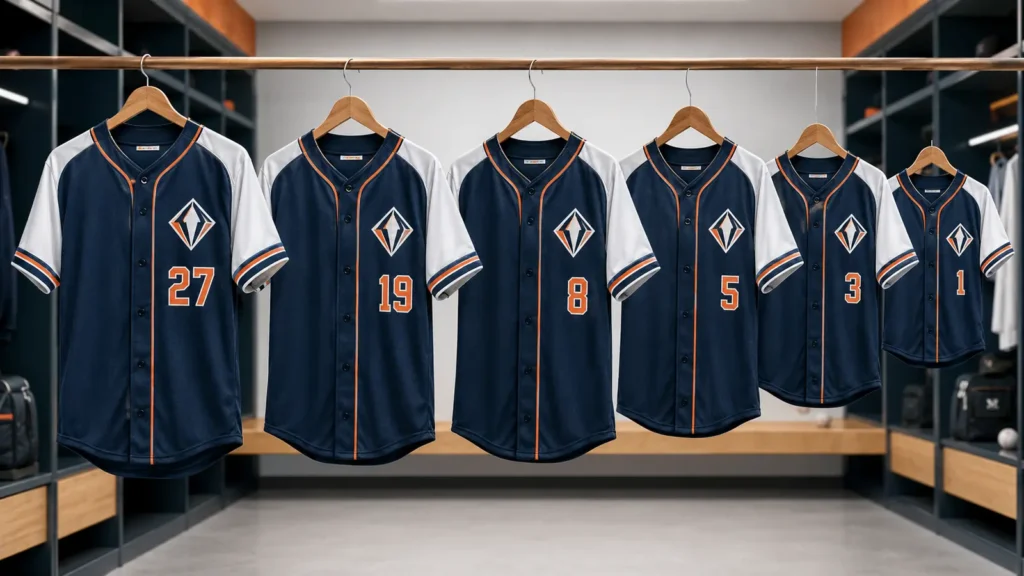
For a new program, order a sample set or at least key sizes before the roster deadline. Let representative players try the jerseys over the intended undershirt. Record the selected size rather than asking the production supplier to infer size from age, height, or a retail T-shirt label.
Roster data should be managed in one controlled spreadsheet. Recommended columns are player name, display name, jersey number, size, quantity, team or squad, captain or coach indicator, and notes. Lock the spelling and number format after approval. If accents, apostrophes, suffixes, or non-Latin characters are required, provide the exact Unicode text and approve a rendered proof.
Construction Details That Affect Durability
Durability is created by compatible materials and controlled construction, not by one isolated feature. A heavy fabric with weak seams is not a durable jersey. Neither is a reinforced garment with a decoration that cracks or peels under the team’s wash routine.
Inspect these areas:
- shoulder and armhole seams, where throwing movement creates repeated load;
- side seams and vent openings;
- collar attachment and rib recovery;
- top and bottom of a button placket;
- button attachment and spare-button policy;
- piping alignment at the neck, placket, sleeve, and hem;
- stitch density and skipped stitches;
- clean seam allowance and thread trimming;
- attachment edges around patches, letters, and numbers.
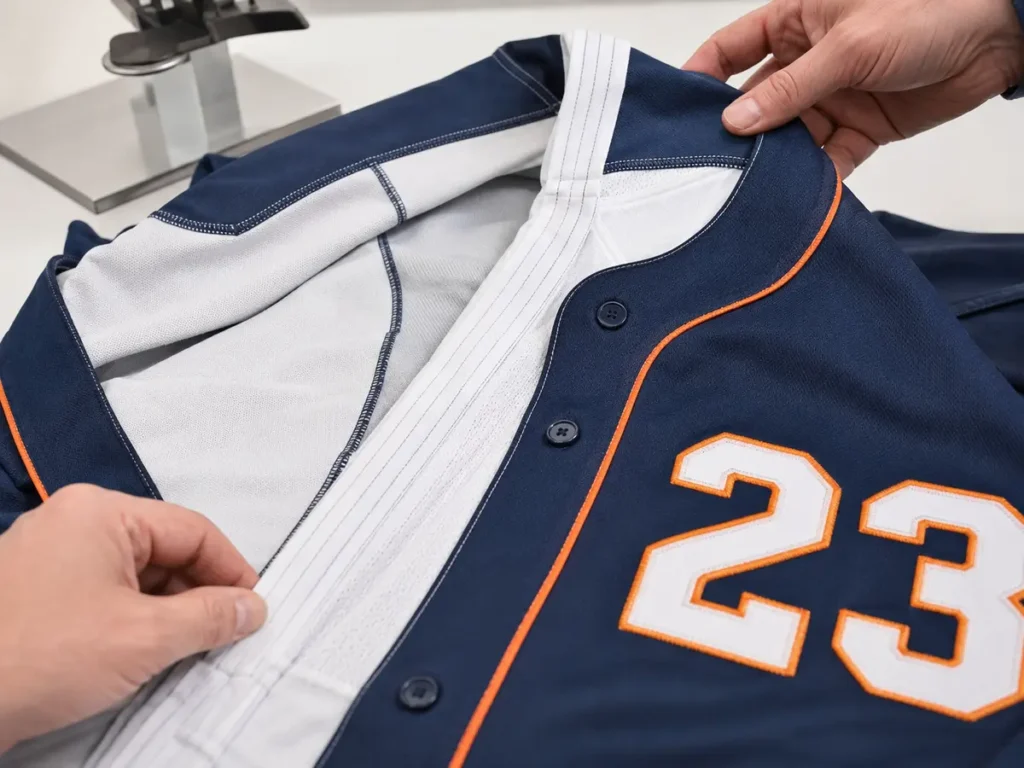
For a full-button jersey, align the placket while the garment lies naturally. A perfect match achieved only by pulling one panel is not a stable result. For sublimated patterns that cross seams, define whether minor discontinuity is acceptable and prioritize the most visible alignment points.
Sublimation, Embroidery, Tackle Twill, or Heat Transfer?
Decoration should be selected after considering artwork complexity, fabric structure, order quantity, hand feel, target appearance, and care routine.
| Method | Best suited to | Appearance and feel | Main advantages | Buyer checks |
|---|---|---|---|---|
| Sublimation | Full-color graphics, gradients, repeated all-over designs | Ink becomes part of compatible polyester surface; smooth hand | Broad design freedom; names and numbers can be integrated | Color proof, white base fabric, panel alignment, color consistency |
| Embroidery | Crests, small chest logos, sleeve marks | Raised thread texture | Dimensional, traditional, suitable for compact marks | Stitch count, backing, puckering, small-detail legibility |
| Tackle twill / appliqué | Traditional names and numbers | Layered fabric with stitched edges | Strong classic baseball character | Layer thickness, edge stitching, weight, placement |
| Heat transfer | Names, numbers, sponsor marks, controlled runs | Smooth to slightly raised film | Flexible personalization and efficient setup | Adhesion, edge lift, stretch compatibility, press marks |
| Screen printing | Simpler spot-color graphics | Ink layer on surface | Efficient for suitable volume and artwork | Mesh/fabric compatibility, opacity, registration, hand feel |
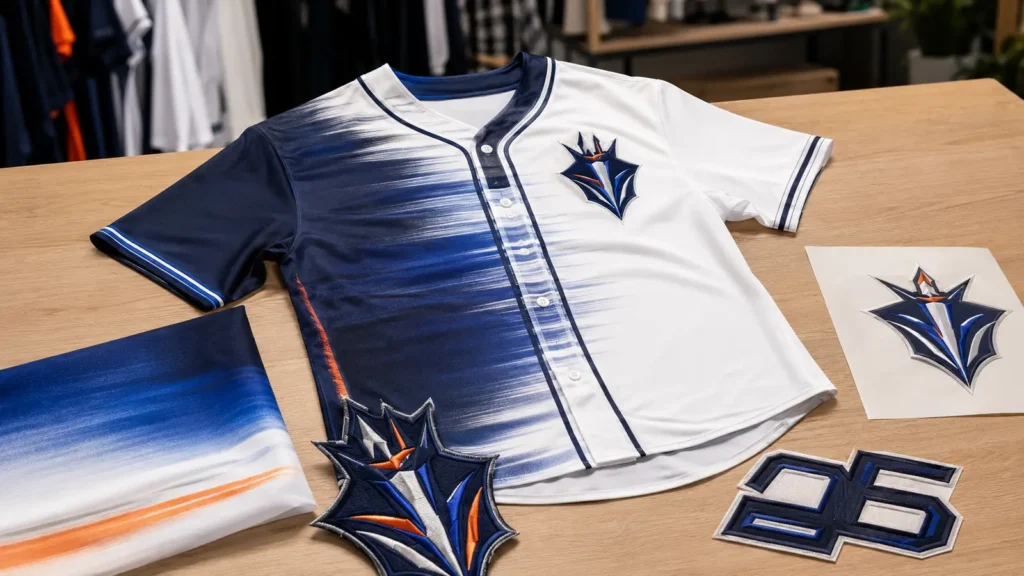
When Sublimation Is the Practical Choice
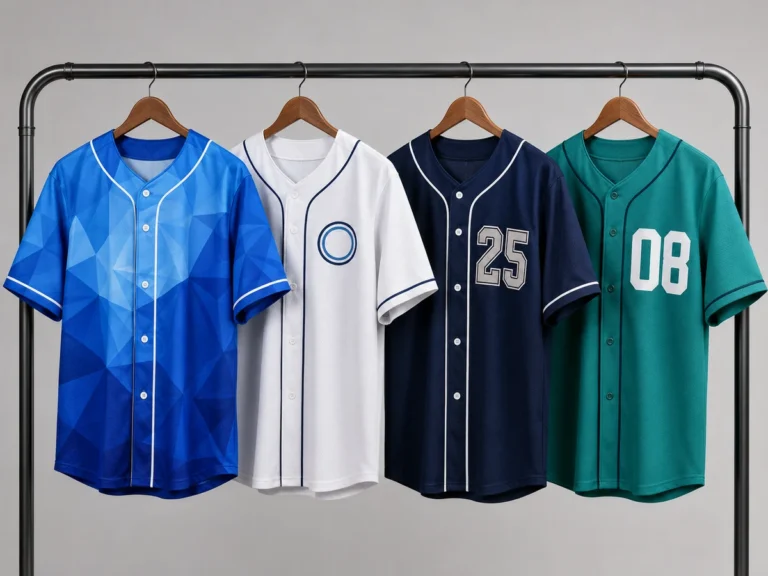
Sublimation is well suited to polyester jerseys with complex graphics, gradients, camouflage-inspired patterns, pinstripes, or many player names and numbers. Because the graphic is applied before sewing in a cut-and-sew program, panel planning and seam alignment matter. Color can also appear different on fabrics with different surface structures.
Approve color on the actual production fabric rather than relying only on a monitor. Pantone references can communicate intent, but the physical result depends on the process, fabric, ink system, and viewing light. Treat the approved sample as the practical visual standard.
When Embroidery or Tackle Twill Works Better
Embroidery and tackle twill create the dimensional, heritage appearance many baseball programs want. They also add weight and stiffness. Large dense embroidery can cause puckering or discomfort, especially on lightweight fabric. A good design may combine a smaller embroidered crest with twill front lettering and numbers rather than embroidering every element.
When Heat Transfer Makes Sense
Heat transfer can be efficient for personalized names, numbers, sponsor marks, or short replenishment runs. Specify the transfer material, application parameters, placement tolerance, and compatible wash instructions. A transfer that works on one jersey fabric may not behave the same way on a highly textured mesh or very stretchy knit.
Preparing a baseball jersey order? Send JIUMU your reference image or tech pack, jersey style, estimated quantity, youth/adult size range, team colors, logo files, roster requirements, packaging preference, and target delivery date. JIUMU can help translate the brief into a digital mockup and physical sample. Request a custom quotation.
Uniform Rules and Labeling Considerations
League requirements should be checked before artwork approval. Rules vary by organization, age group, and season. For example, the current NFHS baseball uniform guidance states that each player must have a plain, solid-color number on the back that contrasts with the shirt. The NFHS baseball uniform rules should be reviewed with the athletic director or league administrator because the official rulebook controls the final decision.
Youth programs may also have patch requirements. Little League publishes current patch requirements and instructions and maintains an updated rulebook app. Do not finalize sleeve artwork until the buyer confirms required patch type, location, and clear space.
Private-label and resale orders also need market-specific labeling review. In the United States, the FTC explains that most covered textile products require labels identifying fiber content, country of origin, and the manufacturer or another responsible business; the agency also maintains a separate care-labeling rule for wearing apparel. Buyers should consult the FTC’s textile labeling guidance and care labeling guidance or obtain professional compliance advice.
For products marketed in the European Union, Regulation (EU) No 1007/2011 covers textile fiber names and related composition labeling. Other requirements may apply based on destination, buyer role, claims, packaging, and product features. JIUMU buyers should provide the destination market and approved label artwork rather than assuming one universal label is correct everywhere.
What Drives the Cost of Custom Baseball Jerseys?
The unit price is influenced by the full specification and order structure. A useful quotation should state what is included and identify optional charges.
Major cost drivers include:
- Garment construction. Full-button plackets, piping, contrast panels, shaped hems, mesh inserts, and reinforced details add operations.
- Fabric. Weight, knit structure, stretch fiber, specialty finish, and sourced color can change cost and minimums.
- Decoration. All-over sublimation, large tackle twill, dense embroidery, and multiple placements require different labor and setup.
- Personalization. Unique names and numbers increase data handling and inspection.
- Size range. Youth through extended adult sizes may require more patterns, fabric, and order management.
- Quantity and color split. The same total quantity divided across many designs may cost more than one consolidated style.
- Sampling. Multiple physical revisions, color tests, and fit sets add time and expense but may reduce bulk risk.
- Labels and packaging. Woven labels, neck labels, hangtags, barcodes, individual polybags, size stickers, and retail cartons should be quoted.
- Delivery plan. Freight mode, carton dimensions, destination, duties, and schedule influence landed cost.
Ask for a quotation based on an agreed specification. Comparing a sublimated V-neck jersey to a full-button tackle-twill jersey only by unit price does not produce a meaningful decision.
Quality-Control Checklist for Bulk Orders
Quality control should connect back to the approved sample and written specification. It is easier to resolve a difference when both sides know which reference controls color, fit, artwork, and construction.
Before Production
- Approve the digital artwork with dimensions and placements.
- Approve the physical sample or clearly documented pre-production sample.
- Confirm fabric code, composition, weight, and color reference.
- Approve the size chart, grading, measurement method, and tolerances.
- Sign off the roster spreadsheet and total quantity.
- Confirm labels, care content, hangtags, and packaging.
- Define whether the sample, Pantone reference, or another standard controls color.
During and After Production
- Compare bulk fabric and decoration color to the approved standard under consistent light.
- Measure a defined sample across the size range.
- Check placket, piping, stripe, and logo alignment.
- Inspect seams for skipped stitches, open seams, puckering, and loose threads.
- Verify names and numbers against the locked roster file.
- Check decoration adhesion or edge stitching as appropriate.
- Confirm label content and placement.
- Count pieces by style, color, size, and player.
- Verify individual packing, size stickers, carton marks, and carton totals.
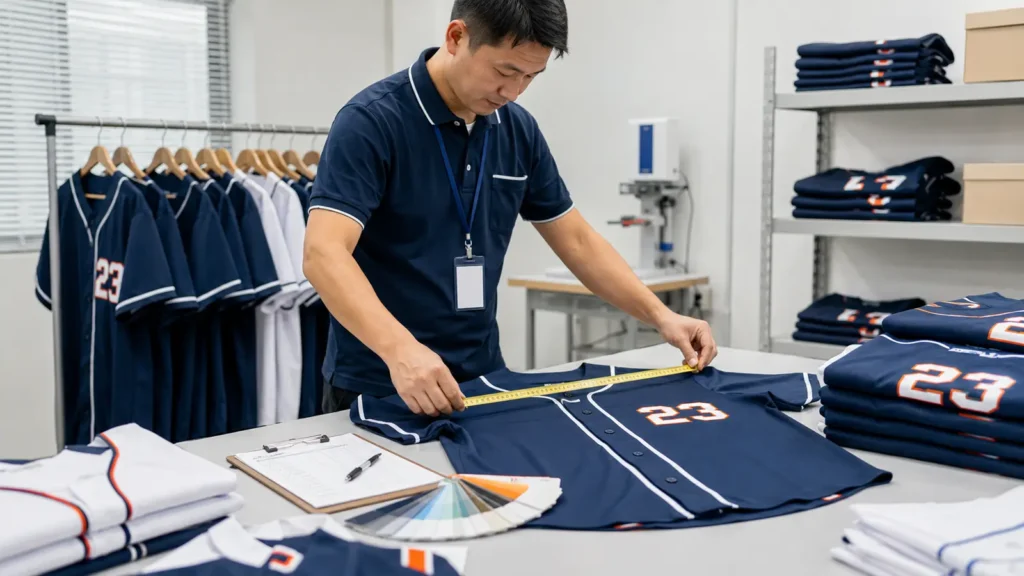
A buyer can request an inspection report with photos and measurement results before shipment. The sampling plan and acceptance criteria should be agreed in advance. Avoid vague requirements such as “good quality”; define the defects that would be critical, major, or minor for the order.
A Practical Bulk-Order Process
1. Build the Brief
Collect the buyer type, level of play, destination market, climate, order quantity, jersey style, target budget, and required delivery date. Add reference images for direction, but identify which features should and should not be copied. Original artwork avoids intellectual-property and production problems.
2. Prepare Artwork and Specifications
Supply vector logo files when available. Define colors, placements, approximate dimensions, names, numbers, patches, sponsor marks, and label requirements. The supplier can then prepare a digital mockup that reflects manufacturable seams and panels.
3. Approve the Size System
Review the measurement chart and fit. If the program includes youth and adult players, test representative sizes. Record the final player selections in a controlled roster.
4. Approve a Physical Sample
Evaluate fit, color, fabric, construction, decoration, and wash care. Photograph the approved sample and document any final corrections. A second sample may be justified if the first revision changes the pattern, fabric, or decoration substantially.
5. Lock the Purchase Order
The purchase order should match the approved specification and roster. Confirm quantity breakdown, price, payment terms, packaging, shipping terms, destination, and delivery milestones. Late roster changes should follow a formal change process.
6. Inspect and Ship
Review the final inspection evidence and packing list. Confirm carton count, gross and net weight, dimensions, shipping marks, and documents before dispatch. Keep the approved sample and final files for repeat orders.
Questions to Ask a Custom Baseball Jersey Supplier
- Which jersey styles, size ranges, and fabric structures can you supply?
- What is the typical minimum order quantity for this exact construction and color split?
- Can you provide a written size chart with measurement points and tolerances?
- Will the same fabric code and colors be available for repeat orders?
- Which decoration method do you recommend for our artwork and why?
- Can you produce youth and adult sizes within one coordinated program?
- What files are required for logos, names, numbers, and sponsor marks?
- How are digital mockups and physical samples approved?
- What happens if the physical color differs from the screen mockup?
- How do you control roster accuracy and placement consistency?
- What labels and packaging options are available for our destination market?
- What quality checks are performed before shipment?
- Can you provide inspection photos, measurement data, and a packing list?
- How are repeat orders or replacement pieces handled?
- Which quotation items exclude freight, duties, testing, or special packaging?
Common Buying Mistakes
Selecting by Mockup Alone
A digital mockup communicates design direction but cannot prove fit, fabric feel, color, seam quality, or decoration performance. Use it to start the sample process, not to replace it.
Treating Every Polyester Fabric as Equivalent
Composition alone does not define weight, structure, stretch, opacity, or ventilation. Record the approved fabric code and physical sample.
Collecting the Roster Before Approving the Size Chart
This creates last-minute changes and size disputes. Approve the fit system first, then collect player selections.
Using Low-Resolution Logo Files
Small raster images can produce rough edges and inconsistent detail. Supply vector artwork or approve a professionally redrawn production file.
Ignoring League Rules Until the Sample Arrives
Number contrast, patch position, sponsor marks, and other details can be regulated. Confirm rules with the governing organization before artwork approval.
Comparing Quotes with Different Specifications
A quote is only comparable when fabric, construction, decoration, labels, packaging, quantities, and delivery terms are aligned.
Leaving Reorders Undefined
Teams change. Ask how the supplier stores artwork, patterns, fabric references, and roster data, and whether small replenishment quantities are feasible.
Why Teams and B2B Buyers Work with JIUMU
JIUMU is a Guangdong-based B2B supplier established in 2010, serving buyers in the United States, Canada, the United Kingdom, and Europe. Its product scope includes custom teamwear, logo apparel, hats, uniforms, bags, and branded merchandise.
For baseball jersey programs, relevant capabilities include OEM and ODM development, sublimation, embroidery, screen printing, heat transfer, fabric sourcing, Pantone color matching, private labels, woven labels, hangtags, packaging customization, digital mockups, physical samples, bulk quality control, and export support. The typical minimum order quantity is 50 pieces, subject to the product structure and customization.
This combination is useful for buyers who need more than a standalone jersey. A program can coordinate jerseys with custom baseball caps, custom team bags, custom team jackets, or a broader baseball team uniform package. Actual color matching, minimums, and delivery planning should be confirmed for the selected products.
Frequently Asked Questions
Final Recommendation
The best custom baseball jerseys for teams are built from a complete, approved specification. Select the silhouette, fabric, fit, decoration, and construction as one connected system. Verify league rules and destination labeling before artwork is locked. Approve a physical sample, control the roster in one file, and inspect bulk production against measurable standards. This process also creates the documentation needed for coordinated teamwear and future replenishment.
About JIUMU
JIUMU is a Guangdong-based B2B supplier established in 2010, focused on custom teamwear, logo apparel, uniforms, hats, bags and branded merchandise for buyers in North America and Europe.