How to Choose the Right Crown Height for Custom Caps
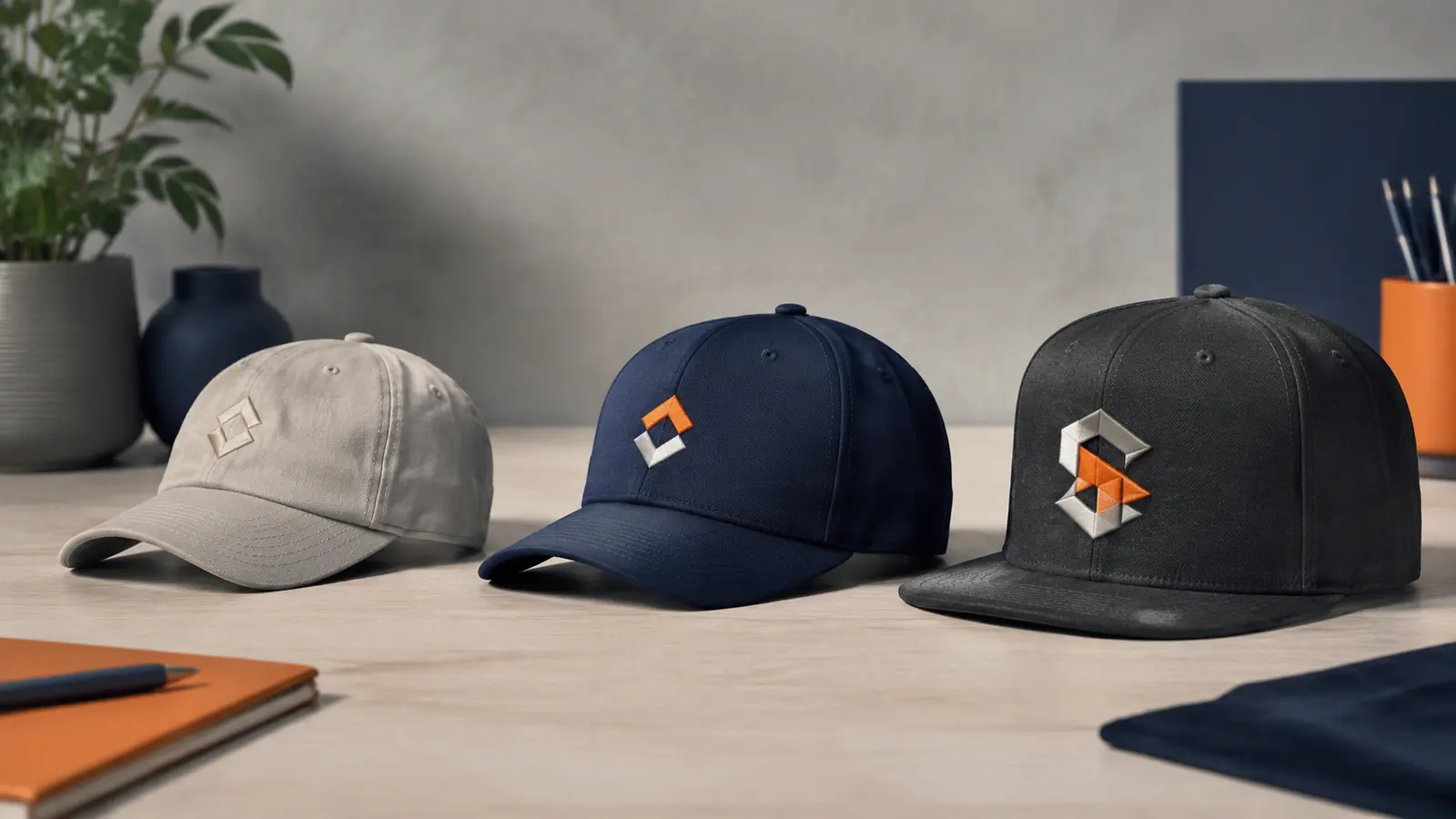
Crown height changes how a custom cap sits, how much visual volume it creates, and how naturally a logo fits the front panels. A low-profile dad hat can make a large crest feel crowded, while a high-profile snapback can make a small understated mark look lost. The best choice is not simply “low, mid, or high.” It is the combination of head fit, crown structure, visor shape, panel construction, logo proportions, and the audience’s preferred style.
Quick answer: Choose a low profile for a close, relaxed fit and smaller branding; a mid profile for broad wearer acceptance and balanced logo space; or a high profile for a tall, upright silhouette and bold front decoration. Profile names are not universal dimensions. Compare samples made with the same measurement method, test them on representative wearers, and approve the final logo at actual size.
Crown-height decision table
| Buying criterion | Low profile | Mid profile | High profile |
|---|---|---|---|
| Typical silhouette | Close to the head, compact, understated | Balanced crown volume, neither notably shallow nor tall | Tall, upright, prominent front |
| Wearing sensation | Often feels shallow and close-fitting | Often gives a versatile everyday fit | More room and visual volume above the forehead |
| Common style direction | Dad hats, washed lifestyle caps, low-profile fitted caps | Team caps, corporate uniforms, performance and general-purpose caps | Snapbacks, streetwear, bold team or promotional caps |
| Front logo opportunity | Best for small or horizontally proportioned marks | Flexible for many medium logo shapes | Strong candidate for tall, broad, or raised front marks |
| Common visor pairing | Curved or precurved | Curved, precurved, or moderately flat | Flat or shapeable visor; curved combinations also exist |
| Common structure | Often unstructured, but structured low profiles exist | Commonly structured; unstructured versions also exist | Commonly structured to hold the tall front |
| Primary risk | Too shallow for some heads; logo can crowd the crown | Generic result if the shape is not intentionally specified | Can overpower small heads or small logos; may sit too high |
| Approval priority | Ear clearance, crown tension, logo-to-brim spacing | Cross-size fit and balanced logo scale | Front angle, excess crown volume, and on-head proportions |
This table describes buying tendencies, not fixed industry rules. Flexfit, Richardson, New Era, and other cap suppliers use profile terms within their own product systems. A “mid profile” from one collection may not match another in height, front angle, depth, or fit.
What is crown height on a cap?
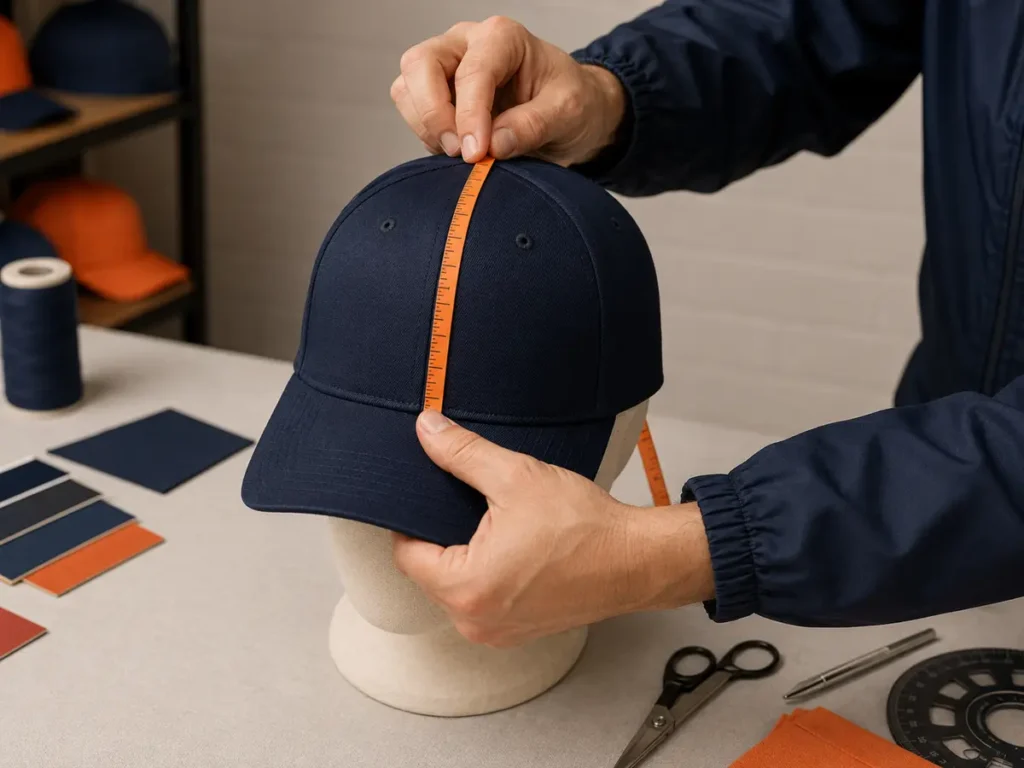
Crown height describes the vertical or surface-path dimension from the lower crown near the visor to the top. In buying language, it also refers to perceived silhouette height.
That definition sounds simple, but suppliers do not always measure it the same way. Two common methods are:
- Straight or standing height: Measure from the bottom center of the crown, where the visor begins, to the highest point of the hat. OTTO CAP’s sizing guidance describes crown height using this bottom-to-highest-point method.
- Center-front surface measurement: Follow the center front from the crown-to-visor seam to the top button or crown apex. SanMar product specification sheets define crown height from the middle of the top button to the brim seam along center front.
The surface measurement follows the sloped crown, so it can be substantially larger than a straight standing-height number. A supplier may list 3–4 inches while another lists a similar cap above 6 inches. The methods may differ.
How to write crown height in a specification
Do not write only “crown height: 3.5 inches.” Add the method:
Crown height: 3.5 in / 8.9 cm, measured vertically from the center-front crown-to-visor seam to the highest crown point, cap placed in its natural uncompressed shape.
Or, if using a surface method:
Center-front crown length: X in / X cm, measured along the front panel from the center crown-to-visor seam to the center of the top button.
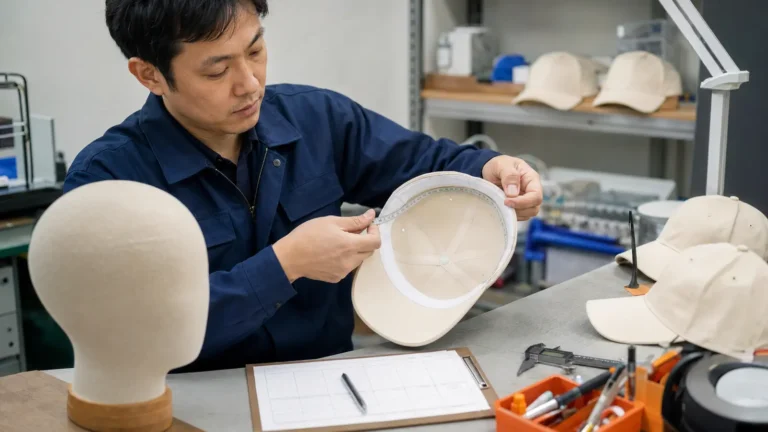
Include a photograph showing the tape position and record whether the cap is empty, on a head form, or worn. Measure samples under the same conditions.
Do profile names have fixed height ranges?
No universal standard assigns every low-, mid-, and high-profile cap to fixed numerical bands. Published Flexfit products provide useful examples within one product family: low-profile dad caps are listed at 3⅛ inches, a low-profile trucker at 3¼ inches, several mid-profile styles at 3½ inches, and a high-profile on-field fitted cap at 3¾ inches. Those values show a logical progression, but they are product specifications—not global thresholds.
Use profile names for visual direction; use an approved sample, measurement diagram, and style code for production control.
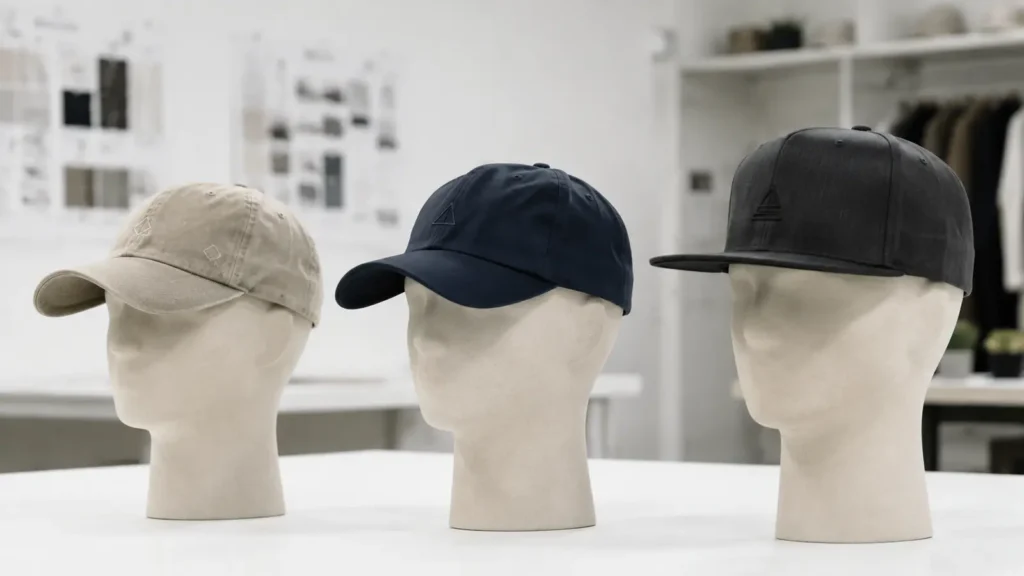
Low-, mid-, and high-profile silhouettes
What is a low-profile cap?
A low-profile cap has a shallower crown that sits closer to the top and front of the head. It usually creates less empty space above the forehead and a more compact side silhouette. Low profile does not automatically mean unstructured. Flexfit lists a low-profile trucker with hard buckram, while New Era describes its Low Profile 59FIFTY as structured and contoured. Conversely, many dad caps combine a low profile with unstructured front panels.
Low profiles suit buyers who want:
- a relaxed or understated retail look;
- a cap that visually follows the head rather than standing tall;
- a curved-visor dad-hat direction;
- small tonal embroidery, a compact wordmark, or a flexible patch;
- less crown volume for audiences that dislike a tall front.
The risk is insufficient depth. A shallow crown may ride upward or feel tight across the top even when circumference is correct. It also leaves less vertical logo space.
What is a mid-profile cap?
A mid-profile cap aims for a balanced silhouette. Richardson calls its Mid Pro its most widely used structured profile and describes it as neither too high nor too low. In sourcing terms, mid profile is often the safest first sample when a buyer has a mixed adult audience and no strong fashion requirement.
Mid profiles work well for:
- baseball and softball programs;
- corporate uniforms and event teams;
- distributors serving broad customer groups;
- performance caps with a visible front crest;
- brands that need useful logo space without a tall streetwear silhouette.
A mid profile may still feel shallow to one wearer or too full to another. Front angle and depth matter as much as the label.
What is a high-profile cap?
A high-profile cap has a taller and often more upright crown. Structured front panels help maintain the height, creating a prominent canvas for team initials, patches, bold embroidery, and 3D puff. High-profile fitted and snapback shapes are strongly associated with baseball heritage and streetwear, although the same profile can be used for promotions or brand merchandise.
High profiles suit buyers who want:
- a broad, tall front presentation;
- large initials, crests, stacked wordmarks, or raised embroidery;
- a flat-visor or shapeable-visor streetwear direction;
- more interior crown room;
- a deliberate cap silhouette that remains visible in merchandising and photography.
The risk is excess volume. A tall cap can leave empty fabric, lean backward, or dominate a narrow face. A small mark may look lost. Confirm audience acceptance before choosing it.
Crown height, cap depth, and head shape are different
Head circumference tells the supplier the opening size, not the complete three-dimensional head. People with the same circumference can differ in length, width, top curvature, forehead slope, and ear position.
Cap depth describes how far the crown sits down on the head. Crown height influences depth, but panel pattern, top shape, seam length, sweatband, closure, and structure also contribute. A tall front does not guarantee deep seating at the rear. A low front can still have adequate overall depth if the pattern is contoured appropriately.
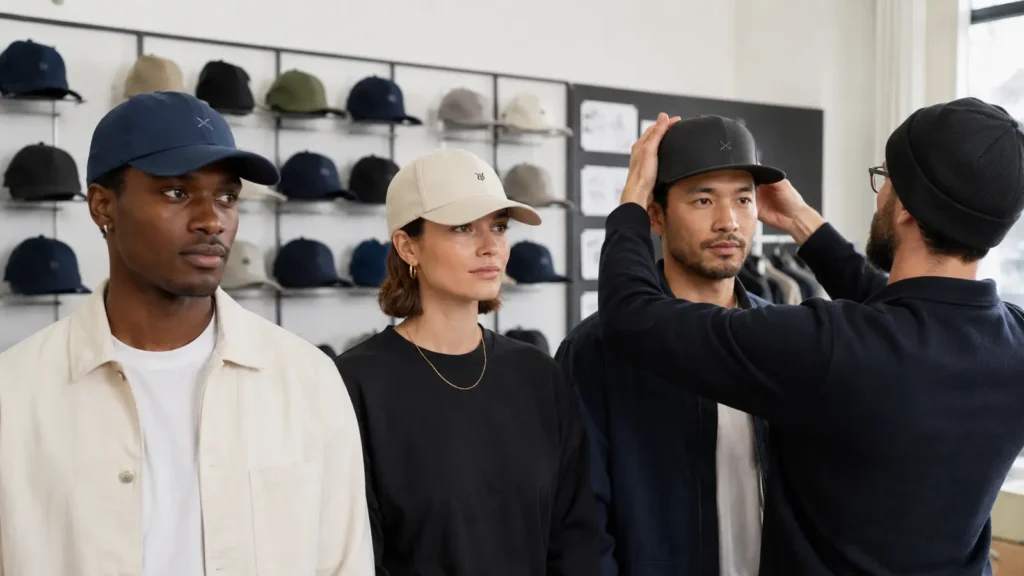
What to test on representative wearers
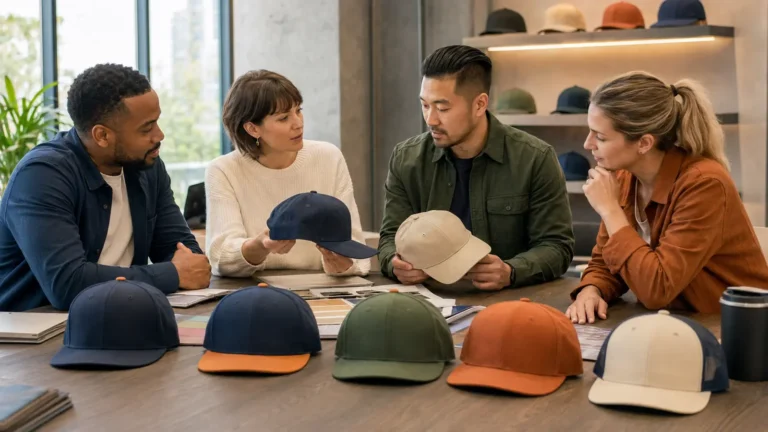
For a team, uniform, or retail program, recruit several wearers across the intended size range. Check:
- whether the sweatband sits level or tilts upward;
- clearance above the ears and around eyewear;
- pressure at the temples and front hairline;
- whether the crown touches the top of the head;
- excess fabric or dimpling near the top seams;
- how far the cap can be pulled down without discomfort;
- the usable closure range on adjustable models;
- the logo’s apparent centering from front and three-quarter views;
- whether the preferred visor curve changes the fit.
Photograph samples from a fixed distance. A cap that feels acceptable may still look unbalanced in group images; a dramatic high crown may be right for streetwear.
Are high-profile hats suitable for small heads?
They can be, provided the opening size and panel pattern fit the head and the wearer wants a tall silhouette. “Small head” usually refers to circumference, while high profile describes crown volume. The combination is not mechanically impossible.
However, a tall crown on a small circumference can create more visible height relative to the face. It may also leave space above the head or show panel wrinkling if the pattern is not graded well. For youth sizes or a small-adult range, request a size-specific sample rather than shrinking only the opening of an adult high-profile pattern.
How crown height changes logo space
The apparent front panel is not the same as the safe embroidery field. Usable decoration height is reduced by:
- the crown-to-visor seam and cap-frame clearance at the bottom;
- panel convergence and the top button at the top;
- center and side seams;
- eyelets, ventilation perforations, or front-panel folds;
- the slope and curve of the crown;
- the supplier’s hoop and machine limits;
- the logo’s stitch type, density, and need for backing or foam.
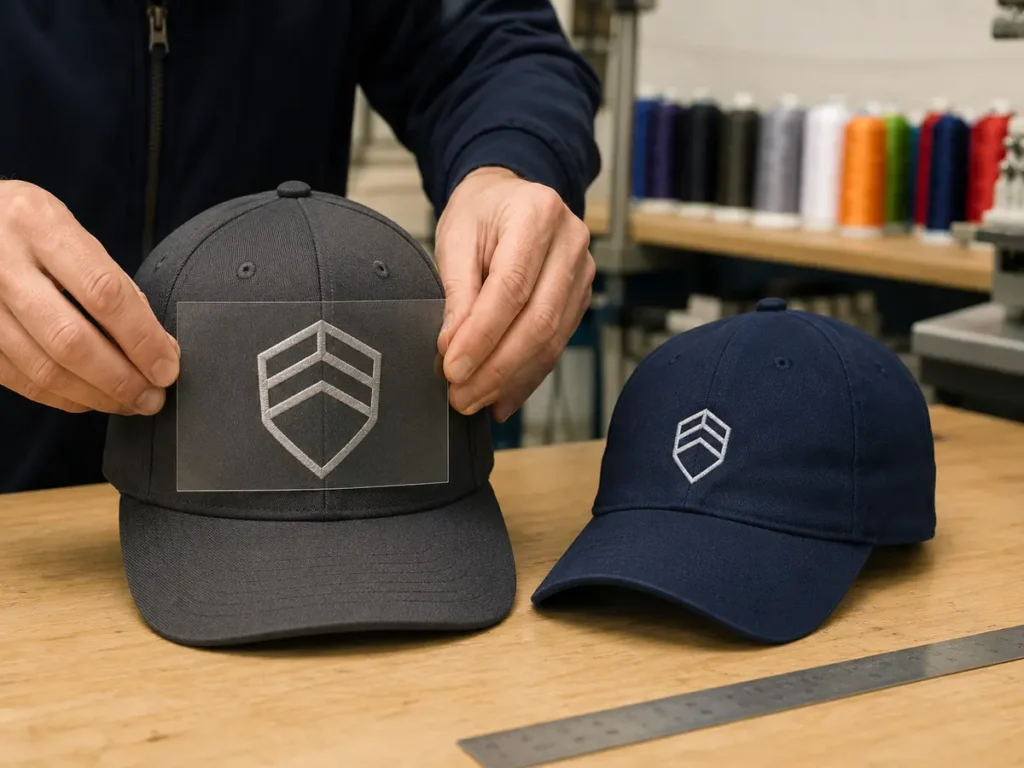
Which crown is best for a large logo?
A structured high profile is normally the strongest starting point for a tall or large front logo because it provides more visible height and a stable presentation surface. A mid profile often handles wide team crests and standard corporate logos well. A low profile can support a broad horizontal wordmark, but a tall emblem may crowd the top or appear too close to the visor.
Logo shape matters. A wide wordmark can fit a lower crown better than a tall shield. Circular crests need balanced clearance, and stacked text needs vertical separation. Request the proposed finished dimensions, not only “maximum embroidery size.”
Logo-to-crown proportion guidelines
Use proportions as visual review criteria rather than fixed engineering limits:
| Logo condition | Low profile | Mid profile | High profile |
|---|---|---|---|
| Small tonal icon | Strong understated match | Works but may feel visually light | Can look lost unless intentionally minimal |
| Wide wordmark | Often suitable if vertical height is limited | Usually flexible | Suitable, but check empty space above |
| Tall shield or stacked mark | Limited; likely needs reduction or redesign | Good candidate after field check | Strong candidate |
| Large embroidered crest | May dominate the crown | Often suitable on a structured front | Strong visual match |
| 3D puff initials | Possible only with compatible art and stability | Common candidate | Strong candidate for bold presentation |
| Rectangular patch | Use a flexible, proportionate patch | Broad flexibility | Can support a larger patch; check crown curve |
Keep clear space around the artwork. Embroidery that nearly touches the visor seam or top convergence can look cramped even if the machine can sew it. Review the mark at normal viewing distance and on the wearer’s head.
Send the supplier your vector logo, intended finished size, cap reference, profile preference, structure, visor shape, quantity, and target market. Request the available decoration field for that exact cap and a digital placement proof before paying for the physical sample.
Crown structure and visor shape change the result
Profile, structure, and visor shape are separate fields. Combining them under one style name causes sample surprises.
Structured versus unstructured crowns
A structured crown has reinforcement behind the front panels, such as buckram or fused support. It maintains a defined empty shape and generally gives a large or dense logo a more stable platform. A high crown normally needs structure to preserve its upright appearance.
An unstructured crown follows the head and may collapse when not worn. It is common in low-profile dad hats and washed lifestyle caps. Small flat embroidery or a flexible woven patch can complement the soft appearance. A mid-profile unstructured cap is also possible, showing again that profile and structure are not synonyms.
Flat versus curved visors
A flat visor creates a strong horizontal line and often makes a tall crown look more architectural. This pairing is common in snapback and fitted streetwear. A curved visor visually wraps around the face and can make the cap feel more compact or athletic. It is common in dad hats, uniforms, and on-field-inspired caps.
Some visors are designed to be shaped by the wearer; others are supplied with a set curve. New Era’s silhouette guide, for example, describes the original 59FIFTY with a flat visor that can be curved. Do not assume every flat visor can be reshaped without affecting the approved appearance or material. Specify the delivery curve and review it after packing.
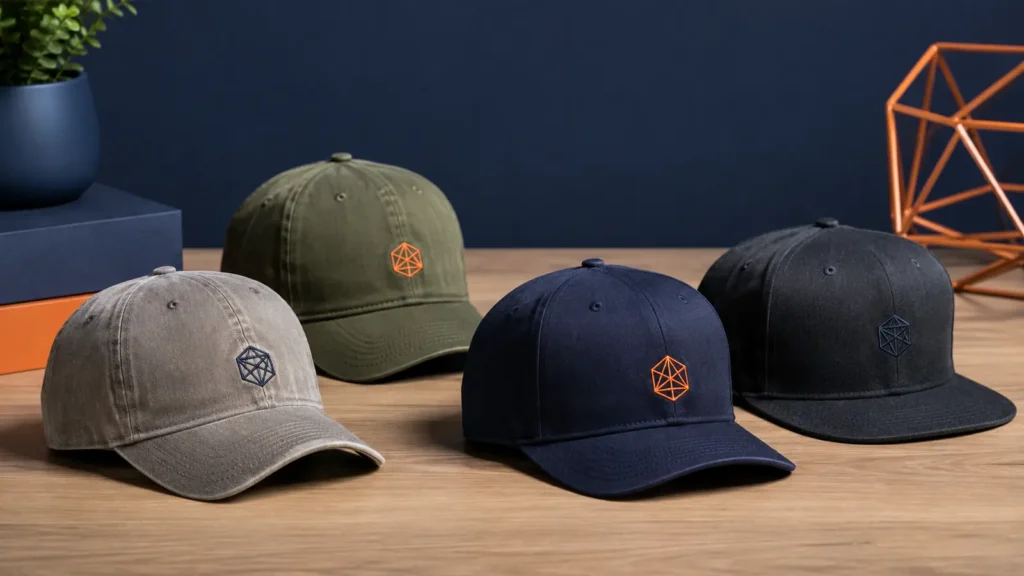
Common combinations and their visual effect
| Combination | Typical impression | Logo direction |
|---|---|---|
| Low + unstructured + curved visor | Relaxed, washed, lifestyle | Small flat embroidery, tonal icon, flexible patch |
| Low + structured + curved visor | Compact but clean and stable | Moderate crest or uniform logo |
| Mid + structured + curved visor | Balanced, athletic, broadly wearable | Team crest, corporate logo, standard front embroidery |
| Mid + unstructured + curved visor | Soft but with more depth than a classic dad cap | Light wordmark or patch |
| High + structured + flat visor | Bold, upright, streetwear or baseball heritage | Large crest, initials, patch, or 3D puff |
| High + structured + curved visor | Tall front with athletic framing | Large team or promotional logo after fit testing |
Which crown suits baseball teams?
A structured mid profile is usually the most practical first sample for baseball and softball teams. It offers useful front-logo space, a recognizable athletic silhouette, and a balanced fit for mixed rosters. Flexfit’s published mid-profile performance caps list structured construction and a 3½-inch crown within its measurement system. Richardson’s Mid Pro is also used across performance baseball and other styles.

A high profile may be better when the club wants a traditional full-crown fitted appearance, large initials, or a bolder merchandise cap. Flexfit’s high-profile on-field model combines structured hard buckram, a flat visor, and a 3¾-inch published crown height. A low-profile fitted option can suit players who prefer a closer silhouette.
The decision should include more than appearance:
- fitted, stretch-fit, or adjustable size strategy;
- youth and adult pattern availability;
- sweatband and performance fabric;
- ventilation and climate;
- visor curve rules or player preference;
- logo size and center-seam behavior;
- name, number, or side embroidery requirements;
- repeat-order color and size consistency.
Crown choices for corporate uniforms
Corporate buyers usually need a cap that looks consistent across different employees and remains comfortable through a shift. A structured mid profile is a strong default for construction crews, event staff, dealers, field service, and promotional teams because it keeps the front logo visible without the visual height of a full crown.
A low-profile unstructured cap can suit cafés, hospitality, creative teams, golf events, and lifestyle-oriented company merchandise. It feels less formal and pairs well with restrained embroidery. If the workforce includes many head sizes, test closure range and crown depth rather than relying on “one size fits most.”
For uniform programs, record the exact cap code, fabric, support, profile, visor, closure, thread colors, logo dimensions, and packing method. “Navy mid-profile cap” is not specific enough for repeat orders.
Crown choices for streetwear and retail brands
Streetwear brands often use high-profile structured snapbacks or fitted caps because the crown is part of the graphic composition. A flat visor and tall front can support oversized initials, collegiate lettering, 3D puff, large patches, and deliberate negative space. The silhouette must still match the brand’s target consumer; a full crown should be an aesthetic decision, not simply extra logo area.
Lifestyle and heritage labels may prefer a low unstructured crown, washed fabric, curved visor, and small tonal mark. A mid-profile five-panel cap can create a different retail direction by offering an uninterrupted front panel while maintaining moderate volume.
For ecommerce, photograph the actual profile from front, side, rear, and on-head views. Buyers cannot judge crown depth from a front-only image. Include fitted sizes or adjustable range, material, structure, profile, and visor shape in the product description.
Can crown height be customized?
Yes. In a fully custom cap program, the supplier can adjust panel patterns, front angle, seam length, crown depth, support, visor relationship, and grading across sizes. But crown height cannot be changed responsibly as an isolated number. Raising the front may require changes to side and rear panels, top convergence, eyelet positions, internal tape, center seam, closure, and logo placement.
Customization can also affect:
- development and pattern work;
- sample rounds;
- material consumption and support selection;
- embroidery framing and available field;
- size grading;
- packing volume;
- MOQ and unit cost;
- repeat-order tolerances.
If the project quantity does not justify a custom pattern, start with an existing blank or base style and adjust decoration, color, labels, and packaging. JIUMU’s typical starting MOQ is 50 pieces, subject to the cap structure and customization. The quotation should confirm the actual MOQ and development scope.
What to approve at the sample stage
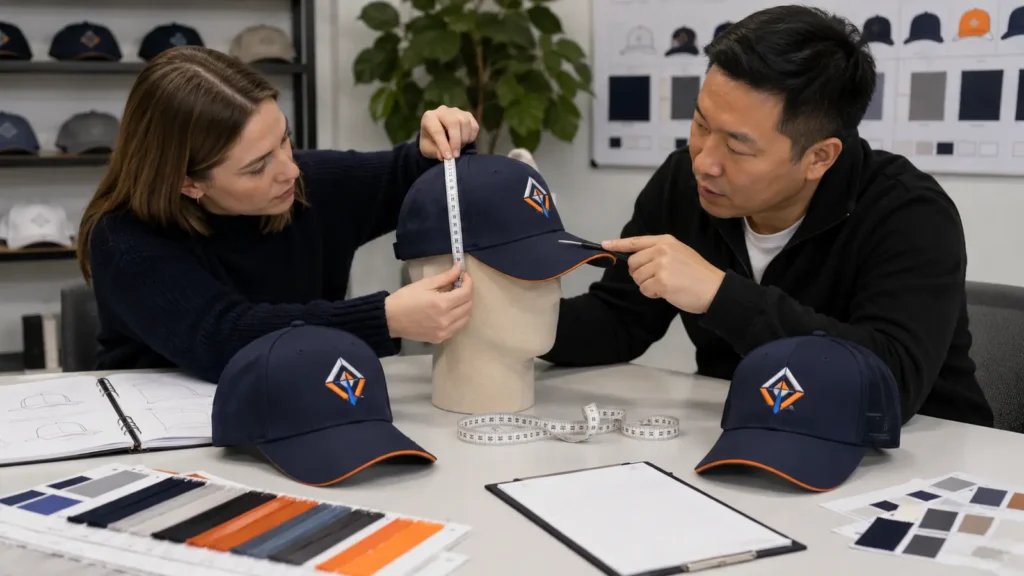
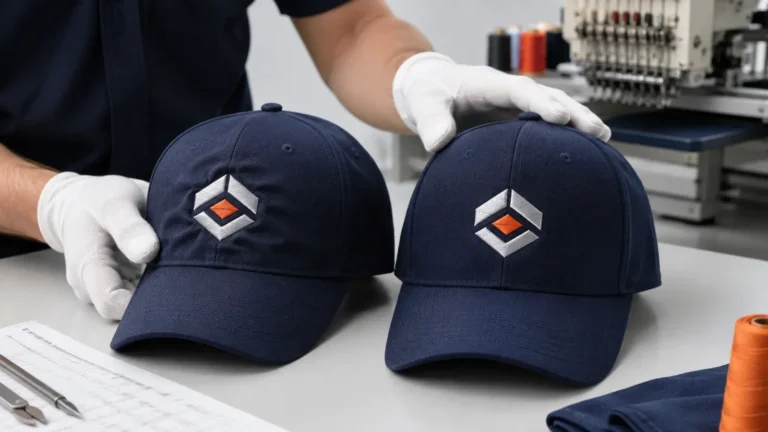
Create a signed record with numeric and visual checks.
Dimensional checks
- Crown height, with measurement path shown in a photo or diagram
- Center-front surface length if used separately
- Overall cap depth at front, side, and rear where relevant
- Head opening circumference or fitted size
- Adjustable closure range
- Front-panel width at the lower crown
- Visor length, width, and delivered curve
- Logo finished width and height
- Distance from the logo to the crown-to-visor seam
- Distance from the logo to the top convergence or button
- Side and rear decoration positions
Visual and fit checks
- Front, side, rear, and three-quarter silhouette
- Empty-crown shape and on-head shape
- Excess fabric, dimpling, or panel tension
- Ear clearance and wearing depth
- Front angle relative to the forehead
- Logo scale, centering, and clear space
- Center-seam distortion
- Flat embroidery, puff, or patch finish
- Visor symmetry and curvature
- Shape after production packing and recovery
Use the custom apparel sample checklist as a related Hat Sample Approval Guide, then add the cap-specific dimensions above. Compare the approved sample with a sealed reference during bulk inspection.
Questions to ask the supplier
- How do you define and measure crown height for this style?
- Is the profile classification specific to your collection?
- Is the front structured, lightly structured, or unstructured?
- What is the actual crown depth and size range?
- What front embroidery field is available on this exact cap?
- Does the logo cross a center seam?
- Which visor shape will be delivered, and can it be customized?
- Can the same profile be produced in youth and adult patterns?
- Will crown height or logo position change between fitted sizes?
- Which measurements and tolerances will be recorded on the approved sample?
- How will the crown be supported and packed for shipment?
- Which changes would require a new physical sample on a reorder?
Common crown-height buying mistakes
Comparing numbers measured in different ways
A 3½-inch standing-height specification and a 6½-inch center-front surface measurement cannot be compared directly. Standardize the method first.
Choosing only from a front photo
Front photos hide crown depth, rear fit, visor angle, and excess volume. Request side and on-head views.
Assuming low profile means unstructured
Low structured fitted and trucker caps exist. Record profile and structure separately.
Assuming high profile automatically fits large heads
Profile is not head-opening size. A high crown can be made for several sizes, while a large-circumference cap can still have a low profile.
Scaling the logo to the maximum field
Maximum machine area is not always the best visual size. Preserve clear space and assess the design at normal viewing distance.
Using one cap pattern for youth and adults
Reducing only the closure or opening can leave the youth crown disproportionately tall. Review a dedicated youth sample when youth sizes matter.
Changing the visor without reviewing the crown
A flat or curved visor changes the perceived profile and can change how the cap sits. Approve the complete combination.
What to send for a custom-cap quotation
- reference photographs from front, side, rear, and three-quarter views;
- preferred low, mid, or high profile;
- target crown-height measurement and method, if known;
- structured, lightly structured, or unstructured front;
- panel count, fabric, visor, closure, and size range;
- target users, market, and use case;
- vector logo and preferred decoration method;
- desired logo dimensions and placements;
- colors or Pantone references;
- estimated quantity and repeat-order plan;
- custom labels, hangtags, packaging, and carton needs;
- destination and required delivery date;
- digital mockup, physical sample, and fit-test requirements.
JIUMU, established in 2010 in Guangdong, supports B2B custom-cap development for teams, uniform programs, distributors, promotional buyers, and private-label brands. Available capabilities include OEM/ODM development, embroidery, woven and other patch options, Pantone color matching, labels, packaging, digital mockups, physical samples, quality control, and export support.
Explore Custom Fitted Hats for size-specific team and retail silhouettes, Custom Snapback Hats for adjustable structured options, and Custom Dad Hats for low-profile lifestyle directions.
Frequently Asked Questions
Final recommendation
Use low, mid, and high profile as visual starting points—not complete specifications. Low profile supports a close, understated look; mid profile offers a balanced default for many teams and uniforms; high profile creates room and presence for bold logos and streetwear styling.
Then replace the label with evidence: a stated measurement method, crown and opening dimensions, structure, visor, panel pattern, logo field, on-head photographs, and a signed physical sample. This approach gives buyers and suppliers a repeatable definition of the approved cap.
To request a crown-profile recommendation, send JIUMU your reference cap images, vector logo, target quantity, wearer group, preferred structure and visor, destination, and required date through the contact page, email zhengdong@jiumugear.com, or contact +86 18507502899.
Technical references
- OTTO CAP standard cap sizing and crown-height guidance
- SanMar cap specification and measurement method
- Flexfit low-profile peached cotton twill dad cap
- Flexfit low-profile structured trucker cap
- Flexfit mid-profile Cool & Dry sport cap
- Flexfit high-profile Pro-Baseball On-Field cap
- Richardson product glossary: Low Pro and Mid Pro
- New Era 59FIFTY silhouette guide
- Melco cap-embroidery placement and hoop-limit overview
JIUMU is a B2B supplier of custom hats, teamwear, bags, and branded merchandise. Established in 2010, the team supports artwork review, sampling, customization, quality control, packaging, and export coordination.